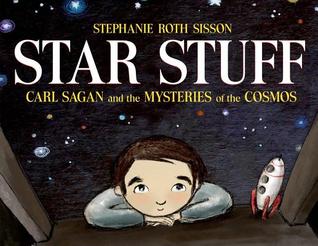
Star Stuff: Carl Sagan and the Mysteries of the Cosmos by Stephanie Roth Sisson

Share

Star Stuff: Carl Sagan and the Mysteries of the Cosmos
Author: Stephanie Roth Sisson
Published: October 14, 2014 by Roaring Brook Press

A Guest Review by Brittany Brown

Summary: A curious boy living in a small city apartment finds the world astonishing. He wants to know about light bulbs, inch worms, and rocket ships. Carl sets out on a journey to find answers, but finds bigger, even more powerful questions. Through his research and studies, Carl eventually earns the title of Dr. Carl Sagan and spends his life seeking knowledge and understanding about the universe. This young

boy’s contributions to science and education have inspired many children everywhere to question the world around them. His story will resonate every child who has ever wondered “how” or “why” or spent an evening looking up at the night sky.

Review: I am constantly looking for books which will inspire my students and get them excited about learning. This book, which is brought to life with beautiful illustrations and the great mysteries of the universe, did that for myself as an adult, too. After reading it, everyday life is once again imbued with the magic and novelty it had in childhood. In Sagan’s eyes, there is no phenomenon too mundane to investigate. The curiosity which most adults leave behind drove Sagan to be the lifelong learner that all teachers hope to foster in their students. Reading this book shows that science is all around us, that we all belong here in the universe, and that in everyone there is a scientist. I absolutely loved reading this book, and as a new teacher building my classroom library, this is the first one which I will be purchasing multiple copies of to share with my students.

Teachers’ Tools for Navigation: This story would pair well with any science or biography unit. It would also serve as a great example of narrative nonfiction.

The most obvious use for this story is in a science unit. I would love to use this book to open up a discussion at the beginning of a unit on the solar system. Not only would it generate excitement, it would also begin to build some vocabulary and background knowledge. It would make the information in the unit more personal and relevant to kids, and would be a great launching point to encourage students to come up with their own questions about how the world works.

This book is also a wonderful book to use for mini lessons in writing. Using this book as an example, a teacher could lead a discussion on how to choose which life events to include in a biography, how to sequence and organize it, and how to incorporate quotes from a historical figure into a writing piece. It also shows how to include facts and achievements in an engaging way, and how to demonstrate a person’s impact on history.

Finally, this book would also be a superb example of narrative nonfiction. Despite containing lots of scientific facts, it reads like a storybook and the illustrations do much of the talking. Students will be captivated with the descriptive narration, and discussions could explore their experiences as readers or how they may be able to attempt this style in their writing.

Discussion Questions: What are your big mystery questions? Where would you go to try to find answers to them? What character traits helped Carl on his journey? What impact did he have on the world? Who does he remind you of?

Book Trailer: 

Read This If You Loved: What Do You Do with an Idea? By Kobi Yamada, I Wonder by Annaka Harris, You Are Stardust by Elin Kelsey, On a Beam of Light: A Story of Albert Einstein by Jennifer Berne, The Boy Who Loved Math: The Improbable Life of Paul Edros by Deborah Heiligman, Look Up!: Henrietta Leavitt, a Pioneering Woman Astronomer by Robert Burleigh

Recommended For:
 classroomlibrarybuttonsmall

Thank you, Brittany!

RickiSig

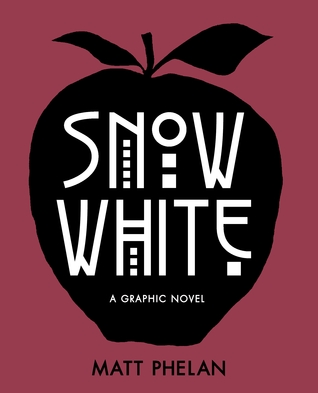
Snow White: A Graphic Novel by Matt Phelan

Share

Snow White: A Graphic Novel
Author: Matt Phelan
Published: September 21, 2016 by Candlewick

A Guest Review by Emily Baseler

GoodReads Summary: Award-winning graphic novelist Matt Phelan delivers a darkly stylized noir Snow White set against the backdrop of Depression-era Manhattan.

The scene: New York City, 1928. The dazzling lights cast shadows that grow ever darker as the glitzy prosperity of the Roaring Twenties screeches to a halt. Enter a cast of familiar characters: a young girl, Samantha White, returning after being sent away by her cruel stepmother, the Queen of the Follies, years earlier; her father, the King of Wall Street, who survives the stock market crash only to suffer a strange and sudden death; seven street urchins, brave protectors for a girl as pure as snow; and a mysterious stock ticker that holds the stepmother in its thrall, churning out ticker tape imprinted with the wicked words “Another . . . More Beautiful . . . KILL.” In a moody, cinematic new telling of a beloved fairy tale, extraordinary graphic novelist Matt Phelan captures the essence of classic film noir on the page—and draws a striking distinction between good and evil.

Review: Matt Phelan reinvented the “happily ever after” with this retelling. I identify as a Disney Classic enthusiast but I was pleasantly surprised with the ending. The illustrations are gorgeous with distinct intentionality. More mature themes such as death, assassination, murder were evaluated within a historical context to create an incredible murder mystery story at the level of a middle grade reader.

Teachers’ Tools for Navigation: This would be an excellent text to hand a more reluctant reader. There is limited text the reader is asked to interpret the illustrations and structure. In literature groups, students could potentially discuss the use of metaphor, oenomania, author/illustrator’s choice, and compare/ contrast the original fairytale with the retelling. This is also a text I would recommend to a student who has shown an interest in the graphic novel genre to read independently.

Discussion Questions: Why do you think the author choose to use red in selected illustrations? How did this choice influence you as a reader?; Why do you think the author choose to break apart the chapters this way?; Even though there were few words, how did you interpret the mood, tone, and voice of characters?; Did you find yourself needing to interpret the illustrations to understand the plot? What was that experience like for you as a reader?; How is this retelling of the classic fairy tale of “Snow White” different than the original? What did you notice is similar?

Flagged Passage: “My name is Snow White, but my mother didn’t call be that to be funny. She would say that the snow covers everything and makes the entire world beautiful” (Ch. 10)

Book Trailer: 

Read This If You Loved: Red: The True Story of Red Riding Hood by Liesl Shurtliff, Jack: The True Story of Jack and the Beanstalk by Liesl Shurtliff, Rump: The True Story of Rumpelstiltskin by Liesl Shurtliff

Recommended For:
 classroomlibrarybuttonsmall

Thank you, Emily!

RickiSig

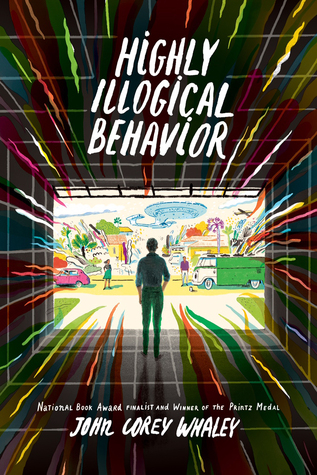
Highly Illogical Behavior by John Corey Whaley

Share

Highly Illogical Behavior
Author: John Corey Whaley
Published: May 10, 2016 by Dial

Summary: Sixteen-year-old Solomon is agoraphobic. He hasn’t left the house in three years, which is fine by him.

Ambitious Lisa desperately wants to get into the second-best psychology program for college (she’s being realistic). But is ambition alone enough to get her in?

Enter Lisa.

Determined to “fix” Sol, Lisa steps into his world, along with her charming boyfriend, Clark, and soon the three form an unexpected bond. But, as Lisa learns more about Sol and he and Clark grow closer and closer, the walls they’ve built around themselves start to collapse and their friendships threaten to do the same.

Ricki’s Review: I didn’t expect this book to hit me quite as hard as it did. The summary was compelling, and I enjoyed reading the first few chapters, and then I became personally invested in the characters’ lives. There are many complex emotions within this text. Because of the alternating perspectives, I’d be rooting for Lisa in a chapter and then feel like a jerk because I was betraying Solomon. And then I’d wonder if rooting for Lisa meant that I was also rooting for Solomon, in a way. This book makes readers question their values and consider ethics. I’ll be thinking about this one for quite some time.

Two other things I love about this book: 1. Solomon’s parents are great! I love when a YA book features good parents! 2. Sexuality is discussed in the book, but it isn’t the only (or main) feature of the book. This goes along with my belief that books that feature discussions about sexuality need not be purely focused on sexuality.

Teacher’s Tools for Navigation: I am a big advocate for literature circles that consider mental health. I think that placing texts like these in conversation allows us to consider the complexity of mental health issues. Some great texts to include in these literature circles follow: Dr. Bird’s Advice for Sad Poets by Evan Roskos, Forgive Me, Leonard Peacock by Matthew Quick, It’s Kind of a Funny Story by Ned Vizzini, The Perks of Being a Wallflower by Stephen Chbosky, Twisted by Laurie Halse Anderson, Everybody Sees the Ants by A.S. King, and 13 Reasons Why by Jay Asher. A discussion of these titles would foster incredibly rich discussions about phobias, depression, anxiety, and suicide. In my opinion, we must have these conversations with our students.

Discussion Questions: Do you think that Lisa “did the right thing” throughout the text? Were all of her decisions selfish, or could some of them be considered simultaneously selfless? Can a decision be selfish and selfless at the same time?

We Flagged: “We’re just floating in space trying to figure out what it means to be human.”

Read This If You Loved: (Many of these are listed above.) Dr. Bird’s Advice for Sad Poets by Evan Roskos, Forgive Me, Leonard Peacock by Matthew Quick, It’s Kind of a Funny Story by Ned Vizzini, The Perks of Being a Wallflower by Stephen Chbosky, Twisted by Laurie Halse Anderson, Everybody Sees the Ants by A.S. King, Reality Boy by A.S. King, Dear Life, You Suck by Scott Blagden, 13 Reasons Why by Jay Asher

Recommended For:

 closereadinganalysisbuttonsmall litcirclesbuttonsmall classroomlibrarybuttonsmall

RickiSig

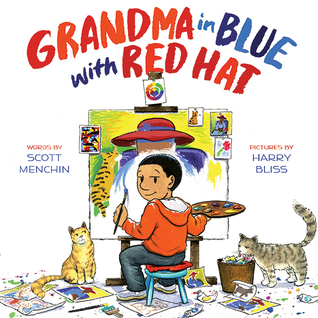
Grandma in Blue with Red Hat by Scott Menchin

Share

Grandma in Blue with Red Hat
Author: Scott Menchin
Illustrator: Henry Bliss
Published April 14, 2015 by Abrams

Guest Post by: Sarah Mangiafico

Summary: When a young boy learns about what makes art special—sometimes it’s beautiful, sometimes it’s funny, sometimes it tells a story—he realizes that these same characteristics are what make his grandmother special, too. As a result, he finds the inspiration to create his own masterpiece that’s one of a kind.

Christopher Award–winning author Scott Menchin and New York Times bestselling illustrator Harry Bliss have teamed up for a celebration of the power of art and expression, and the extraordinary love between grandparent and child.

Review: I love how this book expresses the different feelings that art can evoke in someone, along with the meaningful moments that it can capture. Sometimes something can be art simply for being funny or for making you feel nice; art does not have to be complicated to be art. This is a powerful message to share with readers, since many people often think that art needs to have many different meanings and lots of creativity in order to be art. The art that the boy makes about his grandma clearly shows the feelings and thoughts that can inspire someone to make art. The art that he makes about her is also very touching, and is a great ending to the book that leaves readers (including myself) ready to go out and create their own meaningful art pieces.

Teachers’ Tools for Navigation: Grandma in Blue with Red Hat is a wonderful book that can show students how “Anything can be in an art exhibition,” and can teach them how anything that they create can be considered art (Menchin 3). This is a great book to introduce students to what art is, and can motivate kids to want to create their own art pieces for a “class art museum.” After creating their pieces, students can walk around the “class art museum” and write down why they think each piece is art. Grandma in Blue with Red Hat is a sure way to get students interested in art, and to create art that is meaningful to them in some way.

This book is also a wonderful book to share with students because the art pieces shown in the book are real and famous pieces of art. Reading this book as a read aloud can introduce students to these pieces and can lead to a more in-depth class study of them and the artists that made them. A variety of cultures are represented in the art pieces shown in the book as well, which makes this book culturally relevant.

Discussion Questions: What is art? Why did the boy in the story decide to use his grandma as an inspiration for his art? What are some things that you could make an art piece about? What makes you choose those things?

Flagged Passages: “Grandma is beautiful. Grandma is different. Grandma is funny. Grandma tells me stories. Grandma comes from far away. Grandma makes me feel good” (p. 17).

Read This If You Loved: Draw! by Raúl Colón, Maybe Something Beautiful by F. Isabel Campoy and Theresa Howell, My Pen by Christopher Myers

Recommended For:

   classroomlibrarybuttonsmall

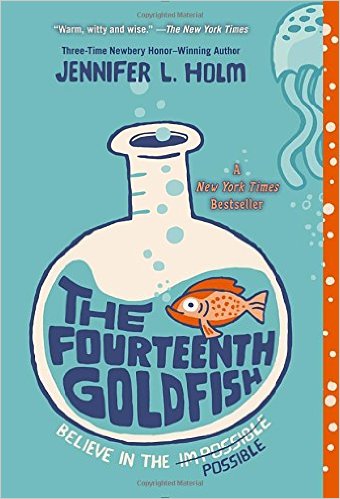
The Fourteenth Goldfish by Jennifer L. Holm

Share

The Fourteenth Goldfish
Author: Jennifer L. Holm
Published: April 5, 2016 by Yearling

A Guest Review by Kelsey Iwanicki

Summary: The Fourteenth Goldfish follows the story of Ellie, an 11-year-old girl, who is currently struggling to find her passion, especially following the gradual drop off with her one and only friend, Brianna. However, everything changes when her mother brings home a quirky and crabby 13-year-old boy, Melvin. Ellie notices striking similarities between Melvin and her seventy-something year-old grandfather until he comes clean and tells her that they are in fact the same person. Melvin has worked on developing a drug to reverse the signs of aging, which has successfully worked on himself.

As Ellie and Melvin get closer, they also form an unlikely friendship with a goth student, Raj. Together they give Melvin advice about being a teenager, such as giving him acne medicine and hair elastics. They also help Melvin eventually, after a few failed attempts, steal the same compound that reversed his age. Melvin’s original plan was to steal the gene so he could share it with the world and receive the Nobel Peace Prize. However, Ellie persuaded him not to on the grounds of moral ethics and how scientific impacts can be both positive and negative. Due to this, Melvin flushes the compound down the drain and starts to tour the country. Thanks to her time with her grandfather, Ellie is able to discover his passion in science and also gain a few friends along the way, Raj and Momo.

Review: What I liked most about this book was its quirkiness, mostly exemplified through Melvin. Although the relationship between Ellie and Melvin is untraditional, you can also get glimpses of a typical relationship between a grandfather and granddaughter is like, one that isn’t usually written about. The majority of characters are nontraditional, such as Raj, who is explicitly written as goth; Ellie, a girl scientist (although this is becoming more popular, usually boys are the ones in the STEM fields); and Melvin, as a grumpy 13-year-old.

What I didn’t like about the book was the build-up. Although they failed multiple times at stealing the compound, there was no suspense for when Melvin actually succeeded. Rather, he just came home one day with it. The climax actually was when Ellie had a self-realization that science has both positives and negatives, which honestly was kind of a let down because the plot had focused around getting the compound from the lab. Ultimately, it was a good theme because Ellie realizes there are good and bad things with any passion.

All in all, I did like the book, I think it could appeal to students who are interested in science and realistic fiction books.

Teachers’ Tools for Navigation: This book should definitely be included in a classroom library for independent reading because I think it would appeal for students because it is a little quirky and has some interesting characters. It could also prompt some interesting discussions for literature circles because students could discuss the ethics behind using a compound to reverse aging.

A teacher could also use it as a read aloud for a few reasons. It would be interesting to consider the other perspectives of characters such as Melvin or Melissa, Ellie’s mother. Additionally, they could talk about the character traits and what makes Melvin and Ellie such strong characters. Or, they could talk about science and ethics behind what scientists release.

Discussion Questions: If you had a compound that could reverse aging, would you take it? Why or why not?; If you discovered a compound that could reverse aging, would you deliver it to the public? Why or why not?; What do you think will happen to Ellie and Brianna’s friendship? Ellie and Momo’s?; What do you think the side affects are from taking the compound? / What do you think happened to Melvin?; Put yourself in Ellie’s shoes, how would you feel if your grandfather attended the same school as you?; What is the importance of the fourteenth goldfish?

Flagged Passage: “Average people just give up at the obstacles we face every day. Scientists fail again and again and again. Sometimes for our whole lives. But we don’t give up, because we want to solve the puzzle” (p. 47).

Read This If You Loved: El Deafo by Cece Bell; Fish in a Tree by Lynda Mullaly Hunt; Out of My Mind by Sharon Draper; Rain Reign by Ann M. Martin; Unusual Chickens for the Exceptional Poultry Farmer by Kelly Jones

Recommended For:
 classroomlibrarybuttonsmall

Thank you, Kelsey!

RickiSig

Teaching Guide for Ada’s Ideas: The Story of Ada Lovelace, the World’s First Computer Programmer by Fiona Robinson

Share

nfpb2017

Nonfiction Wednesday

Nonfiction Picture Book Wednesday is hosted by Kid Lit Frenzy and was started to help promote the reading of nonfiction texts. Most Wednesdays, we will be participating and will review a nonfiction text (though it may not always be a picture book).
Be sure to visit Kid Lit Frenzy and see what other nonfiction books are shared this week!

Ada’s Ideas: The Story of Ada Lovelace, the World’s First Computer Programmer
Author and Illustrator: Fiona Robinson
Published August 2nd, 2016 by Abrams Books

Summary: Ada Lovelace (1815–1852) was the daughter of Lord Byron, a poet, and Anna Isabella Milbanke, a mathematician. Her parents separated when she was young, and her mother insisted on a logic-focused education, rejecting Byron’s “mad” love of poetry. But Ada remained fascinated with her father and considered mathematics “poetical science.” Via her friendship with inventor Charles Babbage, she became involved in “programming” his Analytical Engine, a precursor to the computer, thus becoming the world’s first computer programmer. This picture book biography of Ada Lovelace is a portrait of a woman who saw the potential for numbers to make art.

Teaching Guide with Discussion Questions and Activities: 

Ada’s Ideas: The Story of ADA LOVELACE, the World’s First Computer Programmer

Ada Lovelace (1815–1852) was the daughter of Lord Byron, a poet, and Anna Isabella Milbanke, a mathematician. Her parents separated when she was young, and her mother insisted on a logic-focused education, rejecting Byron’s “mad” love of poetry. But Ada remained fascinated with her father and considered mathematics “poetical science.” Via her friendship with inventor Charles Babbage, she became involved in “programming” his Analytical Engine, a precursor to the computer, thus becoming the world’s first computer programmer. This picture book biography of Ada Lovelace is a portrait of a woman who saw the potential for numbers to make art.

Note about this guide and Ada’s Ideas

Ada Lovelace was a mathematician far ahead of her time. Because of this, much of the math included in Ada’s Ideas are quite complex. Because of this, Ada’s Ideas could be used for a wide range of students from early-elementary, focusing on Ada’s impact on math, to college, focusing on her use of complex math to write the first computer programs. Within this guide, you will find activities and discussion questions that primarily focus on its use in elementary and middle classrooms, but this does not limit it to these grade levels.

Vocabulary

These vocabulary words can be found throughout the book (in the order they are listed). Use these words as a starting point for a vocabulary study with Ada’s Ideas. Research shows that reading and discussing vocabulary within the context of reading is one of the most effective ways to learn vocabulary.

Despaired     |     Era     |    Defy     |    Reckless     |    Parallelogram     |    Influence     |    Steady     |    Whirred     |    Clanked     |    Newly Harnessed     |    Mechanical     |    Affectionate     |    Carrier Pigeon     |    Confined     |    Poetical expression     |    Aside     |    Eligible     |    Thrust     |     Regimented     |    Re-ignited     |    Potential     |    Orient     |    Corresponding     |    Loom     |    Thereby     |    Algorithm     |    Compute     |    Potential     |    Foresaw     |    Impact     |    Stunned     |    Envision

Activities: Use these activities to extend student learning with Ada’s Ideas.

Ana’s Parents

  • Ana’s parents are both well-renowned and intelligent; however, they are both very different.
  • Get to know George Byron
    • Have your students read the first stanza of “She Walks in Beauty” by Lord Byron. Analyze the stanza with them and discuss: How is Lord Byron describing the subject of his poem? Does it fit your idea of “Romantic” as Lord Byron was considered a leading figure in the Romantic Movement of poetry.
      • She walks in beauty, like the night
        Of cloudless climes and starry skies;
        And all that’s best of dark and bright
        Meet in her aspect and her eyes;
        Thus mellowed to that tender light
        Which heaven to gaudy day denies.
  • Get to know Anne Isabella Byron
    • Lady Byron was wealthy and educated. She was tutored by a Cambridge University professor as a child and found she excelled at mathematics. Discuss with your students: How did Lady Byron’s fascination of mathematics influence Ana’s life? Do you think her life would have been the same if her mother had not been a mathematician herself?

Nature vs. Nurture

  • Discuss with your students the idea of nature vs. nurture.
  • Lord and Lady Byron worked hard to separate Lord Byron from Ada to try and limit her poetical and imaginative behavior; however, Ada still ended up with quite the imagination. What does this show us about nature vs. nurture? Was Ada’s mother able to change how she was going to grow up by separating her from her father, or did it not matter since she is biologically his daughter?
  • Have your students break into two sides and research the ideas of nature vs. nurture then debate whether a person’s DNA decides their development or if experiences and environment can change the development.
    • Extension: Move the debate to Ada’s situation instead of a generic debate about the idea.

Industrial Revolution

  • The Industrial Revolution was possible because of the engineers, scientists, and mathematicians who put theory into practice. These new exciting feats of engineering and science included the first reliable steam engine, the cotton gin, telegraph, dynamite, vaccines, telephone, light bulb, airplane, and automobile.
  • Individually, in partners, or in groups, assign a different Industrial Revolution invention and look at how it was created, how it changed the world, and how it changed science/math/engineering then present their findings to the class.
  • After learning more about the Industrial Revolution, tie it back to Ada Lovelace’s life by discussing if the class believes that Ada’s accomplishments could have happened during a different time in history.

Influence

  • Ada Lovelace’s findings are largely said to be the first computer program. Her programs, in conjunction with Babbage’s hardware, were a theory over a century before the first computers were invented in the United States and England. Even though she was not part of the actual invention and start of computer science, she influenced much of modern computer science. Use the information below as the starting point for a research paper/project or discussion.
  • Some of the ways Ada has influenced computer science are:
    • Mill made by Babbage’s son
      • Charles Babbage’s son made the part of the analytical engine called the mill which carried out numerical operations.
    • Alan Turing
      • Babbage and Lovelace’s analytical engine was the original “drum” computer though Turing is often portrayed as the inventor of the idea.
    • John Graham-Cumming
      • Graham-Cumming is a British programmer who is working to bring the analytical engine, known as Plan 28, to realization.
    • Some ways Ada has been commemorated:
      • ADA: a standardized computer language used by the US Department of Defense
        • A computer language that appeared for the first time in 1980 and is still used today.
      • Ada Lovelace Day
        • Ada Lovelace Day was founded in 2011 and aims to share female pioneers in STEM fields. Ada Lovelace Day is the second Tuesday of October.

Discussion Questions: Use these questions as whole class discussions, reading check-ins, or as writing prompts with Ada’s Ideas. The discussion questions are written as if they are being asked to a student.

  • Ada’s schedule as an 8-year-old was very intense. Compare and contrast your current schooling schedule to what Ada was expected to do daily.
    • How many hours did she spend on each subject? How long do you spend?
    • Do you feel like what was expected of her was too high of expectations or fair?
  • How did Ada’s contraction of measles change her life?
  • Why did the author choose to cover Ada’s comforter in geometric shapes on the page when she is suffering with measles?
  • Ada surrounded herself with some very intelligent and influential people including Mary Fairfax Somerville, nominated to be jointly the first female member of the Royal Astronomical Society; Charles Dickens, one of the greatest novelist of the Victorian era; Florence Nightingale, the founder of modern nursing; and Charles Babbage. How do you think having these historical figures as her friends helped influence her focus and trajectory in life?
  • The mentorship of Charles Babbage changed Ada’s life as well as the trajectory of computer science. How did Ada influence Charles’s work and vice versa? Do you think either could have accomplished what they did without each other?
    • Compare their work to modern technologies: Ada’s work ended up influencing the creations of ____, and Mr. Babbage’s work ended up influencing the creations of ____.
  • How did Joseph-Marie Jacquard’s loom influence Ada’s idea of the program for the Analytical Engine?
  • The author’s note about Bernoulli Numbers states that Ada chose them as “beautiful examples” of the complexity of the Analytical Engine. Elaborate on this statement: Why would Ada choose something so complicated as the first program she wrote for the Analytical Engine?
  • The illustrations of Ada’s Ideas are Japanese watercolor pieces cut out and rearranged at different depths to achieve 3-D artwork then photographed. How does this artwork fit Ada’s story? Would another type of illustrations have been able to capture Ada’s ideas and personality as well?

Common Core Standards: English Language Arts

Examples of English Language Arts Common Core Anchor Standards that can be met by extending Ada’s Ideas with the above discussion questions/activities.

  • ELA-LITERACY.CCRA.R.1
    Read closely to determine what the text says explicitly and to make logical inferences from it; cite specific textual evidence when writing or speaking to support conclusions drawn from the text.
  • ELA-LITERACY.CCRA.R.2
    Determine central ideas or themes of a text and analyze their development; summarize the key supporting details and ideas.
  • ELA-LITERACY.CCRA.R.3
    Analyze how and why individuals, events, or ideas develop and interact over the course of a text.
  • ELA-LITERACY.CCRA.R.4
    Interpret words and phrases as they are used in a text, including determining technical, connotative, and figurative meanings, and analyze how specific word choices shape meaning or tone.
  • ELA-LITERACY.CCRA.R.5
    Analyze the structure of texts, including how specific sentences, paragraphs, and larger portions of the text (e.g., a section, chapter, scene, or stanza) relate to each other and the whole.
  • ELA-LITERACY.CCRA.W.7
    Conduct short as well as more sustained research projects based on focused questions, demonstrating understanding of the subject under investigation.
  • ELA-LITERACY.CCRA.W.9
    Draw evidence from literary or informational texts to support analysis, reflection, and research.

Computer Science Teachers Association Standards

  • Computational Thinking: Grades K-3, #4: The student will be able to recognize that software is created to control computer operations.
  • Computational Thinking: Grades K-6, #6: The student will be able to understand the connections between computer science and other fields.
  • Computational Thinking: Grades 6-9, #3: The student will be able to define an algorithm as a sequence of instructions that can be processed by a computer.
  • Computing Practice and Programming: Grades K-3, #5: The student will be able to identify jobs that use computing and technology.
  • Computing Practice and Programming: Grades 6-9, #7: The student will be able to identify interdisciplinary careers that are enhanced by computer science.
  • Computers and Communication Devices: Grades 6-9, #3: The student will be able to demonstrate an understanding of the relationship between hardware and software.
  • Computers and Communication Devices: Grade 6-9, #4: The student will be able to use developmentally appropriate, accurate terminology when communicating about technology.
  • Community, Global, and Ethical Impacts: Grade 6-9, #2: The student will be able to demonstrate the knowledge of changes in information technologies over time and the effects those changes have had on education, the workplace, and society.

Author/Illustrator

Fiona Robinson is originally from the north of England she now lives in Brooklyn, New York. She is an author and illustrator of books for children including Whale Shines, What Animals Really Look Like, and Ada’s Ideas. What Animals Really Like received the 2012 Irma Black Award, and Bank Street named it one of the 2012 Best Children’s Books. She has been praised by Publishers Weekly for her “humor tinged with heart,” and her work has been honored by the Royal Academy of Arts in London. Her favorite things include drawing, reading, drinking tea and telling her stories to children. She doesn’t like loud noises or clapping and often reads newspapers and magazines back to front. When she was in elementary school her teachers called her Little Leonardo, and she’s forever thankful for their support and that of her fabulous family in England too.

Resources

https://en.wikipedia.org/wiki/Ada_Lovelace

http://www.telegraph.co.uk/technology/11285007/Ada-Lovelace-paved-the-way-for-Alan-Turings-more-celebrated-codebreaking-a-century-before-he-was-born.html

http://findingada.com/

https://plus.maths.org/content/ada-lovelace-visions-today

The teaching guide can also be viewed at: https://www.scribd.com/document/341092371/Ada-s-Ideas-Teaching-Guide# or http://www.abramsbooks.com/academic-resources/teaching-guides/

Recommended For: 

classroomlibrarybuttonsmall closereadinganalysisbuttonsmall 

Signature

Review and Giveaway!: Brobarians by Lindsay Ward

Share

Brobarians
Author & Illustrator: Lindsay Ward
Published March 28th, 2017 by Two Lions

Summary: This is the tale of the mighty Brobarians. Two warriors, once at peace…now at odds.

Iggy the Brobarian has taken over the land. Can Otto the Big Brobarian win it back? Or maybe, with a little help, the two brothers can find peace again…

This is an epic—and adorable—story of sibling rivalry and resolution.

About the Author: Lindsay Ward would never have written this book if she hadn’t stayed up late one night watching Conan the Barbarian. She finds the idea of baby barbarians to be very funny . . . and hopes you do too. Lindsay’s recent books include Rosco vs. the Baby and The Importance of Being 3. Most days you can find her writing and sketching at home in Ohio with her family. Learn more about her at www.lindsaymward.com or on Twitter: @lindsaymward.

Praise for Brobarians

“Highly cinematic, both in imagery and narrative soundtrack…Good and campy and a fine opportunity for vocabulary building.”—Kirkus Reviews

“As readalouds go, it’s pretty epic.” – Publishers Weekly

“Ward’s plot cleverly celebrates the spirit of imaginative toddlers, and her cartoonlike cut-paper collage, pencil and crayon illustrations playfully match the humor of the tale. A boisterous, silly picture book that would work well for story-time.” —School Library Journal

Kellee’s Review: This extended metaphor really embodies what it feels like to be a sibling. As the oldest, I can definitely remember times when I was younger and felt like I was in a battle with my sister for attention or cookies or anything that she had that I wanted. And through this metaphor of siblings as brobarians fighting over territory and bah bahs, hilarity ensues! Once best of friends, they are now at odds–who will win?!

Ricki’s Review: Ah, this book is the best! As a mama of two boys, I feel so lucky to have it in my collection. I read this one with both of my boys on my lap. My older son thought it was fabulous. He did a demonstration of some of the moves after we finished. My younger son pawed at the pages and was clearly enamored, too. I can’t wait until they are both a bit older. We are going to create paper outfits to match the outfits of the characters in the book. I highly recommend this book. I promise that you will get swept into the adventurous spirit of these two boys. 

Teachers’ Tools for Navigation: Publisher’s Weekly says, “As readalouds go,  it’s pretty epic,” and we would have to agree. In addition to the read aloud opportunity, there are opportunities for discussions about siblings to go along with a family unit. Brobarians brings to light the rivalry that siblings may feel against each other which is something that any child with a sibling may feel and may feel is not normal. Using this story, teachers can discuss what it may feel like to have a sibling and ways to deal with sibling rivalry.

You can also check out a coloring sheet and a map of Brobaria here!

Discussion Questions: Why are Iggy and Otto fighting at first?; What does Otto do to make it worse?; Who wins in the end?; Did you see the end coming? Who did you think was going to win?; How does the map on the end sheets help you navigate the story better?

Flagged Passages: 

Read This If You Loved: Pug Meets Pig by Sue Lowell Gallion, Mr. Fuzzbuster Knows He’s the Best by Stacy McAnultyWe Found a Hat by Jon KlassenHoot and Peep by Lita JudgeThat’s (Not) Mine by Anna Kang

Recommended For:

Giveaway! 

a Rafflecopter giveaway

 and 

**Thank you to Barbara at Blue Slip Media for copies for review!**