Author Guest Post: “Inspiring Students to Write about their own Complex Identities” by Marcella Pixley, Author of Neshama

Share

Inspiring Students to Write about their own Complex Identities

In my eighth-grade classroom, I have stopped referring to the idea of “identity” in the singular and whenever possible, I have begun to speak of our “identities” in the plural to help students think about themselves as being made up of many different interconnected facets, like the tiny, sparkling edges of a diamond that gleam when you turn them to the light. In our novels in verse project, I use Neshama, my forthcoming novel in verse, as a mentor text to help students explore their own complex identities and create their own powerful poetry about what it means to be human.

I begin by giving students a list of identity markers and asking them to reflect upon which aspects of these identities are most important to them and to the people they love. We take notes in the margins and write in our journals and talk in pairs, and share around the circle and finally, when we are ready, we create a fictional character based on the identity markers that feel the most important to explore. The character they create for their own novels in verse becomes a safe way to explore some aspect of themselves that feels important.

Ability
Accent
Appearance
Beliefs
Body Image
Confidence
Creativity
Culture
Family
Friendship
Food Security
Gender
Health
Hopes
Immigration
Insecurities
Interests
Language
Memories
Mental Health
Nationality
Neighborhood
Neurodiversity
Parents
Passion
Personality
Phobias
Politics
Popularity
Race
Religion
Sexuality
Social Class
Social Style
Strength
Struggles
Trauma
Vocabulary

The next step is for students to interview their characters, allowing the writer to talk to themselves before writing. In this exercise, they learn more about who their characters are and what they need most. I use a series of questions based on Uta Hagen’s method-acting technique. These questions are designed to help actors create three-dimensional human beings on the stage, and they are perfect for writers because they allow us to begin our stories with a deep, complex, and realistic character that already reflects some aspect of the writer’s own identity. At the end of their interview, the writer is ready to bring their character to the page.

What aspects of your character’s identity are most important?
Which aspects do they struggle with?
In what ways do your different identities intersect?
What do they need to learn about themselves in order to be happy and whole?
What does your character want and what will they do to achieve their dreams?
What is getting in your character’s way?
What stops them from getting what they want?
What are your character’s weaknesses or flaws?
In what ways are they fearful or inhibited?
How do these aspects of your character’s personality get in their way?
What are your character’s strengths?
In what ways are they brave and resilient?
How will these aspects of your character’s psychology develop through the story

After the interview, the student is ready to create the first poem in their own project. In this first scene, their character will struggle with some aspect of their identity that sets them apart. I show them a poem from Neshama as an exemplar that demonstrates a scene where Anna’s identity is called into question. I tell the students that this scene does not have to take place in the very beginning of their novel. It just has to be a moment when the character is struggling with their identity and this struggle provides a catalyst for the story to deepen. Now we have a character who has a problem and the story must bring the character deeper into the conflict before they are able to heal.

Once you have created your character, and you have chosen an aspect of human identity for them to grappling with, it is time to begin writing. Please write a short scene where your character realizes that they are different from other kids in some way. Pick any one prompt from the menu below or combine prompts as an inspiration for this first scene.

  • Your character is being teased because of some aspect of their identity that makes them special.
  • Your character looks in the mirror and all they can see is what sets them apart.
  • Your character tries to hide some aspect of who they are in order to fit in.
  • Your character recalls a moment in preschool or kindergarten when they first realized they were not like the other kids.
  • Your character gets in trouble at home or at school because of who they are.
  • Your character looks out the window and describes the landscape, but everything they see is clouded by how they feel and what they have been going through.
  • Your character writes in a journal or composes letter to a grandparent or an imaginary friend telling them what they have been going through.
  • Your character looks at a photograph and recalls a time in their life where they felt different.
  • Your character looks at an object that is somehow a symbol for who they are.

 Example from Neshama: 

Parade
I spend the morning
sitting on a bench
in front
of Principal Moroni’s
office.
The kids march by,
snickering.
One boy calls me creepy
Another pretends
to be a ghost
He moans
and wiggles his fingers.

The popular girls
walk arm in arm
on their way
to the bathroom
They flip their hair
and laugh.
When Eden sees me
she stops to stare,
takes a deep breath
through her tiny nose
and makes a face
like she smells
something rotten.

Come along girls,
she says,
there’s nothing here
but trash.

We repeat this process several more times, so that students can have the experience of rising action. The character must move deeper and deeper into their struggle in order to face the world that does not respect them. I read them more poems from Neshama and ask them to push their own character to the breaking point, creating poems where the character’s identities are questioned, attacked, violated, disrespected or invalidated by the other characters in their story. In each of these poems, I use Neshama as a mentor text so that we have a common anchor for discussion. We talk about the pain that comes from writing these poems and discuss how the purpose of this painful process is to lead their character (and ultimately ourselves) to a more enlightened place where we can celebrate the very parts of ourselves that seem most different from others.

Parent Conference
As I mentioned earlier,
I am concerned about Anna,
says Ms. Garland,
sliding my journal
across the desk.
She doesn’t seem
to have any friends,
she pinched a classmate
and said a ghost did it.
She is frightening people,
Pretending to play
with children who died.
It is very disturbing.
We would like Anna to learn
to talk about topics
that don’t scare other kids.

Mom takes the journal
and hands it to me
Anna has always had
a vivid imagination,
she says in a voice
that sounds like an apology.
Her grandmother
is very special to her.
she gave Anna
this journal as a gift.
Dad scoffs,
swipes the beautiful journal
from my arms
the leather binding
tooled with vines and flowers
a garden of invisible ghosts
blossoming inside.

In the final poem, I ask my students to finally bring their character to a place where they can heal from their trauma. The purpose of this last poem is to demonstrate to ourselves and our readers that there is the possibility of redemption and it is possible to live in a world where all the parts of who we are can be celebrated, respected, and protected. This final poem is a triumphant expression of the very aspects of identity we called into question in the beginning of this project. In the end of the story, the character has learned that the parts of themselves that feel the most different are also the most beautiful. These aspects of create the most important stories. These are the stories that will help writers feel empowered to express themselves and for readers to know, maybe for the first time, that they are not alone. In this way, the writing process can be an act of defiance and celebration. As writers, we can create stories of redemption and beauty that heal this broken world that so badly needs more examples of bravery and humanity.

Morning Song
The sky opens its curtains
little by little.
We hold Bubbie’s arms,
me on one side,
Daddy on the other
Mom and Evie trailing behind
and we walk with her
easy now, slow and steady,
up the hill to the house,
where Mom, sighing
puts a kettle on the stove,
and drapes a faded quilt
around Bubbie’s shoulders.

Evie climbs into Bubbie’s lap
and closes her eyes.
Outside the window, the sky
unfurls from ink to silver,
each pine tree more defined
as the morning spreads
its pink brush
across the shivering page.
Published May 13, 2025 by Candlewick

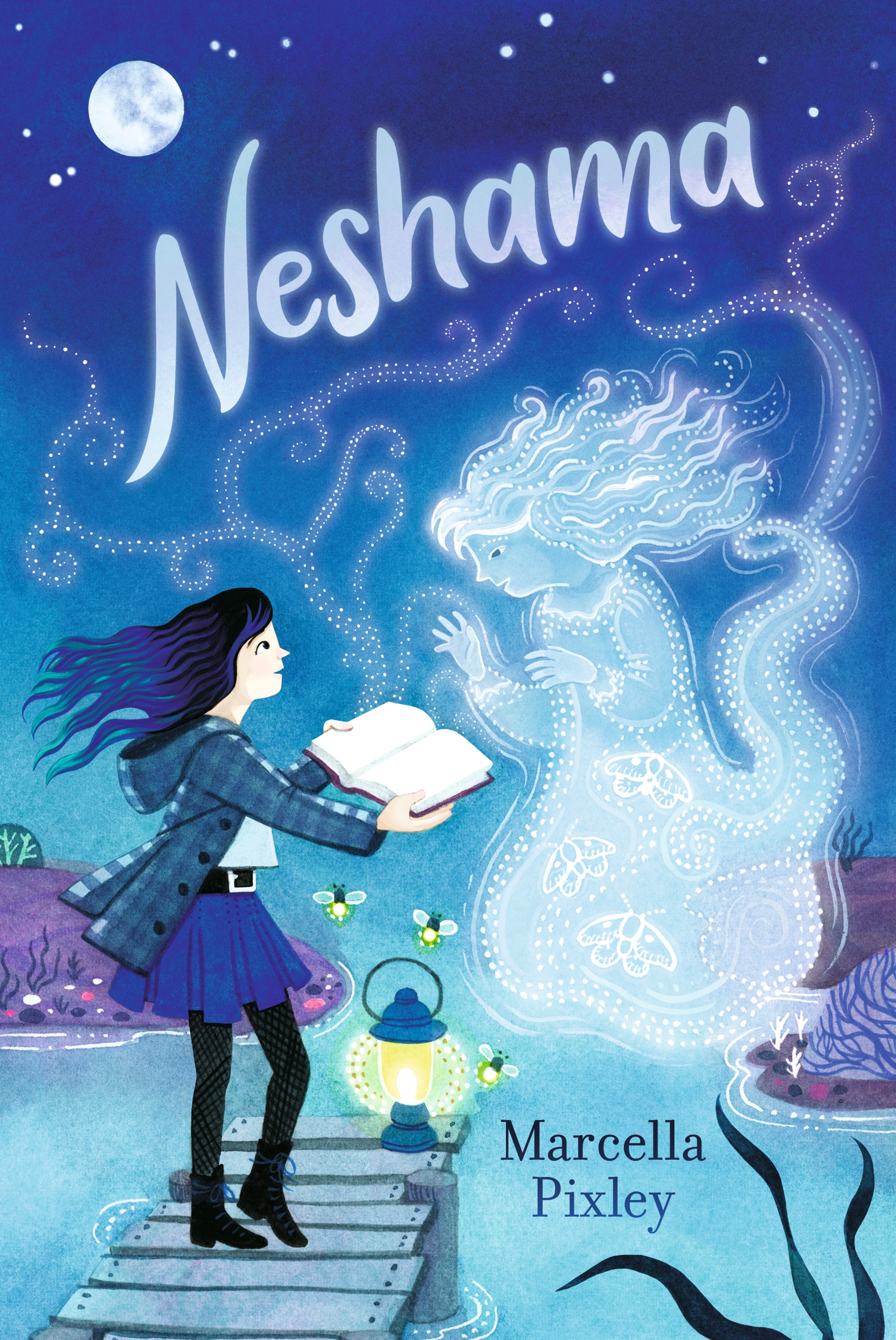
About the Book: Neshama is a haunting story about eleven-year-old Anna Fleischman who has the ability to communicate with the spirits of her ancestors. The problem is, no one believes her. Kids at school tease her and the adults are worried about her strange behavior. Everyone, that is, except Bubbe, who has always treasured Anna’s shayna neshama, her beautiful soul. But when Anna visits Bubbe in her house by the sea, and a restless ghost steps out of the shadows to ask for help, Anna will have to learn how to take matters into her own hands before it is too late. This is a story about family secrets, forgiveness, and the courage it takes to embrace your own complex identity. 

About the Author: Marcella Pixley is the award winning author of  four acclaimed young adult novels: FreakWithout TessReady To Fall, and Trowbridge Road, which was a Junior Library Guild Selection. Trowbridge Road was also long listed for the National Book Award and was a finalist in the Massachusetts Book Award and the Golden Dome Award. It was named a best book of 2020 by Shelf Awareness, Reading Group Choices and Mighty Girls. Neshama, Marcella’s upcoming ghost story in verse comes out from Candlewick Press on May 13th. It was recently named a Junior Library Guild Selection for 2025.

Thank you, Marcella, for sharing this writing exercise!

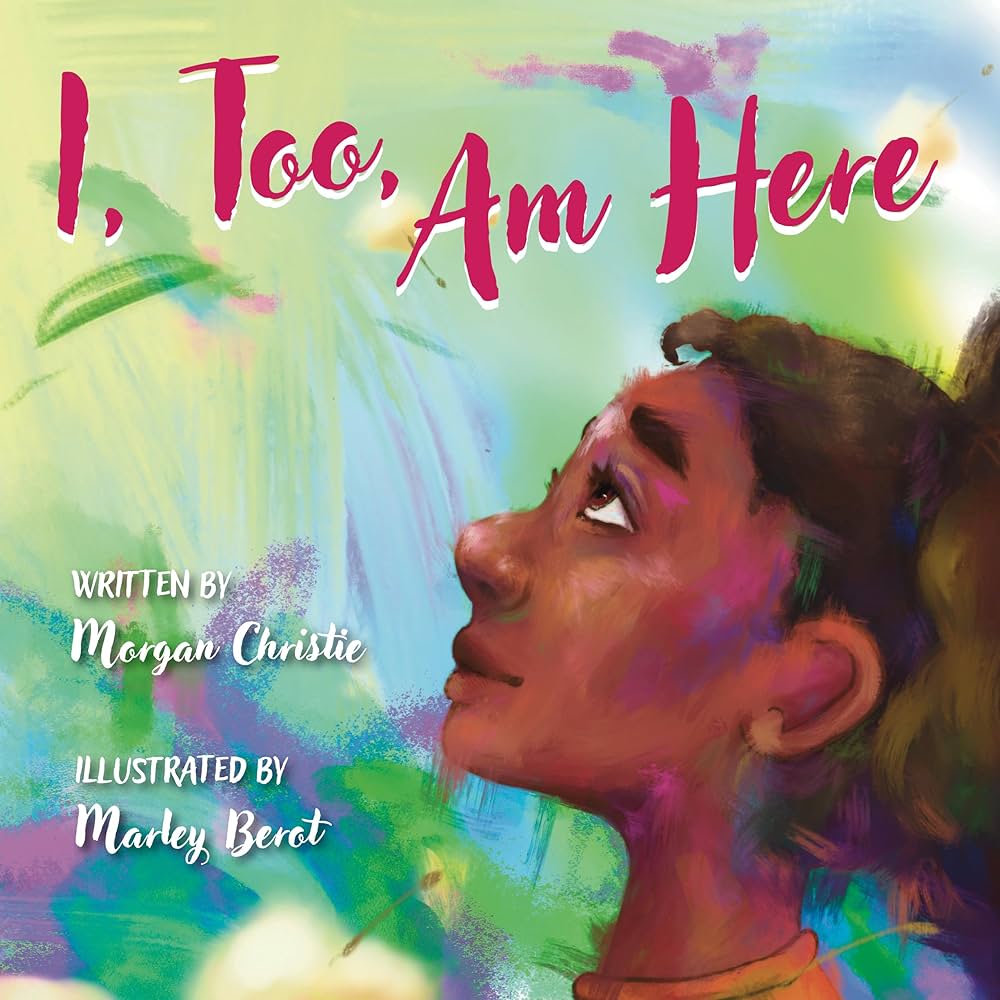
I, Too, Am Here by Morgan Christie, Illustrated by Marley Berot

Share

I, Too, Am Here
Author: Morgan Christie
Illustrator: Marley Berot
Published September 10th, 2024 by Second Story Press

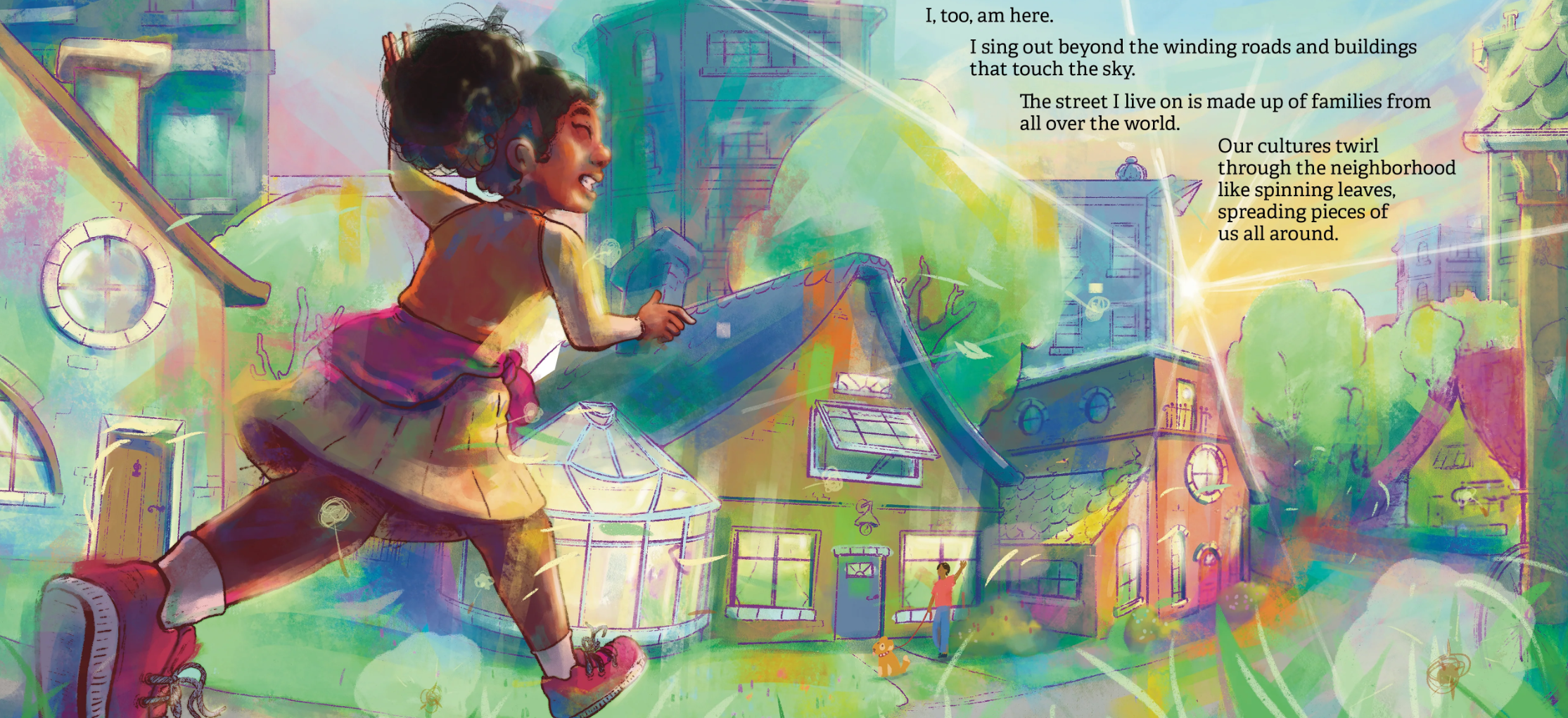
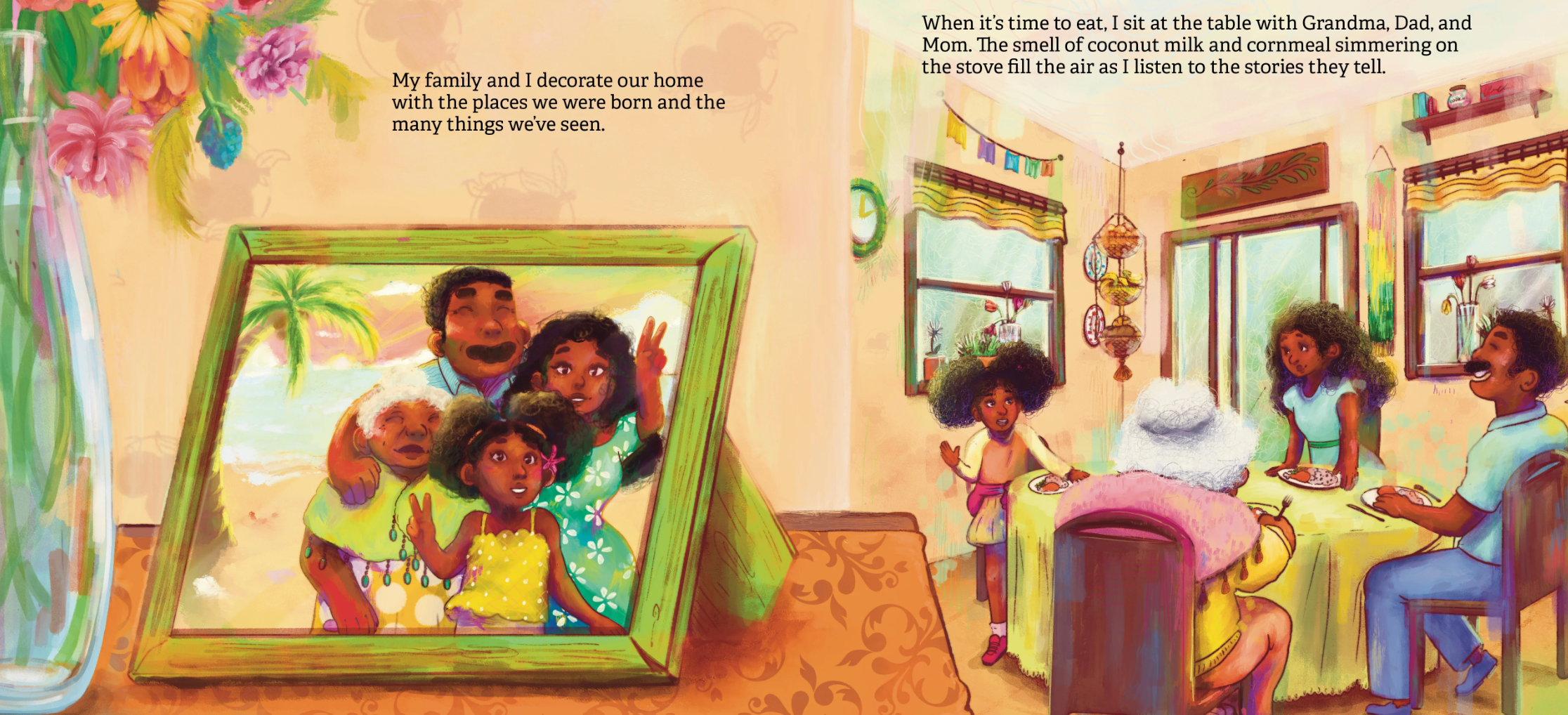
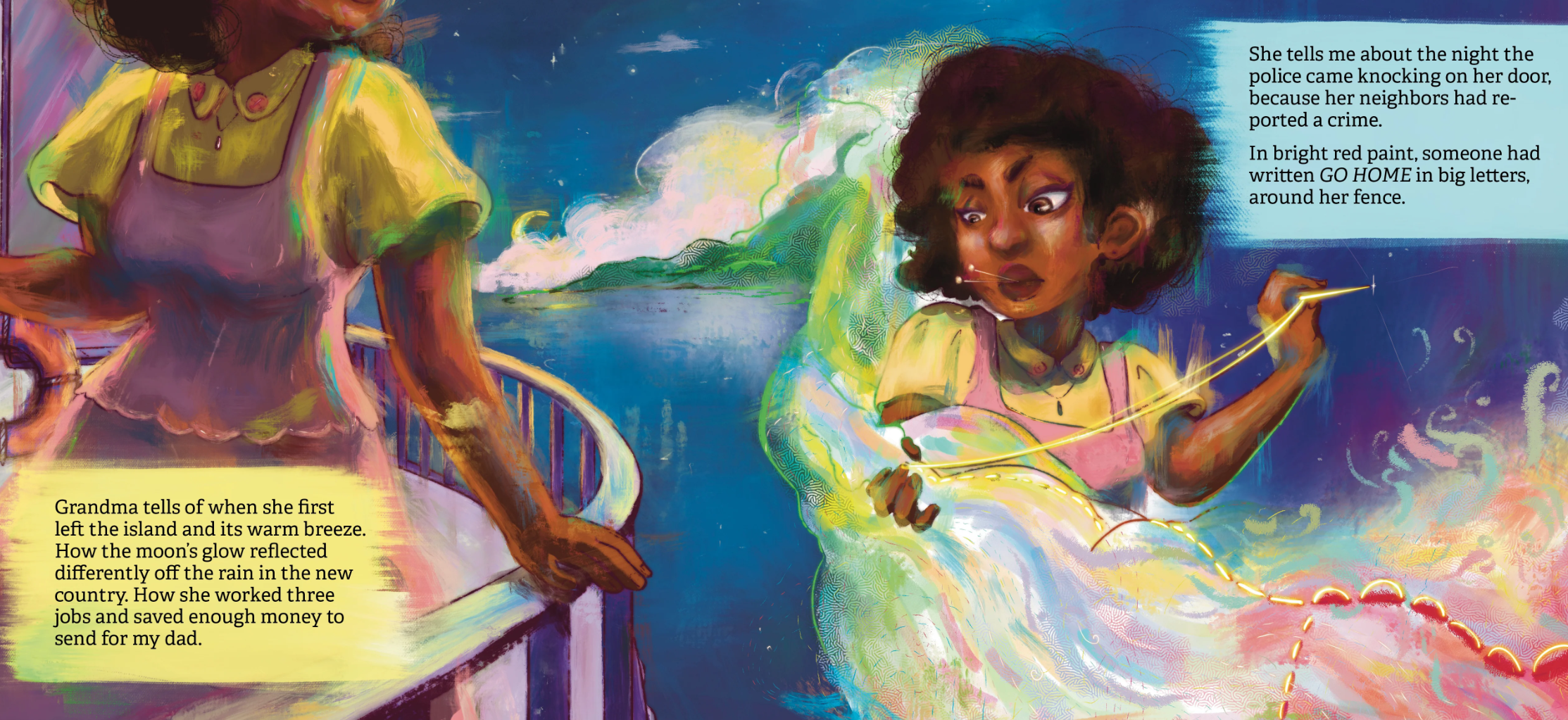
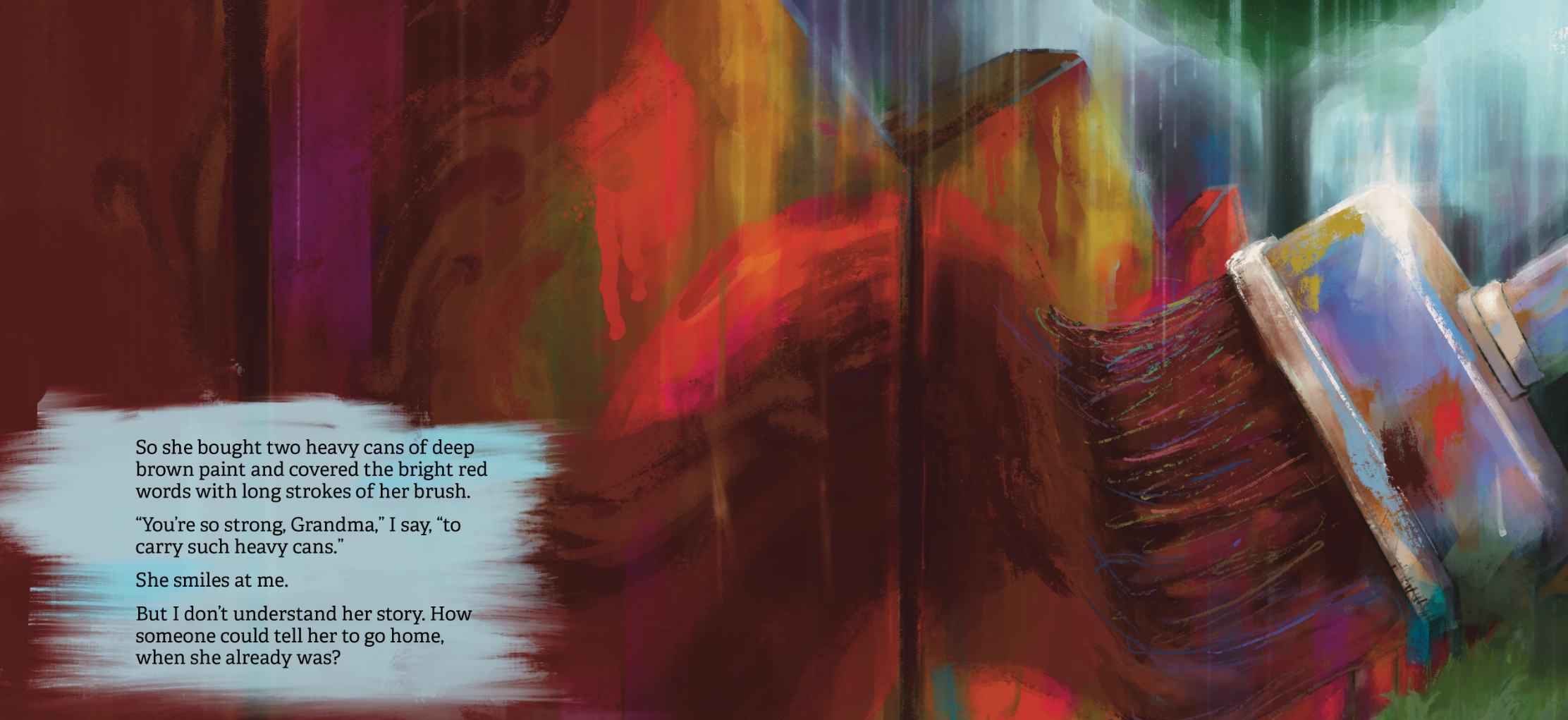
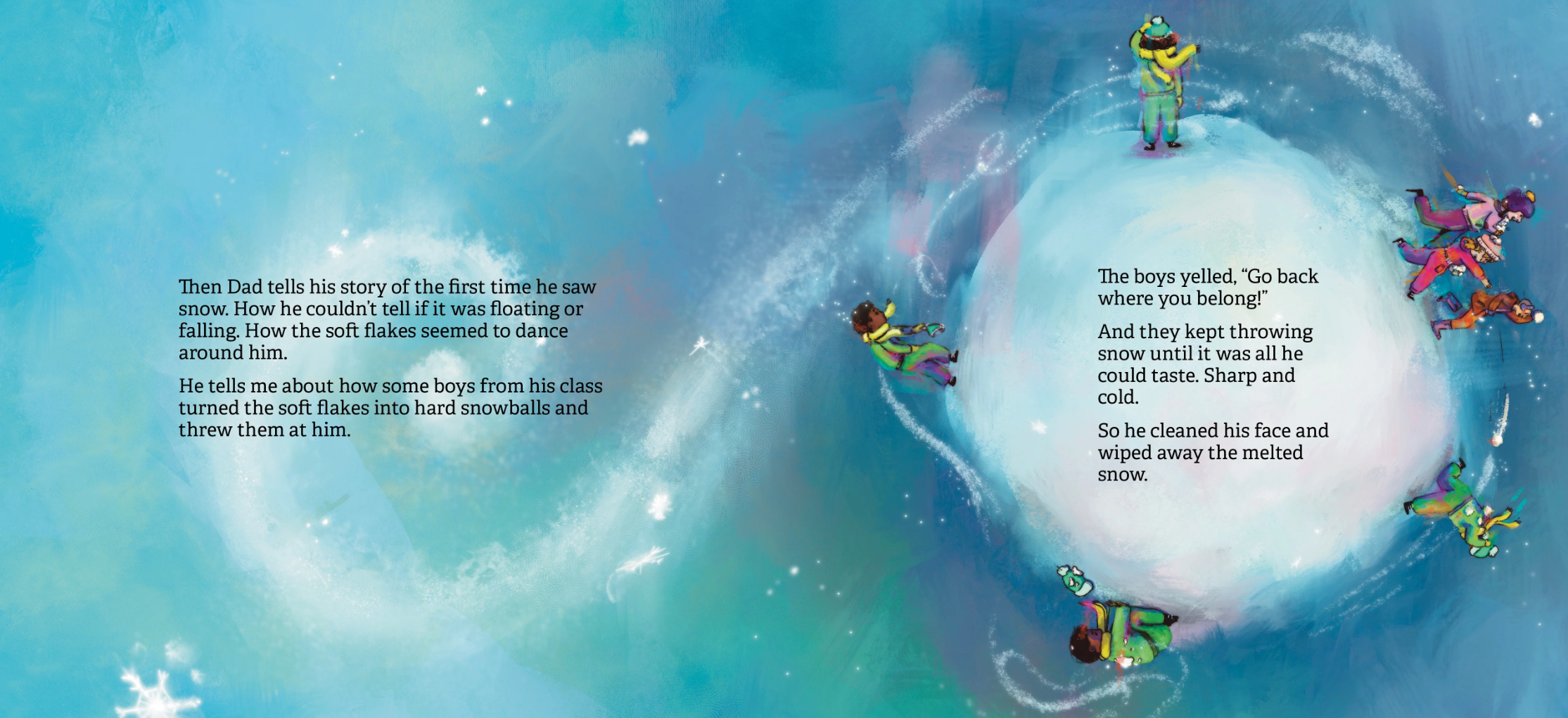
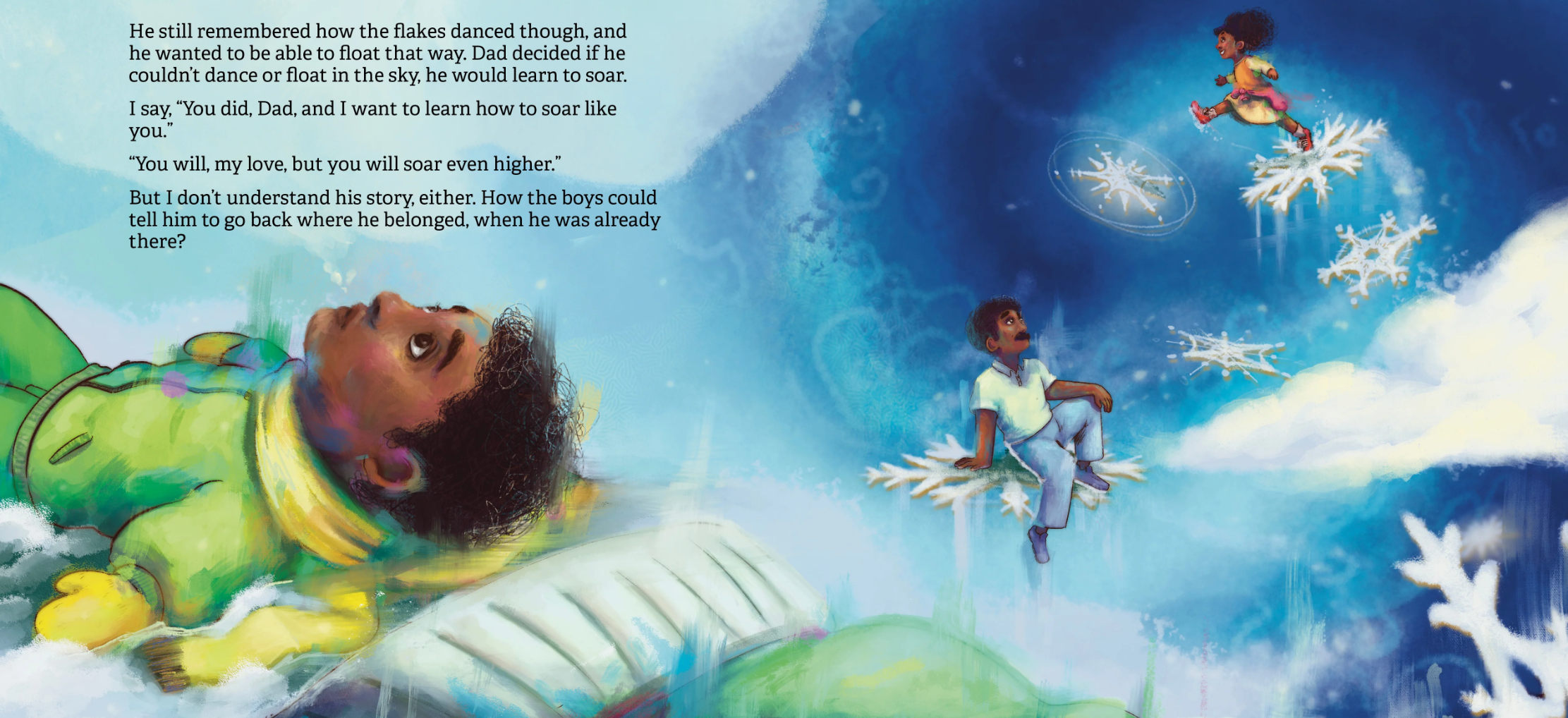
Summary: The street a young girl lives on is made up of families from all over the world. Her family shares with her their stories of journey and struggle. Her own story begins here in this country, but she is sometimes made to feel she does not belong. She listens to her family’s voices. They tell her she will soar, they tell her she is beautiful. She listens and she says I, too, am here.

A multigenerational story of immigration, racism, and what it truly means to belong. Inspired by Langston Hughes’ poem, “I, Too.”

About the Author: 

Morgan Christie is the author of four poetry chapbooks, a short story collection, and a collection of essays. She has won the Arc Poetry Poem of the Year Contest, the Prairie Fire Fiction Prize, the Digging Press Chapbook Series Prize, and the Howling Bird Press Nonfiction Book Award. ‘I, Too, Am Here’ is her second picture book and she continues to work towards affecting change through reading and writing. Morgan is based out of Toronto.

Marley Berot is an illustrator with over ten years of combined personal and professional experience. Her portfolio includes cover art for Neuron, graphic design work for the Toronto International Film Festival, logo design, and book illustration. She runs her own online store called MarleysApothecary.com. Marley is very passionate about her work as an artist, and this can be seen in every piece she creates. She lives in the Toronto area.

Review: The author shares that, “In reading this story, she hopes young readers will learn to see the ways our words and actions can affect others,” and I truly believe they will. I don’t know how anyone could argue that the beautiful family in the story should have anything but happiness. I also love that the author “drew inspiration from Hughes’s poem to write this book because she wanted to remind everyone who’s been told or made to feel otherwise how much joy and wonder they bring to the people and places around them,” and this is a message that all young people, all PEOPLE, should hear loud and clear, which this picture book delivers in words and art.

Tools for Navigation: This picture book can be read along side Langston Hughes’s “I, Too” poem to look for similarities, how it was influenced, the themes of both, etc.

Discussion Questions: 

  • Why does the narrator not understand the racism that his family faced?
  • What character traits would you use to define each of the characters in the story?
  • What should you do if you hear someone being racist (or prejudice in another way) towards a peer?
  • How does the history of slavery and the Jim Crow south still affect America today?
  • How was the book inspired by Langston Hughes?

Flagged Spreads: 

Read This If You Love: Picture books about multigenerational families, anti-racism, immigration, Black history, poetry

Recommended For: 

classroomlibrarybuttonsmall 

Signature

**Thank you to Nicole Banholzer PR for providing a copy for review!**

Educators’ Guide for Sunny G’s Series of Rash Decisions by Navdeep Singh Dhillon

Share

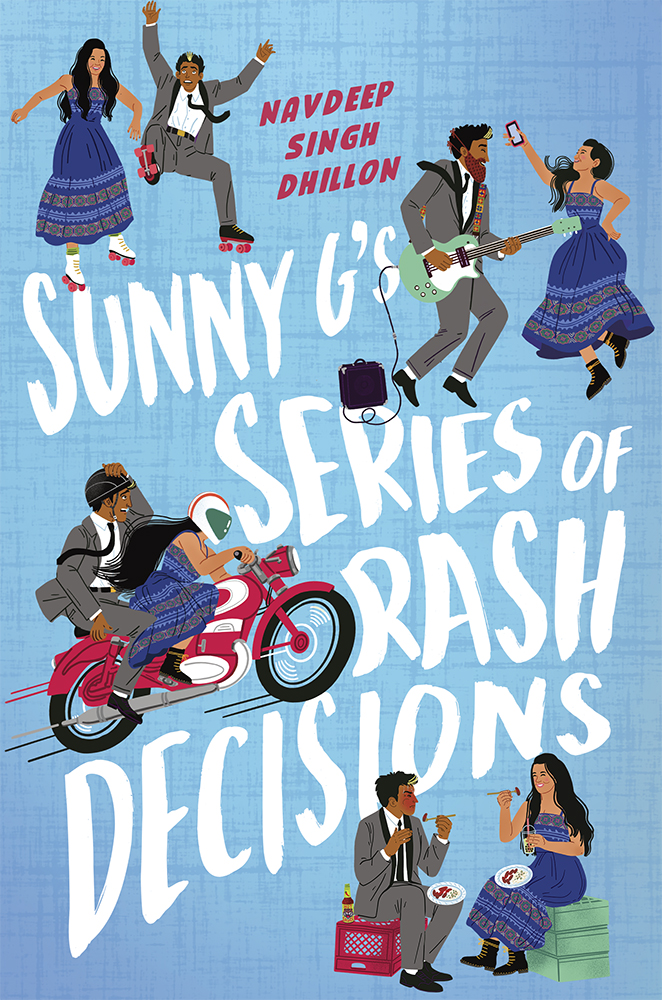
Sunny G’s Series of Rash Decisions
Author: Navdeep Singh Dhillon
Published: February 8th, 2022 by Dial Books

Summary: For fans of Sandhya Menon and Adam Silvera, a prom-night romantic-comedy romp about a Sikh teen’s search for love and identity

Sunny G’s brother left him one thing when he died: His notebook, which Sunny is determined to fill up with a series of rash decisions. Decision number one was a big one: He stopped wearing his turban, cut off his hair, and shaved his beard. He doesn’t look like a Sikh anymore. He doesn’t look like himself anymore. Even his cosplay doesn’t look right without his beard.

Sunny debuts his new look at prom, which he’s stuck going to alone. He’s skipping the big fandom party—the one where he’d normally be in full cosplay, up on stage playing bass with his band and his best friend, Ngozi—in favor of the Very Important Prom Experience. An experience that’s starting to look like a bust.

Enter Mindii Vang, a girl with a penchant for making rash decisions of her own, starting with stealing Sunny’s notebook. When Sunny chases after her, prom turns into an all-night adventure—a night full of rash, wonderful, romantic, stupid, life-changing decisions.

Teachers’ Tools for Navigation and Discussion Questions: 

Please view and enjoy the educators’ guide I created for Sunny G’s Series of Rash Decisions:

You can also access the educators’ guide here.

You can learn more about Sunny G’s Series of Rash Decisions, including a play list!, on the author’s webpage.

Recommended For: 

classroomlibrarybuttonsmall litcirclesbuttonsmall closereadinganalysisbuttonsmall

Kellee Signature

There Was a Party for Langston by Jason Reynolds, Illustrated by Jerome Pumphrey & Jarrett Pumphrey

Share

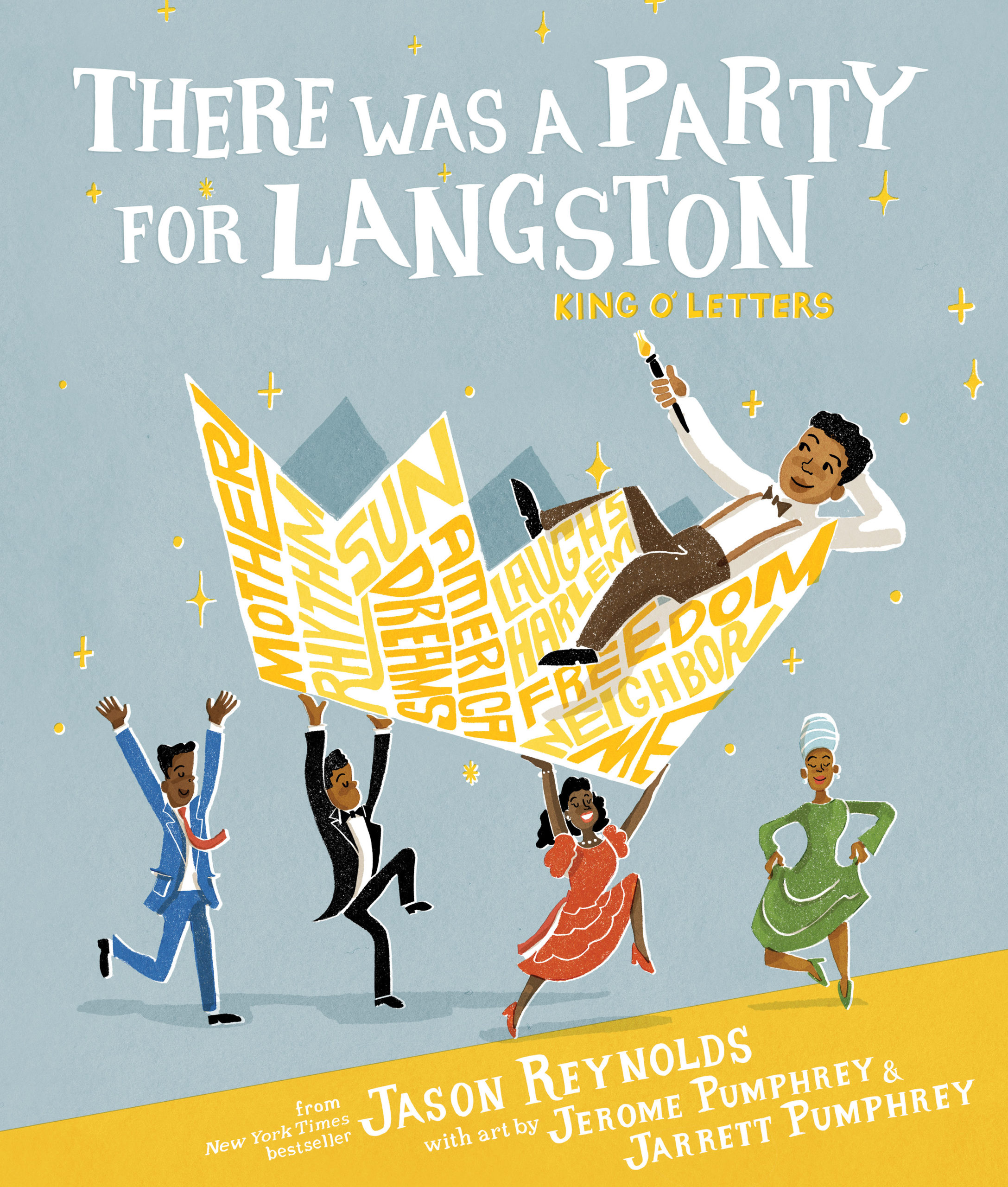
There Was a Party for Langston
Author: Jason Reynolds
Illustrators: Jerome Pumphrey & Jarrett Pumphrey
Published October 3rd, 2023 by Atheneum/Caitlyn Dlouhy Books

Summary: New York Times bestselling and award-winning author Jason Reynolds’s debut picture book is a snappy, joyous ode to Word King, literary genius, and glass-ceiling smasher Langston Hughes and the luminaries he inspired.

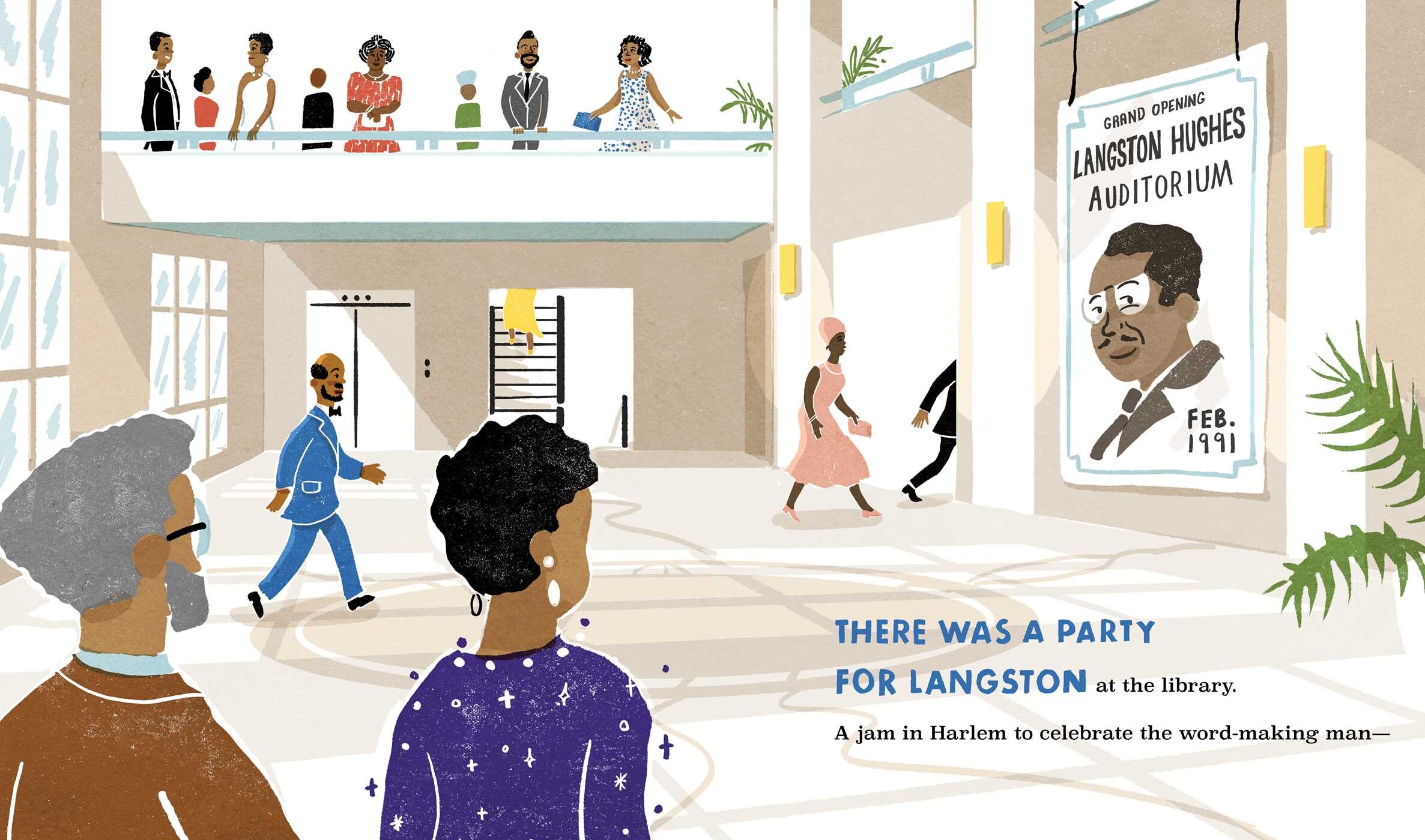
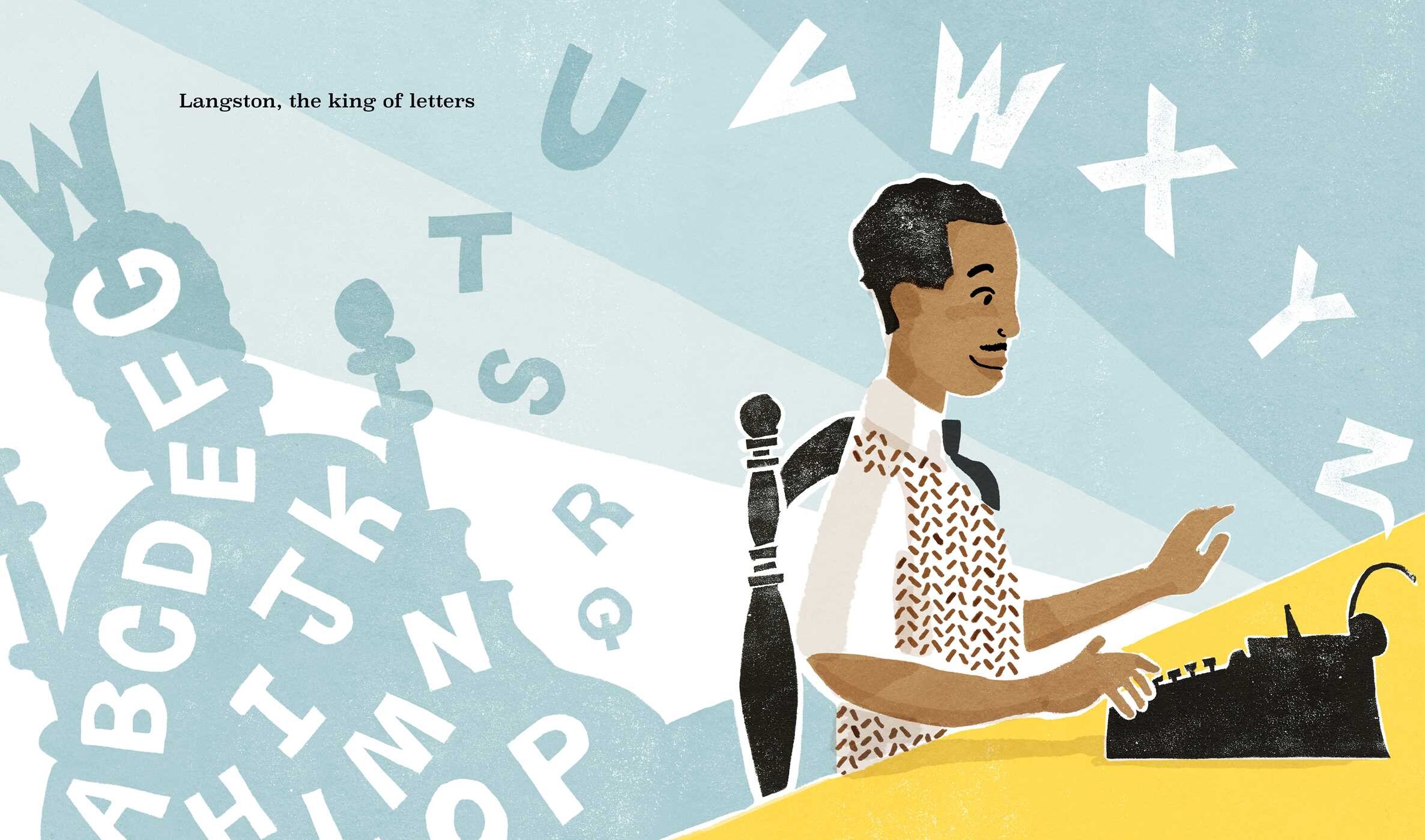
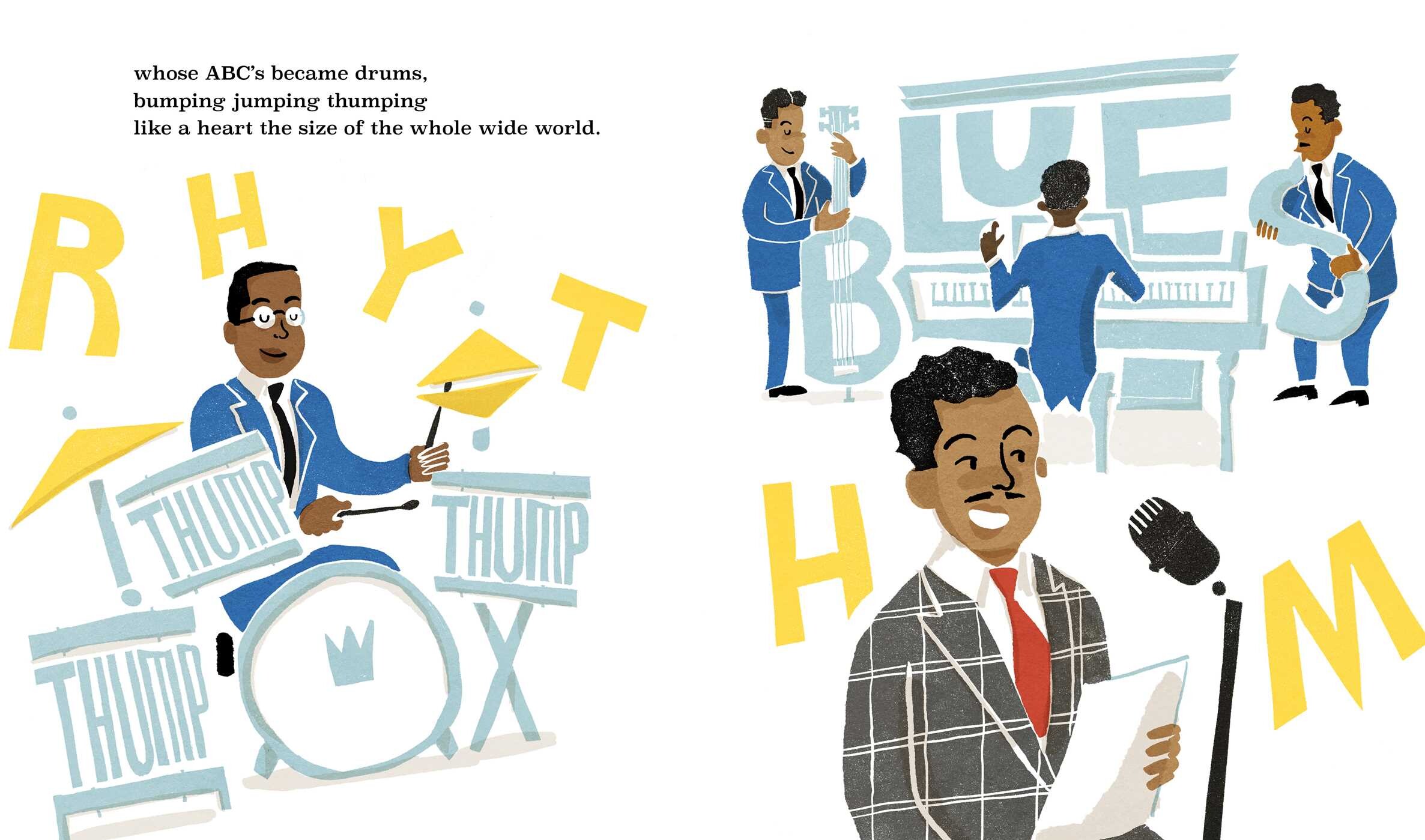
Back in the day, there was a heckuva party, a jam, for a word-making man. The King of Letters. Langston Hughes. His ABCs became drums, bumping jumping thumping like a heart the size of the whole country. They sent some people yelling and others, his word-children, to write their own glory.

Maya Angelou, Amiri Baraka, and more came be-bopping to recite poems at their hero’s feet at that heckuva party at the Schomberg Library, dancing boom da boom, stepping and stomping, all in praise and love for Langston, world-mending word man. Oh, yeah, there was hoopla in Harlem, for its Renaissance man. A party for Langston.

Praise:

Melding celebratory text and kinetic, graphical art, the creators underscore the power of the subject’s poetry to move and to inspire. – Publishers Weekly, *STARRED REVIEW*, 8/14/2023

Evocative and celebratory words float around the dancers like strains of music, all the way to a culminating whirl of letters, laughter, and joy. Who knew these esteemed literary lions could cut the rug like that? – Booklist, *STARRED REVIEW*, 08/01/2023

Reynolds and the Pumphrey brothers take readers on a dazzling journey through Langston Hughes’ legacy … A bar set stratospherically high and cleared with room to spare. – Kirkus Reviews, *STARRED REVIEW*, 08/01/2023

This book is an absolute textual and pictorial glory of people, places, word-making, song-singing, storytelling, history-making moments, and images that are unforgettable. A beguiling, bedazzling collaboration that will send children to the shelves to learn more about all the names within, especially Hughes. – School Library Journal, *STARRED REVIEW*, July 2023

About the Creators: 

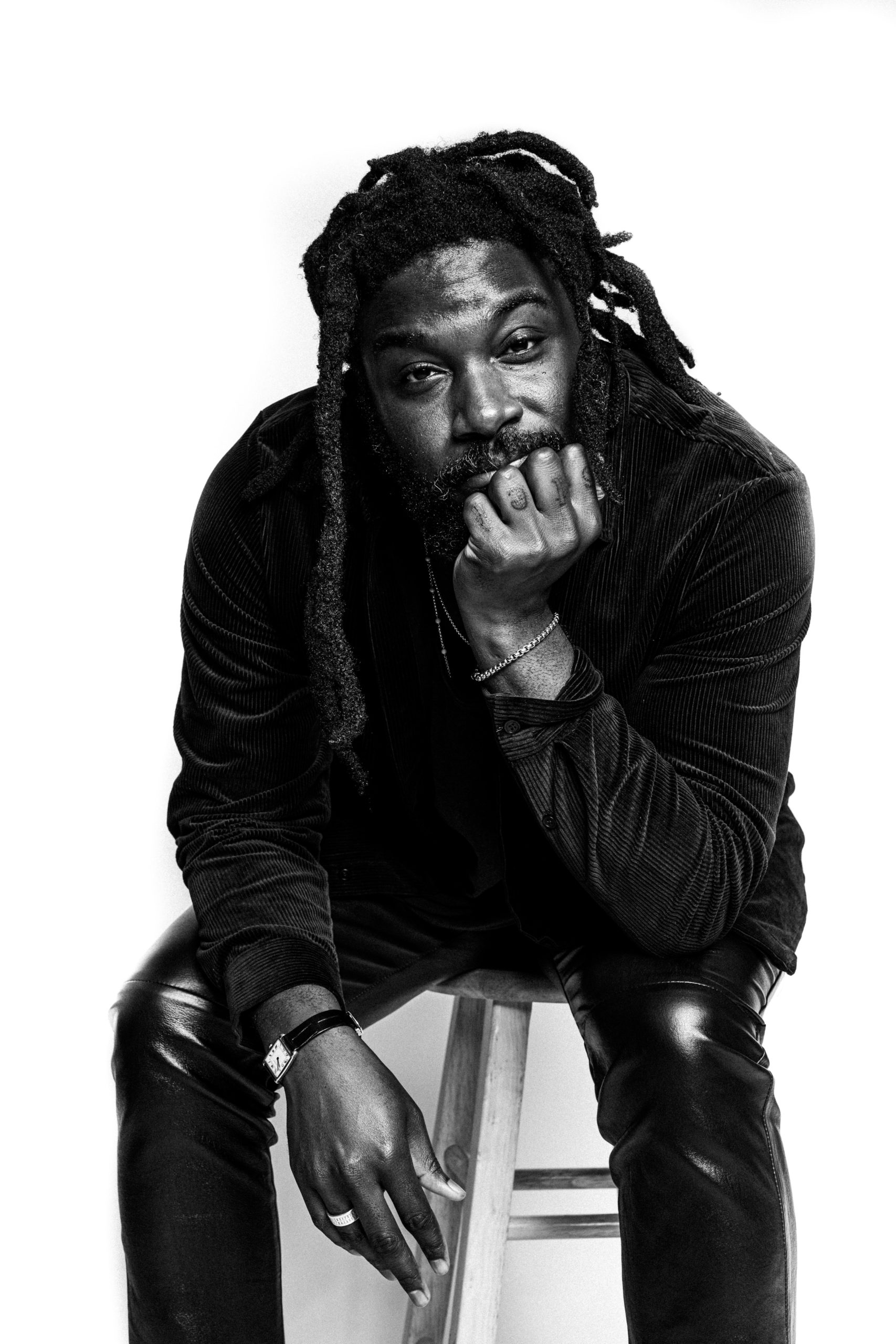
Jason Reynolds is a #1 New York Times bestselling author, a Newbery Award Honoree, a Printz Award Honoree, a two-time National Book Award finalist, a Kirkus Award winner, a UK Carnegie Medal winner, a two-time Walter Dean Myers Award winner, an NAACP Image Award Winner, an Odyssey Award Winner and two-time honoree, the recipient of multiple Coretta Scott King honors, and the Margaret A. Edwards Award. He was also the 2020–2022 National Ambassador for Young People’s Literature. His many books include All American Boys (cowritten with Brendan Kiely); When I Was the GreatestThe Boy in the Black SuitStampedAs Brave as YouFor Every One; the Track series (Ghost, Patina, Sunny, and Lu); Look Both WaysStuntboy, in the MeantimeAin’t Burned All the Bright (recipient of the Caldecott Honor) and My Name Is Jason. Mine Too. (both cowritten with Jason Griffin); and Long Way Down, which received a Newbery Honor, a Printz Honor, and a Coretta Scott King Honor. He lives in Washington, DC. You can find his ramblings at JasonWritesBooks.com.

Jerome Pumphrey is a designer, illustrator, and writer, originally from Houston, Texas. His work includes It’s a Sign!Somewhere in the BayouThe Old Boat, and The Old Truck, which received seven starred reviews, was named a Best Book of the Year by Publishers Weekly, and received the Ezra Jack Keats Writer Award Honor—all of which he created with his brother Jarrett. They also illustrated Jason Reynolds’s There Was a Party for Langston. Jerome works as a graphic designer at The Walt Disney Company. He lives near Clearwater, Florida.

Jarrett Pumphrey is an award-winning author-illustrator who makes books for kids with his brother, Jerome. Their books include It’s a Sign!Somewhere in the BayouThe Old Boat, and The Old Truck, which received seven starred reviews, was named a Best Book of the Year by Publishers Weekly, and received the Ezra Jack Keats Writer Award Honor. They also illustrated Jason Reynolds’s There Was a Party for Langston. Jarrett lives near Austin, Texas.

Review: This book may just be perfection. All of it–the words, the story, the inspiration, and the art.

First, we have Jason Reynolds’s verse, written with a rhythm that is screaming to be read aloud (I can’t wait for the audiobook). The story is a celebration of Hughes about a celebration of Hughes, so the love is truly emanating off the pages. And the story of Reynolds’s inspiration is just so wholesome and a snapshot into history that deserves this book.

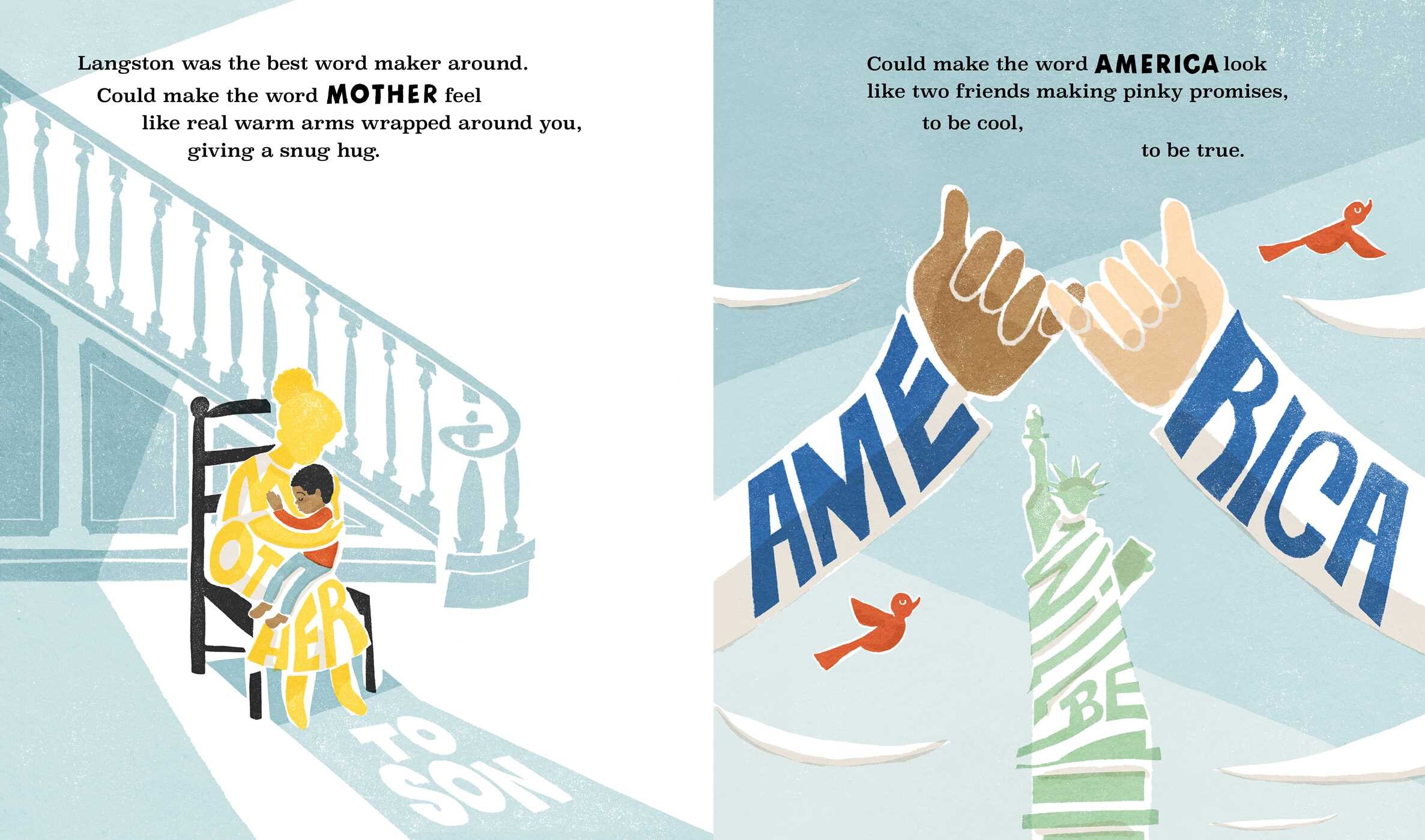
Second, the cherry on top is the pieces of art that illustrate Reynolds’s words. The Pumphrey brothers use handmade stamps to create spreads that complete the book into the complete package that it is. I loved how they included Hughes’s words and Reynolds’s words within the art as well.

I highly recommend reading Betsy Bird’s Goodreads review because she is so much more articulate and detailed than I am about this book in all of its glory.

Tools for Navigation: This text should be combined with Hughes’s work. His words are intertwined within the book which lends directly into picking up Hughes’s work to read alongside it. Readers could also find words within the illustrations and find which of Hughes’s work it comes from and look at why that particular section would be included at that point.

Additionally, other beloved authors were introduced to the readers, not only Maya Angelou and Amiri Baraka but James Baldwin, Gwendolyn Brooks, Ashley Bryan, Octavia Butler, Countee Cullen, W.E.B. DuBois, Paul Laurence Dunbar, Alice Dunbar Nelson, Ralph Ellison, Nikki Giovanni, Alex Haley, Zora Neale Hurston, Claude McKay, Toni Morrison, Alice Walker, and Richard Wright. These introductions could lend themselves to be the start of an author study, including asking why Reynolds and the Pumphreys would have chosen to include these specific authors.

Discussion Questions: 

  • Why did Langston Hughes have a party at the library?
  • What are some ways that Reynolds captured the excitement and glory of the evening with his words?
  • How did the illustrators use words in their art? What does it add to the book?
  • How did some of Hughes’s purposes relate to issues we’re still facing in America?
  • What inspired Jason Reynolds to write this book?
  • How is this picture book biography different than others?

Flagged Spreads: 

Read This If You Love: Poetry, Langston Hughes, Jason Reynolds

Recommended For: 

classroomlibrarybuttonsmall 

Signature

**Thank you to Simon & Schuster’s Children’s Publishing for sharing a copy for review!**

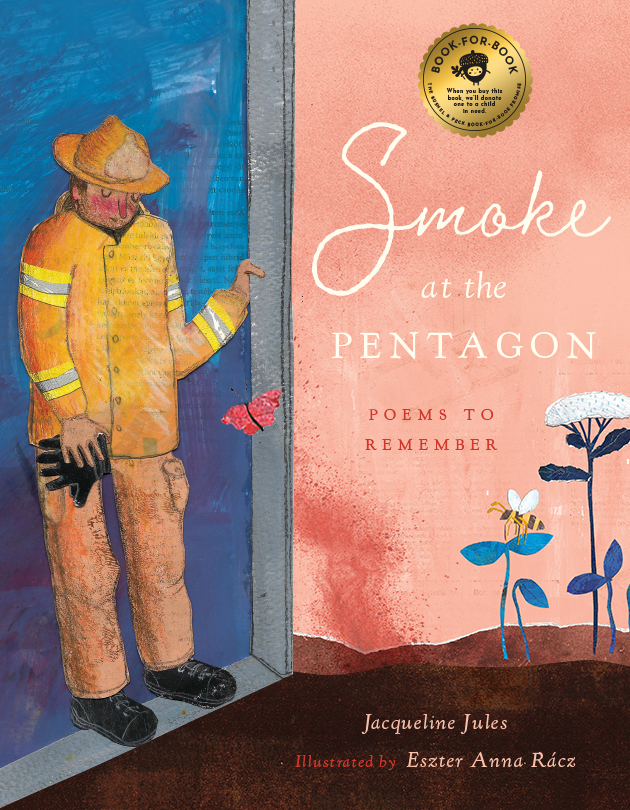
Author Guest Post: “Teaching the Next Generation about September 11th” by Jacqueline Jules, Author of Smoke at the Pentagon: Poems to Remember

Share

Teaching the Next Generation about September 11th

“What happened at the Pentagon?” one of my students asked me. “Why are they ringing that bell?”

It was September 11, 2008, seven years after the 9/11 attacks. I was an elementary school librarian in Northern Virginia. A select group of students, chosen to be my library helpers, had just walked into the library. They gathered around me, watching a wall-mounted television in the center of the room. I had turned it on earlier that morning so the staff could watch the dedication of the Pentagon Memorial on C-Span.

“Why are they reading names?” another student asked. “Did people die?”

I won’t forget the upturned faces, focused on the television screen that morning. All six of my library helpers stood silently, watching a man in a white Navy suit, wearing white gloves, pull the cord on a large golden bell. Another man read names from a podium on an outdoor stage. The solemnity of the dedication ceremony was very clear to my students. Yet they were baffled by the reason for it. I was surprised.

As residents of Northern Virginia, these students were certainly familiar with the Pentagon. Like me, they’d seen the huge five-sided building with its enormous parking lot on their way to the airport or a nearby mall. But not one of the six children in front of me knew that the Pentagon had been attacked on September 11, 2001.

I shouldn’t have been shocked. These students were only four years old in 2001 and unlikely to remember much. Not all of them had even lived in Virginia at the time of the Pentagon attack. Why should they know what happened?

A good question. As a teacher, it was something I thought about a lot. Should 9/11 be a part of our curriculum? Can we understand our present society better when we have knowledge of past events?

Today’s students may not be aware of the drastic changes in airport security since 9/11. Even more importantly, they may not be aware of the way Americans came together to help each other and rebuild after 9/11. Knowing that Americans overcame tough circumstances in the past can give students the courage to face future challenges if they arise. The history of 9/11 can demonstrate the resilience of American society. The Pentagon was rebuilt within a year. It’s a story of perseverance our students should be aware of.

My collection of narrative poems, Smoke at the Pentagon: Poems to Remember, portrays the reactions of young people who experienced September 11th  in Northern Virginia where the Pentagon is located. Kelvin, age 5, is on the swings at recess when he is frightened by a loud sound. Emily, age 13, describes her feelings as she watches her teacher holding on to his desk, visibly shaken by the news he shares with the class. Cyrus, age 10, waits for his father, a fireman responding to the Pentagon attack. Tyra, age 14, watches rubble cleared from the Pentagon while riding the bus to school.

The twenty poems in Smoke at the Pentagon: Poems to Remember could be performed as a Reader’s Theater. If the class has more than twenty students, the introduction can be divided up into extra speaking parts. Role-playing the different characters can help students understand and discuss many perspectives. Other teaching ideas for Smoke at the Pentagon: Poems to Remember can be found in the Teacher’s Guide posted on my website and at the Bushel & Peck website.

I hope you will consider discussing September 11, 2001 in your classrooms and at home. We are approaching the 22nd anniversary of the event. Today’s children will have no knowledge of this history if educators and other adults don’t introduce it.

Published August 1st, 2023 by Bushel & Peck

About the Book: A moving book of poems to remember 9/11 at the Pentagon.

On September 11, 2001, American Airlines Flight 77 crashed into the Pentagon in Arlington, Virginia. One hundred and eighty-four innocent people were killed. The event occurred at 9:37 a.m. and was part of a coordinated terrorist attack against the United States involving four hijacked flights.

Author Jacqueline Jules, who was a school librarian living in Arlington, Virginia on 9/11, tells the story of that day through a tapestry of poems. These poems tell the stories of young people from all aspects of the Arlington and Pentagon communities and are composites drawn from personal experiences with students and friends residing in Northern Virginia at the time of the attack.

September 11th changed childhoods. Anyone old enough to remember that day will never forget, but today’s children need to be told the story.

Download the Teacher’s Guide: http://jacquelinejules.com/images/Teacher’sGuideSMOKE%20AT%20THE%20PENTAGON.pdf

⭐”A powerful, humanistic look at the aftermath of a national tragedy, and an important purchase for modern collections.”―School Library Journal

About the Author: Jacqueline Jules is the award-winning author of over fifty books for young readers, including the Zapato Power series, the Sofia Martinez series, Unite or Die: How Thirteen Became a Nation, My Name is Hamburger, The Porridge-Pot Goblin, and Tag Your Dreams: Poems of Play and Persistence. A retired elementary school librarian and teacher, she has created numerous resources for her website, available to educators for free download. Please visit www.jacquelinejules.com.

Thank you, Jacqueline, for reminding us to teach about this life-changing day!

The Fire, the Water, and Maudie McGinn by Sally J. Pla

Share

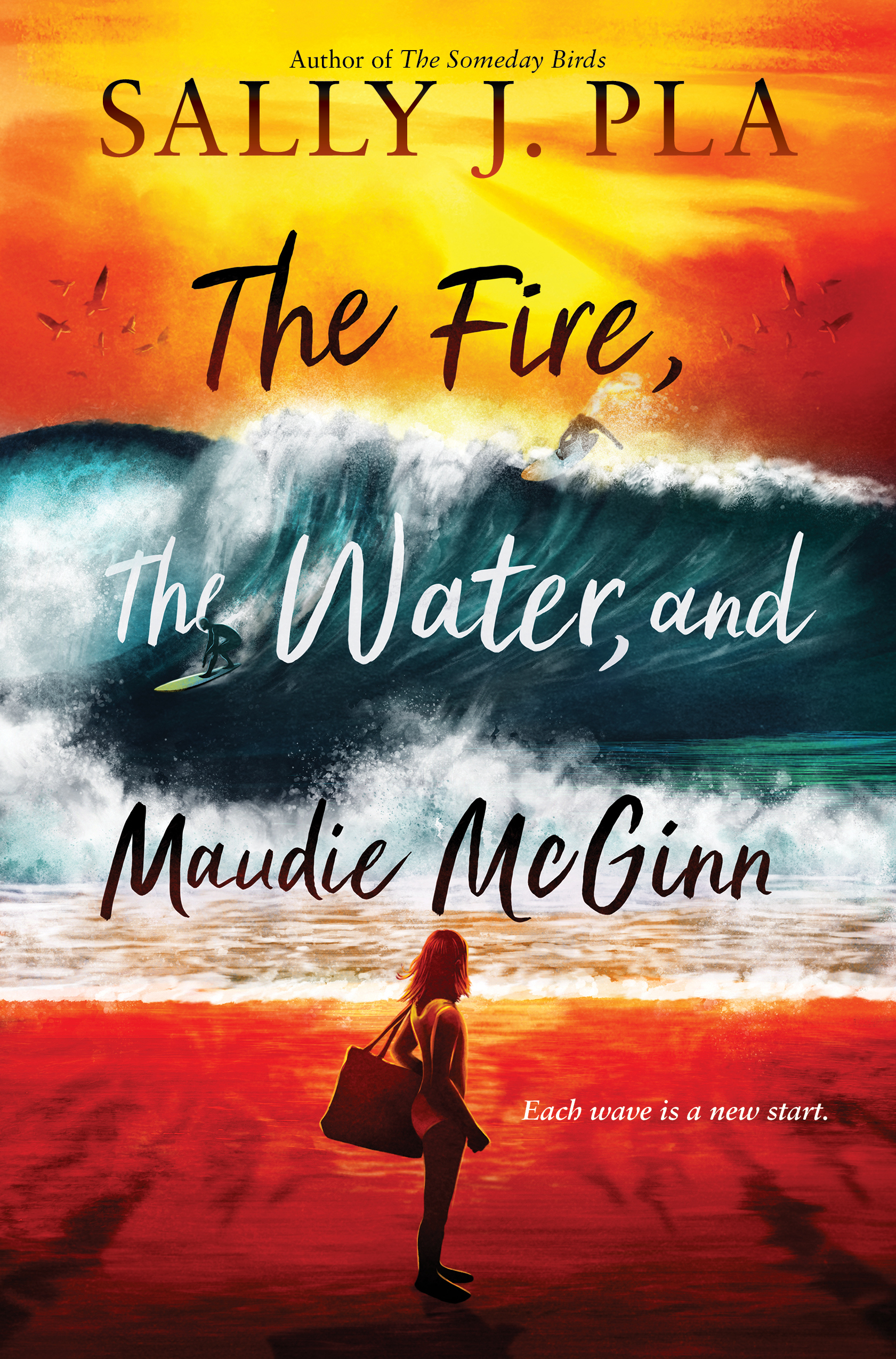
The Fire, the Water, and Maudie McGinn
Author: Sally J. Pla
Published July 11th, 2023 by Quill Tree Books

Summary: Neurodivergent Maudie is ready to spend an amazing summer with her dad, but will she find the courage to tell him a terrible secret about life with her mom and new stepdad? This contemporary novel by the award-winning author of The Someday Birds is a must-read for fans of Leslie Connor and Ali Standish.

Maudie always looks forward to the summers she spends in California with her dad. But this year, she must keep a troubling secret about her home life–one that her mom warned her never to tell. Maudie wants to confide in her dad about her stepdad’s anger, but she’s scared.

When a wildfire strikes, Maudie and her dad are forced to evacuate to the beach town where he grew up. It’s another turbulent wave of change. But now, every morning, from their camper, Maudie can see surfers bobbing in the water. She desperately wants to learn, but could she ever be brave enough?

As Maudie navigates unfamiliar waters, she makes friends–and her autism no longer feels like the big deal her mom makes it out to be. But her secret is still threatening to sink her. Will Maudie find the strength to reveal the awful truth–and maybe even find some way to stay with Dad–before summer is over?

Praise: 

“A vulnerable portrait of one girl seeking to empower and redefine herself outside of her personal traumas.” — Publishers Weekly (starred review)

“Through Maudie’s earnest, occasionally poetic narration, Pla vividly explores the ways that physical and verbal abuse can distort self-perception. A perceptive, poignant tale of self-discovery.” — Kirkus Reviews

“A heartfelt story of courage and hope about Maudie, who navigates the world in her own unique divergent way, even while struggling with challenging family dynamics and loss. Readers will cry, cheer, and celebrate, and not soon forget, Maudie McGinn.”  — Pam Muñoz Ryan, Newbery Honor-winning author

“A gorgeous, bighearted, beautiful book. I loved it.”   — Elana K. Arnold, award-winning author of A Boy Called Bat

“A powerful and deeply affecting story that will carry readers along like the perfect wave.” — Barbara Dee, author of Maybe He Just Likes You 

“A breathtakingly beautiful ride of a story about an unforgettable, neurodivergent heroine.” — Jess Redman, award-winning author of The Miraculous

About the Author: Sally J. Pla writes stories for young people. Her books have been translated into many languages, garnered starred reviews, appeared on many ‘best book’ and state lists, and picked up a few awards, but the best thing they’ve done has been to connect her to readers like you. The Someday Birds; Stanley Will Probably Be Fine; Benji, The Bad Day, And Me; and her latest, The Fire, The Water, and Maudie McGinn, all portray characters who see the world a bit differently. Because we are all stars shining with different lights.

Sally has English degrees from Colgate and Penn State, and has worked as a journalist and in public education. You can find her at sallyjpla.com.

Review: This book, y’all. I am so glad that it was put on my radar because it is more than I could have guessed from the summary–I am so glad that I read it. It was a one-sitting read; I couldn’t put it down.

Sally J. Pla has crafted a book that pulls at heartstrings; has moments written in prose AND verse that are mentor texts in craft; will be a window, mirror, or sliding glass door (Sims-Bishop, 1990) for so many readers; touches on a tough subject that I truly think will help some readers with talking about their own situation; and has an amazing cast of characters!

Teaching Tools for Navigation: This book will be loved by so many readers. It is a must buy for middle school libraries and classrooms and may even be a good book club choice, just make sure to discuss the content triggers before choosing. Help the right readers find this book, help the right ones talk about it, and help the book get the love it deserves.

Discussion Questions: 

  • Why do you think the author chose not to tell Maudie’s secret from the beginning?
  • How does surfing both help and hurt Maudie’s situation?
  • How is Maudie treated differently with her mom versus her dad?
  • Why does her dad seem to understand her better than her mom?
  • Why did the author include sections in verse throughout the book?
  • Why do you think Etta helps Maudie?
  • Why does Maudie begin to find her voice more now that she is with her dad?
  • How is Paddi’s school different than Maudie’s school in Texas?
  • Masks are talked about figuratively within the book. Why does Maudie and her mom feel like they have to wear a mask?
  • What type of character traits does Maudie and her dad show by starting over after the fire?

Flagged Passage:

Chapter 2 Wowowowowowowowow

The Molinas emergency shelter is packed with stressed-out neighbors, grim-looking police, and frantic aid workers handing out things like bottles of water and crinkly silver blankets.

It’s not cold, but I can’t stop shivering.

There’s an old clipboard perched on a table under a stale copy cup–leftover from some meeting. I take it with me to one of the cots the volunteers have set up. Its thing blue mattress crunches underneath me; it feels like it’s filled with plastic pellets.

I unclip an old paper from the clipboard and turn it over. And just like Mr. Parris taught me, back at that noisy dance, I do his calm-down trick. I start to catalog the too-muchness.

SMELLS
stale coffee
stale soup
industrial carpeting
body odor
ashes
smoke
fabric softener

SOUNDS
kids crying
a couple arguing in staccato Spanish
an old man coughing and hacking up something wet and gross into a Kleenex, ugh
some lady shouting “Who took my phone? Who took my phone?” over and over
distant sirens: wowowowo-wowowowowo-wowwwwwwww

TOUCH
this silver emergency blanket, which feels like slippery aluminum foil
this sweaty plastic-pellet mattress under my butt and legs
burning eyes, like my lashes are gunked with hot grit
headache, blaring and pounding at my temples like a vise
a strange iron-band feeling around my chest, keeping me breathless
B R E A T H E
B R E A T H E
B R E A T H E

SIGHTS
The curve of my dad’s back

Read This If You Love: A Work in Progress by Jarrett Lerner; Me and Sam-Sam Handle the Apocalypse by Susan Vaught; Get a Grip, Vivy Cohen! by Sarah Kapit; The Ship We Built by Lexie Bean; Tornado Brain by Cat Patrick

Recommended For: 

classroomlibrarybuttonsmall

Signature

**Thank you to Blue Slip Media for providing a copy of review!**

The Witness Trees: Historic Moments and the Trees Who Watched Them Happen by Ryan G. Van Cleave, Illustrated by Ððm Ððm

Share

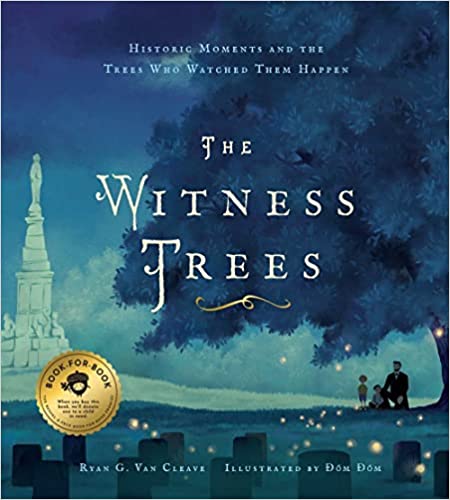
The Witness Trees: Historic Moments and the Trees Who Watch Them Happen
Author: Ryan G. Van Cleave
Illustrator: Ððm Ððm
Publishing May 9th, 2023 by Bushel & Peck Books

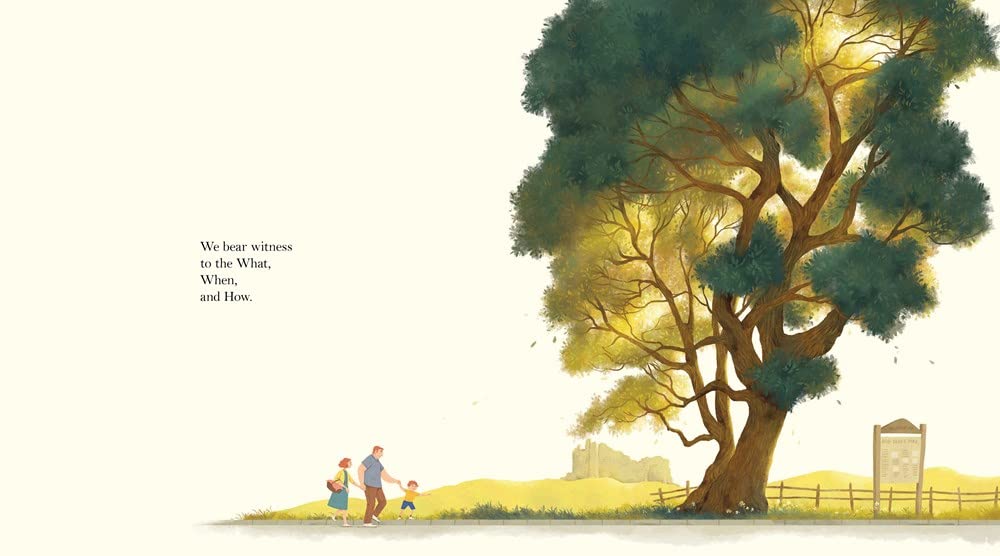
Summary: For generations, trees have silently witnessed history’s most pivotal moments. Here are their stories.

In the sweep of wind over grass,
near the pulse of rivers,
we stand,
monuments of bark
and age-curled green.

Above, an avalanche of stars.
Below, the ocean of earth.
Within, the uncounted lives
birthed, bloomed, and plucked
from the gardens we tend.

We survive.
We remember.
We witness.

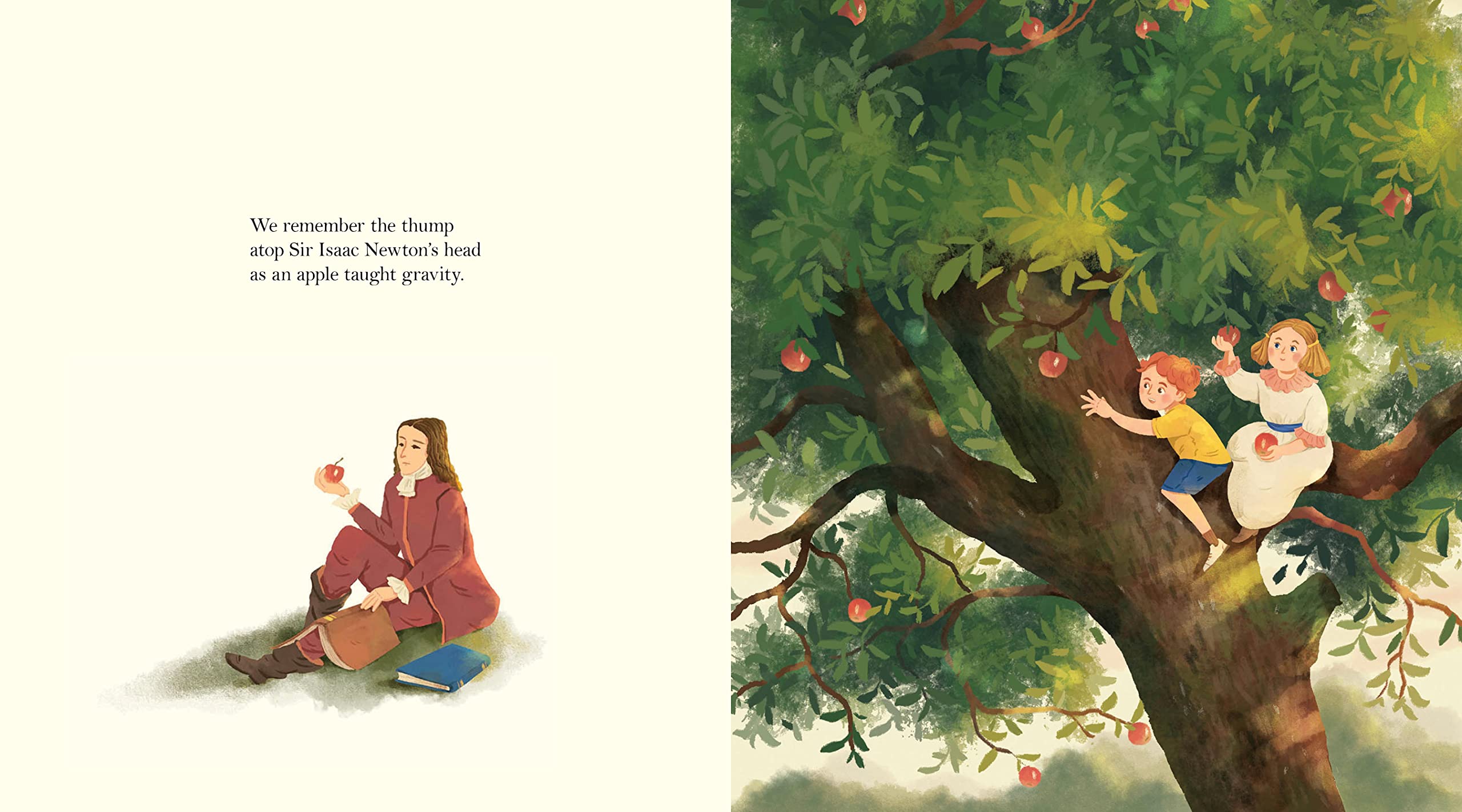
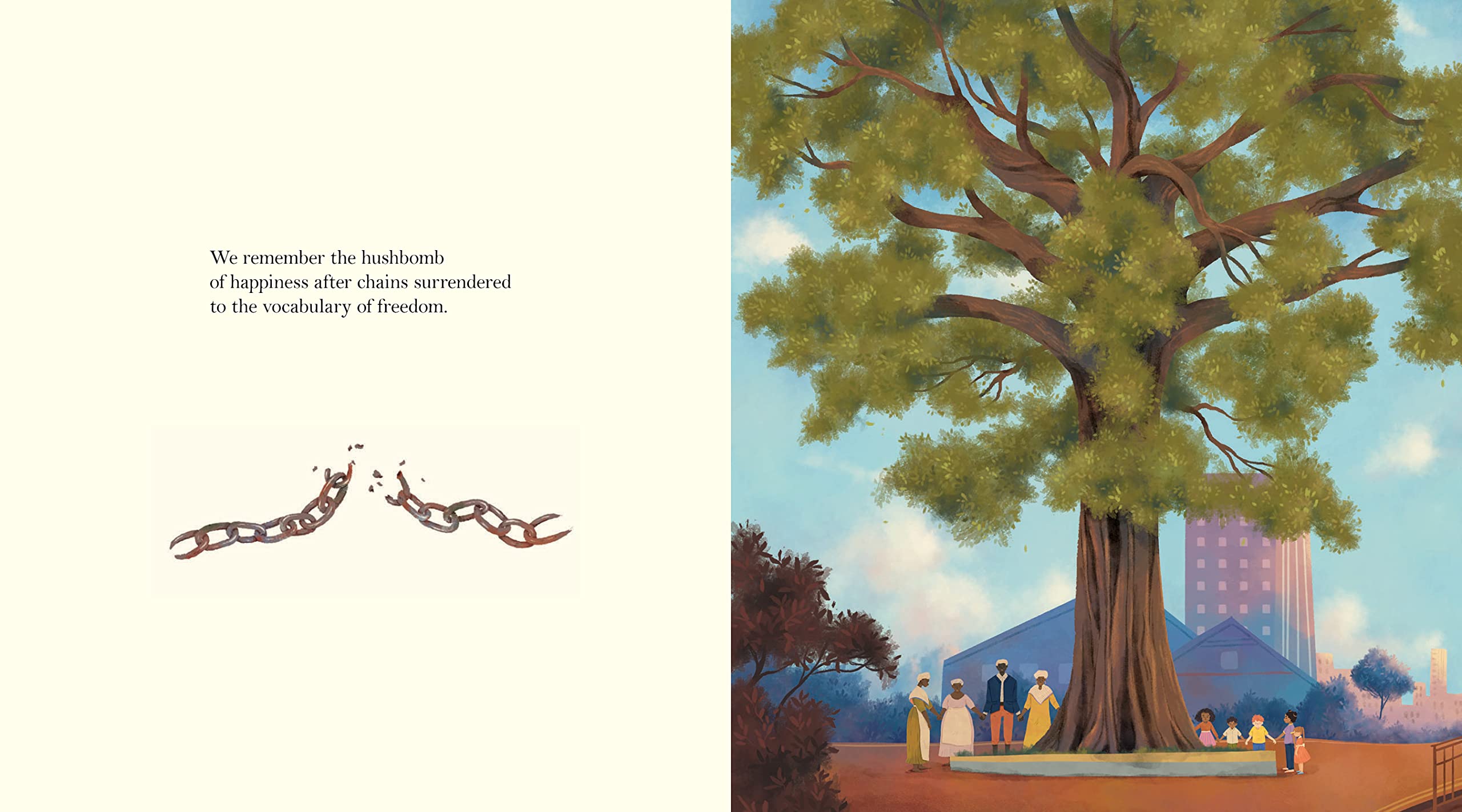
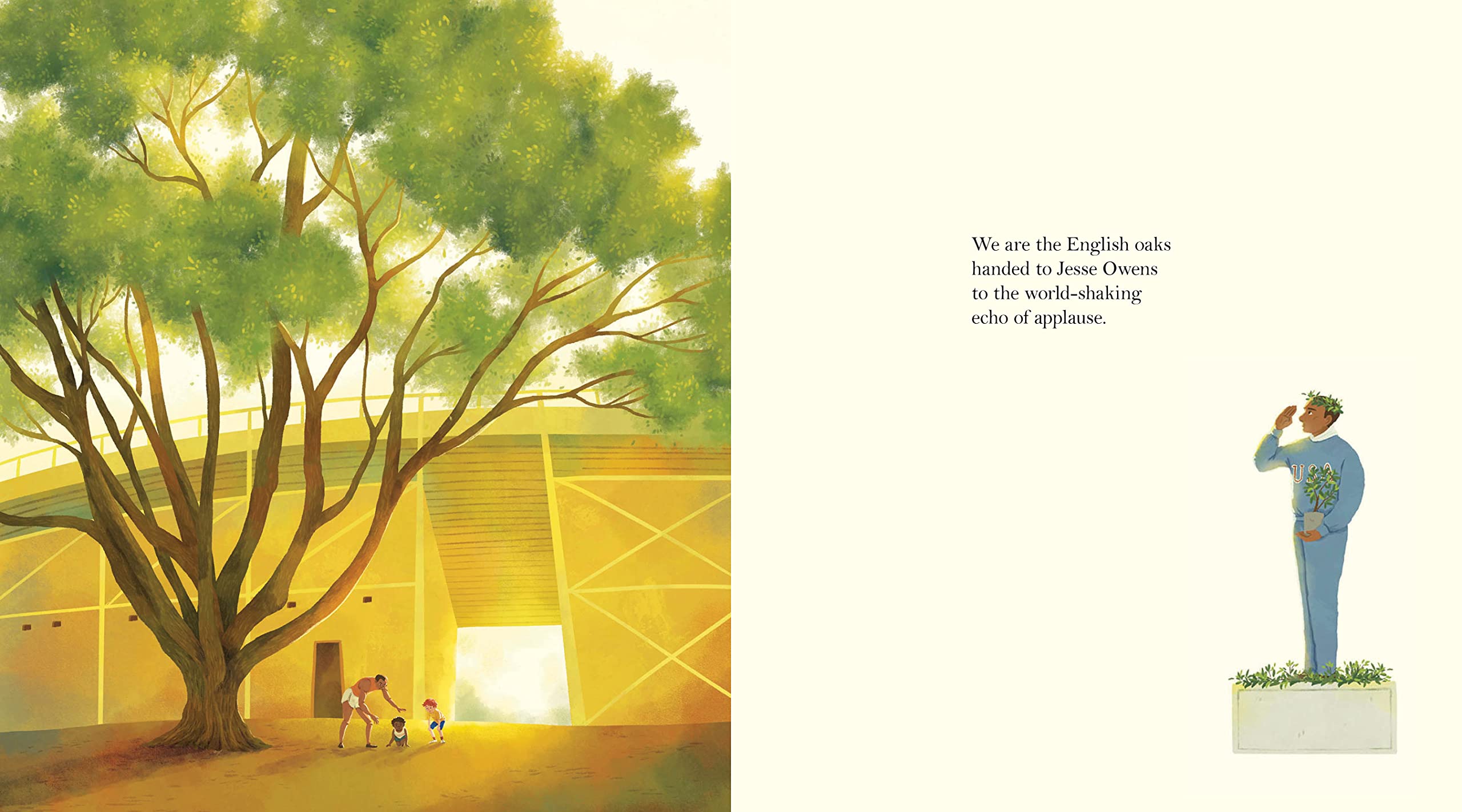
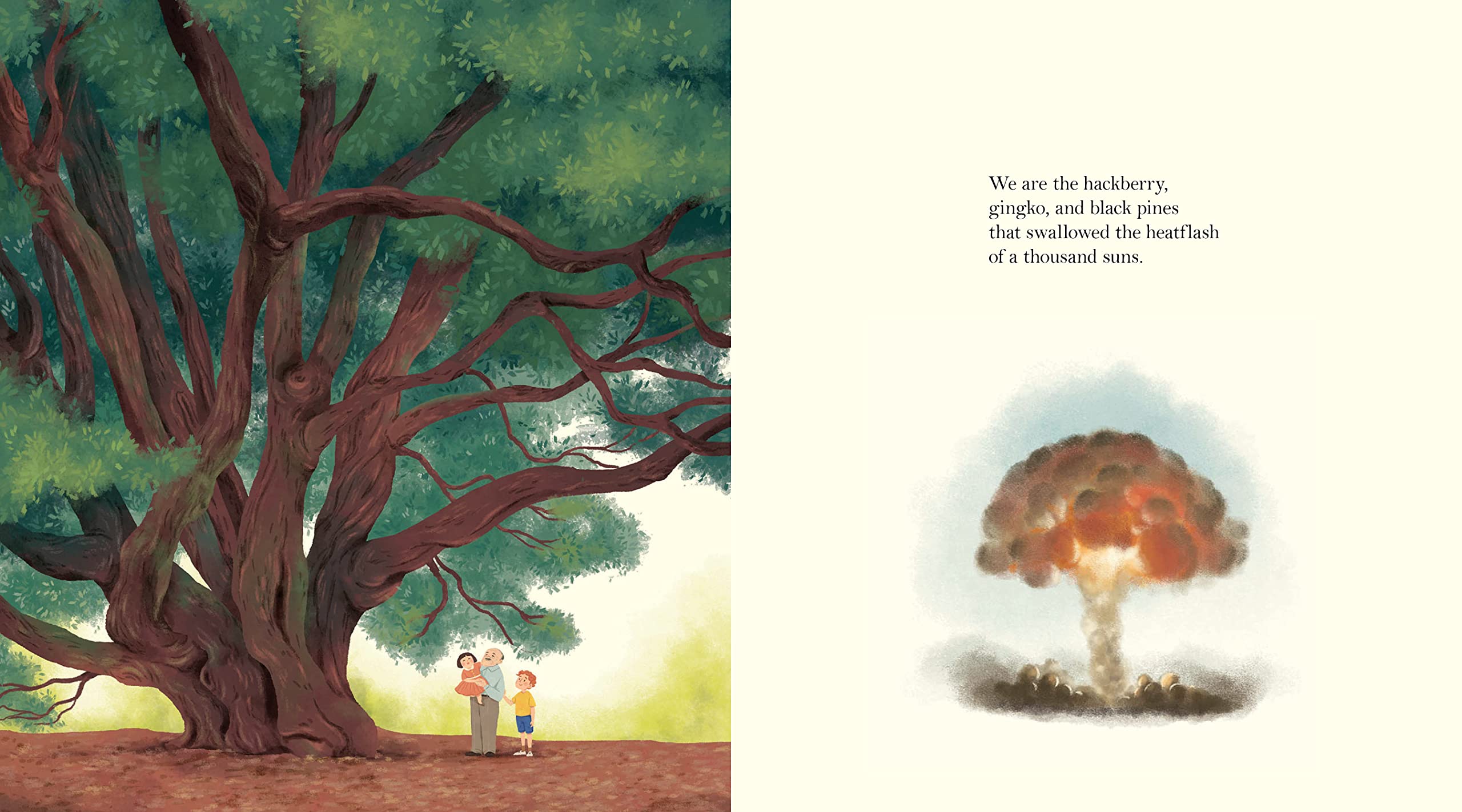
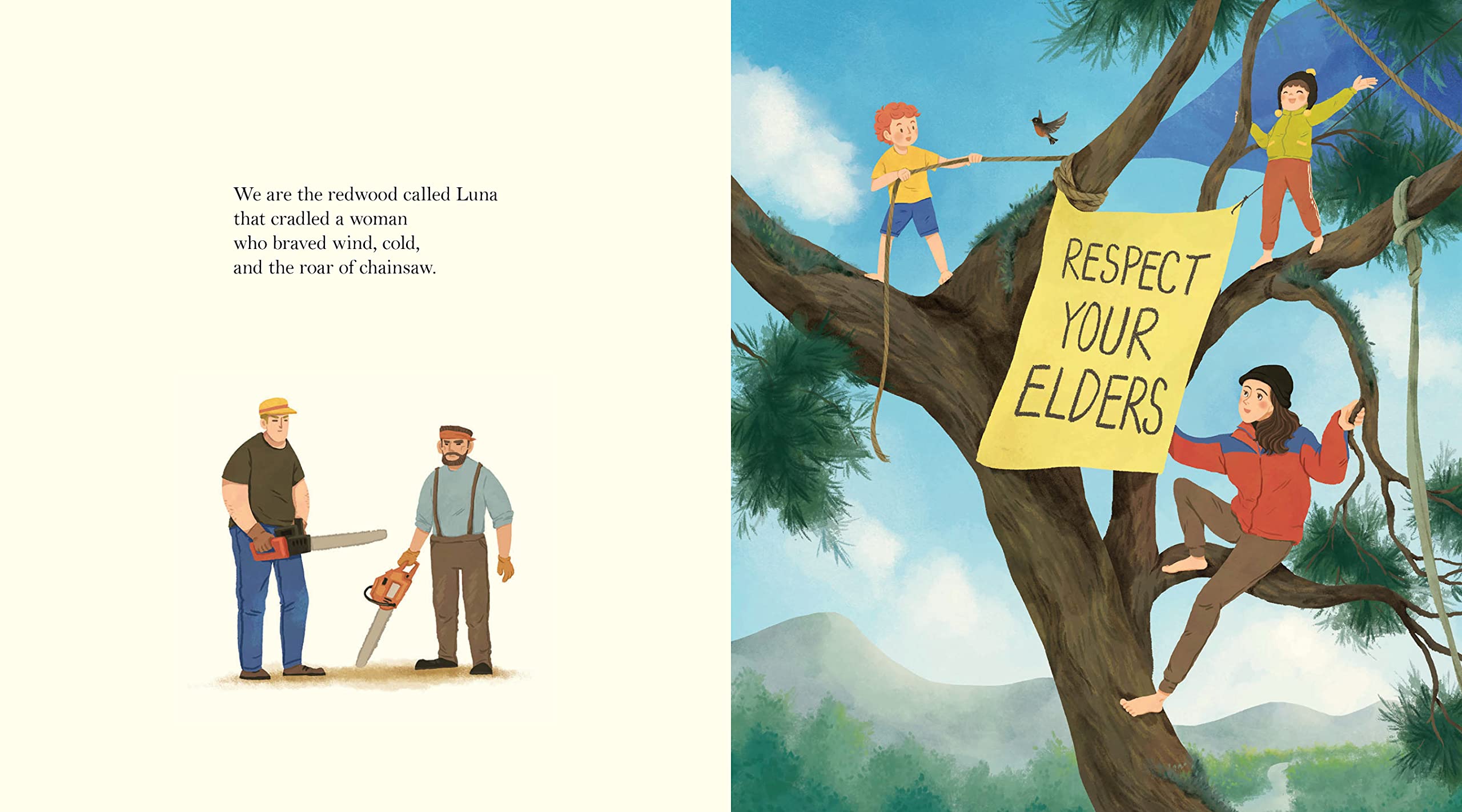
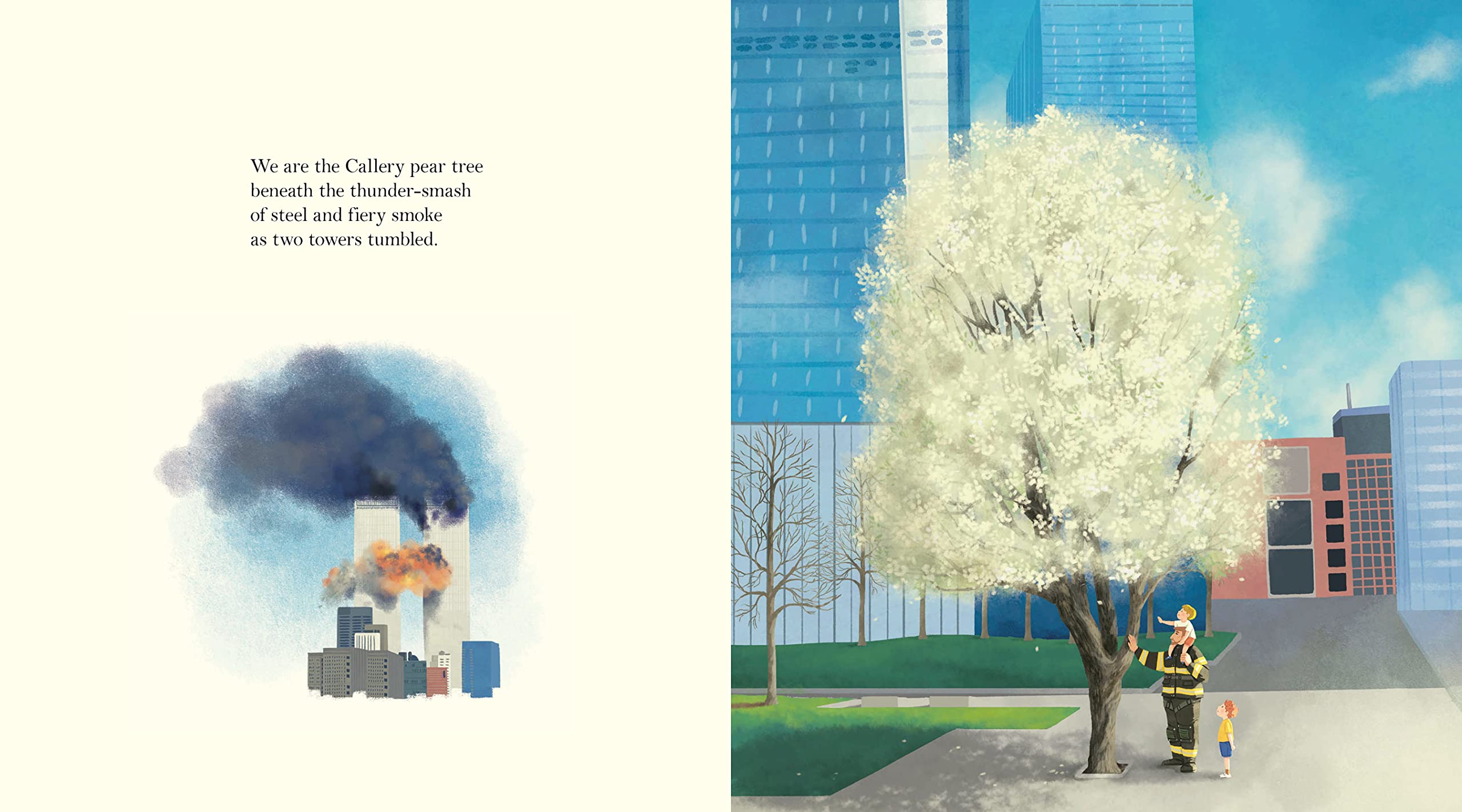
In evocative verse and stunning artwork, Witness Trees is the story of the world’s most enduring witnesses: the trees. From the Flower of Kent apple tree still standing in Sir Isaac Newton’s yard, to the English oak given to Jesse Owens after facing down Hitler at the 1936 Berlin Olympics, to the California redwood saved from destruction by July Butterfly Hill, to the Callery pear tree still miraculously alive after the World Trade Towers fell, Witness Trees is a moving tribute to the world’s most famous trees, many of which still need humanity’s protection. Be moved, be inspired, be amazed by the quiet, reverberating voices of nature’s sentinels: the witness trees.

For each tree depicted, there is information about that tree and the events it witnessed. Among the trees lovingly discussed are 20 trees you can visit today.

About the Creators:

Ryan G. Van Cleave wrote his first poem at age five, and he’s been writing, reading, and loving poetry ever since. He earned a Ph.D. in American Literature with an emphasis in poetry and has taught at numerous colleges and universities. Currently, he runs the creative writing major at Ringling College of Art and Design. As The Picture Book Whisperer, he helps celebrities and high-profile clients write picture books and kidlit projects. Visit his blog at https://www.onlypicturebooks.com/.

Ððm Ððm is an illustrator who uses his art to sow seeds of joy. He has illustrated multiple books and lives in Vietnam.

Review: This book is intriguing and beautiful. First, the verse is very well written. It is lyrical and beautiful–it will lend its self so well to reading aloud. Second, the art is superb! It is realistic, colorful, eye catching, and breathtaking! Third, the idea of this book is just so fascinating. I, obviously, knew trees had been around much longer than most of us could imagine, but to see the timeline included in the book and all of the history included within just blew my mind.

Teachers’ Tools for Navigation: It would be amazing to take each of the Witness Trees and let a group of students learn more about the historical event as well as the tree that witnessed it. Each group could then present to the class. (Please note that many of the events are tragic, so choose the events and students for each wisely.)

Also, at the beginning of the book, the author includes some trees that aren’t included in the book, so students could take each of these books and create their own spreads with a poem about the tree based in its history.

Discussion Questions: 

  • How does the author’s choice of verse affect the tone of the book?
  • How did the illustrators structure of putting the tree on one side of a spread and an illustration related to the history on the other side add to the history shared?
  • What makes trees so amazing? What about these trees specifically?
  • What time in history do you wonder if there is a Witness Tree for it? (Extension: Have students research and see if there is one.)

Flagged Passages: 

Read This If You Love: History, Interest in trees, Picture books in verse

Recommended For: 

classroomlibrarybuttonsmall  

Signature

**Thank you to the author for providing a copy for review!**