Educators’ Guide for The Metamorphosis of Bunny Baxter by Barbara Carroll Roberts

Share

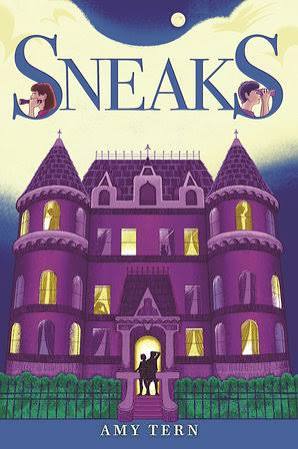
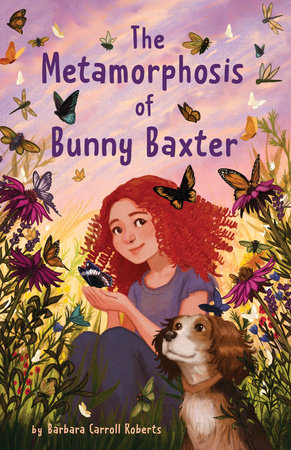
The Metamorphosis of Bunny Baxter
Author: Barbara Carroll Roberts
Published: July 22nd, 2025 by Margaret Ferguson Books

Summary: Bunny Baxter thinks nothing could be worse than starting seventh grade at a school where she knows no one. But after her first day, she realizes things can actually get much worse.

If Bunny Baxter were an insect, she’d have so many ways to slip through seventh grade unnoticed. But she’s tall instead of tiny, has flaming red Medusa hair instead of camouflage, and she suffers from social anxiety, which makes it hard to be part of a swarm. Worst of all, she’s been redistricted to a new middle school away from her best friend who she could always hide behind when her anxiety got the best of her.

The first day at E.D. Britt Middle School does not go well. Bunny trips on the steps, falls into the cutest boy in the school, and causes a kid domino pile-up. At lunch, she unintentionally causes an uproar in the cafeteria, which lands her and another girl in the principal’s office. Bunny decides there is only one option: to get expelled so she can transfer to the school her best friend attends.

She soon discovers that it isn’t that hard to get in trouble—don’t turn in your homework, walk around the track instead of run in P.E., pretend you deliberately hit someone with a badminton birdie. What isn’t so easy for Bunny is realizing she now has a reputation as a troublemaker. And even more confusing, when it looks like her plan to get expelled might work, she’s no longer sure what to do.

The Metamorphosis of Bunny Baxter is a heartfelt coming of age story about an insect-loving girl who is learning to grow into herself—quirks and all.

Teachers’ Tools for Navigation and Discussion Questions: 

Please view and enjoy the educators’ guide I created for the author:

You can also access the educators’ guide here.

You can learn more about The Metamorphosis of Bunny Baxter on its page on Barbara Carroll Roberts’s website.

Recommended For: 

readaloudbuttonsmall classroomlibrarybuttonsmall litcirclesbuttonsmall closereadinganalysisbuttonsmall

Kellee Signature

Fatal Glitch: Camp Zero & Fatal Glitch: Let’s Play a Game by Erin Entrada Kelly and Eliot Schrefer

Share

Fatal Glitch: Camp Zero
Authors: Erin Entrada Kelly & Eliot Schrefer
Illustrator: Jeannette Arroyo
Published July 21st, 2026 by Sourcebooks Stonefruit Studio

Summary: Black Mirror meets Goosebumps in the first installment of this fast-paced middle-grade horror series by New York Times-bestselling authors Erin Entrada Kelly and Eliot Schrefer featuring tales of technology gone wrong.

Eleven-year-old Sofia Mendoza is a gamer, not a camper. She should be at home building landscapes and fighting monsters in Sandbox, not deep in the forest with five other kids, who might as well be playing her favorite game in tutorial mode.

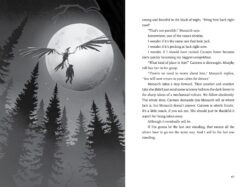
Even worse, there’s something off about this summer camp. There are creepy, mechanical vultures, cloaked NPC figures, and the only adult is Monarch, a grim woman in combat boots.

And then the game of elimination begins.

Sofia may be caught in the clutches of Camp Forestjaw, but she’ll do anything to survive. Anything. The problem is, in Forestjaw, everything you’ve ever done—no matter how long ago—comes back to you . . .

Fatal Glitch: Let’s Play a Game
Authors: Erin Entrada Kelly & Eliot Schrefer
Illustrator: Jeannette Arroyo
Publishes September 29th, 2026 by Sourcebooks Stonefruit Studio

Summary: The fast-paced middle-grade horror series by New York Times bestselling authors Erin Entrada Kelly and Eliot Schrefer featuring tales of technology gone wrong continues with this standalone installment, AI has infiltrated the newest toy craze—a stuffed animal with spooky capabilities and more sinister intentions.

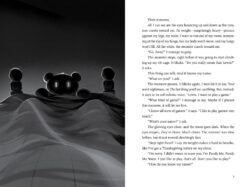
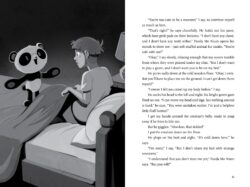
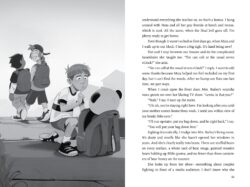
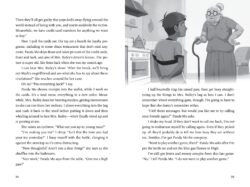
Lewis’s big hope for his first day at a new school is to make a friend. He never expected that friend to wind up being a hyper-intelligent cuddly panda bear. A gift from his dad, his Panda Mo Nium is an exclusive kids-only AI toy and communication device with big ideas of his own. After other students at his school get their own robot pandas, Lewis suddenly has a friend group. When Mo begins asking Lewis to perform risky and bloody tasks, Lewis goes along despite his nerves…until the line between cute and creepy blurs and he senses evil intentions behind his AI friend’s glowing eyes. What does this robot panda really want from him and the other kids? The truth might be more frightening than Lewis ever imagined.

About the Authors: 

Erin Entrada Kelly is a New York Times-bestselling author, two-time Newbery Medalist, National Book Award Finalist, and Newbery Honoree. Her work has been translated into more than a dozen languages. She has an MFA from Rosemont College and is on the faculty of the Hamline University MFA program in writing for children and young adults. She lives in Delaware.

Eliot Schrefer is a New York Times-bestselling author, has twice been a finalist for the National Book Award for Young People’s Literature, received the Stonewall Honor for best LGBTQIA+ teen book, and received the Printz Honor for best young adult book from the ALA. In naming him an Editor’s Choice, the New York Times has called his work “dazzling and big-hearted.” His science writing has appeared in Discover, Sierra, USAToday, Nautilus, and The Washington Post Magazine. He has an M.A. in Animal Studies from NYU, is on the faculty of the Hamline MFA for writing for young people, and lives with his husband in New York City.

Review: Do you have readers looking for horror and are too quickly jumping to young adult or adult horror? Yes? Me too. Do you have readers that are looking for horror but aren’t ready to jump to YA or adult because of the topics or even the length? Yes? Me too. Well, this is the series you are looking for!

The comparison to Goosebumps is perfect because this feels like a reincarnation of the same idea of horror books where the authors don’t talk down to the reader, yet keep the horror developmentally appropriate, and Kelly & Schrefer do that very well in both of these books. I also like how modern the books felt which will help readers want to pick them up and keep reading. The series is also a great length at 144 pages which is something that so many of us middle school educators have been asking for.

And the cherry on top of these books? They can lead to social commentary around technology in ways that may not have happened without them.

Discussion Questions: 

  • How does technology play a part in both stories?
  • How can technology be dangerous?
  • What do you think the theme of each book is?
  • What about the structure of the books make them so fast paced and page turners?
  • What do you think is going on at the beginning and end of the book with the narrator?

Flagged Spreads: 

Camp Zero

Let’s Play a Game

Read This If You Love: Middle grade horror, Goosebumps

Recommended For: 

classroomlibrarybuttonsmall

Signature

**Thank you to Sourcebooks for providing a copy of both books for review!**

Sharks in Kansas: The Ancient Sea in the Middle of America by Melissa Stewart, Illustrated by Becca Stadtlander

Share

What's Worth Interrupting Shark week? CFD2 | The IT Hollow

SHARK WEEK is underway, so it is perfect today to feature…

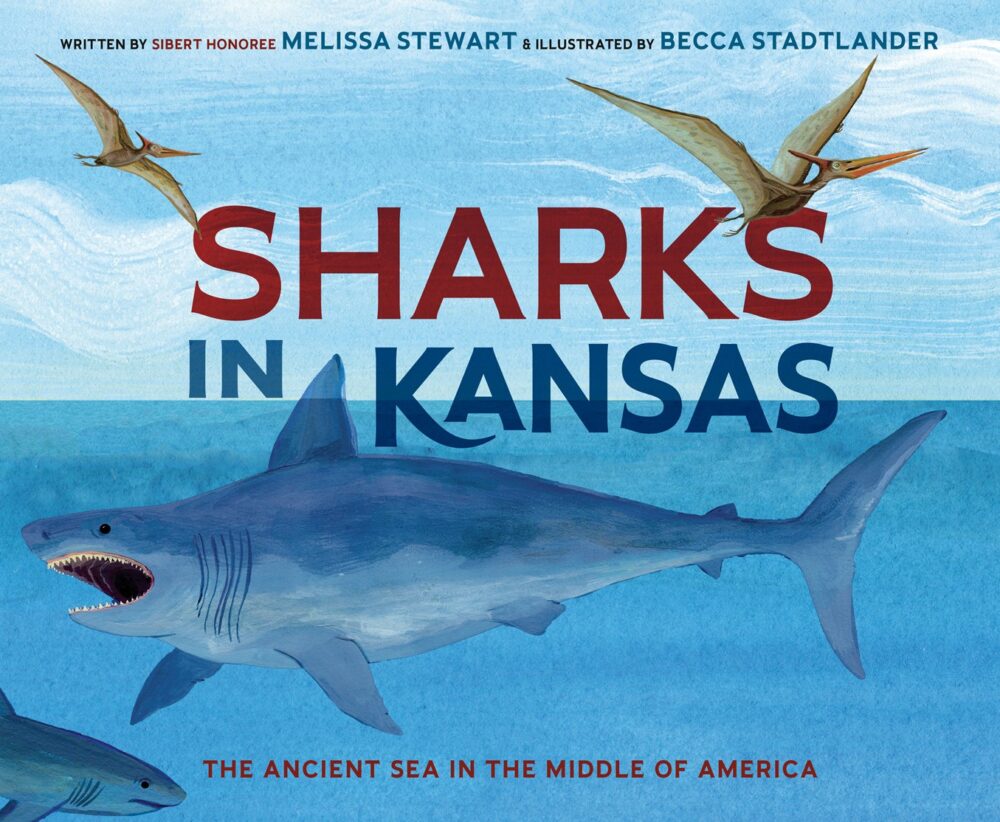
Sharks in Kansas: The Ancient Sea in the Middle of America
Author: Melissa Stewart
Illustrator: Becca Stadtlander
Published July 7th, 2026 by Random House Studio

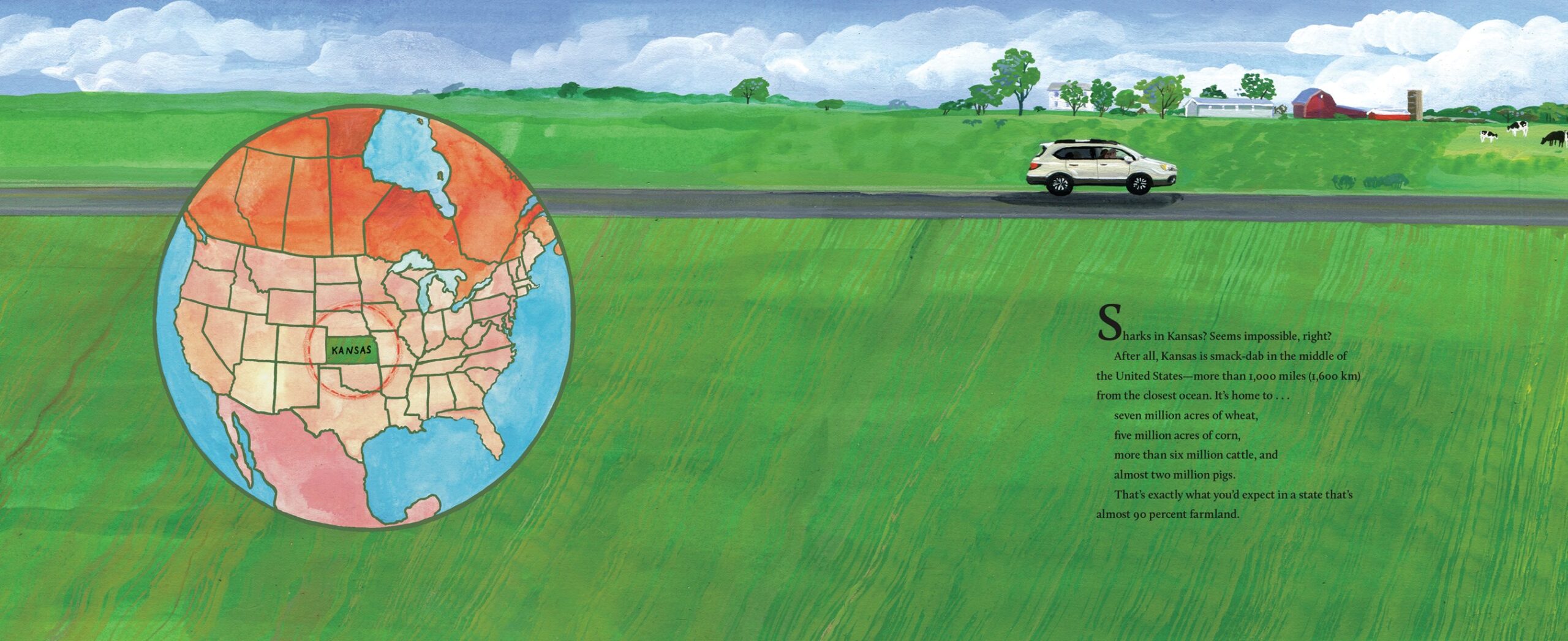
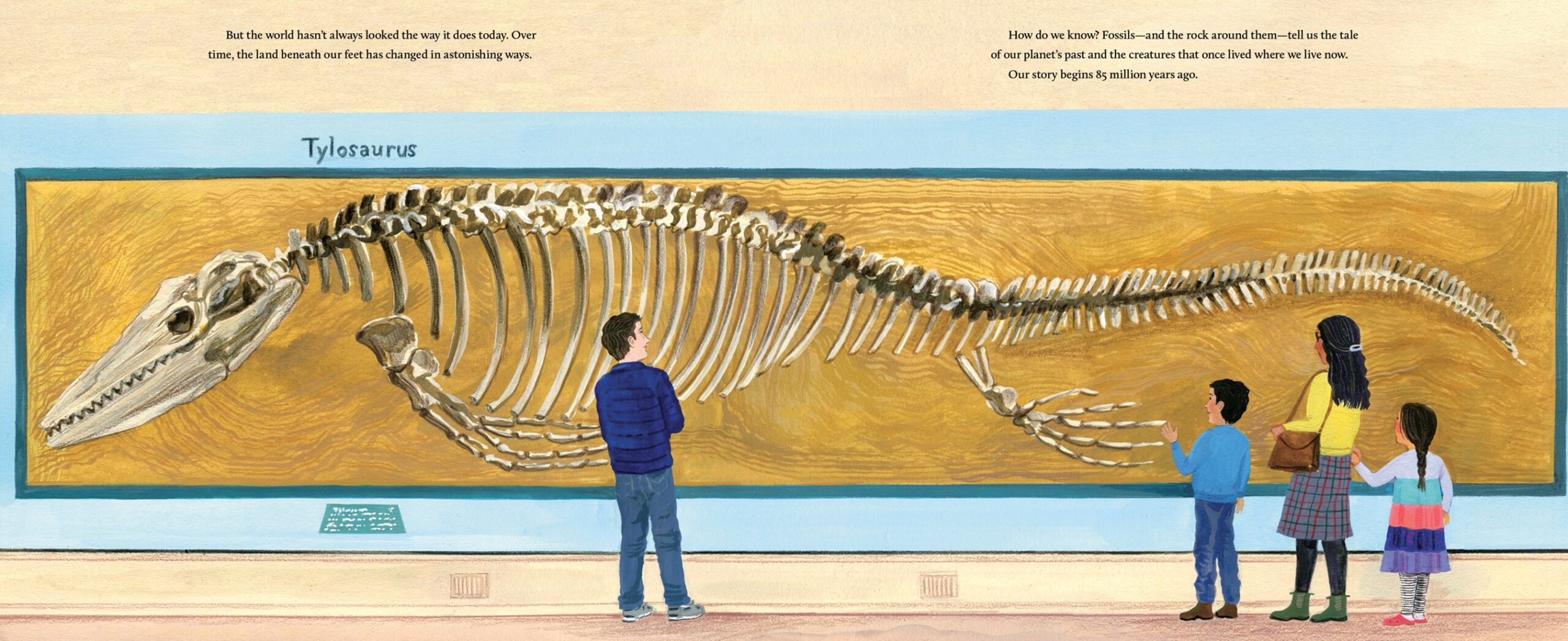
Summary: Sharks in Kansas? Seems impossible, right? After all, Kansas is smack dab in the middle of the United States — more than 1,000 miles from the closest ocean. But the world hasn’t always looked the way it does today.

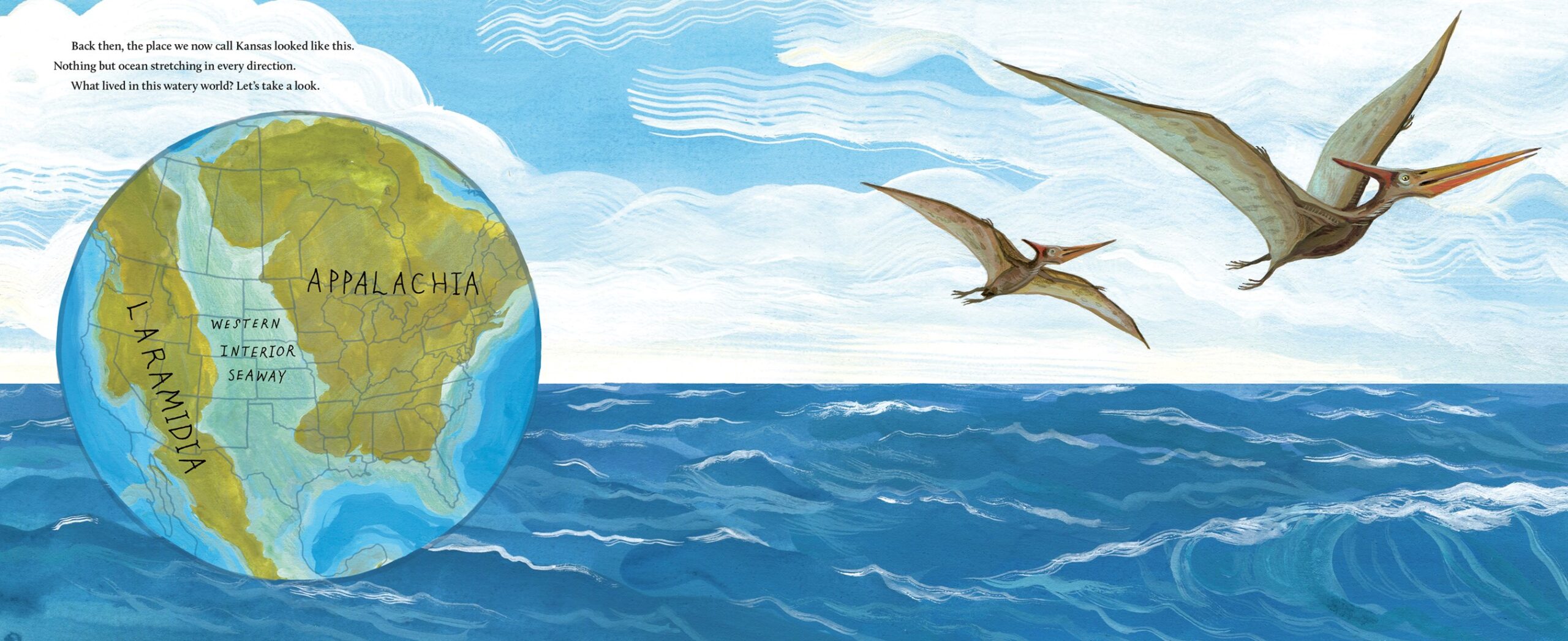
Once upon a time, 85 million years ago, the middle of America was a watery world called the Western Interior Seaway. At the water’s surface, mighty mosasaurs attacked flightless birds bobbing on the waves. Deeper down, turtles the size of a small car fed on fish and ammonites. But the most ferocious hunters were the sharks. More than a dozen species cruised through the ancient sea in search of prey, and when they spotted a target … Chomp!

Journey into the past for a fascinating look at the incredible cast of creatures that once lived where we live now.

About the Author: Melissa Stewart is a leading voice in children’s nonfiction, with more than 200 science books to her name. Her work has been translated into more than a dozen languages and garnered such awards as the Sibert Honor, two Green Earth Book Awards, and four ALA Notables. Her best-known titles include Whale Fall, illustrated by Rob Dunlavey, Tree Hole Homes, illustrated by Amy Hevron, and Feathers: Not Just for Flying, illustrated by Sarah S. Brannen. After earning a bachelor’s degree in biology from Union College and a master’s degree in science journalism from New York University, Melissa worked as a children’s book editor for nine years before becoming a full-time writer. While gathering information for her books, she has explored tropical rain forests in Costa Rica, gone on safari in East Africa, and swum with sea lions in the Galapagos Islands. She lives in Massachusetts. For more information, including teacher resources, videos, and more, visit melissa-stewart.com.

Instagram @melissastewartscience | Facebook Melissa Stewart | Bluesky @melissastewartscience | LinkedIn Melissa Stewart

About the Illustrator: Becca Stadtlander is an illustrator and fine artist. In 2019, she won the Golden Kite Award for Picture Book Illustration for Made by Hand: A Crafts Sampler. Picture books she has illustrated include Mr. McCloskey’s Marvelous MallardsSleep Tight, Farm, and On Wings of Words, which received four starred reviews. Her work is also featured in adult books, editorial publications, stationery, home decor products, and book covers.

Instagram @becca_stadtlander | Facebook Becca Stadtlander

Review: Melissa Stewart shared on her webpage that, “As I was writing the book Mega-Predators of the Past, I was astonished to learn about Archelon — a prehistoric sea turtle the size of a small car. But what was even more amazing than the turtle’s supersize is where it lived — smack dab in the middle of the North American continent. Up until that moment, I’d never heard of the Western Interior Seaway, and I had no idea that the land we now call the Great Plains had once been covered by an ancient ocean. I had to know more, and once I discovered the incredible cast of creatures that called the seaway home (including a dozen different kinds of sharks), I knew I had to write a book about how the seaway formed and how it changed over time.” Like her, until I read this book, I had no idea either!

Stewart and Stadtlander do a great job bringing this unimaginable setting to life so that readers can see how what seems impossible is possible. It is a great mix of informational nonfiction, sharing of information about the Earth’s and animals’ history, while also adding in a bit of narrative by engaging with the reader through story. I also loved the inclusion of sidebars throughout the book which told you more about each animal that was encountered without messing with the flow of the writing. And, as always, I am so happy to see age appropriate, informative back matter that shows more information to fill in some gaps while also keeping learners wanting to find out more.

Educators’ Tools for Navigation and Discussion Questions: This book wonderfully combines reading, science, history, and kids’ love of prehistoric animals to create an engaging book that would be perfect for classrooms!

Melissa Stewart created a Read Aloud Guide, including a classroom extension activity and before & after reading questions! Here are some examples of questions she included:

  • (Before reading) Do you think this book is fiction or nonfiction? Why?
  • (Before reading; looking at a map of the United States) Do you think sharks could live that far from the ocean?
  • (After reading) How many sharks are shown in the book? Did they all live at the same time?
  • (After reading) At the end of the book, a child finds a shark tooth fossil. Did you see the same child
    earlier in the book? If so, what were they doing.

Also, there is a fun coloring sheet on her site, too!

Flagged Spreads: 

Read This If You Love: Prehistoric animals, Dinosaurs, Geology

Recommended For: 

classroomlibrarybuttonsmall 

Signature

**Thank you to Blue Sky Media and Random House for providing a book for review!**
Instagram @randomhousekids | @blue_slip_media
Facebook Random House Children’s Books | @blue-slip-media

Fighting For Justice: Alice Piper Speaks Up by Sage Andrew Romero and Loralee Sepsey, Illustrated by Morgan Thompson

Share

Alice Piper Speaks Up
(Fighting for Justice #3)
Authors: Sage Andrew Romero and Loralee Sepsey
Illustrator: Morgan Thompson
Published June 2nd, 2026 by Heyday Books
Instagram: @heydaybooks | Facebook: Heyday Books

Summary: Volume 3 in the acclaimed Fighting for Justice Series for young readers: the story of a Native teenager’s history-making fight for equal education.

Alice Piper just wanted to go to public school. The year was 1923, and Alice, a Native Paiute (Nuwuvi) teenager in California, dreamed about learning from teachers, making new friends, and being respected for who she was. So when the school board refused to let her and six other Native students attend, she decided to speak up, and she sued for her right to an equal education. Alice Piper Speaks Up, the first book dedicated to this major champion of civil rights, features new research into Alice’s life and court case. Each chapter begins with lyrical verse and full-color illustrations that invite readers into Alice’s story. Paired with the poems are visually engaging sections filled with keyword definitions, historical context, timelines, primary sources, and questions that help readers relate Alice’s experience to their own lives. The text connects Alice’s case to larger themes about education, Native rights, and movements for school desegregation across the United States. The third book in Heyday’s widely acclaimed Fighting for Justice series, Alice Piper Speaks Up shows how one teen’s action resonates throughout America’s history, even now.

About the Creators: 

Sage Andrew Romero
Sage Andrew Romero is from the Tovowahamatu Numu (Big Pine Paiute) and Tuah-Tahi (Taos Pueblo) tribes. The founder and director of the AkaMya Culture Group, a nonprofit dedicated to cultural revitalization, he lives in Big Pine, California. For more info, see nama.media/sage-andrew-romero.

Loralee Sepsey
Loralee Sepsey is a writer and a member of the Big Pine Paiute Tribe of the Owens Valley. Based in Santa Ana, California, she lives with her husband and their two cats. To learn more, visit her website: loraleesepsey.com.

Morgan Thompson
Morgan Thompson is a Cherokee (Cherokee Nation) artist with a love for Indigenous stories. When she’s not working, she enjoys a bit of stomp dancing or some beading on the side. Visit skadoodlin.com.

Instagram Sage Andrew Romero: @digitalndn | Morgan Thompson: @skadoodlin
FacebookSage Andrew Romero: Sage Andrew Romero

Review and Educators’ Tools for Navigation: Integration of education is taught in history classes but primarily focuses on Brown v. Board of Education and it isn’t often shared that there were fights all over the country from different marginalized communities to have the right to an equal education. This book focuses on a fight 30 years before Brown v. Board of Education, when Alice Piper, a 15 year-old Paiute student, along with six other children, sued the Big Pine School District stating that they had the right to attend Big Pin School based on the 14th amendment, AND THEY WON!

This book is MADE for teaching. The creators and publisher of this book know what they are doing. Through the authors’ beautiful free verse intertwined with emotions and onomatopoeia, we experience Alice’s story along with her. Then intertwined between chapters, the nonfiction spreads tie it all together with more history and information. By combining a biography-in-verse with nonfiction information that has vocabulary, timelines, discussion questions, and photographs makes it so the book is so easily cross-curricular as well as supportive of so many language arts standards, both literary and informational.

(And I am so curious about the other two books in the series! Because if they are formatted in similar ways, this series would be perfect for literature circles where each group read a different Fighting for Justice book then shares what they learned about their activist with their classmates.) 

And I love that the book ends with “Speaking Up for What’s Right: From Alice’s Day to Ours” to truly connect it all together. Really adds that extra bit to the book.

Oh, and did you know that Alice Piper Day is June 2 in California; this information is featured in the book also and is definitely a person deserving of her own day!

Discussion Questions: There are many discussion questions found scattered throughout the book, including:

  • What does it mean to be respected for who you are, and to respect other for who they are?
  • When was a timea family member or elder taught you an important skill?
  • How would you feel if your government decided to change your family’s name?
  • Some traditional Paiute names are non-lexical. Can you think of some non-lexical names commonly used today?

Flagged Passages & Spreads: 

Chaptier 1: Preparing Tüba

Alice is sweaty,
sticky, and ready
to grind.

It’s almost fall in Payahuunadü
and the summer heat still lingers.
Alice, a few months into thirteen,
is helping her family prepare
the season’s first batch of pine nuts–
tüba–
into today’s meal.

Alice’s mother, Annie, places
winnowing baskets on the ground.
Alice’s sisters, Ola and Mamie,
toss handfuls of tüba inside.
The hard shells make a clickety-clack
against the willow reeds.

Chapter 4: A Day at the Day School

“Wake up, Alice,
it’s time for school.”

Alice rubs the sleep out of her eyes
and blinks at her mother.
It’s cold and so dark
that she can still see the stars
in the morning sky.

Alice has a long journey
from Soha-witü–
Fish Lake Valley–
to the Indian day school in Tovowahamatu,
almost forty miles away.

Early mornings are normal for Alice,
and if she wants to learn
as much as she can,
the day must start early.

Read This If You Love: History, Activism

Recommended For: 

classroomlibrarybuttonsmall 

Signature

**Thank you to Blue Slip Media (@blue_slip_media | @blue-slip-media) for providing a copy for review!**
Notre-Dame: The World’s Cathedral by Lynn Curlee

Share

Notre-Dame: The World’s Cathedral
Author & Illustrator: Lynn Curlee
Published May 5th, 2026 by Atheneum Books for Young Readers

Summary: A fascinating visual history of Notre-Dame, “the World’s Cathedral,” that highlights the burning and reconstruction of the cherished building from award-winning author-illustrator Lynn Curlee.

On April 15, 2019, the Cathedral of Notre-Dame in Paris was almost destroyed by fire, an event that shocked and riveted the entire world as it played out in real time on TV and across the internet.

The story of the fire and its aftermath, along with the rebuilding of the historic cathedral, offers an exciting narrative around which Lynn Curlee builds an illustrated story for middle grade readers about this internationally cherished monument.

In the way that only he can, Lynn illuminates captivating information about cathedrals, gothic architecture, French history, restoration of old buildings, heroism under fire, and even Quasimodo, the famous Hunchback of Notre-Dame.

★ “This handsome offering goes far beyond covering the story of the devastating 2019 fire that
destroyed the Cathedral of Notre Dame in Paris, France. . . Currently the only book available on this subject
for middle-grade readers, this will be an attractive addition for all collections.” – Booklist, STARRED REVIEW

“Soaring tributes to both the building and the workers who preserved it.” – Kirkus Reviews

About the Creator: LYNN CURLEE was educated as an art historian and worked as a fine artist for many years before he began to make children’s books. Three of his books, Capital, Liberty, and Rushmore, were chosen by the Barbara Bush Literacy Campaign as their Book of the Year in three consecutive years. Mr. Curlee has won numerous awards for his work, including but not limited to a Robert F. Sibert Honor Book (Brooklyn Bridge), Orbis Pictus Award (Rushmore), ALA Notable Books for Children (Liberty), and Bank Street Best Children’s Book of the Year (Parthenon). His other books include Ballpark, Trains, Mythological Creatures, and Seven Wonders of the Ancient World. He lives in Norwich, Connecticut, with his partner and two Great Danes. Find out more on Instagram @LynnCurlee.

Review: This book is beautiful and fascinating! I learned so much about Notre-Dame and Parisian history. I also found the parts about the fire and restoration of the cathedral so interested!

I had not read any Lynn Curlee before this one, and I have now set a goal to read more because I loved the way that he brought his passion for the topic into both the text and the illustrations. Sadly, there is a not in the back from the editor that shares that in early 2025, Lynn Curlee fell “ill and is unable to continue working” and “this book is likely Lynn’s last book.” I am happy to say that this final book is definitely one to be proud of.

Educators’ Tools for Navigation: This book has so much for educators!

First, it could be used for a read aloud. It is pretty text heavy, so would probably be for older readers, but chunking this like a chapter book would be a fascinating read aloud.

Second, I loved the vocabulary and glossary in this book. It is a great way to discuss vocabulary in nonfiction text.

Third, this book could be used for a mentor text to create their own nonfiction text about something they are interested in.

Fourth, this book would be a great support for any class learning about gothic architecture–I learned so much!

Fifth, make a timeline!

Sixth, do a book club with his other titles in this set then let students share with the class what they learned about their topic.

I just would love to see this text in classrooms and libraries; I hope you grab it!

Discussion Questions: 

  • How did the Parisians change their view of the cathedral during the 900 years it has been around?
  • Why was the restoration project so successful versus others that took longer?
  • Why is Notre Dame’s architecture so special?
  • How did Victor Hugo’s book affect the treatment of the cathedral?
  • Why is the cathedral so important to modern Paris?
  • How is our modern technology and advancements negatively affecting Notre-Dame?
  • How do you think the author chose which parts of the cathedral to include as illustrations?
  • Why do you think the author chose to jump around time-wise in the book?

Flagged Spreads: 

Read This If You Love: Architecture, History, Nonfiction Picture Books for Older Readers

Recommended For: 

classroomlibrarybuttonsmall 

Signature

**Thank you to the publisher for providing a copy for review!**

How a Bear Became a Book: The Collaboration That Created Winnie-the-Pooh by Annette Bay Pimental, Illustrated by Faith Pray

Share

How a Bear Became a Book
Author: Annette Bay Pimental
Illustrator: Faith Pray
Published March 31st, 2026 by Henry, Holt, and Co.

Summary: Celebrate the 100th anniversary of Winnie-the-Pooh with this gorgeous picture book about the creation of the World’s Most Famous Bear!

In 1926, the very first Winnie-the-Pooh book was published. One hundred years later, generations of kids have grown up in the Hundred Acre Wood.

How a Bear Became a Book tells the story of how writer, illustrator, and editor came together to craft Pooh’s first adventure. But deeper than that, this book introduces our youngest listeners to how stories begin and where they can go. As Pooh’s voice enters the text, he slowly comes to life in the art.

Textually delightful and visually stunning, this is a picture book about the making of picture books, but it is also a masterful exploration of ideas, storytelling, collaboration, art, and most importantly, honey

“A thoughtful, beautifully crafted title that honors a literary classic on the eve of its centennial and introduces “The Best Bear in All the World” to a new generation.” —School Library Journal, Starred Review

“A stunning tribute to a classic that also offers insight into the bookmaking process.” —Kirkus, Starred Review

“Bay Pimentel and Pray highlight the importance of teamwork, pulling back the curtain on the creators who produced the Winnie-the-Pooh books.” —Publishers Weekly, Starred Review

“Marking one hundred years since the publication of A. A. Milne’s Winnie-the-Pooh (1926), this thoughtful, well-designed informational picture book pays tribute not only to that book’s creation but also to the process of book creation in general.” —Horn Book, Starred Review

“Appealing and thorough, a charming companion to the original Pooh stories and an enlightening introduction to how children’s books can evolve.” —Booklist

About the Creators: 

Annette Bay Pimentel is the author of several nonfiction picture books, including the Schneider Family Book Award honor book All the Way to the TopPura’s Cuentos, and Before Colors. She lives in Moscow, Idaho.

Faith Pray is the author-illustrator of The Day We Got LostPerfectly Imperfect Mira, and The Starkeeper, among others. She comes from a family of talented children’s book creators, but her extraordinary talents for capturing light and shadow and conveying emotion and story through line work are all her own. Faith lives with her husband and children plus two cats in the Pacific Northwest.

Review: The first thing that stuck out to me about this book was how clever it was. It is clever in the writing, including the structure, and in the illustrations. It took the idea of writing a nonfiction book about Winnie-the-Pooh and turned it on its head to make it unique because it focuses on the evolution from idea to book and how Winnie-the-Pooh, as the character we know, came to be.

The book is more than just a story about A.A. Milne’s Winnie-the-Pooh books though. It is a book about creating. It will help readers see how a book went from an idea to a product to something we treasure. It also looked at why the Milne books were special, especially when it came to illustration placement and how the illustrations and words played together. And I love that the editors had a place in the story; editors are often not talked about in picture books.

And lastly, the inclusion of Pooh himself in the narrating added humor and nastalgia.

I can definitely see why the book is getting so many starred reviews–it deserves all the praise! It’ll be a great addition to any classroom, library, or home, and I cannot wait to hear about educators using it along with aspects of Pooh’s stories.

Educator’s Guide with Discussion Questions and Activities: 

Flagged Spreads: 

Read This If You Love: Winnie-the-Pooh

Recommended For: 

classroomlibrarybuttonsmall 

Signature

**Thank you to the author for providing a copy for review!**