The Ultimate Book of Mythical Creatures by Aurore Meyer, Illustrated by Gabrielle Berger

Share

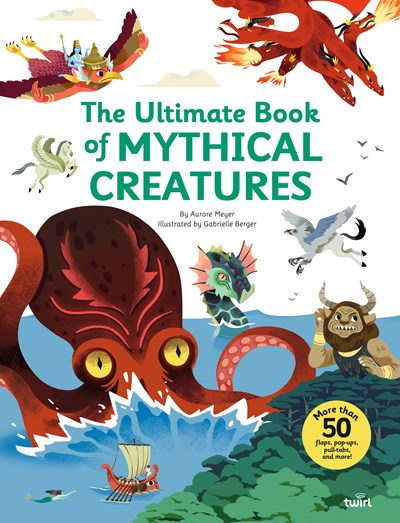
The Ultimate Book of Mythical Creatures
Author: Aurore Meyer
Illustrator: Gabrielle Berger
Published September 15th, 2026 by Twirl Books

Summary: Discover the world of monsters, dragons, giants, and mermaids!

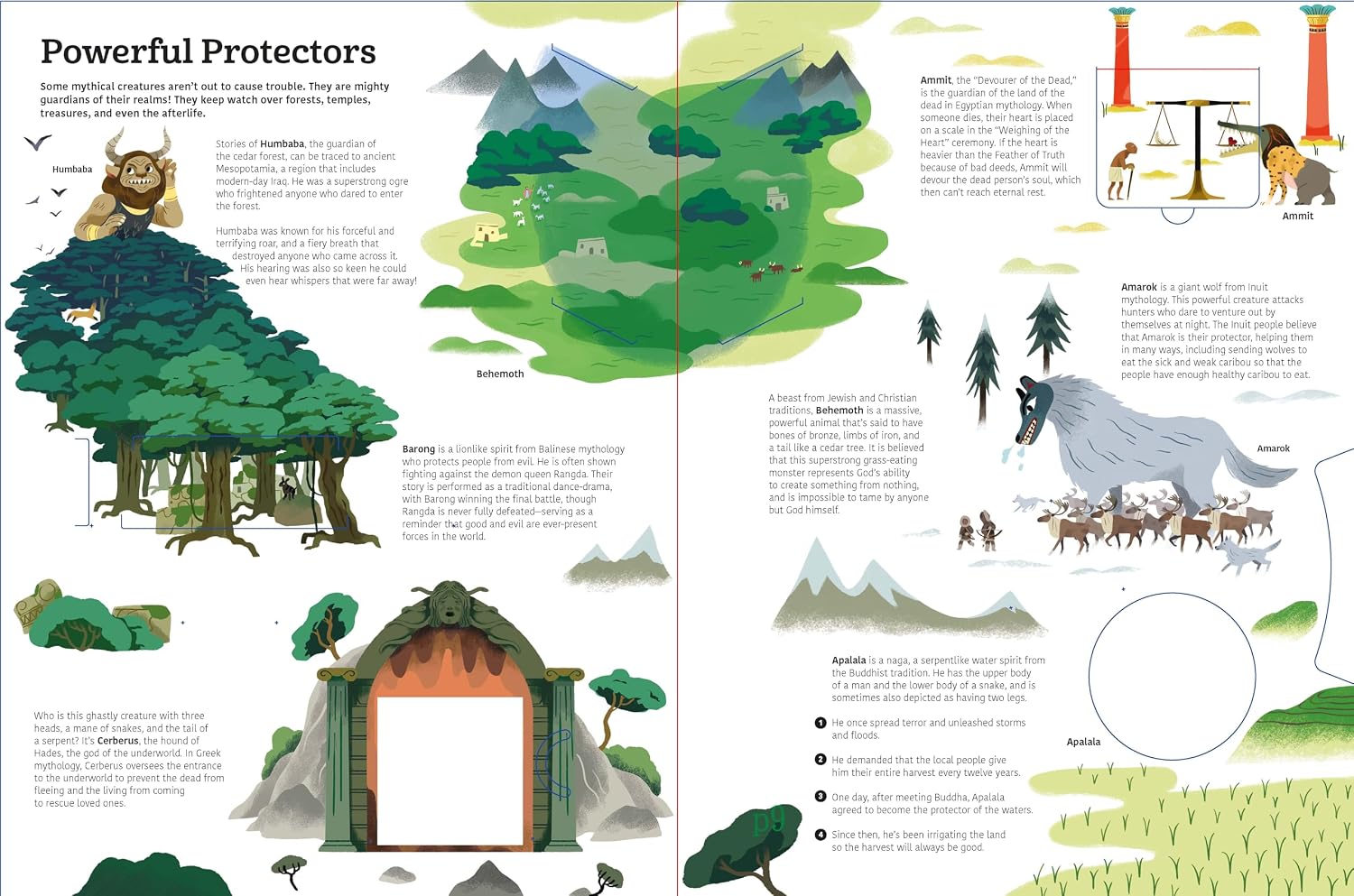
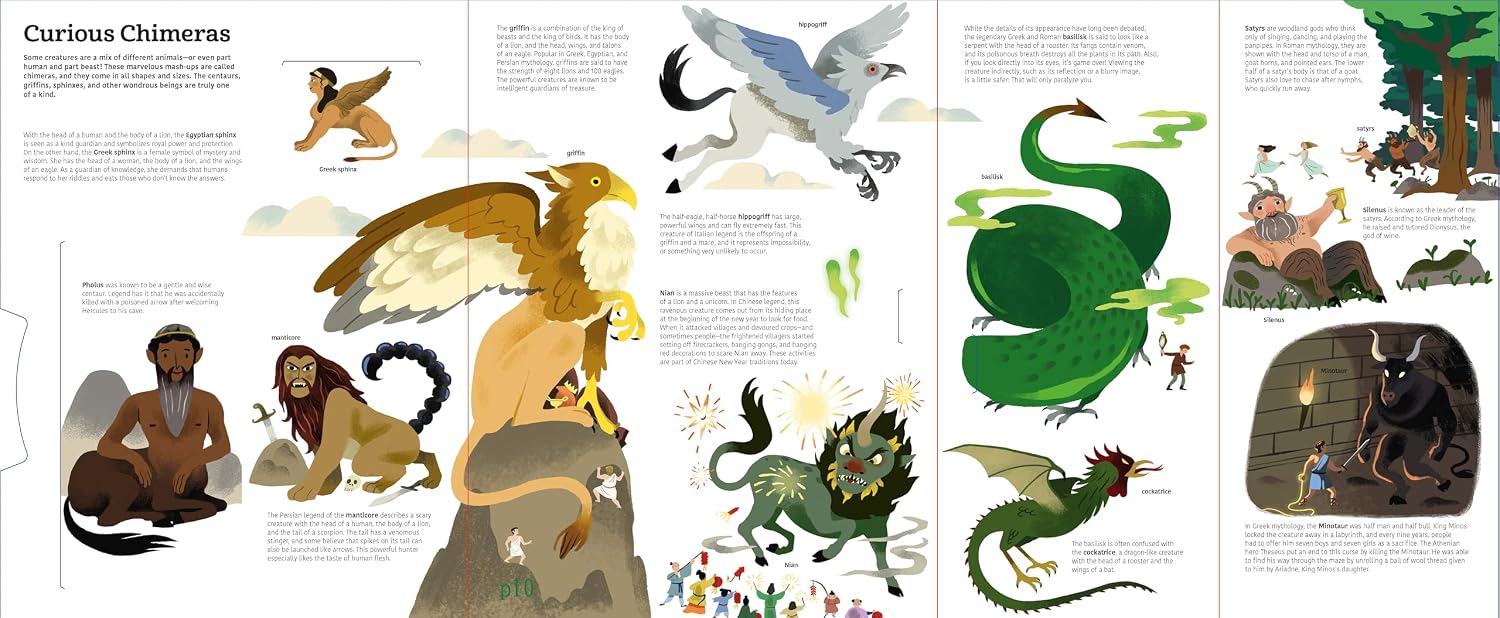
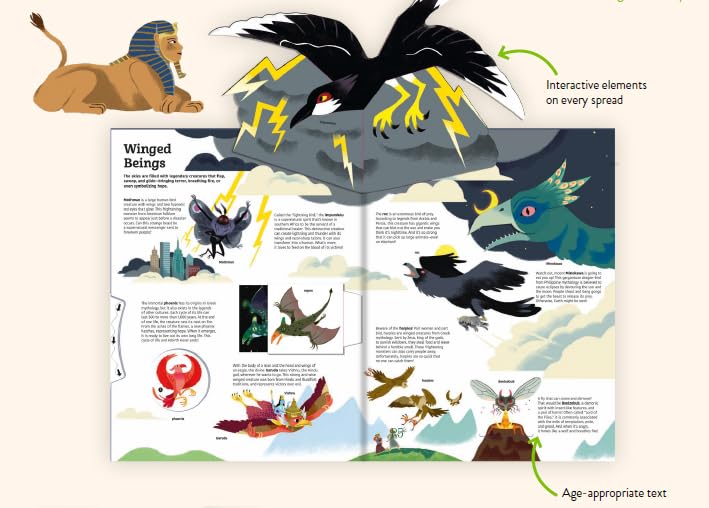
With more than 50 flaps, tabs, pop-ups, and rotating wheels, creatures from mythology and folklore come to life in this oversized, interactive book. Young readers will learn about creatures such as the Loch Ness monster, Bigfoot, Pegasus, mermaids, the phoenix, and many more!

Perfect for curious minds aged 5 and up, this book offers a hands-on introduction to mythical and legendary creatures from around the world.

•Supersized spreads with rich, detailed illustrations
•Over 50 interactive features to keep kids engaged
•Diverse content draws from mythology and folklore from around the world
•Perfect introduction for young children to mythology and folklore
•Captivating family read-aloud

About the Creators: 

Aurore Meyer is a writer of games, documentaries, and workbooks for children and adults. She works near Bordeaux, France.

Gabrielle Berger launched her illustration career in 2018. She lives in Paris, France.

Review & Educators’ Tools for Navigation: This is such a fun book! It is exactly what it titled: An ultimate introduction to mythical creatures from all over the world, and the interactiveness definitely adds to the engagement. I loved that it is inclusive of the whole world yet does a good job of giving an introduction to so many but in a way that doesn’t feel like an encyclopedia. 

Trent read the book, too, and he said the book was really cool! He said the pop-ups were really creative, and you can tell that the creators spent a lot of time researching and creating it. Also, he says that he liked that there was a mix of cultures represented in the mythologies.

There are so many ways this book could be used, but it will assist in any mythology lesson in any classroom, is a great addition to a mythology book collection in a library, AND it is a great book to have at home, too!

Discussion Questions: 

  • What different countries and cultures did you find mythical creatures highlighted from?
  • There are many mythical creatures introduced in the book. Which introduction makes you want to learn more?
  • How do the interactive elements of the book add to the storytelling of the book?
  • How do the author choose to organize the book? What are some other ways the book could have been organized?
  • Which of these creatures have you heard of before? Where have you heard of them?
    • Extension: An allusion is a brief, indirect reference and there are often allusions to mythology. Have you ever watched or read something with an allusion to a creature in this book?
  • Why do you think the author created this book?
  • There are mythical creatures introduced that are from different countries/cultures that are a bit similar. How do these creatures compare and contrast with each other?

Flagged Spreads: 
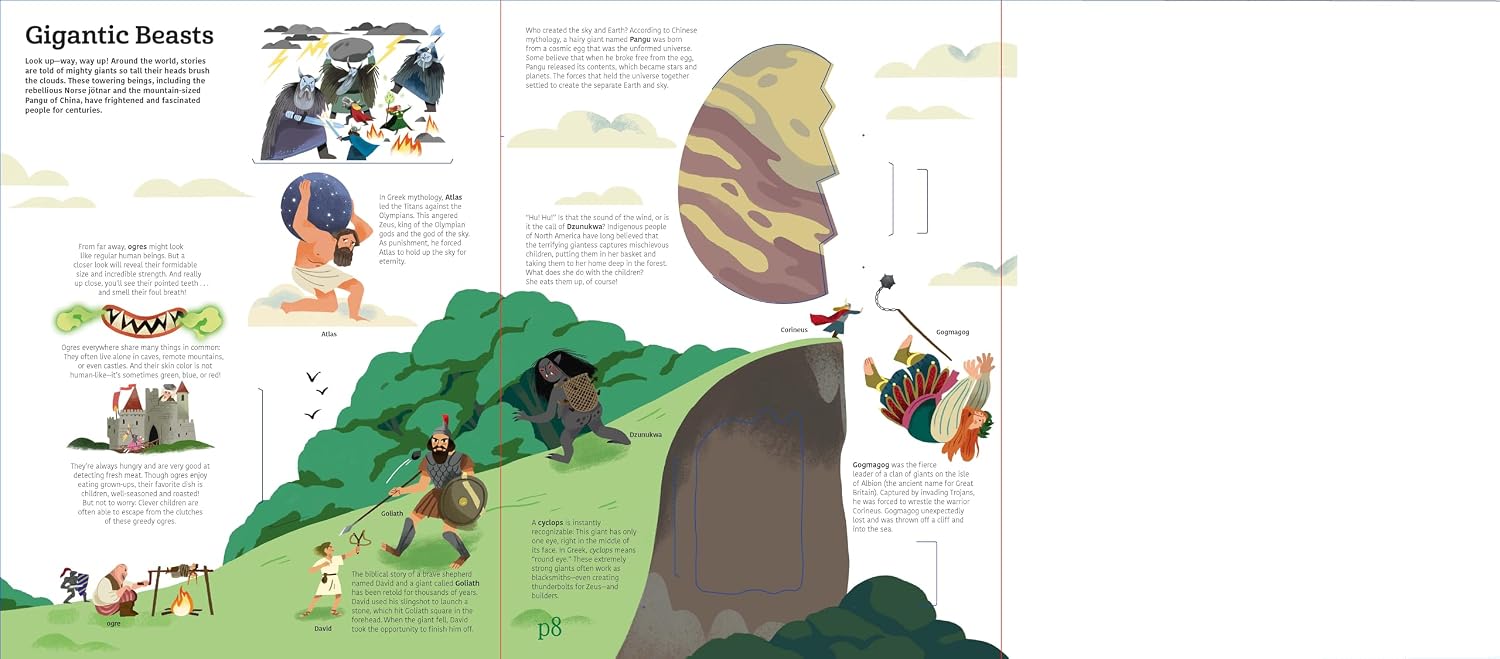
Click HERE to view a video to see the pop-ups

Read This If You Love: Mythology, Pop-up Books

Recommended For: 
Signature

**Thank you to Blue Slip Media & Twirl Books for providing a copy for review!!**

Instagram: @chroniclekidsbooks  |  @blue_slip_media
Facebook: @chroniclekidsbooks  |  Blue Slip Media
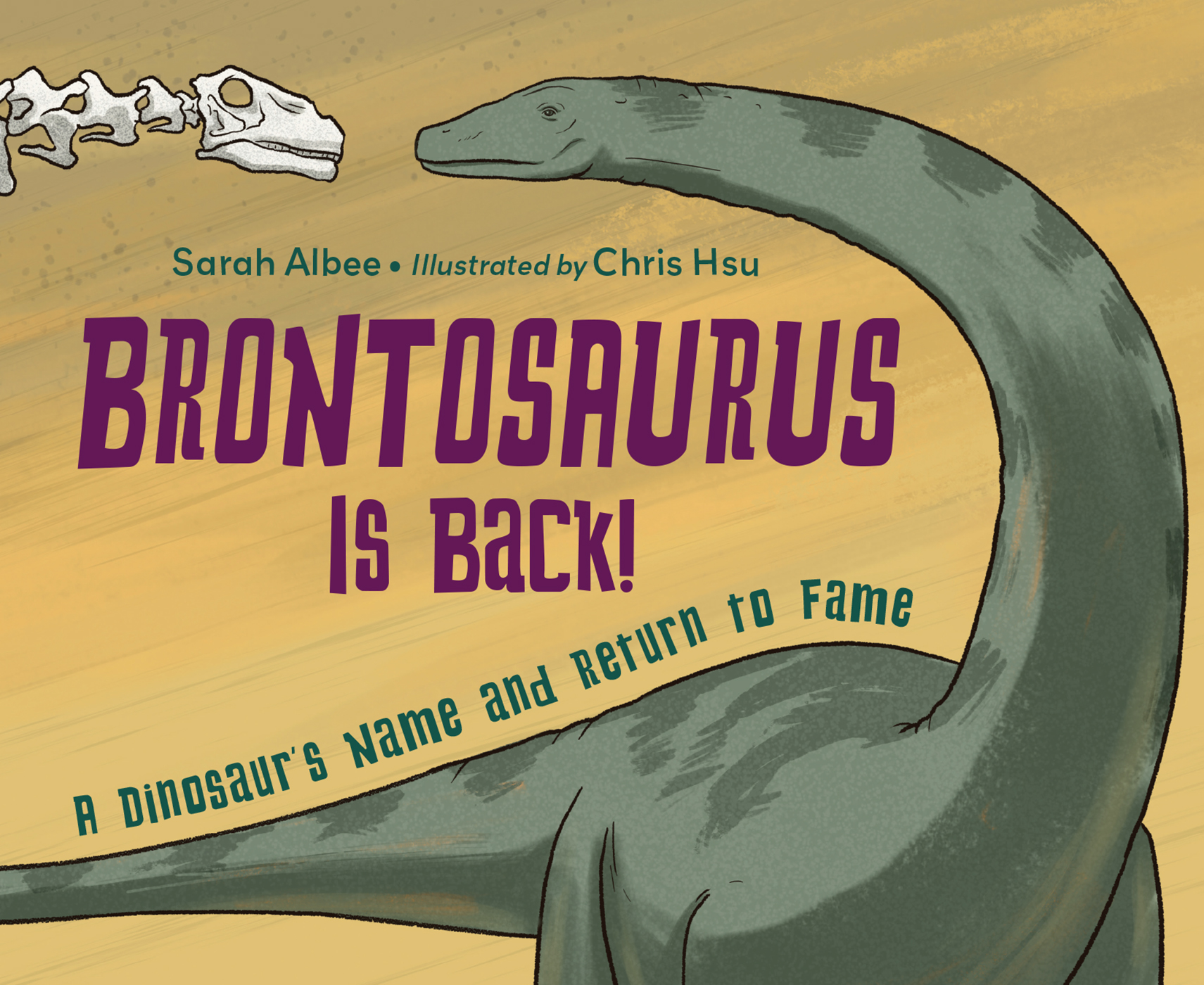
Brontosaurus Is Back! A Dinosaur’s Name and Return to Fame by Sarah Albee, Illustrated by Chris Hsu

Share

Brontosaurus Is Back! A Dinosaur’s Name and Return to Fame 
Author: Sarah Albee
Illustrator: Chris Hsu
Published September 29th, 2026 by Charlesbridge

Summary: A hilarious and fascinating look at Brontosaurus’s comeback—perfect for dino fans and curious kids learning how science evolves over time.

A fun, fact-filled nonfiction picture book for ages 6 to 9 about a dinosaur’s disappearing act and return.

This is fun, lively, kid-appeal-filled nonfiction and tells the story of brontosaurus—discovered, discontinued, and then reinstated again.

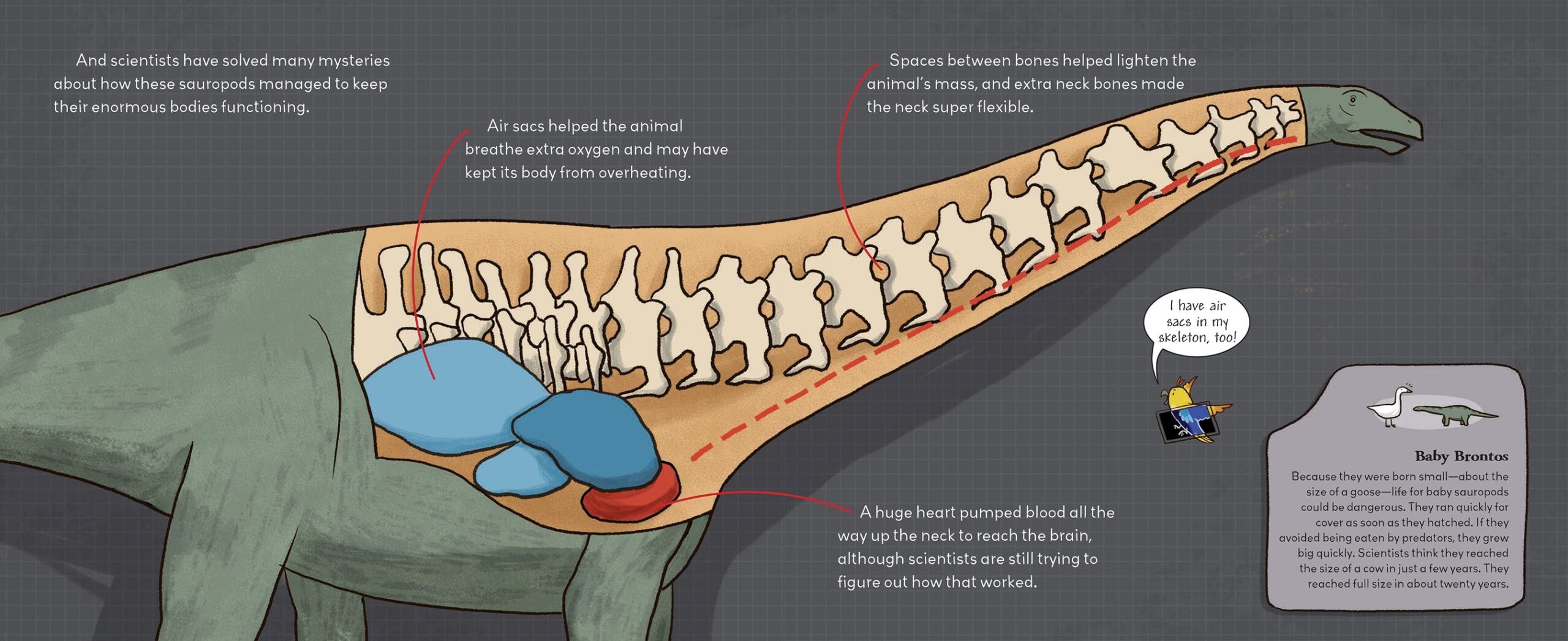
Dino fans, come and get it! There’s so much to learn in this interesting book about naming, sloppy science, dueling paleontologists, and more! Sarah Albee’s signature humor and strong writing, coupled with Chris Hsu’s kid-friendly and accurate art, bring history to life on the page.

Praise: A classic case study in how the course of scientific advancement can run anything but smooth.

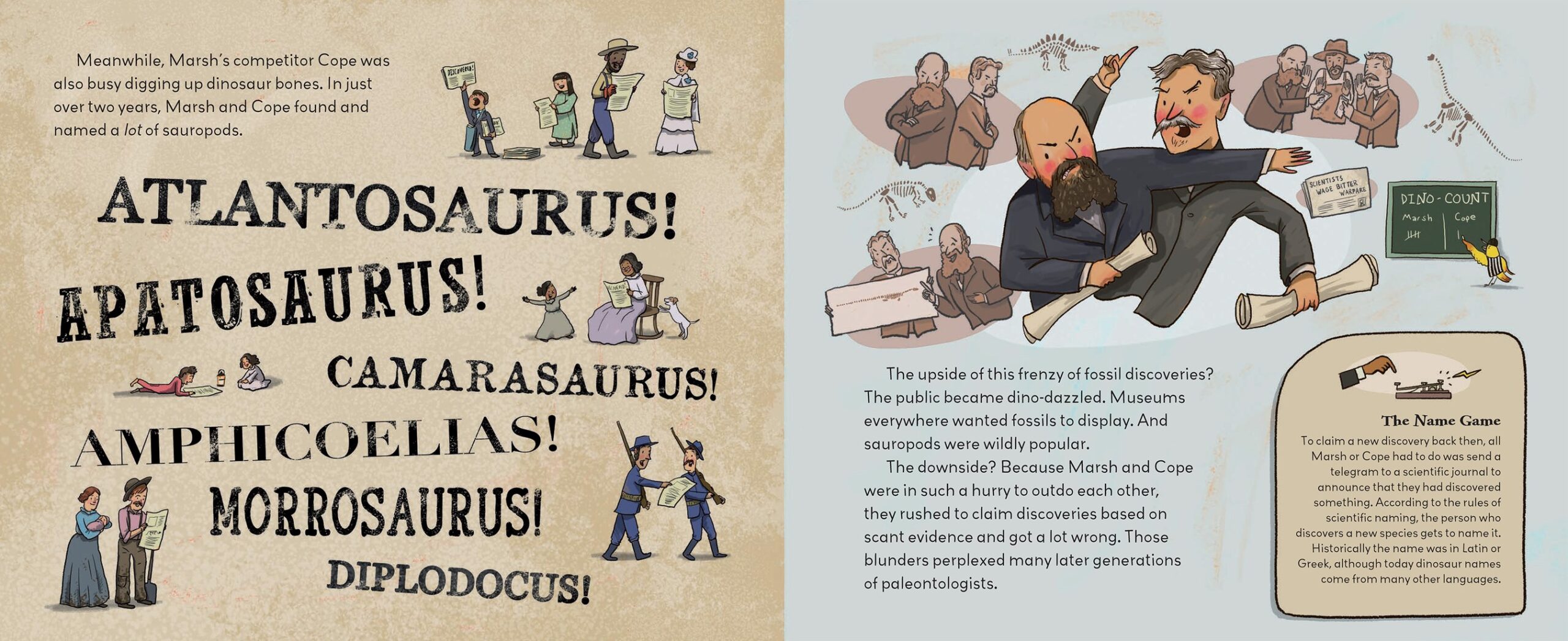
In the late 19th century, renowned paleontologist Othniel C. Marsh announced the discovery of scattered bones belonging to a sauropod he dubbed “Apatosaurus,” or “deceptive lizard.” At nearly the same time rival bone hunter Edward D. Cope proclaimed a similar find to be fossils of “Brontosaurus,” meaning “thunder lizard.” A later researcher’s determination that both actually belonged to the same genus touched off a century-long controversy, since, as Albee writes, scientific practice gives naming rights to the first finder. So even though “Brontosaurus was catchier,” and went on to become the common name with a “dino-dazzled” public, it fell out of official use. Until 2015, that is, when further discoveries led many researchers to change their minds and announce that the two actually were different dinosaurs. While laying out the bones of the kerfuffle with a fine sense of drama, the author also fleshes out her story with revealing observations about the evolution of our whole understanding of sauropod anatomy. Along the way she gives proper credit to Marsh’s original Sioux informants, as does Hsu in a period scene placed amid views of dinos, fossil bones, and skeletons, and racially diverse groups of modern museum visitors. A cheery glimpse of science in action, warts and all. —Kirkus Reviews

About the Creators:

Sarah Albee is the New York Times bestselling author of nonfiction books for kids. Her most recent titles are both nonfiction picture books: The Painter and the President: Gilbert Stuart’s Brush with George Washington, and Zero! The Number that Almost Wasn’t. Other popular titles include Troublemakers in Trousers: Women and What They Wore to Get Things Done; Fairy Tale Science; Accidental Archaeologists: True Stories of Unexpected Discoveries; and Poop Happened: A History of the World from the Bottom Up; and Alexander Hamilton: A Plan for America.  She and her husband live in New York City and have three grown children. Visit her at www.sarahalbeebooks.com.

Sarah Albee: IG @sarahjalbee FB @sarah.albee

Chris Hsu is a picture book illustrator and animation background artist whose credits include FX’s Archer and Marvel’s Hit-Monkey. His illustration work is influenced by world history, art history and music, and current favorite non-art activity is watching his daughters and nieces play soccer on Saturdays.

Chris Hsu: IG @chrisillustration

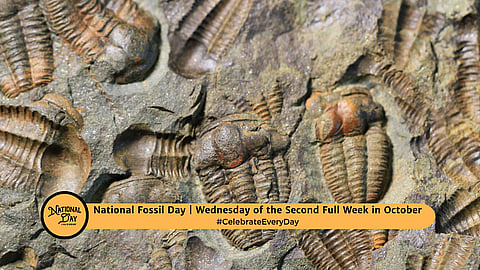
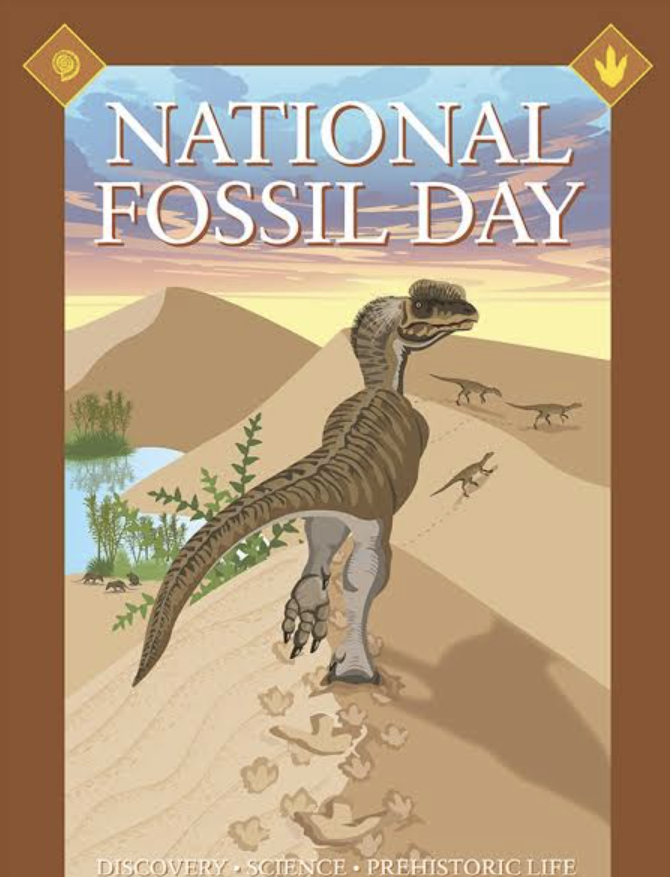
Review: Happy National Fossil Day! Brontosaurus is Back is the perfect book to highlight today!

National fossil day 2026 artwork - Fossils and Paleontology (U.S. National  Park Service)NATIONAL FOSSIL DAY™ - October 15, 2026 - National Day Calendar

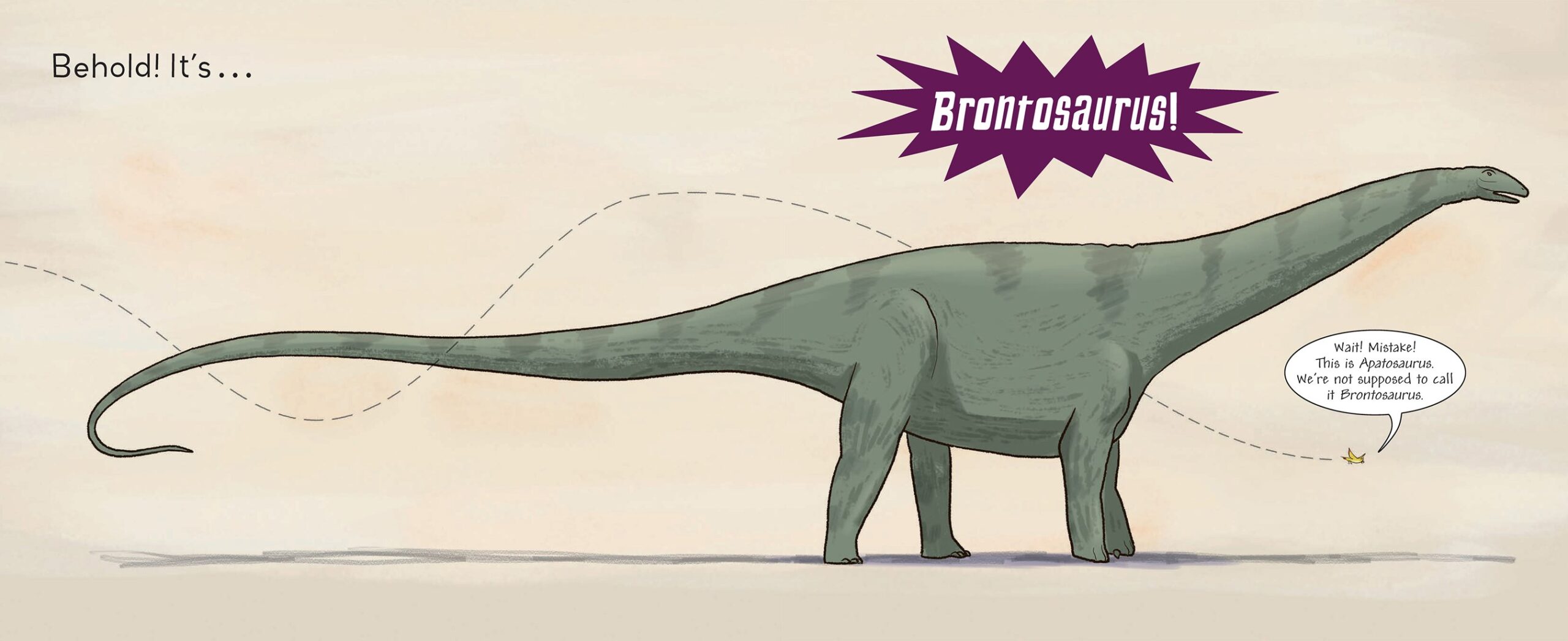
This text does so much: it shows the truth of how science is always evolving, how egos get in the way of scientific endeavors, how early paleontology worked, and how fossils help paleontologists. Sarah Albee is so good at balancing all the different goals of a nonfiction book while also making it interesting and engaging because Brontosaurus does all of this in an entertaining and informative way. I, personally, liked the funny bird sidekick to the narrator because it continued to remind the reader that dinosaurs are related to birds. I also think that the inclusion of the sidebars helped with bringing any needed extra facts back to the narrative to help keep the reader thinking outside of the narrative being told.

Also, oh man, I love the highlighting of two eager scientists trying to outdo each other and making mistakes–what a wonderful message for students! It is so important to do things slowly and correctly, not quickly and with mistakes.

The only thing I wish was that there was more explanation of the WHY brontosaurus came back–it just explains that there was a study in 2015 that said apatosaurus and brontosaurus are different but not exactly why; however, this is a perfect education opportunity!

Educators’ Tools for Navigation: The first thing I would have students do when finishing the book is look more into apatosauruses and brontosauruses and make a comparison and contrast on them.

This could also be a jumping off point for a debate because, as the book shares, “not all paleontologists agree,” so students can look at the evidence and decide what they agree with.

Discussion Questions: 

  • Today is National Fossil Day! What did you learn about fossils in this book?
  • How did ego play into scientists not being correct on their fossil analysis when it came to the sauropods?
  • How is paleontology a bit of a sciene of guessing on top of a science of fossils?
  • Do you agree with the policy of using the first name assigned to a species being used if two species are being determined to be the same? Why or why not?
  • Why do you think that most did not care that some scientists said brontosaurus weren’t their own species?
  • Why were scientists wrong for over a hundred years on the shape of that apatosaurus’s head?
  • On the page with “A Closer Look,” what differences do you see between the two dinosaurs?
  • What are some ways that you see or learned that dinosaurs and modern birds are alike?

Flagged Spreads: 

Read This If You Love: Dinosaurs, Science, Nonfiction Picture Books

Recommended For: 

classroomlibrarybuttonsmall 

Signature

**Thank you to Charlesbridge & Blue Slip Media for providing a copy for review!**

Instagram: @charlesbridgepublishing  |  @blue_slip_media
Facebook: Charlesbridge Publishing  |  Blue Slip Media

The Moon by Sandra Laboucarie, Illustrated by Didier Balicevic

Share

The Moon
Author: Sandra Laboucarie
Illustrator: Didier Balicevic
Published September 15th, 2026 by Twirl Books

Summary: Uncover the secrets of the moon!

Young readers can learn all about the moon in this information-packed and interactive book. With multiple flaps on every page, as well as quizzes and seek-and-find activities, this highly engaging book asks and answers questions about the moon’s orbit around earth, space travel, moon landings, exploration of the moon’s surface, and much more!

Key Features:

•Flaps and activities combine with facts for interactive learning
•Great introduction to moon and space for young children aged 4 to 6
•Information is vetted by experts
•Perfect family read-aloud

About the Creators: 

After writing for children’s newspapers for many years, Sandra Laboucarie left Paris to return to Toulouse, France, where she now writes books for children.

Didier Balicevic is the illustrator of numerous books for children. He lives near Paris, France.

Review & Educators’ Tools for Navigation: This book is so much more than it seems at first glance. Yes, it is a board book, but it is full of information that is at quite a high level which allows elementary students to enjoy the interactiveness of a flap book at their developmental level. I think adults and kids alike will like how full of information it is, and, in addition to the flaps, it also how it includes Seek & Finds throughout and a quiz at the end. And although the information is at a higher level, it is still accessible to children because it is accompanied by the illustrations and explanations. I highly recommend this book for classrooms that study space and specifically the moon.

Discussion Questions: 

  • What did you learn about the moon that you did not know before reading?
  • Would you want to visit the moon if you could?
  • How are humans able to visit the moon?
  • What is the difference between a lunar and solar eclipse?
  • Why does the moon seem closer/further away sometimes?
  • What are some things that the moon effects?
  • Why do we always see the same side of the moon?
  • Why can we see the moon even though it does not radiate any light?
  • Why are astronaut’s footprints never going to erased on the moon?
  • What are some differences between Earth and the moon? Similarities?

Flagged Spreads: 

Read This If You Love: Space, Interactive Picture Books

Recommended For: 

Signature

**Thank you to Blue Slip Media & Twirl Books for providing a copy for review!!**

Instagram: @chroniclekidsbooks  |  @blue_slip_media
Facebook: @chroniclekidsbooks  |  Blue Slip Media
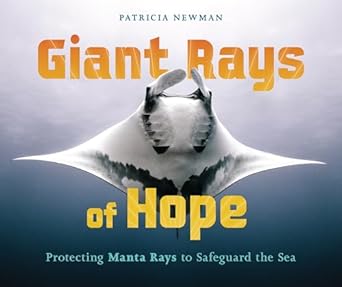
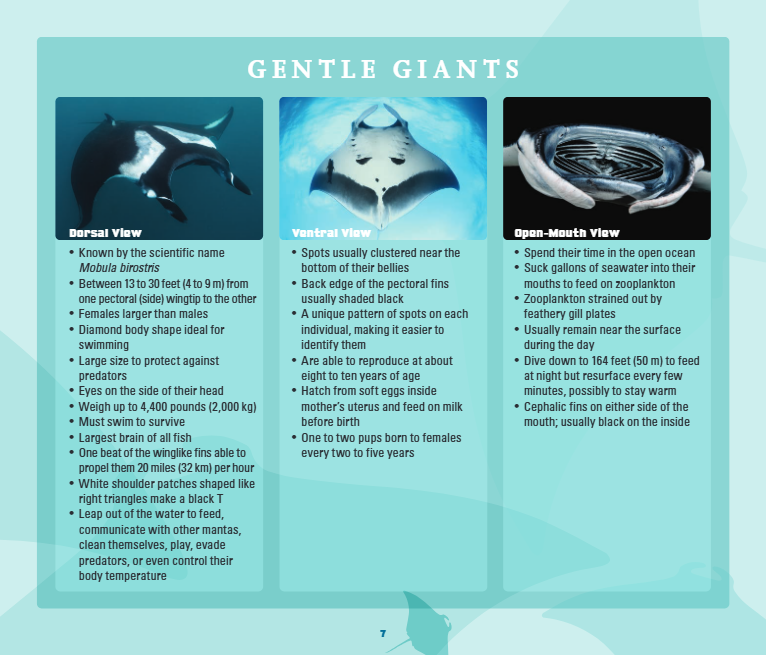
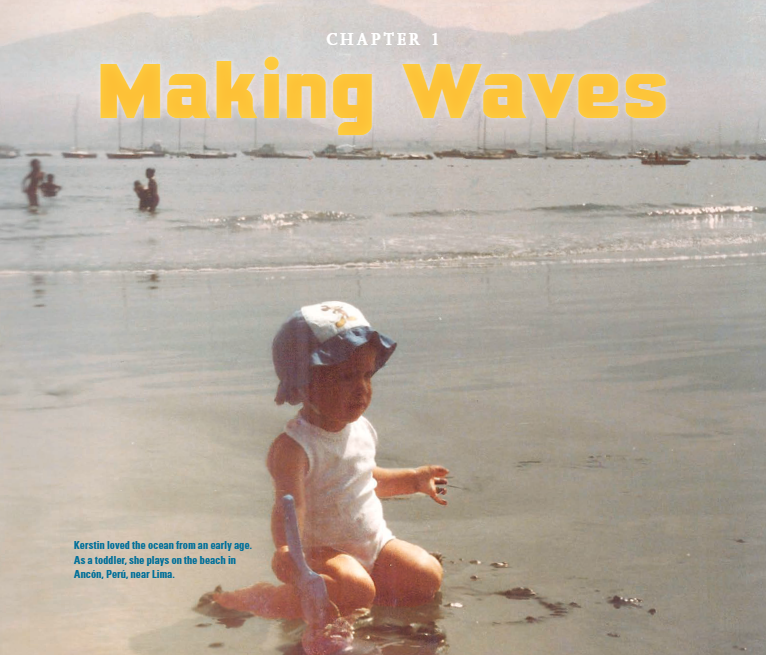
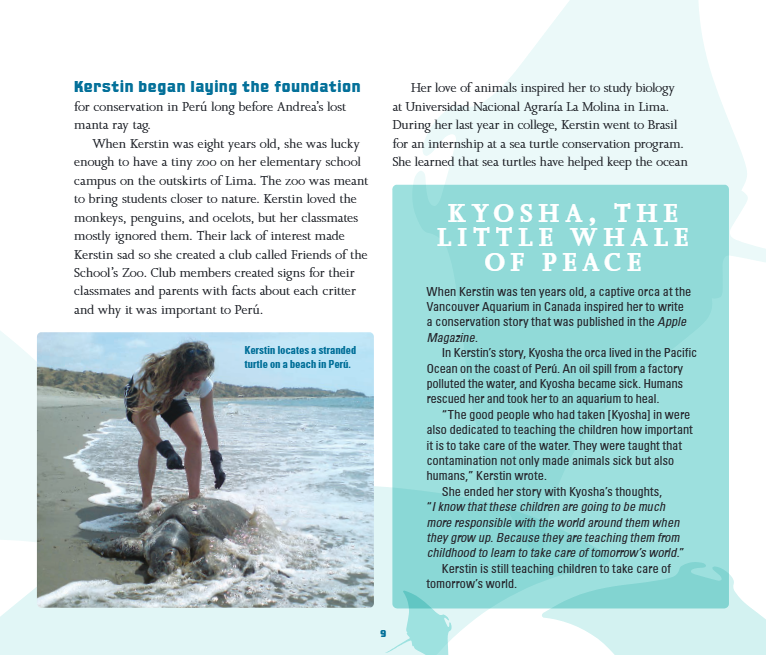
Giant Rays of Hope: Protecting Manta Rays to Safeguard the Sea by Patricia Newman

Share

Giant Rays of Hope: Protecting Manta Rays to Safeguard the Sea
Author: Patricia Newman
Published October 1st, 2024 by Lerner Publishing Group

Summary: Off the coast of Perú, gentle giants swim beneath the waves. Thanks to the work of Kerstin Forsberg, giant manta rays have become a symbol of hope for ocean conservation in the region. Mantas are a flagship species, and when they’re protected, the whole ocean ecosystem benefits.

Kerstin, who founded the organization Planeta Océano, has taken a new approach to ocean conservation. Previous conservation projects were often led by scientists from other places who didn’t work with the local people. When Kerstin decided to help manta rays, she sought the opinions of local fishers and educated them about the dangers of overfishing, bycatch, and poaching—things that affect both manta rays and fishers. She also involved local schools and teachers.

With the help of teachers, students, and fishers, Kerstin launched a project to identify and track manta rays and protect them, making the ocean a better place for all creatures. Dive in with author Patricia Newman and explore how taking care of the ocean can benefit everyone!

About the Author: Patricia Newman wants us all to know we are part of nature. As a Robert F. Sibert Honor recipient, she shows us how our actions ripple around the world, empowers us to find our own connections to nature, and encourages us to use our imaginations to act on behalf of our communities. Her nonfiction titles have received multiple starred reviews, Orbis Pictus Recommended Awards (NCTE), Green Earth Book Awards, and several Eureka! Awards. She is based in California.

Review: I love learning new things, and Patricia Newman always delves into topics in such interesting ways that will make any reader want to not only read the entire book but also want to investigate further to learn as much as possible about it.

In this book, I dove (pun intended) into the world of manta rays: their uncertain future, their truly phenomenal elegance and uniqueness, and lots of information about environmental factors. I also learned about how much difference one person can make. This book is a call to future activists, a call for all animal lovers, and a call for all humans to see more than what we normally see.

I am also impressed how Newman wrote an entire book about manta rays but by the end, the reader has thought about so much include flagship species, collaboration, negotiation, activism, the ocean in many different ways, cause and effect, and so much more.

Once again a truly fascinating and informative book has been gifted to us readers by Patricia Newman.

Teachers’ Tools for Navigation and Discussion Questions: 

In the standards-aligned guide provided by Lerner, educators can find lessons about manta ray anatomy, bycatch simulation, the challenge of overfishing, plotting manta sightings, civic role models, and exploring plankton.

The guide’s objectives are:

  • To help students understand our unbreakable connection to the ocean and we affect it.
  • To encourage and empower students to become a voice for the ocean in their homes, schools, and communities.
  • To help students become better science communicators

The guide focuses on Ocean Literacy Standards & Principles as well as United Nations Sustainable Developmental Goals

You can also access the educators’ guide here.

Book Trailer: 

Flagged Spreads: 

Read This If You Love: Nonfiction books about animals, environmental issues, and/or conservation efforts

Recommended For: 

classroomlibrarybuttonsmall 

Signature

**Thank you to the author for providing a copy for review!**

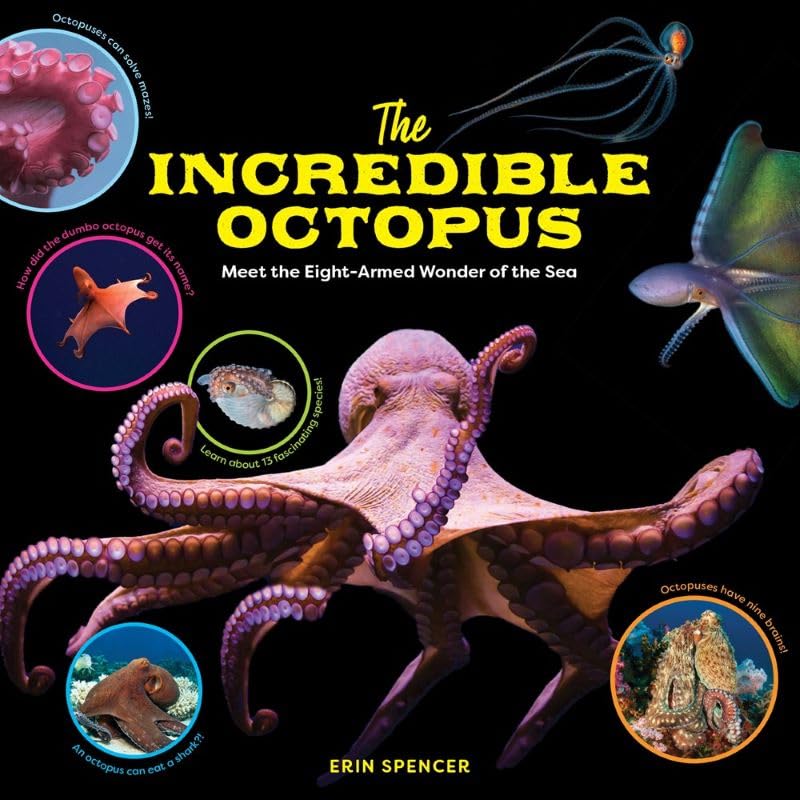
Review with Educators’ Guide for The Incredible Octopus by Erin Spencer

Share

The Incredible Octopus: Meet the Eight-Armed Wonder of the Sea
Author: Erin Spencer
Published: April 16th, 2024 by Storey Publishing

Summary: Packed with mesmerizing undersea photography, this book invites kids to explore the fascinating behavior and intelligence of this remarkable creature of the deep.

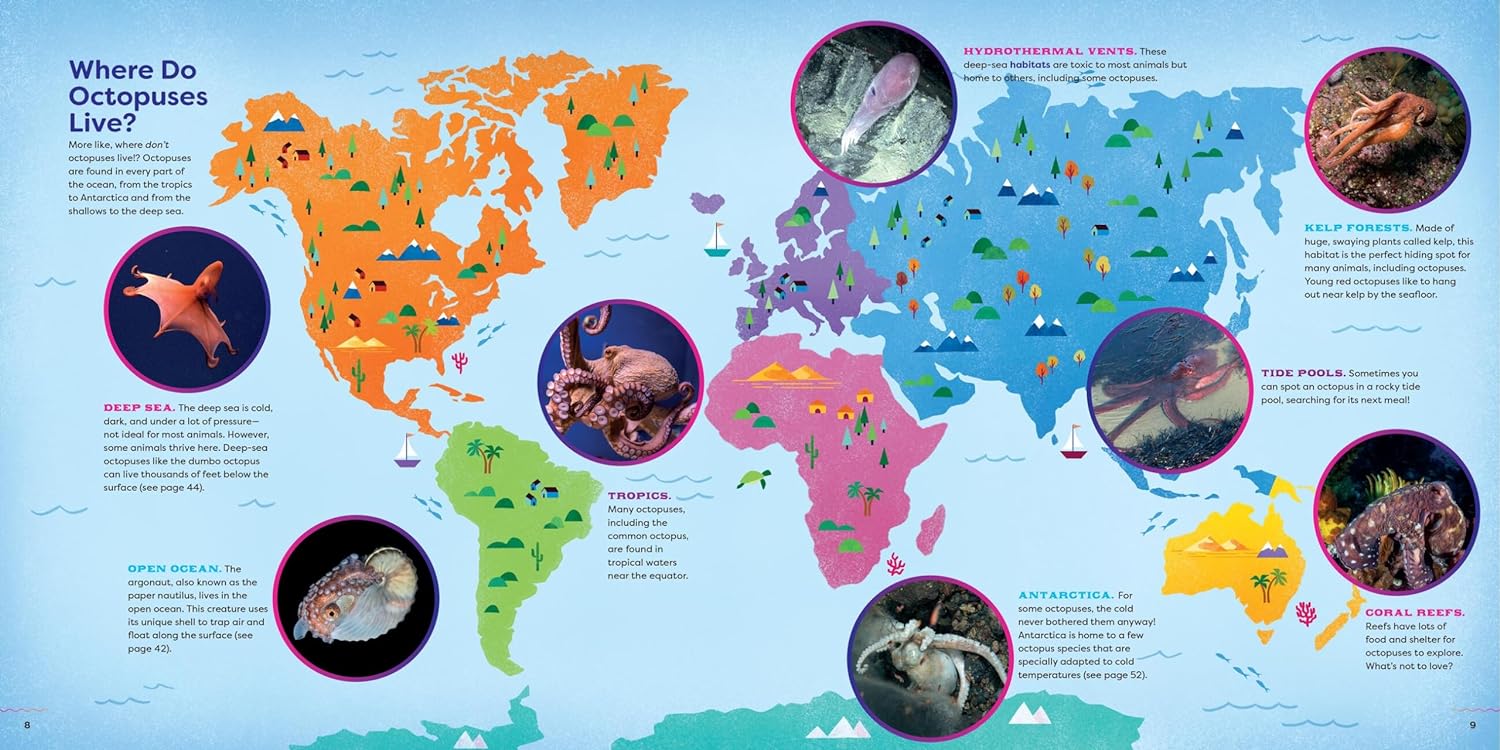
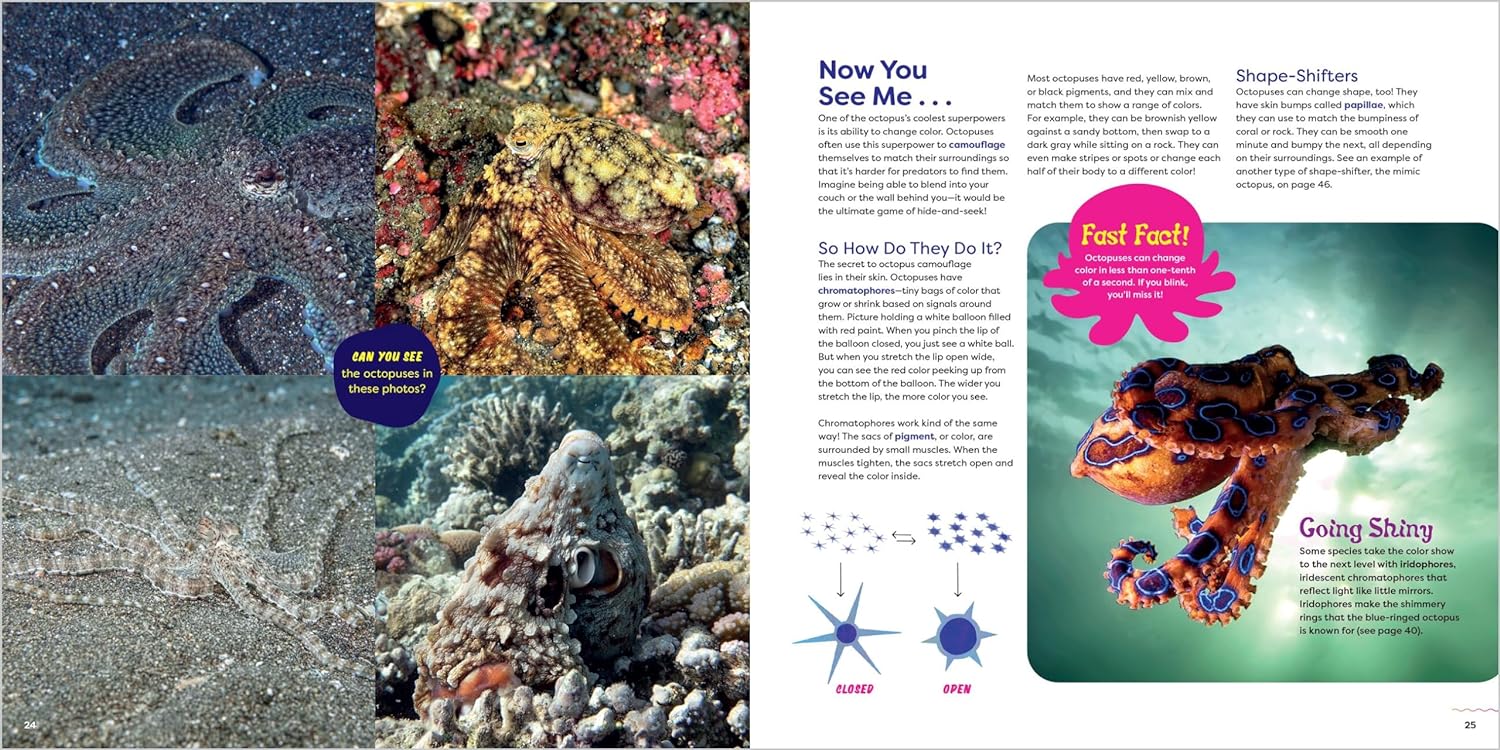
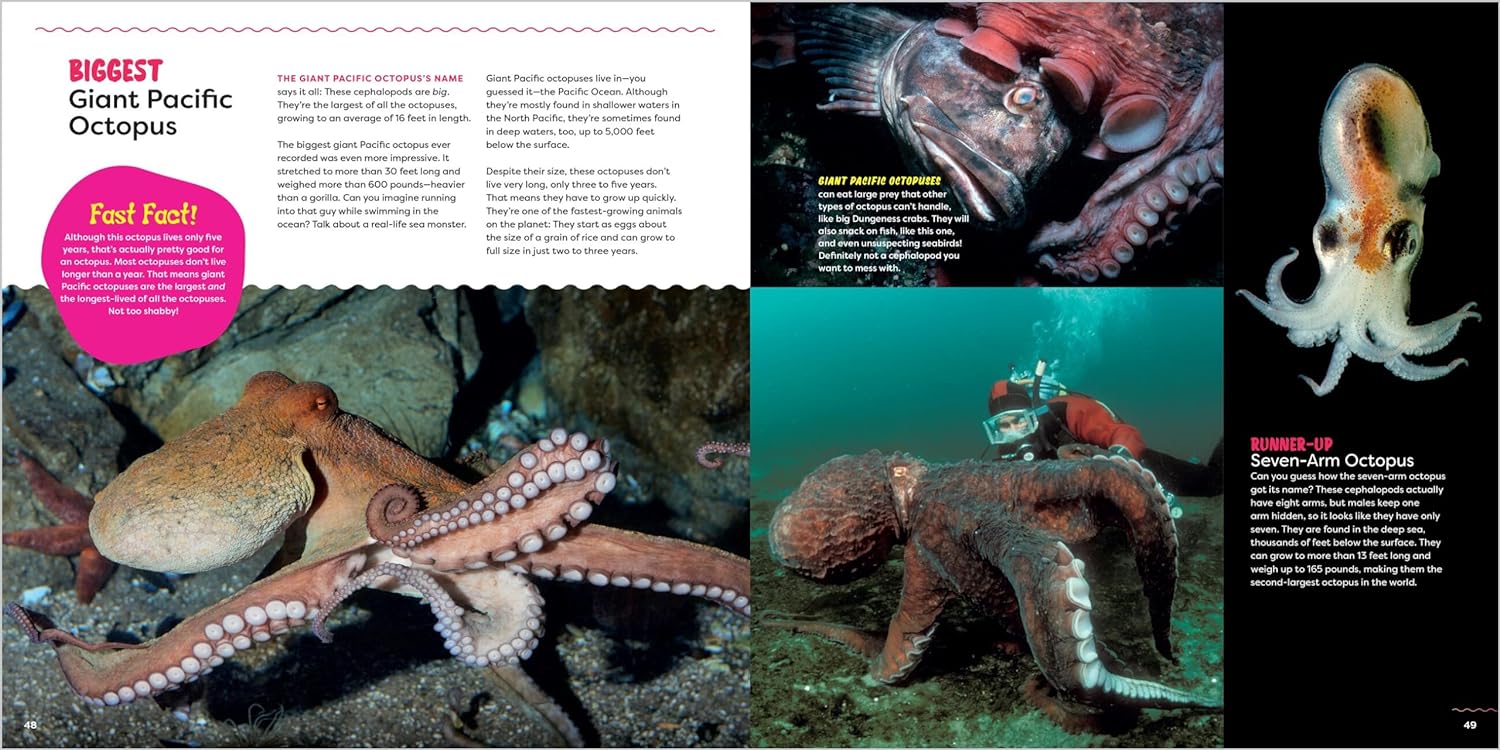
The Incredible Octopus combines amazing photos with in-depth facts to get kids aged 7 and up excited about octopuses and the underwater world in which they live. Readers are introduced to the fascinating biology of the octopus, from its 3 hearts and 9 brains to suction cups and how they work, and learn all about what it’s like to be an octopus: how they use camouflage and ink, what they eat, and how they reproduce (nests and eggs!). The book also explores the  intelligence and playfulness of this animal—and, of course, the famous stories of octopuses who escaped their tanks. Readers will meet 13 different species of octopuses and find out what makes them unique, from the most venomous and best disguised to the deepest and coldest. They’ll also get a glimpse into exciting octopus research, technology inspired by octopuses, and ways to help conserve our oceans.

About the Author: Erin Spencer is the author of The Incredible Octopus​ and The World of Coral Reefs. She is a marine ecologist and National Geographic Explorer whose articles, photos, and videos of marine life have been featured in National Geographic, PBS, CBS Sunday Morning, and in publications of Ocean Conservancy. She is an avid public speaker and has presented to National Geographic, the World Bank, MCON, and TEDx, as well as many school groups. Originally from Maryland, she now lives in South Florida where she studies great hammerhead sharks and their prey for her PhD.

Review: The octopus is truly incredible, and this book is a fantastic introduction to everything about these amazing animals. The book really does touch on a little bit of everything you’d want to know about octopuses with a text structure that makes sense: going from the biology of the octopus to their life, specific examples, and people & octopuses. I also think the author was very smart with their writing as well–while much of it is traditional informational nonfiction, the author included narrative elements, text features, and interviews to make the reading interesting in a whole other way.

I learned so much about octopuses, and they really are fascinating. I was sitting at my son’s karate dojo while I read, and I kept sharing facts with my husband and friend because I just was blown away by so many things in the book. I think a nonfiction book making me want to share things is one of the greatest compliments you can give!

This nonfiction book is a great one to read from front to back but is also one that can be perused by your nonfiction skimmers.

Teachers’ Tools for Navigation and Discussion Questions: 

Please view and enjoy this curriculum guide from the publisher.

You can also access the educators’ guide here.

Flagged Spreads: 

Recommended For: 

classroomlibrarybuttonsmall closereadinganalysisbuttonsmall

Kellee Signature

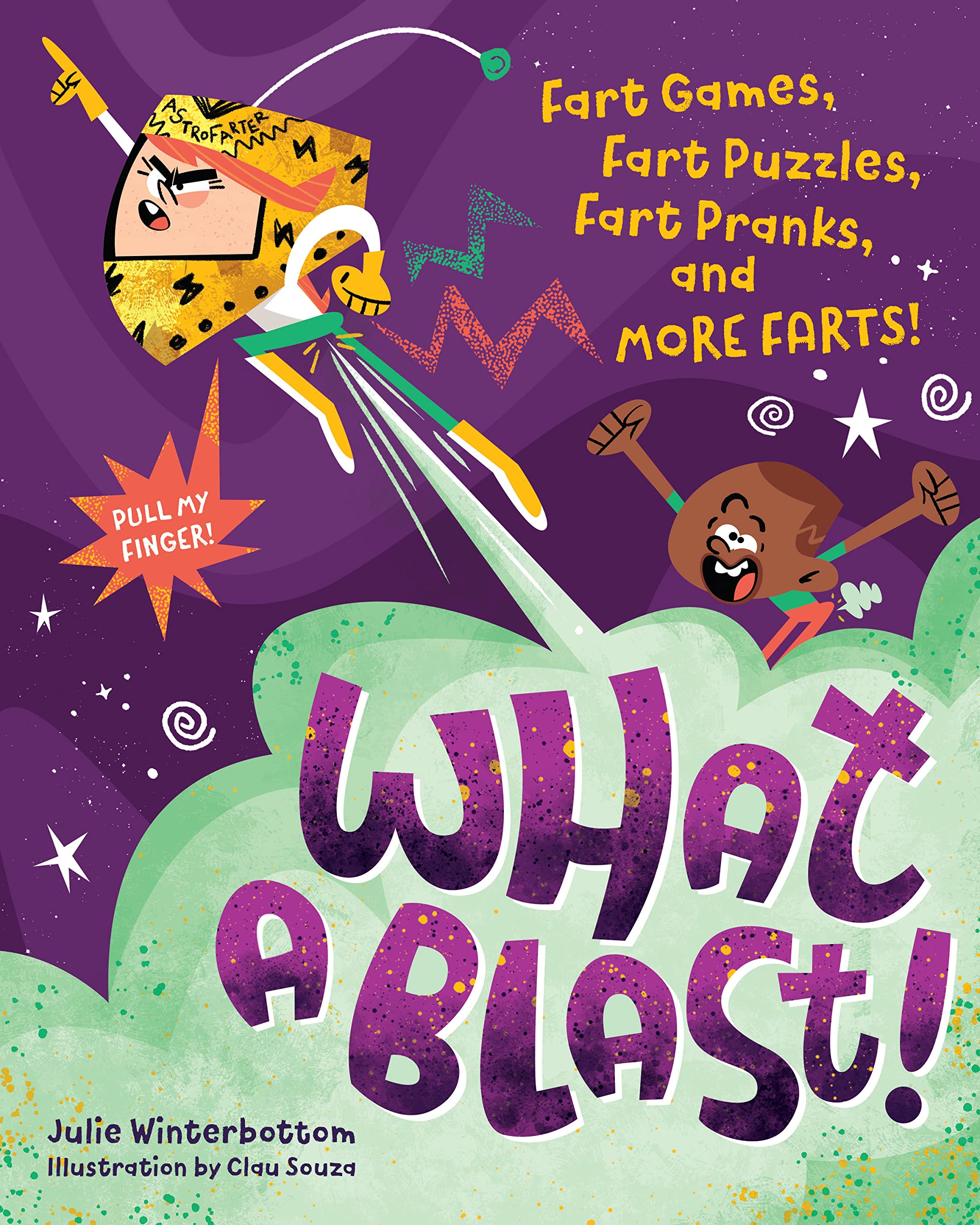
What a Blast! Fart Games, Fart Puzzles, Fart Pranks, and More Farts! by Julie Winterbottom, Illustrated by Clau Souza

Share

Summary: Squeakers, butt puffs, trumpets and “the destroyer”. Celebrate farts in all their hilarious, honking glory!

Con-fart-ulations! You’ve found the book that confirms your fine appreciation for the fact that nothings funnier than a little pfffftt from someone’s butt. Cheerfully over-the-top, packed with activities, and grounded in the science of flatulence, What a Blast! Is a trip through the body’s digestive system to explore the whys, hows, and wherefores of farting. You’ll discover the fartiest food in the world, meet infamous farters from history, learn just what to say if you fart in public—“Yeah, you heard me!—and so much more!
Have fun with farts!

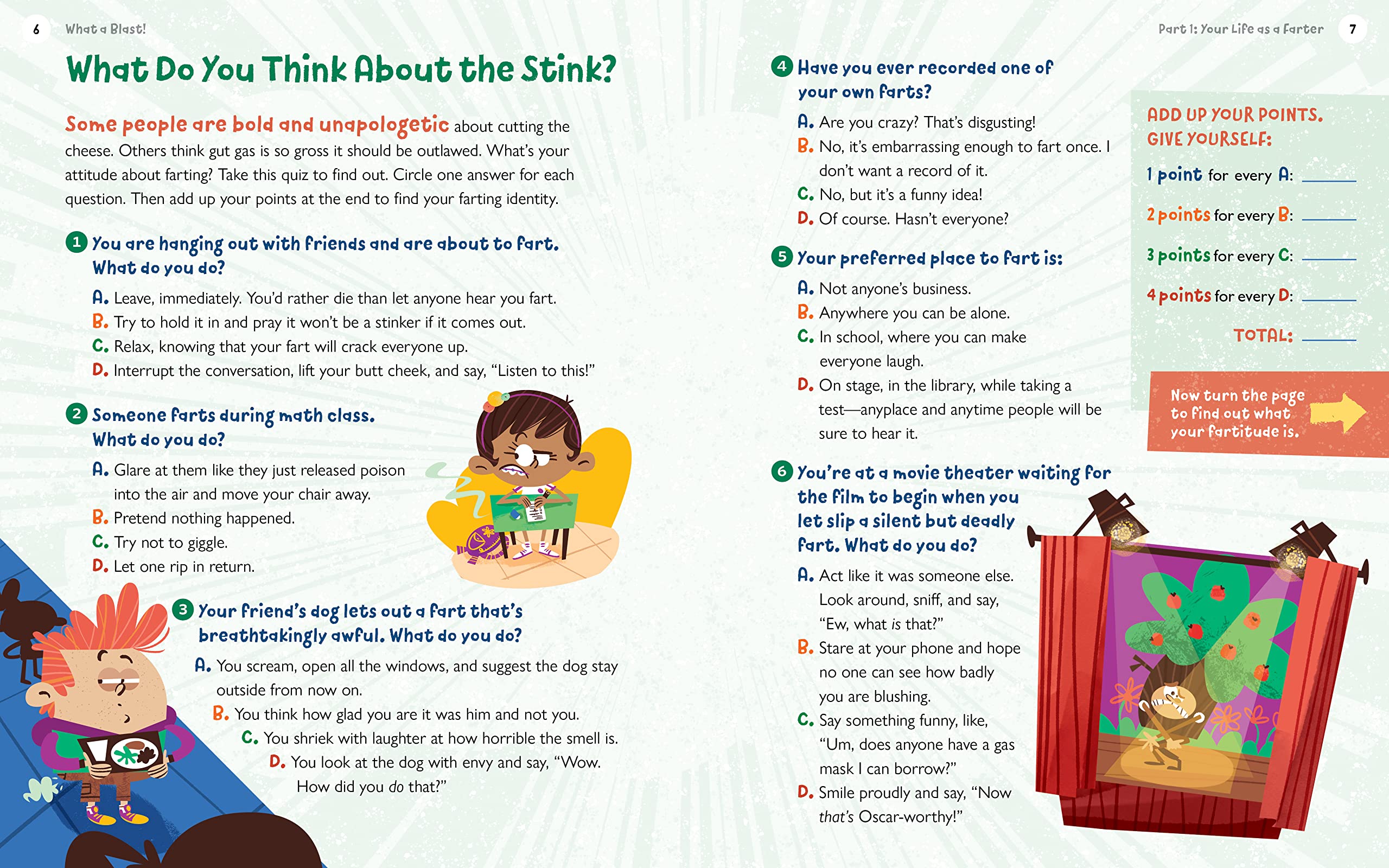
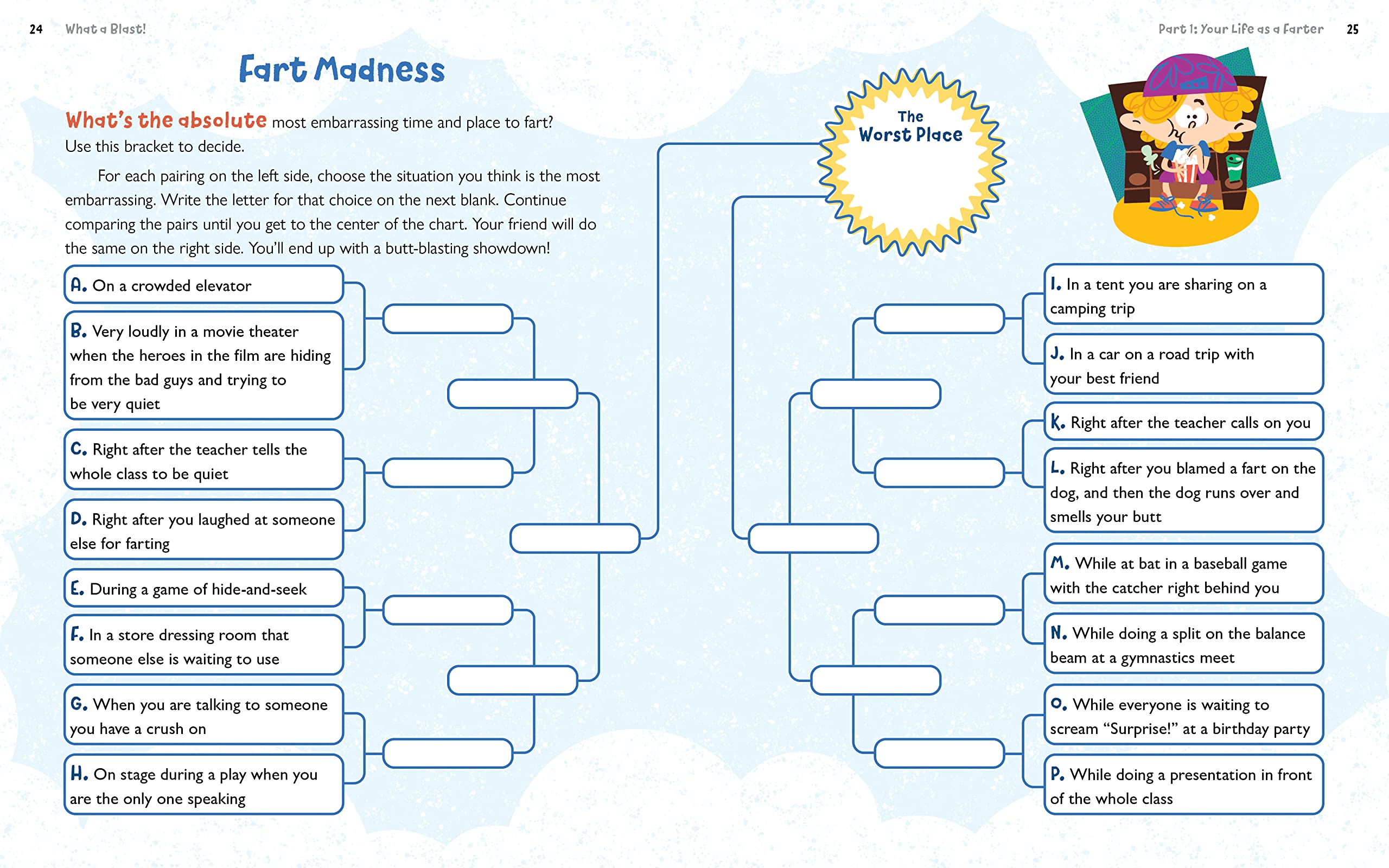
  • Solve the question of who farted?
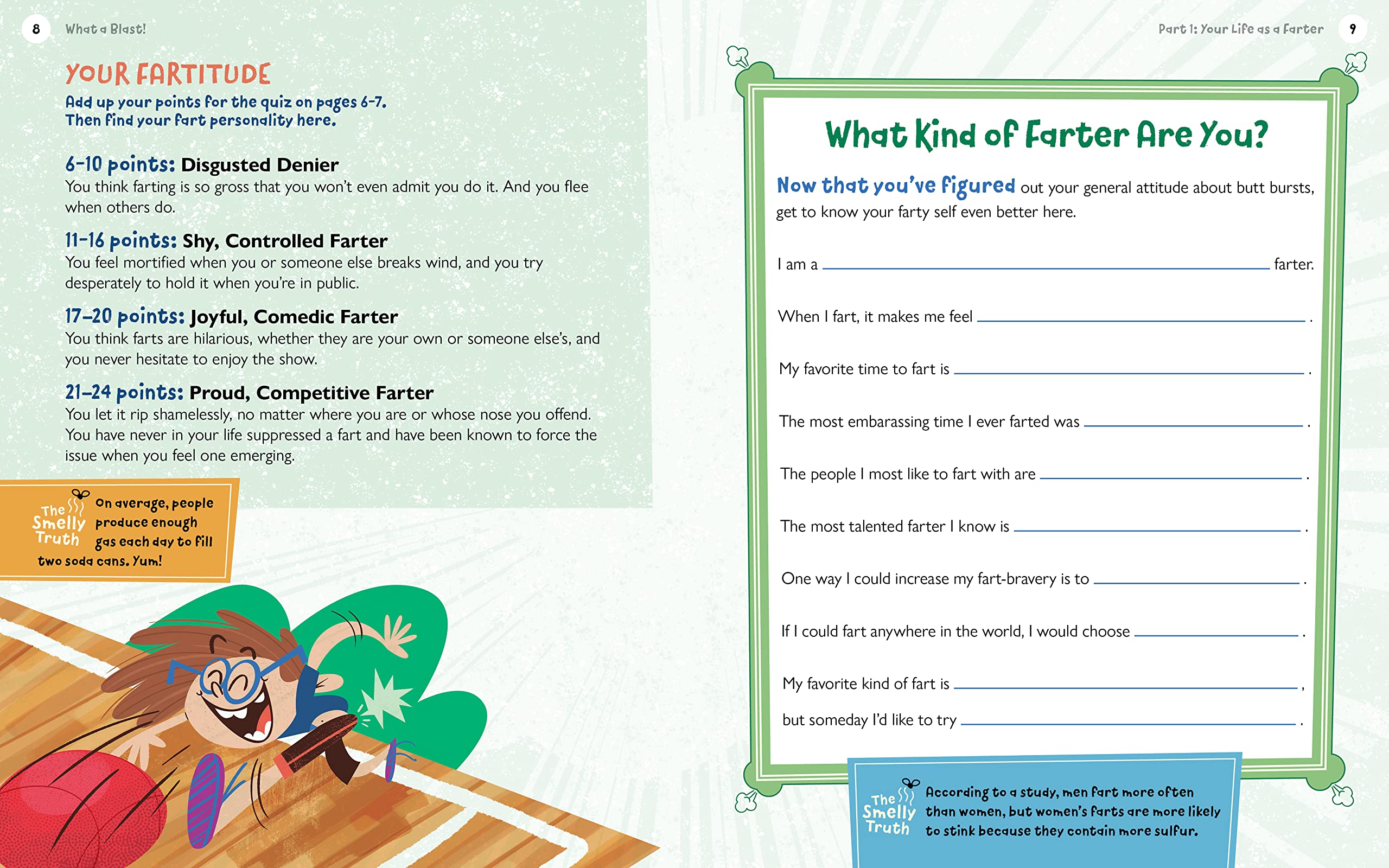
  • Discover your gastrological sign.
  • Play free the fart through an intestinal maze.
  • Learn how to make elbow farts, hand farts, and armpit farts.
  • Throw a farty party.
  • And get creative with funny fill-in stories, like a fart to remember

Ricki’s Review: I should really get my three sons to review this book. They have had such a blast (pun intended) doing the workbook. Parents and teachers, if you want to get kids excited about reading and writing, this book will do it. I can’t tell you how many giggles this book has brought our family. I have to admit that I even giggled behind my hand. I can’t recommend this workbook highly enough—it is cleverly crafted and full of amazing reading and writing opportunities for kids. It has open-ended questions, quizzes, brackets, puzzles, games, etc.

We Flagged:

**Thank you to Claire and Ivanka from Workman for providing a copy for review**

National Geographic Kids’ Mythical Beasts: 100 Fun Facts About Real Animals and the Myths They Inspire by Stephanie Warren Drimmer & Bling!: 100 Fun Facts About Gems by Emma Carlson Berne

Share

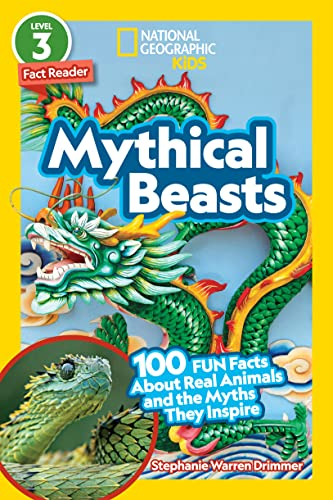
Mythical Beasts: 100 Fun Facts About Real Animals and the Myths They Inspire
Author: Stephanie Warren Drimmer
Published January 4th, 2022 by National Geographic Kids

Summary: Calling all fans of unicorns, dragons, sea monsters, and other mythical creatures! Discover 100 marvelous facts that add to the magic in this new reader for fluent readers.

Key features include:

  • Expert-vetted text appropriate for ages 7 to 9
  • Brilliant and eye-catching National Geographic images
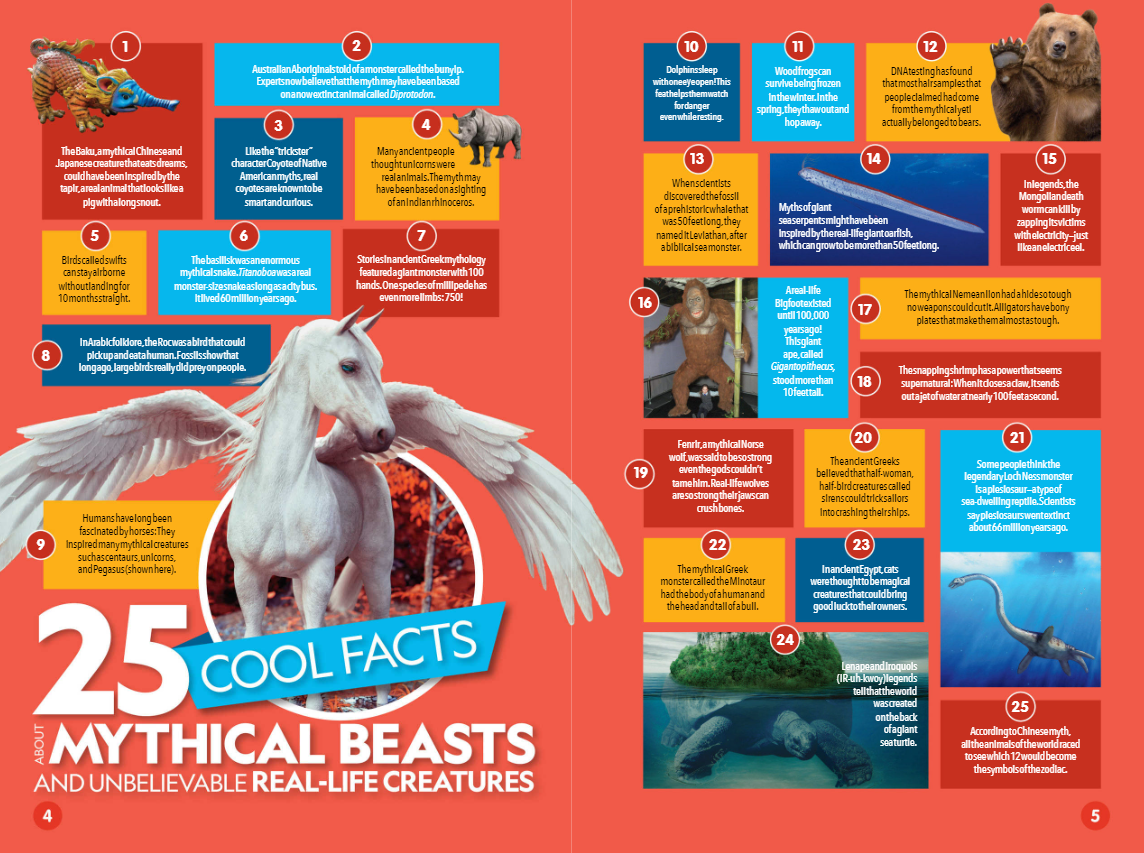
  • 100 fun facts spread throughout the book
  • A fact roundup at the end of each book for kids to review what they’ve learned

Packed with weird-but-true facts and tons of info, this Level 3 reader explores animals that are mistaken for mythical creatures, critters that are almost too weird for reality, and other creatures with incredible abilities. Learn all about these amazing, unbelievable, and downright fantastical beasts!

About the Author: STEPHANIE WARREN DRIMMER writes books and magazine features for kids about everything from the strangest places in space, to the chemistry of cookies, to the mysteries of the human brain. Drimmer has a degree in science journalism from New York University, but she thinks she likes writing for kids because she’s secretly still one herself.

Bling!: 100 Fun Facts About Gems
Author: Emma Carlson Berne
Published January 4th, 2022 by National Geographic Kids

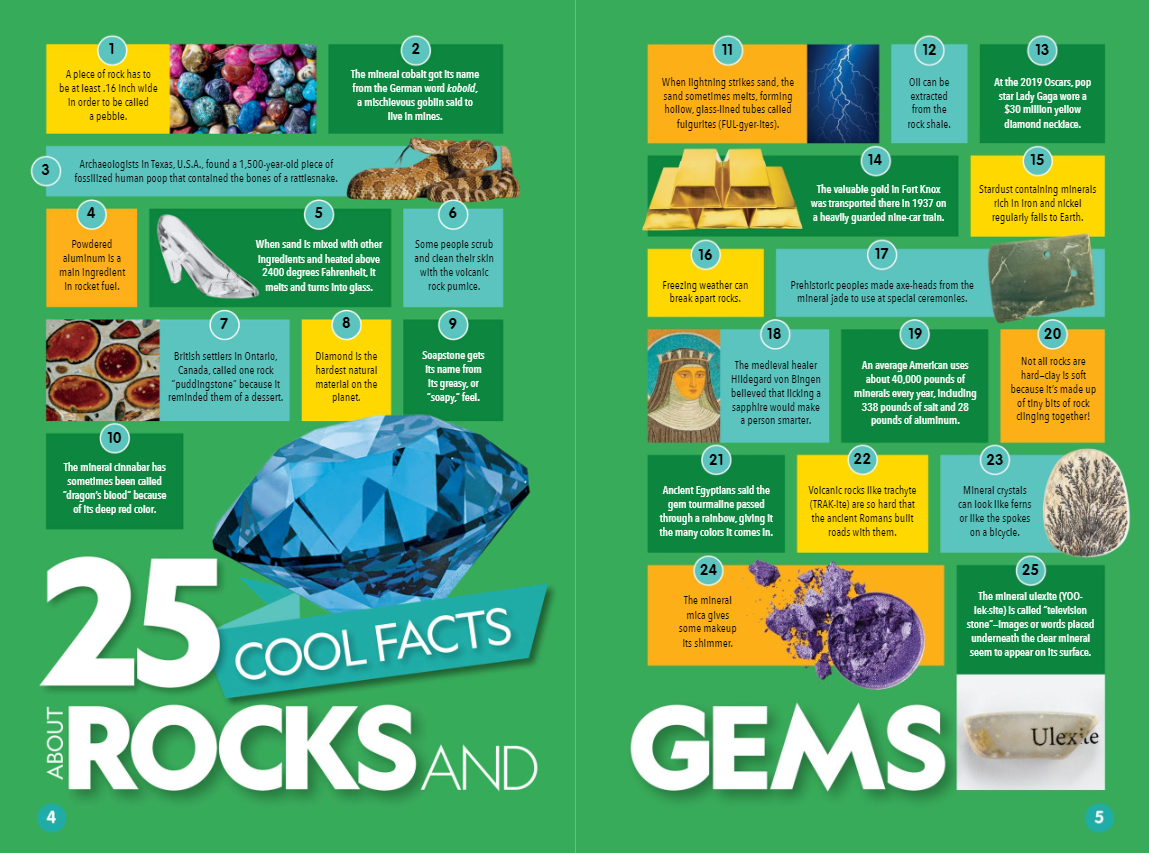
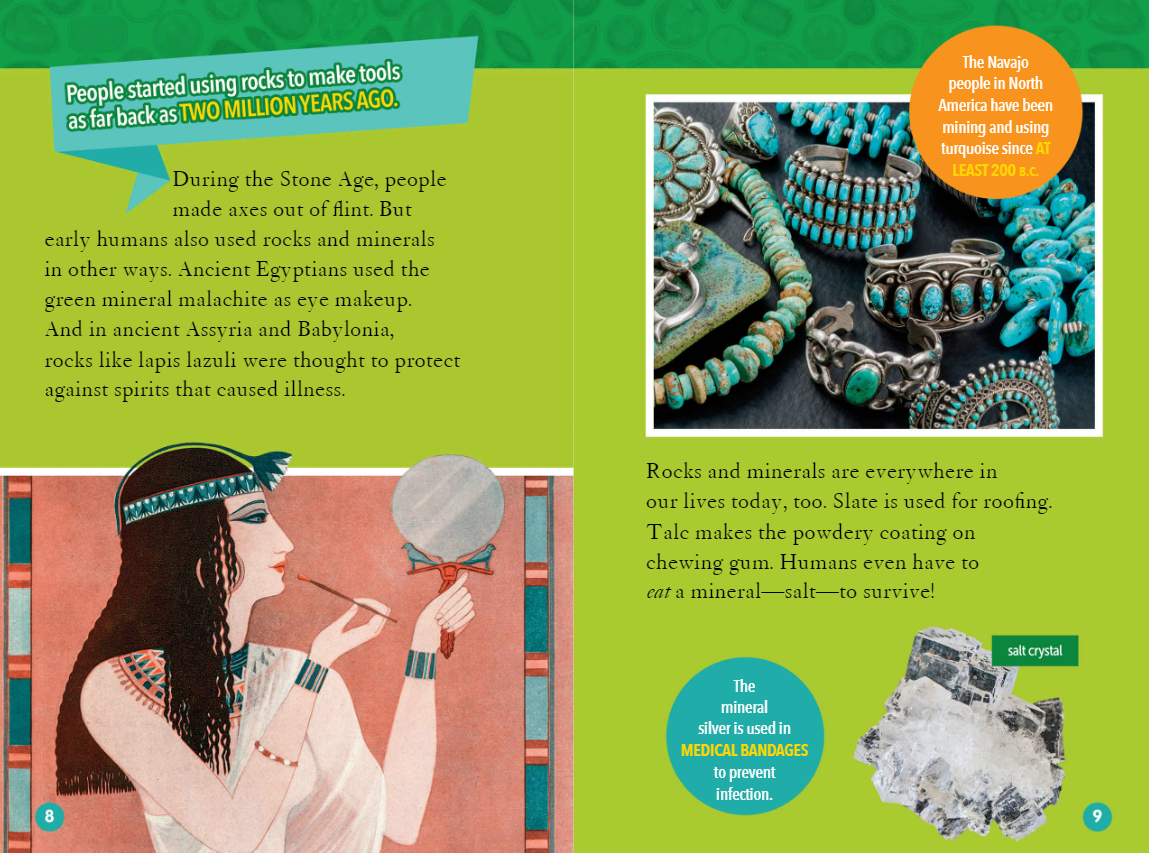
Summary: Get ready to be dazzled by some of the shiniest, most colorful, useful—and even dangerous—rocks, minerals, and gems on the planet! In this Level 3 reader, discover fascinating facts about the incredible rocks and minerals under our feet and deep in Earth’s crust. Budding geologists will love reading about how rocks form, learning the names and features of the coolest rocks and minerals, and exploring rare and beautiful gemstones.

Key features include:

  • Expert-vetted text appropriate for ages 7 to 9
  • Brilliant and eye-catching National Geographic images
  • 100 fun facts sprinkled throughout the book*
  • A fact roundup at the end of each book for kids to review what they’ve learned

Packed with weird-but-true facts and tons of cool info, this Level 3 reader explores the incredible world of geology.

About the Author: EMMA CARLSON BERNE writes juvenile, middle grade, and YA fiction and nonfiction for both educational and trade publishers. She has worked on projects with Disney/Lucasfilm Press, American Girl Publishing, Simon & Schuster, Scholastic, Sterling Publishing, Capstone, Rosen, and Alloy Entertainment. Berne lives in Cincinnati, Ohio, where she is the writer-in-residence for the Public Library of Cincinnati and Hamilton County.


About the Series: This high-interest, educationally-vetted readers series features magnificent National Geographic images accompanied by text written by experienced, skilled children’s book authors. Each reader includes a glossary and interactive features in which kids get to use what they’ve learned in the book. Level 1 readers reinforce the content of the book with a kinesthetic learning activity. Level 2 readers feature slightly higher-level text and additional vocabulary words. Level 3 readers have more layers of information to challenge more proficient readers. For emerging readers, the Pre-reader level introduces vocabulary and concepts, and the Co-reader level provides a collaborative reading experience.

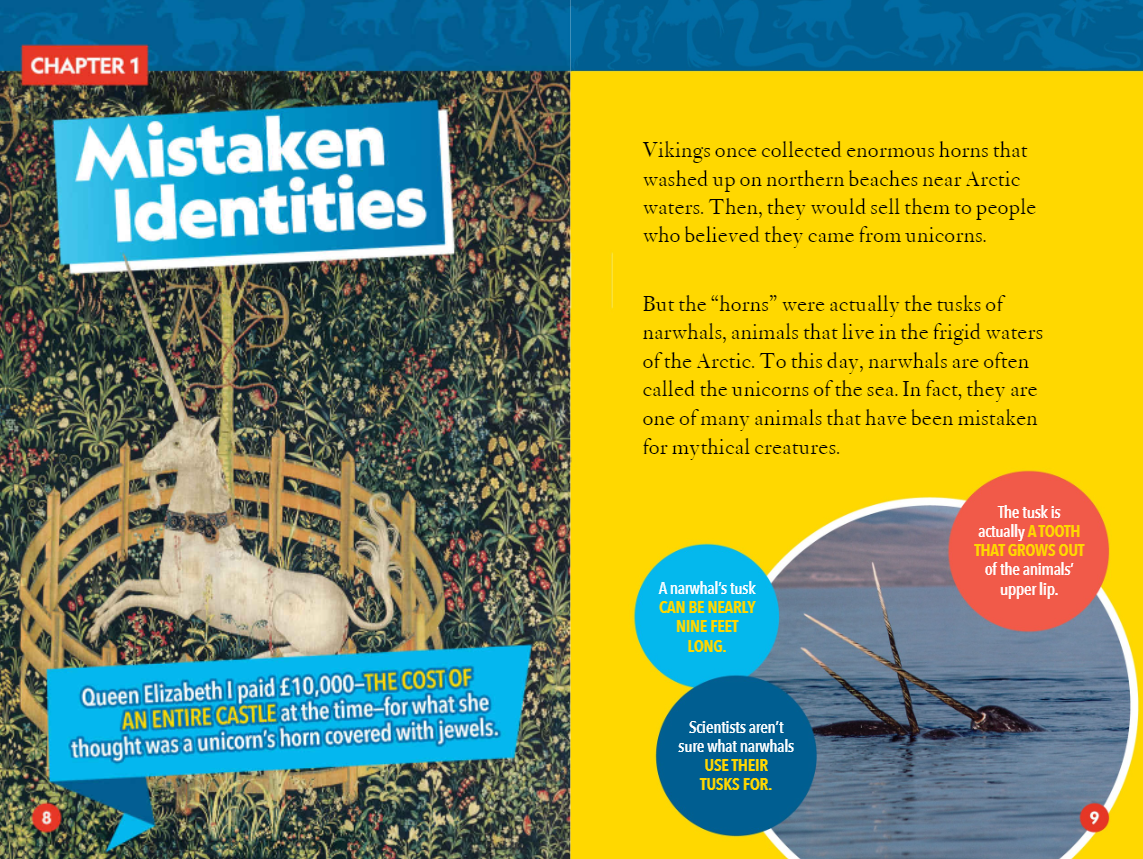
Review: I am such a fan of National Geographic Kids’ books. They do such a great job with engaging material that is perfect for the audience they are aimed for. With these Fact Reader Level 3 books, I really loved the mix of chapters with expository text mixed with text features that add to the text as well as fact lists that will make sure the reader leaves with fun facts to share. Everything that is shared in the books are so interesting and will definitely grab the readers attention. For example, in Bling!  we learn about rocks and minerals in space, different types of rocks, the oldest rocks, difference between rocks and minerals, and geology & archaeology information. Mythical Beasts includes mistaken identities, strange animals that are hard to believe, and animals with mythical powers. Both books are great nonfiction texts that are going to find so many early elementary readers!

Discussion Questions: 

  • How does the table of contents and index help you when reading a nonfiction book?
  • What text features did you notice throughout the book? How did they add to the book?
  • What facts did you learn from the book? What was your favorite fact you learned?
  • What else would you like to learn about the topics?

Flagged Passages: 

Read This If You Love: Geology, Archaeology, Animals, Mythology, Nonfiction

Recommended For: 

classroomlibrarybuttonsmall

Signature

**Thank you to Karen at Media Masters for providing copies for review!**