Author Guest Post: “Five Lesser Known Figures from Greek Mythology” by Shana Targosz, Author of Relic of Thieves

Share

Five Lesser-known Figures from Greek Mythology

When we think of Greek mythology, the gods and goddesses that most likely come to mind are the famous twelve Olympians who rule from Mount Olympus: Zeus, Hera, Poseidon, Athena, Ares, Aphrodite, Dionysus, Hephestus, Demeter, Hermes, Artemis, and Apollo. But there are hundreds of other gods and immortals who are given small parts to play in the more celebrated myths and epic tales. Many of these figures from myth are no less important and have unique divine powers of their own—and some are even more powerful than the Olympians. These lesser-known figures from mythology can be sources of inspiration to craft deeper, richer stories for mythology-loving readers.

Here are some lesser-known gods and immortals with fascinating stories of their own:


Thanatos – the god of death
You may have heard of Hades, the god of the Underworld, but have you heard of the actual god of death, Thanatos? Thanatos is mentioned occasionally in myths and is seen briefly in The Iliad. Thanatos is the child of Nyx and twin to Hypnos, the god of sleep. In fact, Thanatos’s power was to bring a gentle death to mortals, much like the deep sleep Hypnos’s touch would bring. Perhaps the most intriguing myth Thanatos appears in is not about the origins of the god of death, but of the Corinthian king, Sisyphus. Sisyphus was a mortal man who escaped death not once, but twice. The first was when Sisyphus locked the god of death up in chains so Thanatos could not send Sisyphus to the Underworld. Thanatos remained imprisoned by Sisyphus for several days. Eventually, the other gods took notice that mortals were not completing their life cycle as expected. It was Ares, the god of war, who figured out the reason and set Thanatos free. The second time Sisyphus escaped death, he convinced Persephone that he was taken by mistake and the queen of the Underworld released him. Hades was not pleased. To punish Sisyphus, Hades sent him to Tartarus, where he was condemned to roll a boulder up a hill every day only for it to roll down to the bottom each time. As for Thanatos, the god of death learned to not trust mortals, and was never bound again.

Thanatos’s role in the Greek pantheon is to represent the gentle end of a life cycle, rather than a distraught one. Perhaps this is why Thanatos was not given a larger role in the epics and features mainly in Orphic hymns and even in Aesop’s fables. A god who respects the precious cycle of life is an interesting character to explore.


Nyx – goddess of the night

Nyx is one of the primordial gods who came to be during the dawn of creation. Nyx was a goddess even before the Titans and the Olympians appeared. Nyx symbolized the night, specifically the substance that obscured the light and brought forth the darkness. It was believed that her chariot crossed the sky at dusk, and Nyx pulled the veil across the world that would turn day into night, the stars following in her wake. Even Zeus was in awe of Nyx and went to lengths to appease her. In classic texts, Nyx is mentioned as the parent to many other immortals, such as the Erinyes (the Furies), the Morai (the Fates), and the Oneiroi (gods of dreams). She is also the mother of twins Hypnos (the god of sleep) and Thanatos (the god of death). In the Iliad, Nyxis is mentioned by her son, Hypnos, when he recounts the time that Zeus was furious with him. The only reason Hypnos escaped was because he ran to Nyx for protection. Zeus did not want to anger the goddess, and so left Hypnos unharmed. I am in awe of Nyx, myself! This primordial goddess has ties to some of the most intriguing figures from mythology and seems to hold an awe-striking power over the Olympians. They are right to revere her!


Hecate – goddess of crossroads, magic, ghosts, and the moon

Hecate is the goddess of many things, often appearing as a triple-bodied or three-headed deity who carries a torch. As the goddess of crossroads and magic, Hecate is the holder of keys that can unlock the gates between realms—even the realm of the dead. In the famous myth of Hades and Persephone, Hecate was called by Demeter to aid in the search for her abducted daughter. At first, Hecate could not find Persephone, even with her divine torch and her magical keys. When Persephone was finally found, it was too late—she had become bound to the Underworld and had to remain there for six months out of the year. Later, after Persephone was crowned the queen of the Underworld alongside Hades, Hecate became the one who guided Persephone from the realm of the dead back to the above realms, when it was time for her to return to her mother’s side at Mount Olympus. Persephone’s journey from the Underworld to Mount Olympus coincides with the spring and her return signifies the time when flowers, trees, and crops begin to bloom once more. And in the myths, Hecate is always there to make that journey alongside her. With her influence over crossroads, magic, ghosts, and the moon, there is so much to love about Hecate!


The Erinyes

The Erinyes were three fearsome goddesses of vengeance and retribution who punished mortals for crimes they committed. You may be more familiar with their Roman counterparts, the Furies. In early myths, the Erinyes were originally the personification of curses called down upon those guilty of crimes. It wasn’t until later that the Erinyes were given physical forms. Their names are Tisiphone, Alecto, and Megaera; women with wings who carry poisonous serpents wound around their wrists and woven through their hair. They were known to hunt criminals and bring them to justice. Even invoking their names was believed to lay a curse upon the wicked. The Erinyes brought misery and misfortune to those found guilty of crimes, anything from disobeying parents to the more serious crimes of harming others. They appear in many Greek and Roman classic texts and were both revered and feared by all.

The Erinyes were fascinating goddesses whose task it was to punish first and ask questions later. Because of this, the Erinyes were ideal figures from mythology to include in Relic of Thieves—their singular focus to hunt down law-breakers made them the perfect antagonists for the story.


Charon – the Ferryman of the Underworld

Unlike the others on this list, Charon is not a god at all. Rather, he is an immortal daimon, or spirit of the Underworld in service to Hades. Charon’s only task is to ferry the dead across the river and into Hades’ domain. Charon is featured in some myths, such as the myth of Orpheus and Eurydice, often appearing as an old man who will not take a passenger unless they can pay for the crossing. If the person arrives without payment, they are forced to wander the shore for a hundred years without rest, doomed to haunt the world as a ghost. Charon’s role in mythology is to be a psychopomp, a spirit who guides the dead, forever bound to the river that divides the realm of the living from the Underworld. Charon has always been a source of intrigue and inspiration for me. I would often wonder about this immortal of the Underworld. Did he ever have time off from his duties? What did he do with all of the payments he received from the dead? Mostly, though, I wondered if he ever got lonely.


All of the gods and immortals I’ve mentioned make appearances in The Underwild series and have pivotal roles in the story. Charon is the guardian of Senka, the main character of River of Spirits, and Senka is undergoing training as the young apprentice ferryer of the Underworld. Hecate visits the Underworld often and becomes a key figure in both of the Underwild books. In Relic of Thieves, Hecate’s magical keys are the relics Anya, the main character, “borrows” to reunite with her best friend who moved away. And the Erinyes (named the Furies in my book) do indeed hunt Anya down for breaking a pivotal law of the gods. These fascinating figures from mythology all have unique abilities, and they either help or hinder Senka and Anya on their journeys through the realms of myth. Now that you know a little more about these lesser-known gods and immortals and the powers they wield, what new stories would you create with them?
Publishing March 24th, 2026 by Aladdin

About the Book: An ordinary girl’s longing to return to the way things were sets off a chain of events that lands her and her best friend in the Underwild in this second book in the New York Times bestselling middle grade fantasy series The Underwild—perfect for fans of Greenwild and Rick Riordan.

The best ways Anya knows how to cope with the struggles life throws her way is to keep her head down, stay invisible, and stick close to her best friend, Lizzie. Lizzie has been Anya’s rock since second grade. Together, they pretend the world away. But when Lizzie moves out of state, Anya is left adrift and desperately lonely.

One day, Anya follows a strange girl home from school and is shocked to see her go into the home of the woman who everyone in town swears is a witch. As Anya spies on the pair, she realizes the woman really does have magic—including a set of magical keys that can deliver you anywhere you want to go…keys that could reunite Anya with Lizzie. Anya has seen all she needs to; as soon as she has the chance, she steals the keys.

But magic always has a price. The keys do bring Anya to Lizzie, but then the girls are transported to the dark and chaotic world of the Underwild. Before long, Lizzie is snatched away by a terrible creature! Now wracked with guilt and paralyzed by fear, Anya has no choice but to trust the girl from school, Senka, when she unexpectedly shows up and offers to help. But can Anya find the bravery locked away deep inside herself in time to rescue her friend?

About the Author: Shana Targosz writes about magical girls, budding friendships, ghosts who may or may not be friendly, and fiercely held hope. She is an Oregon Literary Fellow and the 2021 recipient of the Edna L. Holmes Fellowship in Young Readers Literature. Shana is the author of The Underwild series, the first book of which was an instant New York Times bestseller. When not writing or reading through a stack of books, she spends her time playing Zelda with her son, designing solo journaling games, walking her domesticated monster disguised as a Labradoodle, and dreaming up different worlds.

Thank you, Shana, for writing this interesting article about one of my (and students’) favorite subjects!

Author Guest Post: “Fostering Empathy in Kids Through Literature” by Claire Swinarski, Author of Take it From the Top

Share

“Fostering Empathy Through Literature”

Most kids are, by their nature, self-centered. This is developmentally appropriate: after all, they’re learning who they are and building up their self-esteem. Children should be focused on themselves. Think of babies, who will happily ruin a wedding or concert by screaming simply because they’re hungry or uncomfortable. Their entire world is their needs and desires.

We do not, however, want kids to stay that way. A large part of growing into an adult is recognizing that there’s an entire world that exists outside of yourself, and that your viewpoint is not the be-all-end-all of a given situation.

That said, teaching empathy is one of the most difficult tasks of a parent, teacher, or caregiver. But luckily, one of the easiest tools at our disposal is a robust reading list.

In my latest novel, Take It from the Top, kids are able to see the exact same events from two different perspectives. Eowyn, who comes from a one-parent household filled with both grief and financial resources, experiences things very differently than Jules, who comes from a family that’s short on cash but rich in affection and affirmation. These two have done what children are so good at doing: looking past differences in order to create a friendship based on love, joy, and common interests. But, at the ripe age of thirteen, as they transition from being children to being young adults, those differences are feeling starker and heavier.

How do books like Take It from the Top help form empathy in kids?

  • Books give kids a safe space to discuss complicated topics. Within stories, kids are able to ask questions that might otherwise feel awkward. They can see the missteps of certain characters—like how Jules struggles to understand Eowyn’s grief, or how Eowyn misinterprets Jules’s envy—and learn from them without making them on their own. So many topics these days are heated and we require perfection in conversations. But kids are imperfect, just like us! They need time and space to learn about issues and form their opinions.
  • Books help kids see themselves. Take It from the Top takes place at a summer camp for musical theater. Will most kids go to a summer camp for musical theater? No. But that doesn’t mean they won’t be in positions where they’re competing with friends, or feeling left out of friend groups, or being disappointed by their own lack of skills in any given department. They can identify problems within books, helping to illuminate these problems in their own lives. By understanding themselves better, they can better regulate their emotional responses.
  • Books help kids explore perspectives they’re unfamiliar with. Kids are laser-focused on their own lives because at their young age, that’s all they’ve really known. Depending on their circumstances, they may be surrounded by a wide diversity of thoughts and experiences, but they may not be. Books allow kids to experience things from different points of view and understand what it’s like for kids that are radically different from themselves.
  • Books fill kids’ hearts with hope. Lastly, any good middle grade book should point kids towards hope. That doesn’t always mean a happy ending—it’s not a spoiler alert to say that Jules doesn’t win the lottery at the end of Take It from the Top, and Eowyn’s mom doesn’t suddenly come back to life. Grief and hardship are real, and kids know that. But what they need to be reminded of is that they can handle grief and hardship. They can be equipped with virtue and courage so that these difficulties become manageable burdens, not all-consuming difficulties. It’s impossible to have empathy without hope for connection.

By reading and discussing books like Take It from the Top, kids can grow in empathy and begin the complicated process of moving from me to we.

Published November 19th, 2024 by Quill Tree Books

About the Book: Set at a camp over the course of six summers, this novel dives into the falling-out of two girls from different backgrounds who thought they’d be friends forever. Claire Swinarski, Edgar Award nominee of the ALA Notable What Happened to Rachel Riley?, tackles privilege, perspective, and the power of friendship in this page-turning puzzle that readers will devour.

Eowyn Becker has waited all year to attend her sixth summer at Lamplighter Lake Summer Camp. Here, she’s not in the shadow of her Broadway-star older brother; she’s a stellar performer in her own right. Here, the pain of her mom’s death can’t reach her, and she gets to reunite with her best friend, Jules Marrigan—the only person in the world who understands her.

But when she gets to camp, everything seems wrong. The best-friend reunion Eowyn had been dreaming of doesn’t go as planned. Jules will barely even look at Eowyn, let alone talk to her, and Eowyn has no idea why.

Well, maybe she does…

There are two sides to every story, and if you want to understand this one, you’ll need to hear both. Told in a series of alternating chapters that dip back to past summers, the girls’ story will soon reveal how Eowyn and Jules went from being best friends to fierce foils. Can they mend ways before the curtains close on what was supposed to be the best summer of their lives?

About the Author: Claire Swinarski is the author of multiple books for both kids and adults. Her writing has been featured in the Washington PostSeventeenMilwaukee magazine, and many other publications. She lives in small-town Wisconsin with her husband and three kids, where she writes books, wears babies, and wrangles bread dough.

Thank you, Claire, for supporting our belief that books are the key to empathy!

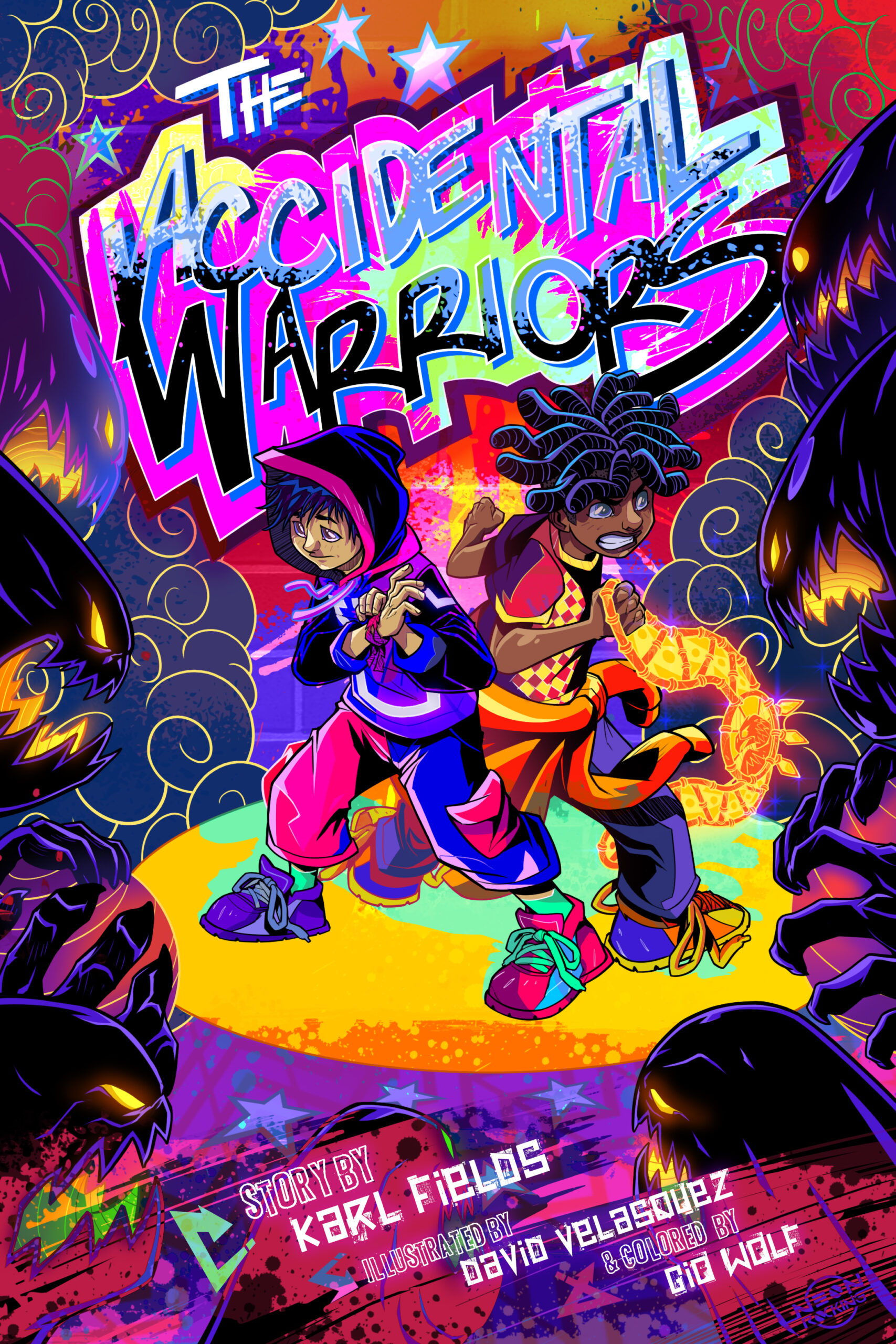
Author Guest Post: “Heroes: One Size Does Not Fit” by Karl Fields, Author of The Accidental Warriors

Share

“Heroes: One Size Does Not Fit”

All It’s been said that there are no new ideas in literature, just new takes on existing ones. Some of our most beloved stories borrow heavily from their predecessors. For example, long before Harry Potter there was “The Sword In the Stone,” which tells the story of Britain’s King Arthur from boyhood and which Rowling cites as one of her influences.

Similarly, the Hero’s Journey is one of the oldest ideas in fiction, regardless of medium. From Homer’s Odyssey to the Hunger Games, it’s a story structure that’s been around almost as long as stories themselves. Dante’s Inferno. To Kill A Mockingbird. The Hobbit. Even Miles Morales: Across the Spider-Verse. All make use of the hero’s journey.

 But what makes a hero? All too often in popular media, the hero is big, tough, infallible, and would never even entertain the thought of not meeting the moment; like most summer blockbuster action heroes, for example. But these larger-than-life types have a way of sucking all the air out of the balloon, leaving no room for growth or change.

Thankfully, that isn’t the only type of hero. Some are less tough, less sure of themselves, less obvious. Often, these characters want nothing to do with this hero stuff in the first place. That’s what makes them so much fun!

When I set out to write The Accidental Warriors, I knew heroism would be at the center of the story overall and also at the heart of the route traveled by Jalen, the main character. At the outset, he’s brash and confident to a fault. In fact, early on you could say he’s more like the first type of hero. That, however, is a front he uses to camouflage some serious insecurities.

As Jalen makes his physical journey — trying to find his way back to his familiar home from a magical, mysterious land he reaches by way of a portal — his internal journey forces him to confront his fears and doubts, of which there are many. And despite the story’s title, Jalen’s ultimate heroism results from him using his wits more so than in ways typically associated with a warrior.

Jalen isn’t the only hero in The Accidental Warriors. Heroism, in all of its forms, is on display throughout the story. Ram, Jalen’s best friend who is Autistic, shows courage in the face of danger and won’t let Jalen retreat from his destiny. The kids in village show heroism beyond their years in standing up to the local nemesis.

We love heroes because they give us someone to cheer for, but a hero without a journey can easily become a character with little dimension, and therefore easily forgettable. However, a hero on a journey speaks to the growth and self-discovery that we experience ourselves and becomes the kind of character that can live in a reader’s mind for a lifetime.

Exercise 1 The Hero’s Journey consists of twelve steps. Have students identify steps of The Hero’s Journey evident in The Accidental Warriors. (For example, Jalen’s call to adventure comes when his karate instructor’s daughter is kidnapped by a monster who escapes through a portal. It is at the insistence of his instructor that Jalen pursues, albeit reluctantly. He initially refuses the call, another of the 12 steps, choosing to focus on finding his way back home.)

Exercise 2 How many heroes are there in The Accidental Warriors? Is Jalen a hero? What about Ram? The villagers? Cyrus? The ancient magicians? If yes, explain what makes each of these characters heroic. If no, what could they do to show heroism?

Bonus Exercise While not necessarily a hero in The Accidental Warriors, what are some ways in which Jalen’s father could turn out to be a hero?

Published October 12th, 2022

About the Book: Jalen Banneker has a confidence problem … as in, too much of it. But what no one knows is that it’s all an act, hiding years of self-doubt.

But when an evil monster kidnaps his friend, Jalen must overcome his fears as he travels to a mystical world where he’ll have to defeat the monster, break an ancient curse, save his friend and find his way back home in time for dinner.

With an engaging story and vivid illustrations, this book will have readers ages 7-10 turning the pages right up until the end. The Virginia Library Association said “these fun and exciting reads that have a good mix of characters are the kinds of novels we need more of,” while BookLife Reviews says it’s filled with “lightning-paced transitions and supercharged magic!”

About the Author: Karl Fields is an army brat who spent much of his youth in places like Germany, Spain, and Okinawa. Away from American television and no such thing yet as social media, he developed a love for reading that continues to this day and that also led to his desire to be a storyteller himself. He has written several books for children and adults, including the Kate Albertson mystery series. He currently resides in Los Angeles, California. The Accidental Warriors is his first graphic novel. Find him online at www.facebook.com/karlfieldsbooks and @writerkarl on Blue Sky.

Thank you, Karl, for this insight into your transformation of the hero’s journey for The Accidental Warriors!

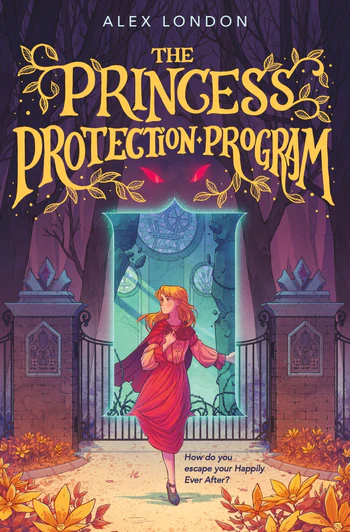
The Princess Protection Program by Alex London

Share

The Princess Protection Program
Author: Alex London
Published February 13th, 2024 by Greenwillow Books

Summary: Every fairy tale ends with its characters living happily ever after, right? A valiant prince quests long and hard to reach the castle where the sleeping princess lies. And with a kiss, he will awaken her.

But what if the princess does NOT think a kiss from a stranger is a very pleasant way to wake up? Yuck!

When Rosamund flees her prince, a Door of Opportunity opens, and she steps through to the Home Educational Academy (the HEA for short). Rosamund has found the Princess Protection Program, where fugitive fairy tale princesses escape unwanted affections, untimely ends, and all the other perils of their stories.

But as Rosamund adjusts to life in the real world and makes her first real friends (Rana, who left her story after an incident with a frog; Sirena, a former mermaid; Cindy and Charlie, who didn’t want to get married after just one dance; and others), she has more and more questions. Does anyone ever graduate from the HEA? Why doesn’t anyone seem to remember former students? Is the kindly fairy headmistress all she appears to be? Is anyone? And the most important question of all: Can Rosamund change her story?

Acclaimed and bestselling author Alex London weaves together several beloved fairy tales in this fast-paced, funny, and slyly subversive adventure about finding your place in the world and taking control of your own story. The daring escapes, sinister monsters, familiar friends, and surprise twists will keep even reluctant readers glued to the pages. The Princess Protection Program is for fans of the Never Afters and the Descendants series, The School for Good and Evil, and the Fairly True.

About the Author: Alex London is the acclaimed author of more than thirty books for children and teens. His middle grade novels include The Princess Protection Program, Search & Rescue, Dog Tags, and two titles in the 39 Clues series. For young adults, he’s the author of the cyberpunk duology Proxy and the epic fantasy series Black Wings Beating, which were both named to numerous best-of-the-year lists. He has been a journalist and human rights researcher reporting from conflict zones and refugee camps, a young adult librarian with the New York Public Library, and a snorkel salesman. He lives with his husband, daughter, and hound dog in Philadelphia, Pennsylvania. Visit him at calexanderlondon.com.

Instagram:
Blue Slip Media: @blue_slip_media
Greenwillow/Harper: @harperkids
Alex London: alexander_london

Facebook:
Blue Slip Media: @blue-slip-media
Greenwillow/Harper: HarperKidsBooks

Twitter/X:
Blue Slip Media: @blueslipper & @barbfisch
Greenwillow/Harper: HarperKids
Alex London: @ca_london

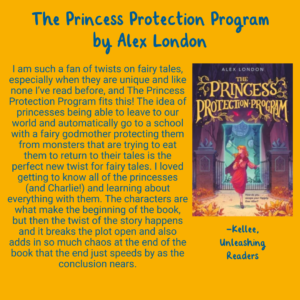
Review: I am such a fan of twists on fairy tales, especially when they are unique and like none I’ve read before, and The Princess Protection Program fits this! The idea of princesses being able to leave to our world and automatically go to a school with a fairy godmother protecting them from monsters that are trying to eat them to return to their tales is the perfect new twist for fairy tales. I loved getting to know all of the princesses (and Charlie!) and learning about everything with them. The characters are what make the beginning of the book, but then the twist of the story happens and it breaks the plot open and also adds in so much chaos at the end of the book that the end just speeds by as the conclusion nears. Fans of the books I listed below will definitely love this one!

Tools for Navigation: This book is filled with allusions and allegory; there is so much to unpack! Rosamund’s journey also fits the Hero’s Journey!

Discussion Questions: 

  • Why would the princesses want to leave their story?
  • Which princess do you think had the worst fate in their story?
  • What other princesses/characters can you think of that might have wanted to leave their story if they had a chance?
  • Why do the professors not like all of Rosamund’s questions?
  • Were any of the princesses different than what you expected reading their fairy tales?
  • Did you see the twist coming?

Flagged Passages: Chapter One: Beauty Awakened

Once upon a time, there was a young princess, as kind and curious as she was clever, who a witch cursed into a deep and endless sleep. Her castle sat silent in a clearing at the center of a deep, dark wood for a hundred winters and a hundred springs. Around it the forest teemed with poisonous flowers and enchanted thorns. The castle would have sat like that for a hundred more winters and a hundred more springs, had not the prince, as valiant as he was brave, found it at last.

He hacked his way past the poisonous flowers and the enchanted thorns. He dodged hungry shadows and fearsome beasts, fought cursed fungus, and forded a river of nightmares. He even outwitted a witch’s riddle, which, much to his surprise, wasn’t all that tricky.

If you don’t keep me, I break. What am I?

“Um, a promise?” he’d answered.

“Are you certain?” the witch cackled at him. “If you answer wrong, you shall never escape these woods!”

He puffed out his chest.

“I am certain, witch!” he bellowed. The witch shrieked, then vanished in a puff of green smoke. Beyond her, the thorned vines parted to show his way to the castle in the clearing.

He had expected all this to be harder. It was his destiny, after all, and destiny should not be so easy.

Inside, the castle was still. Golden light streaked through stained glass windows. He made his way to the chapel, where he would find his princess. He had been promised this princess in visions and dreams, and even by his very own fairy godmother. The princess would be his one true love from the moment he first laid eyes on her until his last, dying day.

He really hoped she was pretty.

And there she was, the cursed Princess Rosamund, asleep in a bed that stood upon a dais surrounded by wildflowers and an abundance of soothing lavender. She was drenched in golden light, as lovely as the day she’d fallen into that deep sleep one hundred years ago.

“A true beauty,” he whispered to himself, relieved. “Sleeping perfection.”

He knelt before the dais and said a quiet thanks, for he was a polite prince, and grateful that all his dreams were coming true.

Then he rose, stepped up beside the bed, and stood over the sleeping princess, whose story he had been told since childhood: a witch had cursed her father’s kingdom to perish and her to sleep until she was awoken by a kiss of the truehearted.

Well, this prince knew his heart was true.

“My entire life has led me here,” he told the sleeping princess. “I swear to you, I shall love you better than the moon loves the sunset, better than boats love the rising tide, better than a flower loves the . . . err . . . um . . . something? Not dew. Bees, maybe? Err . . .”

He’d forgotten his oath, even though he’d practiced it for the entire quest. Then again, it was not his words that mattered, but the truth in his heart and the passion in his kiss. The oaths were just for posterity, a word

he didn’t really understand anyway. Posterity didn’t have chapped lips and body odor from all that questing. The prince did.

With no further ado, he pressed his lips to the sleeping princess’s and held them there with his eyes closed for a count of three, which was how long his squire had told him a real kiss was meant to last. The prince had never kissed anyone before, not even the squire who’d suggested they practice. He wished he had practiced now. He didn’t know if he was doing kissing right at all.

He opened first one eye and then the other.

To his delight, the princess had opened her eyes, both of them, and was staring up at him with a look of deep passion.

Or was that surprise?

“Fear not, princess,” he told her softly. “It is I, Prince Percy the Valiant, and it is my destiny to wake you and marry you and love you for the rest of our blessed lives.”

Her eyes narrowed. Her forehead furrowed.

“Am I not all you dreamed of these hundred years?” he asked her, his confidence faltering. He had not considered that she might not think him pretty.

“Um,” she said, which was not the most inspiring first word of their life together, but she had been asleep for a long time.

He leaned back, giving her space as the color returned to her cheeks, the focus to her eyes. He could give her a moment to come to her senses. He himself was a beast first thing in the morning, as she would surely learn in the course of their marriage.

To his surprise, she sat bolt upright. Like an unbroken mare kicking out at a new rider, she shoved him off her bed and sent him tumbling from the dais. He nearly fell over onto his princely posterior, which was not at all the first impression he preferred to make.

“Princess!” he called as she leapt in bare feet down to the chapel floor. The wildflowers around her withered as the magic faded.

She looked him up and down, brow still furrowed.

Then she ran.

Read This If You Love: Fairy Tale Reform School by Jen Calonita, Disney Twisted Tales, Land of Stories series by Chris Colfer, Books by Jessica Day George, Whatever After series by Sarah Mlynowski

Recommended For: 

classroomlibrarybuttonsmall 

Signature

**Thank you to Blue Slip Media for providing a copy for review!**

This review was featured by Twinkl in their article Magical Books for Kids to Beat the Summer Reading Slide!

This is My America by Kim Johnson

Share

This is My America
Author: Kim Johnson
Published: February 28, 2017 by Balzer + Bray

GoodReads Summary: Dear Martin meets Just Mercy in this unflinching yet uplifting YA novel that explores the racist injustices in the American justice system.

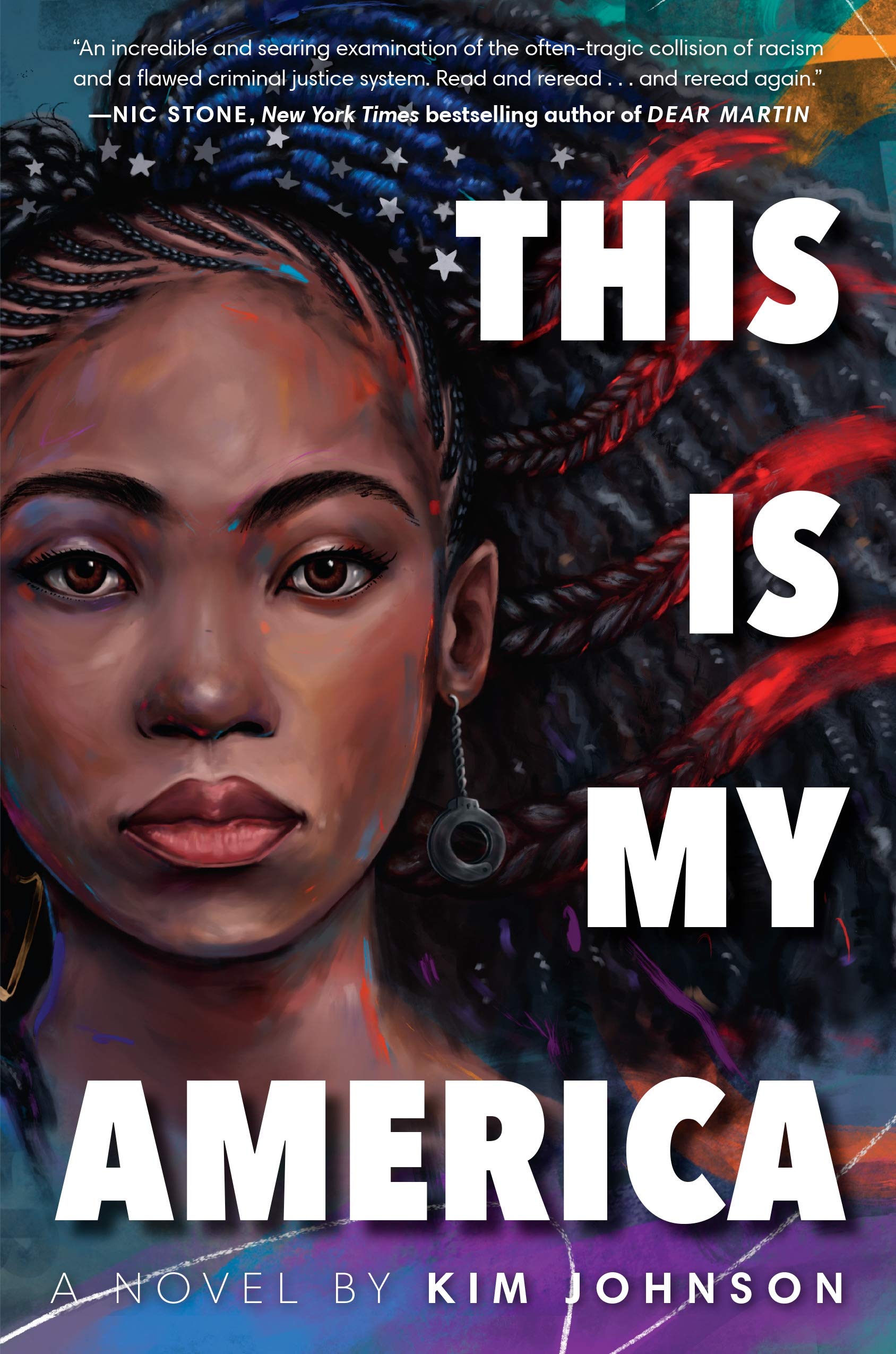
Every week, seventeen-year-old Tracy Beaumont writes letters to Innocence X, asking the organization to help her father, an innocent Black man on death row. After seven years, Tracy is running out of time—her dad has only 267 days left. Then the unthinkable happens. The police arrive in the night, and Tracy’s older brother, Jamal, goes from being a bright, promising track star to a “thug” on the run, accused of killing a white girl. Determined to save her brother, Tracy investigates what really happened between Jamal and Angela down at the Pike. But will Tracy and her family survive the uncovering of the skeletons of their Texas town’s racist history that still haunt the present?

Fans of Nic Stone and Jason Reynolds won’t want to miss this provocative and gripping debut.

Review: This is a book that will stick with me forever. The characters are powerfully written, and the plot unfolds itself beautifully. It tackles complex themes that offer excellent fodder for classroom discussion. Some of these include implicit and explicit racism, the ripple effects of White supremacy and racism, White privilege, and injustices in the judicial system. I could go on. This book is truly exceptional, and I envision it winning some big awards this year. There is so much to unpack and so much to admire in Johnson’s writing. It’s absolutely brilliant. If you buy no other book this summer, buy this one. It will make you think deeply about equity and justice.

Teachers’ Tools for Navigation: I highlighted so many passages of this book while I was reading it. There are so many sections that would make phenomenal close readings in the classroom. I highly recommend pairing this text with portions or all of Michelle Alexander’s The New Jim Crow: Mass Incarceration in the Age of Colorblindness.

Discussion Questions: What are some of the injustices in this text?; How can we, as a society, work to change these injustices?; How do the injustices have a ripple effect on other characters?; How does Johnson layer the plot to elevate the reading and message of the text?

Flagged Passage: “Corinne never held that memory [of Daddy getting arrested], but I know she feels it in everything we breathe. It’s in the polite nods across the street we have to make, the way our family turns down our music when there are others around. Say yes ma’am and no sir. Leave our jackets and backpacks in the car when we go shopping.

It’s in the way I carry myself that tells our story now. I can’t risk being accused of anything. Because if something goes wrong or missing, I know it’s in the back of someone’s mind that maybe I had something to do with it. And it’s in the way that the voice of the strongest woman I know stumbles when saying, ‘Hello, Officer’ as she walks through the visitation gates to see Daddy.”

Read This If You Loved: Just Mercy by Bryan Stevenson; The Hate U Give by Angie Thomas; All American Boys by Jason Reynolds and Brendan Kiely; by Ilyassah Shabazz and Kekla Magoon; The Rock and the River by Kekla Magoon; How it Went Down by Kekla Magoon; Freedom Summer by Deborah Wiles;

Recommended For:

 litcirclesbuttonsmall closereadinganalysisbuttonsmall classroomlibrarybuttonsmall

RickiSig

Snow White: A Graphic Novel by Matt Phelan

Share

Snow White: A Graphic Novel
Author: Matt Phelan
Published: September 21, 2016 by Candlewick

A Guest Review by Emily Baseler

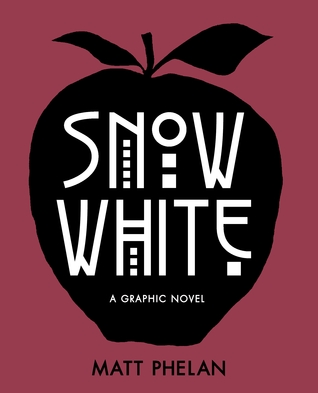
GoodReads Summary: Award-winning graphic novelist Matt Phelan delivers a darkly stylized noir Snow White set against the backdrop of Depression-era Manhattan.

The scene: New York City, 1928. The dazzling lights cast shadows that grow ever darker as the glitzy prosperity of the Roaring Twenties screeches to a halt. Enter a cast of familiar characters: a young girl, Samantha White, returning after being sent away by her cruel stepmother, the Queen of the Follies, years earlier; her father, the King of Wall Street, who survives the stock market crash only to suffer a strange and sudden death; seven street urchins, brave protectors for a girl as pure as snow; and a mysterious stock ticker that holds the stepmother in its thrall, churning out ticker tape imprinted with the wicked words “Another . . . More Beautiful . . . KILL.” In a moody, cinematic new telling of a beloved fairy tale, extraordinary graphic novelist Matt Phelan captures the essence of classic film noir on the page—and draws a striking distinction between good and evil.

Review: Matt Phelan reinvented the “happily ever after” with this retelling. I identify as a Disney Classic enthusiast but I was pleasantly surprised with the ending. The illustrations are gorgeous with distinct intentionality. More mature themes such as death, assassination, murder were evaluated within a historical context to create an incredible murder mystery story at the level of a middle grade reader.

Teachers’ Tools for Navigation: This would be an excellent text to hand a more reluctant reader. There is limited text the reader is asked to interpret the illustrations and structure. In literature groups, students could potentially discuss the use of metaphor, oenomania, author/illustrator’s choice, and compare/ contrast the original fairytale with the retelling. This is also a text I would recommend to a student who has shown an interest in the graphic novel genre to read independently.

Discussion Questions: Why do you think the author choose to use red in selected illustrations? How did this choice influence you as a reader?; Why do you think the author choose to break apart the chapters this way?; Even though there were few words, how did you interpret the mood, tone, and voice of characters?; Did you find yourself needing to interpret the illustrations to understand the plot? What was that experience like for you as a reader?; How is this retelling of the classic fairy tale of “Snow White” different than the original? What did you notice is similar?

Flagged Passage: “My name is Snow White, but my mother didn’t call be that to be funny. She would say that the snow covers everything and makes the entire world beautiful” (Ch. 10)

Book Trailer: 

Read This If You Loved: Red: The True Story of Red Riding Hood by Liesl Shurtliff, Jack: The True Story of Jack and the Beanstalk by Liesl Shurtliff, Rump: The True Story of Rumpelstiltskin by Liesl Shurtliff

Recommended For:
 classroomlibrarybuttonsmall

Thank you, Emily!

RickiSig

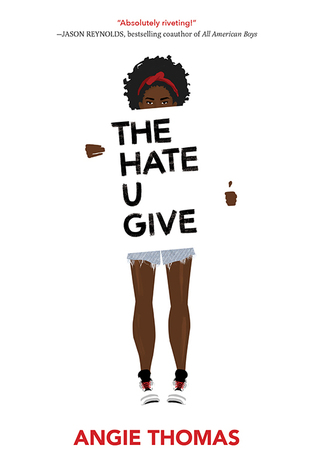
The Hate U Give by Angie Thomas

Share

The Hate U Give
Authors: Angie Thomas
Published: February 28, 2017 by Balzer + Bray

GoodReads Summary: Sixteen-year-old Starr Carter moves between two worlds: the poor neighborhood where she lives and the fancy suburban prep school she attends. The uneasy balance between these worlds is shattered when Starr witnesses the fatal shooting of her childhood best friend Khalil at the hands of a police officer. Khalil was unarmed.

Soon afterward, his death is a national headline. Some are calling him a thug, maybe even a drug dealer and a gangbanger. Protesters are taking to the streets in Khalil’s name. Some cops and the local drug lord try to intimidate Starr and her family. What everyone wants to know is: what really went down that night? And the only person alive who can answer that is Starr.

But what Starr does or does not say could upend her community. It could also endanger her life.

Ricki’s Review: I don’t know where to begin with this very special book. To give proof of my love for it, I will share that this book is on my Adolescents’ Literature course syllabus for next year. It is the book that I am most excited to teach. My research concerns multicultural young adult literature, and I have read a lot of books that interrogate issues of race. When this book was hyped, I knew I had to read it, but I was nervous that it wouldn’t be as good as I wanted it to be. It was everything and more. The characters feel real, and the pacing is fantastic. The author beautifully captures dialogue and life in ways that will grab readers’ attention. It has a strong message without feeling didactic. Teachers will find much to talk about with this text.

You might notice that this book has a 4.66 average rating on GoodReads. I don’t know of any book with that high of an average rating. I am not one to buy into ratings, but I think this extremely high rating shows that this is a book that really resonates with people. If you plan to read one book this year, pick this one. 

Kellee’s Review: When I first heard about The Hate U Give at ALAN in November 2016, Jason Reynolds said it was going to be one of the most important books of our time. Then I started hearing about it being bid on by all of the major publishing houses. Reynolds’s recommendation mixed with the hype made me want to pick it up, but then I also was so worried that it wouldn’t live up to this hype. But it does. It lives up to it all. I have nothing negative to say about the book. It is poignant. It is thought-provoking. It pushes boundaries. It makes white people have to look at race a way that they may not have considered before. It is REAL. It is rough. It is truth. I think Thomas did a phenomenal job writing a narrative of truth that just lays out there the problems with race in our society in a way that no one can deny or argue; it just is. I think their story makes everyone more aware and more empathetic. I finished a month ago, and I still am thinking about Star and Khalil and Natasha and Kenya and Star’s family–I just didn’t want to stop being in their lives. I cannot say any more how phenomenal this book is. Pick it up if you haven’t. (And the audiobook is so brilliant if you want to listen to it.)

Teachers’ Tools for Navigation: Teachers might ask students to analyze the varied themes of this text and dive deeply into discussions of each (power, economics, race, etc.). Then, they might create a civic video essay—one that considers a social issue and provides steps for social action to raise awareness for the viewing audience.

Discussion Questions: How does the author craft dialogue? What might other writers learn from her work?; What messages does the text reveal? Which messages are less obvious but implicit in a reading of the text?; What connections does this text have with the world today?

Flagged Passage: “Sometimes you can do everything right and things will still go wrong. The key is to never stop doing right.”

Read This If You Loved: All American Boys by Jason Reynolds and Brendan Kiely; by Ilyassah Shabazz and Kekla Magoon; The Rock and the River by Kekla Magoon; How it Went Down by Kekla Magoon; Freedom Summer by Deborah Wiles; Audacity by Melanie Crowder; The Boy in the Black Suit by Jason Reynolds

Recommended For:

 litcirclesbuttonsmall closereadinganalysisbuttonsmall classroomlibrarybuttonsmall

RickiSig andKellee Signature