Student Voices: Negative Effects from Oscarie C. and Rutva P.

Share

Negative Effects

“Romance Has Been Destroyed by Society (and how books should be taken as an example for healthy relationships)” by Oscarie C., 7th grade

Romance is often seen as “cringe,” unrealistic, or just physical attraction, but romance in reality is gentle, sweet, and it’s supposed to make you happy. Social media and society have messed up the way people see love, most of the time romanticizing toxic traits in relationships and promoting unrealistic expectations. Now, many adults and teens struggle to understand what a healthy and sweet relationship looks like.

Society has made toxic behavior in relationships look normal. Instead of showing healthy things like communication, trust, and respect, social media makes jealousy, obsession, and controlling the other person’s life look healthy. It’s also seen as normal to be overly obsessed with your crush or partner, even when it looks uncomfortable.

People on the internet and in real life are always saying things like “if he wanted to, he would” or “never settle,” and just talking about the infinite red, beige, and green flags. Because of this people focus more on social media standards than actually focusing on who the person really is. Letting people on the internet decide if your relationship is healthy or not has messed up with what people can think what a healthy relationship looks like.

It’s not new that society has made people think that beauty matters in relationships more than personality. In fact for many many years, people (mostly women), have put so much time and dedication to try and look perfect, often as desirable objects for men to prove that they are unique or when they’re beautiful enough they are shown  as dumb or naive. Social media and the fashion and beauty industry make this worse by showing unrealistic images of what people should look like. People have taught us how to judge people on how they look and dress to determine if they are worthy of people dating them or not.

Some people also see their partners as property or something that they need to control, they often control who their partner talks to, where they go, and what they do. This usually comes from insecurity and control.

This is why books should be taken as a better example of healthy relationships. In many books, relationships are shown as something sweet and healthy. They show that romance is not corny or weird as people make it seem. Books often focus more on how to actually take care of a relationship and what to look for in one rather than just appearance or unrealistic expectations shown by social media and the beauty industry. Because of books like this, people can actually see how a relationship should actually be like, and not how social media and people think a relationship should be like.
Books like Honey So Sweet show how a healthy and non forceful relationship looks like. Taiga Onise was seen as a delinquent and a bad person, and when he first confessed his love to Nao she was driven by how Onise looks like and what other people say about him instead of focusing on how he is as a person. This book series also shows how you can’t force someone to like you, because in the first volume because after Onise had asked Nao to be his girlfriend she was afraid that she had to be his girlfriend or else, but Onise understood that she was afraid so he told her that it was fine if she didnt wanna date him,and they stayed as friends. But when they actually dated him they showed how much they trust each other and that they feel comfortable to be with each other.
In contrast, Nana is the perfect example to show you how toxic relationships actively damage your life and how a man can change you. At the start of the manga/series, Hachi is cheerful, caring and friendly, and by the end of the series, she’s more dry and less friendly, showing how Hachi is actively being manipulated and treated like property by Takumi, and he repeatedly harms her personal and social life, she even lost her bond with Nana because of him.

Sources: our conception of love is messed up. is it an outfit or is he just a man?


“The Damages of AI” by Rutva P., 7th grade

In this day and age, most people have heard of artificial intelligence or AI for short. Many people consider AI to be the thing of the future, but have you ever considered how AI has downsides? 

AI harms creativity

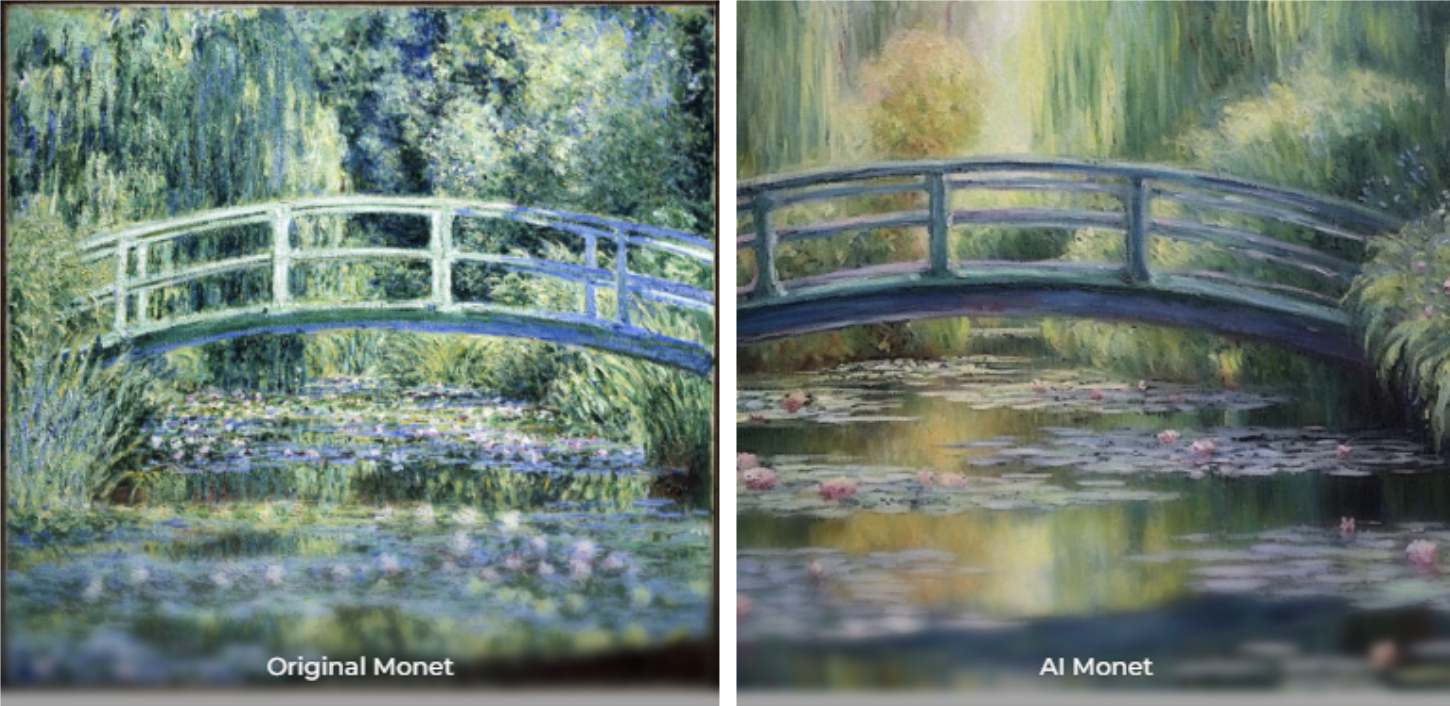
AI copies and steals all its information from real life works whether it’s an author’s writing format or a painter’s art style.

Below is an example of an AI copying an artist’s work from Megapencil.co.
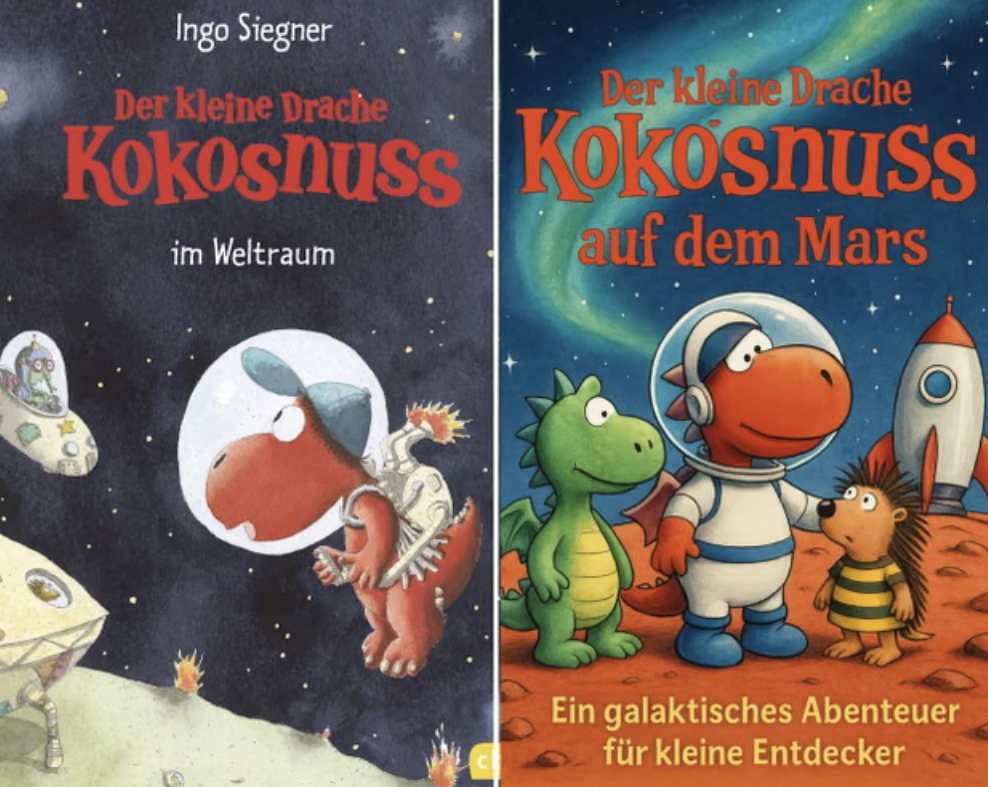
There is also a class action lawsuit against OpenAI from a number of authors. They claim the AI has violated copyright laws and stolen their work and writing. And that isn’t the only lawsuit against AI,  according to theguardian.com, “Penguin Random House has filed a lawsuit against OpenAI, alleging its chatbot ChatGPT violated copyright by mimicking and reproducing the content of a popular series of German children’s books.”
With the rise of AI, many people are becoming too reliant on it. This kills people’s ability to think critically and be creative. Students are using AI to write their essays and do their school work already. Imagine the future where AI is developed enough to write full books from stealing authors’ work. 

 AI damages the environment

Generative AI, the artificial intelligence most commonly used among the masses, requires massive amounts of energy to function. According to Climateimpact.com, a large model like GPT-3 can use enough energy to power about 120 U.S homes for a year. This amount of energy releases large amounts of CO2 into the atmosphere, contributing to global warming.

AI also requires lots of water to cool down their systems. This enormous portion of water being used harms ecosystems and lessens the water supply.

Animals like the polar bears have to pay the price for the deterioration of the planet due to AI. The global warming that AI uses plays a part in melting the ice caps polar bears call home. Polar bears are currently listed as a vulnerable species while people generate AI images and tell themselves that there is nothing they can do to help. The polar bears are just one example.

How can you help?

One simple way to help, is to try your best to avoid generative AI. Unfortunately, in this day and age, AI is used everywhere and is hard to avoid. If you want to use AI and also help the environment, ecosia.org is a good substitute for other sites where generative artificial intelligence is used. Ecosia’s AI models use less energy and all their profits go towards tree planting projects.

Another way to help is to support human creativity. You are human and you can be creative. Instead of using AI for an image, draw it yourself. Instead of using AI to write an essay, put in the work yourself to become a better writer.


Thank you so much to my student voices today and their look at negative effects caused by society and how to fight them!

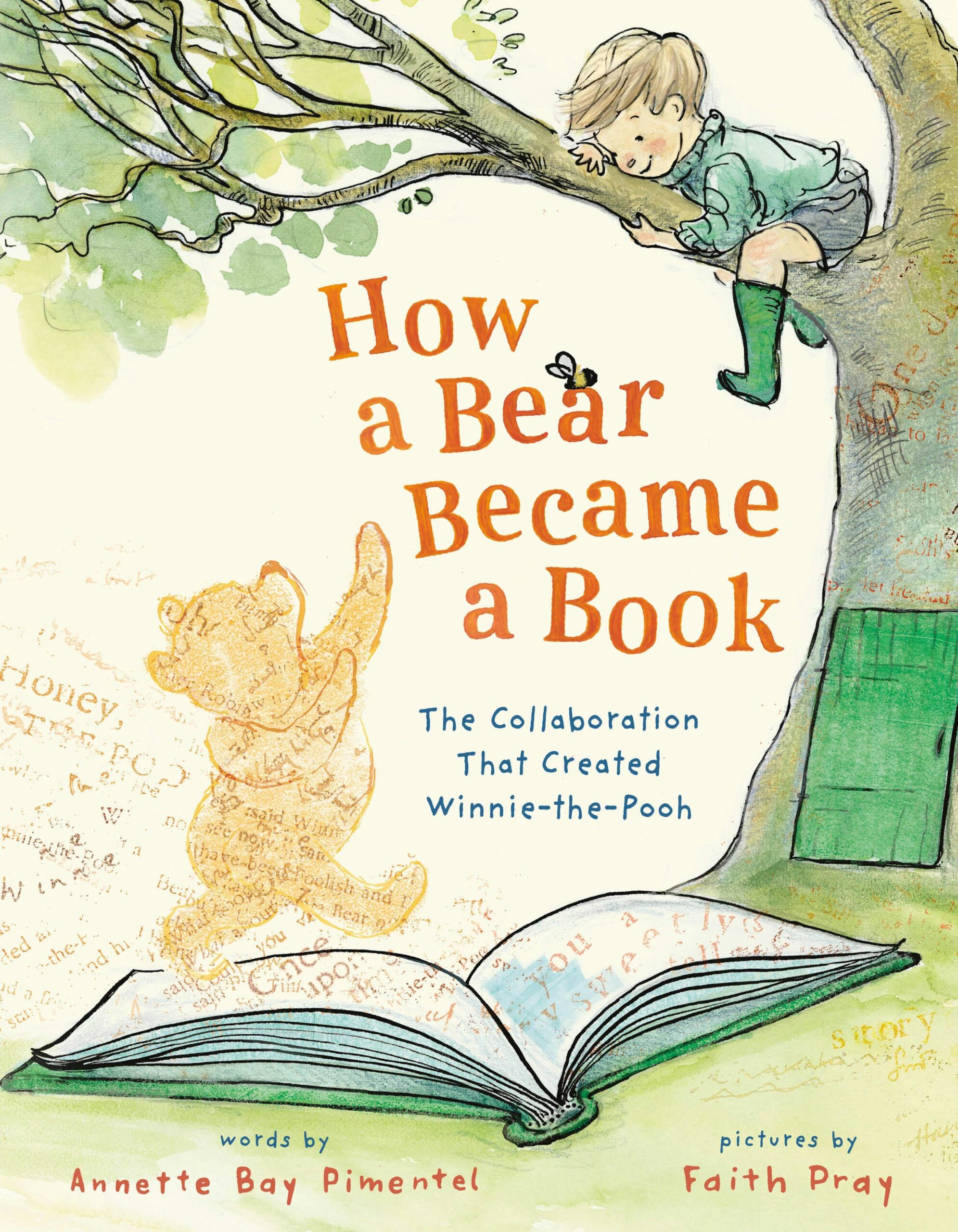
How a Bear Became a Book: The Collaboration That Created Winnie-the-Pooh by Annette Bay Pimental, Illustrated by Faith Pray

Share

How a Bear Became a Book
Author: Annette Bay Pimental
Illustrator: Faith Pray
Published March 31st, 2026 by Henry, Holt, and Co.

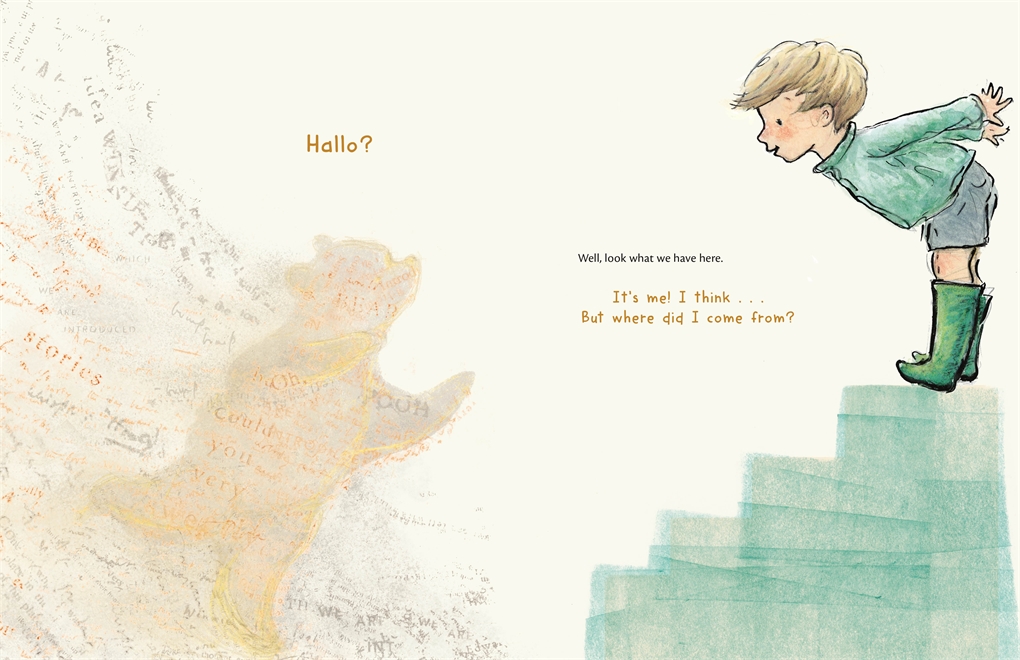
Summary: Celebrate the 100th anniversary of Winnie-the-Pooh with this gorgeous picture book about the creation of the World’s Most Famous Bear!

In 1926, the very first Winnie-the-Pooh book was published. One hundred years later, generations of kids have grown up in the Hundred Acre Wood.

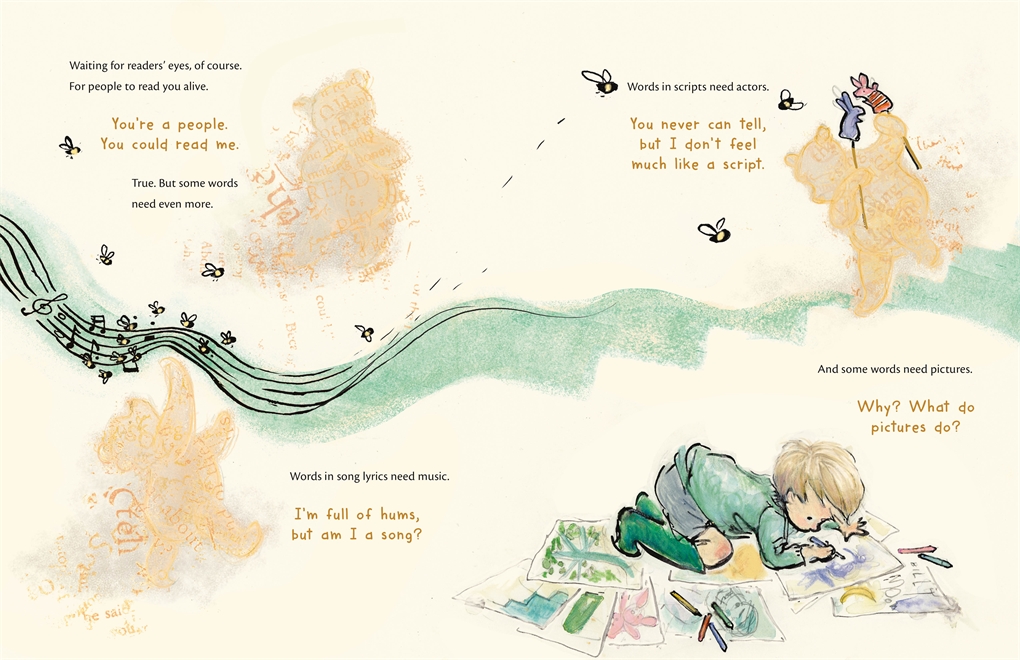
How a Bear Became a Book tells the story of how writer, illustrator, and editor came together to craft Pooh’s first adventure. But deeper than that, this book introduces our youngest listeners to how stories begin and where they can go. As Pooh’s voice enters the text, he slowly comes to life in the art.

Textually delightful and visually stunning, this is a picture book about the making of picture books, but it is also a masterful exploration of ideas, storytelling, collaboration, art, and most importantly, honey

“A thoughtful, beautifully crafted title that honors a literary classic on the eve of its centennial and introduces “The Best Bear in All the World” to a new generation.” —School Library Journal, Starred Review

“A stunning tribute to a classic that also offers insight into the bookmaking process.” —Kirkus, Starred Review

“Bay Pimentel and Pray highlight the importance of teamwork, pulling back the curtain on the creators who produced the Winnie-the-Pooh books.” —Publishers Weekly, Starred Review

“Marking one hundred years since the publication of A. A. Milne’s Winnie-the-Pooh (1926), this thoughtful, well-designed informational picture book pays tribute not only to that book’s creation but also to the process of book creation in general.” —Horn Book, Starred Review

“Appealing and thorough, a charming companion to the original Pooh stories and an enlightening introduction to how children’s books can evolve.” —Booklist

About the Creators: 

Annette Bay Pimentel is the author of several nonfiction picture books, including the Schneider Family Book Award honor book All the Way to the TopPura’s Cuentos, and Before Colors. She lives in Moscow, Idaho.

Faith Pray is the author-illustrator of The Day We Got LostPerfectly Imperfect Mira, and The Starkeeper, among others. She comes from a family of talented children’s book creators, but her extraordinary talents for capturing light and shadow and conveying emotion and story through line work are all her own. Faith lives with her husband and children plus two cats in the Pacific Northwest.

Review: The first thing that stuck out to me about this book was how clever it was. It is clever in the writing, including the structure, and in the illustrations. It took the idea of writing a nonfiction book about Winnie-the-Pooh and turned it on its head to make it unique because it focuses on the evolution from idea to book and how Winnie-the-Pooh, as the character we know, came to be.

The book is more than just a story about A.A. Milne’s Winnie-the-Pooh books though. It is a book about creating. It will help readers see how a book went from an idea to a product to something we treasure. It also looked at why the Milne books were special, especially when it came to illustration placement and how the illustrations and words played together. And I love that the editors had a place in the story; editors are often not talked about in picture books.

And lastly, the inclusion of Pooh himself in the narrating added humor and nastalgia.

I can definitely see why the book is getting so many starred reviews–it deserves all the praise! It’ll be a great addition to any classroom, library, or home, and I cannot wait to hear about educators using it along with aspects of Pooh’s stories.

Educator’s Guide with Discussion Questions and Activities: 

Flagged Spreads: 

Read This If You Love: Winnie-the-Pooh

Recommended For: 

classroomlibrarybuttonsmall 

Signature

**Thank you to the author for providing a copy for review!**

Bear’s Big Idea by Sandra Nickel, Illustrated by Il Sung Na

Share

Bear’s Big Idea
Author: Sandra Nickel
Illustrator: Il Sung Na
Published September 10th, 2024 by Carolrhoda Books

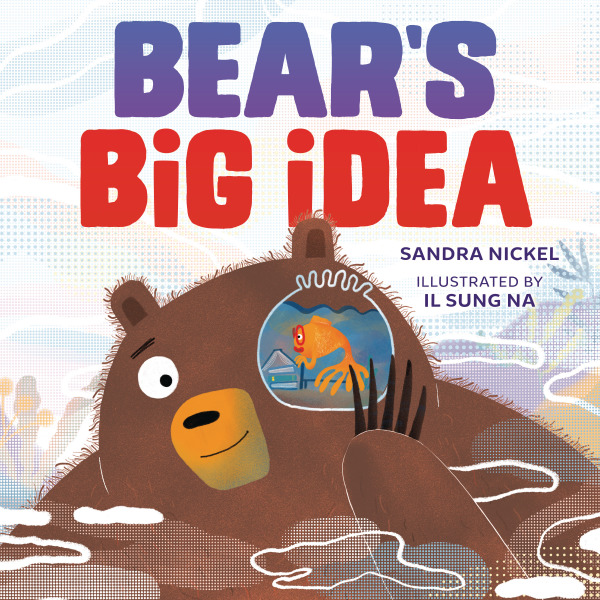
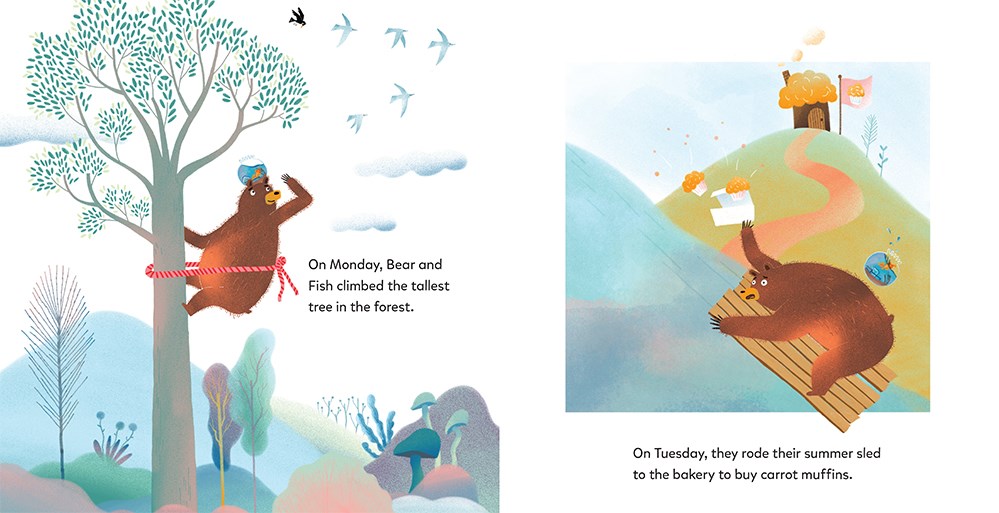
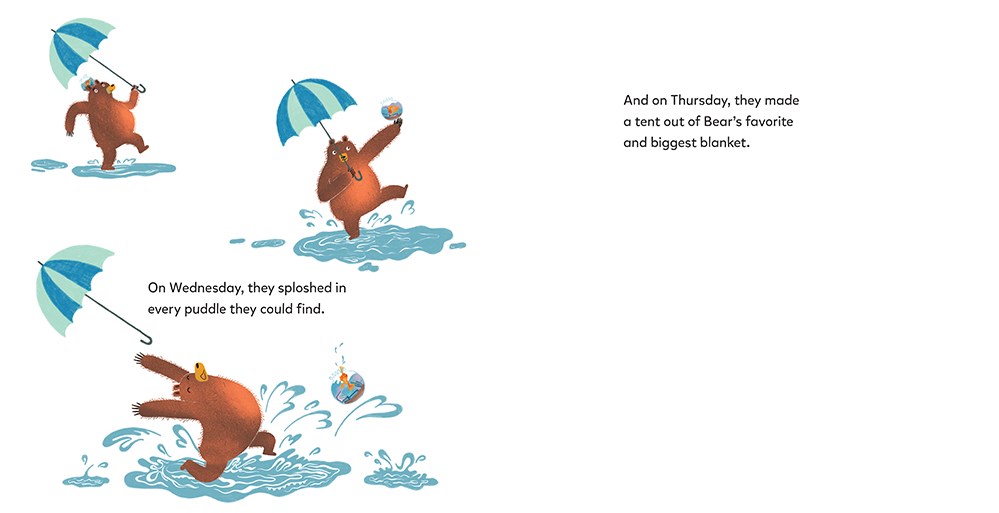
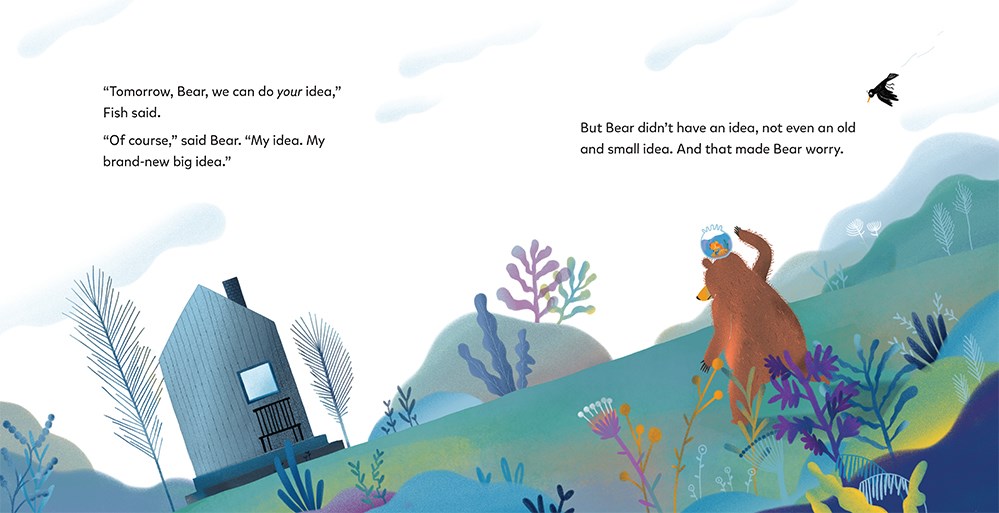
Summary: Fish always has great ideas for what to do! When it’s Bear’s turn to think of something, she promises she’ll have a brand-new BIG idea. But where do ideas come from?

The creators of Big Bear and Little Fish reunite for this sweet story of friendship, ingenuity, and a surprisingly epic adventure!

“A winning tale of friendship and creativity unleashed.”  —Kirkus Reviews

About the Creators:

Sandra Nickel is the author of picture book biographies about the inventor of nachos (Nacho’s Nachos), the discoverer of dark matter (The Stuff Between the Stars), and the first woman meteorologist (Breaking Through the Clouds). She is the winner of a Christopher Award,  the winner of the Society of Children’s Book Writers & Illustrators Crystal Kite Award, a finalist for the Golden Kite Award for Nonfiction for Younger Readers, a Junior Library Guild Gold Selection honoree, and a Charlotte Huck Award Recommended author. Sandra has an MFA in writing for children and young adults and has presented workshops on writing for children and young adults throughout Europe and the United States. When at home in Switzerland, Sandra loves summer sledding, sploshing in puddles, and listening for ideas in the wind. To learn more about Sandra, and to download free curriculum materials and activity sheets, visit https://sandranickel.com/.

Il Sung Na was born in Seoul, South Korea. He writes and illustrates picture books, including A Book of Sleep and The Dreamer, and he also illustrates the work of other authors, such as My Tree by Hope Lim and Beautiful Noise by Lisa Rogers. Currently based in Kansas City, Il Sung spends his time teaching illustration courses and working on new books. Instagram: @ilsungna

Instagram
Sandra Nickel: @sandranickelbooks
Il Sung Na: @ilsungna
Carolrhoda/Lerner: @lernerbooks

Facebook
Sandra Nickel: @sandranickelauthor
Carolrhoda/Lerner: Lerner Books

Twitter/X
Sandra Nickel: @senickel
Carolrhoda/Lerner: @LernerBooks

Review: Bear and Fish are a great addition to duos in picture books, which is my favorite trope because with the dichotomy, readers are more likely to connect with either, feel accepted, and learn the lesson shared within the book. In this one, Fish is full of ideas, but when it is Bear’s turn anxiety about letting down Fish overwhelms her. But Bear, with patience and support and time to think, gets there and the day ends up being such a success.

Na’s illustrations are a great support for Nickel’s tale of supporting friends and finding creativity because they colorfully bring it all to life.

Trailer:

Author’s Appearance on KitLitTV: 

Discussion Questions: 

  • What is your favorite way to brainstorm?
  • Bear struggles to get to sleep because she is struggling with coming up with an idea. What are some strategies to help relax your brain and body and help you sleep?
  • How does Fish support Bear well?
  • How are Bear and Fish similar? Different?
  • Why does Bear feel so much pressure?
  • Is taking old ideas and twisting & changing them make it a new idea?

Flagged Spreads: 

Read This If You Love: Picture books with friend duos, Picture books that promote brainstorming & creativity

Recommended For: 

classroomlibrarybuttonsmall

Signature

**Thank you to Blue Slip Media for providing a copy for review!**

Crayola: Follow That Line!: Magic at Your Fingertips by JaNay Brown-Wood

Share

Press Here
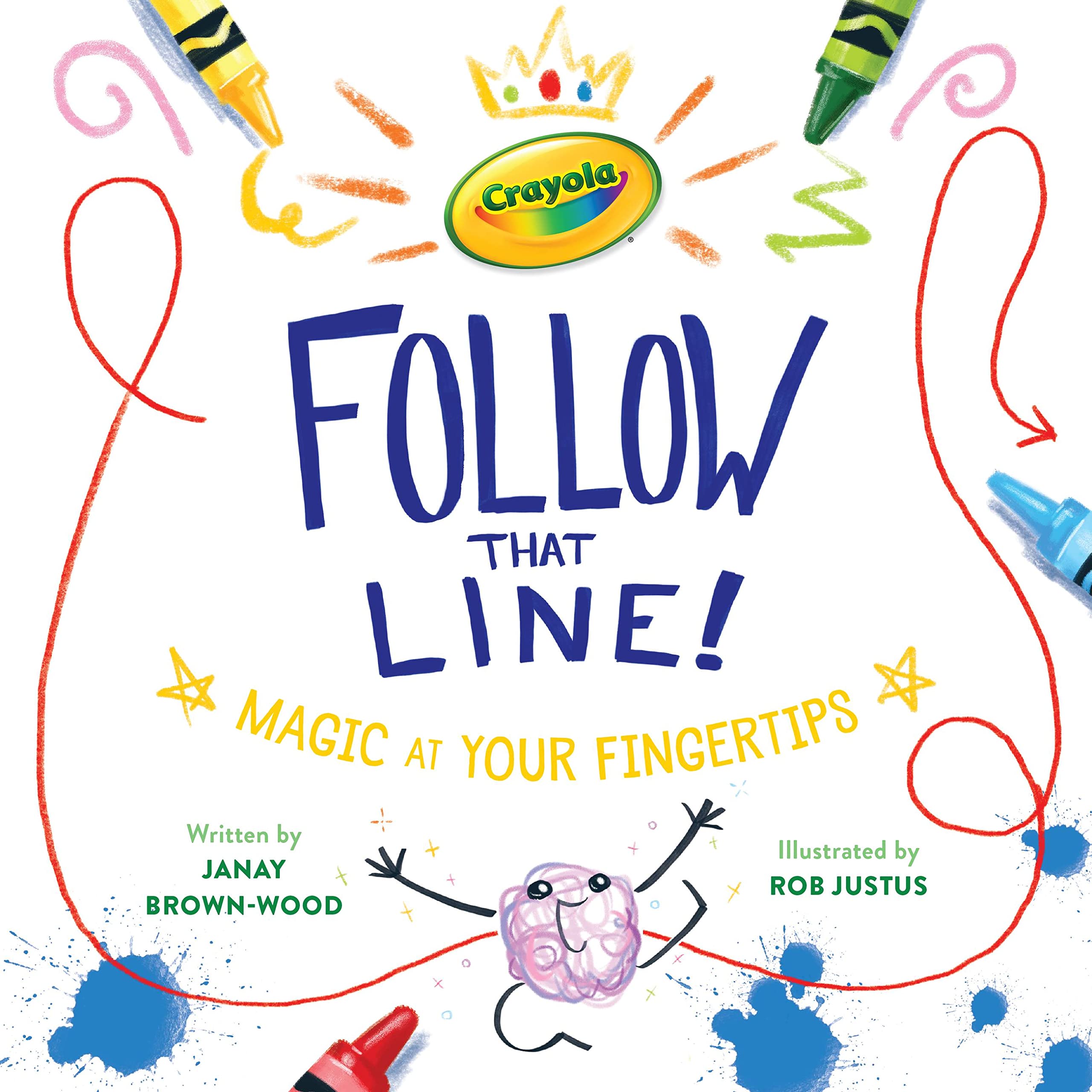
Author: JaNay Brown-Wood
Illustrator: Rob Justus
Published July 26, 2022 by Running Press Kids

Goodreads Summary: Do you want to know a secret? You have magic in your fingertips!

Use your fingers to follow a line and help it burst into color. Make magic with blooming flowers, tall mountain tops, splashing waves, and more by tracing lines with all four fingers and your thumb. Celebrate the power of creating artwork with Crayola products in this delightful and bright interactive book.

Ricki’s Review: My children LOVED this book. I’ve read it multiple times to them in the past few days. Kids of all ages will have a lot of fun with this one. It’s interactive (sort of in the style of Let’s Play by Hervé Tullet), and it asks kids to follow the line as they create the magic of the book. The colors are bright, and the writing is very engaging. This book would make an amazing holiday gift for a child or teacher.

Teacher’s Tools for Navigation: After we read this book the first time, my kids were inspired to draw. It would be really neat for each student in a class to draw one page of their own Follow That Line book (fanfiction at its best). The teacher could ask the students how they should organize the pages for a cohesive story and bind the book.

Discussion Questions: 

  • Which page was your favorite, and why?
  • What might the author’s purpose be for this book?
  • How does the book creatively reach readers?

We Flagged: “Do you want to know a secret? You have magic in your fingers. Want to see? Turn the page.”

Read This If You Love: Interactive books, art

Recommended For: 

classroomlibrarybuttonsmall

RickiSig

I Cannot Draw a Horse by Charise Mericle Harper

Share

I Cannot Draw a Horse
Author & Illustrator: Charise Mericle Harper
Publishing October 11th, 2022 by Union Square Kids

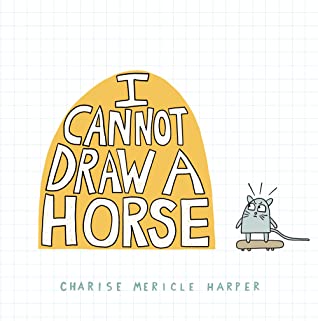
Summary: Award-winning author and illustrator Charise Mericle Harper delivers a fantastically funny adventure about doing the impossible: drawing a horse.

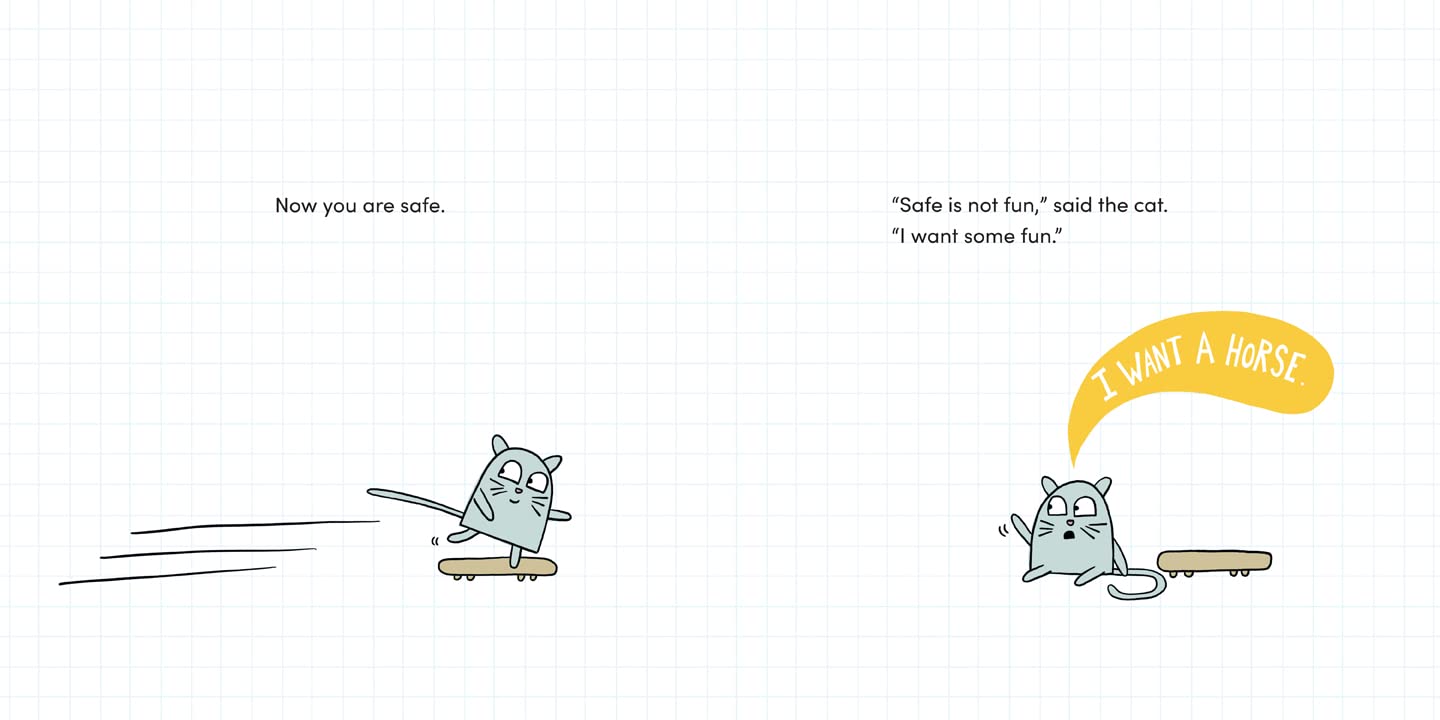
The cat wants a horse.
The book cannot draw a horse.
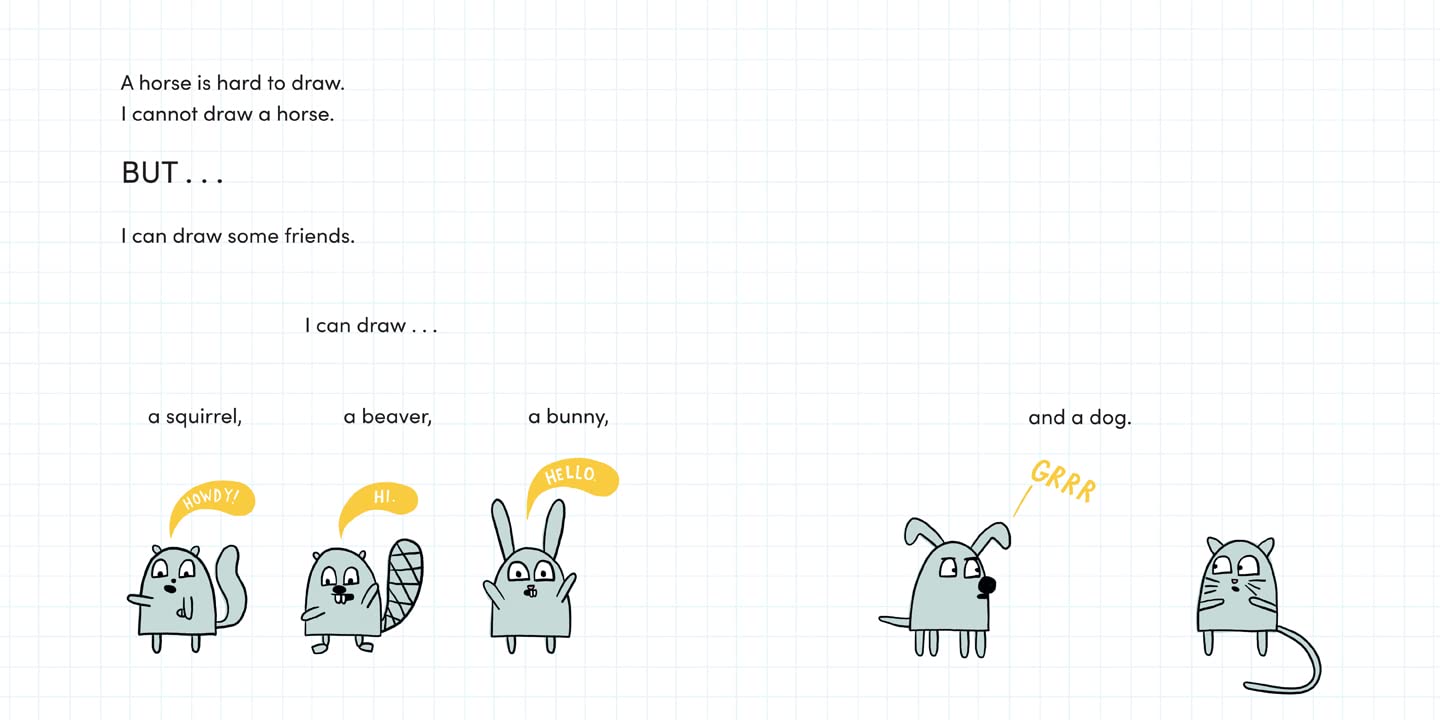
The book CAN draw a squirrel, a beaver, and a bunny.
Fun . . . but the cat still wants a horse.

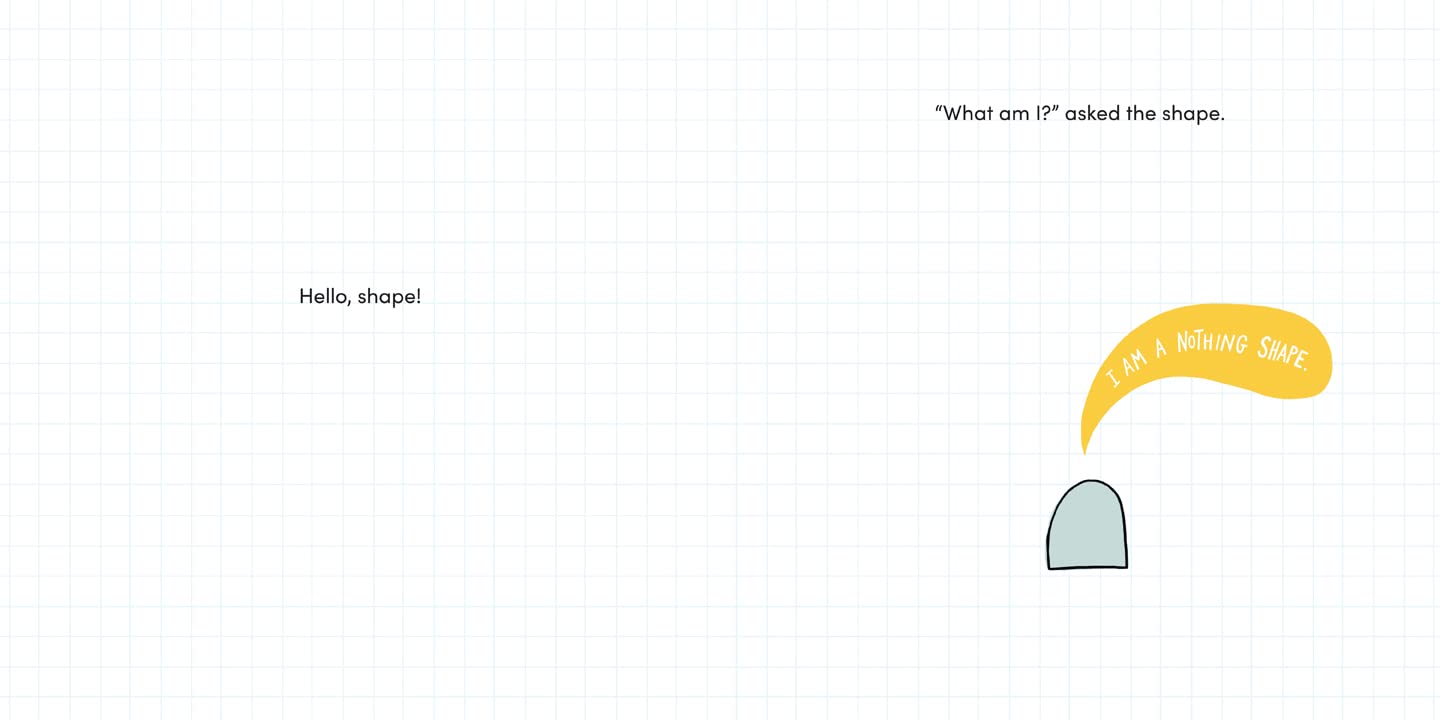
Can the quick-draw book appease the horse-obsessed cat with an impressive collection of horse-y alternatives (all created from the same “nothing shape”)? Or will the cat finally get a horse? The cat REALLY wants a horse.

Praise: “This book is clever in its simple story and imaginative, 2-D illustrations, which are printed on pages like graph paper. Easy text appears in both standard form and yellow speech bubbles, giving it an easy-to-follow, graphic novel feel. Creative and loaded with humor, this story will have kids giggling in seconds and trying their hand at drawing a horse—or at least a gumdrop.” — Booklist, Starred Review

About the Author: Charise Mericle Harper is the award-winning author and illustrator of numerous books for children, including The Good for Nothing Button!CupcakeGo! Go! Go! Stop!So Embarrassing, and Bad Sister. Her children’s book series include Pepper & Boo, Just Grace, Fashion Kitty, Sasquatch and Aliens, Bean Dog and Nugget, and Crafty Cat. Charise lives with her family and furry pets in Portland, Oregon.

Review: This clever picture book is funny and inspiring! It shows readers to not give up and to push themselves creatively. It also shows the power of the basics of art, specifically shapes & lines, can be used to tell stories, show characters’ emotions, and be manipulated in so many different ways. And the basic graphic novel format will grab readers’ attention and will keep them reading. Over all a fun picture book read that will bring giggles and asks for rereading.

Teachers’ Tools for Navigation: Educators will first want to read this book aloud–students will love the cranky cat and his demands! But then the book could easily lead into a discussion on creativity and creation of their own story using one shape. Use the book as a mentor text for students to imitate.

Discussion Questions: 

  • Why do you think the cat wants a horse so badly?
  • What does the end of the story lead you to believe?
  • What is your go-to shape when drawing? What animals can you make from it?
  • Why is the cat getting so frustrated with the author/illustrator?
  • How does the author turn this basic concept into a plot?

Flagged Passages: 

Read This If You Love: Give This Book a Title by Jarrett Lerner, I Can Only Draw Worms by Will Mabbitt, Draw the Line by Kathryn Otoshi

Recommended For: 

classroomlibrarybuttonsmall

Signature

**Thank you to Jenny at Union Square for providing a copy for review!**

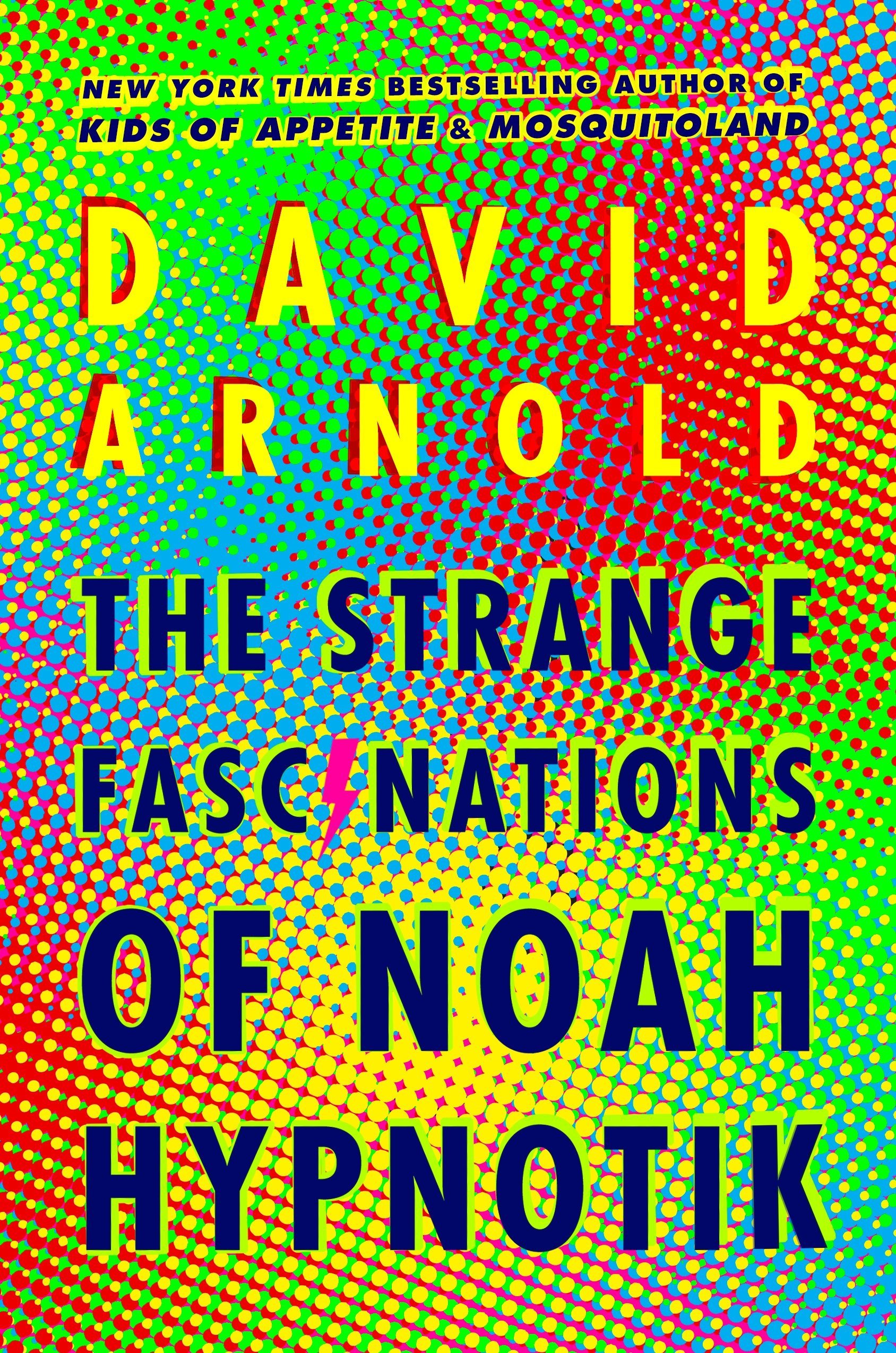
The Strange Fascinations of Noah Hypnotik by David Arnold

Share

The Strange Fascinations of Noah Hypnotik
Author: David Arnold
Published: May 22, 2018 by Viking

Guest Review by Natalia Sperry

Summary: This is Noah Oakman → sixteen, Bowie believer, concise historian, disillusioned swimmer, son, brother, friend.

Then Noah → gets hypnotized.

Now Noah → sees changes—inexplicable scars, odd behaviors, rewritten histories—in all those around him. All except his Strange Fascinations . . .

Review: The longer I sit with this book, the more I feel like I’m still it; every time I sit down to think about it, I find new things to consider. If that’s not the sign of a good book,I don’t know what else is. The Strange Fascinations of Noah Hipnotik is a surreal exploration of identity, friendship, and family on the brink of the many changes protagonist Noah Oakman faces (both before and after his hypnotic episode) as he looks to the future beyond high school.

Above all else, I loved the nerdom in this book, both in its literary and historical detail as well as the variety of pop-culture references. In particular, much of the book (including its title) is drawn from musical icon David Bowie, so I’ll admit,  it’s hard to go wrong. The humor also brings some lightness to the moral questions and philosophical questions of self and reality, which helps keep the largely internal narrative afloat.

Through it all, this book captures an important to capture the emotional gamut of someone’s life, especially when it feels like everything is ch-ch-ch-changing around you. Whether you’re looking for fun or serious contemplation of reality, this book will let you escape for a while (and even for a while longer after you’re done!)

Teacher’s Tool For Navigation: Though grounded in humor and pop culture references, this book would make for a really interesting companion to classics like James Joyce’s Portrait of the Artist as a Young Man, or J.D. Salinger’s The Catcher in the Rye. In asking students to compare the latter with Strange Fascinations, there are some really interesting parallels to be made both in the coming of age story and in the respective protagonists’ relationships with their sisters.

Discussion Questions: Do you agree, like Circuit, that genuine conversations are rare in the contemporary world? What do you think of Noah’s “strange fascinations?” Do you have any “fascinations” of your own, in this sense?

Flagged: “Some books are songs like that, the ones you go back to, make playlists of, put on repeat” (page 108).

Read This If You Loved: Mosquitoland by David Arnold, Everybody Sees the Ants by A.S. King, Ready Player One by Ernest Cline

Recommended For: 

classroomlibrarybuttonsmall 

RickiSig

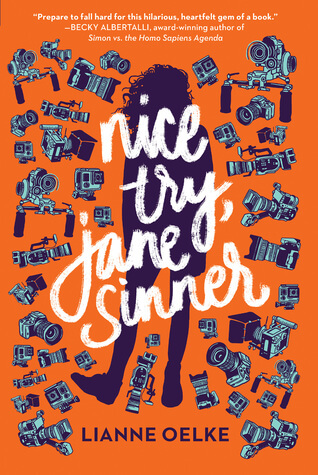
Nice Try, Jane Sinner by Lianne Oelke

Share

Nice Try, Jane Sinner
Author: Lianne Oelke
Published: January 9, 2018 by Clarion

Guest Review by Natalia Sperry

Summary: The only thing 17-year-old Jane Sinner hates more than failure is pity. After a personal crisis and her subsequent expulsion from high school, she’s going nowhere fast. Jane’s well-meaning parents push her to attend a high school completion program at the nearby Elbow River Community College, and she agrees, on one condition: she gets to move out.

Jane tackles her housing problem by signing up for House of Orange, a student-run reality show that is basically Big Brother, but for Elbow River Students. Living away from home, the chance to win a car (used, but whatever), and a campus full of people who don’t know what she did in high school… what more could she want? Okay, maybe a family that understands why she’d rather turn to Freud than Jesus to make sense of her life, but she’ll settle for fifteen minutes in the proverbial spotlight.

As House of Orange grows from a low-budget web series to a local TV show with fans and shoddy T-shirts, Jane finally has the chance to let her cynical, competitive nature thrive. She’ll use her growing fan base, and whatever Intro to Psychology can teach her, to prove to the world—or at least viewers of substandard TV—that she has what it takes to win.

Review: I’ll admit, I’m always a sucker for a strong, sarcastic, and somewhat troubled YA protagonist, and Jane Sinner did not disappoint. Nice Try, Jane Sinner is psychological and philosophical, a little crass and silly, sometimes downright strange, and always full of tremendous heart—but then, isn’t that college? It was refreshing to read an older YA: Jane is right on that cusp of “not really a teenager anymore, but definitely not a full a full-fledged adult.” As she navigates her senior year in high school, taking classes at the local community college, I felt that, even beyond its obvious and intentional quirks, Jane’s story is startlingly unique in how it captures the whirlwind of  emotions felt during that transitional time. It also offered a healthy balance of relationships, featuring Jane’s loving yet tense parents, adoring but annoying little sister, and a cast of friends too diverse to affix any one guiding set of adjectives to.

Written in diary-format, the book is told exactly as Jane wants it to be, which adds an interesting dimension of questionability to her narration. Dialogue is captured in script format, which prompts readers to question at times what’s reality and what’s for show, on House of Orange and beyond. What Jane does and doesn’t tell the narrator about her past, her genuine feelings, and her motivation leads to some interesting twists.  In particular, Jane’s “Doctor/Self” internal dialogues were really compelling. Like the eponymous Jane Sinner herself, however, the book at times deflects the greater thematic issues at hand through its sarcasm and humor. Jane’s story revolves around a personal crisis—one that I wish the book would have delved in deeper to by the end. I did enjoy Jane’s exploration of religion and the expectations young people are sometimes held to, which is a topic I’ve yet to see be fully explored in YA.

For all its quirks and flaws, Jane Sinner has a heart of gold. It conjures up all the emotions of a teen on the brink of “adulthood,” while still maintaining a sarcastic yet thoughtful spark throughout. It’s refreshing to remember that being a young adult doesn’t end at high school, and life doesn’t have to either.

Teacher’s Tool For Navigation: I’ll admit, I’m always a sucker for a strong, sarcastic, and somewhat troubled YA protagonist, and Jane Sinner did not disappoint. Nice Try, Jane Sinner is psychological and philosophical, a little crass and silly, sometimes downright strange, and always full of tremendous heart — but then, isn’t that college? It was refreshing to read an older YA: Jane is right on that cusp of “not really a teenager anymore, but definitely not a full a full-fledged adult.” As she navigates her senior year in high school, taking classes at the local community college, I felt that, even beyond its obvious and intentional quirks, Jane’s story is startlingly unique in how it captures the whirlwind of  emotions felt during that transitional time. It also offered a healthy balance of relationships, featuring Jane’s loving yet tense parents, adoring but annoying little sister, and a cast of friends too diverse to affix any one guiding set of adjectives to.

Written in diary-format, the book is told exactly as Jane wants it to be, which adds an interesting dimension of questionability to her narration. Dialogue is captured in script format, which prompts readers to question at times what’s reality and what’s for show, on House of Orange and beyond. What Jane does and doesn’t tell the narrator about her past, her genuine feelings, and her motivation leads to some interesting twists.  In particular, Jane’s “Doctor/Self” internal dialogues were really compelling. Like the eponymous Jane Sinner herself, however, the book at times deflects the greater thematic issues at hand through its sarcasm and humor. Jane’s story revolves around a personal crisis–one that I wish the book would have delved in deeper to by the end. I did enjoy Jane’s exploration of religion and the expectations young people are sometimes held to, which is a topic I’ve yet to see be fully explored in YA.

For all its quirks and flaws, Jane Sinner has a heart of gold. It conjures up all the emotions of a teen on the brink of “adulthood,” while still maintaining a sarcastic yet thoughtful spark throughout. It’s refreshing to remember that being a young adult doesn’t end at high school, and life doesn’t have to either.

Discussion Questions:  Even in the context of the book, Jane is quite the controversial character to those around her — did you “like” Jane? How might this shape your perception of the book as a reader? Does “likability” matter in protagonists? Think about if Jane was gender-swapped: would this change how we view some of her more questionable decisions or characteristics?

Flagged: “I need to psychoanalyze myself for Intro Psych. I’m not sure how that’s possible; the prof was rather vague on the specifics in class today. I was also caught up in a doodle of my hand. I outlined my hand on my notes because the notes were ugly and otherwise useless. I layered the inside with different-colored gel pens until the outline was fairly thick. In the middle of the hand I drew toasters and toast. The whole thing came together really well. One of my better efforts. But I’m not sure how to psychoanalyze myself. I suppose I’ll have to be both the doctor and patient. Maybe the two of me can come up with some profoundly insightful insight.

A middle-aged man with thinning brown hair and a cozy sweater vest motions for Jane to lie down on the sofa. He takes a seat on the overstuffed leather armchair and crosses his legs like a girl.

THE DOCTOR

Hello, Ms. Sinner.

JS

                          Hi.” (Page 46-47).

Read This If You Loved: Anything by John Green (Turtles All the Way Down in particular),  Highly Illogical Behavior by John Corey Whaley, Fangirl by Rainbow Rowell, The Hunger Games by Suzanne Collins

Recommended For: 

classroomlibrarybuttonsmall 

RickiSig