Landscape with Invisible Hand by M. T. Anderson

Share

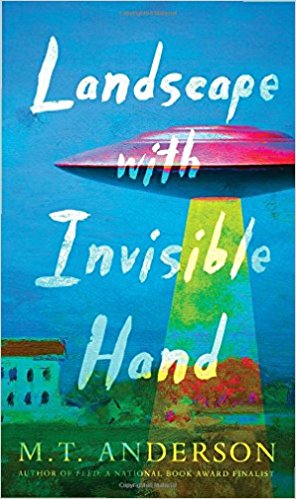
Landscape with Invisible Hand
Author: M. T. Anderson
Published: September 12, 2017 by Candlewick

Summary: National Book Award winner M. T. Anderson returns to future Earth in a sharply wrought satire of art and truth in the midst of colonization.

When the vuvv first landed, it came as a surprise to aspiring artist Adam and the rest of planet Earth – but not necessarily an unwelcome one. Can it really be called an invasion when the vuvv generously offered free advanced technology and cures for every illness imaginable? As it turns out, yes. With his parents’ jobs replaced by alien tech and no money for food, clean water, or the vuvv’s miraculous medicine, Adam and his girlfriend, Chloe, have to get creative to survive. And since the vuvv crave anything they deem “classic” Earth culture (doo-wop music, still-life paintings of fruit, true love), recording 1950s-style dates for the vuvv to watch in a pay-per-minute format seems like a brilliant idea. But it’s hard for Adam and Chloe to sell true love when they hate each other more with every passing episode. Soon enough, Adam must decide how far he’s willing to go – and what he’s willing to sacrifice – to give the vuvv what they want.

Review: 

  • Futuristic, dark satire that is an unusual, intelligent social commentary
  • Forces readers to think deeply about their personal, social, and political lives
  • Somewhat non-linear story with an interesting layout: each chapter has a title that corresponds with the artwork created by the main character
  • Stylistically, Anderson chooses every word with intention. The text is a 149-page novella that features chapters that can be taught instructionally as vignettes.

Teachers’ Tools for Navigation:  Teachers might ask students to begin by looking closely at the text for short passages that they find particularly interesting or inspiring. Students might write a one-pager that a) unpacks the passage they chose, and b) examines the passage through the lens of a topic that they find particularly interesting and relevant. For example, they might connect a passage to the following topics which are relevant in the text:

Art

Automation

Capitalism

Classism

Economy

Entrepreneurship

Existentialism

Extraterrestrial Life

Health Care

Immigration

Love

Politics

Poverty

Sickness

Nostalgia

Unemployment

After the students have written several one-pagers and explored a variety of topics, they might select one topic that interests them most. They can research scholarship about the topic and look across the entire text for relevant passages.

Sample research paper topics:

Examining economic disparities and classism within Landscape with Invisible Hand

Finding the soul: M.T. Anderson’s treatment of love and art in Landscape with Invisible Hand

Discussion Questions: Do you think M. T. Anderson had a purpose for writing this text?; What kind of social commentary does this text offer?; What does it tell us about love? Society? Humanity?; How does Anderson use art to enhance the story?; How is the text structured? How does this enhance your reading?

Flagged Passage: “We are tiny figures, faceless, pointing at wonders, provided for scale, no lives of our own, surveying the landscape that has engulfed us all.”

Read This If You Loved: Feed by M. T. Anderson; Books by Scott Westerfeld; The House of the Scorpion by Nancy Farmer

Recommended For:
 classroomlibrarybuttonsmall

Thank you, Candlewick!

RickiSig

National Geographic Kids: What Would Happen? by Crispin Boyer

Share

nfpb2017

Nonfiction Wednesday

Nonfiction Picture Book Wednesday is hosted by Kid Lit Frenzy and was started to help promote the reading of nonfiction texts. Most Wednesdays, we will be participating and will review a nonfiction text (though it may not always be a picture book).
Be sure to visit Kid Lit Frenzy and see what other nonfiction books are shared this week!

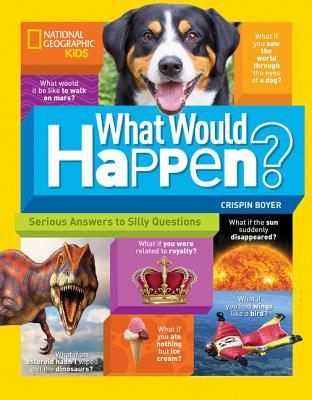
National Geographic Kids: What Would Happen? 
Author: Crispin Boyer
Published July 11th, 2017 by National Geographic Society

Summary: Ever wondered what would happen if some cool or crazy things were possible? Like what would happen if: you got sucked into a black hole; dinosaurs still existed; humans could fly; you could communicate with dolphins; or you could dig a hole through to the center of the Earth?

Get ready to explore all kinds of scenarios that would or could happen if the world was just a slightly different place. Each scenario is examined with real scientific, historical, and cultural facts in mind. This out-of-the-box book encourages readers to cultivate a better understanding of the world as it is – and as it could be!

ReviewA favorite book of mine and my husband’s that we read years ago was Why do Men have Nipples?, and we really loved getting answers to questions that you may not even know to ask yet are really intriguing. What Would Happenis the middle grade equivalent! So many interesting questions are answered! Do you want to know about global warming? Honeybees? Time machines? You will find answers in this book. Each question’s answer is set up to give the reader background knowledge, potential outcomes, extenuating circumstances, etc. to fill in any blanks and curiosities there may be. And as with all National Geographic books, the photographs are superb!

Teachers’ Tools for Navigation: I love that so many of the National Geographic books touch on such a variety of topics, but also in the books that are like What Would Happen?, the information only touches the surface. This book would be a perfect jump start to passion or inquiry projects. What do students want to learn more about? They can start by reading the spread in What Would Happen? then research more to prepare a presentation about everything they learn.

The book also definitely has a place in libraries: school, classroom, and home. It is a wonderful book filled with questions that kids will love to learn the answers to!

Discussion Questions: Every page in this book has a discussion question!

Flagged Passages: 

Read This If You Love: Getting answers to burning questions

Recommended For: 
classroomlibrarybuttonsmall closereadinganalysisbuttonsmall

Signature

**Thank you to Karen from Media Masters Publicity for providing a copy for review!**

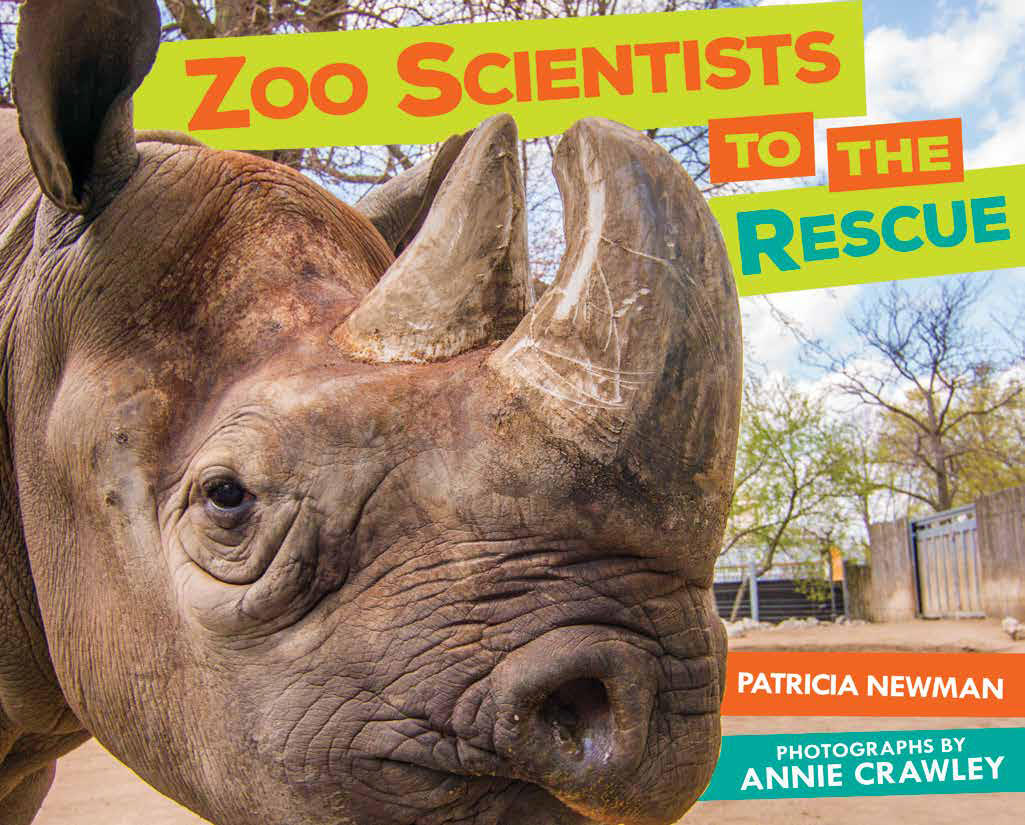
Blog Tour with Book Trailer, 30 Day #ProtectOurWorld Challenge, and Review!: Zoo Scientists to the Rescue by Patricia Newman, Photographs by Annie Crawley

Share

nfpb2017

Nonfiction Wednesday

Nonfiction Picture Book Wednesday is hosted by Kid Lit Frenzy and was started to help promote the reading of nonfiction texts. Most Wednesdays, we will be participating and will review a nonfiction text (though it may not always be a picture book).
Be sure to visit Kid Lit Frenzy and see what other nonfiction books are shared this week!

Zoo Scientists to the Rescue
Author: Patricia Newman
Photographer: Annie Crawley
Published October 1st, 2017 by Millbrook Press

Summary: Zoos take care of animals and welcome visitors of all ages, but that’s not all zoos do. Author Patricia Newman and photographer Annie Crawley bring readers behind the scenes at three zoos to meet scientists working to save endangered animals.

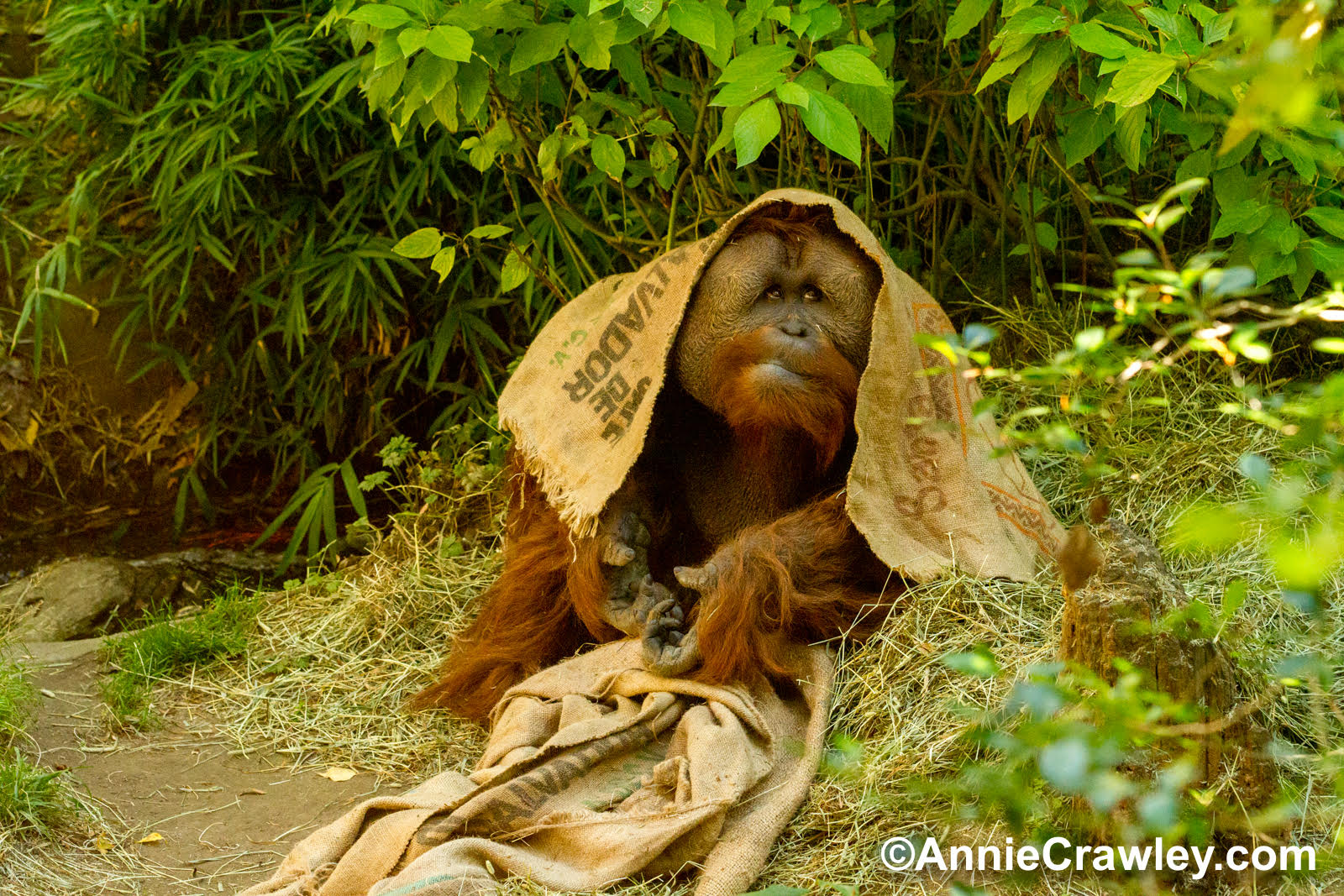
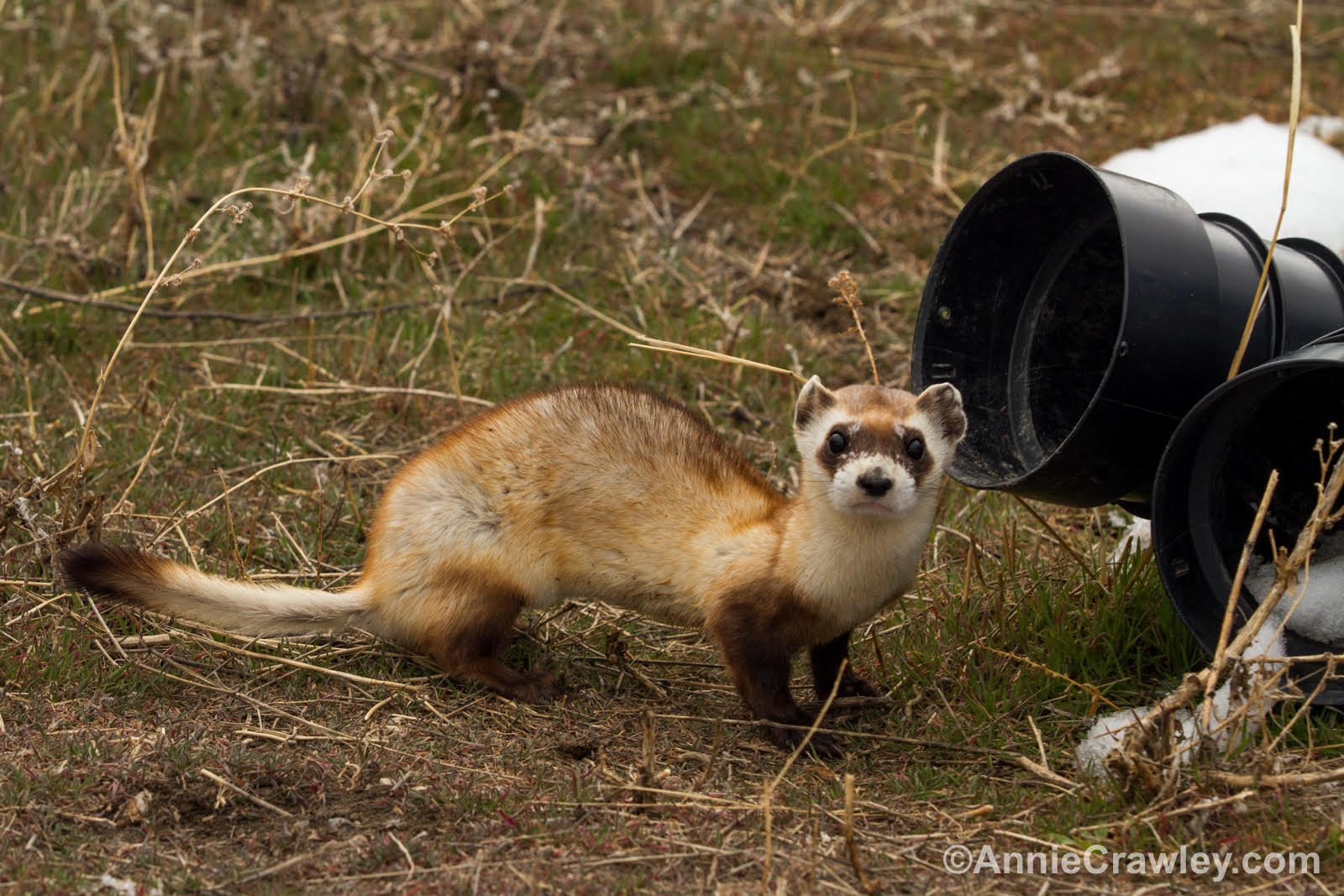
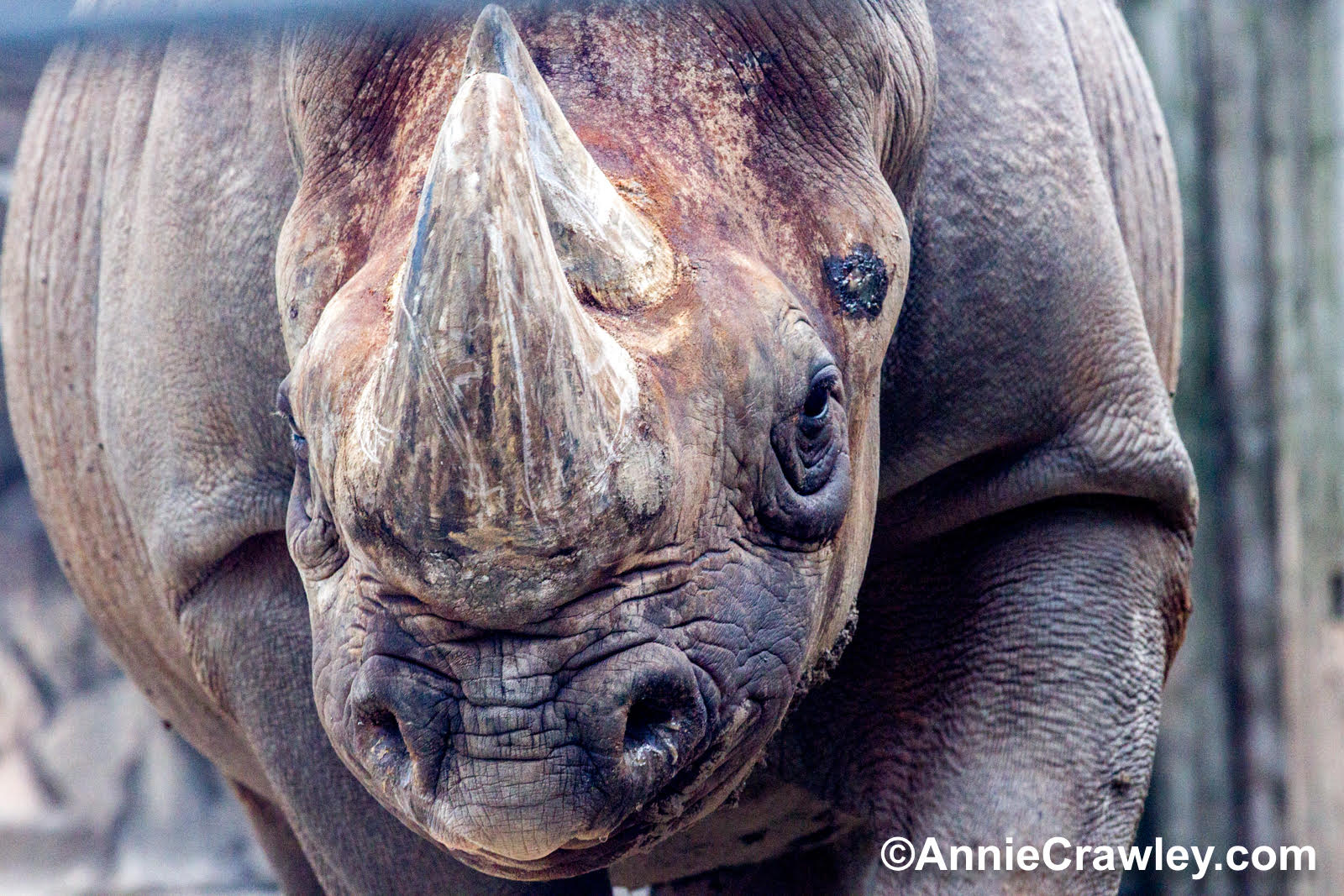
Meredith Bastian’s experiences studying wild orangutans help educate both zoo visitors and the zoo workers who care for captive orangutans. Jeff Baughman breeds black-footed ferrets and reintroduces them into the wild. And Rachel Santymire examines poop from black rhinoceroses at the zoo and in their natural habitat to benefit all black rhinos. Find out how zoo scientists are helping us learn more about these remarkable, at-risk species before it’s too late!

Visit the authors at http://www.patriciamnewman.com and https://www.anniecrawley.com/

ReviewPatricia Newman’s work always blows me away and Annie Crawley’s photos in Plastics, Ahoy! were breathtaking, so I was so happy to see that they had a new book coming out. In Zoo Scientists, a text is just as brilliantly done as Newman’s other works, she once again focuses on a topic that needs a spotlight. This time, we see how zoos are working towards saving endangered animals. Zoos are such important places when they are done correctly, so I loved this focus on three specific stories about how zoos are helping rhinos, orangutans, and black-footed ferrets. Each section tells us about a scientist at a different zoo, how they came to be where they are today, and how they help the species they work with. I loved the inclusion of each scientist’s story paying special attention to how they each became an expert. This makes Zoo Scientists perfect for looking at not only looking at endangered animals and zoos but how to reach your potential in a career making this book a must-get for classrooms that study any of these things.

Teachers’ Tools for Navigation: Teaching guides for all of Patricia’s books including the Zoo Scientist one coming soon can be found at http://www.patriciamnewman.com/teacher-guides/.

Rhino bookmarks!: http://www.patriciamnewman.com/wp-content/uploads/2017/07/Bookmark.pdf

Pinterest board with activities and articles to supplement the reading of Zoo Scientists to the Rescuehttps://www.pinterest.com/newmanbooks/zoo-scientists-to-the-rescue/

Consider an Author for Earth Day visit! Consider an Authors for Earth Day visit in conjunction with Zoo Scientists to the Rescue. Students research a list of five conservation nominees selected by Patricia Newman and then vote for their favorite. Newman writes a check to the winning organization. The mission? To empower young readers to shape the world around them!

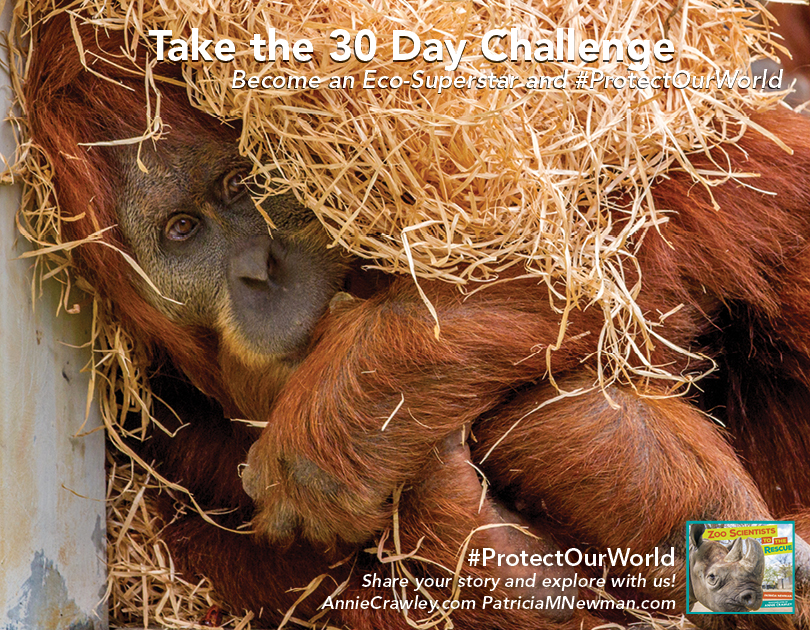
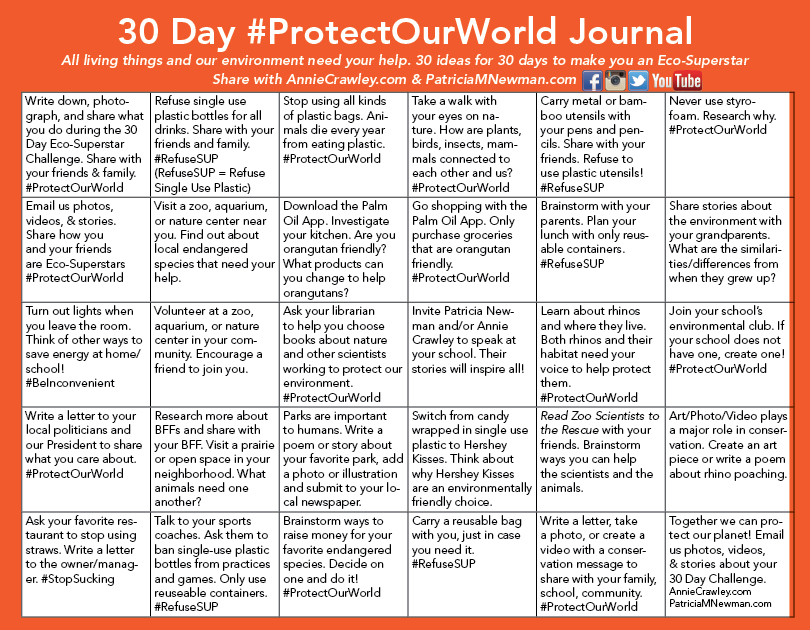
Participate in the 30 Day #ProtectOurWorld Challenge! Here is the Orangutan example. Visit http://www.patriciamnewman.com/books/zoo-scientists-rescue/ to see the rhino and black-footed ferret posters.

Discussion Questions: Use any or all of these discussion questions to extend the learning with Zoo Scientists to the Rescue:

  • What steps did each scientist take to become an expert in their field?
  • Why are orangutans’ habitat being destroyed?
  • Why is the poaching of rhinos for their horns such a devastating action?
  • How did the expansion of our nation effect the black-footed ferret?
  • How did humans play a role in each of these animals’ endangered status?
  • What can you do to help these animals?
  • Visit some of the resources about other conservation stories in the end of the book and share what you learn.
  • What words did you learn from the book? (Check out the glossary!)

Flagged Passages: 

“A sign outside the orangutan enclosure at the National Zoo explains that the apes red coloring mimics shadows in the forest’s canopy. As little as 30 feet above the forest floor, orangutans essentially disappear, which is surprising given their bulk. Fully grown wild wild male orangutans can weigh up to 220 pounds and wild females can weight up to 120 pounds. Zoo orangutans tend to be between 50 to 100 pounds heavier because of their nutritious diet.”

“About 15 years ago, black-footed ferrets roamed the Great Plains from Canada to Mexico. The Lakota call them pispiza itopta sapa (black-faced prairie dog) and believe they are sacred. But in the late 1800s, settlers moving westward and travelers from across the Pacific Ocean unknowingly put the ferrets in danger.”

“Unfortunately, rhinos are no match for armed poachers, hunters who kill wild animals illegally for profit. Approximately 5,050 black rhinos remain in the world due to poaching and habitat loss. They are labeled critically endangered–one step from extinct in the wild, and only two steps from fully extinct. Lincoln Park Zoo hopes to play a role in saving them.”

Book Trailer: 

Read This If You Love: Zoos, Animals, Learning about scientists, Science, Conservation efforts, Earth Day

Recommended For: 
classroomlibrarybuttonsmall closereadinganalysisbuttonsmall 

Make sure to visit the other stops on the Blog Tour!

Signature

**Thank you to Patricia Newman for asking me to be part of the blog tour!**

Scanorama Series (Amazing Animals, Dinosaurs, & Deadly Predators) by Anna Claybourne

Share

nfpb2017

Nonfiction Wednesday

Nonfiction Picture Book Wednesday is hosted by Kid Lit Frenzy and was started to help promote the reading of nonfiction texts. Most Wednesdays, we will be participating and will review a nonfiction text (though it may not always be a picture book).
Be sure to visit Kid Lit Frenzy and see what other nonfiction books are shared this week!

Scanorama Series
Amazing Animals
Dinosaurs
Deadly Predators
Author: Anna Claybourne
Published September 13th, 2016 by Silver Dolphin Books

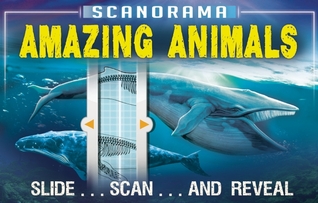
Summary: Slide the scanner across the page to discover what lies under the skin of the world’s most fascinating creatures! In Scanorama: Amazing Animals, readers will meet a variety of species from across the animal kingdom and learn about their astounding feats of strength, speed, and endurance. The five movable sliders transform the illustrated animals—including an anaconda, a thorny devil, and a blue whale—to reveal their skeletons, creating a virtual X-ray on the page. Captivating facts, photographs, and illustrations provide even more details on each animal, and interactive flaps to lift enhance the scan-tastic educational experience.

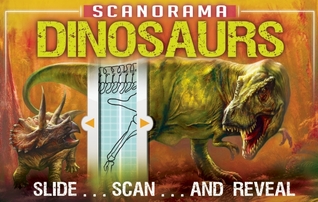
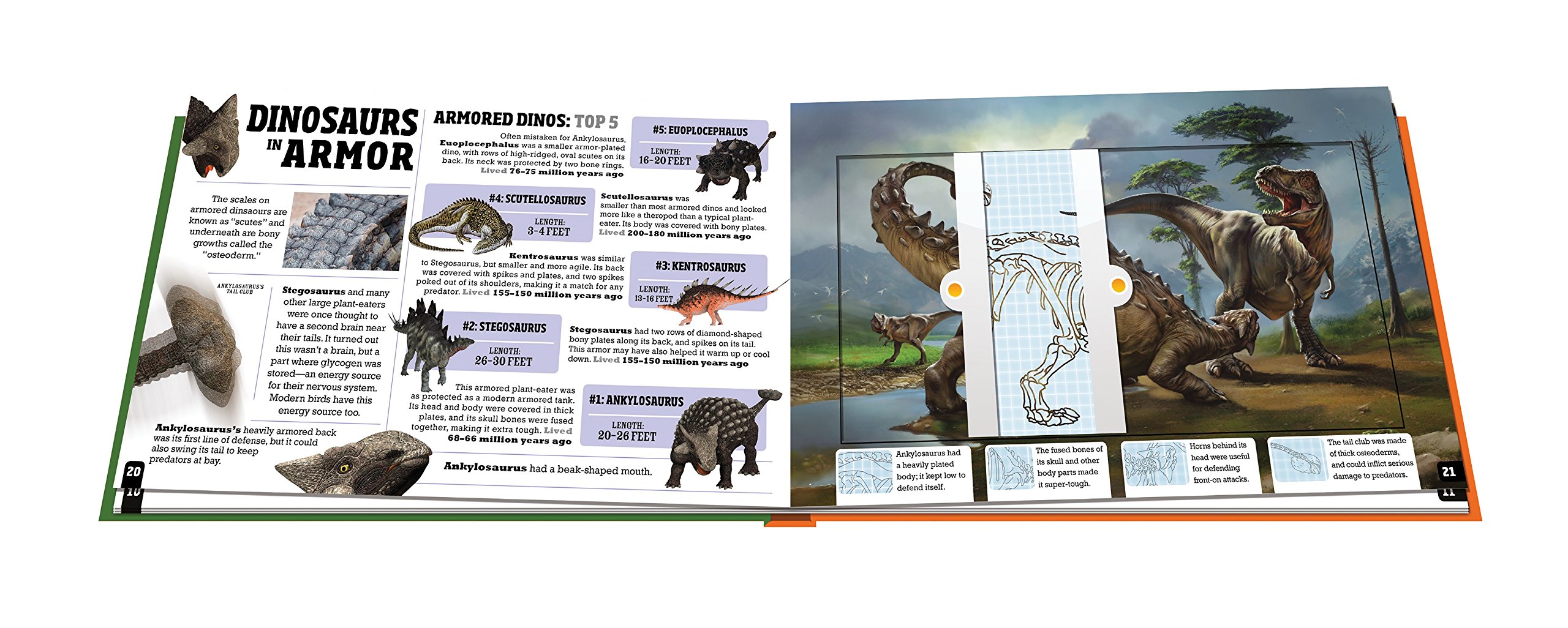
Scanorama: Dinosaurs and Other Prehistoric Creatures gives young readers the feel of working as a lab technician as they study dinosaurs and other amazing prehistoric animals. Five movable sliders transform illustrated creatures—such as the deadly T. rex, the armored Ankylosaurus, and the massive Argentinosaurus—into virtual X-ray scans, revealing their fossilized skeletons. Detailed text, photographs, and illustrations provide insights into how each animal survived in the prehistoric world, and even more facts can be found under the interactive flaps throughout the book.

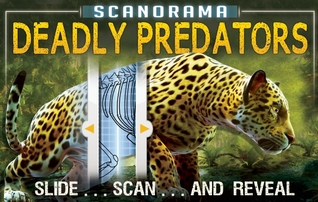
On the pages of Scanorama: Deadly Predators, kids are treated to a virtual X-ray tour featuring some of the world’s most dangerous animals. Five movable sliders transform illustrated animals into full-body scans that reveal their skeletons and show how they have come to rule their habitats. Featured animals include a tiger, a scorpion, and a great white shark; each animal is covered in detail through informative text, photographs, and illustrations. To learn about even more deadly creatures, readers can lift the flaps and discover what is hiding in wait, ready to pounce on its next victim!

ReviewThese books are so cool! The author has moved nonfiction texts to another level by actual letting the reader see another level of the animals: their bones! The interactive aspect of the scanning makes the book fun, but it is also clever how it reveals the bones of the animal that is being highlighted. In addition to the scanning aspect, there is tons of information about the book’s topic!

Teachers’ Tools for Navigation: These books are made for the classroom. The immense amount of information, and their ability to keep the information fun and the reader entertained makes them perfect for independent activities as well as whole group.

Discussion Questions: What does the scanorama show you that other books don’t?; What other scanorama books would you be interested in seeing?; What careers would the scanorama books prepare you to be successful in?; What topic in the books would you be interested in learning more about?; What animals/dinosaurs had similar bone structures? Different bone structures?; What do predators have in common?

Flagged Passages: 

Read This If You Love: Science, Animals, Dinosaurs

Recommended For: 
classroomlibrarybuttonsmall closereadinganalysisbuttonsmall

Signature

**Thank you to Casey at Media Masters Publicity for providing copies for review!!**

Author Guest Post and Giveaway!: “Creepy Crawley Science” by Kim Kasch, Author of Irma the Inventor and the Vampire Spiders

Share

“Creepy Crawley Science” 

S.T.E.M. (or Science, Technology, Engineering and Math) might not sound interesting to you. But, did you know when you play with Legos you’re using a form of engineering to create something?

And, who isn’t interested in flying cars, robots, and undersea ships? Well, those things are simply science, technology, engineering and math set in motion.

It’s all about finding easy ways to use these complicated disciplines to create new opportunities with common components…and some not so common ingredients, like spider silk.

Believe me, these teeny-tiny creatures create silk that can be used for breathtaking breakthroughs.

Spiders . . . ?

Yes. Spiders. I know you might think these eight-legged creatures sound more creepy than creative but did you know that spider silk is one of the strongest substances around? Well, it is. Scientists even call spider silk a “wonder material”.

I’m talking about that sticky stuff you sometimes walk through in the garden that sends shivers running up your spine.  Walking through a spider web immediately sends you searching for those little, unwelcome visitors which might be hiding in your hair. And, it’s stronger than steel and super flexible.

For decades scientists have been searching for a convenient way to harvest that silk so they would be able to use huge quantities.

It’s true. They have.

But, as you might expect, very few people want to become spider farmers simply to spend their afternoons walking up and down spider-infested rows to collect sticky webs dangling from trees, stuck to shrubs or clinging to bushes.

So what’s the answer to this scientific conundrum?

Well, you might want to read this article to find out more about sustainable spider silk: https://www.businessgreen.com/bg/news/3013893/scientists-develop-sustainable-spider-silk-in-green-materials-breakthrough in BusinessGreen.com

And if you think that’s interesting, you really might enjoy reading Irma the Inventor and the Vampire Spiders.

How many kids do you know who can build robotic spiders out of scrap metal, develop a substance that’s stronger than steel, or crash a cyber-wizard’s computer from an undetectable monitor? Well, that’s Irma. Still, all she really wants is to make some friends and blend in for once, but no matter how hard she tries, Irma always seems to stand out.

This laugh-out-loud middle grade novel encourages readers to explore the STEM fields while never losing its sense of fun.

Irma the Inventor & the Vampire Spiders
Author: Kim Kasch
Published August 21st, 2017 by 50/50 Press

About the Book: 

How many kids do you know who can build robotic spiders out of scrap metal, develop a substance that’s stronger than steel, or crash a cyber-wizard’s computer from an undetectable monitor? Well, that’s Irma. Still, all she really wants is to make some friends and blend in for once, but no matter how hard she tries, Irma always seems to stand out.

This laugh-out-loud middle grade novel encourages readers to explore the STEM fields while never losing its sense of fun.

About the Author Kim Kasch: 

I grew up in a family with 9 kids and grandma living in the back bedroom. Not surprising that I have a few stories to tell, especially since we only had 1 t.v.

I spent my days reading and, later, trying to create another world where I could escape all those brothers and sisters-and grandma-by writing. Maybe that’s why I love books so much. Well, that and the fact that I was near the end of that long sibling-chain and never had the clout to pick the t.v. shows we watched. But I’d run home after school to catch the last fifteen minutes of Barnabus Collins in Dark Shadows…

I still love to run or maybe I should say, I love to wog (a cross between walking and jogging).

Here in Portlandia, I love Halloween themed runs – where people don costumes and run. It’s a lot of fun…and I know those two words don’t always go together: fun…and…run. But here, in the damp days of fall, I think it is.

And, with all those Halloween themed runs, I guess Dark Shadows had more of an influence than some people might think. Even today my favorite author is Stephen King. My all-time favorite book is Salem’s Lot, which might have something to do with Irma the Inventor and the Vampire Spiders 🙂 

Sorry to be so long-winded but did I say I love to write, and talk, and knit, and sew, and bake… I could go on but I’ll stop by saying, I hope you’ll stop by my blog, send me a tweet, or check out my Facebook page. I’ll be sharing news about new books over there.

Thanks for listening and, hopefully, reading 🙂

Join me on Twitter or stop by and see what I’m pinning on  Pinterest and, if you read Irma the Inventor and have a question or simply want to share a comment, please feel free to send me an email. I love connecting with readers.

Goodreads
Amazon Author Page
Facebook
Website

GIVEAWAY!!!

Enter to win a STEM prize package and a copy of Irma the Inventor and the Vampire Spiders!

a Rafflecopter giveaway

Thank you, Kim, for this science-rific guest post and giveaway!

 and

Nibbles: The Dinosaur Guide by Emma Yarlett

Share

Nibbles: The Dinosaur Guide
Author and Illustrator: Emma Yarlett
Published 2017 by Kane Miller Publishing

Summary: NIBBLES, the book-eating MONSTER, has chomped his way into this book of DINOSAURS! Has he bitten off more than he can chew?!

What was a very serious book about very serious dinosaurs is suddenly interrupted by a hole – a nibbled hole – in the book. Who would do something like that?

Little ones will love trying to find the culprit – Nibbles – hiding among their favorite, easily recognizable dinosaurs. Is he an herbivore? A carnivore? Or … a bookivore?

Emma Yarlett’s Nibbles: The Dinosaur Guide is packed with flaps, folds, facts and die cuts, plus one very naughty monster and an ending to make Houdini proud. But has Nibbles bitten off more than he can chew?

Themes include humor and science.

Review: We love Nibbles. We have a stuffed Nibbles and have read the first one so many times (and it is one of my husband’s favorite picture books–he says it is so unique.) I am probably majorly biased when it comes to this review because OF COURSE we loved this one also. I mean, listen to this: 

What is so interesting about this new book is that it takes the concept of Nibbles (a book eating monster) and takes him on a time-traveling adventure to the age of the dinosaurs using his eating/transporting powers. It is funny and educational. Just as the first one combined Nibbles’s antics with fairy tales, this one combined Nibbles with dinosaurs education!

Teachers’ Tools for Navigation: What I love more about this one than the first one is that it has a cross-curricular component to it with the inclusion of dinosaurs and specific information about the dinosaurs. This allows the book to be used in reading, writing, and science lessons. I also think it’d be so much fun to have students write their own Nibbles story with him eating into a different topic than dinosaurs.

Discussion Questions: Which dinosaur was the scariest that Nibbles faced? The least scary?; What new information did you learn about dinosaurs?; What were the similarities and differences between the different dinosaurs Nibbles encountered?; What were the consequences of Nibbles jumping back in time?; If you were Nibbles, what book would you Nibble into? Where in time would you jump to?

Flagged Passages: 

Book Trailer: 

Message from the Author about Creativity: 

Read This If You Love: Dinosaurs, Humor, Battle Bunny by Jon Scieszka and Mac Barnett, Nibbles: The Book Monster by Emma Yarlett

Recommended For:
  classroomlibrarybuttonsmall 

**Thank you to Lynn at Kane Miller for providing a copy for review!!**

Star Stuff: Carl Sagan and the Mysteries of the Cosmos by Stephanie Roth Sisson

Share

Star Stuff: Carl Sagan and the Mysteries of the Cosmos
Author: Stephanie Roth Sisson
Published: October 14, 2014 by Roaring Brook Press

A Guest Review by Brittany Brown

Summary: A curious boy living in a small city apartment finds the world astonishing. He wants to know about light bulbs, inch worms, and rocket ships. Carl sets out on a journey to find answers, but finds bigger, even more powerful questions. Through his research and studies, Carl eventually earns the title of Dr. Carl Sagan and spends his life seeking knowledge and understanding about the universe. This young

boy’s contributions to science and education have inspired many children everywhere to question the world around them. His story will resonate every child who has ever wondered “how” or “why” or spent an evening looking up at the night sky.

Review: I am constantly looking for books which will inspire my students and get them excited about learning. This book, which is brought to life with beautiful illustrations and the great mysteries of the universe, did that for myself as an adult, too. After reading it, everyday life is once again imbued with the magic and novelty it had in childhood. In Sagan’s eyes, there is no phenomenon too mundane to investigate. The curiosity which most adults leave behind drove Sagan to be the lifelong learner that all teachers hope to foster in their students. Reading this book shows that science is all around us, that we all belong here in the universe, and that in everyone there is a scientist. I absolutely loved reading this book, and as a new teacher building my classroom library, this is the first one which I will be purchasing multiple copies of to share with my students.

Teachers’ Tools for Navigation: This story would pair well with any science or biography unit. It would also serve as a great example of narrative nonfiction.

The most obvious use for this story is in a science unit. I would love to use this book to open up a discussion at the beginning of a unit on the solar system. Not only would it generate excitement, it would also begin to build some vocabulary and background knowledge. It would make the information in the unit more personal and relevant to kids, and would be a great launching point to encourage students to come up with their own questions about how the world works.

This book is also a wonderful book to use for mini lessons in writing. Using this book as an example, a teacher could lead a discussion on how to choose which life events to include in a biography, how to sequence and organize it, and how to incorporate quotes from a historical figure into a writing piece. It also shows how to include facts and achievements in an engaging way, and how to demonstrate a person’s impact on history.

Finally, this book would also be a superb example of narrative nonfiction. Despite containing lots of scientific facts, it reads like a storybook and the illustrations do much of the talking. Students will be captivated with the descriptive narration, and discussions could explore their experiences as readers or how they may be able to attempt this style in their writing.

Discussion Questions: What are your big mystery questions? Where would you go to try to find answers to them? What character traits helped Carl on his journey? What impact did he have on the world? Who does he remind you of?

Book Trailer: 

Read This If You Loved: What Do You Do with an Idea? By Kobi Yamada, I Wonder by Annaka Harris, You Are Stardust by Elin Kelsey, On a Beam of Light: A Story of Albert Einstein by Jennifer Berne, The Boy Who Loved Math: The Improbable Life of Paul Edros by Deborah Heiligman, Look Up!: Henrietta Leavitt, a Pioneering Woman Astronomer by Robert Burleigh

Recommended For:
 classroomlibrarybuttonsmall

Thank you, Brittany!

RickiSig