Author Guest Post: “What Post-Apocalyptic Fiction Can Teach Us about Humanity, Resilience, and Critical Thinking” by Magda Mizzi, Author of Tyranny of Tomorrow and Dawn in Ruins

Share

“What Post-Apocalyptic Fiction Can Teach Us About Humanity, Resilience, and Critical Thinking”

Post-apocalyptic fiction often gets dismissed as “just survival stories,” but in fact, stories like The Tyranny
of Tomorrow and Dawn in Ruins offer rich opportunities for deep classroom discussion and learning.
Whether students are in middle school, high school, or a reading group, these narratives invite readers
to explore crucial skills: ethical thinking, empathy, resilience, and critical analysis.

1. Exploring What It Means to Be Human

At the heart of these novels is the question: What does it mean to be human when the structures of
society fall apart? In the ruins of Sydney, young protagonists must make choices that test their values
and force them to consider the humanity in themselves and others — even when “others” are different or
damaged.

In the classroom, teachers can use post-apocalyptic scenes as prompts for discussions or essays on
compassion, judgment, and identity:
● When is survival instinct, and when is it moral compromise?
● How do characters define who is worthy of help?

These questions help students connect literature to empathy and ethical reasoning.

2. Resilience as a Skill, Not Just a Theme

Resilience isn’t something characters just “have.” It’s something they develop particularly through loss,
failure, connection, and re-engagement with their world. Students read about how Madeline in The
Tyranny of Tomorrow pushes through grief and fear to protect those she loves — and they see resilience
modeled in action.

Classroom activity idea: Resilience Journals

After reading a chapter, students write about a time they faced difficulty and identify the traits that helped
them persevere. This connects the text to students’ own lives, encouraging self-reflection and growth.

3. Critical Thinking Through World-Building Analysis

Post-apocalyptic worlds require readers to question “Why this world?” and “What caused this collapse?”
In Dawn in Ruins, the mystery of the virus and its effects on characters like Jude pushes readers to think
beyond plot into cause/effect, systems, and unintended consequences.

Teachers can ask:
● How does the author build tension through setting?
● What real-world issues echo in the fictional collapse?

This develops analytical skills crucial for literature and other subjects like science or social studies.

4. Empathy Through Others’ Perspectives

Stories about survival inevitably involve diverse types of people reacting in different ways. Through
character comparisons and point-of-view exercises students can deepen their empathy and
understanding of motivation.

Classroom discussion prompt:
How might you respond differently than Annie, Jude, or Michael in a crisis? What does your answer reveal about your values?

Post-apocalyptic fiction isn’t just about the end of the world; it’s about the survival of ideas, hope, and
connection. When teachers bring texts like The Tyranny of Tomorrow and Dawn in Ruins into their
curriculum, they give students a space to consider ethics, resilience, and critical thinking in a way that is
both imaginative and deeply relevant to real life.
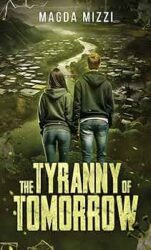
About the Book: In the heart of Sydney’s Western Suburbs, a devastating virus has unleashed a wave of unprecedented violence, leaving the town in chaos.

As the government struggles to regain control, the contagion spreads with alarming speed, triggering a global crisis. Amid the turmoil, Madeline, a quiet teenage girl, and Michael, the boy who captures her heart, are unexpectedly thrust together.

Now they must navigate the treacherous landscape, racing against time to secure a safe haven for their families and friends. Faced with the relentless onslaught of the virus, they’ll have to rely on their wits, courage, and the unbreakable bonds they forge in this high-stakes race for survival. `

The Tyranny of Tomorrow’ is a fast-paced and thrilling first instalment in a gripping series that explores the resilience of youth, the imposition of responsibility and the meaning of humanity in the face of an unravelling world.
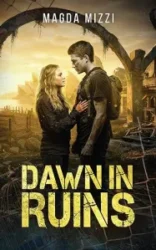
About the Book: The world ended in silence. The fight for what’s left will not.

Ten months after the collapse, teenager Annie’s world has shattered, and with it, everything she once believed about monsters. They don’t always lurk in shadows. Sometimes they wear uniforms. Sometimes they wear the faces of those you love.

In the ruins of Sydney, Annie finds an unlikely ally in Jude—a half-infected boy marked by virus and twisted science. His strange, dangerous abilities make him both a threat and their best hope. But the line between abomination and saviour is thinner than either imagined.

Haunted by what was done to him, Jude carries scars deeper than flesh. Meanwhile, Annie’s younger brother, Lucas, remains a prisoner, infected and altered. If she doesn’t reach him soon, Lucas will face the same fate that nearly destroyed Jude—experiments that don’t just scar flesh but twist what it means to be human.

As secrets unravel and the origin of the virus comes to light, Jude learns a devastating truth: his connection to the outbreak is deeper, darker, and far more personal than he ever imagined.

Together, Annie and Jude race through a city where every shadow hides a threat. When they are torn apart, survival becomes more than a mission—it becomes a promise: to endure, to protect, and to bring each other back from whatever hell awaits.

From the shattered edges of the Fractured Reality universe comes a story of desperate hope and fierce loyalty—because in a world this ruined, some things are lost forever. But some are worth risking everything to save.
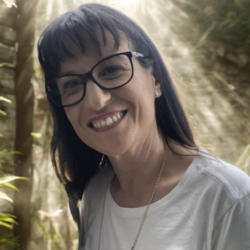
About the Author: .Magda Mizzi spins tales of shattered worlds and fierce survivors. A lifelong fan of post-apocalyptic fiction, she sets her stories in the haunting beauty of Western Sydney’s riverbanks and the rugged Blue Mountains—landscapes she grew up exploring.

When she’s not teaching English or encouraging young writers, she’s crafting her next dystopian twist.

Thank you, Magda, for this insight into how post-apocalyptic stories can help lead our students to critical thinking!

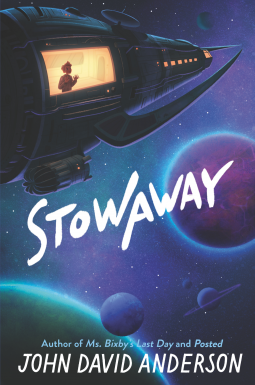
Blog Tour with Review: Stowaway by John David Anderson

Share

Stowaway
Author: John David Anderson
Published August 3rd, 2021 by Walden Pond Press

Summary: The beloved author of Posted and Ms. Bixby’s Last Day returns with the first book in a coming-of-age sci-fi duology about Leo, a kid trying to navigate the galaxy in order to save his family—and, possibly, the planet Earth.

When scientists discover a rare and mysterious mineral buried in the Earth’s crust, they have no idea that it just happens to be the most valuable substance in the entire universe. It’s not long before aliens show up to our little corner of the galaxy offering a promise of protection, some fabulous new technology, and entry into their intergalactic coalition—all in exchange for this precious resource. A material so precious that other alien forces are willing to start a war over it. A war that soon makes its way to Earth.

Leo knows this all too well. His mother was killed in one such attack, and soon after, his father, a Coalition scientist, decides it would be best for them to leave Earth behind. It’s on this expedition that their ship is attacked, Leo’s father is kidnapped, and Leo and his brother are stranded in the middle of space. The only chance they have is for Leo to stow away on a strange ship of mercenary space pirates bound for who knows where and beg the captain to help him find his father.

But the road is dangerous, and pirates, of course, only look out for themselves. Leo must decide who to trust as he tries to stay alive and save his family, even as he comes to understand that there aren’t many people—human or alien—that he can count on in this brave new universe.

Praise: “The Mandalorian meets Guardians of the Galaxy in this fast-paced space adventure that will have readers turning the pages as they are pulled into a unique yet strangely familiar world that reflects our own. This series opener is an ideal pick for middle-grade sci-fi fans.” – Booklist, starred review 

“This novel not only provides an otherworldly adventure, but a sincere tale about dealing with loss, finding bravery, and navigating the complexity of war. VERDICT: A page-turning space adventure that deals with complex issues.” – School Library Journal

“Anderson spins a fast-paced tale of piracy among the stars. Featuring a winning cast of misfits who stumble into unexpected kinship, Anderson employs warm humor and pop culture references to ground the narrative against cosmic-level stakes and underlying commentary about exploitation and the cost of war.” – Publishers Weekly

“Leo’s narration aches with pathos but also provides moments of humor and finally ends on a cliffhanger. A heartfelt adventure.” – Kirkus

About the Author: John David Anderson is the author of many highly acclaimed books for kids, including the New York Times Notable Book Ms. Bixby’s Last DayPostedGrantedOne Last Shot, and Stowaway. A dedicated root beer connoisseur and chocolate fiend, he lives with his wonderful wife, two frawesome kids, and clumsy cat, Smudge, in Indianapolis, Indiana. You can visit him online at www.johndavidanderson.org.

Review: There are very few authors that I have encountered that can write across genres and do it well. John David Anderson is one of those authors. I have read almost all of his books and they include fantasy, realistic fiction, and sci-fi, and all are so well done and so different than each other. Stowaway adds another awesome title to his works list.

Once again, Anderson is able to mix adventure, humor, and seriousness in a way that only he can to have the reader reflect on death, choices after loss, mental health, first impressions, and war while also making us laugh about snoring, clothing, descriptions of gyurt, and bad (GOOD!) puns.

And you will love the world-building in this one. Anderson did a great job of making the universe as vast and diverse as it is but not making it all so complicated that the reader cannot keep up with the planets and species.

But I think my favorite thing about this book is the characters. Each character is intriguing, has its own back story, and is so much more than you at first realize. And this is not just Leo’s character, it is all of the characters in the book. I love Baz and his crew, I love Leo and his family, and I love all of the aliens & humans that Leo meets along the way, good and bad! And I assume we’ll get to know even more in the 2nd book!

Teachers’ Tools for Navigation: On John David Anderson’s website, you can find writing prompts specifically for Stowaway: 

Hi All! John David Anderson here. If you’re like me, you like to ponder the really deep existential questions challenging humanity, such as, is there other intelligent life out there in the galaxy, and if so, are they friendly or do they want to eat us? And if they eat us, will they find us gamey or surprisingly moist and tender? What kinds of flavorings will they use? Have they heard of garlic?

Also if you are like me, you like to write down some of your thoughts when you are pondering what kind of meal you might make for our future alien overlords. So with that in mind I’ve penned a few writing prompts to get you started. You can use these to write a story, a novel, a poem, a list of things you should do to prepare for the impending invasion—whatever. The important thing is to use your imagination and have fun.

  • Imagine you are told that you have to leave Earth on a spaceship and you aren’t sure when you will return. All essentials such as clothes, food, toiletries, and medicine will be provided for you. Otherwise you are allowed to take one backpack with you. What do you put in your pack and why?
  • Imagine aliens show up at our doorstep tomorrow and bring with them all kind of advanced technology, the likes of which we’ve only dared to dream. What is one piece of technology or scientific advancement you would want the aliens to give us and why?
  • Imagine you and your sibling (or best friend) are both stricken by some terrible disease that only gives you days to live, but you are given one pill that you’re told might cure the disease. Would you take the pill yourself or give it to this other important person in your life (note: these are the only two available options. Don’t try to cut the pill in half or study it to determine its chemical compound in the hopes of recreating a duplicate)?
  • Describe the scariest possible alien you can imagine. Consider its appearance, temperament, technology, and desires. Give the alien a name. Now imagine it shows up at your doorstep.
  • Pick a necessity that we currently have plenty of (water, trees, daylight, rain, electricity) and imagine what the Earth would be like if what you chose suddenly disappeared. How would humans adjust to the sudden absence? What would it change about society and culture? What disastrous consequences could it lead to?

Discussion Questions: Here are some extra discussion questions I came up with:

  • How were the pirates different than what Leo, or you, assumed?
  • Why would Leo’s father make the choice that he made at the end of the book?
  • Although Baz wants to be a notorious, vicious pirate, I think he is much more than that. What words would you use to describe him as a character?
  • There are flashbacks throughout the book. Why did the author include these in the story?
  • Which side would you choose in the war? Is there a “right” side?
  • What do you think is going to happen in the next book?

Flagged Passages: Prologue “The explosion nearly threw them off their feet as the Beagle lurched sideways. The steel beams shuddered. Leo’s ears rang. The links blinked off, on , then off again, triggering the fluorescent yellow emergency lighting that ran along the floor. Leo put a hand on the wall to steady himself. His brother’s eyes shone like moons. “What was that?”

The question was answered with a second explosion, the ship quaking again. Every alarm screamed at once. Leo stumbled, falling into his brother’s ready arms. From down the corridor he could hear the crew of the Beagle shouting to one another, though it was impossible to hear anything over the ship’s wounded bleating until the captain’s voice echoed over the coms.

“Attention crew of the Beagle. We are under attack. Security personnel report to the bridge immediately. Engineering to the drive chamber.”

Leo looked at his brother, still holding him tight. “Did she just say we’re under attack?”

Gareth nodded, then looked sideways, startled by the sound of boot heels clomping down the hall.

Leo knew the sound. He’d learned to recognize the rhythm of his father’s footfalls. Like the sound of his brother’s snoring or his mother’s pensive sighs. Leo spied his father turning the corner, his eyes falling on him and Gareth, pressed together. Dr. Calvin Fender’s face softened, then hardened again. He spoke in a whirlwind. “What are you two doing out here? Didn’t you hear what Captain Saito said? You need to hide. Hurry!”

Their father pointed to the nearest door, leading to an empty bunk room barely half the size of the one the Fenders shared. He hustled Gareth and Leo into a corner, his white lab coat flapping on both sides like broken wings. Leo could tell he was scared–he could see it in his father’s eyes, even if he couldn’t hear it in his voice.

His father was seldom scared.”

Read This If You Love: Bloom by Kenneth Oppel, The Dark Side of Nowhere by Neal Shusterman, Children of Exile by Margaret Peterson Haddix, or if you are just a huge fan of John David Anderson

Recommended For: 

classroomlibrarybuttonsmall

Stop by the other Blog Tour Stops!

August 15, 2021 Nerdy Book Club
August 17, 2021 Writer’s Rumpus
August 23, 2021 A Library Mama
August 24, 2021 Unleashing Readers
August 26, 2021 Satisfaction for Insatiable Readers

Signature

**Thank you to Walden Pond Press for a copy for review!!**

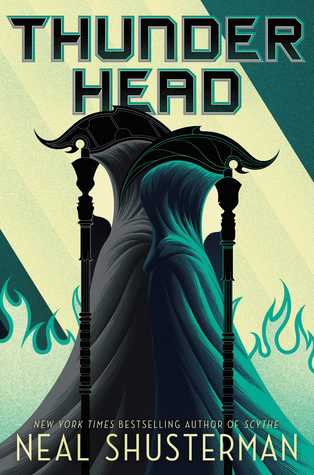
Thunderhead by Neal Shusterman

Share

Thunderhead
Author: Neal Shusterman
Published: January 9, 2018 by Simon & Schuster

Guest Review by Natalia Sperry

Summary: Rowan and Citra take opposite stances on the morality of the Scythedom, putting them at odds, in the second novel of the chilling New York Times bestselling series from Neal Shusterman.

Rowan has gone rogue, and has taken it upon himself to put the Scythedom through a trial by fire. Literally. In the year since Winter Conclave, he has gone off-grid, and has been striking out against corrupt scythes—not only in MidMerica, but across the entire continent. He is a dark folk hero now—“Scythe Lucifer”—a vigilante taking down corrupt scythes in flames.

Citra, now a junior scythe under Scythe Curie, sees the corruption and wants to help change it from the inside out, but is thwarted at every turn, and threatened by the “new order” scythes. Realizing she cannot do this alone—or even with the help of Scythe Curie and Faraday, she does the unthinkable, and risks being “deadish” so she can communicate with the Thunderhead—the only being on earth wise enough to solve the dire problems of a perfect world. But will it help solve those problems, or simply watch as perfection goes into decline?

Review: Thunderhead packs a punch as a conceptually compelling and action-packed follow up to award-winning Scythe. While at times it moves slowly and teeters on the precarious edge of “middle book syndrome.” Its expansion of the world of the Scythdome helps the book feel more well-rounded. Despite the action, Thunderhead shines most in its explorations of democracy and the implications of AI technology.

Citra’s questioning of identity, though immediately rooted in her struggle between her civilian past and scythedom, provides a good example of identity searching for teen readers. For Citra and Rowan, the stakes are high– despite the novel’s focus on the guiding AI of the Thunderhead, the fate of the world rests not on the shoulders of the political technology or the Scythe’s government, but on the teenage protagonist’s shoulders. Though Thunderhead didn’t invent the trope of teens saving the world, in 2018 it feels all the more prevalent.

Teacher’s Tool For Navigation: As a sequel, Thunderhead will primarily be useful in addition to classroom libraries. However, in discussing the Arc of a Scythe series as a whole, Thunderhead raises interesting questions of power dynamics in politics, democracy, and the role of AI technology. If Scythe is already a text you’ve considered using in literature circles, a discussion about the themes raised in the sequel could provide an interesting supplement to the unit.

Discussion Questions:  Is the Thunderhead justified? Is the Scythedom?  In what ways is the world of the Scythes in MidMerica and beyond a dystopia or utopia?

Flagged: “You may laugh when I tell you this, but I resent my own perfection. Humans learn from their mistakes. I cannot. I make no mistakes. When it comes to making decisions, I deal only in various shades of correct.” (Chapter 4).

Read This If You Loved: Scythe by Neal Shusterman, Illuminae by Amie Kaufman, Jay Kristoff, This Savage Song by Victoria Schwab

Recommended For: 

classroomlibrarybuttonsmall 

RickiSig

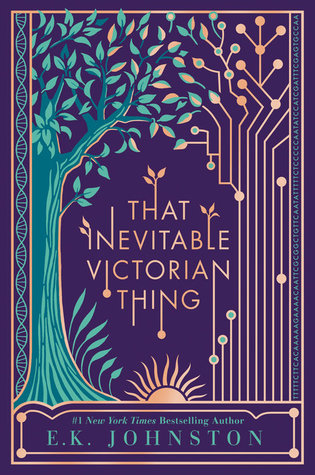
That Inevitable Victorian Thing by E. K. Johnston

Share

That Inevitable Victorian Thing
Author: E. K. Johnston
Published: October 3, 2017 by Dutton

Guest Review by Kaari von Bernuth

Goodreads Summary: Set in a near-future world where the British Empire was preserved, not by the cost of blood and theft but by effort of repatriation and promises kept, That Inevitable Victorian Thing is a novel of love, duty, and the small moments that can change people and the world.

Victoria-Margaret is the crown princess of the empire, a direct descendent of Victoria I, the queen who changed the course of history two centuries earlier. The imperial practice of genetically arranged matchmaking will soon guide Margaret into a politically advantageous marriage like her mother before her, but before she does her duty, she’ll have one summer incognito in a far corner of empire. In Toronto, she meets Helena Marcus, daughter of one of the empire’s greatest placement geneticists, and August Callaghan, the heir apparent to a powerful shipping firm currently besieged by American pirates. In a summer of high-society debutante balls, politically charged tea parties, and romantic country dances, Margaret, Helena, and August discover they share an unusual bond and maybe a one in a million chance to have what they want and to change the world in the process —just like the first Queen Victoria.

My Review: The futuristic setting of this novel that wasn’t a dystopia was very intriguing to me. Most of the futuristic novels that I’ve read have featured dystopian societies, so it was refreshing to have something that worked. I really enjoyed the multiple perspectives from the different characters, and became personally invested in their lives and experiences. I’d find myself hurting for Helena as she struggled to reconcile her identity, and rooting for August to do the right thing. In some way, all of the characters have to struggle to come of age and develop their identity based on who they want to be. 

However, I wish that this novel had placed a little more effort on the ending. While the rest of the novel had dealt with realistic challenges that an adolescent might face, the ending seemed rather contrived, and less realistic like the rest of the novel. The solution proposed at the end of the novel is not a solution that an adolescent in current society could replicate and learn from, which was disappointing.

Teachers’ Tools for Navigation: This book poses great questions about racism (or rather the eradication of racism), as well as questions of morality. It also would be great for discussions about the influence that society can have on your life verses the influence that you decide for your life. I think that this book would be a great addition to a classroom library for kids to enjoy, or a book to be used in a reading circle. It’s engaging and could lead to interesting discussions, especially about the futuristic government and setting of the novel, and the aforementioned topics of racism, morality, and societal influence vs self. However, I do think that other novels cover these topics in a better way, which is why I wouldn’t recommend it for large classroom discussions.  

Discussion Questions: Is this novel a utopia? Dystopia? Does it fit either criteria?; How is race approached in this novel? Is there racism in the society?; What is the role of colonialism in this novel?; What is the role of the Computer? Do you think this is a good advancement?; What does the computer lack?; What morality questions does this novel pose?

We Flagged: “The Computer is sufficient if you want to know your future without taking into account your soul. I don’t mean in the eternal sense, but in the worldly. The Computer can tell you if your genes are prone to carcinoma or if you might be six feet tall, but it cannot tell you if you will enjoy dancing or if you will prefer cake to pie. I would argue that the latter is more important in terms of a long and healthy relationship” (p. 254).

Read This If You Loved: Matched by Allie Condie; Delirium by Lauren Oliver; The Luxe by Anna Godbersen; The Selection by Kiera Cass

Recommended For:

classroomlibrarybuttonsmall  

  RickiSig

**Thank you to Kaari for reviewing this book!**

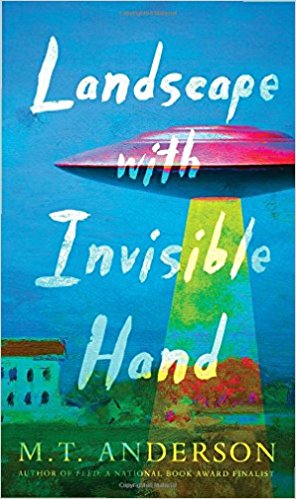
Landscape with Invisible Hand by M. T. Anderson

Share

Landscape with Invisible Hand
Author: M. T. Anderson
Published: September 12, 2017 by Candlewick

Summary: National Book Award winner M. T. Anderson returns to future Earth in a sharply wrought satire of art and truth in the midst of colonization.

When the vuvv first landed, it came as a surprise to aspiring artist Adam and the rest of planet Earth – but not necessarily an unwelcome one. Can it really be called an invasion when the vuvv generously offered free advanced technology and cures for every illness imaginable? As it turns out, yes. With his parents’ jobs replaced by alien tech and no money for food, clean water, or the vuvv’s miraculous medicine, Adam and his girlfriend, Chloe, have to get creative to survive. And since the vuvv crave anything they deem “classic” Earth culture (doo-wop music, still-life paintings of fruit, true love), recording 1950s-style dates for the vuvv to watch in a pay-per-minute format seems like a brilliant idea. But it’s hard for Adam and Chloe to sell true love when they hate each other more with every passing episode. Soon enough, Adam must decide how far he’s willing to go – and what he’s willing to sacrifice – to give the vuvv what they want.

Review: 

  • Futuristic, dark satire that is an unusual, intelligent social commentary
  • Forces readers to think deeply about their personal, social, and political lives
  • Somewhat non-linear story with an interesting layout: each chapter has a title that corresponds with the artwork created by the main character
  • Stylistically, Anderson chooses every word with intention. The text is a 149-page novella that features chapters that can be taught instructionally as vignettes.

Teachers’ Tools for Navigation:  Teachers might ask students to begin by looking closely at the text for short passages that they find particularly interesting or inspiring. Students might write a one-pager that a) unpacks the passage they chose, and b) examines the passage through the lens of a topic that they find particularly interesting and relevant. For example, they might connect a passage to the following topics which are relevant in the text:

Art

Automation

Capitalism

Classism

Economy

Entrepreneurship

Existentialism

Extraterrestrial Life

Health Care

Immigration

Love

Politics

Poverty

Sickness

Nostalgia

Unemployment

After the students have written several one-pagers and explored a variety of topics, they might select one topic that interests them most. They can research scholarship about the topic and look across the entire text for relevant passages.

Sample research paper topics:

Examining economic disparities and classism within Landscape with Invisible Hand

Finding the soul: M.T. Anderson’s treatment of love and art in Landscape with Invisible Hand

Discussion Questions: Do you think M. T. Anderson had a purpose for writing this text?; What kind of social commentary does this text offer?; What does it tell us about love? Society? Humanity?; How does Anderson use art to enhance the story?; How is the text structured? How does this enhance your reading?

Flagged Passage: “We are tiny figures, faceless, pointing at wonders, provided for scale, no lives of our own, surveying the landscape that has engulfed us all.”

Read This If You Loved: Feed by M. T. Anderson; Books by Scott Westerfeld; The House of the Scorpion by Nancy Farmer

Recommended For:
 classroomlibrarybuttonsmall

Thank you, Candlewick!

RickiSig

Top Ten Tuesday: Top Ten Dystopian Books We’ve Ever Read

Share

top ten tuesday

Top Ten Tuesday is an original feature/weekly meme created at The Broke and the Bookish. The feature was created because The Broke and Bookish are particularly fond of lists (as are we!). Each week a new Top Ten list topic is given and bloggers can participate.

 Today’s Topic: Top Ten Dystopian Books We’ve Ever Read

So many dystopian books have come out over the last few years, but these are our favorites.

Ricki

Kellee listed The Hunger Games and Divergent series, and I am relieved. There were too many books on my list, and I couldn’t narrow them down! Please know that those two series are obvious favorites for me, but here are five others I loved just as much.

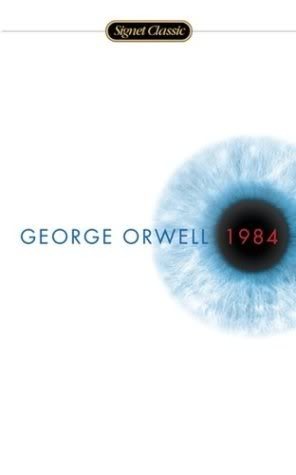
1. 1984 by George Orwell

1984

I loved teaching this book. My students always fell in love with it. It takes a bit of time to get into it, but it is so foundational as a dystopian text. Every time I read it, I remember all of the reasons I love it.

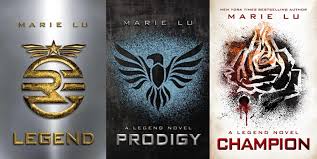
2. The Legend series by Marie Lu

legend series

I found this series to be more engaging than most of the other dystopian series. There is an excellent balance of plot and characterization.

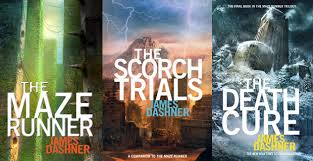
3. The Maze Runner series by James Dashner

maze runner series

This series creates readers. Because of these books, my most reluctant readers fell in love with reading.

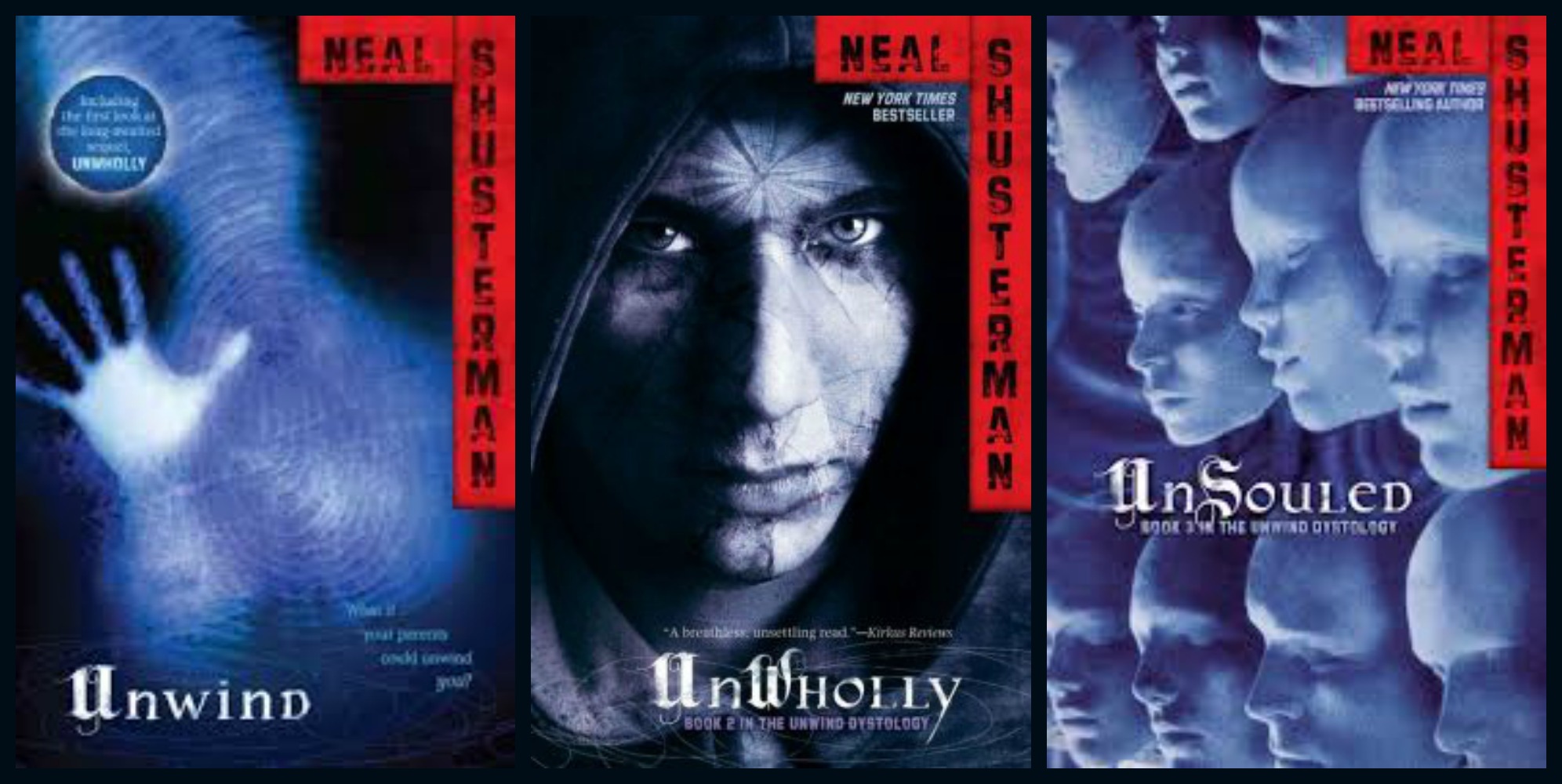
4. Unwind series by Neal Shusterman

unwind series

Admittedly, I haven’t read the third (or fourth) book in this series, but I enjoyed it very much. I need to get my hands on a copy of them!

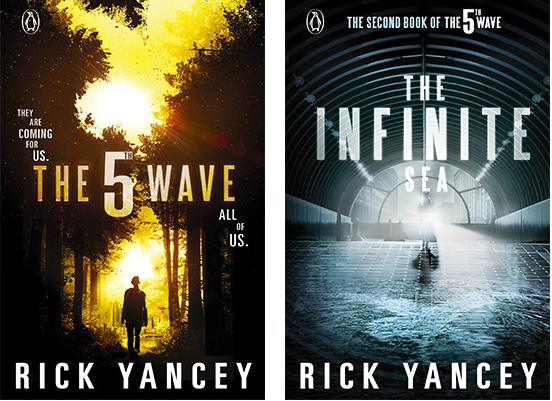
5. The 5th Wave series by Rick Yancey

5th wave series 2

Oh, Rick Yancey, you are such a wonderful writer. I have only read the first book in this series so far, but it was fantastic. (As you can tell, I don’t like to read entire series!)

Kellee

I am going to put these in order of when I read the first of the series. Although some of these may be a big cliche, these are some of the best dystopian books (series) out there.

1. The Giver series by Lois Lowry

the giver quartet

If you follow the blog, you know that The Giver is my favorite book of all time, so it is no surprise that it would end up on this list. I feel like The Giver is so powerful without being over the top. It truly makes you think and see your world differently.

2. Among the Hidden series by Margaret Peterson Haddix

shadow children books

I read the Shadow Children series with my brother because he read the first one and insisted I read it too (he is a third child, so I am sure it affected him in an intense way). Unlike The GiverAmong the Hidden is so suspenseful and lays a foundation for an action-packed series.

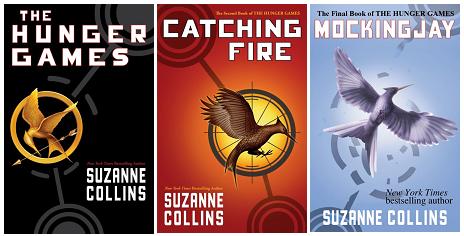
3. The Hunger Games series by Suzanne Collins

hunger games trilogy

I read The Hunger Games right when it came out, and I was blown away by the basis of the plot and the strong characters. I couldn’t put it down and waited impatiently for each of the books in the trilogy. Although it has become uber popular, I think it is deserving of all of the hype.

4. The Chaos Walking series by Patrick Ness

chaos walking

Chaos Walking is a perfect title for this series because so much craziness happens in these three books! When I read The Knife of Never Letting Go, I was blown away by Ness’s craft. It is such a unique series, unlike any other book I’ve read, and probably one of the best books/series I’ve ever read.

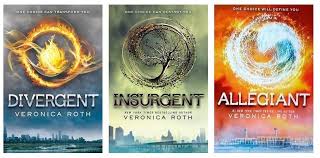
5. Divergent series by Veronica Roth

divergent trilogy

I love this series. I don’t know why it just grabbed me, but it did. Maybe it is that it takes place in Chicago. Maybe it seems realistic to me with unintentional segregation that still exists today. Maybe it is because it reminded me of The Giver and Hunger Games mixed together. Maybe it is because Tris and Four are just such complex and kick butt characters. Whatever the reason is, I devoured these books and was so impressed which all three of them.

Which dystopian titles are your favorite? 

RickiSig and Signature

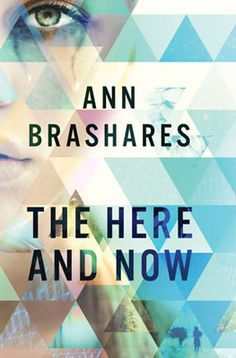
The Here and Now by Ann Brashares

Share

the here and now

The Here and Now
Author: Ann Brashares
Published: April 8, 2014 by Delacorte Press

Summary: An unforgettable epic romantic thriller about a girl from the future who might be able to save the world… if she lets go of the one thing she’s found to hold on to.

Follow the rules. Remember what happened. Never fall in love.

This is the story of seventeen-year-old Prenna James, who immigrated to New York when she was twelve. Except Prenna didn’t come from a different country. She came from a different time—a future where a mosquito-borne illness has mutated into a pandemic, killing millions and leaving the world in ruins. 

Prenna and the others who escaped to the present day must follow a strict set of rules: never reveal where they’re from, never interfere with history, and never, ever be intimate with anyone outside their community. Prenna does as she’s told, believing she can help prevent the plague that will one day ravage the earth. But everything changes when Prenna falls for Ethan Jarves.

Review: I particularly loved the first half of this book. While time travel is at the heart of this text, I think it would be a great book to give to readers who love dystopian fiction. Prenna’s memory of her futuristic world was fascinating to me. At times, I found Brashares to be a bit didactic, but overall, the book is very well-written and will entice readers from the first page. I always enjoy reading books about time travel because my mind spins as I try to grapple with the paradox time travel provides. If we change the past, will we exist in the future? And how can this work, if we are living in this previous time? Ah! My brain hurts. I enjoyed this book because it made me think.

Teacher’s Tools for Navigation: Similar to my review of All Our YesterdaysI think students would have a lot of fun selecting a time period to travel to, and perhaps, picking one event in history they would change and how it might impact the future. This could develop into a research project, and I can imagine there would be fantastic interdisciplinary connections with the subject of history. Alternatively (or additionally), teachers could link this text with the subject of science–where students research ways we are destroying our planet.

Discussion Questions: How are we destroying our planet? Do you think Ann Brashares’ prediction of the future is accurate? What is Brashares’ tone in this text?; If you could travel in time, what is one event in history that you would change and why? How might it change events in the future?

We Flagged: “People here act like the great things have already been lost, but they are wrong. They have so much still to lose” (Chapter Three).

“I guess memory is a deep well, and you don’t know what’s down there until you lower the bucket and start hauling it up” (Chapter Fifteen).

Please note: The above quotes are from the advanced reader copy. The quotes may have changed with publication.

Read This If You Loved: All Our Yesterdays by Cristin Terrill, When You Reach Me by Rebecca Stead, The Time Machine by H.G. Wells, The Giver by Lois Lowry, Legend by Marie Lu, Divergent by Veronica Roth

Recommended For:

 closereadinganalysisbuttonsmall litcirclesbuttonsmall classroomlibrarybuttonsmall

RickiSig