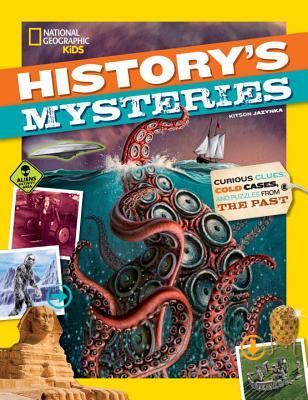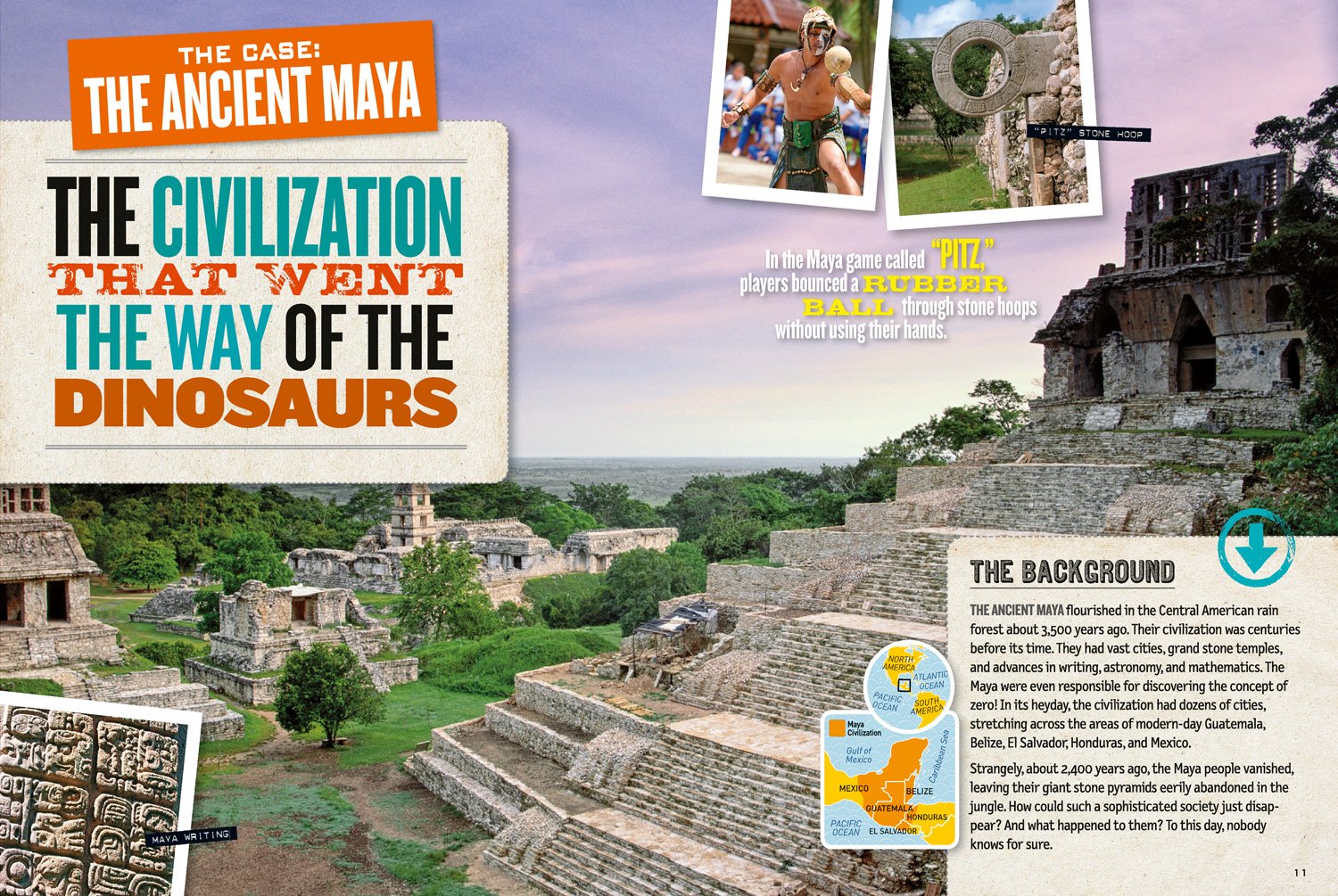
National Geographic Kids: History’s Mysteries: Curious Clues, Cold Cases, and Puzzles from the Past by Kitson Jazynka

Share

Histories Mysteries
Author: Kitson Jazynka
Illustrators: Various
Published October 17th, 2017 by National Geographic Society

Summary: Why were the Easter Island heads erected? What really happened to the Maya? Who stole the Irish Crown Jewels? The first book in this exciting new series will cover history’s heavy-hitting, head-scratching mysteries, including the Lost Colony of Roanoke, the Bermuda Triangle, the Oak Island Money Pit, Stonehenge, the Sphinx, the disappearance of entire civilizations, the dancing plague, the Voynich manuscript, and so many more. Chock-full of cool photos, fun facts, and spine-tingling mysteries.

ReviewI feel like a broken record, but I just feel like it needs to be repeated: National Geographic Kids are publishing some truly phenomenal books for kids to read independently and/or for teachers to use in the classrooms. This one is no exception! It is beautifully structured with each mystery being shared with background, more details, clues, and theories along with illustrations and photographs. It is broken up into 7 chapters with mysteries all within the chapter around a specific topic. The chapter topic’s are: vanished civilizations, unexplained deaths and disappearances, creatures of myth and legend, freaky phenomena, mystifying monuments, cryptic codes and lost languages, & treasure troves.

 Teachers’ Tools for Navigation: I felt very similarly about this book as I did about What Would Happen?, another National Geographic book–I just want to bring it into a classroom and let kids just inquire about any of the mysteries that tickle their fancy! How much fun it’d be to just allow students to get obsessed with a mystery then share it with their classmates.

Discussion Questions: 

  • Which mystery do you want to do more research on?
  • [For each mystery] Do you agree with the theory shared? OR Which of the theories shared do you agree with?
  • What other mysteries would you like to learn more about?

Flagged Passages: 

Read This If You Love: History, Mysteries, National Geographic Kids books

Recommended For: 

Stop by Kid Lit Frenzy to check out the link up of other Nonfiction Picture Book reviews!

Signature

**Thank you to Media Masters Publicity for providing a copy for review!**

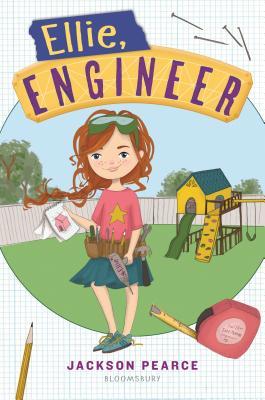
Ellie Engineer by Jackson Pearce

Share

Ellie Engineer
Author: Jackson Pearce
Published January 16th, 2018 by Bloomsbury USA

Summary: Ellie loves to build. She’s always engineering new creations with the help of her imagination and her best friend Kit. Unfortunately, with Kit’s birthday just around the corner, the French-braiding machine Ellie built turns out to be more of a hair-knotting machine. What’s Ellie going to do? Luckily, the girls overhear Kit’s mom talking about Kit’s surprise – it must be the dog she’s always wanted! Ellie is struck with inspiration: she’ll build Kit the best doghouse ever! The project quickly becomes more than just a present for Kit – it builds a bridge between Ellie and those bothersome neighbor boys, as well as the other handy girls in her class.

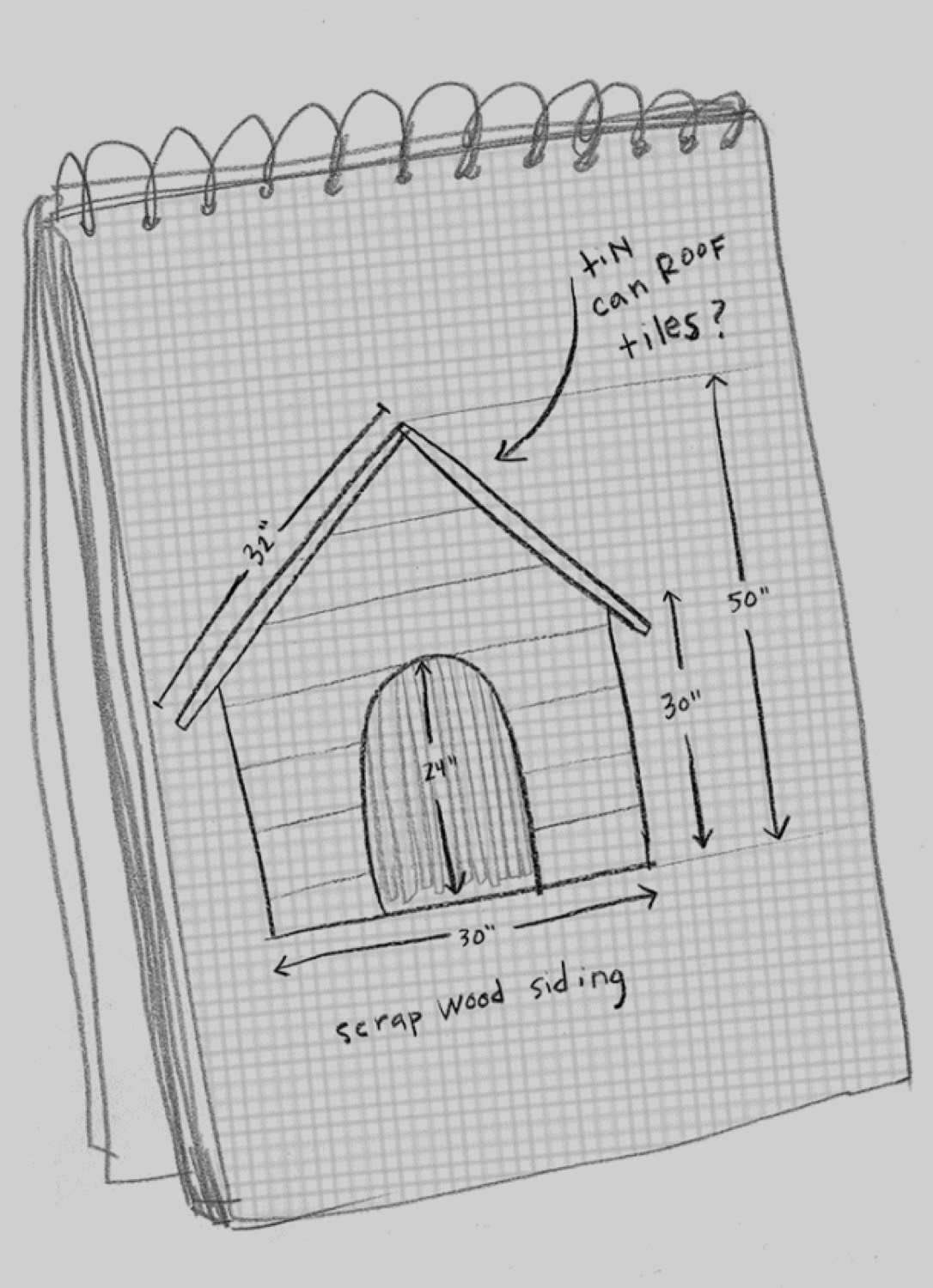
Designed to look like Ellie’s notepad, with pencil-on-graph-paper illustrations of her projects interspersed throughout the book, Ellie, Engineer inspires creative and crafty girls to get hands-on with their imagination. Ellie’s projects range from the simple (using a glass against a wall to amplify sounds), to the practical (the doghouse), to the fantastical (a bedroom security system featuring spikes) – encouraging readers to start small but think big. Ellie’s parents support her engineering experiments, with important safety tips sprinkled throughout, and her relationship with Kit is a glowing example of positive female friendship. They share their hobbies – Ellie likes to get her hands dirty, while Kit prefers ballet – reminding readers that there’s no wrong way to be a girl. Ellie’s hand-drawn tool guide at the end explains basic tools in accessible terms, rounding out this fun and funny adventure, and giving girls everything they need to be their own Ellie!

About the Author: Jackson Pearce lives in Atlanta, Georgia. She is the author of a series of teen retold fairy-tales, including Sisters RedSweetlyFathomless, and Cold Spell, as well as two stand-alones, As You Wish and Purity. As J. Nelle Patrick, she is the author of Tsarina. In addition to The Doublecross and The Inside Job, her middle grade novels include Pip Bartlett’s Guide to Magical Creatures, co-written with Maggie Stiefvater. Visit her at www.jacksonpearce.com and @JacksonPearce (Twitter and Instagram).

ReviewI so often hear stories from women my age that share that they loved science or nature or math when they were younger but that they were steered away from that those interests in little ways that they don’t even remember, but they do remember just not loving science anymore. This is exactly the scenario that has raised awareness in the need for STEM or STEAM books, programs, and role models for young girls. Ellie Bell is a perfect girl for this mission! Ellie wants to be an engineer when she grows up and even has her own workshop where her parents give her free reign to work on projects (with the safer tools–power tools require supervision). Pearce has even set up Ellie Engineer to include drawings and plans for Ellie’s projects to show readers how Ellie goes from an idea to a project. And Ellie’s story is one that all readers will connect with as well, so it is a win-win in narrative and STEM!

Teachers’ Tools for Navigation: Books like Ellie need to first be found more in classrooms and libraries. That is step one! After that, I think that using Ellie’s process for keeping track of her projects and how she brainstorms and plans could be an amazing exemplar for a classroom of students who are embarking on project-based learning.

Discussion Questions: 

  • Which of Ellie’s projects would you build?
  • How has the way Ellie’s parents parented helped Ellie become the engineer she is?
  • How did Ellie’s assumptions about the boys in her neighborhood stop her from seeing their real personalities?
  • What does Toby teach us in the story? The Presidents? Kit?
  • Compare and contrast Kit’s mom and Ellie’s mom.

Flagged Passages: 

Ellie’s plan for building her friend a dog house:

Read This If You Love: Ellie Ultra by Gina Bellisario; Juana and Lucas by Juana Medina; Bea Garcia by Deborah Zemke; Cody and the Fountain of Happiness and Cody and the Mysteries of the Universe by Tricia Springstubb; Upside-Down Magic by Sarah Mlynowski, Lauren Myracle, and Emily Jenkins; The Trouble With Ants by Claudia Mills;Lola series by Christine Pakkala; Salem Hyde series by Frank Cammuso; Here’s Hank series by Henry Winkler and Lin Oliver; Bramble and Maggie series by Jessie HaasFlora & Ulysses by Kate DiCamillo; Eleanor series by Julie Sternberg

Recommended For: 

Signature

**Thank you to Casey at Media Masters and to Bloomsbury for providing a copy for review!**

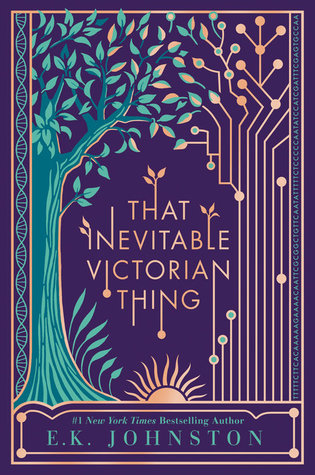
That Inevitable Victorian Thing by E. K. Johnston

Share

That Inevitable Victorian Thing
Author: E. K. Johnston
Published: October 3, 2017 by Dutton

Guest Review by Kaari von Bernuth

Goodreads Summary: Set in a near-future world where the British Empire was preserved, not by the cost of blood and theft but by effort of repatriation and promises kept, That Inevitable Victorian Thing is a novel of love, duty, and the small moments that can change people and the world.

Victoria-Margaret is the crown princess of the empire, a direct descendent of Victoria I, the queen who changed the course of history two centuries earlier. The imperial practice of genetically arranged matchmaking will soon guide Margaret into a politically advantageous marriage like her mother before her, but before she does her duty, she’ll have one summer incognito in a far corner of empire. In Toronto, she meets Helena Marcus, daughter of one of the empire’s greatest placement geneticists, and August Callaghan, the heir apparent to a powerful shipping firm currently besieged by American pirates. In a summer of high-society debutante balls, politically charged tea parties, and romantic country dances, Margaret, Helena, and August discover they share an unusual bond and maybe a one in a million chance to have what they want and to change the world in the process —just like the first Queen Victoria.

My Review: The futuristic setting of this novel that wasn’t a dystopia was very intriguing to me. Most of the futuristic novels that I’ve read have featured dystopian societies, so it was refreshing to have something that worked. I really enjoyed the multiple perspectives from the different characters, and became personally invested in their lives and experiences. I’d find myself hurting for Helena as she struggled to reconcile her identity, and rooting for August to do the right thing. In some way, all of the characters have to struggle to come of age and develop their identity based on who they want to be. 

However, I wish that this novel had placed a little more effort on the ending. While the rest of the novel had dealt with realistic challenges that an adolescent might face, the ending seemed rather contrived, and less realistic like the rest of the novel. The solution proposed at the end of the novel is not a solution that an adolescent in current society could replicate and learn from, which was disappointing.

Teachers’ Tools for Navigation: This book poses great questions about racism (or rather the eradication of racism), as well as questions of morality. It also would be great for discussions about the influence that society can have on your life verses the influence that you decide for your life. I think that this book would be a great addition to a classroom library for kids to enjoy, or a book to be used in a reading circle. It’s engaging and could lead to interesting discussions, especially about the futuristic government and setting of the novel, and the aforementioned topics of racism, morality, and societal influence vs self. However, I do think that other novels cover these topics in a better way, which is why I wouldn’t recommend it for large classroom discussions.  

Discussion Questions: Is this novel a utopia? Dystopia? Does it fit either criteria?; How is race approached in this novel? Is there racism in the society?; What is the role of colonialism in this novel?; What is the role of the Computer? Do you think this is a good advancement?; What does the computer lack?; What morality questions does this novel pose?

We Flagged: “The Computer is sufficient if you want to know your future without taking into account your soul. I don’t mean in the eternal sense, but in the worldly. The Computer can tell you if your genes are prone to carcinoma or if you might be six feet tall, but it cannot tell you if you will enjoy dancing or if you will prefer cake to pie. I would argue that the latter is more important in terms of a long and healthy relationship” (p. 254).

Read This If You Loved: Matched by Allie Condie; Delirium by Lauren Oliver; The Luxe by Anna Godbersen; The Selection by Kiera Cass

Recommended For:

classroomlibrarybuttonsmall  

  RickiSig

**Thank you to Kaari for reviewing this book!**

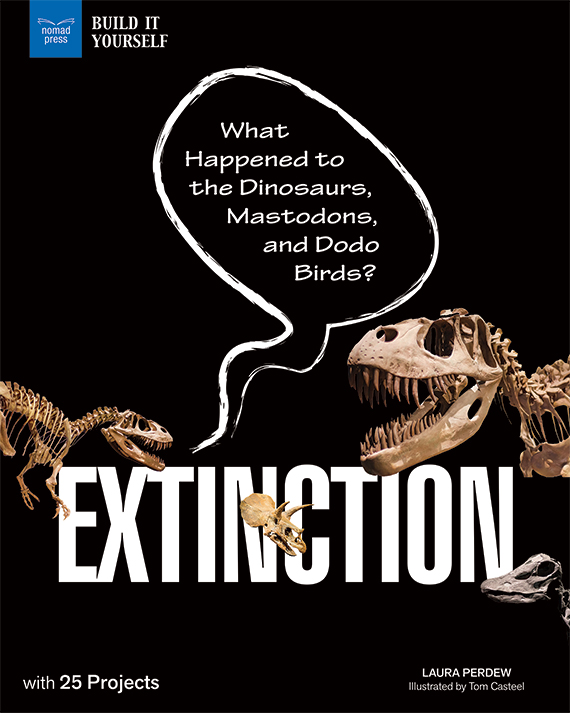
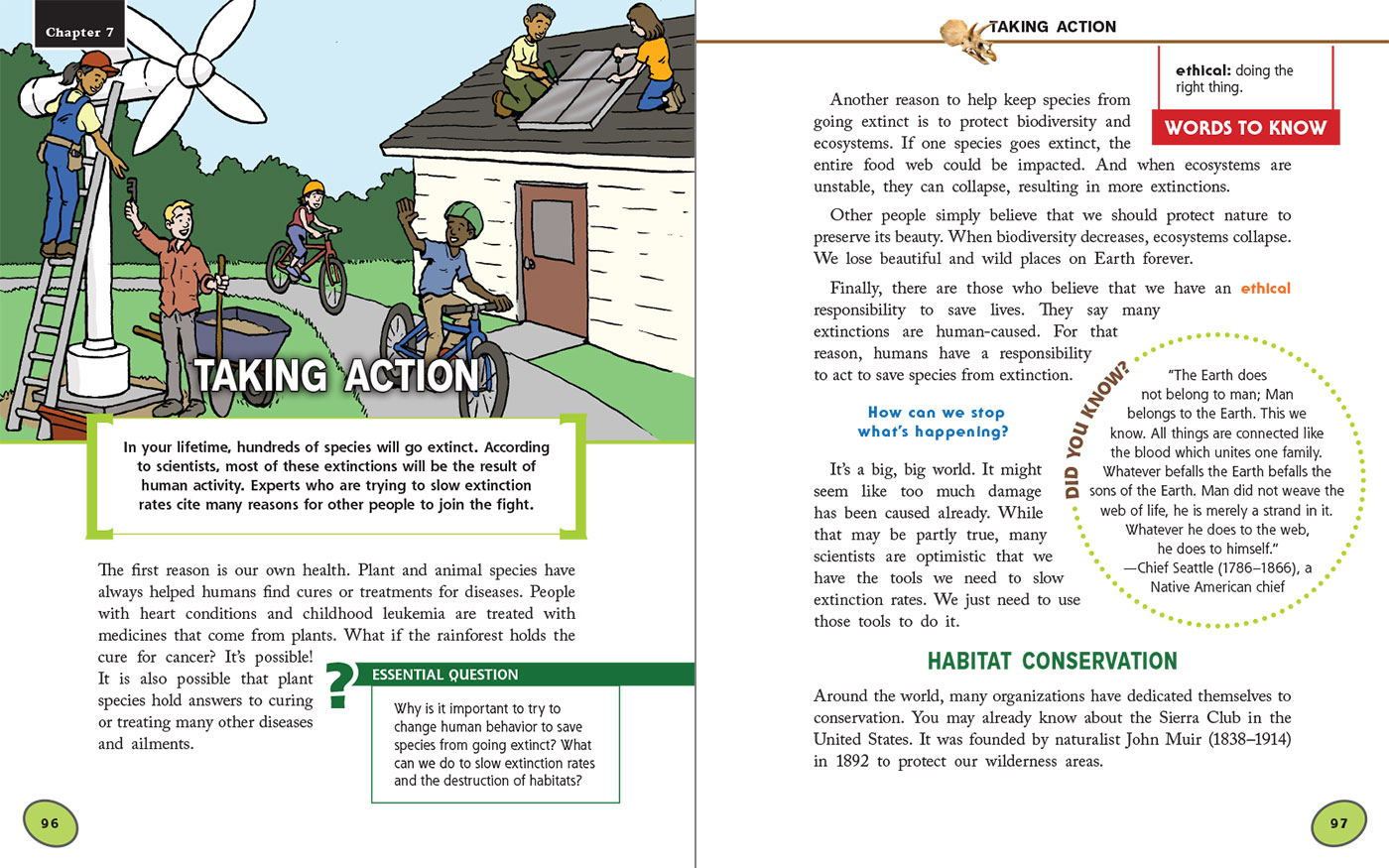
Author Guest Post!: “Talking to Kids about the Sixth Mass Extinction” by Laura Perdew, Author of Extinction: What Happened to the Dinosaurs, Mastodons, and Dodo Birds?

Share

“Talking to Kids About the Sixth Mass Extinction”

I think that when most people hear the word ‘extinction,’ dinosaurs come to mind first. But the truth is, billions of species have gone extinct in Earth’s 4.5-billion-year history.

Many of these were background extinctions, a normal part of life on this planet. There have also been five mass extinctions—events that wiped out more than 50 percent of species at one time. Perhaps the most well-known of these is the asteroid that hit the earth 66 million years ago and wiped out those dinosaurs.

What is not well-known, however, is that there is a sixth mass extinction currently underway.

The normal background extinction rate for mammals is one extinction every 100 years. But in the past 100 years, there have been more than 40 extinctions. Looking at all species on Earth, everything from the smallest microbes to the largest mammals, scientists estimate that the current extinction rates are 1,000 to 10,000 higher than normal. But unlike the previous five extinctions, this one is our fault.

We spend a lot of time talking about climate change, but we also need to pay more attention to the species that are dying off because of that and other human-related causes.

It’s time to spread the word. Before I wrote Extinction: What Happened to the Dinosaurs, Mastodons, and Dodo Birds?, there weren’t any books for kids that talked about the sixth extinction or what they can do to help slow this trend. Kids need to know what’s happening to the planet they are inheriting. And they need to be empowered to take action. In some ways, it seems a daunting task to stop extinctions. But history has proven that one person can make a difference in the world, and that together we can do even more.

It’s important to start the discussion with kids and to show them that even at their age, there are things they can do to create positive change. Here are some ideas!

Activity: Start the Discussion

If the scientists’ predictions are right, three out of four species will go extinct over the next few hundred years. What will the world be like? Take students outside so they can get a better understanding of this prediction. Have students list the different species they observe. Encourage them turn over rocks, crawl in a garden, think about what is underground, or look in a tree. Remind them to include insects, mammals, reptiles, amphibians, birds, trees, and plants. Can they find 10? 20?

Once they have a list, ask students to cross out three out of every four of those species on it. For this activity, those crossed off species are the ones that will become extinct.

Questions for discussion:

  • Are the extinct species part of the food chain? What will happen to the other species that rely on that species for food or shelter?
  • What will happen to species when their main predators die off?
  • Can the ecosystem can be healthy, even with those missing species? Why or why not?
  • Can some of the surviving species adapt? What adaptations would they need to survive?

 Activity: Taking Action

Another way to get kids thinking about extinction is to have them think about their own carbon footprint. Start with a discussion of the terms “carbon footprint” and “carbon emissions.” Then, discuss and list the things humans do that require burning fossil fuel. Each of these activities contributes to global warming and ocean acidification, and ultimately to increased extinction rates. But there are things we can do to reduce carbon emissions.

There are many online resources that can help students research this, including NASA’s Climate Kids website (https://climatekids.nasa.gov/), and other carbon footprint calculators. The purpose of the activity is to have students identify their own actions that contribute to carbon emissions and what actions they can take to reduce their carbon footprint.

Questions for discussion:

  • What can you do in your home or community to reduce your carbon footprint?
  • Will making changes in how you live be easy or difficult?
  • Calculate the carbon emission reduction if everyone in the class took one step to reduce their carbon footprint. What would the savings be if each student could also convince three other families to do the same thing? How about if 1,000 families in the community took steps to lower emissions?

Activity: Planning for the Future

Tell students they are a team of engineers for a new town that’s going to be built. All that’s there right now is a mix of prairie and forest. Their job is to make it as green as possible. They must find a way to balance the need of humans and the needs of the environment and the species that live there.

Start by researching what makes a city green. Also, students must consider all the things in a town that people need—homes, schools, food stores, etc. They can even discuss their own town or city as an example of things you want to include (or omit) in the town they design and build. Possible activities include collages, models, dioramas, or drawing. The focus should be on the green details.

Questions for discussion:

  • What was easy about creating a green city? Difficult?
  • What was difficult about balancing the needs of the environment with the needs of people?
  • What can be done in their own town or city to move it towards being more green?

Discussions and research lead to awareness. Awareness leads to action. And action creates change!

Extinction: What Happened to the Dinosaurs, Mastodons, and Dodo Birds? (with 25 Projects)
Published September 15th, 2017 by Nomad Press

About the Book: Have you seen a dodo bird recently? Do you have mastodons playing in your back yard? Not likely—these species are extinct. In Earth’s 4.5-billion-year history, more than 5 billion species have gone extinct, some of them at the same time. In Extinction: What Happened to the Dinosaurs, Mastodons, and Dodo Birds? readers ages 9 to 12 learn about the scientific detective work scientists perform to find the culprit behind mass extinctions, including the present-day, sixth mass extinction.

About the Author: Laura Perdew is an author, writing consultant, and former middle school teacher. She has written more than 15 books for the education market on a wide range of subjects, including the animal rights movement, the history of the toilet, eating local, and the Great Pacific Garbage Patch. She is a long-time member of the Society of Children’s Book Authors and Illustrators. Laura lives in Boulder, Colorado.

Thank you, Laura, for pushing us to start this conversation with our students!

 and

Teaching Guide with Activities and Discussion Questions for Charlie and Mouse and Grumpy by Laurel Snyder

Share

Charlie & Mouse & Grumpy
Author: Laurel Snyder
Illustrator: Emily Hughes
Published October 3rd, 2017 by Chronicle

Summary: In this heartwarming sequel to Laurel Snyder’s beginning chapter book Charlie & Mouse, the two brothers enjoy a special visit from their grandpa, Grumpy. Follow along as they discuss being medium, pounce each other, sing the wrong songs, build blanket forts, and more. Paired with effervescent illustrations by Emily Hughes, this touching, funny celebration of imagination and bonding will enchant readers young and old.

View our post about Charlie and Grumpy book one (with teaching guide) here!

Activities include: 

Bedtime Songs

Grumpy doesn’t know the right bedtime song to sing for Charlie and Mouse, so he tries to guess. Using the clues he gave, we can assume he was talking about “Circle Game” by Joni Mitchell, “Hush, Little Baby,” and possibly “Jump in the River” by Sinead O’Connor. Play these three songs for your students.

  • Which do you like the most? Why?
  • Which do you think would be the best bedtime song? Why?

After Grumpy guesses, Charlie sings the right bedtime song to Grumpy.

  • We don’t know what song Charlie sang, but what song would you have sung to Grumpy?

After gathering all of the bedtime songs discussed as a group, have students analyze the different songs (theirs and the three Grumpy mentioned) by having them (in groups or independently):

  • Identify rhyming words within the songs.
  • Does the author repeat any words? Why did the author choose to repeat these words?
  • How does the author supply rhythm in the song?

Infer

There are a few times in the book that the text doesn’t tell you what happened, but you can infer from the illustrations what occurred such as p. 17, p. 27, and p.37. Have students use the illustrations to see how each of these chapters concluded and have them write out what they see in the illustrations.

Rain

In the final chapter, it is raining while Charlie and Mouse say good-bye to Grumpy. Even though the rain seems to be happening because of the mood of the chapter, rain actually occurs because of the water cycle. After discussing the mood of the chapter (see discussion question), share the scientific reason for rain by sharing the water cycle. One activity that could be done to help students understand the water cycle is the “Simple Water Cycle in a Bag” experiment: http://www.rookieparenting.com/what-is-water-cycle/.

Discussion Questions include: 

  • The text never says that Grumpy is Charlie and Mouse’s grandfather, but you can infer he is. What clues from the text and illustration help you know that he is their grandfather?
  • In the final chapter, the author chose to have it be raining. Why does this type of weather make the most sense for this final chapter? What mood does it set for the chapter?
  • Using the clues throughout the book, how many days and nights did Grumpy stay with Charlie and Mouse? How did you know?

Teaching Guide Created by Me (Kellee): 

You can also access the teaching guide through Chronicle’s website here.

Recommended For: 

readaloudbuttonsmall classroomlibrarybuttonsmall closereadinganalysisbuttonsmall

Kellee Signature

Living Things and Nonliving Things: A Compare and Contrast Book by Kevin Kurtz

Share

nfpb2017

Nonfiction Wednesday

Nonfiction Picture Book Wednesday is hosted by Kid Lit Frenzy and was started to help promote the reading of nonfiction texts. Most Wednesdays, we will be participating and will review a nonfiction text (though it may not always be a picture book).
Be sure to visit Kid Lit Frenzy and see what other nonfiction books are shared this week!

Living Things and Nonliving Things: A Compare and Contrast Books
Author: Kevin Kurtz
Published September 10th, 2017 by Arbordale Publishing

Summary: Using a wide variety of stunning photographs, author Kevin Kurtz poses thought-provoking questions to help readers determine if things are living or nonliving. For example, if most (but not all) living things can move, can any nonliving things move? As part of the Compare and Contrast series, this is a unique look at determining whether something is living or nonliving.

Author Information: Award-winning author Kevin Kurtz holds degrees in English literature and elementary education and started his career by working at a marine biology lab. Since then, he has combined all of these experiences by working as an environmental educator and curriculum writer for organizations such as the South Carolina Aquarium, the Science Factory Children’s Museum, and the Center for Birds of Prey. Kevin has authored A Day in the DeepA Day on the Mountain, and A Day in the Salt Marsh for Arbordale. Kevin also wrote Uncovering Earth’s Secrets after spending eight weeks as the Educator at Sea aboard the marine geology research vessel JOIDES Resolution. Visit Kevin’s website for more information.

ReviewLiving Things and Nonliving Things is a great introduction to what makes something living. Kevin Kurtz uses bright photographs to illustrate his different points that will start great scientific conversations about different things in our world and what makes them living or nonliving. This text is going to be wonderful in classrooms within early STEAM lessons.

Teachers’ Tools for Navigation: Kurtz includes backmatter with permission to photocopy for class use which includes a glossary, discussion questions, an activity, and a “Living or Nonliving Checklist” all which are great resources for classrooms.

Arbordale Publishing also includes a 30-page cross curricular teaching activity guide available for the book:

Additionally, there is an interactive ebook available that reads aloud in English or Spanish and includes word highlighting and interaction with the animals.

Discussion Questions: 

  • What characteristics do living things have?
  • What are the differences between a living and nonliving thing?
  • What are some examples of nonliving things that include characteristics that living things have?

Flagged Passages: 

Read This If You Love: Science, Animals

Recommended For: 
classroomlibrarybuttonsmall closereadinganalysisbuttonsmall

Signature

**Thank you to Heather at Arbordale Publishing for providing a copy for consideration!**

Earth! My First 4.54 Billion Years by Stacy McAnulty

Share

nfpb2017

Nonfiction Wednesday

Nonfiction Picture Book Wednesday is hosted by Kid Lit Frenzy and was started to help promote the reading of nonfiction texts. Most Wednesdays, we will be participating and will review a nonfiction text (though it may not always be a picture book).
Be sure to visit Kid Lit Frenzy and see what other nonfiction books are shared this week!

Earth! My First 4.54 Billion Years
Author: Stacy McAnulty
Illustrator: David Litchfield
Published October 24th, 2017

Summary: “Hi, I’m Earth! But you can call me Planet Awesome.”

Prepare to learn all about Earth from the point-of-view of Earth herself! In this funny yet informative book, filled to the brim with kid-friendly facts, readers will discover key moments in Earth’s life, from her childhood more than four billion years ago all the way up to present day. Beloved children’s book author Stacy McAnulty helps Earth tell her story, and award-winning illustrator David Litchfield brings the words to life. The book includes back matter with even more interesting tidbits.

ReviewWow! This book went above and beyond my expectations! Think of it as Earth’s humorous autobiography. The voice that Stacy McAnulty gave Earth is perfect, and you learn things too! Although the book is silly and is told from Earth’s point of view, it is still a book that should be taken seriously because the knowledge it (and the back matter) holds is tremendous. It goes through the history of Earth is a truthful yet understandable way. Kids will leave the book knowing more than they did before but also really interested in learning more. Stacy McAnulty’s narrative with David Litchfield’s cartoonish illustrations lends itself to the perfect picture book for entertainment and information. Just check out the flagged passages to see why I say this is a must-get book!

Teachers’ Tools for Navigation: When Earth’s history is first introduced in elementary school, Earth! would be the perfect introduction book because it goes over the entire history in a way that students will pay attention to but also without dumbing down any of the information.

Discussion Questions: 

  • How did the author use text features throughout the book?
  • How did the author’s use of an unconventional narrator help you understand the history of Earth better?
  • What humorous parts of the book were your favorite? Why?
  • Using the ruler visual within the book, how much of Earth’s history have human’s inhabited? What else do you learn from this visual?
  • Read the back matter of the book. What else did Stacy McAnulty teach you in the back of the book?
  • What is something new you learned about Earth or the solar system in Earth!?
  • Would you classify the book as fiction or non-fiction? Why?

Flagged Passages: 

Read This If You Love: Science, Space, Picture books with humorous narrators like It’s Not Jack and the Beanstalk by Josh FunkNothing Rhymes with Orange by Adam Rex

Recommended For: 
classroomlibrarybuttonsmall closereadinganalysisbuttonsmall

Signature

**Thank you to Kelsey at MacMillan for setting up the blog tour for Earth!**