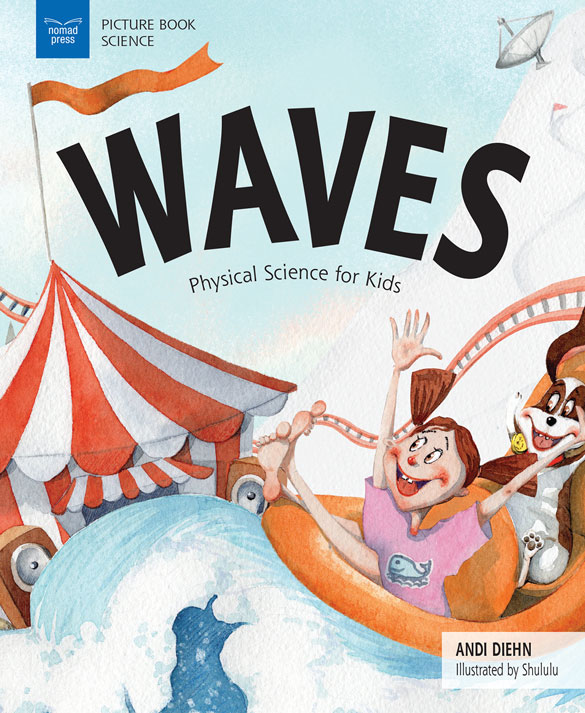
Picture Book Science Series: Physical Science for Kids by Andi Diehn

Share

Picture Book Science: Physical Science for Kids
Author: Andi Diehn
Illustrator: Shululu
Published March 1st, 2018 by Nomad Press

Series Summary: By combining children’s natural curiosity with prompts for keen observations and quick experiments, Physical Science for Kids provides a fun introduction for kids to the physical science that rules our world! Great for beginner readers or as a read aloud for younger children. Children are introduced to physical science through detailed illustrations paired with a nonfiction narrative that uses fun language to convey familiar examples of real-world connections.

  • Encourages the development of important skills, including observing, connecting, problem solving, and model testing.
  • Explores vocabulary, encouraging readers to make language arts connections and conclusions.
  • Visually stimulating, detailed illustrations make this an excellent choice as a read aloud for younger children.

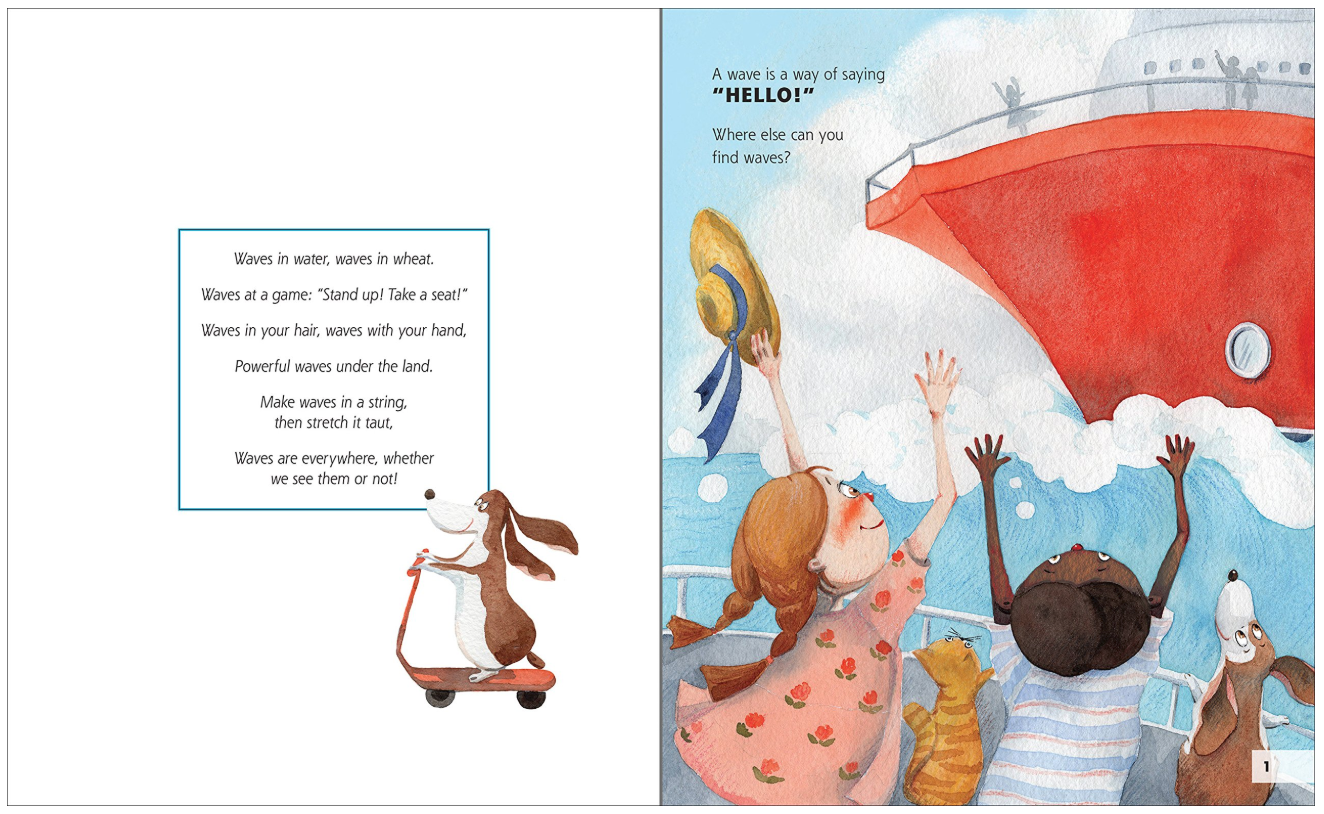
Waves Summary: You can find waves just about everywhere you look! Take a tour of the world of waves in this fun, illustrated introduction to the concept of waves and energy and their presence in our world. This installment in Picture Book Science encourages readers to observe lots of different kinds of waves, including those found in water, wheat, a baseball stadium, and even invisible waves!

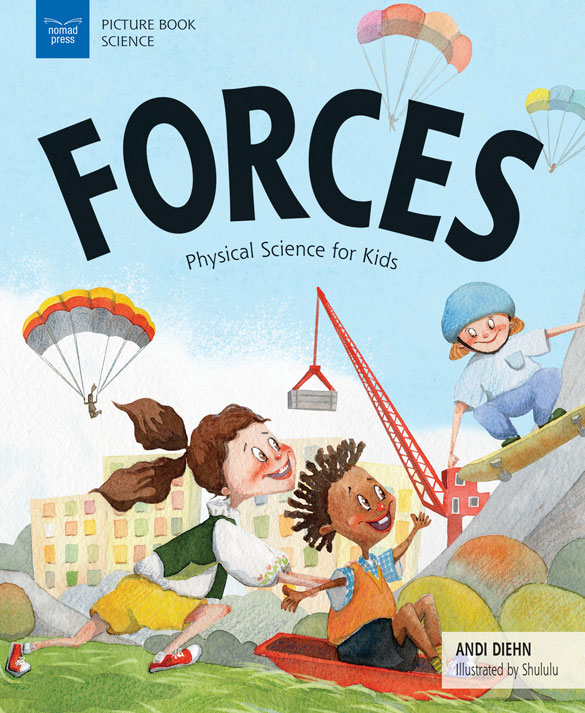
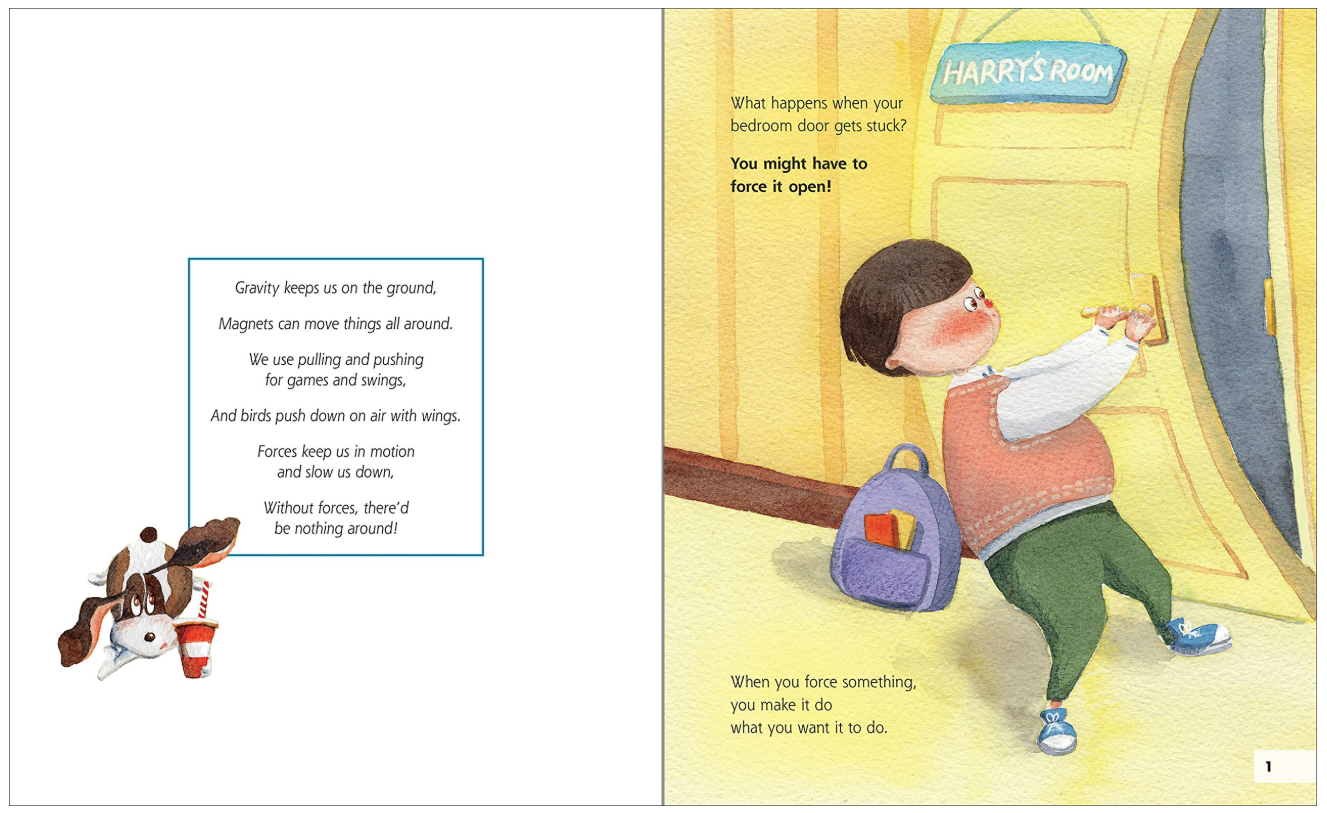
Forces Summary: Our world operates the way it does because of forces. Gravity, magnetism, pulling and pushing, and friction are some of the many forces that affect the way we move on Earth. They even affect the Earth itself-without gravity, the world would eventually fly apart! In Forces: Physical Science for Kids, readers  observe different types of forces, including gravity, magnetism, pulling, pushing, and friction.

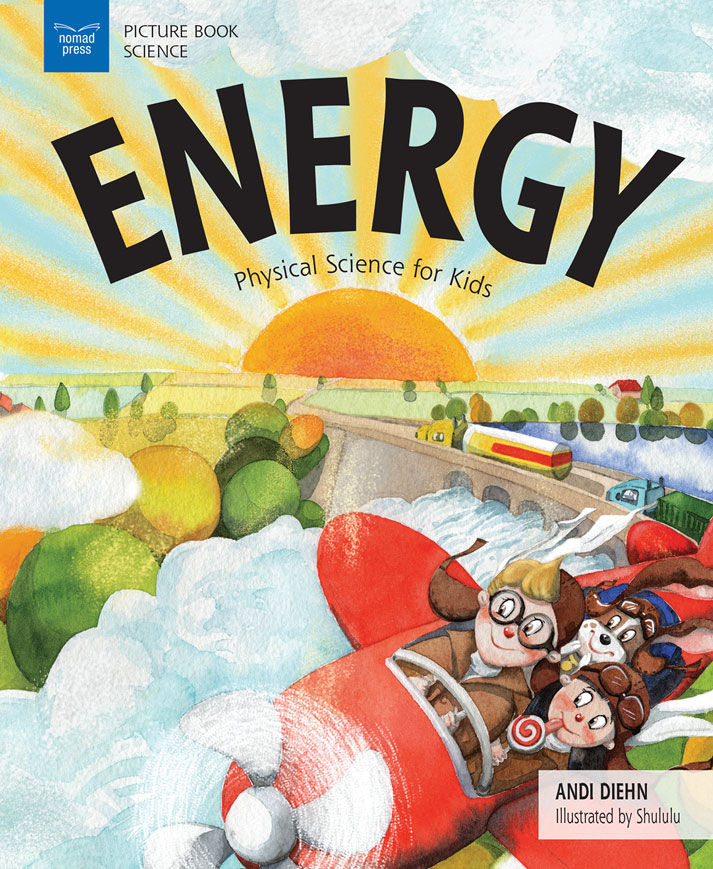
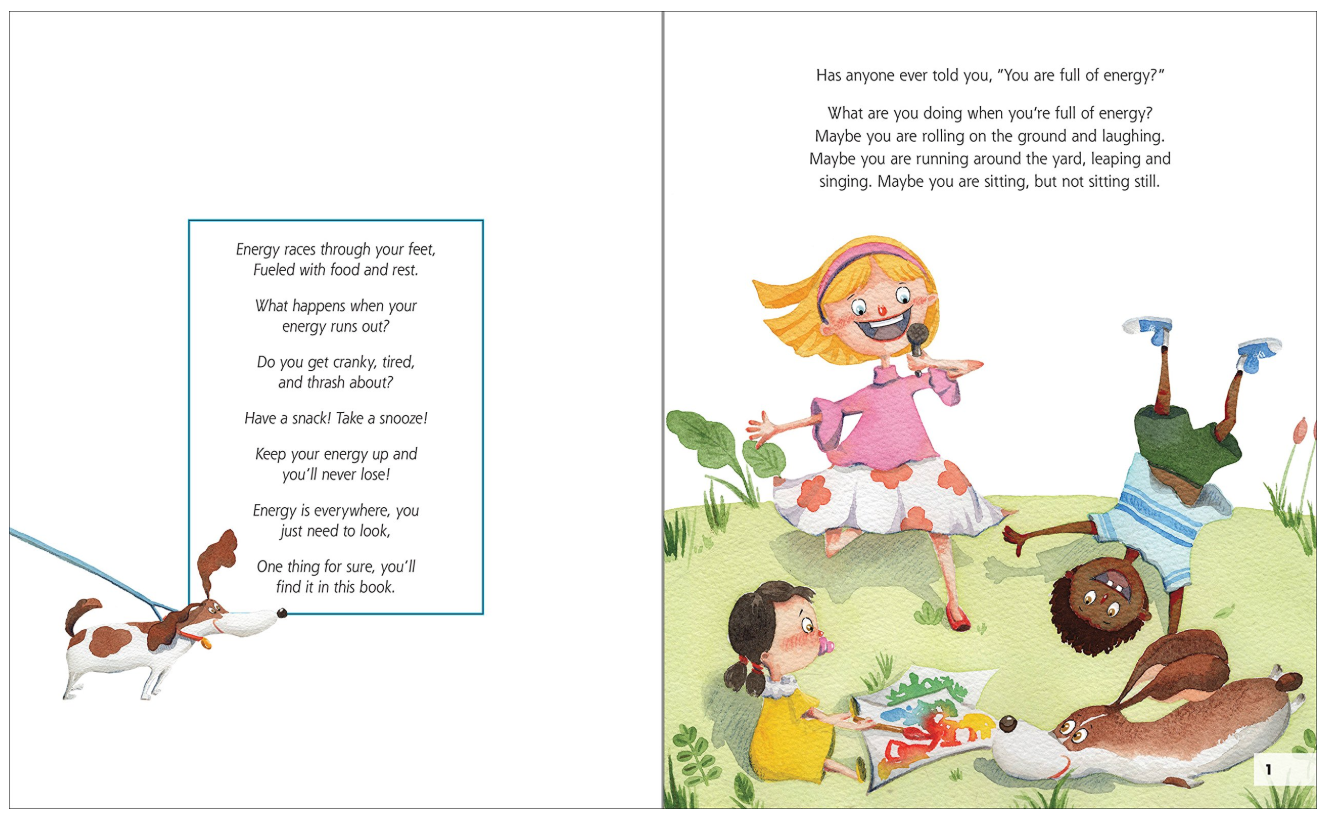
Energy Summary: When you feel like running, leaping, and singing, people might say you have a lot of energy. And you’re not the only one! Energy is the stuff that makes everything live and move. People, animals, plants-we all need energy to live! In Energy: Physical Science for Kids, readers discover different forms of energy, including heat, light, and chemical energy, that keep the world working and moving.

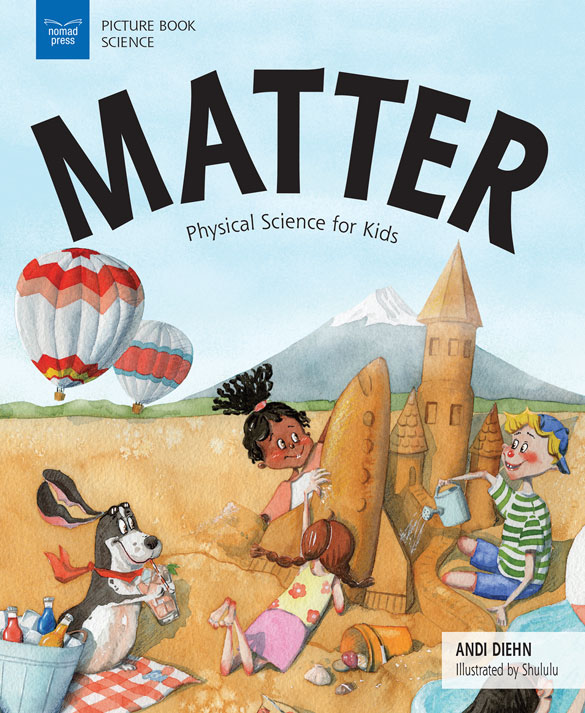
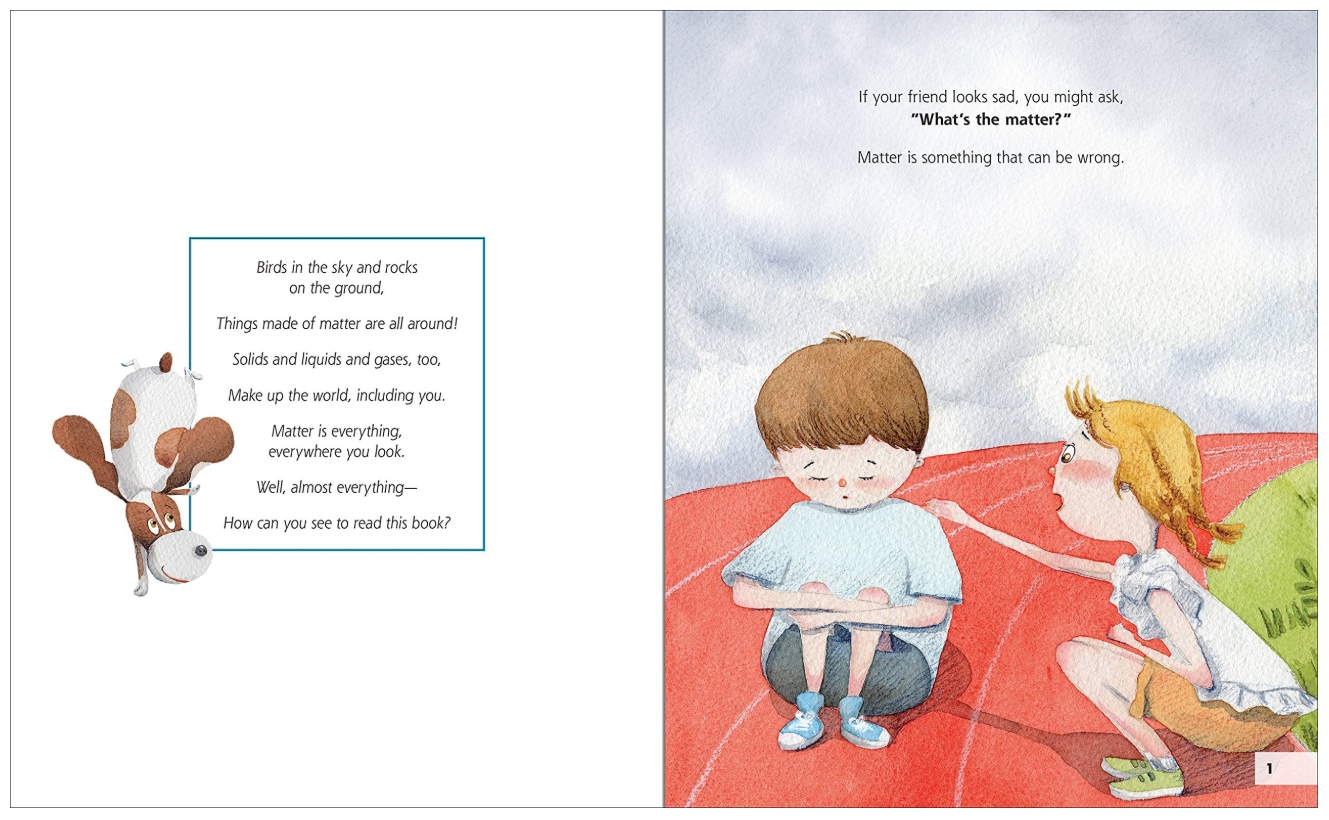
Matter Summary: Everything you can touch and hold is made up of matter-including you, your dog, and this book! Matter is stuff that you can weigh and that takes up space, which means pretty much everything in the world is made of matter! In Matter: Physical Science for Kids, readers  discover the basic building block of most of the material they come in contact with every day, including themselves-matter!

About the Creators: 

Andi Diehn is a writer, editor, and book critic with a BA in English and an MFA in Creative Writing from Vermont College. She has published dozens of articles, stories, and essays and spent many hours volunteering in her son’s classrooms. She lives in Enfield, New Hampshire, with her family.

Website: andidiehn.com
Facebook: facebook.com/andi.diehn
Twitter: twitter.com/lostinthree
Instagram: instagram.com/andiwritesbooks

Shululu (Hui Li) has always been driven by curiosity. She received a PhD in computational chemistry from the University of Chicago. Her research has been published in the world’s most influential science journals, including Science and Proceedings of the National Academy of Sciences. She is devoted to bringing joy and science to young readers through fun illustrations! She lives with her husband in New York, NY.

Website: shulululee.com
Twitter: twitter.com/shululustudio
Instagram: instagram.com/shulululee

Review: Young children have so many questions about the world and how everything works. Curiousity runs wild in their brains, but more than anything they just want to learn and absorb. This series is a must get for parents, classrooms, and libraries because it addresses many of the questions that kids have.

Each book begins with a poem that introduces the topic then is followed by lyrical text going through scientific information about the topic of the book. Mixed in with the text are “TRY THIS” sidebars with fun experiments for kids to take the text into the real world.

Teachers’ Tools for Navigation: Each of the books has a classroom guide!! The guides have Essential Questions for Before, During, and After Reading; Key Vocabulary; and Common Core Connections:

Classroom Guide for Waves

Classroom Guide for Forces

Classroom Guide for Energy

Classroom Guide for Matter

Discussion Questions: Example questions from the classroom guides:

  • How do we know something exists if we cannot see it?
  • What would the world be like if there was no energy?
  • How are forces created?
  • How are magnets and gravity related to each other?
  • How is energy related to waves?
  • How do science activities help you learn about energy?
  • The word “matter” can mean lots of different things. Can you think of other words that are the same but have different meanings?
  • How might we weigh things that are too large to hold in our hands or put on a scale?

Flagged Passages: 

Read This If You Love: Sharing science with children

Recommended For: 
classroomlibrarybuttonsmall 

Signature

**Thank you to Nomad Press for providing copies for review!**

Hedgehog Needs a Hug by Jen Betton

Share

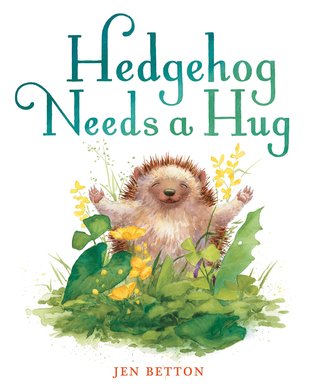
Hedgehog Needs a Hug
Author: Jen Betton
Published June 19, 2018 by Putnam

Goodreads Summary: Everyone needs hugs, even if they’re prickly.

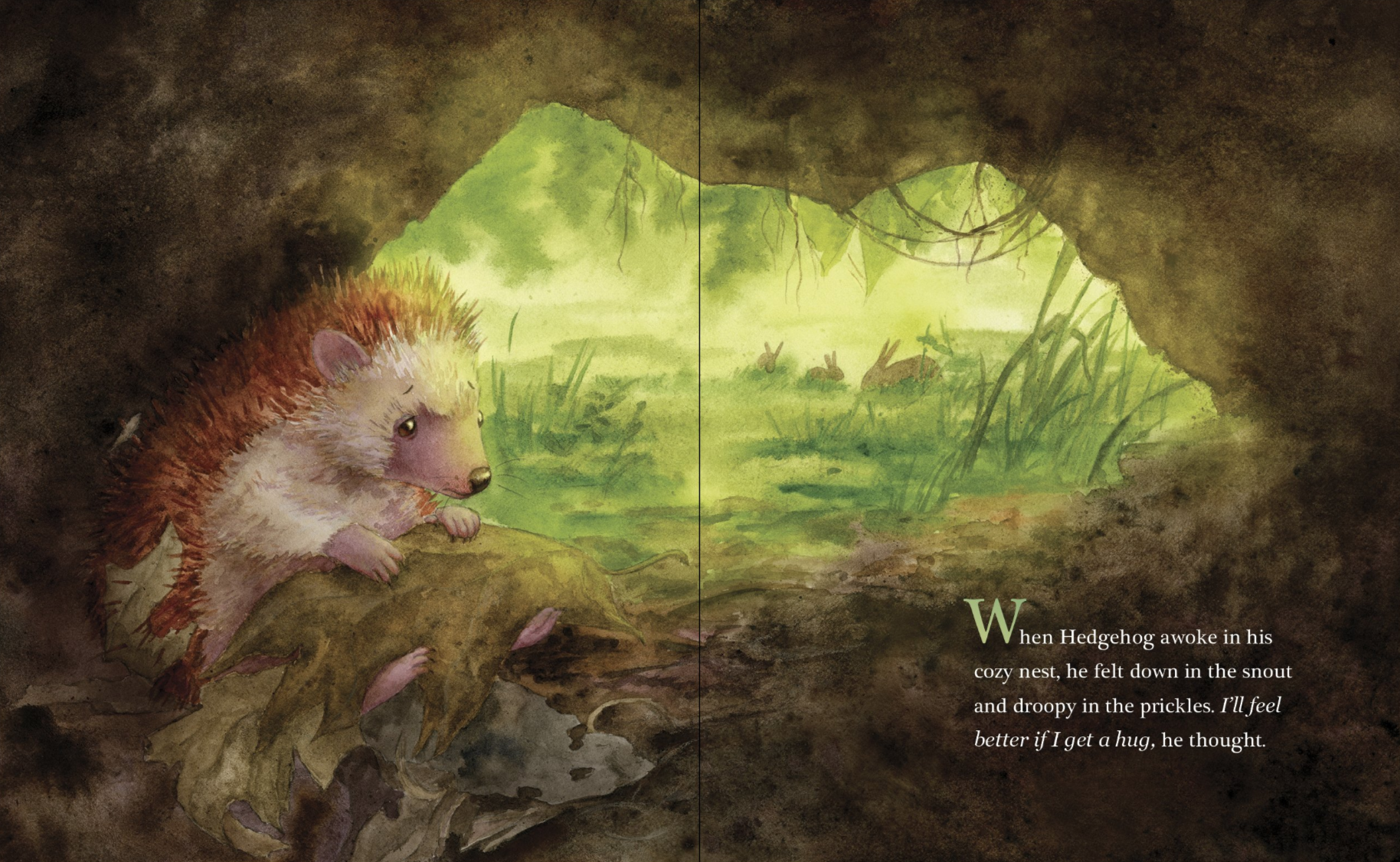
When Hedgehog wakes up feeling down in the snout and droopy in the prickles, he knows a hug will make him feel better. But none of his friends are eager to wrap their arms around Hedgehog’s prickles, and he’s too smart to fall for Fox’s sly offer.

Then Hedgehog gets a surprise: Another animal in the forest is feeling exactly the same way.

Luckily, both are kind and brave enough for the perfect hug.

My Review: I adored this book. It’s about a hedgehog who wakes up and feels down. He really, really needs a hug, and the other animals are clearly avoiding him because he is prickly. The book doesn’t say this, so it was fun to ask my son why he thought they were avoiding him. Then he meets skunk, and skunk needs a hug (but of course, skunk is stinky). This is a great book to teach kids about some of the ways in which they might unintentionally hurt people. 

Teachers’ Tools for Navigation: This is a great text to talk about how we treat others. I’d love to pair it with texts like Each Kindness by Jacqueline Woodson. Sometimes, we subtly hurt others without realizing it. A close analysis of the words and behaviors of characters in these two texts offers great potential for building classroom community and kindness.

Additionally, many of the defense quality of animals are addressed in the book which would make it a great elementary book to use cross-curricularly in science, reading, and community building.

Discussion Questions: How do the animals react to hedgehog? How does this make hedgehog feel?; What is hedgehog’s reaction to skunk? How are they similar and different?; How did the author use alliteration to make the rhythm of the text sing-songy?

We Flagged: 

Read This If You Loved: Each Kindness by Jacqueline Woodson (Kellee’s Review | Ricki’s Review), My Friend Maggie by Hannah E. Harrison, Unicorn Thinks He’s Pretty Great by Bob Shea, Endgame by Nancy Garden, Thirteen Reasons Why by Jay Asher,  The Silver Linings Playbook by Matthew Quick, Burn by Suzanne Phillips, The Perks of Being a Wallflower by Stephen Chbosky, Twisted by Laurie Halse Anderson

Recommended For: 
readaloudbuttonsmall classroomlibrarybuttonsmall

RickiSig

**Thank you to Penguin for sending us this book! I loved it.**

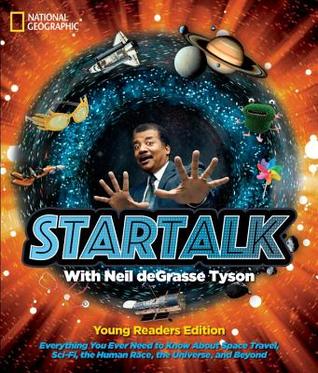
StarTalk with Neil deGrasse Tyson Young Readers Edition Edited by Shelby Alinsky

Share

StarTalk with Neil deGrasse Tyson
Editor: Shelby Alinsky
Published March 20th, 2018 by National Geographic Children’s Books

Summary: Now abridged for YA audiences, this beautifully illustrated companion to celebrated scientist Neil deGrasse Tyson’s popular podcast and National Geographic Channel TV show is an eye-opening journey for anyone curious about the complexities of our universe.

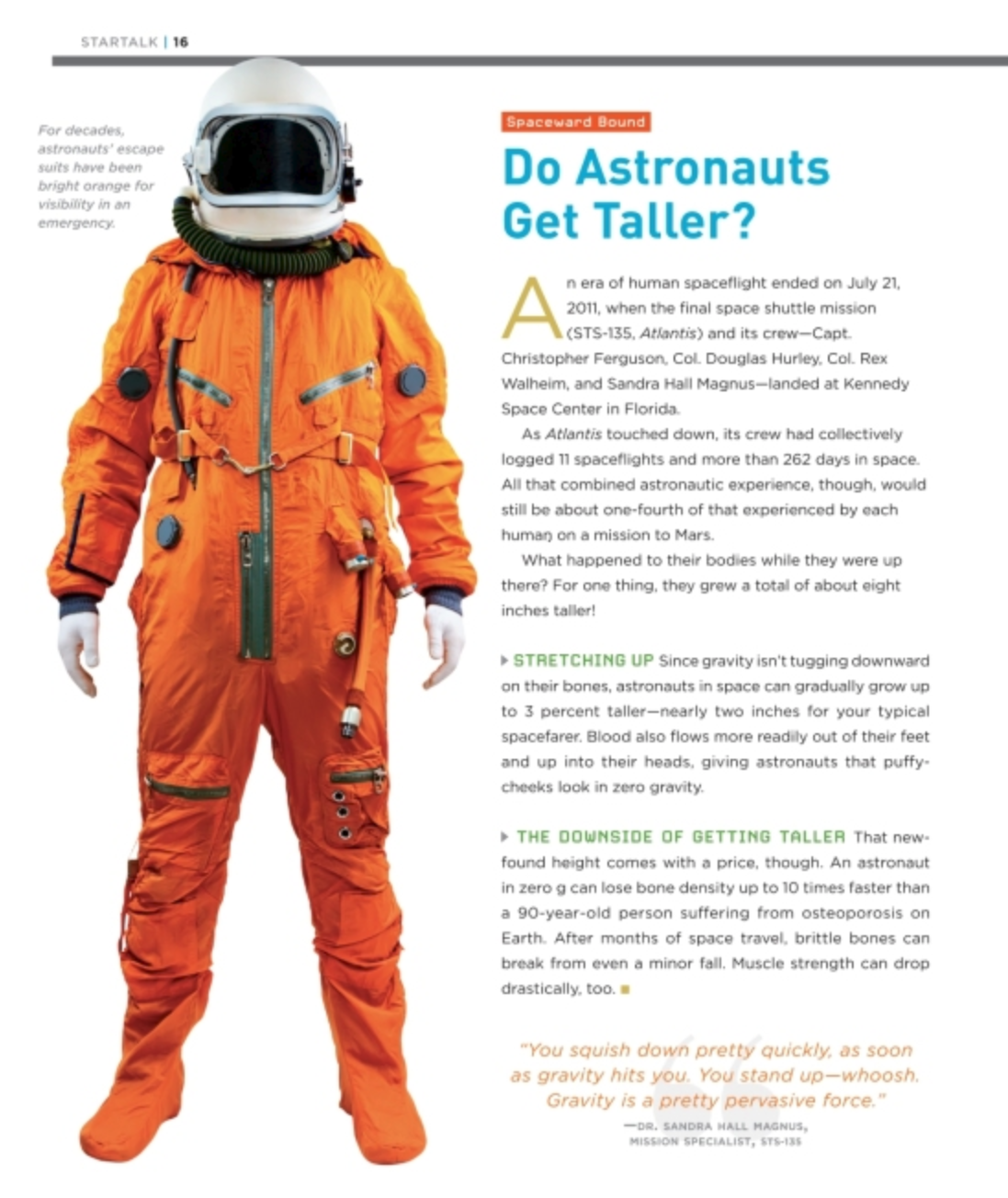
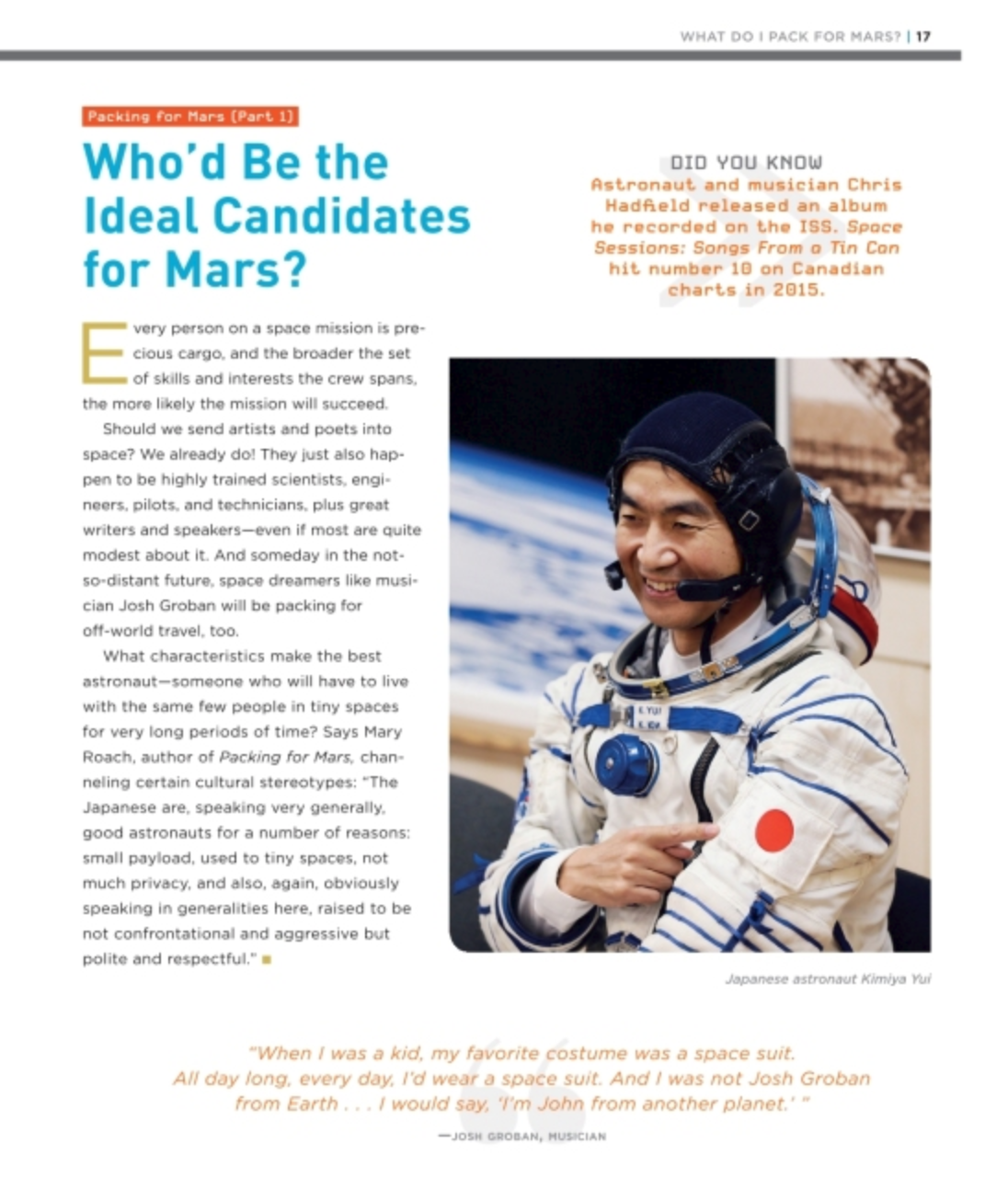
For decades, beloved astrophysicist Neil deGrasse Tyson has interpreted science with a combination of brainpower and charm that resonates with fans everywhere. In 2009, he founded StarTalk, the wildly popular podcast that became an Emmy-nominated talk show on the National Geographic Channel in 2015. Tyson’s pioneering book takes the greatest hits from the airwaves to the page in one smart, richly illustrated compendium for young adult readers. Featuring vivid photography, thought-provoking sidebars, enlightening facts, and fun quotes from science and entertainment luminaries like Bill Nye and Josh Groban, StarTalk reimagines science’s most challenging topics–from how the brain works to the physics of comic book superheroes–in a relatable, humorous way that will attract curious young readers.

Praise: “Most notable throughout the book, as on the original television show, are the connections between science and creativity, art, and wonder. Educational and entertaining, this will engage loyal followers and recruit new fans.”—Booklist

ReviewThis book is everything you would think a book by Neil deGrasse Tyson named after his National Geographic Channel’s late-night talk show and his podcast. Tyson mixes culture, creativity, and science in a fun and interesting way that will suck in readers of all kinds in.

I loved the structure of the book! The mix of Tyson’s answers to science-based questions, fun facts about the topics, extension activities, and all sorts of other fun text features! And the topics are so interesting! Split into space, planet earth, being human, and futures imagined, the text looks at so many interesting topics including going to Mars, evolution, Superman, and Bigfoot!

Teachers’ Tools for Navigation: I love texts like this because they can be used for research or as interest starters or just for fun! This book is perfect for classroom libraries, school libraries, and as a class resource!

Discussion Questions: Almost every page has a discussion question!

Flagged Passages: 

Read This If You Love: To learn, Science, Astonomy, Neil deGrasse Tyson

Recommended For: 
classroomlibrarybuttonsmall 

Signature

Author Q&A with Lynn Brunelle, Author of Turn This Book Into a Beehive!

Share

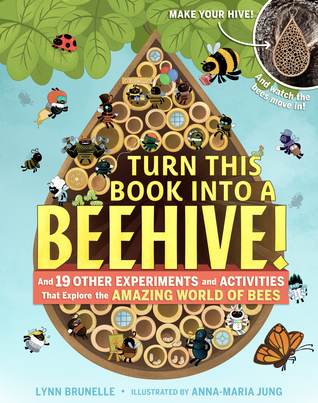
Turn This Book Into a Beehive! And 19 Other Experiments and Activities That Explore the Amazing World of Bees
Author: Lynn Brunelle
Illustrator: Anna-Maria Jung
Published April 3rd, 2018 by Workman Publishing

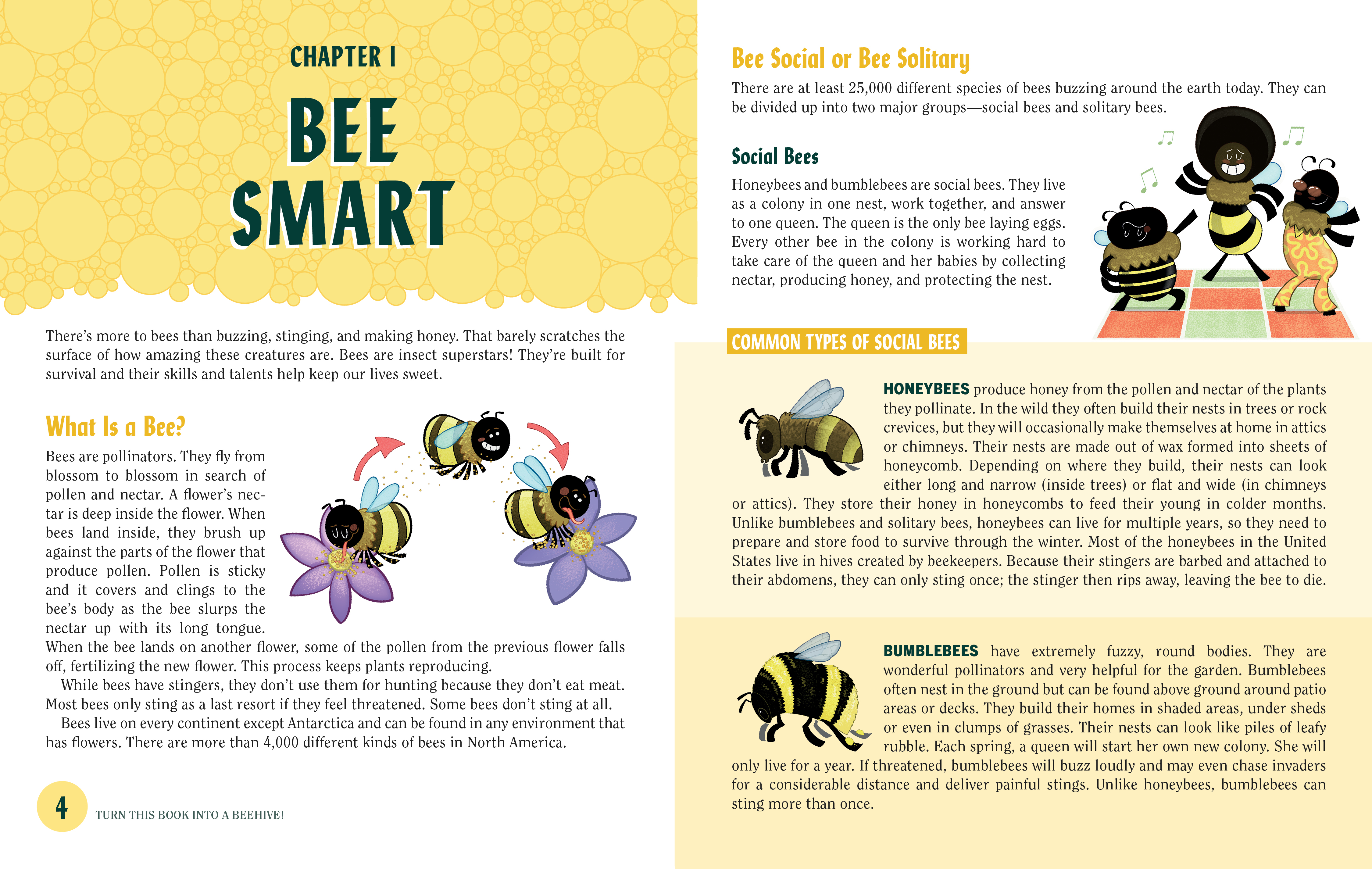
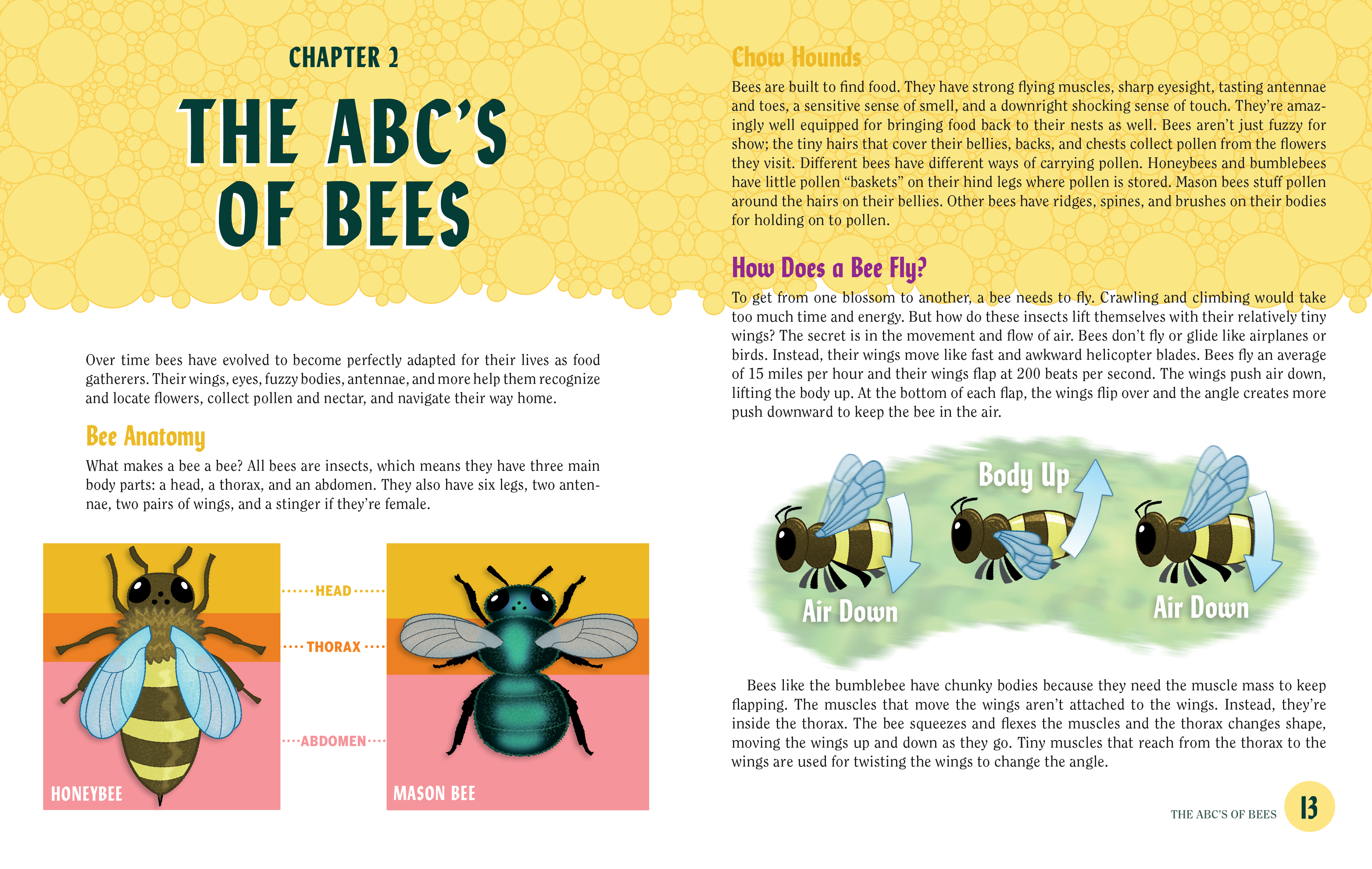
Summary: What a promise! Actually, promises. First, here’s a book that teaches kids all about the fascinating world of bees. Second, fun exercises, activities, and illustrations engage the imagination and offer a deeper understanding of bee life and bee behavior. Third, by following a few simple steps including removing the book’s cover and taping it together, readers can transform the book into an actual living home for backyard bees. Fourth, added all together,Turn This Book Into a Beehive! lets kids make a difference in the world—building a home where bees can thrive is one small but critical step in reversing the alarming trend of dwindling bee populations.

Turn This Book Into a Beehive!introduces kids to the amazing mason bee, a non-aggressive, non-stinging super-pollinator that does the work of over 100 honeybees. Mason bees usually live in hollow reeds or holes in wood, but here’s how to make a home just for them: Tear out the perforated paper—each illustrated as a different room in a house—roll the sheets into tubes, enclose the tubes using the book’s cover, and hang the structure outside. The bees will arrive, pack mud into the tubes, and begin pollinating all the plants in your backyard.

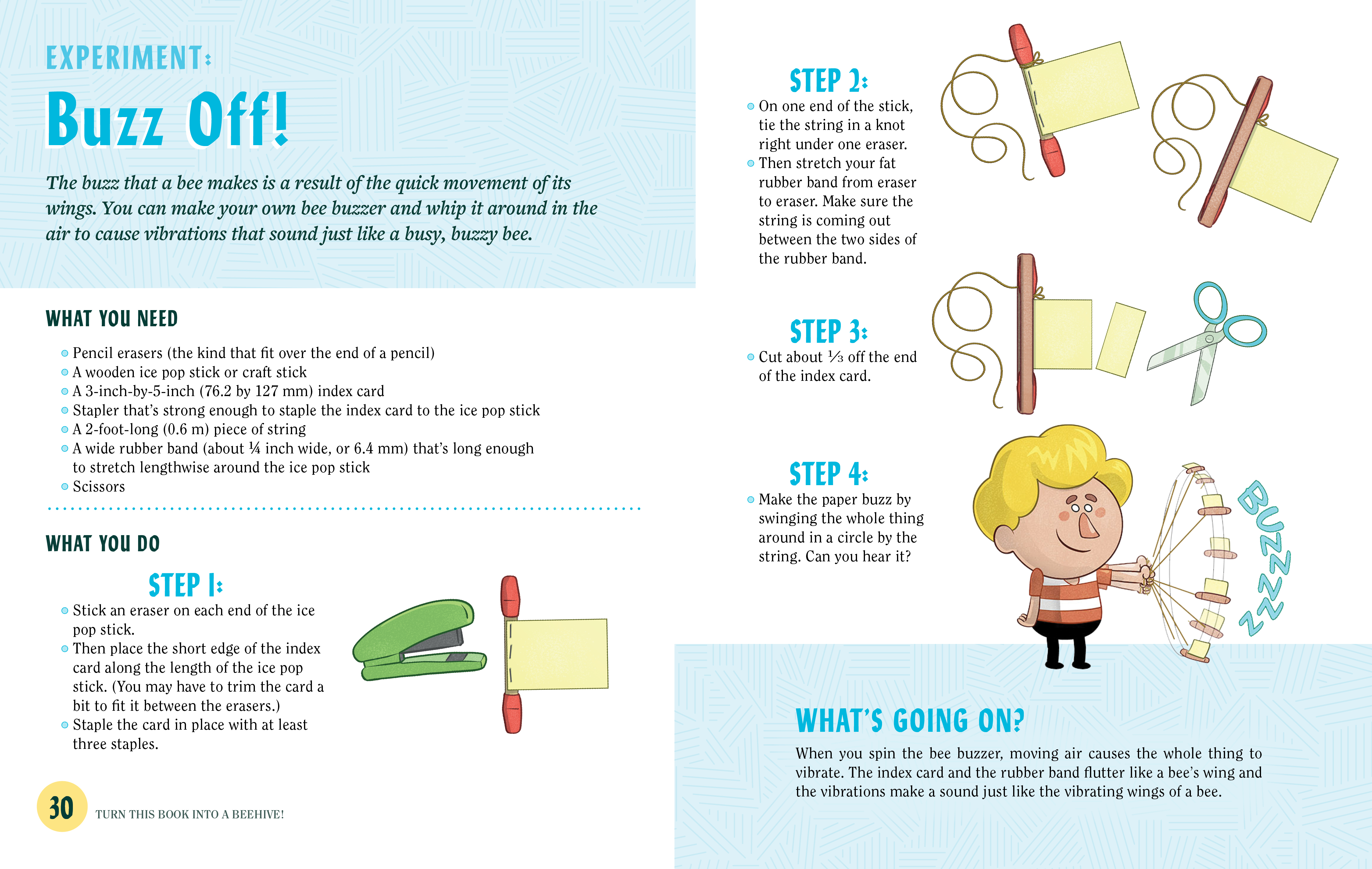
Twenty experiments and activities reveal even more about bees—how to smell like a bee, understand the role of flowers and pollen, learn how bees communicate with each other through “dance,” and more. It’s the real buzz on bees, delivered in the most ingenious and interactive way.

About the Author: Lynn Brunelle is a four-time Emmy Award–winning writer for Bill Nye the Science Guy and author of over 45 books, including the bestselling Pop Bottle Science and Camp Out! She is a regular contributor to KING-TV’s New Day Northwest as a family science guru and NPR’s Science Friday.

Q&A with Author, Lynn Brunelle:

Unleashing Readers: How did you research and learn more about the mason bee?

Lynn Brunelle: First I went to garden stores and asked around about bees.

I learned that honeybees and social bees were only 2% of the bees on the world. 98% of the bees are solitary wild bees that do amazing work as pollinators. I saw some of the houses these garden centers were selling to attract these bees. Then I went online and did some digging. All honeybees are domesticated and were brought here by colonists. In fact honeybees have been domesticated for a loooooooong time! There are images of beekeepers carved into caves, chiseled into Egyptian art, painted on Greek pottery and minted into Roman coins.

The solitary bees like mason bees are native bees and they’re amazing pollinators. I found experts as well. I contacted the USDA mason bee lab in Utah and spoke with bee people from around the country. It was so interesting and really exciting to learn so much.

Then I made my prototype of a book-turned-hive and stuck it out in my garden. Mason bees came! It worked; my garden has never been so productive!!

UR: How did you generate the activities within the book?

LB: My favorite thing is to make big concepts accessible to people of all ages, especially kids. And I think using laughter and hands-on fun is a great way for kids to really understand a concept. So when I was writing all of the amazing things about bees, I was always keeping in mind what kind of hands-on activity I could share for kids to really absorb the content. The fact that bees are positively charged and flowers are negatively charged and that makes pollen leap to a bee is FANTASTIC! And you can show that with a balloon and confetti. The fact that bees are amazing smellers is a perfect lead-in for getting kids to tune into their own sense of smell.

UR: Which activity is your favorite?

LB: It’s the actual making of the mason bee home that I love. Turning the book into a hive and watching as things unfold in the garden.

With mason bees, every girl’s a queen—like a single mom she finds the house—usually a hollow reed or stem or any tube—even paper ones in an inside out book cover!!! She gathers food, makes a pile of food, lays an egg on top of the food pile and then gathers mud to spackle a wall. In a good hollow tube, she can make 6-10 little rooms with an egg and a food supply in each one.

UR: What’s something else we might learn about you, either as a writer or as a person?

LB: I love my job! I get to learn about new things and share them every day. I love the outdoors. My family and I love hiking through the woods with the dogs, kayaking on the water and paddle boarding in the summer. We enjoy camping and exploring. I have a happy garden, I make jewelry and fused glass and am learning how to weld. My sons and I play the ukulele. They are teaching me to tell the difference between rap artists and I play the trombone. I make a great hummus and am getting better at rolling sushi with the help of my patient husband.

We Flagged: 


Thank you to Lynn Brunelle and Workman Press for this interview!


Teaching Guide with Activities and Discussion Questions for Polly Diamond and the Magic Book by Alice Kuipers

Share

Polly Diamond and the Magic Book
Author: Alice Kuipers
Illustrator: Diana Toledano
Expected Publication May 1st, 2018 by Chronicle

Summary: Polly loves words. And she loves writing stories. So when a magic book appears on her doorstep that can make everything she writes happen in real life, Polly is certain all of her dreams are about to come true. But she soon learns that what you write and what you mean are not always the same thing! Funny and touching, this new chapter book series will entertain readers and inspire budding writers.

Teachers’ Tools for Navigation: Activities for Polly Diamond include:

Color Poem

On page one, Polly says that her teacher said her color poem was fantastic.

Have your students use the Read. Write. Think. template to create their own color poem.

Template

Finish her perfect house story

On page 3, Polly is interrupted while writing her perfect house story.

Finish her story with what your perfect house would include.

Wishes

When Polly realizes her book is magical, she thinks of many things she can wish for such as a cell phone, not frizzy hair, more books, a flat screen TV, and world peace.

Using a brainstorming graphic organizer, have your students think of all the things they wish for.

After brainstorming all of their wishes, have them circle your top three.

Using the five-paragraph format for informative essays, have students write explaining their three wishes.

Measuring

For Polly’s grandmother’s recipe for pancakes called for a cup of flour and a cup of milk. Many times, when baking, you do not have what you need to make the recipe, and not just ingredients—you may not have the right measuring cup.

Bring in one cup measuring cups along with 1/4, 1/3, 1/2, 3/4, tablespoon, and teaspoon measuring cups/spoons. Break students into groups and give each group one of each measuring cup/spoon as well as something to measure (water, rice, flour), and have them answering the following questions:

  • If you only had 1/4 cup, how could you get one cup of flour?
  • If you only had 1/3 cup, how could you get one cup of flour?
  • If you only had 1/2 cup, how could you get one cup of flour?
  • If you only had 3/4 cup, how could you get one cup of flour?
  • If you only had a tablespoon, how could you get one cup of flour?
  • If you only had a teaspoon, how could you get one cup of flour?

Favorite words

Polly has a lot of favorite words: words with double letters like doozy and mutli-meaning words like basil.

Have students make a list of three words that they really like.

For each word, they should define it and also explain why they like the word.

When finished, students should do a word meet and greet. Using clock buddies or some other buddy system, have students meet with other students in the classroom and learn about their favorite words. They should add the favorite words they learn about to their list.

Paint names

On page 29, Polly makes up names for paint that describes the color such as muddy pond, lunch bag, and baboon butt.

First, have students look at the colors Polly described on page 29 and find the corresponding color in either a crayon box or a color exploration site online.

Then, have students create color names using imagery. Either have them use the color exploration site online or the colors from Microsoft Word.

Affixes

Show students how there are different word parts (affixes) that can be put together to make new words. They are like puzzle pieces! Share with them the different types of word parts (prefix, suffix, root, and base) and how they fit together.

On page 56, Polly explains how adding un- to the beginning of a word gives it an opposite meaning. The word she uses as an example is unobservant. Share with your students that un- is a prefix that means NOT which does make a word the opposite. Have student brainstorm a list of words with un- at the beginning and define them using NOT as the definition for un.

Extension: dis-, il-, im-, in-, and ir- also mean NOT. Students can also explore words with these
prefixes.

Extension: On page 57, Polly also talks about adding –fully to the end a word to make it bigger,
but it does more than that. Share with your students that –fully is actually a combination of ful, a root word that means full of, and –ly, a suffix that turns an adjective to an adverb, so her example of sorrowfully means full of sorrow (adv).

After showing students how words break apart and how affixes help with word meanings, give students words with un- and –ful (or any other affix you taught) and have them mark the different word parts and define the word.

Coloring Sheets

Coloring sheets can also be downloaded from Chonricle’s website here.

See the Teaching Guide Created by Me (Kellee) for even more activities! 

You can also access the teaching guide through Chronicle’s website here.

Recommended For: 
readaloudbuttonsmall classroomlibrarybuttonsmall closereadinganalysisbuttonsmall

Kellee Signature

Adventures in Science: Human Body by Courtney Acampora

Share

Adventures in Science: Human Body
Author: Courtney Acampora
Published: December 12, 2017 by Silver Dolphin Books

Summary: Which part of the brain is in charge of creativity? What is the smallest human muscle? Take a trip inside the human body and discover the amazing systems that allow us to move, breathe, and speak. After reading about everything from the digestive tract to the cornea, kids can assemble their own plastic skeleton and view the systems of the body in a layered cardstock model. With 20 fact cards, 2 sticker sheets, and a double-sided poster, this interactive kit is a perfect primer for learning about how the human body works.

ReviewThis book kit is so much fun! It’s very cleverly designed to engage readers. It includes an informational book about the human body, a skeleton to build, flash cards, a sticker sheet that features the major bones of the human body, a sticker sheet that features the organs within the human body, and a double-sided poster with outlines to help readers stick the bone and organ stickers in the correct places. As we read the book, we did the activities and filled in the human body. What a powerful learning experience! I am crossing my fingers that this kit becomes a series. I would love to purchase a kit for space, geography, etc.

Teachers’ Tools for Navigation: Teachers could purchase five kits and divide their classes into five different groups to build the skeleton and affix the stickers onto the appropriate parts of the body. I sent a message to a few of my friends who homeschool their children. I think this kit will be a huge hit in their families.

Discussion Questions: What did you learn as you did the activities?; What parts of the human body do you find most interesting? Why?; How do the different parts of the body work together?

We Flagged: 

Read This If You Loved: Any nonfiction books about the human body; interactive books and kits

Recommended For: 
classroomlibrarybuttonsmall

**Thank you to Casey at Media Masters Publicity for providing a copy for review**

Leaf Litter Critters by Leslie Bulion

Share

Leaf Litter Critters
Author: Leslie Bulion
Illustrator: Robert Meganck
Published March 8th, 2018 by Peachtree Publishers

Summary: Have fun on this poetic tour through the leaf litter layer and dig into the fascinating facts about the tiny critters who live there. Nineteen poems in a variety of verse forms with accompanying science notes take readers on a decomposer safari through the “brown food web,” from bacteria through tardigrades and on to rove beetle predators with other busy recyclers in-between. 

Zooming into the thin layer of decaying leaves, plant parts, and soil beneath our feet, Leaf Litter Critters digs into fascinating information about the world of decomposers–from the common earthworm to the amazing tardigarde.

Written in various poetic forms, acclaimed science poet and award-winning author Leslie Bulion combines intriguing scientific details with fun wordplay to create a collection of nonfiction verses amusing for all readers. Vibrant and entertaining artwork by distinguished illustrator Rober Meganck adds to the humor of each poem.

Perfect for cross curricular learning, Leaf Litter Critters has extensive back matter, including both science notes about each critter and poetry notes about each poetic form, as well as a glossary, hands-on activities, and additional resources for curious readers to further their investigations. It’s also a great read-aloud for Earth Day and beyond.

* “The poems are expertly crafted in a variety of forms (identified in the backmatter). The language is lively and the imagery appropriate. With alliteration, internal rhymes, and careful rhythm, these will be a delight to read aloud and learn…. Meganck’s engaging digital drawings give each creature pop-eyes and attitude…. A delightful, memorable introduction to an unsung ecosystem.” —Kirkus Reviews, STARRED REVIEW

“Bulion stuffs her poems with scientific detail and puts even more into accompanying “science notes.” Meganck’s cartoons strike sillier notes…balancing all of the information Bulion provides with hefty doses of fun.” —Publishers Weekly

Review & Teachers’ Tools for Navigation: I cannot wait to give this to my mentee who is a sixth grade science teacher who has a BS in biology–she is going to love this so much! And if I was an upper elementary teacher, I would love to use this text as a cross-curricular text during a poetry and biology unit. Not only did it teach me SO much about these amazing creatures that do weird and truly astonishing things, it goes through all the different types of poetry shared to ensure that the book isn’t just science nor poetry centered. I think the author did a beautiful job making sure that each spread had a wonderful poem and a deep science explanation just in case the poem doesn’t clarify anything. Additionally, the back matter includes investigative activities, a glossary, and more science information that would all be incredible assets to a classroom! I really cannot say enough how well the book is crafted for the purpose it was created for.

Discussion Questions: 

  • How is each creature in the leaf litter layer important?
  • How did the illustrator use a pin to help you see the size of each critter on pages 54-55?
  • Write your own poem about one of the creatures that you learned about using whatever poetic style you choose.
  • How did the science notes on each page assist you in understanding the creature that was shared on each spread?
  • Which of the poetic forms/styles did you enjoy the most? Why?

Flagged Passages: 

Read This If You Love: Biology, Poetry, Science

Recommended For: 
classroomlibrarybuttonsmall closereadinganalysisbuttonsmall

Signature

**Thank you to Elyse at Peachtree for providing a copy for review!!**