The Dark by Lemony Snicket

Share

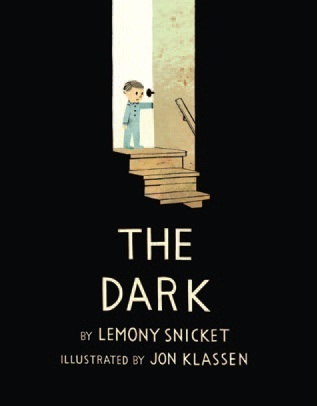
The Dark
Author: Lemony Snicket
Illustrator: Jon Klassen
Published April 2, 2013 by Little, Brown

Guest Post by: Nichole Pitruzzello

Summary: Laszlo is afraid of the dark. But is the dark afraid of Laszlo? They live in the same house, with the same creaky roof, smooth, cold windows, and several sets of stairs. But the dark mostly stays in the basement…until one night, when it doesn’t. Laszlo walks through his house, as the dark converses with him, on a journey to overcome his fear.

Review: In his unique writing style, Lemony Snicket takes an eerie childhood fear and personifies the dark in a soothing way. John Klassen’s illustrations are a wonderful compliment to the story of Laszlo, using black space and warm colors to enhance the mood. I’m very impressed by the way they take a concept that many children fear, and transform it into a friendly, calming presence. I cannot wait to add this book to my library!

Teachers’ Tools for Navigation: Teachers can use this book as a mentor text for a variety of mini lessons. Lemony Snicket personifies the dark, uses vivid language to talk about Laszlo’s house, and creates suspense through a blend of dialogue and narration. In addition, it’s an excellent book to teach a lesson about overcoming one’s fears. There’s so much that this book can add to a classroom!

Discussion Questions: What are some places that you are scared of, and why are they scary? Was the dark really scary? How did the dark help Laszlo? Why shouldn’t we be afraid of the dark? What should we do when we are afraid of something?

Book Trailer: 

Read This If You Loved: Go Away, Big Green Monster by Ed Emberly, Singing Away the Dark by Caroline Woodward, 13 Words by Lemony Snicket

Recommended For:

   classroomlibrarybuttonsmall

Grandma in Blue with Red Hat by Scott Menchin

Share

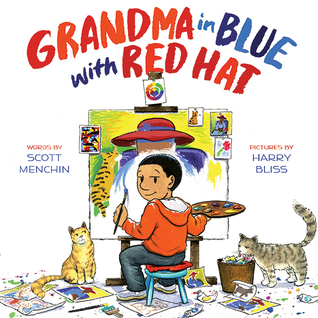
Grandma in Blue with Red Hat
Author: Scott Menchin
Illustrator: Henry Bliss
Published April 14, 2015 by Abrams

Guest Post by: Sarah Mangiafico

Summary: When a young boy learns about what makes art special—sometimes it’s beautiful, sometimes it’s funny, sometimes it tells a story—he realizes that these same characteristics are what make his grandmother special, too. As a result, he finds the inspiration to create his own masterpiece that’s one of a kind.

Christopher Award–winning author Scott Menchin and New York Times bestselling illustrator Harry Bliss have teamed up for a celebration of the power of art and expression, and the extraordinary love between grandparent and child.

Review: I love how this book expresses the different feelings that art can evoke in someone, along with the meaningful moments that it can capture. Sometimes something can be art simply for being funny or for making you feel nice; art does not have to be complicated to be art. This is a powerful message to share with readers, since many people often think that art needs to have many different meanings and lots of creativity in order to be art. The art that the boy makes about his grandma clearly shows the feelings and thoughts that can inspire someone to make art. The art that he makes about her is also very touching, and is a great ending to the book that leaves readers (including myself) ready to go out and create their own meaningful art pieces.

Teachers’ Tools for Navigation: Grandma in Blue with Red Hat is a wonderful book that can show students how “Anything can be in an art exhibition,” and can teach them how anything that they create can be considered art (Menchin 3). This is a great book to introduce students to what art is, and can motivate kids to want to create their own art pieces for a “class art museum.” After creating their pieces, students can walk around the “class art museum” and write down why they think each piece is art. Grandma in Blue with Red Hat is a sure way to get students interested in art, and to create art that is meaningful to them in some way.

This book is also a wonderful book to share with students because the art pieces shown in the book are real and famous pieces of art. Reading this book as a read aloud can introduce students to these pieces and can lead to a more in-depth class study of them and the artists that made them. A variety of cultures are represented in the art pieces shown in the book as well, which makes this book culturally relevant.

Discussion Questions: What is art? Why did the boy in the story decide to use his grandma as an inspiration for his art? What are some things that you could make an art piece about? What makes you choose those things?

Flagged Passages: “Grandma is beautiful. Grandma is different. Grandma is funny. Grandma tells me stories. Grandma comes from far away. Grandma makes me feel good” (p. 17).

Read This If You Loved: Draw! by Raúl Colón, Maybe Something Beautiful by F. Isabel Campoy and Theresa Howell, My Pen by Christopher Myers

Recommended For:

   classroomlibrarybuttonsmall

The Fourteenth Goldfish by Jennifer L. Holm

Share

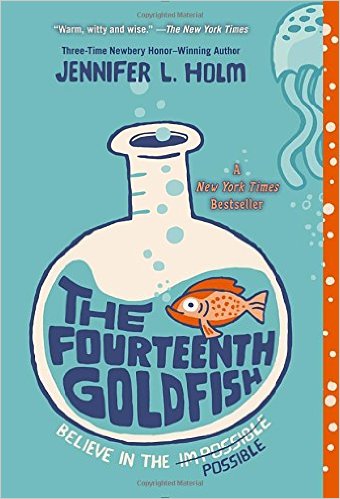
The Fourteenth Goldfish
Author: Jennifer L. Holm
Published: April 5, 2016 by Yearling

A Guest Review by Kelsey Iwanicki

Summary: The Fourteenth Goldfish follows the story of Ellie, an 11-year-old girl, who is currently struggling to find her passion, especially following the gradual drop off with her one and only friend, Brianna. However, everything changes when her mother brings home a quirky and crabby 13-year-old boy, Melvin. Ellie notices striking similarities between Melvin and her seventy-something year-old grandfather until he comes clean and tells her that they are in fact the same person. Melvin has worked on developing a drug to reverse the signs of aging, which has successfully worked on himself.

As Ellie and Melvin get closer, they also form an unlikely friendship with a goth student, Raj. Together they give Melvin advice about being a teenager, such as giving him acne medicine and hair elastics. They also help Melvin eventually, after a few failed attempts, steal the same compound that reversed his age. Melvin’s original plan was to steal the gene so he could share it with the world and receive the Nobel Peace Prize. However, Ellie persuaded him not to on the grounds of moral ethics and how scientific impacts can be both positive and negative. Due to this, Melvin flushes the compound down the drain and starts to tour the country. Thanks to her time with her grandfather, Ellie is able to discover his passion in science and also gain a few friends along the way, Raj and Momo.

Review: What I liked most about this book was its quirkiness, mostly exemplified through Melvin. Although the relationship between Ellie and Melvin is untraditional, you can also get glimpses of a typical relationship between a grandfather and granddaughter is like, one that isn’t usually written about. The majority of characters are nontraditional, such as Raj, who is explicitly written as goth; Ellie, a girl scientist (although this is becoming more popular, usually boys are the ones in the STEM fields); and Melvin, as a grumpy 13-year-old.

What I didn’t like about the book was the build-up. Although they failed multiple times at stealing the compound, there was no suspense for when Melvin actually succeeded. Rather, he just came home one day with it. The climax actually was when Ellie had a self-realization that science has both positives and negatives, which honestly was kind of a let down because the plot had focused around getting the compound from the lab. Ultimately, it was a good theme because Ellie realizes there are good and bad things with any passion.

All in all, I did like the book, I think it could appeal to students who are interested in science and realistic fiction books.

Teachers’ Tools for Navigation: This book should definitely be included in a classroom library for independent reading because I think it would appeal for students because it is a little quirky and has some interesting characters. It could also prompt some interesting discussions for literature circles because students could discuss the ethics behind using a compound to reverse aging.

A teacher could also use it as a read aloud for a few reasons. It would be interesting to consider the other perspectives of characters such as Melvin or Melissa, Ellie’s mother. Additionally, they could talk about the character traits and what makes Melvin and Ellie such strong characters. Or, they could talk about science and ethics behind what scientists release.

Discussion Questions: If you had a compound that could reverse aging, would you take it? Why or why not?; If you discovered a compound that could reverse aging, would you deliver it to the public? Why or why not?; What do you think will happen to Ellie and Brianna’s friendship? Ellie and Momo’s?; What do you think the side affects are from taking the compound? / What do you think happened to Melvin?; Put yourself in Ellie’s shoes, how would you feel if your grandfather attended the same school as you?; What is the importance of the fourteenth goldfish?

Flagged Passage: “Average people just give up at the obstacles we face every day. Scientists fail again and again and again. Sometimes for our whole lives. But we don’t give up, because we want to solve the puzzle” (p. 47).

Read This If You Loved: El Deafo by Cece Bell; Fish in a Tree by Lynda Mullaly Hunt; Out of My Mind by Sharon Draper; Rain Reign by Ann M. Martin; Unusual Chickens for the Exceptional Poultry Farmer by Kelly Jones

Recommended For:
 classroomlibrarybuttonsmall

Thank you, Kelsey!

RickiSig

Teaching Guide for Hazardous Tales: Alamo All-Stars by Nathan Hale

Share

nfpb2017

Nonfiction Wednesday

Nonfiction Picture Book Wednesday is hosted by Kid Lit Frenzy and was started to help promote the reading of nonfiction texts. Most Wednesdays, we will be participating and will review a nonfiction text (though it may not always be a picture book).
Be sure to visit Kid Lit Frenzy and see what other nonfiction books are shared this week!

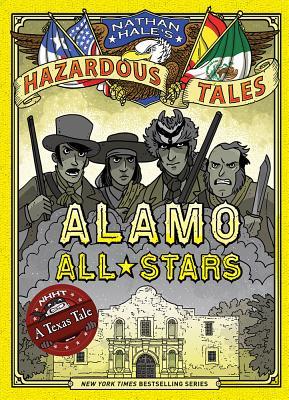
Hazardous Tales: Alamo All-Stars
Author and Illustrator: Nathan Hale
Published March 29th, 2016 by Abrams Books

Summary: “Remember the Alamo!” That rallying cry has been a part of Texas lore for generations. But who were the ragtag group of adventurers behind the famous slogan, and how did they end up barricaded in a fort against a Mexican army? Who survived, who died, and how? This sixth book in the bestselling Hazardous Tales series tracks the Lone Star State’s bloody fight for independence from the Mexican government. It features the exploits of the notorious Jim Bowie, as well as Stephen Austin, Davy Crockett, and other settlers and soldiers who made the wild frontier of Texas their home—all told with the inimitable style and humor for which Nathan Hale is known.

Teaching Guide with Discussion Questions and Activities from Abrams by ME!, Kellee Moye: 

How to use this guide

  • For Alamo All-Stars, opportunities to have discussions and complete activities across different content areas are shared. In the “Fun Across the Curriculum” section, these activities and discussion questions are split into subject areas and are written as if they are being asked of a student.
  • At the end of the guide, Common Core State Standards and Next Generation Science Standards are listed that can be met when the books are extended using the activities and discussion questions.

Fun Across the Curriculum

  • Language Arts
    • The title page and the cover show two different illustrations of the Alamo. Compare and contrast the illustrations. Using information from the text, when is the cover illustration from, and when is the title page illustration from?
    • Why would Alamo All-Star need two narrators, Nathan Hale and Vincente Guerrero, while all of the other Hazardous Tales books only needed Hale? How would the story have differed if only Hale had narrated the book? What about only Guerrero?
    • On page 10-11, Guerrero uses the metaphor of a set table to describe Texas in the 1820s. Why does he use this metaphor to describe the state of Texas at this time?
    • On page 18, Hale uses another metaphor of an explosive barrel to illustrate the situation Austin and his settlers were in. How does an explosive barrel and Austin’s situation relate to each other?
    • After researching cholera (science section), look at Hale’s personification of the disease on page 37. Why did he choose this creature to embody cholera?
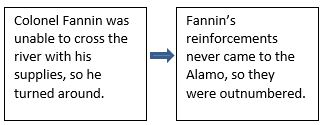
    • Many different events and problems caused Santa Anna’s army to be able to easily defeat the Texans at the Battle of the Alamo. Create a cause/effect graphic organizer showing the correlation between different events leading up to the Battle of the Alamo and the fall of the Alamo.
      • For example:
    • Much of what happened at the Alamo during the infamous battle as well as stories about Davy Crockett and Jim Bowie have become an American legend. What is a legend? Why has some parts of the story of the Alamo become a legend and not a complete factual part of history?
    • Throughout the book, Hale includes direct quotes from primary sources. How do these quotes enhance the story? How are primary sources more reliable when sharing historical events than secondary sources?
  • History/Social Studies
    • The page of Texas on the end sheets shares the different battles during the Texas revolution. Using Alamo All-Stars, convert the map into a timeline by graphing each battle on the date/year they were fought.
    • Using the text feature on pages 10-11 that shared the 1820s Texas settlers, answer the following: how did each settler threaten each other? Why was Texas such a treacherous place at this time? Who was the rightful settler of Texas?
      • Then, split the class up into 8 groups and assign a group of settlers to each group of students. They then should research the group, and determine how they ended up in Texas, why they felt they deserved to stay in Texas, etc.
    • Page 12 defines a filibuster and gives an example of one. What other famous filibusters have happened in history? Use the Wikipedia article “Filibuster (military)” and its resources to learn about other filibuster expeditions. Unlike the James Long Expedition, were any successful?
    • Throughout the book, Mexico goes through different types of governments: a monarch (inferred from p. 16), a republic (mentioned on p. 17), and a despotic (mentioned on p. 40). Compare and contrast the similarities and differences of the different types of governments.
    • Page 88 shows one of the many flags that have flown over Texas. Using the Texas State Historical Information article “Flags of Texas” and the Flags of the World website, learn about all of the different flags that Texas has flown. Why have so many flown over Texas? Where does the phrase “six flags of Texas” come from?
    • On page 104, Santa Anna compares himself to Napoleon. How are the two men similar? How do they differ?
    • On page 113, Hale jokes, “Don’t feel bad. Everyone forgets about Goliad.” Why do you think the Battle of the Alamo is remembered by so many while the massacre at Goliad is not?
    • Why are Travis, Seguin, Bowie, and Crockett pictured on the front of Alamo All-Stars? Is this who you would consider the all-stars of the Alamo? If not, why not? If so, what did they do to deserve that title? Is there anyone else you would consider an Alamo all-star?
  • Science
    • Cholera killed tens of thousands in the summer of 1833 including Bowie’s wife and her family. What is cholera? How does it spread? Why did Bowie’s family try to travel north to escape it?
    • On page 47, Noah Smithwick was quotes sharing that one member of the Gonzales army had a nose bleed; however, he used scientific terms such as nasal appendage and sanguinary fluid. What do these terms mean?
  • Math
    • On page 31, Rezin Bowie mentions that they were outnumbered 14 to 1 during the battle. Using the illustrations and clues in the “Jim Bowie and the Lost Mine” section to determine how many men were on Bowie’s side and how many men they fought and defeated.
    • Santa Anna’s army outnumbered the Texans by a large amount. Using the information shared about the number of men in each side of the battle, determine an approximate ratio of the battle.
      • After you estimate using Alamo All-Stars, research the actual number of men at the battle and determine the ratio. How close was your estimate?
  • Foreign Language (Spanish and French)
    • Throughout the text, different Spanish words are used, many of which can be defined using context clues or connecting to the English language because they are cognates with a word you already know. Look through the book, and try to define all foreign language vocabulary. Some words throughout the book:
      • El Gran Libro Enorme de la Historia Mexicana (p. 6)
      • ejercito de las tres garantias (p. 9)
      • empresario (p. 12)
      • mucho (p. 16)
      • viva la revolución (p. 21)
      • fantástico (p. 31)
      • Dios y libertad (p. 36)
      • alcalde (p. 45)
      • fandangos (p. 72-84)
      • voy a firmarlo (p. 98)
      • mes amis (p. 103 | French)
        • Which words were easier to define? Why were they easier?
  • Music
    • At the Battle of the Alamo, both Santa Anna’s army and the Texas army played music (p. 91). Research to determine what music was played at the battle. Why would they play music while preparing for a battle?

The teaching guide, along with the other books in the series, can also be viewed at: https://www.scribd.com/document/326377929/NathanHale6-TeachingGuide or http://www.abramsbooks.com/academic-resources/teaching-guides/

Recommended For: 

classroomlibrarybuttonsmall closereadinganalysisbuttonsmall 

Signature

The Sweet Spot by Stacy Mozer

Share

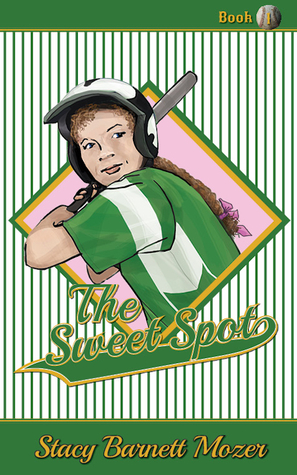
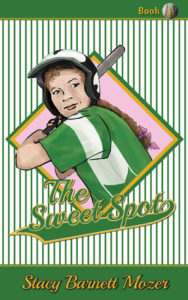
The Sweet Spot
Author: Stacy Barnett Mozer
Published March 25th, 2016 by Spellbound River Press

Summary: When thirteen-year-old Sam Barrette’s baseball coach tells her that her attitude’s holding her back, she wants to hit him in the head with a line drive. Why shouldn’t she have an attitude? As the only girl playing in the 13U league, she’s had to listen to boys and people in the stands screaming things like “Go play softball,” all season, just because she’s a girl. Her coach barely lets her play, even though she’s one of the best hitters on the team.

All stakes now rest on Sam’s performance at baseball training camp. But the moment she arrives, miscommunication sets the week up for potential disaster. Placed at the bottom with the weaker players, she will have to work her way up to A league, not just to show Coach that she can be the best team player possible, but to prove to herself that she can hold a bat with the All-Star boys.

Review: I wish I was Sam. I love baseball, but like most girls, softball is really the only option. I right away had a direct connection with Sam because she was living a dream I had when I was younger. But I also know how hard it is to cross gender barriers. As a “tomboy” you are constantly questioned and made fun of, so to be so out in the spotlight, Sam definitely feels she needs to prove herself. As a female, there are so many moments in this book that seem too real and really made me angry: she is called emotional just because she is passionate, people act as if she is fragile and can’t take care of herself, and her talent is constantly questioned. And when she stands up for herself, she is told to take a joke or calm down. Even outside of the scenario of playing baseball, these are things that woman are going to here–from males and other females! 

But in addition to this too-real reflection of life, Sam’s story will hit home with anyone who has tried to do something that others thought they couldn’t. Or anyone who has been somewhere that they don’t fit in. Or anyone who has been underestimated in general.

Teachers’ Tools for Navigation: In addition to adding this title to any library for middle school students, I also envision Sweet Spot as a lit circle or book club title. It has so much to talk about, and it would definitely fit in with other books that have the big idea of an underdog. It could also definitely be paired with Zootopia!

Discussion Questions: What stereotypical statements do characters say to Sam throughout the book? How does she overcome these assumptions people made about her?; Sam is called emotional; however, if a boy was acting the same way as her, how would he described in the sports world? Why do you think there is a double standard?; How is Sam’s experience at baseball camp different than what she expected?; How does Mike grow throughout the book? How does Sam?

Flagged Passages: “Laughter and chants fill my ears as I step up to the plate.

‘Is that a ponytail?’

‘Easy out!’

‘Go back to softball!’

I take a deep breath and clear my head. It’s not like I haven’t heard it all before.

The pitcher motions for the fielders to move in, then goes into his wind-up, making a big show of the ease at which he will strike me out. I bite my lip and focus.

The ball comes in. I judge the timing and location of my swing–then swing a bit lower.

‘Strike!’

I take a step back and pretend to be upset. The hooting gets louder, but this time it’s easy to ignore. Out on the mound the pitcher grins. He looks around, nods at his team, and I can almost hear the ‘told you sos.’ I may have to slam the next one right at his…

‘Time out!’

Uh, oh.

Coach Duncan storms out to the plate. I give him my best, what’s up? look. The way he glares at me, I know he isn’t buying it.

‘Sam, what was that?’

‘What do you mean, Coach?’

Coach’s bulky face reddens. A drop of sweat slides down his nose. Gross.

‘Do I need to remind you that it is the bottom of the eighth, the score is 0-0, and there are two outs? Stop fooling and play ball.’

‘Bout time you let me,’ I grumble. My batting average is better than the boys on my team. Yet even today, in the 13U Championships, he kept me warming the bench until I fielded last inning.

‘You know what I mean,’ he says. He moves to go back to the bench, then stops and comes closer so only I can hear his next words.

‘And Sam,’ he says. ‘Target this guy, and there’s no way I’ll recommend you for the travel team.'” (p. 1-2)

Read This If You Love: Baseball, Coming of Age Novels, Boy Who Saved Baseball by John Ritter, Ghost by Jason Reynolds, Roller Girl by Victoria Jamieson

Recommended For:
classroomlibrarybuttonsmall 

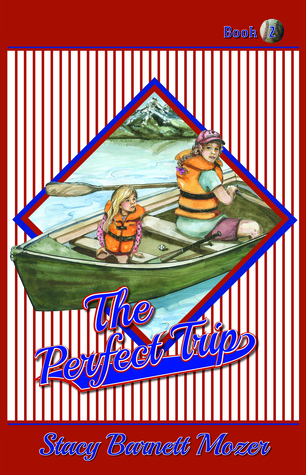
And don’t miss out on book 2: The Perfect Trip
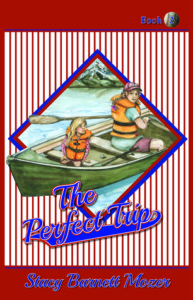
Published March 24th, 2017

Although I am not going to share the summary (SPOILERS!), I will tell you that it is a wonderful sequel to Sam’s story. Although the conflict is a bit different than the first, it really gives you more insight into Sam and Mike’s families and Sam’s struggle with proving herself.

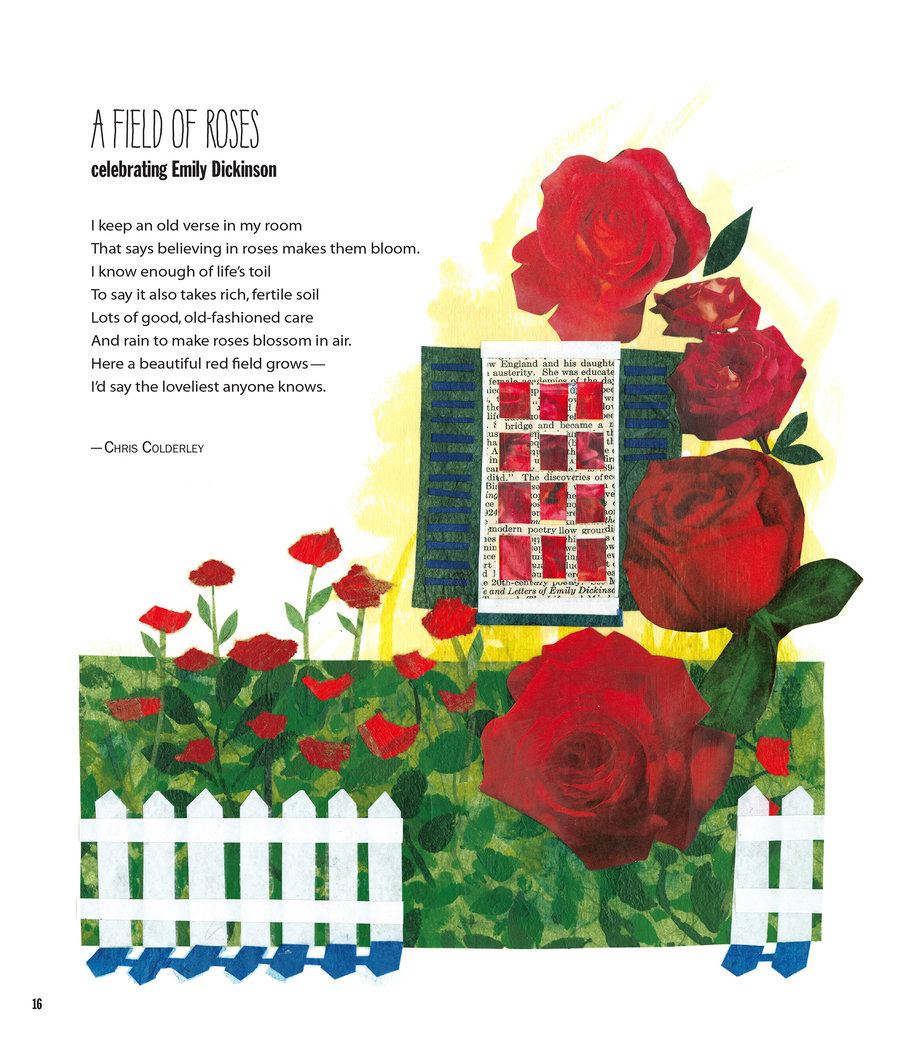
Out of Wonder: Poems Celebrating Poets by Kwame Alexander, Chris Colderley, and Marjory Wentworth

Share

nfpb2017

Nonfiction Wednesday

Nonfiction Picture Book Wednesday is hosted by Kid Lit Frenzy and was started to help promote the reading of nonfiction texts. Most Wednesdays, we will be participating and will review a nonfiction text (though it may not always be a picture book).
Be sure to visit Kid Lit Frenzy and see what other nonfiction books are shared this week!

HAPPY NATIONAL POETRY MONTH!

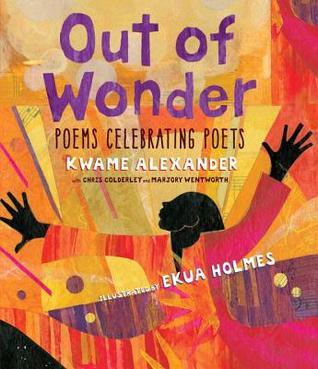
Out of Wonder: Poems Celebrating Poets
Authors: Kwame Alexander, Chris Colderley, and Marjory Wentworth
Illustrator: Ekua Holmes
Published March 14th, 2017 by Candlewick Press

Summary: Out of gratitude for the poet’s art form, Newbery Award–winning author and poet Kwame Alexander, along with Chris Colderley and Marjory Wentworth, present original poems that pay homage to twenty famed poets who have made the authors’ hearts sing and their minds wonder. Stunning mixed-media images by Ekua Holmes, winner of a Caldecott Honor and a John Steptoe New Talent Illustrator Award, complete the celebration and invite the reader to listen, wonder, and perhaps even pick up a pen.

A Newbery Medalist and a Caldecott Honoree offer a glorious, lyrical ode to poets who have sparked a sense of wonder.

Review: This anthology is beautiful. Alexander, Colderley, and Wentworth beautifully pay homage to each poet. Their tribute poems are impeccably written and not only do the poems follow the style of the poet but also teach us about the lives of the poet. And Holmes’s artwork pushes the book to another level. I also adored the diversity of the poets, as well as the types of poems, chosen.

And Out of Wonder can definitely be a perfect mentor text for a poetry unit, and I can definitely see it being paired with Love That Dog to expand what Creech started.

Teaching Guide with Prereading Activities, Discussion Questions, and Classroom Extensions (by teacher Mary Lee Hahn): 

Flagged Passages: 

Read This If You Love: Love That Dog and Hate That Cat by Sharon Creech; Poetry by any of the poets honored in the book: Naomi Shihab Nye, Robert Frost, e.e. cummings, Bashō, Nikki Giovanni, Langston Hughes, Walter Dean Myers, Emily Dickinson, Terrance Hayes, Billy Collins, Pablo Neruda, Judith Wright, Mary Oliver, Cwendolyn Brooks, Sandra Cisneros, William Carlos Williams, Okot p’Bitek, Chief Dan George, Rumi, or Maya Angelou

Recommended For: 

classroomlibrarybuttonsmall closereadinganalysisbuttonsmall 

Signature

Animal Ark by Joel Sartore and Kwame Alexander

Share

nfpb2017

Nonfiction Wednesday

Nonfiction Picture Book Wednesday is hosted by Kid Lit Frenzy and was started to help promote the reading of nonfiction texts. Most Wednesdays, we will be participating and will review a nonfiction text (though it may not always be a picture book).
Be sure to visit Kid Lit Frenzy and see what other nonfiction books are shared this week!

HAPPY NATIONAL POETRY MONTH!

And don’t forget to celebrate EARTH DAY on the 22nd!

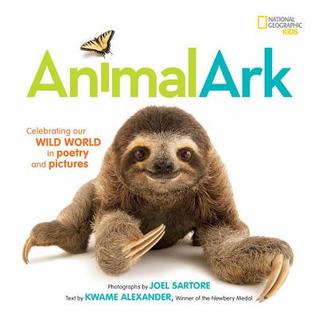
Animal Ark
Created by and Photographer: Joel Sartore
Poet: Kwame Alexander
Published February 14th, 2017 by National Geographic Society

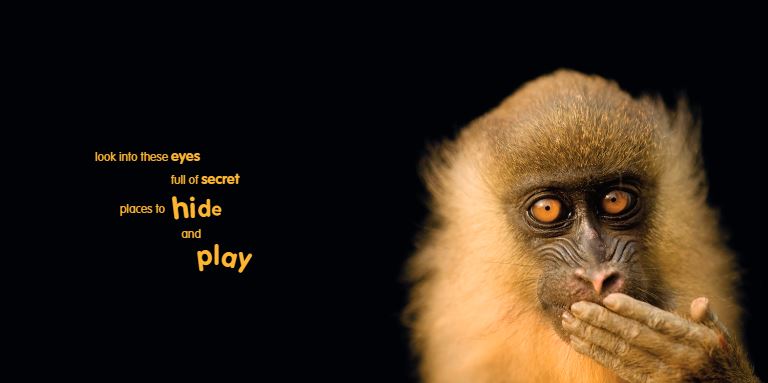
About the Book: National Geographic Kids proudly announces the release of Animal Ark: Celebrating Our Wild World in Poetry and Pictures, a picture book for children ages 4-8 written by Newbery Medal-winning author Kwame Alexander and featuring photographs by acclaimed National Geographic Fellow and photographer Joel Sartore. Animal Ark pairs Alexander’s uplifting poetry and prose with more than 100 of Sartore’s most compelling images of the world’s species to create a book for children that highlights the importance of conservation and the beauty of the animal kingdom.

Animal Ark is inspired by the National Geographic Photo Ark, a multiyear effort with Sartore and the National Geographic Society to document every species in captivity—inspiring people not just to care, but also to help protect these animals for future generations. To date, Sartore has completed portraits of more than 6,000 species, photographed on either a plain black or white background. No matter its size, each animal is treated with the same amount of affection and respect. The results are portraits that are not just stunningly beautiful, but also intimate and moving.

The companion adult book, National Geographic The Photo Ark: One Man’s Quest to Document the World’s Animals (National Geographic Books)—with a foreword by Harrison Ford—also showcases Sartore’s animal portraits: from tiny to mammoth, from the Florida grasshopper sparrow to the greater one-horned rhinoceros. In 2017, National Geographic Photo Ark exhibitions are opening at Omaha’s Henry Doorly Zoo and Aquarium, the Dallas Zoo, and the Cincinnati Zoo. Learn more at NatGeoPhotoArk.org and join the conversation on social media with #SaveTogether.

About Joel Sartore: Joel Sartore is a photographer, speaker, author, teacher, conservationist, National Geographic fellow, regular contributor to National Geographic magazine and founder of the National Geographic Photo Ark.  In addition to the work he has done for National Geographic, Sartore has contributed to Audubon magazine, Time, Life, Sports Illustrated, The New York Times, the Smithsonian magazine and numerous book projects.  His next book for adults, National Geographic The Photo Ark: One Man’s Quest to Document the World’s Animals  will be released in March 2017.

About Kwame Alexander: Kwame Alexander is a poet, educator, and New York Times bestselling author of 21 books, including The Crossover, which received the 2015 John Newbery Medal for the Most Distinguished Contribution to American Literature for Children. His other recent works include Booked, Surf’s Up, and He Said, She Said. He is the founder of Book-in-a-Day, a student-run publishing program that has created more than 3,000 student authors in 75 schools; and LEAP for Ghana, an international literacy project that builds libraries, trains teachers, and empowers children through literature. In 2015, Kwame served as Bank Street College of Education’s first writer-in-residence.

Book Trailer: 

My Review: I am in love with all of these animals! Do you see how cute they are?!?! And I love the message that Joel Sartore, National Geographic Kids, and Kwame Alexander are spreading with this text: “At its heart, the Photo Ark was born out of necessity… I  started to see that people weren’t paying much attention to the fate of all the others species we share this planet with. Without action, and soon, I worried that many animals could go extinct. The Photo Ark is my answer to this. By introducing the entire world to thoughts of photographs of [animals], I hope we can get everyone following, liking, tweeting, and even talking about this wondrous world of ours.” -Joel Sartore. I care deeply for all living things, and I have the same fear that Sartore has–that too many people are so caught up in their own little worlds that they aren’t focusing on the big world around us. The continual denial of climate change, the recent possible elimination of many of the EPA’s environmental protections, and so many other things makes the possibilities of us ruining our Earth even closer to reality 🙁

Teachers’ Tools for Navigation: Animal Ark has writing and science opportunities for the classroom. First, the theme of the book works beautifully within a science unit about endangered animals. Mix the text with the website What is Missing? by Maya Lin, and there are so many opportunities to discuss conservation and sustainability. Kwame Alexander’s poetry also gives an opportunity for poetry writing. In the Author’s Note, National Geographic shares information about haiku. Although all of Kwame’s poetry does not fit the traditional haiku format and we wouldn’t recommend it for a haiku mentor text, it shows how poets can take a traditional format and embrace yet manipulate it for their purpose.

Discussion Questions: Which animal would you like to learn more about?; What can humans do to help save these animals?; What is the theme of Animal Ark? What is the author/photographer trying to teach us?

Flagged Passages: 

Photography Outtakes!

Read This If You Love: National Geographic texts about animals, Poetry anthologies about nature including Water is Water by Miranda Paul, Books about making a difference like Dare to Dream…Change the World by Jill Corcoran & Be a Changemaker by Laurie Ann Thomson

Recommended For: 

classroomlibrarybuttonsmall closereadinganalysisbuttonsmall 

Signature

**Thank you to Karen at Media Masters Publicity for providing copes for review!**