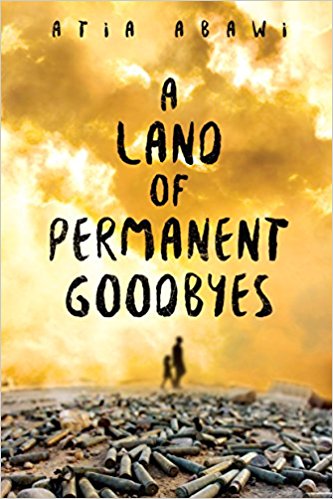
A Land of Permanent Goodbyes by Atia Abawi

Share


A Land of Permanent Goodbyes
Author: Atia Abawi
Published: January 23, 2018 by Philomel

Guest Review by Rachel Krieger

Summary: In a country ripped apart by war, Tareq lives with his big and loving family . . . until the bombs strike. His city is in ruins. His life is destroyed. And those who have survived are left to figure out their uncertain future.

In the wake of destruction, he’s threatened by Daesh fighters and witnesses a public beheading. Tareq’s family knows that to continue to stay alive, they must leave. As they travel as refugees from Syria to Turkey to Greece, facing danger at every turn, Tareq must find the resilience and courage to complete his harrowing journey.

But while this is one family’s story, it is also the timeless tale of all wars, of all tragedy, and of all strife. When you are a refugee, success is outliving your loss.

Review: This book is astonishing. In a world where people like to avoid talking about awkward things or situations that make us sad, this novel is completely, unapologetically honest. With every horror that Tareq experiences, you will find yourself crying with him, hoping with him, and loving with him. You will wish you could be with Alexia helping these people to find new lives. It is impossible to read Abawi’s story without reflecting on your own life, wondering what destiny would write about you.

If you know nothing about the refugee crises happening all over the world, this story will give you a glimpse into the lives of people struggling every day. Although it only looks into the lives of a few refugees, it gave me an idea of how different the life of a refugee is to my own. Atia Abawi’s story will make you reflect on your own humanity and actions, changing the way you think about the world and your own privilege.

Teacher’s Tool For Navigation: This is the perfect book to start a discussion about the situation in Syria. Since it is so essential to address current events regardless of the sensitive nature of those events, teachers should start conversations about this war-torn region. There are many young adult novels that address immigration, however, this one specifically follows the process of that immigration. It would be very beneficial to have students read a book like this and a book like American Street to look at very different stories of immigration with a few similar characteristics. This book in conjunction with others about immigration could be the perfect opportunity to discuss the idea of the danger of a single story.

This novel also offers a very interesting twist on narration. Since destiny is the narrator of this novel rather than one of the characters, there are small parts of the story that reflect broadly on war and humanity. It could be interesting to have students think about how this odd source of narration changes the story. They could even experiment with their own unique narrators, discussing how these odd points of view add or detract from stories.

Discussion Questions: What does the perspective switch add to the novel? Do you think a book like this is likely to encourage people to support this cause? How does Destiny as the narrator change this story? How would this story change if Tareq was a woman?

We Flagged: “Making it to Germany ended Tareq’s crossing and escape from war, but his new life as a refugee is just beginning. There are millions of Tareq’s, Susans and Fayeds, all in search of safety and kindness. I hope you will provide that warmth, be that helper, do what you can to make that world a better place. Because when I meet you—and I will—there will be reckoning. There always is.”

Read This If You Loved: Between Shades of Gray by Ruta Supetys, American Street by Ibi Zoboi, Picture Us in the Light by Kelly Loy Gilbert

Recommended For: 

classroomlibrarybuttonsmall 

RickiSig

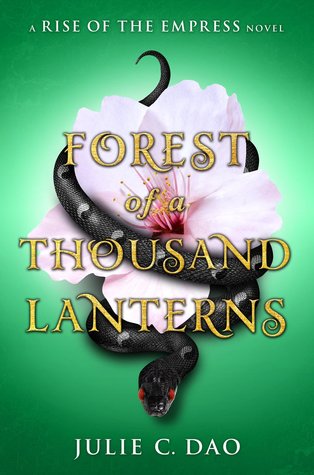
Forest of a Thousand Lanterns by Julie C. Dao

Share

Forest of a Thousand Lanterns
Author: Julie C. Dao
Published: October 10, 2017 by Philomel

Guest Review by Kaari von Bernuth

Goodreads Summary: An East Asian fantasy reimagining of The Evil Queen legend about one peasant girl’s quest to become Empress–and the darkness she must unleash to achieve her destiny.

Eighteen-year-old Xifeng is beautiful. The stars say she is destined for greatness, that she is meant to be Empress of Feng Lu. But only if she embraces the darkness within her. Growing up as a peasant in a forgotten village on the edge of the map, Xifeng longs to fulfill the destiny promised to her by her cruel aunt, the witch Guma, who has read the cards and seen glimmers of Xifeng’s majestic future. But is the price of the throne too high?

Because in order to achieve greatness, she must spurn the young man who loves her and exploit the callous magic that runs through her veins–sorcery fueled by eating the hearts of the recently killed. For the god who has sent her on this journey will not be satisfied until his power is absolute.

Kaari’s Review: The entire time, I wasn’t entirely sure if the  protagonist was the hero or the villain. And, that isn’t necessarily a bad thing! I appreciated this book because it made me think. I’d be cheering for Xifeng and wanting her to win, and then she’d do an awful thing to help her win, and I’d be repulsed by her. This book highlights the struggle of ambition, and how difficult it is for a woman to achieve the dreams she has. And, while I am off put by Xifeng’s methods and don’t necessarily think they were the right decisions, her actions and the way she achieves power could spark great discussions.

The setting and the plot of this book was thrilling, and I Ioved the way that fantasy was woven into a world so seamlessly. The creatures and ideas introduced were thought provoking and had amazing descriptions that made me feel like I was living in the enchanted world with the characters. I do wish that there had been some more resolution regarding some of the magical beings and the warnings they gave, but I think that Dao intends for this to be the first in a series, and I’m sure that more resolution will come in later novels.

Teachers’ Tools for Navigation: I would definitely include this book in a classroom library for kids to check out if they want to read it. However, while this book is interesting, and explores an interesting take on female empowerment, I don’t think I would teach this book in a classroom setting, or use it in literature circles. I am a huge advocate for female empowerment, and discussing the paths for women to claim their power. However, I think that because Xifeng’s methods were so morally questionable, and readers aren’t sure if Xifeng is a hero or a villain, that Forest of a Thousand Lanterns is not the best novel to discuss for this topic. There are many other books that discuss female empowerment in a much more productive light. So, I’d include it in a classroom library, but not necessarily teach it in any way.

Discussion Questions: Do you think Xifeng’s methods were justifiable?; What does the social hierarchy look like in this novel?; Is Xifeng a hero or a villain in this story?; What is the effect of portraying a strong female protagonist in this way?; How is the fantasy world characterized?

We Flagged: “‘I’m a good man, Xifeng. I let you have your own way and speak your mind…’

‘You think I don’t know that? That I’m so blind and stupid?’

‘Yes, I do!’ he shouted, his face bright red. ‘I offer you the world…’

‘Yes, the world as you see it!’

‘I saved you from that evil woman!’

‘Only to trap me yourself.’ She watched him turn away and run a trembling hand over his head. ‘I was Guma’s, and now you want me to be yours. I have my own soul and my own destiny, and I’m tired of belonging to someone else’” (Advanced Reader Copy p. 125).

Read This If You Loved: Monstress by Marjorie M. Liu; Gunpowder Alchemy by Jeannie Lin; Girls Made of Snow and Glass by Melissa Bashardoust

Recommended For:

classroomlibrarybuttonsmall

  RickiSig

**Thank you to Kaari for reviewing this book!**

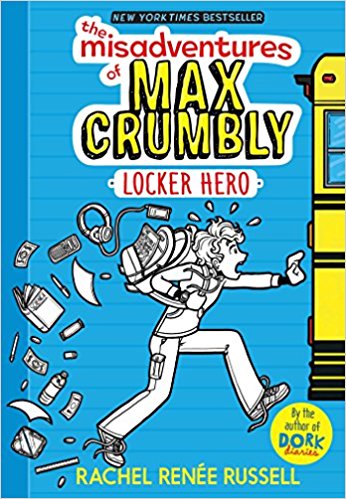
The Misadventures of Max Crumbly: Locket Hero by Rachel Renee Russell

Share

The Misadventures of Max Crumbly: Locket Hero
Author: Rachel Renee Russell
Published: June 7, 2016 by Aladdin

A Guest Review by Emily Baseler

GoodReads Summary: Max Crumbly is about to face the scariest place he’s ever been: South Ridge Middle School. There’s a lot that’s great about his new school, but there’s also one big problem—Doug, the school bully whose hobby is stuffing Max in his locker. If only Max could be like the hero in his favorite comics. Unfortunately, Max’s uncanny, almost superhuman ability to smell pizza from a block away won’t exactly save any lives or foil bad guys. But that doesn’t mean Max won’t do his best to be the hero his school needs!

Review: This book is the beginning of a soon to be very popular series. I suggest you purchase a copy of this book for your classroom library while you still can. In June, the 2nd book will be released and I have a feeling it will not be available on the shelf for long. This book has a very similar style to the “Dairy of a Wimpy Kid” series which children across grade levels love. This book introduces relevant themes to a middle grade reader such as peer conflict, coping with bullying, pop culture, relationships, friendship, surviving middle school, and learning to laugh at yourself. This book was an easy ready and would be ideal for a more reluctant reader or to read for pleasure.

Teachers’ Tools for Navigation: This book is one of the rare few written in second person. Max Crumbly, the narrator, is writing journal entries addressing the reader as “you.” “The Adventures of Max Crumbly” would be an interesting text to explore point of view with your students. You could also use the text to highlight the use of exclamation and variation of font. Additionally, the text could be a resource when reviewing the writing process. There are entire sentences scratched out, arrows redirecting the narrative, edits, revisions, and inclusions in the final text.

Discussion Questions: Is this style of writing something you think you would be able to create?; How does the point of view of the narrator impact your perceptions as a reader?; What value did the illustrations add to the text—if any?; Are there any themes or topics in which you can identify/connect with?

Book Trailer: 

Online Resource: http://maxcrumbly.com/

Read This If You Loved: Dork Diaries series by Rachel Renee Russell, Dairy of a Wimpy Kid series by Jeff Kinney

Recommended For:
 classroomlibrarybuttonsmall

Thank you, Emily!

RickiSig

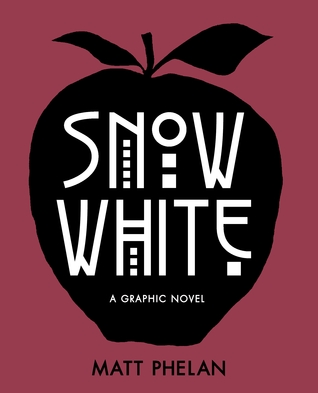
Snow White: A Graphic Novel by Matt Phelan

Share

Snow White: A Graphic Novel
Author: Matt Phelan
Published: September 21, 2016 by Candlewick

A Guest Review by Emily Baseler

GoodReads Summary: Award-winning graphic novelist Matt Phelan delivers a darkly stylized noir Snow White set against the backdrop of Depression-era Manhattan.

The scene: New York City, 1928. The dazzling lights cast shadows that grow ever darker as the glitzy prosperity of the Roaring Twenties screeches to a halt. Enter a cast of familiar characters: a young girl, Samantha White, returning after being sent away by her cruel stepmother, the Queen of the Follies, years earlier; her father, the King of Wall Street, who survives the stock market crash only to suffer a strange and sudden death; seven street urchins, brave protectors for a girl as pure as snow; and a mysterious stock ticker that holds the stepmother in its thrall, churning out ticker tape imprinted with the wicked words “Another . . . More Beautiful . . . KILL.” In a moody, cinematic new telling of a beloved fairy tale, extraordinary graphic novelist Matt Phelan captures the essence of classic film noir on the page—and draws a striking distinction between good and evil.

Review: Matt Phelan reinvented the “happily ever after” with this retelling. I identify as a Disney Classic enthusiast but I was pleasantly surprised with the ending. The illustrations are gorgeous with distinct intentionality. More mature themes such as death, assassination, murder were evaluated within a historical context to create an incredible murder mystery story at the level of a middle grade reader.

Teachers’ Tools for Navigation: This would be an excellent text to hand a more reluctant reader. There is limited text the reader is asked to interpret the illustrations and structure. In literature groups, students could potentially discuss the use of metaphor, oenomania, author/illustrator’s choice, and compare/ contrast the original fairytale with the retelling. This is also a text I would recommend to a student who has shown an interest in the graphic novel genre to read independently.

Discussion Questions: Why do you think the author choose to use red in selected illustrations? How did this choice influence you as a reader?; Why do you think the author choose to break apart the chapters this way?; Even though there were few words, how did you interpret the mood, tone, and voice of characters?; Did you find yourself needing to interpret the illustrations to understand the plot? What was that experience like for you as a reader?; How is this retelling of the classic fairy tale of “Snow White” different than the original? What did you notice is similar?

Flagged Passage: “My name is Snow White, but my mother didn’t call be that to be funny. She would say that the snow covers everything and makes the entire world beautiful” (Ch. 10)

Book Trailer: 

Read This If You Loved: Red: The True Story of Red Riding Hood by Liesl Shurtliff, Jack: The True Story of Jack and the Beanstalk by Liesl Shurtliff, Rump: The True Story of Rumpelstiltskin by Liesl Shurtliff

Recommended For:
 classroomlibrarybuttonsmall

Thank you, Emily!

RickiSig

Author Guest Post: “Survival Stories for Tweens and Teens” by Yvonne Ventresca, author of Pandemic and Black Flowers, White Lies

Share

“Survival Stories for Tweens and Teens”

With Zika virus and deadly hurricanes in the news, tweens and teens may have an increased interest in fictional survival stories. Here is a roundup of some of my favorites along with my own novel and a few from my to-read list.
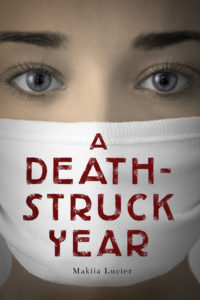
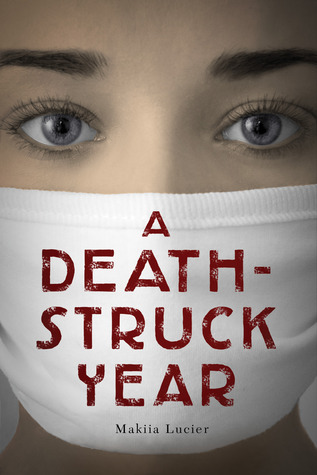
death-struck-year

Title: A DEATH-STRUCK YEAR
Author: Makiia Lucier
Disaster: Contagious disease/Spanish Influenza
Setting: 1918 Oregon
Ages: 12+
Pub date: Paperback, 2016

“In the grip of the deadly 1918 flu pandemic, not even the strong survive. The Spanish influenza is devastating the East Coast–but Cleo Berry knows it is a world away from the safety of her home in Portland, Oregon. Then the flu moves into the Pacific Northwest. Schools, churches, and theaters are shut down. The entire city is thrust into survival mode–and into a panic.

Seventeen-year-old Cleo is told to stay put in her quarantined boarding school, but when the Red Cross pleads for volunteers, she cannot ignore the call for help. In the grueling days that follow her headstrong decision, she risks everything for near-strangers. Strangers like Edmund, a handsome medical student. Strangers who could be gone tomorrow. And as the bodies pile up, Cleo can’t help but wonder: when will her own luck run out?. . .”
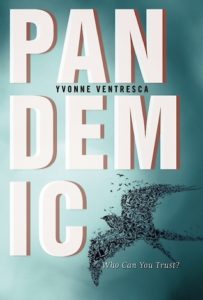
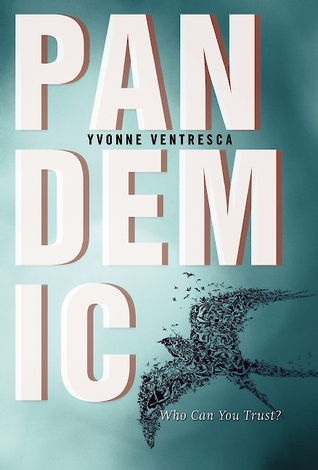
pandemic

Title: PANDEMIC
Author: Yvonne Ventresca
Disaster: Contagious disease/Avian Influenza
Setting: Contemporary New Jersey
Age: 12+
Pub date: Paperback, 2016

In Pandemic, only a few people know what caused Lilianna Snyder’s sudden change from a model student to a withdrawn pessimist who worries about all kinds of disasters. After her parents are called away on business, Lil’s town is hit by what soon becomes a widespread fatal illness. With her worst fears realized, Lil must find a way to survive not only the outbreak and its real-life consequences, but also her own personal demons.

“This is an engrossing apocalyptic story, told through Lil’s eyes and newsfeeds as her neighborhood, then the East Coast, and finally the entire U.S. buckles to its knees as the pandemic spreads. . . . Themes of friendship and coming together in a crisis carry the novel.” –School Library Journal
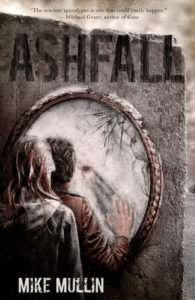
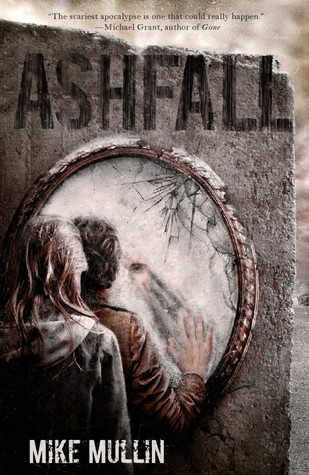
ashfall

Title: ASHFALL
Author: Mike Mullin
Disaster: Supervolcano eruption
Setting: Contemporary US
Ages: 12+
Pub date: 2012, Paperback
Other books in the series: ASHEN WINTER (Paperback, 2013), SUNRISE (Paperback, 2015)

In the aftermath of a supervolcano eruption, Alex struggles to survive a cross-country journey to reunite with his family. This is a well-researched, realistic disaster story, making it that much scarier.

“Under the bubbling hot springs and geysers of Yellowstone National Park is a supervolcano. Most people don’t know it’s there. The caldera is so large that it can only be seen from a plane or satellite. It just could be overdue for an eruption, which would change the landscape and climate of our planet.

For Alex, being left alone for the weekend means having the freedom to play computer games and hang out with his friends without hassle from his mother. Then the Yellowstone supervolcano erupts, plunging his hometown into a nightmare of darkness, ash, and violence. Alex begins a harrowing trek to search for his family and finds help in Darla, a travel partner he meets along the way. Together they must find the strength and skills to survive and outlast an epic disaster.”
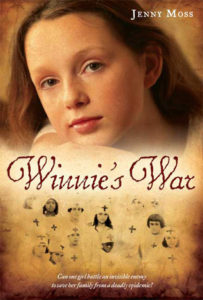
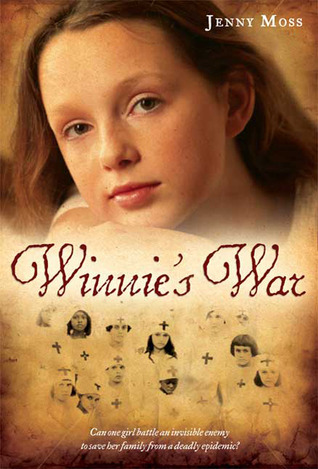
winnies-war

Title: WINNIE’S WAR
Author: Jenny Moss
Disaster: Contagious disease/Spanish Influenza
Setting: 1918 Texas
Age: 10-14
Pub date: Hardcover, 2009

A family relationship story set during the historic Spanish Flu pandemic of 1918.

“Life in Winnie’s sleepy town of Coward Creek, Texas, is just fine for her. Although her troubled mother’s distant behavior has always worried Winnie, she’s plenty busy caring for her younger sisters, going to school, playing chess with Mr. Levy, and avoiding her testy grandmother. Plus, her sweetheart Nolan is always there to make her smile when she’s feeling low. But when the Spanish Influenza claims its first victim, lives are suddenly at stake, and Winnie has never felt so helpless.

She must find a way to save the people she loves most, even if doing so means putting her own life at risk. . . .”
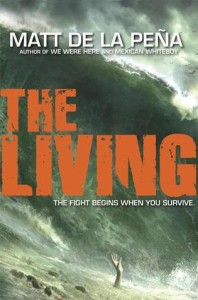
living

Title: THE LIVING
Author: Matt de la Peña
Disaster: Earthquake/Tsunami
Setting: Contemporary US
Ages: 12+
Pub date: Paperback, 2015
Other books in the series: THE HUNTED (Paperback, 2016)

“Shy took the summer job to make some money. In a few months on a luxury cruise liner, he’ll rake in the tips and be able to help his mom and sister out with the bills. And how bad can it be? Bikinis, free food, maybe even a girl or two—every cruise has different passengers, after all.

But everything changes when the Big One hits. Shy’s only weeks out at sea when an earthquake more massive than ever before recorded hits California, and his life is forever changed.

The earthquake is only the first disaster. Suddenly it’s a fight to survive for those left living.”
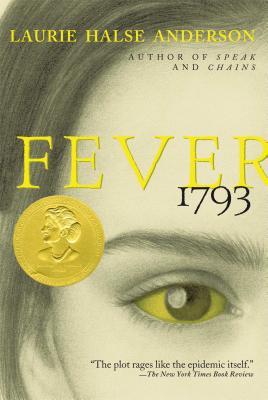
fever-1793

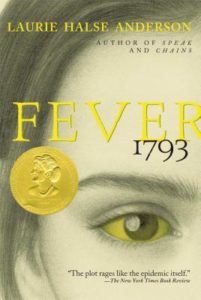
Title: FEVER 1793
Author: Laurie Halse Anderson
Disaster: Contagious disease/Yellow Fever
Setting: 1793 Philadelphia
Ages: 10-14
Pub date: Paperback, 2002

An award-winning story set during a historical yellow fever outbreak, Fever 1793 is part coming of age story and part suspenseful survival.

“It’s late summer 1793, and the streets of Philadelphia are abuzz with mosquitoes and rumors of fever. Down near the docks, many have taken ill, and the fatalities are mounting. Now they include Polly, the serving girl at the Cook Coffeehouse. But fourteen-year-old Mattie Cook doesn’t get a moment to mourn the passing of her childhood playmate. New customers have overrun her family’s coffee shop, located far from the mosquito-infested river, and Mattie’s concerns of fever are all but overshadowed by dreams of growing her family’s small business into a thriving enterprise. But when the fever begins to strike closer to home, Mattie’s struggle to build a new life must give way to a new fight-the fight to stay alive.”
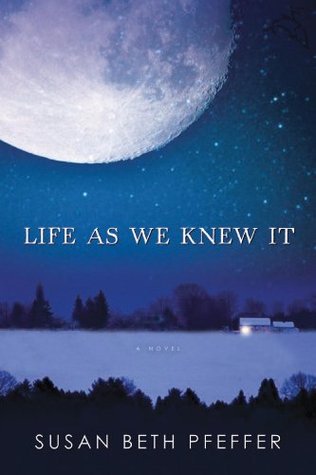
life-as-we-knew-it

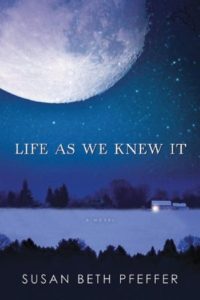
Title: LIFE AS WE KNEW IT
Author: Susan Beth Pfeffer
Disaster: Meteor collision with the moon
Setting: Contemporary PA
Ages: 12+
Pub date: Paperback, 2008
Other books in the series: THE DEAD AND THE GONE (Paperback, 2010), THIS WORLD WE LIVE IN (Paperback, 2011), THE SHADE OF THE MOON (Paperback, 2014)

Miranda and her family struggle to survive after a meteor collides with the moon, creating devastating consequences on Earth and her small hometown in Pennsylvania.

“Miranda’s disbelief turns to fear in a split second when a meteor knocks the moon closer to the earth. How should her family prepare for the future when worldwide tsunamis wipe out the coasts, earthquakes rock the continents, and volcanic ash blocks out the sun? As summer turns to Arctic winter, Miranda, her two brothers, and their mother retreat to the unexpected safe haven of their sunroom, where they subsist on stockpiled food and limited water in the warmth of a wood-burning stove.

Told in journal entries, this is the heart-pounding story of Miranda’s struggle to hold on to the most important resource of all–hope–in an increasingly desperate and unfamiliar world.”

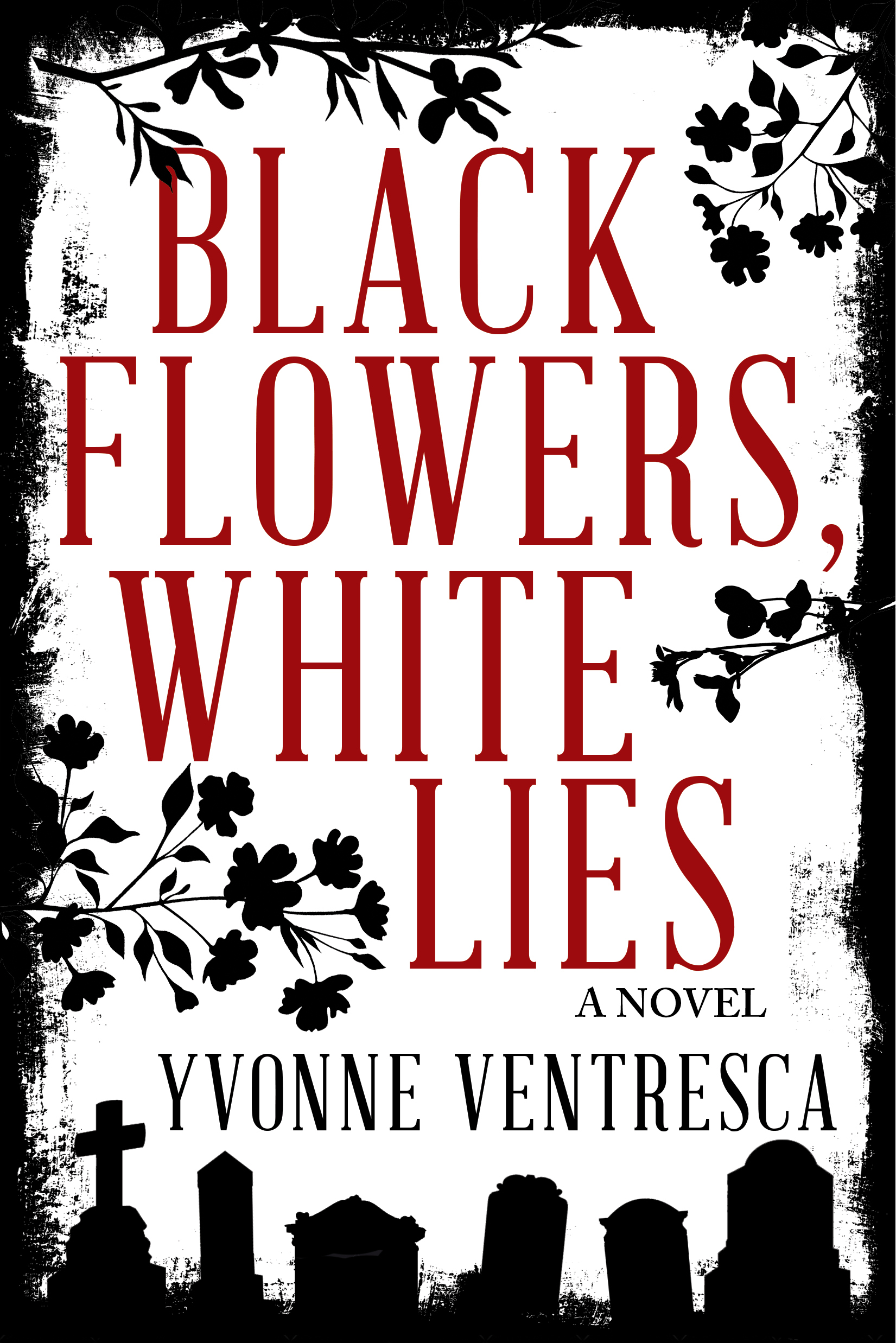
ventresca-yvonne-pandemic black-flowers-white-lies-9781510709881

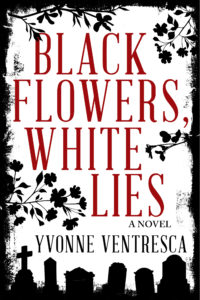
Bio: Yvonne Ventresca’s latest young adult novel, Black Flowers, White Lies was recently published by Sky Pony Press (October, 2016). BuzzFeed included it at the top of their new “must read” books: 23 YA Books That, Without a Doubt, You’ll Want to Read This Fall. Her debut YA novel, Pandemic, won a 2015 Crystal Kite Award from the Society of Children’s Book Writers and Illustrators. A free educator’s guide for Pandemic is available for download from Yvonne’s website.

To connect with Yvonne: Facebook | Twitter | Blog | Instagram | Pinterest | Goodreads

Thank you, Yvonne, for this list of survival titles including many we loved and more that we want to read!

Kellee Signature andRickiSig


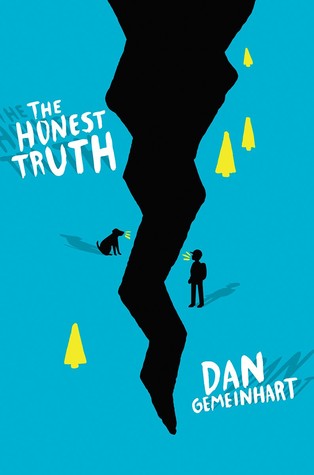
The Honest Truth by Dan Gemeinhart

Share

honest truth

The Honest Truth
Author: Dan Gemeinhart
Published: January 27, 2015 by Scholastic Press

Summary: In all the ways that matter, Mark is a normal kid. He’s got a dog named Beau and a best friend, Jessie. He likes to take photos and write haiku poems in his notebook. He dreams of climbing a mountain one day.

But in one important way, Mark is not like other kids at all. Mark is sick. The kind of sick that means hospitals. And treatments. The kind of sick some people never get better from.

So Mark runs away. He leaves home with his camera, his notebook, his dog, and a plan to reach the top of Mount Rainier–even if it’s the last thing he ever does.

The Honest Truth is a rare and extraordinary novel about big questions, small moments, and the incredible journey of the human spirit.

Ricki’s Review: In the introduction of the ARC, Dan Gemeinhart writes that this story was inspired by his friend Mark, who passed away from cancer. While the book is not about Mark, there are “smooth rocks of truth” within it. He wrote the story in hopes that Mark would enjoy reading it. With this in mind, I began the book already emotionally invested. Mark is a 12-year-old boy who has recently relapsed with cancer. He is tired of being sick, and he has set out with his dog and plans to go to Mt. Rainier to die. Much of the book is Mark’s journey to Rainier, and we slowly learn about his experiences with cancer throughout the story. Every other chapter is written by his best friend Jesse, and I found their friendship to be inspiring, particularly given the author’s introduction. This is a beautiful story that will leave a mark on readers’ hearts. I will be recommending it often.

Kellee’s Review: The Honest Truth was my first choice for my school’s faculty book club because I had only hear amazing things about it. I jumped into reading it without knowing anything about it, but by the end of the first page, I knew that all my friends who recommended it to me were right. Mark has a voice that is so full of hurt and sorrow that it jumps off the page and into your heart. The obstacles he faces and overcomes while also making his way to die alone show the strength of his character. I also was a big fan of the two points of view because it allows the reader to see what was going on at home and maybe get some more truth than what Mark was telling us (though he swears it all is the honest truth).

For our book club meeting, I tabbed up my book with passages I loved (I’ll list all the pages below), haikus that Mark wrote, and descriptions of all of the photographs he took along the way.

Teachers’ Tools for Navigation: This would make a fantastic read-aloud. It has so much to discuss! The richly realized themes would make for fantastic conversations in the classroom. I would love to hear students’ thoughts about the story, particularly in relation to the discussion questions below. There are many debatable points in the story—which makes it all the more interesting to use as a read aloud!

Additionally, The Honest Truth would be a good introduction to haiku and visual story telling since Mark writes haiku and takes photographs to help tell his story. The haiku (in chronological order) are found on pages 120, 8, 22, 78, 79, 130. The photos Mark took are explained on pages 226-227. Using these as mentor texts, students can create their own story using poetry and photography.

More discussion ideas can be found at http://www.scholastic.com/teachers/lesson-plan/honest-truth-discussion-guide.

Discussion Questions: Was Mark selfish to leave home? Do you think he should have told his parents? Do you think what he did was fair? Were his actions fair to his dog?; If you were Jesse, would you have told authorities? Was she wrong to keep a secret? Do you think Mark had the ability to make such a big decision?; How did Gemeinhart use personification to help make the setting a character (see pages 34, 124, and 196)?; How much pressure do sick children have to act like adults?; How was Mark’s journey selfish? How was is selfless?; Who called? Wesley or Jess?; Why didn’t the mom ever look at her credit card report to see the train ticket?; Were you angry at Mark? Scared? How do you think students will feel?; Is a 12-year-old old enough to decide you want to die? Is it reasonable for adults to expect a kid to keep on going through treatment after treatment?

Flagged Passage: “Dogs die. But dogs live, too. Right up until they die, they live. They live brave, beautiful lives. They protect their families. And love us. And make our lives a little brighter. And they don’t waste time being afraid of tomorrow.”

Kellee’s favorite passages can be found on page 5 (“Here’s…”), 19 (“I bit…”), 21 (“I closed…”), 46 (“I was…”), 70 (“She knew…), 82 (“I like…), 97 (“Here’s…”), 179 (“They would…”), 212 (“And then…”), 228 (“There’s more…)

Read This Book If You Loved: “To Build a Fire” by Jack London; Hatchet by Gary Paulsen; The Call of the Wild by Jack London; Wonder by R.J. Palacio, The Fault in Our Stars by John Green

Recommended For: 

classroomlibrarybuttonsmall readaloudbuttonsmall litcirclesbuttonsmall

  RickiSigand Kellee Signature

Finding Winnie: The True Story of the World’s Most Famous Bear by Lindsay Mattick

Share

NFPB2016

Nonfiction Wednesday

Nonfiction Picture Book Wednesday is hosted by Kid Lit Frenzy and was started to help promote the reading of nonfiction texts. Most Wednesdays, we will be participating and will review a nonfiction text (though it may not always be a picture book).
Be sure to visit Kid Lit Frenzy and see what other nonfiction books are shared this week!

finding winnie

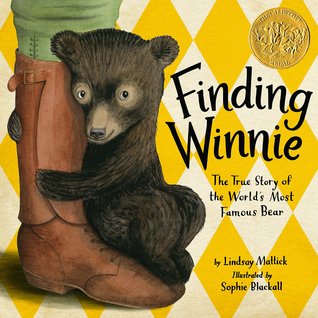
Finding Winnie: The True Story of the World’s Most Famous Bear
Author: Lindsay Mattick
Illustrator: Sophie Blackall
Published October 20, 2015 by Little, Brown Books for Young Readers

Goodreads Summary: Before Winnie-the-Pooh, there was a real bear named Winnie.

In 1914, Harry Colebourn, a veterinarian on his way to tend horses in World War I, followed his heart and rescued a baby bear. He named her Winnie, after his hometown of Winnipeg, and he took the bear to war.

Harry Colebourn’s real-life great-granddaughter tells the true story of a remarkable friendship and an even more remarkable journey–from the fields of Canada to a convoy across the ocean to an army base in England…

And finally to the London Zoo, where Winnie made another new friend: a real boy named Christopher Robin.

Here is the remarkable true story of the bear who inspired Winnie-the-Pooh.

Ricki’s Review: Many of my blogger friends raved about this book. I knew I needed to read it, but my library hold list was very long. When I saw it won the Caldecott Award, I took action. I drove my son to the bookstore and read the book to him while he sat on my lap. My aunt came with me, and she cried through the entire book.

When we reached the end, we just stared at each other and she said, “Ricki, you have to buy this book. Henry needs to have this special story.” And this is how I broke my rule about buying books. Finding Winnie sits elegantly on my son’s bookshelf, and I don’t regret breaking my rule. We love reading it together. The story is captivating from the beginning to the end, and the author and illustrator paint the scene in a remarkable way that readers will be unable to put the book down. Depicting history in picture books is very difficult, and Mattick and Blackall nail it. I highly recommend this charming book if you haven’t read it yet. It will stay close to your heart.

Kellee’s Review: One of the things I particularly loved about Finding Winnie, that Ricki didn’t mention in her beautiful review above, was that the book was written by the great-granddaughter of Captain Coleburn, the serviceman who owned Winnie originally. Having Lindsay Mattick’s close knowledge of the story helped her delve into the story and transport the reader into Winnie’s stories. The backmatter filled with photos and other primary documents also make it feel like we are peaking into the family’s scrap book.

I also want to praise Sophie Blackall’s illustrations. I love Sophie’s soft style with what seems like pencil and paints just is angelic and brings Mattick’s story to life. Although they both would shine separately, they are stellar together.

Teachers’ Tools for Navigation: As a teacher, I’d love to do two things with this book. First, I’d want to compare it to the Winnie the Pooh stories by A. A. Milne. It would be great to compare and contrast the stories to make connections about how Milne might have been inspired. Then, I’d put this book in semi-literature circles. Students might read all of the books (in the “Read This If You Loved” section below) in small groups, and rotate the books across groups. Then, they could discuss the topic and depiction of animals during wars throughout literature. They could compare and contrast the stylistic choices of the authors and also delve into potential ways that animals might be symbolic of each particular war.

Discussion Questions: How do the author and illustrator depict Winnie? How does Winnie’s story evolve?; What does Harry’s friendship with Winnie teach us about human nature?; How might this story have inspired the fictional Winnie the Pooh story?; Why do you think it won the Caldecott? What qualities make it an award winner?

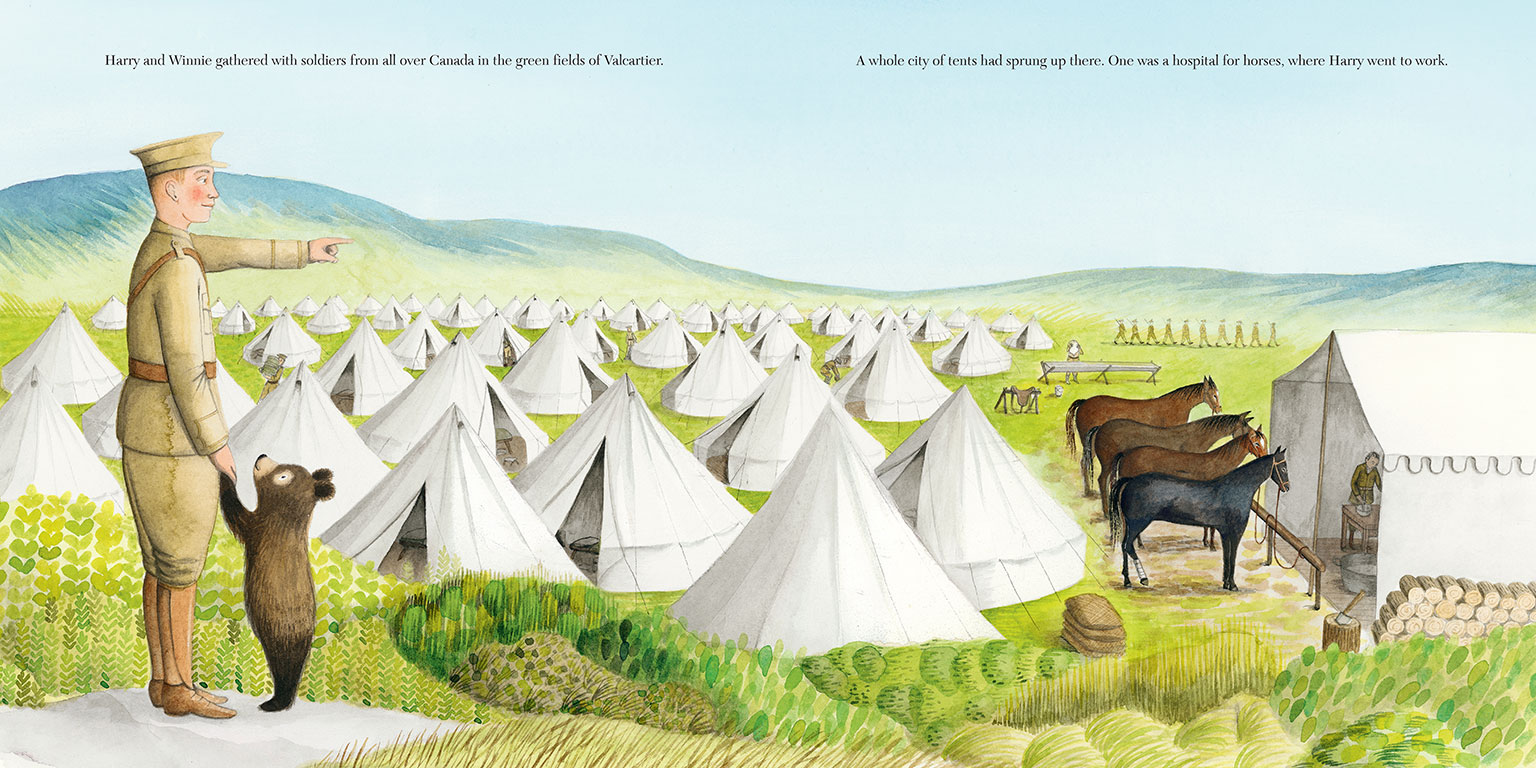
We Flagged: 

Finding WInnie Spread

**Image from: https://thewalrus.ca/finding-winnie/. We recommend this site, which includes many great images related to the text!**

Read This If You Loved: Winnie: The True Story of the Bear That Inspired Winnie-the-Pooh by Sally M. Walker, Winnie the Pooh  by A. A. Milne, Midnight, A True Story of Loyalty in World War I by Mark Greenwood, Stubby, the War Dog by Ann Bausum, Dogs of War by Sheila Keenan, Faithful Elephants by Yukio Tsuchiya

Recommended For: 

readaloudbuttonsmall classroomlibrarybuttonsmall litcirclesbuttonsmall

RickiSigandSignature