Salt to the Sea by Ruta Sepetys

Share

salt to the sea

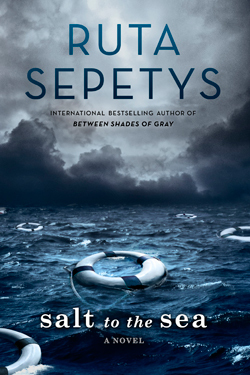
Salt to the Sea
Author: Ruta Sepetys
Published: February 2nd, 2016 by Philomel Books

GoodReads Summary: The author of Between Shades of Gray returns to WWII in this epic novel that shines a light on one of the war’s most devastating—yet unknown—tragedies.

In 1945, World War II is drawing to a close in East Prussia, and thousands of refugees are on a desperate trek toward freedom, almost all of them with something to hide. Among them are Joana, Emilia, and Florian, whose paths converge en route to the ship that promises salvation, the Wilhelm Gustloff. Forced by circumstance to unite, the three find their strength, courage, and trust in each other tested with each step closer toward safety.

Just when it seems freedom is within their grasp, tragedy strikes. Not country, nor culture, nor status matter as all ten thousand people aboard must fight for the same thing: survival.

My Review: This is a book about humanity. Each voice serves a unique purpose to foster a complete picture of this great tragedy in history. The characters feel real, and their stories and perspectives are so different that readers are able to fully understand a diversity of experiences toward the war. Wow, wow, wow. I don’t feel that summarizing or reviewing this book will even do it justice. I felt like I couldn’t eat or sleep until I finished it. Salt to the Sea takes readers on an epic adventure and throws them for an emotional tailspin. After I closed the cover, I was reeling.  The language is powerful and the story is captivating.

Ruta Sepetys holds a special place in my heart. She is a powerful force in historical fiction, and this book is no exception. Several years ago, I was fortunate to be sharing a drink with Ruta at the ALAN cocktail party. When I asked her what she was working on, her eyes glinted as she talked about the concept of this book. She felt a connection to this tragedy, and while nothing had been written at the time, I knew it would be a remarkable novel. For the next several years, I thought about the way Ruta described the historical event, and I consistently checked her pages to see if I would see any further information about its progress. Several years later, I would (fortunately) receive this book in the mail. Boy was it worth the wait.

Teachers’ Tools for Navigation: The teaching opportunities for this book are endless. I would love to use this book to teach the theme: What does it mean to be human? or What does it mean to be a good person? Then, I might pair other texts (e.g. Kite Runner by Khaled Hosseini) and create a text set to consider these themes. The perspective and voice of these characters are strong, and I imagine rich classroom discussions about the ways these four characters show us a slice of humanity. (One of the four main characters is debatably evil, and this would offer excellent, critical conversations). Beyond these four characters, readers might consider the minor characters of this text (or tangential war figures, such as Hitler or Stalin). Are humans innately selfish? Are the innately good? Are we all flawed? Are there any universal characteristics amongst these characters, or are they too different?

Discussion Questions: How does the author balance historical information and story? What tools does she use to do this?; Why do you think the author chose to feature four points-of-view rather than one? Does it add or detract from the story? What similarities do you see across these voices? What differences?

We Flagged: “Survival had its price: guilt.”

*Quote taken from an advanced reader copy. It may change after publication.*

Read This If You Loved: Between Shades of Gray by Ruta Sepetys; The Watch that Ends the Night by Allan Wolf; The Book Thief by Markus Zusak; A Night to Remember by Walter Lord; The Guernsey Literary and Potato Peel Pie Society by Mary Ann Shaffer; Schindler’s List by Thomas Keneally; Code Name Verity by Elizabeth Wein

Recommended For:

 closereadinganalysisbuttonsmall litcirclesbuttonsmall classroomlibrarybuttonsmall

RickiSig

Review and Author Interview!: Ebola: Fears and Facts by Patricia Newman

Share

NFPB2015

Nonfiction Picture Book Wednesday

Nonfiction Picture Book Wednesday is hosted by Kid Lit Frenzy and was started to help promote the reading of nonfiction texts. Most Wednesdays, we will be participating and will review a nonfiction text (though it may not always be a picture book).
Be sure to visit Kid Lit Frenzy and see what other nonfiction books are shared this week!
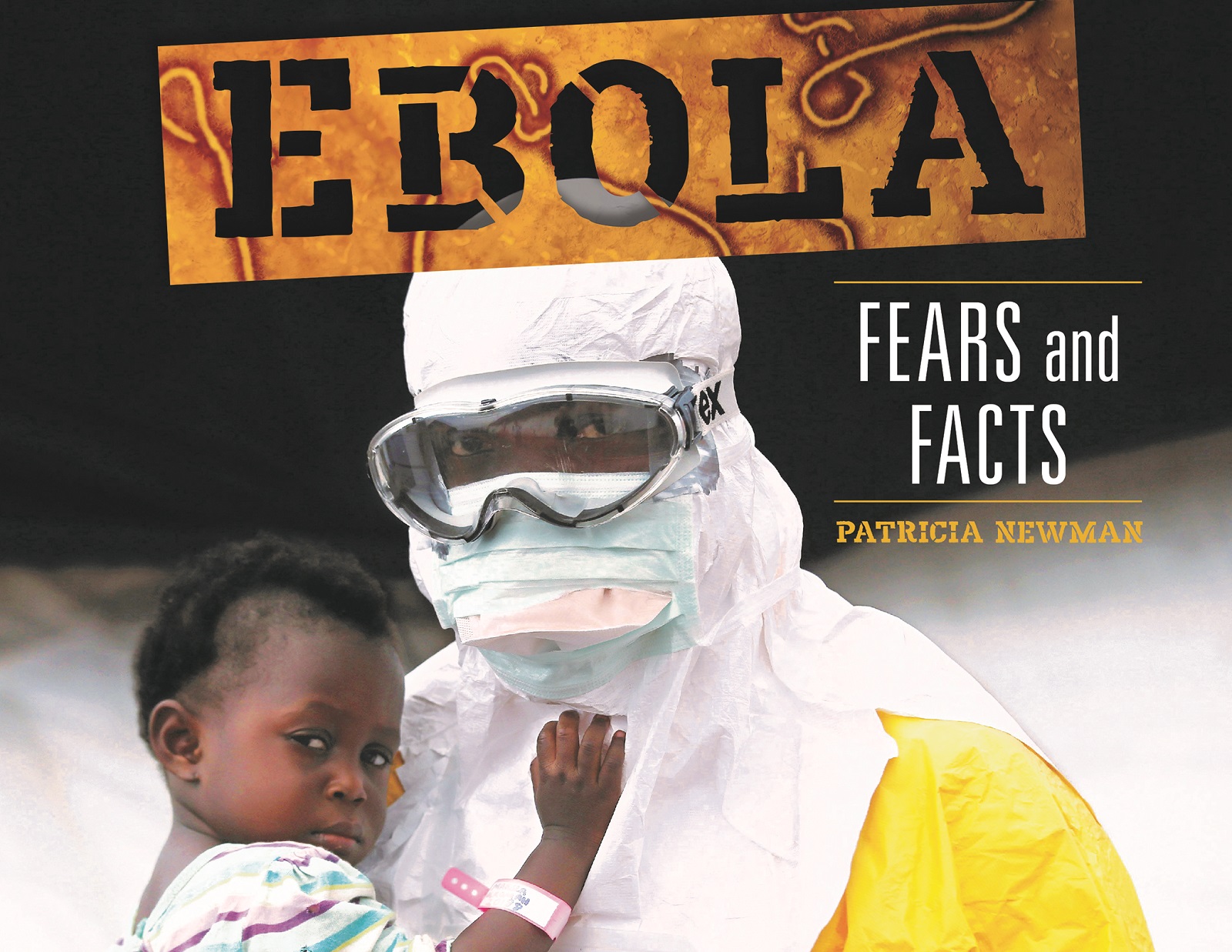
ebola

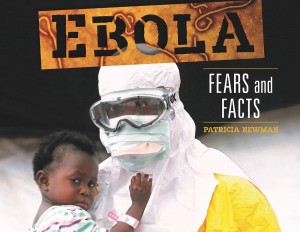
Ebola: Fears and Facts
Author: Patricia Newman
Expected Published October 28th, 2015 by Lerner Publishing Group

Goodreads Summary: Ebola is a deadly contagious disease. From 1975 to 2013, it killed about 1,500 people. But a 2014 epidemic killed more than six times that number. At first the outbreak was contained to one country. But soon it spread to two others―the virus was on the move, and people were scared. When two American healthcare workers became infected and were sent to the United States for treatment, many people feared a pandemic―an outbreak that would spread all over the world. Could it happen?

Ebola: Fears and Facts takes you behind the sensational headlines to address questions and concerns about the virus. Learn about the history of the disease, its symptoms, and how it spreads. Find out how the 2014 epidemic compares to past Ebola outbreaks, as well as to outbreaks of other infectious diseases. With a question-and-answer section and reference maps, Ebola: Fears and Facts will help you to better understand this most-feared disease.

My Review: The Ebola epidemic of 2014 caused pure panic around the world. Because of the 24-hour news coverage of the disease as it entered the U.S, Ebola became a hot topic; however, there was so much misconception about the disease. As a teacher during the epidemic, I saw how scared students were of the disease and how little they knew about it. The text is a wonderful resource to help kids learn about the disease.

Teachers’ Tools for Navigation: Patricia Newman’s middle grade nonfiction texts are a necessity for middle school classrooms. They teach the reader so much about the topic though do so in an interesting way to keep the readers’ attention. They are also about important topics that kids can make a difference by learning about. Her books, including Ebola, need to be available to students.

I really like how the book is set up. It begins with the history then goes into the way Ebola works and finally looks at the 2014 outbreak and how Ebola could possibly be conquered. It allows readers to navigate to the section they want or build up their knowledge from beginning to end.

Discussion Questions: What did you learn about Ebola that you didn’t know before reading?; What is the difference between Ebola and diseases like the measles?; How did the Ebola virus begin?; How is the Ebola virus a threat to apes in Africa?

“Truth or Hype?…The next time you come across a story about Ebola–or any topic–ask yourself the following questions. 1. What does the storyteller want us to remember? 2. How might different people understand the story? 3. Does the storyteller present facts or opinions? How do we know? What words are used? Does the storyteller quote scientific or eyewitness sources? 4. What action does the storyteller want us to take? 5. Do our emotions influence the way we evaluate the story?” (p. 35)

Author Interview: Thank you to Patricia for answering some of my questions!

What research did you do when writing Ebola? 

I visited East Africa several years ago, so I had a general sense of the landscape, the bush, the people, the cadence of their speech. But the crowded cities and steamy jungles of West Africa are different than the wide open savannas of the east. Of course, I needed to learn about the physiology of the disease, but I also wanted to know where in the jungle it came from and how it affected all aspects of peoples’ lives.

I interviewed a CDC epidemiologist who’d just returned from Liberia; read books by David Quammen and Peter Piot; deciphered scientific studies in journals such as the New England Journal of Medicine and Vector Borne and Zoonotic Diseases; scoured the CDC, WHO and MSF websites for case counts and anecdotal information; and read every news story (or watched every video) I could get my hands on. I also interviewed a nurse at a Sacramento hospital near my home who specializes in speaking to children about serious illnesses. Her compassion and common sense were tremendously helpful. A small fraction of my sources are listed in the back of the book.

My nurse-source also gave me a full set of Ebola protective gear. I share it with students at school visits and talk to them about how health-care professionals put it on and take it off.

Why did you decide to research and write about Ebola?

My editor, Carol Hinz, came to me in November 2014 with the idea. Millbrook Press wanted to publish a book about the 2014 epidemic, and thought I was the person to do it. I was flattered by their faith in me and overjoyed with the way they handled Plastic, Ahoy! Investigating the Great Pacific Garbage Patch, so I said yes. Carol and I learned a lot from this book. Because the deadline was so tight (my final manuscript was due February 1, 2015) we developed the outline together. Before we went to press, we revised or otherwise massaged every line in the book, always working to stay abreast of current reports. At one point I added several hundred words because of planned vaccine trials and Ebola survivors. Thank goodness Millbrook paid for a fact checker because the editing process became more and more chaotic. For example at one point in April, I gave an all-day writing workshop to a group of conservation scientists interested in writing their research for children. During my lunch break I had to edit Ebola one final time before it went to press!

What is the biggest misconception you have found about Ebola? 

I think there are two frequent misconceptions. The first is that Ebola is airborne like measles or the common cold. It is not, nor is it every likely to be. Ebola is spread by contact with bodily fluids (saliva, vomit, stool, sweat, blood, semen). Generally one person infected with an airborne disease spreads the disease to more people than one person infected with Ebola. For instance, one Ebola patient infects between 1.5 and 2 people. In comparison, one measles patient infects 18 others (assuming those people have not been vaccinated). NPR wrote an interesting article about this concept.

The second misconception is that Ebola is deadly no matter what we do. Based on our success treating Ebola patients in the U.S., and the successes in some of the vaccine trials, Ebola need not be a death sentence. Two factors that contributed to the high death rate in West Africa were the lack of education about communicable diseases and the lack of high-quality medical care.

As information about the disease changes rapidly, what would be the best resources for people who want to continue learning about the disease? 

News from the front lines altered the manuscript even as my editor and I were preparing it for printing, and I worried about how my readers will stay informed as our understanding of Ebola develops. I decided to include a sidebar in the last chapter of the book, Conquering Ebola, to help readers stay informed by sharing the Ebola pages for WHO, CDC, USAid, and Doctors Without Borders. For students writing Ebola reports, many of these sites have RSS feeds that will deliver information straight to their inbox.

What is the topic of your next book? 

I have a book proposal under consideration at Millbrook—hopefully the editorial team will decide to take it—so for now the topic is a secret. But I can tell you to expect more science.

We Flagged: “Ebola. The word calls up images of sick people in Africa and doctors wearing space-suit-like protective gear. Before 1976, however, Ebola was simply the name of a winding river in central Africa.” (p. 5)

Read This If You Loved: Plastics Ahoy! by Patricia Newman

Recommended For: 

classroomlibrarybuttonsmall readaloudbuttonsmall closereadinganalysisbuttonsmall

Signature

**Thank you to Patricia and Lerner for providing a copy for review and specifically to Patricia for the Q&A!!**

Never Fall Down by Patricia McCormick

Share

NFPB2015

Nonfiction Picture Book Wednesday

Nonfiction Picture Book Wednesday is hosted by Kid Lit Frenzy and was started to help promote the reading of nonfiction texts. Most Wednesdays, we will be participating and will review a nonfiction text (though it may not always be a picture book).
Be sure to visit Kid Lit Frenzy and see what other nonfiction books are shared this week!
**This book is technically historical fiction, but I felt it was pretty darn close to nonfiction**

never fall down

Never Fall Down
Author: Patricia McCormick
Published May 8th, 2012 by Balzer + Bray

Goodreads Summary: This National Book Award nominee from two-time finalist Patricia McCormick is the unforgettable story of Arn Chorn-Pond, who defied the odds to survive the Cambodian genocide of 1975-1979 and the labor camps of the Khmer Rouge.

Based on the true story of Cambodian advocate Arn Chorn-Pond, and authentically told from his point of view as a young boy, this is an achingly raw and powerful historical novel about a child of war who becomes a man of peace. It includes an author’s note and acknowledgments from Arn Chorn-Pond himself.

When soldiers arrive in his hometown, Arn is just a normal little boy. But after the soldiers march the entire population into the countryside, his life is changed forever.

Arn is separated from his family and assigned to a labor camp: working in the rice paddies under a blazing sun, he sees the other children dying before his eyes. One day, the soldiers ask if any of the kids can play an instrument. Arn’s never played a note in his life, but he volunteers.

This decision will save his life, but it will pull him into the very center of what we know today as the Killing Fields. And just as the country is about to be liberated, Arn is handed a gun and forced to become a soldier.

My Review: When I started Never Fall Down, I had no idea what I was getting myself into. I began it because Ricki recommended it to me, but I didn’t read the back or have any prior knowledge about the book. So, when I began, I had no idea how tough this book was going to be.

I also have to preface with my ignorance of the Cambodian Genocide. I blame my lack of world history education because this is a time of history that should be taught. It, along with the Holocaust and Armenian Genocide, was based in racism and the attempt to purify a country. Reading Arn’s story throws you right in the middle of the genocide, and Patricia McCormick doesn’t hold anything back. Every time you think nothing can get worse for Arn and the Cambodians, something does, but you also have such hope for Arn’s survival as you seen him overcome every obstacle he faces. Even though death actually stares him in the face throughout the book, this young boy somehow continues. He continues through starvation, excessive work, lack of sleep, and murder surrounding him.  Arn stated in interviews with McCormick that music saved his life, but I think it was more about his willingness to do whatever was needed to survive and especially anything to help those he cared for to survive.

Patricia McCormick tells our story in a broken English dialect that was influenced by “Arn’s own beautiful, improvised English” that McCormick heard in her head after interviewing him and traveling with him to Cambodia over a couple of years.  The extent that Ms. McCormick went to ensure that Arn’s story was a true representation of his trials and heroism is honorable.

Teachers’ Tools For Navigation: This would be a perfect cross-curricular text! It could be read in a world history class in full or in parts. Although it is McCormick’s writing, it is definitely Arn’s story, and Arn’s story is one that needs to be shared. This book could also be used in lit circles where each group has a different book about a piece of history or an individual who/that is not usually learned about (maybe with Between Shades of Gray by Ruta Sepetys, Sold, Caminar by Skila Brown, The Glass Collector by Anna Perera, Son of a Gun by Anne de Graaf, Inside Out & Back Again by Thanhha Lai, Guantanamo Boy by Anna Perera, A Long Walk to Water by Linda Sue Park, The Queen of Water by Laura Resau, or Now is the Time for Running by Michael Williams).

One of my amazing 8th grade students read this book recently, and she was as enthralled with it as I was. Immediately after finishing, she got online and started learning more about Arn and Cambodia. She came across an amazing video with both Patricia McCormick and Arn in it. It is 27 minutes long, but it is so worth watching:

Discussion Questions: What do you think ultimately helped Arn survive?; How did Sombo save Arn’s life at the orphan camp? When the war with the Vietnamese started? At the killing fields?; Do you think music is what saved Arn?; How were the Khmer Rouge able to make their prisoners do whatever they wanted them to?; Why did the Khmer Rouge kill all the educated Cambodians?; Why was Sombo so unsure about the Coca Cola?

We Flagged: “All the time now we hear girl screaming, girl running, girl crying. At night but also sometime in the daytime. All the tie, the Khmer Rouge they chase the girl, cut the hair. Sometime with scissor, sometime with knife. Chop short, to the chin, like boy. The girl, they cry and sometime they run. They run, it’s no good. The Khmer Rouge may shoot them, maybe take them to the bushes, do whatever they want. A lot of the girl afterward, they pull on their hair, pull like maybe they can stretch it, make it long, make it beautiful again.

My number two big sister, Maly, her hair like silk. Most proud thing about her, her hair. Shiny black, like blue, like a crow has. Every night she brush her hair, every morning. Sometime even she brush her hair not thinking, just dreaming maybe about the boy she love. One morning I wake up before everyone and see her making rice. Her neck, it’s bare now, her skin there is pale, never saw the sun, her long hair gone. Last night while I was asleep, the soldier, they cut her beauty. So now when she give me a bowl of rice soup, her eyes stay on the ground.” (p. 29-30)

Read This If You Loved: Titles listed above in Teachers’ Tools for Navigation

Recommended For: 

classroomlibrarybuttonsmall litcirclesbuttonsmall closereadinganalysisbuttonsmall

Signature

The Milk of Birds by Sylvia Whitman

Share

milkofbirds

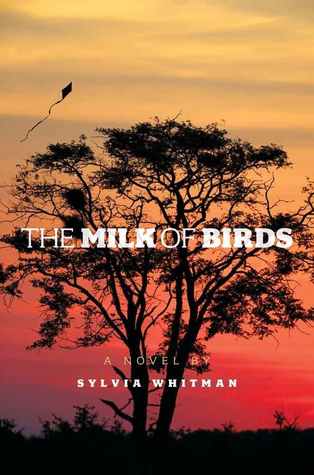
The Milk of Birds
Author: Sylvia Whitman
Published April 16th, 2013 by Atheneum Books for Young Readers

Goodreads Summary: This timely, heartrending novel tells the moving story of a friendship between two girls: one an American teen, one a victim of the crisis in Darfur.

Know that there are many words behind the few on this paper…

Fifteen-year-old Nawra lives in Darfur, Sudan, in a camp for refugees displaced by the Janjaweed’s trail of murder and destruction. Nawra cannot read or write, but when a nonprofit organization called Save the Girls pairs her with an American donor, Nawra dictates her thank-you letters. Putting her experiences into words begins to free her from her devastating past—and to brighten the path to her future.

K. C. is an American teenager from Richmond, Virginia, who hates reading and writing—or anything that smacks of school. But as Nawra pours grief and joy into her letters, she inspires K. C. to see beyond her own struggles. And as K. C. opens her heart in her responses to Nawra, she becomes both a dedicated friend and a passionate activist for Darfur.

In this poetic tale of unlikely sisterhood, debut author Sylvia Whitman captures the friendship between two girls who teach each other compassion and share a remarkable bond that bridges two continents.

My Review: This is a special book. First, because of the characters who tell the story. K.C. is a young girl with learning disabilities which have caused her to hate reading, writing, and school. Nawra is a refugee in Darfur who continues to have an optimistic view of the world even after she has been surrounded by horrors that I can’t even imagine. Both of these girls are not represented very often in books, and they are both so important to know.  Through this book, the reader gets to see the intensity of the situation in Sudan and refugees’ power in overcoming however they can. They also get to see the brilliance of students with learning disabilities. There are so many students in our school just like K.C., and too many of their peers would judge them by their struggles instead of by their heart and soul.

Second, this book is special because of the way the author is able to intertwine these two stories in a flawless way, and a way that keeps the reader engaged in both stories simultaneously. Third, the lyrical writing of Whitman makes this story not only interesting and important, but also beautiful to read. Last, the power of this book lies in the book, and how the book will change those who read it.

Teachers’ Tools for Navigation: This book has some incredibly lyrical aspects which would be perfect for mentor texts for imagery and other descriptive language. I also love the idea of written pen pals, and I would love to see this book being used to start pen pals in a classroom. Finally, K.C.’s friendship with Nawra helps her become an advocate for refugees in Darfur. This would be a great way to talk about ways to make a difference in the world. I would pair it with A Long Walk to Water which shows the same thing. Powerful.

Discussion Questions: What does K.C. teach us about students with learning disabilities?; What does Nawra teach us about Sudanese refugees?; What is your favorite Nawra saying? Why?; How does life here compare to life in the Sudan?; What is a way you could help the refugees in Sudan?; What is another cause in the world that you could help?

We Flagged: “My mother is sitting on the mat where I left her. She shows no surprise that Adeeba and I return so soon with nothing but more words from the khawaja. She does not protest when I lift her.

I carry my mother as I used to carry wounded animals from pasture, arms on one side, legs on the other, her body draped behind my neck and across my shoulders. She is not much heavier than a goat.” (Nawra, p. 3)

“When she explains things, they make sense, for a while. Who cares about the area of a trapezoid, though? That question stumped my teacher for a minute, and then he launched into this spiel about geometry in everyday life, and if I were someone with a trapezoidal yard, I might need to figure out how much fertilizer to spread. As if. Hook up your hose to a bottle of Miracle-Gro, point, and shoot.” (K.C., p. 12)

Read This If You Love: A Long Walk to Water by Linda Sue Park, Golden Boy by Tara Sullivan, Out of Nowhere by Maria Padian

Recommended For: 

classroomlibrarybuttonsmall closereadinganalysisbuttonsmall litcirclesbuttonsmall

Signature

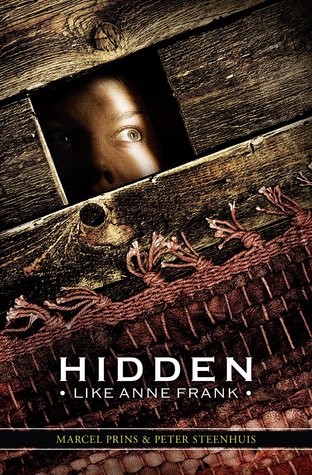
Hidden Like Anne Frank: 14 True Stories of Survival by Marcel Prins and Peter Henk Steenhuis

Share

hidden like anne frank

Hidden Like Anne Frank: 14 True Stories of Survival
Authors: Marcel Prins and Peter Henk Steenhuis
Published: March 25, 2014 by Arthur A. Levine Books

Summary: Fourteen unforgettable true stories of children hidden away during World War II

Jaap Sitters was only eight years old when his mother cut the yellow stars off his clothes and sent him, alone, on a fifteen-mile walk to hide with relatives. It was a terrifying night, one he would never forget. Before the end of the war, Jaap would hide in secret rooms and behind walls. He would suffer from hunger, sickness, and the looming threat of Nazi raids. But he would live.

This is just one of the incredible stories told in HIDDEN LIKE ANNE FRANK, a collection of eye-opening first-person accounts that share what it was like to go into hiding during World War II. Some children were only three or four years old when they were hidden; some were teenagers. Some hid with neighbors or family, while many were with complete strangers. But all know the pain of losing their homes, their families, even their own names. They describe the secret network of brave people who kept them safe. And they share the coincidences and close escapes that made all the difference.

Review: This collection showed me the misconceptions I had about those who hid during the Holocaust. These fourteen brave, young people showed me the diversity of experiences that existed among the hidden. For example, I didn’t know that it was common that they were beaten. Many people agreed to hide Jews because they were paid money by the Resistance. They didn’t always do it because they were being morally good people, so they did not have favorable feelings toward the people they hid. Also, I wasn’t aware that many of those who hid during the Holocaust moved from house to house and were frequently uprooted. These are just some of the many lessons I learned from this text, and I think readers will truly appreciate the insight it provides.

Teacher’s Tools for Navigation: I don’t know many school systems that don’t teach a book that is set during the Holocaust. If teachers are unable to use this whole text, I would highly recommend they select a few stories to show students how different the experiences were.

Discussion Questions: How did the Holocaust impact those who hid? After the war was over, how did it affect them emotionally?; What dangers did the Jews face when they hid? Would you accept the danger and work with the Resistance?

We Flagged: “My feelings from back then are very distant. I can still see myself as a boy of six, seven, roaming around Amsterdam, ringing doorbells, getting into mischief. I can think about that boy, about his relationship with his father, with his mother, and with his grandfather. But I can’t feel the emotions I had back then—it doesn’t work. I just can’t reach them anymore. Maybe I’ve automatically kept the past at a distance because I had to hide away for years and deny my background. Or maybe it’s just that impossible to relive those feelings from the past, and so I have to make do with memories.” (Chapter: “Older than my Father”)

Please Note: This quotation is from an advanced reader copy. It may be different in the published text.

Read This If You Loved: The Diary of Anne Frank by Anne Frank; The Nazi Hunters by Neal Bascomb; Hidden: A Child’s Story of the Holocaust by Loïc Dauvillier; Night by Elie Wiesel 

Recommended For:

readaloudbuttonsmall litcirclesbuttonsmall classroomlibrarybuttonsmall

RickiSig

A Long Walk to Water by Linda Sue Park

Share

longwalk

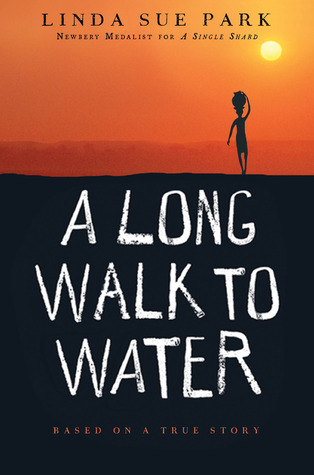
A Long Walk to Water
Author: Linda Sue Park
Published November, 2010 by Houghton Mifflin Harcourt

Goodreads Summary: A Long Walk to Water begins as two stories, told in alternating sections, about a girl in Sudan in 2008 and a boy in Sudan in 1985. The girl, Nya, is fetching water from a pond that is two hours’ walk from her home: she makes two trips to the pond every day. The boy, Salva, becomes one of the “lost boys” of Sudan, refugees who cover the African continent on foot as they search for their families and for a safe place to stay. Enduring every hardship from loneliness to attack by armed rebels to contact with killer lions and crocodiles, Salva is a survivor, and his story goes on to intersect with Nya’s in an astonishing and moving way.

My Review and Teachers’ Tools for Navigation: The wars in Sudan and Darfur are the most violent and long lasting wars in the world; however, most Americans are unaware that they are even occurring. Linda Sue Park took a true story of a lost boy’s survival (watch a video about the true story here) after being chased from his village because of war and transformed it into a novel that will leave the reader with a feeling of awe. Awe of the bravery and pure fearlessness of Salva and the other Lost boys of Sudan and awe of the world of riches and blindness we live in while a horrendous war wages on the other side of the world. I love this book because it is very accessible to children, it won’t bog them down with too much history; however, it will definitely make them aware of the situation in Sudan.

Discussion Questions: What is a way that you could share what you learned about the Lost Boys of Sudan? How can you help? 

We Flagged: “Salva took a few steps towards the men.
‘Hey!’
A soldier approached Salva and raised his gun.
Salva froze. All he could see was the gun’s huge barrel, black and gleaming, as it moved toward his face.
The end of the barrel touched his chin.
Salva felt his knees turn to water. He closed his eyes.
If I die now, I will never see my family again.
Somehow, this thought strengthened him enough to keep him from collapsing in terror.
He took a deep breath and opened his eyes.” (p. 11)

“Going was easy.
Going, the big plastic container held only air… There was little weight, going. There was only heat, the sun already baking the air, even though it was long before noon. It would take her half the morning if she didn’t stop on the way.
Heat. Time. And thorns…
Nya filled the container all the way to the top. Then she tied the gourd in back in place and took the padded cloth doughnut from her pocked. The doughnut went on her head first, followed by the heavy container of water, which she would hold in place with one hand.
With the water balanced on her head, and her foot still sore from the thorn, Nya knew that going home would take longer than coming had. But she might reach home by noon, if all went well.” (p. 1, 14-15)

Read This If You Loved: The Queen of Water by Laura Resau, Now is the Time for Running by Michael Williams, Sold by Patricia McCormick, Diamonds in the Shadows by Caroline B. Cooney, Shabanu by Suzanne Fisher Staples, So Long a Letter by Mariama Ba

Recommended For: 
readaloudbuttonsmall closereadinganalysisbuttonsmall
classroomlibrarybuttonsmall litcirclesbuttonsmall
Signature

Bruised by Sarah Skilton

Share

bruised

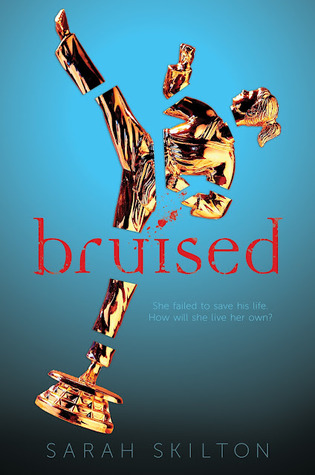
Bruised
Author: Sarah Skilton
Published March 5, 2013 by Amulet/Abrams

Goodreads Summary: Imogen has always believed that her black belt in Tae Kwon Do made her stronger than everyone else–more responsible, more capable. But when she witnesses a holdup in a diner, she freezes. The gunman is shot and killed by the police. And it’s all her fault.

Now she’s got to rebuild her life without the talent that made her special and the beliefs that made her strong. If only she could prove herself in a fight–a real fight–she might be able to let go of the guilt and shock. She’s drawn to Ricky, another witness to the holdup, both romantically and because she believes he might be able to give her the fight she’s been waiting for.

But when it comes down to it, a fight won’t answer Imogen’s big questions: What does it really mean to be stronger than other people? Is there such a thing as a fair fight? And can someone who’s beaten and bruised fall in love?

My Review and Teachers’ Tools for Navigation: Imogen is broken and she must overcome this feeling of hopelessness that surrounds her constantly. What an intense way to introduce us to a character? We then go on a journey with Imogen as she tries to rebuild her life, her memories, her friendships, and her family.

At first I struggled with this book because the timeline was choppy, and Imogen was hard to pinpoint. But then, through the flashbacks, Imogen starts to become clearer to us, the reader, and Imogen’s memories start to become clearer to her. Then you are so sucked into wanting to know everything, and you can only know everything if you stick with the book and see Imogen’s memories as they are revealed. This is a pretty brilliant tactic in making the reader feel like they are in the protagonist’s brain.

Bruised actually reminds me a lot of Speak by Laurie Halse Anderson. Both young ladies are thrown into a tragedy, let that tragedy eat away at their hearts and souls, and have to figure out how to find themselves again. Truly a remarkable journey to go on with a character.  And, like Speak, there are some intense topics/themes dealt with in Bruised that will definitely grab a teen’s attention: sibling rivalry, a disabled parent, disconnected family, friendship, sex, love, survival, and martial arts. It is one of those books that teens need to read, so they can learn to become resilient and to overcome whatever is in their path.

Discussion Questions: Is it ever okay to lie?; Would you have been able to forgive your best friend if she’d done what Shelly did?; Was it right of Imogen to call Grant down during the demonstration?; Why was having Ricky there such an important part of Imogen’s recovery?

We Flagged: “Don’t you recognize me?” says Ricky after a moment.
Confused, I force myself to look up from the floor, up his legs and along his body, until I’m looking him in the eyes.
I hear gunshots, the cashier crying, and the police sirens, but I don’t look away.
He’s my friend from under the table.” (p. 60)

“Today, eleven days later, I slide down the wall of my own shower and curl up in a ball, tuck my knees under my chin, and wrap my arms around my head. I’ve taken showers since the diner, but this one’s different. Get smaller. Small as you can be. Low to the ground is comforting, standing up is bad. Why is standing up bad? What happins if you stand up? (You don’t want to know.) Reset button. Start at the beginning. Gretchen’s in the bathroom when the gunman comes in. I see the glint of his gun, and I hide under the table. There’s Ricky, under a different table, he brings his finger to his lips. Shh…” (p. 95-96)

Read This If You Loved: Speak by Laurie Halse Anderson, Stained by Cheryl Rainfield, Rape Girl by Alina Klein

Recommended For: 

classroomlibrarybuttonsmall

Signature