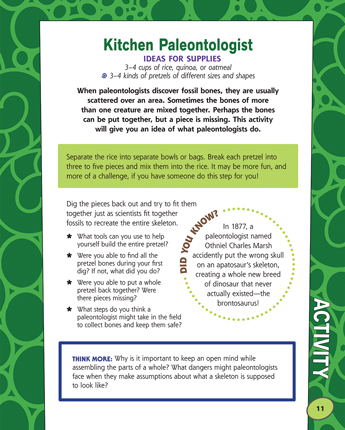
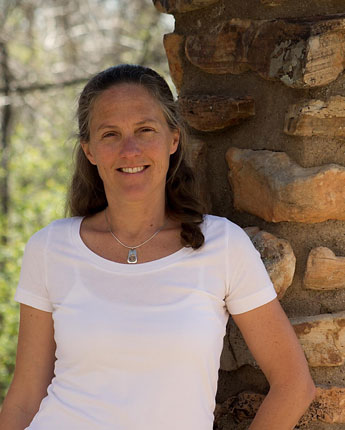
Author Guest Post!: “Talking to Kids about the Sixth Mass Extinction” by Laura Perdew, Author of Extinction: What Happened to the Dinosaurs, Mastodons, and Dodo Birds?

Share

“Talking to Kids About the Sixth Mass Extinction”

I think that when most people hear the word ‘extinction,’ dinosaurs come to mind first. But the truth is, billions of species have gone extinct in Earth’s 4.5-billion-year history.

Many of these were background extinctions, a normal part of life on this planet. There have also been five mass extinctions—events that wiped out more than 50 percent of species at one time. Perhaps the most well-known of these is the asteroid that hit the earth 66 million years ago and wiped out those dinosaurs.

What is not well-known, however, is that there is a sixth mass extinction currently underway.

The normal background extinction rate for mammals is one extinction every 100 years. But in the past 100 years, there have been more than 40 extinctions. Looking at all species on Earth, everything from the smallest microbes to the largest mammals, scientists estimate that the current extinction rates are 1,000 to 10,000 higher than normal. But unlike the previous five extinctions, this one is our fault.

We spend a lot of time talking about climate change, but we also need to pay more attention to the species that are dying off because of that and other human-related causes.

It’s time to spread the word. Before I wrote Extinction: What Happened to the Dinosaurs, Mastodons, and Dodo Birds?, there weren’t any books for kids that talked about the sixth extinction or what they can do to help slow this trend. Kids need to know what’s happening to the planet they are inheriting. And they need to be empowered to take action. In some ways, it seems a daunting task to stop extinctions. But history has proven that one person can make a difference in the world, and that together we can do even more.

It’s important to start the discussion with kids and to show them that even at their age, there are things they can do to create positive change. Here are some ideas!

Activity: Start the Discussion

If the scientists’ predictions are right, three out of four species will go extinct over the next few hundred years. What will the world be like? Take students outside so they can get a better understanding of this prediction. Have students list the different species they observe. Encourage them turn over rocks, crawl in a garden, think about what is underground, or look in a tree. Remind them to include insects, mammals, reptiles, amphibians, birds, trees, and plants. Can they find 10? 20?

Once they have a list, ask students to cross out three out of every four of those species on it. For this activity, those crossed off species are the ones that will become extinct.

Questions for discussion:

  • Are the extinct species part of the food chain? What will happen to the other species that rely on that species for food or shelter?
  • What will happen to species when their main predators die off?
  • Can the ecosystem can be healthy, even with those missing species? Why or why not?
  • Can some of the surviving species adapt? What adaptations would they need to survive?

 Activity: Taking Action

Another way to get kids thinking about extinction is to have them think about their own carbon footprint. Start with a discussion of the terms “carbon footprint” and “carbon emissions.” Then, discuss and list the things humans do that require burning fossil fuel. Each of these activities contributes to global warming and ocean acidification, and ultimately to increased extinction rates. But there are things we can do to reduce carbon emissions.

There are many online resources that can help students research this, including NASA’s Climate Kids website (https://climatekids.nasa.gov/), and other carbon footprint calculators. The purpose of the activity is to have students identify their own actions that contribute to carbon emissions and what actions they can take to reduce their carbon footprint.

Questions for discussion:

  • What can you do in your home or community to reduce your carbon footprint?
  • Will making changes in how you live be easy or difficult?
  • Calculate the carbon emission reduction if everyone in the class took one step to reduce their carbon footprint. What would the savings be if each student could also convince three other families to do the same thing? How about if 1,000 families in the community took steps to lower emissions?

Activity: Planning for the Future

Tell students they are a team of engineers for a new town that’s going to be built. All that’s there right now is a mix of prairie and forest. Their job is to make it as green as possible. They must find a way to balance the need of humans and the needs of the environment and the species that live there.

Start by researching what makes a city green. Also, students must consider all the things in a town that people need—homes, schools, food stores, etc. They can even discuss their own town or city as an example of things you want to include (or omit) in the town they design and build. Possible activities include collages, models, dioramas, or drawing. The focus should be on the green details.

Questions for discussion:

  • What was easy about creating a green city? Difficult?
  • What was difficult about balancing the needs of the environment with the needs of people?
  • What can be done in their own town or city to move it towards being more green?

Discussions and research lead to awareness. Awareness leads to action. And action creates change!
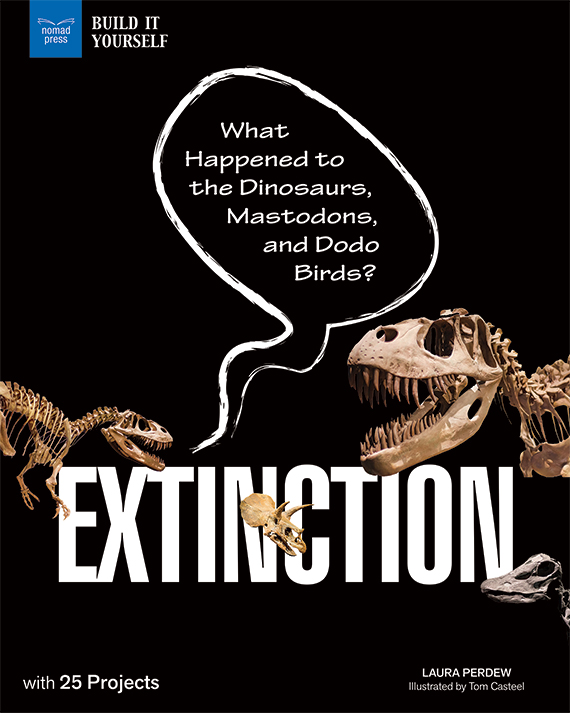
Extinction: What Happened to the Dinosaurs, Mastodons, and Dodo Birds? (with 25 Projects)
Published September 15th, 2017 by Nomad Press

About the Book: Have you seen a dodo bird recently? Do you have mastodons playing in your back yard? Not likely—these species are extinct. In Earth’s 4.5-billion-year history, more than 5 billion species have gone extinct, some of them at the same time. In Extinction: What Happened to the Dinosaurs, Mastodons, and Dodo Birds? readers ages 9 to 12 learn about the scientific detective work scientists perform to find the culprit behind mass extinctions, including the present-day, sixth mass extinction.
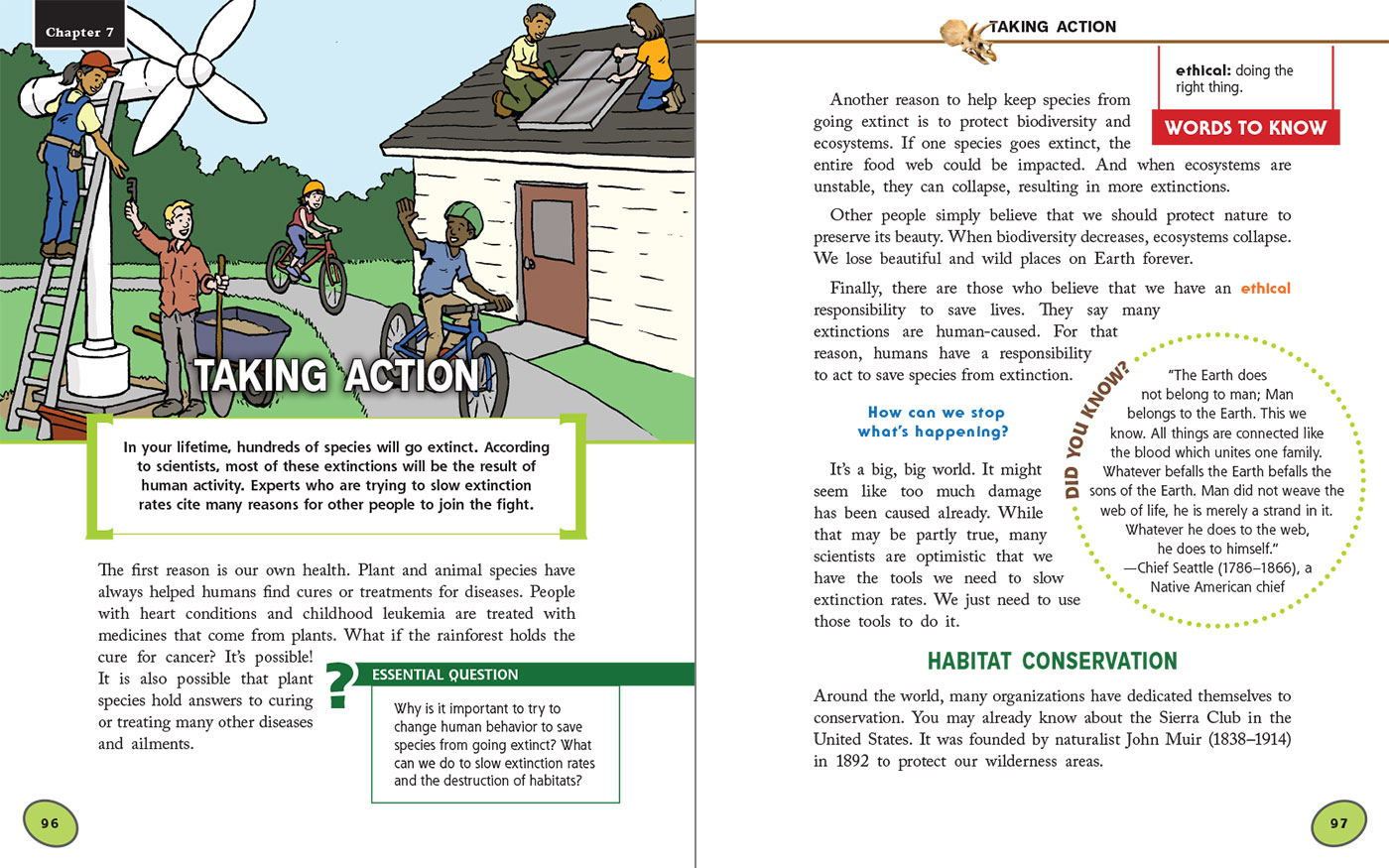
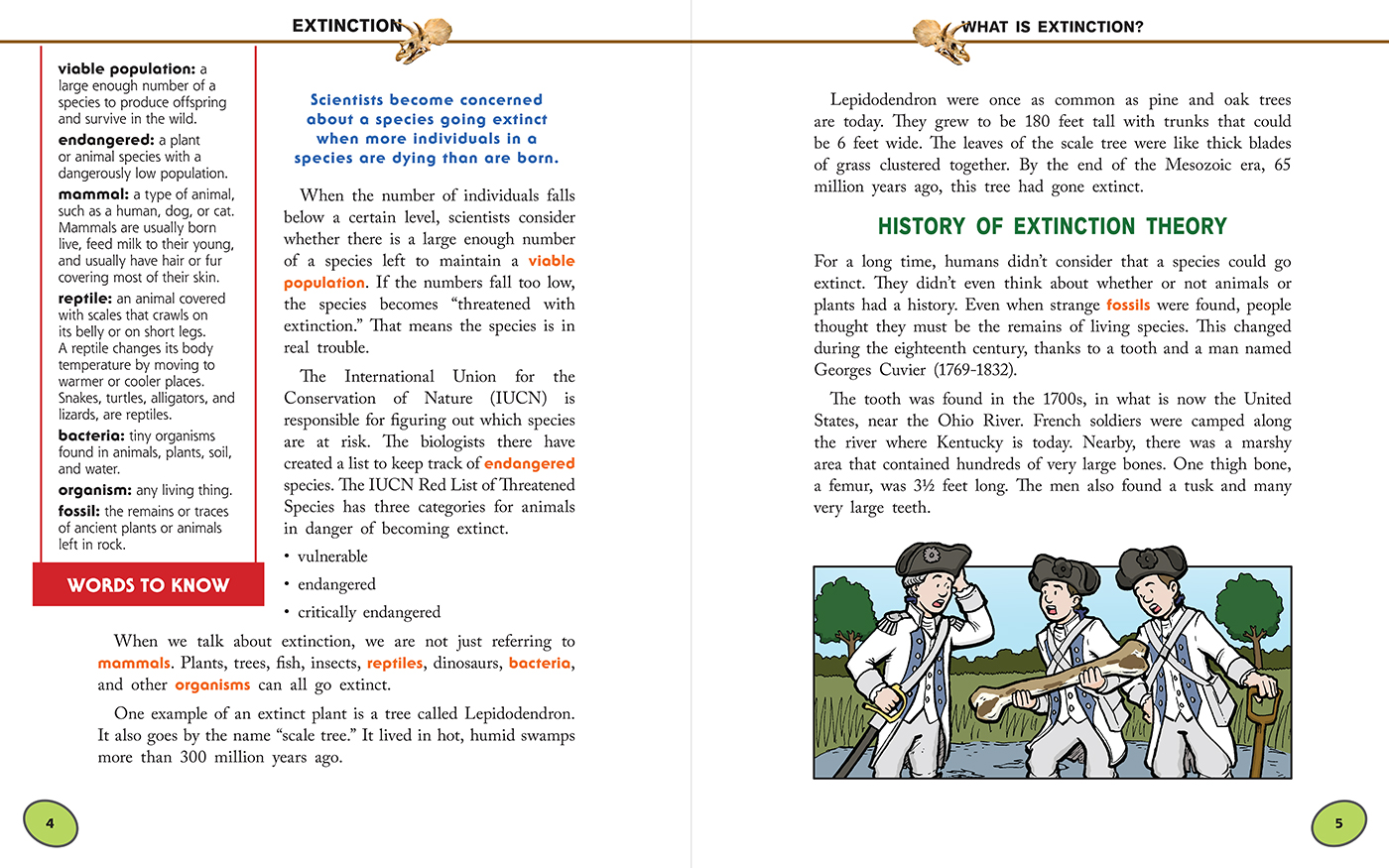
About the Author: Laura Perdew is an author, writing consultant, and former middle school teacher. She has written more than 15 books for the education market on a wide range of subjects, including the animal rights movement, the history of the toilet, eating local, and the Great Pacific Garbage Patch. She is a long-time member of the Society of Children’s Book Authors and Illustrators. Laura lives in Boulder, Colorado.

Thank you, Laura, for pushing us to start this conversation with our students!

 and

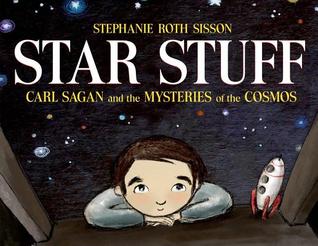
Star Stuff: Carl Sagan and the Mysteries of the Cosmos by Stephanie Roth Sisson

Share

Star Stuff: Carl Sagan and the Mysteries of the Cosmos
Author: Stephanie Roth Sisson
Published: October 14, 2014 by Roaring Brook Press

A Guest Review by Brittany Brown

Summary: A curious boy living in a small city apartment finds the world astonishing. He wants to know about light bulbs, inch worms, and rocket ships. Carl sets out on a journey to find answers, but finds bigger, even more powerful questions. Through his research and studies, Carl eventually earns the title of Dr. Carl Sagan and spends his life seeking knowledge and understanding about the universe. This young

boy’s contributions to science and education have inspired many children everywhere to question the world around them. His story will resonate every child who has ever wondered “how” or “why” or spent an evening looking up at the night sky.

Review: I am constantly looking for books which will inspire my students and get them excited about learning. This book, which is brought to life with beautiful illustrations and the great mysteries of the universe, did that for myself as an adult, too. After reading it, everyday life is once again imbued with the magic and novelty it had in childhood. In Sagan’s eyes, there is no phenomenon too mundane to investigate. The curiosity which most adults leave behind drove Sagan to be the lifelong learner that all teachers hope to foster in their students. Reading this book shows that science is all around us, that we all belong here in the universe, and that in everyone there is a scientist. I absolutely loved reading this book, and as a new teacher building my classroom library, this is the first one which I will be purchasing multiple copies of to share with my students.

Teachers’ Tools for Navigation: This story would pair well with any science or biography unit. It would also serve as a great example of narrative nonfiction.

The most obvious use for this story is in a science unit. I would love to use this book to open up a discussion at the beginning of a unit on the solar system. Not only would it generate excitement, it would also begin to build some vocabulary and background knowledge. It would make the information in the unit more personal and relevant to kids, and would be a great launching point to encourage students to come up with their own questions about how the world works.

This book is also a wonderful book to use for mini lessons in writing. Using this book as an example, a teacher could lead a discussion on how to choose which life events to include in a biography, how to sequence and organize it, and how to incorporate quotes from a historical figure into a writing piece. It also shows how to include facts and achievements in an engaging way, and how to demonstrate a person’s impact on history.

Finally, this book would also be a superb example of narrative nonfiction. Despite containing lots of scientific facts, it reads like a storybook and the illustrations do much of the talking. Students will be captivated with the descriptive narration, and discussions could explore their experiences as readers or how they may be able to attempt this style in their writing.

Discussion Questions: What are your big mystery questions? Where would you go to try to find answers to them? What character traits helped Carl on his journey? What impact did he have on the world? Who does he remind you of?

Book Trailer: 

Read This If You Loved: What Do You Do with an Idea? By Kobi Yamada, I Wonder by Annaka Harris, You Are Stardust by Elin Kelsey, On a Beam of Light: A Story of Albert Einstein by Jennifer Berne, The Boy Who Loved Math: The Improbable Life of Paul Edros by Deborah Heiligman, Look Up!: Henrietta Leavitt, a Pioneering Woman Astronomer by Robert Burleigh

Recommended For:
 classroomlibrarybuttonsmall

Thank you, Brittany!

RickiSig

Blog Tour with Review and Giveaway!: Two Truths and a Lie: It’s Alive! by Ammi-Joan Paquette and Laurie Ann Thompson

Share

nfpb2017

Nonfiction Wednesday

Nonfiction Picture Book Wednesday is hosted by Kid Lit Frenzy and was started to help promote the reading of nonfiction texts. Most Wednesdays, we will be participating and will review a nonfiction text (though it may not always be a picture book).
Be sure to visit Kid Lit Frenzy and see what other nonfiction books are shared this week!

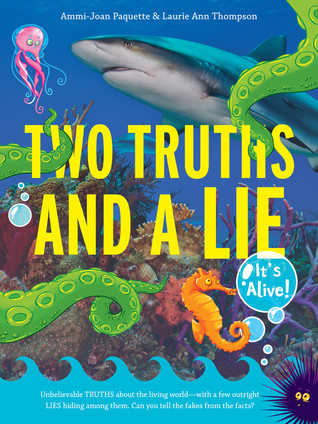
Two Truths and a Lie: It’s Alive!
Author: Ammi-Joan Paquette & Laurie Ann Thompson
Published June 27th, 2017 by Walden Pond Press

Summary: Two Truths and a Lie is the first book in a fascinating new series that presents some of the most crazy-but-true stories about the living world as well as a handful of stories that are too crazy to be true—and asks readers to separate facts from the fakes!

Did you know that there is a fungus that can control the mind of an ant and make it do its bidding? Would you believe there is such a thing as a corpse flower—a ten-foot-tall plant with a blossom that smells like a zombie? How about a species of octopus that doesn’t live in water but rather lurks in trees in the Pacific Northwest?

Every story in this book is strange and astounding. But not all of them are real. Just like the old game in this book’s title, two out of every three stories are completely true and one is an outright lie. Can you guess which? It’s not going to be easy. Some false stories are based on truth, and some of the true stories are just plain unbelievable. And they’re all accompanied by dozens of photos, maps, and illustrations. Amaze yourself and trick your friends as you sort out the fakes from the facts!

Acclaimed authors Ammi-Joan Paquette and Laurie Ann Thompson have teamed up to create a series of sneaky stories about the natural world designed to amaze, disgust, and occasionally bamboozle you.

About the Authors:


Ammi-Joan Paquette has traveled to twenty-four countries, has the ability to wake herself up at a given time without an alarm clock, and once climbed Mt. Everest. (Not all of these are true!) Joan is the author of the novels Rules for Ghosting, Paradox, and Nowhere Girl, as well as the picture books Petey and Pru and the Hullabaloo, Ghost in the House, The Tiptoe Guide to Tracking Mermaids, and The Tiptoes Guide to Tracking Fairies. She lives outside Boston, Massachusetts, where she balances her own writing and her day job as a literary agent. You can visit her online at www.ajpaquette.com.

Laurie Ann Thompson has ridden a pig, gotten stuck in an elevator overnight, and jumped out of a perfectly good airplane. (One of these facts is not true; can you guess which?) She is the author of Be a Changemaker: How to Start Something That Matters, My Dog Is the Best, and Emmanuel’s Dream, a picture book biography about Emmanuel Ofosu Yeboah, which was the recipient of the Schneider Family Book Award and was named an ALA Notable Book, a CCBC Choice, and a Bank Street College Best Book of the Year, among dozens of other accolades. She lives outside Seattle with her family. You can visit her online at www.lauriethompson.com.

Review: Walden Pond, as far as I know, hasn’t published a nonfiction text other than the Guys Read: True Stories, and I can definitely see why this is one they chose to add to their publication catalog. One of the greatest educational obstacles right now is that students have access to such a wide variety of information, some that is anything but reliable and valid, so it is up to parents and educators to show how to filter through all of the information and check the validity of what they find. Paquette and Thompson’s Two Truths and a Lie take that to a fun level giving the reader three stories, all the seem as crazy yet possible, but it gives kids the opportunity to use the internet to research each story to determine what is the truth and what is the lie. But the book doesn’t seem like it is for teaching, though it would work perfectly in the classroom, because the stories are just so crazy and fun to read from zombie-making fungi to an unlikely chicken, the stories are just all so unbelievable!

Teachers’ Tools for Navigation: Like I shared above, these stories would be a perfect way to practice digital literacy and learn about reliable and valid sources.

A teaching guide is also available from the publisher here!

Discussion Questions: Which is a lie? Why do you think so? Where could you check to find out? Which of the true stories do you want to learn more about?

Flagged Passages: “Part 1: Preposterous Plans and Fungi–Crazy, Creepy, Cool

Ah, nature. A green meadow. Wind rustling through the leaves.
Mushrooms growing on the side of a fallen log. What could be more peaceful, more predictable, more ordinary?
To that we say: ha! The plants and fungus we spotlight in this section are full of surprises. They completely defy those common stereotypes and misconceptions
Intrigued? We hope so! Because once you’ve read these, going green will never mean quite the same thing…

A. Underground Miracle Root
B. Pandomonium
C. The Secret Lives of Plants.” Chapter 1, Part 1

Read This If You Love: Learning interesting and new facts about nature

Recommended For: 

classroomlibrarybuttonsmall closereadinganalysisbuttonsmall

Follow the Blog Tour!

June 5th   Librarian’s Quest
June 7th   Flowering Minds
Pragmatic Mom
June 11th  Geo Librarian
June 13th Smack Dab in the Middle
June 14th Bluestocking Thinking
June 15th Novel Novice
Library Lions Roar
June 16th Archimedes Notebook
June 18th Nerdy Book Club
June 19th Cracking the Cover
June 20th Writers Rumpus
The Hiding Spot
June 21st  Maria’s Melange
June 23rd Unleashing Readers
June 24th This Kid Reviews Books

Enter the Giveaway!

a Rafflecopter giveaway

Signature

The Fourteenth Goldfish by Jennifer L. Holm

Share

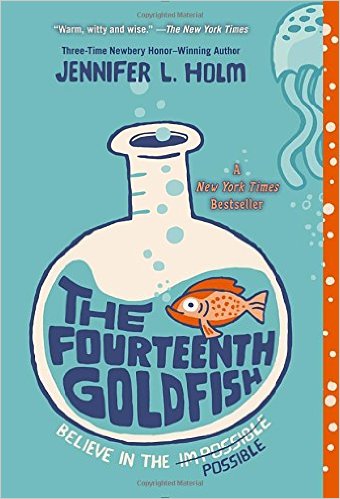
The Fourteenth Goldfish
Author: Jennifer L. Holm
Published: April 5, 2016 by Yearling

A Guest Review by Kelsey Iwanicki

Summary: The Fourteenth Goldfish follows the story of Ellie, an 11-year-old girl, who is currently struggling to find her passion, especially following the gradual drop off with her one and only friend, Brianna. However, everything changes when her mother brings home a quirky and crabby 13-year-old boy, Melvin. Ellie notices striking similarities between Melvin and her seventy-something year-old grandfather until he comes clean and tells her that they are in fact the same person. Melvin has worked on developing a drug to reverse the signs of aging, which has successfully worked on himself.

As Ellie and Melvin get closer, they also form an unlikely friendship with a goth student, Raj. Together they give Melvin advice about being a teenager, such as giving him acne medicine and hair elastics. They also help Melvin eventually, after a few failed attempts, steal the same compound that reversed his age. Melvin’s original plan was to steal the gene so he could share it with the world and receive the Nobel Peace Prize. However, Ellie persuaded him not to on the grounds of moral ethics and how scientific impacts can be both positive and negative. Due to this, Melvin flushes the compound down the drain and starts to tour the country. Thanks to her time with her grandfather, Ellie is able to discover his passion in science and also gain a few friends along the way, Raj and Momo.

Review: What I liked most about this book was its quirkiness, mostly exemplified through Melvin. Although the relationship between Ellie and Melvin is untraditional, you can also get glimpses of a typical relationship between a grandfather and granddaughter is like, one that isn’t usually written about. The majority of characters are nontraditional, such as Raj, who is explicitly written as goth; Ellie, a girl scientist (although this is becoming more popular, usually boys are the ones in the STEM fields); and Melvin, as a grumpy 13-year-old.

What I didn’t like about the book was the build-up. Although they failed multiple times at stealing the compound, there was no suspense for when Melvin actually succeeded. Rather, he just came home one day with it. The climax actually was when Ellie had a self-realization that science has both positives and negatives, which honestly was kind of a let down because the plot had focused around getting the compound from the lab. Ultimately, it was a good theme because Ellie realizes there are good and bad things with any passion.

All in all, I did like the book, I think it could appeal to students who are interested in science and realistic fiction books.

Teachers’ Tools for Navigation: This book should definitely be included in a classroom library for independent reading because I think it would appeal for students because it is a little quirky and has some interesting characters. It could also prompt some interesting discussions for literature circles because students could discuss the ethics behind using a compound to reverse aging.

A teacher could also use it as a read aloud for a few reasons. It would be interesting to consider the other perspectives of characters such as Melvin or Melissa, Ellie’s mother. Additionally, they could talk about the character traits and what makes Melvin and Ellie such strong characters. Or, they could talk about science and ethics behind what scientists release.

Discussion Questions: If you had a compound that could reverse aging, would you take it? Why or why not?; If you discovered a compound that could reverse aging, would you deliver it to the public? Why or why not?; What do you think will happen to Ellie and Brianna’s friendship? Ellie and Momo’s?; What do you think the side affects are from taking the compound? / What do you think happened to Melvin?; Put yourself in Ellie’s shoes, how would you feel if your grandfather attended the same school as you?; What is the importance of the fourteenth goldfish?

Flagged Passage: “Average people just give up at the obstacles we face every day. Scientists fail again and again and again. Sometimes for our whole lives. But we don’t give up, because we want to solve the puzzle” (p. 47).

Read This If You Loved: El Deafo by Cece Bell; Fish in a Tree by Lynda Mullaly Hunt; Out of My Mind by Sharon Draper; Rain Reign by Ann M. Martin; Unusual Chickens for the Exceptional Poultry Farmer by Kelly Jones

Recommended For:
 classroomlibrarybuttonsmall

Thank you, Kelsey!

RickiSig

Future Problem Solving International Conference Update

Share

fpspi motto

In April, I shared with you about the Future Problem Solving program and the journey and successes my team has had.

Just to recap, the Future Problem Solving Program focuses on the 6-step problem solving process:

fpsp steps

First, students read a Future Scene which is a scenario that takes place in the future and revolves around a topic the students knew and researched about before the competition.

Step 1. In groups of four, the team has to pull out 16 potential problems they see that could happen in the Future Scene.

Step 2. They then have to decide which of the problems is the most impactful to the scene and also deals with the charge given to them at the end of the scenario that directs them to focus on a certain aspect of the scene usually based on the topic.

Step 3. As a team, they then have to determine 16 solutions to the underlying problem they identified in step 2.

Step 4. Criteria is laid out to help determine which solution is the best.

Step 5. The solutions are ranked based on the criteria they created.

Step 6. They write an extensive action plan about the highest ranking solution explaining in detail how the solution would work, who would do the jobs, what obstacles they may encounter, how much it would cost, etc.

This finishes the Global Issues Problem Solving portion which is the primary competition, but while the booklets are being scored, the students then prepare and put on a presentation of their action plan for their fellow competitors.

13320856_1616227128694556_1928424870826155314_o

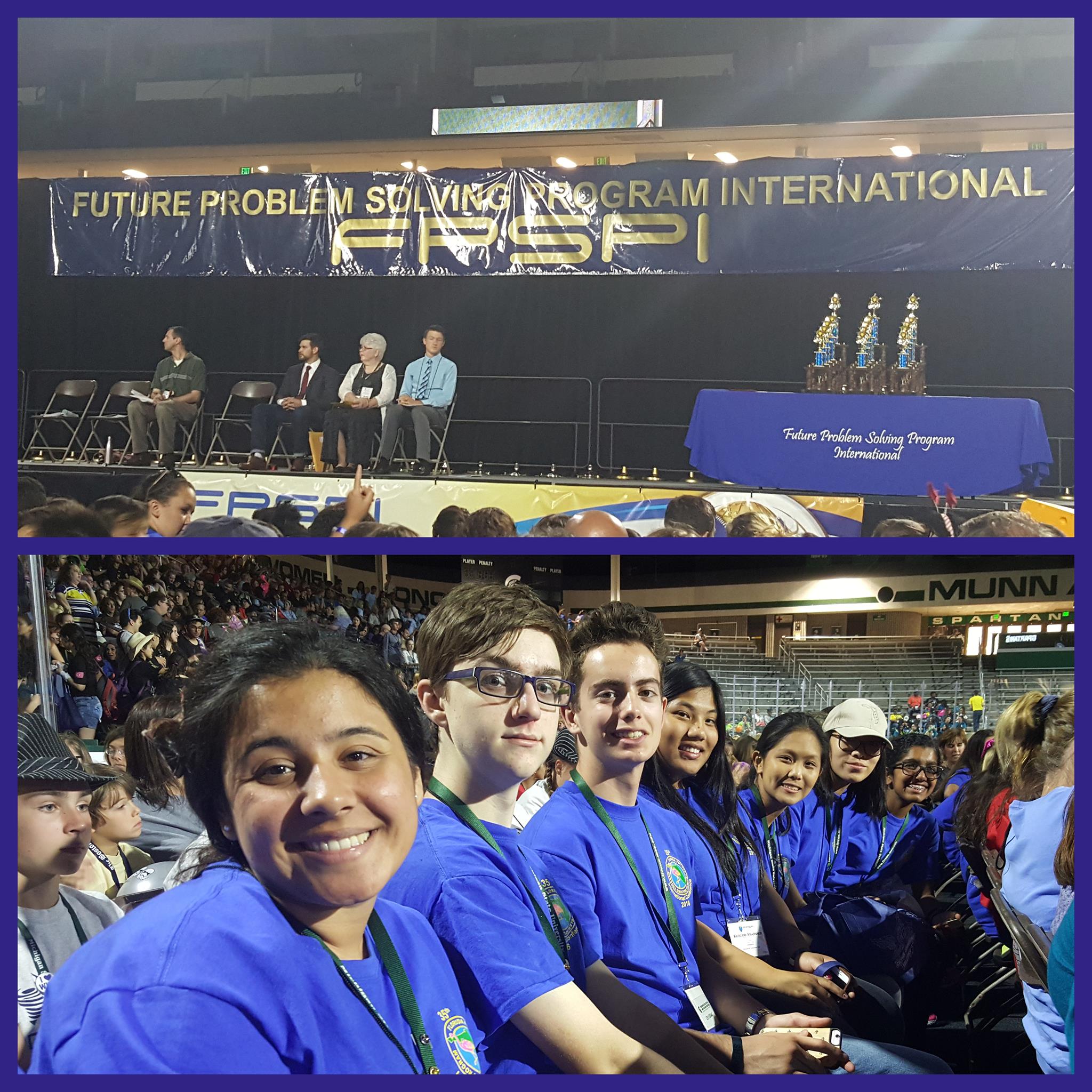
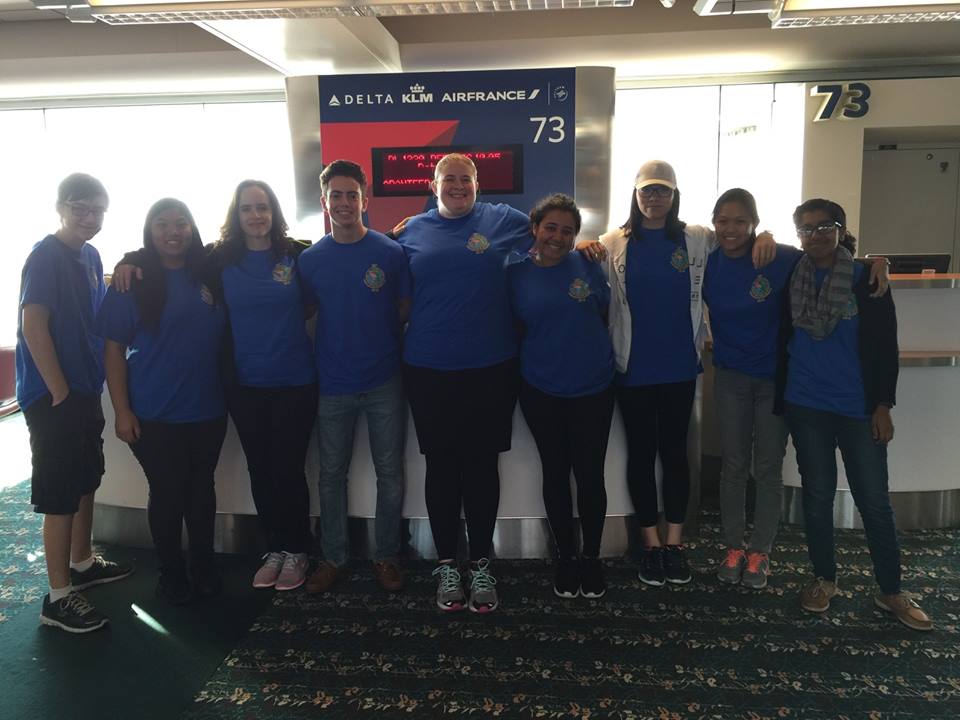
Because of my amazing students’ successes at the state competition, we qualified to travel to Michigan State University from June 2nd to June 5th to compete at the International Conference. This was a once-in-a-lifetime experience (though I hope we get to go again in the future!).

First, we took part in the Memento Exchange which is such a brilliant way to open up an event with attendees from around the world. During the Memento Exchange, each attendee brings items from their home town/state and exchange them with others so each person ends up with a ton of mementos from all around the world!

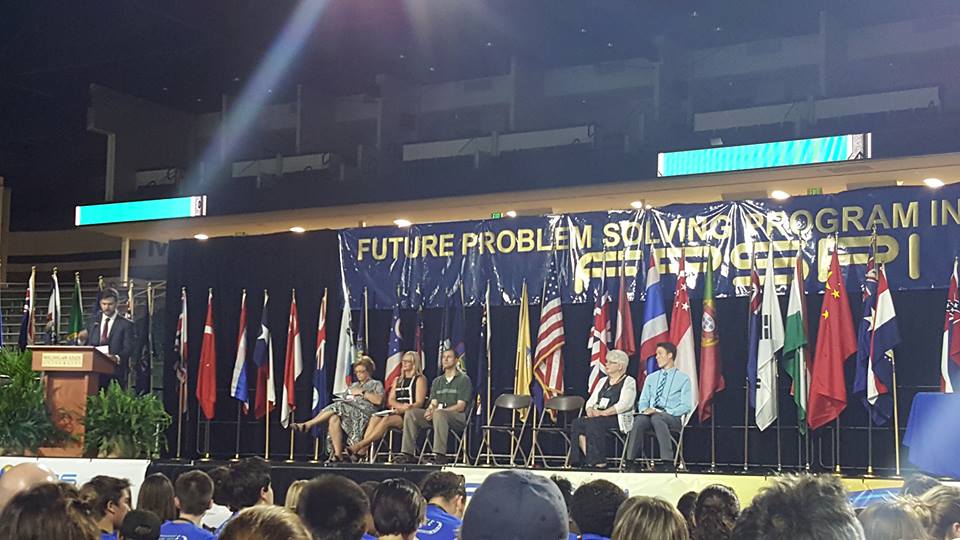
Then, we attended the Opening Ceremonies. There were two stand out moments during the Opening Ceremonies. First, there is a presentation of all the flags for each state, province, and country that is taking part in the conference. It is amazing to see everyone that was represented. The keynote speaker was also phenomenal! His name was Alec Manfre. Alec is from Florida and is currently a CEO of company and a Forbes 30 under 30. He is also a FPS alum. He shared some amazing advice:

Things to remember in life: Use the problem solving framework; Be a life long learner; Find your passion!

Don’t be afraid to think big! Challenge the status quo! Solve the biggest challenges!

Challenge yourself! Challenge the norm! Challenge society!

13339499_1616469092003693_5491897103508853037_n

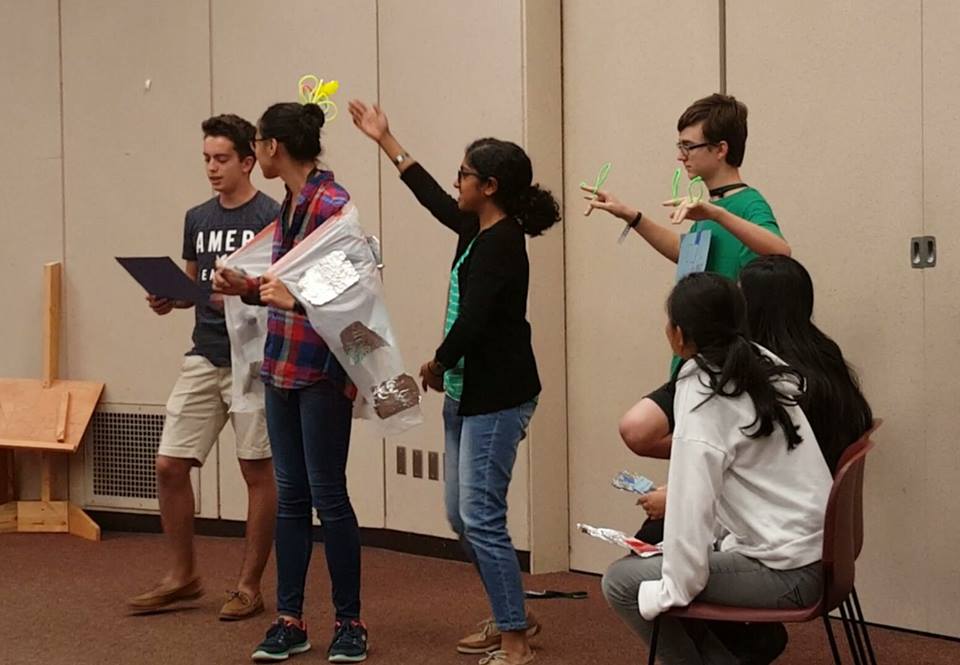
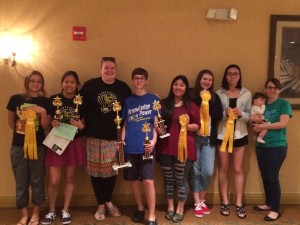
The second day was the competition portion though we wouldn’t find out the results until the final day there. However, it was also the Presentation of Action Plan which my students ROCKED! Their solution had to do with a mechanical, 3-D printed bird that stores energy from the sun, wind, and its movement then transfers it to those in need. If you want to see their skit, stop by our Facebook page and you can view it. They ended up being in the finals for the presentations which means they were in the top 14 of 70 middle division teams!

Three of my students also chose to take part in the FPS IC Choir which performed at the Variety Show. The choir, along with the variety show which featured talents from participants from all over the world, was another amazing way to showcase the variety of people taking part in IC. It is so beautiful to see people from around the world sing together. I shared a video of one of their songs on our Facebook page as well.

113319813_1616662441984358_886774706627068555_n

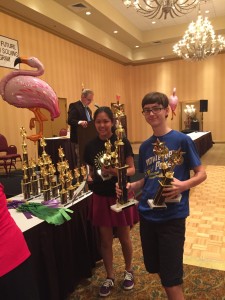
The last day in Michigan, we attended the award ceremony. Although this isn’t all about winning, it is about thinking and growing, award ceremonies are always so nerve-racking! I am already so proud of how far we’d gotten, and I already had a top 14 team! But we had one more surprise coming! Victoria, my 11th grade participant who has been with me from the very beginning, won first place in the Senior Division Multi-Affiliate Global Issues Competition! FIRST PLACE IN THE WORLD! I am still in awe of this! I already knew she was brilliant, but now it is recognized!

1113325462_1617406608576608_6467941719384888109_n

Then it was time to leave. My poor team beat them up so much for not placing, but they were competing against the best in the world, and we are going to learn so much from their booklet, Victoria’s first place booklet, and my other multi-affiliate participants booklets.

I hope that this was a trip and adventure that these students never forget because I know I won’t!

11113344735_1615990412051561_8607971353781822836_n

Kellee Signature

What is Future Problem Solvers?

Share

FPSPI Logo

Future Problem Solving was introduced to me six years ago when a mom asked if I would be willing to advise a team so her sons could participate. At the time I did not know anything about the program, but I felt like I should give it a go since I wanted to work with gifted students more, so I jumped in with both feet and started learning about the program. I now co-advise the club with my co-worker who joined me when I was pregnant, Vanessa Gray, with four sixth graders, seven seventh graders, two eighth graders, nine ninth graders, two tenth graders, and an eleventh grader. These students have been with me and the program from one year to all six of the years that I’ve had the club.

fpspi motto

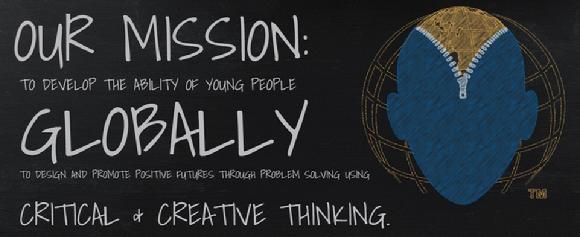
Through my initial trainings, I learned that the program was more than just a competition for students that I would be advising. It is a program that focuses on making our future leaders. It helps build a global mindset in kids 8-years-old and up and promotes creative thinking, critical thinking, problem solving, research, writing, futuristic thinking, global mindset, and collaboration–all things, I might add, that are high on the list from Forbes of skills employers look for in their employees.

fpsp steps

What Is It? 

Future Problem Solvers focuses around the six-step creative problem solving process.

First, students read a Future Scene which is a scenario that takes place in the future and revolves around a topic the students knew and researched about before the competition.

Step 1. In groups of four, the team has to pull out 16 potential problems they see that could happen in the Future Scene.

Step 2. They then have to decide which of the problems is the most impactful to the scene and also deals with the charge given to them at the end of the scenario that directs them to focus on a certain aspect of the scene usually based on the topic.

Step 3. As a team, they then have to determine 16 solutions to the underlying problem they identified in step 2.

Step 4. Criteria is laid out to help determine which solution is the best.

Step 5. The solutions are ranked based on the criteria they created.

Step 6. They write an extensive action plan about the highest ranking solution explaining in detail how the solution would work, who would do the jobs, what obstacles they may encounter, how much it would cost, etc.

This finishes the Global Issues Problem Solving portion which is the primary competition, but while the booklets are being scored, the students then prepare and put on a skit of their action plan for their fellow competitors.

flfpsp

This year, at the regional competition, I brought a junior division team, four middle division teams, and one senior division team. At regionals we placed, sixth in the junior division, second in the middle division, third in the middle division, and second in the senior division, and three of my teams (the junior and two middles) qualified to attend the Florida Future Problem Solving State competition. Only 97 out of 259 teams in Florida qualify for the State Competition.

FPSP IC

The FLFPSP State Competition is always a whirlwind. The first night is the opening ceremonies, the second day is the regular competition and skits, the third day has hands-on problem solving and a social, then the final morning is the awards ceremony. We always try to go into the competition being optimistic but not overall hopeful because there are some kids who have been doing FPS since they were in early elementary school versus my students who started in sixth grade. However, we got more than we could ever hope for.

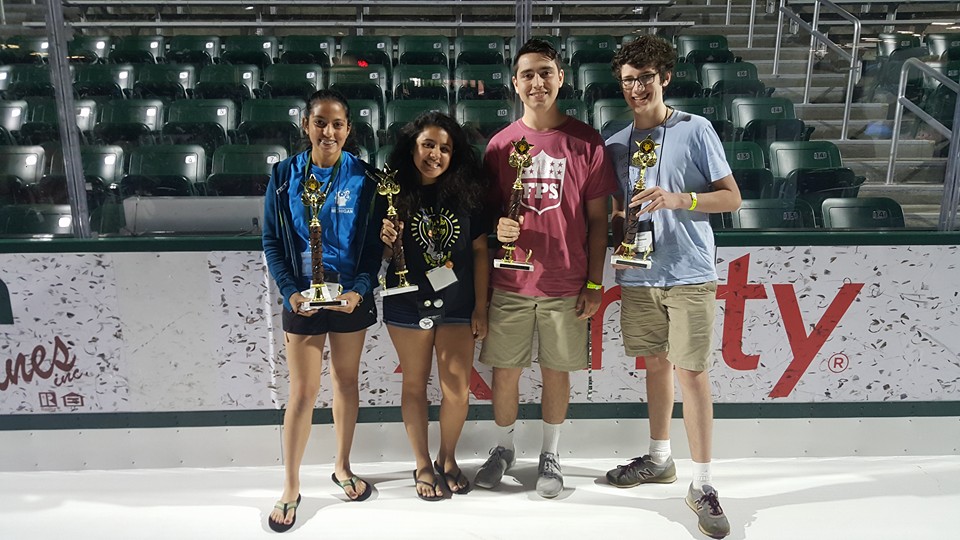
First, it was announced that one of my middle school teams with their alternates had placed second in skits. My students excel at skits; I was so proud of them! I now was so happy that they had won ribbons, and I just was going to enjoy the rest of the award ceremony. Then, they awarded the alternate teams, and one of our seventh graders who did a multi-school booklet since he wasn’t needed as an alternate won first place! How exciting!

But then, they got to the main Global Issues Problem Solving. These were the awards that could qualify students for the International Competition. They started with individuals who do the entire six steps independently (less step 1s and step 3s required). One of my seniors, a junior who has been with me since the beginning, had competed as an individual since her team had not qualified, but I could bring her to states. And she placed THIRD! She wasn’t there to accept the award, so I went up for her and was shaking! I was so excited for her, and I called her immediately afterward (crying, of course!).

IMG_89581

Then, we arrived at the middle division. When they give out the big team awards, they call all six of the placed teams up at once then state the places once everyone is up there. And they called BOTH of our middle division teams. These teams were made up of my eight ninth graders. One team had been together only two years while the other has been with me since they were in sixth grade (so four years). I could not believe it! And then they said sixth. Not us. Then fifth. Not us. Fourth–us! My two year team placed fourth at states! Then third. Not us. Then second. NOT US! They won FIRST! In the state! I could not have been more proud of these students.

IMG_9220

Not we have the opportunity to go to the Future Problem Solving International Competition in June at Michigan State University. I am so excited to take these brilliant students to this prestigious competition.

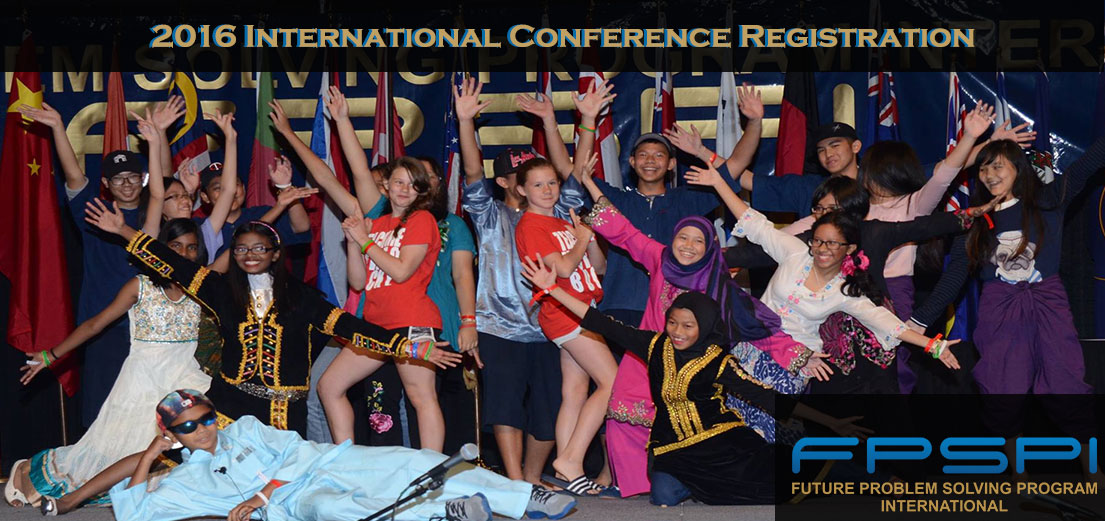
The International Competitors represent the top one percent of students from teams from around the world. The International Conference features four days of stimulating competitive problem solving, cooperative educational seminars, and social activities. Each year approximately 2,200 students and coaches attend the FPS International Conference from around the globe. The topic for Global Issues Problem Solving at the FPS 2016 International Conference is Energy of the Future. Future Problem Solving Program International charters Affiliate Programs throughout Australia, Korea, Malaysia, New Zealand, Portugal, Singapore, United Kingdom, and United States.

To learn more about Future Problem Solving visit http://flfpsp.org/ or http://fpspi.org/

To learn more about my Hunter’s Creek Future Problem Solvers and help us get to Internationals, please visit our Facebook page!

Kellee Signature

Blog Tour, Author Guest Post, and Review!: Reproductive Rights: Who Decides? by Vicki Oransky Wittenstein

Share

NFPB2016

Nonfiction Wednesday

Nonfiction Picture Book Wednesday is hosted by Kid Lit Frenzy and was started to help promote the reading of nonfiction texts. Most Wednesdays, we will be participating and will review a nonfiction text (though it may not always be a picture book).
Be sure to visit Kid Lit Frenzy and see what other nonfiction books are shared this week!

Reproductive Rights

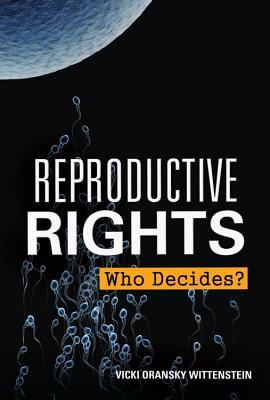
Reproductive Rights: Who Decides?
Author: Vicki Oransky Wittenstein
Published January 1st, 2016 by Twenty-First Century Books

Summary: Throughout history, men and women have always found ways to control reproduction. In some ancient societies, people turned to herbs or traditional rituals. Others turned to methods that are still used in the twenty-first century, such as abstinence, condoms, and abortions.

Legislating access to birth control, sex education, and abortion is also not new. In 1873 the US Congress made it illegal to mail “obscene, lewd, or lascivious materials”—including any object designed for contraception or to induce abortion. In some states in the 1900s, it was illegal for Americans to possess, sell, advertise, or even speak about methods of controlling pregnancy.

At the beginning of the twentieth century, Margaret Sanger, Mary Ware Dennett, and others began to defy these laws and advocate for the legalization of birth control and for better women’s reproductive healthcare. By 1960 doctors had developed the Pill, but it wasn’t until 1972 that all US citizens had legal access to birth control. And in the landmark decision Roe v Wade (1973), the US Supreme Court ruled that women had a constitutional right to terminate a pregnancy.

Disputes over contraception, sex education, and abortion continue to roil the nation, leading to controversial legal and political rulings and occasionally violence. As society changes—and as new reproductive technologies expand the possibilities for controlling and initiating pregnancy—Americans will continue to debate reproductive rights for all.

About the Author: Before becoming an author, VICKI ORANKSY WITTENSTEIN prosecuted criminal cases as an assistant district attorney with the Manhattan District Attorney’s office. She earned an MFA in writing for children and young adults from Vermont College of Fine Arts. Vicki has written a number of science articles and books for the juvenile market, including Planet Hunter: Geoff Marcy and the Search for Other Earths, which won the 2011 Science Communication Award from the American Institute of Physics. Her book For the Good of Mankind? The Shameful History of Human Medical Experimentation was a Junior Literary Guild selection. Vicki and her husband live in Brooklyn, New York. Visit her website at vickiwittenstein.com.

Kellee’s Review: Wittenstein obviously did her research. Her text is filled to the brim with facts and unbiased information of all sides of the reproductive rights debate. I loved learning about the history of reproductive rights as well as the more details than I knew about the present situation and even information about possibilities in the future. I think Wittenstein did a good job with including primary sources, text features, and some narratives to help move the text along as well. 

Ricki’s Review: This is a very comprehensive book that was interesting to read from the beginning to the end! I enjoyed how Wittenstein presented factual information in ways that will engage readers. For instance, she describes the various ways that people of different cultures and time periods believe(d) they can (or could) avoid pregnancy. For instance, you might walk three times around a tree where a pregnant wolf has urinated. This sounds like it would be very difficult to do! This is a great book that students will enjoy. It is a controversial, so I’d probably check with students that they feel comfortable with the content before they sign it out. I don’t believe in censorship, and instead, I believe in allowing students to self-censor when they aren’t comfortable with content. This book is very important for classrooms because it ensures that kids are not in the dark about reproductive issues.

Teachers’ Tools for Navigation: This text is such an amazing resource. It will definitely be an asset either as a textbook or resource in a college or high school class that is touching on or researching reproductive rights, women’s rights, or legal proceedings. It is such a wonderful starting point for learning about the history and progression of reproductive rights.

Discussion Questions: What legal case was the biggest turning point for reproductive rights?; How has women’s rights progressed overtime?

Author Guest Post answering “What inspired you to write Reproductive Rights?” and “What was your research process for the book?”

There were so many inspirations for this book, so I will try to limit myself to a few! First, for as long as I can remember, I have been passionate about women’s rights. When I was in college, I co-organized one of the first domestic violence conferences in Philadelphia. Later, as an Assistant District Attorney in Manhattan, I spoke to many women who had been assaulted by their partners. That first-hand experience led me to chair the board of an organization that sheltered women victims. In addition, I grew up in the 60’s and 70’s during a time when women were just beginning to enter traditionally all-male professions, such as law and medicine. A good part of this new freedom was due to the availability of the Pill and the legality of contraception and abortion. These reproductive rights helped countless women believe they could achieve advanced degrees and build careers.

More recently, worries about setting the historical record straight sparked my interest in writing about this topic. Over the last decade or so, people have learned much of their worldwide news from short media sound bites flashed across the Internet. For many teens, these bits and pieces about new reproductive rights legislation or video clips of rallies against or for abortion are heard without an historical context. Without history, how can we expect young people to navigate through the minefield of these complex and controversial issues, understand what’s at stake with the hundreds of new laws that limit access to contraception and abortion, and form their own opinions?

For thousands of years—from ancient civilizations, through Colonial America, the development of the Pill, the legalization of contraception and abortion, and the brave new world of reproductive technologies—men and women have always found ways to control reproduction. By viewing reproductive rights through an historical lens, teens can learn that controlling procreation is a human need that is not new. This rich history can inform debate and analysis of availability of, access to, and funding for contraception, sex education, and abortion. Today’s teens are the ones who will be most affected by the laws enacted by our federal and state legislators and argued before our courts. And as new reproductive technologies expand the possibilities for controlling and initiating pregnancy, teens are the future adults who will define what it means to be a parent and under what circumstances. So, in many ways this book was inspired by my desire to lay a roadmap for the next generation of parents.

Most of my research was accomplished inside the New York City Public Library, a building filled with astounding resources and fabulous librarians. I also accessed many scholarly and legal articles online through university research collections, as well as letters, diaries, etc. Often just one article or the mention of an event or name led to the next kernel of information, as I worked to fit all the pieces into the puzzle. In many instances, my research uncovered names and events I had never heard of before. For example, I was astounded to learn about two largely unsung heroines: Mary Ware Dennett, who wrote one of the first pamphlets for young people about sex and paved the way for gutting the laws banning the discussion and use of contraception; and Katharine McCormick, the wealthy suffragist and biologist who funded and oversaw the initial development of the Pill. Another big help was the continual flow of media attention that reproductive rights issues provoke. Newspaper articles about state laws and court cases restricting access to women’s clinics led me to explore and understand the lay of the land today. I read lots of articles about the ways in which laws were restricting access to clinics by persuading women not to have abortions and forcing the closure of clinics.

Unfortunately, the media attention surrounding abortion has overshadowed what it means to be in favor of reproductive rights, as most reproductive health care involves cancer screenings, pregnancy prevention and care, and family planning—services mostly unrelated to abortion. I hope the current presidential debates and the appointment of a new Supreme Court justice shine a spotlight on reproductive rights, and that educators will continue to spur critical discussion of these important issues.

Thank you, Kellee and Ricki, for hosting me today!

We Flagged: “In the United States of the twenty-first century, reproductive health is hotly debated. For example, assisted reproductive technologies (ART) for infertile couples raise new ethical and moral issues…”

Read This If You Loved: Nonfiction texts about women’s rights

Follow the tour:
Mon, Feb 15
Proseandkahn
Tues, Feb 16
The Book Monsters
Wed, Feb 17
Library Fanatic
Thurs, Feb 18
Kid Lit Frenzy
Fri, Feb 19
The Nonfiction Detectives
Sat, Feb 20
Ms. Yingling Reads
Mon, Feb 22
The Launch Pad
Tues, Feb 23
Through the Tollbooth
Wed, Feb 24
Unleashing Readers
Thurs, Feb 25
The Pirate Tree
Fri, Feb 26
Teach Mentor Texts

Recommended For: 

classroomlibrarybuttonsmall

Signatureand RickiSig

**Thank you to Barbara at Blue Slip Media for providing copies for review!**