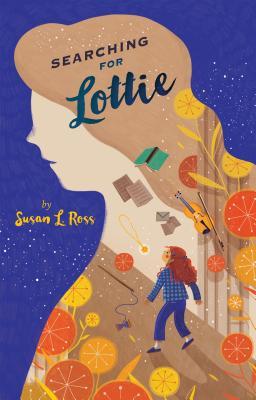
Searching for Lottie by Susan L. Ross

Share

Searching for Lottie
Author: Susan L. Ross
Publication Date: February 26th, 2019 by Holiday House

Summary: Lottie, a talented violinist, disappears during the Holocaust. Can her grand-niece, Charlie, discover what happened?

A long-lost cousin, a mysterious locket, a visit to Nana Rose in Florida, a diary written in German, and a very special violin all lead twelve-year-old Charlie to the truth about her great-aunt Lottie in this intriguing, intergenerational mystery. 12-year-old middle schooler Charlie, a budding violinist, decides to research the life of her great-aunt and namesake for a school ancestry project. Everyone in Charlie’s family believes Great-Aunt Charlotte (Lottie), a violin prodigy, died at the hands of the Nazis, but the more Charlie uncovers about her long-lost relative, the more muddied Great-Aunt Lottie’s story becomes. Could it be that Lottie somehow survived the war by hiding in Hungary? Could she even still be alive today? In Searching for Lottie, Susan Ross has written a highly personal work of historical fiction that is closely inspired by her own family members whose lives were lost in the Holocaust.

About the Author: Susan Ross grew up in Lewiston-Auburn, Maine, and divides her time between Connecticut and Maine. She attended Brown University and NYU School of Law.

After practicing law, Susan taught legal writing in Brooklyn and in Budapest, and creative writing to kids and adults in Connecticut. She especially loves author visits. There is nothing Susan enjoys more than hanging out in a classroom talking to students about her books and teaching kids about writing and literature!

Kiki and Jacques was inspired by the experience of Somali refugees who moved to Susan’s hometown in Maine. Susan worked with refugee teenagers in writing the book and was greatly moved by their amazing positive energy and hopeful determination.

Searching for Lottie was inspired by stories from members of Susan’s family, whose lives were forever changed by the Holocaust.

Susan teaches writing at Westport Writers Workshop and is a trustee at the Westport Library.

Review: I think historical fiction is one of the most important genres because it makes us relive history in ways that we never could without story. Searching for Lottie is interesting because it is contemporary but also includes a historical narrative as Charlie learns more and more about Lottie. This makes it a great choice for students who may not like historical fiction but are interested in history.

I am also a fan of Susan Ross’s writing because she does a fabulous job taking a tough subject and writing a middle grade novel that gives an introduction to the topic without being too mature but also while not sugar coating it. It is so important to have middle grade books for our students that show the real world in an appropriate yet real way.

And it really helps that the stories are interesting and many kids will connect with the conflicts and events the characters take part in.

Teachers’ Tools for Navigation: Searching for Lottie is inspired by true events, specifically those of Susan’s family. She shares much on her website including this background information:

Charlotte Kulka (called Lotte — in English, “Lottie”) was my mother’s teenage cousin. She lived in Prague with her father, a doctor. Her mother passed away when she was little. Tragically, Charlotte and her father both perished, but her beloved aunt, my Cousin Vally Szemere, survived with false papers in Budapest. Vally boarded with a Catholic family who protected her and they became lifelong friends. My middle name was given in Lotte’s memory.

Another relative, Magda Szemere, was a famous young violin soloist in Europe before she, too, was arrested and forever disappeared. I wrote about my bittersweet delight at finding her music in the essay, “Sweet Strings of Sorrow.”

In doing the research for this book, I discovered to my astonishment that her music had been preserved on gramophone recordings and remains available in music archives.

My mother’s cousin, Magda Krizan, survived the war posing as a model and nanny in Hungary — and was a member of the resistance. She escaped from Communist Czechoslovakia with her husband in 1968 and came to America.

My mother, Erika Lencz, escaped Vienna in 1938 with her brother, Erwin. She was twenty years old. My grandparents and nearly all of the rest of her family were lost. Mom worked in a pillow factory in Brooklyn and as a nanny before settling down in Maine with my father, where she ran our family wedding gown shop and had five children.”

Visit http://www.authorsusanross.com/about-searching-for-lottie/ to listen to the recording and view photos.

This information along with Charlie’s project in the book makes me want to ask students to learn about their family (remember to have a plan for any adopted, foster, or other kids with no access to family history!).

Parts of the story also would be a great addition to an orchestra classroom as Charlie and Lottie write about different pieces, specifically the music journal that Lottie kept.

Finally, as with most historical fiction novels, this story would be a fantastic jumping off point for inquiry in the classroom about our world’s past.

Discussion Questions: 

  • After listening to the pieces that Charlie and Lottie share in the book, which piece is your favorite?
  • What other ways did Jews and other ostracized humans escape Nazi-occupied territory during World War II?
  • What traits did Charlie show when researching her namesake?
  • How did the research change her relationship with her brother?
  • Using evidence from the text, how can you tell that Charlie loves music?

Flagged Passages: “‘Lottie was Nana’s sister, right?’

‘Yes, Lottie was several years older. Your nana told me how clever she was; how determined…just like you.’ Mom smiled. ‘And here’s another thing you two have in common–Lottie played the violin. In fact, Lottie played so beautifully that she performed with the Vienna Philharmonic when she was a teenage.’

‘Seriously?’ That was a weird coincidence. Violin was her thing, too. Charlie had begged her parents for lessons when she was still in kindergarten. She’d always loved music, and she liked pop and hip-hop as much as any kid at Hillmont Middle School…but there was something about classical that made her heart skip. She could lose herself in a symphony in a strange way that she never tried to explain to her friends. Only her best friend, Sarah, understood that feeling, but Sarah had moved to Boston over the summer…

‘What else do you know about Lottie?’

‘Well, the family was from Vienna, the capital of Austria. Her father was a math professor at the university.’

‘And…what exactly happened to them.’

Mom hesitated, then let out a long sigh. ‘Honestly, I’m not entirely certain. When the Germans invaded Austria, the Jews were at the mercy of the Nazis. I know that Lottie was lost, along with my grandfather. My grandmother and Nana Rose were lucky to escape. They came to America on a ship.’

‘So Lottie died…right?’ Charlie swallowed hard.

‘Yes, I guess she must have.’ Mom looked uncomfortable.

‘You guess? You don’t know for sure?’ Charlie sat up straight. She searched her mother’s blank face and glanced down at the photo. Lottie’s eyes were bright, with long dark lashes, and they were staring back up at her.

‘The truth is that nobody knows exactly what happened to Lottie…'” (p. 7-9)

Read This If You Love: Music, World War II historical fiction novels, History, Family

Recommended For: 

classroomlibrarybuttonsmall 

Signature

**Thank you to the author for providing a copy of the book for review!!**
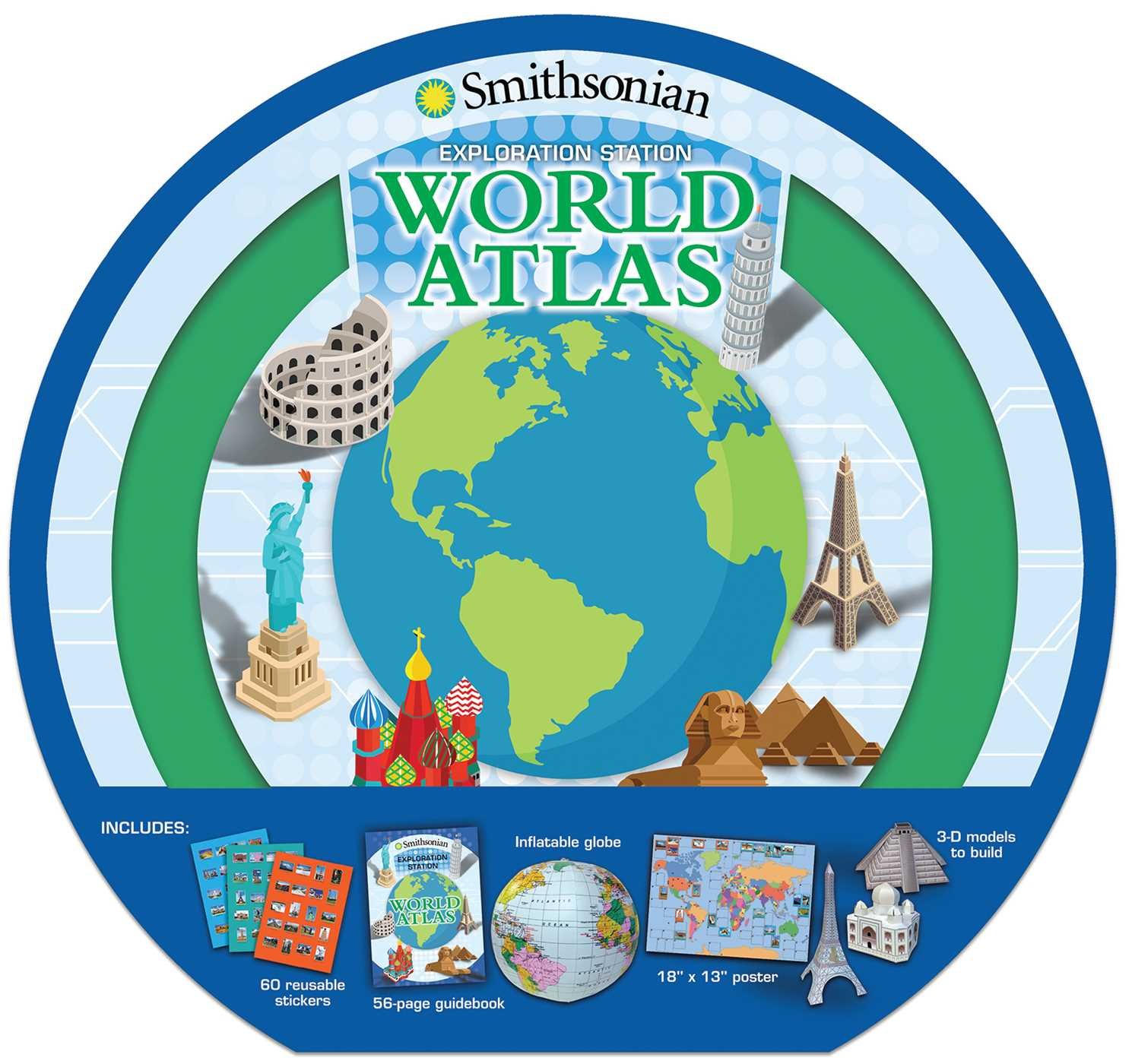
Smithsonian Exploration Station: World Atlas by Josh Farndon

Share

Smithsonian Exploration Station: World Atlas
Author: Josh Farndon
Published November 6th, 2018 by Silver Dolphin and the Smithsonian

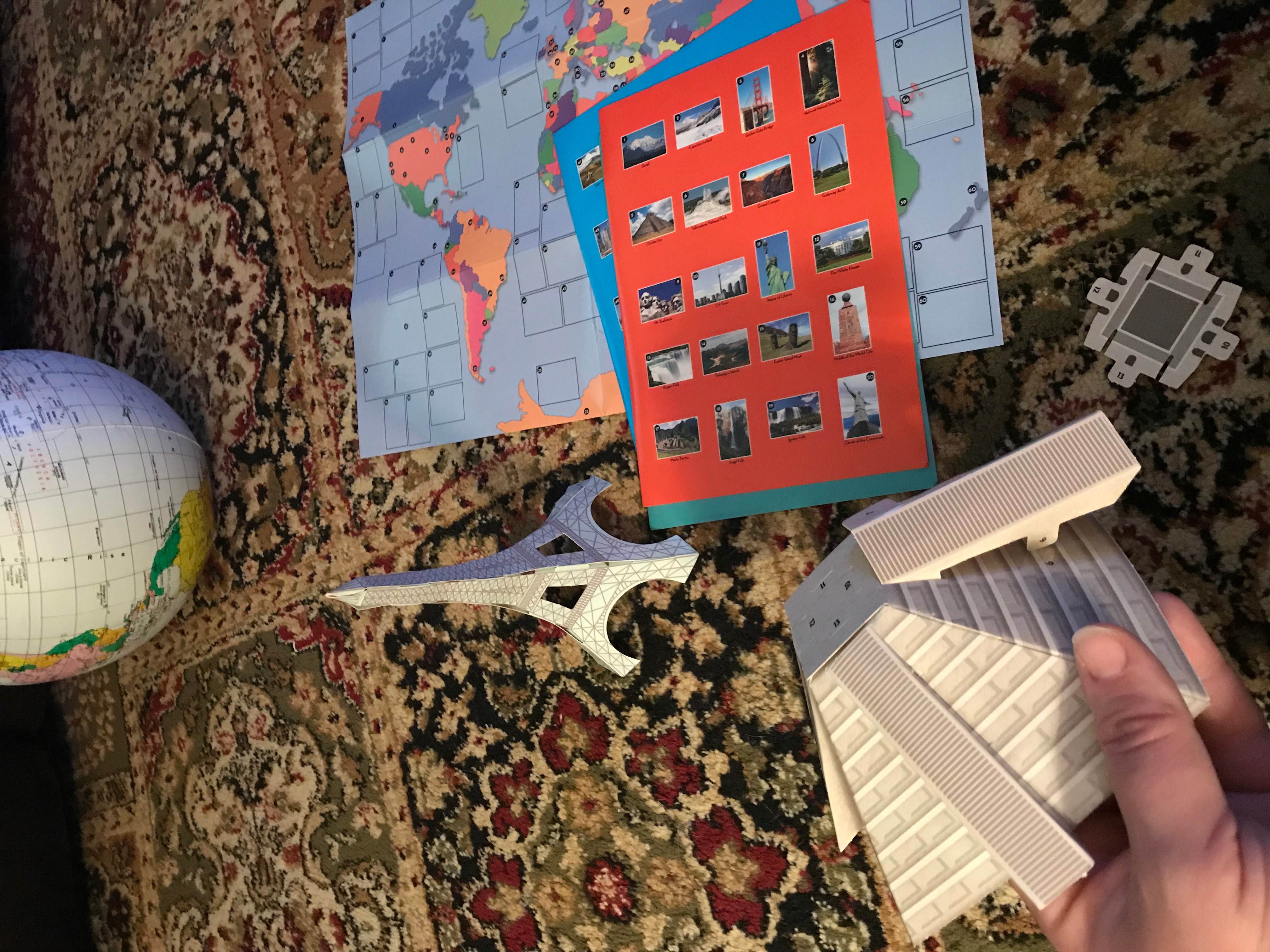
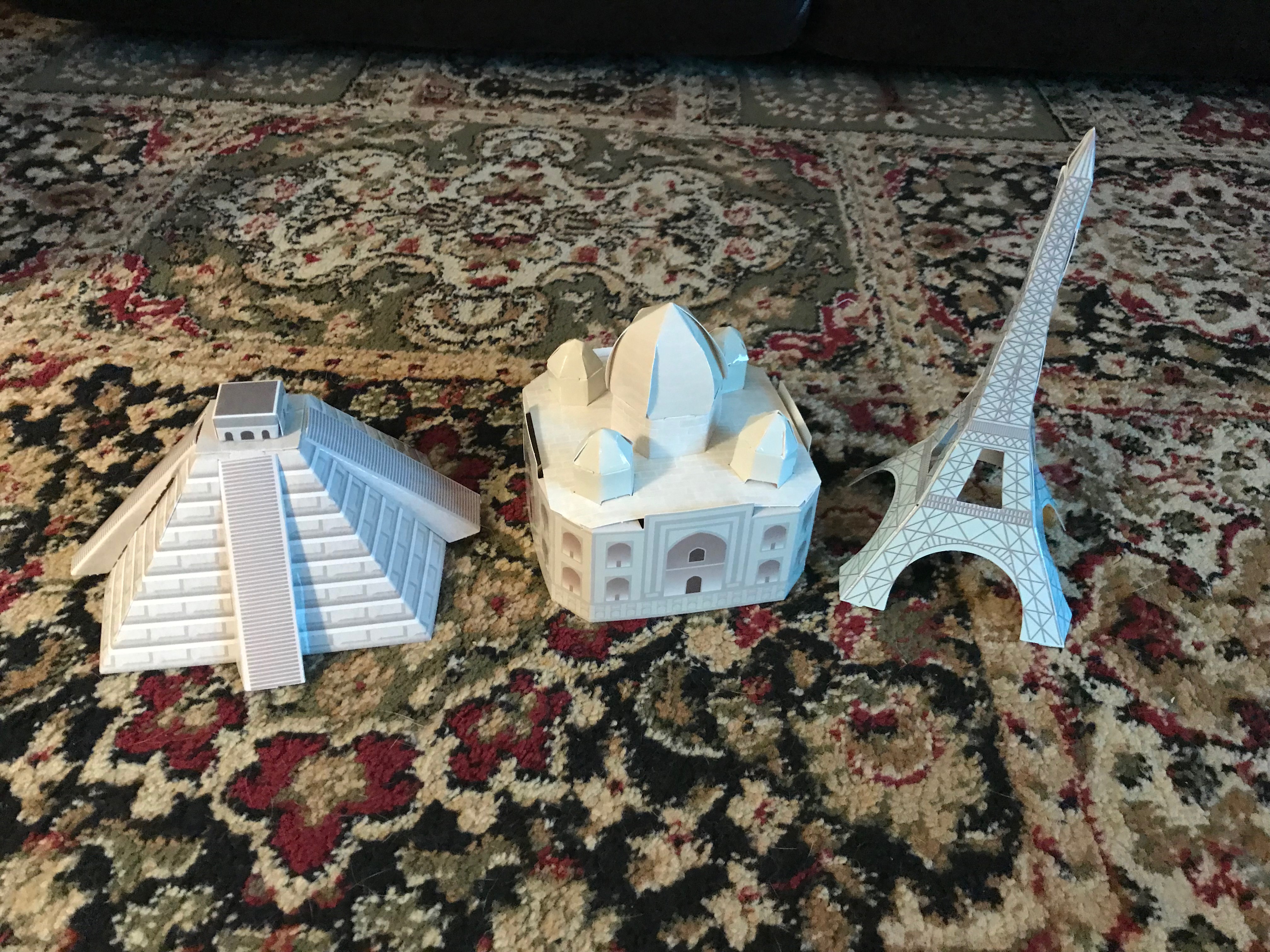
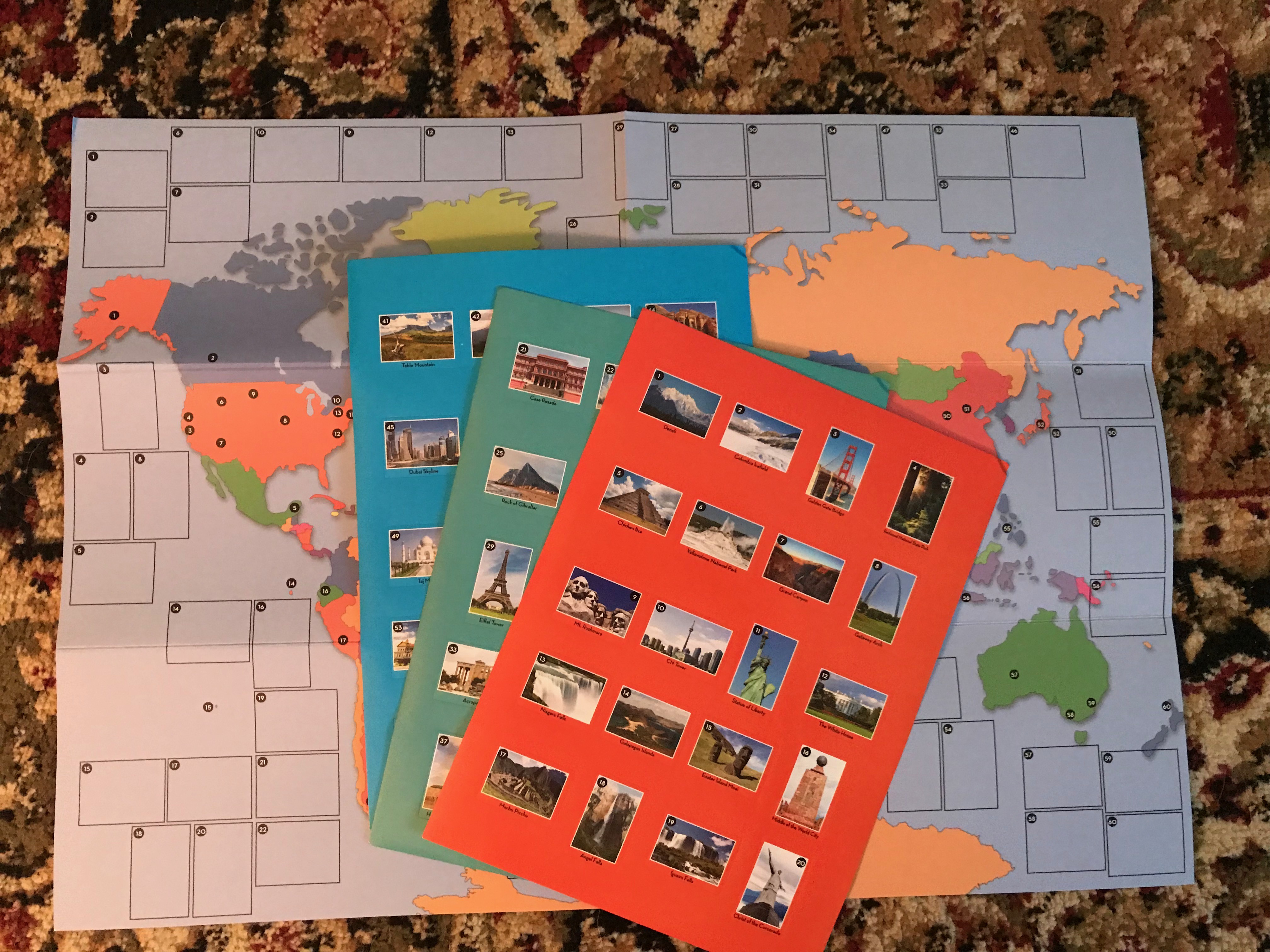
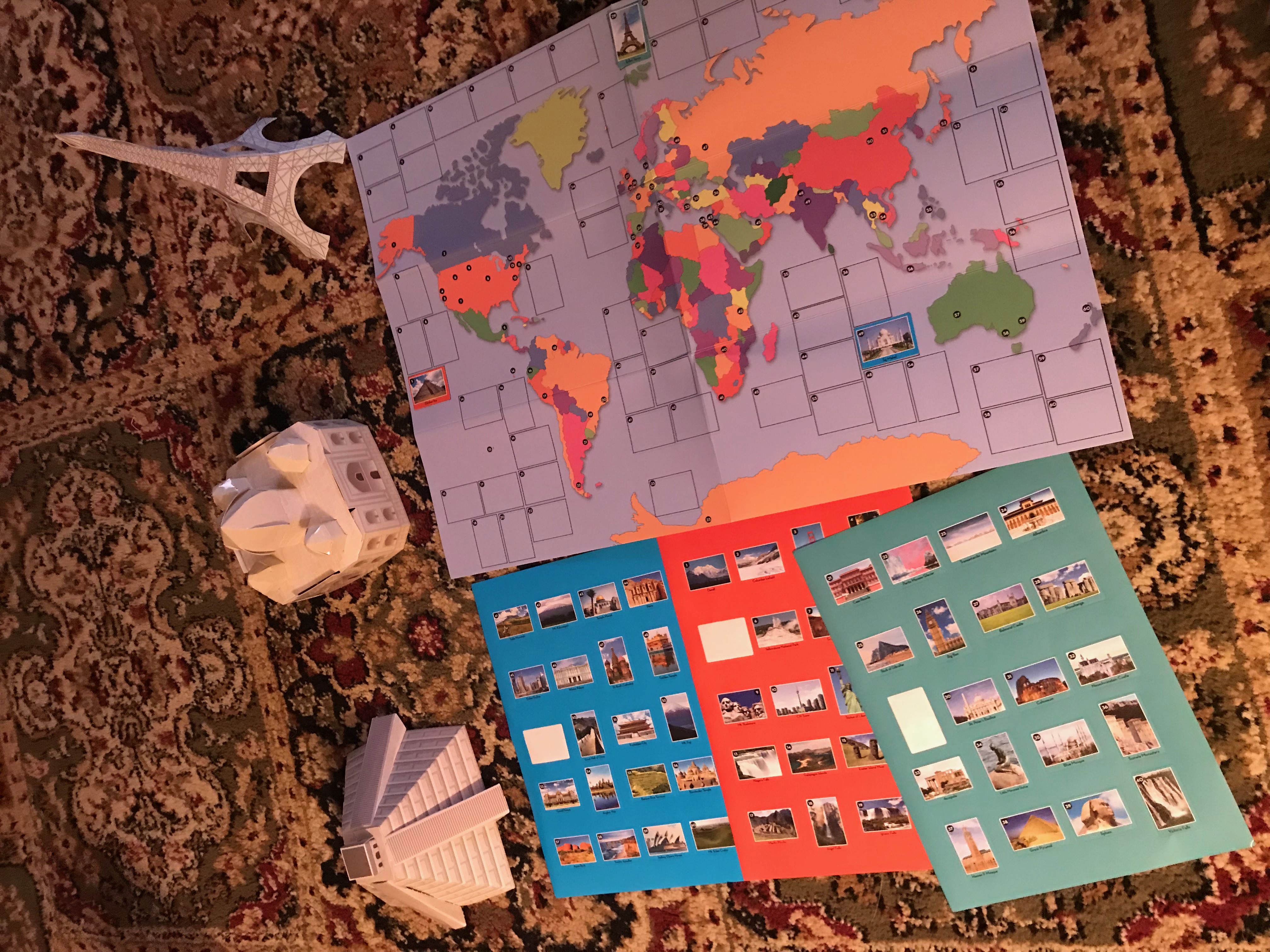
About the Book: Head off on a globetrotting adventure in this interactive atlas! Learn about the diverse cultures, customs, wildlife, and natural beauty that form our world through informative text and full-color photograph. Children will love the hands-on aspect to learning as they blow up their inflatable globe and build the cardstock models of some of the wonders of the world. Smithsonian Exploration Station: World Atlas (ISBN: 978-1626867208) is the perfect way to engage kids in the amazing world around them!

Includes:
56-page fact book
30 stickers with world map poster
1 inflatable globe
3 cardstock models to assemble: the Eiffel Tower, the Taj Mahal, and a Mayan pyramid

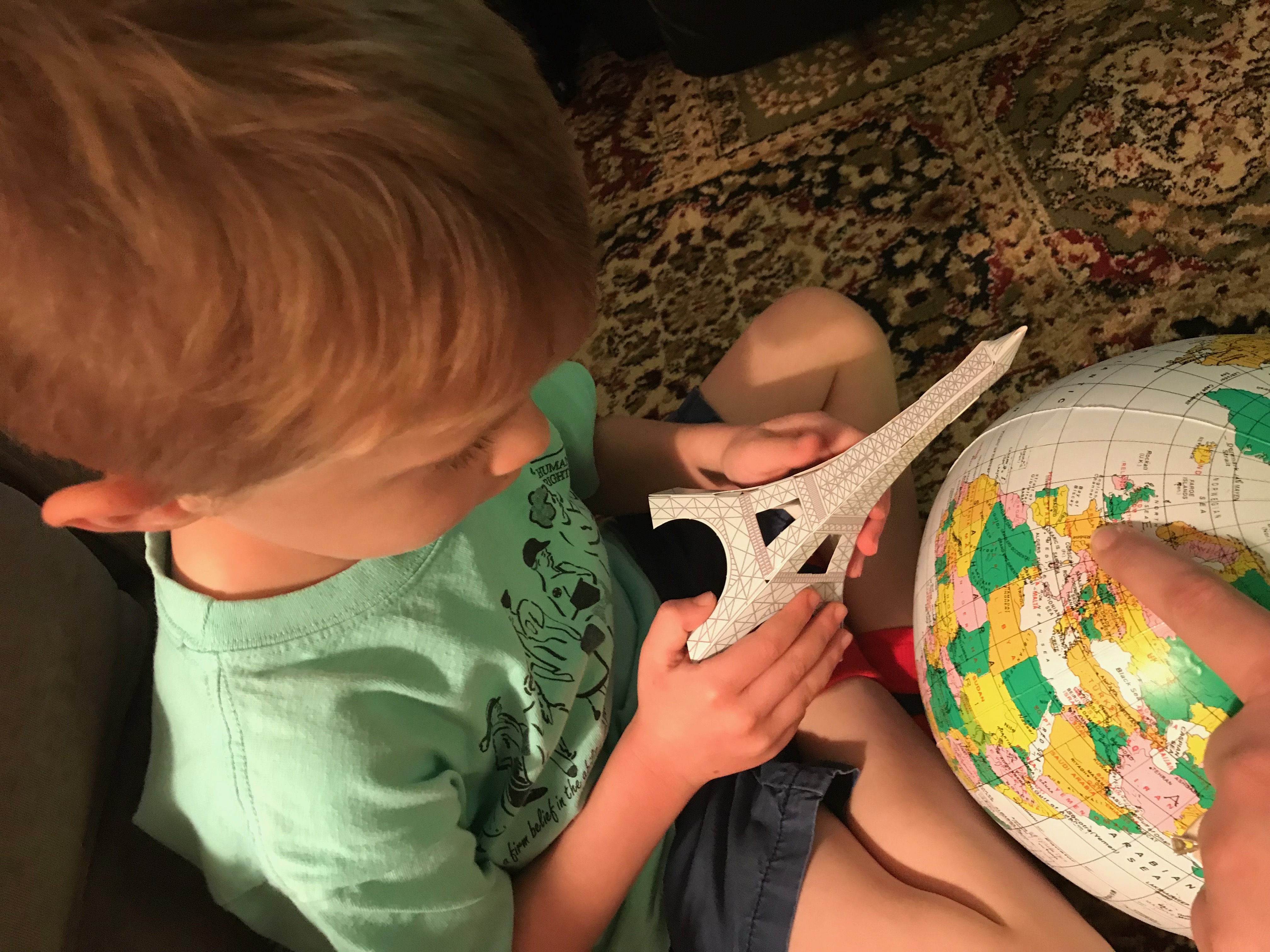
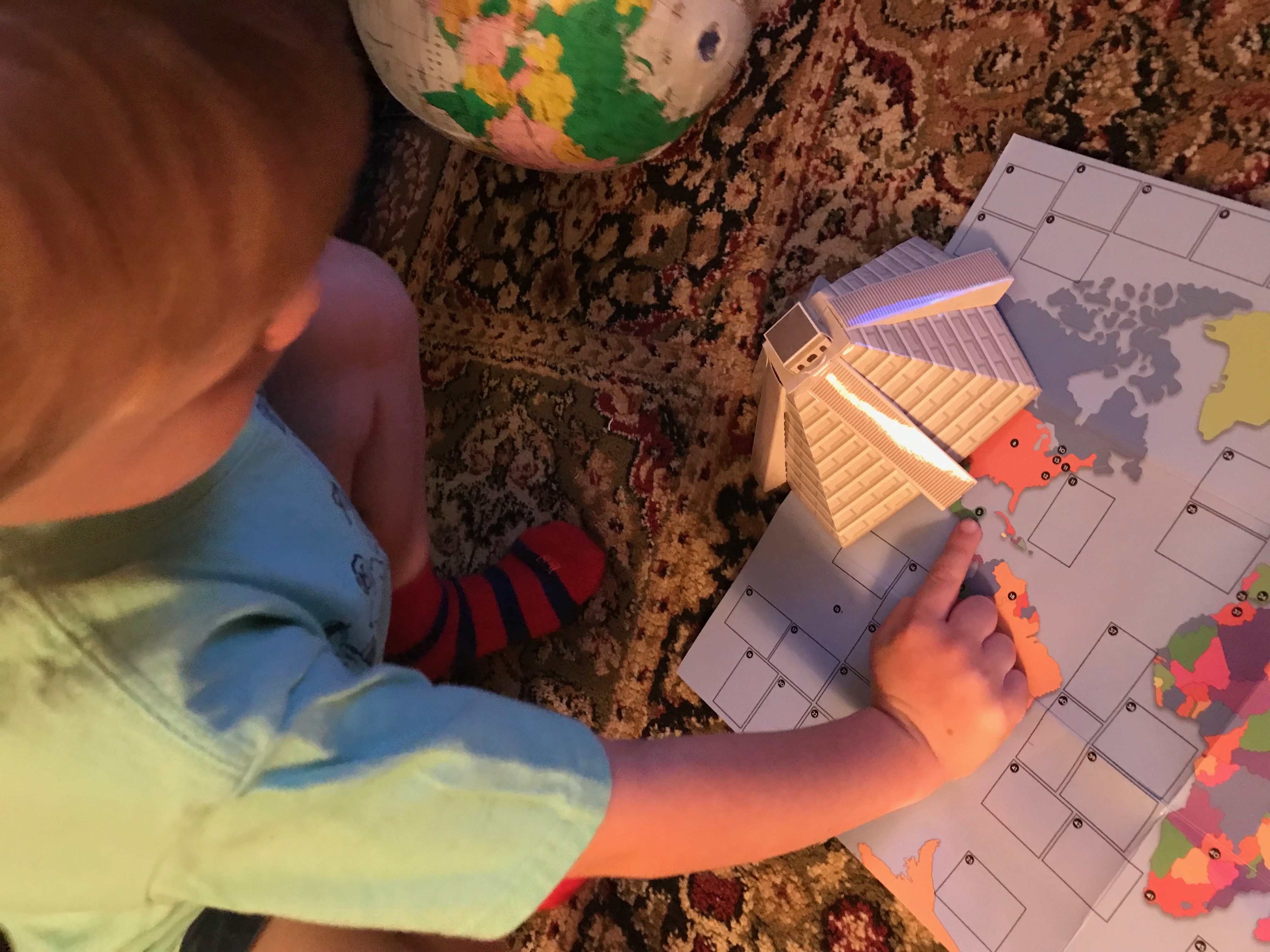
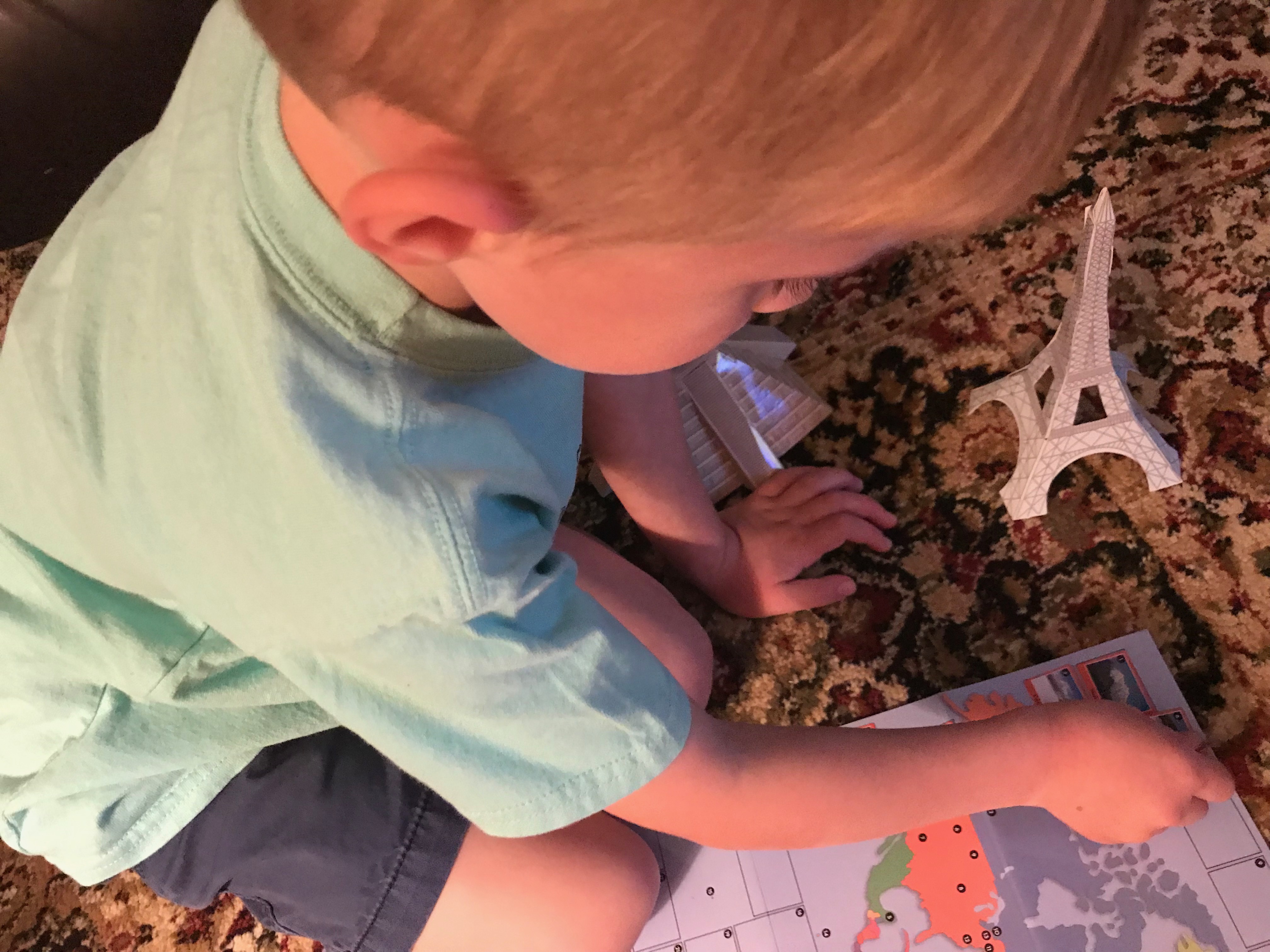
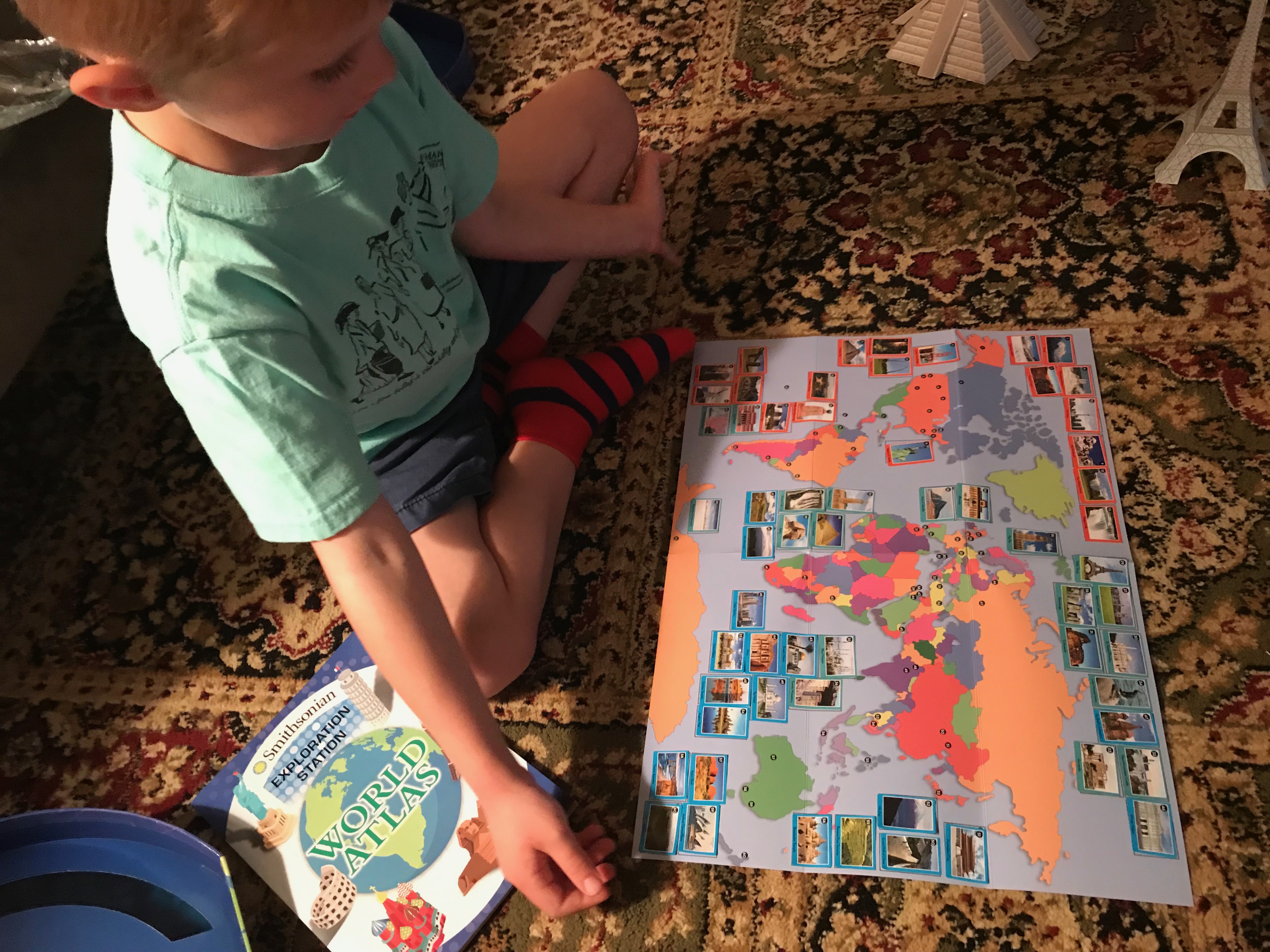
Review: I think the best way to review this exploration set is to show you Trent’s experiences with it as we had an amazing time exploring the world with the globe, map, landmark stickers, and landmark 3D sets:


I don’t think anything can show how wonderful a book is other than showing a child completely involved in its purpose. We’re definitely going to get all the sets in the series!

Teachers’ Tools for Navigation: This series (see Ricki’s review of the Solar System set) is made for education. How fascinating would it be to go through the 30 landmarks on the stickers, maybe one a week, and put them on the poster and discuss the landmark. There are ones all around the world which would allow the class to explore so many cultures. Or maybe separate the landmarks and have a different student become an expert on each one and share. There is so much to consider!

Discussion Questions: 

  • Where is _____ located?
  • What landmarks are in ____?
  • What did you learn about ____?
  • How is ___ different than ___?
  • Any Atlas/Geography questions!

Read This If You Love: Interactive sets, Geography, Landmarks

Recommended For: 

**Thank you to Casey at Media Masters Publicity for providing a copy for review!**
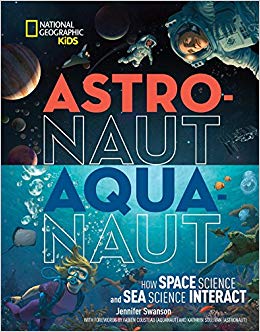
Astronaut, Aquanaut: How Space Science and Sea Science Interact by Jennifer Swanson

Share

Astronaut, Aquanaut: How Space Science and Sea Science Interact
Author: Jennifer Swanson
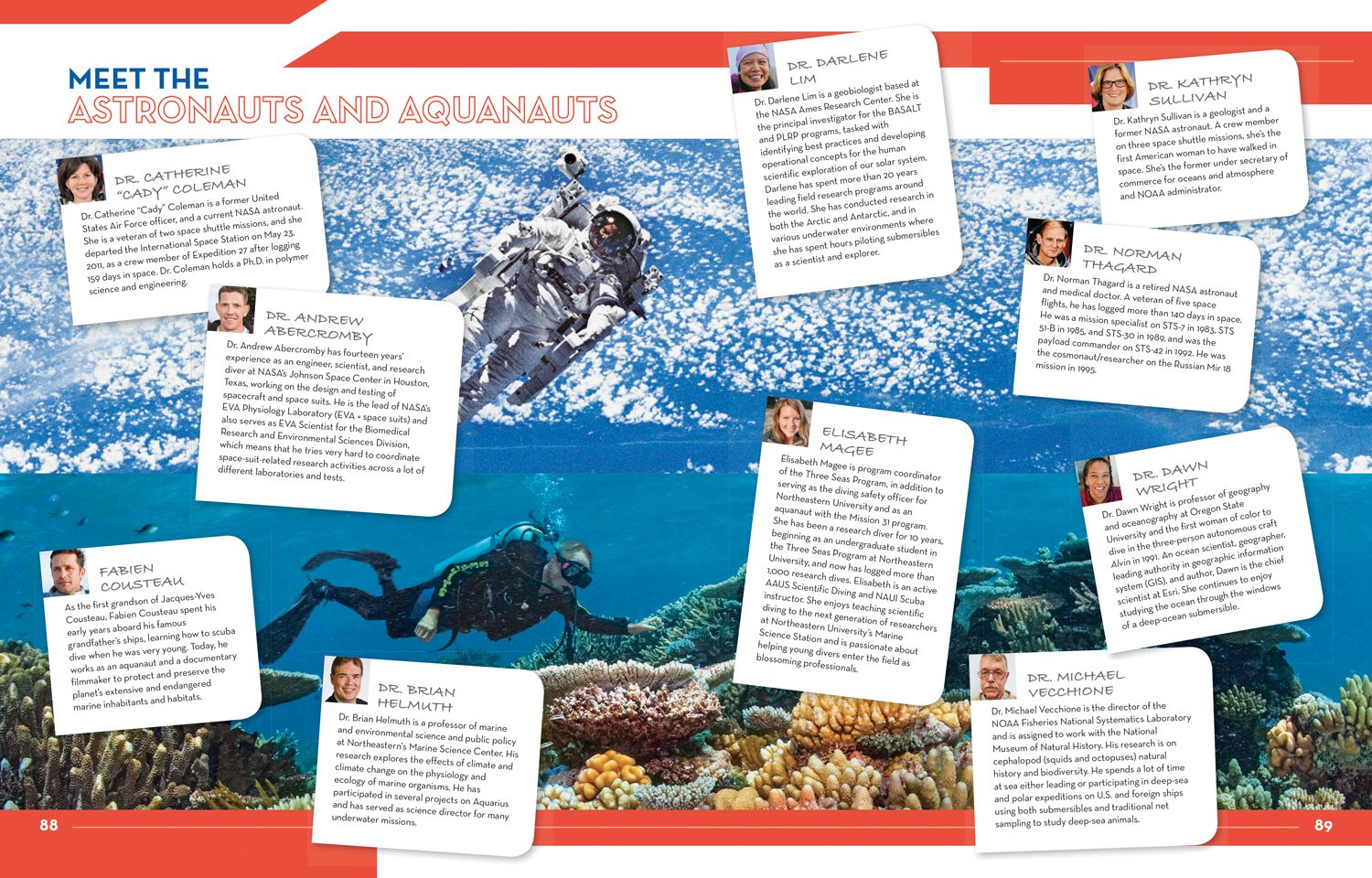
Foreword by Fabien Cousteau and Kathryn D. Sullivan
Published January 9th, 2018 by National Geographic Society

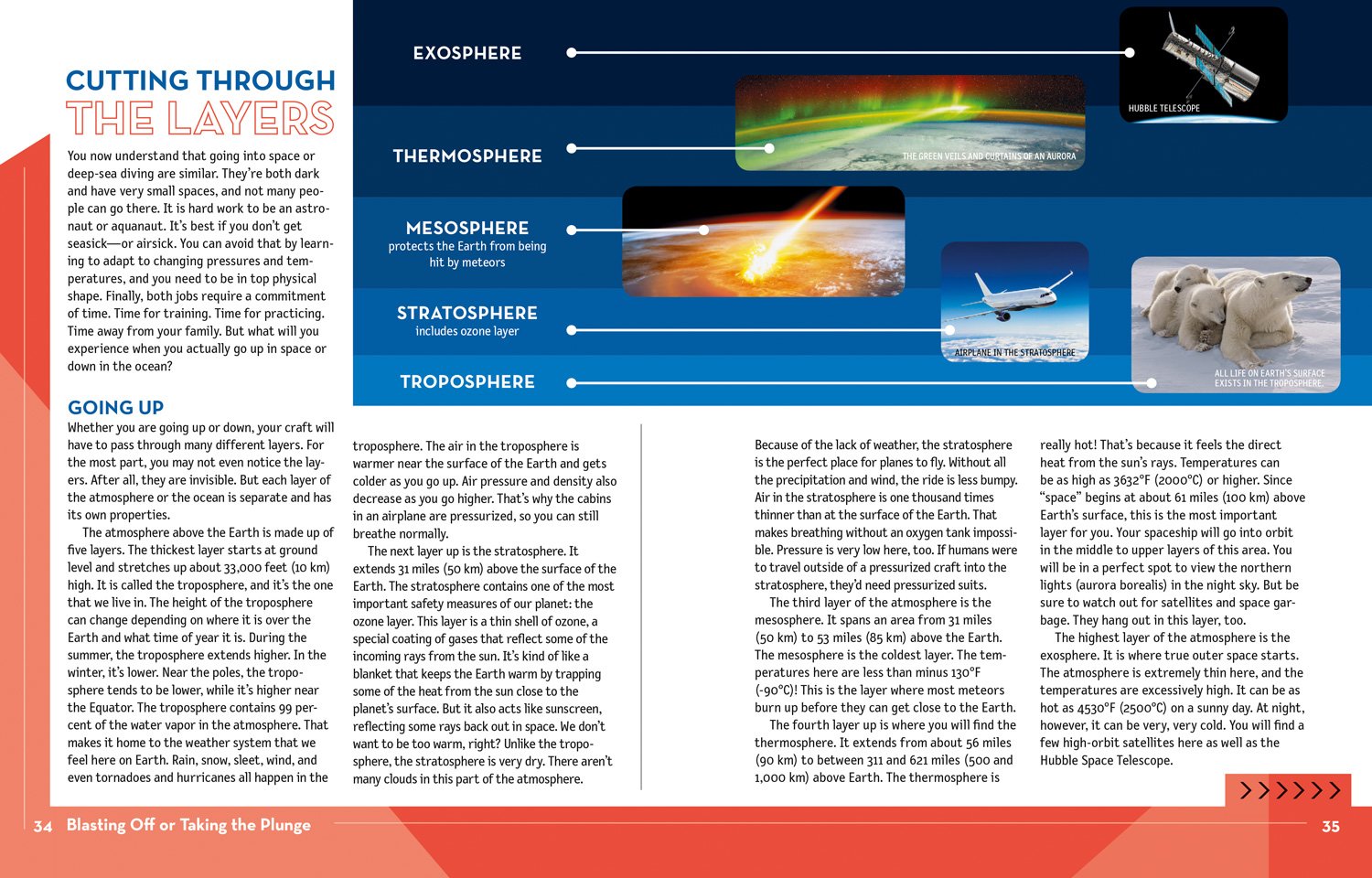
Summary: Journey from the deepest trenches in the oceans to the farthest humans have ventured into space and learn what it takes to explore the extremes. You might just be surprised by how similar the domains of ASTRONAUTS and AQUANAUTS really are.

Space and the ocean. If you don’t think they go together, think again! Both deep-sea and space explorers have to worry about pressure, temperature, climate, and most importantly, how to survive in a remote and hostile environment. Join us on an amazing journey as we go up in space with astronauts and dive deep down in the ocean with aquanauts to explore the far-off places of our planet and the solar system.

With a strong tie into STEM topics–such as making connections, making comparisons, and recognizing patterns across content areas–readers will discover the amazing science and incredible innovations that allow humans (and sometimes only machines) to survive in these harsh environments.

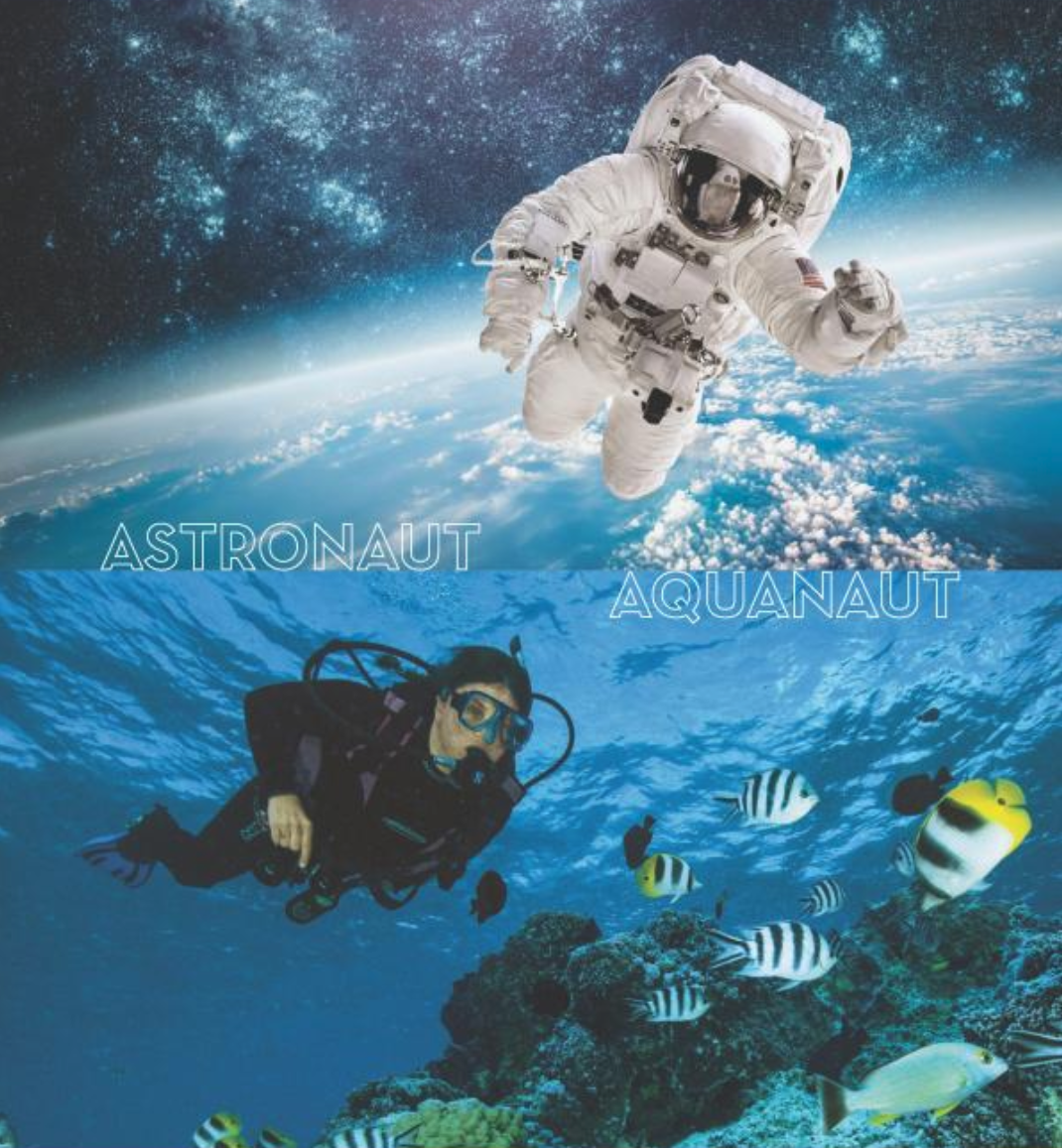
Review: First, I want to share this image because it is one of my favorites ever, and I want a poster of it for Trent’s room!

I love the idea of this book! First, from a personal point of view: my son loves animals and space, so this is a perfect book for him. We didn’t read word for word together, but we spent hours over the last couple of weeks flipping through the book, looking at different spreads, reading parts of the book, and answering any questions that Trent had. Also, from a educator point of view: this text is so full of information told in such an interesting way with fun facts, activities, and so much fascinating information! Swanson did a beautiful job making connections between the two professions and scientists and giving equal looks into both. And since the book is for middle grade students, it is essential for it to be written in a way that will be intriguing to readers, and this book is definitely that!

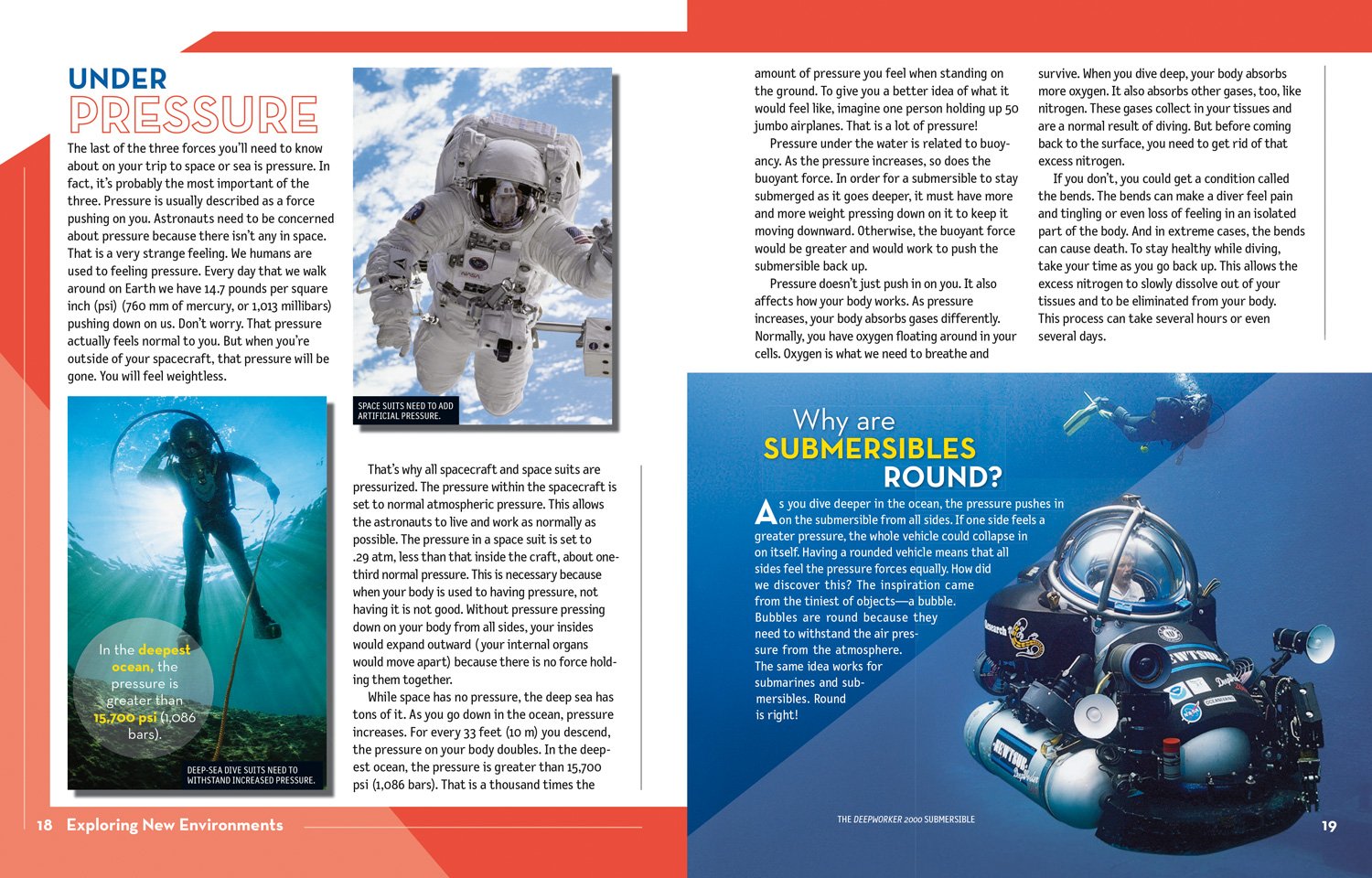
Teachers’ Tools for Navigation: Throughout the book there are questions that can lead to inquiry (see below) and many topics that are introduced that could be further researched. Additionally, there are a few activities throughout such as one on submersibles, docking the ISS, and design your own space suit. The book is also set up for comparing and contrasting looking at exploration in both space and the sea and how they differ and overlap.

Discussion Questions: The text is FILLED with books that can lead to phenomenal discussions or inquiry projects such as

  • How does studying the topography of the ocean floor help us understand the space?
  • Why is it important for astronauts to train underwater?
  • What does it feel like during blastoff?
  • What is it like to live in space/under water for a long time?
  • Why and how do we explore?
  • How can studying the ocean help astronauts better understand conditions in space?
  • What can space teach us about the ocean?

Flagged Passages: 

Read This If You Love: Space travel, Science, Marine biology

Recommended For: 

classroomlibrarybuttonsmall 

Signature

**Thank you to the author for providing a copy for review!**

Blog Tour with Review, Teaching Guide, and Giveaway!: Two Truths and a Lie: Histories and Mysteries by Ammi-Joan Paquette and Laurie Ann Thompson

Share

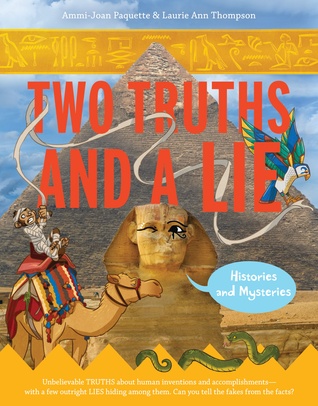
Two Truths and a Lie: Histories and Mysteries
Authors: Ammi-Joan Paquette and Laurie Ann Thompson
Published June 26th, 2018 by Walden Pond Press

Summary: Unbelievable TRUTHS about outrageous people, places and events—with a few outright LIES hiding among them. Can you tell the fakes from the facts?

Did you know that a young girl once saved an entire beach community from a devastating tsunami thanks to something she learned in her fourth-grade geography lesson? Or that there is a person alive today who generates her own magnetic field? Or how about the fact that Benjamin Franklin once challenged the Royal Academy of Brussels to devise a way to make farts smell good?

Welcome to Two Truths and a Lie: Histories and Mysteries! You know the game: Every story in this book is strange and astounding, but one out of every three is an outright lie.

Can you guess which stories are the facts and which are the fakes? It’s not going to be easy. Some false stories are based on truth, and some of the true stories are just plain unbelievable! Don’t be fooled by the photos that accompany each story—it’s going to take all your smarts and some clever research to root out the alternative facts.

From a train that transported dead people to antique photos of real fairies to a dog who was elected mayor, the stories in this book will amaze you! Just don’t believe everything you read. . . .

About the Authors:


Ammi-Joan Paquette loves caves, hates mushy bananas, and is ambivalent about capybaras. She is the author of the novels The Train of Lost Things, Paradox, and Nowhere Girl as well as the Princess Juniper series and many more. She is also the recipient of a PEN/New England Susan P. Bloom Children’s Book Discovery Award honor. Joan lives outside Boston, Massachusetts, where she balances her own writing with her day job as a literary agent. You can visit her online at www.ajpaquette.com.

Laurie Ann Thompson loves capybaras, hates caves, and is ambivalent about mushy bananas. She is the author of several award-winning nonfiction books, including Emmanuel’s Dream,  a picture book biography of Emmanuel Ofosu Yeboah, which was the recipient of the Schneider Family Book Award and was named an ALA Notable Book and a CCBC Choice, among other accolades. She lives outside Seattle with her family, and you can visit her online at www.lauriethompson.com

Unleashing Readers review of Two Truths and a Lie: It’s Alive! https://www.unleashingreaders.com/?p=13591 

ReviewI just love this series for so many reasons! First, it is just so interesting! Even the “lies” include true stories with information switched out to make it not true. There are quizzes and tidbits of information. There is so much to read about and just take in. I am so in awe with the authors who truly find unknown information that is fascinating and will keep kids (and adults!) reading. Also, I think it is so important to teach students/kids (and adults!) how to determine if information being given to us is valid and reliable. Third, I think the authors do a fantastic job including a wide variety of topics to give students who may have different interests interested. And with two books in the series now focusing on two different focuses, it makes it so even more readers will find something they want to learn about. And lastly, I am so glad that the authors are making nonfiction fun! Too many of my students don’t like nonfiction because they find it “boring.” This book is anything but boring.

Teaching Guide:

Flagged Passages: 

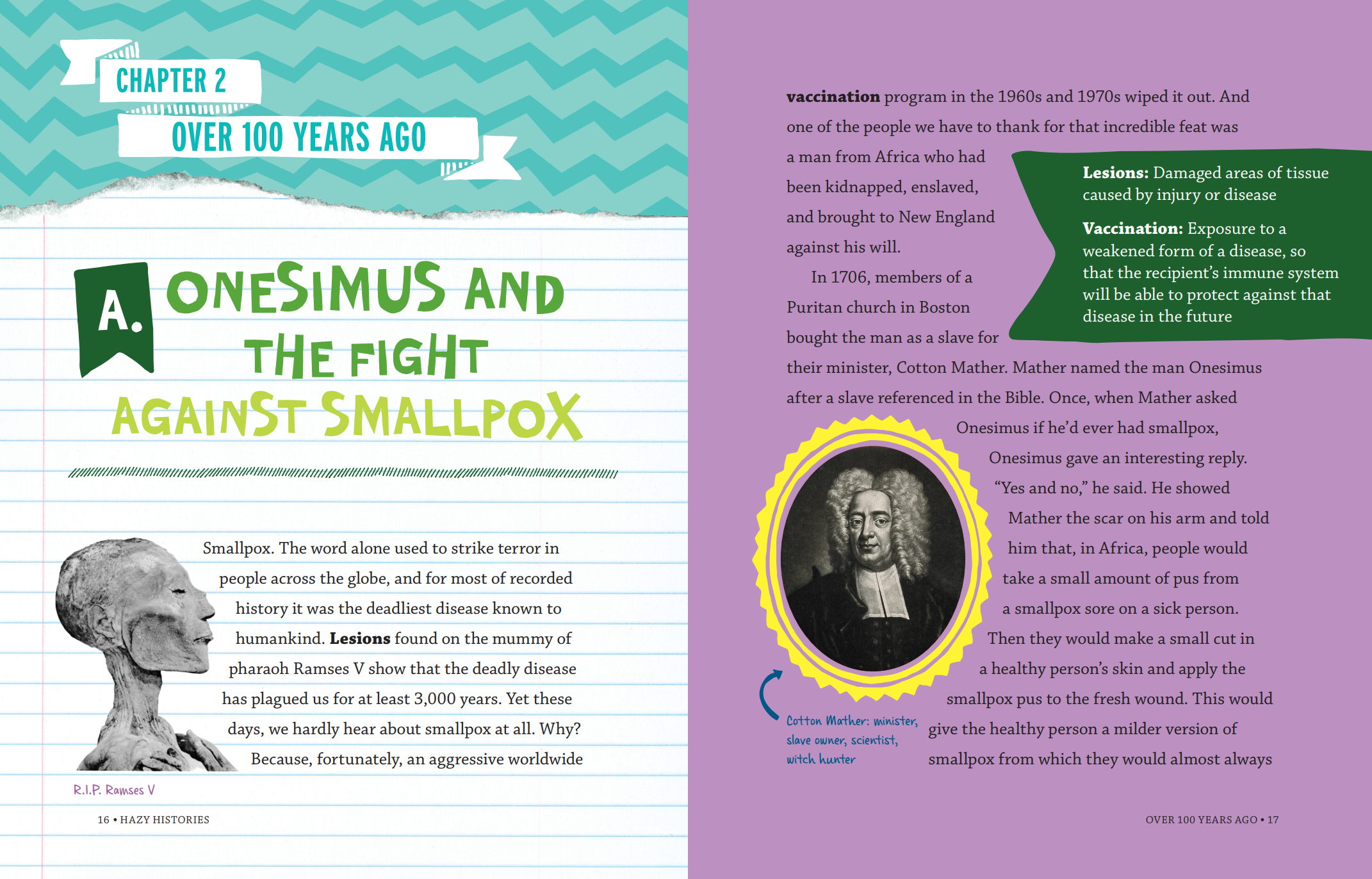
Part 1: Hazy Histories

History. Some people think of it as nothing more than a whole bunch of names and events and dates to be memorized. But history is so much more than that. History is people, history is stories, history is fascinating! 

In this section, we’ll spin some amazing tales from ancient history right up to the present day. All of them are remarkable, but remember–one of the stories in each chapter is fake.

Prepare yourself to experience history in a way that you never have before.

Let’s get started!

Chapter 2: Over 1,00 Years Ago

Read This If You Love: Unsolved Mysteries from History series by Jane Yolen and Heidi Elisabet Yolen Stemple: The Mary Celeste, Roanoke, The Wolf Girlsand The Salem Witch Trials; History’s Mysteries from National Geographic; History; Nonfiction mysteries

Recommended For: 

classroomlibrarybuttonsmall 

Blog Tour Stops: 

DATE BLOG
6/19 Library Lions Roar
6/20 Geo Librarian
6/21 A Foodie Bibliophile in Wanderlust
6/21 Roadmap to Reality: Helping Kids Find Their Way in a World of Fake News
6/26 The Official Tumblr of Walden Media
6/26 Bluestocking Thinking
6/27 Unleashing Readers
6/27 Nerdy Book Club
6/27 Writers Rumpus
6/28 The Book Monsters
6/29 Pragmatic Mom

GIVEAWAY!

a Rafflecopter giveaway

Signature

Teaching Rescued by Eliot Schrefer in a Middle School Reading Classroom

Share

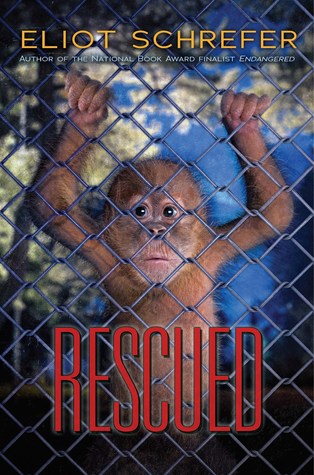
Rescued
Ape Quartet #3
Author: Eliot Schrefer
Published April 26th, 2016 by Scholastic Press

Summary: They grew up together. Now they have to escape together.

Raja has been raised in captivity. Not behind the bars of a zoo, but within the confines of an American home. He was stolen when he was young to be someone’s pet. Now he’s grown up and is about to be sent away again, to a place from which there will be no return.

John grew up with Raja. The orangutan was his friend, his brother. But when John’s parents split up and he moved across the country, he left Raja behind. Now Raja is in danger.

There’s one last chance to save Raja—a chance that will force John to confront his fractured family and the captivity he’s imposed on himself all of these years.

About the Author: Eliot Schrefer is a New York Times-bestselling author, and has twice been a finalist for the National Book Award. In naming him an Editor’s Choice, the New York Times has called his work “dazzling… big-hearted.” He is also the author of two novels for adults and four other novels for children and young adults. His books have been named to the NPR “best of the year” list, the ALA best fiction list for young adults, and the Chicago Public Library’s “Best of the Best.” His work has also been selected to the Amelia Bloomer List, recognizing best feminist books for young readers, and he has been a finalist for the Walden Award and won the Green Earth Book Award and Sigurd Olson Nature Writing Award. He lives in New York City, where he reviews books for USAToday.

ReviewI think out of the three Ape Quartet books published so far, this is the one that is going to hit closest to home for many. It will make many readers uncomfortable and want to make a change. First, it takes place in the United States unlike Africa like the first two. Second, it really digs into an issue that is still very much prominent here–animal injustice.

I find Schrefer’s writing to be so beautiful yet so easy to read. He can pull you into his stories and makes you feel for not only his human characters but also his animal characters. He does such a tremendous amount of research for all of his books and with this one it brings the injustice of Raja alive.

I am a sucker for ape books. I find apes to be the most fascinating animals, and orangutans may be my favorite because they have these amazing eyes that just show me that they are so intelligent and deep thinkers. They are also introverts; I think I just relate to them in that way. This book brings orangutans to life through Raja.

As evident from Schrefer’s status as a two-time National Book Award finalist, his books can be used as a mentor text for just about any aspect of writing that you are looking for: characterization, imagery, voice, conflict, etc. Read any of his books, and you can pull out so much to discuss and use within the classroom. Additionally, there are some amazing ape books, including Schrefer’s other Ape Quartet books, that would make for an amazing lit circle opportunity or text set.

Review originally posted here on May 13, 2016.

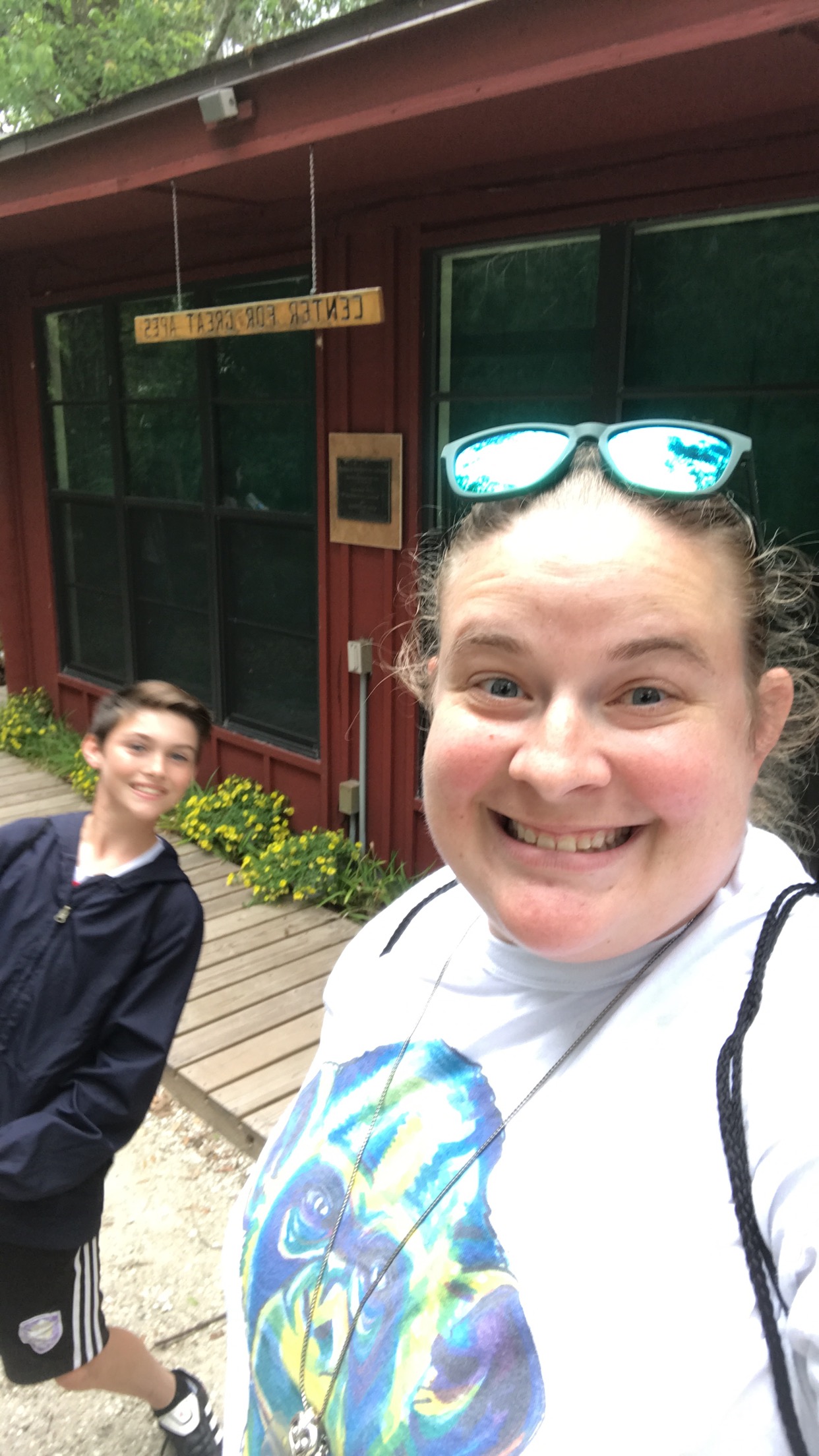
Teachers’ Tools for Navigation: Last year, our whole-class novel unit was done using Hurt Go Happy and included a trip to Center for Great Apes. This year, I had a completely different type of novel planned, but my students begged to read more about apes (and visit CFGA again). After looking at all of the available ape books, I decided that Rescued was perfect for the standards I wanted to teach and also included orangutans instead of chimps, and orangutans are the other great ape at CFGA. After setting up a Donors Choose and getting funded (THANK YOU ALL DONORS!), Eliot Schrefer also so kindly contacted me and offered to send even more copies of Rescued to my students–wow! So much kindness! Now that we had a plethora of copies, I wanted to share the love, so I contacted my South Carolina middle school teacher friend, Jennie Smith, to see if she wanted to read Rescued with us and collaborate some how. I was so happy that she said yes!

The Unit

Because I do love whole-class novels, but I also don’t like how a whole-class novel can also ruin a book with too much time spent on one book with way too many assignments during the unit. To try to fight this, I planned the unit quite simply:

  • Each week the students were given a focus question on Monday that they could think about all week then answer on Friday.
    • These focus questions are how we collaborated with Mrs. Smith’s class as well. My 1st and 2nd period posted their answers on Padlet and Mrs. Smith’s students would also post. The kids would then respond to each other.
    • Focus questions:
      • 1. What’s a big idea that’s emerging that’s worth talking about?
      • 2. Is there a passage that struck you as important in developing a character or a conflict in the reading so far? Share the passage and explain.
      • 3. What incident up to this point has had the most impact on the plot? How so? What did the characters’ response to this incident teach you about them?
      • 4. There are many who argue that Great Apes are human-like, including the lawyer who will take apes as plaintiffs to demand rights. What are some examples in this section of Raja showing how close to humans he truly is?
      • 5. How did the characters (specifically John’s mom, John’s dad, John, and Raja) change throughout the book? What other narrative elements helped shape their final persona? Find a piece of dialogue and a specific incident in the book that is evidence for your analysis of the character.
    • The idea of focus questions was something I got from a talk by Kelly Gallagher and Penny Kittle at NCTE 2017.
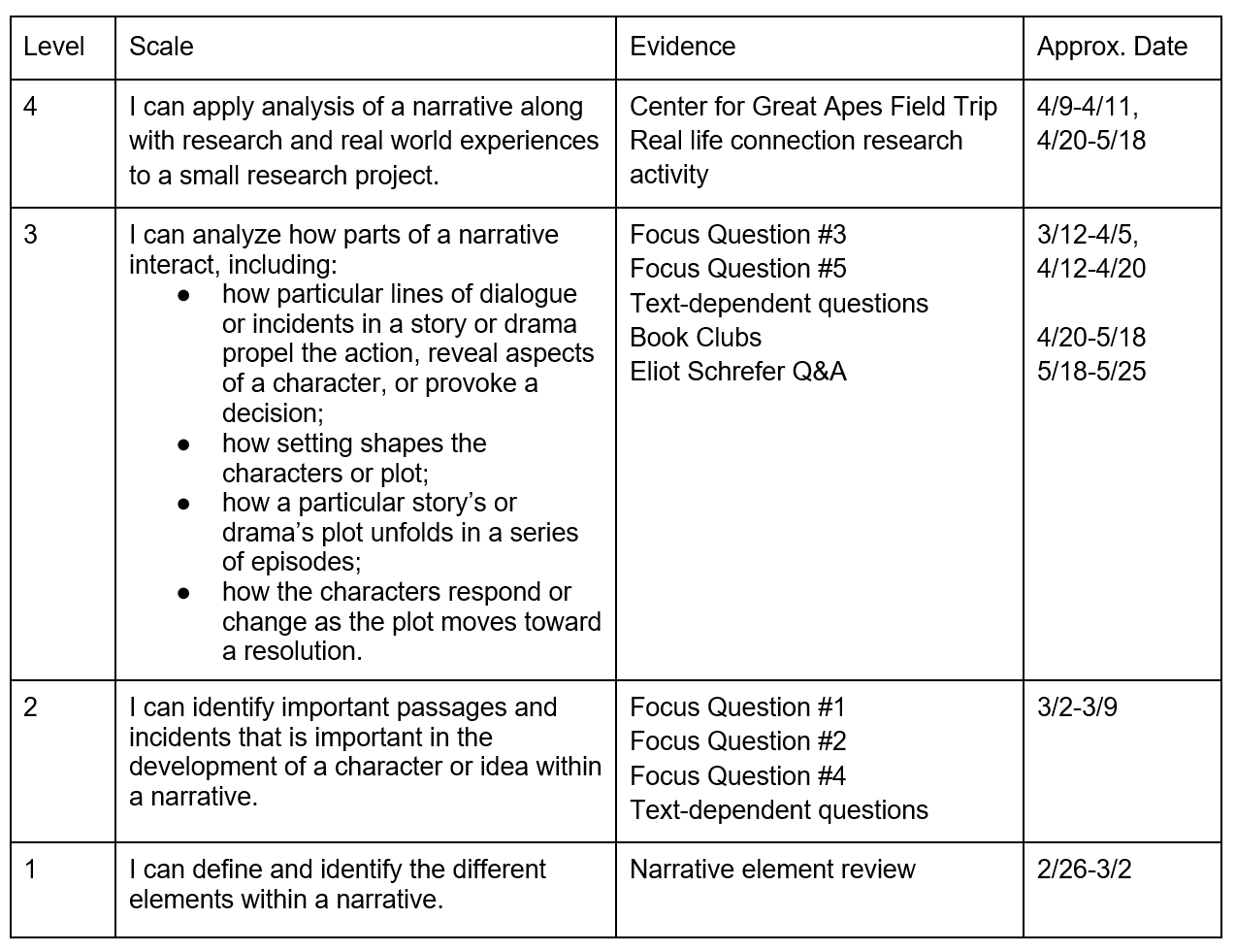
  • Because of one of the standards the unit was focusing on, we also looked at narrative elements, specifically dialogue, setting, and conflicts. Here is my scale for the unit:
  • Throughout the unit, I would also stop to have students think about certain text-dependent questions. I tried not to do this too often to not slow down the narrative; however, I loved seeing my students’ thinking. We would then discuss these questions, but I like allowing my students to write answers first before discussing because it allows them to get their thinking organized. (I shared some of these text-dependent questions and an example of a student’s answers below.)

The Field Trip

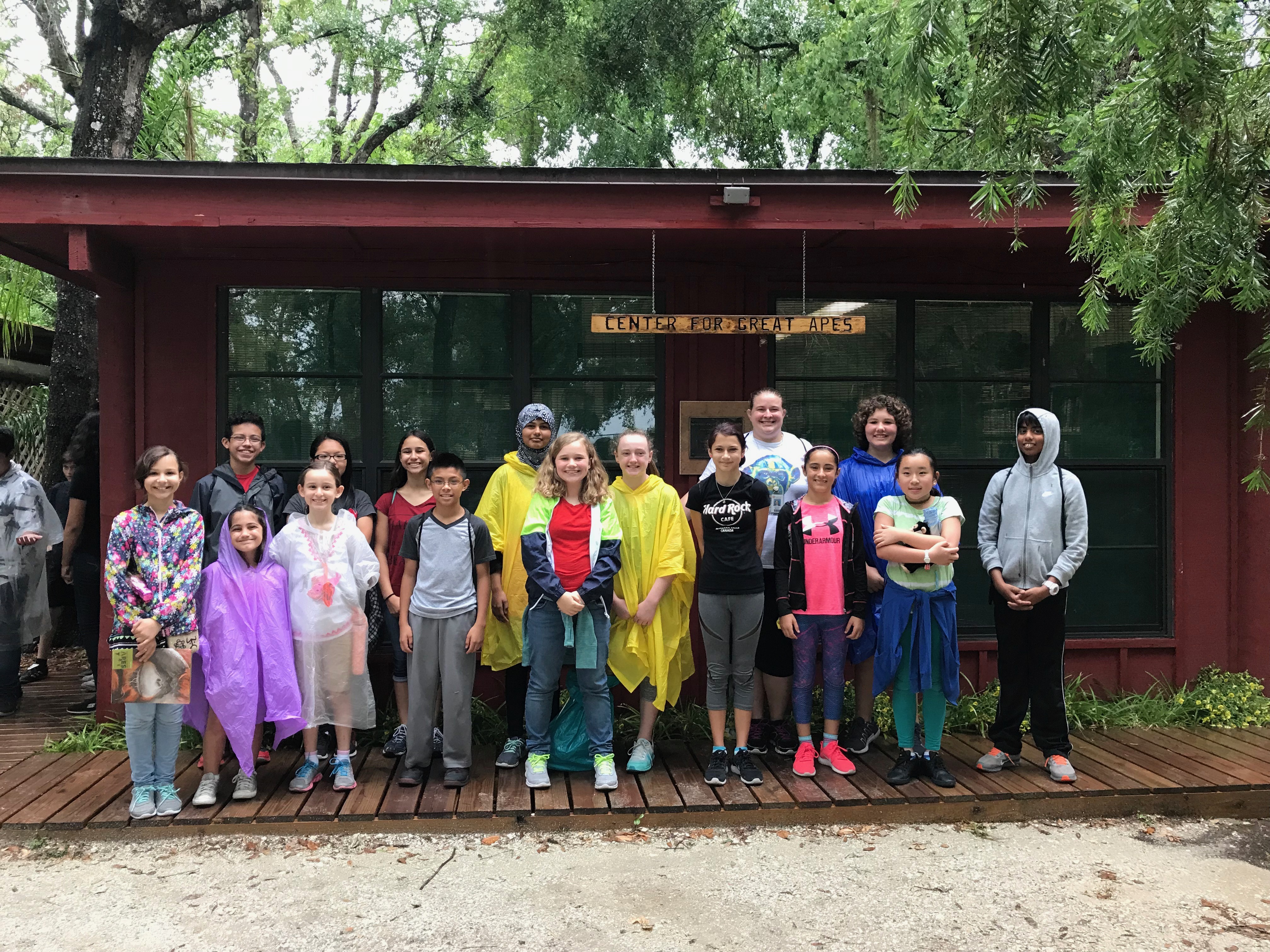
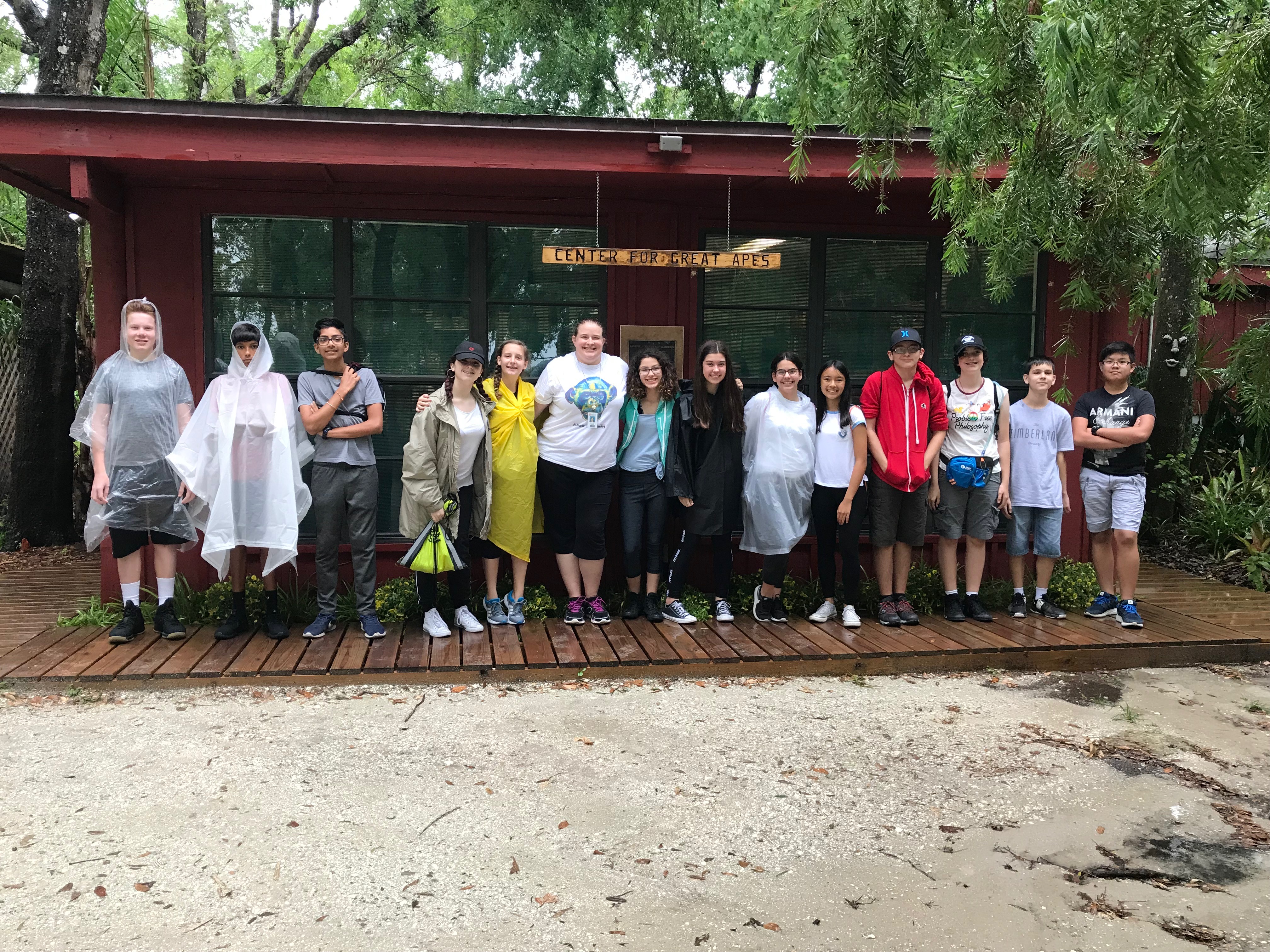
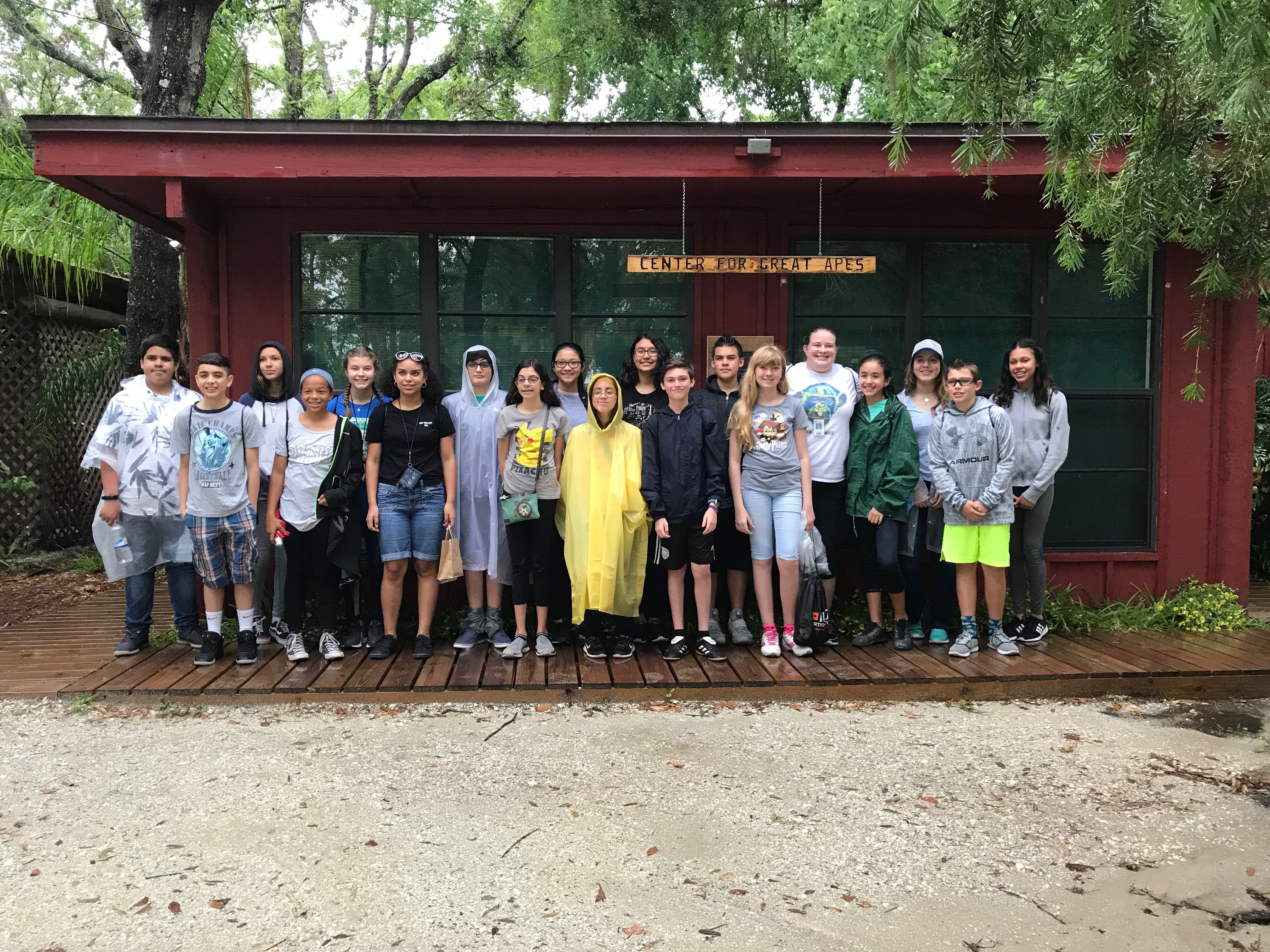
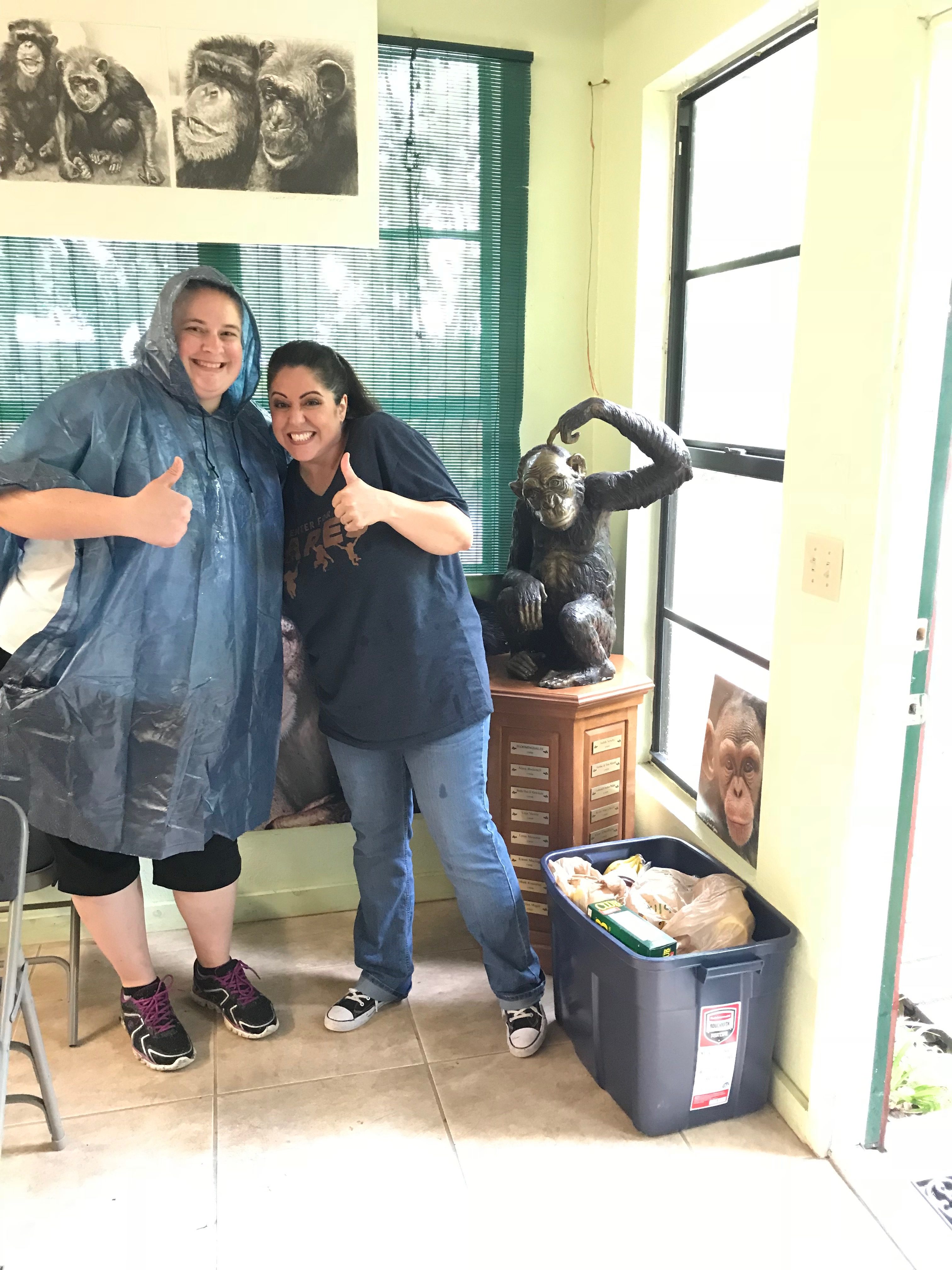
Once again I was lucky enough to bring my students to the CFGAs. All students were able to attend this year, and they were so kind to donate to the Center goodies for the Apes–it always fills my heart to see the empathy in their hearts!

I have gone to the Center for Great Apes for years, and sadly this is the first year it rained. Luckily, we were able to get in a 90-minute tour to see the amazing animals who inspired Schrefer’s novel. To see more about the Center, the apes they’ve saved, and the amazing work they do, please visit http://www.centerforgreatapes.org/.

Author Virtual Visit

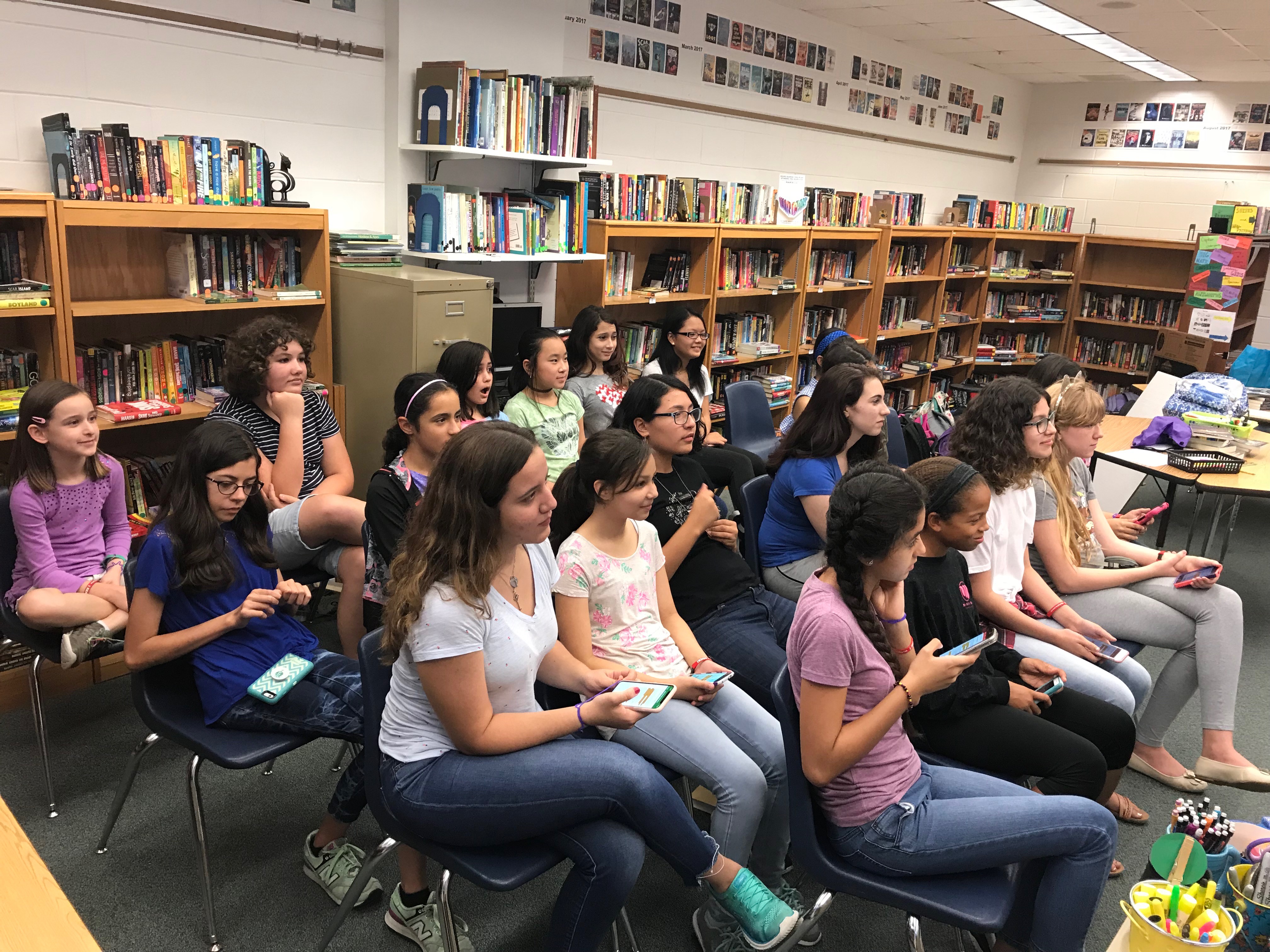
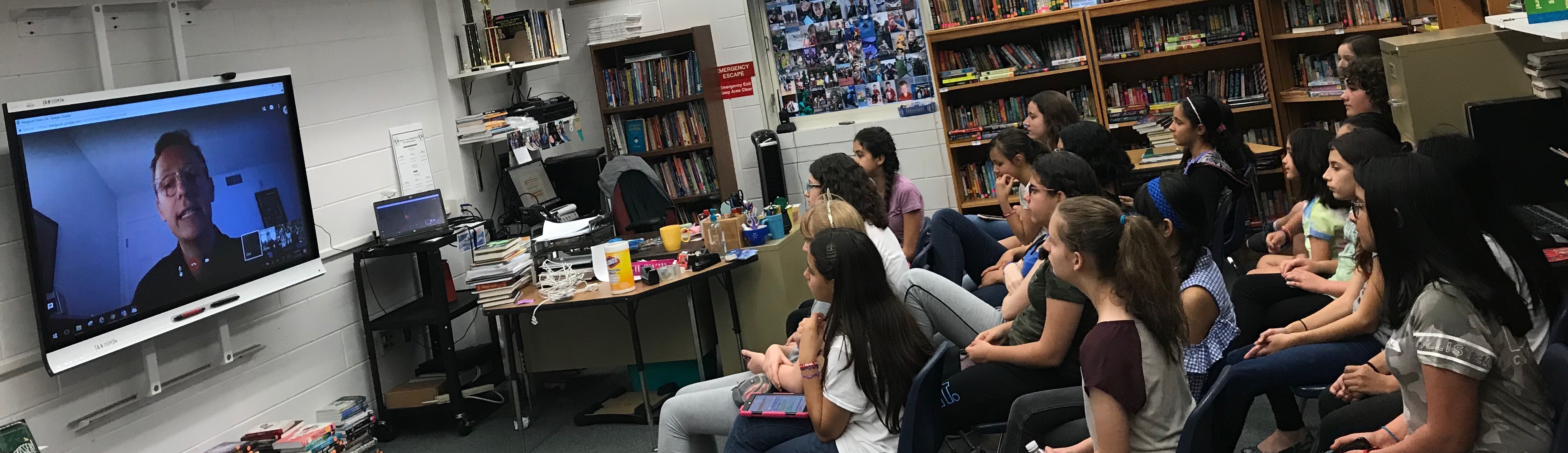
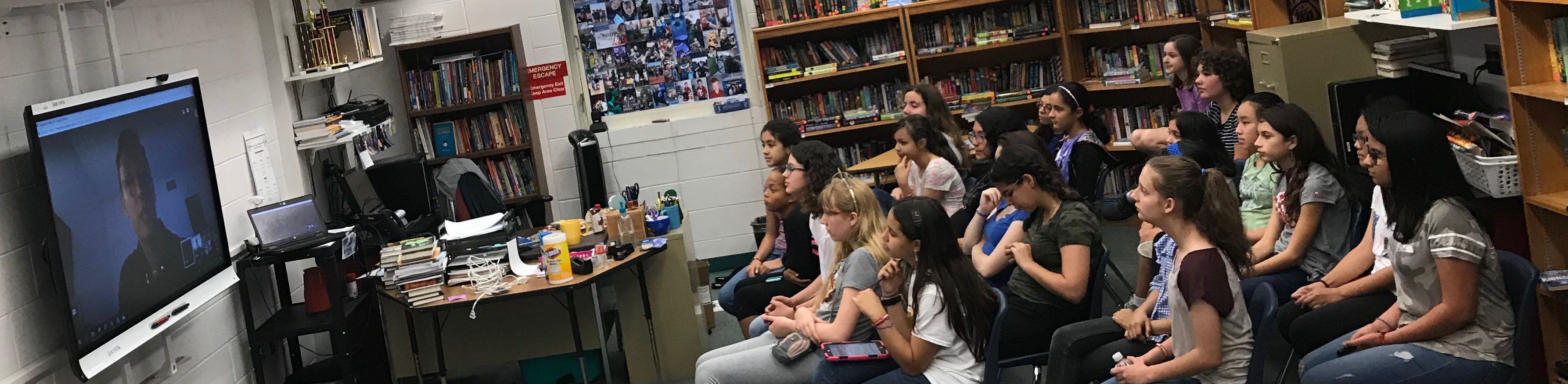
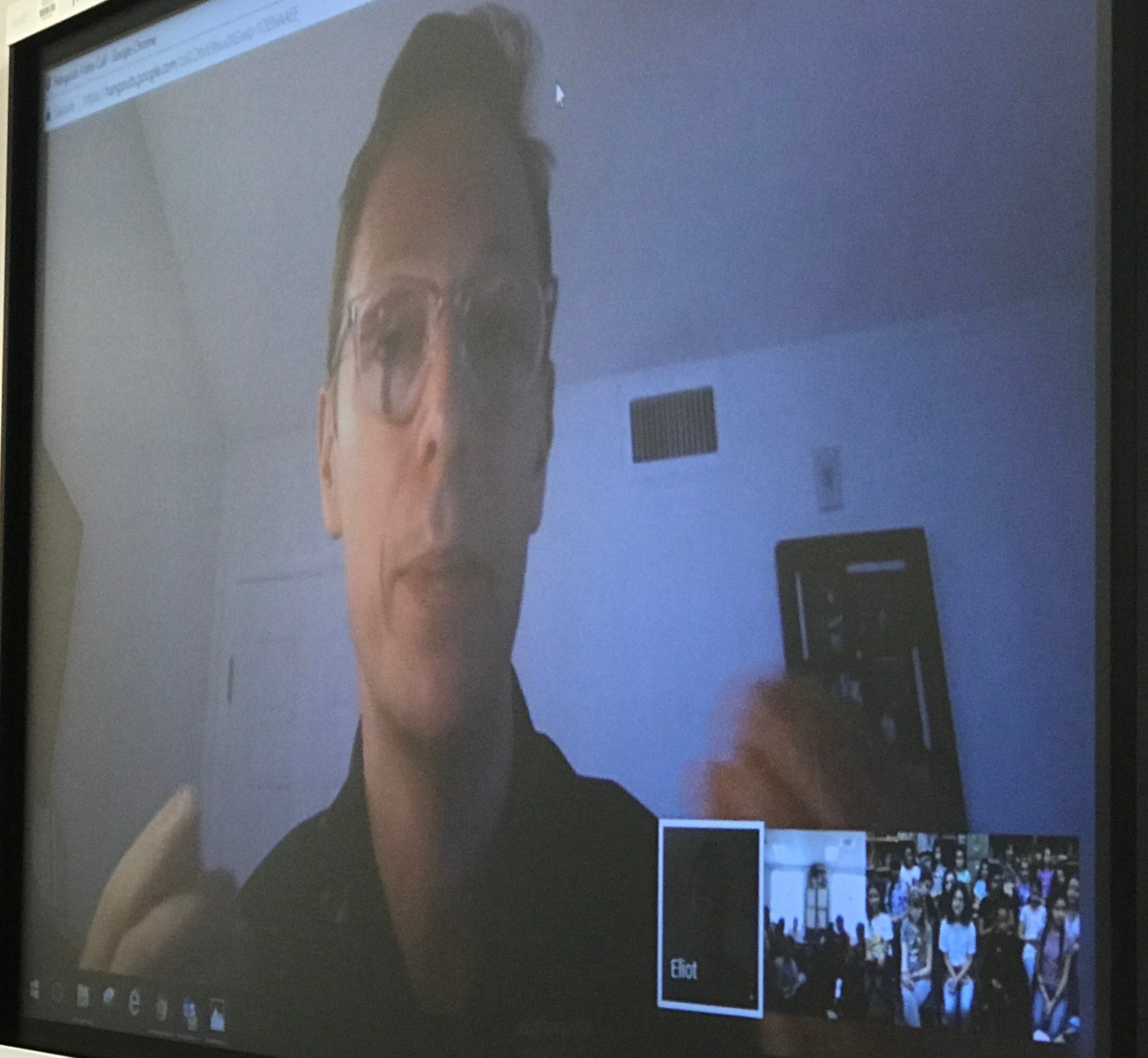
After reading Rescued, I was so happy to be able to give my (and Jennie’s) students an opportunity to interview Eliot Schrefer about the book. Each student wrote down at least one question they had for Eliot then in groups, the students chose their favorites, then based on these choices, we broke it down to 5 per class equaling fifteen interview questions altogether:

  • Why did you start writing about apes in the first place? And how did you decide on the order of publication for the Ape Quartet? 
  • Do you like writing realistic fiction like Rescued or fantasy like Mez’s Magic better?
  • Will you continue to write about apes now that you are done with the Ape Quartet? 
  • While the titles of your other books, Endangered, Threatened, and Captured, inspire a feeling of fear, the title Rescued inspires hope. Did this change in connotation of your title mark your different opinion about orangutans?
  • Were you ever stuck in between two decisions while writing the book? When? 
  • Who do you think the antagonist of the book is?
  • How did you come up with the whole “Raja bites off John’s finger” scenario? 
  • How did you come up with the concept of Friendlyland? 
  • How did you come up with the character traits for each character (Ex. Gary being a bad father)? Did you base them off people you know or knew? 
  • Can you tell us more about the corruption happening in Indonesia which allows palm oil companies to be able to keep burning down forests even though it is illegal? 
  • Do you feel that apes should be treated like human beings and given the same rights such as due process, land, etc. like the lawyer in the book? 
  • Was it hard for you to decide what would happen to Raja at the end of the book or did you know that you wanted Raja to be released into the wild instead of being kept at the sanctuary?
  • Do you have a favorite sanctuary or zoo you’ve visited? Have you visited the CFGA?
  • You used the word “merantau” which means “hitting a dead end and leaving one life to live another elsewhere” which pretty much sums up the theme of the book. Where did you come across this word? 
  • What writing tips can you give to students who want to be a writer?

We then did a Google Hangout with Mrs. Smith’s class and Eliot Schrefer on May 25th after school:

Some of my favorite answers/quotes from the visit were:

  • Realistic fiction allows for a shifting antagonist.
  • Wanted to help people realize that orangutans aren’t stuffed animals come to life.
  • I don’t have characters first. I have stories first then make the best characters for that story.
  • Apes should not be kept against their will.
  • I used the idea of merantau to develop the plot.
  • Advice: For any artistic pursuit, I encourage you to think of the long range range view. It is risky to put all expectations of self in one basket. Focus on the joy you feel when doing the art. Remember what brings you joy! And do research, take advice, and read.

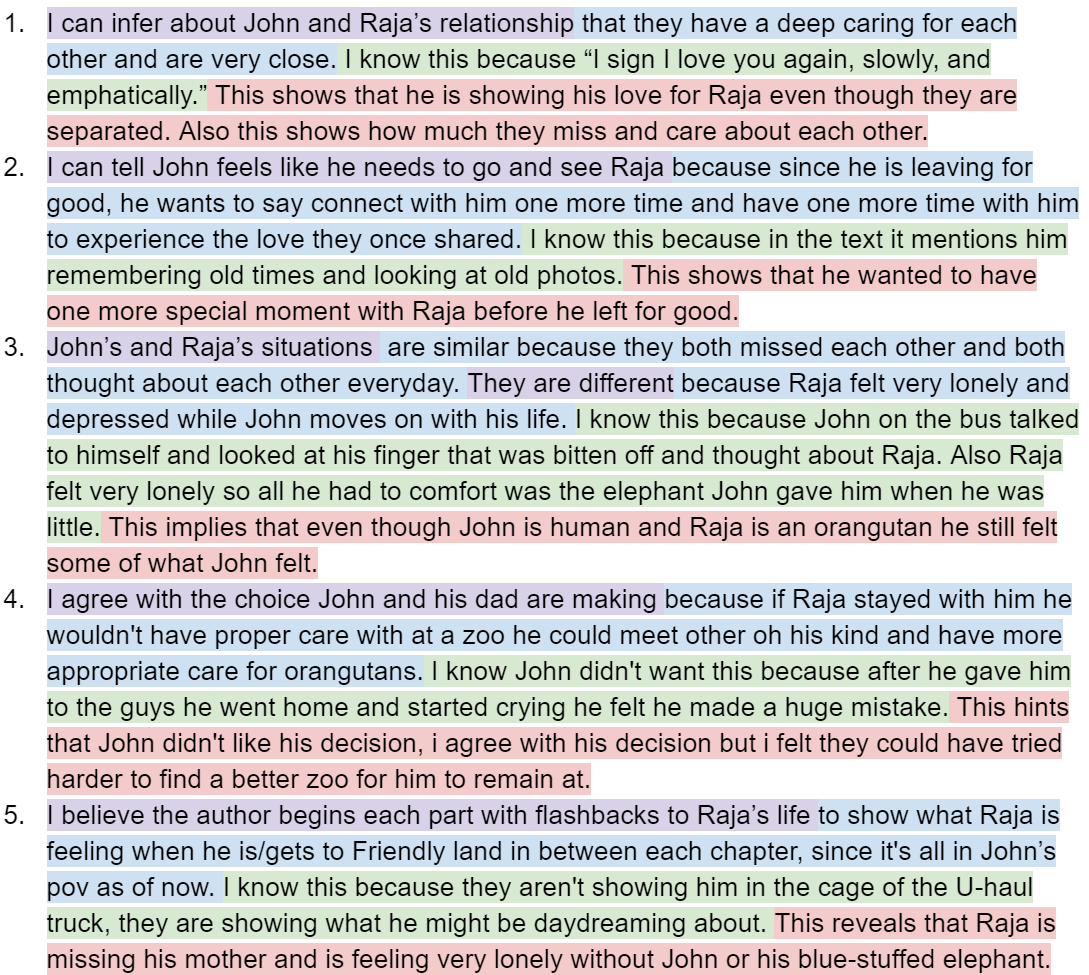
Discussion Questions: These were the first five of the text-dependent questions I asked during our reading of Rescued as well as an example of a student response (color coded for RATE. R=restate, A=answer, T=text evidence, E=elaborate/explain).

  • What can you infer about John and Raja’s relationship based on the first section?
  • Why does John feel like he needs to go see Raja before he leaves?
  • In the Q&A, the author says he “realized that a captive ape’s situation was similar to the plight of a kid during a divorce, getting swept along by the needs of powerful parents, at risk for being seen for what he represents instead of as a child with his own needs” (p. 251). How are John’s and Raja’s situations similar after the divorce? How are they different?
  • Do you agree with the choice John and his dad are making? Why or why not?
  • Why do you believe the author is beginning each part with a memory of Raja’s?
  • How did the author foreshadow this scene (on pg. 99) earlier in the book?

Flagged Passages: “My telltale heart, the one I’d left behind.” (p. 38)

Read This If You Love: Eliot Schrefer novels: Endangered and ThreatenedHurt Go Happy by Ginny RorbyHalf Brother by Kenneth Oppel, The One and Only Ivan by Katherine Applegate, Ivan: The Remarkable True Story of the Shopping Mall Gorilla by Katherine ApplegatePrimates by Jim Ottaviani

Recommended For: 

classroomlibrarybuttonsmall  

Signature

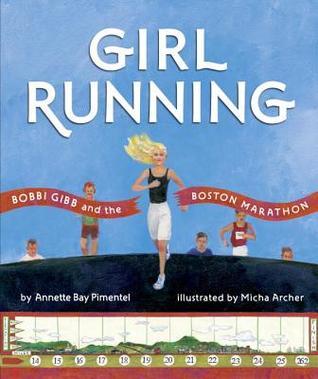
Girl Running: Bobbi Gibb and the Boston Marathon by Annette Bay Pimentel

Share

Girl Running: Bobbi Gibb and the Boston Marathon
Author: Annette Bay Pimentel
Illustrator: Micha Archer
Published February 6th, 2018 by Nancy Paulsen Books

Summary: The inspiring story of the first female to run the Boston Marathon comes to life in stunningly vivid collage illustrations.
Because Bobbi Gibb is a girl, she’s not allowed to run on her school’s track team. But after school, no one can stop her–and she’s free to run endless miles to her heart’s content. She is told no yet again when she tries to enter the Boston Marathon in 1966, because the officials claim that it’s a man’s race and that women are just not capable of running such a long distance. So what does Bobbi do? She bravely sets out to prove the naysayers wrong and show the world just what a girl can do.

* “A bright salutation of a story, with one determined woman at its center.”–Kirkus Reviews, starred review
ReviewI first learned about Bobbi Gibb when I read The Girl Who Ran by Frances Poletti & Kristina Yee and after reading it, I knew I wanted to learn more about Bobbi Gibb because she did so much for women’s progress when it came to running. Without her standing up and going against everyone, it would have taken longer for women to be accepted as marathoners.

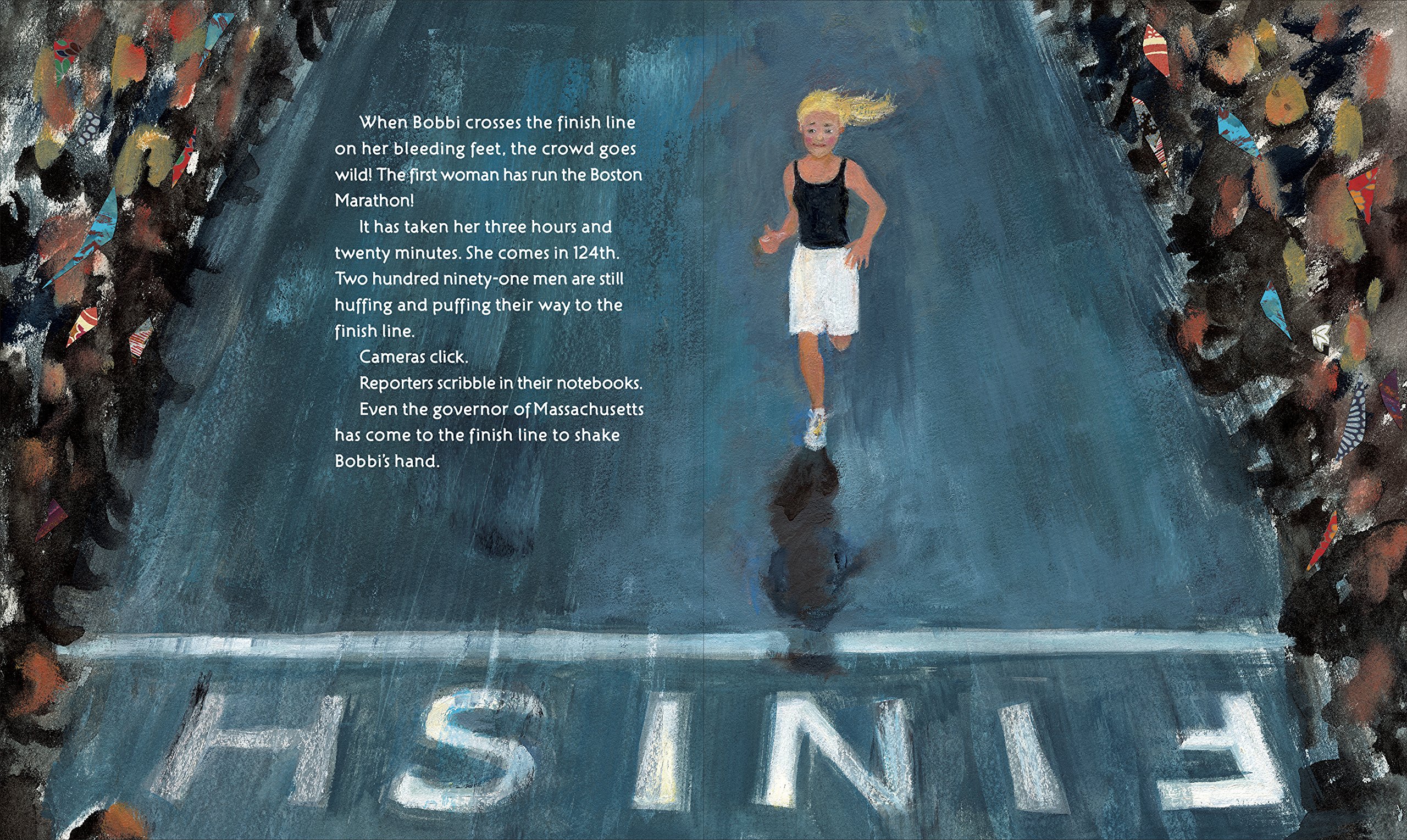
Pimentel does a beautiful job showing Gibb’s inspiration, determination, and journey. I loved seeing more about what happened during the marathon than what I knew before and especially was verklempt by the support she found when ran by Wellesley College and the women at the college came out and cheered for her. I also loved learning that the other runners supported her!

Through the afterwords, I also found out that Gibb had to wait 30 years before she was listed as the female winner of the Boston Marathon in 1966, 1967, and 1968 races because the officials wouldn’t honor her as a runner. This shows that so often even when the masses support something, it is a systemic issue that needs to be fixed.

Last but not least, I must share how much I adore Archer’s artwork. I was a big fan of her work in Daniel Finds a Poem, and once again I found that her illustrations were the perfect addition to the story being told.

Teachers’ Tools for Navigation: Gibb is one example of an American that changed history but may not be well known. I think it would be fascinating to introduce Gibb using Pimentel’s picture book as a way to start discussions about normal people changing the world. I would then share other stories about heroes like Rosa Parks, Malala Yousafzai, and Jesse Owens. I’d also reference other books like Be a Changemaker and 31 Ways to Change the World. The research could also be narrowed down to just sports; however, I think it is a wonderful discussion to have about how Gibb may have “only” changed marathons, it is part of a bigger movement.

Discussion Questions: 

  • Why did people think that women couldn’t run marathons?
  • How did Bobbi Gibb prepare for her first official marathon?
  • Did the other runners react the way you had expected? Explain.
  • How did Archer’s artwork support Pimentel’s story of Gibb?
  • What traits does Gibb show that helped her be successful?
  • When Gibb began to get blisters, were you afraid that she wasn’t going to finish? Explain your thinking and reactions as the story continued.

Flagged Passages: 

Read This If You Love: Picture book biographies, Women’s rights

Recommended For: 

classroomlibrarybuttonsmall closereadinganalysisbuttonsmall 

Signature

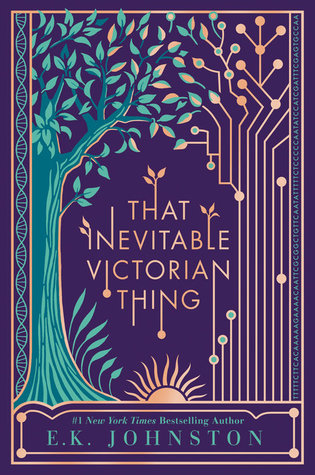
That Inevitable Victorian Thing by E. K. Johnston

Share

That Inevitable Victorian Thing
Author: E. K. Johnston
Published: October 3, 2017 by Dutton

Guest Review by Kaari von Bernuth

Goodreads Summary: Set in a near-future world where the British Empire was preserved, not by the cost of blood and theft but by effort of repatriation and promises kept, That Inevitable Victorian Thing is a novel of love, duty, and the small moments that can change people and the world.

Victoria-Margaret is the crown princess of the empire, a direct descendent of Victoria I, the queen who changed the course of history two centuries earlier. The imperial practice of genetically arranged matchmaking will soon guide Margaret into a politically advantageous marriage like her mother before her, but before she does her duty, she’ll have one summer incognito in a far corner of empire. In Toronto, she meets Helena Marcus, daughter of one of the empire’s greatest placement geneticists, and August Callaghan, the heir apparent to a powerful shipping firm currently besieged by American pirates. In a summer of high-society debutante balls, politically charged tea parties, and romantic country dances, Margaret, Helena, and August discover they share an unusual bond and maybe a one in a million chance to have what they want and to change the world in the process —just like the first Queen Victoria.

My Review: The futuristic setting of this novel that wasn’t a dystopia was very intriguing to me. Most of the futuristic novels that I’ve read have featured dystopian societies, so it was refreshing to have something that worked. I really enjoyed the multiple perspectives from the different characters, and became personally invested in their lives and experiences. I’d find myself hurting for Helena as she struggled to reconcile her identity, and rooting for August to do the right thing. In some way, all of the characters have to struggle to come of age and develop their identity based on who they want to be. 

However, I wish that this novel had placed a little more effort on the ending. While the rest of the novel had dealt with realistic challenges that an adolescent might face, the ending seemed rather contrived, and less realistic like the rest of the novel. The solution proposed at the end of the novel is not a solution that an adolescent in current society could replicate and learn from, which was disappointing.

Teachers’ Tools for Navigation: This book poses great questions about racism (or rather the eradication of racism), as well as questions of morality. It also would be great for discussions about the influence that society can have on your life verses the influence that you decide for your life. I think that this book would be a great addition to a classroom library for kids to enjoy, or a book to be used in a reading circle. It’s engaging and could lead to interesting discussions, especially about the futuristic government and setting of the novel, and the aforementioned topics of racism, morality, and societal influence vs self. However, I do think that other novels cover these topics in a better way, which is why I wouldn’t recommend it for large classroom discussions.  

Discussion Questions: Is this novel a utopia? Dystopia? Does it fit either criteria?; How is race approached in this novel? Is there racism in the society?; What is the role of colonialism in this novel?; What is the role of the Computer? Do you think this is a good advancement?; What does the computer lack?; What morality questions does this novel pose?

We Flagged: “The Computer is sufficient if you want to know your future without taking into account your soul. I don’t mean in the eternal sense, but in the worldly. The Computer can tell you if your genes are prone to carcinoma or if you might be six feet tall, but it cannot tell you if you will enjoy dancing or if you will prefer cake to pie. I would argue that the latter is more important in terms of a long and healthy relationship” (p. 254).

Read This If You Loved: Matched by Allie Condie; Delirium by Lauren Oliver; The Luxe by Anna Godbersen; The Selection by Kiera Cass

Recommended For:

classroomlibrarybuttonsmall  

  RickiSig

**Thank you to Kaari for reviewing this book!**