Sonny’s Bridge: Jazz Legend Sonny Rollins Finds His Groove by Barry Wittenstein

Share

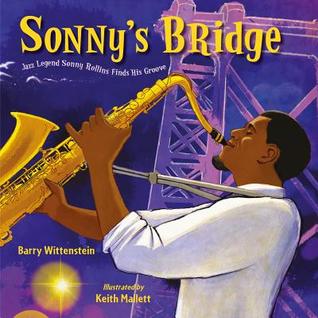
Sonny’s Bridge: Jazz Legend Sonny Rollins Finds His Groove
Author: Barry Wittenstein
Illustrator: Keith Mallett
Published May 21st, 2019 by Charlesbridge Publishing

Summary: This groovy, bebopping picture book biography chronicles the legendary jazz saxophonist Sonny Rollins’s search for inspiration on the Williamsburg Bridge after quitting the jazz scene in 1959.

Rollins is one of the most prolific sax players in the history of jazz, but, in 1959, at the height of his career, he vanished from the jazz scene. His return to music was an interesting journey–with a long detour on the Williamsburg Bridge. Too loud to practice in his apartment, Rollins played on the New York City landmark for two years among the cacophony of traffic and the stares of bystanders, leading to the release of his album, The Bridge.

Written in rhythmic prose with a bebop edge, this picture-book biography of Sonny Rollins’s journey to get his groove back will delight young and old fans alike.

About the Author: Barry Wittenstein has worked at CBS Records, CBS News, and was a web editor and writer for Major League Baseball. He is now a New York City elementary-school substitute teacher and children’s author. He is the author of The Boo-Boos That Changed the World: The True Story About an Accidental Invention (Really!) and Waiting for Pumpsie. Barry lives in the Bronx.

About the Illustrator: Keith Mallett studied art at Hunter College in New York City. Keith’s work was commissioned to celebrate the 50th anniversary of Jackie Robinson’s historic breakthrough into major league baseball, has graced the cover of Chicken Soup for the African American Soul, and has been featured in many movies and TV shows. He is the illustrator of Take a Picture of Me, James VanDerZee and How Jelly Roll Morton Invented Jazz. Keith lives in San Diego, California.

Praise: “An appropriately jazzy picture-book biography of African-American musician Sonny Rollins. It impresses from the endpapers, which mirror a vinyl LP in its paper sleeve and then playing on a turntable, to the liner notes about Rollins’ seminal album “The Bridge” in the back.” -Kirkus Reviews, starred review

“The life of jazz legend Sonny Rollins pulses with the rousing spontaneity of his music in Wittenstein’s free verse biography. Readers witness Rollins’s career as an acclaimed musician followed by his explosive success and the subsequent reincarnations of his art.” -School Library Journal, starred review

Review: The rhythm of the writing in Sonny’s Bridge automatically gets you toe tapping while reading. It captures the feeling and flow of jazz which truly sets the stage for Sonny’s story because in the end this is the story of Sonny Rollins and his path to finding his musical voice.

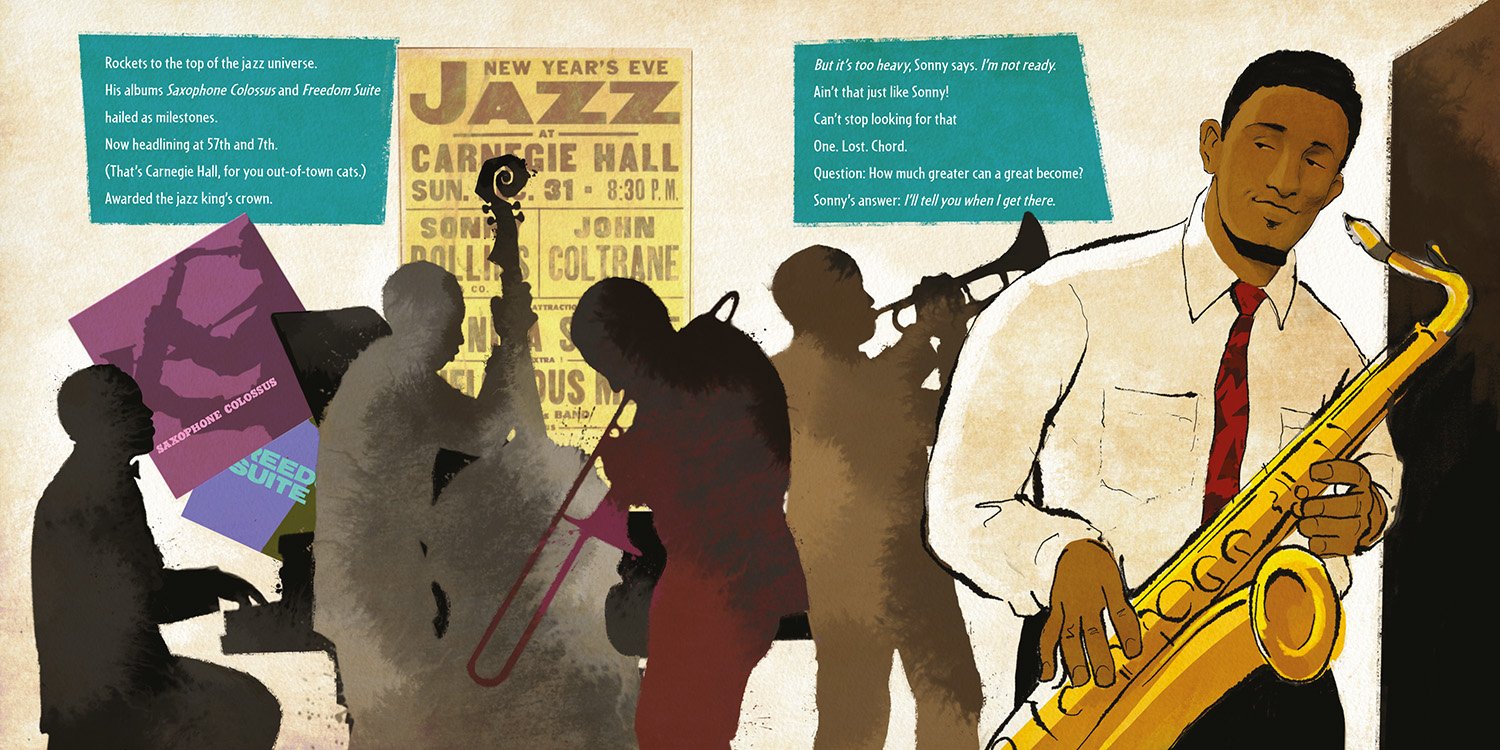
In addition to the rhythm in the writing, the illustrators images bring the words to life using movement, color, and line to show the power of the music.

Together, the words and music bring Sonny’s story to the readers in a way that will illuminate his struggles and his triumphs.

Teachers’ Tools for Navigation: Because of the rhythmic writing, this will be an amazing read aloud! And then the students can listen to The Bridge.

We are lucky to be living in a time with so many wonderful biographies out there about amazing people and a lot of them happen to be musicians, so what a great opportunity for book clubs or jig saws to look at different musicians and how they became who they are/were and how they changed not only musical history but sometimes even history.

Discussion Questions: 

  • Why does Sonny find the bridge to be the best place for him to practice?
  • Why did Sonny take off two years and how did it change his life?
  • How did Sonny’s life correspond with Black Americans’ fight for equal rights?
  • How did the illustrator show Sonny’s music through is artwork?
  • Why would some want the bridge to be renamed Sonny’s Bridge?
  • After listening to The Bridge, how did the author capture the feeling of jazz in his writing?

Creator Corner with Barry Wittenstein from KidLitTV: 

Flagged Passages: 

Read This If You Love: Music (specifically jazz), Jazz Day by Roxane Orgill, Trombone Shorty by Troy AndrewsLittle Melba and her Big Trombone by Katheryn Russell-Brown, Ella Fitzgerald by Andrea Davis Pinkney, Duke Ellington by Andrea Davis Pinkney, Hip Hop Lollipop by Susan Montanari, The 5 O’Clock Band by Troy Andrews, Born to Swing by Mara Rockliff, Muddy by Michael James Mahin, Stand Up and Sing by Suanna Reich

Recommended For: 

classroomlibrarybuttonsmall 

Signature

**Thank you to Charlesbridge Publishing for providing a copy for review**

Teachers’ Guide for Polly Diamond series updated with Polly Diamond and the Super Stunning Spectacular School Fair by Alice Kuipers

Share

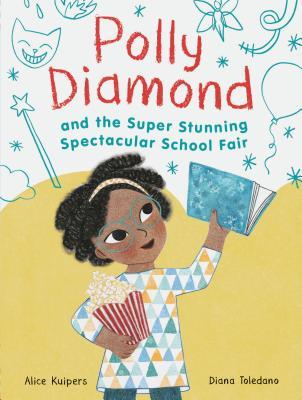
Polly Diamond and the Super Stunning Spectacular School Fair
Author: Alice Kuipers
Illustrator: Diana Toledano
Published: May 7th, 2019 by Chronicle Books

Summary: Polly and her magic book, Spell, have all kinds of adventures together because whatever Polly writes in Spell comes true! But when Polly and Spell join forces to make the school fair super spectacular, they quickly discover that what you write and what you mean are not always the same. Filled with the familiar details of home and school, but with a sprinkling of magic, this book is just right for fans of Ivy + Bean, Judy Moody, and Dory Fantasmagory, as well for aspiring writers, who, just like Polly, know the magic of stories.

View my post about Polly Diamond and the Magic Book to learn about book one.

Teachers’ Tools for Navigation and Discussion Questions: 

Please view and enjoy the teachers’ guide I created for the Polly Diamond series:

You can also access the teaching guide here.

You can learn more about Polly Diamond on Chronicle Book’s Polly Diamond Book 2 page.

Recommended For: 

readaloudbuttonsmall classroomlibrarybuttonsmall litcirclesbuttonsmall closereadinganalysisbuttonsmall

Kellee Signature

Blog Tour with Review: Moon! Earth’s Best Friend by Stacy McAnulty

Share

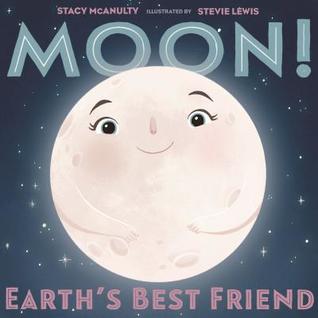
Moon! Earth’s Best Friend
Author: Stacy McAnulty
Illustrator: Stevie Lewis
Published June 11th, 2019

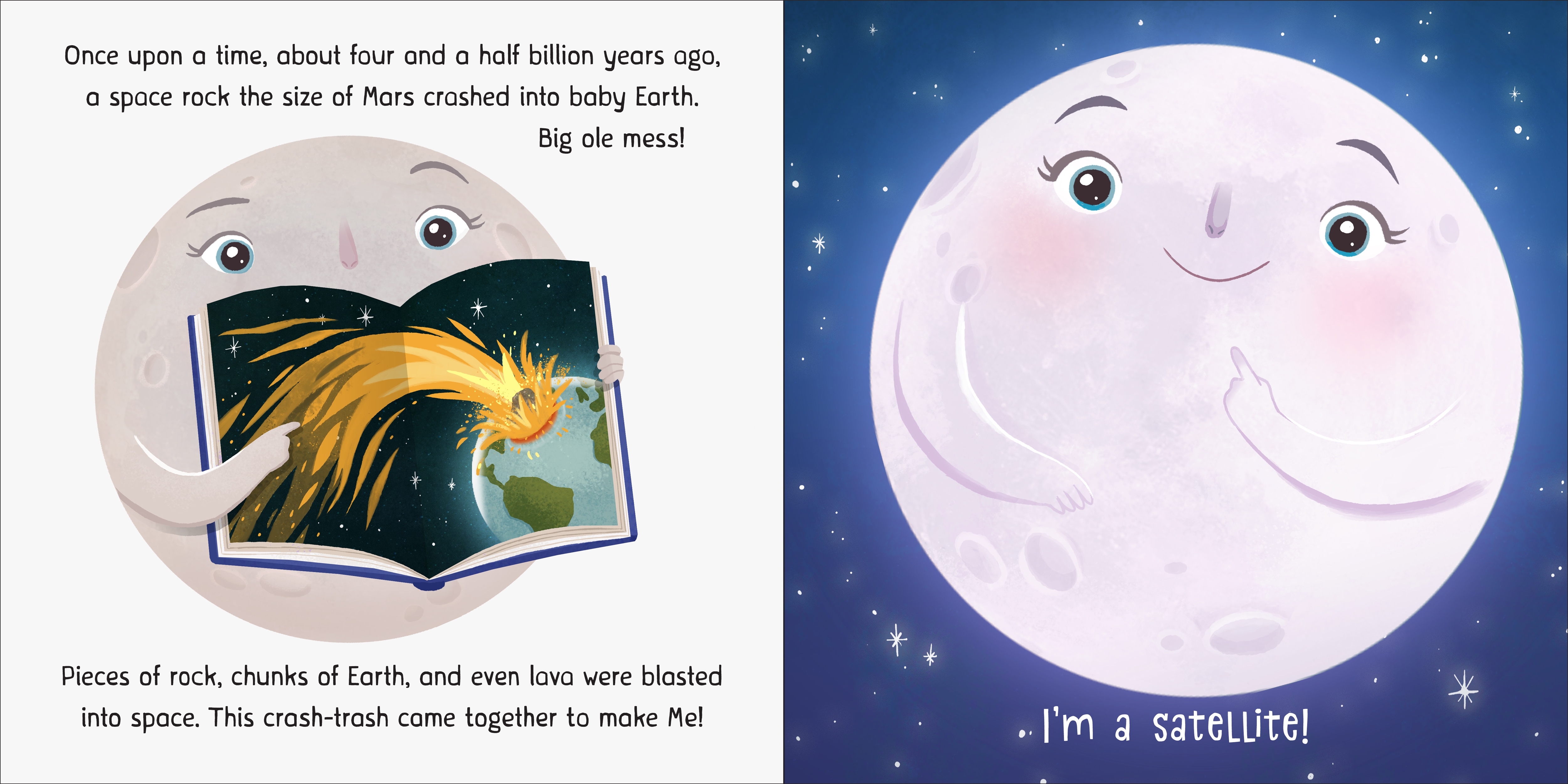
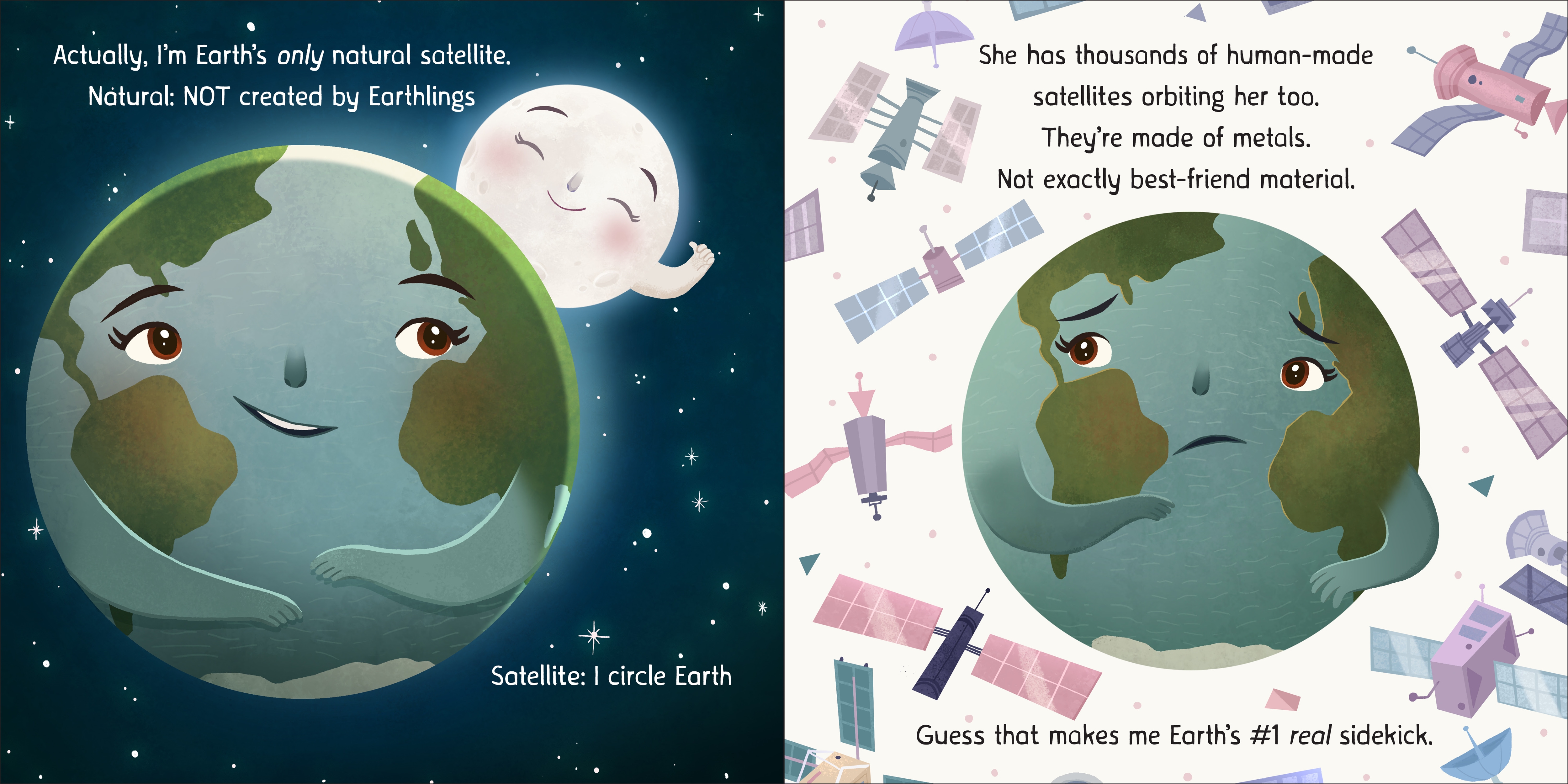
Summary: From writer Stacy McAnulty and illustrator Stevie Lewis, Moon! Earth’s Best Friend is a light-hearted nonfiction picture book about the formation and history of the moon—told from the perspective of the moon itself.

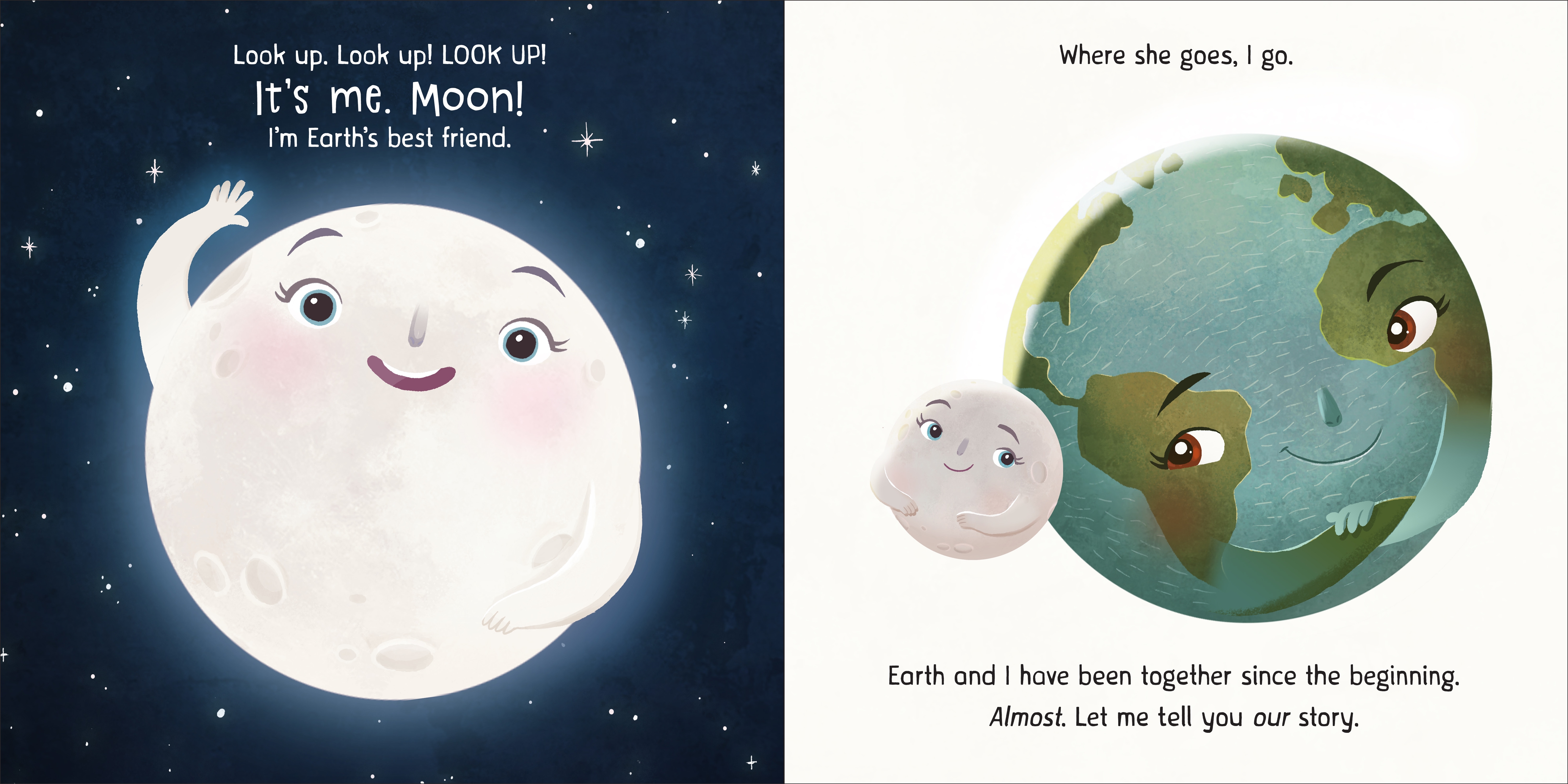
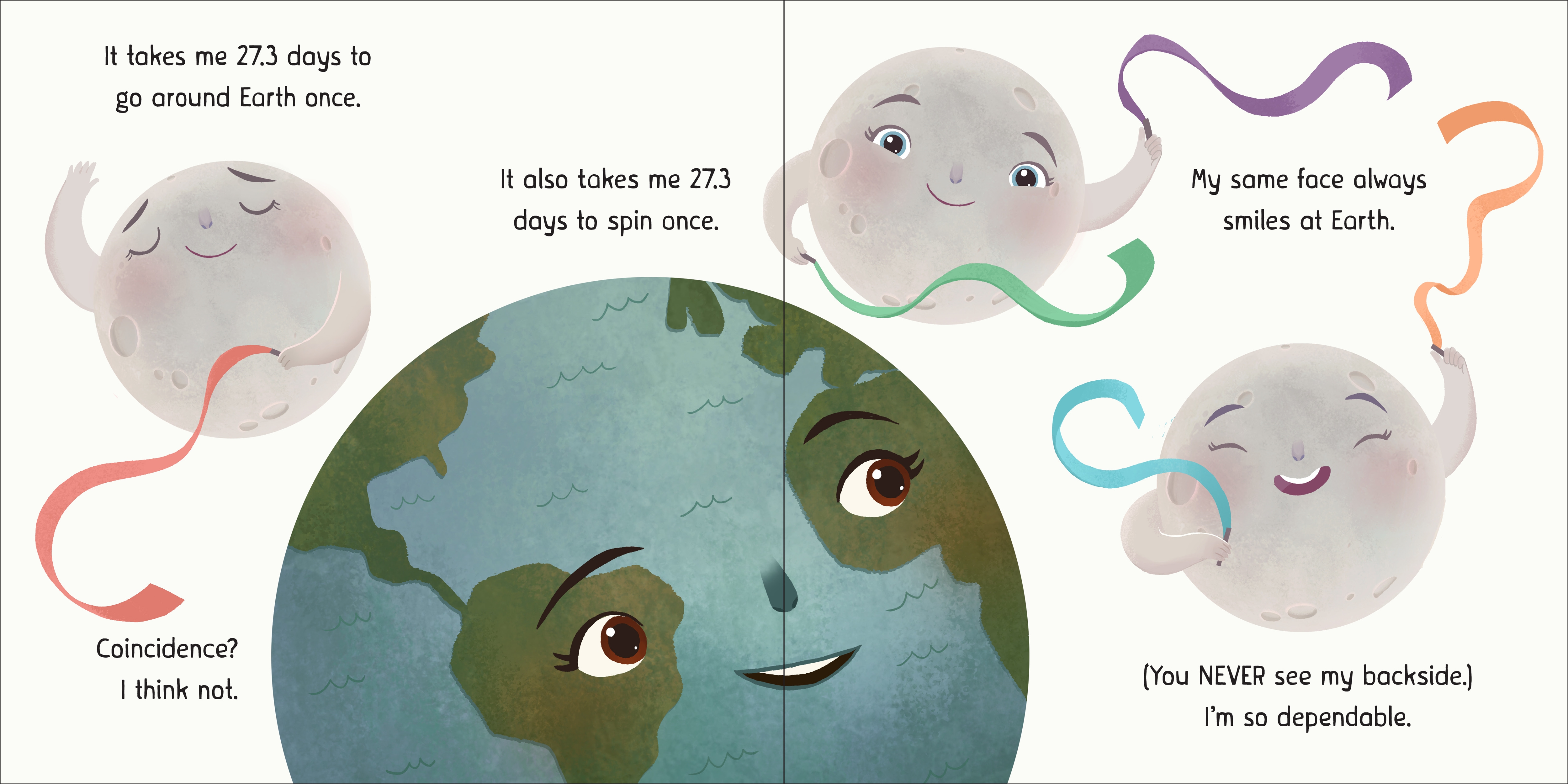
Meet Moon! She’s more than just a rock—she’s Earth’s rock, her best friend she can always count on. Moon never turns her back on her friend (literally: she’s always facing Earth with the same side!). These two will stick together forever. With characteristic humor and charm, Stacy McAnulty channels the voice of Moon in this next celestial “autobiography” in the Our Universe series. Rich with kid-friendly facts and beautifully brought to life by Stevie Lewis, this is an equally charming and irresistible companion to Earth! My First 4.54 Billion Years and Sun! One in a Billion.

About the Author: Stacy McAnulty is the author of several picture books, including Earth! My First 4.54 Billion Years, illustrated by David Litchfield; Sun! One in a Billion, illustrated by Stevie Lewis; Excellent Ed, illustrated by Julia Sarcone-Roach; and Beautiful, illustrated by Joanne Lew-Vriethoff. She lives in North Carolina with her husband, three children, and two dogs.

About the Illustrator: Stevie Lewis spent four years working in animation and now creates art and illustrates children’s books, including Sun! One in a Billion, written by Stacy McAnulty, and Lost in the Library, written by Josh Funk. Stevie lives on the road, furthering her passion for climbing, art, and the outdoors. She gathers inspiration from a variety of places, be it climbing in the high desert in central Oregon, hiking in the wilderness of Alaska, or sharing laughs with fellow travelers around a campfire.

Praise: “Perfect for children—and grown-ups—who have questions about the greater universe.” —Booklist on Moon! Earth’s Best Friend

A Junior Library Guild Selection

Review: I cannot rave enough about this book and the series it is a part of. And as a mom of a kid who adores space, I have read quite a few nonfiction space books, but there are no others like McAnulty and Lewis’s books. There are a few reasons why these books, including Moon!, stand above and beyond others:

  • Humor! You cannot help but giggle when Moon says something funny or cute.
  • Narration! It is awesome having the Moon (or Earth or Sun) narrate the book. It being in 1st person adds to the narrative.
  • Voice! It is so fascinating how McAnulty changes her voice in each of the books. If I read one aloud to Trent without saying which book it was, he would know because of how the characters talk.
  • Interesting! McAnulty does a great job sharing foundational knowledge as well as some unique facts.

View our reviews for the first two Universe books, Earth! and Sun!, also.

Teachers’ Tools for Navigation: The ideas we shared for the other Universe books would definitely book for Moon! also, so check out the other posts linked above, but now that we have three Universe books, there is now the opportunity to do activities will all three books! The options I think of are:

  • Like a jigsaw! Split your class into three groups, and each group reads and discusses one of the books. From the book, they create a handout to share the information that they learned. Then make new groups with 3 students: one from each book’s group. They will then share what they learned with their new group.
  • Split up the class into three groups (one for each group) and have the group read the book and create a readers theater of the book.
  • In-class book clubs! With them being picture books, you can split into three groups and rotate them through all three books. Have students create a one pager sharing what they learned (independently or as a group) or have them write discussion questions and discuss them or give questions to have them discuss.

Discussion Questions: 

  • How did the Moon come to be?
  • Why is Moon capitalized but moon isn’t?
  • How does the author use the narrator’s voice between the three books? How do the voices differ?
  • What reasonings does Moon give for why she’s Earth’s BFF?
  • What new information did you learn about the Moon?

Our Universe Series Book Trailer: 

Flagged Passages: 

Read This If You Love: Universe books by Stacy McAnulty, The Sun is Kind of a Big Deal by Nick Seluk, Once Upon a Star by James Carter, Space Encyclopedia by David AguilarYou Choose In Space by Pippa GoodhartA Big Mooncake for Little Star by Grace Lin, Star Stuff by Stephanie Roth Sisson

Recommended For: 

classroomlibrarybuttonsmall 

Signature

**Thank you to Macmillan for providing a copy of the book for review!!**

Feral Youth by Shaun David Hutchinson, Brandy Colbert, Suzanne Young, Tim Floreen, Justina Ireland, Alaya Dawn Johnson, Stephanie Kuehn, E.C. Myers, Marieke Nijkamp, Robin Talley

Share

Feral Youth
Authors: Shaun David Hutchinson, Brandy Colbert, Suzanne Young, Tim Floreen, Justina Ireland, Alaya Dawn Johnson, Stephanie Kuehn, E.C. Myers, Marieke Nijkamp, Robin Talley
Published: September 5, 2017 by Simon Pulse

Guest Review by Natalia Sperry

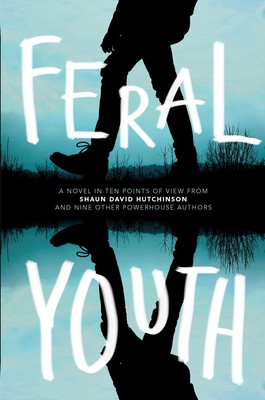
Summary: At Zeppelin Bend, an outdoor education program designed to teach troubled youth the value of hard work, cooperation, and compassion, ten teens are left alone in the wild. The teens are a diverse group who come from all walks of life, and they were all sent to Zeppelin Bend as a last chance to get them to turn their lives around. They’ve just spent nearly two weeks learning to survive in the wilderness, and now their instructors have dropped them off eighteen miles from camp with no food, no water, and only their packs, and they’ll have to struggle to overcome their vast differences if they hope to survive.

Inspired by The Canterbury Tales, Feral Youth features characters, each complex and damaged in their own ways, who are enticed to tell a story (or two) with the promise of a cash prize. The stories range from noir-inspired revenge tales to mythological stories of fierce heroines and angry gods. And while few of the stories are claimed to be based in truth, they ultimately reveal more about the teller than the truth ever could.

Review: This is a complex anthology of traditionally ignored teenaged voices that demand to be heard; I couldn’t put it down! Feral Youth is compelling from the front flap to the final page. The distinct voices of all 10 characters shone through in every part, from their individual stories to the transitional narration, creating an established sense of the full cast that is difficult to attain when juggling so many stories.

In this day and age, it feels more important than ever read book that remind us that all people, even those “troubled kids” traditionally written off by society, have a unique story to tell. Though I initially felt a bit overwhelmed by the number of characters (especially those with similar sounding names!) having such a diverse cast of characters share their stories was really rewarding. Those stories, both those intended to be “factual” and those grounded in fantasy, refuse to go quietly from my mind. In a story centered around teens whose voices have been all but silenced by society, I think that’s a victory.

Teacher’s Tool For Navigation: As the book was inspired by Chaucer’s Canterbury Tales, teachers could have students read the two (or passages from both) and compare and contrast. In particular, looking for thematic parallels could lend itself to discussions about the nature of storytelling and whose voices get told. In that regard, the book could also fit into a unit about “objective truth” in storytelling, perhaps in discussing other narratives or nonfiction.

Even in including the text as a free-reading option, I think it is essential to build empathy through reading diverse stories. Including this text could be not only a way to build empathy, but could provide a starting point for further future reading of a diversity voices as well.

Discussion Questions: What parallels do you find to the Canterbury Tales? Which stories surprised you? Were there any characters you related to that you wouldn’t have anticipated connecting with?  

Flagged: “’They think we’re probably nothing but a bunch of animals, but we showed them who we really are. We showed them that they can’t ignore us’” (287).

Read This If You Loved: The Canterbury Tales by Chaucer, Les Miserables by Victor Hugo, other YA anthologies

Recommended For: 

classroomlibrarybuttonsmall 

RickiSig

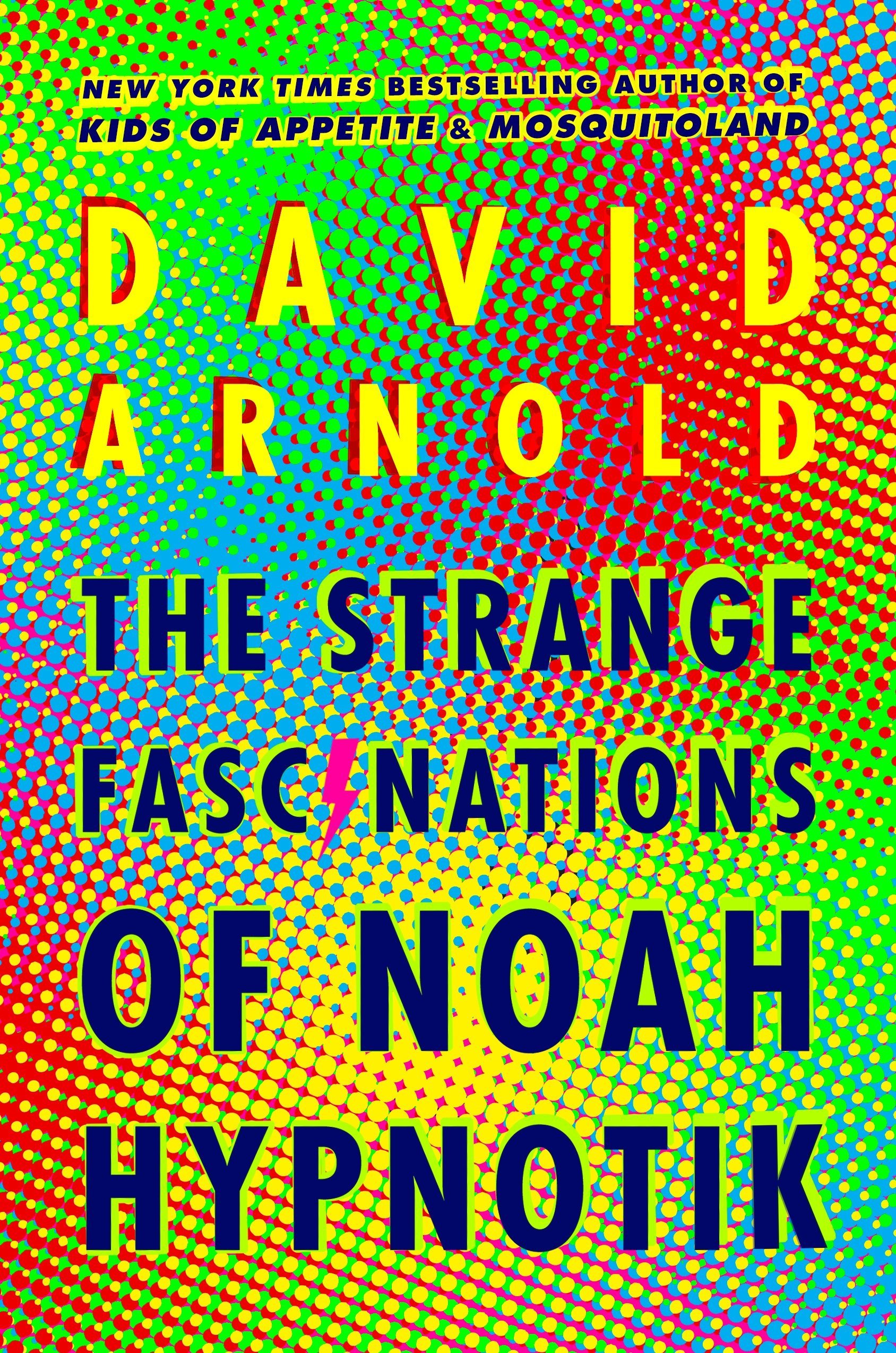
The Strange Fascinations of Noah Hypnotik by David Arnold

Share

The Strange Fascinations of Noah Hypnotik
Author: David Arnold
Published: May 22, 2018 by Viking

Guest Review by Natalia Sperry

Summary: This is Noah Oakman → sixteen, Bowie believer, concise historian, disillusioned swimmer, son, brother, friend.

Then Noah → gets hypnotized.

Now Noah → sees changes—inexplicable scars, odd behaviors, rewritten histories—in all those around him. All except his Strange Fascinations . . .

Review: The longer I sit with this book, the more I feel like I’m still it; every time I sit down to think about it, I find new things to consider. If that’s not the sign of a good book,I don’t know what else is. The Strange Fascinations of Noah Hipnotik is a surreal exploration of identity, friendship, and family on the brink of the many changes protagonist Noah Oakman faces (both before and after his hypnotic episode) as he looks to the future beyond high school.

Above all else, I loved the nerdom in this book, both in its literary and historical detail as well as the variety of pop-culture references. In particular, much of the book (including its title) is drawn from musical icon David Bowie, so I’ll admit,  it’s hard to go wrong. The humor also brings some lightness to the moral questions and philosophical questions of self and reality, which helps keep the largely internal narrative afloat.

Through it all, this book captures an important to capture the emotional gamut of someone’s life, especially when it feels like everything is ch-ch-ch-changing around you. Whether you’re looking for fun or serious contemplation of reality, this book will let you escape for a while (and even for a while longer after you’re done!)

Teacher’s Tool For Navigation: Though grounded in humor and pop culture references, this book would make for a really interesting companion to classics like James Joyce’s Portrait of the Artist as a Young Man, or J.D. Salinger’s The Catcher in the Rye. In asking students to compare the latter with Strange Fascinations, there are some really interesting parallels to be made both in the coming of age story and in the respective protagonists’ relationships with their sisters.

Discussion Questions: Do you agree, like Circuit, that genuine conversations are rare in the contemporary world? What do you think of Noah’s “strange fascinations?” Do you have any “fascinations” of your own, in this sense?

Flagged: “Some books are songs like that, the ones you go back to, make playlists of, put on repeat” (page 108).

Read This If You Loved: Mosquitoland by David Arnold, Everybody Sees the Ants by A.S. King, Ready Player One by Ernest Cline

Recommended For: 

classroomlibrarybuttonsmall 

RickiSig

Teachers’ Guide for Merci Suárez Changes Gears by Meg Medina

Share

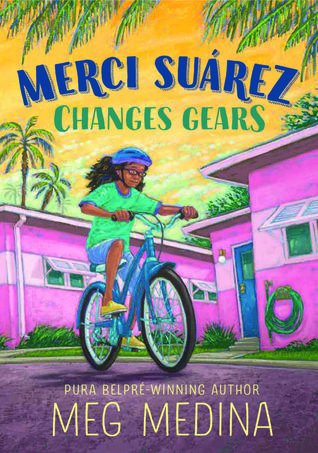
Merci Suárez Changes Gears
Author: Meg Medina
Published: September 11th, 2018 by Candlewick Press

Summary: Thoughtful, strong-willed sixth-grader Merci Suárez navigates difficult changes with friends, family, and everyone in between in a resonant new novel from Meg Medina.

Merci Suárez knew that sixth grade would be different, but she had no idea just how different. For starters, Merci has never been like the other kids at her private school in Florida, because she and her older brother, Roli, are scholarship students. They don’t have a big house or a fancy boat, and they have to do extra community service to make up for their free tuition. So when bossy Edna Santos sets her sights on the new boy who happens to be Merci’s school-assigned Sunshine Buddy, Merci becomes the target of Edna’s jealousy. Things aren’t going well at home, either: Merci’s grandfather and most trusted ally, Lolo, has been acting strangely lately — forgetting important things, falling from his bike, and getting angry over nothing. No one in her family will tell Merci what’s going on, so she’s left to her own worries, while also feeling all on her own at school. In a coming-of-age tale full of humor and wisdom, award-winning author Meg Medina gets to the heart of the confusion and constant change that defines middle school — and the steadfast connection that defines family.

Teachers’ Tools for Navigation and Discussion Questions: 

Please view and enjoy the teachers’ guide I created for Merci Suárez Changes Gears:

You can also access the teaching guide here.

You can learn more about Merci on Candlewick Press’s Merci Suárez Changes Gears page.

Recommended For: 

readaloudbuttonsmall classroomlibrarybuttonsmall litcirclesbuttonsmall closereadinganalysisbuttonsmall

Kellee Signature

Teachers’ Guide for Louisiana’s Way Home by Kate DiCamillo

Share

Louisiana’s Way Home
Author: Kate DiCamillo
Published: October 2nd, 2018 by Candlewick Press

Summary: From two-time Newbery Medalist Kate DiCamillo comes a story of discovering who you are — and deciding who you want to be.

When Louisiana Elefante’s granny wakes her up in the middle of the night to tell her that the day of reckoning has arrived and they have to leave home immediately, Louisiana isn’t overly worried. After all, Granny has many middle-of-the-night ideas. But this time, things are different. This time, Granny intends for them never to return. Separated from her best friends, Raymie and Beverly, Louisiana struggles to oppose the winds of fate (and Granny) and find a way home. But as Louisiana’s life becomes entwined with the lives of the people of a small Georgia town — including a surly motel owner, a walrus-like minister, and a mysterious boy with a crow on his shoulder — she starts to worry that she is destined only for good-byes. (Which could be due to the curse on Louisiana’s and Granny’s heads. But that is a story for another time.)

Called “one of DiCamillo’s most singular and arresting creations” by The New York Times Book Review, the heartbreakingly irresistible Louisiana Elefante was introduced to readers in Raymie Nightingale — and now, with humor and tenderness, Kate DiCamillo returns to tell her story.

Teachers’ Tools for Navigation and Discussion Questions: 

Please view and enjoy the teachers’ guide I created for Louisiana’s Way Home: 

You can also access the teaching guide here.

You can learn more about Louisianaon Candlewick Press’s Louisiana’s Way Home page.

Recommended For: 

readaloudbuttonsmall classroomlibrarybuttonsmall litcirclesbuttonsmall closereadinganalysisbuttonsmall

Kellee Signature