Behind the Legend: The Loch Ness Monster & Big Foot by Erin Peabody

Share

nfpb2017

Nonfiction Wednesday

Nonfiction Picture Book Wednesday is hosted by Kid Lit Frenzy and was started to help promote the reading of nonfiction texts. Most Wednesdays, we will be participating and will review a nonfiction text (though it may not always be a picture book).
Be sure to visit Kid Lit Frenzy and see what other nonfiction books are shared this week!

Behind the Legend Series
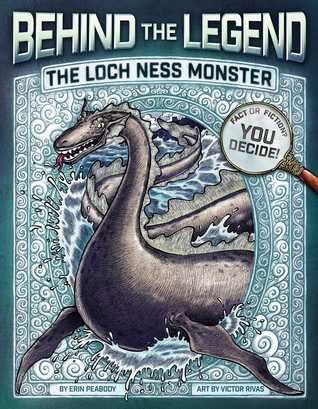
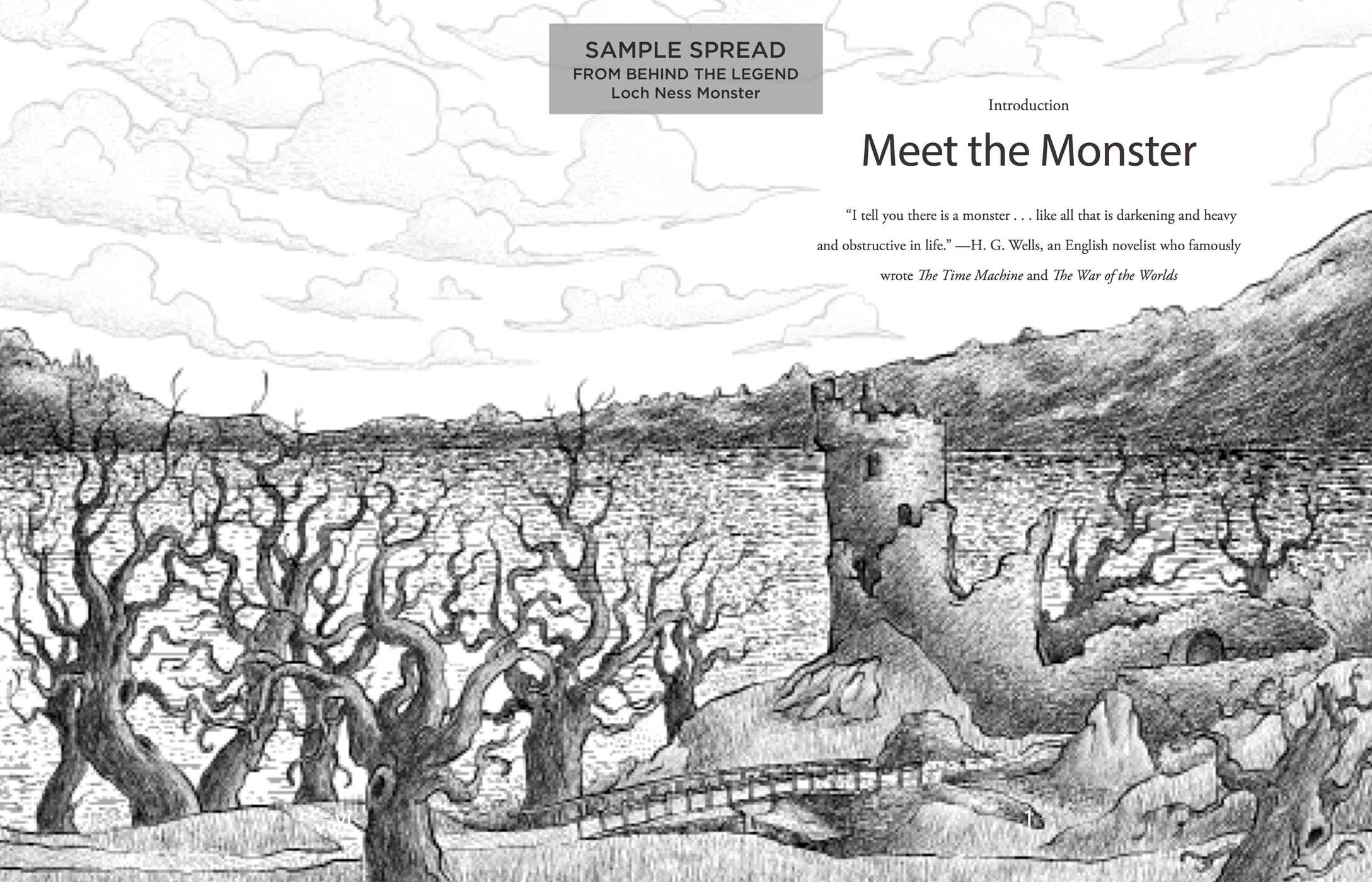
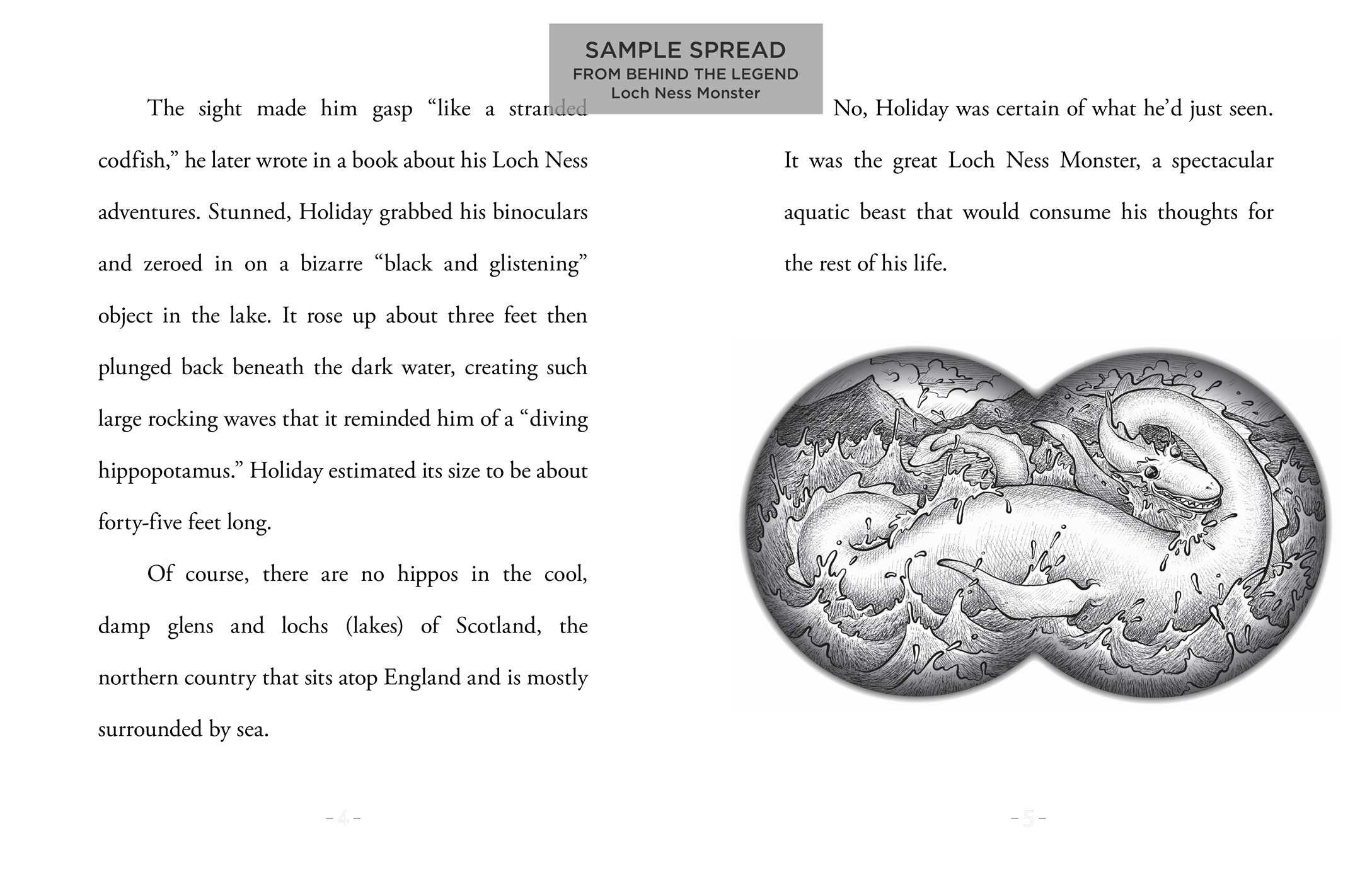
The Loch Ness Monster
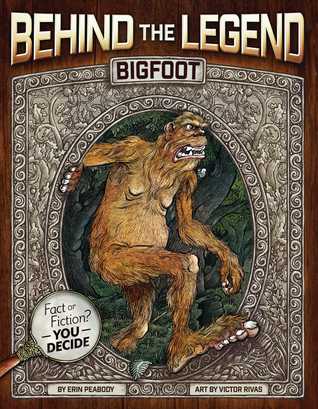
Big Food
Author: Erin Peabody
Illustrator: Victor Rivas
Published May 2nd, 2017 by little bee books

Series Summary: little bee books is thrilled to announce their brand-new nonfiction middle grade series! Behind the Legend is designed for readers ages 8-10 and asks that to decide what is fact and what is fiction. Each book analyzes legendary creatures throughout history using scientific problem solving. Readers evaluate the evidence of sightings, debunk hoaxes with scientific experiments, and read from sources to decide if the monster is made of myth, legend, or fact. Packed with interesting anecdotes, photos, sidebars, and illustrations, each title is a page-turning adventure that readers won’t want to put down.

Learn all about creatures and monsters throughout history and discover if they’re real or not in this new nonfiction series! Behind the Legend looks at creatures and monsters throughout history and analyzes them through a scientific, mythbusting lens, debating whether or not the sightings and evidence provided are adequate proof of their existence.

More books coming soon! Zombies and Werewolves coming in Summer 2017 and Unicorns and Dragons in Spring 2018.

The Loch Ness Monster Summary: In The Loch Ness Monster, readers learn about all the sightings and proof of it, from the famous photograph to the huge “footprints” found by the Loch. It also discusses other history about the monster, such as how Nessie became a major figure in popular culture, and other mythical beings that came from Scotland. Complete with engaging anecdotes, interesting sidebars, and fantastic illustrations, kids won’t want to put this book down!

Big Foot Summary: In Bigfoot, readers learn about all the sightings and proof of it, from the famous photograph and video to footprints and other evidence. It also discusses additional history about the monster, such as how Bigfoot became a major figure in popular culture, and how other versions of the creature (such as the Yeti) have been seen around the world. Complete with engaging anecdotes, interesting sidebars, and fantastic illustrations, kids won’t want to put this book down!

Review: On one of our recent Top Ten Tuesday posts, I shared that I am always looking for nonfiction books to keep my middle grade students reading nonfiction because it is so hard to talk them into reading it unless it really catches their interest. I think part of the reason is because there aren’t many transitional nonfiction books from picture books and shorter informational nonfiction books to longer works like books by Jim Murphy, Deborah Heiligman, and Candance Fleming (which are phenomenal, but many readers just don’t have the nonfiction stamina). I think the Behind the Legend series fits this need perfectly! They are slightly longer than the traditional children’s nonfiction book and the words outnumber the pictures though there are still many illustrations, big font, lots of white space, and short chapters.

Teachers’ Tools for Navigation: The Behind the Legend series’ texts will be perfect for not only reading aloud and discussing the truly interesting information within the book, I think the texts would be perfect mentor texts for writing an informational nonfiction text of the students’ own. The books do a wonderful job at looking at many different aspects of the legend and remaining unbiased.

Discussion Questions: Based on the information shared in the text, do you believe the legends are fact or fiction? Support your answer with evidence form the text.; How do legends such as the Loch Ness Monster and Bigfoot become such cultural phenomenons?

Flagged Passages: 

Read This If You Love: Who Was? series, Legends

Recommended For: 

classroomlibrarybuttonsmall closereadinganalysisbuttonsmall

Signature

**Thank you little bee books for providing copies for review!**

Framed by James Ponti

Share


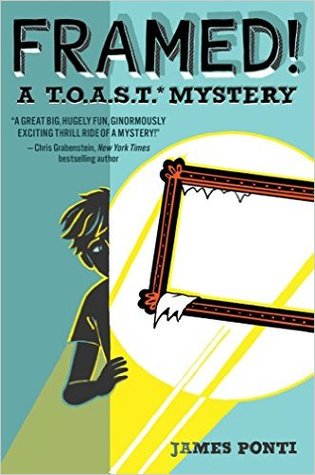
Framed: A T.O.A.S.T Mystery
Author: James Ponti
Published August 26th, 2016 by Aladdin

Summary: Get to know the only kid on the FBI Director’s speed dial and several international criminals’ most wanted lists all because of his Theory of All Small Things in this hilarious start to a brand-new middle grade mystery series.

So you’re only halfway through your homework and the Director of the FBI keeps texting you for help…What do you do? Save your grade? Or save the country?

If you’re Florian Bates, you figure out a way to do both.

Florian is twelve years old and has just moved to Washington. He’s learning his way around using TOAST, which stands for the Theory of All Small Things. It’s a technique he invented to solve life’s little mysteries such as: where to sit on the on the first day of school, or which Chinese restaurant has the best eggrolls.

But when he teaches it to his new friend Margaret, they uncover a mystery that isn’t little. In fact, it’s HUGE, and it involves the National Gallery, the FBI, and a notorious crime syndicate known as EEL.

Can Florian decipher the clues and finish his homework in time to help the FBI solve the case?

Review: I love mysteries; specifically mysteries with kids who solve things that adults couldn’t figure out. They are so much fun to follow along and try to figure out with the characters. Florian is one of the best kid detectives that I’ve read. His use of TOAST, the Theory of All Small Things, is so admirable and is something that kids could definitely learn from since they so often ignore the small things and focus on the obvious. I could definitely see games and activities being created for classrooms that use the TOAST theory. Or kids will play the type of games that Florian and Margaret played as Florian was training Margaret in TOAST: making inferences about the people around them, in stories, or with mysteries. I could see pairing TOAST with books like You Be The Jury

I also really enjoyed the mystery that James Ponti set up for us. I could predict part of it but other parts came as a total surprise to me. I am always in total awe of an author’s ability to craft such a complicated mystery and how it all comes together. I also loved that the story was mutli-faceted and will teach the readers as well as entertain them.

And I am so happy to say that Framed is on our 2017-2018 Sunshine State Young Reader Award list for both 3rd-5th grade AND 6th-8th grade! Congratulations, James!

Teachers’ Tools for Navigation: In addition to the mystery games that could be played using TOAST, reading aloud Framed, and having Framed available to students to read, there are lots of opportunities in the book to discuss art and art history. Since both of Florian’s parents work in the museum business and the mystery of the book focuses on an art heist, there multiple times where art comes into the story including discussion of impressionism (specifically Monet, Renoir, and Degas) and even stories of Van Gogh and Gaugin.

Discussion Questions: Did you figure out the mystery before it was revealed? Was there any foreshadowing now that you know the reveal?; What did you learn about art while reading Framed?; How could you use TOAST in your life?

Flagged Passages: “‘You want me to teach you TOAST?’

‘Toast?’ she asked. ‘You’ve tasted my cookies, which are…epic. Don’t you think I know how to make toast?’

‘Not that toast,’ I said. ‘TOAST stands for The Theory of All Small Things. That’s how I read people and places. The idea is that if you add up a bunch of little details, it reveals the larger truth.’

‘And where did you learn this theory? Philosophy class? Spy school?’

‘I…invented it…I guess.’

This made her laugh. ‘You invented TOAST?’

‘It’s based on some things I learned from my parents,’ I said. ‘But I pull it all together and came up with the name. So yes, I invented it.’

‘You said your parents work at museums, right?’

‘My father designs security systems, and one day he explained that the key to his job is finding the tiny flaw or inconsistency that the bad guys can take advantage of.’

‘Like the saying that ‘a chain is only as strong as its weakest link’?’

‘Exactly,’ I said. ‘And my mother’s an art conservator. She restores old paintings and says the best way to understand a painting is by finding the smallest details that tells you the whole story, like the smile on the Mona Lisa.’

‘And this led to TOAST?’

I nodded. ‘Even though their jobs are incredibly different, they both rely on the idea that tiny things can be hugely important,’ I explained. ‘Once I even used TOAST to help my dad catch a criminal.'” (Approximate Loc 221 in the ebook)

Read This If You Loved: Chasing Vermeer by Blue Balliett, Heist Society by Ally Carter, Shakespeare’s Secret by Elise Broach, Stormbreaker by Anthony Horowitz, Loot by Jude Watson, Nickel Bay Nick by Dean Pitchford, Some Kind of Happiness by Claire Legrand, Great Greene Heist by Varian Johnson, Wig in the Window by Kristen Kittscher, A Girl Named Digit by Annabel Monaghan,

Recommended For:

  litcirclesbuttonsmall classroomlibrarybuttonsmall 

**Thank you to the author for providing copies for review!**

Review and Giveaway: Caring for Your Lion by Tammi Sauer

Share

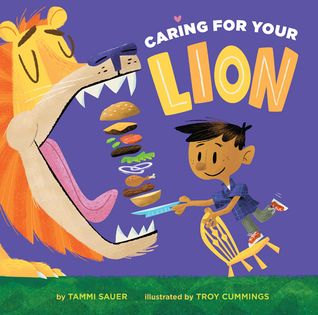
Caring for Your Lion
Author: Tammi Sauer
Illustrator: Troy Cummings
Anticipated Published: May 2, 2017 by Sterling

Goodreads Summary: What happens when you expect an itty-bitty kitty . . . but get a lion instead?
It’s kitten delivery day, but—SURPRISE. Congratulations on your new LION! We know you ordered a kitten, but we ran out of those. Fortunately, the big cat comes with instructions—like, try very hard NOT to look like a zebra. Or a gazelle. And give your lion PLENTY of space to play. But soon the feathers and fur start flying and everything’s in chaos. Is there any way a lion could actually be a child’s purr-fect pet?

Ricki’s Review: This text will be a fantastic read-aloud for elementary school classrooms. It is a how-to book that will make kids roll with laughter. There is much to be taught from this text, so teachers will love teaching it as much as students will love listening to it. I enjoyed how straight-forward the text was. The pages include step-by-step instructions that are very clear and direct. The pictures show the consequences (e.g. the lion will eat you!). This is a perfect mentor text for a variety of teaching tools (see below) and a great addition to classrooms.

Kellee’s Review: Kids are going to love this step-by-step introduction into how to care for a pet lion. (Though I predict there are going to be some “No, you cannot have a lion as a pet.” conversations because of this book! The lion is just that adorable!) I loved how the book was a combination of a how-to guide and a narrative of the boy’s experience with his lion–what a unique concept! It is going to be such a fun book to read aloud with time to examine each page. And like Sauer’s Alien books, it really makes you think about expectations, prejudice, and first impressions vs. reality.

Teachers’ Tools for Navigation: Teachers might use this book to teach sequence and how-to directions. They could also use it with students to discuss how caring for a lion would compare and contrast to caring for a more typical animal like a cat, dog, or fish. Students could then write their own how-to guides about caring for an exotic animal. 

Discussion Questions: What is difficult about caring for a lion? What is important to remember?; When should you use a feather? What does the feather do?

Flagged Passage: “Step 3: Try very hard NOT to look like a zebra. Or a gazelle. Or a bunny. (See Diagram A).”

Read This If You Love: Share, Big Bear, Share by Maureen WrightMr. Fuzzbuster Knows He’s the Favorite by Stacy McAnultyDear Dragon by Josh Funk; How to Track a Truck by Jason Carter Eaton; How This Book Was Made by Mac Barnett

Recommended For: 

classroomlibrarybuttonsmall readaloudbuttonsmall

Giveaway!

a Rafflecopter giveaway

RickiSigandSignature

**Thank you to Lauren at Sterling for providing copies for review!**

The Fourteenth Goldfish by Jennifer L. Holm

Share

The Fourteenth Goldfish
Author: Jennifer L. Holm
Published: April 5, 2016 by Yearling

A Guest Review by Kelsey Iwanicki

Summary: The Fourteenth Goldfish follows the story of Ellie, an 11-year-old girl, who is currently struggling to find her passion, especially following the gradual drop off with her one and only friend, Brianna. However, everything changes when her mother brings home a quirky and crabby 13-year-old boy, Melvin. Ellie notices striking similarities between Melvin and her seventy-something year-old grandfather until he comes clean and tells her that they are in fact the same person. Melvin has worked on developing a drug to reverse the signs of aging, which has successfully worked on himself.

As Ellie and Melvin get closer, they also form an unlikely friendship with a goth student, Raj. Together they give Melvin advice about being a teenager, such as giving him acne medicine and hair elastics. They also help Melvin eventually, after a few failed attempts, steal the same compound that reversed his age. Melvin’s original plan was to steal the gene so he could share it with the world and receive the Nobel Peace Prize. However, Ellie persuaded him not to on the grounds of moral ethics and how scientific impacts can be both positive and negative. Due to this, Melvin flushes the compound down the drain and starts to tour the country. Thanks to her time with her grandfather, Ellie is able to discover his passion in science and also gain a few friends along the way, Raj and Momo.

Review: What I liked most about this book was its quirkiness, mostly exemplified through Melvin. Although the relationship between Ellie and Melvin is untraditional, you can also get glimpses of a typical relationship between a grandfather and granddaughter is like, one that isn’t usually written about. The majority of characters are nontraditional, such as Raj, who is explicitly written as goth; Ellie, a girl scientist (although this is becoming more popular, usually boys are the ones in the STEM fields); and Melvin, as a grumpy 13-year-old.

What I didn’t like about the book was the build-up. Although they failed multiple times at stealing the compound, there was no suspense for when Melvin actually succeeded. Rather, he just came home one day with it. The climax actually was when Ellie had a self-realization that science has both positives and negatives, which honestly was kind of a let down because the plot had focused around getting the compound from the lab. Ultimately, it was a good theme because Ellie realizes there are good and bad things with any passion.

All in all, I did like the book, I think it could appeal to students who are interested in science and realistic fiction books.

Teachers’ Tools for Navigation: This book should definitely be included in a classroom library for independent reading because I think it would appeal for students because it is a little quirky and has some interesting characters. It could also prompt some interesting discussions for literature circles because students could discuss the ethics behind using a compound to reverse aging.

A teacher could also use it as a read aloud for a few reasons. It would be interesting to consider the other perspectives of characters such as Melvin or Melissa, Ellie’s mother. Additionally, they could talk about the character traits and what makes Melvin and Ellie such strong characters. Or, they could talk about science and ethics behind what scientists release.

Discussion Questions: If you had a compound that could reverse aging, would you take it? Why or why not?; If you discovered a compound that could reverse aging, would you deliver it to the public? Why or why not?; What do you think will happen to Ellie and Brianna’s friendship? Ellie and Momo’s?; What do you think the side affects are from taking the compound? / What do you think happened to Melvin?; Put yourself in Ellie’s shoes, how would you feel if your grandfather attended the same school as you?; What is the importance of the fourteenth goldfish?

Flagged Passage: “Average people just give up at the obstacles we face every day. Scientists fail again and again and again. Sometimes for our whole lives. But we don’t give up, because we want to solve the puzzle” (p. 47).

Read This If You Loved: El Deafo by Cece Bell; Fish in a Tree by Lynda Mullaly Hunt; Out of My Mind by Sharon Draper; Rain Reign by Ann M. Martin; Unusual Chickens for the Exceptional Poultry Farmer by Kelly Jones

Recommended For:
 classroomlibrarybuttonsmall

Thank you, Kelsey!

RickiSig

Teaching Guide for Hazardous Tales: Alamo All-Stars by Nathan Hale

Share

nfpb2017

Nonfiction Wednesday

Nonfiction Picture Book Wednesday is hosted by Kid Lit Frenzy and was started to help promote the reading of nonfiction texts. Most Wednesdays, we will be participating and will review a nonfiction text (though it may not always be a picture book).
Be sure to visit Kid Lit Frenzy and see what other nonfiction books are shared this week!

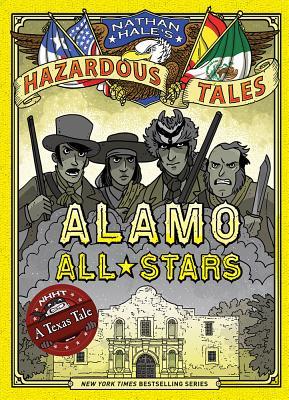
Hazardous Tales: Alamo All-Stars
Author and Illustrator: Nathan Hale
Published March 29th, 2016 by Abrams Books

Summary: “Remember the Alamo!” That rallying cry has been a part of Texas lore for generations. But who were the ragtag group of adventurers behind the famous slogan, and how did they end up barricaded in a fort against a Mexican army? Who survived, who died, and how? This sixth book in the bestselling Hazardous Tales series tracks the Lone Star State’s bloody fight for independence from the Mexican government. It features the exploits of the notorious Jim Bowie, as well as Stephen Austin, Davy Crockett, and other settlers and soldiers who made the wild frontier of Texas their home—all told with the inimitable style and humor for which Nathan Hale is known.

Teaching Guide with Discussion Questions and Activities from Abrams by ME!, Kellee Moye: 

How to use this guide

  • For Alamo All-Stars, opportunities to have discussions and complete activities across different content areas are shared. In the “Fun Across the Curriculum” section, these activities and discussion questions are split into subject areas and are written as if they are being asked of a student.
  • At the end of the guide, Common Core State Standards and Next Generation Science Standards are listed that can be met when the books are extended using the activities and discussion questions.

Fun Across the Curriculum

  • Language Arts
    • The title page and the cover show two different illustrations of the Alamo. Compare and contrast the illustrations. Using information from the text, when is the cover illustration from, and when is the title page illustration from?
    • Why would Alamo All-Star need two narrators, Nathan Hale and Vincente Guerrero, while all of the other Hazardous Tales books only needed Hale? How would the story have differed if only Hale had narrated the book? What about only Guerrero?
    • On page 10-11, Guerrero uses the metaphor of a set table to describe Texas in the 1820s. Why does he use this metaphor to describe the state of Texas at this time?
    • On page 18, Hale uses another metaphor of an explosive barrel to illustrate the situation Austin and his settlers were in. How does an explosive barrel and Austin’s situation relate to each other?
    • After researching cholera (science section), look at Hale’s personification of the disease on page 37. Why did he choose this creature to embody cholera?
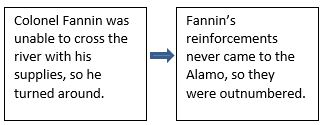
    • Many different events and problems caused Santa Anna’s army to be able to easily defeat the Texans at the Battle of the Alamo. Create a cause/effect graphic organizer showing the correlation between different events leading up to the Battle of the Alamo and the fall of the Alamo.
      • For example:
    • Much of what happened at the Alamo during the infamous battle as well as stories about Davy Crockett and Jim Bowie have become an American legend. What is a legend? Why has some parts of the story of the Alamo become a legend and not a complete factual part of history?
    • Throughout the book, Hale includes direct quotes from primary sources. How do these quotes enhance the story? How are primary sources more reliable when sharing historical events than secondary sources?
  • History/Social Studies
    • The page of Texas on the end sheets shares the different battles during the Texas revolution. Using Alamo All-Stars, convert the map into a timeline by graphing each battle on the date/year they were fought.
    • Using the text feature on pages 10-11 that shared the 1820s Texas settlers, answer the following: how did each settler threaten each other? Why was Texas such a treacherous place at this time? Who was the rightful settler of Texas?
      • Then, split the class up into 8 groups and assign a group of settlers to each group of students. They then should research the group, and determine how they ended up in Texas, why they felt they deserved to stay in Texas, etc.
    • Page 12 defines a filibuster and gives an example of one. What other famous filibusters have happened in history? Use the Wikipedia article “Filibuster (military)” and its resources to learn about other filibuster expeditions. Unlike the James Long Expedition, were any successful?
    • Throughout the book, Mexico goes through different types of governments: a monarch (inferred from p. 16), a republic (mentioned on p. 17), and a despotic (mentioned on p. 40). Compare and contrast the similarities and differences of the different types of governments.
    • Page 88 shows one of the many flags that have flown over Texas. Using the Texas State Historical Information article “Flags of Texas” and the Flags of the World website, learn about all of the different flags that Texas has flown. Why have so many flown over Texas? Where does the phrase “six flags of Texas” come from?
    • On page 104, Santa Anna compares himself to Napoleon. How are the two men similar? How do they differ?
    • On page 113, Hale jokes, “Don’t feel bad. Everyone forgets about Goliad.” Why do you think the Battle of the Alamo is remembered by so many while the massacre at Goliad is not?
    • Why are Travis, Seguin, Bowie, and Crockett pictured on the front of Alamo All-Stars? Is this who you would consider the all-stars of the Alamo? If not, why not? If so, what did they do to deserve that title? Is there anyone else you would consider an Alamo all-star?
  • Science
    • Cholera killed tens of thousands in the summer of 1833 including Bowie’s wife and her family. What is cholera? How does it spread? Why did Bowie’s family try to travel north to escape it?
    • On page 47, Noah Smithwick was quotes sharing that one member of the Gonzales army had a nose bleed; however, he used scientific terms such as nasal appendage and sanguinary fluid. What do these terms mean?
  • Math
    • On page 31, Rezin Bowie mentions that they were outnumbered 14 to 1 during the battle. Using the illustrations and clues in the “Jim Bowie and the Lost Mine” section to determine how many men were on Bowie’s side and how many men they fought and defeated.
    • Santa Anna’s army outnumbered the Texans by a large amount. Using the information shared about the number of men in each side of the battle, determine an approximate ratio of the battle.
      • After you estimate using Alamo All-Stars, research the actual number of men at the battle and determine the ratio. How close was your estimate?
  • Foreign Language (Spanish and French)
    • Throughout the text, different Spanish words are used, many of which can be defined using context clues or connecting to the English language because they are cognates with a word you already know. Look through the book, and try to define all foreign language vocabulary. Some words throughout the book:
      • El Gran Libro Enorme de la Historia Mexicana (p. 6)
      • ejercito de las tres garantias (p. 9)
      • empresario (p. 12)
      • mucho (p. 16)
      • viva la revolución (p. 21)
      • fantástico (p. 31)
      • Dios y libertad (p. 36)
      • alcalde (p. 45)
      • fandangos (p. 72-84)
      • voy a firmarlo (p. 98)
      • mes amis (p. 103 | French)
        • Which words were easier to define? Why were they easier?
  • Music
    • At the Battle of the Alamo, both Santa Anna’s army and the Texas army played music (p. 91). Research to determine what music was played at the battle. Why would they play music while preparing for a battle?

The teaching guide, along with the other books in the series, can also be viewed at: https://www.scribd.com/document/326377929/NathanHale6-TeachingGuide or http://www.abramsbooks.com/academic-resources/teaching-guides/

Recommended For: 

classroomlibrarybuttonsmall closereadinganalysisbuttonsmall 

Signature

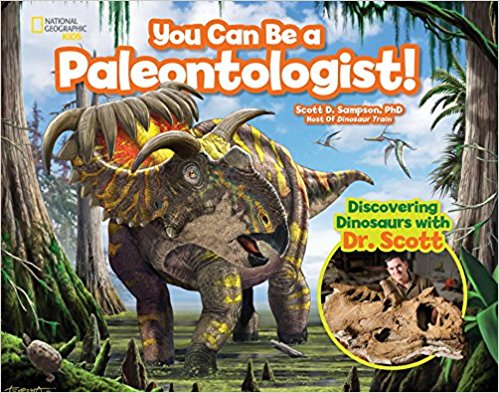
You Can be a Paleontologist!: Discovering Dinosaurs with Dr. Scott by Scott D. Sampson, Ph.D.

Share

nfpb2017

Nonfiction Wednesday

Nonfiction Picture Book Wednesday is hosted by Kid Lit Frenzy and was started to help promote the reading of nonfiction texts. Most Wednesdays, we will be participating and will review a nonfiction text (though it may not always be a picture book).
Be sure to visit Kid Lit Frenzy and see what other nonfiction books are shared this week!

You Can Be a Paleontologist!: Discovering Dinosaurs with Dr. Scott
Author: Scott D. Sampson, Ph.D.
Illustrator: Franco Tempesta
Published April 4th, 2017 by National Geographic Kids

Summary: Ever wondered how to find a dinosaur? Paleontologist Dr. Scott Sampson, host of Dinosaur Train on PBS Kids, tells kids how! How do paleontologists find dinosaur bones? How do they know what dinosaurs ate or looked like? And what is paleontology, anyway? Dr. Scott tackles all these questions and more while inspiring kids to go out and make the next big dino discovery!

About the Author: Scott Sampson is a dinosaur paleontologist, science communicator, and passionate advocate for connecting people with nature. He currently serves as president and CEO of Science World British Columbia in Vancouver, B.C., where much of his work focuses on rethinking 21st Century cities as places where people and nature thrive. Nevertheless, he’s perhaps best known as “Dr. Scott,” host and science advisor of the Emmy-nominated PBS KIDS series Dinosaur Train, produced by the Jim Henson Company. Dinosaur Train is currently viewed daily by millions of children and parents in more than 100 countries. Sampson also served as the on-air host and science advisor for the four-part Discovery Channel series Dinosaur Planet (2003). He has given hundreds of media interviews for radio (e.g., NPR), newspapers (e.g., New York Times), multimedia newswire services (e.g., Reuters), television (e.g., The Today Show, Good Morning America), and periodicals (e.g., Time Magazine, National Geographic). He has been featured in more than a dozen documentaries, including Nova, Paleoworld, and Nature Kids. Sampson is a widely sought public speaker, presenting on topics ranging from dinosaurs and education to children, nature, and sustainability. Sampson is author of Dinosaur Odyssey: Fossil Threads in the Web of Life (University of California Press, 2009), as well as a new general audience book—How to Raise a Wild Child—aimed at helping parents, teachers and others foster a deep connection with nature in children (Houghton Mifflin Harcourt, 2015). He lives in Denver, Colorado with his wife Toni and daughter Jade.

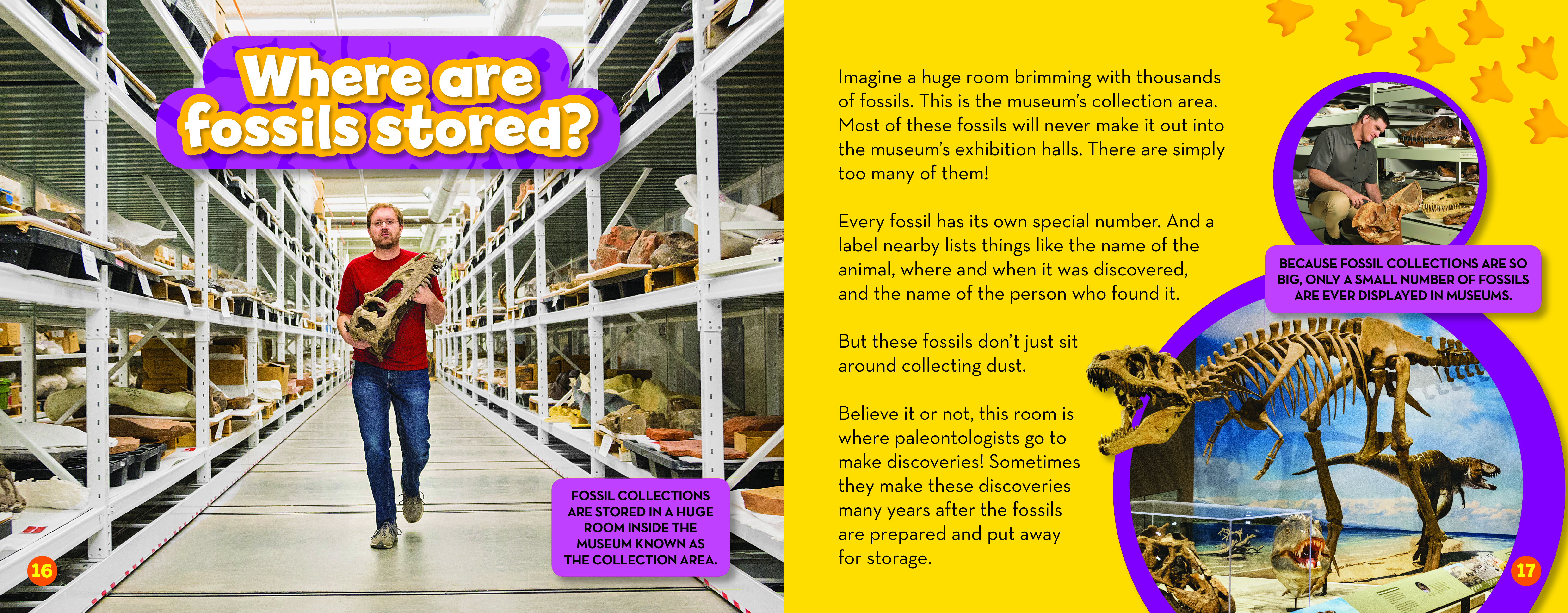
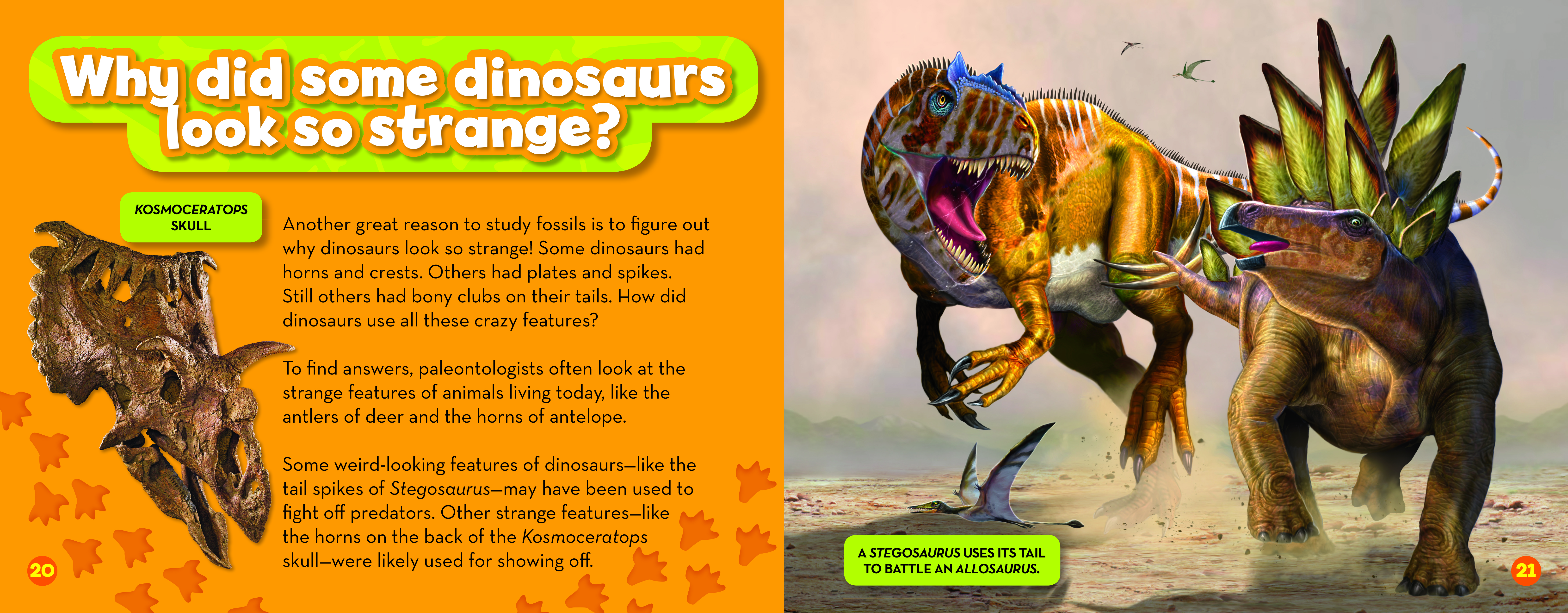
Review: Kids love Dr. Scott on Dinosaur Train on PBS, and there is a reason why: HE LOVES HIS JOB! And that love just flows through this book. His descriptions of everything from where to find fossils, where they are stored, and why dinos looked so weird are so animated, lively, and interesting and the text is so kid friendly! It is set up in a way that is easy to follow if you want to read it sequentially or the reader can jump around to get answers to their questions. The information isn’t dumbed down for kids, which is something I really try to watch out for because it is a huge pet peeve of mine!, but it is definitely written in a way that most readers will be able to understand. As for hard tier 3 academic words, there is a glossary!

Teachers’ Tools for Navigation: Do you know that student you have who has read every dinosaur book in your library but just wants to know more and more? This book is for them. This shows them that they can take their passion and make a living out of it! The text would also find a very nice home in classrooms to discuss how science is used in the real world. I hope there are more books in this series because it would be definitely a wonderful asset to elementary classrooms to have books written by scientists for kids about being a scientist.

Discussion Questions: What do you have to do to become a paleontologist?; What would your job consist of if you become a paleontologist?; What interesting information about dinosaurs have paleontologists discovered?; What other questions do you have about being a paleontologist?

Flagged Passages: 

Read This If You Love: Dinosaurs, Sharing scientists with kids

Recommended For: 

classroomlibrarybuttonsmall 

Signature

**Thank you Karen at Media Masters Publicity for providing a copy for review!**

Review and Giveaway: Cowboy Car by Jeanie Franz Ransom

Share

Cowboy Car
Author: Jeanie Franz Ransom
Illustrator: Ovi Nedelcu
Anticipated Published: April 11, 2017 by Two Lions

Goodreads Summary: A little car with a big dream…

Ever since Little Car was knee-high to his daddy’s hubcaps, he’s wanted to be a cowboy. Cowboys get to drive the range, wear big hats, and sleep under the stars. Everyone tells Little Car that cars can’t be cowboys, but he can’t stop dreaming of rounding up lil’ dogies by day and talking around the campfire at night. So Little Car packs his trunk and heads Out West. Vroom! Can he prove he has what it takes to be a true cowboy? Join Little Car as he zooms into the hearts of kids everywhere.

Ricki’s Review: A car that dreams of being a cowboy! This was a fun story to read with my boys. The illustrations are quite charming, and Little Car made me smile. He refuses to give up, despite the obstacles he faces. My three-year-old asked a lot of great questions while we were reading the book, and we were able to talk about the car’s perseverance. I particularly liked all of the puns in the book. While the puns were completely over my sons’ heads, it made the reading even more enjoyable for me. This book has a theme that we constantly try to relay to our students—not to give up despite what the world throws at you. It would be a great addition to any classroom.

Kellee’s Review: What a cute story about following your dreams even when everyone doubts you! This is a message that is so important to share with kids because throughout their life there are going to be those who doubt them; however, I want Trent to know that as long as he works hard, wants something enough, has a good plan, is realistic about speed bumps ahead, and goes for it, he can live his dream. This is a theme that is found in picture books, chapter books, middle grade novels, and young adult novels because kids need to be reminded of this. Life shouldn’t be about what others expect of you but what YOU expect for you. Little Car embodies this message by doing something that everyone doubted he could do and he did it his own way. I know this story will be one that teachers and parents will want to share with their kids (and their kids will love it because who doesn’t love cars and cowboys!).

Teachers’ Tools for Navigation: Teachers might ask students to connect the theme of this story to real-life individuals today or in history. They might consider other people who have faced struggles and who have persevered. It would be neat to have each student learn about a different person of their choosing. This would add variety and remind students that they should not give up in the face of adversity.

Discussion Questions: What challenges does Little Car face? How does he overcome them?; What do Little Car’s parents think? How does he respond?; What other people (current or historical) have faced struggles? How did they overcome these struggles?

Flagged Passage: “‘Cars can’t be cowboys,’ everyone told Little Car.”

Read This If You Love: Race Car Dreams by Sharon Chriscoe; Race Car Count by Rebecca Kai Dotlich; Busy Trucks on the Go by Eric Ode and Kent Culotta; Goodnight, Goodnight, Construction Site by by Sherri Duskey Rinker; The Racecar Alphabet by Brian Floca; Alphabeep: A Zipping, Zooming ABC by Debora Pearson; The Three Little Rigs by David Gordon; Ten Little School Cars by School Specialty Publishing

Recommended For: 

classroomlibrarybuttonsmall readaloudbuttonsmall

Giveaway!

a Rafflecopter giveaway

RickiSigandSignature

**Thank you to Al at Amazon for providing copies for review!**