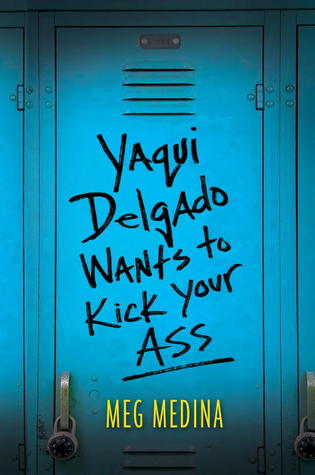
Yaqui Delgado Wants to Kick Your Ass by Meg Medina

Share

Yaqui Delgado

Yaqui Delgado Wants to Kick Your Ass
Author: Meg Medina
Published: March 26, 2013 by Candlewick Press

Summary: In Meg Medina’s compelling new novel, a Latina teen is targeted by a bully at her new school — and must discover resources she never knew she had.

One morning before school, some girl tells Piddy Sanchez that Yaqui Delgado hates her and wants to kick her ass. Piddy doesn’t even know who Yaqui is, never mind what she’s done to piss her off. Word is that Yaqui thinks Piddy is stuck-up, shakes her stuff when she walks, and isn’t Latin enough with her white skin, good grades, and no accent. And Yaqui isn’t kidding around, so Piddy better watch her back. At first Piddy is more concerned with trying to find out more about the father she’s never met and how to balance honors courses with her weekend job at the neighborhood hair salon. But as the harassment escalates, avoiding Yaqui and her gang starts to take over Piddy’s life. Is there any way for Piddy to survive without closing herself off or running away? In an all-too-realistic novel, Meg Medina portrays a sympathetic heroine who is forced to decide who she really is.

Ricki’s Review: There are many books about bullying, but it is rare to read a text that makes you truly feel frighted for the character being bullied. This text felt very real to me, and it will surely resonate with teenagers. There are many lessons about bullying, but there are also some phenomenal examples of family and friendship. Piddy’s mother isn’t perfect and like all parents, she makes mistakes, but she is a single mother who tries her best. The ups and downs of this mother-daughter relationship offer much to ponder and discuss. As adolescents go through high school, they form new bonds and often, they also grow apart from childhood friends. Piddy’s circumstances of a new school with new friendships will absolutely connect with teens.

Kellee’s Review: Like Ricki stated above, this book makes you feel. As Yaqui fills Piddy’s world with fear, Piddy begins to lose herself and get caught up in the terror. As a reader, you find yourself afraid with Piddy whenever she leaves her house, goes to school, or even thinks about doing either. A book that can do this is brilliant. Meg Medina has a way of sucking you into the world, and I think it is her use of imagery throughout. You can see the characters, hear the music Piddy listens to, feel the fear, etc. And Piddy’s voice is so crystal clear, that is something she never loses. When you finish reading, you can still hear Piddy’s voice in your head.  I also feel that this is a wonderful diverse book in a time when the YA community is calling for diverse books. This one should be in high school classrooms, and should be discussed as it has such important themes and beautiful writing (no matter what anyone thinks about it!).

Teacher’s Tools for Navigation: This would be a great read aloud at the beginning of the school year. Bullying is a problem that is all too real in our school systems, and it must be addressed immediately, in my opinion. This book would provide rich discussions for classrooms, and it is a must-read for teens. It would be great to do several book groups (or lit circles) that are centered on bullying texts in order to compare the characters’ experiences.

Discussion Questions: Does Piddy make the right decisions? Would you make different choices than her? Why or why not?; Why does the author incorporate Spanish into the text? What does it add, stylistically?; How does Piddy’s absent father affect her?; Which individuals have a positive impact on Piddy? How do these relationships build her character?; Is Joey a good influence on Piddy? What does she learn from him?; Do you agree with the choice that Piddy makes in the end? Would you have made the same choice? Does it show weakness or strength?

We Flagged: “’Son unas cualquieras,’ [my mother] mutters. Nobodies. No culture, no family life, illiterates, she means. The kind of people who make her cross to the other side of the street if she meets them in the dark on payday. They’re her worst nightmare of what a Latin girl can become in the United States. Their big hoop earrings and plucked eyebrows, their dark lips painted like those stars in the old black-and-white movies, their tight T-shirts that show too much curve and invite boys’ touches” (p. 55). 

Read This If You Loved:  Speak by Laurie Halse Anderson, Mexican WhiteBoy by Matt de la Peña, The Secret Life of Sonia Rodriguez by Alan Sitomer, Burn by Suzanne Phillips, Thirteen Reasons Why by Jay Asher, Forgive Me, Leonard Peacock by Matthew Quick, Out of Nowhere by Maria Padian, Shine by Lauren Myracle, The Mockingbirds by Daisy Whitney

Recommended For:

  litcirclesbuttonsmall classroomlibrarybuttonsmall

SignatureandRickiSig

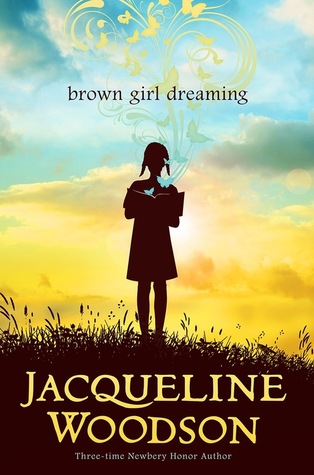
brown girl dreaming by Jacqueline Woodson

Share

brown girl

brown girl dreaming
Author: Jacqueline Woodson
Published: August 28, 2014 by Nancy Paulsen Books

Summary: Jacqueline Woodson, one of today’s finest writers, tells the moving story of her childhood in mesmerizing verse. 
 
Raised in South Carolina and New York, Woodson always felt halfway home in each place. In vivid poems, she shares what it was like to grow up as an African American in the 1960s and 1970s, living with the remnants of Jim Crow and her growing awareness of the Civil Rights movement. Touching and powerful, each poem is both accessible and emotionally charged, each line a glimpse into a child’s soul as she searches for her place in the world. Woodson’s eloquent poetry also reflects the joy of finding her voice through writing stories, despite the fact that she struggled with reading as a child. Her love of stories inspired her and stayed with her, creating the first sparks of the gifted writer she was to become.
 
Praise for Jacqueline Woodson:
Ms. Woodson writes with a sure understanding of the thoughts of young people, offering a poetic, eloquent narrative that is not simply a story . . . but a mature exploration of grown-up issues and self-discovery.”—The New York Times Book Review

Ricki’s Review: This beautifully poignant book in verse captured my heart. I was swept away in the beauty of Jacqueline Woodson’s lyrical memories. This is a book that will embrace readers, wrapping them in Woodson’s childhood in the stormy 1960s. I couldn’t help but read and reread portions of the text–for every few pages that I read, I needed to flip back and relive the beauty of the previous verses. I will cherish this book, reading it again and again, for every word feels intentional and every memory vivid. brown girl dreaming is timeless, and it is universal. Above all, this book will give readers insight–unfolding the experiences of a “brown” child living during the heat of the civil rights movement; a young girl growing up in a house that identifies as Jehovah’s Witnesses; and a young writer, struggling to find the perfect words to reveal the truth. It will touch the hearts of readers of all backgrounds and ages in its messages of family, friendship, strength, and hope.

Kellee’s Review: Wow. I often worry about reading a book that has a lot of hype around it because I fear that I will not love it as much as others do. I should not have been worried about this book. It is beautiful. As Ricki said, I found myself rereading portions of the text just because of how well the verse flowed. By the end of this book, you will wish that you were Woodson’s friend and that you you could write as well as she does. The stories she tells are so true and heartfelt that you live her life along with her through the pages. You experience with her the hardship of growing up in the 1960s and 70s during the Civil Rights movement; the challenge of religion and finding the truth in it; the loss, addition, and conflict of family and everything that comes with these changes; and trying to find an identity as a person, sister, daughter, student and a writer. It is only a truly powerful, well-written book that can make you feel all of these elements.

Teacher’s Tools for Navigation: Writers will feel inspired by Woodson’s verse, and it would make an excellent mentor text for students to learn more about themselves and their own childhoods. We would suggest pairing passages with “I Am From” poems for students to be inspired to write verse memoirs of their own experiences. The figurative language and detail of this text make it a phenomenal resource for teachers, and we would find great value in close readings of Woodson’s intentional use of words and phrasing.

Discussion Questions: How does Jacqueline Woodson come to find herself? What are the strongest influences on her identity?; In what ways does Woodson show the power of family? How do Woodson’s siblings impact her decisions?; What role does history play in this book?; In what ways does Woodson manipulate words, phrasing, and white space? How does this influence your reading?

We Flagged: 

“Then I let the stories live
inside my head, again and again
until the real world fades back
into cricket lullabies
and my own dreams.” (p. 99)

“Sometimes, she pulls a chair to the window, looks
down over the yard.

The promise of glittering sidewalks feels a long time
behind us now, no diamonds anywhere to be found.

But some days, just after snow falls,
the sun comes out, shines down on the promise
of that tree from back home joining us here.

Shines down over the bright white ground.

And on those days, so much light and warmth fills
the room
that it’s hard not to believe
in a  little bit

of everything.”  (p. 285)

Please Note: The above excerpts are from advanced reader copies. The wording and punctuation may be different in the published text. Our blog interface does not allow us to accurately capture the indentions, but we wanted you to see the beauty of Woodson’s language.

Read This If You Loved: Other books by Jacqueline Woodson, The Rock and the River by Kekla Magoon, Sold by Patricia McCormick, Make Lemonade by Virginia Euwer Wolff, Mare’s War by Tanita S. Davis, Gaither Sisters (series) by Rita Williams- Garcia, Sit-In: How Four Friends Stood Up by Sitting Down by Andrea Davis Pinkney, The Silence of our Friends by Mark Long

Recommended For:

closereadinganalysisbuttonsmall readaloudbuttonsmall litcirclesbuttonsmall classroomlibrarybuttonsmall

RickiSigand Signature

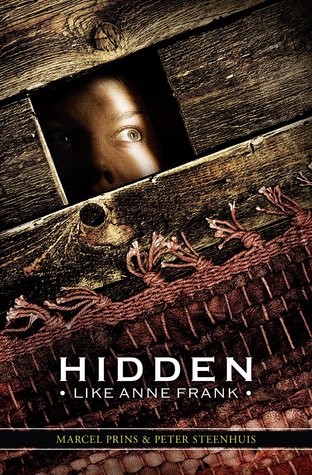
Hidden Like Anne Frank: 14 True Stories of Survival by Marcel Prins and Peter Henk Steenhuis

Share

hidden like anne frank

Hidden Like Anne Frank: 14 True Stories of Survival
Authors: Marcel Prins and Peter Henk Steenhuis
Published: March 25, 2014 by Arthur A. Levine Books

Summary: Fourteen unforgettable true stories of children hidden away during World War II

Jaap Sitters was only eight years old when his mother cut the yellow stars off his clothes and sent him, alone, on a fifteen-mile walk to hide with relatives. It was a terrifying night, one he would never forget. Before the end of the war, Jaap would hide in secret rooms and behind walls. He would suffer from hunger, sickness, and the looming threat of Nazi raids. But he would live.

This is just one of the incredible stories told in HIDDEN LIKE ANNE FRANK, a collection of eye-opening first-person accounts that share what it was like to go into hiding during World War II. Some children were only three or four years old when they were hidden; some were teenagers. Some hid with neighbors or family, while many were with complete strangers. But all know the pain of losing their homes, their families, even their own names. They describe the secret network of brave people who kept them safe. And they share the coincidences and close escapes that made all the difference.

Review: This collection showed me the misconceptions I had about those who hid during the Holocaust. These fourteen brave, young people showed me the diversity of experiences that existed among the hidden. For example, I didn’t know that it was common that they were beaten. Many people agreed to hide Jews because they were paid money by the Resistance. They didn’t always do it because they were being morally good people, so they did not have favorable feelings toward the people they hid. Also, I wasn’t aware that many of those who hid during the Holocaust moved from house to house and were frequently uprooted. These are just some of the many lessons I learned from this text, and I think readers will truly appreciate the insight it provides.

Teacher’s Tools for Navigation: I don’t know many school systems that don’t teach a book that is set during the Holocaust. If teachers are unable to use this whole text, I would highly recommend they select a few stories to show students how different the experiences were.

Discussion Questions: How did the Holocaust impact those who hid? After the war was over, how did it affect them emotionally?; What dangers did the Jews face when they hid? Would you accept the danger and work with the Resistance?

We Flagged: “My feelings from back then are very distant. I can still see myself as a boy of six, seven, roaming around Amsterdam, ringing doorbells, getting into mischief. I can think about that boy, about his relationship with his father, with his mother, and with his grandfather. But I can’t feel the emotions I had back then—it doesn’t work. I just can’t reach them anymore. Maybe I’ve automatically kept the past at a distance because I had to hide away for years and deny my background. Or maybe it’s just that impossible to relive those feelings from the past, and so I have to make do with memories.” (Chapter: “Older than my Father”)

Please Note: This quotation is from an advanced reader copy. It may be different in the published text.

Read This If You Loved: The Diary of Anne Frank by Anne Frank; The Nazi Hunters by Neal Bascomb; Hidden: A Child’s Story of the Holocaust by Loïc Dauvillier; Night by Elie Wiesel 

Recommended For:

readaloudbuttonsmall litcirclesbuttonsmall classroomlibrarybuttonsmall

RickiSig

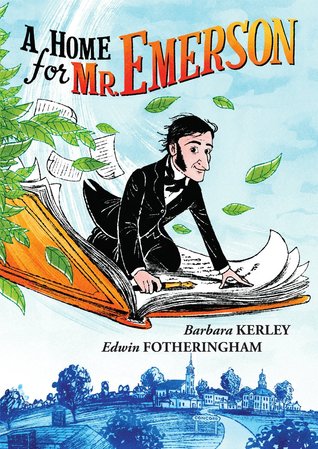
A Home for Mr. Emerson by Barbara Kerley

Share

NF PB 2014

Nonfiction Picture Book Wednesday

Nonfiction Picture Book Wednesday is hosted by Kid Lit Frenzy and was started to help promote the reading of nonfiction texts. Most Wednesdays, we will be participating and will review a nonfiction text (though it may not always be a picture book).
Be sure to visit Kid Lit Frenzy and see what other nonfiction books are shared this week!

emerson

A Home for Mr. Emerson
Author: Barbara Kerley
Illustrator: Edwin Fotheringham
Published February 25, 2014 by Scholastic Press

Goodreads Summary: From the award-winning creators of Those Rebels, John & Tom, a joyful portrait of an American icon and an inspiring blueprint for how to live your life.

“All life is an experiment.
The more
experiments you make
the better.”

Before Ralph Waldo Emerson was a great writer, he was a city boy who longed for the broad, open fields and deep, still woods of the country, and then a young man who treasured books, ideas, and people. When he grew up and set out in the world, he wondered, could he build a life around these things he loved?

This moving biography–presented with Barbara Kerley and Edwin Fotheringham’s inimitable grace and style–illustrates the rewards of a life well-lived, one built around personal passions: creativity and community, nature and friendship.

May it inspire you to experiment and build the life you dream of living.

My Review: I knew of Emerson’s work, but I didn’t know much about him. This picture book is a perfect introduction into learning about Emerson as a man. And you know what? If this picture paints his personality correctly, he was a wonderful man. He was an intellectual, but also cared about everyone around him. He wanted to listen and learn and be the best neighbor, friend, husband, father, writer, thinker, etc. he could be. Kerley does a great job of showing and sharing with us Emerson’s life.

Also, check out Alyson’s review of this book to see her visit to Mr. Emerson’s home: http://www.kidlitfrenzy.com/kid-lit-frenzy/2014/7/15/nonfiction-picture-book-wednesday-a-home-for-mr-emerson

Teachers’ Tools for Navigation: Since the book is about Emerson, my first thought would be to look at some of Emerson’s work and discuss his life and work including the quotes that are shared throughout the book. Journaling is also a theme throughout the book. Have students start a journal which they think about the world and other thoughts they have throughout the day. Finally, using Barbara Kerley’s website, students could look at how to write a extraordinary biography then pick their own historic person to write about.

However, the author’s afterword gives another suggestion. Use Emerson’s love of life to make your life the best it can be! Have students exam their lives (using the questions in the afterword), and talk about how to live a fulfilling life.

Discussion Questions: (Just some of the questions from the afterword “Build a World of your Own”) Think about your favorite room. What do you like about it?; Design your perfect home. What rooms would you include? etc.; Mr. Emerson created a job out of his love of reading, thinking, and exploring ideas. What kind of job would you enjoy?; List your three favorite community activities. Why do you like them?

We Flagged: 

Read This If You Loved: The Extraordinary Mark Twain by Barbara Kerley, The Noisy Paint Box by Barb Rosenstock, The Tree Lady by H. Joseph Hopkins, Marvin Makes Music by Marvin Hamlisch, A Splash of Red by Jen Bryant, On a Beam of Light by Jennifer Berne

Recommended For: 

readaloudbuttonsmall classroomlibrarybuttonsmall

Signature

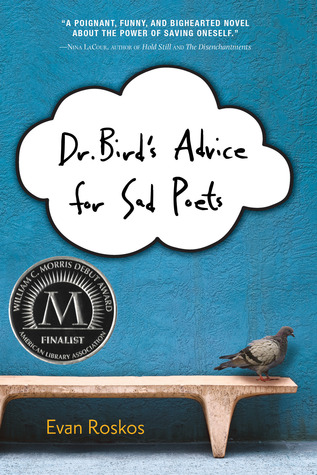
Dr. Bird’s Advice for Sad Poets by Evan Roskos

Share

dr bird's advice for sad poets

Dr. Bird’s Advice for Sad Poets
Author: Evan Roskos
Published: March 5, 2013 by Houghton Mifflin Harcourt

Summary: “I hate myself but I love Walt Whitman, the kook. Always positive. I need to be more positive, so I wake myself up every morning with a song of myself.” 

Sixteen-year-old James Whitman has been yawping (à la Whitman) at his abusive father ever since he kicked his beloved older sister, Jorie, out of the house. James’s painful struggle with anxiety and depression—along with his ongoing quest to understand what led to his self-destructive sister’s exile—make for a heart-rending read, but his wild, exuberant Whitmanization of the world and keen sense of humor keep this emotionally charged debut novel buoyant.

Ricki’s Review: Dr. Bird’s Advice for Sad Poets is such an important book. It captures depression and anxiety in a way that is both authentic and heart-wrenching at the same time. I wanted to reach into the pages of the book to give James a big hug. Similarly to It’s Kind of a Funny Story by Ned Vizzini, this book employs humor without detracting from the very realness of James’ struggles with loneliness and isolation. Teens (and adults) will find themselves in James because he is depicted in a sympathetic way that is very human. This novel is brilliant and should be in every classroom library.

Kellee’s Review: I concur with everything that Ricki said. Dr. Bird’s is a very special book. On a Top Ten Tuesday list, I wrote that I wished there were more books about kids with chemical imbalances, and Dr. Bird’s is the closest I’ve read yetEvan Roskos captures the feeling of a manic depressive state. The energy of the writing actually changes as James’s state of mind changes: anxious, manic, depressed. However, what makes it truly special is that even in the end, there is optimism. Although James is fighting his own chemical imbalance, he keeps doing just that—fighting.

Another thing I adored about this book is the idea of art and writing as therapy. James finds solace in photography and poetry, which is a positive lesson for teens because it shows the power of art, writing, and poetry.

Teacher’s Tools for Navigation: It would be interesting for teachers to do literature circles with texts that concern mental health. Students might read this book along with titles like: Forgive Me, Leonard Peacock by Matthew Quick, It’s Kind of a Funny Story by Ned Vizzini, The Perks of Being a Wallflower by Stephen Chbosky, Twisted by Laurie Halse Anderson, Everybody Sees the Ants by A.S. King, and 13 Reasons Why by Jay Asher. I imagine that reading these titles would foster incredibly rich discussions about depression, anxiety, and suicide. In my opinion, we must have these conversations with our students.

Also, Walt Whitman is a huge part of James’s life, and Whitman is mentioned throughout the book. The Whitman references (and James’s poetry emulating Whitman) would great to be examined in a classroom.

Discussion Questions: If James didn’t have abusive parents, do you think his life would be the same? Do you think depression is genetic in his family?; How does James show bravery?; What role does Walt Whitman play in James’ life?

We Flagged: “People in the world suffer from greater calamities than I do. I eat, I have clothes, I have a house. I read about people around the world who survive on less than a dollar a day. I read about how there are hundreds of millions of widows living in poverty. I see ads for kids who are born with ragged lips and jagged teeth. I don’t have anything like that. I just wake up with a deep hatred of myself. How selfish is that?” (p. 115)

“Later, as my father drives me to the pizzeria, his gassy, grumpy body reeking of judgment and anger and disappointment, I can’t help but wonder how little he knows about the depth of my sadness. The depth of my very being. Will he be upset to find me dead, or relieved?” (p. 214)

Read This If You Loved: (Many of these are listed above.) Forgive Me, Leonard Peacock by Matthew Quick, It’s Kind of a Funny Story by Ned Vizzini, The Perks of Being a Wallflower by Stephen Chbosky, Twisted by Laurie Halse Anderson, Everybody Sees the Ants by A.S. King, Reality Boy by A.S. King, Dear Life, You Suck by Scott Blagden, 13 Reasons Why by Jay Asher, Leaves of Grass by Walt Whitman

Recommended For:

 closereadinganalysisbuttonsmall litcirclesbuttonsmall classroomlibrarybuttonsmall

RickiSig andSignature

Review, Giveaway, and Author Interview!: How To Cheer Up Dad by Fred Koehler

Share

dad

How To Cheer Up Dad
Author and Illustrator: Fred Koehler
Published March 20th, 2014 by Dial

Goodreads Summary: A hilarious book about parent and child relationships for fans of Ian Falconer and Jon Agee–a perfect gift idea for Father’s Day and beyond!

Little Jumbo just can’t understand why his dad is having such a bad day. It couldn’t be the raisins Little Jumbo spit out at the ceiling or the bath he refused to take–after all, Little Jumbo’s dad knew he hated raisins and had already taken a bath that week! Luckily, Little Jumbo is such a thoughtful elephant that he decides to turn his dad’s bad day around with some of his–ahem, his dad’s –favorite things.

How to Cheer up Dad is a standout debut featuring a charmingly oblivious little elephant with serious pluck and staying power. It turns the parent-child roles upside down is a great book for dads and the kids who make them laugh.

Review: This book was a gift for my husband and son to read together, and it is a perfect father-son book. It shows the connection that a child and parent has, and also how a child’s choices can affect a parent and vice versa. It is a wonderful conversation starter and is a wonderful way to teach this lesson. And it is funny!

Additionally, I LOVE the illustrations. Fred Koehler’s style adds an extra layer of joy to the book (with Fred’s “signature messy line work”).  The illustrations also add extra information to the story. It takes both the illustrations and the text to tell the whole story.

Author Interview: I’m so happy to be able to share with you all an exclusive author Q&A with Fred Koehler, the author and illustrator of How to Cheer Up Dad. 

Kellee @ Unleashing Readers: How did you transition from being a graphic artist to being an author/illustrator?

Fred Koehler: Awesome question! I’ve always been a writer and a doodler–in sketchbooks, my church bulletin, or the margins of my homework assignments. I studied graphic design in college and sadly, there was very little doodling to be done on a computer screen. Several years into my career as a designer I discovered drawing tablets, which allow the artist to use a digital pen that translates directly into the design software. So then I could doodle directly onto the screen and it suddenly clicked. I could use everything I’d learned as a designer and translate that into digital drawings.

The writing had always been a creative outlet for me, and I’d written at least one finished novel (which will never get published because it was awful). But… when I started to combine the writing with the drawing and the design all together, it took my artistry to a completely new level.

UR: What is the inspiration behind How to Cheer Up Dad?

FK: How to Cheer Up Dad is really a reminder to myself and parents everywhere that our kids are capable of being incredibly awesome and terribly frustrating with barely a breath in between. Kids live life without any filters, and it’s up to us as parents to decide how we’re going to react to that reality. The main character, Little Jumbo, is loosely based on both my son, Jack, and myself when I was a kid. Little Jumbo is charmingly oblivious to the massive amounts of trouble he causes, but genuinely dedicated to making things right in the end.

UR: Why elephants?

FK: The elephants came from a random doodle at Mitchell’s Coffee House in Lakeland, FL. I was there with my son, trying to work on some sketches, and my son was trying to get me to do anything but work on my sketches. I just remember being frustrated by the whole ordeal, coming home, and later seeing this doodle of two elephants in my sketchbook. Lucy Cummins, an art director at Simon & Schuster, eventually saw that sketch, and suggested how I might start to turn it into a picture book. I followed her advice and had several publishers fall in love with the characters. Eventually Kate Harrison at Dial Books for Young Readers acquired the manuscript. Plus, elephants are funny. And awesome.

UR: What illustrators and authors inspire you?

FK: One of the coolest things about this industry is the people you get to meet. Growing up I watched all the Chuck Jones cartoons, loved Jim Hensen’s work, and had every Disney animated movie memorized. When I started pursuing the path of becoming an author/illustrator, I got to meet lots and lots of other up-and-coming artists and storytellers who have inspired me. LeUyen Pham (Bedtime for Mommy, Freckleface Strawberry) recently accepted my FB friend request, so she’s at the top of my mind. I love her line work and the expressions that she gets from her characters. I got to watch Molly Idle (Tea Rex, Flora and the Flamingo) go from working for small indie publishers to winning a Caldecott honor last year. Dan Santat (Beekle, Sidekicks) has awesome writing/illustrating chops, and he gave me great advice early on. And the prolific Paul Zelinsky (Z is For Moose, The Wheels on the Bus, many others) has been kind enough to let me ask him lots of rookie questions along the way. 

UR: Are you working on anything else?

FK: Yes! Right now I’ve got two more books under contract. Little Jumbo is getting a sequel, and I’m still working with my incredible editor Kate Harrison and my awesome art director Lily Malcom on how exactly we’re going to one-up the work we did with How to Cheer Up Dad. It’s got such universal relevance and Little Jumbo is such a likable character, we’ve got to make sure and give him a sequel worthy of his potential.

Also great news is that I’m working with Rebecca Davis at Boyds Mills Press to illustrate One Day, The End, which was written by Rebecca Kai Dotlich. And, since I think your readers might like to get the first sneak peek ever, I’m going to let slip a screen shot of the unnamed little girl who will star in this extremely creative book. This image is from my art direction concept that was just recently approved by the publisher. 🙂

FK Narrator

UR: Thank you so much Fred for the amazing interview and exclusive sneak peek! I, personally, am so excited for all of your upcoming projects! And because of how much I loved How to Cheer Up Dad and because of your kindness, I am happy to be able to offer a giveaway of a signed copy of  How to Cheer Up Dad with a custom illustration on the inside cover! Thank you Fred for that as well!

Teachers’ Tools for Navigation: This book is great to teach cause and effect. Readers can learn about why the dad is in a foul mood and what Jumbo does to fix it. It would be a perfect way to discuss the difficult concept of cause and effect using a situation that is very accessible.

Discussion Questions: What has caused Little Jumbo’s dad to be in a bad mood? What are the effects of his bad mood? What does Little Jumbo do to help cheer his dad up?

We Flagged: 

Dad’s mood was clearly getting worse, so Little Jumbo suggested that Dad needed a time out.

Read This If You Loved: Hug Time by Patrick McDonell, Elephant and Piggie series by Mo Willems, My Dad Thinks He’s Funny by Katrina Germein

Recommended For: 

readaloudbuttonsmall classroomlibrarybuttonsmall

GIVEAWAY

a Rafflecopter giveaway

And to all of our dad readers: Happy Father’s Day!

Signature

Love Letters to the Dead by Ava Dellaira

Share

love letters to the dead

Love Letters to the Dead
Author: Ava Dellaira
Published: April 1st, 2014 by Farrar, Strous, and Giroux

Summary: It begins as an assignment for English class: Write a letter to a dead person. Laurel chooses Kurt Cobain because her sister, May, loved him. And he died young, just like May did. Soon, Laurel has a notebook full of letters to people like Janis Joplin, Amy Winehouse, Amelia Earhart, Heath Ledger, and more; though she never gives a single one of them to her teacher. She writes about starting high school, navigating new friendships, falling in love for the first time, learning to live with her splintering family. And, finally, about the abuse she suffered while May was supposed to be looking out for her. Only then, once Laurel has written down the truth about what happened to herself, can she truly begin to accept what happened to May. And only when Laurel has begun to see her sister as the person she was; lovely and amazing and deeply flawed; can she begin to discover her own path.

Review: Fans of The Perks of Being a Wallflower will fall in love with this story. After her sister’s death, Laurel feels broken. I just wanted to reach in the book and give her a big squeeze. As she writes letters to the dead, she grows and learns more about herself. While most high schoolers may not have experienced a loss like Laurel’s, I think every teen will be able to see themselves in her. Her characterization is authentic and honest. I am including several passages (below) from the book. Rather than describe the power of this book, I want you to get lost in Dellaira’s words.

Teacher’s Tools for Navigation: It may seem a rather obvious assignment for this book, but I think students would truly learn about themselves by writing letters to the dead. I would probably pair this with a mini-research assignment. For example, Laurel knows background information about the people she writes to. She uses this knowledge to make connections to her life.

Discussion Questions: How does Laurel grieve? How does this differ from her parents’ grieving processes?; What commonalities exist across the people Laurel writes to? What specific connections does she make with them?; Do you think Laurel is ready for a romantic relationship? Why or why not?

We Flagged: I can’t help myself. Enjoy the beautiful quotes below. I apologize that there aren’t page numbers, but I wrote the location in the e-book!

“Maybe if I can learn to be more like her, I will know how to be better at living without her.” (Loc 185, 5%)

“I think a lot of people want to be someone, but we are scared that if we try, we won’t be as good as everyone imagines we could be.” (Loc 1651. 43%)

“When we are in love, we are both completely in danger and completely saved.” (Loc 1763, 46%)

“Truth is beautiful, no matter what the truth is. Even if it’s scary or bad. It is beauty simply because it’s true. And truth is bright. Truth makes you more you. I want to be me.” (Loc 1969, 51%)

“I have found that sometimes, moments get stuck in your body. They are there, lodged under your skin like hard seed-stones of wonder of sadness or fear, everything else growing up around them.” (Loc 2153, 56%)

“A friend is someone who gives you total freedom to be yourself—and especially to feel, or not feel. Whatever you happen to be feeling at any moment is fine with them. That’s what real love amounts to—letting a person be what he really is.” (Loc 3117, 81%).

Read This If You Loved: The Perks of Being a Wallflower by Stephen Chbosky, If I Stay by Gayle Forman, Twenty Boy Summer by Sarah Ockler, The Sky is Everywhere by Jandy Nelson

Recommended For:

litcirclesbuttonsmall classroomlibrarybuttonsmall

026F3FBCC8C3913BD3A4D3F6920340D5