The Fourteenth Goldfish by Jennifer L. Holm

Share

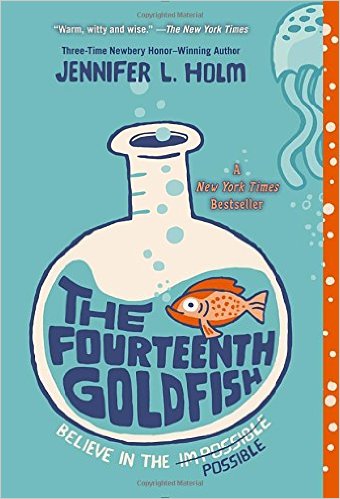
The Fourteenth Goldfish
Author: Jennifer L. Holm
Published: April 5, 2016 by Yearling

A Guest Review by Kelsey Iwanicki

Summary: The Fourteenth Goldfish follows the story of Ellie, an 11-year-old girl, who is currently struggling to find her passion, especially following the gradual drop off with her one and only friend, Brianna. However, everything changes when her mother brings home a quirky and crabby 13-year-old boy, Melvin. Ellie notices striking similarities between Melvin and her seventy-something year-old grandfather until he comes clean and tells her that they are in fact the same person. Melvin has worked on developing a drug to reverse the signs of aging, which has successfully worked on himself.

As Ellie and Melvin get closer, they also form an unlikely friendship with a goth student, Raj. Together they give Melvin advice about being a teenager, such as giving him acne medicine and hair elastics. They also help Melvin eventually, after a few failed attempts, steal the same compound that reversed his age. Melvin’s original plan was to steal the gene so he could share it with the world and receive the Nobel Peace Prize. However, Ellie persuaded him not to on the grounds of moral ethics and how scientific impacts can be both positive and negative. Due to this, Melvin flushes the compound down the drain and starts to tour the country. Thanks to her time with her grandfather, Ellie is able to discover his passion in science and also gain a few friends along the way, Raj and Momo.

Review: What I liked most about this book was its quirkiness, mostly exemplified through Melvin. Although the relationship between Ellie and Melvin is untraditional, you can also get glimpses of a typical relationship between a grandfather and granddaughter is like, one that isn’t usually written about. The majority of characters are nontraditional, such as Raj, who is explicitly written as goth; Ellie, a girl scientist (although this is becoming more popular, usually boys are the ones in the STEM fields); and Melvin, as a grumpy 13-year-old.

What I didn’t like about the book was the build-up. Although they failed multiple times at stealing the compound, there was no suspense for when Melvin actually succeeded. Rather, he just came home one day with it. The climax actually was when Ellie had a self-realization that science has both positives and negatives, which honestly was kind of a let down because the plot had focused around getting the compound from the lab. Ultimately, it was a good theme because Ellie realizes there are good and bad things with any passion.

All in all, I did like the book, I think it could appeal to students who are interested in science and realistic fiction books.

Teachers’ Tools for Navigation: This book should definitely be included in a classroom library for independent reading because I think it would appeal for students because it is a little quirky and has some interesting characters. It could also prompt some interesting discussions for literature circles because students could discuss the ethics behind using a compound to reverse aging.

A teacher could also use it as a read aloud for a few reasons. It would be interesting to consider the other perspectives of characters such as Melvin or Melissa, Ellie’s mother. Additionally, they could talk about the character traits and what makes Melvin and Ellie such strong characters. Or, they could talk about science and ethics behind what scientists release.

Discussion Questions: If you had a compound that could reverse aging, would you take it? Why or why not?; If you discovered a compound that could reverse aging, would you deliver it to the public? Why or why not?; What do you think will happen to Ellie and Brianna’s friendship? Ellie and Momo’s?; What do you think the side affects are from taking the compound? / What do you think happened to Melvin?; Put yourself in Ellie’s shoes, how would you feel if your grandfather attended the same school as you?; What is the importance of the fourteenth goldfish?

Flagged Passage: “Average people just give up at the obstacles we face every day. Scientists fail again and again and again. Sometimes for our whole lives. But we don’t give up, because we want to solve the puzzle” (p. 47).

Read This If You Loved: El Deafo by Cece Bell; Fish in a Tree by Lynda Mullaly Hunt; Out of My Mind by Sharon Draper; Rain Reign by Ann M. Martin; Unusual Chickens for the Exceptional Poultry Farmer by Kelly Jones

Recommended For:
 classroomlibrarybuttonsmall

Thank you, Kelsey!
RickiSig

Teaching Guide for Hazardous Tales: Alamo All-Stars by Nathan Hale

Share

nfpb2017

Nonfiction Wednesday

Nonfiction Picture Book Wednesday is hosted by Kid Lit Frenzy and was started to help promote the reading of nonfiction texts. Most Wednesdays, we will be participating and will review a nonfiction text (though it may not always be a picture book).
Be sure to visit Kid Lit Frenzy and see what other nonfiction books are shared this week!

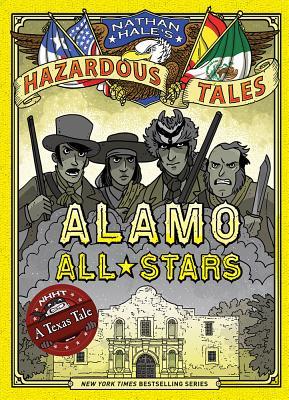
Hazardous Tales: Alamo All-Stars
Author and Illustrator: Nathan Hale
Published March 29th, 2016 by Abrams Books

Summary: “Remember the Alamo!” That rallying cry has been a part of Texas lore for generations. But who were the ragtag group of adventurers behind the famous slogan, and how did they end up barricaded in a fort against a Mexican army? Who survived, who died, and how? This sixth book in the bestselling Hazardous Tales series tracks the Lone Star State’s bloody fight for independence from the Mexican government. It features the exploits of the notorious Jim Bowie, as well as Stephen Austin, Davy Crockett, and other settlers and soldiers who made the wild frontier of Texas their home—all told with the inimitable style and humor for which Nathan Hale is known.

Teaching Guide with Discussion Questions and Activities from Abrams by ME!, Kellee Moye: 

How to use this guide

  • For Alamo All-Stars, opportunities to have discussions and complete activities across different content areas are shared. In the “Fun Across the Curriculum” section, these activities and discussion questions are split into subject areas and are written as if they are being asked of a student.
  • At the end of the guide, Common Core State Standards and Next Generation Science Standards are listed that can be met when the books are extended using the activities and discussion questions.

Fun Across the Curriculum

  • Language Arts
    • The title page and the cover show two different illustrations of the Alamo. Compare and contrast the illustrations. Using information from the text, when is the cover illustration from, and when is the title page illustration from?
    • Why would Alamo All-Star need two narrators, Nathan Hale and Vincente Guerrero, while all of the other Hazardous Tales books only needed Hale? How would the story have differed if only Hale had narrated the book? What about only Guerrero?
    • On page 10-11, Guerrero uses the metaphor of a set table to describe Texas in the 1820s. Why does he use this metaphor to describe the state of Texas at this time?
    • On page 18, Hale uses another metaphor of an explosive barrel to illustrate the situation Austin and his settlers were in. How does an explosive barrel and Austin’s situation relate to each other?
    • After researching cholera (science section), look at Hale’s personification of the disease on page 37. Why did he choose this creature to embody cholera?
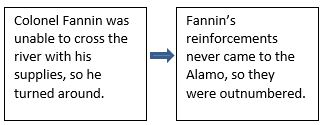
    • Many different events and problems caused Santa Anna’s army to be able to easily defeat the Texans at the Battle of the Alamo. Create a cause/effect graphic organizer showing the correlation between different events leading up to the Battle of the Alamo and the fall of the Alamo.
      • For example:
    • Much of what happened at the Alamo during the infamous battle as well as stories about Davy Crockett and Jim Bowie have become an American legend. What is a legend? Why has some parts of the story of the Alamo become a legend and not a complete factual part of history?
    • Throughout the book, Hale includes direct quotes from primary sources. How do these quotes enhance the story? How are primary sources more reliable when sharing historical events than secondary sources?
  • History/Social Studies
    • The page of Texas on the end sheets shares the different battles during the Texas revolution. Using Alamo All-Stars, convert the map into a timeline by graphing each battle on the date/year they were fought.
    • Using the text feature on pages 10-11 that shared the 1820s Texas settlers, answer the following: how did each settler threaten each other? Why was Texas such a treacherous place at this time? Who was the rightful settler of Texas?
      • Then, split the class up into 8 groups and assign a group of settlers to each group of students. They then should research the group, and determine how they ended up in Texas, why they felt they deserved to stay in Texas, etc.
    • Page 12 defines a filibuster and gives an example of one. What other famous filibusters have happened in history? Use the Wikipedia article “Filibuster (military)” and its resources to learn about other filibuster expeditions. Unlike the James Long Expedition, were any successful?
    • Throughout the book, Mexico goes through different types of governments: a monarch (inferred from p. 16), a republic (mentioned on p. 17), and a despotic (mentioned on p. 40). Compare and contrast the similarities and differences of the different types of governments.
    • Page 88 shows one of the many flags that have flown over Texas. Using the Texas State Historical Information article “Flags of Texas” and the Flags of the World website, learn about all of the different flags that Texas has flown. Why have so many flown over Texas? Where does the phrase “six flags of Texas” come from?
    • On page 104, Santa Anna compares himself to Napoleon. How are the two men similar? How do they differ?
    • On page 113, Hale jokes, “Don’t feel bad. Everyone forgets about Goliad.” Why do you think the Battle of the Alamo is remembered by so many while the massacre at Goliad is not?
    • Why are Travis, Seguin, Bowie, and Crockett pictured on the front of Alamo All-Stars? Is this who you would consider the all-stars of the Alamo? If not, why not? If so, what did they do to deserve that title? Is there anyone else you would consider an Alamo all-star?
  • Science
    • Cholera killed tens of thousands in the summer of 1833 including Bowie’s wife and her family. What is cholera? How does it spread? Why did Bowie’s family try to travel north to escape it?
    • On page 47, Noah Smithwick was quotes sharing that one member of the Gonzales army had a nose bleed; however, he used scientific terms such as nasal appendage and sanguinary fluid. What do these terms mean?
  • Math
    • On page 31, Rezin Bowie mentions that they were outnumbered 14 to 1 during the battle. Using the illustrations and clues in the “Jim Bowie and the Lost Mine” section to determine how many men were on Bowie’s side and how many men they fought and defeated.
    • Santa Anna’s army outnumbered the Texans by a large amount. Using the information shared about the number of men in each side of the battle, determine an approximate ratio of the battle.
      • After you estimate using Alamo All-Stars, research the actual number of men at the battle and determine the ratio. How close was your estimate?
  • Foreign Language (Spanish and French)
    • Throughout the text, different Spanish words are used, many of which can be defined using context clues or connecting to the English language because they are cognates with a word you already know. Look through the book, and try to define all foreign language vocabulary. Some words throughout the book:
      • El Gran Libro Enorme de la Historia Mexicana (p. 6)
      • ejercito de las tres garantias (p. 9)
      • empresario (p. 12)
      • mucho (p. 16)
      • viva la revolución (p. 21)
      • fantástico (p. 31)
      • Dios y libertad (p. 36)
      • alcalde (p. 45)
      • fandangos (p. 72-84)
      • voy a firmarlo (p. 98)
      • mes amis (p. 103 | French)
        • Which words were easier to define? Why were they easier?
  • Music
    • At the Battle of the Alamo, both Santa Anna’s army and the Texas army played music (p. 91). Research to determine what music was played at the battle. Why would they play music while preparing for a battle?

The teaching guide, along with the other books in the series, can also be viewed at: https://www.scribd.com/document/326377929/NathanHale6-TeachingGuide or http://www.abramsbooks.com/academic-resources/teaching-guides/

Recommended For: 

classroomlibrarybuttonsmall closereadinganalysisbuttonsmall 

Signature

Blog Tour with Review and Giveaway!: Posted by John David Anderson

Share

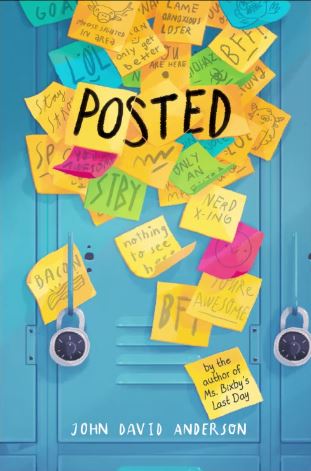
Posted
Author: John David Anderson
Published May 2nd, 2017 by Walden Pond Press

Summary: From John David Anderson, author of the acclaimed Ms. Bixby’s Last Day, comes a humorous, poignant, and original contemporary story about bullying, broken friendships, and the failures of communication between kids. In middle school, words aren’t just words. They can be weapons. They can be gifts. The right words can win you friends or make you enemies. They can come back to haunt you. Sometimes they can change things forever.

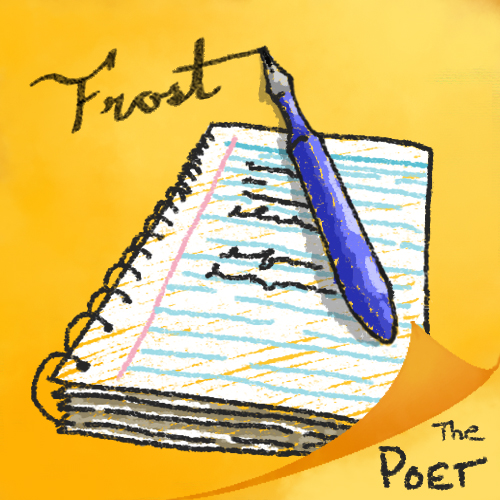
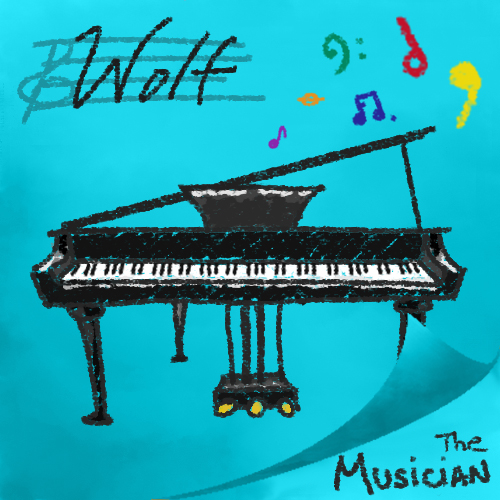
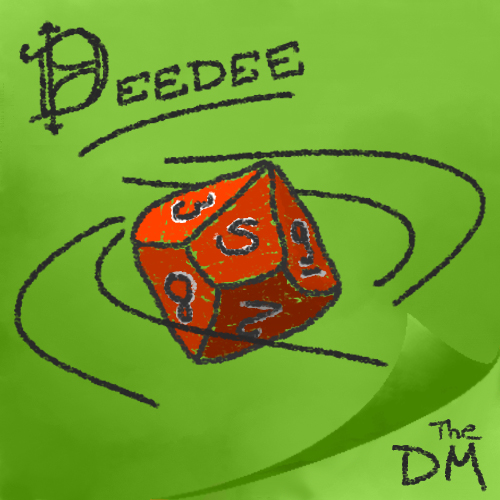
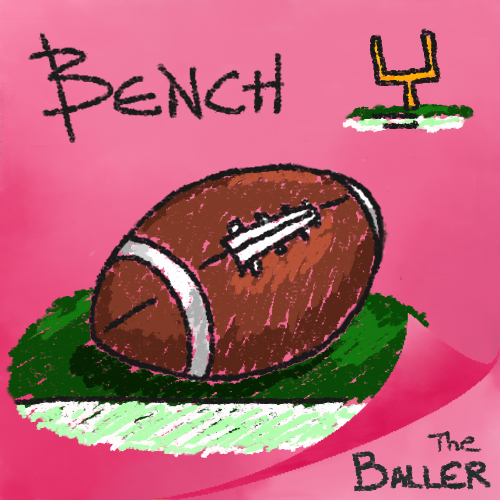
When cell phones are banned at Branton Middle School, Frost and his friends Deedee, Wolf, and Bench come up with a new way to communicate: leaving sticky notes for each other all around the school. It catches on, and soon all the kids in school are leaving notes—though for every kind and friendly one, there is a cutting and cruel one as well.

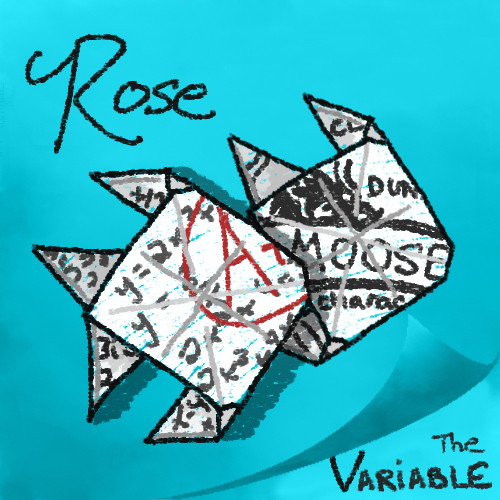
In the middle of this, a new girl named Rose arrives at school and sits at Frost’s lunch table. Rose is not like anyone else at Branton Middle School, and it’s clear that the close circle of friends Frost has made for himself won’t easily hold another. As the sticky-note war escalates, and the pressure to choose sides mounts, Frost soon realizes that after this year, nothing will ever be the same.

Critical Praise: 

“Written with understated humor and fine-tuned perception, Frost’s first-person narrative offers a riveting story as well as an uncomfortably realistic picture of middle school social dynamics.” — Booklist (starred review)

“Anderson dives into the world of middle school with a clear sense of how it works and what it needs. Kids, and the rest of the world, need more books like this one.” — Kirkus Reviews (starred review)

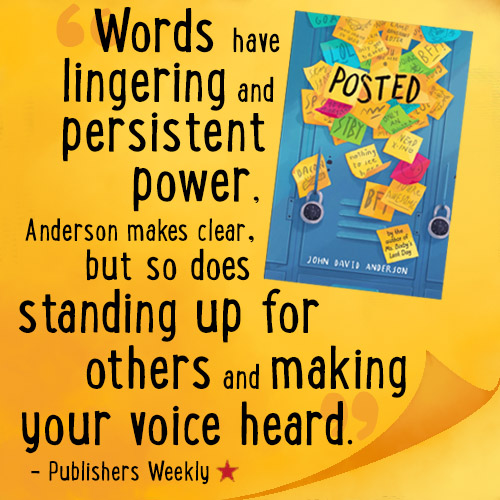
“Anderson captures the tumultuous joys and pains of middle school with honesty, creating characters with whom readers will find common ground and insight. Words have lingering and persistent power, Anderson makes clear, but so does standing up for others and making one’s voice heard.” — Publishers Weekly (starred review)

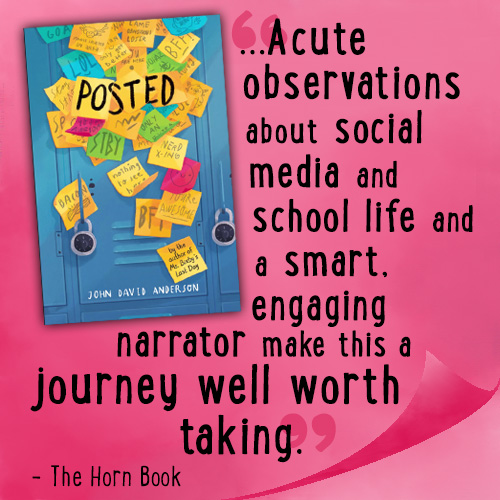
“Acute observations about social media and school life and a smart, engaging narrator make this a journey well worth taking. Readers might even want some Post-it notes to mark the good parts.” — The Horn Book

About the Author: John David Anderson is the author of Ms. Bixby’s Last Day, Sidekicked, Minion, and The Dungeoneers. A dedicated root beer connoisseur and chocolate fiend, he lives with his wife, two kids, and perpetually whiny cat in Indianapolis, Indiana. You can visit him online at www.johndavidanderson.org

Review: First, I must start with stating my awe with Mr. Anderson. I have read four of his five books and each is stellar. But what really makes him stand out as an exemplar author to me is that he has tackled three different genres in his five books and each one was just as good as the others. Ms. Bixby and Posted are realistic fiction, Sidekicked and Minion are superhero sci-fi, and Dungeoneers is high fantasy. How impressive! Now onto my review of Posted: 

There are books that I read that just feel true to me, and Posted fits that. As a middle school teacher, I could picture all of the characters as true middle school students and know that so many readers will connect with someone in the book. Although some of the adults in the book fit a typecast of teachers (they are probably pretty realistic representations of how middle schoolers see some teachers though), they were needed to propel the story. And Mr. Sword is anything but a stereotype and one of those teachers that I just love in books because he cares! I also felt that the bullying represented is, sadly, probably a pretty true representation. Middle school really is all about finding your tribe. So many kids are trying to find their identity and are influenced by so much which sometimes leads to mean kids; however, there are really awesome middle schoolers as well which you can also see in this book. I love these middle schoolers (Frost, Rose, Wolf, Deedee, and even Bench), and I know you and any kid you share this book with will as well. 

What I think makes this book stand out, though, is the theme that words can hurt. They are powerful and can change lives. They can be used for good or evil.

Teachers’ Tools for Navigation: Much of what Mr. Sword does in his class is easily transferable to a classroom. Throughout the book, he is teaching Julius Caesar so quotes/discussions throughout could definitely be used in conjunction with a Julius Caesar lesson. I, personally, love his aphorism activity. It reminded me a bit of the precept activity in Wonder (and they could easily work together if you do a precept activity). Mr. Sword has students create their ow aphorism to share with their students. I think this, like Mr. Sword says, helps students realize that “all of us have something meaningful to share.” Frost also talks about poetry throughout the book, his poetry and Robert Frost, and these sections could be used to inspire students when it comes to poetry.

Discussion Questions: Have you ever had a nickname? Did you like it or not? Out of all the nicknames, one seems to be more negative than the others–which one is it? Do you think the character likes his nickname?; Do you think Deedee started the war? Should he blame himself?; Do you agree with what Wolf’s parents decided?; How did Rose change everything? Do you think everything would have changed without her moving to the school?

Flagged Passages: “Words accumulate. And once they’re free, there’s no taking them back.

You can do an awful lot of damage with a handful of words. You can destroy friendships. You can end a marriage. You can start a war. Some words can break you to pieces.

But that’s not all. Words can be beautiful. They can make you feel things you’ve never felt before. Gather enough of them and sometimes they can stick those same pieces back together.” (p. 342)

Characters: 

Read This If You Loved: Save Me a Seat by Sarah Weeks & Gita Varadarajan, Stargirl by Jerry Spinelli, Zack De La Cruz by Jeff Anderson, Fish in a Tree by Lynda Mullaly Hunt, Warp Speed by Lisa Yee, Schooled by Gordon Korman, Life in Outer Space by Melissa Keil, Freak the Mighty by Rodman Philbrick, Loser by Jerry Spinelli

Recommended For:

Don’t miss out on any blog tour stops!

April 17           Librarian’s Quest

Walden Media Tumblr

April 18           Nerdy Book Club

April 19           For Those About to Mock

April 20           Teach Mentor Texts

April 21           Unleashing Readers

April 22           Next Best Book

April 23           Bluestocking Thinking

April 24           Litcoach Lou

Book Monsters

April 25           Kirsti Call

April 26           Educate-Empower-Inspire-Teach

April 27           The Haunting of Orchid Forsythia

Ms Yingling Reads

April 28           Maria’s Mélange 

Novel Novice

April 29           The Hiding Spot

April 30           This Kid Reviews Books


Giveaway!: 

a Rafflecopter giveaway

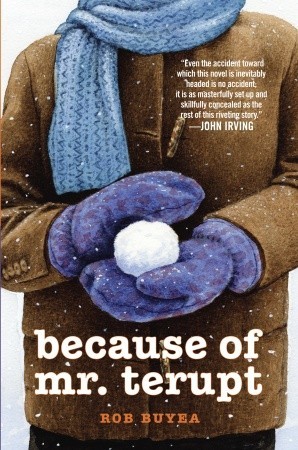
Because of Mr. Terupt by Rob Buyea

Share

Because of Mr. Terupt
Author: Rob Buyea
Published October 12, 2010 by Delacorte

A Guest Review by Julia Kipphut

Summary: Mr. Terupt’s fifth grade class at Snow Hill School is comprised of various types of students, some including: a new student, a popular girl, a bully, and a troublemaker. Their teacher, Mr. Terupt who is passionate and energetic, strives to engage his students and instill a sense of community amongst his class. Unfortunately, one day, a snowball fight goes awry and leaves Mr. Terupt in a coma. His class is rattled and must learn to work together, be kind, and hope for Mr. Terupt’s recovery.

Review: This book includes a variety of characters, each owning their own identity and personality. Each chapter is written from a different character’s perspective, making for a fluid and interesting read. They are relatable for children and allow them to recognize themselves in each character. Each character evolves in the story and shows tremendous growth, proving the rich development of the people in this book. The message of community and forgiveness is nicely intertwined in the story and proves that it is always better to choose kindness. The theme of this book is positive and motivational. 

Teachers’ Tools for Navigation: Because of Mr. Terupt serves as a great reader aloud for upper elementary school students. 4th and 5th graders who are struggling with their identity and place in a classroom community can learn the importance of compassion. Students can learn to embrace individual differences for a common goal or outcome, mirroring the characters in this book. Additionally, this book allows students to study character development throughout the story; each character evolves- allowing for effective classroom discussion.

Because of each character of this book is written from a different character’s perspective, students are able to study point of view and consider the influence each chapter has on the story as a whole. Students are able to learn about each character in depth and can even use literature circles to each study a character for analysis.

Discussion Questions: How might the story be different if the snowball accident did not happen?; What do you think the author’s purpose or message was for this story?; Why do you think the author chose to write this story from different characters points of views? Do you think this was effective?

Book Trailer: 

Read This If You Loved: Out of My Mind by Sharon Draper; Wonder by R. J. Palacio

Recommended For:

  litcirclesbuttonsmall  classroomlibrarybuttonsmall

Thank you, Julia!

RickiSig

Exclusive Reveal!: Teaching Guide for Barkus by Patricia MacLachlan

Share

barkus-cover

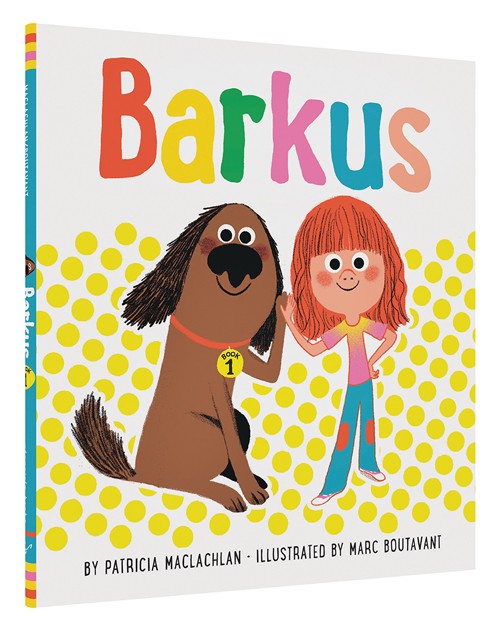
Barkus
Author: Patricia MacLachlan
Illustrator: Marc Boutavant
Expected Publication June 6th, 2017 by Chronicle Books
http://www.chroniclebooks.com/barkus.html

Today we are happy to be able to be able to exclusively reveal the teaching guide for Barkus by Patricia MacLachlan. This is an early chapter book that is a must-get for all of our early elementary friends.

About the Book: Meet Barkus. Barkus is loyal. Barkus is generous. Barkus is sometimes a little too energetic! But in the end, Barkus is family. The exuberant Barkus and his lucky young owner jump, whirl, and twirl across this delightful early chapter book series from two award-winning book creators.

About the Author: Patricia MacLachlan is the celebrated author of many timeless books for young readers, including Sarah, Plain and Tall, winner of the Newbery Medal. Her novels for young readers include: Arthur, For the Very First Time; The Facts and Fiction of Minna Pratt; Skylark; Caleb’s Story; More Perfect than the Moon; Grandfather’s Dance; Word After Word After Word; Kindred Souls; and The Truth of Me. She is also the author of countless beloved picture books, a number of which she co-wrote with her daughter, Emily.

About the Illustrator: Marc Boutavant is an illustrator, graphic artist, and comic strip author. He lives in Paris.

About the Guide: This guide consists of discussion opportunities and classroom extension activities designed for use by Pre-K through second grade students in classroom, small group, or individual assignments.

You can also access the teaching guide here.

Recommended For: 

readaloudbuttonsmall classroomlibrarybuttonsmall closereadinganalysisbuttonsmall

Don’t miss out on this one!

Kellee Signature

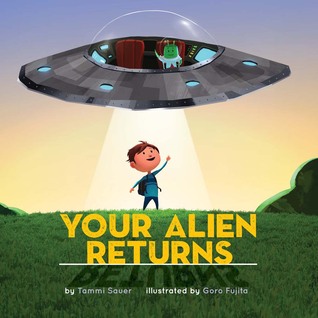
Review and Giveaway!: Your Alien Returns by Tammi Sauer

Share

your-alien-returns

Your Alien Returns
Author: Tammi Sauer
Illustrator: Goro Fujita
Published October 4th, 2016 by Sterling Children’s Books

Summary: When you least expect it, something special will get your attention.
Your alien will be back.
He will invite you over for a play date.

Come along on an out-of-this-world experience! In this heartwarming sequel to the critically acclaimed Your Alien, it’s the human boy’s turn to visit the extraterrestrial’s home planet—and to feel like an outsider. But with a little help from his very best friend in the whole universe, our young hero finds a way to fit in. Like the two irresistible characters, readers will have the ride of their lives.

About the Author: Tammi Sauer is the author of many Sterling books, including Your Alien, Mary Had a Little Glam, Chicken Dance, Bawk & Roll, and Cowboy Camp. She is an active blogger and highly involved in the children’s writer community. Tammi has worked as a teacher and library media specialist, but now writes full time and visits schools around the country. She lives in Edmond, OK. Follow Tammi on Twitter @SauerTammi or visit her website at http://www.tammisauer.com/.

About the Illustrator: Goro Fujita was born in Japan and now lives in San Jose, CA. He works as a book illustrator, animator, and art director on virtual-reality experiences.  Visit him online at area-56.de.

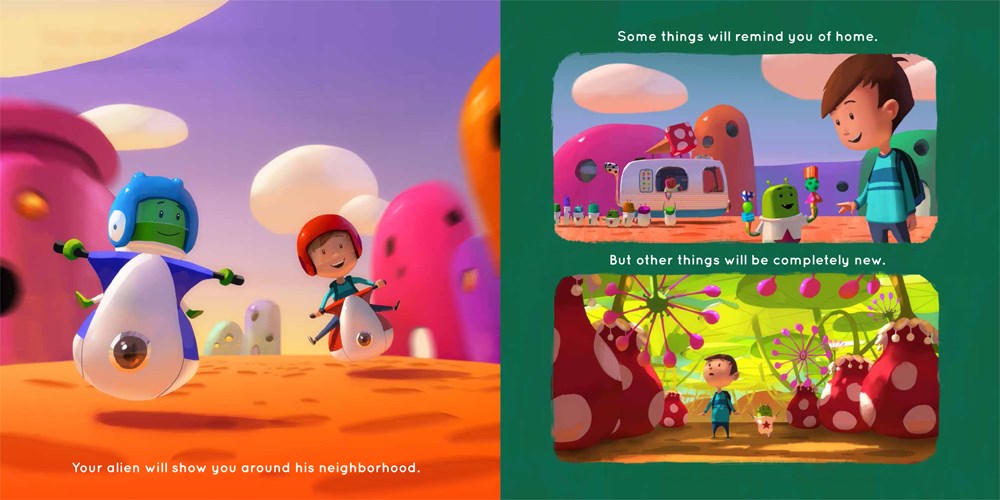
Review: I definitely recommend checking out the first book, Your Alien, and our review of it because it really does point out a lot of what made me definitely have to review the second book, and the second book did not disappoint. The theme of friendship and perspective rings true in the sequel as well but what I love the most about the narrator and his alien is the true friendship they have! They are an example of being able to be friends, true friends, without changing who you really are. And I am so in awe of the illustrations. Goro Fujita brings the story to life in such a fun and colorful yet realistic way!

Teachers’ Tools for Navigation: As we mentioned in the first book’s review, the point of view of this text is so unique! Tammi Sauer uses 2nd person point of view to bring the reader literally into the story and makes them part of it. Usually in elementary school when point of view is taught, only 1st and 3rd person are taught, but Your Alien and Your Alien Returns would give teachers away to show what 2nd person is and how it can be utilized in narrative form.

Discussion Questions: What emotions did the boy go through from the beginning to the end of the book?; How did the alien help the boy feel better when he was feeling left out?; How does the author’s choice of 2nd person POV change how the story experience is?; If you were going to retell the story like the narrator does for his parents at the end, how would you tell it?

Flagged Passages: 

your-alien-returns-spread

Read This If You Loved: Your Alien by Tammi Sauer,  Faraway Friends by Russ Cox, Boy + Bot by Ame Dyckman, Life on Mars by Jon Agee

Recommended For:

  readaloudbuttonsmall classroomlibrarybuttonsmall

Giveaway!

a Rafflecopter giveaway

Kellee Signature

**Thank you to Lauren at Sterling for providing a copy for review!**

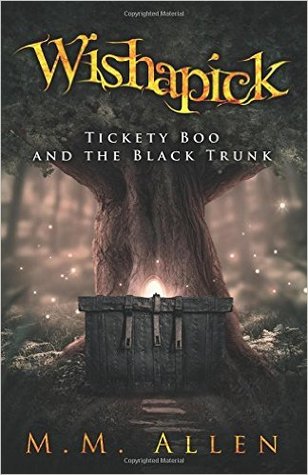
Wishapick: Tickety Boo and the Black Trunk by M.M. Allen

Share

wishapick

Wishapick: Tickety Book and the Black Trunk
Author: M.M. Allen
Published June 16th, 2015 by CreateSpace

Summary: Darkness. Utter blackness. Was this why his mother had refused to let Jack unlock his father’s old trunk? It had been two years since his dad had died, and all Jack could think about was examining whatever treasures were stored inside the beloved trunk. But when he finally lifted the lid, he didn’t just fall in—he fell through it into a pit of rattlesnakes!

Trying to recall his mother’s stories about “the Breath of All Good Things”—anything to shed light on his current situation—Jack wishes he’d paid better attention rather than mock the tales as childish myths…and that he’d waited to enter the trunk with his sister, Lilly, so they could at least face this together.

Like L. Frank Baum’s Oz and C. S. Lewis’s Narnia, M. M. Allen brings to life the fantastical world of Wishapick—a land of courageous animals ruled by a cruel rattlesnake king who has condemned the villagers to live without light. Chosen as the reluctant hero to save the villagers, Jack must face terrifying creatures and overwhelming odds if he wants to help his new friends—and return home himself.

Be sure to check out the companion music CD, Wishapick, for purchase or download from http://deborahwynne.com/

Review: Wishapick is a fun introduction to the world of fantasy reading, and I think a lot of young readers will enjoy Jack’s story and will find themselves wanting to read more fantastical stories. The summary compares the story to Oz and Narnia, but I actually compare it more to Wind in the Willows and other anthropomorphic stories like Redwall. I also think fans of Spiderwick Chronicles will like the adventure. I am also a big fan of a multi-point of view story when done well, and I liked how the author used Jack and Lilly to tell the story because it allowed us to see all sides of the adventure. 

In addition to Jack’s story, the book has a companion CD which brings out some of the mood and tones that the story carries.

Teachers’ Tools for Navigation: Wishapick will be a wonderful addition to any classroom, school, or home library–anywhere the right readers will find it.

Discussion Questions: What character trait did Jack have at the beginning of the book that made him not able to save Wishapick right away?; How did Lilly’s inclusion of the story affect the adventure?; Why did the author choose to switch between points of view?; How does the music help with your interpretation of the story?

Flagged Passages: “He expected his feet to land on the floor of the trunk, but he found himself in a free fall. The lid of the trunk slammed shut above him. The blackness closed in, and the tiny lights he had seen when he first peered into the trunk were gone. He frantically kicked his legs and clutched desperately at the air with his hands. His chest felt tight as a drum, so tight he could barely catch his breath. A groan of despair erupted inside of him. He waved his arms about, trying to slow his fall. As he thundered downward, he felt something with his fingertips, like dirt–no, it was slimy, maybe mud?” (p. 6)

Read This If You Loved: The Spiderwick Chronicles by Holly Black, Wind in the Willows by Kenneth Grahame

Recommended For:

classroomlibrarybuttonsmall

Kellee Signature