Highly Illogical Behavior by John Corey Whaley

Share

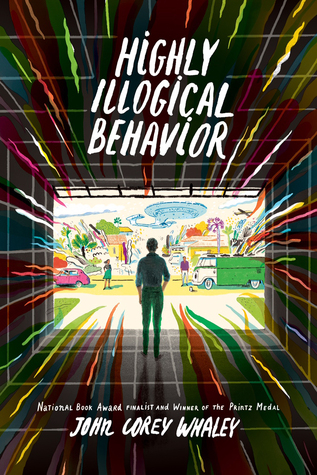
Highly Illogical Behavior
Author: John Corey Whaley
Published: May 10, 2016 by Dial

Summary: Sixteen-year-old Solomon is agoraphobic. He hasn’t left the house in three years, which is fine by him.

Ambitious Lisa desperately wants to get into the second-best psychology program for college (she’s being realistic). But is ambition alone enough to get her in?

Enter Lisa.

Determined to “fix” Sol, Lisa steps into his world, along with her charming boyfriend, Clark, and soon the three form an unexpected bond. But, as Lisa learns more about Sol and he and Clark grow closer and closer, the walls they’ve built around themselves start to collapse and their friendships threaten to do the same.

Ricki’s Review: I didn’t expect this book to hit me quite as hard as it did. The summary was compelling, and I enjoyed reading the first few chapters, and then I became personally invested in the characters’ lives. There are many complex emotions within this text. Because of the alternating perspectives, I’d be rooting for Lisa in a chapter and then feel like a jerk because I was betraying Solomon. And then I’d wonder if rooting for Lisa meant that I was also rooting for Solomon, in a way. This book makes readers question their values and consider ethics. I’ll be thinking about this one for quite some time.

Two other things I love about this book: 1. Solomon’s parents are great! I love when a YA book features good parents! 2. Sexuality is discussed in the book, but it isn’t the only (or main) feature of the book. This goes along with my belief that books that feature discussions about sexuality need not be purely focused on sexuality.

Teacher’s Tools for Navigation: I am a big advocate for literature circles that consider mental health. I think that placing texts like these in conversation allows us to consider the complexity of mental health issues. Some great texts to include in these literature circles follow: Dr. Bird’s Advice for Sad Poets by Evan Roskos, Forgive Me, Leonard Peacock by Matthew Quick, It’s Kind of a Funny Story by Ned Vizzini, The Perks of Being a Wallflower by Stephen Chbosky, Twisted by Laurie Halse Anderson, Everybody Sees the Ants by A.S. King, and 13 Reasons Why by Jay Asher. A discussion of these titles would foster incredibly rich discussions about phobias, depression, anxiety, and suicide. In my opinion, we must have these conversations with our students.

Discussion Questions: Do you think that Lisa “did the right thing” throughout the text? Were all of her decisions selfish, or could some of them be considered simultaneously selfless? Can a decision be selfish and selfless at the same time?

We Flagged: “We’re just floating in space trying to figure out what it means to be human.”

Read This If You Loved: (Many of these are listed above.) Dr. Bird’s Advice for Sad Poets by Evan Roskos, Forgive Me, Leonard Peacock by Matthew Quick, It’s Kind of a Funny Story by Ned Vizzini, The Perks of Being a Wallflower by Stephen Chbosky, Twisted by Laurie Halse Anderson, Everybody Sees the Ants by A.S. King, Reality Boy by A.S. King, Dear Life, You Suck by Scott Blagden, 13 Reasons Why by Jay Asher

Recommended For:

 closereadinganalysisbuttonsmall litcirclesbuttonsmall classroomlibrarybuttonsmall

RickiSig

The Fourteenth Goldfish by Jennifer L. Holm

Share

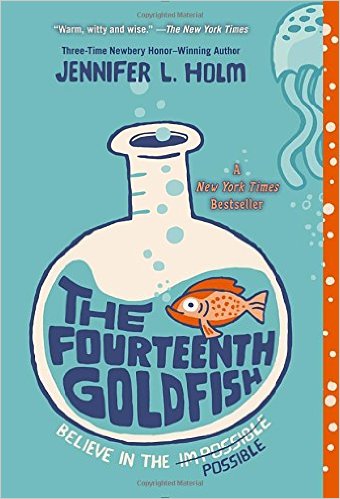
The Fourteenth Goldfish
Author: Jennifer L. Holm
Published: April 5, 2016 by Yearling

A Guest Review by Kelsey Iwanicki

Summary: The Fourteenth Goldfish follows the story of Ellie, an 11-year-old girl, who is currently struggling to find her passion, especially following the gradual drop off with her one and only friend, Brianna. However, everything changes when her mother brings home a quirky and crabby 13-year-old boy, Melvin. Ellie notices striking similarities between Melvin and her seventy-something year-old grandfather until he comes clean and tells her that they are in fact the same person. Melvin has worked on developing a drug to reverse the signs of aging, which has successfully worked on himself.

As Ellie and Melvin get closer, they also form an unlikely friendship with a goth student, Raj. Together they give Melvin advice about being a teenager, such as giving him acne medicine and hair elastics. They also help Melvin eventually, after a few failed attempts, steal the same compound that reversed his age. Melvin’s original plan was to steal the gene so he could share it with the world and receive the Nobel Peace Prize. However, Ellie persuaded him not to on the grounds of moral ethics and how scientific impacts can be both positive and negative. Due to this, Melvin flushes the compound down the drain and starts to tour the country. Thanks to her time with her grandfather, Ellie is able to discover his passion in science and also gain a few friends along the way, Raj and Momo.

Review: What I liked most about this book was its quirkiness, mostly exemplified through Melvin. Although the relationship between Ellie and Melvin is untraditional, you can also get glimpses of a typical relationship between a grandfather and granddaughter is like, one that isn’t usually written about. The majority of characters are nontraditional, such as Raj, who is explicitly written as goth; Ellie, a girl scientist (although this is becoming more popular, usually boys are the ones in the STEM fields); and Melvin, as a grumpy 13-year-old.

What I didn’t like about the book was the build-up. Although they failed multiple times at stealing the compound, there was no suspense for when Melvin actually succeeded. Rather, he just came home one day with it. The climax actually was when Ellie had a self-realization that science has both positives and negatives, which honestly was kind of a let down because the plot had focused around getting the compound from the lab. Ultimately, it was a good theme because Ellie realizes there are good and bad things with any passion.

All in all, I did like the book, I think it could appeal to students who are interested in science and realistic fiction books.

Teachers’ Tools for Navigation: This book should definitely be included in a classroom library for independent reading because I think it would appeal for students because it is a little quirky and has some interesting characters. It could also prompt some interesting discussions for literature circles because students could discuss the ethics behind using a compound to reverse aging.

A teacher could also use it as a read aloud for a few reasons. It would be interesting to consider the other perspectives of characters such as Melvin or Melissa, Ellie’s mother. Additionally, they could talk about the character traits and what makes Melvin and Ellie such strong characters. Or, they could talk about science and ethics behind what scientists release.

Discussion Questions: If you had a compound that could reverse aging, would you take it? Why or why not?; If you discovered a compound that could reverse aging, would you deliver it to the public? Why or why not?; What do you think will happen to Ellie and Brianna’s friendship? Ellie and Momo’s?; What do you think the side affects are from taking the compound? / What do you think happened to Melvin?; Put yourself in Ellie’s shoes, how would you feel if your grandfather attended the same school as you?; What is the importance of the fourteenth goldfish?

Flagged Passage: “Average people just give up at the obstacles we face every day. Scientists fail again and again and again. Sometimes for our whole lives. But we don’t give up, because we want to solve the puzzle” (p. 47).

Read This If You Loved: El Deafo by Cece Bell; Fish in a Tree by Lynda Mullaly Hunt; Out of My Mind by Sharon Draper; Rain Reign by Ann M. Martin; Unusual Chickens for the Exceptional Poultry Farmer by Kelly Jones

Recommended For:
 classroomlibrarybuttonsmall

Thank you, Kelsey!

RickiSig

Blog Tour with Review and Giveaway!: Posted by John David Anderson

Share

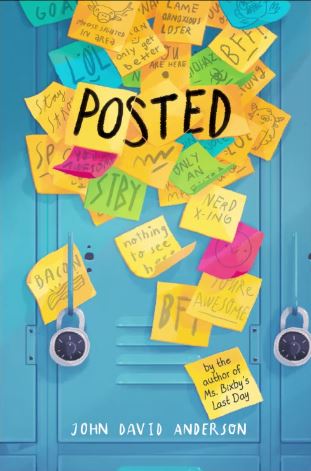
Posted
Author: John David Anderson
Published May 2nd, 2017 by Walden Pond Press

Summary: From John David Anderson, author of the acclaimed Ms. Bixby’s Last Day, comes a humorous, poignant, and original contemporary story about bullying, broken friendships, and the failures of communication between kids. In middle school, words aren’t just words. They can be weapons. They can be gifts. The right words can win you friends or make you enemies. They can come back to haunt you. Sometimes they can change things forever.

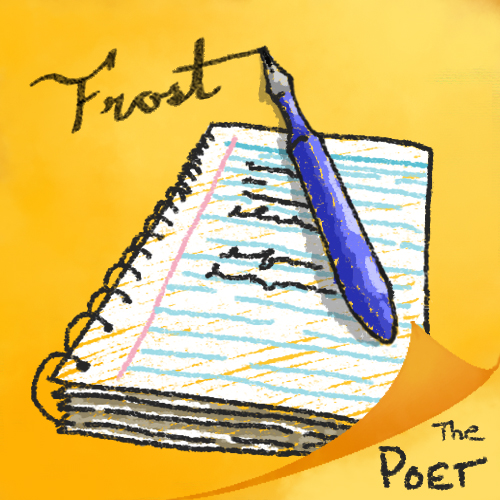
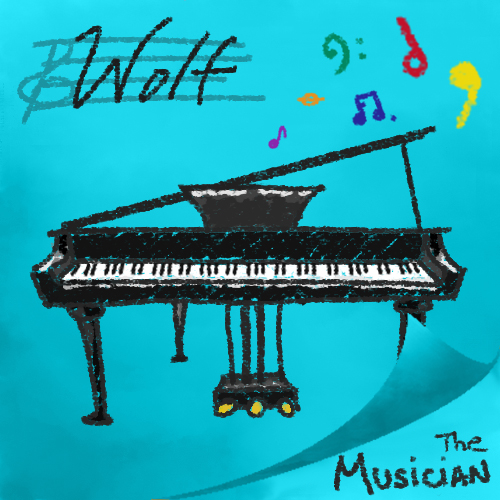
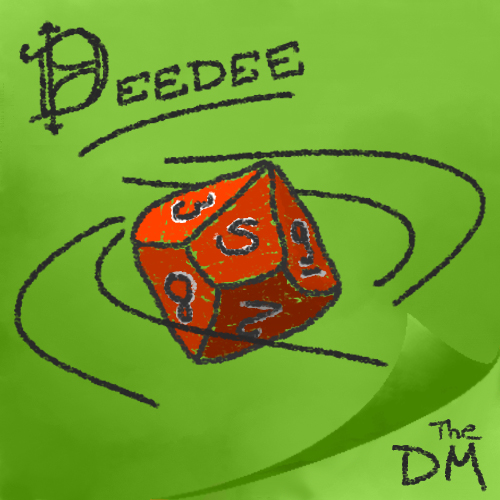
When cell phones are banned at Branton Middle School, Frost and his friends Deedee, Wolf, and Bench come up with a new way to communicate: leaving sticky notes for each other all around the school. It catches on, and soon all the kids in school are leaving notes—though for every kind and friendly one, there is a cutting and cruel one as well.

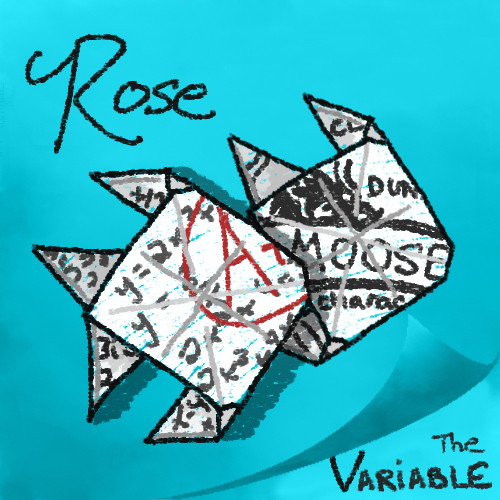
In the middle of this, a new girl named Rose arrives at school and sits at Frost’s lunch table. Rose is not like anyone else at Branton Middle School, and it’s clear that the close circle of friends Frost has made for himself won’t easily hold another. As the sticky-note war escalates, and the pressure to choose sides mounts, Frost soon realizes that after this year, nothing will ever be the same.

Critical Praise: 

“Written with understated humor and fine-tuned perception, Frost’s first-person narrative offers a riveting story as well as an uncomfortably realistic picture of middle school social dynamics.” — Booklist (starred review)

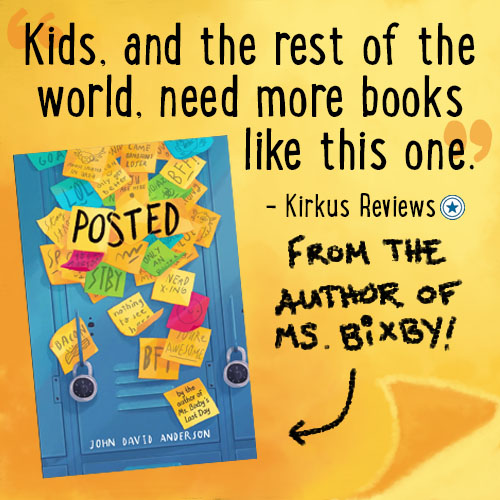
“Anderson dives into the world of middle school with a clear sense of how it works and what it needs. Kids, and the rest of the world, need more books like this one.” — Kirkus Reviews (starred review)

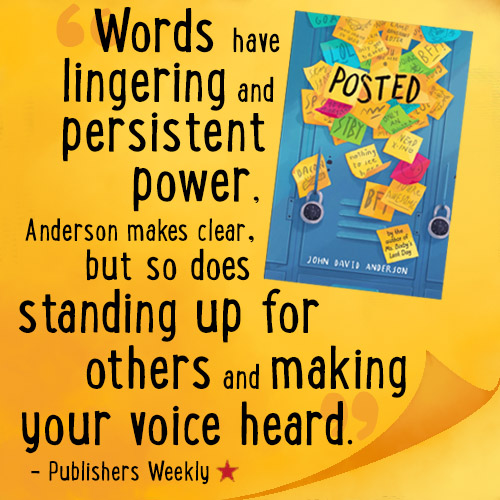
“Anderson captures the tumultuous joys and pains of middle school with honesty, creating characters with whom readers will find common ground and insight. Words have lingering and persistent power, Anderson makes clear, but so does standing up for others and making one’s voice heard.” — Publishers Weekly (starred review)

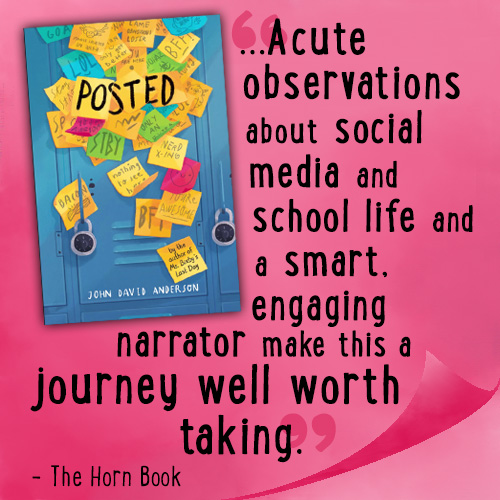
“Acute observations about social media and school life and a smart, engaging narrator make this a journey well worth taking. Readers might even want some Post-it notes to mark the good parts.” — The Horn Book

About the Author: John David Anderson is the author of Ms. Bixby’s Last Day, Sidekicked, Minion, and The Dungeoneers. A dedicated root beer connoisseur and chocolate fiend, he lives with his wife, two kids, and perpetually whiny cat in Indianapolis, Indiana. You can visit him online at www.johndavidanderson.org

Review: First, I must start with stating my awe with Mr. Anderson. I have read four of his five books and each is stellar. But what really makes him stand out as an exemplar author to me is that he has tackled three different genres in his five books and each one was just as good as the others. Ms. Bixby and Posted are realistic fiction, Sidekicked and Minion are superhero sci-fi, and Dungeoneers is high fantasy. How impressive! Now onto my review of Posted

There are books that I read that just feel true to me, and Posted fits that. As a middle school teacher, I could picture all of the characters as true middle school students and know that so many readers will connect with someone in the book. Although some of the adults in the book fit a typecast of teachers (they are probably pretty realistic representations of how middle schoolers see some teachers though), they were needed to propel the story. And Mr. Sword is anything but a stereotype and one of those teachers that I just love in books because he cares! I also felt that the bullying represented is, sadly, probably a pretty true representation. Middle school really is all about finding your tribe. So many kids are trying to find their identity and are influenced by so much which sometimes leads to mean kids; however, there are really awesome middle schoolers as well which you can also see in this book. I love these middle schoolers (Frost, Rose, Wolf, Deedee, and even Bench), and I know you and any kid you share this book with will as well. 

What I think makes this book stand out, though, is the theme that words can hurt. They are powerful and can change lives. They can be used for good or evil.

Teachers’ Tools for Navigation: Much of what Mr. Sword does in his class is easily transferable to a classroom. Throughout the book, he is teaching Julius Caesar so quotes/discussions throughout could definitely be used in conjunction with a Julius Caesar lesson. I, personally, love his aphorism activity. It reminded me a bit of the precept activity in Wonder (and they could easily work together if you do a precept activity). Mr. Sword has students create their ow aphorism to share with their students. I think this, like Mr. Sword says, helps students realize that “all of us have something meaningful to share.” Frost also talks about poetry throughout the book, his poetry and Robert Frost, and these sections could be used to inspire students when it comes to poetry.

Discussion Questions: Have you ever had a nickname? Did you like it or not? Out of all the nicknames, one seems to be more negative than the others–which one is it? Do you think the character likes his nickname?; Do you think Deedee started the war? Should he blame himself?; Do you agree with what Wolf’s parents decided?; How did Rose change everything? Do you think everything would have changed without her moving to the school?

Flagged Passages: “Words accumulate. And once they’re free, there’s no taking them back.

You can do an awful lot of damage with a handful of words. You can destroy friendships. You can end a marriage. You can start a war. Some words can break you to pieces.

But that’s not all. Words can be beautiful. They can make you feel things you’ve never felt before. Gather enough of them and sometimes they can stick those same pieces back together.” (p. 342)

Characters: 

Read This If You Loved: Save Me a Seat by Sarah Weeks & Gita Varadarajan, Stargirl by Jerry Spinelli, Zack De La Cruz by Jeff AndersonFish in a Tree by Lynda Mullaly HuntWarp Speed by Lisa Yee, Schooled by Gordon Korman, Life in Outer Space by Melissa Keil, Freak the Mighty by Rodman Philbrick, Loser by Jerry Spinelli

Recommended For:

Don’t miss out on any blog tour stops!

April 17           Librarian’s Quest

Walden Media Tumblr

April 18           Nerdy Book Club

April 19           For Those About to Mock

April 20           Teach Mentor Texts

April 21           Unleashing Readers

April 22           Next Best Book

April 23           Bluestocking Thinking

April 24           Litcoach Lou

Book Monsters

April 25           Kirsti Call

April 26           Educate-Empower-Inspire-Teach

April 27           The Haunting of Orchid Forsythia

Ms Yingling Reads

April 28           Maria’s Mélange 

Novel Novice

April 29           The Hiding Spot

April 30           This Kid Reviews Books


Giveaway!: 

a Rafflecopter giveaway

Top Ten Tuesday: Ten Reasons Why Kellee Loves Teaching Middle School

Share

top ten tuesday

Top Ten Tuesday is an original feature/weekly meme created at The Broke and the Bookish. The feature was created because The Broke and Bookish are particularly fond of lists (as are we!). Each week a new Top Ten list topic is given and bloggers can participate.

 Today’s Topic: Ten Reasons Why I Love Teaching Middle School

Kellee

1. They are trying to find their identity and are still moldable, so I feel like I can make a difference.

I love that I am part of these students’ lives during a very influential time. I know that elementary and high school are important as well, but I think it is iso important for kids between the ages of 11 and 14 to have positive influences in their life.

2. Middle grade books!

I love them! And I get a mix of picture books and young adult novels as well! Perfect!

3. Middle school is TOUGH, and I hope I can be a bright light in their days.

Think back to Middle School. Did you enjoy being 12? Most people say no, and most of us cannot think of a teacher who really helped brighten our days in middle school. I hope I can be that bright light that will help them remember this time in a positive way.

4. Teaching only 1 subject.

I love teaching reading. I have the ability to teach more subjects, but I love that I can just teach the one I am most passionate about.

5. The discussions we have over the world, books, or their life.

Middle school kids are so insightful, and I love the conversations we have. And I think sometimes no one listens to them, but they definitely have a voice and opinions and insight.

6. Working with teachers who are passionate about this age also (because only those who are passionate stay in MS).

Other people who are passionate about teaching are amazing to work with, but there is a special little niche in middle school for those of us who love this age. I adore working with these people.

7. Because middle school is a really fundamental time.
I’ve written a post before that showed how middle school really molded who I am today: https://www.unleashingreaders.com/?p=1625. This post and my time as a middle school teacher really show me that so much of who we become is found during the years of middle school

8. The inquisitiveness of elementary age kids + the ability of high school = middle school

I always joke that elementary school kids are too short for me to teach (they are out of my peripheral vision) and high schools are too jaded for me to teach, but all jokes aside, middle schoolers really do embody so much of what makes teaching fun. They are young enough that they are still open to learning and inquiry, but they are old enough that they think for themselves and have vast knowledge.

9. Because middle schoolers are still kids.

But they are still just kids!

10. The hours 😉 We’re 8:30-4. I am not a morning person, so that is really as early as I would like to go.

Self explanatory 🙂

Why do you love teaching/working with the age you do?

Signature

Star-Crossed by Barbara Dee

Share

Star-Crossed
Author: Barbara Dee
Published March 14th, 2017 by Aladdin

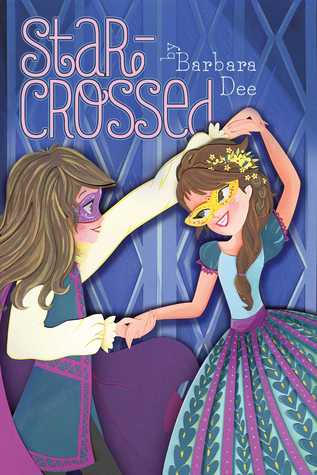
Summary: Mattie, a star student and passionate reader, is delighted when her English teacher announces the eighth grade will be staging Romeo and Juliet. And she is even more excited when, after a series of events, she finds herself playing Romeo, opposite Gemma Braithwaite’s Juliet. Gemma, the new girl at school, is brilliant, pretty, outgoing—and, if all that wasn’t enough: British.

As the cast prepares for opening night, Mattie finds herself growing increasingly attracted to Gemma and confused, since, just days before, she had found herself crushing on a boy named Elijah. Is it possible to have a crush on both boys AND girls? If that wasn’t enough to deal with, things backstage at the production are starting to rival any Shakespearean drama! In this sweet and funny look at the complicated nature of middle school romance, Mattie learns how to be the lead player in her own life.

Review: I really, really, really enjoyed this book. First, it made me like Shakespeare more than I did before. Second, I think that it dealt with sexual identity in a gentle and realistic manner. 

I must admit that Shakespeare is a fear of mine because I just never have felt like I got him the way I should as an English Lit major and English teacher; however, it is what it is. When I see Shakespeare plays, I am always transported into the story and understand what all the hoopla is about, but reading it cold, I just never get it. I worried that a story about a middle school putting on Romeo and Juliet would let the Shakespeare bog it down, but it did the opposite–it helped this story be what it is. The reader learns to love Shakespeare as Mattie learns to love him. And since we are in class and at rehearsals with Mattie, we also get to be part of some of the lessons about the play thus helping the reader understand the text as well as Mattie is supposed to. It was brilliantly intertwined.

Mattie’s feelings toward Gemma are obvious to the reader before Mattie even realizes what they are, but that felt truly realistic to me because if you are someone who has already crushed on boys, feeling the same way towards a girl could be confusing, but Dee never makes it seem like what Mattie seems is anything but natural which is beautiful to see in a middle grade novel.

Teachers’ Tools for Navigation: In addition to being in classroom, school, and public libraries, sections of the story could definitely be used in conjunction to a reading of Romeo and Juliet. Some of the discussions of the play, both during Mattie’s English class and during play rehearsals, would be great jumping off points for similar discussions in the classroom.

Discussion Questions: What clues did Dee include that Mattie’s feelings for Gemma were deeper than she first realized?; If your class was putting on Romeo and Juliet, who do you think would be best to play each character? Explain.; What allusions to Romeo and Juliet did Dee include within the text?; Have you ever read a text that affected you the way Romeo and Juliet effected Mattie?

Flagged Passages: “But that afternoon, when I got home from Verona’s and locked myself in my bedroom to read Romeo and Juliet, something happened to me. It was kind of like a thunderbolt, I guess you could call it. Because as I was reading, I stared speaking the words out loud, feeling the characters’ emotions as if they were mind. I didn’t understand every word, and a few times I skimmed when certain characters (specifically, Mercutio and Friar Lawrench) got speechy. But the idea that Romeo and Juliet had a secret love they had to hid from their families, even from their best friends–it was a story so real I could almost see it happening in front of me.

And wen I got to the end, when Juliet discovers that Romeo is dead, and kisses his lips, and they’re still warm, I did the whole scene in front of the mirror, including the kiss. My eyes had actual tears, and I thought: It’s like this play is happening TO me. Inside me. 

I wanted to own it. I wanted to eat it, as if it were chocolate layer cake.” (p. 68-69)

Read This If You Love: Shakespeare, Middle grade novels about school life and identity 

Recommended For:

   classroomlibrarybuttonsmall

**Thank you to Simon & Schuster for providing a copy of the book and to Barbara Dee for reaching out to me!**

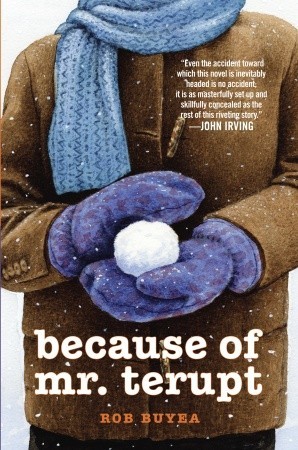
Because of Mr. Terupt by Rob Buyea

Share

Because of Mr. Terupt
Author: Rob Buyea
Published October 12, 2010 by Delacorte

A Guest Review by Julia Kipphut

Summary: Mr. Terupt’s fifth grade class at Snow Hill School is comprised of various types of students, some including: a new student, a popular girl, a bully, and a troublemaker. Their teacher, Mr. Terupt who is passionate and energetic, strives to engage his students and instill a sense of community amongst his class. Unfortunately, one day, a snowball fight goes awry and leaves Mr. Terupt in a coma. His class is rattled and must learn to work together, be kind, and hope for Mr. Terupt’s recovery.

Review: This book includes a variety of characters, each owning their own identity and personality. Each chapter is written from a different character’s perspective, making for a fluid and interesting read. They are relatable for children and allow them to recognize themselves in each character. Each character evolves in the story and shows tremendous growth, proving the rich development of the people in this book. The message of community and forgiveness is nicely intertwined in the story and proves that it is always better to choose kindness. The theme of this book is positive and motivational. 

Teachers’ Tools for Navigation: Because of Mr. Terupt serves as a great reader aloud for upper elementary school students. 4th and 5th graders who are struggling with their identity and place in a classroom community can learn the importance of compassion. Students can learn to embrace individual differences for a common goal or outcome, mirroring the characters in this book. Additionally, this book allows students to study character development throughout the story; each character evolves- allowing for effective classroom discussion.

Because of each character of this book is written from a different character’s perspective, students are able to study point of view and consider the influence each chapter has on the story as a whole. Students are able to learn about each character in depth and can even use literature circles to each study a character for analysis.

Discussion Questions: How might the story be different if the snowball accident did not happen?; What do you think the author’s purpose or message was for this story?; Why do you think the author chose to write this story from different characters points of views? Do you think this was effective?

Book Trailer: 

Read This If You Loved: Out of My Mind by Sharon Draper; Wonder by R. J. Palacio

Recommended For:

  litcirclesbuttonsmall  classroomlibrarybuttonsmall

Thank you, Julia!

RickiSig

Ghost by Jason Reynolds

Share

ghost

Ghost
Author: Jason Reynolds
Published: August 30, 2016 byAtheneum/Caitlyn Dlouhy Books

GoodReads Summary: Running. That’s all that Ghost (real name Castle Cranshaw) has ever known. But never for a track team. Nope, his game has always been ball. But when Ghost impulsively challenges an elite sprinter to a race — and wins — the Olympic medalist track coach sees he has something: crazy natural talent. Thing is, Ghost has something else: a lot of anger, and a past that he is trying to outrun. Can Ghost harness his raw talent for speed and meld with the team, or will his past finally catch up to him?

Ricki’s Review: I will read anything by Jason Reynolds. He captures the adolescent voice perfectly. Ghost reminds me of so many kids that I taught, and if I was still teaching, I would be thrilled to bring this book to school to recommend it to dozens of my students. Luckily, I can now share it with preservice teachers! I am very excited that this book will be one installment of a series of companion texts. It doesn’t end with a hook, which I am grateful for, and I believe the next book will feature a different character. There are so many great lessons that emerge from this story. Teachers would have much to discuss in their classrooms. I highly, highly recommend this text. It belongs in schools and in the hands of kids.

Kellee’s Review: This book is one of those books that I don’t like to tell people what it is about because any summary just doesn’t capture the brilliance of the characterization and story. However, through the word-of-mouth compliments of middle schoolers, it has become a favorite book for many of our school’s students and even won our HCMS Mock Newbery Award! I think it is Jason Reynolds’s way of connecting with adolescent readers through a true voice and circumstances that so many of them will connect to.

Teachers’ Tools for Navigation: We recommend using this book to teach characterization. Ghost reflects the qualities of a human—he has good and bad qualities and makes some mistakes. Students might list all of the lessons that Ghost learns through the story. They could even try to map the lessons he learns in a visual diagram of their choice.

Discussion Questions: How does Ghost’s past haunt him? Does it shape who he is?; What poor choices does Ghost make? Why does he make the choices, and are they justified?; How does the track team act as an unconventional family for Ghost?

Flagged Passage: “You can’t run away from who you are, but what you can do is run toward who you want to be.”

Read This If You Loved:  The Boy in the Black Suit by Jason Reynolds; The Running Dream by Wendelin Van Draanen; Boy21 by Matthew Quick; Ball Don’t Lie by Matt de la Peña

Recommended For:

readaloudbuttonsmall litcirclesbuttonsmall closereadinganalysisbuttonsmall classroomlibrarybuttonsmall

RickiSig andKellee Signature