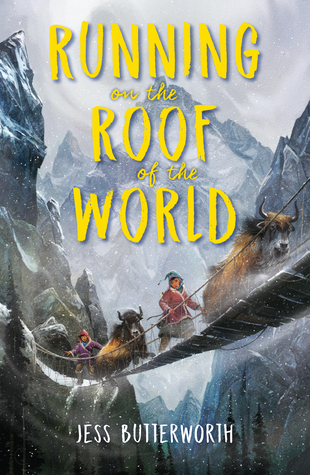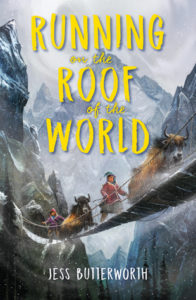
Running on the Roof of the World by Jess Butterworth

Share

Running on the Roof of the World
Author: Jess Butterworth
Published May 1st, 2018 by Algonquin Young Readers

Summary: A story of adventure, survival, courage, and hope, set in the vivid Himalayan landscape of Tibet and India.

Tash lives in Tibet, where as a practicing Buddhist she must follow many rules to avoid the wrath of the occupying Chinese soldiers. Life remains peaceful as long as Tash, her family, and their community hide their religion and don’t mention its leader, the Dalai Lama.

The quiet is ruptured when a man publicly sets himself on fire to protest the occupation. In the crackdown that follows, soldiers break into Tash’s house and seize her parents. Tash barely escapes, and soon she and her best friend, Sam, along with two borrowed yaks, flee across the mountains, where they face blizzards, hunger, a treacherous landscape, and the constant threat of capture. It’s a long, dangerous trip to the Indian border and safety—and not all will make it there.

This action-packed novel tells a story of courage, hope, and the powerful will to survive, even in the most desperate circumstances.

About the Author [from her website]: As a child I wanted to be many things, including a vet and even David Attenborough, but throughout all of those ideas, I always wanted to write. So I studied creative writing as a BA(hons) at Bath Spa University, where I won the Writing for Young People Prize in 2011. I then completed a Master’s in Writing for Young People, also at Bath Spa University, and graduated in 2015.

My first two novels, RUNNING ON THE ROOF OF THE WORLD and WHEN THE MOUNTAINS ROARED are set in the Himalayas. My family on my Dad’s side has lived in India for seven generations and I spent much of my childhood in India too. My father was a trek leader and we lived on a remote foothill above Dharamsala, where the Dalai Lama and a Tibetan community in exile is settled. My mother’s family lived in London, where I was born. She was off on her own adventure, travelling in India, when she met my dad. Growing up, I would always write about the Himalayas when I was in the UK and missing the mountains or my dad and grandparents who still lived there.

Although RUNNING ON THE ROOF OF THE WORLD is fiction, it is inspired by a journey that tens of thousands of Tibetans have braved. I wanted to write a story that is relevant to today and grounded in events, places and communities I care about deeply.

Now I live between Louisiana in the US and Frome in the UK, and you’ll often find me back in the Himalayas too.

Review: We all have knowledge gaps. I try to learn as much as I can about the world and others unlike me, and this story took me to Tibet and showed me a struggle happening that I was unaware of. While reading and since reading, I have spent hours reading about the history and current affairs of Tibet.

But other than smacking me in the face with this truth and taking place in a setting and from a point of view that is not often shared in middle grade and young adult novels, it also is a page-turning survival adventure. Tash and Sam must face a trek that hundreds of thousands have done, but they are doing it alone with only help from a few yaks and maybe some unexpected allies.

I included the author’s biography in her own words above because I think it is important to see that although this book may not be an own voices per se, it is written by someone who lived in the area and cares deeply about the people who live near the Himalayas.

Teachers’ Tools for Navigation: I would love to see this book and others from countries in other continents as part of a lit circle or in-class book club within middle school or high school classrooms to allow kids to see the world outside of their small area. Some other texts could be: Tiger Boy by Mitali Perkins, Rickshaw Girl by Mitali Perkins, Refugee by Alan Gratz, Diamond Boys by Michael Williams, Now is the Time for Running by Michael Williams, Golden Boy by Tara Sullivan, Serafina’s Promise by Ann E. Burg, Endangered by Eliot Schrefer, Son of a Gun by Anne de Graaf, Long Walk to Walter by Linda Sue Park, The Glass Collector by Anna Perera, Sold by Patricia McCormick, The Breadwinner by Deborah Ellis, Homeless Bird by Gloria Whelan, La Linea by Ann Jaramillo, and I am sure there are more that I just don’t know. In addition to the novels, students could read news articles about the current events that connect with what they read in their fiction novels.

Discussion Questions: 

  • Why do Tash and Sam have to leave Tibet?
  • What are Tash’s parents doing that is so dangerous?
  • What is the geography like between Tibet and India?
  • What religion is Tash and Sam if they are going to see the Dalai Lama?
  • How do the yaks impact the success or failure of Tash and Sam’s journey?
  • What did the message in the letter end up meaning?

Flagged Passages: “Chapter 17: Journey

Eve steps into a ditch and I slide forward, slamming into the hump above her shoulders.

‘Sorry, Eve,’ I mutter, shuffling back to find my balance.

Being a yak rider should run in my blood but my leg muscles ache from clinging on so tightly.

We approach the thick wire fence that surrounds the village. Two rocks stand to our right like giant guards.

Please let it be clear.

Sam dismounts. He moves slowly toward them, crushing the gravel under his boots.

‘There’s no one here!’ he shouts.

‘Is the fence still broken?’ I ask.

He nods and disappears between rocks with Bones.

I follow him. The rusty fence has bowed to the ground where the boulder fell and flattened it. The space between the rocks is just big enough to squeeze Eve through, though I have to tug at her harness to get her to move. As I step over the fence, my heart jumps.

We’re escaping.

Read This If You Love: Books about climing mountains like Peak and The Edge by Roland Smith, survival books like Orphan Island by Laurel Snyder, or books that expand your reading borders like the books listed above

Recommended For: 
classroomlibrarybuttonsmall 

Signature

**Thank you to Brooke at Algonquin for providing a copy for review!**

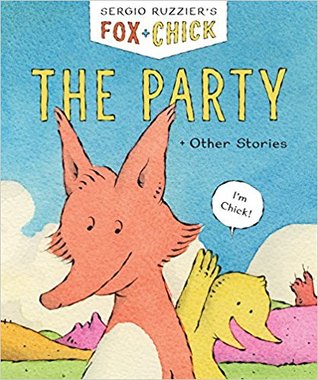
Teaching Guide with Activities and Discussion Questions for Fox + Chick: The Party and Other Stories by Sergio Ruzzier

Share

Fox + Chick: The Party and Other Stories
Author and Illustrator: Sergio Ruzzier
Published April 17th, 2018 by Chronicle Books

Summary: Fox and Chick don’t always agree. But Fox and Chick are always friends. With sly humor and companionable warmth, Sergio Ruzzier deftly captures the adventures of these two seemingly opposite friends. The luminous watercolor images showcased in comic-book panel form will entice emerging readers, while the spare text and airiness of the images make this early chapter book accessible to a picture book audience as well.

Teachers’ Tools for Navigation: Activities for The Party and Other Stories include:

How to Read a Graphic Novel

Reading a graphic novel differs from reading prose text because readers must infer everything outside of the dialogue they are given and what is presented in the illustrations.

First, using Fox + Chick discuss the differences with your class between a picture book, a chapter book, and a graphic novel. Make sure to point out the parts of a graphic novel like speech bubbles show what the characters are saying, panels (each square), and the gutter (the space between panels). Then discuss how to read a graphic novel (typically read left to right, top to bottom).

Extension activity: Discuss with students why an author would choose to write their story as a graphic novel versus a chapter book or picture book.

Then, to show how inferences have to be made between panels, use pages 2/3 to page 4. As a reader you can infer that Chick continued walking to the house shown on page 2/3 even though the illustrations don’t show each little step. Also, between the first two panels on page 4, the reader can infer that Chick had to wait a bit even though the panels don’t show it.

After reading the story, have students show how they use inferring to comprehend the story by:

K-1st: Retell the story including inferences made between panels and what the illustrations show.

2nd-3rd: Rewrite the story as a narrative including inferences made between panels and what the illustrations show.

Conflict and Resolution

Conflict is the problem with a story or part of a story while the resolution is how that problem is solved. In each of the chapters in Fox + Chick, there is a conflict and a resolution. Each chapter gives an opportunity to learn these narrative elements.

For chapter 1, “The Party,” as a class, determine the conflict and the resolution.

For chapter 2, “Good Soup,” have students determine the conflict and resolution in pairs.

For chapter 3, “Sit Still,” have students determine the conflict and resolution independently.

Character Traits

Character traits are all the aspects of a character’s behavior from how they act to what they think.

Before reading: As a class, list the character traits the students assume a fox and a chick are going to have. How will they act? What type of personality will they have? How are they going to interact with each other?

After reading: Independently or as a class, have students complete a character trait activity on each character. Have students answer the following questions then place their answers into a graphic organizer:

How did the character act in the story?

What feelings did the character portray in the story?

What words would you use to describe the character’s personality?

See the Teaching Guide Created by me (Kellee) for even more activities and discussion questions! 

You can also access the teaching guide through Chronicle’s website here.

Recommended For: 

readaloudbuttonsmall classroomlibrarybuttonsmall closereadinganalysisbuttonsmall

Kellee Signature

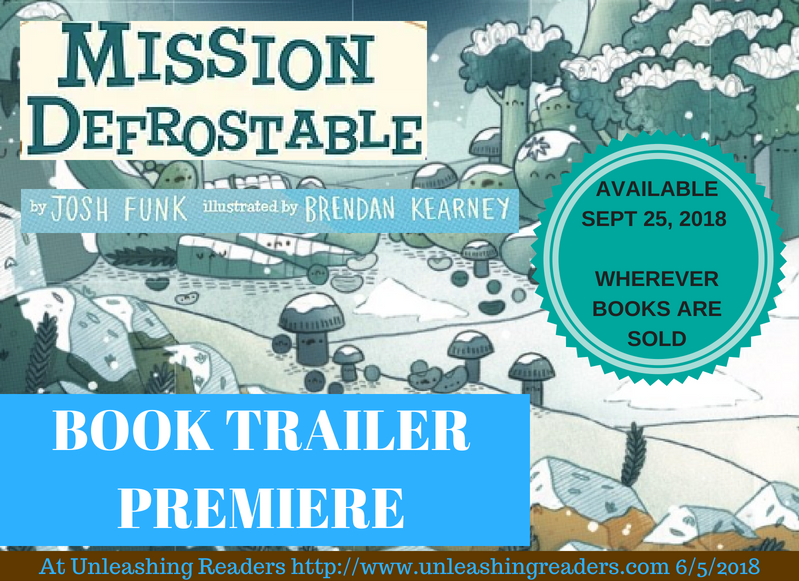
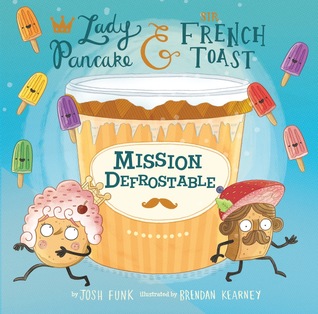
Mission Defrostable by Josh Funk BOOK TRAILER PREMIERE!!! (with Prediction Activity)

Share

We are honored to premiere the book trailer of one of our favorite authors, Josh Funk. Josh has made a huge mark in the field of children’s literature, and we are thrilled to share the book trailer for his third book in the Lady Pancake and Sir French Toast series (below).

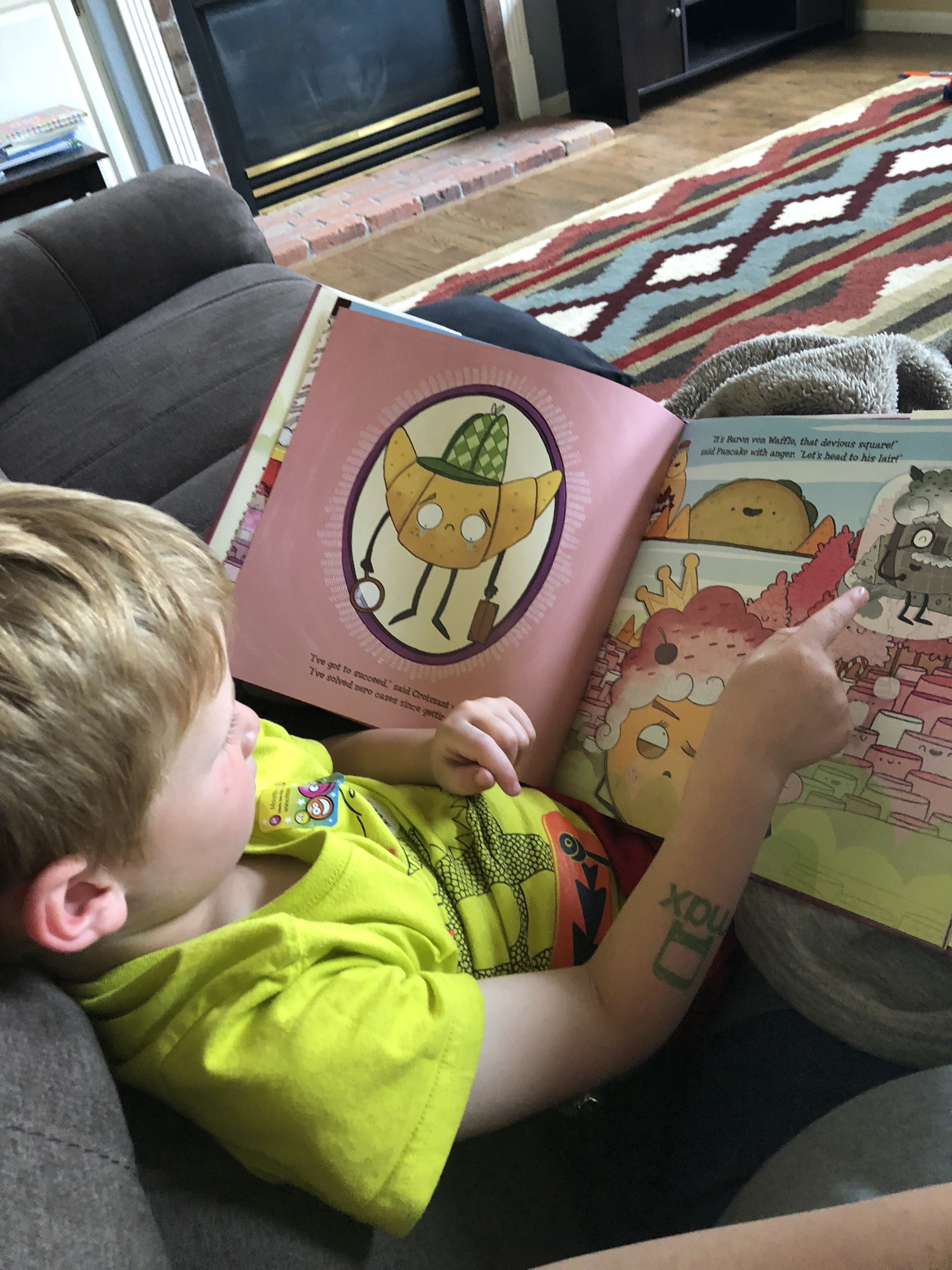
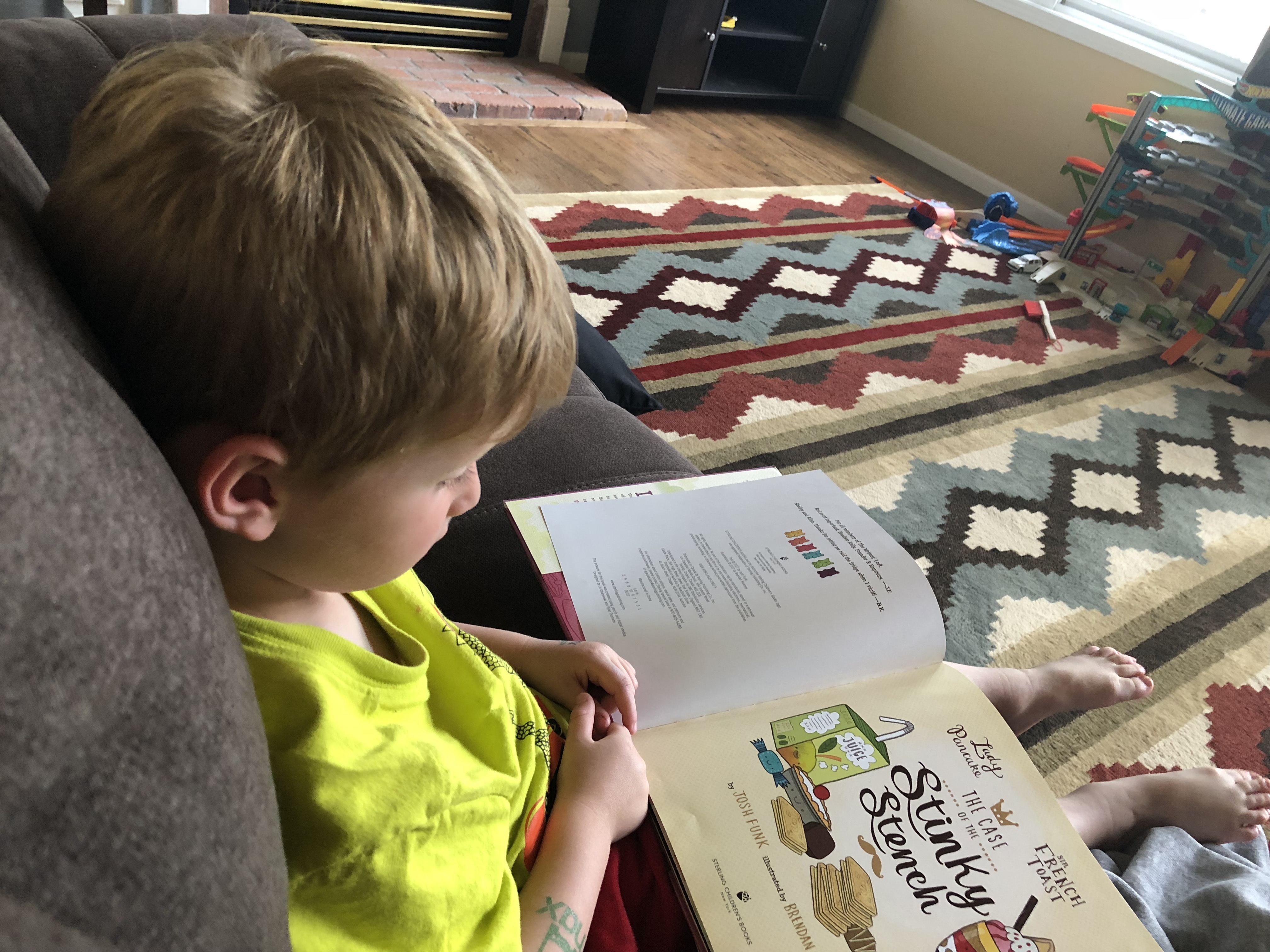
Not only is Josh a favorite of parents and teachers, he is a favorite of kids! Our sons are so, so excited for the new book in the series. As teacher moms, we thought it would be fun to build their anticipation and help them learn about making predictions. We invite you to have this same fun with your own children or students!

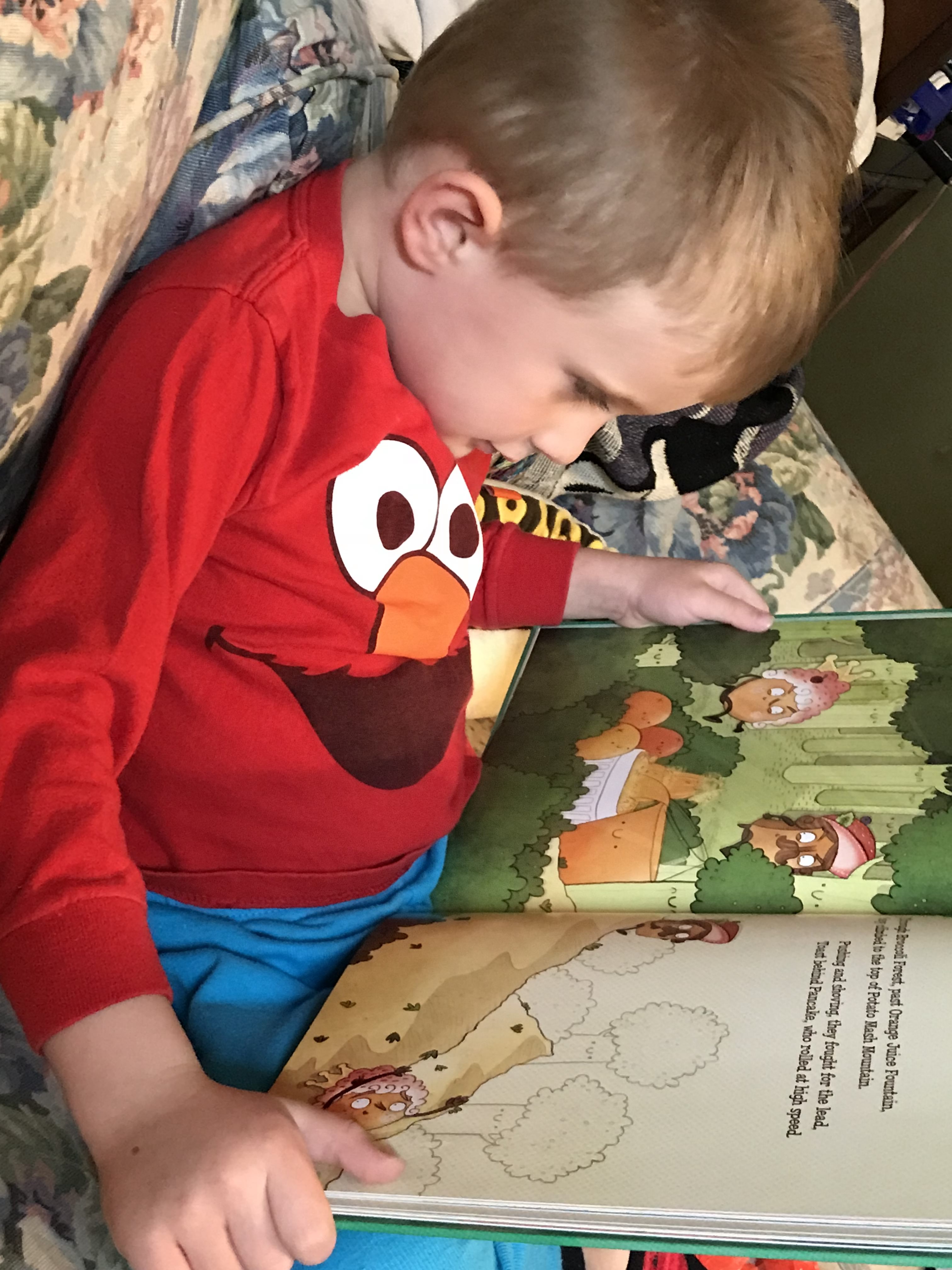
We asked Trent to review Lady Pancake and Sir French Toast (Book #1).

Warning: Trent’s review has a bit of a spoiler in it!!!

  • Trent’s Review: Lady Pancake and Sir French Toast were fighting. They both wanted syrup. The adventure through the refrigerator was silly. I liked the broccoli forest and jumping over the strawberry. But the awful waffle is the bad guy. Baron von Waffle makes me grumpy because I wouldn’t like if someone ate all of my food. I do like that they [Lady Pancake and Sir French Toast] didn’t fight eventually. And the rhymes were silly willy!

  • Kellee’s and Ricki’s Review with teachers’ tools, discussion questions, etc. can be found here.

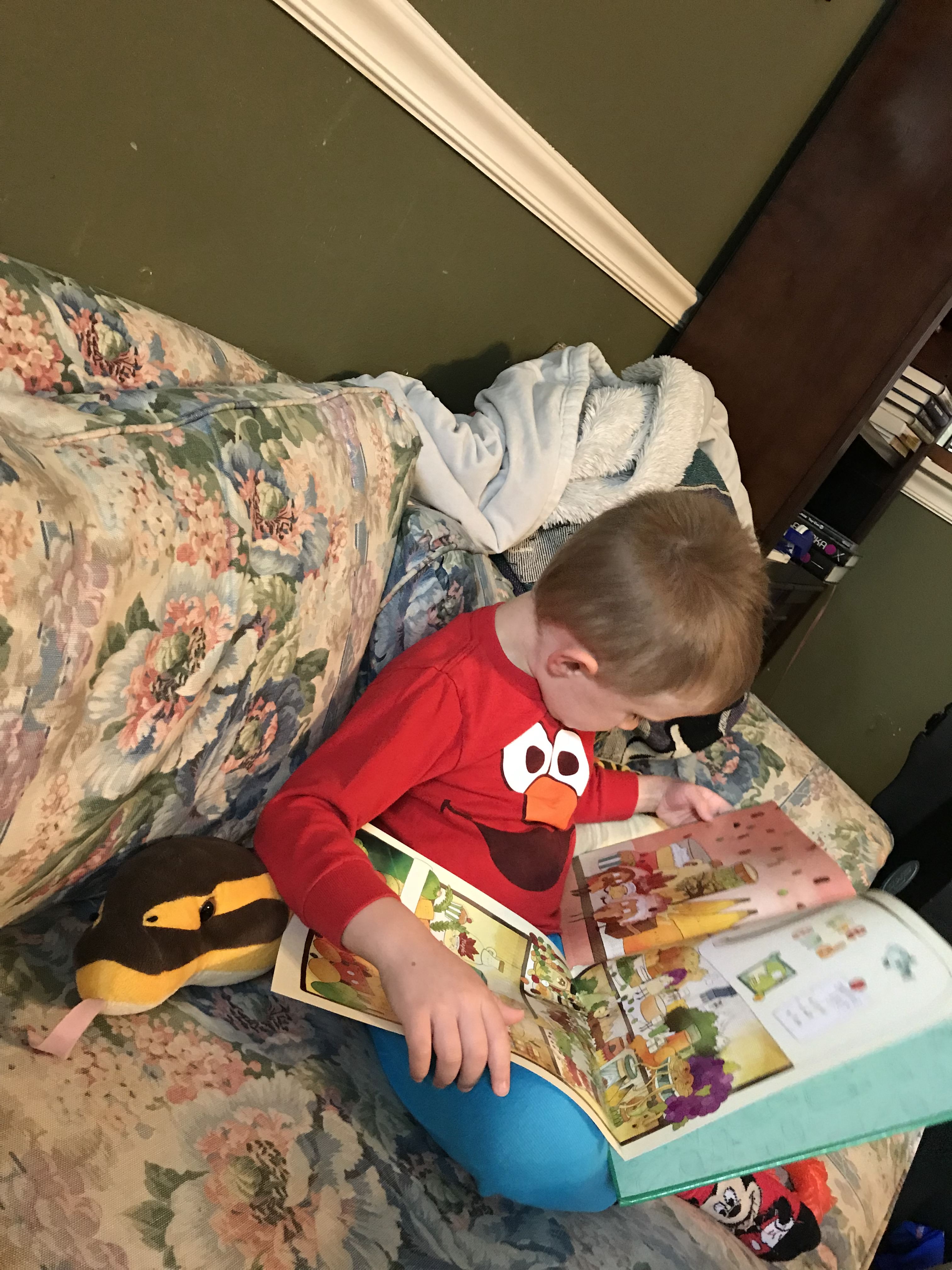
We asked Henry to review The Case of the Stinky Stench (Book #2).

Warning: Henry’s review has a bit of a spoiler in it!!!

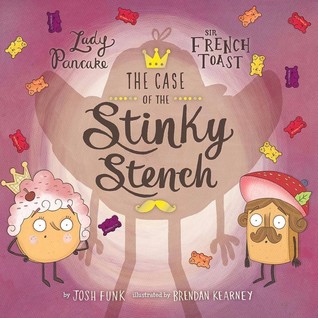
  • Henry’s Review: I think that there were things in the book that were stinky! At the beginning of the book I thought Croissant was making the smell. The fruitcake was stinky and rotten and sad. I think Baron von Waffle got him that way. I like when the fruit cake stands next to cheese. “Type that, Mommy. It’s important.” The book is very good. I like Lady Pancake and Sir French Toast. I really like the gummy bears on the cover because I am really hungry for one right now. The story is so good. I would give it to a friend to read, but I want to keep it for myself. It’s my book that I like to read a lot.

  • Ricki’s and Kellee’s Review with teachers’ tools, discussion questions, etc. can be found here.

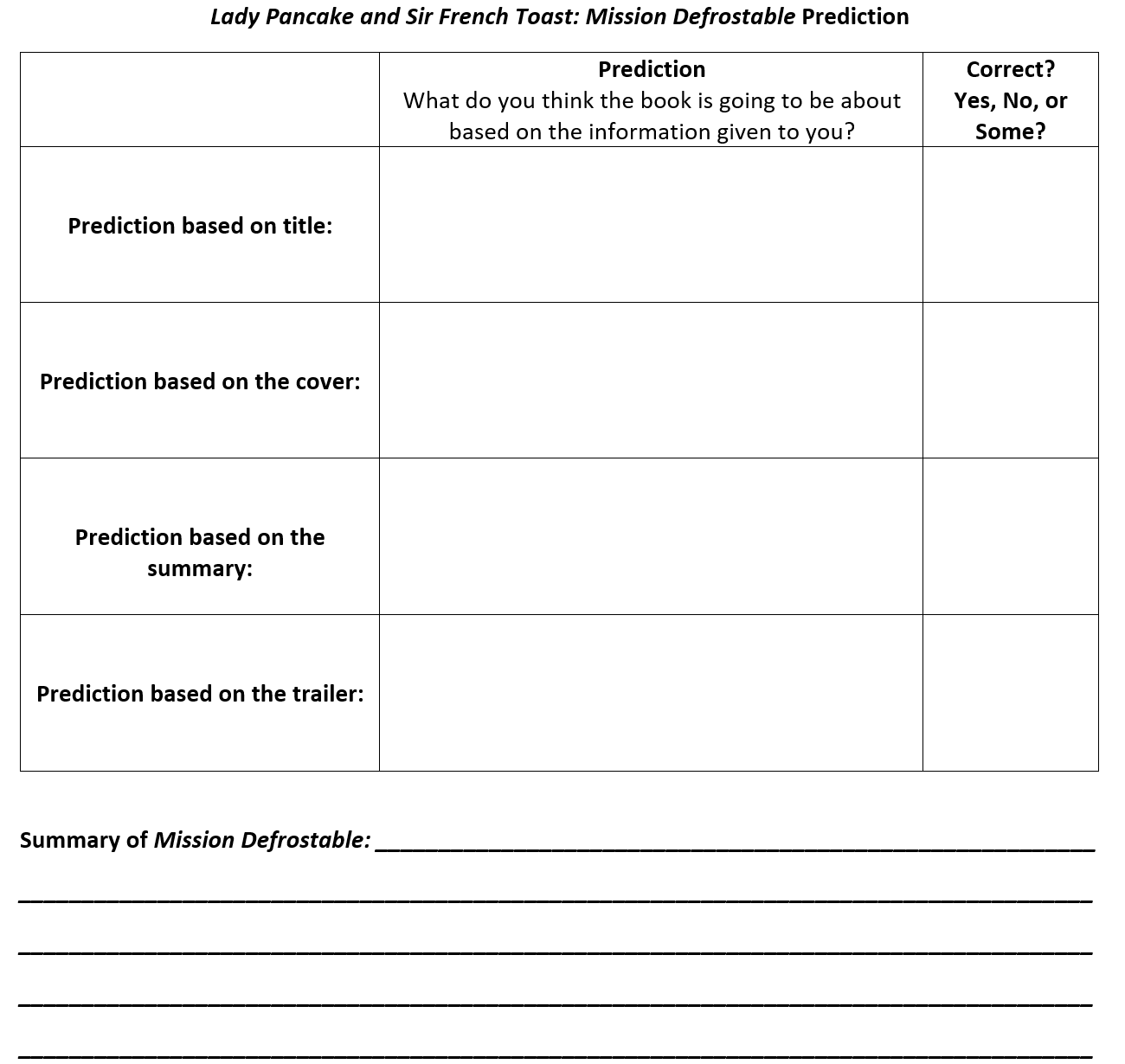
Then to get the boys excited about the next book, we decided to have them take part in a prediction activity!
Here is a graphic organizer for the activity: 

First, we told them what the new Lady Pancake and Sir French Toast title was: 

Mission Defrostable

  • Trent’s prediction: Sir French Toast is going to get frosting. But I don’t know who is the bad guy.
  • Henry’s prediction: I think Sir French Toast is going to get defrostable. I don’t know what will happen with Lady Pancake. Can I see the cover now?

Next, we showed them the cover of Mission Defrostable and asked them if they wanted to change their prediction: 

  • Henry’s prediction: Somebody is going to drop into the big container! Lady Pancake and Sir French Toast are going to…maybe they will eat some of the ice cream. I hope they don’t get hurt. I want to have this book. Can we get it, Mom?
  • Trent’s prediction: Lady Pancake and Sir French Toast are running from the bad guy. I don’t think the popsicles are the bad guys because they are dancing with their friend, ice cream. Maybe the waffle is the bad guy again.

Then, we read them the summary of Mission Defrostable and asked them to prediction what else they think would happen in the book: 

Our favorite breakfast food friends are back and all bready for their next adventure! Can they save the fridge before all the food is iced? It’s mission . . . defrostable.

“And now with the two of you out of the fold,
I’ve got my revenge and I’m serving it cold!”

Brrr! There’s a frost in the fridge—and it’s hardened Pudding Pond and frozen Yogurt Falls. Agent Asparagus is on the case, and she begs Lady Pancake and Sir French Toast to join her superspy team. But when the enemy snatches Asparagus, Pancake and French Toast have only one dough man to turn to for help: the evil Baron von Waffle! Will he help them save the fridge . . . or are they doomed to become frozen food?

  • Trent’s prediction: Yes. They’re frozen food. Because the refrigerator is really cold, and waffle won’t help because he is a bad guy. The popsicles are dancing because it is cold.
  • Henry’s prediction: They are going to be frozen food! I think Agent Asparagus is going to become a bad guy and get Lady Pancake and Sir French Toast and catch them and shoot a web over them with sticky slime to get them caught!

Finally, we showed them this WORLD PREMIERED book trailer and asked them what they thought now:

  • Henry’s prediction: I think the popsicles on the cover are going to come into the book more and Lady Pancake and Sir French Toast are going to lick them and get their tongues stuck. Baron von Waffle…I don’t know what is going to happen to him. But I think it is bad. I don’t know any guesses about what might happen to him though. We will see in the book when we get it. It’s going to be fun to get to read it. After this one, is there going to be another one coming out? I think there should be, and it should be called Mission Accomplished.
  • Trent’s prediction: Baron von Waffle is going to ruin the world because his friends, the popsicles, want the refrigerator cold. The bananas look bad also. Maybe the big bad person are in the castle! Maybe the popsicles aren’t dancing, they are laughing and that is why Lady Pancake and Sir French Toast are running because the popsicles are bad. I’m excited to see about the popsicles–I want the book!

The boys’ summary (the last part of the prediction activity) and review will be shared when we review the final title!

We are so excited to be able to premiere this book trailer with the world!
Thank you, Josh, for the incredible work that you do. You are a gift to the literary world.
And we cannot wait to share our (and the boys’) thoughts about the newest title!

and 

A Land of Permanent Goodbyes by Atia Abawi

Share


A Land of Permanent Goodbyes
Author: Atia Abawi
Published: January 23, 2018 by Philomel

Guest Review by Rachel Krieger

Summary: In a country ripped apart by war, Tareq lives with his big and loving family . . . until the bombs strike. His city is in ruins. His life is destroyed. And those who have survived are left to figure out their uncertain future.

In the wake of destruction, he’s threatened by Daesh fighters and witnesses a public beheading. Tareq’s family knows that to continue to stay alive, they must leave. As they travel as refugees from Syria to Turkey to Greece, facing danger at every turn, Tareq must find the resilience and courage to complete his harrowing journey.

But while this is one family’s story, it is also the timeless tale of all wars, of all tragedy, and of all strife. When you are a refugee, success is outliving your loss.

Review: This book is astonishing. In a world where people like to avoid talking about awkward things or situations that make us sad, this novel is completely, unapologetically honest. With every horror that Tareq experiences, you will find yourself crying with him, hoping with him, and loving with him. You will wish you could be with Alexia helping these people to find new lives. It is impossible to read Abawi’s story without reflecting on your own life, wondering what destiny would write about you.

If you know nothing about the refugee crises happening all over the world, this story will give you a glimpse into the lives of people struggling every day. Although it only looks into the lives of a few refugees, it gave me an idea of how different the life of a refugee is to my own. Atia Abawi’s story will make you reflect on your own humanity and actions, changing the way you think about the world and your own privilege.

Teacher’s Tool For Navigation: This is the perfect book to start a discussion about the situation in Syria. Since it is so essential to address current events regardless of the sensitive nature of those events, teachers should start conversations about this war-torn region. There are many young adult novels that address immigration, however, this one specifically follows the process of that immigration. It would be very beneficial to have students read a book like this and a book like American Street to look at very different stories of immigration with a few similar characteristics. This book in conjunction with others about immigration could be the perfect opportunity to discuss the idea of the danger of a single story.

This novel also offers a very interesting twist on narration. Since destiny is the narrator of this novel rather than one of the characters, there are small parts of the story that reflect broadly on war and humanity. It could be interesting to have students think about how this odd source of narration changes the story. They could even experiment with their own unique narrators, discussing how these odd points of view add or detract from stories.

Discussion Questions: What does the perspective switch add to the novel? Do you think a book like this is likely to encourage people to support this cause? How does Destiny as the narrator change this story? How would this story change if Tareq was a woman?

We Flagged: “Making it to Germany ended Tareq’s crossing and escape from war, but his new life as a refugee is just beginning. There are millions of Tareq’s, Susans and Fayeds, all in search of safety and kindness. I hope you will provide that warmth, be that helper, do what you can to make that world a better place. Because when I meet you—and I will—there will be reckoning. There always is.”

Read This If You Loved: Between Shades of Gray by Ruta Supetys, American Street by Ibi Zoboi, Picture Us in the Light by Kelly Loy Gilbert

Recommended For: 

classroomlibrarybuttonsmall 

RickiSig

Blog Tour with Review!: The Reckless Rescue (The Explorers #2) by Adrienne Kress

Share

The Reckless Rescue (The Explorers #2)
Author: Adrienne Kress
Published April 24th, 2018 by Delacorte Books for Young Readers

Summary: More mystery, more bravery, more danger, and one amazingly reckless rescue await in the second book in the Explorers series! The perfect read for fans of The Name of This Book Is a Secret and The Mysterious Benedict Society!

Reader! Your attention is greatly needed. We have left things unresolved! What began as your average story of a boy stumbling upon a pig in a teeny hat and a secret international explorers society has turned into an adventure of epic proportions.

* The bad news: The boy (Sebastian) has been kidnapped by a trio of troublesome thugs.
* The good news: His new friend Evie has promised to rescue him!
* The bad news: Sebastian has been taken halfway around the world.
* The good news: Evie has famous explorer and former Filipendulous Five member Catherine Lind at her side!
* The bad news: There’s still the whole matter of Evie’s grandfather (and the leader of the Filipendulous Five) somewhere out there in grave danger.
* The good news: Pursuing Sebastian will lead Evie and Catherine to another member of the Filipendulous Five, who might be able to help!

This missive is a call to action and an invitation to join in mystery, bravery, and danger. There will be new people to meet, new places to see, and some dancing along the way. And one amazingly reckless rescue.

About the Author: Adrienne Kress is a writer and an actress born and raised in Toronto. She is the daughter of two high school English teachers, and credits them with inspiring her love of both writing and performing. She also has a cat named Atticus, who unfortunately despises teeny hats. She is the author of The Explorers: The Door in the AlleyThe Explorers: The Reckless Rescue,and The Explorers: The Quest for the Kid. To find out more about Adrienne, visit AdrienneKress.com and follow @AdrienneKress on Twitter and Instagram.

ReviewThis book starts RIGHT up where the first left off–like, actually! Mid-sentence! And I’m so glad because the cliffhanger in the first one was so intense! But here we are, right where we left off: Sebastian is kidnapped, and Evie has to figure out how to save him (hence the title…). Like the first book, I found that the snarky narrator, silly footnotes, and ridiculous situations was humor that is right up my alley, causing many laugh out loud moments, but let’s not forget that the story is also a nerve-racking adventure story also! Other than the humor and adventure, I also really like the characters in this story. Evie and Sebastian complement each other so well, and we really get to see them shine in this book as individuals since they are separated.

Teachers’ Tools for Navigation: This series would be a perfect mentor text when teaching dramatic irony, breaking the 4th wall, and footnotes. Even reading the first chapter will cover these three literary elements and will also get a lot of kids excited to read the story. Because the other place this book belongs is in libraries and classrooms–it is going to be a big hit with adventure and humor fans!

Discussion Questions: 

  • How does the narration style the author chose change the tone of the story?
  • Why do you think the author chose to include footnotes in the story?
  • How does the author use dramatic irony to keep the reader reading?
  • What is the “Lost Boys” K-Pop group an allusion to?
  • How do Sebastian and Evie complement each other?
  • How did some good or bad things in the story end up being the opposite of what you thought?

Flagged Passages: “Chapter 1: In which we resume our story.

There is a difference between fact and opinion. It’s hard to tell sometimes because opinions like to dress up as facts, and their costumes have gotten quite impressive lately.¹ There is a way, however, to easily tell the difference between them. You have to weigh them. Because, you see, facts have more substance. So they’re heavier. This is how one can know for a fact, for example, that being kidnapped for your brain is scary. Because when this fact is placed on the scale, man, does it ever tip the balance.

There are other facts one can be certain of. Like that private jets are cool. That traveling long distances get boring. And that not knowing where you are going or what’s going to happen to you is exhaustingly stressful.

And if you don’t believe me, just ask Sebastian, who is sitting in his seat and staring out the window of the private jet, feeling precisely all of those things.

It is odd to feed bored. Not that feeling bored is a rare or weird feeling. It’s a very common part of life, after all. But it just felt strange to feel bored in his particular situation. He should have been feeling terrified, possibly even a little excited. And he knew this because he’d felt those things initially when he’d been snatched out of the Explorers Society headquarters and held captive in a helicopter. But that felt like forever ago now.

¹I once saw an opinion wearing the most spectacular curly mustache that distracted me so much, I totally let him into my head, even though I found his footwear suspicious.”

Read This If You Love: The first Explorers book: The Door in the AlleyEmily and the Spellstone by Michael RubensGuardians of the Gryphon’s Claw by Todd Calgi Gallicano, Cucumber Quest series by Gigi D.G., Alex Rider series by Anthony Horowitz, The Lightning Thief by Rick Riordan

Recommended For: 

classroomlibrarybuttonsmall closereadinganalysisbuttonsmall

Signature

I Love You, Michael Collins by Lauren Baratz-Logsted

Share

I Love You, Michael Collins
Author: Lauren Baratz-Logsted
Published June 20th, 2017 by Farrar, Straus and Giroux (BYR)

Summary: It’s 1969 and the country is gearing up for what looks to be the most exciting moment in U.S. history: men landing on the moon. Ten-year-old Mamie’s class is given an assignment to write letters to the astronauts. All the girls write to Neil Armstrong (“So cute!”) and all the boys write to Buzz Aldrin (“So cool!”). Only Mamie writes to Michael Collins, the astronaut who will come so close but never achieve everyone else’s dream of walking on the moon, because he is the one who must stay with the ship.

After school ends, Mamie keeps writing to Michael Collins, taking comfort in telling someone about what’s going on with her family as, one by one, they leave the house thinking that someone else is taking care of her—until she is all alone except for her cat and her best friend, Buster. And as the date of the launch nears, Mamie can’t help but wonder: Does no one stay with the ship anymore?

I Love You, Michael Collins was a Best Book of June 2017 on Amazon; a semifinalist for the Goodreads Readers’ Choice Awards; and a pick by the Planetary Society for Best Science Children’s Books of 2017.

ReviewThere is so much I really enjoyed about this book!

First, I adored looking into the experience of the moon landing. I cannot even imagine witnessing it happening! What an amazing feat it was and completely unimaginable. (And I hope to at some point see it happen again.) And I thought Baratz-Logsted did a good job showing all the different types of feelings towards the moon landing and space program. But I’m glad that she focused on its amazingness and the excitement.

Second, I think the author did a fantastic job with the character’s voice. With a book of letters it is essential that the writing sounds like the character because it is actually the character writing all the words. I loved seeing all the techniques she used to write like Mamie while still keeping her writing to a literary level.

Third, I loved that the book was not just a reenactment of the moon landing and a family’s celebration of it. The story has so many layers within it: Mamie’s introverted personality and the look into what makes a kid like this happy; her family’s conflicts and issues; and the power of one best friend.

Overall, I Love You, Michael Collins is a fun historical fiction middle grade book that is perfect for so many readers!

Teachers’ Tools for Navigation: The first thing I went to when I thought about this book from a teachers point of view was the idea of letter writing. Mamie writes Michael Collins originally because it is a school project. Mamies letters could be used as a starting point on how to write letters, parts of a letter, etc. And students could even write a letter to someone in the news that is doing something amazing.

Next summer is the 50th anniversary of the moon landing, and at the end of next school year, I am definitely going to do a cross-curricular unit about NASA and the Apollo missions along with a read aloud of excerpts from this novel. It is so engaging as a story and will also be a great way for students in the 21st century to have a window into the 1960s.

But even without this amazing anniversary, Baratz-Logsted’s title is one that middle grade students will find enjoyment in and should definitely be in classrooms and libraries!

Discussion Questions: 

  • How did the author help make her writing seem like a ten-year-old was writing the letters?
  • Michael Collins is not a household name like Buzz Aldrin and Neil Armstrong. Why is that? Do you think we should all know his name in the same context as the other two astronauts?
  • Which character do you think changed the most throughout the book?
  • What do you think is going to happen next with Mamie’s family?
  • How did Buster’s friendship help Mamie keep her positivity and sanity during this tough time in her family?
  • If you were going to have a moon landing party, what would you make?
  • How would the story of Mamie’s parents’ separation have been different in the 21st century?

Flagged Passages: 

“Dear Michael Collins,

I finally figured out why you never write back. Can you figure out how I figured this out? If not, I will tell you. I did the math.

Okay, I didn’t really do the math, since I don’t have all the information. But it struck me that I might not be the only person writing to you. I though, if every school in the country has just one class that is writing letters to the astronauts and if in each class there is just one kid like me writing to you, then that is still a lot of mail.

It’s no wonder you can’t write back to everyone. And of course you do have other things to do right now.

I’m not sure how I feel about the idea of you getting more mail than I originally thought you did. On the one hand, I’m really happy for you. I’m glad you’ve got more than just me. On the other hand, it was kind of nice when I thought I was the only one. It felt special. Like I was the the only one who knew about you. Which of course isn’t true. The whole world knows about you. It’s just that most of them don’t seem to appreciate you very much.

Does it ever bother you that Neil Armstrong and Buzz Aldrin get so much more mail than you do? I hope not. It certainly wouldn’t bother me. There was a time I thought it might be nice to be popular–you know, to have a lot of friends. But then Buster came along, and then Campbell, and I realized that that is quite enough for me…” (p. 30-31)

Read This If You Love: Space! I recommend Space Encyclopedia by David A. Aguilar and Moon Base Crisis by Rebecca Moesta & Kevin J. Anderson. Also check out Planetary.org’s list of recommended books from 2017: http://www.planetary.org/blogs/emily-lakdawalla/2017/1115-space-books-kids.html and 2016: http://www.planetary.org/blogs/emily-lakdawalla/2016/emily-lakdawalla-space-book-recommendations.html

Recommended For: 

classroomlibrarybuttonsmall closereadinganalysisbuttonsmall

Signature

Mary’s Monster by Lita Judge

Share

Mary’s Monster: Love, Madness, and How Mary Shelley Created Frankenstein
Author: Lita Judge
Published: January 30th, 2018 by Roaring Book Press

Summary: A young adult biography of Frankenstein’s profound young author, Mary Shelley, coinciding with the 200th anniversary of its publication, told through free verse and 300+ full-bleed illustrations.

Mary Shelley first began penning Frankenstein as part of a dare to write a ghost story, but the seeds of that story were planted long before that night. Mary, just nineteen years old at the time, had been living on her own for three years and had already lost a baby days after birth. She was deeply in love with famed poet Percy Bysshe Shelley, a mad man who both enthralled and terrified her, and her relationship with him was rife with scandal and ridicule. But rather than let it crush her, Mary fueled her grief, pain, and passion into a book that the world has still not forgotten 200 years later.

Dark, intense, and beautiful, this free-verse novel with over 300 pages of gorgeous black-and-white watercolor illustrations is a unique and unforgettable depiction of one of the greatest authors of all time.

Review and Teachers’ Tools for Navigation: Whew. I felt so many emotions as I read this book. I kept thinking, “My goodness, my students are going to love this book.” I was fortunate to receive two copies of this book in the mail, and those two copies have passed from student’s hand to student’s hand. The book doesn’t even make its way back up to my desk before another student snags it. This book defies genre sorting. It’s nonfiction, it’s horror, it’s romance, it’s an illustrated book in verse. I’ve already added it to my book list to teach next semester in my Adolescents’ Literature course.

Students will read this book and want immediately to read Frankenstein. The book reads fairly quickly because it contains verse and illustrations, but readers will struggle not to pause for several minutes to enjoy the beautiful illustrations on the pages.

I’m most excited about the classroom potential for this book. It offers so much to talk about regarding characterization, mood, and poetry. But it also offers a beautiful bridge to read with Frankenstein. I thought I knew a lot about Mary Shelley’s life, but this book told me so much more about it. Reading her story on these pages made me feel as if I was experiencing her life alongside her. If you haven’t read this book yet, I recommend it highly.

Discussion Questions: What factors may have influenced Mary Shelley’s Frankenstein? In what ways does the author use metaphor and symbolism to help us understand her experiences?; What might be the author’s purpose? Is she successful, in your opinion?; What textual features helped you understand Mary’s story? How might this book read differently if the author had used another form?

We Flagged: 

Read This If You Loved: Frankenstein by Mary Shelley; Horror; Gothic Literature

Recommended For:

classroomlibrarybuttonsmall

RickiSig