How It Went Down by Kekla Magoon

Share

how it went down

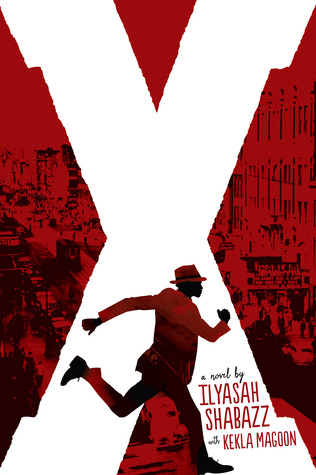
How It Went Down
Author: Kekla Magoon
Published: October 21, 2014 by Henry Holt and Co.

Goodreads Summary: When sixteen-year-old Tariq Johnson dies from two gunshot wounds, his community is thrown into an uproar. Tariq was black. The shooter, Jack Franklin, is white.

In the aftermath of Tariq’s death, everyone has something to say, but no two accounts of the events line up. Day by day, new twists further obscure the truth.

Tariq’s friends, family, and community struggle to make sense of the tragedy, and to cope with the hole left behind when a life is cut short. In their own words, they grapple for a way to say with certainty: This is how it went down.

Ricki’s Review: In light of the recent protests, this is an incredibly insightful book that is very important. The point-of-view shifts every 2-3 pages, which was very thought-provoking. Too often, books depict stereotypical portrayals of members of cultures, and the gamut of characters within this text felt very realistic. For some, this book may be too gritty and too uncomfortable. There is nothing comfortable about discussions regarding inequities and privilege in society. But if you walk down the halls of my high school, there is nothing in the book that is not a concern in schools. This is not a feel-good read, but it made me think. And thinking…is a very good thing.

Teacher’s Tools for Navigation: There is much to discuss in this book. Teachers could use it to start conversations about power and privilege. There are a lot of discrepancies between the characters’ perceptions of the shootings, and I imagine students would disagree about what happened. Teachers might elect to hold a verbal or silent debate. Also, I would love to discuss the structure of the text. The creativity in the form is purposeful, and it would be interesting for students to investigate why Magoon structured it in the way she did.

Discussion Questions: Why does Magoon structure the novel with alternating voices? How is the novel structured as a whole?; Does this story serve as a counter-narrative? If so, how? If not, why not?; Did Tariq have a gun in his hand? Why do/don’t you think so?; How does the story evolve as time passes?

We Flagged: “As a black man, you have to keep your head down. You have to keep yourself steady. You have to follow every rule that’s ever been written, plus a few that have always remained unspoken.”

Read This If You Loved: The Outsiders by S.E. Hinton, On the Run by Alice Goffman, The New Jim Crow: Mass Incarceration in the Age of Colorblindness by Michelle Alexander, Monster by Walter Dean Myers, The Brothers Torres by Coert Voorhees, Autobiography of my Dead Brother by Walter Dean Myers

Recommended For:

 litcirclesbuttonsmall classroomlibrarybuttonsmall

RickiSig

All the Bright Places by Jennifer Niven

Share

all the bright places

All the Bright Places
Author: Jennifer Niven
Published: January 6, 2015 by Knopf

Goodreads Summary: The Fault in Our Stars meets Eleanor and Park in this compelling, exhilarating, and beautiful story about a girl who learns to live from a boy who intends to die.

Theodore Finch is fascinated by death, and he constantly thinks of ways he might kill himself. But each time, something good, no matter how small, stops him.

Violet Markey lives for the future, counting the days until graduation, when she can escape her Indiana town and her aching grief in the wake of her sister’s recent death.

When Finch and Violet meet on the ledge of the bell tower at school, it’s unclear who saves whom. And when they pair up on a project to discover the “natural wonders” of their state, both Finch and Violet make more important discoveries: It’s only with Violet that Finch can be himself—a weird, funny, live-out-loud guy who’s not such a freak after all. And it’s only with Finch that Violet can forget to count away the days and start living them. But as Violet’s world grows, Finch’s begins to shrink.

This is an intense, gripping novel perfect for fans of Jay Asher, Rainbow Rowell, John Green, Gayle Forman, and Jenny Downham from a talented new voice in YA, Jennifer Niven.

Ricki’s Review: A publishing representative who I deem to be a friend pressed this book into my hand. “Read it,” she insisted. She told me I would want to curl up into a ball in my bed and fall into this book. I fell hard. The writing is incredible. I hate to compare books with others because it creates a sense of expectation that often goes unfulfilled for future readers, but I couldn’t help but consider comparisons with my all-time favorite YA texts. The quirky nature of the characters reminded me of Pudge, Alaska, Charlie, Eleanor, and Park. The direction of the plot reminded me of other titles (which will remain unnamed to prevent spoilers). But I cannot compare this book to others because while it allowed to me reminisce about my favorite titles, it was quite different. The deep, honest, hard-hitting depiction of mental illness was enough to take my breath away. I felt rage that made me want to punch my mattress; I felt sadness that made me feel a hopeless sense of emptiness; but above all, I felt the power of love, loyalty, and friendship that made my heart both ache and swell. This is an unforgettable book. I suspect it will be the book that everyone will be talking about this year and for years to come.

Teacher’s Tools for Navigation: Mental illness and bullying are pervasive in our schools. We can’t teach enough books about these themes because they are incredibly relevant for young people. As a former teacher, I was jealous of the teacher who created the assignment for Violet and Finch, and I wanted to do it with my former students. It would be so neat to duplicate this project while students read the book. Additionally, I think students would benefit from creating their own version of the post-it collages that Violet and Finch make. As an alternative, I would consider having students research the warning signs of suicide and finding these instances in the text. There are so many themes for the students to consider, the teaching categories at the top and tags at the bottom of this post show a variety of different directions a teacher might take with the instruction of this text.

Access the book’s website to share your bright place or read Germ MagazineThe educator guide also has CCSS tie-ins.

Discussion Questions: What is the end message of this book? What is the author’s purpose?; What foreshadowing does Niven provide?; How do Violet’s family members show their grief in different ways?; Do you agree with the ending? Would you change it? Why do you think Niven ended the book in the way she did?

We Flagged: “It’s my experience that people are a lot more sympathetic if they can see you hurting, and for the millionth time in my life I wish for measles or smallpox or some other easily understood disease just to make it easier on me and also on them.”

**Please note: The above quotation is from an advanced reader copy. The quotation may change in the final published form of the text.**

Read This If You Loved: Looking for Alaska by John Green, Eleanor and Park by Rainbow Rowell, Dr. Bird’s Advice for Sad Poets by Evan Roskos, The Fault in Our Stars by John Green, Forgive Me, Leonard Peacock by Matthew Quick, It’s Kind of a Funny Story by Ned Vizzini, The Perks of Being a Wallflower by Stephen Chbosky, Twisted by Laurie Halse Anderson, Everybody Sees the Ants by A.S. King, Burn by Suzanne Phillips

Recommended For:

 closereadinganalysisbuttonsmall litcirclesbuttonsmall classroomlibrarybuttonsmall

RickiSig

Holiday Blog Hop with Reviews!: Mira’s Diary series by Marissa Moss

Share

mira1 mira2 bombs

Mira’s Diary
Author: Marissa Moss
Lost in Paris Published September 4th, 2012 by Sourcebooks
Home Sweet Rome Published April 2nd, 2013 by Sourcebooks
Bombs Over London Published August 26th, 2014 by Creston Books

Lost in Paris Goodreads Summary: Mira is shocked when she receives a postcard from her missing mother from Paris. Her father decides it’s time for a trip to France to search for her. While visiting Notre Dame, Mira touches a gargoyle and is whirled into the past. There she meets the famous painter Degas and catches a brief, shocking glimpse of her mother. Mira begins to suspect that her mom didn’t run out on them but is a prisoner of the past. Can one family on an incredible worldwide adventure stop a plot in time?

Home Sweet Rome Goodreads Summary: As if traveling to a new country in search of her missing mother weren’t difficult enough, Mira has to do it dressed as a boy. In a different century.

A new postcard from her time-traveling mother points Mira to the 16th century Rome. But before she can rescue her mom, she must follow the clues left around the city to find Giordano Bruno, a famous thinker and mathematician, who discovered something so shocking that important Italian officials don’t want it revealed. All the while avoiding the Watchers–time-traveling police who want Mira back in her own time.

It’s another whirlwind adventure for Mira, and this time she is determined to bring her mother out of the past.

Bombs Over London Goodreads Summary: In the third book of the popular time-travel series, Mira navigates her way through WWI London, meeting famous suffragists and writers like Sir Arthur Conan Doyle. Instructed by her time-traveling mother to steal a German spy’s briefcase full of secrets and pass on the information to British Intelligence, Mira struggles with whether the changes she has been working for are the right thing to do after all. How much control do we really want of history? When is it best to leave our fate in destiny’s hands?

My Review of Lost in Paris:  I was enthralled by this smart, yet still accessible middle grade novel. Once I began it, I did not want to put it down.

The book was not only packed with an interesting concept (Mira and her mother travel through time to try to right wrongs that haven’t happened yet), but the book was filled with information about late 19th century Paris, French history, and art. Although some may feel like there was information overload, I found it all so fascinating. I am primarily sucked in when a book includes history that is less well known and that is exactly what this book did. Do you know about the Dreyfus Affair? After reading you will. I was also so excited to read a book so full of art history and art elements. Each page includes sketches from Mira and throughout the book you meet incredible artists such as Degas, Monet and Rodin. A cast of characters that is better than any fiction. This part of the book actually reminds me a lot of Woody Allen’s Midnight in Paris except Mira is trying to fix something instead of fixing herself.

My Review of Home Sweet Rome and Bombs Over LondonI don’t want to share too much about these titles as my thoughts are a bit spoilery, but I want to say that they did not disappoint. After reading book 1, all I wanted was to know what happened to Mira next, and I was not disappointed in her next adventures. I know book 4 is going to be in our future, and I cannot wait to read that one as well.

Teachers’ Tools for Navigation: One wish I had while reading books 1 & 2 was wanting to see the artists’ works as each artist was introduced. I was blessed enough to have an art-filled childhood so I could picture many of the pieces; however, many students do not have that background knowledge. This would be a great thing to do when reading the novel–share the artwork with students as you encounter them in the story. It would also be meaningful to find primary sources from the time period to share with students as you read Mira’s story.  This will make learning about the time period even more impactful.

Additionally, Marissa Moss’s writing is one that can definitely be used as an example of imagery and descriptive writing during writing workshop or other writing lessons. She actually sucks you in when Mira time travels, and deposits you in history that you can visualize.

Discussion Questions: Research one of the artists mentioned in book 1 or 2, write about his or her life, artwork, beliefs, etc.; Write about a time in your life when you had to trust your instincts, when you weren’t sure what to do but had to make a decision based on what felt right to you in the moment.; Was there a time when you had a feeling your parents were incorrect? What happened?; Which of the three places that Mira has visited would you have liked to go? Why?

We Flagged: “Dad was right – [Notre Dame is] truly a wonder of the world…

Usually when you go into a building, it’s lighter or darker, cooler or warmer than outdoors, but it’s still part of the same world. Stepping into Notre Dame was like changing time zones or countries, crossing some magical border. A hush filled the cavernous, echoey space of the cathedral, despite all of the voices of tourists murmuring and people praying, as if the sound was absorbed into the bones of the building itself.

Light streamed in from the windows like a physical presence, the kind of light you think you can reach out and touch…The air itself felt still and chilled by the stone all around. The walls were stretched thin between the pillars that soared into a vault overhead, like the skin of a massive beast taut between its ribs.” (Lost in Paris, p. 14-15)

“The day was gray and cold. I found myself in a busy street lined with crumbling brick buildings, shabby tenements with darkened windows. Dingy laundry hung in lines across the narrow alleyways. This may have been historical London, but there was nothing charming here. Just three-story houses of shuddering poverty with narrow doors and small pinched windows, as if sunlight cost money. The whole place was dark, muddy, broken-down, stinking of fish and rot and some indefinable yuck. The stench was so thick it had a physical presence, like a filthy hand pressed against my nose.”  (Bombs Over London, p. 26)

Read This If You Loved: Ruby Red (series) by Kerstin Gier, All Our Yesterdays by Cristin Terrill, When You Reach Me by Rebecca Stead, Blue Balliet novels

Recommended For: 

classroomlibrarybuttonsmall closereadinganalysisbuttonsmall

Signature

**Thank you to Gina and Samantha at JKSCommunications for having us as part of the blog hop!**

Author Guest Post, Giveaway, and Blog Hop!: “How Research Transformed The Wolf Chronicles” by Dorothy Hearst, Author of The Wolf Chronicles

Share

Promise of the Wolves cover Secrets of the Wolves cover Spirit of the Wolves cover

Series Synopsis: Inspired by the theory that it was wolves, and later dogs, that made humans the dominant species on earth by teaching mankind to hunt cooperatively and form complex societies, The Wolf Chronicles begins 14,000 years ago with PROMISE OF THE WOLVES. It is engagingly told from the point of view of lovable Kaala—an outcast young wolf who has been charged with watching over humans in order to prevent them from losing touch with nature and thus destroying the world.

Dorothy Hearst_214x300_credit ThePetPhotographer.com

About the Author: Before the wolves barged in the door, demanding that their story be told, Dorothy Hearst was a senior editor at Jossey-Bass, where she published books for nonprofit, public, and social change leaders. She currently lives, writes, and plays with dogs in Berkeley, California.Spirit of the Wolves, the third and final title in the Wolf Chronicles, will be released December 2. For more information, and to download free CCSS-aligned discussion questions for all three novels, visit her website: dorothyhearst.com

“How Research Transformed The Wolf Chronicles”

When I got the idea to write novels about how the wolf became the dog from the wolf’s point of view, I knew that I had a lot of research ahead of me. And I balked. I’d never been any good at research.

But wolves can’t type, and they wanted their story told, so I hunkered down and got started.

It turned out that research was one of the best parts of the writing process. I snow-shoed in Yellowstone, chased huskies in the French Alps, spent hours in wonderful public and university libraries, and walked through a cave where someone had stood 14,000 years ago, painting a bison.

But what surprised me most was how research shaped my story. It profoundly changed The Wolf Chronicles in several ways:

It changed my wolves:

Like many people, I used to think that wolves were vicious animals that fought all the time and were very different from us. Books like Richard Busch’s Wolf Almanac showed me that wolves are actually highly social animals that rarely fight. Then I read up on prehistoric cultures, and learned that our ancestors and wolves lived surprisingly similar lives. This changed all the interactions between wolf and human characters, and made Kaala and her pack much more complex.

It deepened the story:

Early in my research, I learned about wolf-human coevolution, the theory that wolves and dogs may have greatly influenced our evolution. good lThen, Barry Lopez’s Of Wolves and Men showed me that wolves have long been emblematic of very different views of nature. This research made Kaala’s story more than the tale of a young wolf on a quest. It grew to be about our own connection to the natural world, and what that connection means for our future.

It gave me new characters:

While reading up on wolves, I learned that wolves and ravens often play together, so I decided to write just one scene with ravens in it. The raven Tlitoo decided he wanted a bigger part in the book, and became a major character. While on a trip to Yellowstone to watch wolves, I was awoken by a herd of elk bellowing outside my window. Ranor the elkryn marched into the story.

It gave me new scenes

Two scenes in the trilogy are drawn directly from the many documentaries and videos I watched. In Promise of the Wolves, Kaala and Ázzuen struggle to cross a great plain. This is from a video about wild dogs. The filmmakers actually rescued a pup who fell behind (I write about it here) which they weren’t supposed to do. A scene in which Kaala steals from sabre-toothed cat cub is based on a video of a young wolf playing with a young bear until Mama bear got annoyed.

In the end, research enriched The Wolf Chronicles in ways I never could have imagined. I am now a dedicated research devotee.

Some Classroom Applications:

I love the idea of the wolves making their way into classrooms. Here are some topics that lope through the books:

  • Animal biology and behavior (wolves, ravens, prey animals)
  • Ecology and the Environment
  • Life in prehistoric times
  • Wolf-Human coevolution—the controversial theory that wolves and dogs directly affected our evolution
  • Mythology: Norse myths, European folktales, Native American tradition as the basis for parts of the story.

The Educators page of my website also has some tools and guidelines for using The Wolf Chronicles in the classroom. You can read more about my research for The Wolf Chronicles at YAReviewNet.

Thanks so much to Unleashing Readers for hosting me!

Giveaway!

a Rafflecopter giveaway

Signature andRickiSig

**Thank you to Barbara from Blue Slip Media for asking us to participate in the blog tour!**

Rain Reign by Ann M. Martin (Kellee’s Review)

Share

rain

Rain Reign
Author: Ann M. Martin
Published October 7th, 2014 by Feiwel & Friends

Goodreads Summary: In her most powerful novel yet, Newbery Honor author Ann M. Martin tells the story of girl with mental/emotional challenges and the dog she loves.

Rose Howard has OCD, Asperger’s syndrome, and an obsession with homonyms (even her name is a homonym). She gave her dog Rain a name with two homonyms (Reign, Rein), which, according to Rose’s rules of homonyms, is very special. Rain was a lost dog Rose’s father brought home. Rose and Rain are practically inseparable. And they are often home alone, as Rose’s father spends most evenings at a bar, and doesn’t have much patience for his special-needs daughter.

Just as a storm hits town, Rain goes missing. Rose’s father shouldn’t have let Rain out. Now Rose has to find her dog, even if it means leaving her routines and safe places to search. Rose will find Rain, but so will Rain’s original owners.

Hearts will break and spirits will soar for this powerful story, brilliantly told from Rose’s point of view.

My Review and Teachers’ Tools for Navigation: If you have read A Corner of the Universe,  you know what an emotionally-charged author Ann M. Martin can be, and she once again tells a heart-wrenching story with a voice that will not leave your head. In Rain Reign, Martin tackles Rose’s story. Rose is such a true character. A brilliant young girl with OCD and Asperger’s syndrome who is obsessed by homonyms. She is a girl that is so unique and intriguing. As a teacher, I very much connected with her and how I would nurture her gifts within my classroom; however, I also saw the challenges that Rose faces as well.

What makes this book truly stand out is the first person point of view. You, as the reader, are in Rose’s mind and living her life. You experience the neglect of her father, the love of Reign, the obsessiveness, the homonyms, the outbursts, and the support of her uncle. Because I was IN her life, I just couldn’t put down the book. I had to know that Rose and Rain were going to be okay.

As a teacher, I want kids to read this book because they will fall in love with Rose and Rain. Through this love, they will build empathy in their hearts because they will just want to know that Rose and Rain will be okay.

Ricki’s Review: Check out Ricki’s Review here!

Discussion Questions: How do you feel about Rose’s dad?; Can you think of homonyms that weren’t mentioned in the book?; Do you think it was right of Rose’s dad to take Rain?; How would you feel if your dog disappeared?

We Flagged: “I’m going to tell you a story. It’s a true story, which makes it a piece of nonfiction.

This is how you tell a story: First you introduce the main character. I’m writing this story about me, so I am the main character.

My first name has a homonym, and I gave my dog a homonym name too. Her name is Rain, which is special because it has two homonyms–rein and reign. I will write more about Rain in Chapter Two. Chapter Two will be called “My Dog, Rain (Rein, Reign).”

Something important about the word write is that is has three homonyms–right, rite, and wright. That’s the only group of four homonyms I’ve thought of. If I ever thing of another four-homonym group, it will be a red-letter day.” (Chapter One)

Read This If You Loved: Rules by Cynthia Lord, Wonder by R.J. Palacio, Mockingbird by Kathryn Erskine, Out of my Mind by Sharon Draper, Each Kindness by Jaqueline Woodson

Recommended For: 

classroomlibrarybuttonsmall readaloudbuttonsmall litcirclesbuttonsmall

Signature

Captain Underpants Series by Dav Pilkey

Share

captain1 captain11

Captain Underpants series
Author: Dav Pilkey
#1: Adventures of Captain Underpants published September 1st, 1997 by Scholastic, Inc.
#11: Captain Underpants and the Tyrannical Retaliation of the Turbo Toilet 2000 published August 26th, 2014 by Scholastic Inc.

Goodreads Summary #1: Pilkey plays with words and pictures, providing great entertainment. The story is immediately engaging – two fourth-grade boys who write comic books and love to pull pranks find themselves in big trouble. Mean Mr. Krupp, their principal, videotapes George and Harold setting up their stunts and threatens to expose them. The boys’ luck changes when they send for a 3-D Hypno-Ring and hypnotize Krupp, turning him into Captain Underpants, their own superhero creation.

Goodreads Summary #11: When the Incredible Robo-Plunger defeated the evil Turbo Toilet 2000, George and Harold thought their toilet troubles were over. Unfortunately, their porcelain problems were only beginning . . . Just when you thought it was safe to flush . . . The Turbo Toilet 2000 strikes back! The carnivorous commode known for devouring everything in its path has built up a real appetite . . . for REVENGE! Join Captain Underpants for another epic showdown of Wedgie Power vs. Potty Power as our tighty-whitey-wearing superhero GOES TO ELEVEN!

My Review and Teachers’ Tools for Navigation: Ever since I started teaching I have had Captain Underpants fans in my classroom. Readers (especially boys though, like all books, it is not exclusive) love these books. When I started teaching intensive reading, my students loved that I read so much but were astonished that I had never read a Captain Underpants book. So, during the summer of 2012, I read the entire series that was out at the time.  And suprsingly, I am happy I did. I enjoyed the books so much, and I found many different ways that I could use in the series in classroom. As I read I not only enjoyed the stories (well most of them; the booger one was quite gross), but I kept notes on different ways each book could be a mentor text.  I know that students already love the books so I would love to be able to use them in the classroom. I think that part of what makes Pilkey’s humor work is that he never talks down to his reader. The humor is intelligent and witty, and he makes sure to have his books be as entertaining as possible to keep the reader’s attention.

Teachers’ Tools for Navigation: Some of my favorite things that are addressed in the series are spelling, grammar, vocabulary, and puns. The spelling is not directly addressed; however, Harold and George misspell a lot of words and it would be good to use to talk about phonics and spelling.  Also, each book begins with an anagram which is great word play.  The grammar is sporadic only showing up in some books, but the vocabulary is in all of them.  Some vocabulary I found was billowing, narratively convenient, fizzled, improbability, jubilant, mock, scurried, and merciless and that is just in book 3! Also the puns in each book are really quite clever (check out p. 34 in #11 and any of the flip-o-ramas to see what I mean). Each book also has some great alliteration (#11, p. 29, 27, 208)- each title alone has alliteration in them. There are also allusions and onomatopoeias!

Additionally, I love the set up of the novels. They are a great mix of novel, graphic novel, comics, and picture books. It is a great transition between picture books and Diary of a Wimpy Kid. I especially like the flip-o-ramas. They are unique to the Captain Underpants books and I think it puts a great interactive and kinesthetic feel to the books.

One thing I do not understand is why these books are challenged. Yes, they have some potty humor. Yes, the adults aren’t the best representation of teachers. Yes, it is silly. But they are harmless and actually have some really great qualities to them.

Discussion Questions: In the first Captain Underpants, Harold and George brainstorm a superhero including his name and then create a comic based on their superhero. With a partner, brainstorm a name for a superhero and then complete a story to go along with your superhero. To expand it even more, complete a comic for your superhero.; In #11 novel, time travel plays a large part of in the plot. What event could you go back in time to try to change?; In some of the Captain Underpants books, there are grammar, convention, and spelling mistakes. Why do you think Dav Pilkey makes the choice to use incorrect grammar? What mistakes idd you find?; In #11, Harold and George end up being cloned (kind of). What would you do if there were two of you?

We Flagged (#11): 

Read These If You Loved: Diary of a Wimpy Kid series by Jeff Kinney, Big Nate series by Lincoln Peirce, Charlie Joe Jackson series by Tommy Greenwald, The Adventures of Ook & Gluk and Super Diaper Baby series by Dav Pilkey, Lunch Lady series by Jarrett Krosoczka, Frankie Pickle series by Eric Wight, Knights of the Lunch Table series by Frank Cammuso 

Recommended For: 

readaloudbuttonsmall classroomlibrarybuttonsmall

Signature

Author Guest Post!: Five Ways to Bring MG into the Classroom by F.T. Bradley, author of the Double Vision series

Share

Double Vision front coverCode Name 711--coverDouble Vision The Alias Men hi-res cover

Today, F.T. Bradley, author of the Double Vision trilogy, joins us with a wonderful post for middle grade teachers. Last year, Ricki reviewed (and loved) the second book in the series, Double Vision: Code Name 711We strongly encourage you to check out the entire series and are excited to announce that the third book, Double Vision: The Alias Men, went on sale this week! Please join us in welcoming F.T. Bradley to the blog today. 

   F.T. Bradley--photo

Five Ways to Bring MG into the Classroom

By F.T. Bradley

Reading is good for kids—we all know this. But trying to find ways to bring books into an already over-tasked classroom can be more than a challenge. Every year, I visit several school and library conventions, where I talk about ways to reach reluctant readers. Let’s face it: every classroom has a good portion of kids who would anything to avoid opening another book. So how do you bring middle-grade books into the classroom without boring your students? Here are a few ways to keep reading fresh in the classroom:

1. Find a Theme

Is your class or grade covering a certain period in history? Chances are, there are a host of MG titles that cover it. Math, science, art—authors love to use curriculum as a jumping off point in their fiction. When looking for titles, start by casting a wide net, including non-fiction (reluctant readers are easier to hook with those books), and graphic novels, too. For middle-school teachers, this can be an opportunity to collaborate with other teachers across subjects. A library visit, or a simple Google search can be a good start to find titles, but also look at book review sites like Goodreads, where reviewers often have top-ten lists of like-themed books. Author websites (like mine) sometimes have links and resources too, so don’t forget to browse the web.

2. Host a Book Club

You don’t have to be Oprah to host a book club. It can be small scale, like a class-wide joint read, or an after school club or even an elective for middle-schoolers. One school librarian told me she hosted a book club during lunch once a week—what a great idea! If you’re looking for a more challenging approach to group reading, try reading a non-fiction and fiction title on the same topic or historical period at the same time. How is the fiction title holding up against reality? Another fun challenge: reading a classic title like A Wrinkle in Time, and comparing it to its graphic novel counterpart. Or comparing the book with the movie—a great way to show that books connect to popular entertainment. To start your book club, look for more accessible options (so all kids will be interested, even those who read less), and increase the challenge as you go. 

3. Host a Review Blog or Website

Kids are already expected to write book reports—why not have them write reviews, too? This can be a school or classroom blog, where you post reviews written by kids. You can even post them to other review sites, or on your local bookstore website (if they’re interested—could be a great start to collaboration). Publishers (and sometimes authors) may even be willing to donate a copy of a book in exchange for a review, especially if you post reviews regularly. Just be sure to protect kids’ privacy as you post the reviews.

4. Rewrite the Story

Have you ever read a book with the class, only to be disappointed with the ending? Or maybe it wasn’t the ending you expected—or maybe it was too cliché? Rewrite the end with the class! This can be a great writing assignment—not only does this teach writing and editing skills, it shows kids that stories aren’t set in stone. (Note: this was not my idea, but shared by a Mississippi teacher and her class, who loved this exercise). Other ideas: writing short stories, like fan fiction, featuring the other characters in a book. How does the story change if written from a different perspective? Or: write letters as two characters in conflict with each other. If you’re working with a non-fiction title, consider having kids write fictional stories featuring some of the facts in the book. Or vice-versa: research any facts in the fiction title you’re reading—did the author stay close to the truth?

5. Host a (Virtual) Author Visit

Nothing makes a book, and the profession of writing, come to life more than a visit from a real author. Kids will never forget that day. To find available authors in your area, look at professional organizations’ websites, like the Society of Children’s Book Writers and Illustrators. You can also ask your local library, or your independent bookstore—staff often know who lives locally, and who does great presentations. Don’t have access to local authors or funds to bring authors to your school? Try a Skype visit instead! These virtual visits are often free, and require nothing more than a computer/tablet with a webcam and a (free) Skype account. To find authors who Skype for free (like me), visit author Kate Messner’s website for a list. For non-fiction tie-ins, Skype in the Classroom offers lessons that run the gamut when it comes to curriculum, and even connects classrooms across the globe.   When I host the session on reaching reluctant readers (using these ideas and more) at library and teacher conventions, I get my best tips, book recommendations, and out-of-the-box ideas from teachers and librarians themselves.

How about you? Do you have any ideas or tips to share?

Follow along with the Double Vision: The Alias Men blog tour:

Oct. 6-10: The Secret Files of Fairday Morrow features Double Vision: The Alias Men with a review, author interview, plus a GIVEAWAY..!

Oct. 13: Linc hangs out at the great Erik’s blog, This Kid Reviews Books. Linc talks about spy techniques he picked up on his Pandora missions. And there’s another GIVEAWAY

Oct. 14: Double Vision: The Alias Men is released! Have a virtual party at the YA Sleuth blog…! And follow F.T. on Twitter @FTBradleyAuthor for more kid spy fun.

Oct. 16: F.T. Bradley gives you Five Ways to Bring MG into The Classroom at the Unleashing Readers blog, plus a GIVEAWAY.

Oct. 17: Linc is interviewed by Lizzy, Fairday and Marcus over at The Secret Files of Fairday Morrow blog. A fun post!

Oct. 20: Buried in Books lets F.T. Bradley talk about the Double Vision trilogy…

Oct. 20: Also this day, the fabulous Ms. Yingling reviews Double Vision: The Alias Men on her blog for Marvelous MG Monday…

Oct. 21: Another favorite blog, YA Book Nerd, hosts F.T. Bradley and the Double Vision trilogy, plus a GIVEAWAY

Oct. 21: F.T. Bradley hangs out at Sleuths, Spies and Alibis

Oct. 24: F.T. Bradley gives tips for parents of reluctant readers, Seven Ways to Get Your Kid to Read, at Pragmatic Mom’s blog, plus a GIVEAWAY!

Oct. 25: At the Nerdy Book Club, find F.T. Bradley’s top 10 books for reluctant readers…

RickiSig