Carlos Santana: Sound of the Heart, Song of the World by Gary Golio

Share

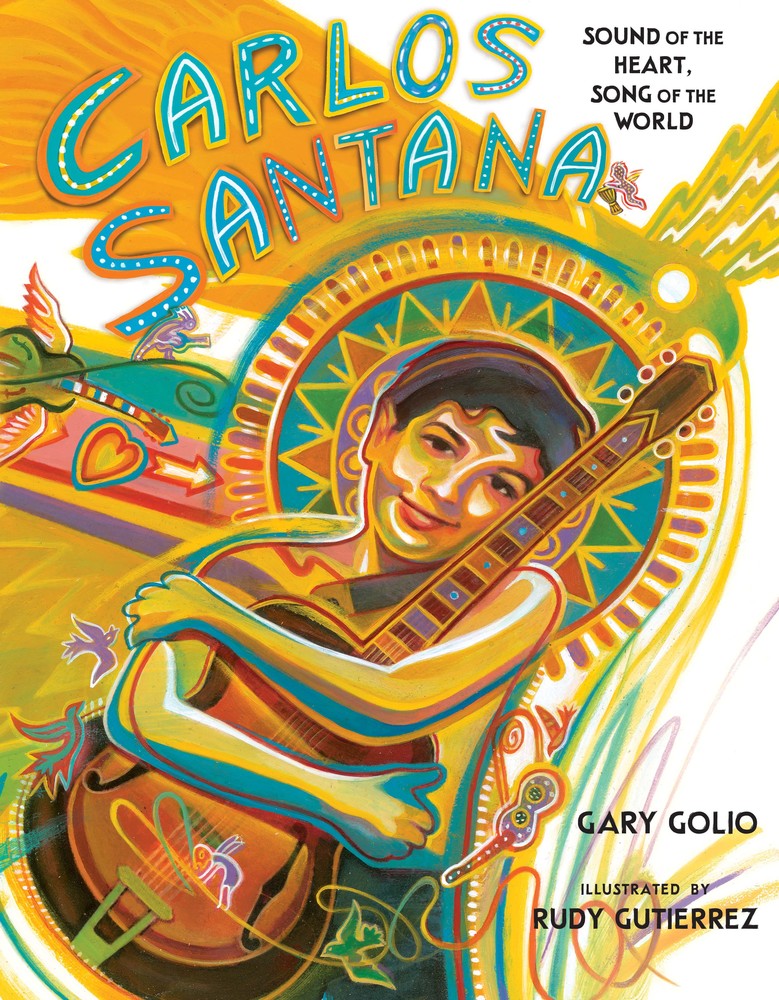
Carlos Santana: Sound of the Heart, Song of the World
Author: Gary Golio
Illustrator: Rudy Gutierrez
Published: September 4, 2018 by Henry Holt

Summary: Discover the childhood story of Carlos Santana in Gary Golio’s Sound of the Heart, Song of the World, featuring illustrations by Rudy Gutierrez,the internationally celebrated artist who created the iconic Carlos Santana Shaman CD cover.

Carlos Santana grew up surrounded by music. His father, a beloved mariachi performer, teaches his son how to play the violin when he is only six years old. But when Carlos discovers American blues, he is captivated by the raw honesty of the music. Unable to think of anything else, he loses all interest in the violin. When Carlos finally receives his first guitar, his whole life begins to change.

From his early exposure to mariachi to his successful fusing of rock, blues, jazz, and Latin influences, here is the childhood story of a legendary musician.

My Review: I absolutely loved this book. My son and I had so much fun reading it, and then he asked to listen to some of Carlos Santana’s music. A few days later, we heard a Carlos Santana song on the radio, and my husband excitedly reminded my son about the book. It feels good to connect him with such a powerful man in our history. He shaped music in powerful ways. The book is beautifully written. I liked how it focused predominantly on Santana’s childhood. This kept my son’s interest and helped him connect with Santana. The art flows beautifully and looks like visual music on the page.

Teachers’ Tools for Navigation: I would love to use this book in literature circles with kids. Students could each read a picture book about a famous person in our history of music (see some of the options below). They could share out to their peers and play a clip from the music. These interdisciplinary activities would make for a warm, powerful learning environment.

Discussion Questions: 

  • Describe Carlos Santana’s childhood.
  • What inspired Santana?
  • What was Santana’s relationship with his parents? How do you think this may have shaped his life? What did working beside his father teach him about himself?
  • Describe Santana’s journey into music. What influenced him?

Flagged Passage: Check out the beautiful interiors on the book’s Macmillan page.

Read This If You Love: How Pete Seeger Got America Singing by Leda SchubertStand Up and Sing! by Susanna ReichWhen Bob Met Woody by Gary Golio, Jimi: Sounds Like a Rainbow by Gary Golio

Recommended For: 

classroomlibrarybuttonsmall 

**Thank you to Madison at Macmillan for providing the book for review!**

Little Man, Little Man: A Story of Childhood by James Baldwin and Yoran Cazac

Share

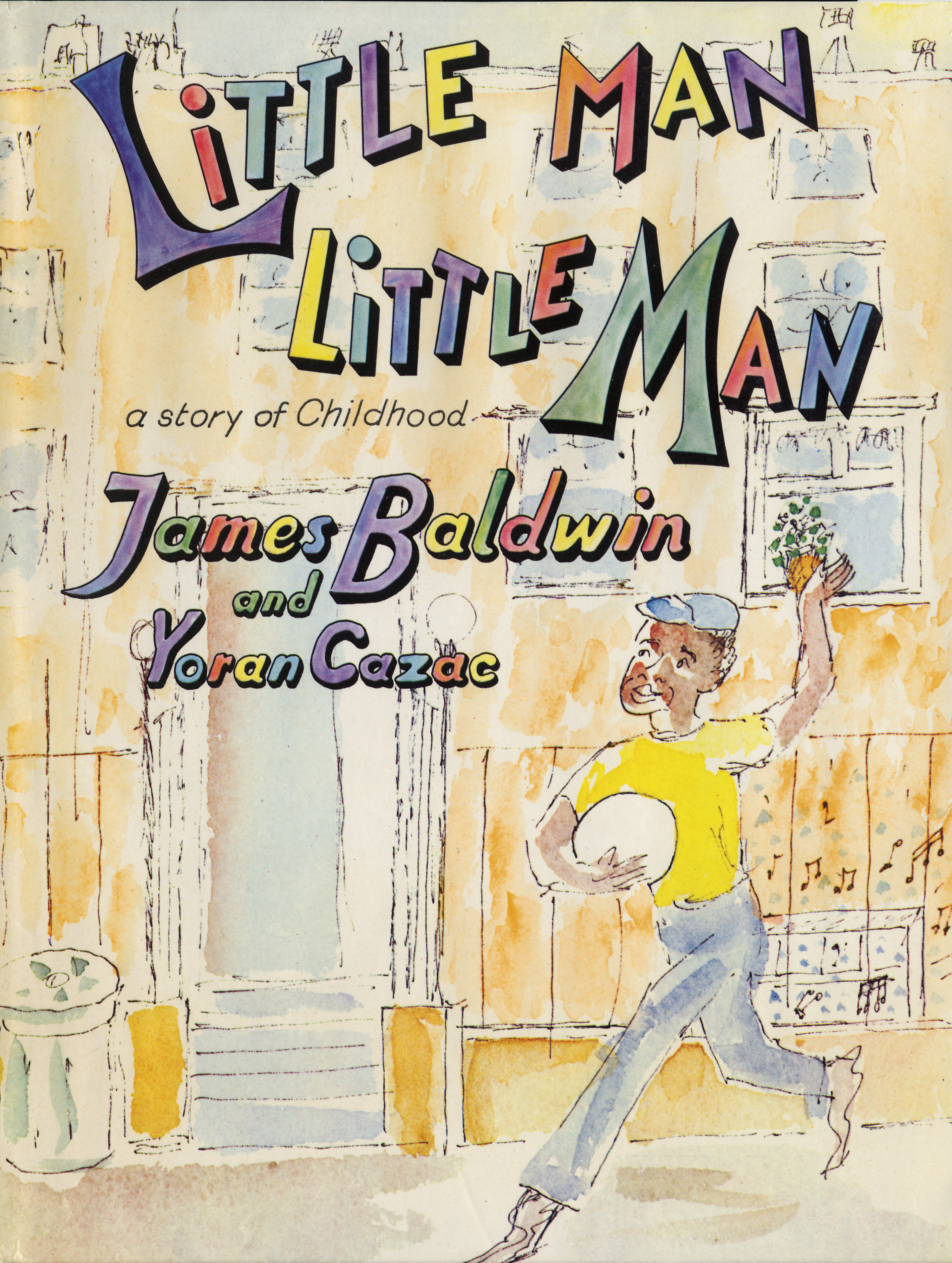
Little Man, Little Man: A Story of Childhood
Authors: James Baldwin and Yoran Cazac
Published August 27, 2018 by Duke University Press

Summary: Four-year-old TJ spends his days on his lively Harlem block playing with his best friends WT and Blinky and running errands for neighbors. As he comes of age as a “Little Man” with big dreams, TJ faces a world of grown-up adventures and realities. Baldwin’s only children’s book, Little Man, Little Man celebrates and explores the challenges and joys of black childhood.

Now available for the first time in forty years, this new edition of Little Man, Little Man—which retains the charming original illustrations by French artist Yoran Cazac—includes a foreword by Baldwin’s nephew Tejan “TJ” Karefa-Smart and an afterword by his niece Aisha Karefa-Smart, with an introduction by two Baldwin scholars. In it we not only see life in 1970s Harlem from a black child’s perspective, but we also gain a fuller appreciation of the genius of one of America’s greatest writers.

Ricki’s Review: When I was asked to review this book, I jumped at the opportunity. I am a huge fan of James Baldwin’s work, and I was completely unaware that this book existed! It lived up to my high expectations. The illustrations are beautiful, and the message is powerful. It is harshly realistic and difficult to read, and the book cuts deeply. It will serve as both windows and mirrors for children. This book took me to 1970s Harlem, and I am grateful for the experience. It is a must-read for fans of Baldwin, for those with interest in historical perspectives, and for those seeking a compelling story that will endure.

Kellee’s Review: In the 1970s, Harlem was a different place. TJ is 4 and roams with his friends, and we get to see his community from his point of view. Even the plot felt like his point of view as the story is very focused on events and is almost liked different episodes of his life. Although TJ is quite young, the story is anything but immature. TJ is an active participant in his community: the good and the bad. Mixed with Cazac’s slightly abstract, colorful and emotion-filled art, Baldwin’s story is overall a fascinating historical look at Harlem in the 1970s.

Teachers’ Tools for Navigation: This book is certainly written for younger children, but high schoolers would also find value in a close examination of the text. We’d love to pair this book with some of Baldwin’s texts for adults. High schoolers would have rich conversations if they examined Little Man, Little Man through the lens of some of Baldwin’s other works.

Teacher Resource Guide

Aisha Karefa-Smart, Tejan’s sister, is interviewed today on The Takeaway.

Discussion Questions: 
  • This is a book that has been reprinted from several decades ago. How does the book feel different from other picture books?
  • What did you learn about 1970s Harlem?
  • What did you notice about the phrasing of the book? How does this support your reading?
  • What is the mood of the text?
  • What lessons did you learn?

Flagged Passage: “Music all up and down this street, TJ runs it every day” (p. 2-3).

Book Trailer (Tejan [the character “TJ” is modeled after him] narrates it!):


Read This If You Love: Books by James Baldwin, Matt de la Peña, Coe Booth, Nikki Grimes, or Jacqueline Woodson

Recommended For: 

classroomlibrarybuttonsmall closereadinganalysisbuttonsmall

andSignature

**Thank you to Barbara at Blue Slip Media for providing copies for review!**

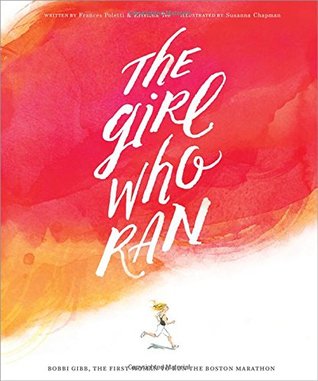
The Girl Who Ran: Bobbi Gibb, The First Woman to Run the Boston Marathon by Frances Poletti & Kristina Yee

Share

nfpb2017

Nonfiction Wednesday

Nonfiction Picture Book Wednesday is hosted by Kid Lit Frenzy and was started to help promote the reading of nonfiction texts. Most Wednesdays, we will be participating and will review a nonfiction text (though it may not always be a picture book).
Be sure to visit Kid Lit Frenzy and see what other nonfiction books are shared this week!

The Girl Who Ran: Bobbi Gibb, The First Woman to Run the Boston Marathon
Authors: Frances Poletti & Kristina Yee
Illustrator: Susanna Chapman
Published June 15th, 2017 by Compendium Inc.

Summary: “She said she would do it, she wasn’t a liar; she’d show them by running like the wind in the fire.” When Bobbi Gibb saw the Boston Marathon her mind was set—she had to be a part of it. She trained hard, journeying across America to run on all kinds of terrain. But when the time came to apply for the marathon, she was refused entry. They told her girls don’t run, girls can’t run. That didn’t stop Bobbi.

In 1966, the world believed it was impossible for a woman to run the Boston Marathon. Bobbi Gibb was determined to prove them wrong. She said she would do it, she wasn’t a liar; she’d show them by running like the wind in the fire.

This picture book tells the true story of how she broke the rules in 1966 and how, one step at a time, her grit and determination changed the world. Created in collaboration with Bobbi Gibb and the perfect gift for would-be runners, kids of all ages, and everyone out there with a love of sport.

ReviewRecently I was introduced to what happened to Kathrine Switzer in the 1967 Boston Marathon as it was the 50th anniversary. I thought she was the first woman to run the marathon (and officials attempted to stop her as she ran the race), but this story of Bobbi Gibb showed that the first woman stepped up the year before. Bobbi Gibb is such an inspiration. She trained and trained for the marathon, went against her parents’ wishes, and did something no one had ever done before. Gibb’s story combined with the beautiful lyricism of the text and freeness of the painted illustrations makes Gibb’s story run right into your heart.

Teachers’ Tools for Navigation: Yet another HERstory that needs to be shared with students as it is a part of history that is left out. Gibb’s story can be added to other women’s rights texts to build a lit circle or jigsaw activity where students learn and share about the struggles and victories of women throughout time.

Additionally, the back matter of The Girl Who Ran has a beautiful timeline that can be used to teach this text feature.

Discussion Questions: What is the theme of Bobbi Gibb’s story?; What is the purpose of the timeline in the back matter?; How did the repetition of “She said she would do it, she wasn’t a liar; she’d show them by running like the wind in the fire.” add to the story of the first woman who ran the Boston Marathon?; What does the act of Bobbi’s mom taking her to the marathon show about her?

Flagged Passages: 

Read This If You Love: The Book of Heroines by Stephanie Warren Drimmer and other books about amazing woman in history

Recommended For: 

classroomlibrarybuttonsmall  

Signature

**Thank you to Angeline at Compendium for providing a copy for review!**

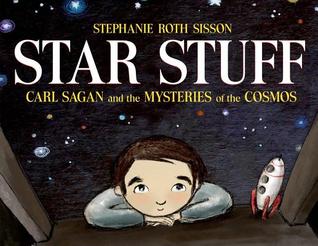
Star Stuff: Carl Sagan and the Mysteries of the Cosmos by Stephanie Roth Sisson

Share

Star Stuff: Carl Sagan and the Mysteries of the Cosmos
Author: Stephanie Roth Sisson
Published: October 14, 2014 by Roaring Brook Press

A Guest Review by Brittany Brown

Summary: A curious boy living in a small city apartment finds the world astonishing. He wants to know about light bulbs, inch worms, and rocket ships. Carl sets out on a journey to find answers, but finds bigger, even more powerful questions. Through his research and studies, Carl eventually earns the title of Dr. Carl Sagan and spends his life seeking knowledge and understanding about the universe. This young

boy’s contributions to science and education have inspired many children everywhere to question the world around them. His story will resonate every child who has ever wondered “how” or “why” or spent an evening looking up at the night sky.

Review: I am constantly looking for books which will inspire my students and get them excited about learning. This book, which is brought to life with beautiful illustrations and the great mysteries of the universe, did that for myself as an adult, too. After reading it, everyday life is once again imbued with the magic and novelty it had in childhood. In Sagan’s eyes, there is no phenomenon too mundane to investigate. The curiosity which most adults leave behind drove Sagan to be the lifelong learner that all teachers hope to foster in their students. Reading this book shows that science is all around us, that we all belong here in the universe, and that in everyone there is a scientist. I absolutely loved reading this book, and as a new teacher building my classroom library, this is the first one which I will be purchasing multiple copies of to share with my students.

Teachers’ Tools for Navigation: This story would pair well with any science or biography unit. It would also serve as a great example of narrative nonfiction.

The most obvious use for this story is in a science unit. I would love to use this book to open up a discussion at the beginning of a unit on the solar system. Not only would it generate excitement, it would also begin to build some vocabulary and background knowledge. It would make the information in the unit more personal and relevant to kids, and would be a great launching point to encourage students to come up with their own questions about how the world works.

This book is also a wonderful book to use for mini lessons in writing. Using this book as an example, a teacher could lead a discussion on how to choose which life events to include in a biography, how to sequence and organize it, and how to incorporate quotes from a historical figure into a writing piece. It also shows how to include facts and achievements in an engaging way, and how to demonstrate a person’s impact on history.

Finally, this book would also be a superb example of narrative nonfiction. Despite containing lots of scientific facts, it reads like a storybook and the illustrations do much of the talking. Students will be captivated with the descriptive narration, and discussions could explore their experiences as readers or how they may be able to attempt this style in their writing.

Discussion Questions: What are your big mystery questions? Where would you go to try to find answers to them? What character traits helped Carl on his journey? What impact did he have on the world? Who does he remind you of?

Book Trailer: 

Read This If You Loved: What Do You Do with an Idea? By Kobi Yamada, I Wonder by Annaka Harris, You Are Stardust by Elin Kelsey, On a Beam of Light: A Story of Albert Einstein by Jennifer Berne, The Boy Who Loved Math: The Improbable Life of Paul Edros by Deborah Heiligman, Look Up!: Henrietta Leavitt, a Pioneering Woman Astronomer by Robert Burleigh

Recommended For:
 classroomlibrarybuttonsmall

Thank you, Brittany!

RickiSig

Teaching Guide for Hazardous Tales: Alamo All-Stars by Nathan Hale

Share

nfpb2017

Nonfiction Wednesday

Nonfiction Picture Book Wednesday is hosted by Kid Lit Frenzy and was started to help promote the reading of nonfiction texts. Most Wednesdays, we will be participating and will review a nonfiction text (though it may not always be a picture book).
Be sure to visit Kid Lit Frenzy and see what other nonfiction books are shared this week!

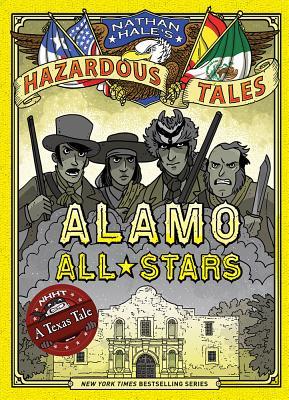
Hazardous Tales: Alamo All-Stars
Author and Illustrator: Nathan Hale
Published March 29th, 2016 by Abrams Books

Summary: “Remember the Alamo!” That rallying cry has been a part of Texas lore for generations. But who were the ragtag group of adventurers behind the famous slogan, and how did they end up barricaded in a fort against a Mexican army? Who survived, who died, and how? This sixth book in the bestselling Hazardous Tales series tracks the Lone Star State’s bloody fight for independence from the Mexican government. It features the exploits of the notorious Jim Bowie, as well as Stephen Austin, Davy Crockett, and other settlers and soldiers who made the wild frontier of Texas their home—all told with the inimitable style and humor for which Nathan Hale is known.

Teaching Guide with Discussion Questions and Activities from Abrams by ME!, Kellee Moye: 

How to use this guide

  • For Alamo All-Stars, opportunities to have discussions and complete activities across different content areas are shared. In the “Fun Across the Curriculum” section, these activities and discussion questions are split into subject areas and are written as if they are being asked of a student.
  • At the end of the guide, Common Core State Standards and Next Generation Science Standards are listed that can be met when the books are extended using the activities and discussion questions.

Fun Across the Curriculum

  • Language Arts
    • The title page and the cover show two different illustrations of the Alamo. Compare and contrast the illustrations. Using information from the text, when is the cover illustration from, and when is the title page illustration from?
    • Why would Alamo All-Star need two narrators, Nathan Hale and Vincente Guerrero, while all of the other Hazardous Tales books only needed Hale? How would the story have differed if only Hale had narrated the book? What about only Guerrero?
    • On page 10-11, Guerrero uses the metaphor of a set table to describe Texas in the 1820s. Why does he use this metaphor to describe the state of Texas at this time?
    • On page 18, Hale uses another metaphor of an explosive barrel to illustrate the situation Austin and his settlers were in. How does an explosive barrel and Austin’s situation relate to each other?
    • After researching cholera (science section), look at Hale’s personification of the disease on page 37. Why did he choose this creature to embody cholera?
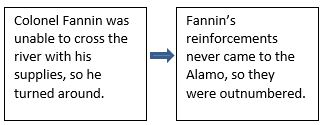
    • Many different events and problems caused Santa Anna’s army to be able to easily defeat the Texans at the Battle of the Alamo. Create a cause/effect graphic organizer showing the correlation between different events leading up to the Battle of the Alamo and the fall of the Alamo.
      • For example:
    • Much of what happened at the Alamo during the infamous battle as well as stories about Davy Crockett and Jim Bowie have become an American legend. What is a legend? Why has some parts of the story of the Alamo become a legend and not a complete factual part of history?
    • Throughout the book, Hale includes direct quotes from primary sources. How do these quotes enhance the story? How are primary sources more reliable when sharing historical events than secondary sources?
  • History/Social Studies
    • The page of Texas on the end sheets shares the different battles during the Texas revolution. Using Alamo All-Stars, convert the map into a timeline by graphing each battle on the date/year they were fought.
    • Using the text feature on pages 10-11 that shared the 1820s Texas settlers, answer the following: how did each settler threaten each other? Why was Texas such a treacherous place at this time? Who was the rightful settler of Texas?
      • Then, split the class up into 8 groups and assign a group of settlers to each group of students. They then should research the group, and determine how they ended up in Texas, why they felt they deserved to stay in Texas, etc.
    • Page 12 defines a filibuster and gives an example of one. What other famous filibusters have happened in history? Use the Wikipedia article “Filibuster (military)” and its resources to learn about other filibuster expeditions. Unlike the James Long Expedition, were any successful?
    • Throughout the book, Mexico goes through different types of governments: a monarch (inferred from p. 16), a republic (mentioned on p. 17), and a despotic (mentioned on p. 40). Compare and contrast the similarities and differences of the different types of governments.
    • Page 88 shows one of the many flags that have flown over Texas. Using the Texas State Historical Information article “Flags of Texas” and the Flags of the World website, learn about all of the different flags that Texas has flown. Why have so many flown over Texas? Where does the phrase “six flags of Texas” come from?
    • On page 104, Santa Anna compares himself to Napoleon. How are the two men similar? How do they differ?
    • On page 113, Hale jokes, “Don’t feel bad. Everyone forgets about Goliad.” Why do you think the Battle of the Alamo is remembered by so many while the massacre at Goliad is not?
    • Why are Travis, Seguin, Bowie, and Crockett pictured on the front of Alamo All-Stars? Is this who you would consider the all-stars of the Alamo? If not, why not? If so, what did they do to deserve that title? Is there anyone else you would consider an Alamo all-star?
  • Science
    • Cholera killed tens of thousands in the summer of 1833 including Bowie’s wife and her family. What is cholera? How does it spread? Why did Bowie’s family try to travel north to escape it?
    • On page 47, Noah Smithwick was quotes sharing that one member of the Gonzales army had a nose bleed; however, he used scientific terms such as nasal appendage and sanguinary fluid. What do these terms mean?
  • Math
    • On page 31, Rezin Bowie mentions that they were outnumbered 14 to 1 during the battle. Using the illustrations and clues in the “Jim Bowie and the Lost Mine” section to determine how many men were on Bowie’s side and how many men they fought and defeated.
    • Santa Anna’s army outnumbered the Texans by a large amount. Using the information shared about the number of men in each side of the battle, determine an approximate ratio of the battle.
      • After you estimate using Alamo All-Stars, research the actual number of men at the battle and determine the ratio. How close was your estimate?
  • Foreign Language (Spanish and French)
    • Throughout the text, different Spanish words are used, many of which can be defined using context clues or connecting to the English language because they are cognates with a word you already know. Look through the book, and try to define all foreign language vocabulary. Some words throughout the book:
      • El Gran Libro Enorme de la Historia Mexicana (p. 6)
      • ejercito de las tres garantias (p. 9)
      • empresario (p. 12)
      • mucho (p. 16)
      • viva la revolución (p. 21)
      • fantástico (p. 31)
      • Dios y libertad (p. 36)
      • alcalde (p. 45)
      • fandangos (p. 72-84)
      • voy a firmarlo (p. 98)
      • mes amis (p. 103 | French)
        • Which words were easier to define? Why were they easier?
  • Music
    • At the Battle of the Alamo, both Santa Anna’s army and the Texas army played music (p. 91). Research to determine what music was played at the battle. Why would they play music while preparing for a battle?

The teaching guide, along with the other books in the series, can also be viewed at: https://www.scribd.com/document/326377929/NathanHale6-TeachingGuide or http://www.abramsbooks.com/academic-resources/teaching-guides/

Recommended For: 

classroomlibrarybuttonsmall closereadinganalysisbuttonsmall 

Signature

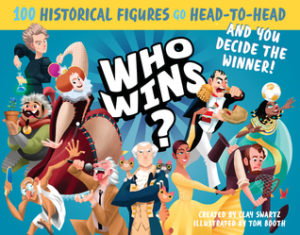
In the Middle School Classroom: Who Wins?100 Historical Figures Go Head-to-Head and You Decide the Winner! by Clay Swartz

Share

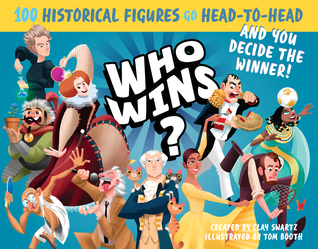
Who Wins? 100 Historical Figures Go Head-to-Head and You Decide the Winner!
Created by Clay Swartz
Illustrated by Tom Booth
Published July 12th, 2016 by Workman Publishing Company

Summary: Who would rock the mic at karaoke night? Abraham “The Great Emancipator” Lincoln or Jane “Lady Persuasion” Austen? How about a hot dog eating contest between Harry “Mr. Magic” Houdini and Mary “Mother of Frankenstein” Shelley? What about a pie contest? A staring contest? And who has a better chance of sneaking into Area 51, Isaac “Gravity Guy” Newton or Sacagawea aka “The Pathfinder”?

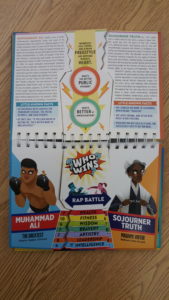
In Who Wins?: History, you decide the winner in over 50 head-to-head challenges between 100 of history’s most illustrious characters. But choosing the victor isn’t arbitrary. Readers must justify their answers using each of the historical figures’ six 0-10 category rankings in bravery, leadership, artistry, wealth, wisdom, and fitness; as well as facts from short biographies.

As funny as it is informative, the book is uniquely formatted so readers can match up each and every character in any of the head-to-head battles. History has never been so much fun!

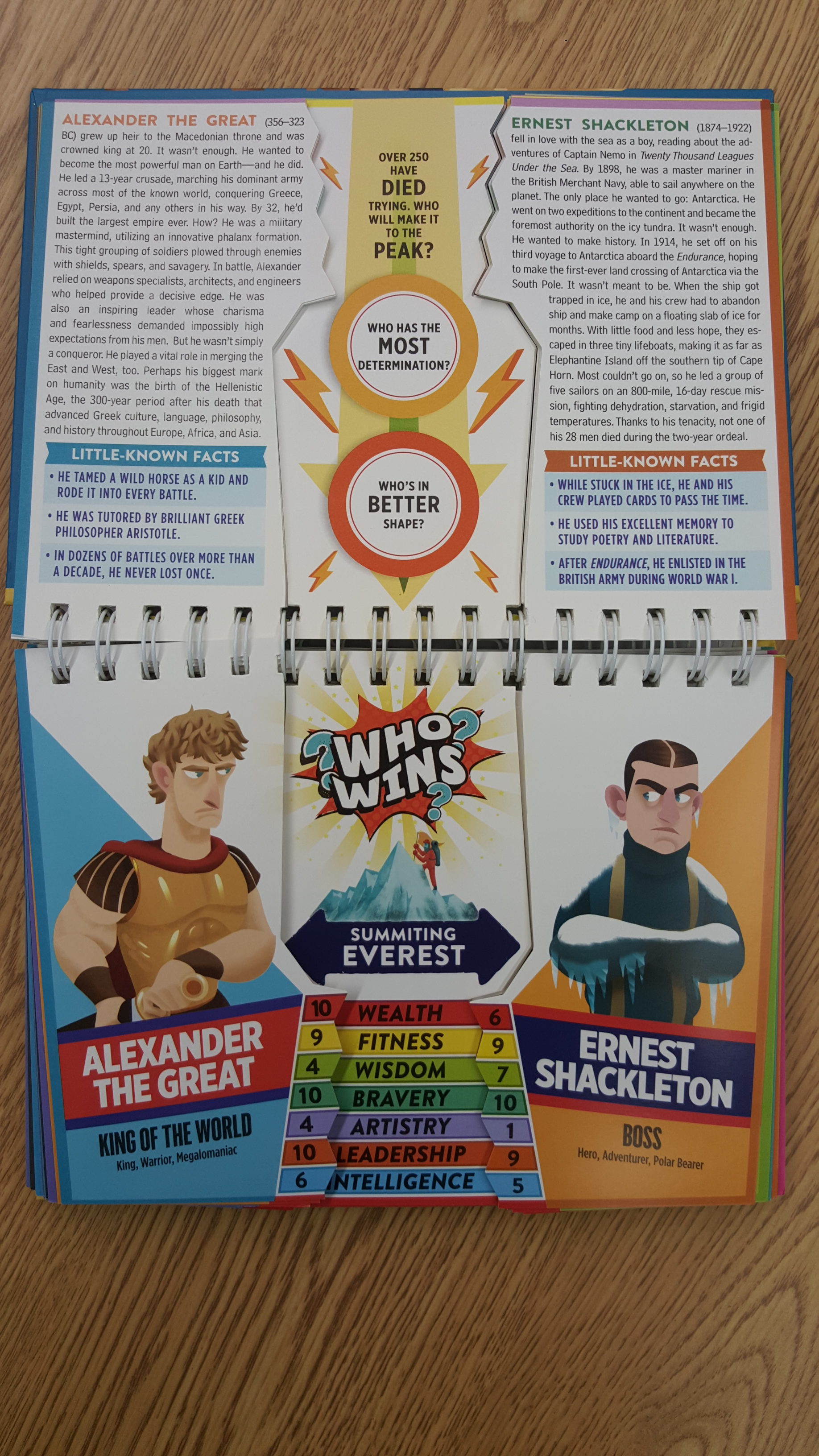
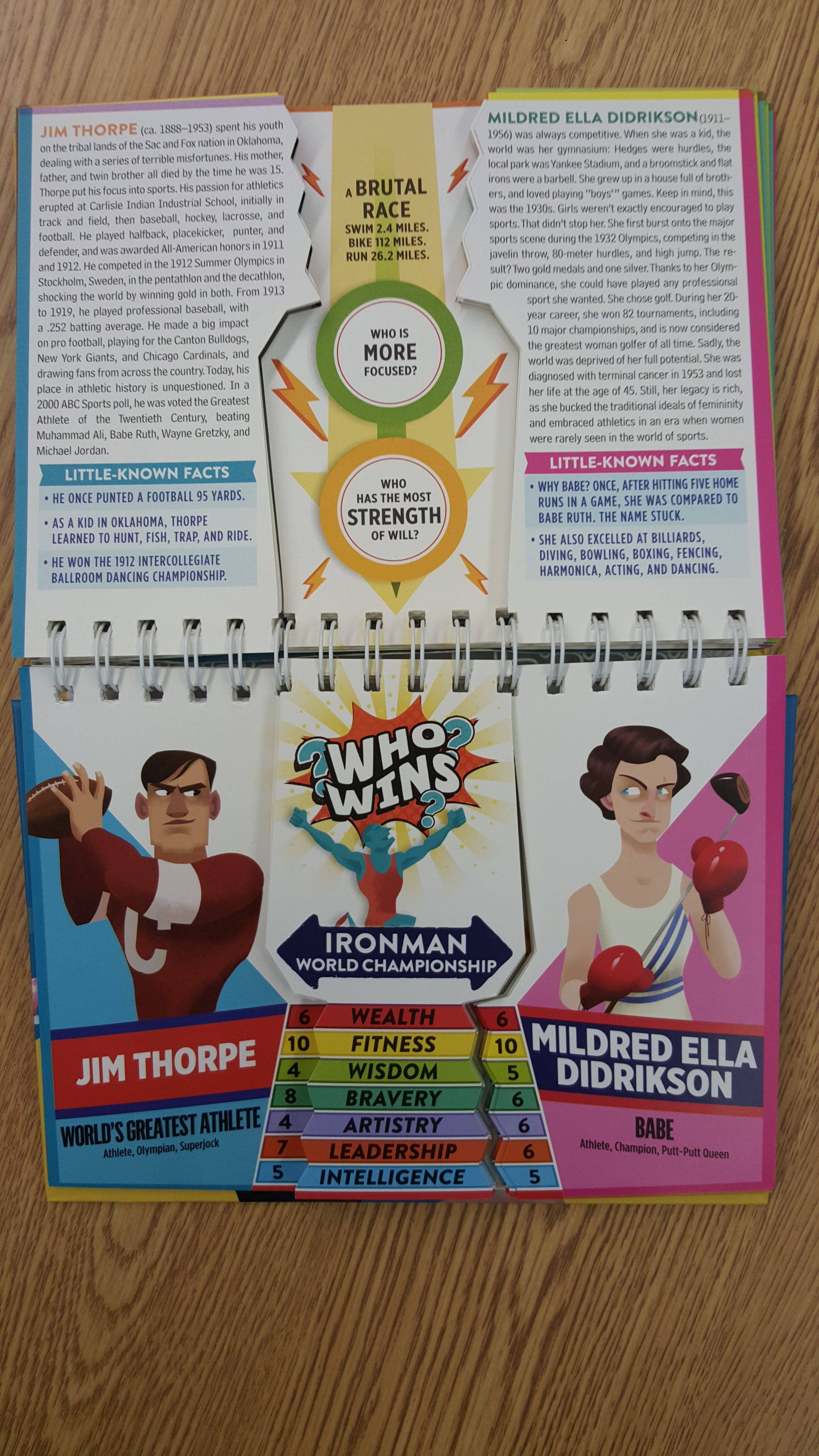
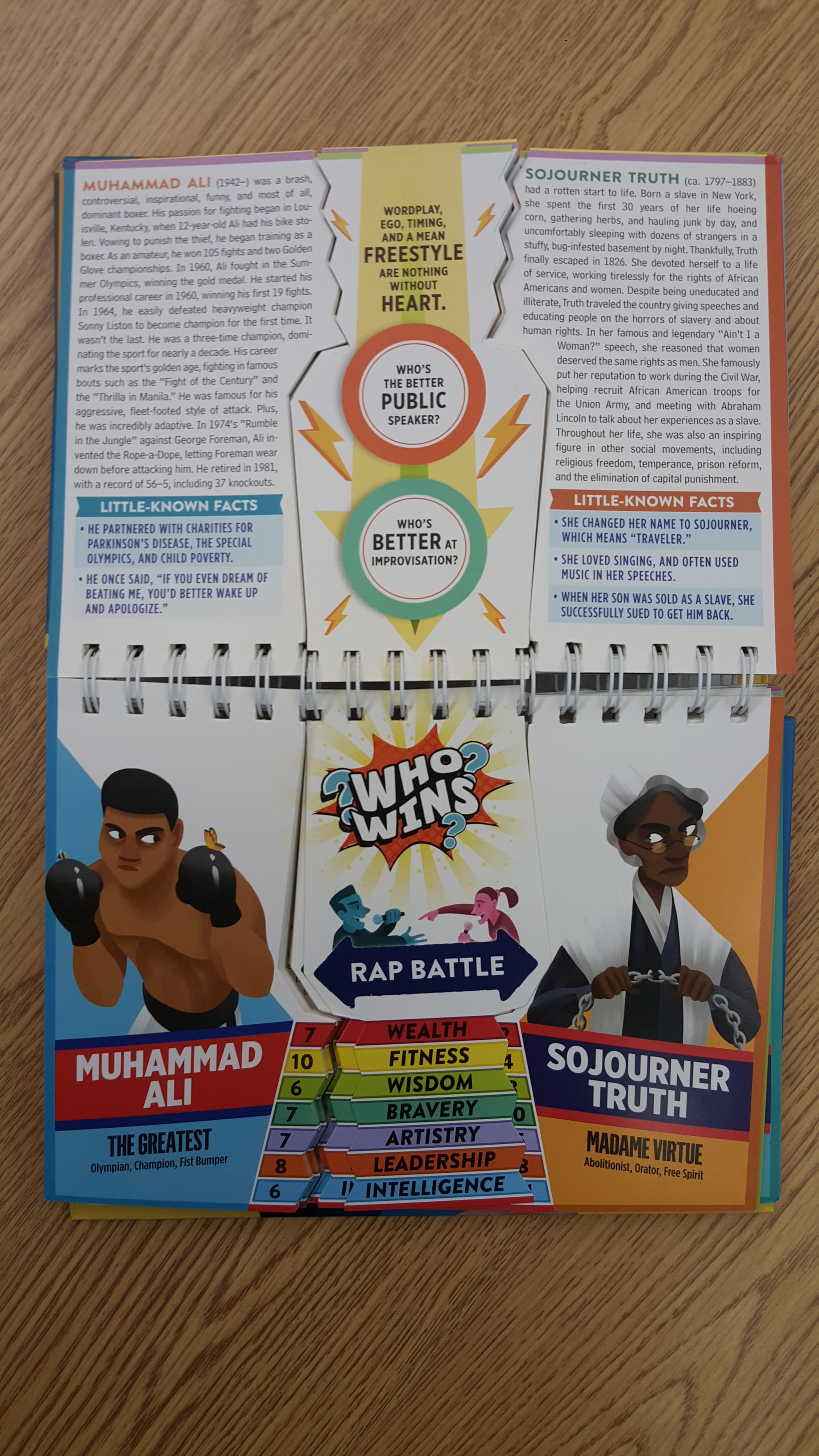
Review (from 10/26/16): Who Wins? is informative, funny, and so cleverly formatted that it is going to be a star in homes and classrooms. I love how the book gives each historical figure a nickname (either one they already were given, like Satchmo, or made up, like Gravity Guru for Isaac Newton) to add a bit of humor to the book; however, still makes sure to include a plethora of information about each figure including a bio then 3 little-known facts. Each head-to-head situation also helps guide your decision by giving some example questions to think about. Let’s look at a head-to-head, so you can really see how clever it is!

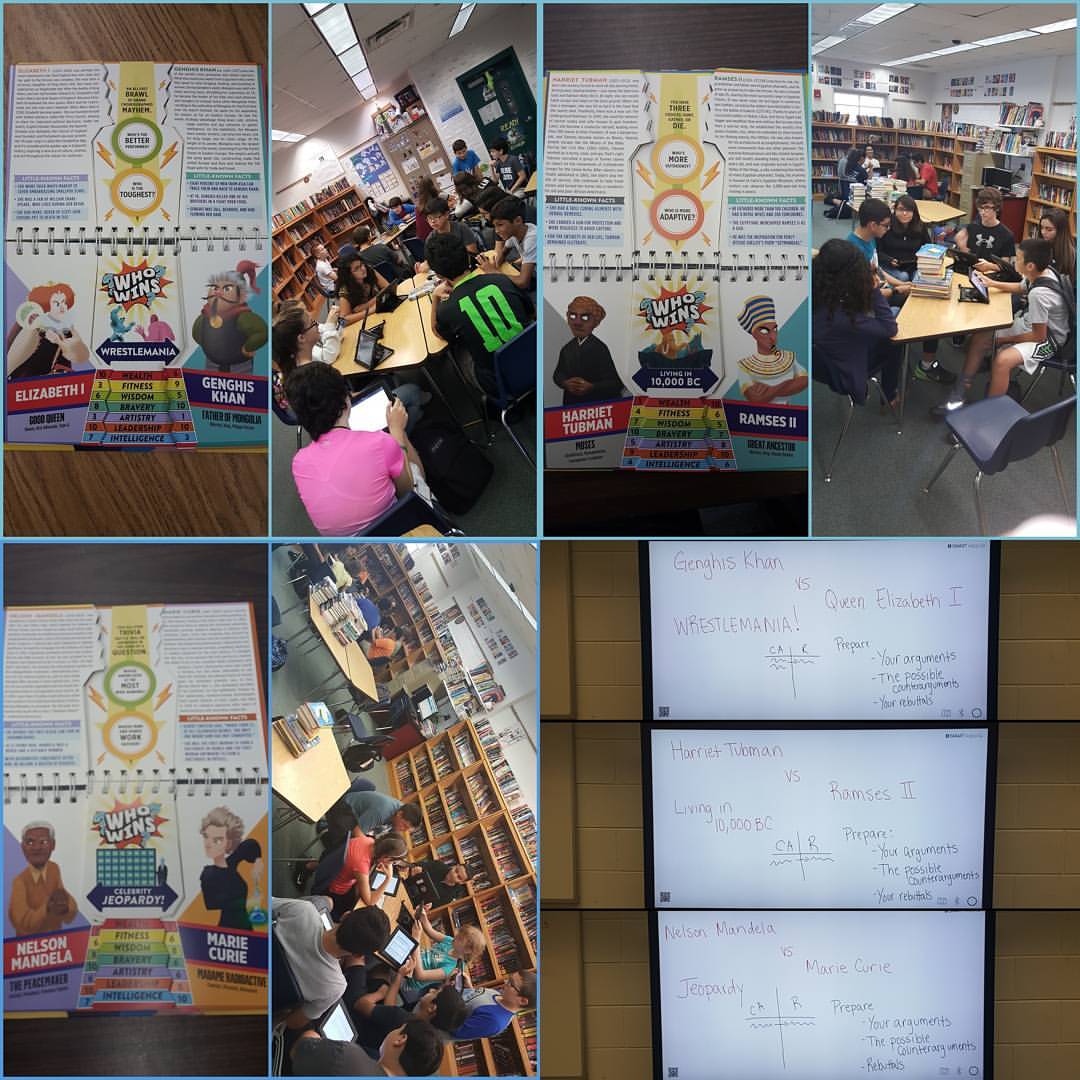
In My Classroom: Whenever I begin a debate unit, I always start with a mini-debate, and I wanted this year’s to include Who Wins? because I thought it was such an awesome class resource (and my students were slightly obsessed with the book). To start, I randomly picked a male and a female historical figure from each side of the Who Wins? book for each class. I didn’t choose the middle activity yet because I wanted my students to get to know their historical figures before I gave them the rest of the topic for the debate. For two days, the students researched their figures and tried to learn as much about them as possible. We talked about making sure to not just list dates but to get to know them as a person: their strengths, their weaknesses, their personality, their education, etc. Finally, on day three, I randomly revealed the rest of the debate topic and randomly put each class into two groups. We ended up with:

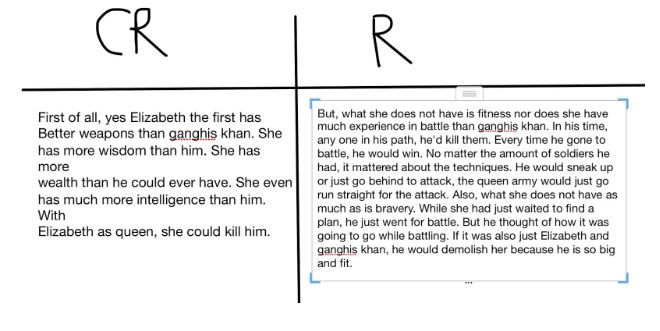
Who wins WRESTLEMANIA? Queen Elizabeth I or Genghis Khan?
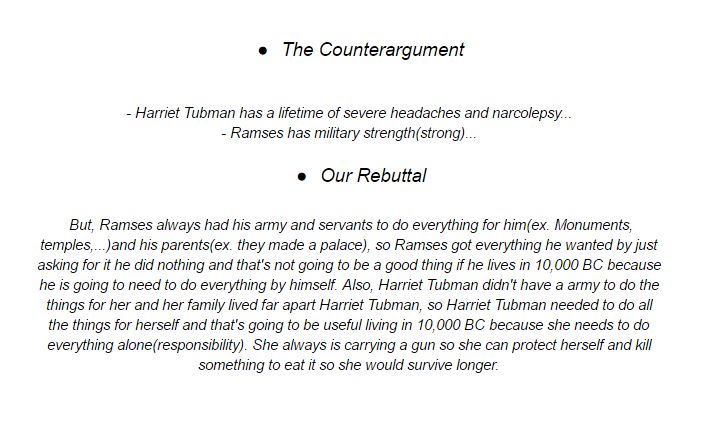
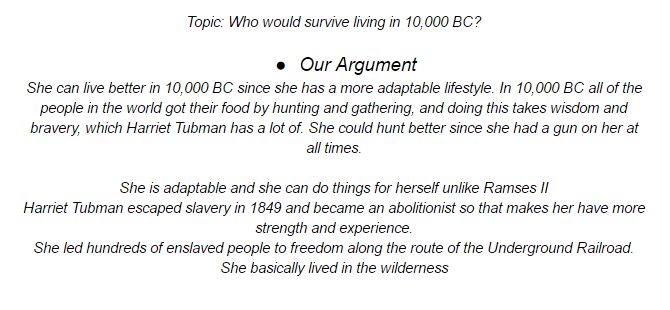
Who wins LIVING IN 10,000 BC? Harriet Tubman or Ramses II?
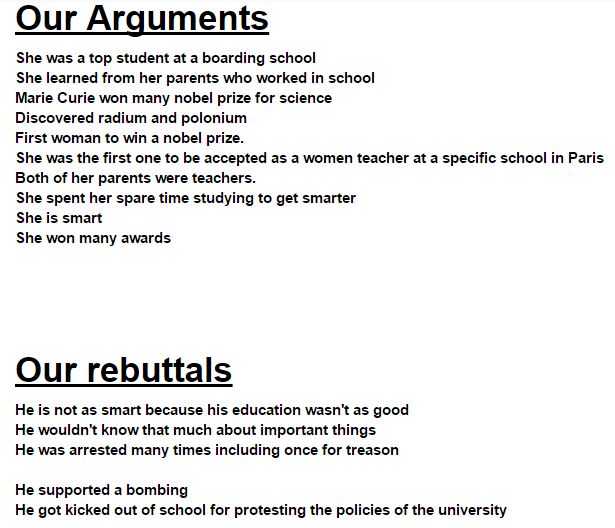
Who wins CELEBRITY JEOPARDY? Nelson Mandela or Marie Curie?
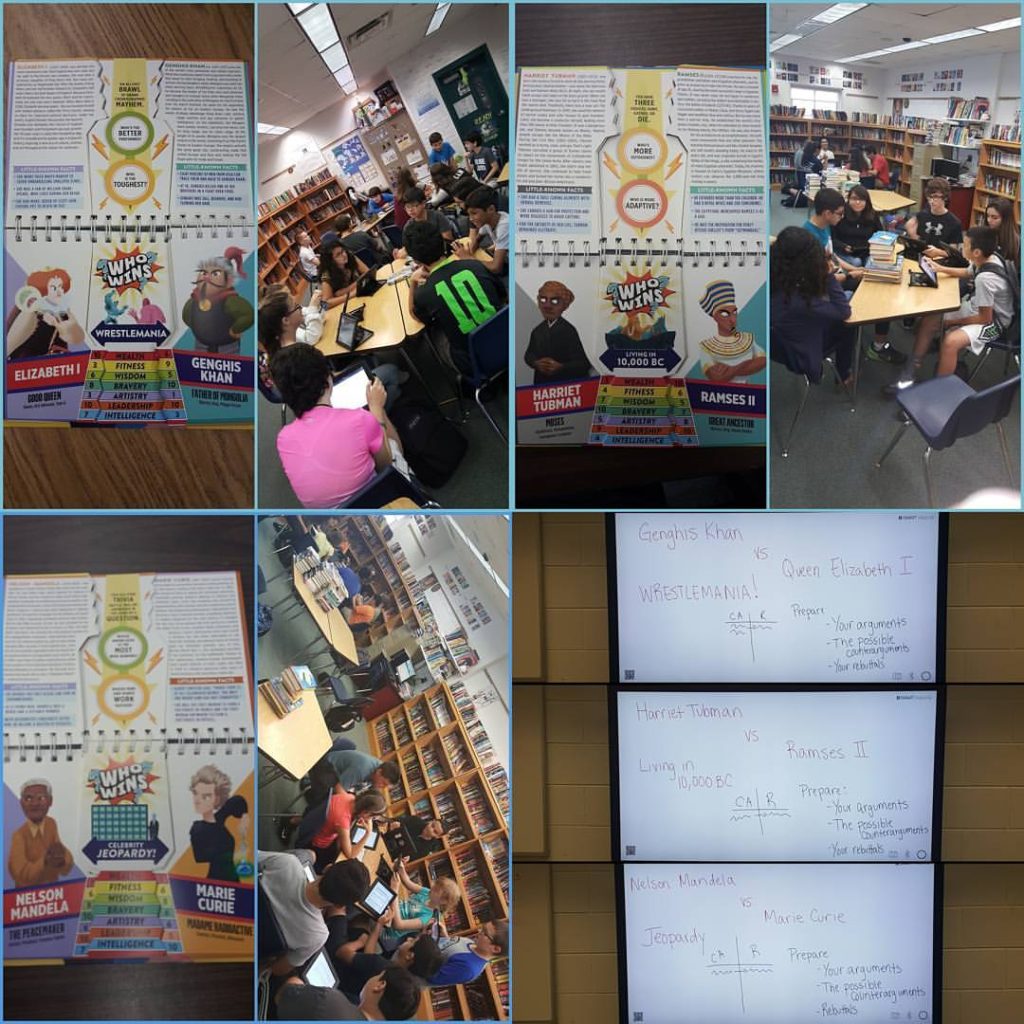
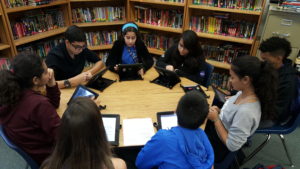
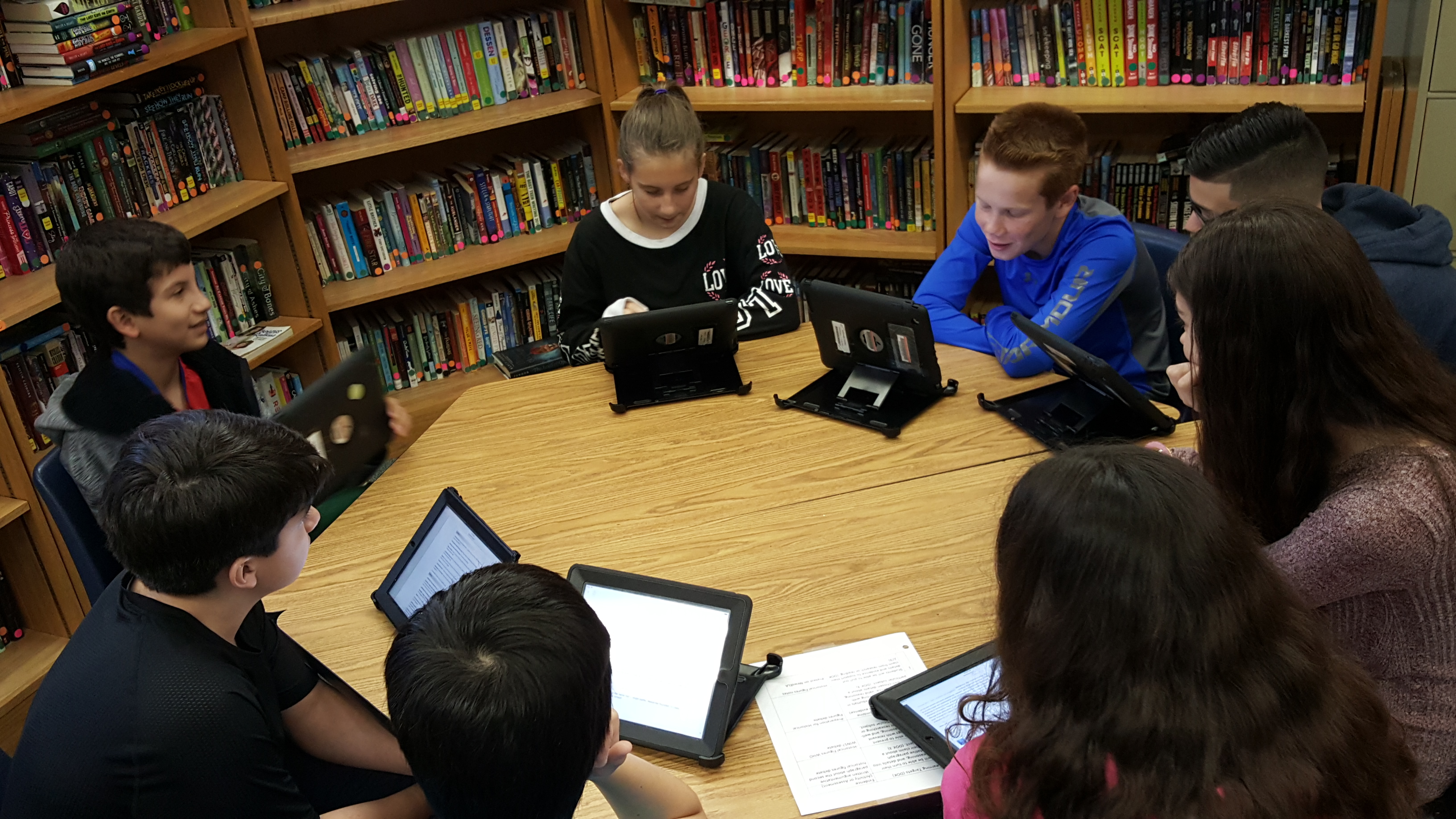
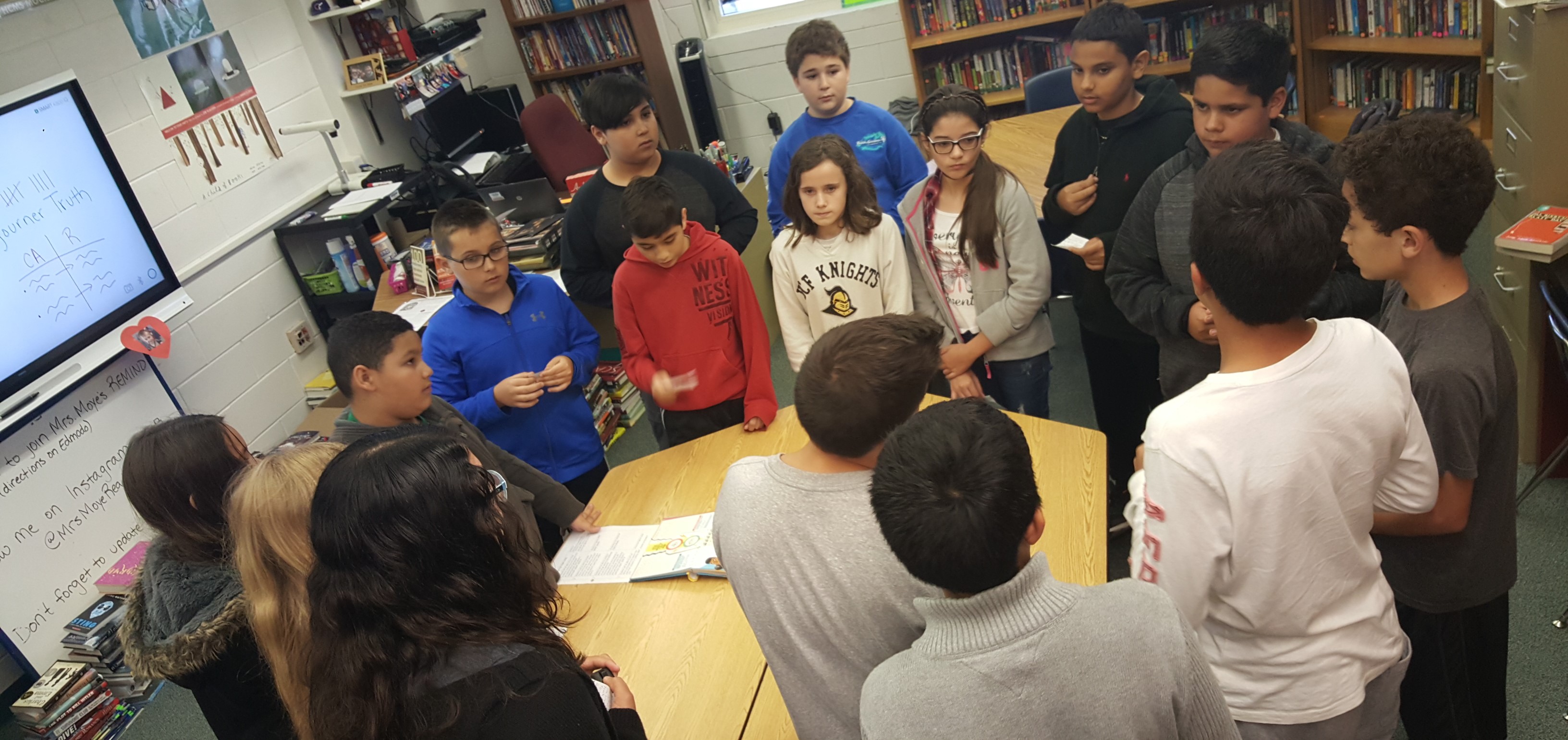
Each group then made a Google Doc that they could collaborate on, and they focuses on preparing their argument, possible counterarguments, and rebuttals to the counter argument. They could research more now that they knew the topic, and I shared Who Wins? information with them as well (see photo above).
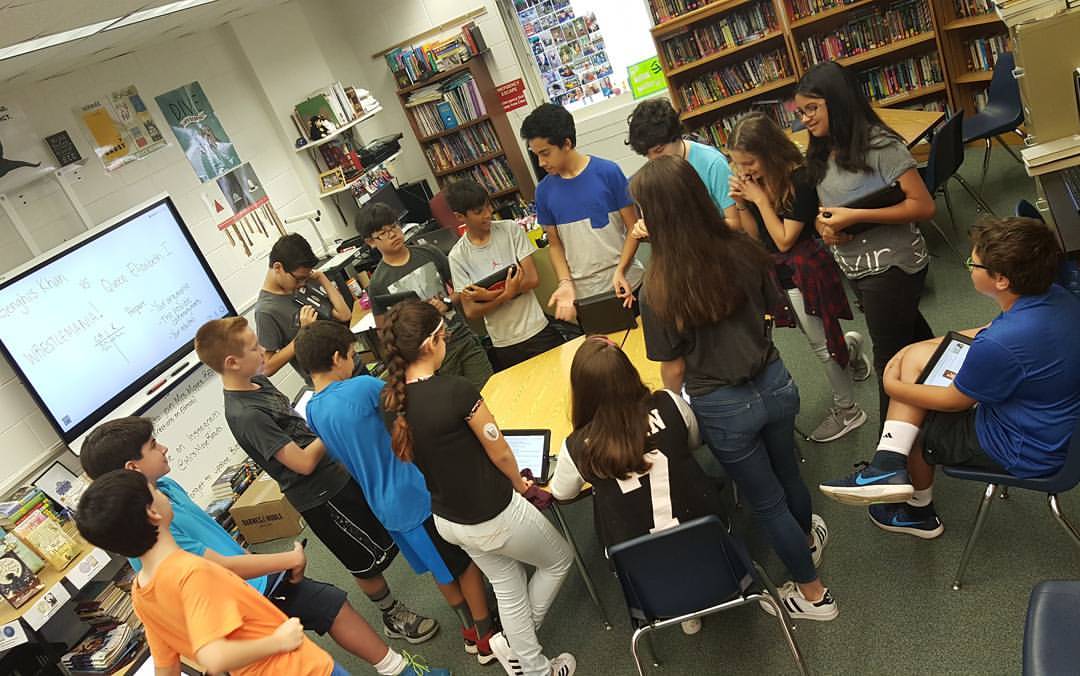
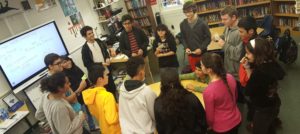
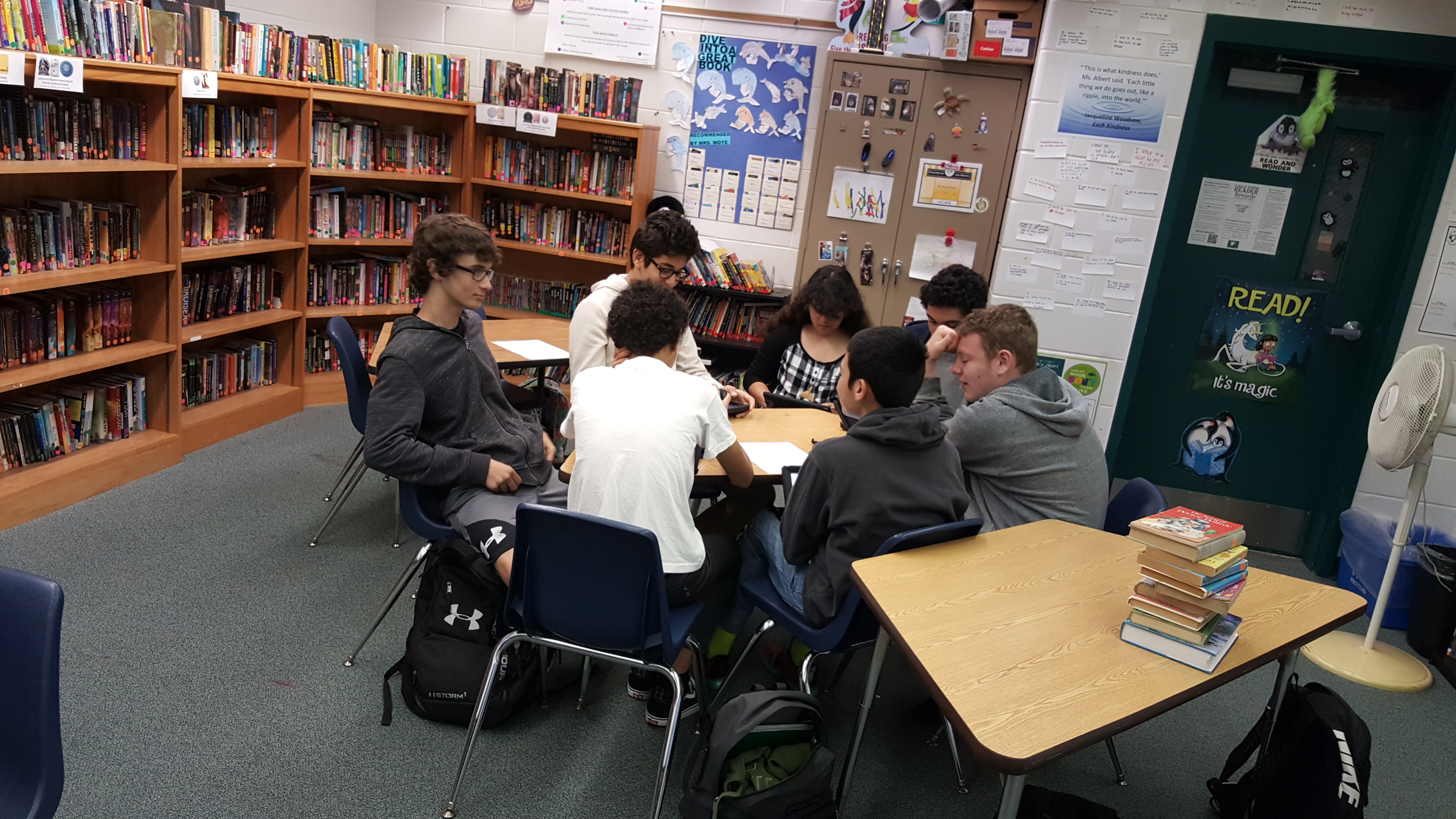
Then, after a couple of days of collaboration, we had our mini-debate. The most successful was the Queen Elizabeth I vs. Genghis Khan because they not only researched their historical figure, but they also researched Wrestlemania which allowed the debate go to a whole different level than my other two periods. The Nelson Mandela vs. Marie Curie debate had the opposite problem: they didn’t research Jeopardy at all which made for the debate never really having a clear winner because they were just debating who was smarter. The Ramses II vs. Harriet Tubman went well though the Harriet Tubman side never pulled out their best argument: she primarily lived on the run in the wilderness! In the end, Wrestlemania was a tie; Ramses II would survive better in 10,000 BC; and Marie Curie would win Jeopardy.

Some Students’ Collaborative Notes: Here are some examples of the collaborative notes some groups put together when preparing for the mini-debate. These are not examples of the initial research notes they took on their historical figures.

Genghis Khan
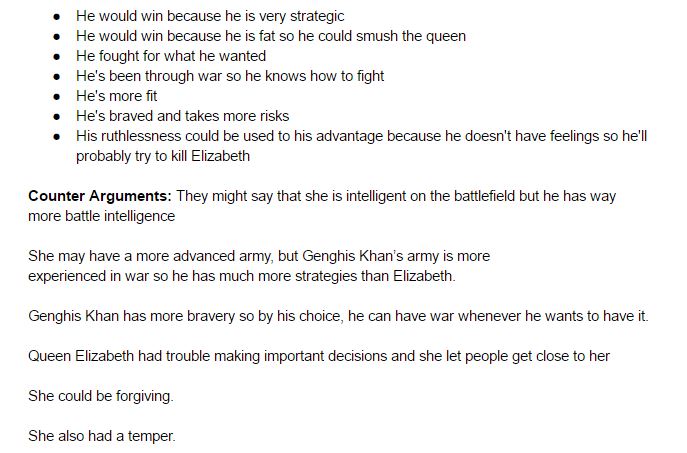
Harriet Tubman: 
Marie Curie:
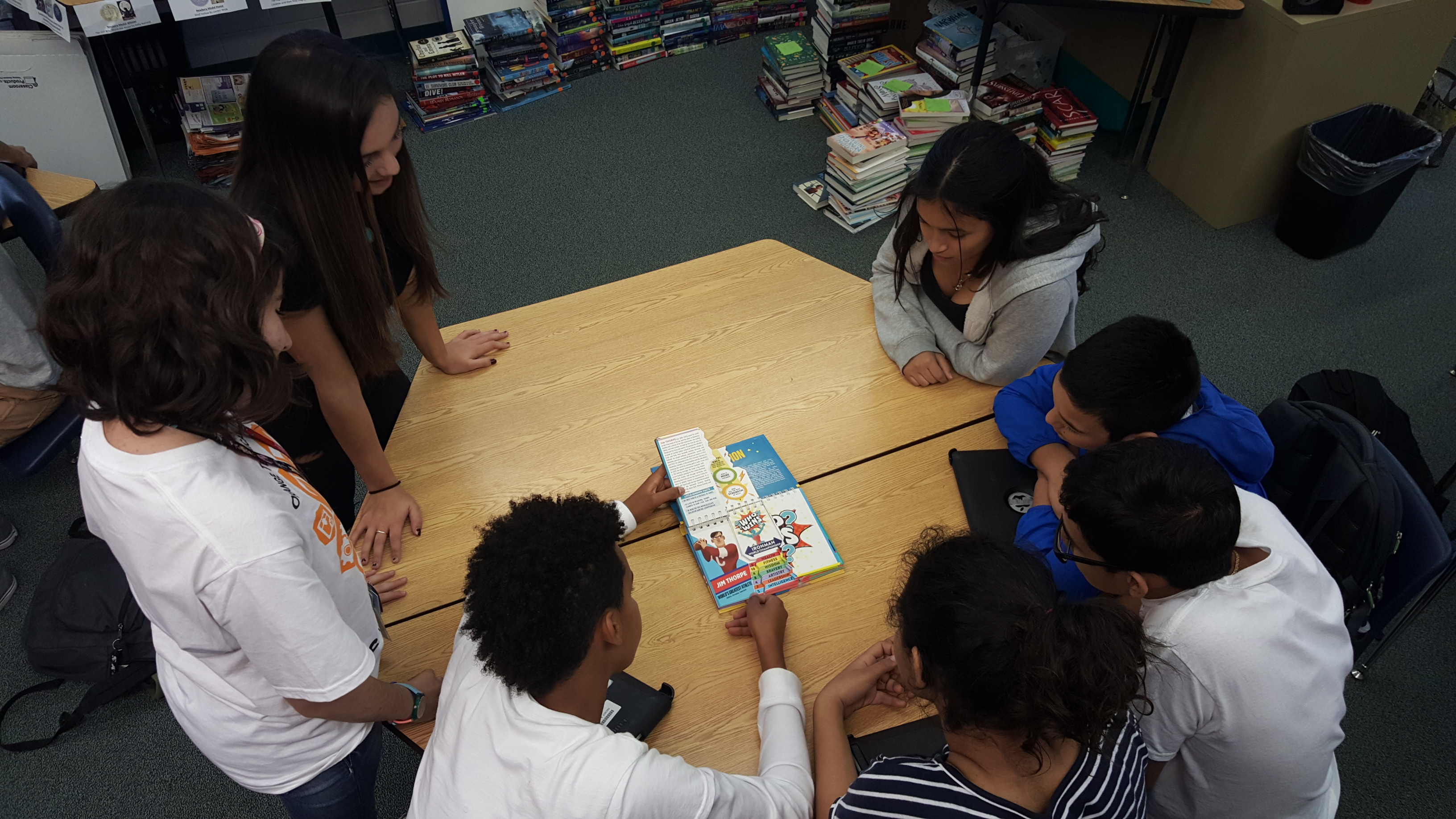
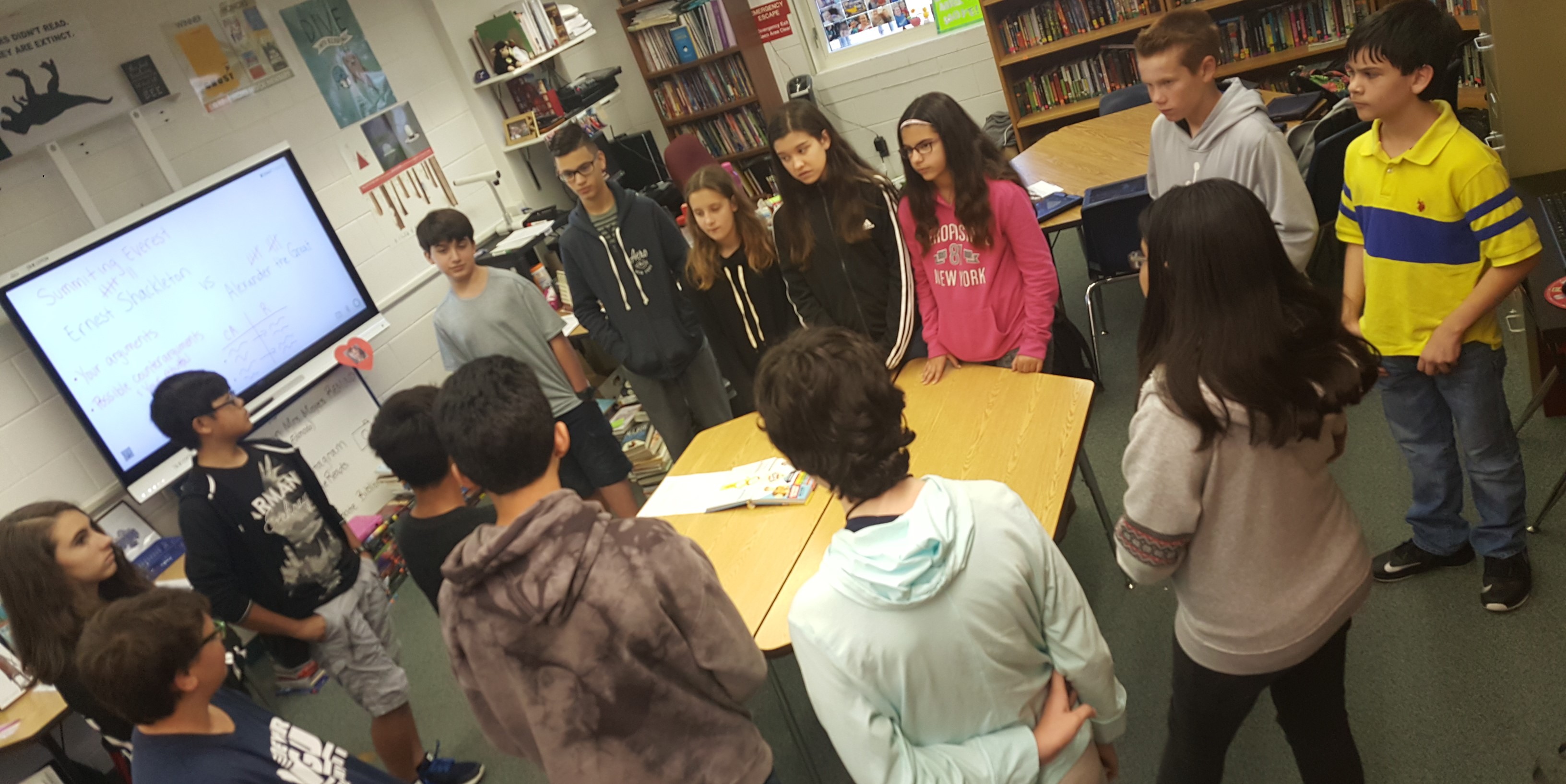
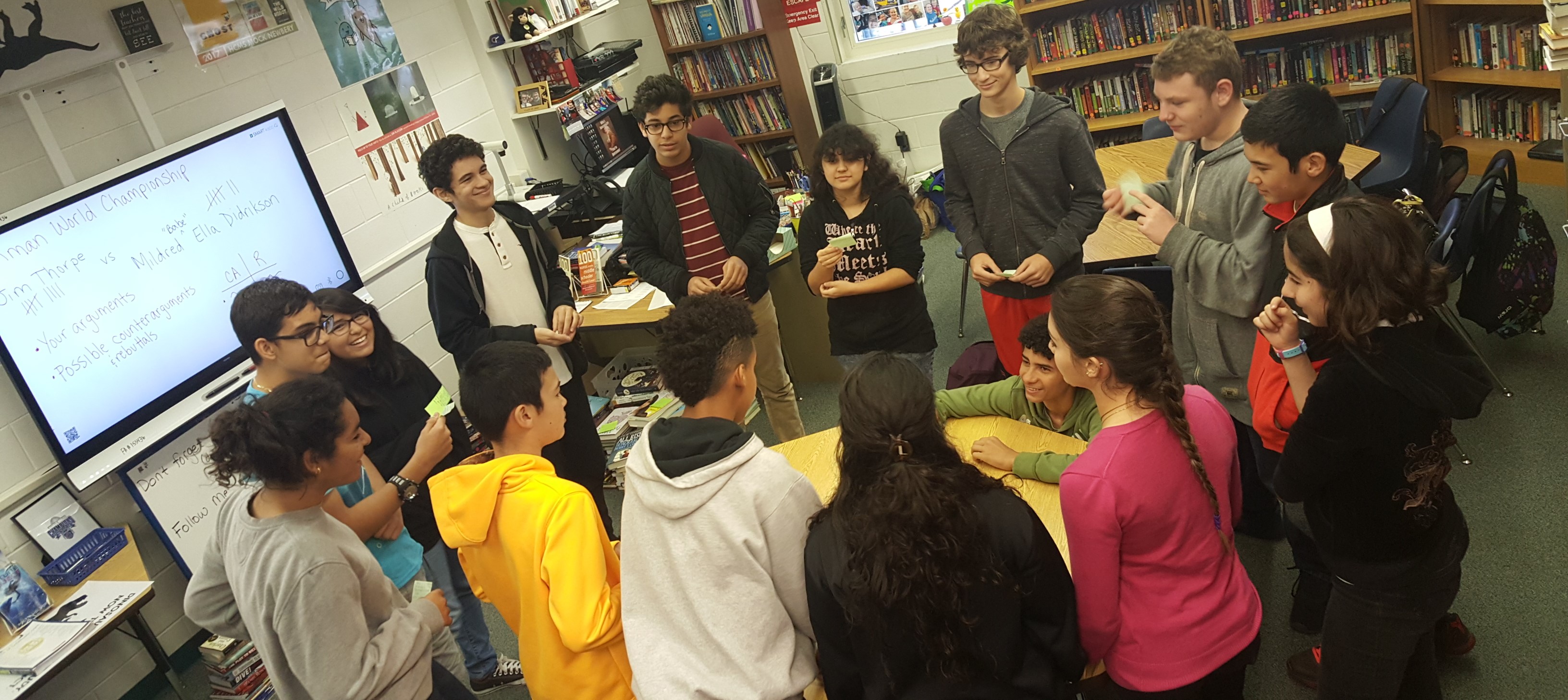
Second Debate Using Who Wins?For our second debate, I did things a little bit differently. Instead of giving them the historical person first, for each class, I randomly chose the center tile (the topic) and we ended up with: Rap Battle, Ironman World Championship, and Summiting Everest. I then let the students, within their groups, go through their side of the book to find the person they wanted for their side of the debate.
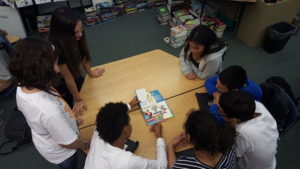
They used their prior knowledge, the bios, and the stats for each person to try to pick the best for the debate. Our people ended up being:

Who Wins a Rap Battle: Muhammad Ali vs. Sojourner Truth?
Who Wins the Ironman World Championship: Jim Thorpe vs. Mildred Ella Didrikson?
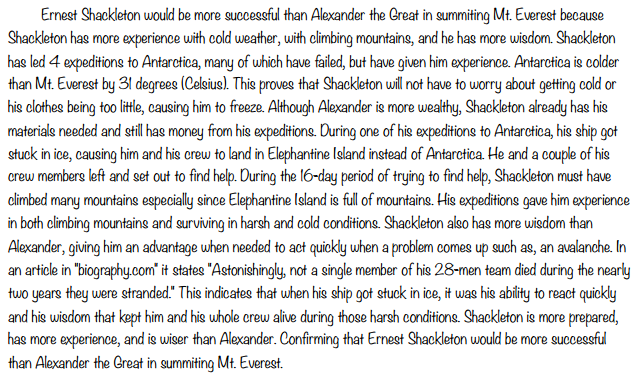
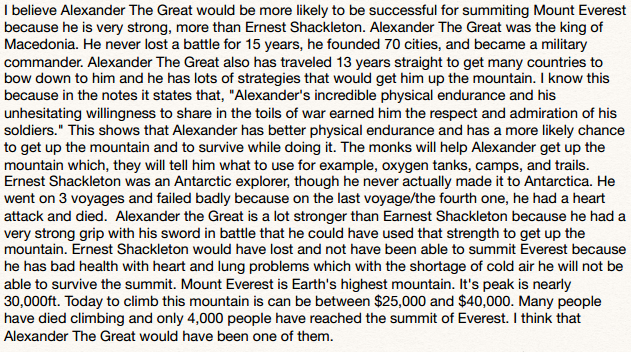
Who Wins at Summiting Everest: Ernest Shackleton vs. Alexander the Great?
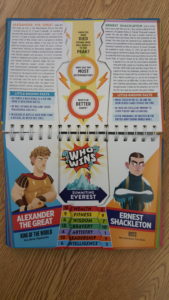
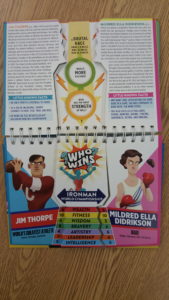
This time around, students were much more invested in their historical figure and with the topic already chosen, they could narrow down their research. Also, they realized how important it was to research the topic. Students also were given 2 extra days to research this time though given the same amount of time (2 days) to collaborate.
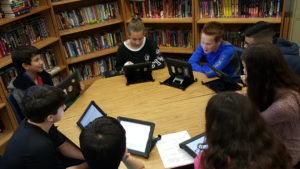
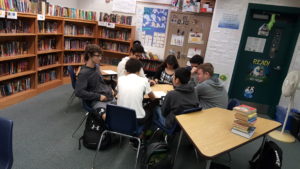
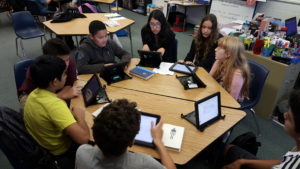
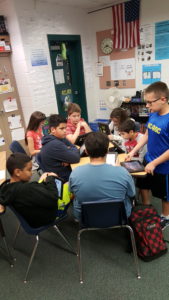
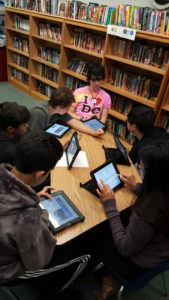
Once we got to the debates, I made a decision I was so happy about: Students were not allowed to have their iPads with them. They could have 1 Post-it note (front only) with any specifics that were tough to remember (years, prices, times, etc.), but that was it. And the debates went so much better! Students knew their stuff, and the debates were so intense, detailed, and close!
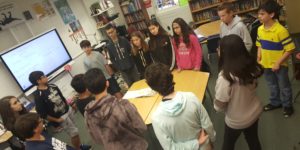
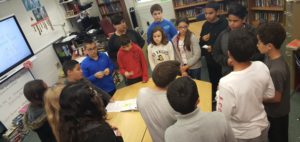
In the end, we’re still not sure who would be most successful at summiting Everest, Shackelton or Alexander the Great; Jim Thorpe is more likely to win the Ironman World Championship; and Muhammad Ali would win a rap battle vs. Sojourner Truth.

Final Assessment: As a final cumulative assessment, I asked my students to write me an argumentative paragraph stating why they felt their historical figure would be more successful than the other. Students were asked to have multiple reasons why with evidence to support their claim.

Examples from the Shackleton vs. Alexander the Great debate: 
Reflection: Using Who Wins?, I was able to create a standards-based unit that allowed students to not only debate, research, and read informational texts, but work collaboratively, think outside the box, and cite evidence to support their claims. I know the students learned from it as well, and they asked to do another, so I know they enjoyed it. They also now realize that learning just dates or facts about a person isn’t thorough research, it is important to know both sides of an argument so you can have a rebuttal, and that you need to research all aspects of a debate to ensure you are arguing for the right reasons. Overall, I call this a win!

Honey Girl: The Hawaiian Monk Seal by Jeanne Walker Harvey

Share

nfpb2017

Nonfiction Wednesday

Nonfiction Picture Book Wednesday is hosted by Kid Lit Frenzy and was started to help promote the reading of nonfiction texts. Most Wednesdays, we will be participating and will review a nonfiction text (though it may not always be a picture book).
Be sure to visit Kid Lit Frenzy and see what other nonfiction books are shared this week!

Honey Girl: The Hawaiian Monk Seal
Author: Jeanne Walker Harvey
Illustrator: Shennen Bersani
Published February 1st, 2017 by Arbordale Publishing

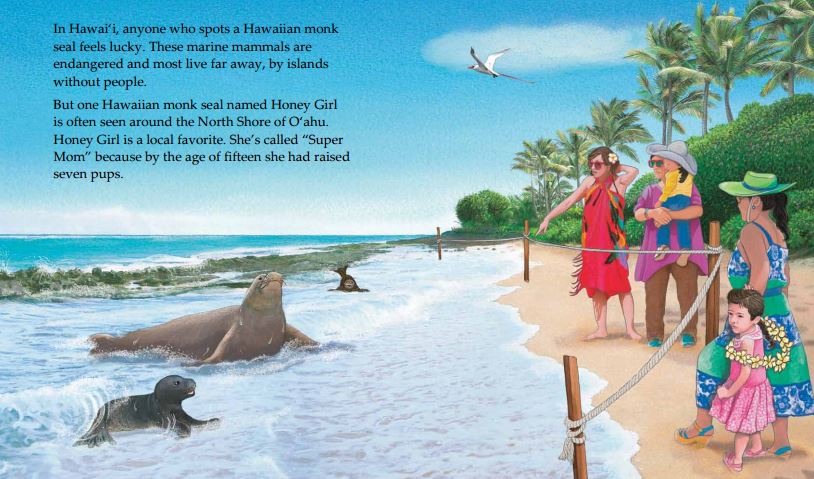
Summary: Hawaiian locals and visitors always enjoy spotting endangered Hawaiian monk seals, but Honey Girl is an extra special case. She has raised seven pups, and scientists call her “Super Mom.” After Honey Girl is injured by a fishhook, she gets very sick. Scientists and veterinarians work to save Honey Girl until she can be released back to her beach. This true story will have readers captivated to learn more about this endangered species.

Website: https://arbordalepublishing.com/bookpage.php?id=HoneyGirl

Review: I loved Honey Girl’s story. Honey Girl is a mother, a survivor, a symbol of hope, and a miracle of science. Jeanne Walker Harvey did a fabulous job not only developing Honey Girl’s character and developing her story but intertwining all of that with scientific undertones. She brings to the forefront issues of endangered species, humans effects on animals, and the importance of conservation scientists. All of this mixed with the colorful illustrations and amazing setting gives us such a beautiful picture picture.

Teachers’ Tools for Navigation: Honey Girl’s back matter gives such a wealth of information. Anything that wasn’t taught during Honey Girl’s story is revealed. The “For Creative Minds” section includes information on the Hawaiian Monk Seal life cycle, fun facts, conservation information, and rescue & rehabilitation.

In addition to all of the science and geography components of Honey Girl’s story that can be discussed and learned from, there are definitely reading and vocabulary opportunities within the book also. Check out:
Teaching Activity Guide
Reading Quiz
Related Websites
For Creative Minds Quiz

Discussion Questions: How did humans effect Honey Girl’s life?; What are some ways that we could help endangered species?; How does Honey Girl give us hope about the Hawaiian Monk Seal?

Flagged Passages: 

Read This If You Love: Who Lives in the Sea?: Ocean Animals of Hawaii by Monika Mira, Ocean Animals by Johnna Rizzo

Recommended For: 

classroomlibrarybuttonsmall closereadinganalysisbuttonsmall 

Signature

**Thank you to Barbara at Blue Slip Media for providing a copy for review!**