The March Against Fear: The Last Great Walk of the Civil Rights Movement and the Emergence of Black Power by Ann Bausum

Share

nfpb2017

Nonfiction Wednesday

Nonfiction Picture Book Wednesday is hosted by Kid Lit Frenzy and was started to help promote the reading of nonfiction texts. Most Wednesdays, we will be participating and will review a nonfiction text (though it may not always be a picture book).
Be sure to visit Kid Lit Frenzy and see what other nonfiction books are shared this week!
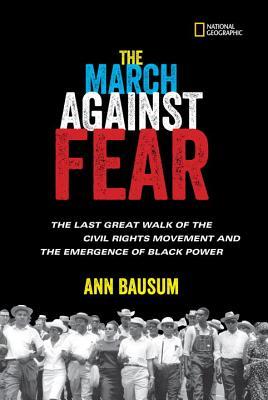
The March Against Fear: The Last Great Walk of the Civil Rights Movement and the Emergence of Black Power
Author: Ann Bausum
Published January 3rd, 2017 by National Geographic Society

Summary: James Meredith’s 1966 march in Mississippi began as one man’s peaceful protest for voter registration and became one of the South’s most important demonstrations of the civil rights movement. It brought together leaders like Martin Luther King Jr. and Stokely Carmichael, who formed an unlikely alliance that resulted in the Black Power movement, which ushered in a new era in the fight for equality.

The retelling of Meredith’s story opens on the day of his assassination attempt and goes back in time to recount the moments leading up to that event and its aftermath. Readers learn about the powerful figures and emerging leaders who joined the over 200-mile walk that became known as the “March Against Fear.”

Thoughtfully presented by award-winning author Ann Bausum, this book helps readers understand the complex issues of fear, injustice, and the challenges of change. It is a history lesson that’s as important and relevant today as it was 50 years ago.

About the Author: Ann Bausum writes about U.S. history for young people, and she has published eight titles with National Geographic Children’s Books including, most recently, Marching to the Mountaintop (2012) and Unraveling Freedom (2010). Ann’s books consistently earn prominent national recognition. Denied, Detained, Deported (2009) was named the 2010 Carter G. Woodson Book Award winner at the secondary school level from the National Council for the Social Studies. Muckrakers (2007) earned the Golden Kite Award as best nonfiction book of the year from the Society of Children’s Book Writers and Illustrators. Freedom Riders (2006) gained Sibert Honor designation from the American Library Association and With Courage and Cloth (2004) received the Jane Addams Children’s Book Award as the year’s best book on social justice issues for older readers. In addition, Ann has written about the nation’s chief executives and their spouses—Our Country’s Presidents (2013, 4th edition) and Our Country’s First Ladies (2007)—as well as the intrepid explorer Roy Chapman Andrews (Dragon Bones and Dinosaur Eggs, 2000).

Review: Ann Bausum’s text is a suspenseful story of the last Civil Rights march from Memphis, TN to Jackson, MS told in chronological order with captioned photographs that help the reader feel like they are present at the time of this march and the social, racial tension that filled America. I am having a very hard time reviewing this book, not because I don’t have nice things to say, but because this timely story is tough because although it is history, it seems like we haven’t come far from where the story takes place (which is terrifying).

Teachers’ Tools for Navigation: I believe that now is the most important time to teach resilience to our children as rights of many people are being threatened. Much of this education can come from conversation and amazing fictional stories, but I think it is vital to teach the history of diverse people within our nation that fought for rights. Children need to learn about women’s history, Black American history, Native American/American Indian history, Asian American history, LBGTQIA history, Irish American history, Jewish history, and so many more–all diverse populations that were prejudiced against and fought. Ann Bausum’s text (and her bibliography!) is a must-read in this education of our future.

Discussion Questions: Why was this march the last of the Civil Rights Movement?; This book is being called “timely” by many reviewers. Why do you think that timely is being used to describe the book?; Why would Bausum choose this march as the topic of her book?; How do the photographs and quotes throughout the book change the experience of reading the text?

Flagged Passages: “A cornerstone of this social justice movement became the willingness of people to put their lives on the line in the fight for change, much as Meredith had done during the integration of Ole Miss. Volunteers in the movement countered the violence of segregationists with tremendous acts of courage. They stood their ground peacefully in the midst of racist attacks, confident that love was a more powerful emotion than hate. Year after year, they persevered, whether it meant walking to work instead of riding segregated buses during the Montgomery bus boycott of 1955 and 1956, or braving violent mobs during the freedom rides of 1961, or enduring police attacks with high-pressure fire hoses during the Birmingham campaign of 196.

Such efforts drew on what movement leaders called the power of nonviolence. Some viewed nonviolence as a strategy, a series of tactics that forced reluctant foes to submit to change; others saw it was a way of life. For nonviolence to work, people had to be willing to remain peaceful, but determined, in the face of any level of violence. They had to outmaneuver their violent oppressors and step in and complete a protest whether their comrades had been arrested, injured, or even killed.” (p. 12-13)

Read This If You Love: To learn about the history of Civil Rights Movement

Recommended For: 

classroomlibrarybuttonsmall closereadinganalysisbuttonsmall

Signature

**Thank you to Karen at Media Masters Publicity for providing a copy for review!**
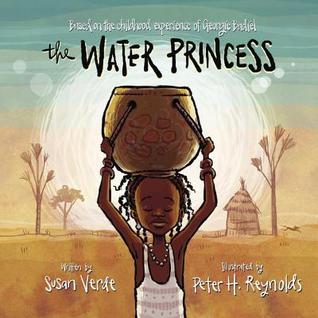
The Water Princess by Susan Verde

Share

water princess

The Water Princess
Author: Susan Verde
Illustrator: Peter H. Reynolds
Published September 13, 2016 by G. P. Putnam’s Sons Books for Young Readers

Goodreads Summary: Based on supermodel Georgie Badiel’s childhood, a young girl dreams of bringing clean drinking water to her African village

With its wide sky and warm earth, Princess Gie Gie’s kingdom is a beautiful land. But clean drinking water is scarce in her small African village. And try as she might, Gie Gie cannot bring the water closer; she cannot make it run clearer. Every morning, she rises before the sun to make the long journey to the well. Instead of a crown, she wears a heavy pot on her head to collect the water. After the voyage home, after boiling the water to drink and clean with, Gie Gie thinks of the trip that tomorrow will bring. And she dreams. She dreams of a day when her village will have cool, crystal-clear water of its own.

Inspired by the childhood of African–born model Georgie Badiel, acclaimed author Susan Verde and award-winning author/illustrator Peter H. Reynolds have come together to tell this moving story. As a child in Burkina Faso, Georgie and the other girls in her village had to walk for miles each day to collect water. This vibrant, engaging picture book sheds light on this struggle that continues all over the world today, instilling hope for a future when all children will have access to clean drinking water.

Ricki’s Review: This book captured my attention as soon as I saw the cover. The illustrations are beautiful, and I couldn’t help but sit for long periods of time, studying them closely. I appreciated and enjoyed this lyrical story that is based on Georgie Badiel’s childhood experiences. I have the F&G, and I am particularly excited to read the author’s note when the full book is printed. I know Georgie Badiel is an activist and leads a foundation dedicated to promoting clean drinking water and sanitation in Africa, so I think the author’s note will be particularly insightful. 

Kellee’s Review: The hardest books for me to read are the books where they seem as if they are historical fiction yet they are modern stories. It makes me so sad to know that there are those like Gie Gie who must work this hard just to get water. I feel like our world must help those who struggle in this way because water is a basic need that all should have access to. I think this book is a wonderful introduction to build awareness because many students do not know what is happening around the world, and this story is told in a beautiful yet truthful and hard way. Also, the connection it has with A Long Walk to Water makes it a perfect addition to a unit looking at that novel. Additionally, I must add that Peter H. Reynolds outdid himself with the illustrations in this book. I love Reynolds’s work, but these are pure pieces of art. Beautiful. I also look forward to the end notes because I want to learn more about Georgie Badiel and her work. 

Teachers’ Tools for Navigation: It would be great for teachers to build students’ awareness of the water/sanitation concerns within Africa. This might include reading more books about the subject and visiting websites supporting the cause. Georgie Badiel’s foundation is: http://georgiebadielfoundation.org/, and there are also many others out there, including: http://www.waterforsouthsudan.org/. I know of two elementary school classes who have devoted their entire year to raising money to build wells in Africa. These kinds of social action projects will surely impact students.

Discussion Questions: What does Princess Gie Gie’s day look like? What do the other women’s days look like? Why do you think this is?; Does Gie Gie feel frustrated? How might you feel in the same situation?; What can we do to support our peers who are living in similar situations to Gie Gie?

Flagged Passage: “My kingdom…the African sky, so wide and so close. I can almost touch the sharp edges of the stars.”

Read This If You Loved: A Long Walk to Water by Linda Sue Park; Just Add Water by Robin Hill and Charles Hall

Recommended For: 

readaloudbuttonsmall classroomlibrarybuttonsmall

RickiSigandSignature

Blog Tour with Review: Race Car Dreams by Sharon Chriscoe

Share

race car dreams

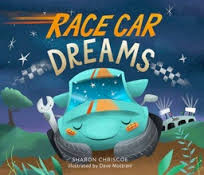
Race Car Dreams
Author: Sharon Chriscoe
Illustrator: Dave Mottram
Anticipated Published: September 13, 2016 by Running Press Kids

Goodreads Summary: After a day at the track of zipping and zooming, a race car is tired and ready for bed. He washes his rims, fills his tummy with oil, and chooses a book that is all about speed. All toasty and warm, he drifts off to sleep, he shifts into gear . . . and dreams of the race!

Ricki’s Review: I know I won’t be the only parent to say that my child cannot get enough cars. He eats, sleeps, and breathes cars, so I jumped at the chance to review this book. And boy, I wasn’t disappointed. The characterization within the text is engaging and fun, and I loved all of the integration of car parts/ideas in the race car’s preparation for bedtime. The race car comes to life, and I am grateful to have this book to read before bedtime. It engages my son while making him a sleepy boy! This charming book is going to be a story that parents read again and again.

Kellee’s Review: Any fan of Pixar cars or race cars in general is going to love the race car’s story. The personification of the car is adorable, I specifically like how his emotions can be read by looking at his eyes, and I love that the race car reads before bed! I would love to have students write their own stories of bedtime for vehicles (or other inanimate object) to see how school buses or tow trucks get ready for bed. In my life though, it is a bedtime story that my son loves to read.

Teachers’ Tools for Navigation: It would be really fun to compare and contrast this book to some of the texts listed below in the “Read This If You Love” section. As avid readers of vehicle books, we know that each book has a different angle, and these are nuances that kids recognize and appreciate. It would be interesting to capitalize on these comparisons and differences to talk about how authors craft stories creatively and uniquely.

Discussion Questions: What does the race car do to prepare for bed? How does this compare to your bedtime routine?; How does the author make the race car come alive with personification?; How does the author craft the story in ways that make you sleepy?

Flagged Passage: “The zooming has stopped. The sun’s almost set. / A race car is tired. He’s wringing with sweat. / His day has been filled with high octane fun. He’s hugged all the curves. He’s had a good run.”

Read This If You Love: Race Car Count by Rebecca Kai Dotlich, Goodnight, Goodnight, Construction Site by by Sherri Duskey Rinker; The Racecar Alphabet by Brian Floca, Alphabeep: A Zipping, Zooming ABC by Debora PearsonThe Three Little Rigs by David Gordon, Ten Little School Cars by School Specialty Publishing

Follow the Tour!:

9/6 My Word Playground

9/7 MomReadIt

9/8 Unleashing Readers

9/9 Once Upon a Time…

9/10 Stacking Books

9/11 Geo Librarian

9/12 Flowering Minds

9/13 Unpacking the POWER of Picture Books

9/14 Little Crooked Cottage

9/14 MamaBelly

9/15 #kidlit Book of the Day

9/16 Just Kidding

Recommended For: 

classroomlibrarybuttonsmall readaloudbuttonsmall

RickiSigandSignature

**Thank you to Cassie for providing copies for review!**

Blog Tour, Giveaway, and Review: Bubonic Panic: When Plague Invaded America by Gail Jarrow

Share

NFPB2016

Nonfiction Wednesday

Nonfiction Picture Book Wednesday is hosted by Kid Lit Frenzy and was started to help promote the reading of nonfiction texts. Most Wednesdays, we will be participating and will review a nonfiction text (though it may not always be a picture book).
Be sure to visit Kid Lit Frenzy and see what other nonfiction books are shared this week!

bubonic panic

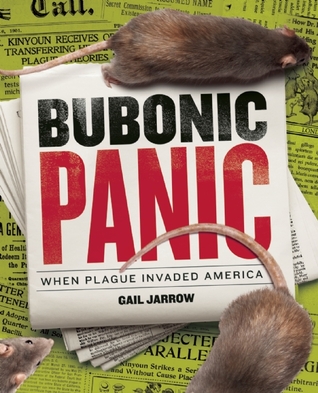
Bubonic Panic: When Plague Invaded America
Author: Gail Jarrow
Published: May 10, 2016 by Calkins Creek

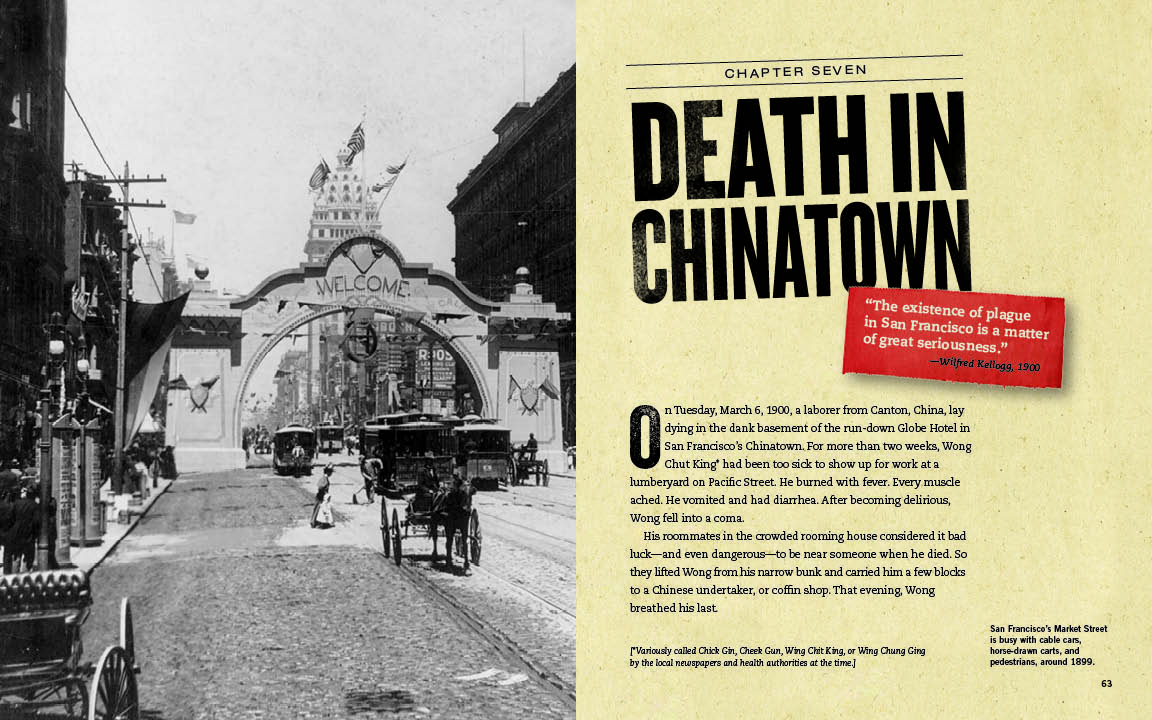
GoodReads Summary: In March 1900, San Francisco’s health department investigated a strange and horrible death in Chinatown. A man had died of bubonic plague, one of the world’s deadliest diseases. But how could that be possible? Bubonic Panic tells the true story of America’s first plague epidemic—the public health doctors who desperately fought to end it, the political leaders who tried to keep it hidden, and the brave scientists who uncovered the plague’s secrets. Once again, acclaimed author and scientific expert Gail Jarrow brings the history of a medical mystery to life in vivid and exciting detail for young readers. This title includes photographs and drawings, a glossary, a timeline, further resources, an author’s note, and source notes.

Review: I have read about the medieval plague, but I haven’t read much about the plague epidemic of the twentieth century. It was fascinating (and sad) to learn about this time period. Gail Jarrow has an incredible ability to make nonfiction material very accessible to readers. This book is a page-turner, and I had difficulty putting it down! The information is very easy to follow, yet it is complex and made me think! I will read any book by Jarrow because she really makes me think. Her texts go beyond medical information. There are themes, for example, about racism and prejudice that made me want to use this book in the classroom!

Teachers’ Tools for Navigation: As with Gail Jarrow’s Fatal Fever, I think it would be wise for teachers to explore other diseases and epidemics while teaching this book. It would be particularly interesting to make connections between this book and Jarrow’s Red Madness and Fatal Fever. Students could participate in literature circles and discuss their learning. I also found the prejudice and scapegoating included in the text to be very interesting and think this would make for very worthy classroom discussions.

Discussion Questions: What role does fear play in the text? How does fear evolve? Is it often validated or invalidated? What negative consequences come with fear?; Are there any heroes in this book? Why or why not?; How can we connect the text to the modern anti-vaccination movement?

Flagged Passage:

bubonic plague spread 

Read This If You Loved: Fatal Fever: Tracking Down Typhoid Mary by Gail Jarrow; Red Madness: How a Medical Mystery Changed What We Eat by Gail Jarrow; Invincible Microbe: Tuberculosis and the Never-Ending Search for a Cure by Jim Murphy and Alison Blank

Giveaway:

a Rafflecopter giveaway

Recommended For:

 classroomlibrarybuttonsmall litcirclesbuttonsmall

RickiSig

Check out the other stops on the blog tour!:

Monday, May 16

The Nonfiction Detectives

www.nonfictiondetectives.com

Tuesday, May 17

KidLit Frenzy

www.kidlitfrenzy.com

Wednesday, May 18

Unleashing Readers

www.unleashingreaders.com

Thursday, May 19

Teach Mentor Texts

www.teachmentortexts.com

Friday, May 20

Sally’s Bookshelf

www.sallysbookshelf.blogspot.com

*Thank you to Kerry at Boyds Mills Press for sending this book for review!*

Finding Winnie: The True Story of the World’s Most Famous Bear by Lindsay Mattick

Share

NFPB2016

Nonfiction Wednesday

Nonfiction Picture Book Wednesday is hosted by Kid Lit Frenzy and was started to help promote the reading of nonfiction texts. Most Wednesdays, we will be participating and will review a nonfiction text (though it may not always be a picture book).
Be sure to visit Kid Lit Frenzy and see what other nonfiction books are shared this week!

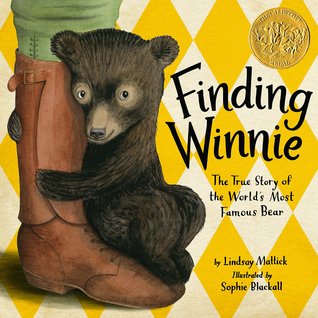
finding winnie

Finding Winnie: The True Story of the World’s Most Famous Bear
Author: Lindsay Mattick
Illustrator: Sophie Blackall
Published October 20, 2015 by Little, Brown Books for Young Readers

Goodreads Summary: Before Winnie-the-Pooh, there was a real bear named Winnie.

In 1914, Harry Colebourn, a veterinarian on his way to tend horses in World War I, followed his heart and rescued a baby bear. He named her Winnie, after his hometown of Winnipeg, and he took the bear to war.

Harry Colebourn’s real-life great-granddaughter tells the true story of a remarkable friendship and an even more remarkable journey–from the fields of Canada to a convoy across the ocean to an army base in England…

And finally to the London Zoo, where Winnie made another new friend: a real boy named Christopher Robin.

Here is the remarkable true story of the bear who inspired Winnie-the-Pooh.

Ricki’s Review: Many of my blogger friends raved about this book. I knew I needed to read it, but my library hold list was very long. When I saw it won the Caldecott Award, I took action. I drove my son to the bookstore and read the book to him while he sat on my lap. My aunt came with me, and she cried through the entire book.

When we reached the end, we just stared at each other and she said, “Ricki, you have to buy this book. Henry needs to have this special story.” And this is how I broke my rule about buying books. Finding Winnie sits elegantly on my son’s bookshelf, and I don’t regret breaking my rule. We love reading it together. The story is captivating from the beginning to the end, and the author and illustrator paint the scene in a remarkable way that readers will be unable to put the book down. Depicting history in picture books is very difficult, and Mattick and Blackall nail it. I highly recommend this charming book if you haven’t read it yet. It will stay close to your heart.

Kellee’s Review: One of the things I particularly loved about Finding Winnie, that Ricki didn’t mention in her beautiful review above, was that the book was written by the great-granddaughter of Captain Coleburn, the serviceman who owned Winnie originally. Having Lindsay Mattick’s close knowledge of the story helped her delve into the story and transport the reader into Winnie’s stories. The backmatter filled with photos and other primary documents also make it feel like we are peaking into the family’s scrap book.

I also want to praise Sophie Blackall’s illustrations. I love Sophie’s soft style with what seems like pencil and paints just is angelic and brings Mattick’s story to life. Although they both would shine separately, they are stellar together.

Teachers’ Tools for Navigation: As a teacher, I’d love to do two things with this book. First, I’d want to compare it to the Winnie the Pooh stories by A. A. Milne. It would be great to compare and contrast the stories to make connections about how Milne might have been inspired. Then, I’d put this book in semi-literature circles. Students might read all of the books (in the “Read This If You Loved” section below) in small groups, and rotate the books across groups. Then, they could discuss the topic and depiction of animals during wars throughout literature. They could compare and contrast the stylistic choices of the authors and also delve into potential ways that animals might be symbolic of each particular war.

Discussion Questions: How do the author and illustrator depict Winnie? How does Winnie’s story evolve?; What does Harry’s friendship with Winnie teach us about human nature?; How might this story have inspired the fictional Winnie the Pooh story?; Why do you think it won the Caldecott? What qualities make it an award winner?

We Flagged: 

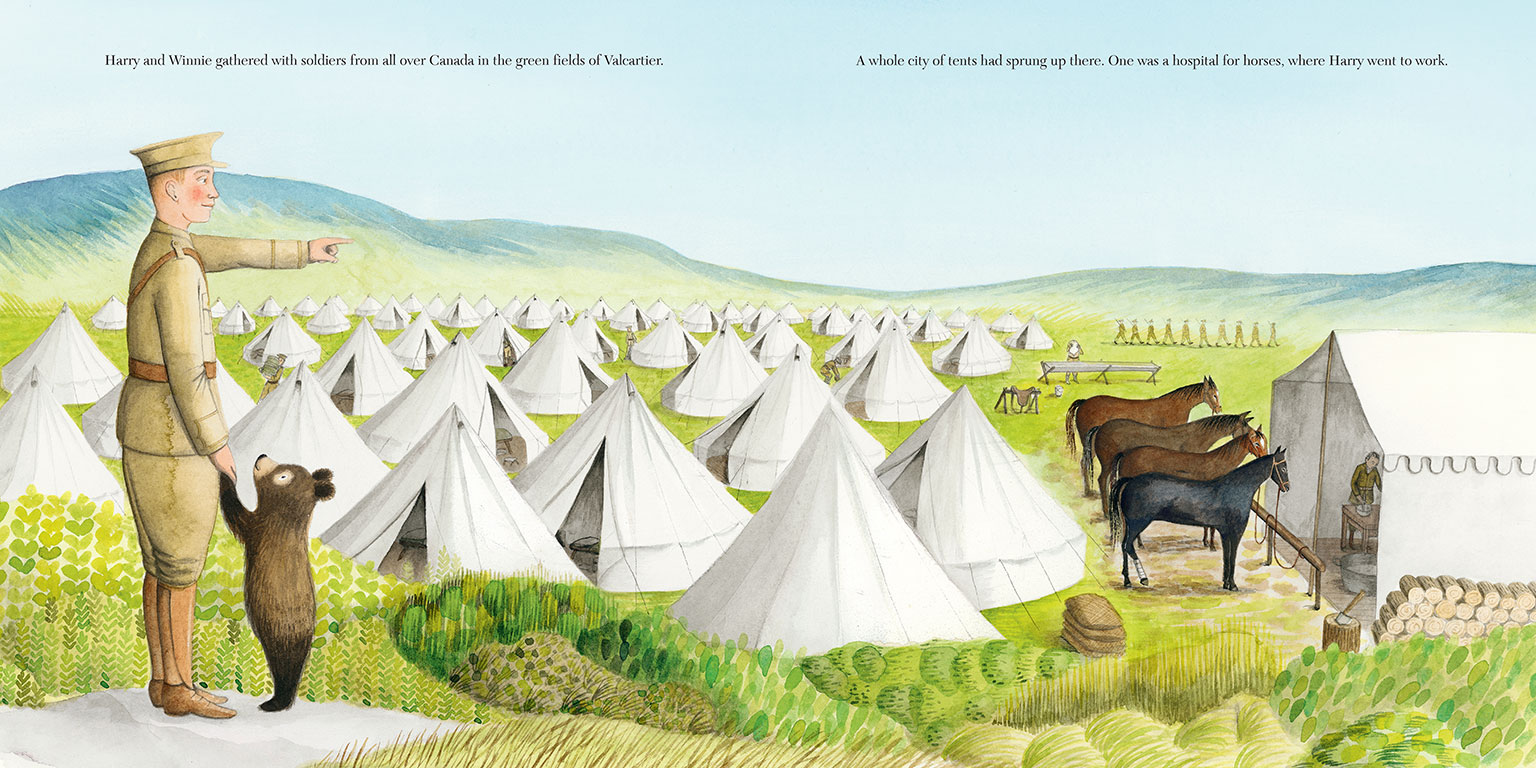
Finding WInnie Spread

**Image from: https://thewalrus.ca/finding-winnie/. We recommend this site, which includes many great images related to the text!**

Read This If You Loved: Winnie: The True Story of the Bear That Inspired Winnie-the-Pooh by Sally M. Walker, Winnie the Pooh  by A. A. Milne, Midnight, A True Story of Loyalty in World War I by Mark Greenwood, Stubby, the War Dog by Ann Bausum, Dogs of War by Sheila Keenan, Faithful Elephants by Yukio Tsuchiya

Recommended For: 

readaloudbuttonsmall classroomlibrarybuttonsmall litcirclesbuttonsmall

RickiSigandSignature

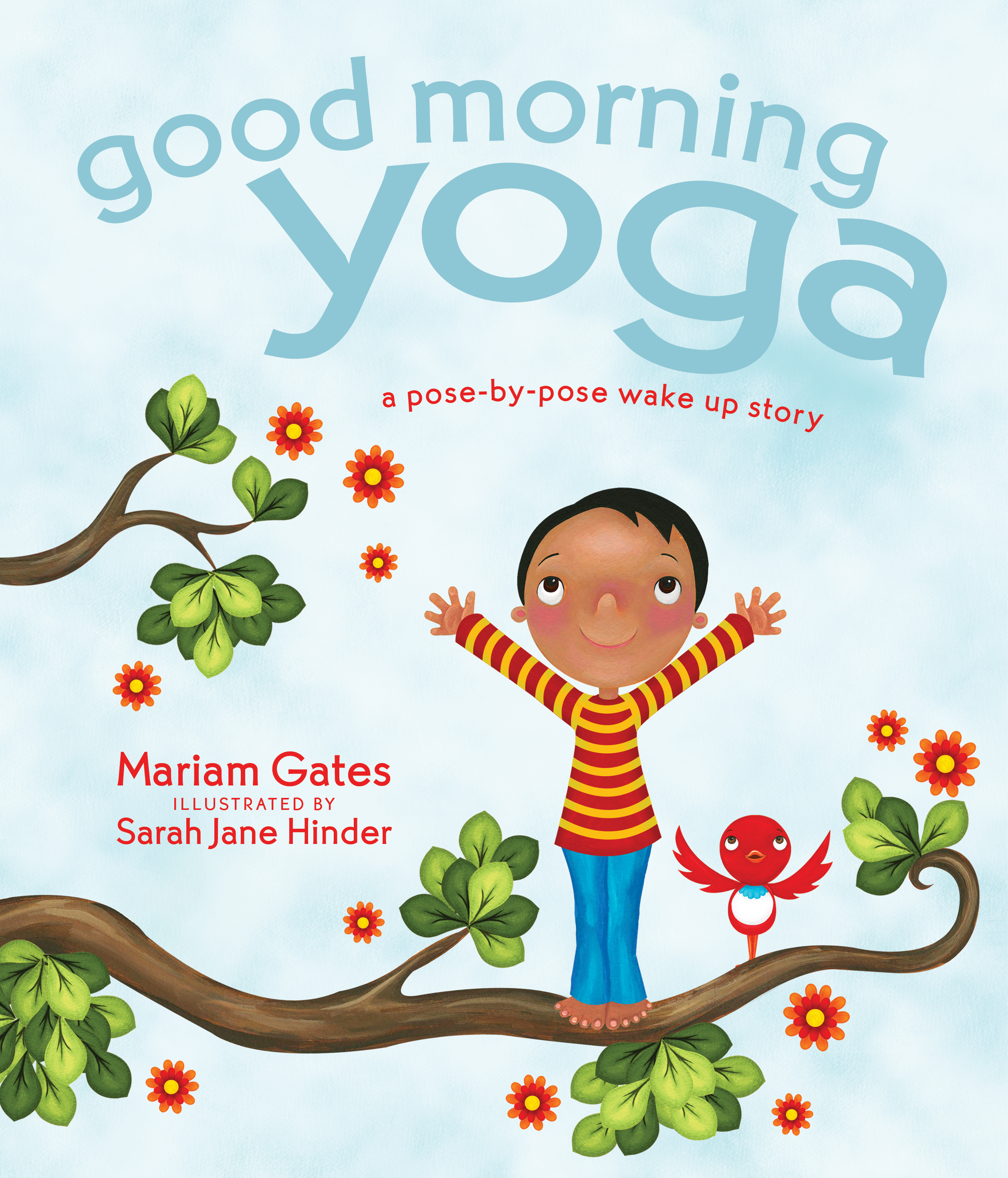
Blog Tour, Giveaway, and Review!: Good Morning Yoga by Mariam Gates

Share

Good Morning Yoga-UPDATED cover hi-res

Good Morning Yoga: A Pose-By-Pose Wake Up Story
Author: Mariam Gates; Illustrator: Sarah Jane Hinder
Published March 1, 2016 by Sounds True

Goodreads Summary: Yoga helps children learn how to focus, relax, and both self-monitor and self-soothe Good Morning Yoga instills these four skills and more, enabling children to jumpstart the day with energy and excitement and meet the adventures that come with mindfulness and perspective.

Good Night Yoga tells the story of the world retiring for the evening and a new generation of readers has fallen in love with the relaxing sequences and beautiful pictures that lead them to dreamland. Good Morning Yoga weaves gentle exercises with a heartwarming narrative and wonderful illustrations to empower children to manage the energies that visit throughout the day from the fiery volcano to the mountain quiet and still. Good Morning Yoga concludes with a visualization for kids to set intentions for the day.

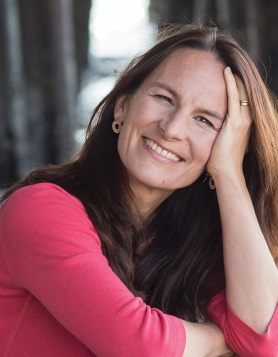
About the Author: Mariam Gates holds a master’s in education from Harvard University and has more than twenty years’ experience working with children. Her renowned Kid Power Yoga program combines her love of yoga with teaching to help children access their inner gifts. She is the author of Good Night Yoga (Sounds True, April 2015), and lives in Santa Cruz, CA, with her husband, yoga teacher Rolf Gates, and their two children. For more information, visit mariamgates.com.

Twitter:  @gatesmariam
Instagram: mariam.gates

Mariam Gates

Review: My father is a pediatrician, and he is constantly recommending meditation and yoga to his patients. He wasn’t a meditation kind of guy when he started practicing medicine, but he came to realize that many of the children who came to him were asking for natural ways to deal with stress and anxiety. I can’t wait to share this book (and Good Night Yoga) with him! There is a definite need for these two texts. Children are rarely taught stress-relieving practices in school, and I wish I’d been taught yoga as a child. 

My two-year-old son and I have had so much fun with this book since it arrived. He constantly asks for the “Woga book.” We practice yoga at least once a day with this book, and it we really enjoy this time together. The narrative that weaves through the book will engage readers and allow them to connect with the yoga moves. The illustrations match the calm beauty of this text, and I think kids will love it. I can’t help but think about how Gates’ books would really help kids grow and develop emotionally and physically.

Teachers’ Tools for Navigation: As a high school teacher, there were many times that I found my students’ energy was flagging. Also, during exams, they were very stressed. We stopped for stretch or meditation breaks. They appreciated these moments and reminded me of them when they’d visit me many years later. This book would be excellent to use in classrooms of all ages. The teacher might read the entire text the first time and then use excerpts in future yoga breaks, depending on time allowance. Research shows that kids who have more recess time perform better. I’d love to do some research on the effect of yoga breaks during schools! This book should be printed in oversized book format!

Encourage yoga time in your home, bookstore, or library with this downloadable kit!

Discussion Questions: How did reading this book make you feel? How might yoga fit into your life?; What are the benefits of yoga?; How does the author’s language connect you with the narrative and yoga moves? How does the illustrator creatively depict the text?; How do the different yoga moves work together?

Book Trailer:


Book Reading:

Another Great Video!:

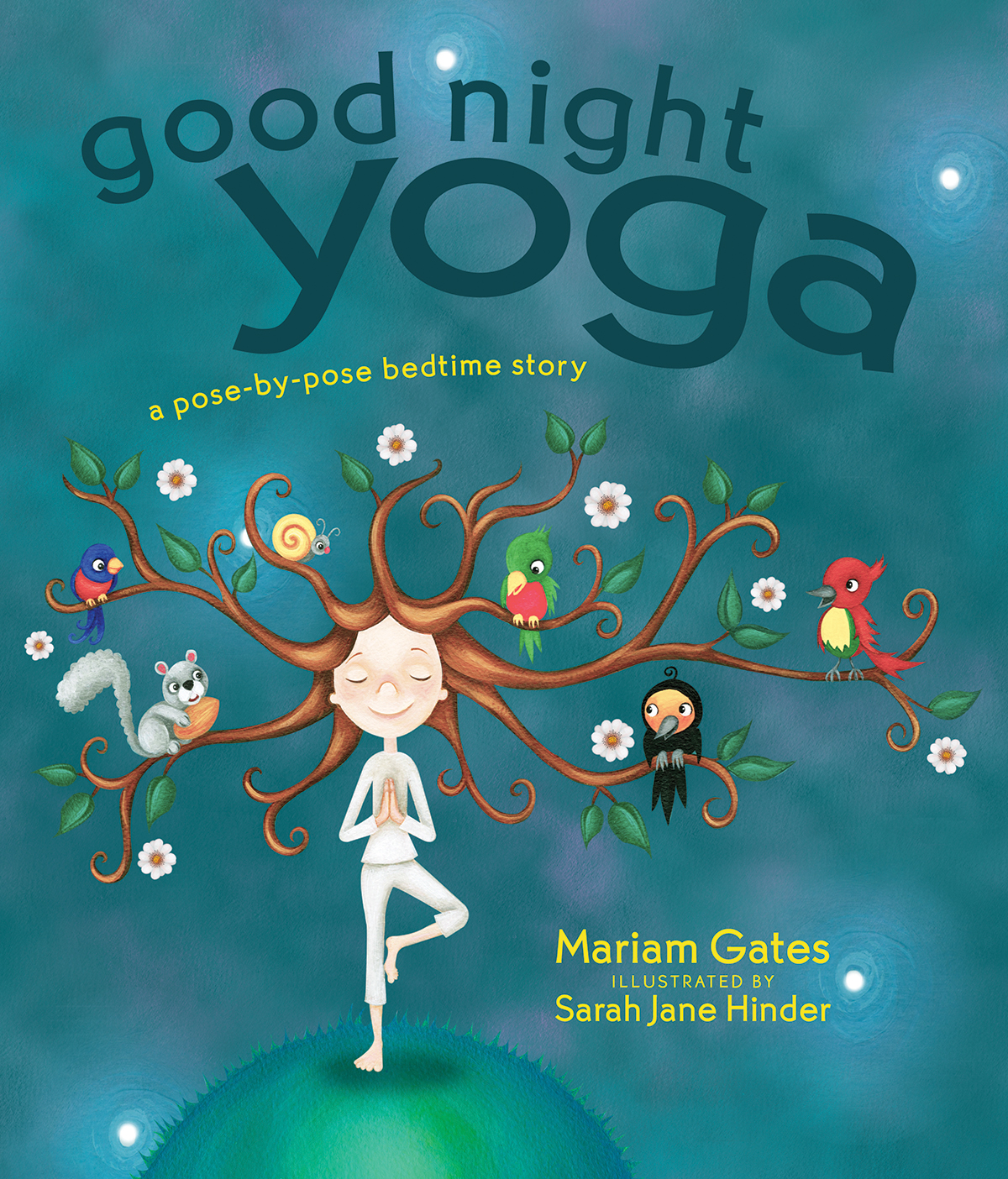
Read This If You Loved: 

Good Night Yoga (2)

Recommended For: 

readaloudbuttonsmall classroomlibrarybuttonsmall


Follow All the Stops on the Tour: 

Wed, Feb 24
Teach Mentor Texts
Fri, Feb 26
Where Imagination Grows
Mon, Feb 29
A Rup Life
Tues, Mar 1
Proseandkahn
Wed, Mar 2
Kid Lit Frenzy
Thurs, Mar 3
5 Minutes for Books
Fri, Mar 4
Once Upon a Story
Mon, Mar 7
Wrapped in Foil
Tues, Mar 8
Sharpread
Wed, Mar 9
A Foodie Bibliophile in Wanderlust
Thurs, Mar 10
Unleashing Readers
Fri, Mar 11
Children’s Book Review
Tues, Mar 15
The Library Fanatic
And Don’t Forget to Enter the Giveaway!:

a Rafflecopter giveaway

RickiSig

**Thank you to Barbara Fisch for sending us this book and for allowing us to host the giveaway!**

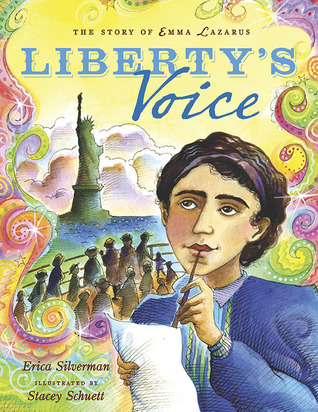
Liberty’s Voice: The Story of Emma Lazarus by Erica Silverman

Share

NFPB2015

Nonfiction Picture Book Wednesday

Nonfiction Picture Book Wednesday is hosted by Kid Lit Frenzy and was started to help promote the reading of nonfiction texts. Most Wednesdays, we will be participating and will review a nonfiction text (though it may not always be a picture book).
Be sure to visit Kid Lit Frenzy and see what other nonfiction books are shared this week!

Liberty's Voice

Liberty’s Voice: The Story of Emma Lazarus
Author: Erica Silverman
Illustrator: Stacey Schuett
Published February 3rd, 2011 by Dutton Books for Young Readers

Goodreads Summary: Emma Lazarus overcame the barriers of her day to become one of the leading poets of the nineteenth century. She used her celebrity to help the poor and impoverished immigrants of Eastern Europe. When the statue Liberty Enlightening the World came to the United States as a gift from France, it was Emma’s poem “The New Colossus” that became forever connected with this American icon. Emma’s words have served as a rallying call to generations of immigrants. In breathtaking color, veteran artist Stacey Schuett brings life to Erica Silverman’s story of one of the great women of America.

My Review:  I am always looking for biographies of strong women, and this is one I’d definitely add to my list. Emma Lazarus is a poet who everyone knows, but may not know her name, and that should change. She did so much not only with poetry, but with her editorials and articles speaking out against the oppressed, specifically the Russian Jewish immigrants. Emma Lazarus was lucky enough to have a dad that supported women getting education and helped her become a published poet and meet her mentor, Ralph Waldo Emerson. Without her dad supporting her in a time where society would not have, we wouldn’t have her beautiful poetry and much of the oppression being faced on Ward’s Island would not have been known by the public.

Teachers’ Tools for Navigation: This text is a wonderful introduction to Lazarus, but also to the plight that Jews faced in Russia because of pogroms in the late 1800s. It would be a great cross curricular read aloud to start discussions about poetry in reading/English as well as the history of Russia during this time.

Discussion Questions: How could Emma’s life have been different if she’d been poor or had a father who didn’t support her poetry?; Why were so many Russian Jews immigrating to America in the 1880s?; What is the meaning behind “The New Colossus,” and what does imply about America’s acceptance of immigrants?

We Flagged: “Emma thought about the immigrants she had met on Ward’s Island. They had known so much fear and suffering. They needed to be held, welcomed, comforted. If this statue was to have a name, it should be . . .

Mother of Exiles. From her beacon-hand
Glows world-wide welcome; her mild eyes command
The air-bridged harbor that twin cities frame.

Read This If You Loved: A River of Words: The Story of William Carlos Williams by Jennifer Fisher Bryant, The Dreamer by Pam Muñoz Ryan, The Right Word: Roget and his Thesaurus by Jennifer Fisher Bryant

Recommended For: 

classroomlibrarybuttonsmall readaloudbuttonsmall closereadinganalysisbuttonsmall

Signature