Race Car Count Author: Rebecca Kai Dotlich
Illustrator: Michael Slack
Published: October 27, 2015 by Henry Holt and Co. (BYR)
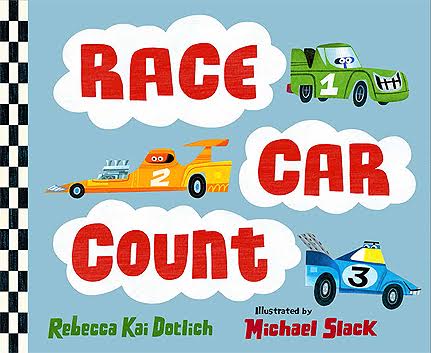
Goodreads Summary: Race car 1 honks look at me!
He zooms in front with the turn of a key.
Race car 2 is close behind.
The sound of vroom is on his mind.
This simple, rhyming text is perfect for reinforcing counting with young children, and the vibrant, energetic illustrations make this a terrific package for the youngest vehicle enthusiasts.
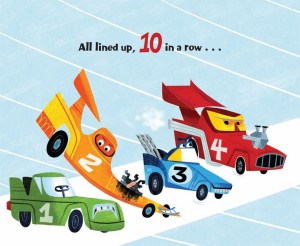
Ricki’s Review and Teachers’ Tools for Navigation: My son is absolutely obsessed with cars, so I consider myself to be a car book connoisseur. In the past year, I have read at least fifty books about cars, and Race Car Count stands out from the rest. Upon Henry’s request, we’ve read it about eight times in the last three days. Parents and teachers know that when kids take an interest in a topic, they want to read every book about that interest. I am very pleased that my son wants to read this book over and over again because we can practice counting several times a day. As we read each page, I ask him to count each car with me. He loves the ways the cars pile up on each page, and says “Uh oh!” each time we turn to a car pileup.
The illustrations are fantastic, and they keep him engaged. Each numbered car is consistent throughout the book, which adds great characterization/personification to each car. We spend a lot of time on the last page, where my son stares at all of the cars. Each car has different interests. For example, car number ten (my personal favorite) is yellow and named Groovy. It loves popcorn and collects bumper stickers. Teachers might ask students to illustrate car number 11 and share that car’s personality. Or, they can ask students to create their own number books with something that interests them! I suspect my son’s next step would be to create a book to count construction vehicles. 😉
Kellee’s Review and Teachers’ Tools for Navigation:Whenever I think there cannot be any new interesting ABC and counting books, I am introduced to another book that proves me wrong. Race Car Counts is going to be loved by so many kids and teachers. Not only is it a fun story of racing with vibrant and colorful illustrations, it is a great book to teach counting, colors, personality/character traits, and rhyming. Each car is introduced, and the reader learns their number, their color, and a bit about their personality. And I think the addition of the character cards in the back of the book that includes more information about each race car really pushes the book into being a mentor text for writing as well because students could duplicate the cards with their own characters.
Discussion Questions: How does the author use rhymes to enhance the story?; How does she use adjectives to make the story fun and engaging?; How does the illustrator personify each car?; Which car is your favorite and why?
We Flagged: “Race car 4, all shiny red, rumbles grumbles, pulls ahead.”
From http://us.macmillan.com/racecarcount/rebeccakaidotlich
Read This If You Love: The Racecar Alphabet by Brian Floca, Alphabeep: A Zipping, Zooming ABC by Debora Pearson, The Three Little Rigs by David Gordon, Ten Little School Cars by School Specialty Publishing
Recommended For:
and
**Thank you to Michael Slack for providing copies for review!**
Nonfiction Picture Book Wednesday is hosted by Kid Lit Frenzy and was started to help promote the reading of nonfiction texts. Most Wednesdays, we will be participating and will review a nonfiction text (though it may not always be a picture book).
Be sure to visit Kid Lit Frenzy and see what other nonfiction books are shared this week!
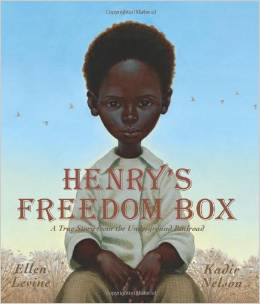
Henry’s Freedom Box Author: Ellen Levine; Illustrator: Kadir Nelson
Published: January 1, 2007 by Scholastic
GoodReads Summary: A stirring, dramatic story of a slave who mails himself to freedom by a Jane Addams Peace Award-winning author and a Coretta Scott King Award-winning artist.
Henry Brown doesn’t know how old he is. Nobody keeps records of slaves’ birthdays. All the time he dreams about freedom, but that dream seems farther away than ever when he is torn from his family and put to work in a warehouse. Henry grows up and marries, but he is again devastated when his family is sold at the slave market. Then one day, as he lifts a crate at the warehouse, he knows exactly what he must do: He will mail himself to the North. After an arduous journey in the crate, Henry finally has a birthday—his first day of freedom.
Review: The story of Harriet Tubman is perhaps the most commonly taught story about the Underground Railroad. Henry “Box” Brown’s story is quite different, and I learned a lot by reading this book. I think it would be an excellent text to teach in the classroom. This book made me very emotional, and I am still thinking about it, weeks after I finished it. The illustrations are gorgeous, and the story is inspirational. The author’s note at the end of the text provide more factual information that will send students scouring for more information about the time period.
Teachers’ Tools for Navigation: Most obviously, this would be an excellent text for a unit about slavery or the Civil Rights Movement. I am a big proponent of using texts outside of traditional units (or Black History Month) because these texts are valuable beyond the time period they represent. I would love to do a unit on Endurance or Bravery or Freedom. I would find and group similar texts that promote discussion and inquiry about the theme and ask students and essential questions like, What does it mean to be brave?
Discussion Questions: How does Henry endure many challenges in life? In what ways is he brave?; What does Henry teach us about life?; Describe another famous person in history or modern times who reminds you of Henry.
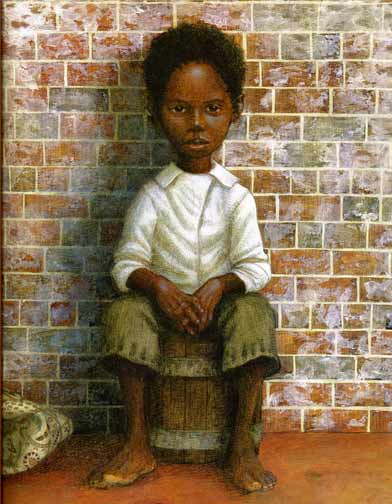
One of the Many, Beautiful Illustrations:
Read This If You Loved: Dave the Potter: Artist, Poet, Slave by Laban Carrick Hill; The Listeners by Gloria Whelan; Freedom Summerby Deborah Wiles; The Other Side by Jacqueline Woodson; The Diary of Anne Frank by Anne Frank
Nonfiction Picture Book Wednesday is hosted by Kid Lit Frenzy and was started to help promote the reading of nonfiction texts. Most Wednesdays, we will be participating and will review a nonfiction text (though it may not always be a picture book).
Be sure to visit Kid Lit Frenzy and see what other nonfiction books are shared this week!
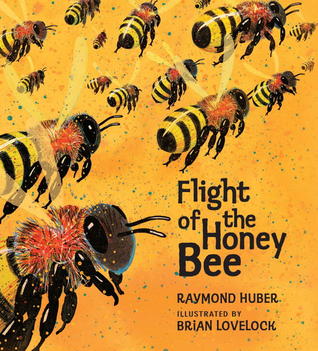
Flight of the Honey Bee Author: Raymond Huber
Illustrator: Brian Lovelock
Published September 10th, 2013 by Candlewick Press
Goodreads Summary: Follow the flight of a honey bee as she searches for nectar to sustain her hive and, along the way, pollinates flowers to produce seeds and fruits.
A tiny honey bee emerges from the hive for the first time. Using sunlight, landmarks, and scents to remember the path, she goes in search of pollen and nectar to share with the thousands of other bees in her hive. She uses her powerful sense of smell to locate the flowers that sustain her, avoids birds that might eat her, and returns home to share her finds with her many sisters. Nature lovers and scientists-to-be are invited to explore the fascinating life of a honey bee.
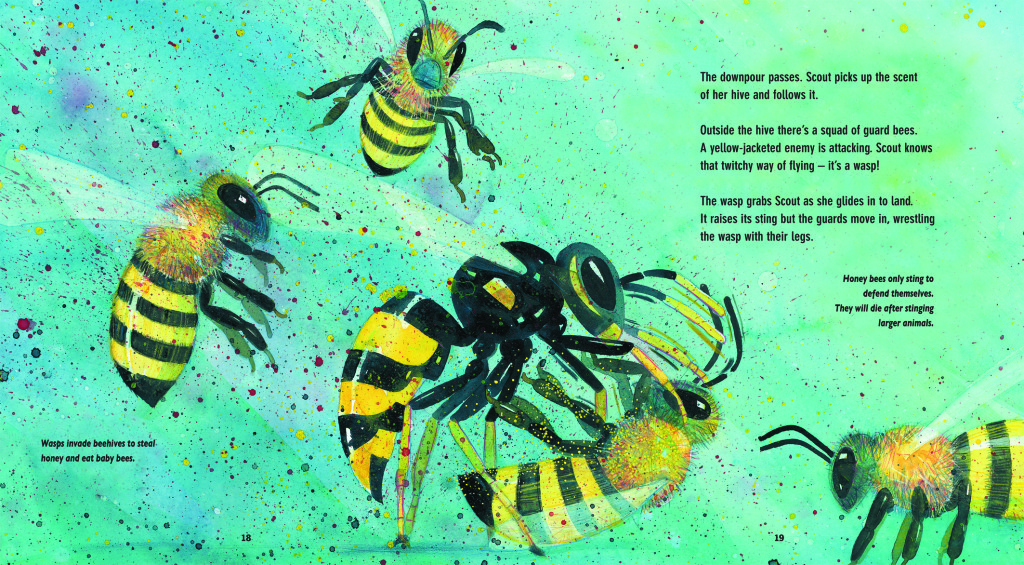
Kellee’s Review and Teachers’ Tools for Navigation: I love books that mix narrative and information nonfiction within one book. This text introduces Scout as she exits the hive and goes about her bee-siness (hehe!). This part of the story is told as a story. Then on each page, there is information about bees in general to help the reader understand Scout’s journey. This unique text structure mixed with the realistic yet artistic illustrations really makes Flight compelling to read. In addition to learning about bees and the vocabulary included in the book, this book could be a great addition to a lit circle inquiry group about insects or as a mentor text to create student narrative and informational mixed writing about a animal after researching.
Ricki’s Review and Teachers’ Tools for Navigation: I read this book aloud to my son while he was eating breakfast, and he was captivated by the illustrations and story. I immediately texted Kellee and told her we had to schedule a day to review it! I had a lot of fun following Scout on her adventure, and I know kids will become so engaged in this story that they will forget they are learning. I thought I knew a lot about bees, but I was surprised by how much information is packed into this text. Readers will cheer for Scout as she encounters obstacles. I try to integrate nonfiction into every unit, and this would be a great book to show students just how accessible nonfiction can be. Then, they could pick a creature or object in nature, conduct research, and write their own narrative nonfiction texts.
Discussion Questions: How do bees help the environment and humans?; How can we help save the bees?; What are the different types of bees? Why are they all important?
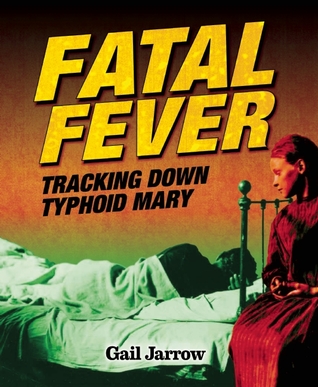
Fatal Fever: Tracking Down Typhoid Mary Author: Gail Jarrow
Published: March 10, 2015 by Calkins Creek
GoodReads Summary: In March 1907, the lives of three remarkable people collided at a New York City brownstone where Mary Mallon worked as a cook. They were brought together by typhoid fever, a dreaded scourge that killed tens of thousands of Americans each year. Fatal Fever: Tracking Down Typhoid Mary is the first middle-grade trade book that tells the true story of the woman who unwittingly spread deadly bacteria, the epidemiologist who discovered her trail of infection, and the health department that decided her fate. This gripping story follows this tragic disease as it shatters lives from the early twentieth century to today. It will keep readers on the edges of the seats wondering what happened to Mary and the innocent typhoid victims. With glossary, timeline, list of well-known typhoid sufferers and victims, further resource section, author’s note, and source notes.
Review: This narrative nonfiction essentially begins with in media res—Typhoid Mary is running from people who want to catch her and take her blood. By chapter two, the text shifts back to the history of typhoid fever and gives readers a no-nonsense look at the gory realities of this horrid disease. My father and brother are doctors and my mom was a nurse, and I was finally able to take part in medical conversations at a family gathering! It would have been easy for the author to slip into the extreme technical details of this disease, but she does an excellent job balancing science, history, and story. I was engaged in the book from beginning to end. I never thought I would find the sanitation systems in the early 1900s to be so fascinating!
Teachers’ Tools for Navigation: Students will read this book and want to learn more about other deadly epidemics in history. They would likely be interested in the ways this disease still impacts countries today. I found Typhoid Mary’s story to be very interesting, and I wanted to learn more about medical scapegoats in history. All in all, this book inspires readers to want to learn more about medical topics. I imagine this book would be a good choice for students interested in medical professions, but it will also captivate students who are interested in science and history. This makes it a true interdisciplinary text.
Discussion Questions: How was Typhoid Mary treated by the community? Why? Do you think she deserved her treatment at the end of her life?; What other diseases have impacted history? How do they compare to typhoid fever?
We Flagged: “She didn’t know it, but she wasn’t alone in that cramped, cold closet. Deep insider her body, billions of deadly microorganisms were hiding, too.”
Read This If You Loved: Red Madness: How a Medical Mystery Changed What We Eat by Gail Jarrow; Invincible Microbe: Tuberculosis and the Never-Ending Search for a Cure by Jim Murphy and Alison Blank
Recommended For:
*Thank you to Kerry at Boyds Mills Press for sending this book for review!*
Young Jane Austen: Becoming a Writer Author: Lisa Pliscou
Illustrator: Massimo Mongiardo
Published: April 20, 2015 by Wyatt-MacKenzie Publishing
GoodReads Summary: What was Jane Austen like as a child? What were her formative influences and experiences, her challenges and obstacles, that together set her on the path toward becoming a writer?
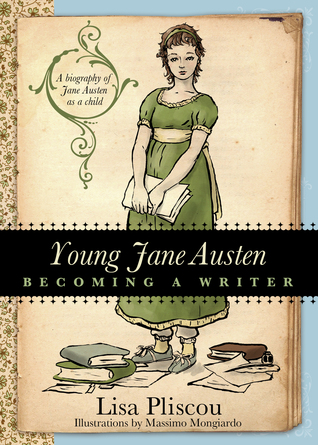
Drawing upon a wide array of sources, including Austen’s own books and correspondence, Lisa Pliscou has created a “speculative biography” that, along with 20 charming black-and-white illustrations, offers a fascinating glimpse into the world of young Jane Austen. Also included is a richly detailed, annotated version of the narrative and an overview of Austen’s life, legacy, and the era in which she lived, as well as a timeline of her key childhood events.
Young Jane Austen is sure to intrigue anyone interested in Jane Austen, in writing and the creative process, and in the triumph of the artistic spirit.
Review: I enjoy the way this book is formatted. The first half (or so) tells the story of Jane Austen as she grows up—before she became a writer. It gives a strong historical background of the expectations (or lack of expectations) for women at the time. While much isn’t known about Jane’s early life, the author does an excellent job creatively interpreting events with what we do know. The next section is an annotated version that reveals the author’s decisions for the text, and the last portion discusses Jane Austen’s later life as a writer. Readers will be inspired to take on some of Austen’s novels after reading this book. The beautiful paper and illustrations of this book made me wish that more books were creatively printed. I felt as if I was reading a text from the time period of Austen’s life, which made me feel warm and fuzzy.
Please note: I tagged this book as historical nonfiction and narrative nonfiction because it bridges both genres. It is a creative nonfiction, and the later portions of the book are more informational. These kinds of books make genre-sorting seem a bit silly.
Teachers’ Tools for Navigation: This text begs for readers to conduct research. They could delve into Jane’s novels to connect her life details with her works. They might also research more about the time period or another favorite author’s early life. The annotated section is particularly interesting to me. I would love to have my students annotate a text looking for the author’s purpose.
Discussion Questions: How was your life different from Jane Austen’s life? How do the expectations for females impact Jane?; What adjectives would you use to describe Jane? Why?; How does the format of the book enhance your reading? Do you know any other books like this?
We Flagged:
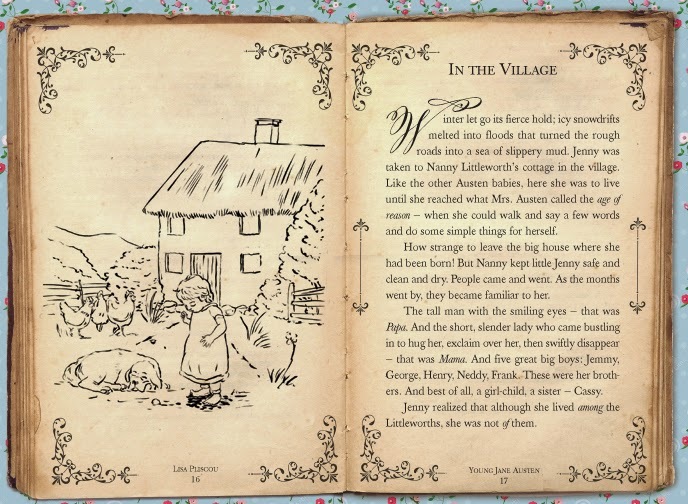
I couldn’t help but share how beautiful the inside of this book is. Image taken from: www.goodreads.com.
Nonfiction Picture Book Wednesday is hosted by Kid Lit Frenzy and was started to help promote the reading of nonfiction texts. Most Wednesdays, we will be participating and will review a nonfiction text (though it may not always be a picture book).
Be sure to visit Kid Lit Frenzy and see what other nonfiction books are shared this week!
Because of It’s Monday! What Are You Reading? posts, I find myself often with huge piles of picture books from the library that were highly recommended by fellow bloggers. I celebrate many of the nonfiction pictures books on Wednesdays, but I want to share some of the fiction picture books I have enjoyed. So, I decided to start series here on UR where I can pass on the love for these books sporadically as I read them. Here is a list of some great pictures books that I’ve read recently from my huge library pile (part 5!).
When I was watching the ALA Book Award announcements, I realized that there were many that I had not read, so I immediately ordered them from my library. While reading, I was so happy to see so many diverse picture books (fiction and nonfiction) winning awards. This week I wanted to highlight the picture books I read that were full of diversity. Today I will share the nonfiction titles, and on Friday I will share the fiction titles.
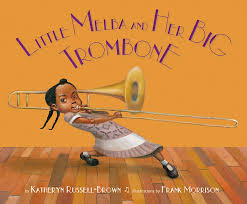
Little Melba on her Big Trombone Author: Katheryn Russell-Brown
Illustrator: Frank Morrison
Published September 1st, 2014 by Lee & Low Books
2015 Coretta Scott King for Illustrator Honor
I know I have said this before, but I love the trend of writing picture books about strong woman who should be well known because of their brilliance. Melba Liston is an inspiration. What I loved most about this book is that I think it captured Melba’s spirit as well as the rhythm of the music. The lively oil paintings mixed with Melba’s amazing story make you feel like you know her by the end of the book. I was excited to read the back matter to learn more, and immediately went to You Tube to hear some of her music. I am so glad I was introduced to her.
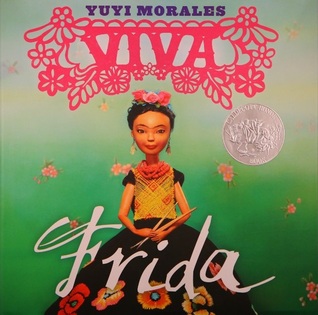
Viva Frida Author: Yuyi Morales
Photographer: Tim O’Meara
Published September 2nd, 2014 by Roaring Brook Press
2015 Caldecott Honor, Pura Belpré (Illutrator) Honor
Frida Kahlo is such a mysterious woman. Usually through an artist’s work, you feel like you get to know them, but through Frida’s work, I always felt like she became even more of a mystery to me. This book just adds to that mystery. Told in small phrases in Spanish and English, the books explores creativity and imagination more than it explores Frida’s life. But oh, what an exploration into imagination and creativity it is. We go on a journey with Frida to create a piece of art which is what she lives for, and it makes you, the reader, want to go create so you can live. The beautiful photographs bring Frida, Diego, and many of Frida’s animal friends to life. They are superb!
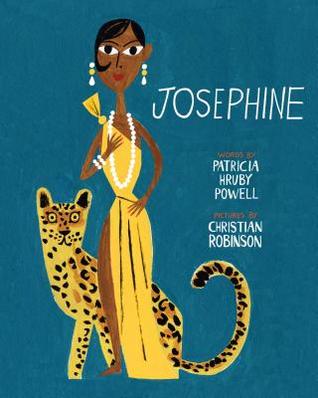
Josephine: The Dazzling Life of Josephine Baker
Author: Patricia Hruby Powell
Illustrator: Christian Robinson
Published January 14th, 2014 by Chronicle Books
2015 Sibert Honor, Coretta Scott King Award for Illustrator Honor
This is quite the book! When I ordered it, I hadn’t realized that it was illustrated chapter book biography, but after learning about Josephine, I can see why she couldn’t be confined to less pages. Her life is an explosion of adventure from running away at 13 to standing up for her civil rights to spying for France during WWII to adopting her “rainbow tribe.” Like Melba, Josephine was a new name for me, but I cannot believe I hadn’t heard of her before. She is the epitome of strength and was a large part of the civil rights movement. I am so glad that I read this picture book that truly captures her spirit through the rhythmic prose and colorful, lively illustrations.
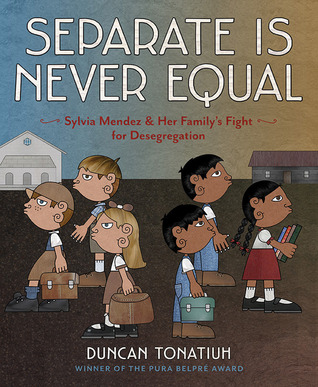
Separate is Never Equal: Sylvia Mendez and Her Family’s Fight for Desegregation Author and Illustrator: Duncan Tonatiuh
Published May 6th, 2014 by Abrams Books for Young Readers
2015 Sibert Honor, Pura Belpré (Illutrator) Honor
Everyone has heard of Brown v. Board of Education, but Sylvia’s case is the predecessor of desegregation in the United States. After Sylvia and her siblings are denied entry into the school they are zoned for, even though they are American, and are sent to the “Mexican school,” Syvlia’s father goes on a mission which leads him all the way to the California Court of Appeals to ensure that his children get the best education possible. I loved that through all of the trials of the Mendez family, they never lost their dignity and grace. They are truly an inspiration This is a book that every teacher and child should read because the Mendez family should be a household name, and it looks at equal accessibility to education which is still relevant today.
What picture books should I add to my pile next?
Want to see Part One? You can view it HERE. Want to see Part Two? You can view it HERE.
Want to see Part Three? You can view it HERE.
Want to see Part Four? You can view it HERE.
Henry Aaron’s Dream Author: Matt Tavares
Published January 12th, 2010 by Candlewick Press
Goodreads Summary: Matt Tavares hits one out of the park with this powerful tale of a kid from the segregated south who would become baseball’s home-run king.
Before he was Hammerin’ Hank, Henry Aaron was a young boy grow ing up in Mobile, Alabama, with what seemed like a foolhardy dream: to be a big-league baseball player. He didn’t have a bat. He didn’t have a ball. And there wasn’t a single black ball player in the major leagues. B ut none of this could stop Henry Aaron. In a captivating biography of Henr y Aaron’s young life – from his sandlot days through his time in the Negro Leagues to the day he played his first spring training game for the Braves – Matt Tavares offers an inspiring homage to one of baseball’s all-time greats.
There Goes Ted Williams: The Greatest Hitter Who Ever Lived Author: Matt Tavares Published February 14th, 2012 by Candlewick Press
Goodreads Summary: A lively picture book biography of Ted Williams from a master of the genre — just in time for Fenway Park’s centennial.
Ted Williams lived a life of dedication and passion. He was an ordinary kid who wanted one thing: to hit a baseball better than anyone else. So he practiced his swing every chance he got. He did fingertip push-ups. He ate a lot of food. He practiced his swing again. And then practiced it some more. From his days playing ball in North Park as a kid to his unmatched .406 season in 1941 to his heroic tours of duty as a fighter pilot in World War II and Korea, the story of Teddy Ballgame is the story of an American hero. In this engrossing biography, a companion to Henry Aaron’s Dream, Matt Tavares makes Ted Williams’s life story accessible to a whole new generation of fans who are sure to admire the hard work, sacrifice, and triumph of the greatest hitter who ever lived.
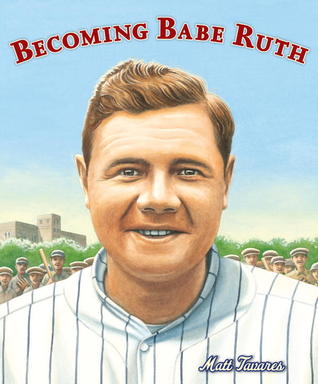
Becoming Babe Ruth Author: Matt Tavares Published February 12th, 2013 by Candlewick Press
Goodreads Summary: Matt Tavares’s striking homage to one of baseball’s legends offers a rare view into Babe Ruth’s formative years in “the House that built Ruth.”
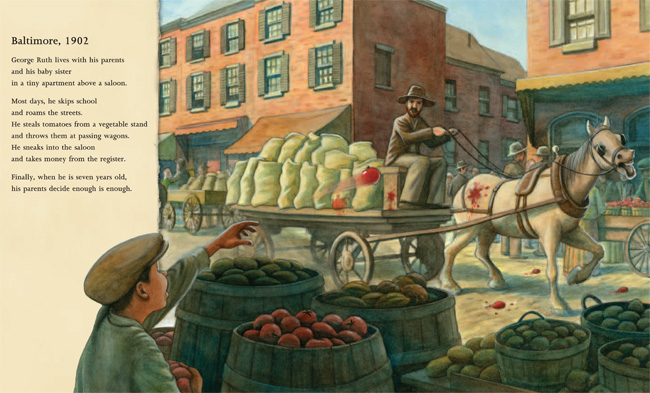
Before he is known as the Babe, George Herman Ruth is just a boy who lives in Baltimore and gets into a lot of trouble. But when he turns seven, his father brings him to the gates of Saint Mary’s Industrial School for Boys, and his life is changed forever. At Saint Mary’s, he’s expected to study hard and follow a lot of rules. But there is one good thing about Saint Mary’s: almost every day, George gets to play baseball. Here, under the watchful eye of Brother Matthias, George evolves as a player and as a man, and when he sets off into the wild world of big-league baseball, the school, the boys, and Brother Matthias are never far from his heart. With vivid illustrations and clear affection for his subject, Matt Tavares sheds light on an icon who learned early that life is what you make of it — and sends home a message about honoring the place from which you came.
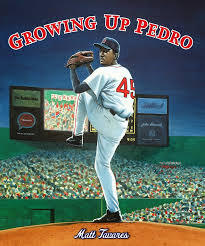
Growing Up Pedro: How the Martinez Brothers Made it From the Dominican Republic All Way to the Major Leagues Author: Matt Tavares Published February 10th, 2015
Goodreads Summary: The love between brothers is key to Matt Tavares’s tale of Dominican pitcher Pedro Martinez, from his days of throwing rocks at mangoes to his years as a major-league star.
Before Pedro Martinez pitched the Red Sox to a World Series championship, before he was named to the All-Star team eight times, before he won the Cy Young three times, he was a kid from a place called Manoguayabo in the Dominican Republic. Pedro loved baseball more than anything, and his older brother Ramon was the best pitcher he’d ever seen. He’d dream of the day he and his brother could play together in the major leagues—and here, Matt Tavares tells the story of how that dream came true. In a fitting homage to a modern day baseball star, the acclaimed author-illustrator examines both Pedro Martinez’s improbable rise to the top of his game and the power that comes from the deep bond between brothers.
My Review: These four superbly crafted biographies take a look at the life of each man, but as more than a baseball player. We learn about their childhoods, where they came from, and their dreams and hopes. Each book includes aspects of the history surrounding them including the Depression, wars, and racism. Additionally, these books are crafted beautiful with lyrically written prose. These books are must reads for lovers of baseball, history, and biographies in general.
Teachers’ Tools for Navigation: I was lucky enough to be asked to write a teachers’ guide for each of these books. For each book, I created discussion questions and activities (including cross-curricular activities). I plan on using this guide in my own classroom with the books in a lit circle type of setting. Each group will be given one of the biographies, will complete the discussion questions and activities, and then become experts on their player before presenting. These biographies are asking to be in classrooms, and I hope the guide helps show how they can fit into a language arts/reading class.
Becoming Babe Ruth
News spread differently in the early twentieth century. Discuss with your students the way news about Babe Ruth was spread during his lifetime and have students find examples in the text. Then have them discuss the way news is spread digitally nowadays. Invite the class to debate the pros and cons of digital news.; How did Babe Ruth’s life change when he left Saint Mary’s to play for the Orioles?
There Goes Ted Williams Have students write down Ted Williams’s batting average and home run stats as well as those of two other Hall of Famers. After comparing the players’ stats, have students write a paragraph discussing whether or not they believe that Ted Williams is the best hitter ever.; How did Ted Williams’s childhood perseverance help him become a professional baseball player?
Henry Aaron’s Dream Baseball began integrating before all cities in the United States had ended segregation. As a class, discuss how this reality affected black players on major-league baseball teams and how black players’ trips to segregated cities differed from those of their white teammates. Then, with your students, complete a graphic organizer comparing and contrasting the life of white and black baseball players during Hank Aaron’s lifetime. Invite students to write an essay about how life has changed for players of color over time.; How did Jackie Robinson influence Henry Aaron? What did Jackie Robinson’s accomplishments mean for other black baseball players?
Growing Up Pedro Pull up a map of North America. Have students mark all the different places that Pedro played: the Dominican Republic, Montana, Montreal, and so on. Ask students to determine the miles between each location. Which place was the farthest from Pedro’s home? Which place was the closest?; Have students write a journal entry as Pedro Martínez. Invite them to write, from Pedro’s point of view, what it feels like to move so far away from home when he is so young. Does he miss his family? Is he sad, happy, or excited to be in Montana.
Discussion Questions: Examples of discussion questions and activities for each of the biographies can be found in my teachers’ guide; however, after reading all four of the books, two discussion questions could be: Most of the baseball players had a mentor or idol that he looked up to and learned from. How did these mentors or idols help guide the players into becoming the greats they are?; Each of the baseball players helped a charity that was close to his heart. Who did each player help? Why did players choose the charity they did?
We Flagged:
http://www.matttavares.com/becomingbaberuth.html from Becoming Babe Ruth



 and
and