Hitler Youth: Growing Up in Hitler’s Shadow & The Boy Who Dared by Susan Campbell Bartoletti

Share

These two books are my favorite fiction/nonfiction companion books, so I wanted to share them with you together. 
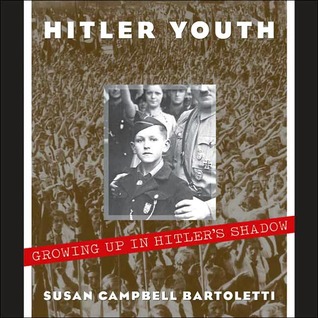
hitleryouth

Hitler Youth: Growing Up in Hitler’s Shadow
Author: Susan Campbell Bartoletti
Published April 1st, 2005 by Scholastic Nonfiction

Goodreads Summary: In her first full-length nonfiction title since winning the Robert F. Sibert Award, Susan Campbell Bartoletti explores the riveting and often chilling story of Germany’s powerful Hitler Youth groups.

“I begin with the young. We older ones are used up . . . But my magnificent youngsters! Look at these men and boys! What material! With them, I can create a new world.” –Adolf Hitler, Nuremberg 1933

By the time Hitler became Chancellor of Germany in 1933, 3.5 million children belonged to the Hitler Youth. It would become the largest youth group in history. Susan Campbell Bartoletti explores how Hitler gained the loyalty, trust, and passion of so many of Germany’s young people. Her research includes telling interviews with surviving Hitler Youth members.

My Review: During World War II, Hitler controlled more than just the military; he controlled the entire country of Germany. Much of what this book explains are parts of the WWII history that is not taught in our schools and shows the true extent of the power that Hitler had over everyone.

The Hitler Youth began as a voluntary organization to support Hitler, but it quickly became a way for Hitler to control the youth. Soon the Hitler Youth was not voluntary and they were being used in much the same way as the military.

This book tells true stories of children in the Hitler Youth and children that were brave enough to speak up. It is truly horrific and fascinating. Susan Campbell Bartoletti uses a combination of narrative and expository writing to take her reader on a journey through Nazi controlled Germany starting with their depression and taking us through the the end of World War II. By intertwining true stories of the youth of Germany with historical fact, Bartoletti pulls at your heart strings and shows the true effect that Hitler had on the entire nation. It also takes you through the steps that Hitler took to brainwash the entire population, starting with the most desperate citizens, including the youth.

Although many nonfiction books are hard to get through and are dry, this one has a voice to it that is deeper and more sensitive than most. You become connected to the people of Germany and the youth of the story, so it doesn’t matter if that I already know the outcome- you have to know how they make it out of their deceit filled situation.
boywho

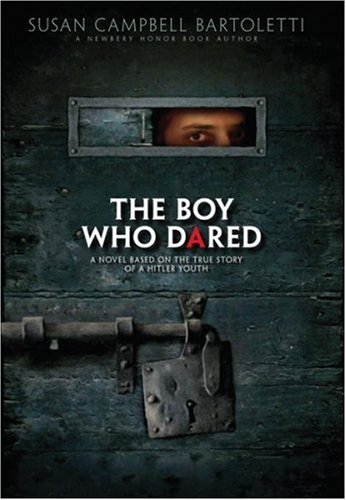
The Boy Who Dared
Author: Susan Campbell Bartoletti
Published February 1st, 2008 by Scholastic Press

Goodreads Summary: Bartoletti has taken one episode from her Newbery Honor Book, HITLER YOUTH, and fleshed it out into thought-provoking novel. When 16-year-old Helmut Hubner listens to the BBC news on an illegal short-wave radio, he quickly discovers Germany is lying to the people. But when he tries to expose the truth with leaflets, he’s tried for treason. Sentenced to death and waiting in a jail cell, Helmut’s story emerges in a series of flashbacks that show his growth from a naive child caught up in the patriotism of the times , to a sensitive and mature young man who thinks for himself.

My Review: Helmuth Hubener thought that Hitler was going to fix Germany, but the longer Hitler was in power, the more Helmuth realized that there was social injustice happening.

Based on a true story, The Boy Who Dared, accounts Helmuth’s life and the choices he makes. Told in flashback, I felt that some of the suspense is taken away since you know Helmuth’s current situation right from the beginning of the story; however, even with knowing the outcome, I wanted to read to figure out how Helmuth got there.

The exposition of the book helped me understand the extent of Helmuth’s society at the time which made me even more sympathetic then I would have been just jumping into Helmuth’s life. Although we all know about World War II and the Holocaust, unless you have read other books on World War II Germany, you may not understand the extent of Hitler’s power and brainwashing. With The Boy Who Dared, we follow Helmuth through his feelings about Hitler and the decisions he made.

This book is fabulous to read with the nonfiction book by Susan Campbell Bartoletti, Hitler Youth, which recounts the history around the Hitler Youth and what Helmuth was living through.

*     *     *     *     *

Teacher’s Tools For Navigation: If I taught a grade level where the Holocaust or WWII was taught in history, I would love to use these books supplementally in English class. These books tell a story within WWII that isn’t normally taught in history and really shines a light on a different side of the story. It would be a great way to discuss point of view, persuasion, and propaganda. I can also see these being used in thematic sets and then in lit circles. Each book adds to a whole look at WWII.

Discussion Questions: After reading both books, why was Hitler able to manipulate and affect the youth of Germany the way he did?; How did Helmuth affect those around him? History?

We Flagged: “The dark streets were already flooded with thousands of excited people, who, like Melita, were running out to watch the victory parade in honor of Adolf Hitler… Melita couldn’t understand why her parents didn’t support a great man like Adolf Hitler, who said that a person’s money and titles didn’t matter.  All that mattered was whether a person contributed to the well-being of the people.” (Hitler Youth p. 15-16)

“It’s morning.  Soft gray lights slips over the tall redbrick wall.  It stretches across the exercise yard and reaches through the high, barred windows.  In a cell on the ground floor, the light shifts dark shapes into a small stool, a scrawny table, and a bed made of wooden boards with no mattress or blanket.  On that bed, a thin, huddled figure, Helmuth, a boy of seventeen, lies awake.  Shivering. Trembling.
It’s Tuesday.
The executioner works on Tuesday.” (The Boy who Dared p. 1)

Read These If You Loved: Parallel Journeys by Eleanor Ayers, Alfons Heck & Helen Waterford, Briar Rose by Jane Yolen, The Book Thief by Markus Zusak, Resistance (series) by Carla Jablonski, London Calling by Edward Bloor, Once (series) by Morris Gleitzman, The Berlin Boxing Club by Robert Sharenow, Between Shades of Gray by Ruta Sepetys

Recommended For: 

classroomlibrarybuttonsmall litcirclesbuttonsmall closereadinganalysisbuttonsmall

Signature

The Salem Witch Trials: An Unsolved Mystery from History by Jane Yolen & Heidi Elisabet Yolen Stemple

Share

NF PB 2013

Nonfiction Picture Book Wednesday

Nonfiction Picture Book Wednesday is hosted by Kid Lit Frenzy and was started to help promote the reading of nonfiction texts. Most Wednesdays, we will be participating and will review a nonfiction text (though it may not always be a picture book).
Be sure to visit Kid Lit Frenzy and see what other nonfiction books are shared this week!

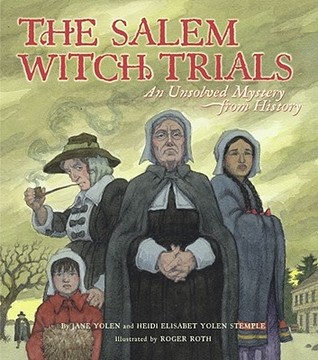
salem

The Salem Witch Trials: An Unsolved Mystery from History
Authors: Jane Yolen & Heidi Elisabet Yolen Stemple
Illustrated by: Roger Roth
Published September 7th, 2004 by Simon & Schuster Books for Young Readers

Goodreads Summary: In 1692 Salem, Massachusetts, witnessed one of the saddest and most inexplicable chapters in American history. When a group of girls came down with a horrible, mysterious bout of illness, the town doctor looked in his medical books but failed to find a reasonable diagnosis. Pretty soon everyone in town was saying the same thing: The girls were ill because they were under a spell, the spell of witchcraft! And still, the question remains: Why did the hysteria occur? The townspeople had many things to worry about back then: smallpox, strife with the local Indians, a preacher demanding higher wages, and the division of land in the community. But did all of those problems justify a witch hunt?

Become a detective as you read this true story, study the clues, and try to understand the hysteria! The Unsolved Mystery from History series is written by acclaimed author Jane Yolen and former private investigator Heidi Elisabet Yolen Stemple. This is an innovative history lesson that’s sure to keep kids thinking throughout.

Review: The mystery of the Salem Witch Trials is one that has haunted the United States for over 3oo years now and is one that students love to read about (and I do, too!). Most of my thoughts about this book are about how awesome this book is for the classroom. The Yolens seemed to have written it specifically for teachers to use.

Teacher’s Tools For Navigation: This book promotes studying history, inquiry, and vocabulary. The book begins with an introduction to a young girl who enjoys unsolved mysteries from history and then the book is set up like her case notebook. Each page of the case notebook includes a narrative nonfiction section about what was going on in Salem, an informational nonfiction section where facts about the story are explained even more in detail, and then there are vocabulary words from the two sections defined for the reader. Finally, in the back of the book the different theories about what could be the answer to the unsolved mystery are shared and briefly discussed. The set up of this book leads to infinite possibilities of being used in the classroom. Students could debate, write research papers, could do their very own case notebook about a different mystery, etc. Another option is to get all of the Unsolved Mystery from History books and have students get into lit circle groups and have each group read a different mystery then research and share.

Discussion Questions: What do you think happened in Salem? [Could be a wonderful debate or cooperative research presentation/paper in class. Have each students, after reading the different theories, decide which they believe is true. Then within their groups come up with evidence that supports the theory that they believe in.]

We Flagged: Narrative Nonfiction Section: One bitterly cold day in February, Betty and Abigail both fell ill, collapsing onto their small rope beds. They convulsed. They contorted. Their arms and legs jerked about. They shouted bizarre, unintelligible words. They crouched under chairs and cowered as if frightened. In other houses in Salem Village several of their friends began to act the same way.

Informational Nonfiction Section: The other sick girls in Salem village included Ann Punam Jr. (age 12), Mercy Lewis (age 19), Mary Walcott (age 16), Elizabeth Hubbard (age 17), and Mary Warren (age 20). Like Abigail, Elizabeth and Mercy were orphans; Mercy may have witnessed her parents being killed in an Indian attack three years earlier in Main. Mary Walcott had lost her mother when she was eight. Ann and Betty were daughters of landowners, but Marry Warren, Elizabeth, and Mercy were maidservants.

Vocabulary: Convulsed: shook violently, Contorted: Twisted into unusual shapes, Unintelligible: Impossible to understand” (p. 12-13)

Read This If You Loved: I Walk in Dread by Lisa Rowe Fraustino, The Sacrifice by Kathleen Benner Duble, Witch Child by Celia Rees, The Witch of Blackbird Pond by Elizabeth George Speare, Witches: The Absolutely True Tale of Disaster in Salem by Rosalyn Schanzer and other nonfiction books about Salem

Recommended For: 

closereadinganalysisbuttonsmall readaloudbuttonsmall

classroomlibrarybuttonsmall litcirclesbuttonsmall

Signature

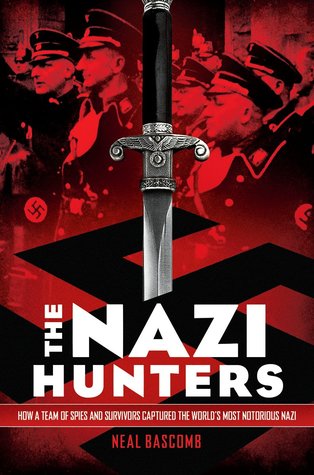
The Nazi Hunters by Neal Bascomb

Share

17168240

The Nazi Hunters: How a Team of Spies and Survivors Captured the World’s Most Notorious Nazi
Author: Neal Bascomb
Expected Publication: August 27th, 2013 by Arthur A. Levine

Summary: Adolf Eichmann was one of the world’s most notorious Nazis as the head of operations for the Nazis’ Final Solution. Essentially, he organized the transportation of the Jewish people to ghettos and concentration camps. This work of narrative nonfiction begins with the background of Eichmann’s role in the genocide. Then, in 1945, Eichmann disappeared from Germany and went into hiding. Due to the bravery of more than a dozen individuals, Eichmann is captured and put on trial for the world to view.

Review: This is an excellently researched work of nonfiction. I was amazed at the number of intricate details that went into the investigation and capture of this criminal. Neal Bascomb (who is also the author of Hunting Eichmann, the adult-marketed version of this book) was extraordinarily honest in this text. At times, I had to slap myself when I felt pity for Eichmann, as I tend to be too empathetic in my search for humanity in murderers. Bascomb doesn’t glorify the details—his account is genuine and based on numerous interviews of individuals who were connected to this hunt. I find that, in general, I become a bit disengaged when I read nonfiction, but this book kept me hooked; I wanted to read more about the courage and bravery of the Nazi Hunters. I highly recommend this text for all readers.

Teacher’s Tools for Navigation: Nonfiction is, arguably, absent from many classrooms. English curricula tend to focus more on fiction, and I am interested to see if the Common Core will truly shift this reality (err, as much as the creators think it will, anyways). This text bridges the gap between fiction and nonfiction because it is written in narrative form. For students who despise nonfiction texts, this book will have appeal because Bascomb weaves in great characterization and detail. Teachers who enjoy employing literature circles in their classrooms might consider a nonfiction focus for the circles, and this book would make for a fantastic choice for students. Alternatively, it would pair very well with other texts from the Holocaust, such as Night by Elie Wiesel. When I finished reading this book, I couldn’t help but scour the internet for more details about other Nazi criminals and their captures/trials. I imagine that students will feel this same curiosity after reading this text, so I envision it would work well at the center of a research project.

Discussion Questions: Was Eichmann just following orders or is he a murderer? At what point does the excuse of “I was just following orders” become baseless and unreasonable?; Does Eichmann give up? Do you see him as a strong individual by the end of the text?; Do you think Eichmann’s wife was truly ignorant to his crimes? Do you think she should have turned him in?; How do Eichmann’s children’s views reflect on his character and views?

We Flagged: “‘For the first time in history the Jews will judge their assassins, and for the first time the world will hear the full story of the edict of annihilation against an entire people'” (Chapter 10).

Please note: The above quotes are from the Advanced Reader Copy. The e-book (a galley) did not provide page numbers. The quotes may change when the book is published.

Read This If You Loved: Night by Elie Wiesel, Hunting Eichmann by Neal Bascomb, Nuremberg: Infamy on Trial by Joseph E. Persco, books in the The Real Justice seres, or other works of nonfiction that concern WWII, Crime, Police Investigation, War, and Justice

Recommended For:

litcirclesbuttonsmall classroomlibrarybuttonsmall

026F3FBCC8C3913BD3A4D3F6920340D5

Thank you to NetGalley and Arthur A. Levine books for sending me the Advanced Reader Copy!

Real Justice: Convicted for Being Mi’kmaq: The Story of Donald Marshall Jr. by Bill Swan

Share

NF PB 2013

Nonfiction Picture Book Wednesday

Nonfiction Picture Book Wednesday is hosted by Kid Lit Frenzy and was started to help promote the reading of nonfiction texts. Most Wednesdays, we will be participating and will review a nonfiction text (though it may not always be a picture book). Be sure to visit Kid Lit Frenzy and see what other nonfiction books are shared this week!

17198555

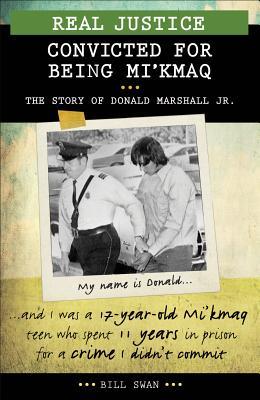
Real Justice: Convicted for being Mi’kmaq: The Story of Donald Marshall Jr.
Author: Bill Swan
Expected Publication: September 1st, 2013 by James Lorimer & Company

Summary: This book is part of the Real Justice series by James Lorimer & Company that shed light on young people who are wrongfully convicted of crimes. Donald Marshall Jr. spent eleven years in prison for a crime he never committed. He was the eldest son of the Grand Chief of the Mi’kmaw Nation, and racism certainly played a role in his conviction. It was a late night in Wentworth Park when Sandy Seale, a black teen, and Donald Marshall Jr. are waved over by two drunk men wanting cigarettes. One of the men stabs Sandy Seale in the side, and Donald Marshall Jr. runs for help. What he doesn’t know is that the police won’t believe his story, and they will do anything they can to convict him of the Seale’s death.

Review: I enjoyed the journalistic format of this book. Swan does an excellent job researching and depicting the facts of the case. He goes into depth when in his description of each witness’s story, and the reader gets a comprehensive background of the crime scene, investigation, and trial. As a Micmac Indian (the American version of this tribe), I was very interested in this story. Admittedly, I was a bit disappointed that aside from the comments about racism and a brief note toward the end of the book, there wasn’t much information about the Mi’kmaq Indians. I completely understand this, as the author chose to focus more on the investigation and trial, but I was secretly craving more information about Donald Marshall Jr.’s life background and customs. This text would make for a great nonfiction text to use in the classroom.

Teacher’s Tools for Navigation: I love teaching nonfiction units because there is so much variety. Teachers can offer myriad choices of memoirs and informational nonfiction for students to do research. After reading this story, students might research more about the case (if any other information is available) or they could compare and contrast this case with another example of injustice, particularly one that was impacted by racism. I have a feeling that students, like me, will want to research more about Marshall’s culture or the racial imbalance that existed at the time of the crime. I could also see this being paired with Black and White by Paul Volponi, an example of realistic fiction that also deals with injustice due to racism.

Discussion Questions: Does racism still exist today? In what ways did it impact the crime, investigation, and trial? What injustices did you see?; Do you think Marshall should have been compensated more for his eleven years in jail?; How does Marshall show incredible strength throughout his ordeal?

We Flagged: “‘Know what I think?’ MacIntyre added, as though on cue. ‘I think Marshall’s description of some old guy is a crock. The whole thing likely happened when that Indian, fueled up with fire water, got in an argument with the black kid'” (Chapter 5).

“When the reality hit [Donald Marshall Jr.], he cried the tears of childhood” (Chapter 15).

Please note: The above quotes are from the Advanced Reader Copy. Chapter numbers are included instead of page numbers because the e-reader did not provide page numbers. The quotes may change when the book is published.

Read This If You Loved: Hole in my Life by Jack Gantos, Black and White by Paul Volponi, other books in the Real Justice series, other books about Law and Order

Recommended For:

classroomlibrarybuttonsmall

RickiSig