Nina: Jazz Legend and Civil-Rights Activist Nina Simone by Alice Brière-Haquet

Share

nfpb2017

Nonfiction Wednesday

Nonfiction Picture Book Wednesday is hosted by Kid Lit Frenzy and was started to help promote the reading of nonfiction texts. Most Wednesdays, we will be participating and will review a nonfiction text (though it may not always be a picture book).
Be sure to visit Kid Lit Frenzy and see what other nonfiction books are shared this week!
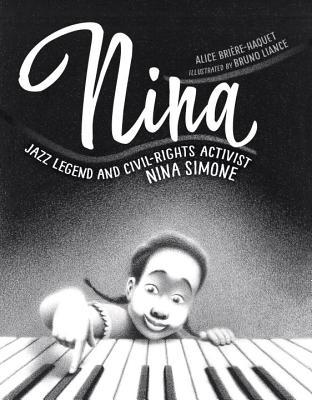
Nina: Jazz Legend and Civil-Rights Activist Nina Simone
Author: Alice Brière-Haquet
Illustrator: Bruno Liance
Published December 5th, 2017 by Charlesbridge Publishing

Summary: “To be young, gifted, and black.”

A stunning picture-book biography of the High Priestess of Soul and one of the greatest voices of the 20th century.

With evocative black-and-white illustrations and moving prose, readers are introduced to Nina Simone, jazz-music legend and civil-rights activist. Shared as a lullaby to her daughter, a soulful song recounts Simone’s career, the trials she faced as an African American woman, and the stand she took during the Civil Rights Movement. This poignant picture book offers a melodic tale that is both a historic account of an iconic figure and an extraordinary look at how far we’ve come and how far we still need to go for social justice and equality. A timeless and timely message aptly appropriate for today’s social and political climates.

ReviewAlthough Nina is just a taste into who Nina Simone was as it only introduces her talent as a pianist and shares her beliefs in regards to civil rights. Set up as a lullaby that Nina is singing to her child, the story recounts her love of music and learning about the racism within our nation as well as a story where she stood up to inequality at one of her piano concerts. The lyrics and illustrations are dreamy and perfectly fit the purpose of the story: to introduce and intrigue the reader when it comes to Nina Simone.

Teachers’ Tools for Navigation: I do wish that there had been back matter that went more in depth into Simone’s contribution to jazz and civil rights; however, without them existing, this nonfiction picture book allows for a perfect change for inquiry. Now that students have been introduced to Nina, have stations/centers focusing on different parts of her life, jazz, or the Civil Rights Movement.

Discussion Questions: 

  • How does the illustration on the bus use the idea of the piano to symbolize the relationship between White and Black citizens in the early 1900s?
  • What techniques do the author and illustrator use to make the book seem lullaby-eque?
  • How did the imagery of the single black chair symbolize the racism that occurred at Simone’s concert?
  • How does the author tie in Martin Luther King, Jr. and the Civil Rights Movement?

Flagged Passages: 
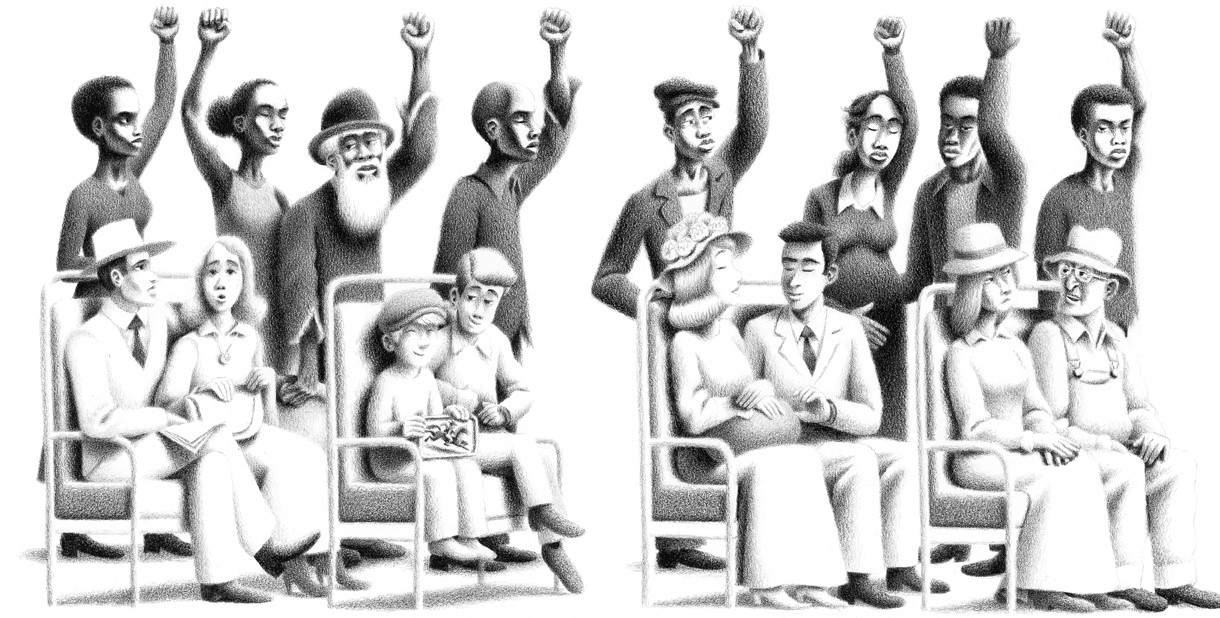
“‘The white keys are whole notes and the black keys are flats, or half notes,’ my teacher explained.

I asked why.

‘Because that’s just the way it is.’

Yes, that’s the way it was. White was whole. Black was half. It was that way everywhere and for everyone.

I could have held it against people. Or worse, I couldn’t believed I was worth less than other people.

Black people were nothing but half notes on a huge ivory keyboard.

But no. I did not agree with this.

The notes had to mingle and dance together in the air so these lies would disappear.”

Read This If You Love: Andrea Davis Pinkney picture book biographies, Jazz, Learning about the Civil Rights Movement

Recommended For: 
classroomlibrarybuttonsmall closereadinganalysisbuttonsmall  

Signature

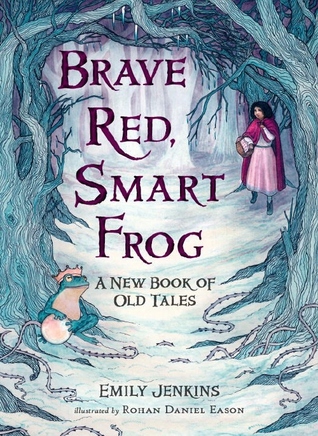
Discussion Guide for Brave Red, Smart Frog: A New Book of Old Tales by Emily Jenkins

Share

Brave Red, Smart Frog: A New Book of Old Tales
Author: Emily Jenkins
Illustrator: Rohan Daniel Eason
Published September 5th, 2017

Summary: Step into a wintry forest where seven iconic fairy tales unfold, retold with keen insight and touches of humor.

There once was a frozen forest so cold, you could feel it through the soles of your boots. It was a strange place where some kisses broke enchantments and others began them. Many said witches lived there — some with cold hearts, others with hot ovens and ugly appetites — and also dwarves in tiny houses made of stones. In this icy wood, a stepmother might eat a girl’s heart to restore her own beauty, while a woodcutter might become stupid with grief at the death of his donkey. Here a princess with too many dresses grows spiteful out of loneliness, while a mistreated girl who is kind to a crone finds pearls dropping from her mouth whenever she speaks. With empathy and an ear for emotion, Emily Jenkins retells seven fairy tales in contemporary language that reveals both the pathos and humor of some of our most beloved stories. Charming illustrations by Rohan Daniel Eason add whimsical details that enhance every new reading.

Discussion Questions include: 

  • “Snow White”
    • At the beginning of the story, dwarves are included with witches and sprites, making them feel villainous. How is this
      different from the seven dwarves we meet later in the story? Do they fit the negative connotation or are they different
      from what the villagers assume?
  • “The Frog Prince”
    • After the frog leaves, Crystal is looking for him. Why does she miss his company? How is his company different from those of her ladies-in-waiting and family?
  • “Red Riding Hood”
    • What information that Red shared does the wolf use to his advantage? Do you think he would have successfully been
      able to get into Grandmother’s house without this information?
  • Author’s Note
    • Emily Jenkins explains her intention behind rewriting these stories in the simple way that she did. How did she adhere
      to the traditional stories while also putting her own spin on them?
  • Entire book
    • Consider the names of the characters throughout the book. How does each name give a clue to the character’s
      personality or looks?

Discussion Guide Created by Me (Kellee): 

You can also access the teaching guide through Candlewick’s website here.

Recommended For: 
readaloudbuttonsmall classroomlibrarybuttonsmall litcirclesbuttonsmall closereadinganalysisbuttonsmall

Kellee Signature

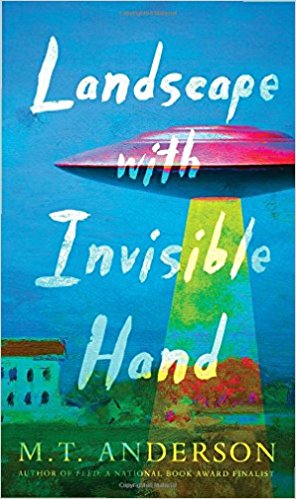
Landscape with Invisible Hand by M. T. Anderson

Share

Landscape with Invisible Hand
Author: M. T. Anderson
Published: September 12, 2017 by Candlewick

Summary: National Book Award winner M. T. Anderson returns to future Earth in a sharply wrought satire of art and truth in the midst of colonization.

When the vuvv first landed, it came as a surprise to aspiring artist Adam and the rest of planet Earth – but not necessarily an unwelcome one. Can it really be called an invasion when the vuvv generously offered free advanced technology and cures for every illness imaginable? As it turns out, yes. With his parents’ jobs replaced by alien tech and no money for food, clean water, or the vuvv’s miraculous medicine, Adam and his girlfriend, Chloe, have to get creative to survive. And since the vuvv crave anything they deem “classic” Earth culture (doo-wop music, still-life paintings of fruit, true love), recording 1950s-style dates for the vuvv to watch in a pay-per-minute format seems like a brilliant idea. But it’s hard for Adam and Chloe to sell true love when they hate each other more with every passing episode. Soon enough, Adam must decide how far he’s willing to go – and what he’s willing to sacrifice – to give the vuvv what they want.

Review: 

  • Futuristic, dark satire that is an unusual, intelligent social commentary
  • Forces readers to think deeply about their personal, social, and political lives
  • Somewhat non-linear story with an interesting layout: each chapter has a title that corresponds with the artwork created by the main character
  • Stylistically, Anderson chooses every word with intention. The text is a 149-page novella that features chapters that can be taught instructionally as vignettes.

Teachers’ Tools for Navigation:  Teachers might ask students to begin by looking closely at the text for short passages that they find particularly interesting or inspiring. Students might write a one-pager that a) unpacks the passage they chose, and b) examines the passage through the lens of a topic that they find particularly interesting and relevant. For example, they might connect a passage to the following topics which are relevant in the text:

Art

Automation

Capitalism

Classism

Economy

Entrepreneurship

Existentialism

Extraterrestrial Life

Health Care

Immigration

Love

Politics

Poverty

Sickness

Nostalgia

Unemployment

After the students have written several one-pagers and explored a variety of topics, they might select one topic that interests them most. They can research scholarship about the topic and look across the entire text for relevant passages.

Sample research paper topics:

Examining economic disparities and classism within Landscape with Invisible Hand

Finding the soul: M.T. Anderson’s treatment of love and art in Landscape with Invisible Hand

Discussion Questions: Do you think M. T. Anderson had a purpose for writing this text?; What kind of social commentary does this text offer?; What does it tell us about love? Society? Humanity?; How does Anderson use art to enhance the story?; How is the text structured? How does this enhance your reading?

Flagged Passage: “We are tiny figures, faceless, pointing at wonders, provided for scale, no lives of our own, surveying the landscape that has engulfed us all.”

Read This If You Loved: Feed by M. T. Anderson; Books by Scott Westerfeld; The House of the Scorpion by Nancy Farmer

Recommended For:
 classroomlibrarybuttonsmall

Thank you, Candlewick!

RickiSig

Insignificant Events in the Life of a Cactus by Dusti Bowling

Share

Insignificant Events in the Life of a Cactus
Author: Dusti Bowling
Published September 5th, 2017 by Sterling Children’s Books

Summary: Aven Green loves to tell people that she lost her arms in an alligator wrestling match, or a wildfire in Tanzania, but the truth is she was born without them. And when her parents take a job running Stagecoach Pass, a rundown western theme park in Arizona, Aven moves with them across the country knowing that she’ll have to answer the question over and over again.

Her new life takes an unexpected turn when she bonds with Connor, a classmate who also feels isolated because of his own disability, and they discover a room at Stagecoach Pass that holds bigger secrets than Aven ever could have imagined. It’s hard to solve a mystery, help a friend, and face your worst fears. But Aven’s about to discover she can do it all . . . even without arms.

Praise: 

*“Aven is a perky, hilarious, and inspiring protagonist whose attitude and humor will linger even after the last page has turned.” —School Library Journal (Starred review)

“Connor’s Tourette’s support-group meetings and Aven’s witty, increasingly honest discussions of the pros and cons of “lack of armage” give the book excellent educational potential. . . . its portrayal of characters with rarely depicted disabilities is informative, funny, and supportive.” —Kirkus Reviews

“Bowling’s sensitive and funny novel . . . demonstrates how negotiating others’ discomfort can be one of the most challenging aspects of having a physical difference and how friendship can mitigate that discomfort. . . . [an] openhearted, empathic book. —Publishers Weekly

Review: From the very first page, you know that Aven is awesome. In the first paragraph you learn that she doesn’t have arms but it doesn’t matter to her. The only reason why she is upset is because someone else freaked out about her armlessness. She is brave and funny and resilient. The way that she is able to joke around about her physical difference to help ease the reader and the other characters is a true talent. The stories she creates about what happened to her arms just to freak people out truly cracked me up. And Aven’s awesomeness is followed closely by her parents’. I adore them. They are the pinnacle of parents. They are kind yet tough and are raising an independent, wonderful young woman. Then there is Connor who is also so well-crafted. His Tourette’s syndrome is dealt with in a thoughtful way and also doesn’t define Connor just like Aven’s armlessness doesn’t define her. This is a book of amazing characters coming together to find their place in the world.

You are going to love this book. Your students are going to love this book. Parents are going to love this book. Your fellow teachers are going to love this book. This is a book that is going to get a lot of love!

Check out Dusti’s “Spotlight on Dusti Bowling” feature in Publishers Weekly to hear more about her inspirations.

Teachers’ Tools for Navigation: Please add this title to your collection of read aloud and classroom library books that you share with students to promote empathy, kindness, and friendship with those with differences as well as facing hardship and stepping up to challenges. You will not be disappointed!

Discussion Questions: After reading Aven and Connor’s story, how has your attitude and future actions towards those with differences changed?; How was Aven’s story inspiring to you?; Why did you feel that author made the choice to have Aven’s family move at the beginning of the book?; Did you predict the connection to Stagecoach Pass?; How were Connor and Aven able to help each other?

Flagged Passages: “When I was little, a kid pointed at me on the playground and shouted, ‘Her arms fell off!’ then ran away screaming in terror to his mom, who had to cuddle him on her lap and rub his head for like ten mintues to get him to calm down. I think, up until then, I hadn’t thought about the idea that my arms must have actually fallen off at some point in my life. I had never really thought about not having arms at all.

My missing arms weren’t an issue for me or my parents. I never once heard either of them say, ‘Oh, no, Aven can’t possibly do that because that’s only for armed people,’ or ‘Poor Aven is so helpless without arms,’ or ‘Maybe Aven can do that one day, you know, if she ever grows arms.’ They always said things like, ‘You’ll have to do this differently from other people, but you can manage,’ and ‘I know this is challenging for you. Keep trying,’ and ‘You’re capable of anything Aven.’

I had never realized just how different I was until that day that horrible kid shouted about my arms having fallen off. For the first time I found myself aware of my total armlessness, and I guess I felt like I was sort of naked all of a sudden. So I, too, ran to my mom, and she scooped me up and carried me away from the park, allowing my tears and snot to soak her shirt.” (Chapter 1)

Read This If You Love: Wonder by RJ Palacio, Forget Me Not by Ellie Terry, Out of My Mind by Sharon Draper, The Honest Truth by Dan GemeinhartFish in a Tree by Lynda Mullaly Hunt, How to Speak Dolphin by Ginny RorbyRain Reign by Ann M. MartinEmmanuel’s Dream by Laurie Ann Thompson

Recommended For: 
classroomlibrarybuttonsmall 

Signature

**Thank you to Dusti Bowling and Sterling for providing a copy for review!**

The Girl Who Ran: Bobbi Gibb, The First Woman to Run the Boston Marathon by Frances Poletti & Kristina Yee

Share

nfpb2017

Nonfiction Wednesday

Nonfiction Picture Book Wednesday is hosted by Kid Lit Frenzy and was started to help promote the reading of nonfiction texts. Most Wednesdays, we will be participating and will review a nonfiction text (though it may not always be a picture book).
Be sure to visit Kid Lit Frenzy and see what other nonfiction books are shared this week!

The Girl Who Ran: Bobbi Gibb, The First Woman to Run the Boston Marathon
Authors: Frances Poletti & Kristina Yee
Illustrator: Susanna Chapman
Published June 15th, 2017 by Compendium Inc.

Summary: “She said she would do it, she wasn’t a liar; she’d show them by running like the wind in the fire.” When Bobbi Gibb saw the Boston Marathon her mind was set—she had to be a part of it. She trained hard, journeying across America to run on all kinds of terrain. But when the time came to apply for the marathon, she was refused entry. They told her girls don’t run, girls can’t run. That didn’t stop Bobbi.

In 1966, the world believed it was impossible for a woman to run the Boston Marathon. Bobbi Gibb was determined to prove them wrong. She said she would do it, she wasn’t a liar; she’d show them by running like the wind in the fire.

This picture book tells the true story of how she broke the rules in 1966 and how, one step at a time, her grit and determination changed the world. Created in collaboration with Bobbi Gibb and the perfect gift for would-be runners, kids of all ages, and everyone out there with a love of sport.

ReviewRecently I was introduced to what happened to Kathrine Switzer in the 1967 Boston Marathon as it was the 50th anniversary. I thought she was the first woman to run the marathon (and officials attempted to stop her as she ran the race), but this story of Bobbi Gibb showed that the first woman stepped up the year before. Bobbi Gibb is such an inspiration. She trained and trained for the marathon, went against her parents’ wishes, and did something no one had ever done before. Gibb’s story combined with the beautiful lyricism of the text and freeness of the painted illustrations makes Gibb’s story run right into your heart.

Teachers’ Tools for Navigation: Yet another HERstory that needs to be shared with students as it is a part of history that is left out. Gibb’s story can be added to other women’s rights texts to build a lit circle or jigsaw activity where students learn and share about the struggles and victories of women throughout time.

Additionally, the back matter of The Girl Who Ran has a beautiful timeline that can be used to teach this text feature.

Discussion Questions: What is the theme of Bobbi Gibb’s story?; What is the purpose of the timeline in the back matter?; How did the repetition of “She said she would do it, she wasn’t a liar; she’d show them by running like the wind in the fire.” add to the story of the first woman who ran the Boston Marathon?; What does the act of Bobbi’s mom taking her to the marathon show about her?

Flagged Passages: 

Read This If You Love: The Book of Heroines by Stephanie Warren Drimmer and other books about amazing woman in history

Recommended For: 

classroomlibrarybuttonsmall  

Signature

**Thank you to Angeline at Compendium for providing a copy for review!**

The Misadventures of Max Crumbly: Locket Hero by Rachel Renee Russell

Share

The Misadventures of Max Crumbly: Locket Hero
Author: Rachel Renee Russell
Published: June 7, 2016 by Aladdin

A Guest Review by Emily Baseler

GoodReads Summary: Max Crumbly is about to face the scariest place he’s ever been: South Ridge Middle School. There’s a lot that’s great about his new school, but there’s also one big problem—Doug, the school bully whose hobby is stuffing Max in his locker. If only Max could be like the hero in his favorite comics. Unfortunately, Max’s uncanny, almost superhuman ability to smell pizza from a block away won’t exactly save any lives or foil bad guys. But that doesn’t mean Max won’t do his best to be the hero his school needs!

Review: This book is the beginning of a soon to be very popular series. I suggest you purchase a copy of this book for your classroom library while you still can. In June, the 2nd book will be released and I have a feeling it will not be available on the shelf for long. This book has a very similar style to the “Dairy of a Wimpy Kid” series which children across grade levels love. This book introduces relevant themes to a middle grade reader such as peer conflict, coping with bullying, pop culture, relationships, friendship, surviving middle school, and learning to laugh at yourself. This book was an easy ready and would be ideal for a more reluctant reader or to read for pleasure.

Teachers’ Tools for Navigation: This book is one of the rare few written in second person. Max Crumbly, the narrator, is writing journal entries addressing the reader as “you.” “The Adventures of Max Crumbly” would be an interesting text to explore point of view with your students. You could also use the text to highlight the use of exclamation and variation of font. Additionally, the text could be a resource when reviewing the writing process. There are entire sentences scratched out, arrows redirecting the narrative, edits, revisions, and inclusions in the final text.

Discussion Questions: Is this style of writing something you think you would be able to create?; How does the point of view of the narrator impact your perceptions as a reader?; What value did the illustrations add to the text—if any?; Are there any themes or topics in which you can identify/connect with?

Book Trailer: 

Online Resource: http://maxcrumbly.com/

Read This If You Loved: Dork Diaries series by Rachel Renee Russell, Dairy of a Wimpy Kid series by Jeff Kinney

Recommended For:
 classroomlibrarybuttonsmall

Thank you, Emily!

RickiSig

New Nonfiction Texts and Nonfiction & Fiction Chapter Books from Animal Planet

Share

nfpb2017

Nonfiction Wednesday

Nonfiction Picture Book Wednesday is hosted by Kid Lit Frenzy and was started to help promote the reading of nonfiction texts. Most Wednesdays, we will be participating and will review a nonfiction text (though it may not always be a picture book).
Be sure to visit Kid Lit Frenzy and see what other nonfiction books are shared this week!

If you haven’t noticed, nonfiction texts have really been stepping up their game recently! Some of my favorites from from Animal Planet and Time, Inc., so I wanted to share some new series that are coming from them. 

Animal Planet Chapter Books

Book #1: Sharks
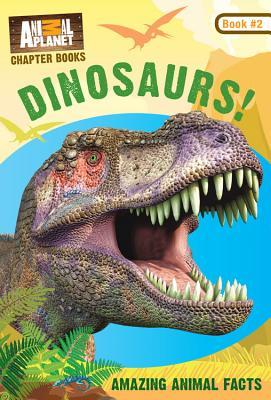
Book #2: Dinosaurs
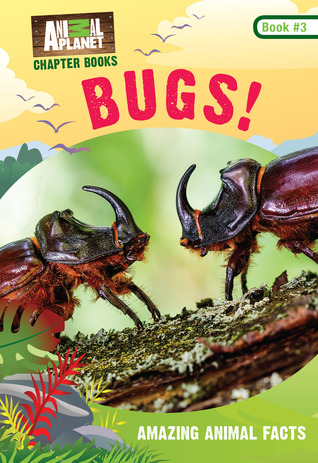
Book #3: Bugs
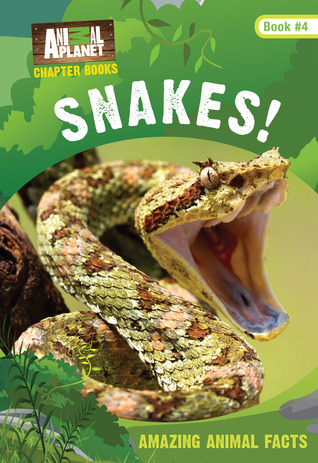
Book #4: Snakes

Summary: Engaging narrative nonfiction is paired with tried-and-true kid-friendly subjects in a popular chapter book series from Animal Planet and Time Inc. Books. All books in the series feature plentiful full-color photographs, illustrations, and a kid-friendly design. Sidebars such as “Meet the Scientists,” “In Your News Feed,” and “Fact File” pages highlight interesting aspects of each creature profiled and keep readers up to date on the most current research. Packed with information for thrill seekers and animal lovers alike, these are the perfect books for new readers who are ready to take a deeper dive into their favorite subject.

A companion fiction series, Animal Planet Adventures, is also available.

Animal Planet Adventures

Book #1: Dolphin Rescue by Catherine Nichols
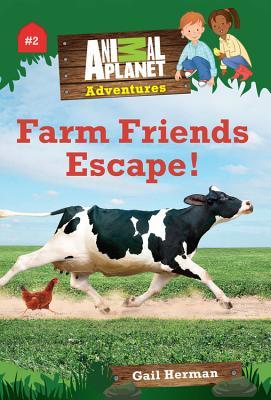
Book #2: Farm Friends Escape! by Gail Herman

Summary: Animal Planet Adventure chapter books present fiction and nonfiction within a familiar narrative format to bring the best of the animal world to young readers. Perfect for reluctant, challenged, and newly fluent readers, the new series combines fun animal mysteries with cool nonfiction sidebars that relate directly to the stories. Each book contains 100 full-color illustrations and photographs.

Animal Planet Adventures Curriculum Guide

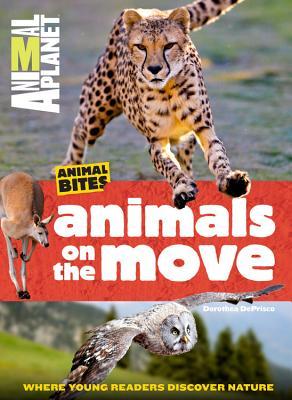
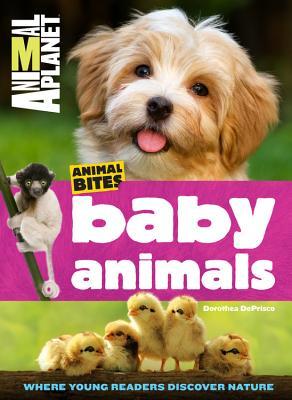
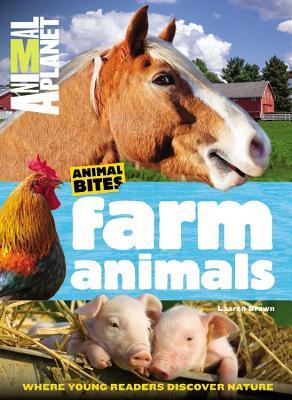
Animal Planet Animal Bites

Animals on the Move
Baby Animals
*Newest titles!*

Farm Animals
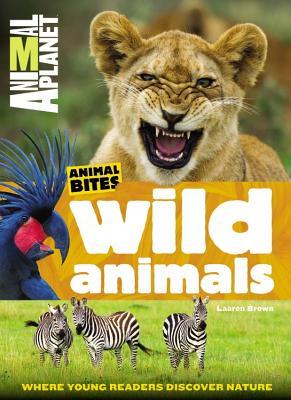
Wild Animals
*Reviewed October 5th, 2016*

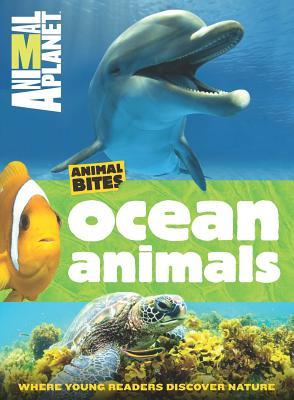
Ocean Animals
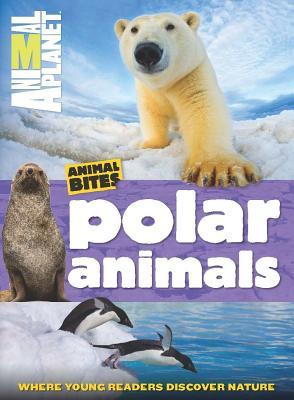
Polar Animals
*Reviewed April 27th, 2016*

Summary: The Animal Bites series provides emerging readers with the perfect bite-sized guide to the animal world. Each book contains more than 200 striking photographs, easy-to-understand graphics, and maps. Fun “Just Like Me” call-outs show the ways in which animals are similar to young readers–sharks rely on their senses of sight and scent to learn about their world, for example, just like kids do. “Info bits” boxes highlight quick facts about a species’ home, size, and classification. Each book contains a glossary, a page of resource where kids can go to learn more about animals, and a great list of activities to try, from making a bird feeder to moving like a baby rabbit or tern chick.

A portion of proceeds from the sale of books in the Animal Bites series benefits the principal partners of Reach Out. Act. Respond. (R.O.A.R.), Animals Planet’s initiative dedicated to improving the lives of animals in our communities and in the wild.

All Recommended For:

  litcirclesbuttonsmall classroomlibrarybuttonsmall