Miles Away from You by A. B. Rutledge

Share

Miles Away from You
Author: A. B. Rutledge
Published: March 20, 2018 by HMH Books for Young Readers

Guest Review by Kaari von Bernuth

Goodreads Summary: It’s been three years since Miles fell for Vivian, a talented and dazzling transgender girl. Eighteen months since a suicide attempt left Vivian on life support. Now Miles isn’t sure who he is without her, but knows it’s time to figure out how to say goodbye.

He books a solo trip to Iceland but then has a hard time leaving the refuge of his hotel room. After a little push from Oskar, a local who is equal parts endearing and aloof, Miles decides to honor Vivian’s life by photographing her treasured Doc Martens standing empty against the surreal landscapes. With each step he takes, Miles finds his heart healing–even as he must accept that Vivian, still in a coma, will never recover.

Told through a series of instant messages to Vivian, this quirky and completely fresh novel explores love, loss, and the drastic distances we sometimes have to travel in order to move on.

Kaari’s Review: I’d like to preface this blog post by saying that I do not identify as LGBTQ in any way, so I don’t have personal experiences to say whether or not this novel presents an accurate representation of what it is like to be an LGBTQ person. But, I think that this book does provide a compelling and interesting perspective that non-LGBTQ people can understand and connect with. I liked that the entire story was written in a messaging format. It placed an interesting lens over the story because, as readers, we always know that the story is being written to someone, even if they can’t respond. The format also lends itself to casual language, which makes it an entertaining and engaging read that students will love.

This book was certainly entertaining, and I loved reading it. I loved cheering for Miles and hurting for Miles when it was appropriate. I think that Miles’ approach to grief is also an approach that many teens can connect with, and maybe learn from as well. However, this book has a lot going on in it. The main character, Miles, is coping with the loss of his transgender girlfriend. His two lesbian moms are very supportive of the LGBTQ community, and even run a summer camp for LGBTQ kids. And, Miles himself is unsure of his sexuality, which he explores more as the novel goes on. Because there are so many LGBTQ elements the author tried to fit in, it feels a little bit contrived at times, and distracts from the overall messages of acceptance of personal identity, and also of the LGBTQ community, and dealing with the intricate and complicated loss of a loved one.

Teachers’ Tools for Navigation: I think this book poses a lot of really interesting questions about suicide, grief, overcoming grief, acceptance, identity, potential abuse (between Oskar and his boyfriend), love, gender, and sexuality that could spark a lot of discussions for students. For these reasons, I think that this book should definitely be included in classroom libraries, and used as a literature circle book. However, if someone is looking to teach an lgbtq book to an entire classroom, I’d choose one that didn’t have quite as many lgbtq aspects, as I mentioned in the review, because it makes the book feel somewhat cluttered and contrived, and there are many other novels that would be better for teaching to a large classroom.

Discussion Questions: 

  • How is identity explored in this novel?
  • How is discrimination portrayed in this novel?
  • What kinds of violence/abuse do we see in the novel?
  • How is death/dying portrayed?
  • How does Miles cope with grief? What ways are productive and what ways are unproductive?

We Flagged: “This is the Mid-Atlantic Ridge, the place where the North American and Eurasian tectonic plates are slowly, slowly tearing apart. It sounds so destructive, doesn’t it? Like the world could just keep spreading and eventually it’ll just crack in half and bleed out into the universe. But the good news is that it doesn’t actually work like that. When the earth splits, lava rises and cools, creating new land where there wasn’t any before. It heals as it tears. I think humans do that, too. So, anyway, this is the tenth photo I’ve taken of Vivian’s boots, and it might be my last for a little while. I do want to keep connecting and keep exploring this new scar tissue.” -Advanced Reading Copy page 224

Read This If You Loved: Beautiful Music for Ugly Children by Kirstin Cronn-Mills; Symptoms of Being Human by Jeff Garvin; If I Was Your Girl by Meredith Russo; Suicide Notes by Michael Thomas Ford

Recommended For:

classroomlibrarybuttonsmall

  RickiSig

**Thank you to Kaari for reviewing this book!**

Blog Tour with Review and Educators’ Resource Guide!: Bat and the Waiting Game by Elana K. Arnold

Share

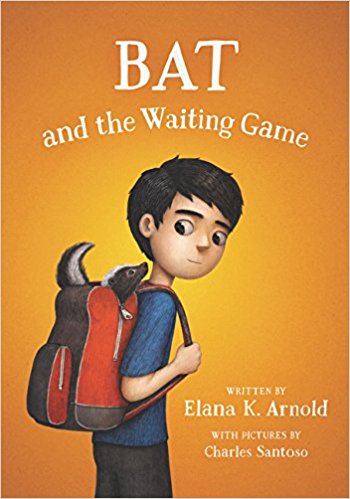
Bat and the Waiting Game
Author: Elana K. Arnold
Illustrator: Charles Santoso
Published March 27th, 2018 by Walden Pond Press

Summary: The second book in the irresistible and “quietly groundbreaking”* young middle grade series starring Bat, an unforgettable boy on the autism spectrum.

For Bixby Alexander Tam (nicknamed Bat), life is pretty great. He’s the caretaker of the best baby skunk in the world—even Janie, his older sister, is warming up to Thor.

When Janie gets a part in the school play and can’t watch Bat after school, it means some pretty big changes. Someone else has to take care of the skunk kit in the afternoons.

Janie is having sleepovers with her new friends. Bat just wants everything to go back to normal. He just has to make it to the night of Janie’s performance…

*Kirkus Reviews

Critical Praise: 

“Delightful. This humorous follow-up is even stronger than its predecessor and will leave readers hoping for a third book featuring Bat and his family.” — School Library Journal

“A gentle tale of shared similarities rather than differences that divide and a fine read-aloud with a useful but not didactic message of acceptance.”  — Kirkus Reviews

A winsome blend of humor and heart, vibrant characters, and laugh-out-loud dialogue. Arnold’s narrative also gracefully explores life through the eyes of a boy on the autism spectrum.  The ever-lovable Bat is sure to resonate with readers of all ages. — Booklist Online

About the Author: Elana K. Arnold grew up in California, where she, like Bat, was lucky enough to have her own perfect pet — a gorgeous mare named Rainbow — and a family who let her read as many books as she wanted. She is the author of picture books, middle grade novels, and books for teens, including the National Book Award finalist title What Girls Are Made Of. Elana lives in Huntington Beach, California, with her husband, two children, and a menagerie of animals. She calls the “Bat” series for Walden Pond Press “books of her heart.” You can find her online at www.elanakarnold.com.

ReviewBat is one of my favorite characters ever. He is a flawed character but is also so perfect as who he is! What I love about Bat, other than his amazingly sweet personality, his brilliance when it comes to skunks, and his coping skills, is that he teaches us to treasure the little things. Also, the way that Elana write Bat, his story will help middle grade readers think about their classmates who may not think or act the way that they think is normal. We are all normal for who we are! Bat’s story shows about the good in life and teaches us what good humans are like.

Teachers’ Tools for Navigation: In addition to an amazing read aloud opportunity, I can definitely see the text being part of lit circles. Bat himself is unique, but he and his story remind me of so many other characters who I love and I wish all students would read about: Auggie from Wonder; Melody from Out of my Mind; David from Rules; Candice from The Categorical Universe of Candice Phee; Rose from Rain, Reign; and Adam from How to Speak Dolphin. All of these texts are must reads! I picture all of these texts with their extraordinary characters being part of lit circles with a focus on disabilities/disorders and empathy. [From my review of A Boy Called Bat, 3/10/17]

Educators’ Resource Guide: 

Flagged Passages: “Maybe, Bat though, there was something better in the world than cradling a sleepy, just-fed baby skunk in your arms. But at this moment, it didn’t seem likely.

Bat was sitting in his beanbag chair, having just put down the tiny, nearly empty bottle of formula. In Bat’s hand, licking his fine soft whiskers with a tiny pink tongue and then yawning widely to reveal two rows of new white teeth, was a six-week-old skunk kit named Thor.” (p. 1-2)

“When Israel first handed [a skunk kit sculpture] to Bat last Monday at school, it had taken Bat a moment to figure out what exactly he was holding…

Bat had rubbed his thumb down the smooth shiny back of the clay ump. It didn’t look much like a skunk kit, but its pleasant weight felt good in his hand. And when he had flipped it over to find the words ‘From Israel’ on the bottom, a warm good feeling spread through his chest and up his neck.

A friend had given him a gift. And even if it didn’t look much like the real baby skunk now nestled in his hands, it definitely deserved a place on his bookshelf,a long with his other important things.” (p. 4-5)

Read This If You Love: A Boy Called Bat by Elana K. Arnold, Any lit circle book listed under Teacher’s Tools

Recommended For: 


Don’t miss out on the other blog tour stops!

3/12 For Those About to Mock, @abouttomock Sam Eddington

3/15 Mrs. Knott’s Book Nook @knott_michele Michele Knott

3/15 @iowaamber Amber Kuehler

3/16 The Hiding Spot @thehidingspot Sara Grochowski

3/18 Educate*Empower*Inspire…Teach @guerette79 Melissa Guerrette

3/19 Maria’s Melange @mariaselke Maria Selke

3/20 Nerdy Book Club post by Elana

3/20 Writers Rumpus @kirsticall Kirsti Call

3/22 Bluestocking Thinking @bluesockgirl Nicole Levesque

3/28 Unleashing Readers @unleashreaders Kellee Moye

Signature

**Thank you to Walden Pond Press for hosting the blog tour and providing a copy for review!!**

There’s Someone Inside Your House by Stephanie Perkins

Share

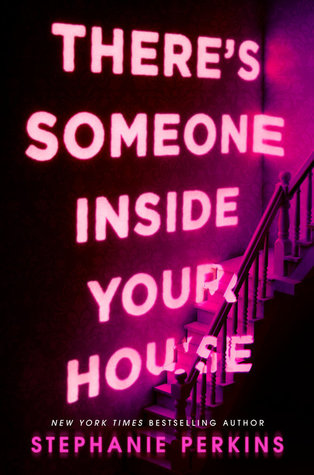
There’s Someone Inside Your House
Author: Stephanie Perkins
Published: September 26, 2017 by Dutton

Guest Review by Kaari von Bernuth

Goodreads Summary: One-by-one, the students of Osborne High are dying in a series of gruesome murders, each with increasing and grotesque flair. As the terror grows closer and the hunt intensifies for the killer, the dark secrets among them must finally be confronted.

International bestselling author Stephanie Perkins returns with a fresh take on the classic teen slasher story that’s fun, quick-witted, and completely impossible to put down.

My Review: This book was gripping from the first page. I found myself getting sucked into it, trying to figure out the mystery of who the killer was, but also of what Makani’s past entailed. The author, Stephanie Perkins, did an amazing job of planting foreshadowing and clues that hinted toward the answers to the multiple mysteries that kept my brain working the entire time that I was reading.

I also loved the emphasis on friendship groups, feeling like an outsider, and bullying/hazing as many adolescents face these topics every day. The way that these topics were portrayed in Makani’s friend group, and the way that the friends help Makani to deal with her hazing trials were something that I appreciated. However, there were two things that I wish were approached differently in this book. 1. Even though this is a small point, one of the characters was a stereotypical, loud Christian character who tried to force his beliefs on everyone else, including a mention of how he managed to get rid of any mention of evolution in his school textbooks. He was characterized as a Lutheran. While this probably wouldn’t mean much to other people, I am a Lutheran, and all of the Lutherans I know believe and support evolution, and don’t at all act like this negative christian stereotype character does. But, this book makes it look like all Lutherans act this way. I wish that there had been no mention of the character’s denomination.  2. I wish that more emphasis had been placed on dealing with the deaths that occurred in the books, as well as the motivations of the killer, as those were both just glanced over. This is problematic as it leaves a huge hole in understanding of the novel, and makes it harder to talk about some of the prominent events in the story. Overall though, it was a very entertaining novel.

Teachers’ Tools for Navigation: This would be a great book to have in a classroom library for kids to enjoy. Given the graphic, violent nature of some of the scenes, I wouldn’t recommend teaching to an entire class. However, it will appeal to students who enjoy the horror genre. This book also has great potential in literature circles. Perkins does a great job of foreshadowing and giving hints not only as to what is going to happen, but to stories that have already happened that the readers don’t know about yet. As I was reading, I loved being able to piece together the clues that were given to try to guess what had happened and also what was going to happen. A literature circle could have a lot of fun trying to piece those clues together as a group. This book also touches on other important topics such as bullying/hazing and family struggles which could be discussed in a literature circle, as well as the elements of forgiving oneself/dealing with guilt (which Makani experiences as a result of the hazing incident). The one thing that I found this book lacking was any form of dealing/acknowledging grief and death, as well as an acknowledgement of mental health issues (which the killer would have to have). These failings in the book could also be discussed in relation as to how to acknowledge those topics in a healthy way.

Discussion Questions: Where do you see foreshadowing in the early parts of the books?; How does Perkins create suspense in her novel?; What is Makani’s relationship with her parents like?; What was Makani’s experience with hazing like? Have you experienced something similar?; How does blame and justice appear in this book? Is it always fair?

We Flagged: “Sharing her story now, however, had opened a valve of tremendous internal pressure. Her secret- this self-inflicted burden- had finally been released.” (page 207 of Advanced Reading Copy)

Read This If You Loved: The Merciless by Danielle Vega; Dead by Morning by Kayla Krantz; The Forest Dweller by Deborah McClatchey; Confessions: The Private School Murders by James Patterson

Recommended For:

classroomlibrarybuttonsmall  

  RickiSig

**Thank you to Kaari for reviewing this book!**

Ellie Engineer by Jackson Pearce

Share

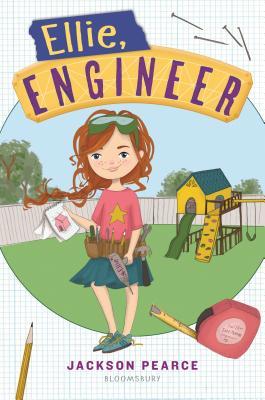
Ellie Engineer
Author: Jackson Pearce
Published January 16th, 2018 by Bloomsbury USA

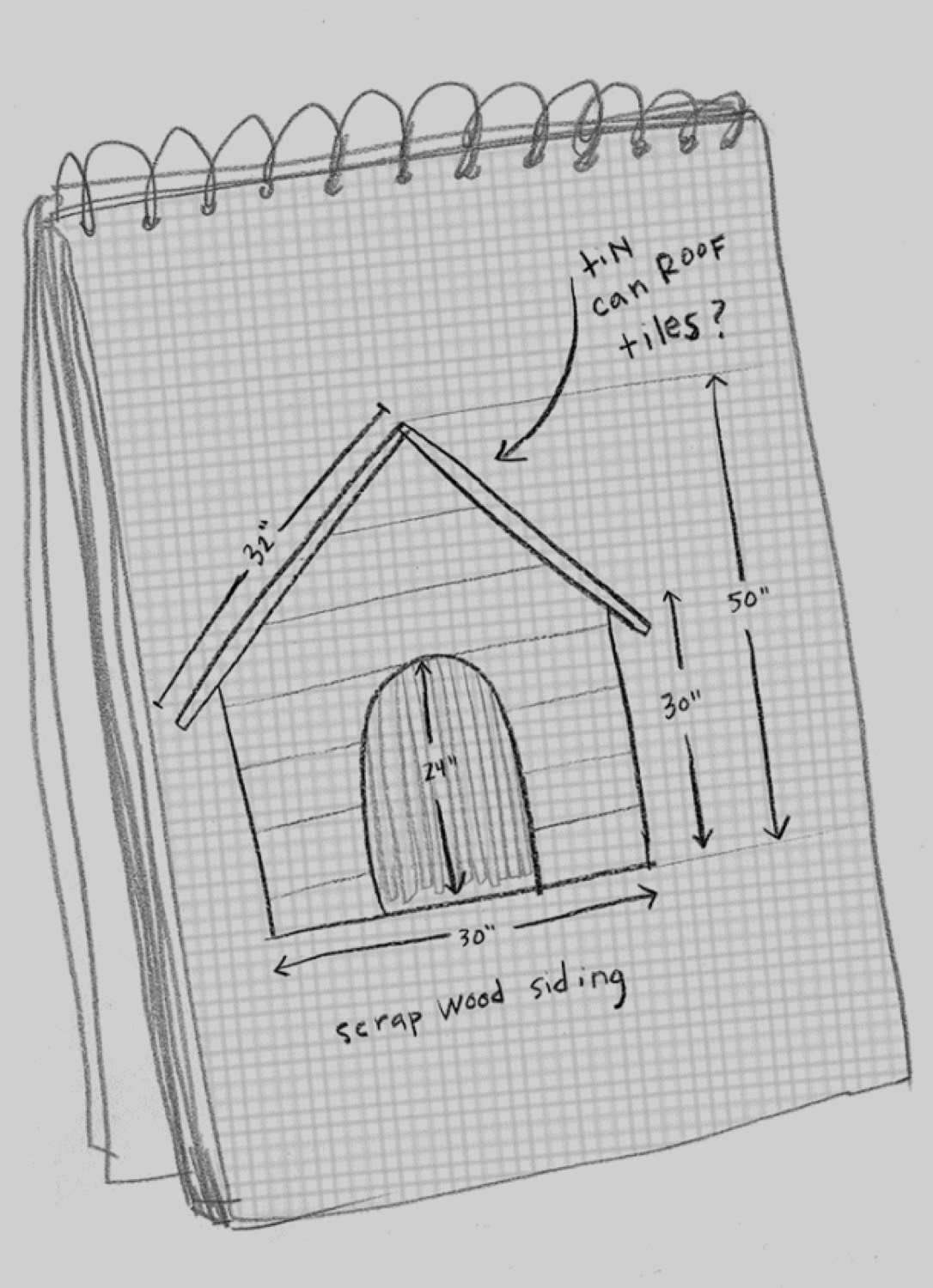
Summary: Ellie loves to build. She’s always engineering new creations with the help of her imagination and her best friend Kit. Unfortunately, with Kit’s birthday just around the corner, the French-braiding machine Ellie built turns out to be more of a hair-knotting machine. What’s Ellie going to do? Luckily, the girls overhear Kit’s mom talking about Kit’s surprise – it must be the dog she’s always wanted! Ellie is struck with inspiration: she’ll build Kit the best doghouse ever! The project quickly becomes more than just a present for Kit – it builds a bridge between Ellie and those bothersome neighbor boys, as well as the other handy girls in her class.

Designed to look like Ellie’s notepad, with pencil-on-graph-paper illustrations of her projects interspersed throughout the book, Ellie, Engineer inspires creative and crafty girls to get hands-on with their imagination. Ellie’s projects range from the simple (using a glass against a wall to amplify sounds), to the practical (the doghouse), to the fantastical (a bedroom security system featuring spikes) – encouraging readers to start small but think big. Ellie’s parents support her engineering experiments, with important safety tips sprinkled throughout, and her relationship with Kit is a glowing example of positive female friendship. They share their hobbies – Ellie likes to get her hands dirty, while Kit prefers ballet – reminding readers that there’s no wrong way to be a girl. Ellie’s hand-drawn tool guide at the end explains basic tools in accessible terms, rounding out this fun and funny adventure, and giving girls everything they need to be their own Ellie!

About the Author: Jackson Pearce lives in Atlanta, Georgia. She is the author of a series of teen retold fairy-tales, including Sisters RedSweetlyFathomless, and Cold Spell, as well as two stand-alones, As You Wish and Purity. As J. Nelle Patrick, she is the author of Tsarina. In addition to The Doublecross and The Inside Job, her middle grade novels include Pip Bartlett’s Guide to Magical Creatures, co-written with Maggie Stiefvater. Visit her at www.jacksonpearce.com and @JacksonPearce (Twitter and Instagram).

ReviewI so often hear stories from women my age that share that they loved science or nature or math when they were younger but that they were steered away from that those interests in little ways that they don’t even remember, but they do remember just not loving science anymore. This is exactly the scenario that has raised awareness in the need for STEM or STEAM books, programs, and role models for young girls. Ellie Bell is a perfect girl for this mission! Ellie wants to be an engineer when she grows up and even has her own workshop where her parents give her free reign to work on projects (with the safer tools–power tools require supervision). Pearce has even set up Ellie Engineer to include drawings and plans for Ellie’s projects to show readers how Ellie goes from an idea to a project. And Ellie’s story is one that all readers will connect with as well, so it is a win-win in narrative and STEM!

Teachers’ Tools for Navigation: Books like Ellie need to first be found more in classrooms and libraries. That is step one! After that, I think that using Ellie’s process for keeping track of her projects and how she brainstorms and plans could be an amazing exemplar for a classroom of students who are embarking on project-based learning.

Discussion Questions: 

  • Which of Ellie’s projects would you build?
  • How has the way Ellie’s parents parented helped Ellie become the engineer she is?
  • How did Ellie’s assumptions about the boys in her neighborhood stop her from seeing their real personalities?
  • What does Toby teach us in the story? The Presidents? Kit?
  • Compare and contrast Kit’s mom and Ellie’s mom.

Flagged Passages: 

Ellie’s plan for building her friend a dog house:

Read This If You Love: Ellie Ultra by Gina Bellisario; Juana and Lucas by Juana Medina; Bea Garcia by Deborah Zemke; Cody and the Fountain of Happiness and Cody and the Mysteries of the Universe by Tricia Springstubb; Upside-Down Magic by Sarah Mlynowski, Lauren Myracle, and Emily Jenkins; The Trouble With Ants by Claudia Mills;Lola series by Christine Pakkala; Salem Hyde series by Frank Cammuso; Here’s Hank series by Henry Winkler and Lin Oliver; Bramble and Maggie series by Jessie HaasFlora & Ulysses by Kate DiCamillo; Eleanor series by Julie Sternberg

Recommended For: 

Signature

**Thank you to Casey at Media Masters and to Bloomsbury for providing a copy for review!**

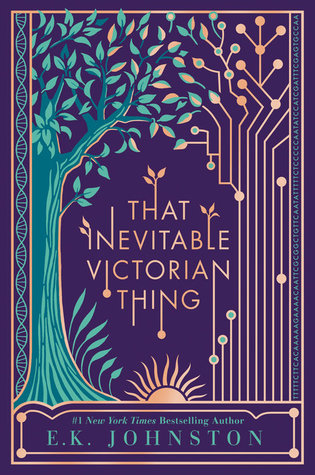
That Inevitable Victorian Thing by E. K. Johnston

Share

That Inevitable Victorian Thing
Author: E. K. Johnston
Published: October 3, 2017 by Dutton

Guest Review by Kaari von Bernuth

Goodreads Summary: Set in a near-future world where the British Empire was preserved, not by the cost of blood and theft but by effort of repatriation and promises kept, That Inevitable Victorian Thing is a novel of love, duty, and the small moments that can change people and the world.

Victoria-Margaret is the crown princess of the empire, a direct descendent of Victoria I, the queen who changed the course of history two centuries earlier. The imperial practice of genetically arranged matchmaking will soon guide Margaret into a politically advantageous marriage like her mother before her, but before she does her duty, she’ll have one summer incognito in a far corner of empire. In Toronto, she meets Helena Marcus, daughter of one of the empire’s greatest placement geneticists, and August Callaghan, the heir apparent to a powerful shipping firm currently besieged by American pirates. In a summer of high-society debutante balls, politically charged tea parties, and romantic country dances, Margaret, Helena, and August discover they share an unusual bond and maybe a one in a million chance to have what they want and to change the world in the process —just like the first Queen Victoria.

My Review: The futuristic setting of this novel that wasn’t a dystopia was very intriguing to me. Most of the futuristic novels that I’ve read have featured dystopian societies, so it was refreshing to have something that worked. I really enjoyed the multiple perspectives from the different characters, and became personally invested in their lives and experiences. I’d find myself hurting for Helena as she struggled to reconcile her identity, and rooting for August to do the right thing. In some way, all of the characters have to struggle to come of age and develop their identity based on who they want to be. 

However, I wish that this novel had placed a little more effort on the ending. While the rest of the novel had dealt with realistic challenges that an adolescent might face, the ending seemed rather contrived, and less realistic like the rest of the novel. The solution proposed at the end of the novel is not a solution that an adolescent in current society could replicate and learn from, which was disappointing.

Teachers’ Tools for Navigation: This book poses great questions about racism (or rather the eradication of racism), as well as questions of morality. It also would be great for discussions about the influence that society can have on your life verses the influence that you decide for your life. I think that this book would be a great addition to a classroom library for kids to enjoy, or a book to be used in a reading circle. It’s engaging and could lead to interesting discussions, especially about the futuristic government and setting of the novel, and the aforementioned topics of racism, morality, and societal influence vs self. However, I do think that other novels cover these topics in a better way, which is why I wouldn’t recommend it for large classroom discussions.  

Discussion Questions: Is this novel a utopia? Dystopia? Does it fit either criteria?; How is race approached in this novel? Is there racism in the society?; What is the role of colonialism in this novel?; What is the role of the Computer? Do you think this is a good advancement?; What does the computer lack?; What morality questions does this novel pose?

We Flagged: “The Computer is sufficient if you want to know your future without taking into account your soul. I don’t mean in the eternal sense, but in the worldly. The Computer can tell you if your genes are prone to carcinoma or if you might be six feet tall, but it cannot tell you if you will enjoy dancing or if you will prefer cake to pie. I would argue that the latter is more important in terms of a long and healthy relationship” (p. 254).

Read This If You Loved: Matched by Allie Condie; Delirium by Lauren Oliver; The Luxe by Anna Godbersen; The Selection by Kiera Cass

Recommended For:

classroomlibrarybuttonsmall  

  RickiSig

**Thank you to Kaari for reviewing this book!**

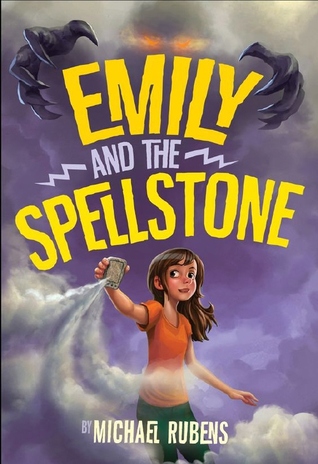
Emily and the Spellstone by Michael Rubens

Share

Emily and the Spellstone
Author: Michael Rubens
Published June 13th, 2017 by Clarion Books

Summary: This summer, comedy writer and YA author Michael Rubens makes his middle grade debut with Emily and the Spellstone, a hilarious and accessible fantasy about growing up and coming into your own.

Emily is fed up with her frustrating family and the clique-filled hallways of elementary school. All she wants for her twelfth birthday is a cell phone, but of course her tech-obsessed older sister had to go and get carpal tunnel, so now Emily isn’t allowed to have one. Worst birthday ever. As she stomps off down the beach to get away from it all, she stumbles across a strange stone that seems to speak to her, and looks oddly like the cell phone she desperately wants. What Emily doesn’t know is that this weird rock is actually an ancient Spellstone, and only she can unlock its powers. What could go wrong?

Rubens’ whimsical wordplay and delightful prose bring this unpredictable adventure to life. Monsters and magic will inspire readers’ imaginations, while Emily’s more terrestrial troubles like mean girls and annoying little brothers will resonate with anyone who has ever been new or felt out of place in their own family. According to Booklist, the quick pacing, playful narration, and high stakes are plenty to keep reluctant readers and young fantasy fans engaged.” With a diverse cast of supporting characters and a spunky heroine, this wacky romp is a perfect summer read.

About the Author: Michael Rubens is the author of two YA novels, Sons of the 613 and The Bad Decisions Playlist, and one novel for grownups, The Sheriff of Yrnameer. A correspondent and producer for Full Frontal with Samantha Bee, he has also been a producer for Last Week Tonight with John Oliver and The Daily Show with Jon Stewart. His writing has appeared in places like The New Yorker’s Daily ShoutsSalon and McSweeney’s. He lives with his family in Brooklyn. Visit his website at www.michaelrubens.com.

Review: It is obvious that Rubens writes comedy for a living. Emily’s story is a perfect mix of laugh out loud moments, puns, and crazy adventures with monsters and evil. And unlike other books this reminded me of, Rubens has created his own monsters and villains instead of using an established mythology which means it made it really hard for me to make predictions, so I was on the edge of my seat (LAUGHING along the way) the entire novel. As soon as I finished, I went on Twitter to make sure all of my middle grade teacher friends knew about this one because I think that fans of Riordan’s books are going to really enjoy this one.

Teachers’ Tools for Navigation: Primarily, I picture this book in classrooms/libraries for independent reading or being used in classes during lit circles/book clubs. However, there are some really funny read aloud parts that could definitely be used to discuss humor, word choice, puns, and voice. It would also be lots of fun to make up apps that could be on Emily’s Spellstone.

Discussion Questions: 

  • How did Emily change from the beginning to the end of the novel? What plot points were key in her character development?
  • Find examples in the book that show Emily’s and Gorgo’s sense of humor.
  • How do you think Emily feels by the end of the book about being a Stonemaster?
  • Were there any signs throughout the book to indicate that Gorgo was going to make the decision he did?
  • If all of the humorous passages were eliminated from the book, how would that change the tone of the book? How does the word choice the author chose help make the tone what it is?
  • Why were the Venomüch family included in the story?

Flagged Passages: “Emily lay as still as she could, not daring to move, barely daring to breathe.

There was something lurking in the darkness.

She couldn’t hear it or see it, but she could feel it, the sheer foulness of its presence.

It wasn’t Gorgo. She knew that. This was something else. Something far worse. . . . . .

‘There was. . . something in my room last night.’

‘Ah, right. I thought I felt somehthing. Some sort of shade or spirit, probably sniffing around after the Stone.’

‘Why?’

He shrugged. ‘Dunno. Maybe someone sent it. Or maybe it just showed up, drawn by the Stone,’ he said. ‘You’re about to say ‘why’ again, aren’t you?’

‘Yes. Why. Why would that thing be drawn to this stone?’

‘Because it’s a Stone. They’re incredibly powerful, Stones are. Powerful and rare. A Stonemaster can use them to work great magics. That’s a very ancient relic you have there. Well, sort of modern ancient. The first Stones were massive. You’ve heard of Stonehenge, right? Well, thos are really old-fashioned. You couldn’t move them anywhere. The one you have, though, it’s portable, or, uh. . .’

‘Mobile?’ said Emily.

‘Right!’

‘A mobile. . . Stone?’

‘Precisely!’

‘A mobile Stone for casting spells.’

‘Right again.’

‘It’s a Mobile. Spell. Stone.’

‘You seem fixated on that.’

‘It’s like a mobile cell phone.’

‘Not sure what you’re talkinga bout, but if you say so.’ (p. 55, 69-70)

Read This If You Love: The Lightning Thief by Rick Riordan, Guardians of the Gryphon’s Claw by Todd Calgi Gallicano, Harry Potter, Lemony Snicket

Recommended For: 

Signature

**Thank you to Tracy at Media Masters Publicity for providing a copy for review!**

Nina: Jazz Legend and Civil-Rights Activist Nina Simone by Alice Brière-Haquet

Share

nfpb2017

Nonfiction Wednesday

Nonfiction Picture Book Wednesday is hosted by Kid Lit Frenzy and was started to help promote the reading of nonfiction texts. Most Wednesdays, we will be participating and will review a nonfiction text (though it may not always be a picture book).
Be sure to visit Kid Lit Frenzy and see what other nonfiction books are shared this week!

Nina: Jazz Legend and Civil-Rights Activist Nina Simone
Author: Alice Brière-Haquet
Illustrator: Bruno Liance
Published December 5th, 2017 by Charlesbridge Publishing

Summary: “To be young, gifted, and black.”

A stunning picture-book biography of the High Priestess of Soul and one of the greatest voices of the 20th century.

With evocative black-and-white illustrations and moving prose, readers are introduced to Nina Simone, jazz-music legend and civil-rights activist. Shared as a lullaby to her daughter, a soulful song recounts Simone’s career, the trials she faced as an African American woman, and the stand she took during the Civil Rights Movement. This poignant picture book offers a melodic tale that is both a historic account of an iconic figure and an extraordinary look at how far we’ve come and how far we still need to go for social justice and equality. A timeless and timely message aptly appropriate for today’s social and political climates.

ReviewAlthough Nina is just a taste into who Nina Simone was as it only introduces her talent as a pianist and shares her beliefs in regards to civil rights. Set up as a lullaby that Nina is singing to her child, the story recounts her love of music and learning about the racism within our nation as well as a story where she stood up to inequality at one of her piano concerts. The lyrics and illustrations are dreamy and perfectly fit the purpose of the story: to introduce and intrigue the reader when it comes to Nina Simone.

Teachers’ Tools for Navigation: I do wish that there had been back matter that went more in depth into Simone’s contribution to jazz and civil rights; however, without them existing, this nonfiction picture book allows for a perfect change for inquiry. Now that students have been introduced to Nina, have stations/centers focusing on different parts of her life, jazz, or the Civil Rights Movement.

Discussion Questions: 

  • How does the illustration on the bus use the idea of the piano to symbolize the relationship between White and Black citizens in the early 1900s?
  • What techniques do the author and illustrator use to make the book seem lullaby-eque?
  • How did the imagery of the single black chair symbolize the racism that occurred at Simone’s concert?
  • How does the author tie in Martin Luther King, Jr. and the Civil Rights Movement?

Flagged Passages: 

“‘The white keys are whole notes and the black keys are flats, or half notes,’ my teacher explained.

I asked why.

‘Because that’s just the way it is.’

Yes, that’s the way it was. White was whole. Black was half. It was that way everywhere and for everyone.

I could have held it against people. Or worse, I couldn’t believed I was worth less than other people.

Black people were nothing but half notes on a huge ivory keyboard.

But no. I did not agree with this.

The notes had to mingle and dance together in the air so these lies would disappear.”

Read This If You Love: Andrea Davis Pinkney picture book biographies, Jazz, Learning about the Civil Rights Movement

Recommended For: 

classroomlibrarybuttonsmall closereadinganalysisbuttonsmall  

Signature