Sticky Facts: What Will You Find?: A Peel-and-Discover Activity Book

Share

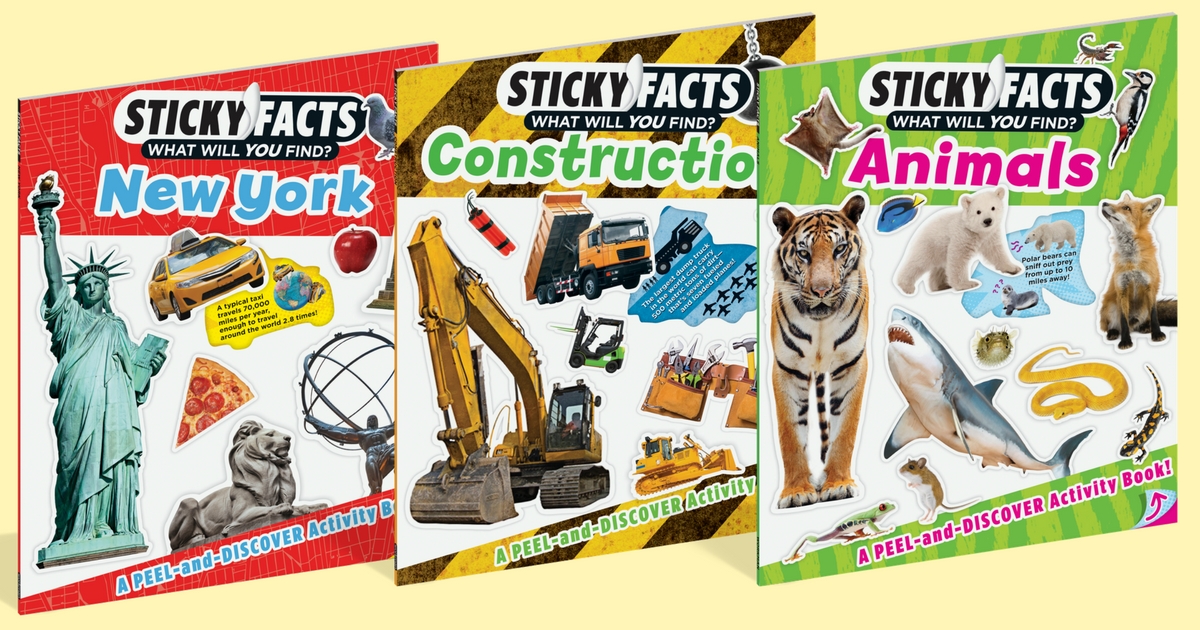
Sticky Facts: What Will You Find?
New York, Construction, Animals
Published: December 12, 2017 by Workman

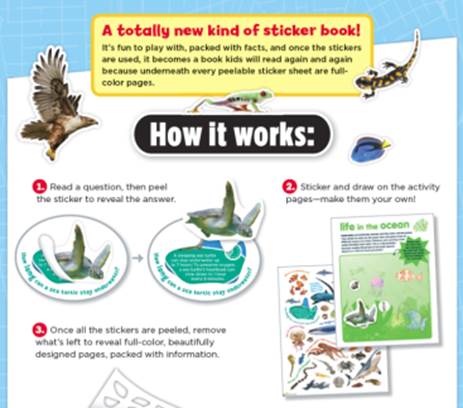
Summary: Sticky Facts is an innovative, kid-friendly approach to beloved topics for ages 6 and up, featuring a cutting-edge sticker sheet design that allows for text and color images to appear underneath the sticker.

Unlike average sticker books, each sticker page features questions with facts hidden underneath the relevant sticker. Once the sticker is peeled o­ff, the fascinating factis revealed. Activity pages with corresponding prompts are featured next to the sticker pages for readers to use as fuel for sticker landscapes, adding hours of fun to the whole experience!

ReviewWhile the book is marketed for ages 6 and up, my 4-year-old had a blast with these books. I had to read the facts beneath the stickers to him, but he loved peeling them off of the pages and finding their matching places within the book. As a parent, sometimes it gets to the point that I am looking for something new and different, and this clever idea was very impressive to me. The books are well-made and fun. I overheard my son sharing one of the construction facts with a friend at preschool, so it really works! These books make great gifts and add a new twist to kids’ love of stickers.

Teachers’ Tools for Navigation: Teachers might group students by interest to allow them to learn and work together on a book of their choosing. This allows students to learn nonfiction facts on a topic that they are interested about!

Discussion Questions: Which was your favorite sticky fact?; What are some new facts that you learned? What kinds of facts are featured below the stickers?

We Flagged: 

Read This If You Loved: Nonfiction; Sticker Books

Recommended For: 

classroomlibrarybuttonsmall

**Thank you to Christy at Workman for providing a copy for review**

Blog Tour with Review!: Don’t Ask a Dinosaur by Deborah Bruss & Matt Forrest Esenwine

Share

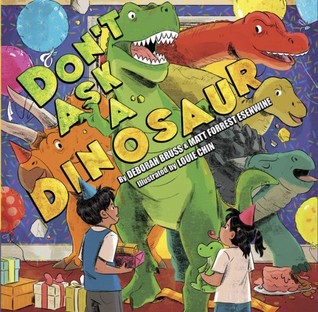
Don’t Ask a Dinosaur
Author: Deborah Bruss & Matt Forrest Esenwine
Illustrator: Louie Chin
Published April 17th by POW!

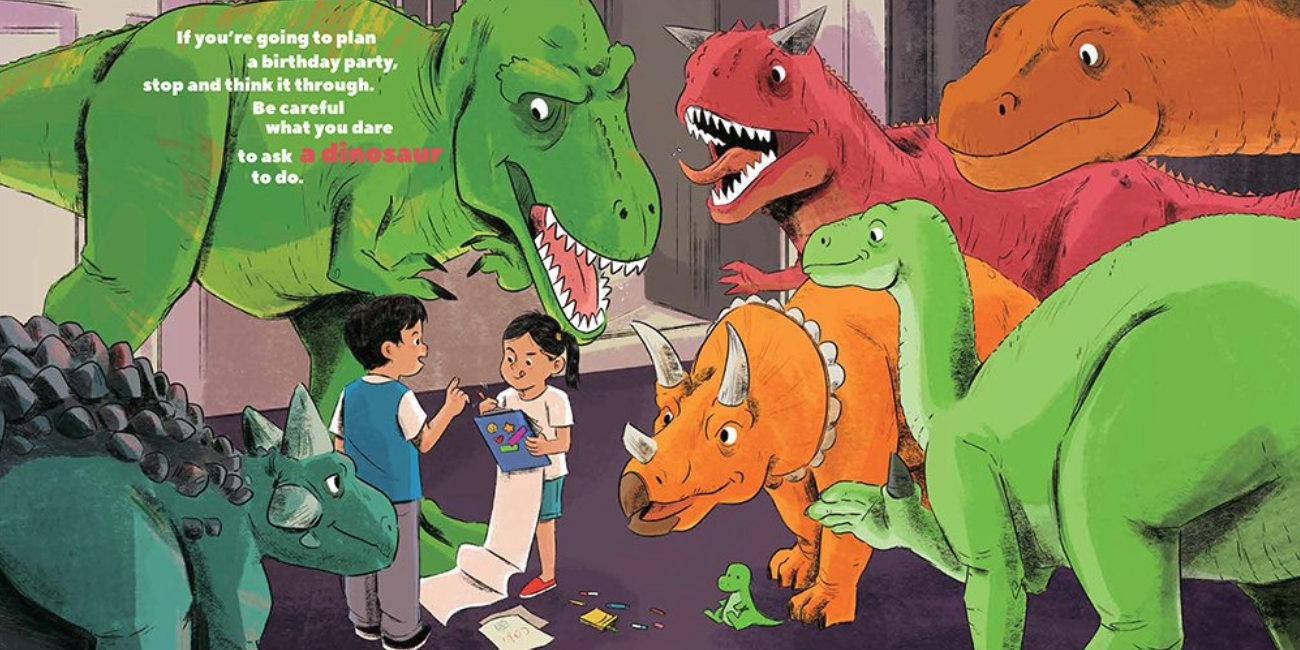
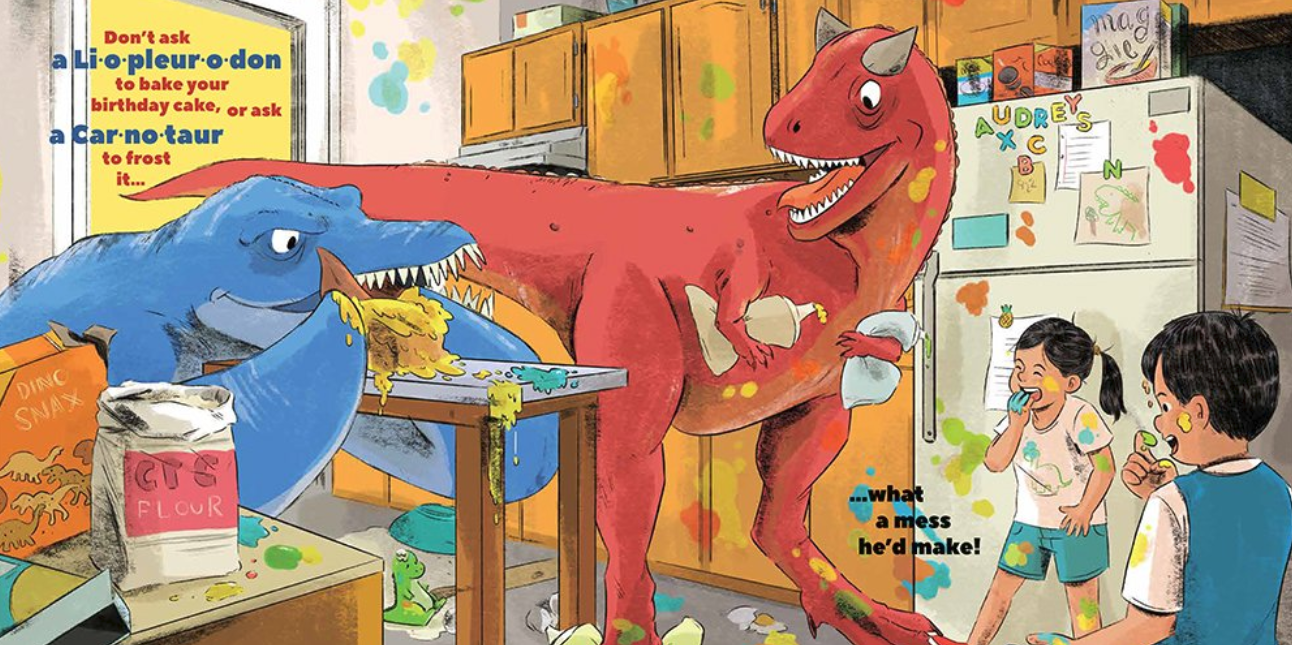
Summary: Don’t Ask a Dinosaur is about a party that goes wildly awry when a pack of dinosaurs with very unique physical attributes attempt to help set up.

“Don’t ask Deinocheirus to set the forks and spoons,” because his hands were enormous, “Therizinosaurus cannot blow up balloons,” because he had very long claws. In the end they find the one thing everyone can help do is to blow out the candles on the cake…but will it create yet another mess?

ReviewDon’t ask a dinosaur what he thinks about this book! Unless he says it is awesome, funny, and informative. Then ask him, and trust his answer.

I was introduced to Esenwine’s work when I read Flashlight Night, and I was immediately impressed with his work–he just had a way with words! While this picture book is quite different, it is not going to let Esenwine fans down. It for sure didn’t let Trent down; he already has had us read this multiple times with different questions each time we read. He also thinks it is hilarious, finding something silly each time he reads.

I also loved the book for a couple other specific reasons. First, I loved that the story included some pretty unknown dinosaurs to help the readers get introduced to them in a fun way. Esenwine and Bruss also did a fantastic job with their rhyming using syllable count to make it even more rhythmic than it would be without. And the addition of phonetic spellings of the dinosaur names was a nice touch to help with the pronunciation for the adult reader and for the child as they learn about the dinosaurs.

Teachers’ Tools for Navigation: On the surface, this text will be a way to introduce a bunch of different types of dinosaurs in a fun, rhyming text; however, this can just be a jumping off point for either a creative writing activity or a science activity (or both!). Because of Esenwine & Bruss’s specific syllables and rhyming, it would be quite challenging and fun to ask students to pick dinosaurs and try to think of other things that they may not be good at and ask them to write their own mini-dino poems. Or students can take the dinosaurs that are introduced in the book and research them to find out what they really wouldn’t be able to do in real life.

Discussion Questions: 

  • Why did the certain dino get chosen for each activity?
  • What dinosaur was new to you?
  • If you could have one dinosaur at your birthday party, what dinosaur would you pick? What would you make sure not to have it do?
  • How does the phonetic spelling of the dinosaur names help with the rhythm of the text?
  • What is going on in the background, in the illustrations, as the narrator helps you see what dinosaurs shouldn’t do?

Flagged Passages: 

Read This If You Love: Dinosaurs!, Jane Yolen & Mark Teague “How Does a Dinosaur” series, PBS’s Dinosaur Train

Recommended For: 

classroomlibrarybuttonsmall closereadinganalysisbuttonsmall 

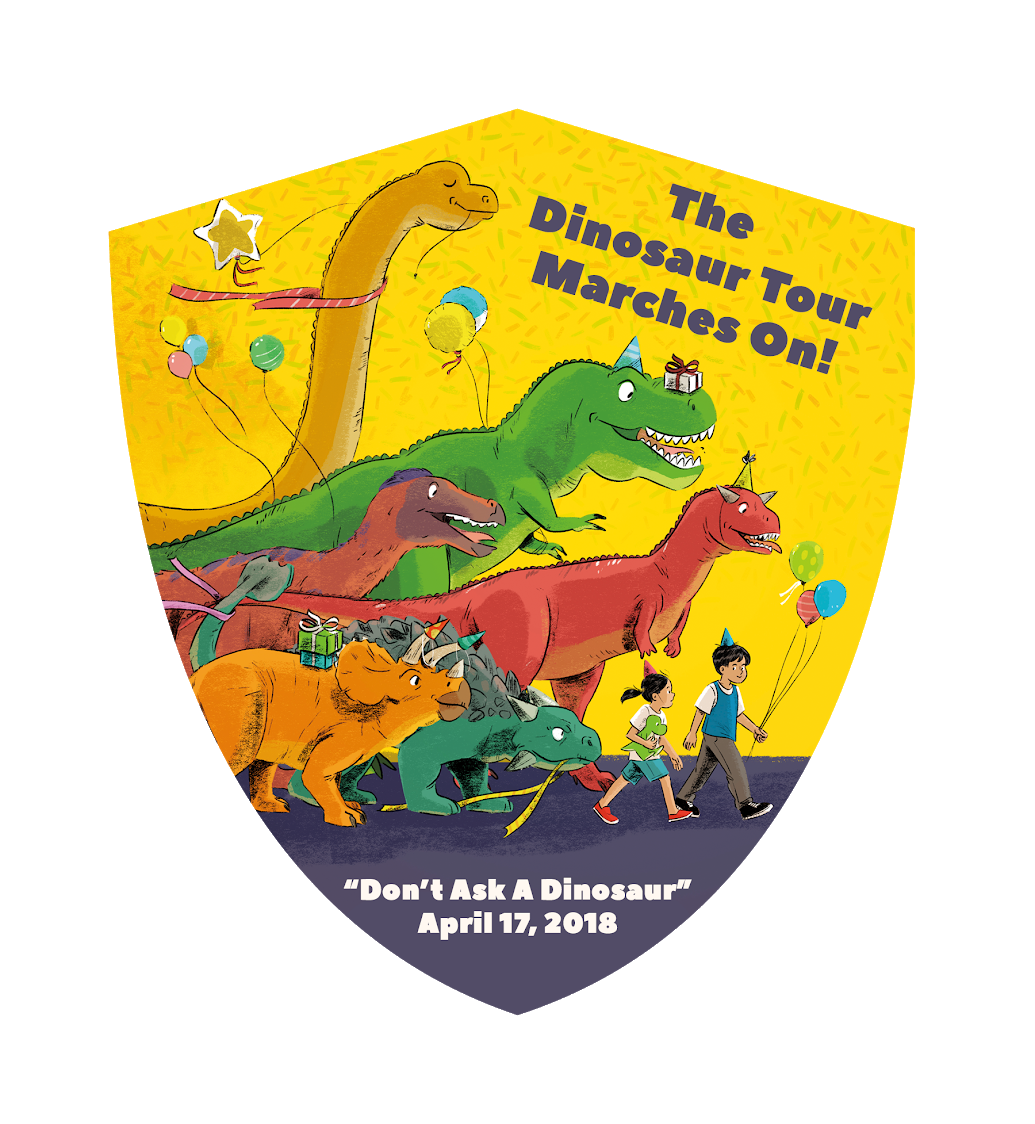
Make sure to stop by other stops on the Dinosaur Tour!

April 6:        Michelle H. Barnes (Interview w/month-long writing prompt)
April 8:        Kate Narita (Trailer & activity sheet spotlight)
April 11:      Deborah Kalb (Interview w/Matt Forrest Esenwine & Deborah Bruss)
April 13:      Radio, Rhythm, & Rhyme (Interview w/Louie Chin)
April 16:      KidLit Exchange (Blog post re: process of illustration)
April 17:      Momma’s Bacon
April 18:      Bonnie Ferrante
April 19:      Brenda Harsham
April 25:      Bonnie Ferrante (Interview)
May 2:         Unleashing Readers

Signature

**Thank you to POW! and Matt Forrest Esenwine for making this blog tour happen!**

Teaching Guide with Activities and Discussion Questions for Polly Diamond and the Magic Book by Alice Kuipers

Share

Polly Diamond and the Magic Book
Author: Alice Kuipers
Illustrator: Diana Toledano
Expected Publication May 1st, 2018 by Chronicle

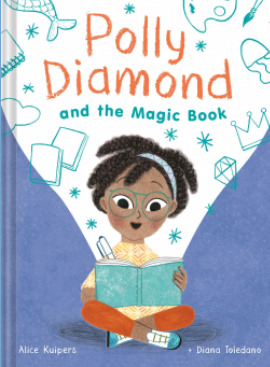
Summary: Polly loves words. And she loves writing stories. So when a magic book appears on her doorstep that can make everything she writes happen in real life, Polly is certain all of her dreams are about to come true. But she soon learns that what you write and what you mean are not always the same thing! Funny and touching, this new chapter book series will entertain readers and inspire budding writers.

Teachers’ Tools for Navigation: Activities for Polly Diamond include:

Color Poem

On page one, Polly says that her teacher said her color poem was fantastic.

Have your students use the Read. Write. Think. template to create their own color poem.

Template

Finish her perfect house story

On page 3, Polly is interrupted while writing her perfect house story.

Finish her story with what your perfect house would include.

Wishes

When Polly realizes her book is magical, she thinks of many things she can wish for such as a cell phone, not frizzy hair, more books, a flat screen TV, and world peace.

Using a brainstorming graphic organizer, have your students think of all the things they wish for.

After brainstorming all of their wishes, have them circle your top three.

Using the five-paragraph format for informative essays, have students write explaining their three wishes.

Measuring

For Polly’s grandmother’s recipe for pancakes called for a cup of flour and a cup of milk. Many times, when baking, you do not have what you need to make the recipe, and not just ingredients—you may not have the right measuring cup.

Bring in one cup measuring cups along with 1/4, 1/3, 1/2, 3/4, tablespoon, and teaspoon measuring cups/spoons. Break students into groups and give each group one of each measuring cup/spoon as well as something to measure (water, rice, flour), and have them answering the following questions:

  • If you only had 1/4 cup, how could you get one cup of flour?
  • If you only had 1/3 cup, how could you get one cup of flour?
  • If you only had 1/2 cup, how could you get one cup of flour?
  • If you only had 3/4 cup, how could you get one cup of flour?
  • If you only had a tablespoon, how could you get one cup of flour?
  • If you only had a teaspoon, how could you get one cup of flour?

Favorite words

Polly has a lot of favorite words: words with double letters like doozy and mutli-meaning words like basil.

Have students make a list of three words that they really like.

For each word, they should define it and also explain why they like the word.

When finished, students should do a word meet and greet. Using clock buddies or some other buddy system, have students meet with other students in the classroom and learn about their favorite words. They should add the favorite words they learn about to their list.

Paint names

On page 29, Polly makes up names for paint that describes the color such as muddy pond, lunch bag, and baboon butt.

First, have students look at the colors Polly described on page 29 and find the corresponding color in either a crayon box or a color exploration site online.

Then, have students create color names using imagery. Either have them use the color exploration site online or the colors from Microsoft Word.

Affixes

Show students how there are different word parts (affixes) that can be put together to make new words. They are like puzzle pieces! Share with them the different types of word parts (prefix, suffix, root, and base) and how they fit together.

On page 56, Polly explains how adding un- to the beginning of a word gives it an opposite meaning. The word she uses as an example is unobservant. Share with your students that un- is a prefix that means NOT which does make a word the opposite. Have student brainstorm a list of words with un- at the beginning and define them using NOT as the definition for un.

Extension: dis-, il-, im-, in-, and ir- also mean NOT. Students can also explore words with these
prefixes.

Extension: On page 57, Polly also talks about adding –fully to the end a word to make it bigger,
but it does more than that. Share with your students that –fully is actually a combination of ful, a root word that means full of, and –ly, a suffix that turns an adjective to an adverb, so her example of sorrowfully means full of sorrow (adv).

After showing students how words break apart and how affixes help with word meanings, give students words with un- and –ful (or any other affix you taught) and have them mark the different word parts and define the word.

Coloring Sheets

Coloring sheets can also be downloaded from Chonricle’s website here.

See the Teaching Guide Created by Me (Kellee) for even more activities! 

You can also access the teaching guide through Chronicle’s website here.

Recommended For: 

readaloudbuttonsmall classroomlibrarybuttonsmall closereadinganalysisbuttonsmall

Kellee Signature

It’s a Puppy’s Life by Seth Casteel

Share

It’s a Puppy’s Life
Author: Seth Casteel
Published March 20, 2018 by National Geographic Society

Summary: Have you ever wanted to know what goes on in the life of one of nature’s most beloved animals–the puppy? Follow along in this picture book featuring the photography of Seth Casteel.

Follow several puppies as they play, go for walks, eat, sleep, and romp about.

My Review: Who doesn’t love puppies? I don’t have a dog right now, and this made me want to take a trip to the pet store! Seth Casteel does a phenomenal job capturing the spirit of these energetic pups. I enjoyed looking at the different angles that he used. Further, I loved the key at the end of the book that distinguished between the breeds. This is a charming book that kids will love.

Teachers’ Tools for Navigation: This book inspired me to want to take photographs! Teachers might use this at the start of a photography unit. They can examine the angles of the photographs and talk about how the author captured such incredible images.

Discussion Questions: Which puppy is your favorite? How does the author capture the spirit of the puppies? How does he organize the book?

We Flagged: 

Read This If You Love: Dogs; Photography

Recommended For: 

RickiSig

**Thank you to Media Masters for providing copies for review!!**

Blog Tour with Review!: The Reckless Rescue (The Explorers #2) by Adrienne Kress

Share

The Reckless Rescue (The Explorers #2)
Author: Adrienne Kress
Published April 24th, 2018 by Delacorte Books for Young Readers

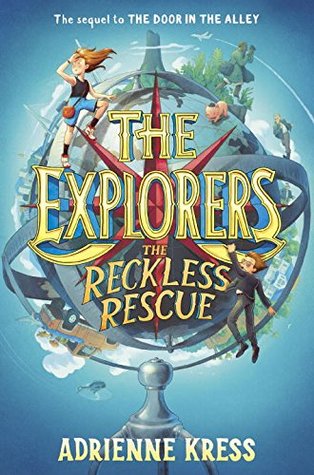
Summary: More mystery, more bravery, more danger, and one amazingly reckless rescue await in the second book in the Explorers series! The perfect read for fans of The Name of This Book Is a Secret and The Mysterious Benedict Society!

Reader! Your attention is greatly needed. We have left things unresolved! What began as your average story of a boy stumbling upon a pig in a teeny hat and a secret international explorers society has turned into an adventure of epic proportions.

* The bad news: The boy (Sebastian) has been kidnapped by a trio of troublesome thugs.
* The good news: His new friend Evie has promised to rescue him!
* The bad news: Sebastian has been taken halfway around the world.
* The good news: Evie has famous explorer and former Filipendulous Five member Catherine Lind at her side!
* The bad news: There’s still the whole matter of Evie’s grandfather (and the leader of the Filipendulous Five) somewhere out there in grave danger.
* The good news: Pursuing Sebastian will lead Evie and Catherine to another member of the Filipendulous Five, who might be able to help!

This missive is a call to action and an invitation to join in mystery, bravery, and danger. There will be new people to meet, new places to see, and some dancing along the way. And one amazingly reckless rescue.

About the Author: Adrienne Kress is a writer and an actress born and raised in Toronto. She is the daughter of two high school English teachers, and credits them with inspiring her love of both writing and performing. She also has a cat named Atticus, who unfortunately despises teeny hats. She is the author of The Explorers: The Door in the AlleyThe Explorers: The Reckless Rescue,and The Explorers: The Quest for the Kid. To find out more about Adrienne, visit AdrienneKress.com and follow @AdrienneKress on Twitter and Instagram.

ReviewThis book starts RIGHT up where the first left off–like, actually! Mid-sentence! And I’m so glad because the cliffhanger in the first one was so intense! But here we are, right where we left off: Sebastian is kidnapped, and Evie has to figure out how to save him (hence the title…). Like the first book, I found that the snarky narrator, silly footnotes, and ridiculous situations was humor that is right up my alley, causing many laugh out loud moments, but let’s not forget that the story is also a nerve-racking adventure story also! Other than the humor and adventure, I also really like the characters in this story. Evie and Sebastian complement each other so well, and we really get to see them shine in this book as individuals since they are separated.

Teachers’ Tools for Navigation: This series would be a perfect mentor text when teaching dramatic irony, breaking the 4th wall, and footnotes. Even reading the first chapter will cover these three literary elements and will also get a lot of kids excited to read the story. Because the other place this book belongs is in libraries and classrooms–it is going to be a big hit with adventure and humor fans!

Discussion Questions: 

  • How does the narration style the author chose change the tone of the story?
  • Why do you think the author chose to include footnotes in the story?
  • How does the author use dramatic irony to keep the reader reading?
  • What is the “Lost Boys” K-Pop group an allusion to?
  • How do Sebastian and Evie complement each other?
  • How did some good or bad things in the story end up being the opposite of what you thought?

Flagged Passages: “Chapter 1: In which we resume our story.

There is a difference between fact and opinion. It’s hard to tell sometimes because opinions like to dress up as facts, and their costumes have gotten quite impressive lately.¹ There is a way, however, to easily tell the difference between them. You have to weigh them. Because, you see, facts have more substance. So they’re heavier. This is how one can know for a fact, for example, that being kidnapped for your brain is scary. Because when this fact is placed on the scale, man, does it ever tip the balance.

There are other facts one can be certain of. Like that private jets are cool. That traveling long distances get boring. And that not knowing where you are going or what’s going to happen to you is exhaustingly stressful.

And if you don’t believe me, just ask Sebastian, who is sitting in his seat and staring out the window of the private jet, feeling precisely all of those things.

It is odd to feed bored. Not that feeling bored is a rare or weird feeling. It’s a very common part of life, after all. But it just felt strange to feel bored in his particular situation. He should have been feeling terrified, possibly even a little excited. And he knew this because he’d felt those things initially when he’d been snatched out of the Explorers Society headquarters and held captive in a helicopter. But that felt like forever ago now.

¹I once saw an opinion wearing the most spectacular curly mustache that distracted me so much, I totally let him into my head, even though I found his footwear suspicious.”

Read This If You Love: The first Explorers book: The Door in the AlleyEmily and the Spellstone by Michael RubensGuardians of the Gryphon’s Claw by Todd Calgi Gallicano, Cucumber Quest series by Gigi D.G., Alex Rider series by Anthony Horowitz, The Lightning Thief by Rick Riordan

Recommended For: 

classroomlibrarybuttonsmall closereadinganalysisbuttonsmall

Signature

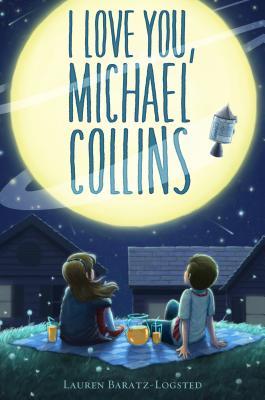
I Love You, Michael Collins by Lauren Baratz-Logsted

Share

I Love You, Michael Collins
Author: Lauren Baratz-Logsted
Published June 20th, 2017 by Farrar, Straus and Giroux (BYR)

Summary: It’s 1969 and the country is gearing up for what looks to be the most exciting moment in U.S. history: men landing on the moon. Ten-year-old Mamie’s class is given an assignment to write letters to the astronauts. All the girls write to Neil Armstrong (“So cute!”) and all the boys write to Buzz Aldrin (“So cool!”). Only Mamie writes to Michael Collins, the astronaut who will come so close but never achieve everyone else’s dream of walking on the moon, because he is the one who must stay with the ship.

After school ends, Mamie keeps writing to Michael Collins, taking comfort in telling someone about what’s going on with her family as, one by one, they leave the house thinking that someone else is taking care of her—until she is all alone except for her cat and her best friend, Buster. And as the date of the launch nears, Mamie can’t help but wonder: Does no one stay with the ship anymore?

I Love You, Michael Collins was a Best Book of June 2017 on Amazon; a semifinalist for the Goodreads Readers’ Choice Awards; and a pick by the Planetary Society for Best Science Children’s Books of 2017.

ReviewThere is so much I really enjoyed about this book!

First, I adored looking into the experience of the moon landing. I cannot even imagine witnessing it happening! What an amazing feat it was and completely unimaginable. (And I hope to at some point see it happen again.) And I thought Baratz-Logsted did a good job showing all the different types of feelings towards the moon landing and space program. But I’m glad that she focused on its amazingness and the excitement.

Second, I think the author did a fantastic job with the character’s voice. With a book of letters it is essential that the writing sounds like the character because it is actually the character writing all the words. I loved seeing all the techniques she used to write like Mamie while still keeping her writing to a literary level.

Third, I loved that the book was not just a reenactment of the moon landing and a family’s celebration of it. The story has so many layers within it: Mamie’s introverted personality and the look into what makes a kid like this happy; her family’s conflicts and issues; and the power of one best friend.

Overall, I Love You, Michael Collins is a fun historical fiction middle grade book that is perfect for so many readers!

Teachers’ Tools for Navigation: The first thing I went to when I thought about this book from a teachers point of view was the idea of letter writing. Mamie writes Michael Collins originally because it is a school project. Mamies letters could be used as a starting point on how to write letters, parts of a letter, etc. And students could even write a letter to someone in the news that is doing something amazing.

Next summer is the 50th anniversary of the moon landing, and at the end of next school year, I am definitely going to do a cross-curricular unit about NASA and the Apollo missions along with a read aloud of excerpts from this novel. It is so engaging as a story and will also be a great way for students in the 21st century to have a window into the 1960s.

But even without this amazing anniversary, Baratz-Logsted’s title is one that middle grade students will find enjoyment in and should definitely be in classrooms and libraries!

Discussion Questions: 

  • How did the author help make her writing seem like a ten-year-old was writing the letters?
  • Michael Collins is not a household name like Buzz Aldrin and Neil Armstrong. Why is that? Do you think we should all know his name in the same context as the other two astronauts?
  • Which character do you think changed the most throughout the book?
  • What do you think is going to happen next with Mamie’s family?
  • How did Buster’s friendship help Mamie keep her positivity and sanity during this tough time in her family?
  • If you were going to have a moon landing party, what would you make?
  • How would the story of Mamie’s parents’ separation have been different in the 21st century?

Flagged Passages: 

“Dear Michael Collins,

I finally figured out why you never write back. Can you figure out how I figured this out? If not, I will tell you. I did the math.

Okay, I didn’t really do the math, since I don’t have all the information. But it struck me that I might not be the only person writing to you. I though, if every school in the country has just one class that is writing letters to the astronauts and if in each class there is just one kid like me writing to you, then that is still a lot of mail.

It’s no wonder you can’t write back to everyone. And of course you do have other things to do right now.

I’m not sure how I feel about the idea of you getting more mail than I originally thought you did. On the one hand, I’m really happy for you. I’m glad you’ve got more than just me. On the other hand, it was kind of nice when I thought I was the only one. It felt special. Like I was the the only one who knew about you. Which of course isn’t true. The whole world knows about you. It’s just that most of them don’t seem to appreciate you very much.

Does it ever bother you that Neil Armstrong and Buzz Aldrin get so much more mail than you do? I hope not. It certainly wouldn’t bother me. There was a time I thought it might be nice to be popular–you know, to have a lot of friends. But then Buster came along, and then Campbell, and I realized that that is quite enough for me…” (p. 30-31)

Read This If You Love: Space! I recommend Space Encyclopedia by David A. Aguilar and Moon Base Crisis by Rebecca Moesta & Kevin J. Anderson. Also check out Planetary.org’s list of recommended books from 2017: http://www.planetary.org/blogs/emily-lakdawalla/2017/1115-space-books-kids.html and 2016: http://www.planetary.org/blogs/emily-lakdawalla/2016/emily-lakdawalla-space-book-recommendations.html

Recommended For: 

classroomlibrarybuttonsmall closereadinganalysisbuttonsmall

Signature

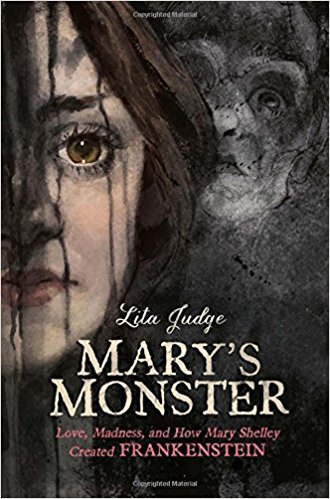
Mary’s Monster by Lita Judge

Share

Mary’s Monster: Love, Madness, and How Mary Shelley Created Frankenstein
Author: Lita Judge
Published: January 30th, 2018 by Roaring Book Press

Summary: A young adult biography of Frankenstein’s profound young author, Mary Shelley, coinciding with the 200th anniversary of its publication, told through free verse and 300+ full-bleed illustrations.

Mary Shelley first began penning Frankenstein as part of a dare to write a ghost story, but the seeds of that story were planted long before that night. Mary, just nineteen years old at the time, had been living on her own for three years and had already lost a baby days after birth. She was deeply in love with famed poet Percy Bysshe Shelley, a mad man who both enthralled and terrified her, and her relationship with him was rife with scandal and ridicule. But rather than let it crush her, Mary fueled her grief, pain, and passion into a book that the world has still not forgotten 200 years later.

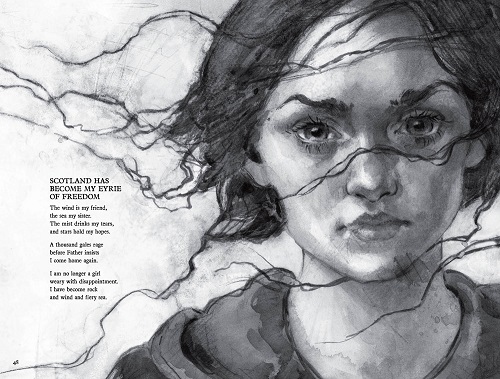
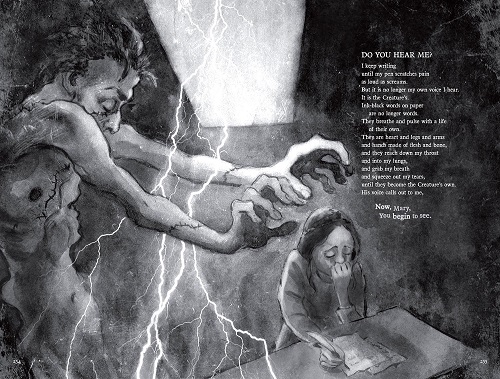
Dark, intense, and beautiful, this free-verse novel with over 300 pages of gorgeous black-and-white watercolor illustrations is a unique and unforgettable depiction of one of the greatest authors of all time.

Review and Teachers’ Tools for Navigation: Whew. I felt so many emotions as I read this book. I kept thinking, “My goodness, my students are going to love this book.” I was fortunate to receive two copies of this book in the mail, and those two copies have passed from student’s hand to student’s hand. The book doesn’t even make its way back up to my desk before another student snags it. This book defies genre sorting. It’s nonfiction, it’s horror, it’s romance, it’s an illustrated book in verse. I’ve already added it to my book list to teach next semester in my Adolescents’ Literature course.

Students will read this book and want immediately to read Frankenstein. The book reads fairly quickly because it contains verse and illustrations, but readers will struggle not to pause for several minutes to enjoy the beautiful illustrations on the pages.

I’m most excited about the classroom potential for this book. It offers so much to talk about regarding characterization, mood, and poetry. But it also offers a beautiful bridge to read with Frankenstein. I thought I knew a lot about Mary Shelley’s life, but this book told me so much more about it. Reading her story on these pages made me feel as if I was experiencing her life alongside her. If you haven’t read this book yet, I recommend it highly.

Discussion Questions: What factors may have influenced Mary Shelley’s Frankenstein? In what ways does the author use metaphor and symbolism to help us understand her experiences?; What might be the author’s purpose? Is she successful, in your opinion?; What textual features helped you understand Mary’s story? How might this book read differently if the author had used another form?

We Flagged: 

Read This If You Loved: Frankenstein by Mary Shelley; Horror; Gothic Literature

Recommended For:

classroomlibrarybuttonsmall

RickiSig