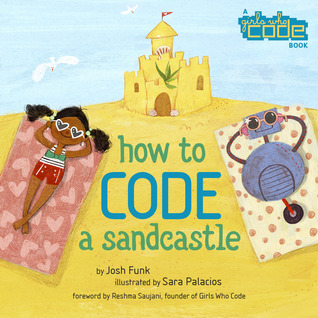
How to Code a Sandcastle (How to Code with Pearl and Pascal #1)
Author: Josh Funk
Illustrator: Sara Palacios
Foreword by Reshma Saujani, founder of Girls Who Code
Published May 15th, 2018 by Viking
Summary: From the computer science nonprofit Girls Who Code comes this lively and funny story introducing kids to computer coding concepts.
Pearl and her trusty rust-proof robot, Pascal, need to build a sandcastle before summer vacation is over, and they’re going to do it using code. Pearl breaks the big we-need-a-sandcastle problem into smaller steps, then uses conditionals, loops, and other basic coding concepts to tell Pascal exactly what to do. But building a sandcastle isn’t as easy as it sounds when surfboards, mischievous dogs, and coding mishaps get in the way! Just when it looks like the sandcastle might never work, Pearl uses her coding skills to save the day and create something even better: a gorgeous sandcastle kingdom!
Kellee’s Review:Through books like the Secret Coders series, Two Naomis, and now How to Code a Sandcastle, I’ve slowly begun to learn more and more about coding, and I find it fascinating! If I was a kid now, I would be so excited to have books like these to introduce me to coding. How to Code a Sandcastle is special because it takes coding, which is a tool that is primarily not taught until middle school or later, and makes it accessible to younger kids helping them build their coding vocabulary and knowledge at a young age. My son at age 4 now knows a basic idea of what coding is which is such a great foundation! Bravo Josh and Brava Sara for producing such an essential and gosh-darn funny book for kids.
Ricki’s Review:Josh Funk does it again and again and again. He creates highly engaging books that are so teachable! This is my first book in the Girls Who Code series, and it most certainly won’t be my last. It makes coding quite fun and offers an engaging introduction to children. I don’t know anything about coding, and I had fun learning the vocabulary with my son. After we read the book, we went through again and reviewed all of the new words that we learned about coding. The educational value of this book is very high—it is a great first dive into STEM, it could be used to teach step-by-step instructional writing, and it’s an incredible and hilarious read-aloud! Thanks for this wonderful new text for our classrooms, Josh!
Teachers’ Tools for Navigation: Like we shared above, How to Code a Sancastle is a wonderful foundation for learning about coding and would be an awesome read aloud in an elementary classroom as students are first being introduced to coding maybe on the “Day of Code” or before a computer course. It has a lot of introductory vocabulary and ideas that won’t overwhelm young children but will instead make them curious. Alternatively, it is also a great example of step-by-step instructional writing mixed with a hilarious narrative, so it would be a great mentor text for these writings.
Discussion Questions:
Why did Pearl feel she needed to bring Pascal to build a sandcastle?
How did Pearl fix mistakes when she made them when coding Pascal?
What cause and effect relationships do you see in the story?
What problem and solution relationships do you see in the story?
How did the author include step-by-step instructions within the narrative while also keeping the story going?
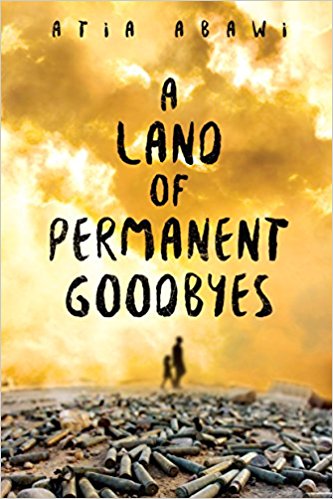
A Land of Permanent Goodbyes
Author: Atia Abawi
Published: January 23, 2018 by Philomel
Guest Review by Rachel Krieger
Summary: In a country ripped apart by war, Tareq lives with his big and loving family . . . until the bombs strike. His city is in ruins. His life is destroyed. And those who have survived are left to figure out their uncertain future.
In the wake of destruction, he’s threatened by Daesh fighters and witnesses a public beheading. Tareq’s family knows that to continue to stay alive, they must leave. As they travel as refugees from Syria to Turkey to Greece, facing danger at every turn, Tareq must find the resilience and courage to complete his harrowing journey.
But while this is one family’s story, it is also the timeless tale of all wars, of all tragedy, and of all strife. When you are a refugee, success is outliving your loss.
Review: This book is astonishing. In a world where people like to avoid talking about awkward things or situations that make us sad, this novel is completely, unapologetically honest. With every horror that Tareq experiences, you will find yourself crying with him, hoping with him, and loving with him. You will wish you could be with Alexia helping these people to find new lives. It is impossible to read Abawi’s story without reflecting on your own life, wondering what destiny would write about you.
If you know nothing about the refugee crises happening all over the world, this story will give you a glimpse into the lives of people struggling every day. Although it only looks into the lives of a few refugees, it gave me an idea of how different the life of a refugee is to my own. Atia Abawi’s story will make you reflect on your own humanity and actions, changing the way you think about the world and your own privilege.
Teacher’s Tool For Navigation: This is the perfect book to start a discussion about the situation in Syria. Since it is so essential to address current events regardless of the sensitive nature of those events, teachers should start conversations about this war-torn region. There are many young adult novels that address immigration, however, this one specifically follows the process of that immigration. It would be very beneficial to have students read a book like this and a book like American Street to look at very different stories of immigration with a few similar characteristics. This book in conjunction with others about immigration could be the perfect opportunity to discuss the idea of the danger of a single story.
This novel also offers a very interesting twist on narration. Since destiny is the narrator of this novel rather than one of the characters, there are small parts of the story that reflect broadly on war and humanity. It could be interesting to have students think about how this odd source of narration changes the story. They could even experiment with their own unique narrators, discussing how these odd points of view add or detract from stories.
Discussion Questions: What does the perspective switch add to the novel? Do you think a book like this is likely to encourage people to support this cause? How does Destiny as the narrator change this story? How would this story change if Tareq was a woman?
We Flagged: “Making it to Germany ended Tareq’s crossing and escape from war, but his new life as a refugee is just beginning. There are millions of Tareq’s, Susans and Fayeds, all in search of safety and kindness. I hope you will provide that warmth, be that helper, do what you can to make that world a better place. Because when I meet you—and I will—there will be reckoning. There always is.”
Read This If You Loved: Between Shades of Gray by Ruta Supetys, American Street by Ibi Zoboi, Picture Us in the Light by Kelly Loy Gilbert
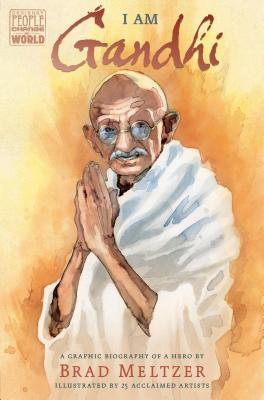
I Am Gandhi
Author: Brad Meltzer
Illustrator: 25 Acclaimed Artists
Published May 8th, 2018 by Dial Books
Summary: Twenty-five exceptional comic book creators join forces to share the heroic story of Gandhi in this inspiring graphic novel biography.
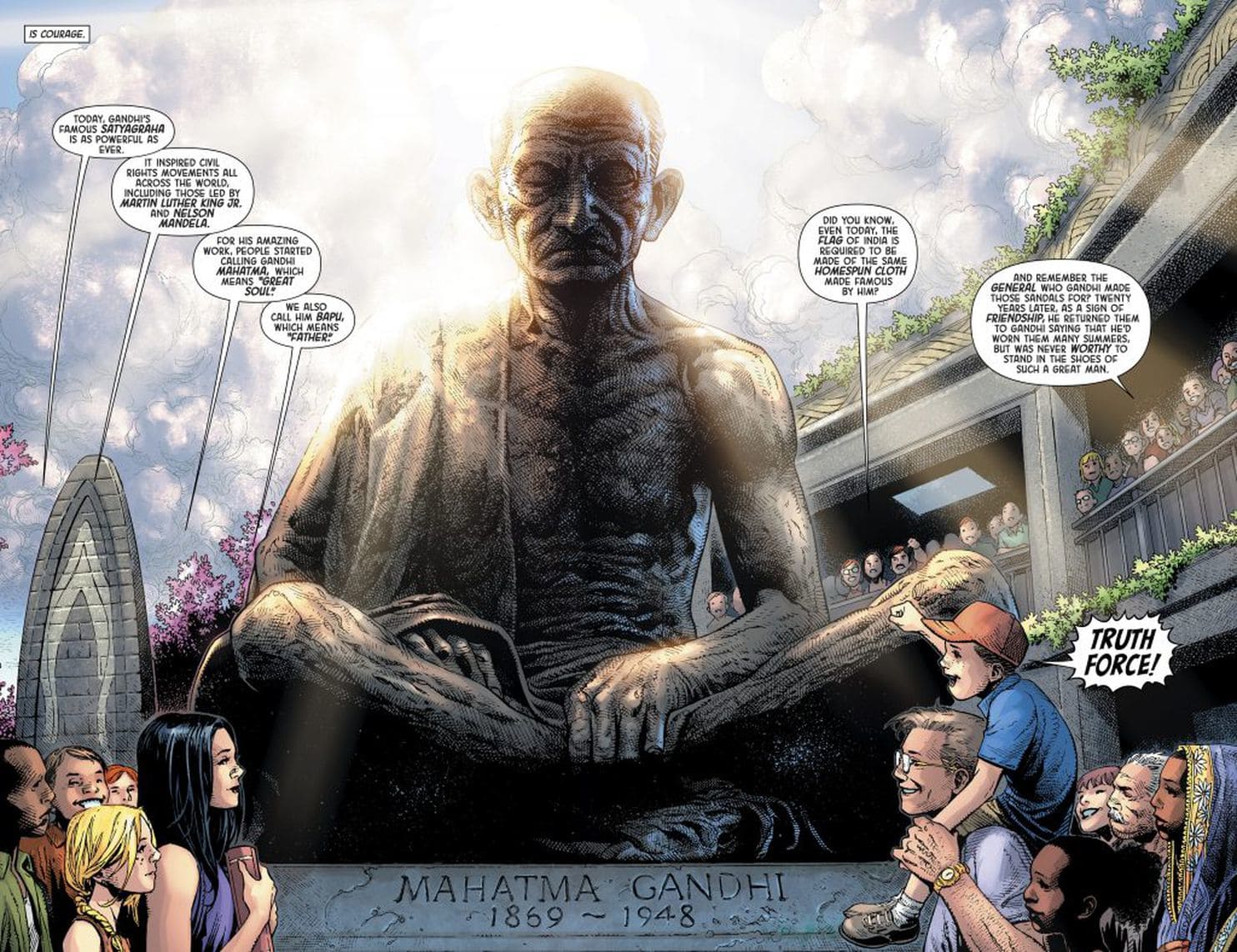
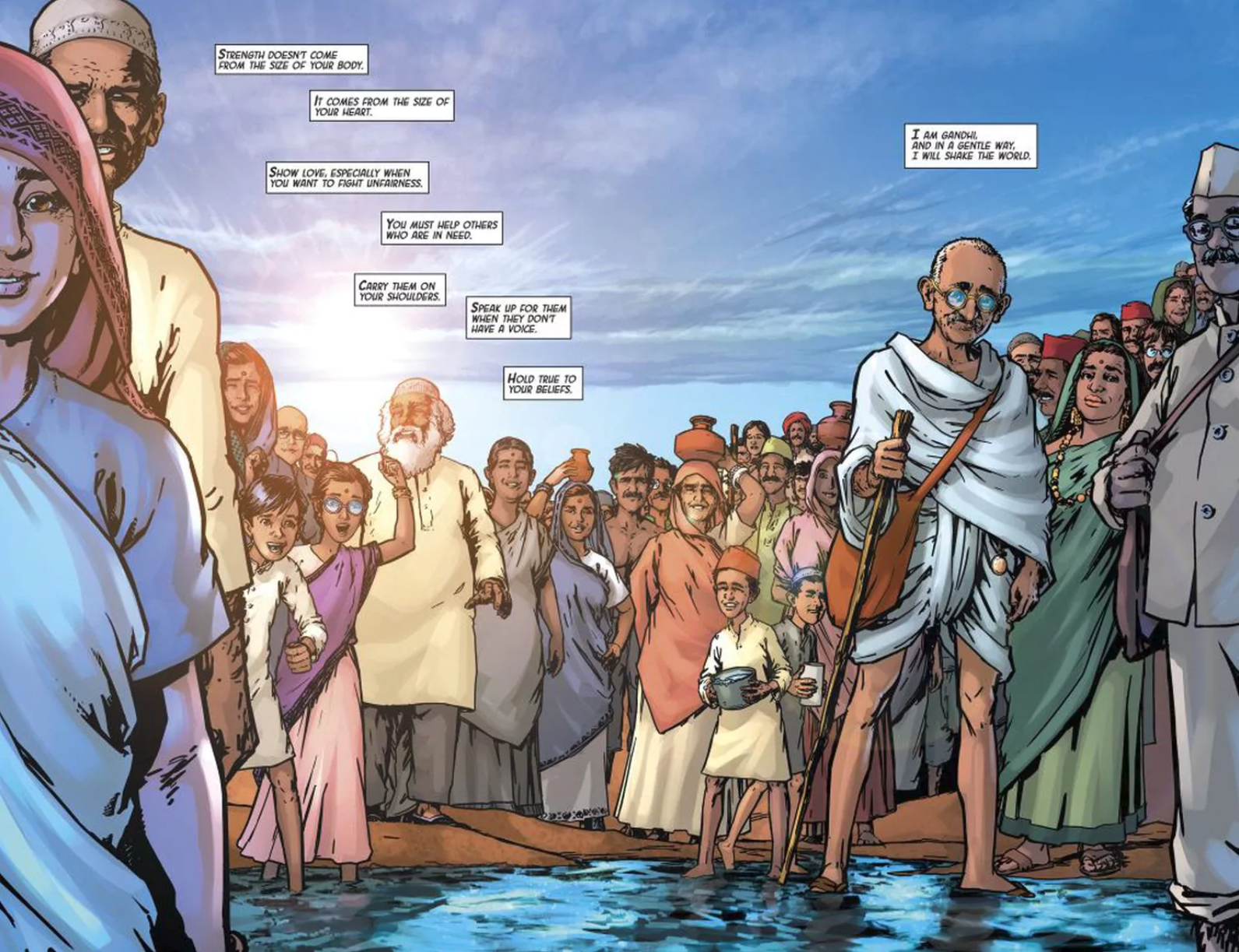
As a young man in India, Gandhi saw firsthand how people were treated unfairly. Refusing to accept injustice, he came up with a brilliant way to fight back through quiet, peaceful protest. He used his methods in South Africa and India, where he led a nonviolent revolution that freed his country from British rule. Through his calm, steady heroism, Gandhi changed the lives of millions and inspired civil rights movements all over the world, proving that the smallest of us can be the most powerful.
Galvanized by Gandhi’s example of gentle, peaceful activism, New York Times bestselling author Brad Meltzer asked his friends in the comic book world to help him make a difference by creating this philanthropic graphic novel. Twenty-four illustrators–including many of the most acclaimed artists in comics today–enthusiastically joined the project, agreeing to donate their work so that their royalties can go to Seeds of Peace, a non-profit organization that inspires and cultivates new generations of global leaders. This extraordinary biography is a glorious team effort that truly exemplifies Gandhi’s selflessness and love for humanity.
The illustrators included are: Art Adams, John Cassaday, Jim Cheung, Amanda Connor, Carlos D’Anda, Michael Gaydos, Gene Ha, Stephanie Hans, Bryan Hitch, Phil Jimenez, Siddharth Kotian, David LaFuente, David Mack, Alex Maleev, Francis Manapul, David Marquez, Steve McNiven, Rags Morales, Saumin Patel, Nate Powell, Stephane Roux, Marco Rudy, Kamome Shirahama, Bill Sienkiewicz, and Abhishek Singh.
Kellee’s Review: I’ll be honest–when I first read on the cover that 25 different artists illustrated this graphic biography, I was worried that the stagnation of illustration styles would hinder the narrative of Gandhi’s life, but I was so wrong. Instead, by allowing each illustrator to give us their interpretation of Gandhi, his spirit instead flowed through the pages as it was obvious that his story had touched each and every artist, and the author, taking part in this graphic biography.
While reading, it was clear to me that Meltzer wanted Gandhi’s message of equality, peace, and kindness to scream at the reader, and this was confirmed when I read the Washington Post article about Meltzer’s inspiration. I believe Meltzer did a beautiful job not only telling Gandhi’s story but also showing that peace is possible in a time of tumultuous relationships but that the only way to truly achieve it is through similar activism as Gandhi.
Ricki’s Review:I read this graphic novel twice to myself and twice with my son. Further, I’ve read portions of it to my students. I can’t stop sharing it! I was blown away by the amalgamation of the 25 graphic novelists—it made for an absolutely stunning text. I appreciate the historical perspective that extends throughout the graphic novel, and I loved that the illustrations really make Ghandi’s story come alive. This is a book that I will share often and widely. If you haven’t read it, I recommend it highly—even if you already know a lot about Ghandi’s life.
Teachers’ Tools for Navigation: Have students connect Gandhi’s philosophies to those who influenced him and those he influenced. For example, in one of my literature classes, one person picked an author who was influenced by another (for example, Woody Guthrie was influenced by Walt Whitman) then the next student built on that (for example, Bob Dylan was influenced by Woody Guthrie OR Ralph Waldo Emerson influenced Walt Whitman) until a complete chain of influences were made. Then each student wrote an analysis paper showing how they were influenced then presented their findings (in order of influences) to the class. This same idea could be done here: Henry David Thoreau influenced Gandhi who influenced Martin Luther King, Jr. who influenced Barack Obama who influenced Cory Booker, etc. This idea could also be used just to look at the idea of peaceful protests that have changed the course of history: Gandhi, MLK, Black Lives Matter, Never Again, etc.
Discussion Questions:
What is the theme of Meltzer’s story of Gandhi?
How did Gandhi change the course of history for Indians in South Africa and India?
How did the 25 different artists illustrating the graphic novel affect the reading of the biography?
How did Thoreau influence Gandhi? Can you infer how Gandhi influence Martin Luther King, Jr.?
What was the importance of Gandhi’s march to the sea to hold salt?
Why do you believe Meltzer chose the specific quotes he included in the back matter of the book?
Star Wars Workbooks (Writing, ABCs, Reading, and Math)
and
Summer Brain Quest Workbooks
Published by Workman
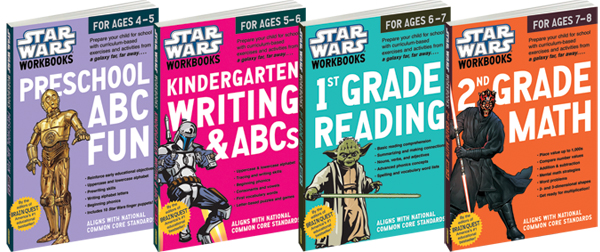
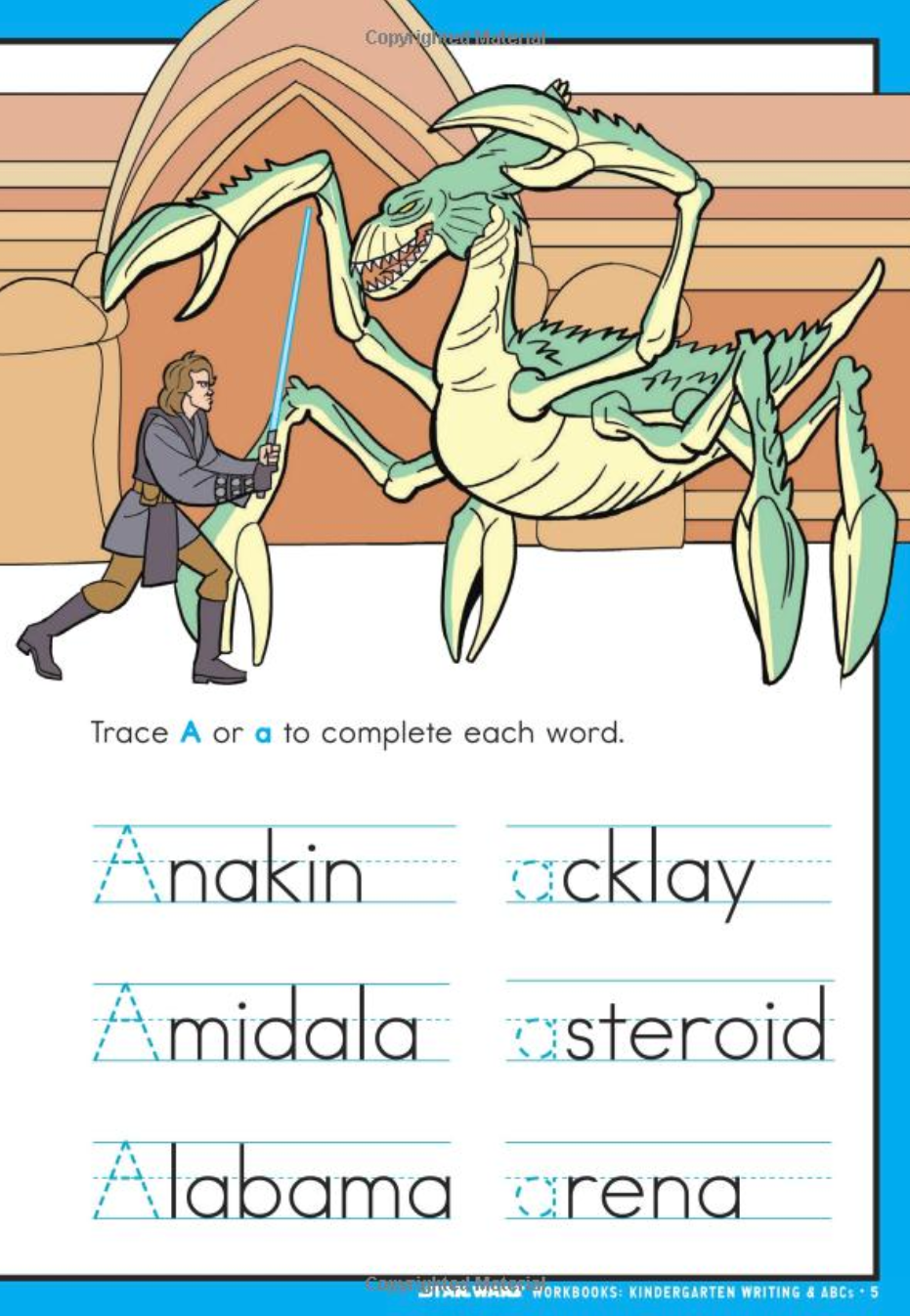
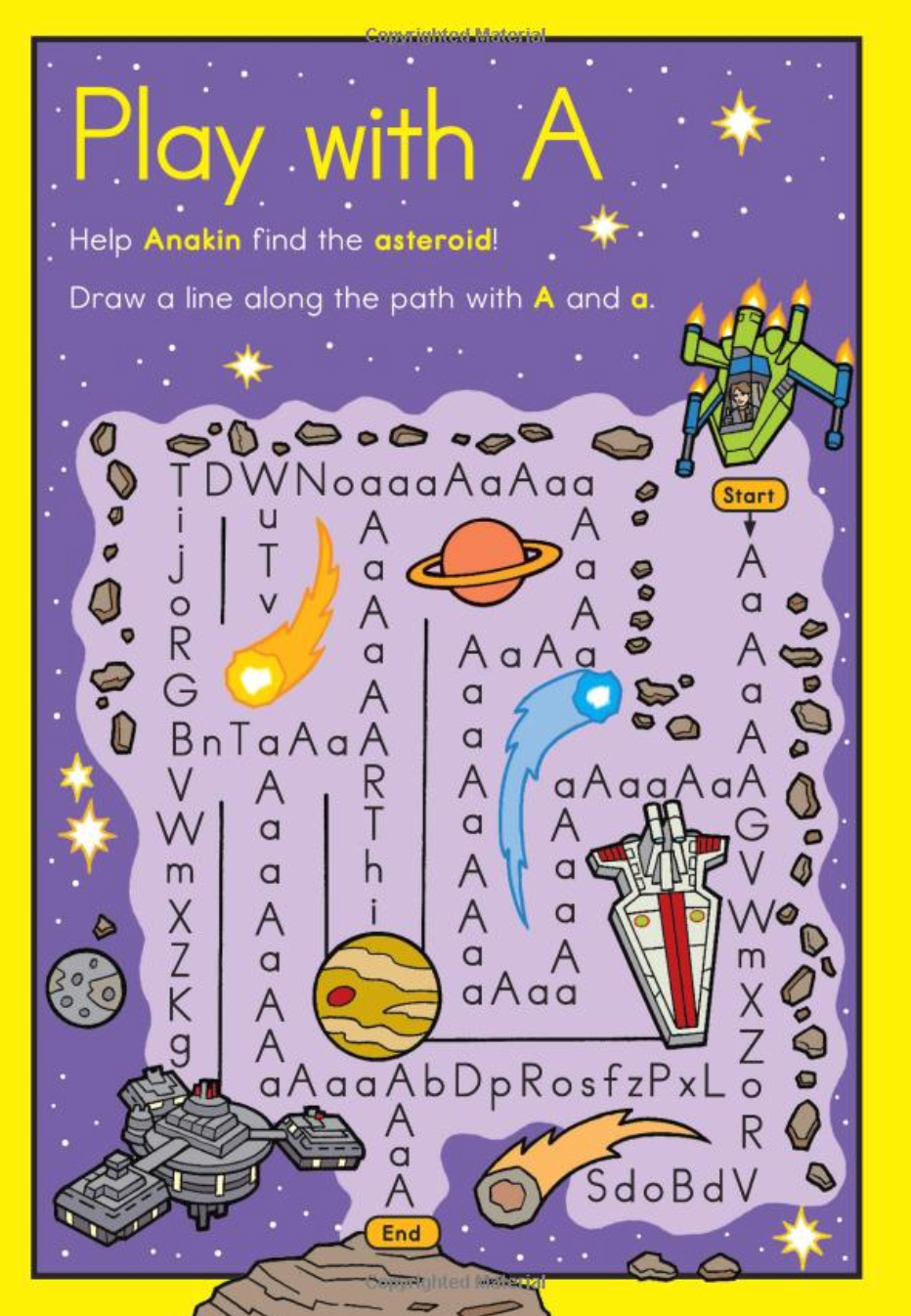
Star Wars Workbooks Summary: The Force is strong with this series! Introducing a line of workbooks that marries the iconic popularity of Star Wars with the unique mix of editorial quality, fun presentation, and rigorous educational standards that Workman applied to the BRAIN QUEST Workbooks.
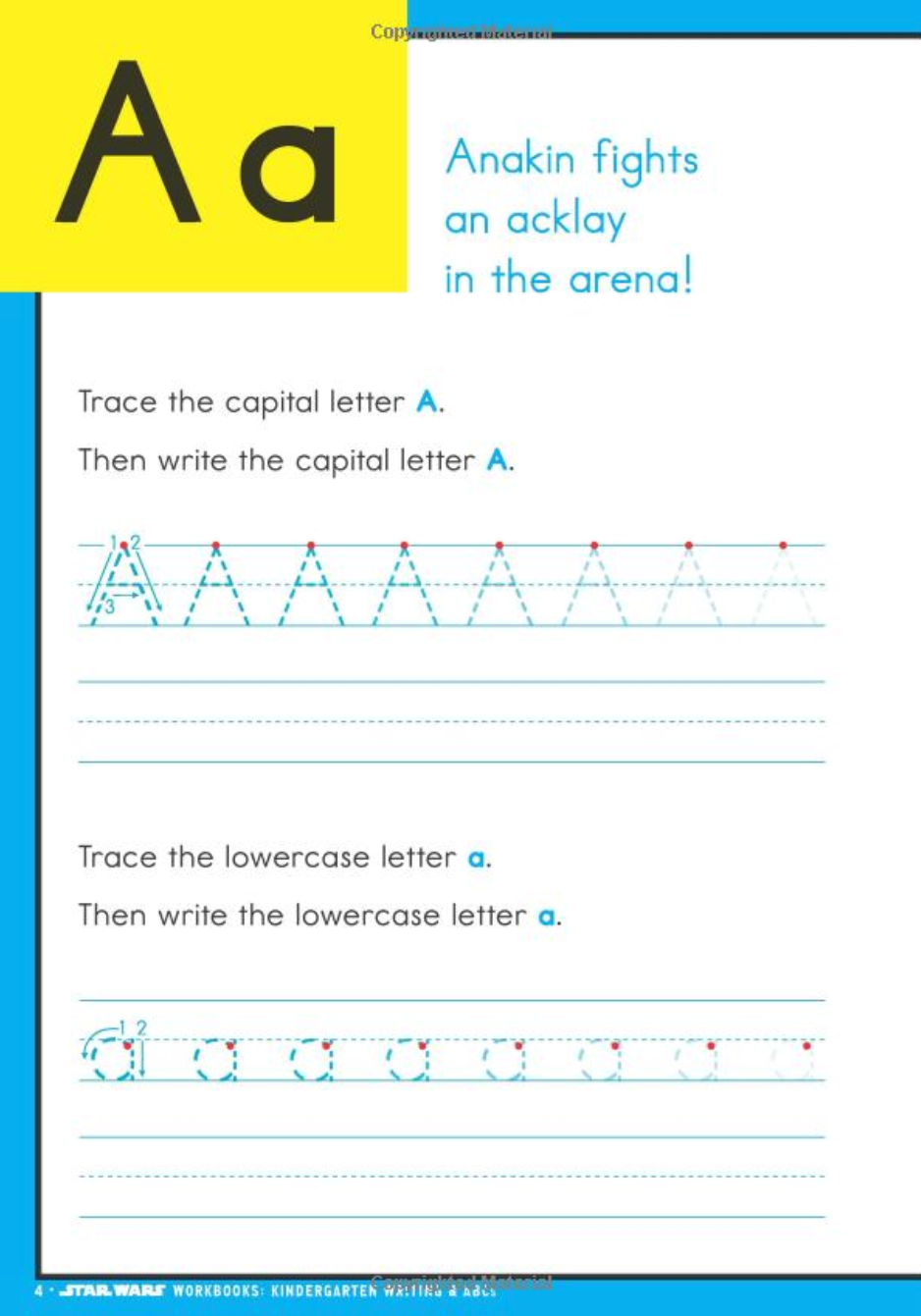
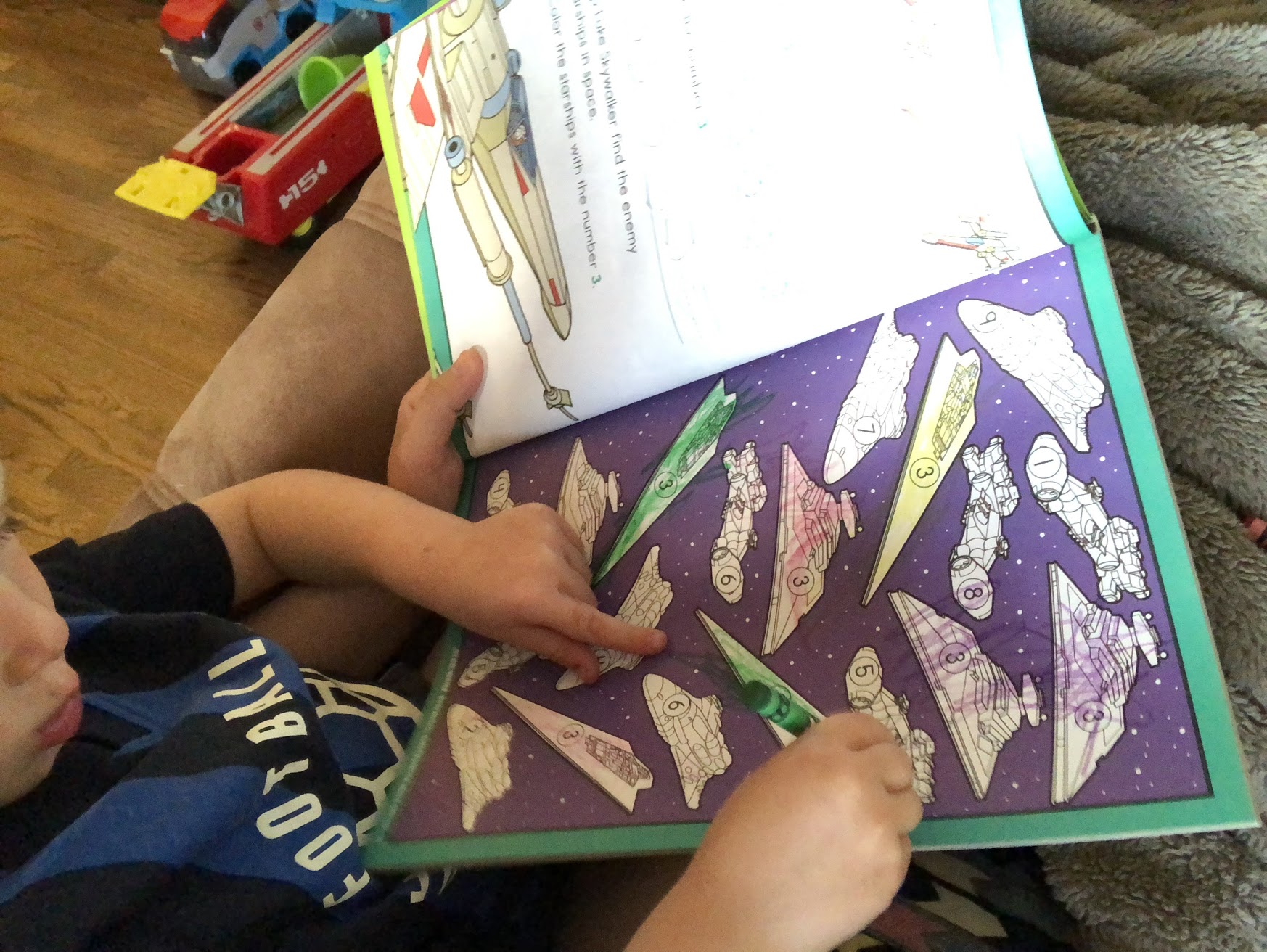
Twelve titles launch the series―three each for Pre-K through 2nd Grade―and dig deep into core subjects, including numbers, ABCs, phonics, and reading readiness for younger grades, and math, reading, and writing for the older ones. The material, which aligns with national Common Core State Standards, is designed to reinforce essential concepts and lessons taught in schools. Any child, not just fans of Star Wars―but yes, those fans will be especially delighted (as will reluctant learners)―will love the “A” is for Anakin approach to phonics. Kids will practice learning numbers by counting and circling X-wing starfighters and clone troopers. Master place values by sorting groups of Wookiees. There are math problems―Yoda is holding 7 lightsabers. 5 of the lightsabers are blue. The rest are green. How many green lightsabers is he holding? And Language Arts―Circle the correct homophone in this sentence: Luke is a Jedi knight/night.
Featuring favorite characters like Luke Skywalker, Queen Amidala, Yoda, and Obi-Wan Kenobi, and other creatures, monsters, Jedi, and Sith, the workbooks are filled with thousands of original illustrations drawing from all six Star Wars movies and the expanded Star Wars universe.
Learn well, you will.
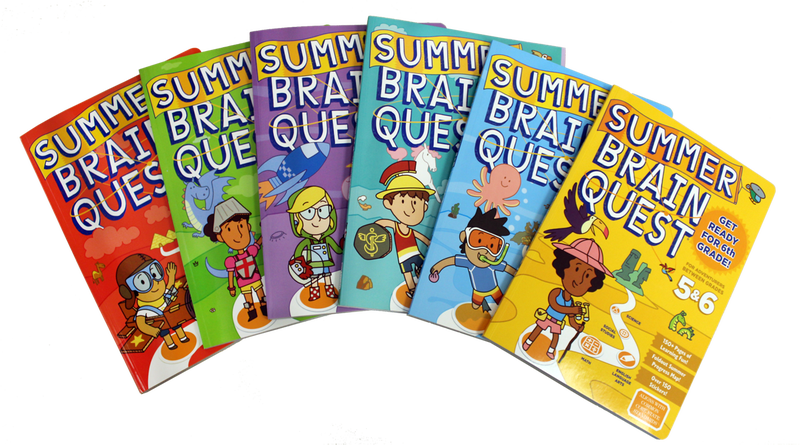
Summer Brain Quest Workbooks Summary (Pre-K to K Summary): It’s time to get ready for school! Now, the series that keeps K–6th graders sharp, active, and curious in between grades is expanding to meet popular demand: Introducing Summer Brain Quest: Between Grades Pre-K & K, covering the summer between Preschool and Kindergarten so 4- and 5-year-olds can get ready for school—and have fun doing it.
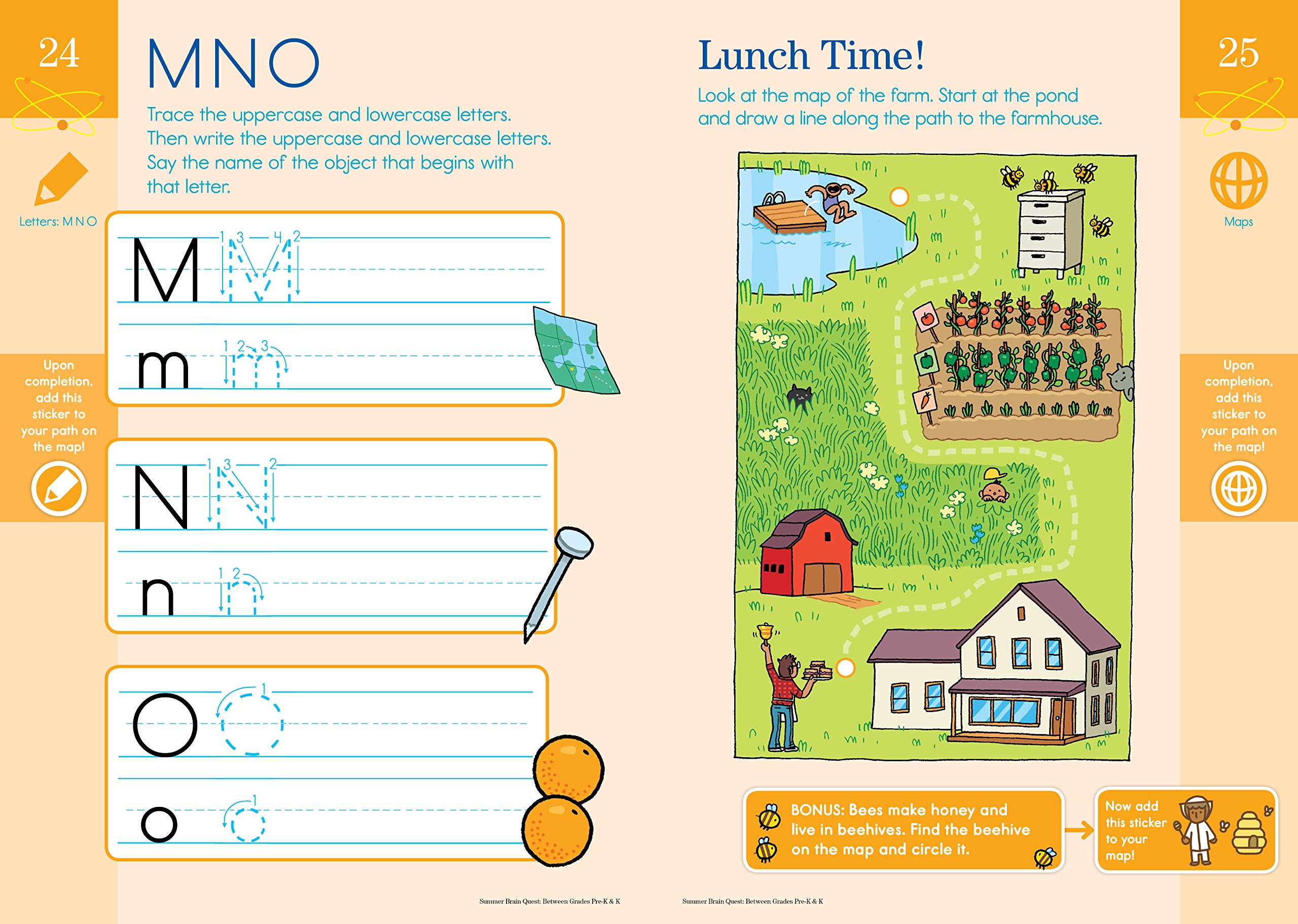
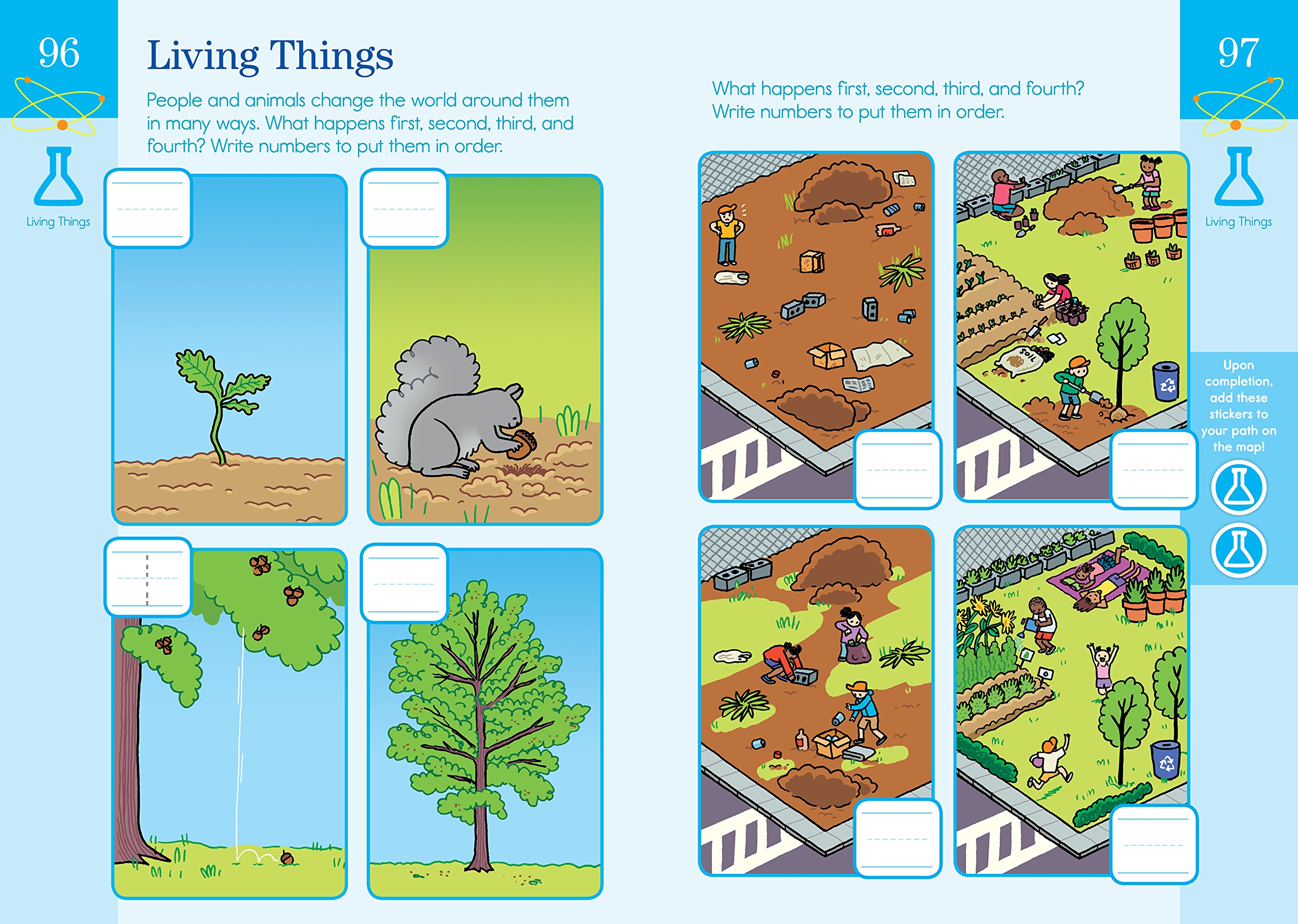
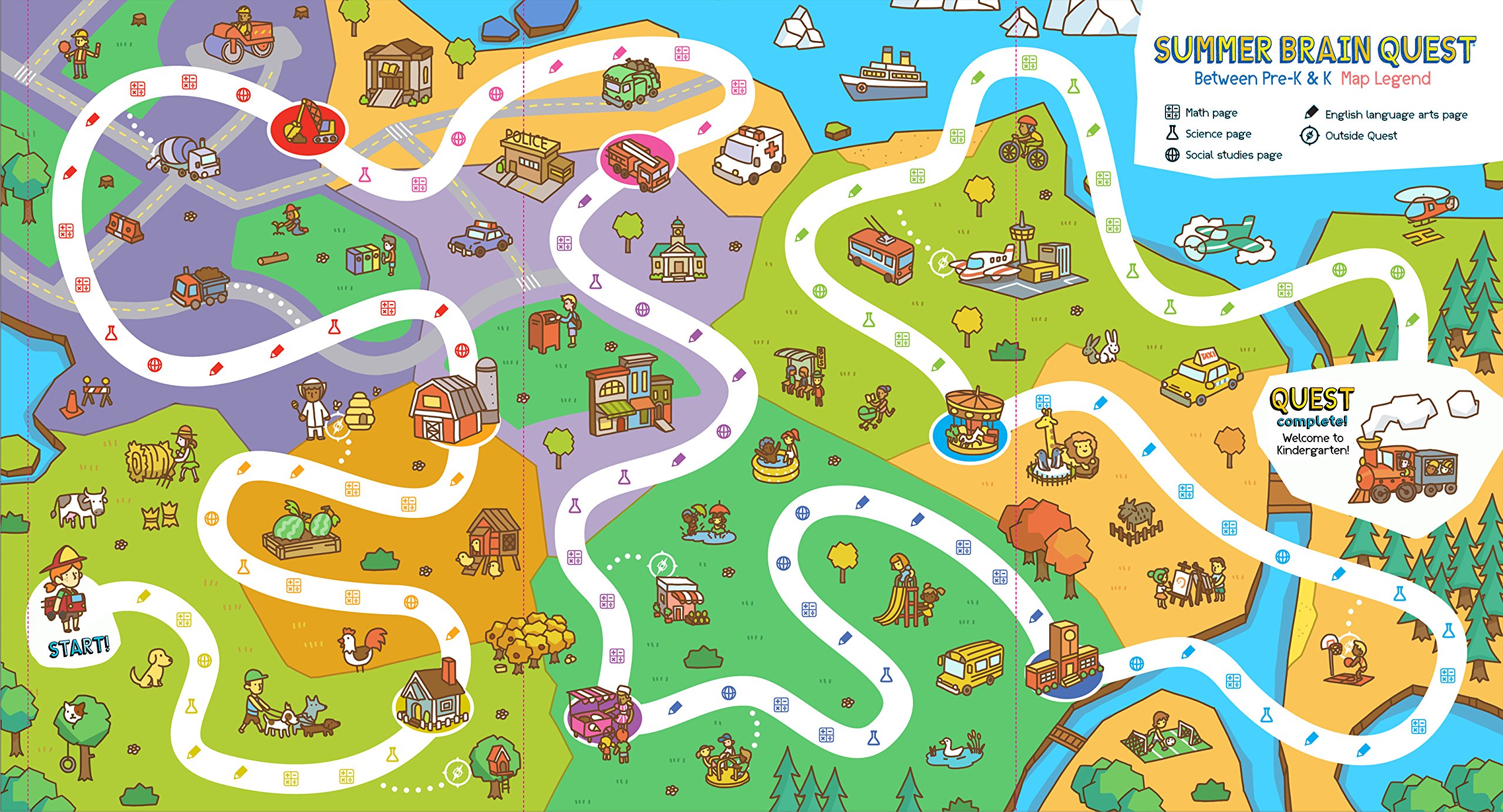
Part workbook, part game, part adventure, it’s the interactive book that combines educational activities with indoor and outdoor play—with entertaining and effective results. The pullout map guides kids on a learning quest; to cross the finish line, they fulfill the curriculum-based exercises and customize their path by pursuing the bonus challenges and outdoor activities that excite them most. How about extra counting or reading calendars? A hunt for three-dimensional shapes? Identifying landforms? Or finding words that rhyme? Along the way, they earn stickers for completing pages, tick off an adventure list, and get fresh air with outdoor learning challenges, like writing the alphabet with sidewalk chalk.
Teacher-approved, parent-trusted, and designed to appeal to kids’ natural love of learning and playful curiosity, Brain Questmakes it fun to be smart all summer long!
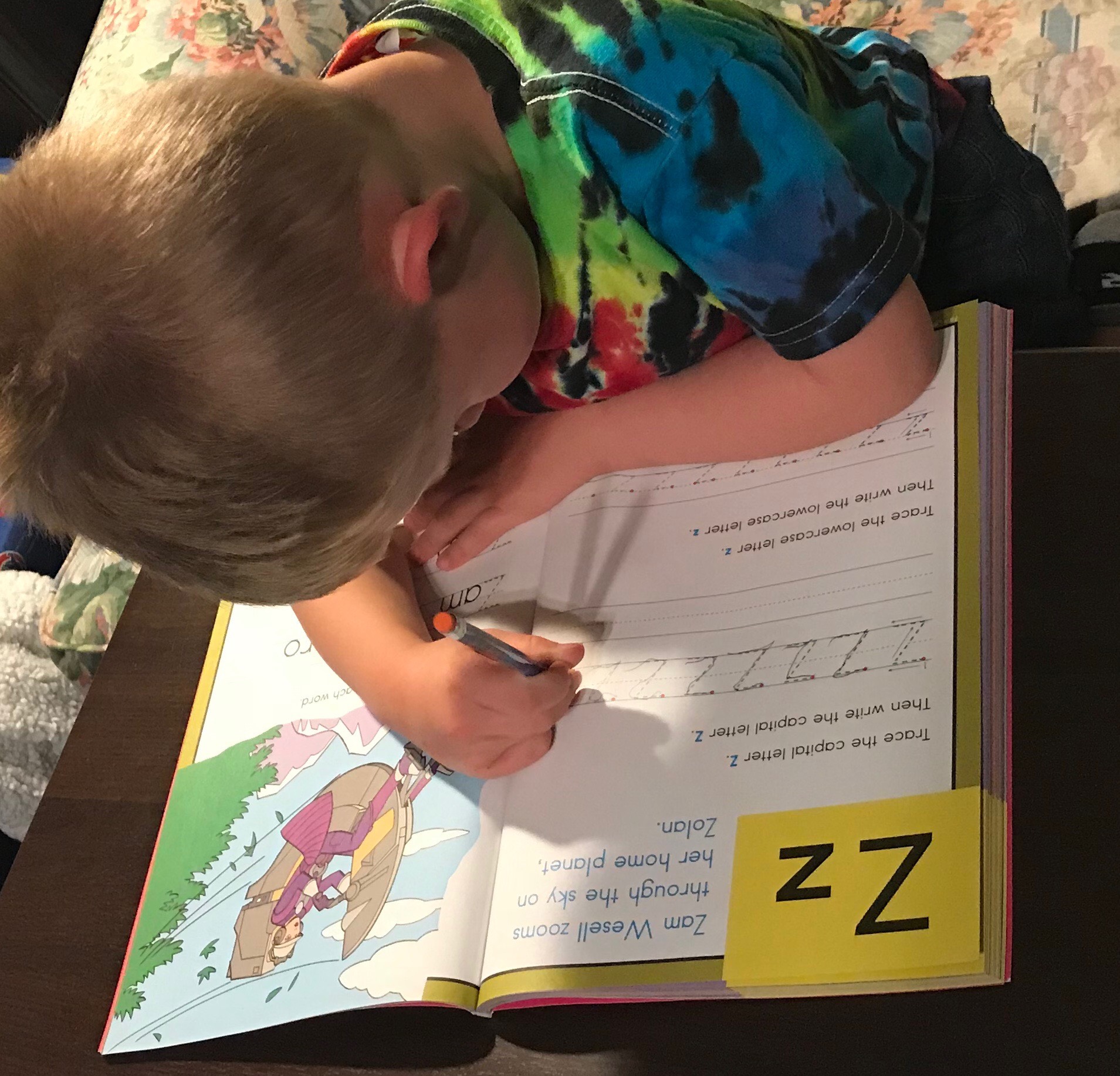
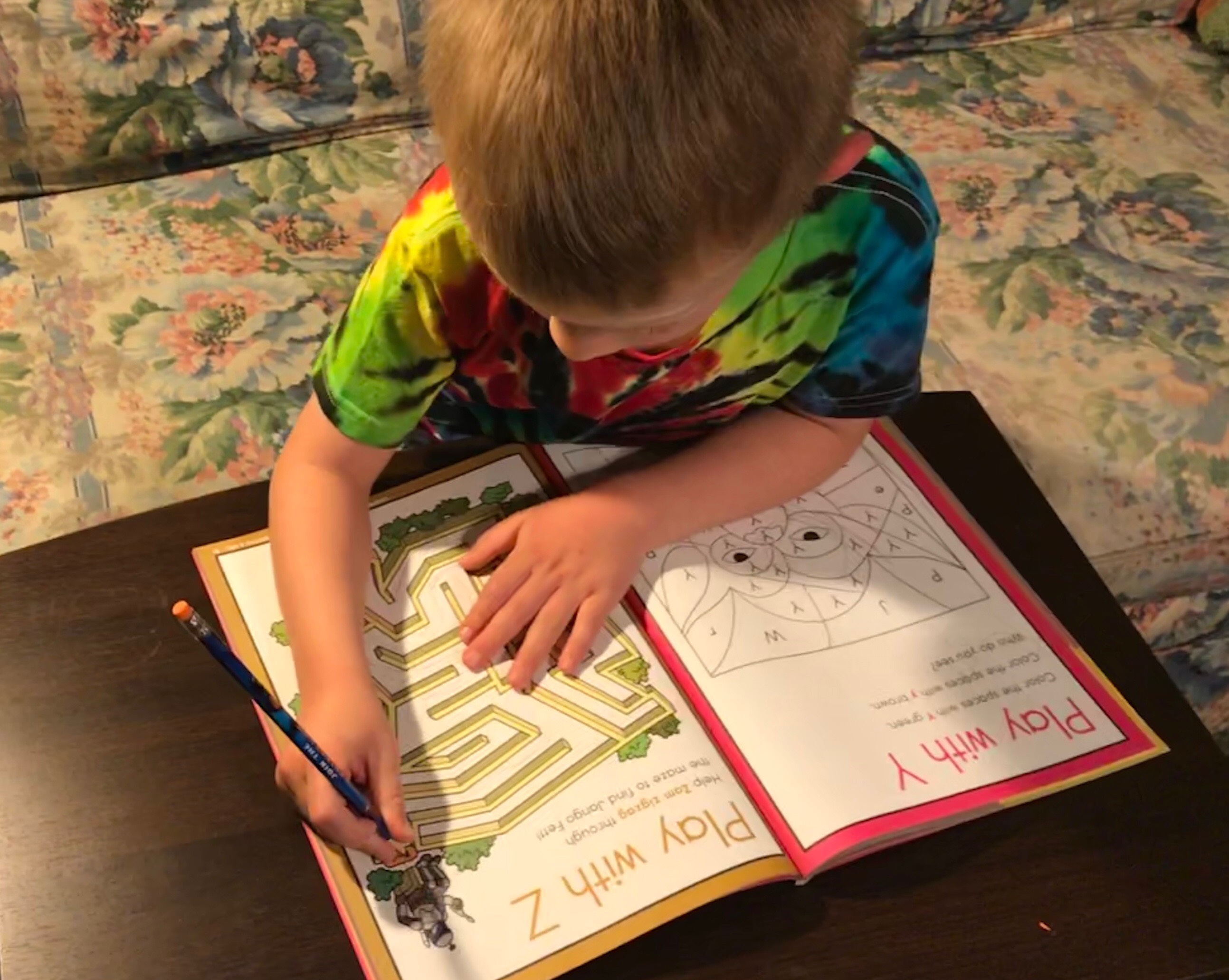
Ricki’s Review: My son LOVES these books. They have made him so excited about reading, writing, and math. I am not a workbook kind of teacher, but these books defy all notions of worksheet and workbook teaching. The Summer Brain Quest books feature a map at the end. As kids finish each page, they earn stickers to go along the map. The books ask them about themselves in the “my world” pages. They make learning very fun. He particularly loves the Star Wars reading book. He enjoys matching the letters to words and circling answers. My son is an outdoors-y kind of kid. He doesn’t enjoy sitting at the table and practicing his reading. Therefore, we do these at night. After we read together, he picks one of these workbooks to do together. We sit on the floor, and he loves it. It extends his awake time, and he loves thinking he is doing something fun to stay up later than his brother. We found the workbooks in the bookstore yesterday, and he was thrilled to see his books on the shelves. We ended up buying other books in the Brain Quest series because he enjoyed them so much. He chose this rather than a new toy! I’ll be purchasing these books for my younger son when he gets a bit older. They are absolutely wonderful and make learning fun!
Kellee’s Review: Like Ricki, I am skeptical whenever I see a workbook, but as soon as these arrived, my son became a bit obsessed with “doing his Star Wars letters,” and I just cannot argue with that as Trent is not a sit-and-do-something type of kid. But since the workbook is a mix of writing and activities, it doesn’t seem like work to him but instead is seen as a game. Because of this, I view them more as an activity book than just a workbook. We’ve currently been focusing primarily on the Star Wars activity book because I don’t want to overwhelm him, and it also leaves the Brain Quest for us to do when he is done. (Though, I do LOVE Brain Quest cards. My sister, Natalie, gives them to Trent for his birthday, and we do his “cards” in the car.) Lastly, I want to give a shout out to these helping parents who want to include educational activities at home. I know that even I, as a teacher mom, struggle with figuring out what to do to help my child learn to read and keep learning, and these activity books are perfect!
We Flagged:
Star Wars “A”
to “Z”
Tracing and Coloring the Number 3
Brainquest “MNO” and “Living Things”
“Summer Brain Quest” map
Recommended For:
and
**Thank you to Diana and Christi at Workman for providing a copy for review**
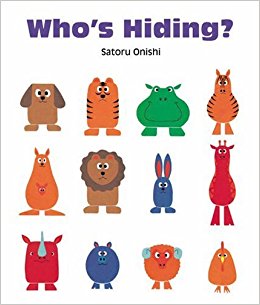
Who’s Hiding? Author: Satoru Onishi
Published: January 1, 2018 by Gecko Press
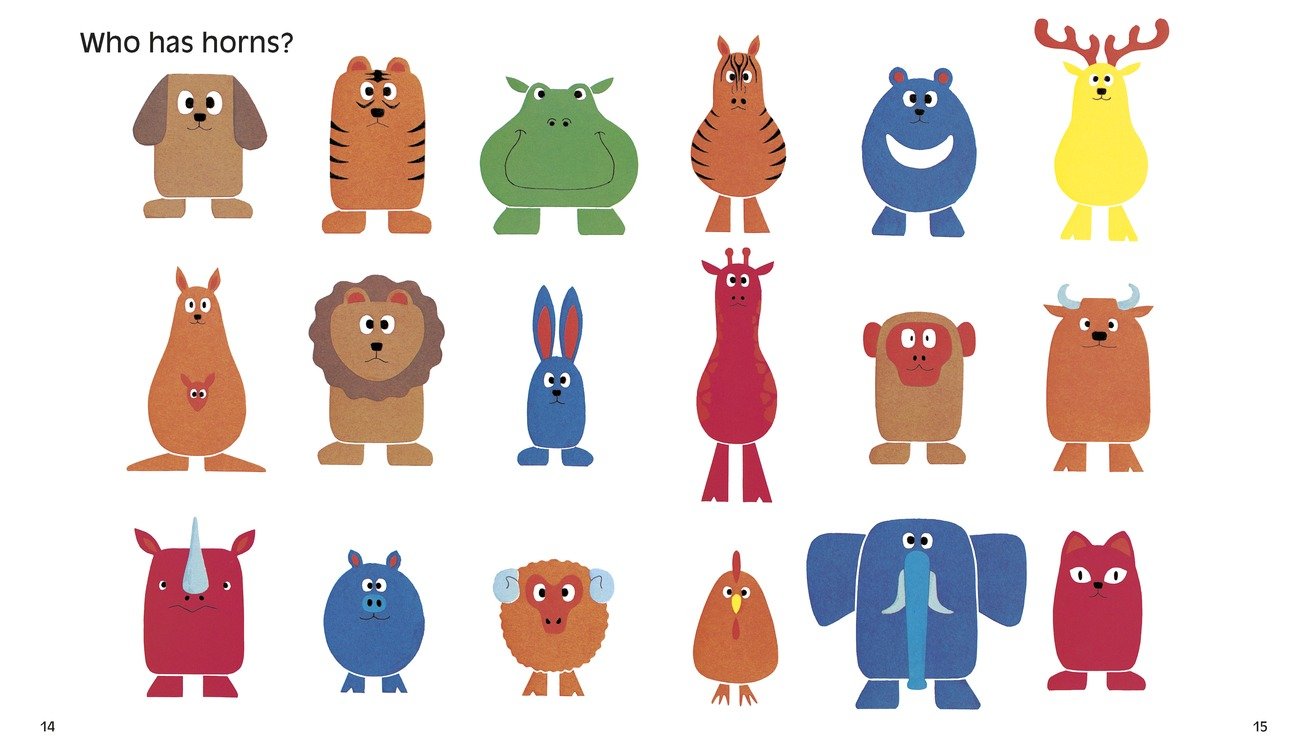
Summary: Who’s hiding? Who’s crying? Who’s backwards? Look carefully! Is it dog, tiger, hippo, zebra, bear, reindeer, kangaroo, lion, rabbit, giraffe, monkey, bull, rhino, pig, sheep, hen, elephant, or cat? Can you tell? Look again…18 fun-loving animals can be found on each question-posing page, sending readers into an up-close, attention-to-detail discovery.
Review: This is a book that is fun for people of all ages! Each spread asks questions like, “Who’s hiding?” or “Who’s angry?” or “Who has horns?” Readers have to look from animal to animal to figure out the answer. My son and I had a lot of fun reading it because we raced to see who could find the animal first. It offers a unique twist to search-and-find books, and quite frankly, we found it to be much more fun than the classic search-and-find books. I could see this book working well with students who have been identified as having ASD. Because some pages ask about emotions, it would be a good way to reinforce facial expressions. Other pages would be easier (like “Who has horns?” and might relieve some frustration.
Teachers’ Tools for Navigation: As stated above, this books would be a great test for students who have been identified as having ASD. Also, it is a generally fun book and could be used to teach skills in compare and contrast (across the pages and within the pages). Lastly, it would be a great book to give to fast finishers.
Discussion Questions: How do the animals change across the pages? Which animal is your favorite? Which page is your favorite, and why?
We Flagged:
Read This If You Loved: Search-and-Find Books
Recommended For:
**Thank you to Veronica at Myrick for providing a copy for review**
Tsu and the Outliers
Author: E. Eero Johnson
Published May 8th, 2018 by odod books
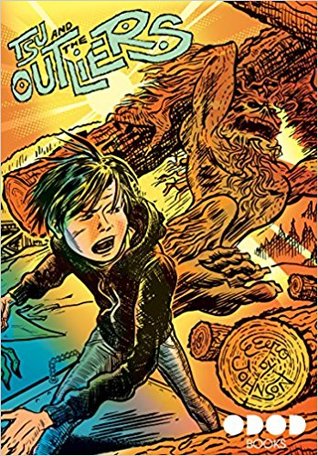
Summary: Tsu and the Outliers is a graphic novel about a non- verbal boy whose rural existence appears unbearable until rumors of a monstrous giant upend his mundane life. Tsu finds himself at the center of the mystery, as his strange metaphysical connection with the creature is revealed.
As the dragnet closes in, Tsu is forced to choose between a dangerous path leading beyond the periphery of human perception or a life without his only friend.
About the Author: E. Eero Johnson (Erik T. Johnson) is a Minneapolis-based illustrator, graphic designer, and comic book artist. His illustrations have appeared in GQ, The New Yorker, Newsweek, Wired, and The New York Times, and on several book covers. His comic book projects, The Outliers and Kozmo-Knot, have gained a growing interest from the indie comic world. He lives with his wife, Tammy, sons, Emmett and Eilif, and a crazy Boston terrier.
Review: Tsu and the Outliers is an interesting look at a new type of superhero: a young non-verbal boy who is able to communicate with a creature that his world is afraid of. There are some interesting discussion points when it comes to bullying since Tsu is judged by his classmates because of his disability. This is a big theme during the beginning of the book as we get to know Tsu. The creature also ends up being a Sasquatch and they are being chased by a chupacabra-like creature which introduces North American folklore. Overall, the story is pretty crazy (in a good way), and the end of the book sets up for a definite sequel which I NEED because Tsu makes a crazy decision at the end of the book with no explanation.
Teachers’ Tools for Navigation: Use the scene where Tsu is bullied by Jespers to start a dialogue about bullying. Discuss why the scene makes them angry and uncomfortable and what could have been done by others to help Tsu. Have students create anti-bullying advertisements to share in your school.
When mythology and folklore are discussed, the focus is primarily on Greek, Roman, and Egyptian. Use Tsu and the Outliers to discuss North American folklore including the Sasquatch and chupacabra. Have them research the tales about these creatures and create their own myth with them in it. Also, as a class, discuss the difference between the characters is Tsu and traditional folklore.
Discussion Questions:
What foreshadowing was there to show that Tsu was more than what everyone assumed?
Tsu’s lack of verbal communication in the end of the book ended up not being a disability. What do you think caused it?
Why do you think Tsu made the choice he did at the end of the book?
Why do you think Tsu’s mother made the claim she did at the end of the book covering up for Tsu?
Why does the Chimpanzee-professor want Tsu?
Flagged Passages:
Read This If You Love: Superpowers, Folklore, Superhero comics
Recommended For:
**Thank you to odod books for providing a copy for review!**
The Underneath Author: Kathi Appelt
Illustrator: David Small
Published May 6th, 2008 by Atheneum Books for Young Readers
Newbery Honor (2009), National Book Award Finalist (2009)
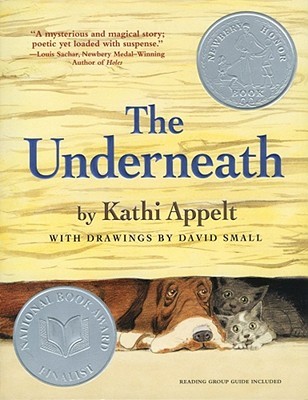
Summary: There is nothing lonelier than a cat who has been loved, at least for a while, and then abandoned on the side of the road.
A calico cat, about to have kittens, hears the lonely howl of a chained-up hound deep in the backwaters of the bayou. She dares to find him in the forest, and the hound dares to befriend this cat, this feline, this creature he is supposed to hate. They are an unlikely pair, about to become an unlikely family. Ranger urges the cat to hide underneath the porch, to raise her kittens there because Gar-Face, the man living inside the house, will surely use them as alligator bait should he find them. But they are safe in the Underneath…as long as they stay in the Underneath.
Kittens, however, are notoriously curious creatures. And one kitten’s one moment of curiosity sets off a chain of events that is astonishing, remarkable, and enormous in its meaning. For everyone who loves Sounder, Shiloh, and The Yearling, for everyone who loves the haunting beauty of writers such as Marjorie Kinnan Rawlings, Flannery O’Connor, and Carson McCullers, Kathi Appelt spins a harrowing yet keenly sweet tale about the power of love, and its opposite, hate; the fragility of happiness; and the importance of making good on your promises.
Author: Kathi Appelt is the New York Times best-selling author of more than forty books for children and young adults. Her first novel, The Underneath, was a National Book Award Finalist and a Newbery Honor Book. It also received the PEN USA Award. Her other novels include The True Blue Scouts of Sugar Man Swamp, a National Book Award finalist, and Maybe a Fox, one of the Bank Street Books Best Children’s Books of the Year. In addition to writing, Ms. Appelt is on the faculty in the Masters of Creative Writing for Children and Young Adults at Vermont College of Fine Arts. She lives in College Station, Texas. To learn more, and to find curriculum materials and activity pages, visit her website at kathiappelt.com.
Review: Anyone who has read a Kathi Appelt book knows that she is amazing at two things: weaving a story together in a way that only she can & pulling at heart strings causing definite mood swings while reading. The Underneath is the epitome of her excellence, and I am sad it took me so long to get to this book. Once done, I was very excited to ask Kathi about this masterpiece, and my questions and her answers show more about what makes this book the award winner that it is.
Interview:
Kellee: How do you work to weave different elements into your story such as mythology, the natural world, and contemporary stories?
Kathi: It’s always interesting to me to learn what sets a story off. Some authors swear that they start with characters. And I would say that characters are definitely a good place to start. But when I reflect over my many years of writing, I feel like I mostly start with place. I ask, what is it about this place that lends itself to story? What is the history of it? The social and cultural importance of it? Who has lived here? Who was here a thousand years ago? What were they doing? How did they survive? What impact did natural forces play on this place? What is the flora and fauna? Are there ghosts? Are there particular features of it? So, it seems to me that place creates the basis for most of my stories.
In The Underneath, one of my story lines occurs a thousand years ago, which means that my mythological characters (who were interlopers), would have encountered members of the Caddo/Hasinai nation. Theirs was a sophisticated, highly organized society. But a couple of things happened. One was a massive earthquake that caused a devastating flood which wiped out an entire city, thousands of people. Another was the encroachment of European settlers who brought in disease and ultimately drove the Caddo/Hasinai out of their ancestral lands.
The Caddo were—and still are—known for their pottery, so it made sense to feature a significant jar in my story. That way, I could more clearly link the characters to each other across time periods. One thing leads to another. But in the end, it goes back to place.
Kellee: The Underneath has multiple stories that are interwoven and meet at the end. How do you plan writing a novel like this?
Kathi: Extended narrative has always been difficult for me. I started my professional writing life as a poet and picture book author. As a result, it seemed like everything I wrote tended to finish at the bottom of page three. It was why writing a novel eluded me for such a long time. I always thought that a novel meant writing long chapters, strung together chronologically, and moving from point A to a final point Z. But it wasn’t in my nature to write like that. Long chapters weren’t the way I rolled. Finally, after many failed attempts, I figured out that if I was ever going to write a novel, I would have to go with my grain as opposed to going against my grain. So, I adapted to “writing by snapshot.” In other words, I write in small, significant scenes—I call them SSS’s. I can get a lot done that way without worrying about word counts or chapter lengths, or even transitions. Plus, they’re easy to manipulate. A small scene can be moved hither and yon until it finds the right place in the story.
I think that one of the reasons that writers fail is because they haven’t found their own natural way of working. Long narrative passages aren’t my strength. I’m not saying that I can’t write them, only that they’re not where my strengths lie.
So, finding the form that fits both our natural strengths and that suits the story, is one of the keys to unlocking a book . . . and a writer. Not all of us are meant to be poets. Not all of us are meant to be soaring prose practitioners. It could be that I’m a little ADD, and the short scenes suit me.
At any rate, making this discovery was how I finally finished a novel.
I also want to say in regard to planning, I do make very loose outlines when I embark upon a new project. Those outlines tend to flex as I move through the draft. But I always try to at least have a vague idea of how the story will end. Otherwise, I’ll just write myself right off the cliff. If I can see the destination, I can get there eventually.
Kellee: Personification allows the setting to become its own character in the story. How do you plan this and implement it well when you are writing?
Kathi: I spend tons of time researching the plants and animals that populate the setting. And to me, a living organism, such as a tree, is just that—living. If you spend enough time around trees, it seems like they each have their own personalities, their own needs, and their own ideas. I’m just saying. So, unless something is inanimate—like a rock, say—I can usually find the heart of that living organism. That is always my goal.
Kellee: What about The Underneath do you think resonated with readers 10 years ago and still remains today?
My true hope with The Underneath is that my young readers can see the value of making a good choice. In my story, both the hero Ranger and the antagonist Gar Face have similar experiences, similar fates if you will. They’ve both been badly treated, both been isolated, and yet only one of them turns towards love. Grandmother too, finally, at long last—after the longest time out in history—chooses love. I think that young readers are tuned in to this. I think they’re built for love. What I hope my story does is to give them the courage to make that choice.
Kellee: What feedback have you gotten from readers over the years about The Underneath? What stands out about what the book means to them?
Gosh, it’s hard to say just one thing, but it seems to me that mostly what I hear over and over from them is how much they love the relationship between Ranger and the kittens. That small sweetness seems to be the key that opens the story up. To me, it’s proof that we don’t all have to be the same or look the same or smell the same or whatever to become best friends. And no matter how small we are, we can make a difference for those we love.
Book Trailer:
GIVEAWAY!
Fifteen lucky winners will receive an autographed paperback copy of The Underneath. In addition, one Grand Prize winner will win a classroom set of 20 copies of the book PLUS a 30-40 minute Skype visit for her/his school, classroom, or library with award-winning author Kathi Appelt. Enter here!
Recommended For:
Thank you, Kathi, for your thorough and beautiful answers to my interview questions, and thank you to Blue Slip Media for the giveaway and trailer!





 and
and