Author Guest Post!: “Beyond Setting: A Couple of Thoughts and Some Fun Writing Prompts” by Tricia Springstubb, Author of Moonpenny Island

Share

Beyond Setting: A Couple of Thoughts and Some Fun Writing Prompts

Setting: the time and place where the story happens. Yawn. Compared to characters and plot, setting can be a snoozefest. What happens next? That’s what most readers, young or old, want to know.

But here’s what genius writer Katherine Paterson has to say on the subject: “Setting for me is not a background against which a story is played out, but the very stuff with which the story is woven. The characters will not determine the setting, but the setting to a great extent will determine both what they will be like and how they will act.”

Think of “Bridge to Terabithia” and you’ll immediately understand what she means. Could that miraculous, heart-wrenching story be set anywhere but the kingdom Jess and Leslie create together?  Not only is that place enchanted, it’s secret, a spot where they feel all-powerful and safe from the real world–which of course makes the book’s tragedy all the more devastating.

Setting can be a catalyst. It can make things happen. Stanley Yelnats gets sent to Camp Green Lake where, instead of a lovely lake, he finds a desert full of strange holes, and the die is cast. (“Holes”, by Louis Sachar). Ditto what happens when Brian Robeson’s plane goes down not on the edge of a corn field, but in the middle of the Canadian wilderness (“Hatchet” by Gary Paulsen).

Full confession: sense of place is all important in my work. “What Happened on Fox Street” pivots on how much Mo Wren loves her home. Everything she treasures is there–her friends, her secret hide-out, her fox-quest and her memories of her mother. The discovery that her adored father means to move away makes her furious and sets the rest of the story in motion.

In “Mo Wren Lost and Found”, Mo has had to move away after all. Here the setting reflects and enhances her feelings of confusion and lonesomeness. “East 213th . Their new street didn’t even have a name. Just a number. That was only the beginning of how different it was. Being a dead end, where Fox Street began and where it stopped were perfectly clear. Once Upon a Time and The End. But if East 213th was a story, it’d say To be continued…with those three dots that mean anything might happen.”

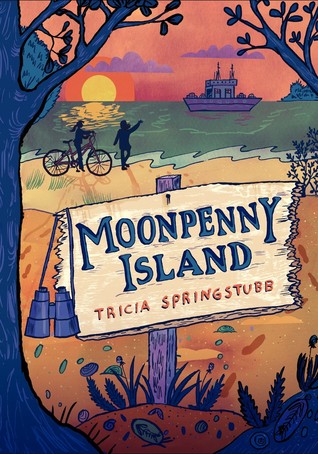
My newest book, “Moonpenny Island”, is about how living on a small lump of limestone surrounded by water is paradise for some, prison for others. The very stuff of the story!

I always encourage young writers to think about setting. Think, I tell them, how important place is to “Harry Potter”, “Percy Jackson” or “The Giver”.  Think how much you love stepping into a story’s new, amazing and compelling world. Experiencing a great setting is the closest we can come to teleportation. When you’re a writer, you have the power to build a world!

Below are some writing exercises to help kids understand the power of setting–and have fun too!

  • Take a familiar story and set it in another place or time. What if Little Red Riding Hood lived in New York City?  How would the plot change if Cinderella was set in the present day?
  • Without naming it, describe some place you know as fully as you can. Use all five senses. Trade descriptions with someone else, and use each other’s place as the setting for a new story.
  • Draw a map of an imaginary place. Go wild! Use it as the setting for a story.
  • Describe the room you’re in right now. Just the facts please. Messy classroom desks, windows onto the street, one kid asleep in the corner.
    Now describe the room through the eyes of a fictional character. A shy, nervous new kid entering for the first time. An ant on the floor. A girl with a crush on the boy sitting next to her. An alien whose saucer has just landed outside. (It’s up to you. Remember, when you’re a writer, you’re the boss of your story!) Will they all see the same setting? How will past experiences and present feelings influence the way each of them perceives the room?

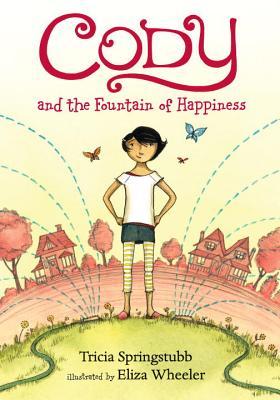
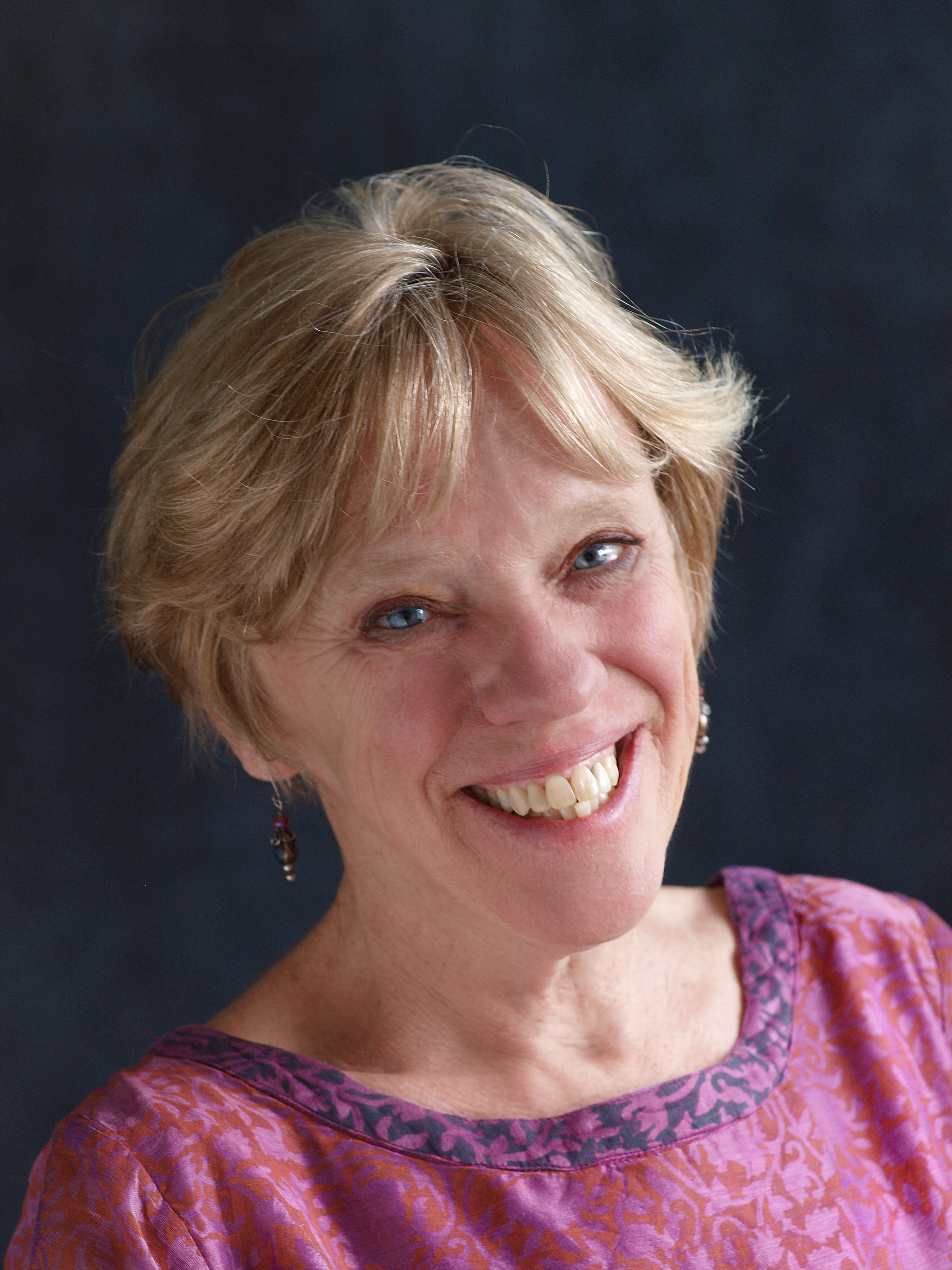
Tricia Springstubb is a frequent speaker in schools and libraries. When she can’t get there in person, she enjoys doing Skype visits. Her new middle grade novel, “Moonpenny Island”, publishes with HarperCollins on February 10. “Cody and the Fountain of Happiness”, the first book in her new series for readers ages 7-10, publishes with Candlewick in April.

Tricia lives and writes in good old Cleveland. You can learn more about her and her books at triciaspringstubb.com
cody OLYMPUS DIGITAL CAMERA moonpenny

Moonpenny Island Summary: Moonpenny is a tiny island in a great lake. When the summer people leave and the ferries stop running, just the tried-and-true islanders are left behind. Flor and her best, her perfect friend, Sylvie, are the only eleven-year-olds for miles and miles—and Flor couldn’t be happier.

But come the end of summer, unthinkable things begin to happen. Sylvie is suddenly, mysteriously whisked away to school on the mainland. Flor’s mother leaves to take care of Flor’s sick grandmother and doesn’t come back. Her big sister has a secret, and Flor fears it’s a dangerous one.

Meanwhile, a geologist and his peculiar daughter arrive to excavate prehistoric trilobites, one of the first creatures to develop sight. Soon Flor is helping them. As her own ability to see her life on this little lump of limestone evolves, she faces truths about those she loves—and about herself—she never imagined.

Tricia Springstubb tells a warm and deeply affecting story about what it means to see, and why the biggest feat of all may be seeing through someone else’s eyes.

Cody and the Fountain of Happiness Summary: For whimsical Cody, many things are beautiful, especially ants who say hello by rubbing feelers. But nothing is as beautiful as the first day of summer vacation, and Cody doesn’t want to waste one minute of it. Meanwhile, teenage brother Wyatt is moping over a girl, Mom is stressed about her new job as Head of Shoes, Dad is off hauling chairs in his long-distance truck, and even camp has been closed for the summer. What to do? Just when all seems lost, Cody bumps into a neighborhood boy named Spencer who is looking for a runaway cat. With a new friend and a soon-to-be-found cat, Cody is on her way to the fountain of happiness.


Thank you so much to Tricia for being our special guest this Sunday!
Signature andRickiSig

YALSA Morris Finalists’ Blog Hop: Gabi, a Girl in Pieces by Isabel Quintero

Share

gabit

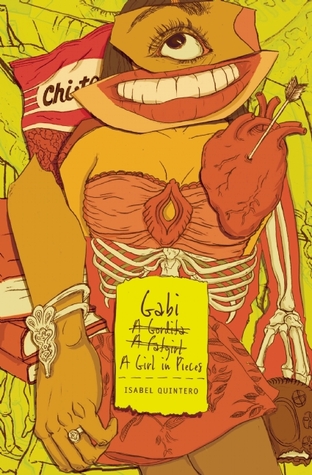
Gabi, A Girl in Pieces
Author: Isabel Quintero
Published October 14th, 2014 by Cinco Puntos Press

Goodreads Summary: For all the gorditas, flaquitas, and in-between girls trying to make their space in the world. Don’t worry, you got this.

Gabi Hernandez chronicles her last year in high school in her diary: college applications, Cindy’s pregnancy, Sebastian’s coming out, the cute boys, her father’s meth habit, and the food she craves. And best of all, the poetry that helps forge her identity.

Author Bio: Isabel Quintero is a library technician in the Inland Empire. She is also the events coordinator for Orange Monkey and helps edit the poetry journal Tin Cannon. Gabi is her debut novel.

Kellee’s Review: What I found in this book was a book of truth. While I normally find a book that has so many topics in it to be cumbersome (just some of the topics hit were: pregnancy, abortion, meth, family, religion, ethnicity, school, homosexuality, sex, death, poetry, college, rape, and gender expectations), I felt that Gabi was just truthful. Her story was just a story full of real life which just happens to be messy. I enjoyed the unique format, the diversity (not just race/ethnicity, but lbgt, body size, class, ELL, etc.), and the amazing cast of characters. Gabi’s voice rang true throughout, and even got stronger as she became more independent within the story. Well done.

Teacher’s Tools for Navigation: Parts of Gabi’s story could easily be pulled out to be a mentor text for many different literary elements; however, I feel like one of the best ways it could be used is to have students emulate Gabi’s writing. For example, Gabi writes letters to her father sharing how she really feels. Students could write to someone sharing something with them that they are keeping from them. You could also use Gabi’s magazine and poetry the same way. Gabi’s writing is very raw, and I think that students will definitely connect with it.

Discussion Questions: Gabi makes a choice towards the end of the book that makes Cindy be upset with Gabi. Do you agree with what Gabi did?; Gabi’s mother is very protective of her. Why do you think she is so hard on Gabi?; Gabi deals with body issues throughout the book. How do you think our society affects how she pictures herself?; Sebastian and Cindy’s parents are both disappointed in their kids for different reasons and deal differently with their disappointment. Do you agree with how they treat their children?

We Flagged: “My brother is fifteen. He knows many things. He knows how to make a pipe out of an apple, and he knows how to make beautiful murals on public property. He likes wresting and biking and skateboarding but doesn’t like school because school doesn’t understand kids like us. My brother–the brat, the crybaby, the quite one, the brown one, Mami’s favorite: where will he go? I ask myself the question over and over. Y no se. I don’t know where he will go, but I hope wherever it is it’s better than here.” (p. 94)

Read This If You Loved: Yaqui Delgado Wants To Kick Your Ass by Meg Medina, Jumped In by Patrick Flores-Scott, What Can(t) Wait by Ashley Hope Perez, Under the Mesquite by Guadalupe Garcia MacCall, Bridget Jones Diary by Helen Fielding

Recommended For:

 litcirclesbuttonsmall classroomlibrarybuttonsmall

Make sure to stop by Cinco Puntos Press blog to see the other stops on the tour!

Signature

**A special thank you to Jessica Powers at Cinco Puntos Press for organizing this blog hop!**

A Christmas Wish for Corduroy by B.G. Hennessy

Share

corduroyxmas

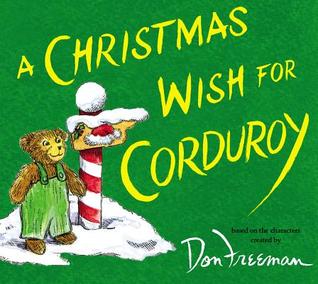
A Christmas Wish for Corduroy
Author: B.G. Hennessy
Based on the characters created by Don Freeman
Illustrator: Jody Wheeler
Published October 21st, 2014 by Viking Juvenile

Goodreads Summary: Before he met Lisa, Corduroy was just a little bear in the toy department of a big store, waiting for somebody to take him home.

It’s almost Christmas and Corduroy wishes he could be a child’s holiday gift—but he’s a plain bear, and nobody seems to notice him. He sets out across the store to ask Santa Claus for help, but he can’t visit without wearing a special outfit! After stopping to try on hats, boots, and even baby clothes, Corduroy finally arrives at the North Pole. Can Santa help Corduroy find a new home in time for Christmas?

With warm humor and classic art, A Christmas Wish for Corduroy takes readers back to the beginning and shows how Corduroy became the beloved bear we know today. This is a heartwarming story about the power of hope, perseverance, and friendship–an important addition to any Corduroy collection.

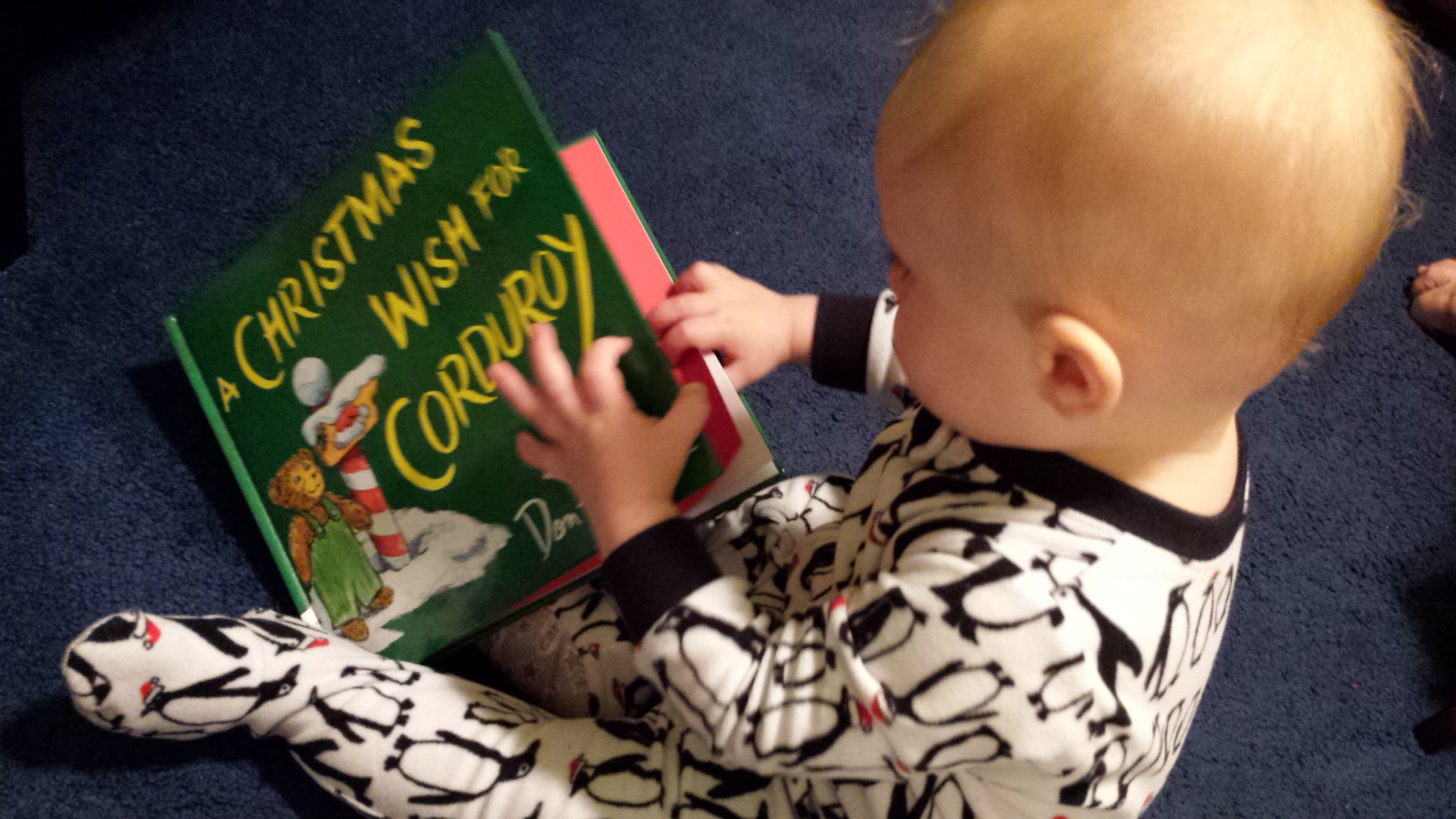
My Review: This prequel to Corduroy is a perfect Christmas story. It takes the Corduroy story and added a perfect amount of holiday flare. In the story you learn how Corduroy gets his famous overalls and how he gets his famous name. There are even some quite funny parts. I really enjoyed reading it to Trent. The colorful photos really held his attention, and he especially loved his new Corduroy stuffed animal (he held him through the whole reading and was even giving him kisses!). I know that this will become a book we read every year.

20141222_book 235 12-22-14h 20141222_book 235 12-22-14g 20141222_book 235 12-22-14c (1)

20141222_book 235 12-22-14b 20141222_book 235 12-22-14f 20141222_book 235 12-22-14d

Teachers’ Tools for Navigation: Primarily, this book will be a wonderful read aloud; however, after reading, it would be fun to have students write their own stories of how Corduroy got his name and overalls (or they could write a prequel to a different picture book classic).

Discussion Questions: Do you think Santa helped Corduroy get his wish?; If you were the clerk, how would you think that Corduroy got to Santa’s chair?; If you were in the toy store, which toy would you have chosen?

We Flagged: “One December afternoon, a toy bear in a big store was just waking up when he heard a mohter asking a boy, “Have you decided what you would like for Christmas yet?” The bear sat taller and perked up his ears. Maybe this boy wanted a bear! But the boy zipped right by him and pointed to a bright red, shiny fire engine. “I’m going to ask Santa for a fire truck with a big ladder and a bell!” the boy said. The bear watched sadly as the boy walked away.” (p. 1-3)

Read This If You Loved: Corduroy by Don Freeman, Christmas picture books

Recommended For: 

readaloudbuttonsmall

Happy holidays to you and yours!!!

Signature

**Thank you to Penguin for providing a copy for review!**

Author Guest Post, Giveaway, and Blog Hop!: “How Research Transformed The Wolf Chronicles” by Dorothy Hearst, Author of The Wolf Chronicles

Share

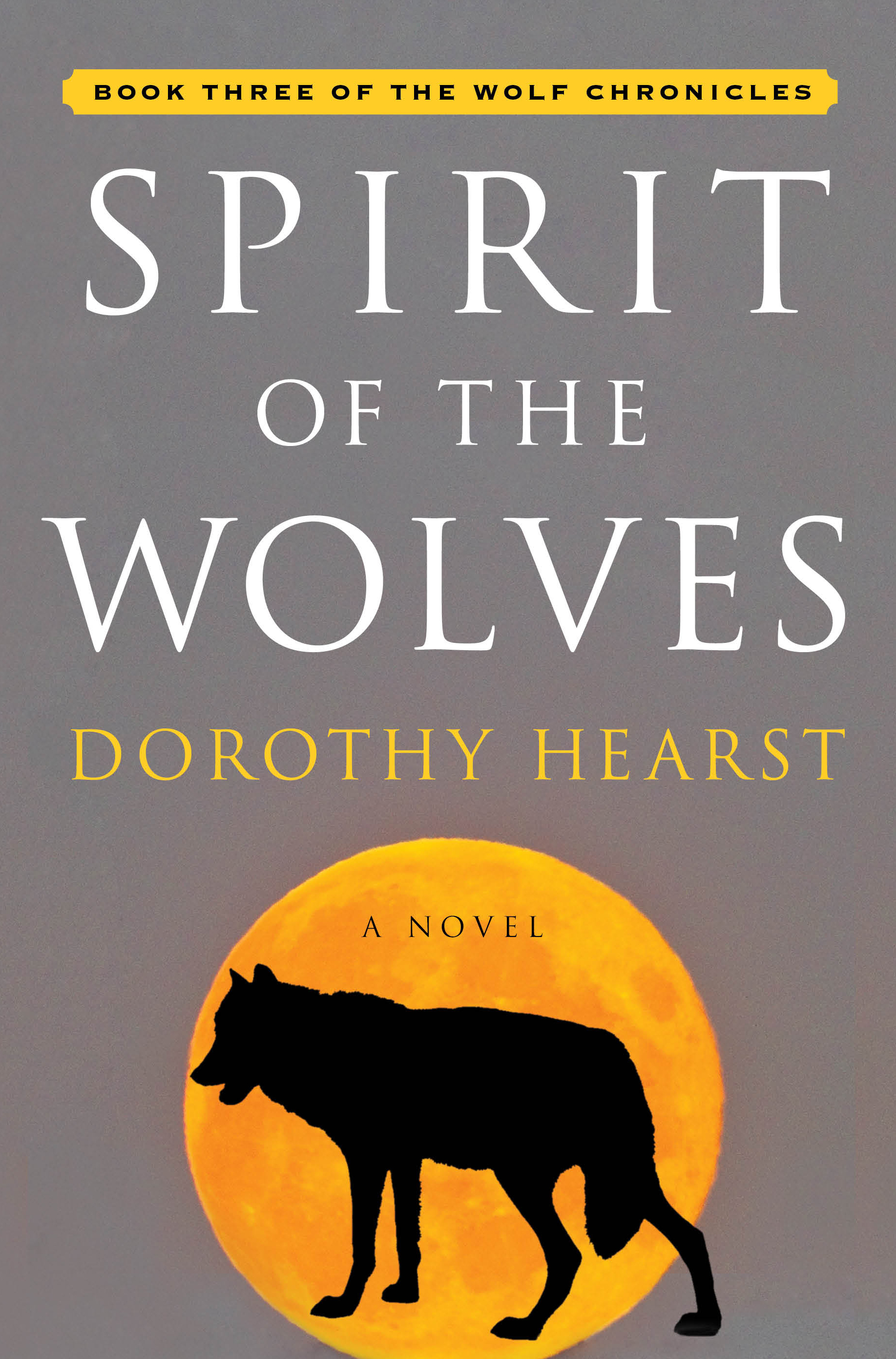
Promise of the Wolves cover Secrets of the Wolves cover Spirit of the Wolves cover

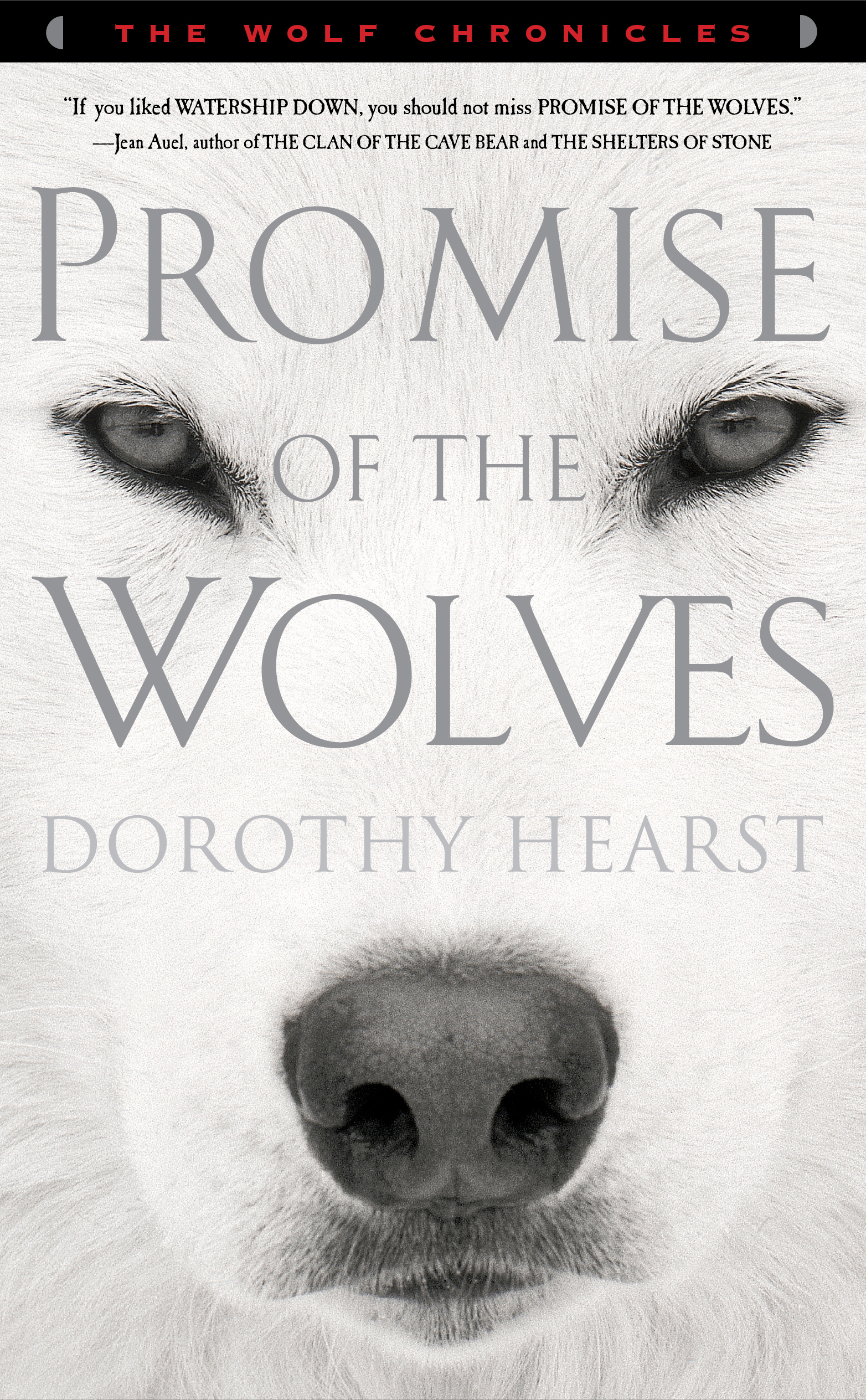
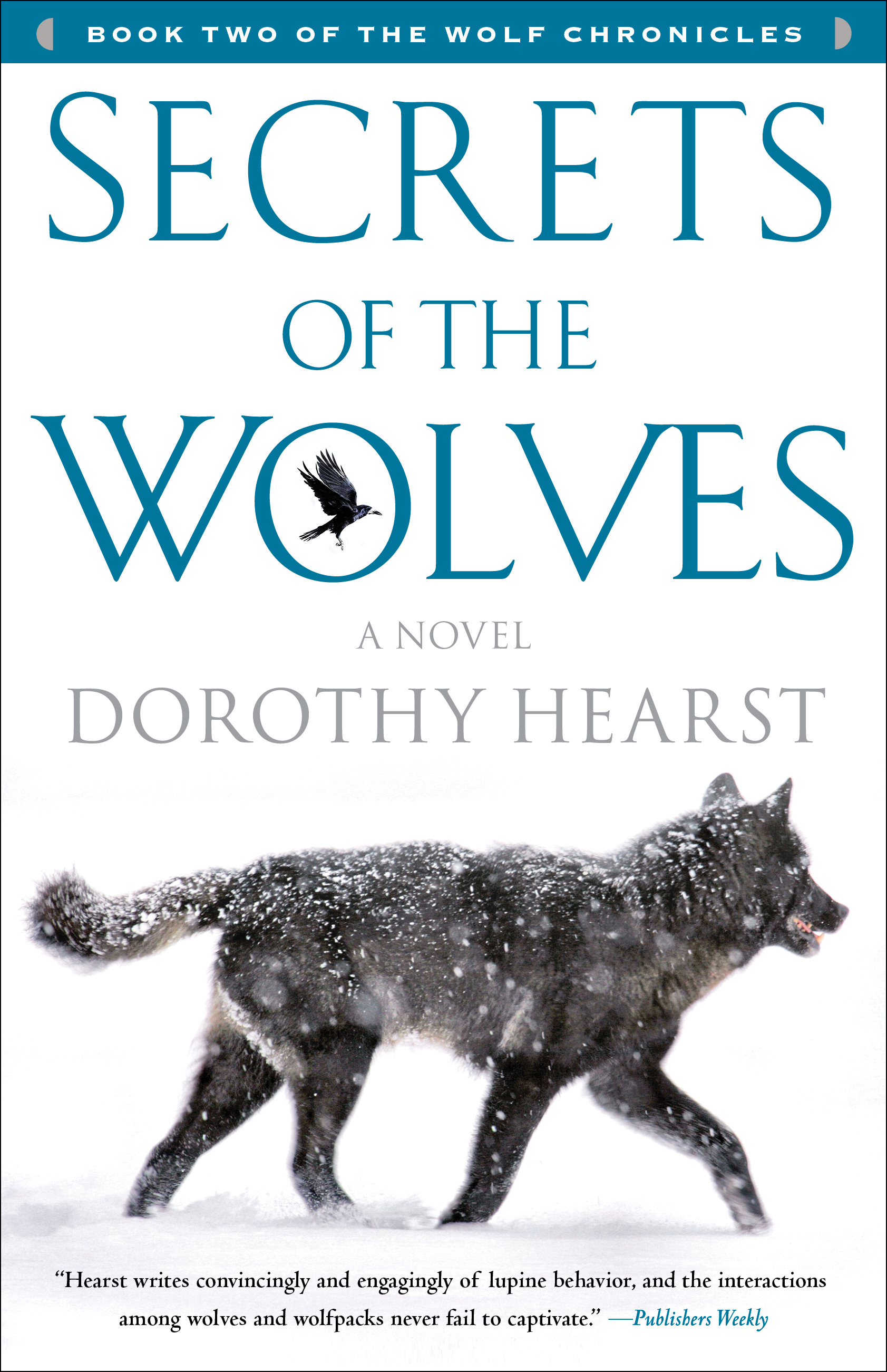
Series Synopsis: Inspired by the theory that it was wolves, and later dogs, that made humans the dominant species on earth by teaching mankind to hunt cooperatively and form complex societies, The Wolf Chronicles begins 14,000 years ago with PROMISE OF THE WOLVES. It is engagingly told from the point of view of lovable Kaala—an outcast young wolf who has been charged with watching over humans in order to prevent them from losing touch with nature and thus destroying the world.

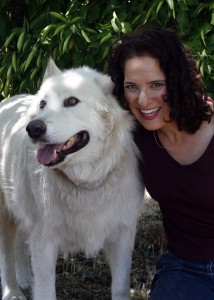
Dorothy Hearst_214x300_credit ThePetPhotographer.com

About the Author: Before the wolves barged in the door, demanding that their story be told, Dorothy Hearst was a senior editor at Jossey-Bass, where she published books for nonprofit, public, and social change leaders. She currently lives, writes, and plays with dogs in Berkeley, California.Spirit of the Wolves, the third and final title in the Wolf Chronicles, will be released December 2. For more information, and to download free CCSS-aligned discussion questions for all three novels, visit her website: dorothyhearst.com

“How Research Transformed The Wolf Chronicles”

When I got the idea to write novels about how the wolf became the dog from the wolf’s point of view, I knew that I had a lot of research ahead of me. And I balked. I’d never been any good at research.

But wolves can’t type, and they wanted their story told, so I hunkered down and got started.

It turned out that research was one of the best parts of the writing process. I snow-shoed in Yellowstone, chased huskies in the French Alps, spent hours in wonderful public and university libraries, and walked through a cave where someone had stood 14,000 years ago, painting a bison.

But what surprised me most was how research shaped my story. It profoundly changed The Wolf Chronicles in several ways:

It changed my wolves:

Like many people, I used to think that wolves were vicious animals that fought all the time and were very different from us. Books like Richard Busch’s Wolf Almanac showed me that wolves are actually highly social animals that rarely fight. Then I read up on prehistoric cultures, and learned that our ancestors and wolves lived surprisingly similar lives. This changed all the interactions between wolf and human characters, and made Kaala and her pack much more complex.

It deepened the story:

Early in my research, I learned about wolf-human coevolution, the theory that wolves and dogs may have greatly influenced our evolution. good lThen, Barry Lopez’s Of Wolves and Men showed me that wolves have long been emblematic of very different views of nature. This research made Kaala’s story more than the tale of a young wolf on a quest. It grew to be about our own connection to the natural world, and what that connection means for our future.

It gave me new characters:

While reading up on wolves, I learned that wolves and ravens often play together, so I decided to write just one scene with ravens in it. The raven Tlitoo decided he wanted a bigger part in the book, and became a major character. While on a trip to Yellowstone to watch wolves, I was awoken by a herd of elk bellowing outside my window. Ranor the elkryn marched into the story.

It gave me new scenes

Two scenes in the trilogy are drawn directly from the many documentaries and videos I watched. In Promise of the Wolves, Kaala and Ázzuen struggle to cross a great plain. This is from a video about wild dogs. The filmmakers actually rescued a pup who fell behind (I write about it here) which they weren’t supposed to do. A scene in which Kaala steals from sabre-toothed cat cub is based on a video of a young wolf playing with a young bear until Mama bear got annoyed.

In the end, research enriched The Wolf Chronicles in ways I never could have imagined. I am now a dedicated research devotee.

Some Classroom Applications:

I love the idea of the wolves making their way into classrooms. Here are some topics that lope through the books:

  • Animal biology and behavior (wolves, ravens, prey animals)
  • Ecology and the Environment
  • Life in prehistoric times
  • Wolf-Human coevolution—the controversial theory that wolves and dogs directly affected our evolution
  • Mythology: Norse myths, European folktales, Native American tradition as the basis for parts of the story.

The Educators page of my website also has some tools and guidelines for using The Wolf Chronicles in the classroom. You can read more about my research for The Wolf Chronicles at YAReviewNet.

Thanks so much to Unleashing Readers for hosting me!

Giveaway!

a Rafflecopter giveaway

Signature andRickiSig

**Thank you to Barbara from Blue Slip Media for asking us to participate in the blog tour!**

The Lovesick Skunk by Joe Hayes

Share

NF PB 2014

Nonfiction Picture Book Wednesday

Nonfiction Picture Book Wednesday is hosted by Kid Lit Frenzy and was started to help promote the reading of nonfiction texts. Most Wednesdays, we will be participating and will review a nonfiction text (though it may not always be a picture book).
Be sure to visit Kid Lit Frenzy and see what other nonfiction books are shared this week!

skunk

The Lovesick Skunk
Author: Joe Hayes
Illustrator: Antonio Castro L.
Published November 9th, 2010 by Cinco Puntos Press

Goodreads Summary: Joe Hayes must have had a singular growing up in the Arizona desert because he sure loves to write stories about it. And he tells those stories of his so much to audiences all over the United States that it seems like the stories just get more and more fantastic. I bet you’ve already heard the first tall tale he wrote—The Gum-Chewing Rattler—about a rattlesnake who chewed bubblegum. Yes, it’s true. That scary snake even blew huuuuuge bubbles.

Now Joe has written a new story about his early years in Arizona. Joe, the kid, was a creature of habit. If he decided he liked to do something, he would do it over and over again. Like wear the same T-shirt until it nearly fell apart or use the same pencil until he’d sharpened it down to a nub. He also had a pair of black-and-white high-top sneakers that he loved to wear. He wore them every day. “Get rid of those shoes,” his mother told him one morning. “They smell terrible!”

Did Joe listen? Not until he met the back end of a skunk.

And this wasn’t just an ordinary skunk, but one who was lovesick.

But I’m not going to tell you who she was in love with. You’ll have to find that out for yourself.

About the Author: Joe Hayes is one of America’s premier storytellers, a nationally recognized teller of tales—true and tall—from the Hispanic, Native American, and Anglo cultures of the American Southwest.

My Review and Teachers’ Tools for Navigation: The Lovesick Skunk reminds me of a tall-tale or other traditional literature. The way it is told, with a bit of  humor and moral, and even how the book is set up with the whole page illustrations on one page and the text on the other are both reminiscent of traditional tales. I think Hayes’s story is a great introduction to personal narrative about a favorite object as well as writing a story with a moral. It could definitely be used as a mentor text.

Discussion Questions: Do you have anything, like Joe’s shoes, that are your very favorite and if you could wear them every day you would?; Do you think Joe thought about keeping his shoes even after the “Skunk incident?”

We Flagged: 

Read This If You Loved: Family Pictures / Cuadros de Familia by Carmen Lomas Garza and other picture book memoirs

Recommended For: 

readaloudbuttonsmall classroomlibrarybuttonsmall

Signature

**Thank you to John at Cinco Puntos Press for providing a copy for review**

Writing Great Books for Young Adults by Regina L. Brooks

Share

 writing great books for young adults

Writing Great Books for Young Adults
Author: Regina L. Brooks
Published: October 7, 2014 by Sourcebooks

Summary from the Publisher: 

From a top young adult literary agent, the only guide on how to write for young adults.

With an 87 percent increase in the number of young adult titles published in the last two years, the young adult market is one of the healthiest segments in the industry. Despite this fact, surprisingly little has been written to help authors hone their craft and truly connect with the young adult audience.

Writing Great Books for Young Adults gives writers all the advice they need to tap into this incredible and innovative market. Literary agent Regina L. Brooks shows writers how listening to young adults will help them create characters their audience can identify with.

Topics covered include meeting your protagonist, engaging your readers, trying on points of view, and many more.

Review: Regina clearly positions herself as an expert of the field of young adult literature. Her knowledge is very apparent in her tips to writers. Interestingly, I wouldn’t just recommend this book for adults looking to write for young adults. Her tips are very useful for student writers as well. She provides insider advice about the industry and gives step-by-step tips for writers. Beyond being very informative, I was pleased with the fact that this book made me want to drop everything and write! Teachers would find this to be a valuable guide for students with its informative and inspirational writing advice.

Read an Excerpt from the Publisher by Clicking Here!

About the Author: Regina L. Brooks is the founder of Serendipity Literary Agency and has been developing award-winning authors and books for over a decade. She has been highlighted in several national and international magazines and periodicals, including Poets and Writers, Essence, Writer’s Digest, and Sister2Sister,Forbes, Media Bistro, Ebony, and Jet. She lives in New York City.


regina image

 Connect with Regina: @serendipitylit     facebook.com/serendipitylit       serendipitylit.com 

Recommended for:

classroomlibrarybuttonsmall

*Many thanks to Kathryn Lynch and Sourcebooks for providing this book for review.*

RickiSig

Author Guest Post and Giveaway!: The Shadow Lantern, Book 3 of The Blackhope Enigma Trilogy by Teresa Flavin

Share

shadowenigma

The Shadow Lantern
Author: Teresa Flavin
Published July 22nd, 2014 by Candlewick Press

Publisher’s Summary: It’s Halloween at the Blackhope Tower and the spirits are rising… When a mysterious oil lantern and a box of painted slides appear at Blackhope Tower, Sunni and Blaise are drawn back to the place where their adventures first began. When they discover that the slides conceal secrets about artist-magician Fausto Corvo, the pair find themselves once again caught up in a deadly pursuit. An old enemy is still tracking Corvo and will stop at nothing to find him. Sunni and Blaise must fight to protect Corvo’s secrets and rid themselves of Soranzo’s evil threat once and for all.

Sunni and Blaise face their most dangerous challenge yet in their third and final adventure.

The Shadow Lantern is the third book in The Blackhope Enigma trilogy.

Book 1’s Publisher’s Summary: For centuries, Blackhope Tower has been shrouded in intrigue, centering on a labyrinth and painting in the Mariner’s Chamber. When fourteen-year-old Sunni Forrest visits the tower and sees her stepbrother, Dean, disappear, seemingly into the painting itself, she must find him and risk being drawn into the heart of the Blackhope enigma. This action-packed debut follows Dean, Sunni, and her friend Blaise on a journey to the heart of an age-old mystery.

An ancient painting, a magical labyrinth, and skeletons found in a locked room.

Book Trailer: 

Scribd Chapter Sampler: http://www.scribd.com/doc/201971141/The-Shadow-Lantern-Chapter-Sampler

About the Author: Teresa Flavin was born in New York and studied art in Boston and at Syracuse University. After moving to Glasgow, Scotland, she was awarded the Scottish Arts Council New Writers Bursary. She has illustrated a number of picture books. Her first novel, The Blackhope Enigma, was nominated for a Cybil Award. Teresa Flavin lives in Scotland.

Website | Facebook | Twitter | Google+ | Tumblr

Today we are lucky enough to have Teresa here at Unleashing Readers to talk to us about her process:

I’m a planner, pure and simple. Once an idea for a story has taken hold in my head, I make notes, create mind maps and get the bones of it down on paper. At the same time, I don’t want to have every scene mapped out so tightly the story can’t breathe and evolve in an unexpected and interesting way – which it inevitably does!

I look forward to previously unplanned characters showing up on the page wanting a piece of the action. And because I find so much inspiration in history, and do a fair amount of research, I often stumble on a nugget of information that can move my story in exciting and serendipitous ways. For example, when I learned that the development of some artists’ paint pigments was tied up with alchemy, I saw what a great element it could bring to the second story in the trilogy, The Crimson Shard.

Before I get too far with a new story I share a short synopsis with my agent because she’s great at asking tough questions that test the bones of my idea. I revise that synopsis until we both consider it viable, knowing that the story will change a lot. When I look back over old versions of my synopses I am astonished at how much the stories evolved before I even started writing them.

Once I know roughly where a story is going, I write it from start to finish. I am not good at skipping around and writing scenes out of order. That would feel like fast-forwarding the film and missing important links in the middle. I admire authors who can work in a non-linear way but I prefer my own method. I like how a story unfolds, how one scene influences the next.

If I’m on a deadline, I write to a daily word count, breaking the story down into manageable chunks. Some days are definitely more productive than others! I revise my finished manuscript at least two or three times on the recommendations of my editors. I am infinitely grateful to all of them because they read with clarity when I am too close to the story. Though I am the writer, I see my books as team efforts, with my editors inspiring me to make the best story I can.

People often ask me whether I read other children’s books while I’m writing my own and what books influenced my trilogy. I tend to avoid reading children’s fiction while I am creating my own, but I do read adult non-fiction such as history books. If I read any fiction, it’s for grown-ups and generally quite different from the kind of fantasy books I write.

Before I started writing for young people, I read very little children’s or young adult fiction. I think that my writing is probably influenced most by the books I enjoyed as a kid, from The Chronicles of Narnia to Sherlock Holmes to Ray Bradbury stories like The Illustrated Man. If it was a colorful, atmospheric adventure, I was hooked. If my own trilogy can intrigue young readers as fully as any of the books I loved, my mission is accomplished.

Many thanks to Unleashing Readers for hosting me!

And thank you Teresa! We loved hearing about your process!

GIVEAWAY

a Rafflecopter giveaway

Thank you so much to Teresa Flavin and Candlewick Press for the guest post and giveaway!

Signature