Landscape with Invisible Hand by M. T. Anderson

Share

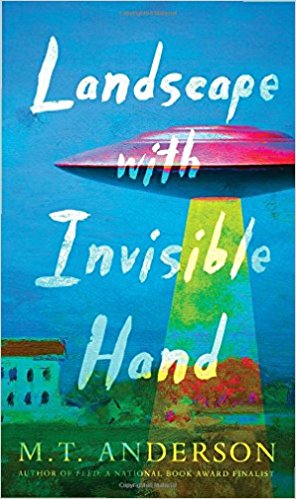
Landscape with Invisible Hand
Author: M. T. Anderson
Published: September 12, 2017 by Candlewick

Summary: National Book Award winner M. T. Anderson returns to future Earth in a sharply wrought satire of art and truth in the midst of colonization.

When the vuvv first landed, it came as a surprise to aspiring artist Adam and the rest of planet Earth – but not necessarily an unwelcome one. Can it really be called an invasion when the vuvv generously offered free advanced technology and cures for every illness imaginable? As it turns out, yes. With his parents’ jobs replaced by alien tech and no money for food, clean water, or the vuvv’s miraculous medicine, Adam and his girlfriend, Chloe, have to get creative to survive. And since the vuvv crave anything they deem “classic” Earth culture (doo-wop music, still-life paintings of fruit, true love), recording 1950s-style dates for the vuvv to watch in a pay-per-minute format seems like a brilliant idea. But it’s hard for Adam and Chloe to sell true love when they hate each other more with every passing episode. Soon enough, Adam must decide how far he’s willing to go – and what he’s willing to sacrifice – to give the vuvv what they want.

Review: 

  • Futuristic, dark satire that is an unusual, intelligent social commentary
  • Forces readers to think deeply about their personal, social, and political lives
  • Somewhat non-linear story with an interesting layout: each chapter has a title that corresponds with the artwork created by the main character
  • Stylistically, Anderson chooses every word with intention. The text is a 149-page novella that features chapters that can be taught instructionally as vignettes.

Teachers’ Tools for Navigation:  Teachers might ask students to begin by looking closely at the text for short passages that they find particularly interesting or inspiring. Students might write a one-pager that a) unpacks the passage they chose, and b) examines the passage through the lens of a topic that they find particularly interesting and relevant. For example, they might connect a passage to the following topics which are relevant in the text:

Art

Automation

Capitalism

Classism

Economy

Entrepreneurship

Existentialism

Extraterrestrial Life

Health Care

Immigration

Love

Politics

Poverty

Sickness

Nostalgia

Unemployment

After the students have written several one-pagers and explored a variety of topics, they might select one topic that interests them most. They can research scholarship about the topic and look across the entire text for relevant passages.

Sample research paper topics:

Examining economic disparities and classism within Landscape with Invisible Hand

Finding the soul: M.T. Anderson’s treatment of love and art in Landscape with Invisible Hand

Discussion Questions: Do you think M. T. Anderson had a purpose for writing this text?; What kind of social commentary does this text offer?; What does it tell us about love? Society? Humanity?; How does Anderson use art to enhance the story?; How is the text structured? How does this enhance your reading?

Flagged Passage: “We are tiny figures, faceless, pointing at wonders, provided for scale, no lives of our own, surveying the landscape that has engulfed us all.”

Read This If You Loved: Feed by M. T. Anderson; Books by Scott Westerfeld; The House of the Scorpion by Nancy Farmer

Recommended For:
 classroomlibrarybuttonsmall

Thank you, Candlewick!

RickiSig

Snow White: A Graphic Novel by Matt Phelan

Share

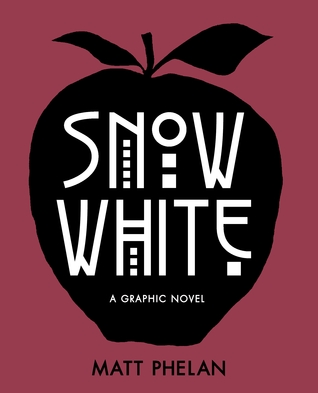
Snow White: A Graphic Novel
Author: Matt Phelan
Published: September 21, 2016 by Candlewick

A Guest Review by Emily Baseler

GoodReads Summary: Award-winning graphic novelist Matt Phelan delivers a darkly stylized noir Snow White set against the backdrop of Depression-era Manhattan.

The scene: New York City, 1928. The dazzling lights cast shadows that grow ever darker as the glitzy prosperity of the Roaring Twenties screeches to a halt. Enter a cast of familiar characters: a young girl, Samantha White, returning after being sent away by her cruel stepmother, the Queen of the Follies, years earlier; her father, the King of Wall Street, who survives the stock market crash only to suffer a strange and sudden death; seven street urchins, brave protectors for a girl as pure as snow; and a mysterious stock ticker that holds the stepmother in its thrall, churning out ticker tape imprinted with the wicked words “Another . . . More Beautiful . . . KILL.” In a moody, cinematic new telling of a beloved fairy tale, extraordinary graphic novelist Matt Phelan captures the essence of classic film noir on the page—and draws a striking distinction between good and evil.

Review: Matt Phelan reinvented the “happily ever after” with this retelling. I identify as a Disney Classic enthusiast but I was pleasantly surprised with the ending. The illustrations are gorgeous with distinct intentionality. More mature themes such as death, assassination, murder were evaluated within a historical context to create an incredible murder mystery story at the level of a middle grade reader.

Teachers’ Tools for Navigation: This would be an excellent text to hand a more reluctant reader. There is limited text the reader is asked to interpret the illustrations and structure. In literature groups, students could potentially discuss the use of metaphor, oenomania, author/illustrator’s choice, and compare/ contrast the original fairytale with the retelling. This is also a text I would recommend to a student who has shown an interest in the graphic novel genre to read independently.

Discussion Questions: Why do you think the author choose to use red in selected illustrations? How did this choice influence you as a reader?; Why do you think the author choose to break apart the chapters this way?; Even though there were few words, how did you interpret the mood, tone, and voice of characters?; Did you find yourself needing to interpret the illustrations to understand the plot? What was that experience like for you as a reader?; How is this retelling of the classic fairy tale of “Snow White” different than the original? What did you notice is similar?

Flagged Passage: “My name is Snow White, but my mother didn’t call be that to be funny. She would say that the snow covers everything and makes the entire world beautiful” (Ch. 10)

Book Trailer: 

Read This If You Loved: Red: The True Story of Red Riding Hood by Liesl Shurtliff, Jack: The True Story of Jack and the Beanstalk by Liesl Shurtliff, Rump: The True Story of Rumpelstiltskin by Liesl Shurtliff

Recommended For:
 classroomlibrarybuttonsmall

Thank you, Emily!

RickiSig

The Dark by Lemony Snicket

Share

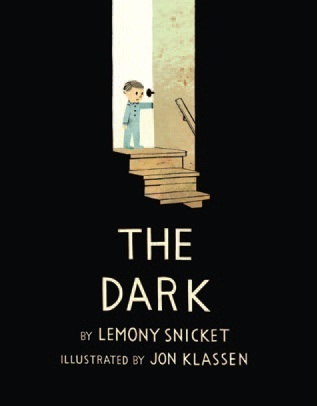
The Dark
Author: Lemony Snicket
Illustrator: Jon Klassen
Published April 2, 2013 by Little, Brown

Guest Post by: Nichole Pitruzzello

Summary: Laszlo is afraid of the dark. But is the dark afraid of Laszlo? They live in the same house, with the same creaky roof, smooth, cold windows, and several sets of stairs. But the dark mostly stays in the basement…until one night, when it doesn’t. Laszlo walks through his house, as the dark converses with him, on a journey to overcome his fear.

Review: In his unique writing style, Lemony Snicket takes an eerie childhood fear and personifies the dark in a soothing way. John Klassen’s illustrations are a wonderful compliment to the story of Laszlo, using black space and warm colors to enhance the mood. I’m very impressed by the way they take a concept that many children fear, and transform it into a friendly, calming presence. I cannot wait to add this book to my library!

Teachers’ Tools for Navigation: Teachers can use this book as a mentor text for a variety of mini lessons. Lemony Snicket personifies the dark, uses vivid language to talk about Laszlo’s house, and creates suspense through a blend of dialogue and narration. In addition, it’s an excellent book to teach a lesson about overcoming one’s fears. There’s so much that this book can add to a classroom!

Discussion Questions: What are some places that you are scared of, and why are they scary? Was the dark really scary? How did the dark help Laszlo? Why shouldn’t we be afraid of the dark? What should we do when we are afraid of something?

Book Trailer: 

Read This If You Loved: Go Away, Big Green Monster by Ed Emberly, Singing Away the Dark by Caroline Woodward, 13 Words by Lemony Snicket

Recommended For:

   classroomlibrarybuttonsmall

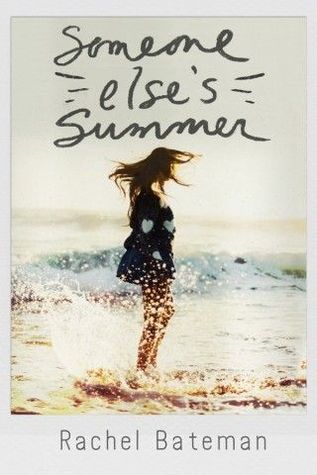
Someone Else’s Summer by Rachel Bateman

Share

Someone Else’s Summer
Author: Rachel Bateman
Published May 9th, 2017 by Running Press Kids

Summary: Anna’s always idolized her older sister, Storm. So when Storm dies in a tragic car accident on the night of her high school graduation, Anna is completely lost and her family is torn apart. That is, until she finds Storm’s summer bucket list and decides to honor her sister by having the best summer ever—which includes taking an epic road trip to the coast from her sleepy Iowa town. Setting out to do everything on Storm’s list along with her sisters best friend Cameron—the boy next door—who knew that Storm’s dream summer would eventually lead to Anna’s own self-discovery?

Review: I am a sucker for road trip books. I just love them so much, and a good road trip book to me is like the perfect book to read–especially if I am in a rut. Someone Else’s Summer is a really good road trip book. It has everything you expect: searching for identity, mishaps, high jinx, romance, and unexpected twists and turns; however, Someone Else’s Summer is not predictable or like any other road trip book. It has all the feelings of comfort with new adventures, characters, and conflicts. 

Storm was the opposite of Anna, but she was Anna’s very best friend, no matter how much they’d grown apart in high school, so when Storm dies, Anna knows she has to do something to honor her friendship with her sister, and it had to be something like what they did as kids. One of the things Storm liked to do was make to-do lists; however, her very last one is one that Storm will never be able to finish–so Anna decides she needs to. And it is only right that Storm’s best friend and the boy next door, Cameron, accompanies her. 

Teachers’ Tools for Navigation: There are readers out there that need this book. They may be dealing with grief or struggling with their identity in high school or making a transition between friends. They’ll need Anna’s story. There are other readers out there that will want this book. They may love romance or road trips or sad books. They’ll want Anna’s story. This book has a home in classrooms and libraries where these readers can find it.

Discussion Questions: Why do you think Anna felt she needed to finish Storm’s to do list?; Did the ending surprise you? Was there any foreshadowing to the reveal at the end?; How did you feel about Anna’s friend’s reactions to Anna’s choice? Did Anna deal with the situation well? Why do you think she changed so quickly?

Flagged Passages: “Hours later, the rain still pattered a steady rhythm on the roof as a shrill ring pulled me from sleep. Mom and Dad insisted on keeping a landline with receivers throughout the house, even though we rarely use it. The ancient, corded phone blaring just outside of my bedroom door should have been my first indication something was wrong; I should have known right away. That’s the way it always happens in the movies–there’s intuition, a feeling deep in the gut. I had none of that, just a mild irritation at whoever was calling. And the constant, insistent rain.

Then my world ended with Mom’s ear-breaking scream.”

Read This If You Loved: Last True Love Story by Brendan Kiely; Perfect Escape by Jennifer Brown; The Great American Whatever by Tim Federle; Jess, Chunk, and the Road to Infinity by Kristin Elizabeth Clark; The Beginning of Everything by Robyn Schneider; Cadillac Chronicles by Brett Hartman

Recommended For:

classroomlibrarybuttonsmall

**Thank you to Valerie at Running Press for providing a copy for review!**

Because of Mr. Terupt by Rob Buyea

Share

Because of Mr. Terupt
Author: Rob Buyea
Published October 12, 2010 by Delacorte

A Guest Review by Julia Kipphut

Summary: Mr. Terupt’s fifth grade class at Snow Hill School is comprised of various types of students, some including: a new student, a popular girl, a bully, and a troublemaker. Their teacher, Mr. Terupt who is passionate and energetic, strives to engage his students and instill a sense of community amongst his class. Unfortunately, one day, a snowball fight goes awry and leaves Mr. Terupt in a coma. His class is rattled and must learn to work together, be kind, and hope for Mr. Terupt’s recovery.

Review: This book includes a variety of characters, each owning their own identity and personality. Each chapter is written from a different character’s perspective, making for a fluid and interesting read. They are relatable for children and allow them to recognize themselves in each character. Each character evolves in the story and shows tremendous growth, proving the rich development of the people in this book. The message of community and forgiveness is nicely intertwined in the story and proves that it is always better to choose kindness. The theme of this book is positive and motivational. 

Teachers’ Tools for Navigation: Because of Mr. Terupt serves as a great reader aloud for upper elementary school students. 4th and 5th graders who are struggling with their identity and place in a classroom community can learn the importance of compassion. Students can learn to embrace individual differences for a common goal or outcome, mirroring the characters in this book. Additionally, this book allows students to study character development throughout the story; each character evolves- allowing for effective classroom discussion.

Because of each character of this book is written from a different character’s perspective, students are able to study point of view and consider the influence each chapter has on the story as a whole. Students are able to learn about each character in depth and can even use literature circles to each study a character for analysis.

Discussion Questions: How might the story be different if the snowball accident did not happen?; What do you think the author’s purpose or message was for this story?; Why do you think the author chose to write this story from different characters points of views? Do you think this was effective?

Book Trailer: 

Read This If You Loved: Out of My Mind by Sharon Draper; Wonder by R. J. Palacio

Recommended For:

  litcirclesbuttonsmall  classroomlibrarybuttonsmall

Thank you, Julia!

RickiSig

Enter Title Here by Rahul Kanakia

Share

entertitlehere-rahulkanakia

Enter Title Here
Author: Rahul Kanakia
Published: August 2, 2016 by Disney-Hyperion

Summary: I’m your protagonist—Reshma Kapoor—and if you have the free time to read this book, then you’re probably nothing like me.

Reshma is a college counselor’s dream. She’s the top-ranked senior at her ultra-competitive Silicon Valley high school, with a spotless academic record and a long roster of extracurriculars. But there are plenty of perfect students in the country, and if Reshma wants to get into Stanford, and into med school after that, she needs the hook to beat them all.

What’s a habitual over-achiever to do? Land herself a literary agent, of course. Which is exactly what Reshma does after agent Linda Montrose spots an article she wrote for Huffington Post. Linda wants to represent Reshma, and, with her new agent’s help scoring a book deal, Reshma knows she’ll finally have the key to Stanford.

But she’s convinced no one would want to read a novel about a study machine like her. To make herself a more relatable protagonist, she must start doing all the regular American girl stuff she normally ignores. For starters, she has to make a friend, then get a boyfriend. And she’s already planned the perfect ending: after struggling for three hundred pages with her own perfectionism, Reshma will learn that meaningful relationships can be more important than success—a character arc librarians and critics alike will enjoy.

Of course, even with a mastermind like Reshma in charge, things can’t always go as planned. And when the valedictorian spot begins to slip from her grasp, she’ll have to decide just how far she’ll go for that satisfying ending. (Note: It’s pretty far.)

My Review: Whew! I really enjoyed this book! Rahul Kanakia really nails the pressure that overachievers experience. I was reminded of myself a bit. Reshma is willing to do anything to maintain her valedictorian status, and she takes things a bit too far. She is such an unlikeable character that I found her to be quite likable. I notice the GoodReads ratings of this book are high (a 3.58 average) but not incredibly high, and I laughed. Books with unlikable characters are always unfairly low in their ratings. When I put this book down, I felt like I’d learned a lot. Reshma feels like a real person because she makes some major mistakes. She is an anti-hero. I had difficulty putting the book down because I wanted to see how far she would go, and it made me cringe a bit. This book evoked a visceral reaction out of me!

Teachers’ Tools for Navigation: I would love to teach this book because it would evoke some excellent classroom discussions. Reshma represents the ugly side of many people, and I think that readers will have strong reactions to her selfishness. I’d particularly like to dive into her relationship with her mother. Readers could discuss family histories and how these may influence our decisions and our concepts of self.

This book is a great way to introduce metafiction. It would be very interesting to tease apart how the plot relates to the narrator’s book.

Discussion Questions: How do Reshma’s parents differ? How do they influence her decisions? What impact do they have on her as a person?; Does Reshma go too far? What are the consequences? Would you have gone as far as she did?; Why might the author have chosen to write the book as if Reshma was writing it? How does this impact your reading of the text?

Flagged Passage: “The thing no one understands about me is that sometimes, once in a while, I get this feeling like I can do anything, and that feeling is so rare and so beautiful that it’s really hard not to simply surrender to it.”

Read This Book If You Loved: The Secret Side of Empty by Maria E. Andreu; I Crawl Through It by A.S. King


Recommended For: 

classroomlibrarybuttonsmall litcirclesbuttonsmall

  RickiSig

The Sun is Also a Star by Nicola Yoon

Share

the sun is also a star

The Sun Is Also a Star
Author: Nicola Yoon
Published: November 1, 2016 by Delacorte

Summary: Natasha: I’m a girl who believes in science and facts. Not fate. Not destiny. Or dreams that will never come true. I’m definitely not the kind of girl who meets a cute boy on a crowded New York City street and falls in love with him. Not when my family is twelve hours away from being deported to Jamaica. Falling in love with him won’t be my story.

Daniel: I’ve always been the good son, the good student, living up to my parents’ high expectations. Never the poet. Or the dreamer. But when I see her, I forget about all that. Something about Natasha makes me think that fate has something much more extraordinary in store—for both of us.

The Universe: Every moment in our lives has brought us to this single moment. A million futures lie before us. Which one will come true?

My Review: This book shines brightly. It is more than a love story. The description of the text doesn’t quite do it justice. While reading Nicola Yoon’s words, I thought of politics, I thought of the universe, I thought of science, and I thought of culture. Natasha and Daniel have a lot of baggage, and their family histories have formed who they are. Both are strong characters who want to be better than some of the mistakes their family members have made. I appreciated the depth of this text.

Teachers’ Tools for Navigation: I love talking about immigration in the classroom because it is a great opportunity for powerful discussions. I would love to talk about Natasha’s situation and students’ opinions about it. This might allow students an opportunity to look at immigration laws and how they impact others.

Throughout the text, Yoon provides snippets of other characters’ lives. These snippets impact the narrators, and it would be interesting to discuss how each snipped changes the way we read the story.

Discussion Questions: Is Natasha’s father entirely wrong in his approach to life? Can you find some redemption in his poor decisions?; Do you believe in fate? How can we tie this story to science?; Does Natasha’s family deserve to go home? Do you think they should be allowed to stay in the United States of America?; What role does Daniel’s father play in the development of the story?

Flagged Passage: “There’s a Japanese phrase that I like: koi no yokan. It doesn’t mean love at first sight. It’s closer to love at second sight. It’s the feeling when you meet someone that you’re going to fall in love with them. Maybe you don’t love them right away, but it’s inevitable that you will.”

Read This Book If You Loved: Everything, Everything by Nicola Yoon; Eleanor and Park by Rainbow Rowell; The Secret Side of Empty by Maria E. Andreu


Recommended For: 

classroomlibrarybuttonsmall litcirclesbuttonsmall

  RickiSig