The Poet X by Elizabeth Acevedo

Share

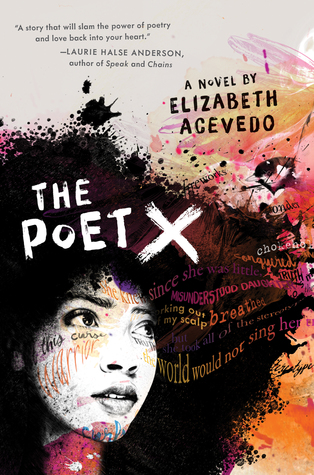
The Poet X
Author: Elizabeth Acevedo
Published March 6th, 2018 by HarperTeen

Summary: A young girl in Harlem discovers slam poetry as a way to understand her mother’s religion and her own relationship to the world. Debut novel of renowned slam poet Elizabeth Acevedo.

Xiomara Batista feels unheard and unable to hide in her Harlem neighborhood. Ever since her body grew into curves, she has learned to let her fists and her fierceness do the talking.

But Xiomara has plenty she wants to say, and she pours all her frustration and passion onto the pages of a leather notebook, reciting the words to herself like prayers—especially after she catches feelings for a boy in her bio class named Aman, who her family can never know about. With Mami’s determination to force her daughter to obey the laws of the church, Xiomara understands that her thoughts are best kept to herself.

So when she is invited to join her school’s slam poetry club, she doesn’t know how she could ever attend without her mami finding out, much less speak her words out loud. But still, she can’t stop thinking about performing her poems.

Because in the face of a world that may not want to hear her, Xiomara refuses to be silent.

About the Author: Elizabeth Acevedo is the youngest child and only daughter of Dominican immigrants. She holds a BA in Performing Arts from the George Washington University and an MFA in Creative Writing from the University of Maryland. With over fourteen years of performance poetry experience, Acevedo is a National Poetry Slam Champion, Cave Canem Fellow, CantoMundo Fellow, and participant of the Callaloo Writer’s Workshop. She has two collections of poetry, Beastgirl & Other Origin Myths (YesYes Books, 2016) and winner of the 2016 Berkshire Prize, Medusa Reads La Negra’s Palm (Tupelo Press, forthcoming). The Poet X is her debut novel. She lives with her partner in Washington, DC

Praise:

  • National Book Award
  • Pura Belpré Award
  • Michael L. Printz Award
  • Golden Kite Award Honor Book

★ “Themes as diverse as growing up first-generation American, Latinx culture, sizeism, music, burgeoning sexuality, and the power of the written and spoken word are all explored with nuance. Poignant and real, beautiful and intense.”– Kirkus Reviews (starred review)

★ “Debut novelist Acevedo’s free verse gives Xiomara’s coming-of-age story an undeniable pull, its emotionally charged bluntness reflecting her determination and strength. At its heart, this is a complex and sometimes painful exploration of love in its many forms, with Xiomara’s growing love for herself reigning supreme.”– Publishers Weekly (starred review)

★ “In nearly every poem, there is at least one universal truth about adolescence, family, gender, race, religion, or sexuality that will have readers either nodding in grateful acknowledgment or blinking away tears.”– Horn Book (starred review)

★ “The Poet X is beautiful and true—a splendid debut.”– Shelf Awareness (starred review)

★ “Acevedo’s poetry is skillfully and gorgeously crafted, each verse can be savored on its own, but together they create a portrait of a young poet sure to resonate with readers long after the book’s end.”– School Library Journal (starred review)

“Crackles with energy and snaps with authenticity and voice.” —Justina Ireland, author of Dread Nation

“An incredibly potent debut.” —Jason Reynolds, author of the National Book Award Finalist Ghost

“Acevedo has amplified the voices of girls en el barrio who are equal parts goddess, saint, warrior, and hero.” —Ibi Zoboi, author of American Street

Kellee’s Review: I am not a rereader. Once I know a story, very rarely do I feel the need to revisit it; however, with The Poet X, I didn’t want to stop reading and listening to her words. As soon as I finished reading it, I found the audiobook so I could listen to it. The power of the words do not diminish with rereading, instead they scream from the pages into the reader’s hearts and minds with each read. I even plan on rereading it again because now that I know the story, I want to dive into the beautiful poetry.

With her story, Elizabeth Acevedo took me back to high school–she was talking to me. Actually, she is talking to so many: Girls who are trying to figure out their body and sexuality, Kids who are questioning religion, Families who are struggling with change,  Students who are learning to find their voice, and So many people out there that need these words. 

Ricki’s Review: I haven’t been able to stop recommending this book. I’ve even bought it for a few people! I’ve read this book twice, and I find new beauty in different elements each time that I read it. The writing is so captivating that I’d really love to see it as a movie or performed on a stage. Elizabeth Acevedo is known for her slam poetry performances, and she definitely won’t disappoint her followers in this one. 

As Kellee noted, the themes are richly realized and offer much conversation for readers. It would make a wonderful book club selection. Each character has great depth, and I imagined them to be friends. I suspect many of the readers of this blog have read this book, but if you haven’t, drop everything and read it. I promise you won’t be disappointed.

Discussion Questions: 

  • How did one teacher change the course of Xiomara’s existence?
  • How are Xiomara and her mother alike in their passions?
  • How does Father Sean support Xiomara in her search for her personal identity?
  • Aman shows Xiomara that her body is not the only thing that speaks to boys. How does he show her that she is more than other men have made her feel?

Example Discussion Questions from the Publisher-Provided Educator’s Guide:

  • How does Xiomara reckon with her own silence? Have you ever felt silenced? Why or why not?
  • How does Xiomara’s relationship with writing change her relationship with her mother over the course of the novel? Why do you think writing affects her relationship with her mother? What about church and spirituality–how does X compare and contrast religion (prayer) and poetry?
  • What is it about writing that makes Xiomara feel brave?

Example Creative Writing Prompts from the Publisher-Provided Educator’s Guide:

  • List the five senses. Read the poem “Names.” What do you know about your name? How is your name a sound? A smell? A touch?
  • Read Xiomara’s responses to Ms. Galiano’s writing assignment “When was the last time you felt free?” Write your own response to Ms. Galiano’s question.

Flagged Passages: 

  • I only know that learning to believe in the power of my own words has been the most freeing experience of my life. It has brought me the most light. And isn’t that what a poem is? A lantern glowing in the dark.
  • My brother was born a soft whistle:
    quiet, barely stirring the air, a gentle sound.
    But I was born all the hurricane he needed
    to lift – and drop- those that hurt him to the ground.
  • Just because your father’s present, doesn’t mean he isn’t absent.
  • While I watch her hands, and face,
    feeling like she’s talking directly to me.
    She’s saying the thoughts I didn’t know anyone else had.

    We’re different, this poet and I. In looks, in body,
    in background. But I don’t feel so different
    when I listen to her. I feel heard.

“Music for A” from The Poet X, Live Performance by Elizabeth Acevedo: 

Audio Exceprt also found at: https://www.harpercollins.com/9780062662804/the-poet-x/

Read This If You Love: Meg Medina, Jacqueline Woodson, Jason Reynolds, Sandra Cisneros, Guadalupe Garcia McCall, Solo by Kwame Alexander, Open Riffs edited by Mitali Perkins, Bronx Masquerade by Nikki Grimes, What Girls Are Made Of by Elana K. Arnold, American Street by Ibi Zoboi, Water in May by Ismée Amiel Williams

Recommended For: 

classroomlibrarybuttonsmall   

Signatureand 

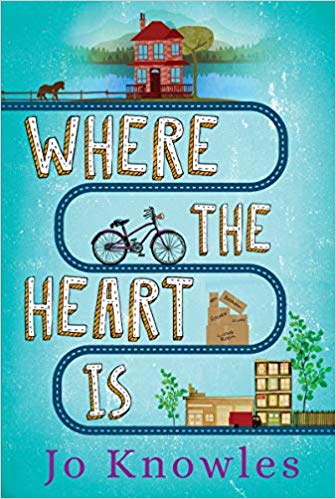
Where the Heart Is by Jo Knowles

Share

Where the Heart Is
Author: Jo Knowles
Published April 2, 2019 by Candlewick Press

GoodReads Summary: If home is where the heart is, what would happen if you lost it? Compassion and humor infuse the story of a family caught in financial crisis and a girl struggling to form her own identity.

It’s the first day of summer and Rachel’s thirteenth birthday. She can’t wait to head to the lake with her best friend, Micah! But as summer unfolds, every day seems to get more complicated. Her “fun” new job taking care of the neighbors’ farm animals quickly becomes a challenge, whether she’s being pecked by chickens or having to dodge a charging pig at feeding time. At home, her parents are more worried about money than usual, and their arguments over bills intensify. Fortunately, Rachel can count on Micah to help her cope with all the stress. But Micah seems to want their relationship to go beyond friendship, and though Rachel almost wishes for that, too, she can’t force herself to feel “that way” about him. In fact, she isn’t sure she can feel that way about any boy — or what that means.

Review: I absolutely adored this book. Jo Knowles tackles critical issues that are not as common in middle grade literature. The Rachel’s family faces foreclosure of their house—a home in which she is deeply rooted. She feels as if a piece of her identity will be lost. Further, she is experiencing many emotions regarding her sexuality. She is questioning, and those around her are placing pressure on her to make a choice. I’d love to use this book in the classroom setting. The coming of age issues are very real for our young people, and Jo Knowles does not shy away from digging deeply into critical topics.

Teachers’ Tools for Navigation: I’d love to have students visually map different themes of the novel. The complexity of this novel is rich, and students would be able to visualize the themes with supporting quotations.

Discussion Questions:

  • What are some of the struggles that Rachel faces?
  • What do we know about Micah? How does he change in the novel?
  • What is the role of Rachel’s sister (Ivy) in the novel? What does she teach us?

Flagged Passages: “When you learn vocabulary words in school, you memorize the definition. And you have a good idea of what the words mean. But it’s not until you feel them that you really grasp the definition. I have known what the word ‘helpless’ means for a long time. And ‘desperate.’ But I’ve never felt them. Feeling them is different. They fill your chest with a horrible sense of ‘dread’ and ‘guilt’ and ‘despair.’ Those are more vocabulary words that you can’t fully understand until you feel them.” (p. 246)

Read This If You Loved: Anything written by Jo Knowles, Marcus Vega Doesn’t Speak Spanish by Pablo Cartaya, Perfect by Natasha Friend, Awkward by Svetlana Chmakova, Zack Delacruz by Jeff Anderson

Recommended For:

classroomlibrarybuttonsmall

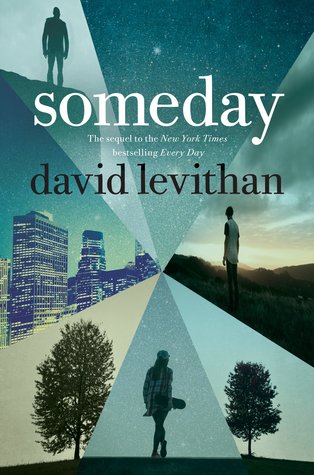
Complexity in Someday by David Levithan

Share

Someday
(Every Day #3)
Author: David Levithan
Published October 2nd, 2018 by Alfred A. Knopf Books for Young Readers

Scroll through the following handout for an explanation of complexity and examples/discussion questions from Someday by David Levithan:

Recommended For: 

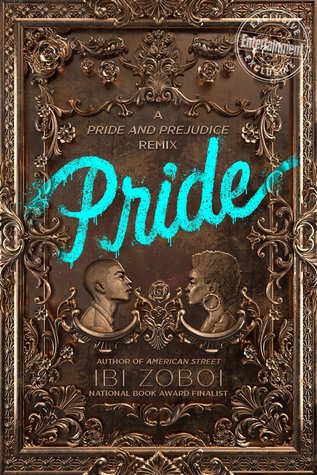
Pride by Ibi Zoboi

Share

Pride
Author: Ibi Zoboi
Published: September 18, 2018 by Balzer + Bray

Summary: Pride and Prejudice gets remixed in this smart, funny, gorgeous retelling of the classic, starring all characters of color, from Ibi Zoboi, National Book Award finalist and author of American Street.

Zuri Benitez has pride. Brooklyn pride, family pride, and pride in her Afro-Latino roots. But pride might not be enough to save her rapidly gentrifying neighborhood from becoming unrecognizable.

When the wealthy Darcy family moves in across the street, Zuri wants nothing to do with their two teenage sons, even as her older sister, Janae, starts to fall for the charming Ainsley. She especially can’t stand the judgmental and arrogant Darius. Yet as Zuri and Darius are forced to find common ground, their initial dislike shifts into an unexpected understanding.

But with four wild sisters pulling her in different directions, cute boy Warren vying for her attention, and college applications hovering on the horizon, Zuri fights to find her place in Bushwick’s changing landscape, or lose it all.

In a timely update of Jane Austen’s Pride and Prejudice, critically acclaimed author Ibi Zoboi skillfully balances cultural identity, class, and gentrification against the heady magic of first love in her vibrant reimagining of this beloved classic.

Teaching Pride

I love retellings of classics, and I would argue that this retelling is far superior to the original. Ibi presented at the NCTE convention, and she is absolutely brilliant. She talked about how she values the inclusion of the pantheon in literature and how she does so in her own texts. She also shared how different poems within Pride are retellings of classic poems. I love her work and will read anything she writes.

Love stories are tricky. They can get sappy quickly. This book is so much more than a love story. It interrogates themes related to economics, race, education, and gender.

Gentrification

“It’s a truth universally acknowledged that when rich people move into the hood, where it’s a little bit broken and a little bit forgotten, the first thing they want to do is clean it up. But it’s not just the junky stuff they’ll get rid of. People can be thrown away too, like last night’s trash left out on sidewalks or pushed to the edge of wherever all broken things go. What those rich people don’t always know is that broken and forgotten neighborhoods were first built out of love” (p. 1).

Teaching Idea: As a class, explore the impacts of gentrification and displacement. Using this knowledge develop your own form of political art (https://youtu.be/JMVd5k2a2IM) to make a statement.

Culture

If Madrina’s basement is where the tamboras, los espíritus, and old ancestral memories live, the roof is where the wind chimes, dreams, and possibilities float with the stars, where Janae and I share our secrets and plan to travel all over the world, Haiti and the Dominican Republic being our first stop” (p. 23).

Teaching Idea: Pick a place in your life, and Use Zoboi’s writing as a mentor text to share that place with others (e.g. “If [place] is where_________, [another place] is where__________, where________.”

Equity

“Sometimes love is not enough to keep a community together. There needs to be something more tangible, like fair housing, opportunities, and access to resources” (p. 33).

Teaching Idea: As a class, discuss whether love is enough and whether tangible aspects must exist in order to keep a community together. Generate a concept or brain map that depicts tangible aspects that can impact communities.

Male/Female Gender Roles

I don’t need no knights in shining armor

Ain’t no horses in the hood

I killed chivalry myself with a pocketknife…” (p. 243).

Teaching idea: The teachers finds materials/advertisements that are gender-specific, and students rewrite the materials to remove gender from the text. Students evaluate how the meaning or the impact has changed.

Education

“There is more to learn

about my old, old self, and black and brown girls like me

from hoods all over this country want to

take over the world,

but there’s something missing

in our history books the public schools give us” (p. 147).

Teaching idea: Consider the school curricula. Whose voices are honored? Whose are missing? Rewrite a course to be more inclusive.

Home

“I have always thought of Bushwick as home, but in that moment, I realize that home is where the people I love are, wherever that is” (p. 270).

Teaching idea: Where is home? Create a visual depiction of your own home, and below it, write, “Home is…” How do our interpretations of home differ? What do they have in common?

Read This If You Loved: American Street by Ibi Zoboi, Pride and Prejudice by Jane Austen, Piecing Me Together by Renée Watson

Recommended For: 

classroomlibrarybuttonsmall 

RickiSig

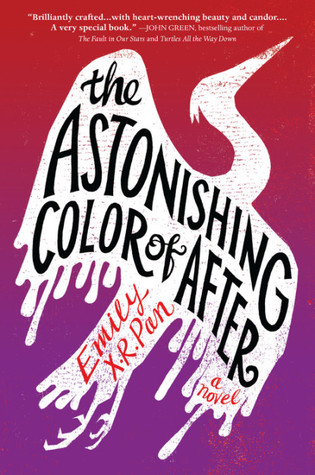
The Astonishing Color of After by Emily X. R. Pan

Share

The Astonishing Color of After
Author: Emily X. R. Pan
Published: March 20, 2018 by Little, Brown

Goodreads Summary: Leigh Chen Sanders is absolutely certain about one thing: When her mother died by suicide, she turned into a bird.

Leigh, who is half Asian and half white, travels to Taiwan to meet her maternal grandparents for the first time. There, she is determined to find her mother, the bird. In her search, she winds up chasing after ghosts, uncovering family secrets, and forging a new relationship with her grandparents. And as she grieves, she must try to reconcile the fact that on the same day she kissed her best friend and longtime secret crush, Axel, her mother was taking her own life.

Alternating between real and magic, past and present, friendship and romance, hope and despair, The Astonishing Color of After is a novel about finding oneself through family history, art, grief, and love.

My Review: I just finished discussing this book with my class, and they loved it. It is a bit of a longer book and moves somewhat slowly, but even my students who didn’t finish it in time insisted that I should use it again next year. The writing is absolutely stunning. Pan depicts humanity in ways that are very powerful. She integrates color and emotion to connect readers to the characters. We had two one-hour class periods to discuss this book, and there were so many things to talk about. Discussion was easy, and students made meaningful connections with the book. This book is simply unforgettable. I recommend it highly and hope it wins some awards in January!

Teachers’ Tools for Navigation: My students said that they Googled the colors within the text as they read. We spent a lot of time talking about the colors as an effective writing tool. I asked students to think of a moment in their lives that they’d be willing to share. Then, I asked them to attach a color with the moment. They shared beautiful stories of working at drive-ins, meeting their SOs, visiting places with friends, etc. The colors they attached with the images were fascinating and made the stories come alive.

Discussion Questions: 

  • How does the author incorporate magical realism in the text? Is it effective?
  • Did Leigh and Axel’s relationship feel realistic to you? Why or why not?
  • Which scenes are beautifully written, and how do they demonstrate excellent writing?
  • Should we forgive Leigh’s father? Why might he make the decisions he makes?

We Flagged: “Once you figure out what matters, you’ll figure out how to be brave.”

Read This If You Loved: Goodbye Days by Jeff Zentner, When the Moon Was Ours by Anna-Marie McLemore, Miles Away From You by A. B. Rutledge, All the Bright Places by Jennifer Niven, Looking for Alaska by John Green, Forgive Me, Leonard Peacock by Matthew Quick

Recommended For:classroomlibrarybuttonsmall

  RickiSig

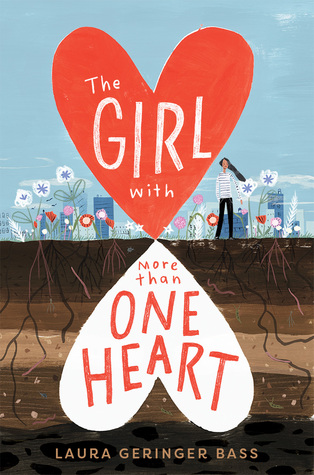
The Girl with More Than One Heart by Laura Geringer Bass

Share

The Girl With More Than One Heart
Author: Laura Geringer Bass
Published April 17th, 2018 by Abrams Books

Summary: There are times we all feel we need more than one heart to get through. When Briana’s father dies, she imagines she has a new heart growing inside her. It speaks to her in her Dad’s voice. Some of its commands are mysterious.

Find Her!  it says. Be Your Own!  

How can Briana “be her own” when her grieving mother needs her to take care of her demanding little brother all the time? When all her grandpa can do is tell stories instead of being the “rock” she needs? When her not-so-normal home life leaves no time to pursue her dream of writing for the school literary magazine? When the first blush of a new romance threatens to be nipped in the bud? Forced by the loss of her favorite parent to see all that was once familiar with new eyes, Briana draws on her own imagination, originality, and tender loving heart to discover a surprising path through the storm.

About the Author: Laura Geringer Bass is the author of over 20 highly acclaimed books for children, tweens, and teens. Her new novel for middle graders about friendship, love, and loss — The Girl with More Than One Heart — is the lyrical story of a courageous girl who imagines she needs an extra heart to navigate her grief after the death of her dad. It will be published by Abrams this Spring. Laura serves on the National Advisory Board of First Book, a non-profit organization that has delivered over 170 million books to children in need and as a mentor for Girls Write Now and Prison Writes, teaching teens at risk.

Review: This book looks at the struggle of grief when life keeps moving on around you. And like another book I love, Courage for Beginners, it shows the struggle a child has if a parent is suffering and they have to step up in a way that is not what their peers have to. Briana doesn’t know how to deal with the grief and with her mother incapacitated with grief also, Briana finds that she needs a second heart to help guide her through this huge bump in her life. Briana’s story also shows the struggle yet love of being a sibling to a child with special needs.

Written beautifully in a way that will pull at your heartstrings, Bass’s story shows how one girl uses art, love, and courage to make her way through a loss that is unimaginable for most of us.

Teachers’ Tools for Navigation: The Girl With More Than One Heart needs to be in classroom, school, and public libraries. There are so many readers that need this book. There are other readers that will want this book. There are definite readers for this book.

Another way in the classroom that it could be used is a mentor text for writing about memories. Briana’s second heart shares memories with her, one of the ways we get to know her dad, and the memories are so full of imagery. There are many sections that could be read for a mentor text when asking students to write a personal narrative.

Discussion Questions: 

  • How did Briana use art to help her through her grief?
  • How did Briana’s life change after the loss of her dad?
  • Aaron is described in the summary as her demanding little brother, but Briana loves him. What are some examples in the story that show this love?
  • How does Grandpa Ben help guide Briana?
  • Briana’s second heart is only figurative. What does it represent?

Flagged Passage: “The day my father’s heart stopped, I discovered an extra heart deep in my belly, below my right rib. It talked to me. I wasn’t crazy. Before that day, I had just one heart that never said a word.” (p. 1)

Read This If You Love: Courage for Beginners by Karen Harrington, Rules by Cynthia Lord, How to Speak Dolphin by Ginny Rorby, Be Light Like a Bird by Monika Schröder, Snicker of Magic by Natalie Lloyd, Some Kind of Happiness by Claire Legrand, Far from Fair by Elana K. Arnold

Recommended For: 

classroomlibrarybuttonsmall

Signature

**Thank you to Casey at Media Masters Publicity for providing a copy for review!**

Review and Giveaway!: Eraser by Anna Kang, Illustrated by Christopher Weyant

Share

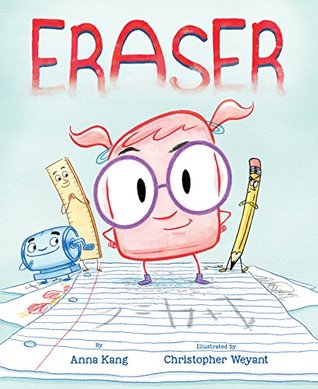
Eraser
Author: Anna Kang
Illustrator: Christopher Weyant
Published August 1, 2018 by Two Lions

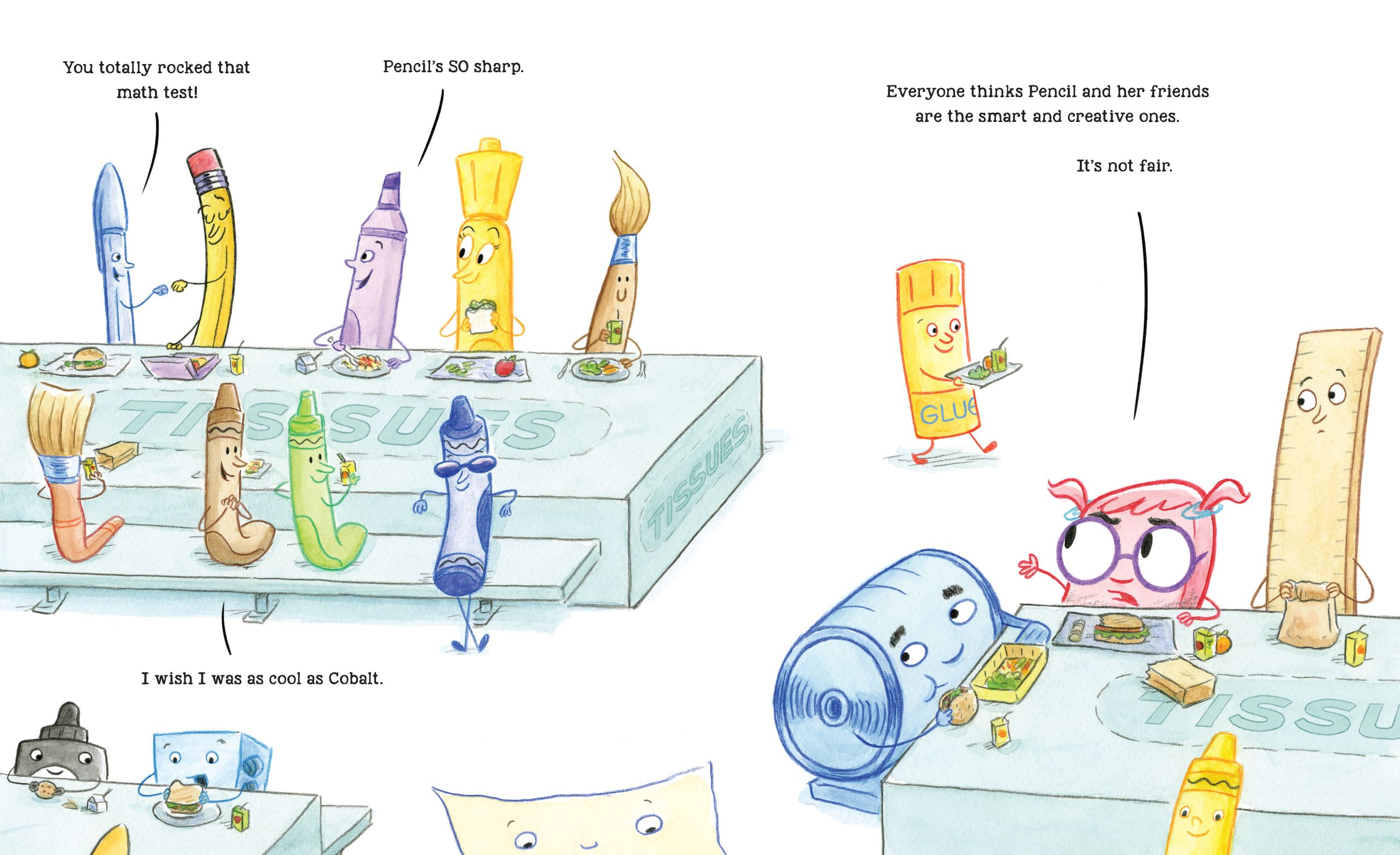
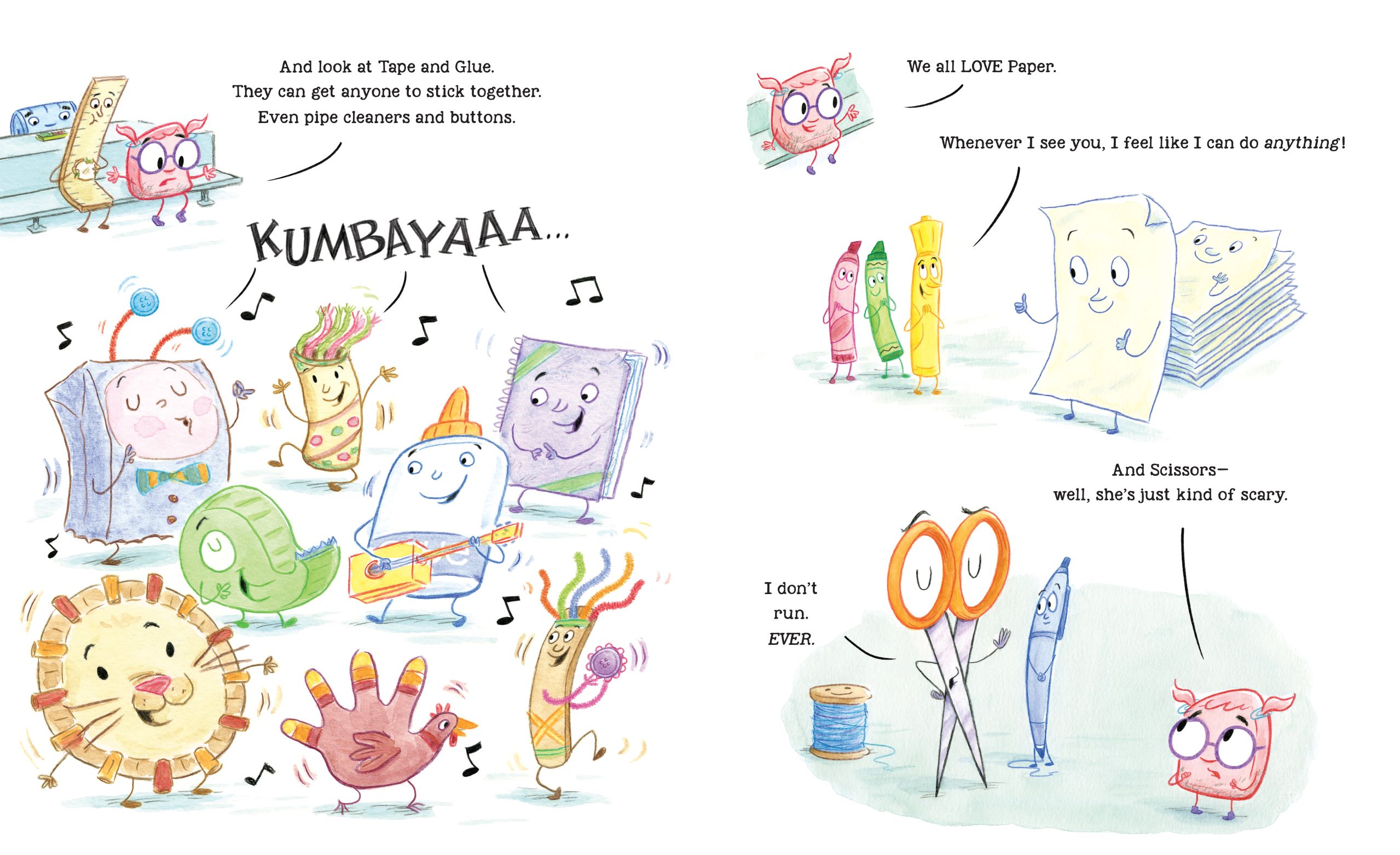
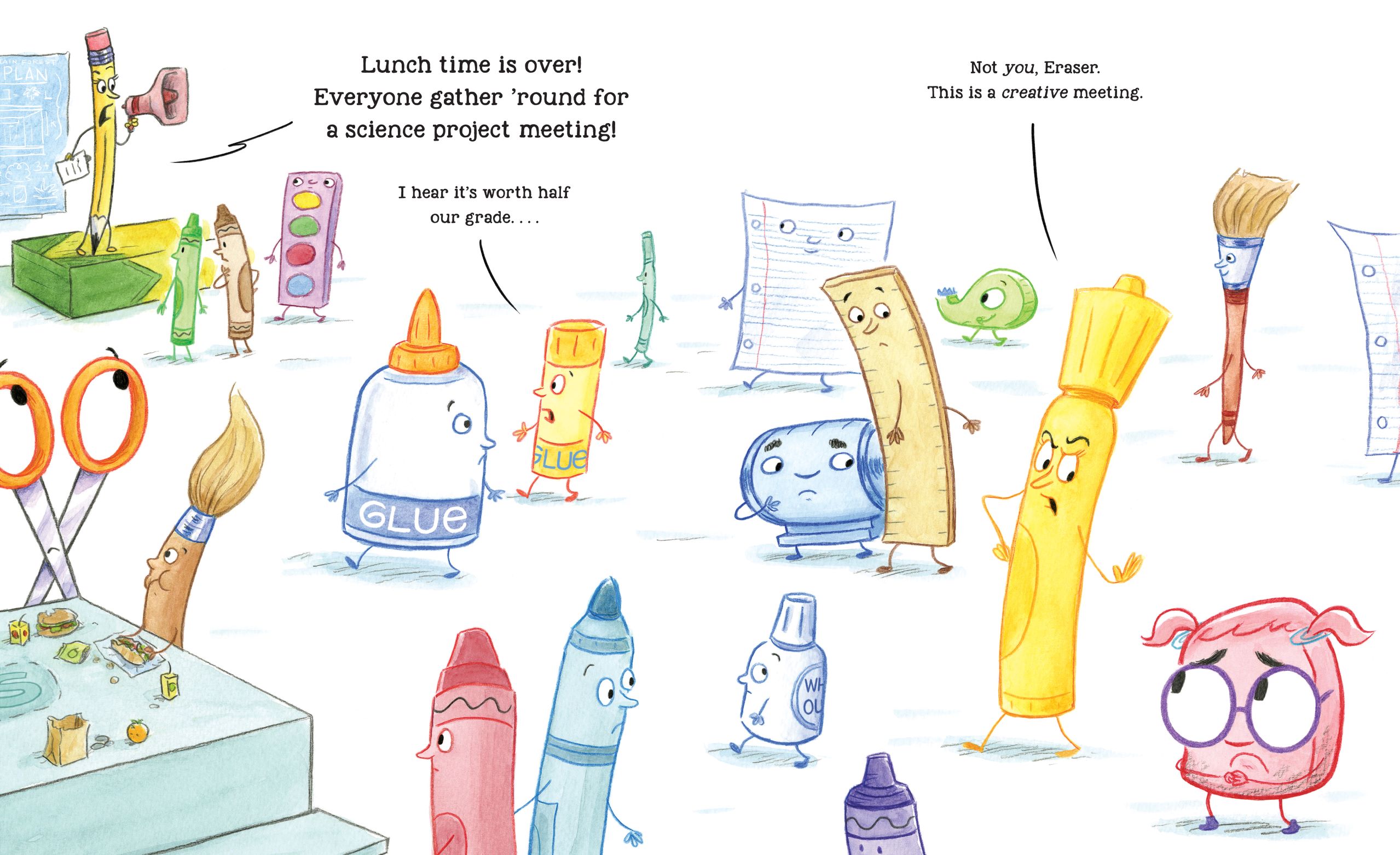
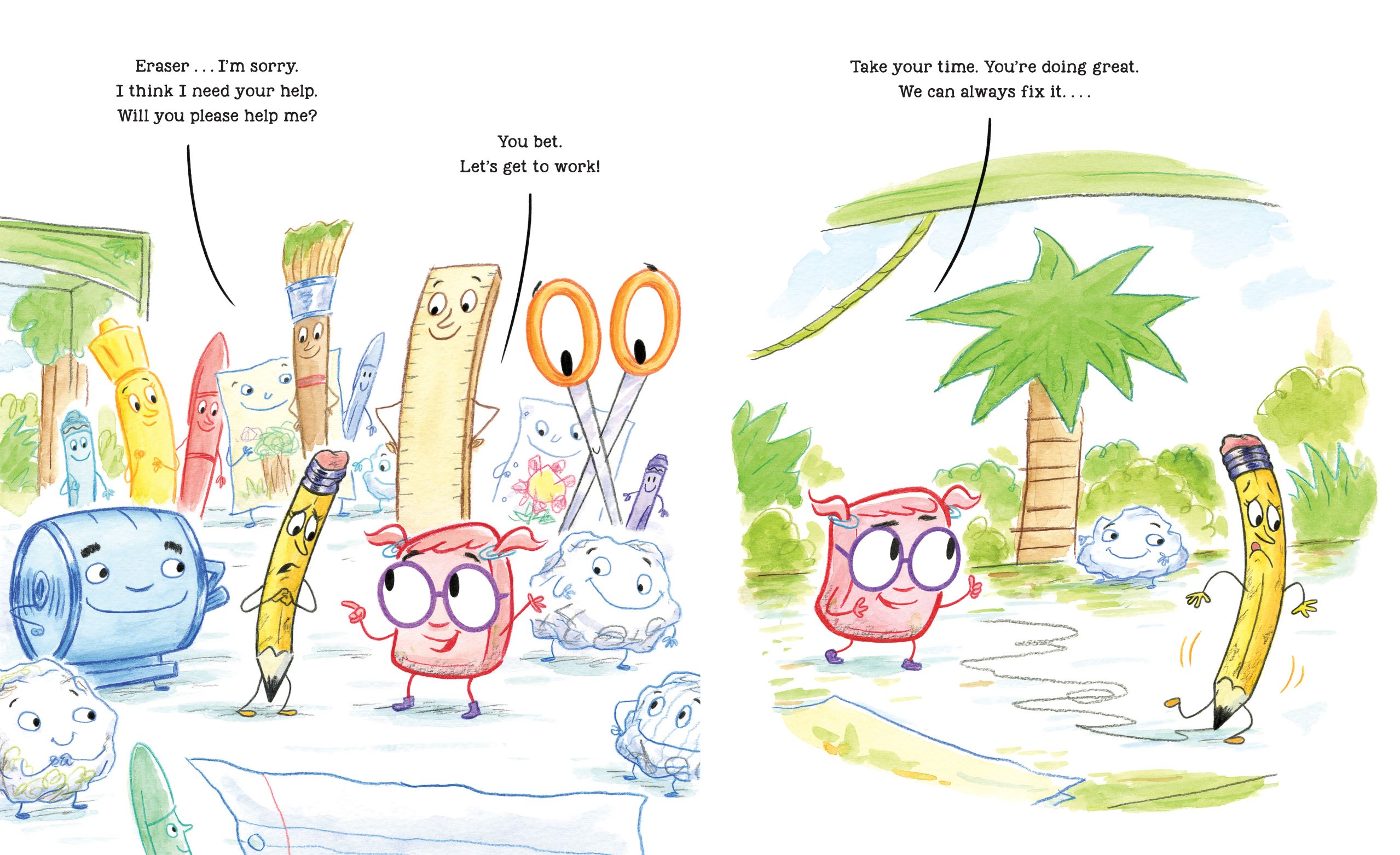
Summary: Eraser is always cleaning up everyone else’s mistakes. Except for Ruler and Pencil Sharpener, none of the other school supplies seem to appreciate her. They all love how sharp Pencil is and how Tape and Glue help everyone stick together. Eraser wants to create so that she can shine like the others. She decides to give it a try, but it’s not until the rubber meets the road that Eraser begins to understand a whole lot about herself.

Inspired by a school essay their daughter Kate wrote in the third grade, the author and illustrator behind Theodor Seuss Geisel Award–winner You Are (Not) Small have created a desktop drama about figuring out who you are, finding happiness, and the importance of second, third, and maybe even fourth chances.

About the Creators: Anna Kang and Christopher Weyant are the creators of Theodor Seuss Geisel Award winner You Are (Not) Small and its follow-ups That’s (Not) Mineand I Am (Not) Scared. Christopher’s work can be seen routinely in The New Yorker magazine and his cartoons are syndicated worldwide. As an author, Anna regularly goes through first, second, and third drafts. Chris wears down many erasers while making his art. This husband-and-wife team lives in New Jersey with their two daughters and their rescue dog. Visit them at www.annakang.com and www.christopherweyant.com.
Twitter: @annakang27 @chrisweyant05
Instagram: annakangbooks; christopherweyant
Facebook: Anna Kang – Author; Christopher Weyant

Ricki’s Review: I love this author-illustrator team. Every book that they’ve written has been brilliant. This book offers readers a glimpse inside the mind of the lesser-known characters in life. It forces us to think about who we are overlooking and who deserves more praise. It’s easy to get caught up in our own lives and the lives of those who are close to us, and we often forget to consider those who feel distant to us. My son and I talked about this together, and he said there are some kids at school that he doesn’t talk with often. I asked him what this book taught him, and he said that it reminded him to talk with more friends in his class and to be kind. With a valuable message and a powerful punch, this book is sure to become a favorite in classrooms.

Kellee’s Review: There are times in all of our lives that we question our purpose. Someone louder, prettier, more aggressive, or different than you may get recognition where you don’t even though you feel you deserve it. But it is all about valuing yourself and showing others that value, but we don’t need others to tell us our worth. That is what Eraser teaches us. When we finished, Trent said that Pencil learned that she needed help and Eraser learned she IS important. If that isn’t a message that I want my son to learn, I don’t know what is. Oh, and it is quite funny sometimes, and like Kang & Weyant’s other books, it is told in dialogue only so the illustrations play a big part in the telling of the story.

Teachers’ Tools for Navigation: Teachers might give students a list of the names of all of the students in their class. The students might look through this list and ask themselves, “Who do I talk to often? Who could I get to know more? Do I show every person on this list that they matter?” This activity connects well with the theme of the book and reminds students to support others in their world.

For more information, and to download a free activity kit, visit annakang.com, or download here.

Discussion Questions: 

  • How does Eraser’s feelings change throughout the book? What causes these changes?
  • How do the other school supplies act toward Eraser? Does this remind you of any instances in your life?
  • What is the message of the book? What does it teach us?

Book Trailer!:

Spreads:

Giveaway!:

a Rafflecopter giveaway

Read This If You Loved: Red: A Crayon’s Story by Michael Hall; The Day the Crayons Quit by Drew DaywaltThat’s (Not) Mine by Anna KangYou Are (Not) Small by Anna Kang

Recommended For:

readaloudbuttonsmall classroomlibrarybuttonsmall

RickiSigand  Signature

**Thank you to Barbara at Blue Slip Media for providing copies for review!**