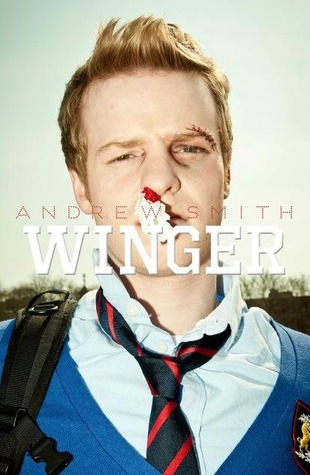
Winger by Andrew Smith (Kellee’s Review)

Share

winger

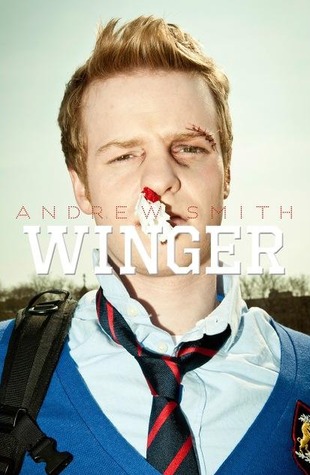
Winger
Author: Andrew Smith
Published May 14th, 2013 by Simon & Schuster

Goodreads Summary: Ryan Dean West is a fourteen-year-old junior at a boarding school for rich kids. He’s living in Opportunity Hall, the dorm for troublemakers, and rooming with the biggest bully on the rugby team. And he’s madly in love with his best friend Annie, who thinks of him as a little boy.

With the help of his sense of humor, rugby buddies, and his penchant for doodling comics, Ryan Dean manages to survive life’s complications and even find some happiness along the way. But when the unthinkable happens, he has to figure out how to hold on to what’s important, even when it feels like everything has fallen apart.

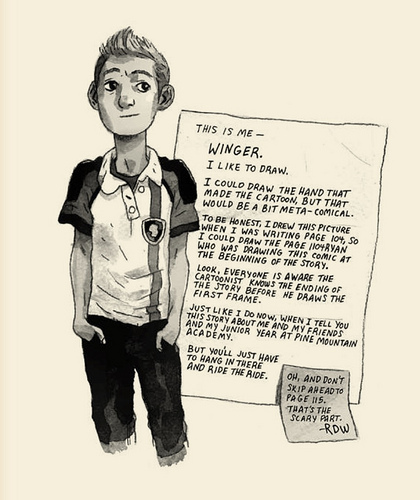
Filled with hand-drawn info-graphics and illustrations and told in a pitch-perfect voice, this realistic depiction of a teen’s experience strikes an exceptional balance of hilarious and heartbreaking.

My Review: Andrew Smith sure knows how to write a teenage boy’s voice. He gets inside of adolescent male’s mind, and puts it all on paper for us. (It probably has something to do with teaching high school.) Ryan Dean’s voice and his story are so authentic. This book will make you cringe, laugh out loud, shake your head, and cry.  I am also so impressed with all of the themes that are dealt with in this book without ever feeling over done. These themes include bullying, absent parents, peer pressure, identity, sexuality, prejudice, and friendship.  In addition, Smith builds his characters, setting, and plot seamlessly. You fall in love with all of the characters, main and secondary. Even the antagonist. The setting itself is a character. And finally the plot arc was perfectly done, and was so unpredictable all the way to the end.

Teachers’ Tools for Navigation: First and foremost, this book needs to read by teens. However that happens, it is the right thing. The easiest way would be to get it into libraries and classrooms. There are also parts of the book that could definitely be pulled out to be used in the classroom in may different ways. On that junps to mind right away is using Ryan Dean’s comics as mentor texts for writing comics to write narratives of everyday events. Ricki also has some great ideas for Winger in the classroom in her review.

Discussion Questions: What kind of social challenges does Ryan Dean have to overcome since he is 14 but a junior?; Were you able to predict the end of the book?; What are some traits about Ryan Dean that made him easy to connect to?; How does Opportunity Hall and the rest of the school become a character in Winger?

We Flagged: 

winger2(p. 21)

Read This If You Loved: Looking for Alaska by John Green, Openly Straight by Bill Konigsberg

Recommended For: 

classroomlibrarybuttonsmall closereadinganalysisbuttonsmall

Signature

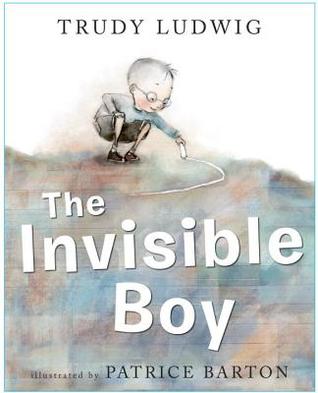
The Invisible Boy by Trudy Ludwig

Share

invisible

The Invisible Boy
Author: Trudy Ludwig
Illustrator: Patrice Barton
Published October 8th, 2013 by Alfred A. Knopf

Goodreads Summary: Meet Brian, the invisible boy. Nobody ever seems to notice him or think to include him in their group, game, or birthday party . . . until, that is, a new kid comes to class.

When Justin, the new boy, arrives, Brian is the first to make him feel welcome. And when Brian and Justin team up to work on a class project together, Brian finds a way to shine.

From esteemed author and speaker Trudy Ludwig and acclaimed illustrator Patrice Barton, this gentle story shows how small acts of kindness can help children feel included and allow them to flourish. Any parent, teacher, or counselor looking for material that sensitively addresses the needs of quieter children will find The Invisible Boy a valuable and important resource. 

Includes backmatter with discussion questions and resources for further reading. 

Review: Wow. This book affected me, so I know it would affect students. Although this is a book aimed at helping students think about how they affect others, there was one scene, early on, that shows Brian being ignored by everyone including his teacher which made me even sadder. It is so important for everyone, adults included, to think about how they treat or ignore others.

The other thing that I thought was brilliant was the way the illustrations were done. Brian comes to life actually right in front of our eyes. Such a smart way to visually show the moral of the story.

If you have not read this book yet, get it from your library or just go ahead and purchase it. You will not regret it.

Teachers’ Tools for Navigation: This book needs to be added to any kindness or empathy units out there right now. When I go back into the classroom, I will include it when I read Each Kindness, Because Amelia Smiled, and Stand Tall, Molly Lou Melon (check out my post on how I use Each Kindness in my middle school classroomInvisible Boy will fit perfectly.)

The author also includes recommended reading for adults and kids as well as wonderful Questions for Discussion in the back of the book.

Discussion Questions: (Found in the backmatter of the book) How many kids did it take in this story to help Brian begin to feel less invisible?; What specifically did Justin do to make Brian feel less invisible?; Are there kids in your class, grade, or school who you see being treated as if they are invisible? If yes, what could you do to make them feel more valued and appreciated?

We Flagged: 

Read This If You Loved: Each Kindness by Jacqueline Woodson, Stand Tall, Molly Lou Melon by Patty Lovell, Because Amelia Smiled by David Ezra Stein, Unicorn Thinks He’s Pretty Great by Bob Shea

Recommended For: 

readaloudbuttonsmall litcirclesbuttonsmall classroomlibrarybuttonsmall

Signature

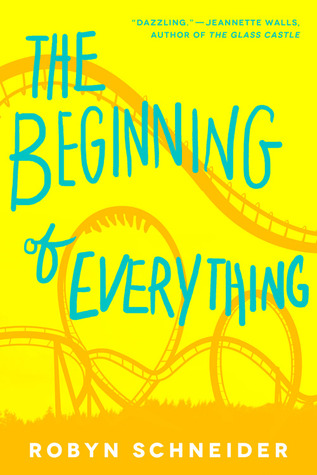
The Beginning of Everything by Robyn Schneider

Share

beginning

The Beginning of Everything
Author: Robyn Schneider
Published August 27, 2013 by Katerine Tegen

Goodreads Summary: Golden boy Ezra Faulkner believes everyone has a tragedy waiting for them—a single encounter after which everything that really matters will happen. His particular tragedy waited until he was primed to lose it all: in one spectacular night, a reckless driver shatters Ezra’s knee, his athletic career, and his social life.

No longer a front-runner for Homecoming King, Ezra finds himself at the table of misfits, where he encounters new girl Cassidy Thorpe. Cassidy is unlike anyone Ezra’s ever met, achingly effortless, fiercely intelligent, and determined to bring Ezra along on her endless adventures.

But as Ezra dives into his new studies, new friendships, and new love, he learns that some people, like books, are easy to misread. And now he must consider: if one’s singular tragedy has already hit and everything after it has mattered quite a bit, what happens when more misfortune strikes?

Robyn Schneider’s The Beginning of Everything is a lyrical, witty, and heart-wrenching novel about how difficult it is to play the part that people expect, and how new beginnings can stem from abrupt and tragic endings.

My Review: Another novel filled with smart high schoolers—that makes me so happy!! I hope this is a trend because I love seeing brainy characters in my book and not stereotypical ones. The Beginning of Everything is described as witty, and it is very much so. The sarcasm and wit just bleeds out of this book. I found myself laughing out loud at parts, and usually just because a character had the audacity to say something they shouldn’t have.

In The Beginning of Everything, I actually connected more with the secondary characters than the protagonist. They were so well established and had such unique voices while Ezra sounded like any good-0le boy; however, I will say that by making his voice less distinct allowed for him to grow even in his prose. As he found his new, true identity, his voice became to ring out more true. I am not sure if the author did this on purpose or not, but either way it worked!

Oh, and the final pages. Guys, they were so good! Although it felt a bit rushed to me, the lyrical writing got me in the end. Perfect.

Teachers’ Tools for Navigation: Although this book’s main home is in teens’ hands from a classroom, school, or public library, there are definitely parts that can be pulled out to be used in a classroom.

Since the characters are intelligent, many of the conversations have allusions to literature (Mary Oliver, Shakespeare, Fitzgerald, Frost) or their topics are quite deep (connecting organic chemistry to life, panopticon, Banksy, German insults). Also, there are debate topics that would be so interesting to look into such as imperialism, capitalism, and the economy.

One fun activity that I would definitely pull out of this book is fake debates. When Ezra, Toby, Cassidy, etc. were at their debate tournament, they had fake debates where they had to choose a side of quite silly topics like “Should vampires be allowed to vote?” This would be a great activity to do in classes to work on persuasion and arguments. (However, be careful about actually reading aloud the scene this is in as they also make it a drinking game.)

Discussion Questions: Do you feel like we live in a society similar to the panopticon? [If you don’t know what this is, it is quite fascinating: http://en.wikipedia.org/wiki/Panopticon]; Do you think Cassidy made the right choice in the end?; Ezra truly connects with The Great Gatsby because of all the changes his life is going through. What book to you connect with and why?

Flagged: “Her face was inches from mine. I could see the freckles that dusted her nose and the gold flecks in the disquieting blue of her eyes.” (p. 111)

“My admirable opponent argues that vampires do not deserve suffrage, as many great yet misinformed politicians have done before her while calling for the continued marginalization of women, or other minorities.” Cassidy began. “Yet vampires were, at some point human. At what point can a man’s voting rights be revoked, if he is proven to be of rational mind?” (p. 157)

Read This If You Loved: Life in Outer Space by Melissa Kiel, Stargirl by Jerry Spinelli, Paper Towns by John Green

Recommended For: 

classroomlibrarybuttonsmall closereadinganalysisbuttonsmall

Signature

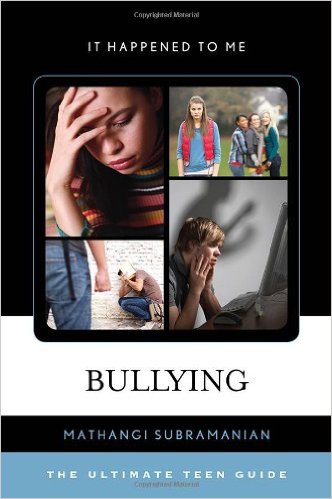
Author Guest Post!: My Top Ten YA Novels About Bullying by Mathangi Subramanian, author of Bullying: The Ultimate Teen Guide

Share

“My Top Ten YA Novels About Bullying” by Mathangi Subramanian

Growing up the bespectacled, bookish, brown-skinned daughter of Indian immigrants, I underwent my share of bullying. But while I was writing Bullying: The Ultimate Teen Guide, memories of witnessing—rather than experiencing—bullying loomed large. Most often, I was reminded of my brief tenure as a public school teacher, when I watched young people I cared about both act like and suffer from bullies.

As a child, my bullies felt like one-dimensional paper-cut outs of people that stopped existing after they terrorized me.  As a teacher, the bullies in my classrooms were more than their misguided actions. They were sons and daughters of parents I admired, musicians and artists and athletes that excelled outside of my classroom, and sheepish people-in-progress who asked me if maybe, even though I was a science teacher, I could help them with their love problems.

And, when my colleagues made comments about me being foreign (even though I am American), godless (even though I am Hindu) and young (okay, that was true), these teens were my defenders, telling me that they didn’t care what other people said, they liked me just fine. How, I wondered, could these compassionate, brilliant young people be the same ones who to hurt their peers?

The more I learn about bullying, the more I believe that it is the result of a failure of empathy. I don’t just mean from teens: I also mean from adults who tell victims to buck up and deal with it; from administrators who punish bullies without investigating what trauma may be driving them to violence; and from students and adults who witness bullying and egg it on.

In fact, the most effective anti-bullying policies—like restorative justice, mental health and social services, and social justice based curriculum—are those that are based on building empathy. It’s a shame that they are still not commonly used.

It’s true, most teachers can’t redo district policy or institute training programs. But here’s one thing they can do: assign some compelling fiction. After all, aren’t stories the best ways to walk in each other’s shoes? Below is a list of ten of my favorite YA books with protagonists that face bullying. These books break silences, feature diverse main characters, and are impossible to put down. Most importantly, they helped me empathize with characters whose lives and choices I ordinarily would find unforgiveable. From school shooters to mean girls to backstabbing friends, the characters in these books helped me realize that everyone has a backstory, and that what almost all of us want, more than anything, is a little forgiveness and a little understanding.

1. Hate List by Jennifer Brown – Valerie must piece her life together after her boyfriend, Nick, stages a school shooting and commits suicide. When she returns to finish her senior year, Valerie learns about forgiveness, redemption, community, and love.

2. Wonder by R.J. Palacio – A great book told from multiple perspectives about a boy with a visible genetic abnormality who decides to go to school for the first time.

3. Orchards by Holly Thompson – Told in verse through the voice of a biracial protagonist, this book is about Kana Goldberg’s journey to come to terms with her role in her friend’s suicide.

4. Jumped by Rita Williams-Garcia – When Trina the diva gets in the way of the angry basketball player Dominique, Leticia knows what’s going to happen – but she decides not to get involved.

5. Okay For Now by Gary D. Schmidt – The bullying eighth grader Doug faces at school is nothing compared to the bullying he faces at home at the hands of his father. Brilliant historical fiction tackling the little-addressed issue of adult bullies.

6. Shine, Coconut Moon by Neesha Meminger – A story about a Sikh teenager coming of age after September 11th, this book tackles dating violence, hate crimes, and Islamophobia.

7. The Absolutely True Diary of a Part Time Indian by Sherman Alexie – This semi-autobiographical book is about a Native American boy who decides to leave the reservation he lives on to get an education at the White school, and the bullying he faces because of his decision.

8. Blue Boy by Rakesh Satyal – Kiran, the main character in this book, is a gender non-conforming Indian American boy who is bullied at school and a puzzle to his parents.

9. I Am J by Cris Beam – The story of J, a transgendered boy trying to grapple with his identity and preserve his most important relationships.

10. Tell Us We’re Home by Marina Budhos – Jaya, Maria, and Lola are the daughters of nannies in a wealthy suburb. When Jaya’s mother’s employer accuses her of stealing, the three friends must fight adult and teen bullies. This book provides a sensitive and nuanced view of classism and xenophobia.


Mathangi Subramanian, EdD, is a writer and educator. She has been a classroom teacher, an assistant vice president at Sesame Workshop, and a senior policy analyst at the New York City Council.

happened bullying

Bullying: The Ultimate Teen Guide draws on stories from young teens around the country, this volume uncovers the social pressures and individual choices that lead to violence. The author surveys effective state, local, and national anti-bullying policies and provides examples of teens throughout the nation whose leadership and courage have helped stop violence. This volume also contains exercises and strategies for young adults to employ that can pave the way for social action. Bullying: The Ultimate Teen Guide is a much-needed resource to help stem the tide of this social epidemic. Featuring a diverse collection of teen voices, this book is designed to help teens take immediate action both individually and collectively. The advice and exercises will not only help teens think critically about bullying but will also empower them to change both themselves and the circumstances that foster abuse in their schools and communities.

Bullying is a topic that all teens deal with and should be discussed in our schools and classrooms. This resource helps make these conversations easier.

Signature andRickiSig

**Thank you to Mathangi Subramanian and Alyssa Washington from Rowan & Littlefield for this guest post**

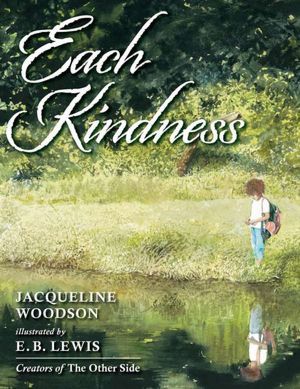
Each Kindness by Jacqueline Woodson (Ricki’s Review)

Share

Each Kindness

Each Kindness
Author: Jacqueline Woodson
Illustrator: E.B. Lewis
Published October 2nd, 2012 by Nancy Paulsen Books

Summary: Each kindness makes the world a little better

Chloe and her friends won’t play with the new girl, Maya. Maya is different–she wears hand-me-downs and plays with old-fashioned toys. Every time Maya tries to join Chloe and her gang, they reject her. Eventually, Maya plays alone, and then stops coming to school altogether. When Chloe’s teacher gives a lesson about how even small acts of kindness can change the world, Chloe is stung by the lost opportunity for friendship, and thinks about how much better it could have been if she’d shown a little kindness toward Maya.

This unforgettable book is written and illustrated by the award-winning team that created The Other Side and the Caldecott Honor winner Coming On Home Soon. With its powerful message and striking art, it will resonate with readers long after they’ve put it down.

Review: This is a beautiful story that would be FANTASTIC for the classroom. Students of any age can learn from this book, and I would read it to my class on the very first day of school. It is easy to get caught up in drama and gossip, and Jackie Woodson reminds us how hurtful this can be. I am so glad that I own a copy of this book. I plan to read it to my son very often because the lessons are so important, and the story is simply stunning. Usually, I don’t review a book that Kellee has also reviewed on Unleashing Readers, but I couldn’t help but share my thoughts about this incredible text.

Teacher’s Tool For Navigation: I would be remiss if I didn’t direct you to Kellee’s post about this book. She did a fantastic activity with her class that used multi-flow maps.

One of my favorite parts about this book is that it doesn’t have a happy ending. I would love to discuss this with students–why might this be? Is Woodson teaching us something? Then, we might explore other books that don’t have happy endings and discuss why authors might do this intentionally and how it might impact readers’ feelings about the books. Students are notorious for disliking sad endings, so I think this would provoke much discussion.

This book can be both preventative and reactionary to bullying issues in the classroom/school community. While I would read it at the beginning of the school year, I could also see it as an effective tool for teachers who are having issues with bullying during the school year.  This book makes us want to be better people.
Discussion Questions: Why is Chloe so mean to Maya?; What do we know about Maya? Why do you think Woodson characterizes her this way?; Why does this book end in an unhappy way? What does it teach us?; How might we spread kindness?

We Flagged: “And on that first day, Maya turned to me and smiled. But I didn’t smile back. I moved my chair, myself and my books a little farther away from her. When she looked my way, I turned to the window and stared out at the snow” (6).

Read This If You Loved:  Unicorn Thinks He’s Pretty Great by Bob Shea, Endgame by Nancy Garden, Thirteen Reasons Why by Jay Asher,  The Silver Linings Playbook by Matthew Quick, Burn by Suzanne Phillips, The Perks of Being a Wallflower by Stephen Chbosky, Twisted by Laurie Halse Anderson, Everybody Sees the Ants by A.S. King, The Spectacular Now by Tim Tharp, Inexcusable by Chris Lynch

Recommended For: 

readaloudbuttonsmall classroomlibrarybuttonsmall 

RickiSig


Winger by Andrew Smith (Ricki’s Review)

Share

winger

Winger
Author: Andrew Smith
Published: May 14th, 2013 by Simon and Schuster

GoodReads Summary: Ryan Dean West is a fourteen-year-old junior at a boarding school for rich kids. He’s living in Opportunity Hall, the dorm for troublemakers, and rooming with the biggest bully on the rugby team. And he’s madly in love with his best friend Annie, who thinks of him as a little boy.

With the help of his sense of humor, rugby buddies, and his penchant for doodling comics, Ryan Dean manages to survive life’s complications and even find some happiness along the way. But when the unthinkable happens, he has to figure out how to hold on to what’s important, even when it feels like everything has fallen apart.

Filled with hand-drawn info-graphics and illustrations and told in a pitch-perfect voice, this realistic depiction of a teen’s experience strikes an exceptional balance of hilarious and heartbreaking.

Review: With every page I turned, I fell more in love with this book. I found elements of this text to be reminiscent of Looking for Alaska by John Green, another wonderfully compelling work. Andrew Smith does a beautiful job unraveling the plot of this story. I found it to be incredibly unpredictable—all of my predictions, in fact, were incorrect. The book surprised me in wonderful ways. The characterization and setting shine brightly. I felt as if I was in the boarding school right with the characters, and they were my friends just as much as they were Ryan Dean’s friends. I couldn’t stop reading by the end of the book, and I think readers will equally be hooked to this coming-of-age tale.

Teacher’s Tools for Navigation: This text would fit in well with many units—particularly those of bullying, heroism, or homophobia. I could also see it matching well with Looking for Alaska, and readers might draw parallels between the two texts.

Discussion Questions: How does Andrew Smith build character? How does this characterization bolster elements of the plot?; What does the book teach us about friendship? About judging people?; Who is the hero of this story?; How does the sport of rugby play a role in the plot, characterization, and theme of this text?

We Flagged: “And then it’s always that one word that makes you so different and puts you outside the overlap of everyone else; and that word is so fucking big and loud, it’s the only thing anyone ever hears when your name is spoken.

And whenever that happens to us, all the other words that make us the same disappear in its shadow.”

Read This If You Loved: Looking for Alaska by John Green, Deadline by Chris Crutcher, The Perks of Being a Wallflower by Stephen Chbosky, Twisted by Laurie Halse Anderson

Recommended For:

 litcirclesbuttonsmall classroomlibrarybuttonsmall

RickiSig

Forgive Me, Leonard Peacock by Matthew Quick

Share

 13477676

Forgive Me, Leonard Peacock
Author: Matthew Quick
Published: August 13th, 2013 by Little, Brown Books for Young Readers

GoodReads Summary: In addition to the P-38, there are four gifts, one for each of my friends. I want to say good-bye to them properly. I want to give them each something to remember me by. To let them know I really cared about them and I’m sorry I couldn’t be more than I was—that I couldn’t stick around—and that what’s going to happen today isn’t their fault.

Today is Leonard Peacock’s birthday. It is also the day he hides a gun in his backpack. Because today is the day he will kill his former best friend, and then himself, with his grandfather’s P-38 pistol.

But first he must say good-bye to the four people who matter most to him: his Humphrey Bogart-obsessed next-door neighbor, Walt; his classmate Baback, a violin virtuoso; Lauren, the Christian homeschooler he has a crush on; and Herr Silverman, who teaches the high school’s class on the Holocaust. Speaking to each in turn, Leonard slowly reveals his secrets as the hours tick by and the moment of truth approaches.

In this riveting book, acclaimed author Matthew Quick unflinchingly examines the impossible choices that must be made—and the light in us all that never goes out.

Review: I have read every one of Matthew Quick’s books. He is a teacher, and I feel as if he understands teenagers in ways that many people don’t. Quick’s characters feel like real people, and while I read this one, I kept forgetting that I was even reading a book. To be cliché, I was lost in the story.

Leonard Peacock is a complex character. Even with his evil intention to murder a fellow classmate, the reader comes to understand that he is deeply troubled and not at all evil on the inside. His plan is to give three gifts to three individuals who have positively impacted his life, then kill his classmate, and then kill himself. I read this book with an uncomfortable stomach. I couldn’t put it down because I needed to know how the plot unraveled. Kids will be hooked. It teaches incredible messages of bullying and loneliness. Leonard’s mother is such a terrible parent that I think it will make many teens appreciate their own parents. I had the urge to scream at her at several points in the book. I have read many books that are somewhat similar to the themes of this text, yet it felt very different. I would urge teachers to read it because it sheds light on issues that are often difficult (or maybe even taboo) to discuss.

Teacher’s Tools for Navigation: My initial thought was that this would make an incredible read-aloud. I think all types of kids would appreciate it. My only hesitance are there are several references to awkward scenes (like masturbation), and even the most liberal teachers might feel a bit uncomfortable reading these aloud. That said, I think this would make an excellent whole-class text or literature circle book. Teachers would also find value in close readings of portions of this text to jumpstart difficult (but important) conversations with students about bullying, depression, and suicide. The book has over sixty footnotes, and it would be interesting to discuss this text feature and/or the experiments that Quick takes with the text structure. The book ends a bit abruptly, and I think students would love to write and discuss extended endings to the text. I would love to see this book bridged with classic texts like The Awakening by Kate Chopin or Hamlet by William Shakespeare. There are a plethora of Shakespeare references that will make teachers drool!

Discussion Questions: What leads a person to make rash, violent decisions? Can s/he be stopped?; How does our past influence our psyche?; Is revenge sweet? Can it ever be justified?; How do our parents shape our mental behavior?; What happens after the conclusion of this text?

We Flagged:

“I admire [Humphrey] Bogart because he does what’s right regardless of consequences—even when the consequences are stacked high against him—unlike just about everyone else in my life” (p. 23).

“How do you measure suffering?

I mean, the fact that I live in a democratic country doesn’t guarantee my life will be problem-free.

Far from it.

I understand that I am relatively privileged from a socio-economical viewpoint, but so was Hamlet—so are a lot of miserable people” (p. 94).

Read This If You Loved: Endgame by Nancy Garden, Thirteen Reasons Why by Jay Asher, Hamlet by William Shakespeare, The Silver Linings Playbook by Matthew Quick, Burn by Suzanne Phillips, The Perks of Being a Wallflower by Stephen Chbosky, Twisted by Laurie Halse Anderson, Everybody Sees the Ants by A.S. King, The Spectacular Now by Tim Tharp, Inexcusable by Chris Lynch

Recommended For:

litcirclesbuttonsmall closereadinganalysisbuttonsmall classroomlibrarybuttonsmall

026F3FBCC8C3913BD3A4D3F6920340D5