brown girl dreaming by Jacqueline Woodson

Share

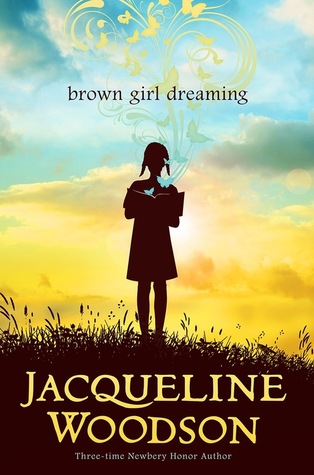
brown girl

brown girl dreaming
Author: Jacqueline Woodson
Published: August 28, 2014 by Nancy Paulsen Books

Summary: Jacqueline Woodson, one of today’s finest writers, tells the moving story of her childhood in mesmerizing verse. 
 
Raised in South Carolina and New York, Woodson always felt halfway home in each place. In vivid poems, she shares what it was like to grow up as an African American in the 1960s and 1970s, living with the remnants of Jim Crow and her growing awareness of the Civil Rights movement. Touching and powerful, each poem is both accessible and emotionally charged, each line a glimpse into a child’s soul as she searches for her place in the world. Woodson’s eloquent poetry also reflects the joy of finding her voice through writing stories, despite the fact that she struggled with reading as a child. Her love of stories inspired her and stayed with her, creating the first sparks of the gifted writer she was to become.
 
Praise for Jacqueline Woodson:
Ms. Woodson writes with a sure understanding of the thoughts of young people, offering a poetic, eloquent narrative that is not simply a story . . . but a mature exploration of grown-up issues and self-discovery.”—The New York Times Book Review

Ricki’s Review: This beautifully poignant book in verse captured my heart. I was swept away in the beauty of Jacqueline Woodson’s lyrical memories. This is a book that will embrace readers, wrapping them in Woodson’s childhood in the stormy 1960s. I couldn’t help but read and reread portions of the text–for every few pages that I read, I needed to flip back and relive the beauty of the previous verses. I will cherish this book, reading it again and again, for every word feels intentional and every memory vivid. brown girl dreaming is timeless, and it is universal. Above all, this book will give readers insight–unfolding the experiences of a “brown” child living during the heat of the civil rights movement; a young girl growing up in a house that identifies as Jehovah’s Witnesses; and a young writer, struggling to find the perfect words to reveal the truth. It will touch the hearts of readers of all backgrounds and ages in its messages of family, friendship, strength, and hope.

Kellee’s Review: Wow. I often worry about reading a book that has a lot of hype around it because I fear that I will not love it as much as others do. I should not have been worried about this book. It is beautiful. As Ricki said, I found myself rereading portions of the text just because of how well the verse flowed. By the end of this book, you will wish that you were Woodson’s friend and that you you could write as well as she does. The stories she tells are so true and heartfelt that you live her life along with her through the pages. You experience with her the hardship of growing up in the 1960s and 70s during the Civil Rights movement; the challenge of religion and finding the truth in it; the loss, addition, and conflict of family and everything that comes with these changes; and trying to find an identity as a person, sister, daughter, student and a writer. It is only a truly powerful, well-written book that can make you feel all of these elements.

Teacher’s Tools for Navigation: Writers will feel inspired by Woodson’s verse, and it would make an excellent mentor text for students to learn more about themselves and their own childhoods. We would suggest pairing passages with “I Am From” poems for students to be inspired to write verse memoirs of their own experiences. The figurative language and detail of this text make it a phenomenal resource for teachers, and we would find great value in close readings of Woodson’s intentional use of words and phrasing.

Discussion Questions: How does Jacqueline Woodson come to find herself? What are the strongest influences on her identity?; In what ways does Woodson show the power of family? How do Woodson’s siblings impact her decisions?; What role does history play in this book?; In what ways does Woodson manipulate words, phrasing, and white space? How does this influence your reading?

We Flagged: 

“Then I let the stories live
inside my head, again and again
until the real world fades back
into cricket lullabies
and my own dreams.” (p. 99)

“Sometimes, she pulls a chair to the window, looks
down over the yard.

The promise of glittering sidewalks feels a long time
behind us now, no diamonds anywhere to be found.

But some days, just after snow falls,
the sun comes out, shines down on the promise
of that tree from back home joining us here.

Shines down over the bright white ground.

And on those days, so much light and warmth fills
the room
that it’s hard not to believe
in a  little bit

of everything.”  (p. 285)

Please Note: The above excerpts are from advanced reader copies. The wording and punctuation may be different in the published text. Our blog interface does not allow us to accurately capture the indentions, but we wanted you to see the beauty of Woodson’s language.

Read This If You Loved: Other books by Jacqueline Woodson, The Rock and the River by Kekla Magoon, Sold by Patricia McCormick, Make Lemonade by Virginia Euwer Wolff, Mare’s War by Tanita S. Davis, Gaither Sisters (series) by Rita Williams- Garcia, Sit-In: How Four Friends Stood Up by Sitting Down by Andrea Davis Pinkney, The Silence of our Friends by Mark Long

Recommended For:

closereadinganalysisbuttonsmall readaloudbuttonsmall litcirclesbuttonsmall classroomlibrarybuttonsmall

RickiSigand Signature

A Home for Mr. Emerson by Barbara Kerley

Share

NF PB 2014

Nonfiction Picture Book Wednesday

Nonfiction Picture Book Wednesday is hosted by Kid Lit Frenzy and was started to help promote the reading of nonfiction texts. Most Wednesdays, we will be participating and will review a nonfiction text (though it may not always be a picture book).
Be sure to visit Kid Lit Frenzy and see what other nonfiction books are shared this week!

emerson

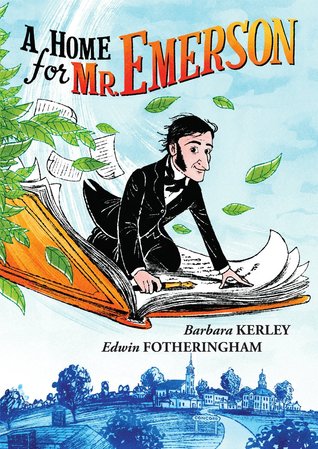
A Home for Mr. Emerson
Author: Barbara Kerley
Illustrator: Edwin Fotheringham
Published February 25, 2014 by Scholastic Press

Goodreads Summary: From the award-winning creators of Those Rebels, John & Tom, a joyful portrait of an American icon and an inspiring blueprint for how to live your life.

“All life is an experiment.
The more
experiments you make
the better.”

Before Ralph Waldo Emerson was a great writer, he was a city boy who longed for the broad, open fields and deep, still woods of the country, and then a young man who treasured books, ideas, and people. When he grew up and set out in the world, he wondered, could he build a life around these things he loved?

This moving biography–presented with Barbara Kerley and Edwin Fotheringham’s inimitable grace and style–illustrates the rewards of a life well-lived, one built around personal passions: creativity and community, nature and friendship.

May it inspire you to experiment and build the life you dream of living.

My Review: I knew of Emerson’s work, but I didn’t know much about him. This picture book is a perfect introduction into learning about Emerson as a man. And you know what? If this picture paints his personality correctly, he was a wonderful man. He was an intellectual, but also cared about everyone around him. He wanted to listen and learn and be the best neighbor, friend, husband, father, writer, thinker, etc. he could be. Kerley does a great job of showing and sharing with us Emerson’s life.

Also, check out Alyson’s review of this book to see her visit to Mr. Emerson’s home: http://www.kidlitfrenzy.com/kid-lit-frenzy/2014/7/15/nonfiction-picture-book-wednesday-a-home-for-mr-emerson

Teachers’ Tools for Navigation: Since the book is about Emerson, my first thought would be to look at some of Emerson’s work and discuss his life and work including the quotes that are shared throughout the book. Journaling is also a theme throughout the book. Have students start a journal which they think about the world and other thoughts they have throughout the day. Finally, using Barbara Kerley’s website, students could look at how to write a extraordinary biography then pick their own historic person to write about.

However, the author’s afterword gives another suggestion. Use Emerson’s love of life to make your life the best it can be! Have students exam their lives (using the questions in the afterword), and talk about how to live a fulfilling life.

Discussion Questions: (Just some of the questions from the afterword “Build a World of your Own”) Think about your favorite room. What do you like about it?; Design your perfect home. What rooms would you include? etc.; Mr. Emerson created a job out of his love of reading, thinking, and exploring ideas. What kind of job would you enjoy?; List your three favorite community activities. Why do you like them?

We Flagged: 

Read This If You Loved: The Extraordinary Mark Twain by Barbara Kerley, The Noisy Paint Box by Barb Rosenstock, The Tree Lady by H. Joseph Hopkins, Marvin Makes Music by Marvin Hamlisch, A Splash of Red by Jen Bryant, On a Beam of Light by Jennifer Berne

Recommended For: 

readaloudbuttonsmall classroomlibrarybuttonsmall

Signature

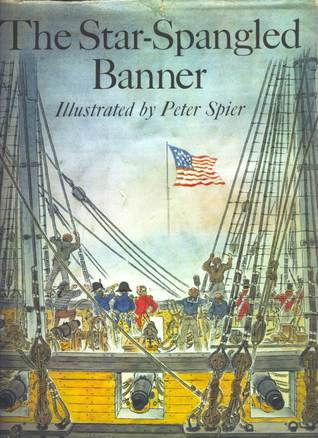
The Star-Spangled Banner illustrated by Peter Spier

Share

spangled

The Star-Spangled Banner
Author: Francis Scott Key
Illustrator: Peter Spier
Published September 19, 1973 by Doubleday Books for Young Readers

Goodreads Summary: Due to careful research, Spier’s artwork depicts “the dawn’s early light” and “the rocket’s red glare” with remarkable authenticity and detail in this celebratory book. Among the highlights: a brief history of the anthem, a reproduction of Francis Scott Key’s original manuscript, music for guitar and piano chords and many photographs.

My Review and Teachers’ Tools for Navigation: Peter Spier’s illustrations bring our national anthem to life. Spier carefully researched all lines of them poem as well as other facts about the War of 1812 when the anthem was written and used all of this knowledge to help show the meaning behind Key’s words. In the afterword, Spier shares much of the research to help tie it all together. 

In the past, as a school, we actually had students do something very similar. They each received a line from the first verse, and they had to research what it meant and then draw an illustration to share with their classmates the meaning. These were then put together as a book, so that the entire national anthem could be read with illustrations showing the meaning. Students loved the activity, and I really think it helped make history mean more to them than just dates.

Discussion Questions: What is Key trying to say in The Star-Spangled Banner?; What caused Key to write this poem?; Had you ever heard the second or third verse before? What did you think of it?; For some of the lines, Spier chose to draw a modern setting–why do you think he chose these specific places? 

We Flagged: 

Recommended For: 

readaloudbuttonsmall classroomlibrarybuttonsmall closereadinganalysisbuttonsmall

Happy Fourth of July!

Signature

Top Ten Tuesday: Top Ten Dream Book Vacations

Share

top ten tuesday

Top Ten Tuesday is an original feature/weekly meme created at The Broke and the Bookish. The feature was created because The Broke and Bookish are particularly fond of lists (as are we!). Each week a new Top Ten list topic is given and bloggers can participate.

 Today’s Topic: Top Ten Dream Book Locations

Ricki

1. Europe

Gayle Forman does a phenomenal job describing Europe in her Just One Day series. I haven’t started Book two yet. I think I am saving it just in case my husband randomly says, “Let’s go to Europe!” within the next year.

2. Africa

Wouldn’t it be lovely to read an Eliot Schrefer book in Africa? Maybe I can go a step further and dream that I read Endangered while resting in a bonobo sanctuary.

3. Salinas, California

I would love to visit Salinas, California and break out a John Steinbeck novel.

4. The Seven Kingdoms

While we are dreaming, I am going to go big. Can I have a one-way ticket to The Seven Kingdoms (the setting for the Graceling series)? Kellee, I will take you with me. 🙂

5. It’s a bit messy.

And now I am going to go across time (the Victorian Era), place, (the UK) and reality (fantasy). I would love to visit the multiverse of Philip Pullman’s His Dark Materials. While I am there, can I please have my own dæmon?

Kellee

I’ll definitely join Ricki on the vacation to The Seven Kingdoms! But here are the other places I’d like to go.

1. Paris, France

I have never visited France, but have always wanted to. Reading Anna and the French Kiss and Linnea in Monet’s Garden make me want to visit it even more.

2. Everglades

I live so close to the Everglades, but have never been there. Although I am pretty terrified of everything that is in the marsh/swamp, and Lost in the River of Grass doesn’t make it any better, I would love to go on a boat tour.

3. Africa

The animal life in Africa fascinates me, specifically apes. In both Primates, Threatened, and Endangered you see the amazing animals you can find in Africa (although you also see some of the human horrors that are happening), and that makes me want to go see these majestic creatures in the wild.

4. NYC

I want to live in Chicago, but I love visiting NYC, specifically the museums. You can see why I want to visit in books like Wonderstruck and From the Mixed Up Files of Basil E. Frankweiler. 

5. Philadelphia

I’ve been to Philadelphia, but after reading Ghetto Cowboy I want to go with a different set of lenses on.

Honorary. Hogwarts

Who wouldn’t want to go visit Hogwarts and Diagon Alley and all the other amazing Harry Potter places?!?!

Where would you like to take a book vacation?

RickiSigand Signature

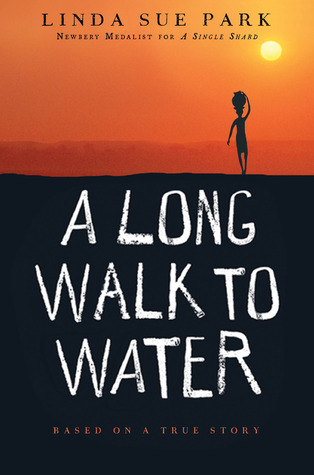
A Long Walk to Water by Linda Sue Park

Share

longwalk

A Long Walk to Water
Author: Linda Sue Park
Published November, 2010 by Houghton Mifflin Harcourt

Goodreads Summary: A Long Walk to Water begins as two stories, told in alternating sections, about a girl in Sudan in 2008 and a boy in Sudan in 1985. The girl, Nya, is fetching water from a pond that is two hours’ walk from her home: she makes two trips to the pond every day. The boy, Salva, becomes one of the “lost boys” of Sudan, refugees who cover the African continent on foot as they search for their families and for a safe place to stay. Enduring every hardship from loneliness to attack by armed rebels to contact with killer lions and crocodiles, Salva is a survivor, and his story goes on to intersect with Nya’s in an astonishing and moving way.

My Review and Teachers’ Tools for Navigation: The wars in Sudan and Darfur are the most violent and long lasting wars in the world; however, most Americans are unaware that they are even occurring. Linda Sue Park took a true story of a lost boy’s survival (watch a video about the true story here) after being chased from his village because of war and transformed it into a novel that will leave the reader with a feeling of awe. Awe of the bravery and pure fearlessness of Salva and the other Lost boys of Sudan and awe of the world of riches and blindness we live in while a horrendous war wages on the other side of the world. I love this book because it is very accessible to children, it won’t bog them down with too much history; however, it will definitely make them aware of the situation in Sudan.

Discussion Questions: What is a way that you could share what you learned about the Lost Boys of Sudan? How can you help? 

We Flagged: “Salva took a few steps towards the men.
‘Hey!’
A soldier approached Salva and raised his gun.
Salva froze. All he could see was the gun’s huge barrel, black and gleaming, as it moved toward his face.
The end of the barrel touched his chin.
Salva felt his knees turn to water. He closed his eyes.
If I die now, I will never see my family again.
Somehow, this thought strengthened him enough to keep him from collapsing in terror.
He took a deep breath and opened his eyes.” (p. 11)

“Going was easy.
Going, the big plastic container held only air… There was little weight, going. There was only heat, the sun already baking the air, even though it was long before noon. It would take her half the morning if she didn’t stop on the way.
Heat. Time. And thorns…
Nya filled the container all the way to the top. Then she tied the gourd in back in place and took the padded cloth doughnut from her pocked. The doughnut went on her head first, followed by the heavy container of water, which she would hold in place with one hand.
With the water balanced on her head, and her foot still sore from the thorn, Nya knew that going home would take longer than coming had. But she might reach home by noon, if all went well.” (p. 1, 14-15)

Read This If You Loved: The Queen of Water by Laura Resau, Now is the Time for Running by Michael Williams, Sold by Patricia McCormick, Diamonds in the Shadows by Caroline B. Cooney, Shabanu by Suzanne Fisher Staples, So Long a Letter by Mariama Ba

Recommended For: 
readaloudbuttonsmall closereadinganalysisbuttonsmall
classroomlibrarybuttonsmall litcirclesbuttonsmall
Signature

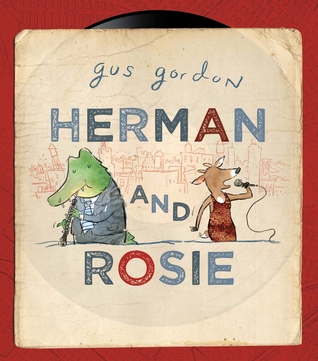
Herman and Rosie by Gus Gordon

Share

herman

Herman and Rosie
Author and Illustrator: Gus Gordon
Published October 15th, 2013 by Roaring Brook Press

Goodreads Summary: Once upon a time in a very busy city, on a very busy street, in two very small apartments, lived…
 Herman and Rosie. Herman liked playing the oboe, the smell of hot dogs in the winter, and watching films about the ocean. Rosie liked pancakes, listening to old jazz records, and watching films about the ocean. They both loved the groovy rhythm of the city, but sometimes the bustling crowds and constant motion left them lonely, until one night …

My Review: This book is a love note to music and for finding a friend to share your love. This wonderful story is told in a way that makes you fall in love with the characters immediately and feel every up and down with them. Also, the illustrations in this picture book are probably some of my favorite ever. I love the cartoony style mixed with some mixed media. Beautiful.

Teachers’ Tools for Navigation: I think this book will find its most love as a read aloud and as a wait to promote music and other passions; however, the book could definitely be used in other ways in the classroom. The tone and mood of the book takes a drastic turn about halfway through and would be a good introduction to these two narrative elements. It is interesting to look at how the illustrations helped drive the change. Also, there are onomatopoeias throughout that add to the imagery of the book.

Discussion Questions: How does music bring Herman and Rosie together?; Would Herman and Rosie every had become friends without the bad event happening to them?; How are Herman and Rosie similar? Different?

We Flagged: 

“Herman lived on the seventh floor. He liked potted plants, playing the oboe, wild boysenberry yogurt, the smell of hot dogs in the winter, and watching films about the ocean.”

Read This If You Loved: Marvin Makes Music by Marvin Hamlisch, Jazz ABZ by Wynton Marsalis, Ella Fitzgerald and Duke Ellington by Andrea Davis Pinkney, The Fantastic Undersea Life of Jacque Cousteau by Dan Yaccarino

Recommended For: 

readaloudbuttonsmall classroomlibrarybuttonsmall

Signature

Amulet Books Graphic Novel Teaching Guide

Share

abrams

In January, I was contacted by a publicity and marketing associate from Abrams Books/Amulet Books out of the blue. In this email, I was asked to work on a teaching guide about their graphic novels: The Misadventures of Salem Hyde, Nathan Hale’s Hazardous Tales, Hereville, and the Explorer series.

1729025518405488 

13591161135911621729026018405492

1283377017290285

I was beyond honored! And, of course, I said that I would definitely love to do it as I had read all of the graphic novels, and I am a huge fan of them.

First, they asked me to write an introduction about graphic novels and their importance in the classroom. I am a huge advocate for using graphic novels in schools, so I immediately began researching and writing. Here is the introduction:

What are graphic novels? The easiest way to describe graphic novels is to say that they are book-length comic books. However, a more complex definition that educators and librarians use is “book-length narratives told using a combination of words and sequential art, often presented in comic book style” (Fletcher-Spear, 37). Graphic novels are not written in just one genre; they can be in any genre, since graphic novels are a format/medium. Graphic novels are much like novels, but they’re told through words and visuals. They have all narrative elements, including characters, a complete plot, a conflict, etc.

Middle grade and young adult graphic novels cover a wide spectrum of themes and topics. Some common themes found in graphic novels for this age include the hero’s journey; overcoming hardship; and finding one’s identity. For example, in Hereville, we meet Mirka, an everyday girl who learns to use her brains and brawn to overcome her foes. In The Misadventures of Salem Hyde, Salem is working on finding out just who she is (both as a witch and as a person) with the help of her friend Whammy. Graphic novels can cross curricular lines. One example is the Nathan Hale’s Hazardous Tales series—comical nonfiction that takes historical events and presents them in interesting ways, using graphics and humor that will make students want to learn even more about the historical time periods. In the Explorer series, stories include topics such as animal adaptation, volcanic eruptions, and the fate of humanity. Like novels, graphic novels offer opportunities in all subject areas to extend students’ thinking.

Over the past few years, graphic novels have become a hot topic, growing in popularity with both children and educators. While many teachers are beginning to include them in the classroom, there are still teachers, administrators, and librarians who struggle with including this format in their schools. So, why should you use them in your classroom and have them available for students?

  • Graphic novels can make a difficult subject interesting and relatable. (Cohen)
  • Students are visual learners, and today’s students have a much wider visual vocabulary than students in the past. (Karp)
  • Graphic novels can help foster complex reading skills by building a bridge from what students know to what they still have to learn. (NCTE)
  • Graphic novels can help with scaffolding when trying to teach higher-order thinking skills or other complex ideas.
  • For students who struggle to visualize while they read, graphic novels provide visuals that shows what good readers do. (NCTE)
  • Many graphic novels rely on symbol, allusion, satire, parody, irony, and characters/plot and can be used to teach these, and other, literary devices. (Miller; NCTE)
  • Often, in between panels (called the gutter), the reader must make inferences to understand how the events in one panel lead to the events in the next. (McCloud)
  • Graphic novels can make differentiating easier. (Miller)
  • Graphic novels can help ELL (English Language Learners) and reluctant and struggling readers since they divide the text into manageable chunks, use images (which help students understand unknown vocabulary), and are far less daunting than prose. (Haines)
  • Graphic novels do not reduce the vocabulary demand; instead, they provide picture support, quick and appealing story lines, and less text, which allow the reader to understand the vocabulary more easily. (Haines)
  • Research shows that comic books are linguistically appropriate reading material, bearing no negative impact on school achievement or language acquisition. (Krashen)
  • Students love them.

Although you can find graphic novel readers at all reading levels, graphic novels can truly be a gateway to the joys of reading for reluctant and struggling readers. Reluctant readers often find reading to be less fun than video games, movies, and other media, but many will gravitate toward graphic novels because of the visuals and the fast pace. Struggling readers will pick up graphic novels for these reasons as well but also because the graphic novel includes accommodations directly in the book: images, less text, etc.

All in all, graphic novels can interest your most reluctant and struggling readers and also extend all of your readers, including your most gifted.  

Resources

  • Cohen, Lisa S. “But This Book Has Pictures! The Case for Graphic Novels in an AP Classroom.” AP Central. CollegeBoard.
  • Fletcher-Spear, Kristin, Merideth Jenson-Benjamin, and Teresa Copeland. “The Truth About Graphic Novels: A Format, Not a Genre.” The ALAN Review Winter (2005): 37­–44.
  • Haines, Jennifer. “Why Use Comics in The Classroom?” Comic Book Daily. N.p., 20 Mar. 2012.
  • Karp, Jesse. “The Case for Graphic Novels in Education.” American Libraries. N.p., 1 Aug. 2011.
  • Krashen, Stephen. The Power of Reading. Englewood, CO: Libraries Unlimited, Inc. 1993.
  • McCloud, Scott. Understanding Comics. Northampton, Mass.: Kitchen Sink, 1993. 
  • Miller, Andrew. “Using Graphic Novels and Comics in the Classroom.” Edutopia. N.p., 11 Jan. 2012.
  • NCTE, comp. “Using Comics and Graphic Novels in the Classroom.” The Council Chronicle September (2005) http://www.ncte.org/magazine/archives/122031.

 I then began reading and rereading the graphic novels and planning activities and discussion questions that could go along with each book. I was asked to come up with activities for all subjects, so this pushed me out of my comfort zone a bit; however, I loved trying to figure out how these amazing books could be used throughout all classes.  Some examples:

  • Salem Hyde [Science]: At the end of Spelling Trouble, Salem and Whammy have to rescue a whale, but it is done in a very unconventional way. How would real scientists rescue a whale in distress?
  • Hazardous Tales [Language Arts/History]: The Provost (a British soldier) and Nathan Hale disagree about the cause of the Revolutionary War. Based on One Dead Spy, what events caused the Americans to revolt? Do you agree with the Provost or with Nathan Hale about the causes of the war? (This could also be used as a debate question in class.)
  • Hereville [Math]: On pages 31–32 [of Hereville 1], Mirka is given a math problem: Three people are splitting a cake, so they cut it into thirds. But then a fourth person shows up. How can they cut the cake so that each person gets an equalamount of cake? (Mirka comes up with a solution, but are there others?) What if two more people had shown up? Three more? Four more? 
  • Explorer [History]: On page 84 [of The Mystery Boxes], in The Soldier’s Daughter, the man says, “War is a dark power.” Where in history have we seen war consume someone? Have there been wars that did not need to be fought? Research past wars and determine if a war was started because of the need for power or if there was a legitimate reason for it. 

These are just some examples.

I am happy to share the entire teaching guide with you. It can be found at http://www.abramsbooks.com/academic-resources/teaching-guides/ along with other teaching guides. The direct link to the PDF is http://www.abramsbooks.com/pdfs/academic/GraphicNovels_TeachingGuide.pdf.

I hope you find it useful as I am very proud of it,

Signature