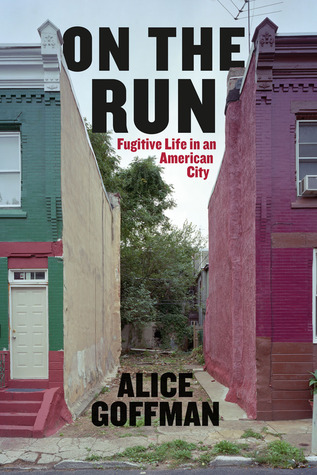
On the Run: Fugitive Life in an American City by Alice Goffman

Share

on the run

On the Run: Fugitive Life in an American City
Author: Alice Goffman
Published: May 1, 2014 by University Of Chicago Press

Summary: Forty years in, the War on Drugs has done almost nothing to prevent drugs from being sold or used, but it has nonetheless created a little-known surveillance state in America’s most disadvantaged neighborhoods. Arrest quotas and high-tech surveillance techniques criminalize entire blocks, and transform the very associations that should stabilize young lives—family, relationships, jobs—into liabilities, as the police use such relationships to track down suspects, demand information, and threaten consequences.

Alice Goffman spent six years living in one such neighborhood in Philadelphia, and her close observations and often harrowing stories reveal the pernicious effects of this pervasive policing. Goffman introduces us to an unforgettable cast of young African American men who are caught up in this web of warrants and surveillance—some of them small-time drug dealers, others just ordinary guys dealing with limited choices. All find the web of presumed criminality, built as it is on the very associations and friendships that make up a life, nearly impossible to escape. We watch as the pleasures of summer-evening stoop-sitting are shattered by the arrival of a carful of cops looking to serve a warrant; we watch—and can’t help but be shocked—as teenagers teach their younger siblings and cousins how to run from the police (and, crucially, to keep away from friends and family so they can stay hidden); and we see, over and over, the relentless toll that the presumption of criminality takes on families—and futures.

While not denying the problems of the drug trade, and the violence that often accompanies it, through her gripping accounts of daily life in the forgotten neighborhoods of America’s cities, Goffman makes it impossible for us to ignore the very real human costs of our failed response—the blighting of entire neighborhoods, and the needless sacrifice of whole generations.

Review: Inspired by a college course in her sophomore year, Alice Goffman seeks an ethnographic experience in inner-city Philadelphia. She gets a part-time job tutoring an African American girl, Aisha, and soon befriends the boys of 6th Street (pseudonym). Mike adopts her as a younger sister, and she comes to live with these boys—studying their every move. This quality piece of ethnographic research is a page turner. While it reads a bit more like a book than a scholarly publication, readers can glean her methodological approach through the footnotes. Goffman’s mission is clear. She wants readers to understand the inequities these African American boys of 6th Street face, and she shows how the criminal justice system (both law enforcement and the justice/prison system) are not working. I was ashamed at the actions of the police, specifically, and think this is very educational to readers of all ages, particularly in the wake of the racially based crimes that we consistently see in the news.

Teacher’s Tools for Navigation: This book is written for adults, but I think it would be very educational for high school students. I would use excerpts of this text to show students the realities of life on 6th Street in Philadelphia. It could be used to better understand crimes in the news, to teach inequity, to examine class issues, to understand the drug trade, and to fight racism. It would be eye-opening for students. While teaching this, I would also consider pairing it with Malcolm Gladwell’s review.

Discussion Questions: What can we do to stop the injustice of the court system? How is it flawed?; What role does race play in this text?; Was Goffman too close to the subjects of her ethnography? Do you think this affected her portrayal of 6th Street? What are the positives and negatives of this approach of qualitative study?

We Flagged: “To be on the run is a strange phrase for legally compromised people, because to be on the run is also to be at a standstill.”

“Thus, the great paradox of a highly punitive approach to crime control is that it winds up criminalizing so much of daily life as to foster widespread illegality as people work to circumvent it. Intensive policing and the crime it intends to control become mutually reinforcing. The extent to which crime elicits harsh policing, or policing itself contributes to a climate of violence and illegality, becomes impossible to sort out.”

Read This If You Loved: Punished: Policing the Lives of Black and Latino Boys by Victor M. Rios; The New Jim Crow: Mass Incarceration in the Age of Colorblindness by Michelle Alexander 

Recommended For:

  closereadinganalysisbuttonsmall classroomlibrarybuttonsmall

RickiSig

Blog Tour, Review, Giveaway, and Author Interview!: Rory’s Promise by Michaela MacColl and Rosemary Nichols

Share

rory

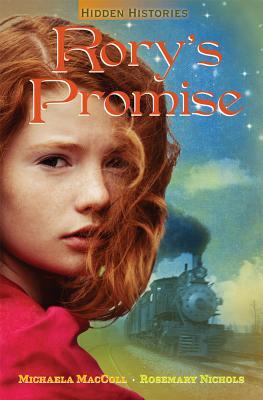
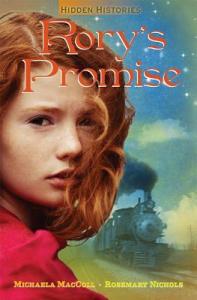
Rory’s Promise
Authors: Michaela MacColl and Rosemary Nichols
Published: September 1st, 2014 by Calkin Creek Books

Goodreads Summary: Twelve-year-old orphan Rory Fitzpatrick lives with her younger sister Violet at New York City’s Foundling Hospital in the early 1900s. But when Rory discovers that Violet will be sent to the Arizona Territory to be adopted, her world is shattered. Although too old to be adopted herself, Rory–brave and smart–is determined to stay with her sister, even if it means hiding out on a train traveling west. When Rory and Violet arrive in Arizona, everything that could go wrong does go wrong. Will Rory give up? This uplifting novel about the power of faith and the true meaning of family launches the Hidden Histories series, spotlighting little-known tales from America’s past, and the children behind those stories. Includes authors’ note and further resources.

Kellee’s Review: I love historical fiction because it introduces me to history in a way that will suck me into it and help me retain the information. Many historical fiction books also choose lesser known aspects of history to share. Rory’s Promise does all of the above. When I was done with the book, I immediately went and book talked it to my reading class though I found myself talking to them even more in depth about the history it shares (which then make them want to read the book even more). Rory’s Promise touches on orphans, mining, race relations, religion, kidnapping, building of the west, and The Foundling Hospital of NYC and does so in such a fascinating yet educational way. I learned so much from the book, and I immediately went and did more nonfiction reading when finished. AND it was a book I couldn’t put down!

Ricki’s Review: Like Kellee, learning about a lesser known subject in history was incredibly intriguing. This book reminded me of many of the historical fiction titles I read as a young girl—which were foundational for my growth as a reader. Beyond the fascinating subject matter, this text shows the powerful bond sisters share. Rory is utterly devoted to her sister, and will stop at nothing to protect her. When I read this book, I couldn’t help but think of the connection I have with my own sister, and I was compelled to call her and tell her how much I care for her. I imagine that this text will strengthen sibling bonds, and the love and loyalty these two sisters share is a great model for readers.

Teachers’ Tools for Navigation: Rory’s Promise could definitely be used for cross-curricular reading to help address content being taught in American History. It would be so interesting to research the different historical elements touched on in the book and connect it to Rory’s story.

Discussion Questions: Would you have done what Rory did? Why or why not?; Do you think the Foundling should have gotten the orphans back?; Would you have made the same choice Rory did at the end of the book?; Do you think Sister Anna was looking out for Rory or do you disagree with her decision to separate the sisters?

Book Trailer: 

Authors’ Bios: Michaela MacColl attended Vassar College and Yale University earning degrees in multi-disciplinary history. Unfortunately, it took her 20 years before she realized she was learning how to write historical fiction. Her favorite stories are the ones she finds about the childhood experiences of famous people. She has written about a teenaged Queen Victoria (Prisoners in the Palace, Chronicle 2010) and Beryl Markham’s childhood (Promise the Night, Chronicle 2011). She is writing a literary mystery series for teens featuring so far a young Emily Dickinson in Nobody’s Secret (2013) and the Bronte sisters in Always Emily (2014).  She has recently begun a new series with Boyd’s Mill/Highlights called Hidden Histories about odd events in America’s past. The first entry in the series is Rory’s Promise and will be published in September 2014. She frequently visits high schools and has taught at the Graduate Institute in Bethel, CT.   She lives in Westport CT with her husband, two teenaged daughters and three extremely large cats.

michaela maccoll

Rosemary Nichols has loved history all her life, especially the history of ordinary people. She has two history degrees from the University of Washington and a law degree from the University of Chicago. This is her first book for children. She lives in upstate New York. rosemarygailnichols.com.

Author Q&A: We are very lucky to have been able to ask Michaela MacColl some questions about Rory’s Promise. We were super excited as we were so intrigued by the story and history.

Unleashing Readers: How did you first come across all the different histories you touched on in Rory’s Promise?

Michaela MacColl: My writing partner is one of those folks who reads all the scholarly topic non-fiction. You know when a smart professor spends years finding out about something and then writes a compelling book (with a zillion footnotes!).  In this case, Rosemary suggested we take a look at “The Great Arizona Orphan Abduction” by Linda Gordon. Gordon wrote her book to talk about class and race in turn of the 19th c. America – using the orphan abduction as her example.  So we considered her philosophical views – but what was incredibly useful for us was her detailed well-researched timeline of events.

UR: Rory is not based on a real person, so who/what inspired you when creating her?

MM: We needed a heroine kids could identify with. The target age was middle grade but most of the Foundling kids were under the age of 5. Not to say anything negative about 5 year olds – but how interesting can they be? So we thought about a girl who might have a strong interest in one of the kids. Aha, a sibling! But then she needed a plausible reason to still be at the orphanage. The answer to that was the basis of Rory’s character. She’s devoted to her sister and will do literally anything to stay close to her.  This means making herself indispensable around the Foundling Hospital. She thinks she’s fooling the nuns – but they see right through her and love her for it.

The other half of Rory came from the history of the orphaned kids who were left behind in Clifton AZ.  No one know what happened to them all, but there was a rumor that a Mexican family returned to town years later, with a red-haired daughter.  There was also a discrepancy on the lists of children. One girl named Violet appears on the initial lists but not the later ones. Who was she? That’s where we started.

UR: Can you tell us about your writing process? How is it different when writing with two writers vs. by yourself.

MM: Rosemary is a whiz with American history. She’s read so widely that she was our fact checker and generally kept my imagination in realistic/historical check. She wrote a lot of the setting and descriptions. I have more experience writing for kids – so I did most of the plot and dialogue. But we both worked on the revisions.

UR: What was your favorite interesting piece of information you found when researching for Rory’s Promise?

MM: Oddly, it wasn’t the abduction in Arizona. I found myself fascinated by the very clever sisters at the Foundling Hospital. With few resources they built an organization that helped thousands of women and babies – not to mention creating what we know as the foster care system in America.

URRory’s Promise is the first book in the Hidden Histories series. Can you tell us what is coming next?

MM: I can! We’re finishing it right now.  Tentatively titled Freedom’s Price, it’s about Dred Scott’s daughter in 1849 St. Louis Mo. There’s slavecatchers, cholera and fire. I think it will really appeal to middle grade readers!

Thank you so much Michaela! Cannot wait for the next book in the series!

Read This If You Loved: Bud, Not Buddy by Christopher Paul Curtis, American Girls series, Dear America series, Orphan Train series by Joan Lowery Nixon, Nonfiction books about orphan trains or building of the West

Recommended For: 

classroomlibrarybuttonsmall

Make sure to stop by the other stops on the blog tour to learn more about Rory’s Promise

Friday, 9/19          Kirby Larson blog (GUEST BLOG POST/GIVEAWAY)
www.kirbylarson.com

Mon 9/22             Middle Grade Mafioso (BOOK REVIEW/GIVEAWAY)
www.middlegrademafioso.blogspot.com/

Tue 9/23               Mother/Daughter Book Club (BOOK REVIEW/GIVEAWAY) |
www.motherdaughterbookclub.com

Wed 9/24             Middle Grade Minded (GUEST BLOG POST/GIVEAWAY)
www.middlegrademinded.blogspot.com

Thu 9/25              KidLit Frenzy (BOOK REVIEW/GIVEAWAY)
www.kidlitfrenzy.com

GIVEAWAY

a Rafflecopter giveaway

Signature andRickiSig

**Thank you to Kerry at Boyds Mills Press and Highlights for Children for providing copies for review**

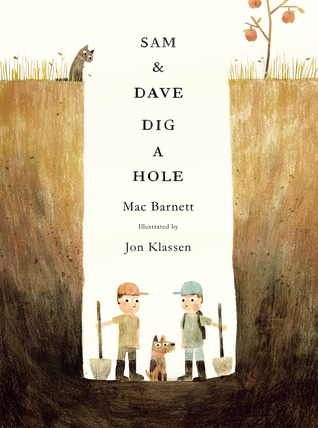
Freedom Summer by Deborah Wiles (Ricki’s Review)

Share

freedom summer

Freedom Summer
Author: Deborah Wiles; Illustrator: Jerome Lagarrigue
Published: January 1, 2005 by Aladdin

Summary: 

John Henry swims better than anyone I know.
He crawls like a catfish,
blows bubbles like a swamp monster,
but he doesn’t swim in the town pool with me.
He’s not allowed. 

Joe and John Henry are a lot alike. They both like shooting marbles, they both want to be firemen, and they both love to swim. But there’s one important way they’re different: Joe is white and John Henry is black, and in the South in 1964, that means John Henry isn’t allowed to do everything his best friend is. Then a law is passed that forbids segregation and opens the town pool to everyone. Joe and John Henry are so excited they race each other there…only to discover that it takes more than a new law to change people’s hearts.

Review: I rarely review picture books or texts that weren’t published recently. For me, the blog is a place for me to highlight newer books (whenever possible). I love picture books, but Kellee often reviews them, and I love young adult literature, so those are often the titles I review. After I read this book, I couldn’t wait to blog about it because it is easily one of the best picture books I have ever read and is worthy of the praise it receives. Set in the 1960s South, this moving, lyrical text depicts the Civil Rights Movement through the eyes of a child who just wants to adventure with his friend. The messages are powerful, and I plan to purchase it to read again and again with my son. After we read this as a family, my husband and I wondered if it was a work of nonfiction because it felt so very real to us. 

You can view Kellee’s review of Freedom Summer here.

Teachers’ Tools for Navigation: The most obvious choice would be to use this text to teach about diversity, discrimination or the Civil Rights Movement. I would also love to pair this with The Other Side by Jacqueline Woodson. Students would find great value in comparing and contrasting the imagery and messages of these two texts. I could also see it being paired with texts like To Kill a Mockingbird by Harper Lee. More than anything, this is a book about the power of friendship.

Discussion Questions: How do these boys view their world differently from the adults around them?; Why might the author have chosen to end the text the way she does? What message does it send?; How do the illustrations support the readers’ understanding of the text?

We Flagged: 

“John Henry’s skin is the color of

browned butter.

He smells like pine needles after a

good rain.

My skin is the color of the pale

moths that dance around the porch

light at night.

John Henry says I smell like a just-washed sock.

‘This means war!’ I shout.”

Read This If You Loved: The Other Side by Jacqueline Woodson, Something Beautiful by Sharon Dennis Wyeth, Goin’ Someplace Special by Patricia C. McKissack

Recommended For:

  readaloudbuttonsmall closereadinganalysisbuttonsmall classroomlibrarybuttonsmall

RickiSig

Coyote Summer by J.S. Kapchinske

Share

coyote

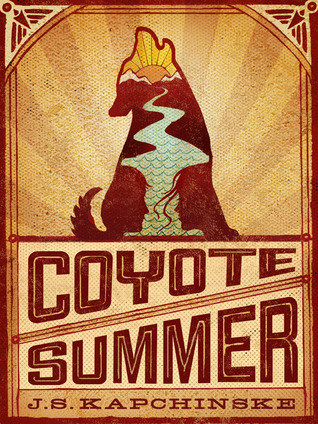
Coyote Summer
Author: J.S. Kapchinske
Published March 17, 2013 by Moon Halo Books

Goodreads Summary: Heath always looked forward to summer visits at Grandpa’s—long days in the wild Rocky Mountains, fishing with Dad on the Piedra River, and nights sleeping on the screened-in porch. Plus this summer, Dad promised to finally tell him the secret about old Mrs. Baylis—a mysterious Native American woman living down the dusty dirt road… But now, after Dad’s accident, it can never happen that way. Heath and his mother go to Grandpa’s, but only to spread Dad’s ashes in the river. 

In the beginning, Heath feels like he’s been swallowed by the raging Piedra, held upside down in some dark and unforgiving eddy. But one day, wandering along the riverbank, he meets Annie, a wild-eyed tomboy who shows him a hidden cave with a litter of orphaned coyote pups. Together they discover the cave holds another secret—one that might help them figure out the mystery of old Mrs. Baylis. During that summer in the mountains, Heath comes to realize there is both beauty and ugliness in the world, sometimes all tangled together. By opening himself up to Annie and the coyotes, he rediscovers hope and joy in this big, beautiful, mixed-up world.

My Review: You have never heard of this book have you? That makes me so sad. How do such wonderful books fly under so many people’s radars? This is a special book that should be in the hands of middle schoolers everywhere! Heath is a character that so many kids will connect with, and his journey would definitely touch them like it did me.

Heath recently lost his father senselessly when he was hit by a drunk driver. The sudden loss of a man that Heath looked up to affects him tremendously, and he is struggling to find himself. Everything he does at his Grandpa’s house reminds him of his dad, and his mom and Grandpa are dealing with the death in a way that makes Heath feel alone.  But during this summer, his coyote summer, he finds his own identity, makes an everlasting friend, and begins to figure out how to deal without his dad. And there are other subplots that run throughout he book that just add to the depth of the narrative such as Annie’s story and the story of Mrs. Baylis.

Teachers’ Tools for Navigation: This book just needs to be shared. It could definitely be read as a read aloud, but it will probably find its home the best in the right students’ hands either through the classroom library or lit circles. Students who love nature, have suffered a loss, or enjoy identity books will find this one is perfect for them.

Discussion Questions: How does finding Annie and the coyotes change Heath’s summer?; Why is Grandpa acting the way he is?; Why was it important for Heath to spend the summer with the coyotes? How did it affect him?

We Flagged: “As we sat there, a heron swooped down on the far bank and began stalking the shallows for fish. He moved slowly and hardly made a ripple when he walked. Then he stretched his long neck over the water, cocked his head, and froze.

“He’s pretty,” the girl said under her breath, as if talking to herself.

Somehow, her saying that made me feel better. “Herons were my dad’s favorite. He told me we should all learn to be patient like one of them.”

“Your dad sounds nice.”

I looked down at my hands and felt that horrible lump in my throat.” (Location 196, Kindle book)

Read This If You Loved: Hoot, Flush, Chomp, or Scat by Carl Hiassen, Lost in the River of Grass by Ginny Rorby, My Side of the Mountain by Jean Craighead George, Hatchet by Gary Paulsen

Recommended For:

classroomlibrarybuttonsmall litcirclesbuttonsmall

Signature

**Thank you to the author for providing a copy for review**

Boys of Blur by N. D. Wilson

Share

boys of blur

Boys of Blur
Author: N. D. Wilson
Published: April 8, 2014 by Random House

Ricki’s Summary and Review: 12-year-old Charlie Reynolds’ family travels to town of Taper to attend the funeral of a beloved football coach. When Charlie’s stepfather is given the opportunity to coach the town’s football team, Charlie is not thrilled to learn that they will be living in this creepy town filled with ancient stories of runaway slaves, native tribes, and monsters that rise organically from the murky swamps. He tries to fit into this mysterious place, where boys chase rabbits through burning sugarcane and everything seems to revolve around football. As he comes to learn about this town of secrets, Charlie wonders if he has the courage to uncover the mysteries that surround him.

Set deep in the heart of the Florida Everglades, this text is sure to grip readers with its muck, swords, blood, and gore. Wilson integrates complex allusions to Beowulf, which will compel readers to uncover all of the parallels with the classic legend. The beautifully complex language of this fast-paced story inspires close readings while also teaching readers lessons about evilness, heroism, and family.

Kellee’s Review: What I found most intriguing about this book is that Wilson was able to allude to Beowulf in a middle grade book without completely scaring away the reader.  Although I have read in multiple reviews that this book will grab reluctant readers’ attention, I think that some of the allusions are hard to grasp without prior knowledge, so reluctant readers may need some assistance understanding thus making the book a great read aloud as it will grab attention and start deep discussion (see Tools for Navigation).  In addition to the allusions, there are opportunities to discuss hero’s quest, abuse, and loyalty.

You will also find some beautiful writing in this novel. Wilson has a way with words that made this novel lyrical yet easy to read. From the very first line: “When the sugarcane’s burning and the rabbits are running, look for the boys who are quicker than flame.” I was impressed with how literary the novel was.  

Teacher’s Tools for Navigation: There are obvious parallels between this novel and  the legend of Beowulf, and pairing these two texts for discussion would prove very rewarding. Perhaps, teachers could use this Boys of Blur in conjunction with Gareth Hinds’ graphic novel of Beowulf. Then, the class could compare and contrast both the story lines and the differing formats authors might employ to convey a story and message.

Discussion Questions: How is Charlie characterized? Do you find him to be a strong character?; What role does Cotton play in the story?; What role does Charlie’s father play in the story? Can he be forgiven?; How does the author use language effectively?

We Flagged: “‘Yes,’ Mrs. Wisdom said, ‘you are. You’re made of tiny spinning bits as fast as light. But those bits aren’t all of you. They fly off. They get lost, and new ones come on and join the swirling Charlie-shaped dance that is your body. And dwelling in that dance, woven through every racing bit, heating it all with life and guiding it, there is a fire, a soul—you. It takes a dream to see something like that, something closer to the way things really are” (110).

Read This If You Loved:  Beowulf by Unknown, 100 Cupboards by N. D. Wilson, Maniac Magee by Jerry Spinelli, Holes by Louis Sachar, Ophelia and the Marvelous Boy by Karen FoxleeRaining Sardines by Enrique Flores-Galbis

Recommended For:

 readaloudbuttonsmall litcirclesbuttonsmall closereadinganalysisbuttonsmall classroomlibrarybuttonsmall 

RickiSigand Signature

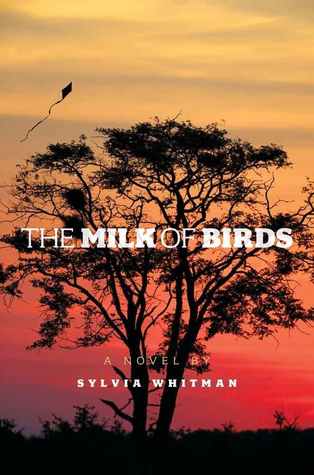
The Milk of Birds by Sylvia Whitman

Share

milkofbirds

The Milk of Birds
Author: Sylvia Whitman
Published April 16th, 2013 by Atheneum Books for Young Readers

Goodreads Summary: This timely, heartrending novel tells the moving story of a friendship between two girls: one an American teen, one a victim of the crisis in Darfur.

Know that there are many words behind the few on this paper…

Fifteen-year-old Nawra lives in Darfur, Sudan, in a camp for refugees displaced by the Janjaweed’s trail of murder and destruction. Nawra cannot read or write, but when a nonprofit organization called Save the Girls pairs her with an American donor, Nawra dictates her thank-you letters. Putting her experiences into words begins to free her from her devastating past—and to brighten the path to her future.

K. C. is an American teenager from Richmond, Virginia, who hates reading and writing—or anything that smacks of school. But as Nawra pours grief and joy into her letters, she inspires K. C. to see beyond her own struggles. And as K. C. opens her heart in her responses to Nawra, she becomes both a dedicated friend and a passionate activist for Darfur.

In this poetic tale of unlikely sisterhood, debut author Sylvia Whitman captures the friendship between two girls who teach each other compassion and share a remarkable bond that bridges two continents.

My Review: This is a special book. First, because of the characters who tell the story. K.C. is a young girl with learning disabilities which have caused her to hate reading, writing, and school. Nawra is a refugee in Darfur who continues to have an optimistic view of the world even after she has been surrounded by horrors that I can’t even imagine. Both of these girls are not represented very often in books, and they are both so important to know.  Through this book, the reader gets to see the intensity of the situation in Sudan and refugees’ power in overcoming however they can. They also get to see the brilliance of students with learning disabilities. There are so many students in our school just like K.C., and too many of their peers would judge them by their struggles instead of by their heart and soul.

Second, this book is special because of the way the author is able to intertwine these two stories in a flawless way, and a way that keeps the reader engaged in both stories simultaneously. Third, the lyrical writing of Whitman makes this story not only interesting and important, but also beautiful to read. Last, the power of this book lies in the book, and how the book will change those who read it.

Teachers’ Tools for Navigation: This book has some incredibly lyrical aspects which would be perfect for mentor texts for imagery and other descriptive language. I also love the idea of written pen pals, and I would love to see this book being used to start pen pals in a classroom. Finally, K.C.’s friendship with Nawra helps her become an advocate for refugees in Darfur. This would be a great way to talk about ways to make a difference in the world. I would pair it with A Long Walk to Water which shows the same thing. Powerful.

Discussion Questions: What does K.C. teach us about students with learning disabilities?; What does Nawra teach us about Sudanese refugees?; What is your favorite Nawra saying? Why?; How does life here compare to life in the Sudan?; What is a way you could help the refugees in Sudan?; What is another cause in the world that you could help?

We Flagged: “My mother is sitting on the mat where I left her. She shows no surprise that Adeeba and I return so soon with nothing but more words from the khawaja. She does not protest when I lift her.

I carry my mother as I used to carry wounded animals from pasture, arms on one side, legs on the other, her body draped behind my neck and across my shoulders. She is not much heavier than a goat.” (Nawra, p. 3)

“When she explains things, they make sense, for a while. Who cares about the area of a trapezoid, though? That question stumped my teacher for a minute, and then he launched into this spiel about geometry in everyday life, and if I were someone with a trapezoidal yard, I might need to figure out how much fertilizer to spread. As if. Hook up your hose to a bottle of Miracle-Gro, point, and shoot.” (K.C., p. 12)

Read This If You Love: A Long Walk to Water by Linda Sue Park, Golden Boy by Tara Sullivan, Out of Nowhere by Maria Padian

Recommended For: 

classroomlibrarybuttonsmall closereadinganalysisbuttonsmall litcirclesbuttonsmall

Signature

Winger by Andrew Smith (Kellee’s Review)

Share

winger

Winger
Author: Andrew Smith
Published May 14th, 2013 by Simon & Schuster

Goodreads Summary: Ryan Dean West is a fourteen-year-old junior at a boarding school for rich kids. He’s living in Opportunity Hall, the dorm for troublemakers, and rooming with the biggest bully on the rugby team. And he’s madly in love with his best friend Annie, who thinks of him as a little boy.

With the help of his sense of humor, rugby buddies, and his penchant for doodling comics, Ryan Dean manages to survive life’s complications and even find some happiness along the way. But when the unthinkable happens, he has to figure out how to hold on to what’s important, even when it feels like everything has fallen apart.

Filled with hand-drawn info-graphics and illustrations and told in a pitch-perfect voice, this realistic depiction of a teen’s experience strikes an exceptional balance of hilarious and heartbreaking.

My Review: Andrew Smith sure knows how to write a teenage boy’s voice. He gets inside of adolescent male’s mind, and puts it all on paper for us. (It probably has something to do with teaching high school.) Ryan Dean’s voice and his story are so authentic. This book will make you cringe, laugh out loud, shake your head, and cry.  I am also so impressed with all of the themes that are dealt with in this book without ever feeling over done. These themes include bullying, absent parents, peer pressure, identity, sexuality, prejudice, and friendship.  In addition, Smith builds his characters, setting, and plot seamlessly. You fall in love with all of the characters, main and secondary. Even the antagonist. The setting itself is a character. And finally the plot arc was perfectly done, and was so unpredictable all the way to the end.

Teachers’ Tools for Navigation: First and foremost, this book needs to read by teens. However that happens, it is the right thing. The easiest way would be to get it into libraries and classrooms. There are also parts of the book that could definitely be pulled out to be used in the classroom in may different ways. On that junps to mind right away is using Ryan Dean’s comics as mentor texts for writing comics to write narratives of everyday events. Ricki also has some great ideas for Winger in the classroom in her review.

Discussion Questions: What kind of social challenges does Ryan Dean have to overcome since he is 14 but a junior?; Were you able to predict the end of the book?; What are some traits about Ryan Dean that made him easy to connect to?; How does Opportunity Hall and the rest of the school become a character in Winger?

We Flagged: 

winger2(p. 21)

Read This If You Loved: Looking for Alaska by John Green, Openly Straight by Bill Konigsberg

Recommended For: 

classroomlibrarybuttonsmall closereadinganalysisbuttonsmall

Signature