Touched by Paul Maurer

Share

touched

Touched
Author: Paul Maurer
Published February 6th, 2013 by New Libri Press

Goodreads Summary: Landmines. Quicksand. Class warfare. Now if Jimmy Parker could only find high school that simple. It only gets more complicated when a mysterious female classmate with a special gift enters his life. Jimmy finds out quickly that a simple touch of her hand allows her unwanted clairvoyance into his most sacred thoughts. Soon after the revelation adolescent sparks fly in directions that culminate in Jimmy’s admittance into the sinister Gritch Club. There he is confronted with social and sexual dilemmas that shake his very core. It is only when his classmate’s mental frailties bubbles to the surface he realizes seemingly harmless actions have powerful consequences that end one life and transform another.

My Review: This book’s ending was so shocking. I sat with my mouth hanging open, just shocked. It was so sudden and really caught me off guard.  The emotion I felt starts with the characters. Jimmy is a nobody in his high school until Renee enters his life. Renee is special. She doesn’t care about what others think, she stands up to the bullies, and she actually befriends Jimmy. Renee is who propels our plot. She gets Jimmy to get out of his comfort zone, she is mysterious so I was always trying to figure her out, and she was smart and beautiful.

Teacher Tools’ For Navigation: There is almost a sub-genre of books that Touched fits in, though I don’t know if it has a name yet. They all have smart or outcast main characters, and another character enters their life who helps them realize their identity. Teens who like those book will enjoy Touched as well.

Discussion Questions: How does Renee change Jimmy’s life?; What events caused the surprising ending to happen? Did you see it happen? Was their foreshadowing that could have given away the ending?

We Flagged: “Most of high school was about as thrilling as getting a Slushee brain-freeze. But in my first class after lunch a thin vein of gold appeared within the red bricks of the building. English Composition was taught by Clarice Weatherspoon, a wrinkly lady that just about everybody called Mrs. Spoon. She was about eighty years old and one of those teachers who probably probably taught during the depression and was never going to die. I could see her in a coma maybe, but not dead. I never cared much for writing but Mrs. Spoon was supposed to be different. Fun was too strong a word for her class, but at least it wasn’t supposed to bore the living crap out of you. She only weighted a hundred pounds caring a backpack full of Big Macs, but when she spoke she came on as tough as a leather boot. Probably tougher.” (Location 335, Kindle ebook)

Read This If You Loved: The Beginning of Everything by Robyn Schneider, Speak by Laurie Halse Anderson, Jumped In by Patrick Flores-Scott

Recommended For: 

classroomlibrarybuttonsmall

Signature

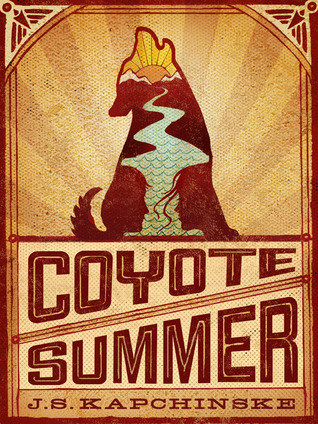
Coyote Summer by J.S. Kapchinske

Share

coyote

Coyote Summer
Author: J.S. Kapchinske
Published March 17, 2013 by Moon Halo Books

Goodreads Summary: Heath always looked forward to summer visits at Grandpa’s—long days in the wild Rocky Mountains, fishing with Dad on the Piedra River, and nights sleeping on the screened-in porch. Plus this summer, Dad promised to finally tell him the secret about old Mrs. Baylis—a mysterious Native American woman living down the dusty dirt road… But now, after Dad’s accident, it can never happen that way. Heath and his mother go to Grandpa’s, but only to spread Dad’s ashes in the river. 

In the beginning, Heath feels like he’s been swallowed by the raging Piedra, held upside down in some dark and unforgiving eddy. But one day, wandering along the riverbank, he meets Annie, a wild-eyed tomboy who shows him a hidden cave with a litter of orphaned coyote pups. Together they discover the cave holds another secret—one that might help them figure out the mystery of old Mrs. Baylis. During that summer in the mountains, Heath comes to realize there is both beauty and ugliness in the world, sometimes all tangled together. By opening himself up to Annie and the coyotes, he rediscovers hope and joy in this big, beautiful, mixed-up world.

My Review: You have never heard of this book have you? That makes me so sad. How do such wonderful books fly under so many people’s radars? This is a special book that should be in the hands of middle schoolers everywhere! Heath is a character that so many kids will connect with, and his journey would definitely touch them like it did me.

Heath recently lost his father senselessly when he was hit by a drunk driver. The sudden loss of a man that Heath looked up to affects him tremendously, and he is struggling to find himself. Everything he does at his Grandpa’s house reminds him of his dad, and his mom and Grandpa are dealing with the death in a way that makes Heath feel alone.  But during this summer, his coyote summer, he finds his own identity, makes an everlasting friend, and begins to figure out how to deal without his dad. And there are other subplots that run throughout he book that just add to the depth of the narrative such as Annie’s story and the story of Mrs. Baylis.

Teachers’ Tools for Navigation: This book just needs to be shared. It could definitely be read as a read aloud, but it will probably find its home the best in the right students’ hands either through the classroom library or lit circles. Students who love nature, have suffered a loss, or enjoy identity books will find this one is perfect for them.

Discussion Questions: How does finding Annie and the coyotes change Heath’s summer?; Why is Grandpa acting the way he is?; Why was it important for Heath to spend the summer with the coyotes? How did it affect him?

We Flagged: “As we sat there, a heron swooped down on the far bank and began stalking the shallows for fish. He moved slowly and hardly made a ripple when he walked. Then he stretched his long neck over the water, cocked his head, and froze.

“He’s pretty,” the girl said under her breath, as if talking to herself.

Somehow, her saying that made me feel better. “Herons were my dad’s favorite. He told me we should all learn to be patient like one of them.”

“Your dad sounds nice.”

I looked down at my hands and felt that horrible lump in my throat.” (Location 196, Kindle book)

Read This If You Loved: Hoot, Flush, Chomp, or Scat by Carl Hiassen, Lost in the River of Grass by Ginny Rorby, My Side of the Mountain by Jean Craighead George, Hatchet by Gary Paulsen

Recommended For:

classroomlibrarybuttonsmall litcirclesbuttonsmall

Signature

**Thank you to the author for providing a copy for review**

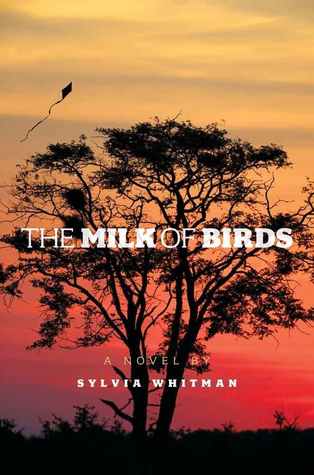
The Milk of Birds by Sylvia Whitman

Share

milkofbirds

The Milk of Birds
Author: Sylvia Whitman
Published April 16th, 2013 by Atheneum Books for Young Readers

Goodreads Summary: This timely, heartrending novel tells the moving story of a friendship between two girls: one an American teen, one a victim of the crisis in Darfur.

Know that there are many words behind the few on this paper…

Fifteen-year-old Nawra lives in Darfur, Sudan, in a camp for refugees displaced by the Janjaweed’s trail of murder and destruction. Nawra cannot read or write, but when a nonprofit organization called Save the Girls pairs her with an American donor, Nawra dictates her thank-you letters. Putting her experiences into words begins to free her from her devastating past—and to brighten the path to her future.

K. C. is an American teenager from Richmond, Virginia, who hates reading and writing—or anything that smacks of school. But as Nawra pours grief and joy into her letters, she inspires K. C. to see beyond her own struggles. And as K. C. opens her heart in her responses to Nawra, she becomes both a dedicated friend and a passionate activist for Darfur.

In this poetic tale of unlikely sisterhood, debut author Sylvia Whitman captures the friendship between two girls who teach each other compassion and share a remarkable bond that bridges two continents.

My Review: This is a special book. First, because of the characters who tell the story. K.C. is a young girl with learning disabilities which have caused her to hate reading, writing, and school. Nawra is a refugee in Darfur who continues to have an optimistic view of the world even after she has been surrounded by horrors that I can’t even imagine. Both of these girls are not represented very often in books, and they are both so important to know.  Through this book, the reader gets to see the intensity of the situation in Sudan and refugees’ power in overcoming however they can. They also get to see the brilliance of students with learning disabilities. There are so many students in our school just like K.C., and too many of their peers would judge them by their struggles instead of by their heart and soul.

Second, this book is special because of the way the author is able to intertwine these two stories in a flawless way, and a way that keeps the reader engaged in both stories simultaneously. Third, the lyrical writing of Whitman makes this story not only interesting and important, but also beautiful to read. Last, the power of this book lies in the book, and how the book will change those who read it.

Teachers’ Tools for Navigation: This book has some incredibly lyrical aspects which would be perfect for mentor texts for imagery and other descriptive language. I also love the idea of written pen pals, and I would love to see this book being used to start pen pals in a classroom. Finally, K.C.’s friendship with Nawra helps her become an advocate for refugees in Darfur. This would be a great way to talk about ways to make a difference in the world. I would pair it with A Long Walk to Water which shows the same thing. Powerful.

Discussion Questions: What does K.C. teach us about students with learning disabilities?; What does Nawra teach us about Sudanese refugees?; What is your favorite Nawra saying? Why?; How does life here compare to life in the Sudan?; What is a way you could help the refugees in Sudan?; What is another cause in the world that you could help?

We Flagged: “My mother is sitting on the mat where I left her. She shows no surprise that Adeeba and I return so soon with nothing but more words from the khawaja. She does not protest when I lift her.

I carry my mother as I used to carry wounded animals from pasture, arms on one side, legs on the other, her body draped behind my neck and across my shoulders. She is not much heavier than a goat.” (Nawra, p. 3)

“When she explains things, they make sense, for a while. Who cares about the area of a trapezoid, though? That question stumped my teacher for a minute, and then he launched into this spiel about geometry in everyday life, and if I were someone with a trapezoidal yard, I might need to figure out how much fertilizer to spread. As if. Hook up your hose to a bottle of Miracle-Gro, point, and shoot.” (K.C., p. 12)

Read This If You Love: A Long Walk to Water by Linda Sue Park, Golden Boy by Tara Sullivan, Out of Nowhere by Maria Padian

Recommended For: 

classroomlibrarybuttonsmall closereadinganalysisbuttonsmall litcirclesbuttonsmall

Signature

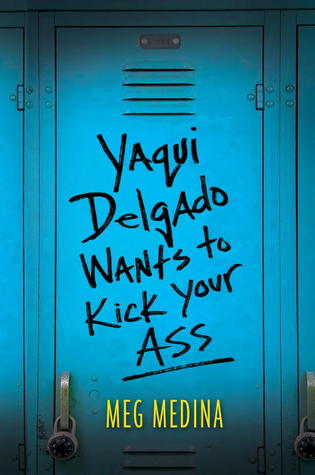
Yaqui Delgado Wants to Kick Your Ass by Meg Medina

Share

Yaqui Delgado

Yaqui Delgado Wants to Kick Your Ass
Author: Meg Medina
Published: March 26, 2013 by Candlewick Press

Summary: In Meg Medina’s compelling new novel, a Latina teen is targeted by a bully at her new school — and must discover resources she never knew she had.

One morning before school, some girl tells Piddy Sanchez that Yaqui Delgado hates her and wants to kick her ass. Piddy doesn’t even know who Yaqui is, never mind what she’s done to piss her off. Word is that Yaqui thinks Piddy is stuck-up, shakes her stuff when she walks, and isn’t Latin enough with her white skin, good grades, and no accent. And Yaqui isn’t kidding around, so Piddy better watch her back. At first Piddy is more concerned with trying to find out more about the father she’s never met and how to balance honors courses with her weekend job at the neighborhood hair salon. But as the harassment escalates, avoiding Yaqui and her gang starts to take over Piddy’s life. Is there any way for Piddy to survive without closing herself off or running away? In an all-too-realistic novel, Meg Medina portrays a sympathetic heroine who is forced to decide who she really is.

Ricki’s Review: There are many books about bullying, but it is rare to read a text that makes you truly feel frighted for the character being bullied. This text felt very real to me, and it will surely resonate with teenagers. There are many lessons about bullying, but there are also some phenomenal examples of family and friendship. Piddy’s mother isn’t perfect and like all parents, she makes mistakes, but she is a single mother who tries her best. The ups and downs of this mother-daughter relationship offer much to ponder and discuss. As adolescents go through high school, they form new bonds and often, they also grow apart from childhood friends. Piddy’s circumstances of a new school with new friendships will absolutely connect with teens.

Kellee’s Review: Like Ricki stated above, this book makes you feel. As Yaqui fills Piddy’s world with fear, Piddy begins to lose herself and get caught up in the terror. As a reader, you find yourself afraid with Piddy whenever she leaves her house, goes to school, or even thinks about doing either. A book that can do this is brilliant. Meg Medina has a way of sucking you into the world, and I think it is her use of imagery throughout. You can see the characters, hear the music Piddy listens to, feel the fear, etc. And Piddy’s voice is so crystal clear, that is something she never loses. When you finish reading, you can still hear Piddy’s voice in your head.  I also feel that this is a wonderful diverse book in a time when the YA community is calling for diverse books. This one should be in high school classrooms, and should be discussed as it has such important themes and beautiful writing (no matter what anyone thinks about it!).

Teacher’s Tools for Navigation: This would be a great read aloud at the beginning of the school year. Bullying is a problem that is all too real in our school systems, and it must be addressed immediately, in my opinion. This book would provide rich discussions for classrooms, and it is a must-read for teens. It would be great to do several book groups (or lit circles) that are centered on bullying texts in order to compare the characters’ experiences.

Discussion Questions: Does Piddy make the right decisions? Would you make different choices than her? Why or why not?; Why does the author incorporate Spanish into the text? What does it add, stylistically?; How does Piddy’s absent father affect her?; Which individuals have a positive impact on Piddy? How do these relationships build her character?; Is Joey a good influence on Piddy? What does she learn from him?; Do you agree with the choice that Piddy makes in the end? Would you have made the same choice? Does it show weakness or strength?

We Flagged: “’Son unas cualquieras,’ [my mother] mutters. Nobodies. No culture, no family life, illiterates, she means. The kind of people who make her cross to the other side of the street if she meets them in the dark on payday. They’re her worst nightmare of what a Latin girl can become in the United States. Their big hoop earrings and plucked eyebrows, their dark lips painted like those stars in the old black-and-white movies, their tight T-shirts that show too much curve and invite boys’ touches” (p. 55). 

Read This If You Loved:  Speak by Laurie Halse Anderson, Mexican WhiteBoy by Matt de la Peña, The Secret Life of Sonia Rodriguez by Alan Sitomer, Burn by Suzanne Phillips, Thirteen Reasons Why by Jay Asher, Forgive Me, Leonard Peacock by Matthew Quick, Out of Nowhere by Maria Padian, Shine by Lauren Myracle, The Mockingbirds by Daisy Whitney

Recommended For:

  litcirclesbuttonsmall classroomlibrarybuttonsmall

SignatureandRickiSig

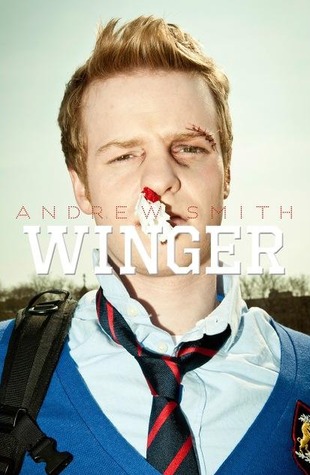
Winger by Andrew Smith (Kellee’s Review)

Share

winger

Winger
Author: Andrew Smith
Published May 14th, 2013 by Simon & Schuster

Goodreads Summary: Ryan Dean West is a fourteen-year-old junior at a boarding school for rich kids. He’s living in Opportunity Hall, the dorm for troublemakers, and rooming with the biggest bully on the rugby team. And he’s madly in love with his best friend Annie, who thinks of him as a little boy.

With the help of his sense of humor, rugby buddies, and his penchant for doodling comics, Ryan Dean manages to survive life’s complications and even find some happiness along the way. But when the unthinkable happens, he has to figure out how to hold on to what’s important, even when it feels like everything has fallen apart.

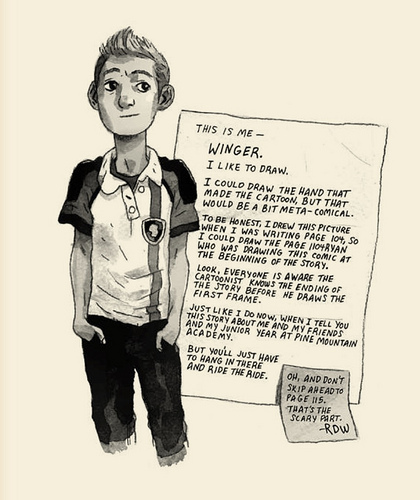
Filled with hand-drawn info-graphics and illustrations and told in a pitch-perfect voice, this realistic depiction of a teen’s experience strikes an exceptional balance of hilarious and heartbreaking.

My Review: Andrew Smith sure knows how to write a teenage boy’s voice. He gets inside of adolescent male’s mind, and puts it all on paper for us. (It probably has something to do with teaching high school.) Ryan Dean’s voice and his story are so authentic. This book will make you cringe, laugh out loud, shake your head, and cry.  I am also so impressed with all of the themes that are dealt with in this book without ever feeling over done. These themes include bullying, absent parents, peer pressure, identity, sexuality, prejudice, and friendship.  In addition, Smith builds his characters, setting, and plot seamlessly. You fall in love with all of the characters, main and secondary. Even the antagonist. The setting itself is a character. And finally the plot arc was perfectly done, and was so unpredictable all the way to the end.

Teachers’ Tools for Navigation: First and foremost, this book needs to read by teens. However that happens, it is the right thing. The easiest way would be to get it into libraries and classrooms. There are also parts of the book that could definitely be pulled out to be used in the classroom in may different ways. On that junps to mind right away is using Ryan Dean’s comics as mentor texts for writing comics to write narratives of everyday events. Ricki also has some great ideas for Winger in the classroom in her review.

Discussion Questions: What kind of social challenges does Ryan Dean have to overcome since he is 14 but a junior?; Were you able to predict the end of the book?; What are some traits about Ryan Dean that made him easy to connect to?; How does Opportunity Hall and the rest of the school become a character in Winger?

We Flagged: 

winger2(p. 21)

Read This If You Loved: Looking for Alaska by John Green, Openly Straight by Bill Konigsberg

Recommended For: 

classroomlibrarybuttonsmall closereadinganalysisbuttonsmall

Signature

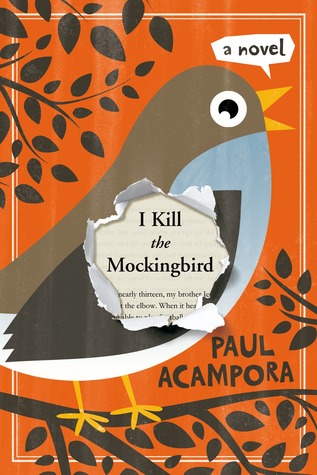
I Kill the Mockingbird by Paul Acampora

Share

I kill the

I Kill the Mockingbird
Author: Paul Acampora
Published: May 20, 2014 by Roaring Brook Press

Summary: When Lucy, Elena, and Michael receive their summer reading list, they are excited to see To Kill A Mockingbird included. But not everyone in their class shares the same enthusiasm. So they hatch a plot to get the entire town talking about the well-known Harper Lee classic. They plan controversial ways to get people to read the book, including re-shelving copies of the book in bookstores so that people think they are missing and starting a website committed to “destroying the mockingbird.” Their efforts are successful when all of the hullabaloo starts to direct more people to the book. But soon, their exploits start to spin out of control and they unwittingly start a mini revolution in the name of books.

Review: Who doesn’t love a book about kids making mischief? The very premise of this book is exciting and clever: three intelligent students are frustrated that their peers don’t do the summer reading, so they decide to concoct a censorship conspiracy. The idea is brilliant, and it shows young readers that they have the power to make big changes in the world. English teachers will love this book because it inspires students to want to be more well-read. (And there are a plethora of allusions that were simply fantastic.) I enjoyed this book because it reminded me how much I love reading.

Teacher’s Tools for Navigation: This would be a great literature circle text, or it would bridge nicely with To Kill a Mockingbird. If I taught this text in my class, I would have my students devise a conspiracy, employ it in our school, and write responses about its results. I imagine this would be great fun. Also, it would be neat for students to create a chart of all of the books that are referenced. This might inspire them to try to tackle some of the great texts that are mentioned.

Discussion Questions: How are each of the three students characterized? What do each of them add to the friendship? To the conspiracy?; What is Lucy’s relationship with her mom? How does this add to the story?; Do you think the three students broke any rules? Do you think what they did was wrong?

We Flagged:

“‘We’re going to be like terrorists,’ he says.

‘We are not terrorists,’ I tell him. ‘We’re more like literary saboteurs'” (Chapter 8).

Read This If You Loved: To Kill a Mockingbird by Harper Lee; Rachel Spinelli Punched Me in the Face by Paul Acampora; Fahrenheit 451 by Ray Bradbury

Recommended For:

  litcirclesbuttonsmall classroomlibrarybuttonsmall

RickiSig

Blog Tour and Author Guest Post!: Five Things I Wish I’d Known When I Started Writing by Rosie Somers, author of Because I’m Disposable

Share

Because I'm Disposable - blog tour banner

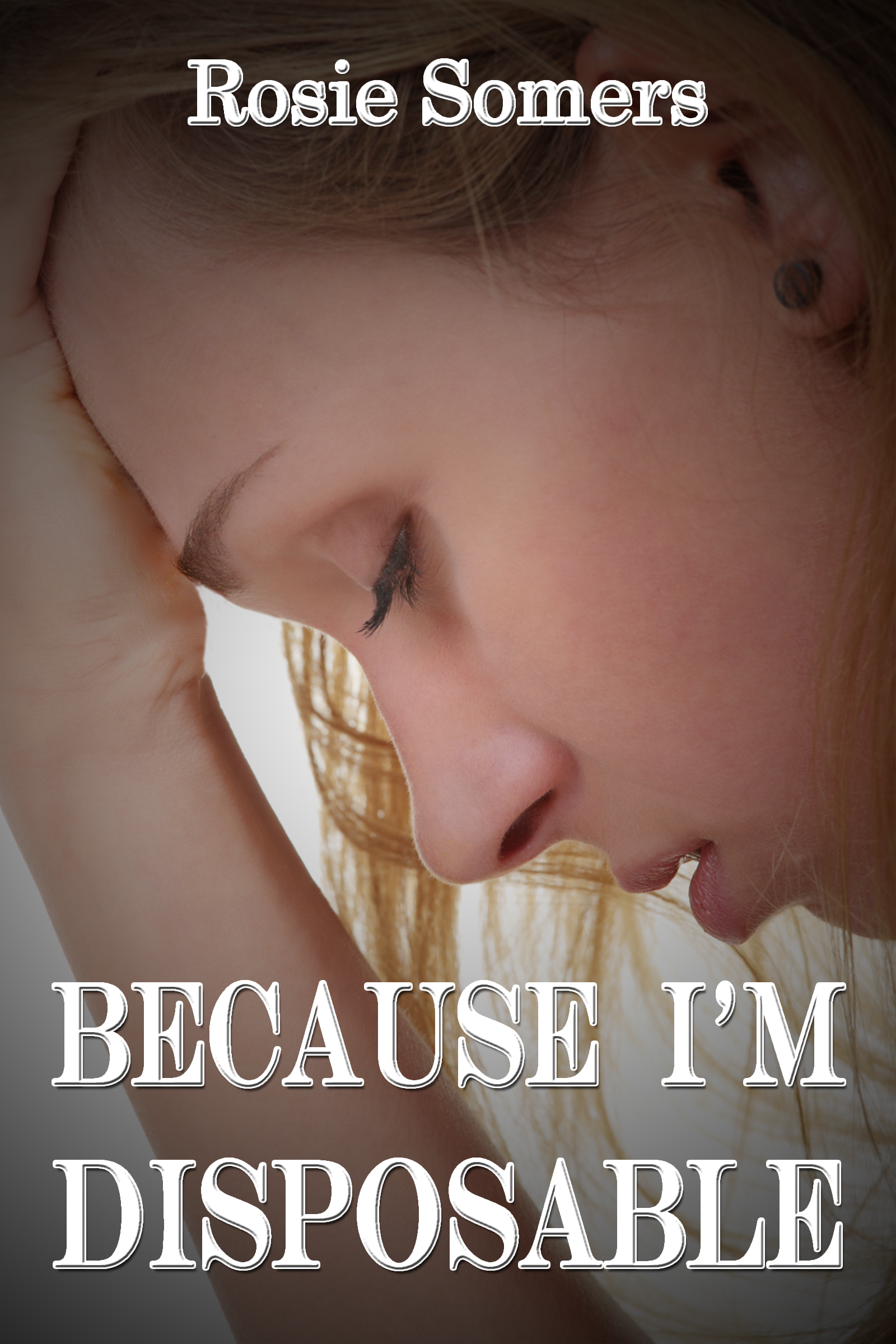
BID Cover

Because I’m Disposable
Author: Rosie Somers
Published July 9th, 2014 by Smashwords Edition

Summary: Sixteen-year-old Callista Tanner was in the bathroom slitting her wrists the night her father took a fatal plunge down the stairs. People around her think she attempted suicide because she found him dead — or worse, because she had a guilty conscience. Few know the truth; Michael Tanner had been beating her for years.

The freedom that should have come with her father’s death becomes a cage of rumors and self-doubt. Callie seeks escape in the most destructive ways, bringing her emotional scars to the surface for the world to see.

One bright spot exists in Callie’s dark world.

Lincoln Devaux refuses to let Callie sink fully into the depths of her own depression, stepping into her life when she needs someone the most. She tries to push him away, but Link is determined to save Callie from herself. Even when she doesn’t think she’s worth saving.

Learn more: GoodreadsAmazonB&NSmashwordsiBooks

Book Trailer: 

Five Things I Wish I’d Known When I Started Writing

1. Gird Your Loins

I started writing, seriously writing when I was eighteen. I’d always played around with storytelling, written poetry, short stories, etc. But once I got it into my head that I was going to write a novel, I immediately became convinced that I was going to become the next big thing. Overnight. Yeah, I was that author. But the hard truth is that agents and editors receive outrageous amounts of queries every day, and only a fraction of those meet what the agent/editor is looking for. Rejections are a part of writing, and no matter how nice the sender is, that rejection is probably going to hurt. Do what you have to do: cry, scream, turn into a raging, green mutant and trash your apartment. But when you’re done, dust yourself off, turn the coffee table back over, and try again.

2. First Novels Are Garbage

That first novel, the one I started when I was eighteen… it was pure crap. Of course, I didn’t recognize that when I was writing it. I didn’t recognize that when I was proudly passing it out to family to read. And I didn’t recognize it when I sent those first query letters. As those rejections trickled in and squished my ego back into my zip code, word by painful word, I started to look closer at my work, and I was able to recognize it for what it was: garbage. To this day, I keep that manuscript printed out and in plain view of my work area to remind me of where I started and that there’s ALWAYS room for improvement.

3. Constructive Criticism Is Constructive

I’ve seen plenty of writers get their panties in a bunch when a friend, beta reader, agent, or editor offers negative feedback. And I’ll admit, I’ve felt the bite of constructive criticism. But it’s important to remember these people are seeing something in your book that you are too close to see for yourself. It might hurt to hear that your book sags in the middle or the beginning is a snoozefest, but if your test readers are seeing it, real readers will feel that way too. Personally, I’d much rather listen to my betas and editor than put out a book with huge issues.

4. Don’t Quit Your Day Job

If you want a six-figure income, writing probably won’t do it. The simple truth is, the authors who bank are pretty rare. Sure, there are the Rowlings and the Meyers of the world, but very few authors will ever see that kind of success. Don’t write because you want fame and fortune. Write because you love the story.

5. Just Write

At the end of the day, it doesn’t matter why you do it. It doesn’t matter how much you wrote or what the story is. It doesn’t matter if you win Nano by November 15th or take two years to write a novelette. Just write–at your pace, in your time, write your story. Don’t worry about what other people are writing or what is selling. Just write.

Author Bio: Rosie Somers is a YA author who lives in Florida, soaking up the year-round sunshine. She can often be found in her favorite spot on her favorite beach, nose-deep in a good book.

Website: http://www.RosieSomers.blogspot.com

Twitter:@prosyrosie

Facebook: https://www.facebook.com/ProsyRosie


Thank you to Rosie Somers for your insightful post and Sarah Nicolas for letting us be part of the blog tour!

Signature andRickiSig