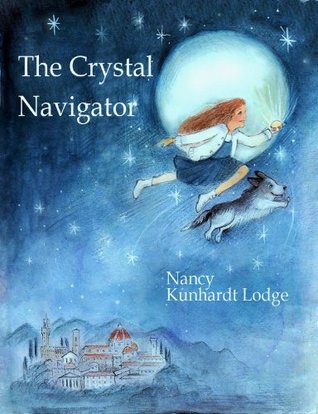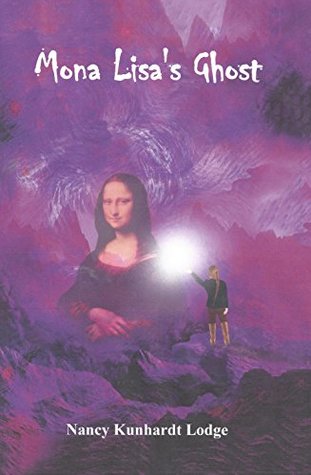
Author Guest Post!: “Writing Science Fiction Fantasy for Middle Graders” by Nancy K. Lodge, Author of Mona Lisa’s Ghost

Share

Writing Science Fiction Fantasy for Middle Graders

I am thrilled to have this opportunity to talk about my books on Unleashing Readers. I came to fiction writing late, having spent most of my career as a professor at universities in the U.S. and in Italy. I have a PhD in Renaissance Art History, and it never occurred to me that I would someday write books for children. However, it must have been inevitable because my grandmother, Dorothy Kunhardt wrote some of the best-loved Picture Books of all time, the most famous of which is Pat the Bunny.

Learning to write fiction

Five years ago, I decided that I wanted to write books that would bring art and artists to life for children between the ages of nine and twelve. When I stopped teaching to write The Crystal Navigator, I knew nothing about writing fiction. However, I have been an avid reader all my life and to write well, one must be well read. Reading books by great writers like Ann Tyler, Flaubert, F. Scott Fitzgerald, Evelyn Waugh, and of course, E.B. White is the most instructive way to learn how to construct a beautiful sentence without being flowery and sentimental, how to avoid using clichés, how to show rather than tell.

The rules laid down by the how-to write books- never use adverbs, stay away from adjectives too, don’t begin a book with a dream, waking up, walking on a beach- paralyzed me. Once I decided to forget them and wrote without worrying about rules, my writing became much better. However, it takes practice to be a good writer, and it takes time to learn how to edit. I had to teach myself not to get sidetracked with things that had nothing to do with the story. Every sentence must move the action along or the reader will get bored.

I think there are two ingredients that that make a good writer. First, great writers have read enough great literature to have internalized the rhythms of the written word. If you know what a sentence should sound like, you’ll be able to write sentences. Second, all great writers are great storytellers, and it’s the storytelling who keep us up at night. “Stylish writers make you admire them, but storytellers force you to read the next chapter.” I can’t remember where I read this, but it’s helpful. It takes a huge burden off my mind. Just allow yourself to write the story and worry about the writing later.

My Aim

My aim is to inspire a love of reading and spark of lifelong love of art. There are so many wonderful stories about the lives of great artists -what they were like, and the circumstances surrounding their most famous paintings-I knew would delight children.

A Literary Upbringing Helps

I grew surrounded by books. I gobbled up the Oz books, Alice in Wonderland, and I was addicted to Nancy Drew. Although I don’t think it makes a writer, I think it helps to grow up in a literary family. My maternal grandmother was a Lincoln scholar and author of fifty children’s Picture books. My father was a professor at Harvard Business School, who wrote books about ethics and economics. His father, Henry Cabot Lodge wrote about his experience in Viet Nam. And my great grandfather, George Cabot Lodge was a poet.

Plot and Characters Development for Mona Lisa’s Ghost?

Usually, I have a hard time coming up with a plot, but it was easier in the case of Mona Lisa’s Ghost. There are three sources of inspiration for the book. In 2004 I read an article about the Louvre Museum’s plans to scan the Mona Lisa to measure the paint layers. I thought ‘how ludicrous and yet how typical of art historians.’ On the other hand, what a great starting point for a mystery. A monstrous and deadly Spectrographic Scanner zooms into the Mona Lisa and causes a ghastly molecule-destroying syndrome. The second source of inspiration was the otherworldly landscape in the background of the Mona Lisa. It is truly a fantasy, where snow-capped mountains exist alongside sunlit rippling lakes and streams. I thought how wonderful it would be to enter the painting at the horizon-line, so I wrote about portal into the background of the painting. Finally, I was inspired by Einstein’s idea of creating our own reality was the third inspiration.

My character, Lucy is probably pretty much a self-portrait. She is braver than I am, but her impatience and humor are mine. My character Sam, the eleven-year-old genius is inspired by a dear cousin. Sam is an inventor with a wide knowledge of physics, communications, and Einstein. I had to read articles about physics, underground rivers, sound waves, how the telephone works, hence ‘faulty feedback loops.’ I like to think up interesting, fun things for Sam to invent, such as his program called Roving Tentacles, a digital, steerable telescope thingy and can go around corners and investigate or the Plasma Pinch, cloaking a person with plasma-like sound waves.

The Books

Drawing on my knowledge of art history, I have written the first two books in the Lucy Nightingale Adventure series about an eleven-year-old girl, as she learns to value herself and others. In both The Crystal Navigator and Mona Lisa’s Ghost, I incorporate art historical fact into a fantasy world where children travel alongside my protagonists, Lucy and her magical guide Wilbur. I want them to feel the exhilaration of flying though a star-crowded night and feel the spongy grass under their feet, as Lucy and Wilbur jump onto Sandro Botticelli’s flower-strewn meadow in his painting, the Primavera. I wanted children to imagine what it would be like to be hurled into the night sky over the little village in Vincent van Gogh’s Starry Night or to find a portal into the background landscape of the Mona Lisa.

In The Crystal Navigator, Lucy goes back in time to meet and helps famous artists. For example, she helps Leonardo da Vinci achieve the right expression on Lisa’s face. Lisa is a fun-loving, somewhat naughty teenager. Leonardo is at his wits end trying to stop her from making funny faces. He is about to give up when Lucy whispers to him, “Why not ask her husband to surprise her? Maybe she will smile the right way.” Sure enough, when Lisa sees her husband, her eyes light up with love and she smiles in the mysterious way that allows Leonardo to capture her soul.

On the rainy evening Lucy and Wilbur visit Michelangelo in his leaky hut in Rome, they find him in a particularly grumpy mood. He is furious because it’s always too dark for him to sculpt when he gets home from painting the Sistine Chapel. Lucy thinks of an ingenious way to help him see his sculptures at night. “Glue a candle to the visor of a wide-brimmed hat and you will have plenty of light to see your sculptures.”

Her last visit is with Vincent van Gogh in the year 1889 at the asylum in St. Remy, France. Vincent shows Lucy his panting, Starry Night and asks her what she sees. Lucy tells him she sees a “stormy painting, everything moves like ocean waves. The cypress tree is like a sea monster.” She marvels at the thick paint, the choppy lines of his brushstroke, and the smear where he dragged his finger through the paint. He tells her about his fears and she tried to comfort him.

Kirkus Reviews wrote this about The Crystal Navigator, “… Throughout this entertaining, fantastical debut, the author brings the artists and their paintings to life with resonant, informed vignettes. Each funny or soulful encounter gives Lucy opportunities to realize that she’s also an original, smart thinker…A vividly written work of juvenile fiction that mixes fantasy and suspense with messages of empowerment, history, art, and science.”  The book won a Mom’s Choice Award and Readers’ Favorite Best Educational Book of 2015.

This year, while editing Mona Lisa’s Ghost, book two in the series, I was lucky to have a group of bright sixth graders from a local school to help me with dialogue and plot. The book revolves around Leonardo da Vinci’s mysterious portrait of Lisa Gherardini and combines themes of reincarnation, science, and the theft of the Mona Lisa. Lucy and her best friend, Sam have formed SLARP, (Sam and Lucy’s Anomalies Research Project,) to investigate odd happenings in the universe. They find their first case while watching a class video about the newly-scanned Mona Lisa. The experiment to measure the paint layers with a Spectrographic Scanner has had terrible consequences. Lucy and Sam are horrified when they see that the painting is in chaos. A purple storm engulfs the sunny landscape, Lisa is crying, and letters float in her right eyeball.

If those weren’t reasons to investigate, one of their classmates, shy Melissa Blackwood, claims to be the reincarnation of Lisa Gherardini, the real Mona Lisa. She tells Lucy that she has come back to get the portrait her husband paid for, but which Leonardo never delivered to her. Then the painting vanishes without a trace and Lucy and Sam embark on a perilous chase to find it before the molecule-destroying syndrome destroys it. With Sam’s superphone, the Quetzal, a gadget equipped with a shape-shifting key, micro tracking chips, and deactivation program called Roving Tentacles, Lucy travels with Wilbur through the phantom-infested catacombs under Paris, down underground rivers were evil monsters flick their tails against Wilbur’s little boat, and back to sixteenth-century France where Leonardo is working for the French king.

In the end, SLARP’s first case is a success. They solve the mystery of who stole the panting and how it got fixed. If the details of the case were ever made public, it would stun the world and change the face of Quantum Physics forever.

One editorial reviewer wrote this about Mona Lisa’s Ghost: “Art historian Nancy Kunhardt Lodge’s Mona Lisa’s Ghost takes readers on a thoroughly researched, mesmerizing, and magical journey, incorporating a mix of art history, time-travel fantasy, communication across time, reincarnation, high-tech devices, science, and the mystery of the letters in the eye of the Mona Lisa.”

Mona Lisa’s Ghost was awarded a Gold Mom’s Choice Award. Both books have been published in Spanish by Madrid publisher Editorial Kolima.

In the end, the only critics who matter are the children we write for. I value all the wonderful letters I’ve received from children telling me how much they loved my books. They are the real reward. Thank you so much for giving me a chance to talk about my books.

Thank you, Nancy, for this wonderful post sharing your books and goals!

 and

Forest of a Thousand Lanterns by Julie C. Dao

Share

Forest of a Thousand Lanterns
Author: Julie C. Dao
Published: October 10, 2017 by Philomel

Guest Review by Kaari von Bernuth

Goodreads Summary: An East Asian fantasy reimagining of The Evil Queen legend about one peasant girl’s quest to become Empress–and the darkness she must unleash to achieve her destiny.

Eighteen-year-old Xifeng is beautiful. The stars say she is destined for greatness, that she is meant to be Empress of Feng Lu. But only if she embraces the darkness within her. Growing up as a peasant in a forgotten village on the edge of the map, Xifeng longs to fulfill the destiny promised to her by her cruel aunt, the witch Guma, who has read the cards and seen glimmers of Xifeng’s majestic future. But is the price of the throne too high?

Because in order to achieve greatness, she must spurn the young man who loves her and exploit the callous magic that runs through her veins–sorcery fueled by eating the hearts of the recently killed. For the god who has sent her on this journey will not be satisfied until his power is absolute.

Kaari’s Review: The entire time, I wasn’t entirely sure if the  protagonist was the hero or the villain. And, that isn’t necessarily a bad thing! I appreciated this book because it made me think. I’d be cheering for Xifeng and wanting her to win, and then she’d do an awful thing to help her win, and I’d be repulsed by her. This book highlights the struggle of ambition, and how difficult it is for a woman to achieve the dreams she has. And, while I am off put by Xifeng’s methods and don’t necessarily think they were the right decisions, her actions and the way she achieves power could spark great discussions.

The setting and the plot of this book was thrilling, and I Ioved the way that fantasy was woven into a world so seamlessly. The creatures and ideas introduced were thought provoking and had amazing descriptions that made me feel like I was living in the enchanted world with the characters. I do wish that there had been some more resolution regarding some of the magical beings and the warnings they gave, but I think that Dao intends for this to be the first in a series, and I’m sure that more resolution will come in later novels.

Teachers’ Tools for Navigation: I would definitely include this book in a classroom library for kids to check out if they want to read it. However, while this book is interesting, and explores an interesting take on female empowerment, I don’t think I would teach this book in a classroom setting, or use it in literature circles. I am a huge advocate for female empowerment, and discussing the paths for women to claim their power. However, I think that because Xifeng’s methods were so morally questionable, and readers aren’t sure if Xifeng is a hero or a villain, that Forest of a Thousand Lanterns is not the best novel to discuss for this topic. There are many other books that discuss female empowerment in a much more productive light. So, I’d include it in a classroom library, but not necessarily teach it in any way.

Discussion Questions: Do you think Xifeng’s methods were justifiable?; What does the social hierarchy look like in this novel?; Is Xifeng a hero or a villain in this story?; What is the effect of portraying a strong female protagonist in this way?; How is the fantasy world characterized?

We Flagged: “‘I’m a good man, Xifeng. I let you have your own way and speak your mind…’

‘You think I don’t know that? That I’m so blind and stupid?’

‘Yes, I do!’ he shouted, his face bright red. ‘I offer you the world…’

‘Yes, the world as you see it!’

‘I saved you from that evil woman!’

‘Only to trap me yourself.’ She watched him turn away and run a trembling hand over his head. ‘I was Guma’s, and now you want me to be yours. I have my own soul and my own destiny, and I’m tired of belonging to someone else’” (Advanced Reader Copy p. 125).

Read This If You Loved: Monstress by Marjorie M. Liu; Gunpowder Alchemy by Jeannie Lin; Girls Made of Snow and Glass by Melissa Bashardoust

Recommended For:

classroomlibrarybuttonsmall

  RickiSig

**Thank you to Kaari for reviewing this book!**

There’s Someone Inside Your House by Stephanie Perkins

Share

There’s Someone Inside Your House
Author: Stephanie Perkins
Published: September 26, 2017 by Dutton

Guest Review by Kaari von Bernuth

Goodreads Summary: One-by-one, the students of Osborne High are dying in a series of gruesome murders, each with increasing and grotesque flair. As the terror grows closer and the hunt intensifies for the killer, the dark secrets among them must finally be confronted.

International bestselling author Stephanie Perkins returns with a fresh take on the classic teen slasher story that’s fun, quick-witted, and completely impossible to put down.

My Review: This book was gripping from the first page. I found myself getting sucked into it, trying to figure out the mystery of who the killer was, but also of what Makani’s past entailed. The author, Stephanie Perkins, did an amazing job of planting foreshadowing and clues that hinted toward the answers to the multiple mysteries that kept my brain working the entire time that I was reading.

I also loved the emphasis on friendship groups, feeling like an outsider, and bullying/hazing as many adolescents face these topics every day. The way that these topics were portrayed in Makani’s friend group, and the way that the friends help Makani to deal with her hazing trials were something that I appreciated. However, there were two things that I wish were approached differently in this book. 1. Even though this is a small point, one of the characters was a stereotypical, loud Christian character who tried to force his beliefs on everyone else, including a mention of how he managed to get rid of any mention of evolution in his school textbooks. He was characterized as a Lutheran. While this probably wouldn’t mean much to other people, I am a Lutheran, and all of the Lutherans I know believe and support evolution, and don’t at all act like this negative christian stereotype character does. But, this book makes it look like all Lutherans act this way. I wish that there had been no mention of the character’s denomination.  2. I wish that more emphasis had been placed on dealing with the deaths that occurred in the books, as well as the motivations of the killer, as those were both just glanced over. This is problematic as it leaves a huge hole in understanding of the novel, and makes it harder to talk about some of the prominent events in the story. Overall though, it was a very entertaining novel.

Teachers’ Tools for Navigation: This would be a great book to have in a classroom library for kids to enjoy. Given the graphic, violent nature of some of the scenes, I wouldn’t recommend teaching to an entire class. However, it will appeal to students who enjoy the horror genre. This book also has great potential in literature circles. Perkins does a great job of foreshadowing and giving hints not only as to what is going to happen, but to stories that have already happened that the readers don’t know about yet. As I was reading, I loved being able to piece together the clues that were given to try to guess what had happened and also what was going to happen. A literature circle could have a lot of fun trying to piece those clues together as a group. This book also touches on other important topics such as bullying/hazing and family struggles which could be discussed in a literature circle, as well as the elements of forgiving oneself/dealing with guilt (which Makani experiences as a result of the hazing incident). The one thing that I found this book lacking was any form of dealing/acknowledging grief and death, as well as an acknowledgement of mental health issues (which the killer would have to have). These failings in the book could also be discussed in relation as to how to acknowledge those topics in a healthy way.

Discussion Questions: Where do you see foreshadowing in the early parts of the books?; How does Perkins create suspense in her novel?; What is Makani’s relationship with her parents like?; What was Makani’s experience with hazing like? Have you experienced something similar?; How does blame and justice appear in this book? Is it always fair?

We Flagged: “Sharing her story now, however, had opened a valve of tremendous internal pressure. Her secret- this self-inflicted burden- had finally been released.” (page 207 of Advanced Reading Copy)

Read This If You Loved: The Merciless by Danielle Vega; Dead by Morning by Kayla Krantz; The Forest Dweller by Deborah McClatchey; Confessions: The Private School Murders by James Patterson

Recommended For:

classroomlibrarybuttonsmall  

  RickiSig

**Thank you to Kaari for reviewing this book!**

That Inevitable Victorian Thing by E. K. Johnston

Share

That Inevitable Victorian Thing
Author: E. K. Johnston
Published: October 3, 2017 by Dutton

Guest Review by Kaari von Bernuth

Goodreads Summary: Set in a near-future world where the British Empire was preserved, not by the cost of blood and theft but by effort of repatriation and promises kept, That Inevitable Victorian Thing is a novel of love, duty, and the small moments that can change people and the world.

Victoria-Margaret is the crown princess of the empire, a direct descendent of Victoria I, the queen who changed the course of history two centuries earlier. The imperial practice of genetically arranged matchmaking will soon guide Margaret into a politically advantageous marriage like her mother before her, but before she does her duty, she’ll have one summer incognito in a far corner of empire. In Toronto, she meets Helena Marcus, daughter of one of the empire’s greatest placement geneticists, and August Callaghan, the heir apparent to a powerful shipping firm currently besieged by American pirates. In a summer of high-society debutante balls, politically charged tea parties, and romantic country dances, Margaret, Helena, and August discover they share an unusual bond and maybe a one in a million chance to have what they want and to change the world in the process —just like the first Queen Victoria.

My Review: The futuristic setting of this novel that wasn’t a dystopia was very intriguing to me. Most of the futuristic novels that I’ve read have featured dystopian societies, so it was refreshing to have something that worked. I really enjoyed the multiple perspectives from the different characters, and became personally invested in their lives and experiences. I’d find myself hurting for Helena as she struggled to reconcile her identity, and rooting for August to do the right thing. In some way, all of the characters have to struggle to come of age and develop their identity based on who they want to be. 

However, I wish that this novel had placed a little more effort on the ending. While the rest of the novel had dealt with realistic challenges that an adolescent might face, the ending seemed rather contrived, and less realistic like the rest of the novel. The solution proposed at the end of the novel is not a solution that an adolescent in current society could replicate and learn from, which was disappointing.

Teachers’ Tools for Navigation: This book poses great questions about racism (or rather the eradication of racism), as well as questions of morality. It also would be great for discussions about the influence that society can have on your life verses the influence that you decide for your life. I think that this book would be a great addition to a classroom library for kids to enjoy, or a book to be used in a reading circle. It’s engaging and could lead to interesting discussions, especially about the futuristic government and setting of the novel, and the aforementioned topics of racism, morality, and societal influence vs self. However, I do think that other novels cover these topics in a better way, which is why I wouldn’t recommend it for large classroom discussions.  

Discussion Questions: Is this novel a utopia? Dystopia? Does it fit either criteria?; How is race approached in this novel? Is there racism in the society?; What is the role of colonialism in this novel?; What is the role of the Computer? Do you think this is a good advancement?; What does the computer lack?; What morality questions does this novel pose?

We Flagged: “The Computer is sufficient if you want to know your future without taking into account your soul. I don’t mean in the eternal sense, but in the worldly. The Computer can tell you if your genes are prone to carcinoma or if you might be six feet tall, but it cannot tell you if you will enjoy dancing or if you will prefer cake to pie. I would argue that the latter is more important in terms of a long and healthy relationship” (p. 254).

Read This If You Loved: Matched by Allie Condie; Delirium by Lauren Oliver; The Luxe by Anna Godbersen; The Selection by Kiera Cass

Recommended For:

classroomlibrarybuttonsmall  

  RickiSig

**Thank you to Kaari for reviewing this book!**

Kellee’s Favorite Reads of 2017: Middle Grade and Young Adult

Share

I read so many wonderful books this year, that I decided that I needed two posts to highlight them!
Today’s post will focus on middle grade and young adult novels that I read this year and loved.
Each title will have a publication date listed as these are all favorites I READ in 2017 though they may have been published before or are coming out in 2018.

Favorite Fifteen Middle Grade Novels


Posted by John David Anderson (2017)
Wishtree by Katherine Applegate (2017)
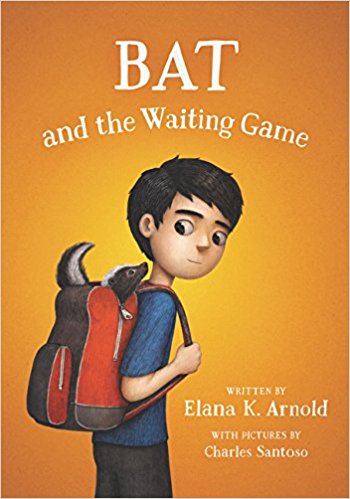
A Boy Called Bat by Elana K. Arnold (2017)


Insignificant Events in the Life of a Cactus by Dusti Bowling (2017)
The Wild Robot by Peter Brown (2016)
Stealing Our Way Home by Cecelia Galante (2017)


Scar Island by Dan Gemeinhart (2017)
Refugee by Alan Gratz (2017)
House Arrest by K.A. Holt (2015)


Knock Out by K.A. Holt (2018)
Alex Rider: Never Say Die
by Anthony Horowitz (2017)
Ethan Marcus Stands Up by Michele Weber Hurwitz (2017)


FRAMED! by James Ponti (2016)
Patina by Jason Reynolds (2017)
Glory Be by Augusta Scattergood (2012)

Favorite Fifteen Young Adult Novels


Ashes by Laurie Halse Anderson (2016)
Turtles All the Way Down by John Green (2017)
The Legend Trilogy by Marie Lu (2011-2013)


Burn Baby Burn by Meg Medina (2016)
Long Way Down by Jason Reynolds (2017)
The Border by Steve Schafer (2017)


Scythe by Neal Shusterman (2016)
The Unwind Dystology by Neal Shusterman (2007-2014)
They Both Die at the End by Adam Silvera (2017)


Dear Martin by Nic Stone (2017)
The Hate U Give by Angie Thomas (2017)
Little Monsters by Kara Thomas (2017)


The Unlikely Hero of Room 13B by Teresa Toten (2013)
Highly Illogical Behavior by John Corey Whaley (2016)
The Serpent King by Jeff Zentner (2016)

Favorite of the Year


March: Book One, Book Two, and Book Three by John Lewis & Andrew Aydin, illustrated by Nate Powell
(2013-2016)

What were your favorite middle grade and young adult novels that you read in 2017?

Children of Exile (#1) & Children of Refuge (#2) by Margaret Peterson Haddix

Share

Children of Exile
Published September 13th, 2016 by Simon & Schuster for Young Readers

Children of Refuge
Published September 12th, 2017 by Simon & Schuster for Young Readers

Author: Margaret Peterson Haddix

Children of Exile Summary: For the past twelve years, adults called “Freds” have raised Rosi, her younger brother Bobo, and the other children of their town, saying it is too dangerous for them to stay with their parents, but now they are all being sent back. Since Rosi is the oldest, all the younger kids are looking to her with questions she doesn’t have the answers to. She’d always trusted the Freds completely, but now she’s not so sure.

And their home is nothing like she’d expected, like nothing the Freds had prepared them for. Will Rosi and the other kids be able to adjust to their new reality?

Children of Refuge Summary: After Edwy is smuggled off to Refuge City to stay with his brother and sister, Rosi, Bobo, and Cana are stuck alone—and in danger—in Cursed Town in the thrilling follow-up to Children of Exile from New York Times bestselling author, Margaret Peterson Haddix.

It’s been barely a day since Edwy left Fredtown to be with his parents and, already, he is being sent away. He’s smuggled off to boarding school in Refuge City, where he will be with his brother and sister, who don’t even like him very much. The boarding school is nothing like the school that he knew, there’s no one around looking up to him now, and he’s still not allowed to ask questions!

Alone and confused, Edwy seeks out other children brought back from Fredtown and soon discovers that Rosi and the others—still stuck in the Cursed Town—might be in danger. Can Edwy find his way back to his friends before it’s too late?

ReviewOne thing you can always guarantee when you read a Haddix book is that it will suck you in and will be super unique! The Children of Exile series did not disappoint. I will admit, it is really hard to review either of the books without spoiling. The summaries above both did a really great job, but everything that happens after that suspense-building summary happens would spoil something for you. But I will promise you these things:

  • You will be on the edge of your seat and not be able to figure out what is going on for 90% of the first book.
  • You will be disgusted by the treatment of the children once they are returned to their parents.
  • You will want to help Edwy and his friends so badly throughout the entire second book.
  • You will have to stop reading when the reveal happens in the first book just to process it. Then you’ll reread. Then you’ll text someone who has read it.
  • You will want to know more than book 2 tells you, so we’ll all be waiting impatiently for #3.
  • You will realize that these books are actually a bit older and darker than they first seem.

Teachers’ Tools for Navigation: Like other Haddix books, you will find the best home for these books in the hands of kids. They are going to be talking about these books after they read them!

Discussion Questions: Discussion questions are available on Haddix’s website.

Flagged Passages: “‘Remember to be good little children!’

Good little children, good little children, good little children…

I saw children crying and clinging to their Fred-parents’ legs. I saw men yanking babies from their Fred-parents’ arms. I turned my back to my own Fred-mama and Fred-daddy — maybe to grab them as hard as I could — but the crowd surged just then, pushing Bobo and me up the stairs. I couldn’t see my Fred-parents anymore. I hadn’t even had a chance to tell them a proper good-bye.” (Children of Exile, Chapter 3)

“I’d been counting on being able to run fast enough no one caught up.

‘Good,’ an oily voice whispered in my ear. ‘Now you understand that screaming is useless.’

‘No, I was just–‘ Before I could add deciding what to scream next, a thick hand slid over my mouth. It smelled of onions and sweat and mud and, I don’t know, maybe puke as well.” (Children of Exile, Prologue)

Read This If You Love: Knife of Never Letting Go by Patrick Ness, Tesla’s Attic by Neal Shusterman, Masterminds by Gordon Korman, Spillzone by Scott Westerfeld

Recommended For: 

Signature

**Thank you to Casey at Media Masters for providing copies for review!**

Emily and the Spellstone by Michael Rubens

Share

Emily and the Spellstone
Author: Michael Rubens
Published June 13th, 2017 by Clarion Books

Summary: This summer, comedy writer and YA author Michael Rubens makes his middle grade debut with Emily and the Spellstone, a hilarious and accessible fantasy about growing up and coming into your own.

Emily is fed up with her frustrating family and the clique-filled hallways of elementary school. All she wants for her twelfth birthday is a cell phone, but of course her tech-obsessed older sister had to go and get carpal tunnel, so now Emily isn’t allowed to have one. Worst birthday ever. As she stomps off down the beach to get away from it all, she stumbles across a strange stone that seems to speak to her, and looks oddly like the cell phone she desperately wants. What Emily doesn’t know is that this weird rock is actually an ancient Spellstone, and only she can unlock its powers. What could go wrong?

Rubens’ whimsical wordplay and delightful prose bring this unpredictable adventure to life. Monsters and magic will inspire readers’ imaginations, while Emily’s more terrestrial troubles like mean girls and annoying little brothers will resonate with anyone who has ever been new or felt out of place in their own family. According to Booklist, the quick pacing, playful narration, and high stakes are plenty to keep reluctant readers and young fantasy fans engaged.” With a diverse cast of supporting characters and a spunky heroine, this wacky romp is a perfect summer read.

About the Author: Michael Rubens is the author of two YA novels, Sons of the 613 and The Bad Decisions Playlist, and one novel for grownups, The Sheriff of Yrnameer. A correspondent and producer for Full Frontal with Samantha Bee, he has also been a producer for Last Week Tonight with John Oliver and The Daily Show with Jon Stewart. His writing has appeared in places like The New Yorker’s Daily ShoutsSalon and McSweeney’s. He lives with his family in Brooklyn. Visit his website at www.michaelrubens.com.

Review: It is obvious that Rubens writes comedy for a living. Emily’s story is a perfect mix of laugh out loud moments, puns, and crazy adventures with monsters and evil. And unlike other books this reminded me of, Rubens has created his own monsters and villains instead of using an established mythology which means it made it really hard for me to make predictions, so I was on the edge of my seat (LAUGHING along the way) the entire novel. As soon as I finished, I went on Twitter to make sure all of my middle grade teacher friends knew about this one because I think that fans of Riordan’s books are going to really enjoy this one.

Teachers’ Tools for Navigation: Primarily, I picture this book in classrooms/libraries for independent reading or being used in classes during lit circles/book clubs. However, there are some really funny read aloud parts that could definitely be used to discuss humor, word choice, puns, and voice. It would also be lots of fun to make up apps that could be on Emily’s Spellstone.

Discussion Questions: 

  • How did Emily change from the beginning to the end of the novel? What plot points were key in her character development?
  • Find examples in the book that show Emily’s and Gorgo’s sense of humor.
  • How do you think Emily feels by the end of the book about being a Stonemaster?
  • Were there any signs throughout the book to indicate that Gorgo was going to make the decision he did?
  • If all of the humorous passages were eliminated from the book, how would that change the tone of the book? How does the word choice the author chose help make the tone what it is?
  • Why were the Venomüch family included in the story?

Flagged Passages: “Emily lay as still as she could, not daring to move, barely daring to breathe.

There was something lurking in the darkness.

She couldn’t hear it or see it, but she could feel it, the sheer foulness of its presence.

It wasn’t Gorgo. She knew that. This was something else. Something far worse. . . . . .

‘There was. . . something in my room last night.’

‘Ah, right. I thought I felt somehthing. Some sort of shade or spirit, probably sniffing around after the Stone.’

‘Why?’

He shrugged. ‘Dunno. Maybe someone sent it. Or maybe it just showed up, drawn by the Stone,’ he said. ‘You’re about to say ‘why’ again, aren’t you?’

‘Yes. Why. Why would that thing be drawn to this stone?’

‘Because it’s a Stone. They’re incredibly powerful, Stones are. Powerful and rare. A Stonemaster can use them to work great magics. That’s a very ancient relic you have there. Well, sort of modern ancient. The first Stones were massive. You’ve heard of Stonehenge, right? Well, thos are really old-fashioned. You couldn’t move them anywhere. The one you have, though, it’s portable, or, uh. . .’

‘Mobile?’ said Emily.

‘Right!’

‘A mobile. . . Stone?’

‘Precisely!’

‘A mobile Stone for casting spells.’

‘Right again.’

‘It’s a Mobile. Spell. Stone.’

‘You seem fixated on that.’

‘It’s like a mobile cell phone.’

‘Not sure what you’re talkinga bout, but if you say so.’ (p. 55, 69-70)

Read This If You Love: The Lightning Thief by Rick Riordan, Guardians of the Gryphon’s Claw by Todd Calgi Gallicano, Harry Potter, Lemony Snicket

Recommended For: 

Signature

**Thank you to Tracy at Media Masters Publicity for providing a copy for review!**