Author Guest Post!: “Things Sure Were Different In My Day” by Cara Bartek, Ph.D., Author of Serafina Loves Science

Share

“Things Sure Were Different In My Day”

I caught myself saying something the other day that I never thought I would say to my children, and I’m still reeling from the sheer horror of how those words felt as they spilled out of my mouth. In my defense, my kids had been complaining—in high-pitched, whiny voices that could crack the most ardent saint—how bored they were. As I looked around at their toys, their bikes, their swing set in the backyard, their books, their tablets, without even thinking I said, “How can you girls be bored with so much stuff to do? You should be grateful for all this entertainment because things sure were different in my day.”

That’s right, I said the dreaded phrase: THINGS SURE WERE DIFFERENT IN MY DAY.

The girls looked at me like I was a dog walking on my back legs. I could almost see them trying to calculate what “in my day” looked like, their eyes blinking and squinting as numbers and Greek symbols flashed above their heads like a cartoon. Maybe they saw cavemen walking around in mammoth-skin skinny jeans, or those old-timey gangsters hanging out in saloons with cigars dangling from their lips drinking kombucha teas from Starbucks. It had to be some strange, foreign amalgam of their own reality and the reality they could only assume their screamy old mom came from.

But the truth is, my day was very different. My childhood was arguably simpler. There was no online shopping or Prime deliveries and certainly no social media. Kids “in my day” were not as connected as kids are today, with information at their fingertips. This makes our children much more knowledgeable, and this is great for learning and exploring. Whenever we have a science project or a social studies report due, my girls and I head to the web. We have found loads of practical and fun information. It is also very easy to stay in touch with our friends and family. For anyone who has moved and left behind people they care about, social media can be a wonderful tool to preserve friendships. But as with all wonderful things in this world, there are disadvantages, too. Our tightly connected and information-saturated world means our kids know a lot more about tough realities.

This difficult knowledge hit home when my oldest child’s class practiced emergency protocols. She often would come home and tell me what she would do when “code red” was activated. Her demeanor was calm and even happy as she described the role she would play. One day she happened to see coverage about a school shooting. The reporter spoke about the different ways that students and teachers worked to save the lives of their fellow classmates and staff. The actions they described, such as barricading doors and hiding in closets, were similar to what her class had been practicing. I could see her brain making the connections, and this led to inevitable questions and a very difficult conversation. While this was something I never wanted to talk about with my little girl, it was a conversation that was necessary. Children are exposed to and must face difficult realities.

Difficult Realities for Developing Kids

Kids begin to develop their own identities almost as soon as they are born. They say “no” to gooey green baby food and later wear black lipstick to their grandma’s 80th birthday party. Or maybe that was just me? Regardless of the black lipstick, healthy emotional, physical, and spiritual development is rooted in the development of one’s identity. Difficult circumstances such as school violence, bullying, and even divorce can destabilize or strengthen their identity.

In my science-themed middle grade book, Quantum Quagmire, I cover the topic of divorce. Serafina Sterling learns her best friend, Tori Copper, is going through a difficult time when she starts to lose interest in her most beloved hobbies, bug hunting and pizza eating. And what’s troubling Tori is more difficult for Serafina to understand than cold fusion: Tori’s parents are getting a divorce. 

Serafina turns to her friends and science to try to figure out how to prevent the divorce. Using the scientific method, trial and error, and one disastrous release of a dangerous class pet, Serafina realizes her beloved science has reached its limit. Or has it? In the end, Serafina is able to understand a very important quantum principle and use it to help Tori accept the inevitable split. Serafina and her friends realize that while they may not be able to prevent a divorce, they have the tools to understand and accept the difficult reality.

The purpose of this book was not only to convey one of my favorite quantum concepts, quantum entanglement, but to also help kids navigate through difficult realities they may face. Especially in today’s information heavy world.

 Change versus Acceptance

We all have some control over our lives. Where we live. The job we have. What’s for dinner? We can’t, however, control the weather, what our neighbors are like, and who our bosses are. Kids have even less control. They can’t vote. They can’t get their own place. And they can’t understand what they can and can’t change without some guidance.

In Quantum Quagmire, I emphasize the importance of acceptance. Serafina and her friends try to reunite Tori Copper’s parents. When those efforts fail, her mother helps her understand that sometimes bad things happen in a person’s life. Serafina was able to take these lessons and help Tori accept the change. More importantly, she helped her see that even though her parents would not be living in the same house anymore, they would always be connected as a family. 

Sugarcoating is Good. Perspective is Better. 

My hope is that my entire Serafina Loves Science! series helps lay the groundwork for difficult conversations with children. Our kids will face a lot of challenges and failures in their lives, just as we have “back in our day”. Their relative success or failure in life will be the result of how well they can navigate, recover, and later thrive because of those bumps in the road.

When my oldest daughter recently lost her front tooth and was concerned she would “look weird” in class, I tried giving her a sugarcoated answer. I told her that the little hole in her face was “cute” and that at least she had a very handy soup strainer until her grown-up tooth came in. Those answers seemed to placate her for about 10 minutes. But as I stared at my gap-tooth seven-year-old, with her arms folded tightly across her chest and her brows pinched into a tight knot, I realized she was onto my bogus mom answers. I took a deep breath and tried to put it into perspective for her. I told her that, in my day, I also had been self-conscious about looking like a piano missing a lot of keys, and that her friends probably felt the same way. I listed some of her friends who also were missing their front teeth. She seemed to respond to this and even gave me a hug.

While having a missing tooth isn’t as difficult as divorce or school violence, the method of providing perspective remains. Kids are smart, and they are growing. Providing them with truthful, honest, and loving guidance can make a difference. It certainly did for Serafina and her friends!
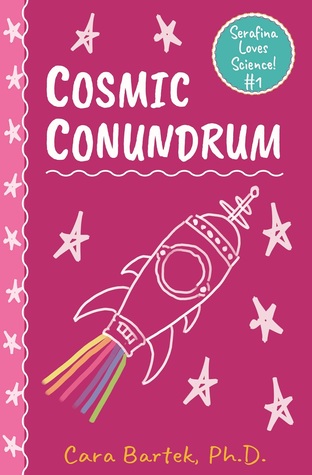
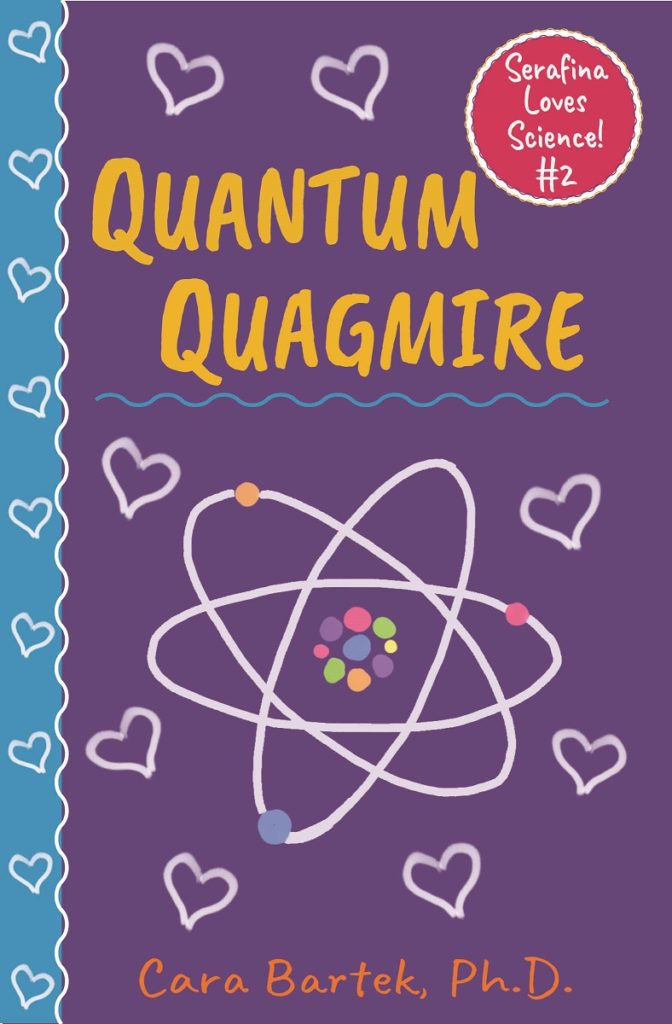
Serafina Loves Science
Cosmic Conundrum
Quantum Quagmire
Published by Absolute Love Publishing

Series Summary: Serafina Loves Science! is a middle grade fiction series that focuses on 11-year-old Serafina Sterling. Serafina is just like other kids who have to deal with issues like annoying older brothers, cliques at school, and parents who restrict her use of noxious chemicals. But she has a secret … Serafina loves science! Her passion for all things scientific helps her make new friends and figure out the old ones, understand her family, invent new devices for space travel, and appreciate the basic principles of the universe.

Cosmic Conundrum Summary: See Kellee’s review from Friday!

Quantum Quagmire Summary: Serafina suspects something is wrong when her best friend, Tori Copper, loses interest in their most cherished hobbies: bug hunting and pizza nights. When she learns Tori’s parents are getting a divorce and that Tori’s mom is moving away, Serafina vows to discover a scientific solution to a very personal problem so that Tori can be happy again. But will the scientific method, a clever plan, and a small army of arachnids be enough to reunite Tori’s parents? When the situation goes haywire, Serafina realizes she has overlooked the smallest, most quantum of details. Will love be the one challenge science can’t solve?

About the Author: Cara Bartek, Ph.D. lives in Texas with her husband and two daughters. The Serafina Loves Science! series was inspired in part by her career path and in part by her two little girls. Her hope is to make this world a more equitable and opportune place for her daughters one silly story at a time. Visit www.carabartek.com.

Thank you to Cara and Absolute Love Publishing for sharing this awesome outlook into the changes in childhood in the 21st century and how Serafina deals with these changes!

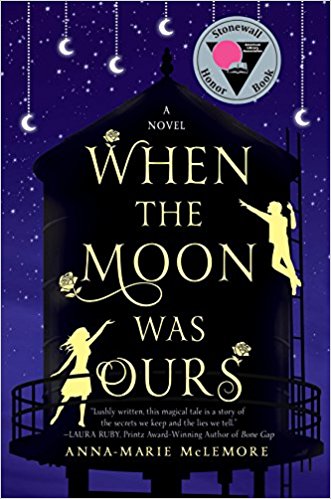
When the Moon Was Ours by Anna-Marie McLemore

Share

When the Moon Was Ours
Author: Anna-Marie McLemore
Published October 4, 2016 by Thomas Dunne

Goodreads Summary: To everyone who knows them, best friends Miel and Sam are as strange as they are inseparable. Roses grow out of Miel’s wrist, and rumors say that she spilled out of a water tower when she was five. Sam is known for the moons he paints and hangs in the trees, and for how little anyone knows about his life before he and his mother moved to town. But as odd as everyone considers Miel and Sam, even they stay away from the Bonner girls, four beautiful sisters rumored to be witches. Now they want the roses that grow from Miel’s skin, convinced that their scent can make anyone fall in love. And they’re willing to use every secret Miel has fought to protect to make sure she gives them up.

My Review: This book appears again and again on English department lists for courses about gender and sexuality. After I saw it for the dozenth time, I realized that I had to read it. I loved it so much that I adopted it for my course, and my students read it along with three other texts when we talked about gender and sexuality as they pertain to adolescence. I will admit that a few of my students had difficulty with the magical realism of the book, but overall, they found this book to be incredibly powerful and recommended I continue to use it in the course. There is so much to discuss, and it offers beautiful insight. I attach so many emotions to this book, which proves how much I cared deeply for the characters and content. If you missed this one, you should read it. I promise it will be different than any other book that you’ve read.

Teachers’ Tools for Navigation: The third of my class that read this book developed a great activity to inspire their peers to want to read it. They asked the students: “If an egg could cure your heartsickness, what color would it be? If a flower grew from your wrist, what type of flower would it be? If you could hang a moon from the trees to help you sleep at night, what would it look like? Or, pick another object to connect with.” We had a lot of fun discussing the great possibilities.

Discussion Questions: 

  • Why is this book used often in college English courses? What makes it so impactful?
  • What does this book teach you about people, places, life, and quite frankly, humanity as a whole?
  • There are a very many magically realistic objects in the text. If you examine them closely, what does each mean? For example, why are glass pumpkins growing in the town?

We Flagged: “Miel was a handful of foil stars, but they were the fire that made constellations” (p. 12).

Read This If You Love: Magical realism, books that make you think, books that push binary traditions of gender

Recommended For: 

closereadinganalysisbuttonsmall classroomlibrarybuttonsmall litcirclesbuttonsmall

RickiSig

Author Guest Post: “Shedding a Light of Understanding on Kids Who Are Different” by Janet McLaughlin, Author of Different

Share

“Shedding a Light of Understanding on Kids Who Are Different”

Growing up in an average American household, I never gave much thought to what it was like to be different or out of the norm. My education was homogenous: Catholic grade school, Catholic high school, even a year at a Catholic all-girls college. I married a nice, Catholic boy and raised three wonderful children. Life was what I understood it to be—simple. Oh, I had challenges, but nothing out of the ordinary.

Then my two beautiful, incredible grandchildren were born to my youngest child, and all that changed. The oldest started exhibiting quirky movements that turned into compulsive movements. She also started to have explosive outbursts, especially when things didn’t go her way—everyday things like what color shoes to wear.

It soon became obvious that there were issues. After visits to numerous doctors, Madison was diagnosed with Tourette syndrome, and the bottom fell out from under us. We fell into the unknown, and our ordinary life became extraordinary, but not in a good way.

I watched as Madison and her family coped with her physical and vocal tics. I watched as Madison cringed into herself at restaurants after she made a scene, feeling that “everyone was staring at her.” I learned to understand, if only in a small way, what it means to be different.

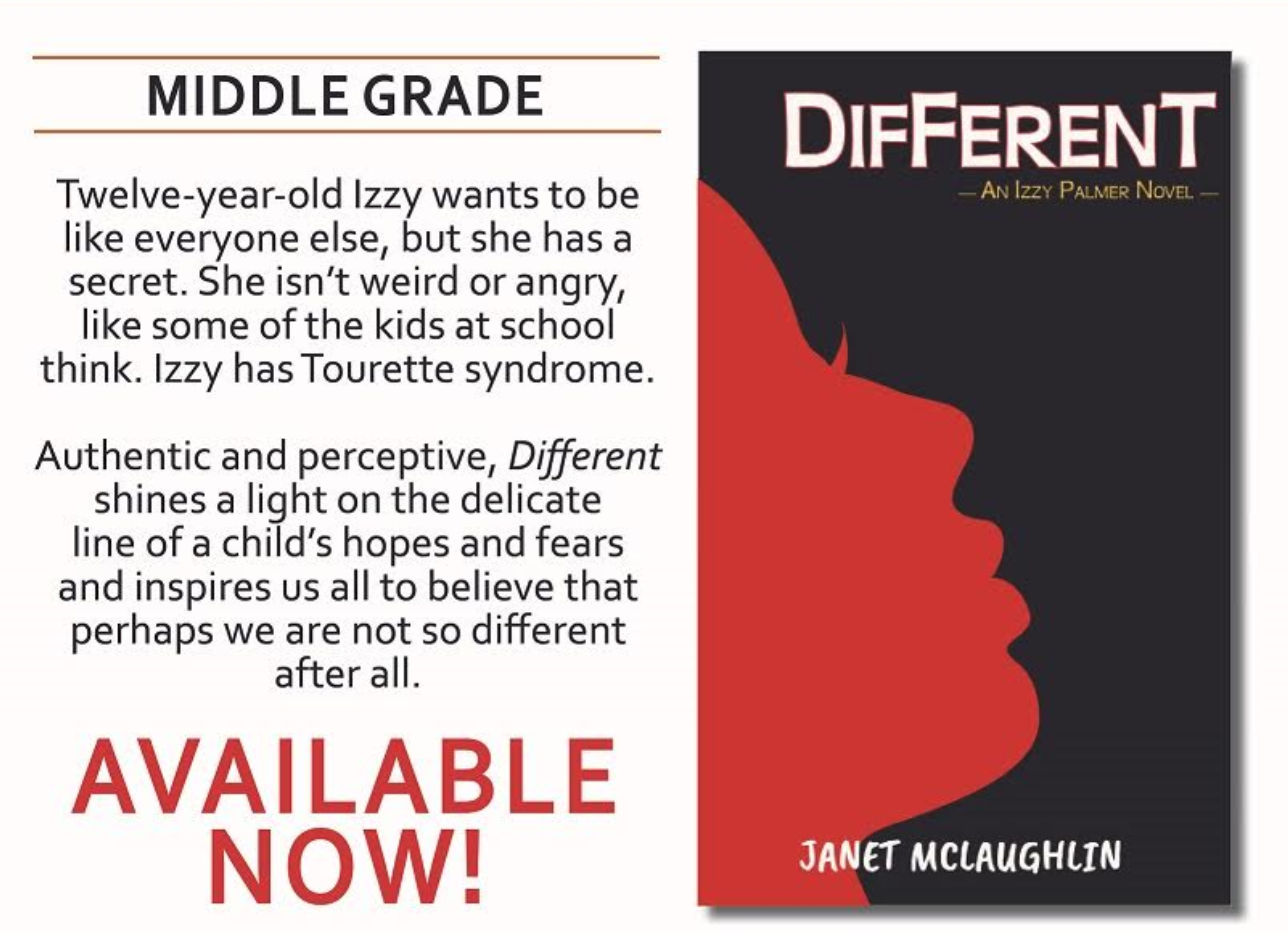
Which brings me to my novel, DIFFERENT. Izzy, the protagonist, is modeled after my granddaughter. It’s not her story, but it is her life. I’ve watched her cope over the last 15 years, often folding into herself when she felt people were judging her. She’s a beautiful person and a troubled one. She doesn’t like to talk about her TS. She doesn’t want pity. She wants to be accepted as normal.

I don’t have any answers here. I don’t live in the world of a teacher, and my parenting days are mostly given over to advice for my children—when asked. But I do know this. I do know that I’m not so quick to judge the child having a tantrum in the restaurant or the man walking down the street talking to himself. I do know that teachers have it much harder than I did when I taught second grade many years ago. And parents have many more challenges than I did when my kids were growing up.

What I hope is that my novel will help teachers and parents understand the world of the child who is considered different. That these kids have the same goals, desires, needs that a “normal” child has, only with some extra challenges thrown in. And I truly believe that, given the chance, these “different” kids can excel. They even can come to see that everyone has challenges and that they aren’t so different after all.

I’ve also come to believe that children, while sometimes unkind or thoughtless, are quick to accept the quirkiness of others, at least when they are young. Mostly, they are curious. It is only when they begin to become aware of their differences that they start to act judgmentally. I believe that’s a self-defense mechanism. It is my hope that these students can come to see some of themselves in Izzy. The struggle to be accepted. The desire to be “normal.” That Izzy’s struggles can be their catalyst for their own self-acceptance.

If you would like to share your experience with Tourette syndrome or invite me to speak with your organization or classroom, I would love to hear from you. Contact me at https://janetmclaughlin-author.com/.

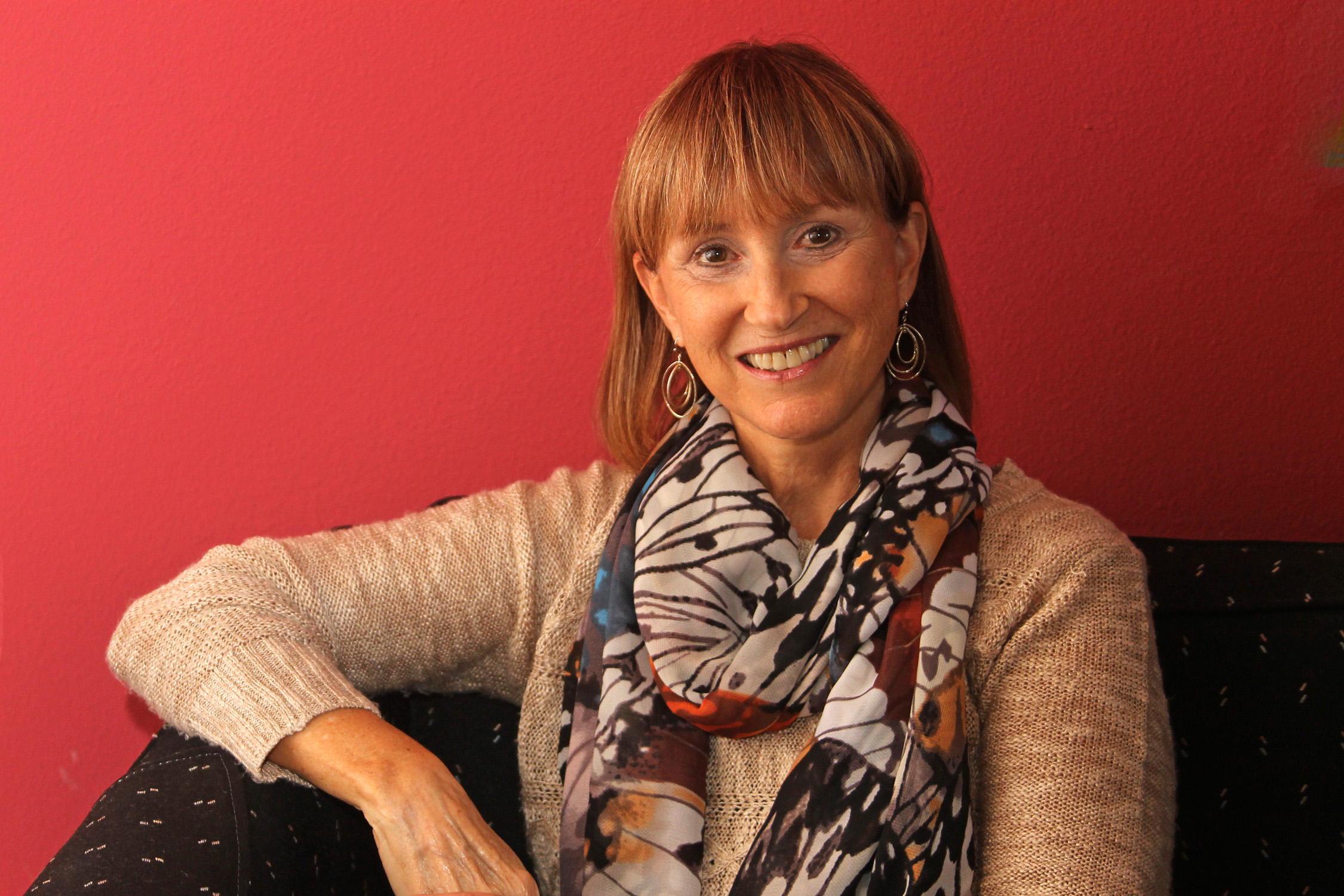
About the Author: Janet McLaughlin is the author of Different and the Soul Sight Mysteries series, including “Haunted Echo” and “Fireworks.” She has been involved in the communication field most of her adult life as a writer, editor and teacher. Her love of mysteries and the mystical are evident in her novels. She is a member of the Society of Children’s Book Writers and Illustrators and the Florida Writers Association. She lives in Florida with her husband, Tom, and along with her writing, enjoys playing tennis, walking, traveling, and meeting people.

https://twitter.com/Author_Janet
https://www.facebook.com/authorjanetmclaughlin/

Published September 12th, 2018 by Absolute Publishing

Thank you to Janet for her thought-provoking post and for sharing her book!

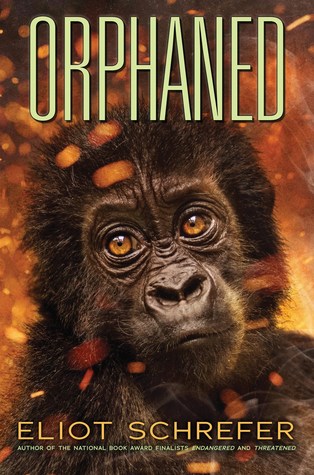
Ape Quartet #4: Orphaned by Eliot Schrefer

Share

Orphaned
Author: Eliot Schrefer
Published September 25th, 2018 by Scholastic Press

Summary: Before humans, and before human history, there were the apes.
Snub is a young gorilla, living in the heart what will eventually be known as Africa. She is jealous of her mother’s new baby . . . and restless in her need to explore. When a natural disaster shakes up her family, Snub finds herself as the guardian of her young sibling . . . and lost in a reshaped world.

Snub may feel orphaned, but she is not alone. There are other creatures stalking through the woods — a new form of predator, walking on two legs. One of their kind is also orphaned, and is taken in by Snub. But the intersection of the human world and the gorilla world will bring both new connections and new battles.

In his boldest work yet, two-time National Book Award finalist Eliot Schrefer shows us a riveting, heartbreaking early encounter between ape and man — told from the ape’s point of view. It is a journey unlike any other in recent literature.

About the Author: Eliot Schrefer is a New York Times-bestselling author, and has twice been a finalist for the National Book Award. In naming him an Editor’s Choice, the New York Times has called his work “dazzling… big-hearted.” He is also the author of two novels for adults and four other novels for children and young adults. His books have been named to the NPR “best of the year” list, the ALA best fiction list for young adults, and the Chicago Public Library’s “Best of the Best.” His work has also been selected to the Amelia Bloomer List, recognizing best feminist books for young readers, and he has been a finalist for the Walden Award and won the Green Earth Book Award and Sigurd Olson Nature Writing Award. He lives in New York City, where he reviews books for USAToday.

Praise: “Scientific accuracy paired with lyrical, subjective language describing the young gorilla’s impressions of her surroundings and bodily needs make this book an imaginative, eloquent evocation of a little-known era in prehistory from an animal’s viewpoint. A plausibly authentic account skillfully avoiding risk of excessive anthropomorphism.” – Kirkus Reviews

Review: What a fascinating book! Orphaned is so different than Schrefer’s other novels but in a way that is new and so well done. Where Endangered, Rescued, and Threatened were about humans interacting with apes in a contemporary setting, Orphaned is about apes interacting with early humans in a pre-historic setting. There is no book like this! And it is done beautifully.

When we visited virtually with Eliot Schrefer he shared with us that the story was originally told in prose but his editor, David Levithan, pointed out to him that apes, though intelligent, would not think the way that Eliot writes prose. That their thoughts would be focused on immediate needs and would lack in descriptive and fluffy language. He then completely rewrote the story in verse and WOW! Snub’s voice is perfect.

While I originally thought that the point of view and setting would make the story a challenge, but it was the contrary–it made it just that more interesting!

Teachers’ Tools for Navigation: What a great mentor text for point of view and setting! Have students write a story with an animals main character in an interesting setting. Then have them change from prose to verse to hone in on the point of view of the animal and make sure they are including the setting as a main aspect of the story.

Discussion Questions: 

  • How does the inclusion of the ape “language” help with the realism of the story?
  • Why do you think the author included the illustrations of what apes were currently in the story at the top of the page?
  • How did the change from prose to verse storytelling impact the way the story was perceived?
  • How do you think the early humans perceived the gorillas when they interacted with them?
  • How does the point of view shape this story?
  • How did the eruption change the life of the gorillas and early humans?
  • How are gorillas and early humans similar and different?

Flagged Passages: 

“Central Eastern Africa
600,000 Years Ago

Until this time, gorillas lived by the millions in a broad band of jungle across Africa. Then a series of volcanic eruptions, many times more foreful than any the modern world has experience, occurred in the Great Rift Valley. The shift in landscape allowed tribes of early humans to travel south into this area for the first time. 

It would be the first meeting between ape and human.

Part One: Home

Rock. Nut.
Snub looks between the two, thinking.
This tree keeps its nuts high in its branches–
a fallen one is a lucky treat.
She imagines rolling the inside nugget in her mouth,
biting its oily flesh.
Tongue between her teeth, brow scrunched,
she raps the rock on top of the nut.
It does not crack.
She licks the rock.
The rock tastes like rock.
She licks the nut.
The nut tastes like dirt.
Snub twists the woody halves.
They will not part.
Opening nuts is Mother’s job,
but Mother let Snub go off alone.

                                                                              mrgh. 

Fresh fury surges.
Snub hurts the nut, aiming
at a pair of magpies.
It goes wide and disappears into the foliage.
Worthless nut.
Snub looks to see if anyone has
been impressed by her rage.
But this only reminds her:
Her family is not here.”

Read This If You Love: The Ape Quartet books #1-3, Early humans, Gorillas

Recommended For: 

classroomlibrarybuttonsmall 

Signature

Blog Tour with Review and Giveaway!: A Perilous Journey of Danger and Mayhem: A Dastardly Plot by Christopher Healy

Share

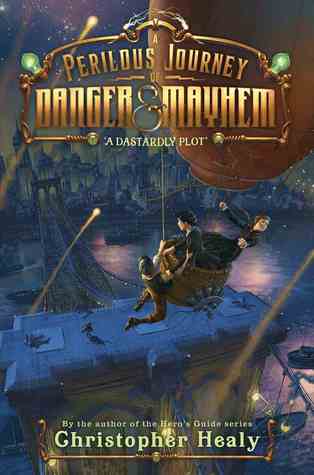
A Perilous Journey of Danger & Mayhem: A Dastardly Plot
Author: Christopher Healy
Published September 25th, 2018

Summary: It is 1883—the Age of Invention! A time when great men like Thomas Edison, Alexander Graham Bell, Nicola Tesla, and George Eastman work to turn the country into a mechanical-electrical-industrial marvel: a land of limitless opportunity. And it all happens at the world famous Inventors Guild headquarters in New York City—a place where a great idea, a lot of hard work, and a little bit of luck can find you rubbing elbows with these gods of industry who will usher humanity into the bright promise of the future.

Unless, of course, you’re a woman.

Molly Pepper, daughter of brilliant but unknown inventor Cassandra Pepper, lives with her mother in New York. By day, they make ends meet running a small pickle shop; but by night, they toil and dream of Cassandra shattering the glass ceiling of the Inventors Guild and taking her place among the most famous inventors in America. In an attempt to find a way to exhibit Cassandra’s work at the 1883 World’s Fair, they break into the Inventors Guild—and discover a mysterious and dastardly plot to destroy New York. The evidence points to the involvement of one of the world’s most famous inventors, and now it’s up to Molly, Cassandra, and a shop hand named Emmett Lee to uncover the truth—even if no one will ever know it was they who did it.

Christopher Healy, author of the acclaimed Hero’s Guide series, returns with the first book in a rip-roaring adventure about the inventors history remembers—and more than a few that it’s forgotten.

About the Author: Christopher Healy is the author of The Hero’s Guide to Saving Your Kingdom, a New York Times Book Review Editor’s Choice, as well as its two sequels, The Hero’s Guide to Storming the Castle and The Hero’s Guide to Being an Outlaw. Before becoming a writer, he worked as an actor, an ad copywriter, a toy store display designer, a fact-checker, a dishwasher, a journalist, a costume shop clothing stitcher, a children’s entertainment reviewer, and a haunted house zombie. He lives in New Jersey with his wife, two children, and a dog named Duncan. You can visit him online at www.christopherhealy.com

Praise: 

“A zany, rollicking series opener.”– Kirkus Reviews

“Plot twists and banter hit at breakneck speeds in this heartfelt yet tongue-in-cheek look at the tumultuous Age of Invention, and its focus on two often marginalized groups—immigrants and women—allows for relevant social commentary.”– Publishers Weekly

“Healy has created a steampunk-inspired alternative history featuring some of the greatest minds in invention (including a number of women) in this series opener. A solid choice for adventurous readers.”– Booklist

“Christopher Healy, author of the Hero’s Guide series knows how to tell a good story. He’s done it again with the adventures of a determined girl named Molly Pepper.”– Brightly

Review: This is the exact book the world needed! Our traditionally told history is lacking in all things diversity because it was told by bias individuals who left out people who made huge differences despite their gender or race. I love that Christopher Healy was able to take this fact, show the ridiculousness of lack of great female minds being included in history and create this book filled with humor, adventure, heart, and a bit of history. He also includes prejudice against immigrants in the story in a way that will make any reader realize how undeserving these humans just looking for a life are of this prejudice.

Now starting my review that way may make you think that the book is preachy or boring, but it is anything but. Right from the beginning, you want to see if Cassandra and her brilliant inventions will ever be acknowledged and if they are going to be able to stop New York from being destroyed. Now throw in deceit from men the Peppers and Emmett trust, inventions of all sorts, a gang of men trying to kill whomever get in their way, and a group of brilliant women who won’t let anything stop them, and you will get this crazy adventure of Molly’s and Emmett’s.

Teachers’ Tools for Navigation: Although the book is fiction, much of what is included is shrouded in fact. The author includes “What’s Real and Not…” in the back matter which allows for inquiry into the historical elements of the story. This also allows teachers to see what parts of the story include more fact than fiction and different aspects could be pulled out when learning about the different historical elements.

An educator’s guide is also for the book from the publisher!

Discussion Questions: 

  • What part of the books were historical and what parts were fiction?
  • Would you consider the book historical fiction or science fiction or steam punk?
  • What invention would you want to make?
  • Research Edison. Do you think he deserves as much recognition as he gets?
  • Research the World’s Fair. Why do we not have them anymore?
  • Which deceitful events in the story surprised you? Were your predictions correct?
  • How did meeting Emmett and the MOI change Molly’s life trajectory?
  • Other than for entertainment, why do you think the author chose to write this story?

Flagged Passages: Check out this clip from the audiobook! You can also read a sample here!

Read This If You Love: The Invention of Hugo Cabret by Brian Selznick, The Mechanical Mind of John Coggin by Elinor Teele, Explorers: Door in the Alley by Adrienne Kress

Recommended For: 

classroomlibrarybuttonsmall 

GIVEAWAY!

a Rafflecopter giveaway

Don’t miss out on the other blog tour stops!

24-Sep Novel Novice  Post by Christopher Healy https://novelnovice.com/
25-Sep A Foodie Bibliophile in Wanderlust http://www.foodiebibliophile.com/
26-Sep Unleashing Readers https://www.unleashingreaders.com
27-Sep Teach Mentor Texts http://www.teachmentortexts.com
28-Sep Novel Novice  Review https://novelnovice.com/
29-Sep Maria’s Melange http://www.mariaselke.com/
1-Oct The Flashlight Reader http://www.theflashlightreader.com/
2-Oct Nerdy Book Club https://nerdybookclub.wordpress.com/
3-Oct Book Monsters https://thebookmonsters.com/
3-Oct Novel Novice Q and A with Chris https://novelnovice.com/
4-Oct Bluestocking Thinking http://bluestockingthinking.blogspot.com/

Signature

**Thank you to Walden Pond Press for providing copies for review and giveaway!**

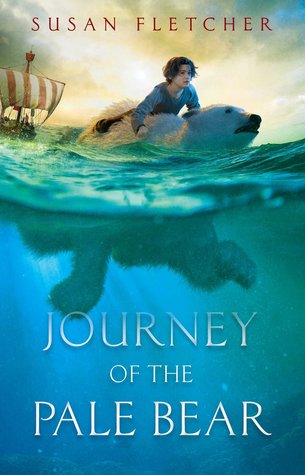
Review and Giveaway!: Journey of the Pale Bear by Susan Fletcher

Share

Journey of the Pale Bear
Author: Susan Fletcher
Publication Date: October 2nd, 2018 by McElderry Books

Summary: The polar bear is a royal bear, a gift from the King of Norway to the King of England. The first time Arthur encounters the bear, he is shoved in her cage as payback for stealing food. Restless and deadly, the bear terrifies him. Yet, strangely, she doesn’t harm him—though she has attacked anyone else who comes near. That makes Arthur valuable to the doctor in charge of getting the bear safely to London. So Arthur, who has run away from home, finds himself taking care of a polar bear on a ship to England.

Tasked with feeding and cleaning up after the bear, Arthur’s fears slowly lessen as he begins to feel a connection to this bear, who like him, has been cut off from her family. But the journey holds many dangers, and Arthur knows his own freedom—perhaps even his life—depends on keeping the bear from harm. When pirates attack and the ship founders, Arthur must make a choice—does he do everything he can to save himself, or does he help the bear to find freedom?

About the Author: SUSAN FLETCHER is the acclaimed author of the Dragon Chronicles as well as the award-winning Alphabet of Dreams, Shadow Spinner, Walk Across the Sea, and Falcon in the Glass. Ms. Fletcher lives in Bryan, Texas. To read about the fascinating story behind the inspiration for Journey of the Pale Bear, visit her website, SusanFletcher.com

Praise: ★”A stupendous coming-of-age tale stuffed with adventure and laced with deeper questions.” — Kirkus Reviews (starred review)

Review: When I first read about this book it sounded pretty good, enough for me to pick it up, but it was SO GOOD! Like so good that even though it was a school week, I read it in 2 days!

First, it takes place in a time period that is hardly ever in books which is fascinating. I found myself looking up some of the history that was mentioned in the book, but the author did a great job of making sure that not knowing about the details of the time period wouldn’t effect the reading experience.

Second, it looks at animal treatment and truly makes you think about how an animal feels when it is put in captivity. Although told only in a realistic manner, the animal is such an integral part of the story that its behaviors are shared in detail allowing it to become a full character within the book.

Third, did you know there used to be a menagerie in the Tower of London? Me neither! But that took me down a suck hole of Google research. So fascinating!

Fourth, wow! The adventure is EPIC: sailing, bullies, pirates, shipwrecks, storms. It never stops!

So in review: Fascinating, thought-provoking, curious, and action-packed. All in all, a book I truly recommend and enjoyed.

Teachers’ Tools for Navigation: The main home for this book will be in libraries; however, I can definitely see portions of it being used in classrooms.

  • First, I could see it being used during a history lesson to discuss the politics and war shared in the book.
  • Second, there are so many scenes that could be pulled out as mentor texts for writing. I’ll share some of my favorites below.
  • Third, I would love to see some creative writing done from the bear’s point of view.
  • Fourth, it is a fascinating look at animal treatment and how it has (and has not) changed over the years.

But in the end, it belongs in kids’ hands! Get it there!

Discussion Questions: 

  • Why did Arthur agree to take care of the bear?
  • What examples throughout the book show that the bear loved and trusted Arthur?
  • What does the whole story of a polar bear being sent from Norway to England show you about the respect of animals during the time period of the novel?
  • How did Arthur’s involvement make the bear’s life better?
  • Do you believe that the doctor cared about Arthur as he said he did? Explain.
  • How did Arthur earn the respect of the sailors on the ship?

Flagged Passages: 

“Its eyes, small and dark, were alert, curious, aware. I felt the faint stirring of its breath against my cheeks. I drew in the rich, ripe scent of bear until I seemed to sink down below the surface of it, drowning. From somewhere far away I heard Hauk and the lantern boy arguing, but the sounds fell away behind the throbbing in my ears and the thrill of the running-hum in my limbs.

The bear rumbled deep in its throat.

I rose to my feet, stepped back, and felt the iron bars press cold against me. I kept my eyes fixed on the pale, wide face, as if the force of my gaze could prevent the bear from lunging at me with its enormous paws or raking me with is claws–claws that I could see out of the corner of my eyes, massive claws, claws from a nightmare of monsters.” (Chapter 3)

“Before we saw the bear, we heard her—a heavy rhythmic read, a thump, a clang. Beyond the reek of fish, I sniffed out the feral musk of her.

We crept through the dark warehouse–the doctor, the captain, and I–until I made out a large, pale, moving form in the deep gloom ahead. The doctor motioned us to stop, and we watched from behind a stack of crates and bales. The bear was as tall as a pony, longer than a caribou, and as wide as two bulls. Back and forth she paced in her cage, and back and forth again, her head swinging side to side on her long neck, the convex bow of her snout lending her an air of nobility. The bear-smell now filled the air, and the stench of dung as well. A surge of fear rose up in me, turning my bones and sinews to liquid.” (Chapter 6)

Read This If You Love: Seekers by Erin Hunter, The Vanishing Islands by Barry Wolverton, Pirates! by Celia Rees, The Ravenmaster’s Secret by Elvira Woodruff

Recommended For: 

classroomlibrarybuttonsmall 

Giveaway!: 

a Rafflecopter giveaway

Signature

**Thank you to Barbara at Blue Slip Media for providing a copy for review and McElderry Books for providing a copy for giveaway!**