National Geographic Kids: Farm Animals & Rascally Rabbits!

Share

NFPB2016

Nonfiction Wednesday

Nonfiction Picture Book Wednesday is hosted by Kid Lit Frenzy and was started to help promote the reading of nonfiction texts. Most Wednesdays, we will be participating and will review a nonfiction text (though it may not always be a picture book).
Be sure to visit Kid Lit Frenzy and see what other nonfiction books are shared this week!

farm animals

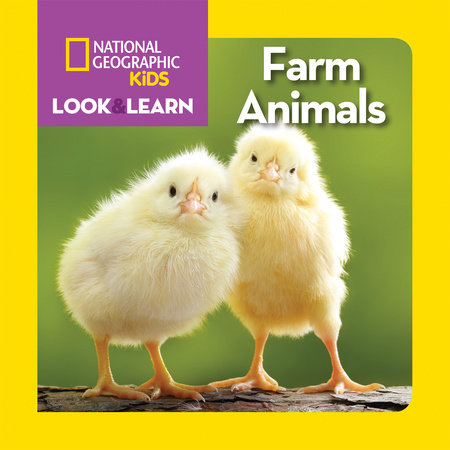
Farm Animals
Author: Catherine D. Hughes
Photographs from National Geographic
Published February 9th, 2016 by National Geographic Children’s Books

Goodreads Summary: Young readers will meet their favorite farm animals and learn more about them through simple, age-appropriate language in this colorful board book.

rascally

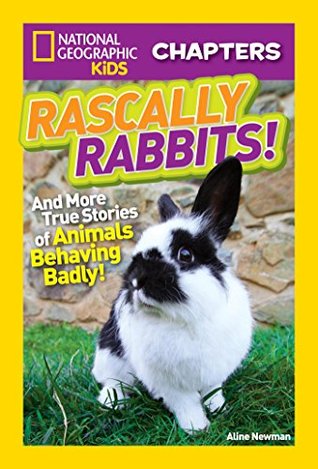
Rascally Rabbits! And More True Stories of Animals Behaving Badly!
Author: Aline Alexander Newman
Photographs from National Geographic
Published February 9th, 2016 by National Geographic Children’s Books

Goodreads Summary: These bunnies may look adorable, but there’s more than meets the eye! In Rascally Rabbits, meet some rabbits that cause nothing but trouble, a rescue pup who will eat ANYTHING, and a sneaky bear with a taste for treats. Readers won’t stop laughing as they read these hilarious–and completely true!–stories. Filled with engaging photos, fast facts, and fascinating sidebars, readers won’t want to put this book down.


Kellee’s Review: What I like so much about National Geographic Kids books are that they really do take nonfiction to the next level. First, they have nonfiction for all ages. The Look & Learn series are for kids ages 1-4 then move to their Readers Series which is an early reader then to Chapters that is primary level. Each level adds more text but continue to include interesting facts and photographs. Once you get up to Chapters, the text even includes sidebars, an index, and a bibliography. 

Farm Animals was a favorite with Trent immediately. One of his stations at school is all about animals and they spend their time there talking about the different animals, what color they are, and what sound they made, so Trent loved telling me all of the animals’ names and the sound they make. I loved that there were animals facts and sidebars in addition to just the animal photographs and sounds.

Rascally Rabbits! is a perfect first chapter book because it is quite funny (these animals do some crazy things), it is educational because it teaches about the animals as well, and it splits up the stories into nice sections.

Ricki’s Review: I completely agree with Kellee. I much prefer narrative nonfiction, so I always hesitate to pick up informational nonfiction. The National Geographic books remind me just how wrong my assumptions are. I am not crazy about leveling, particularly with nonfiction, but I think that some parents really like it. And I think the leveling in these books is far more accurate than in fiction texts. 

I knew Henry would love Farm Animals the second we got it in the mail. Like most kids, he loves animals. He immediately began singing “Old McDonald” as we started reading the book, and he was bouncing up and down as we went through each of the brightly colored pictures.

Rascally Rabbits! is a bit challenging for him, but he loved the pictures. I opted to read selected text to him aloud, and I read the entire book on my own. Kids who are interested in rabbits will absolutely adore these books. I still remember reading dozens of books about poodles when I was younger. Because I was so interested in the content, I didn’t realize how much I was learning! The book is organized very well, and they did a really nice job with this one.

Teachers’ Tools for Navigation: National Geographic Kids’ books should be a go to for a teacher’s informational nonfiction section. Students will love reading and learning from these texts. Farm Animals and other Look & Learn books are perfect for read alouds and helping young children learn about different parts of our world. Rascally Rabbits! and other chapter books can be used for read aloud, independent reading, or even within a lit circle/jigsaw. For example, with Rascally Rabbits! each group could read about each of the different animals who made a mistake then go group with one person from each of the other groups to share what they read.

Discussion Questions: (Farm Animals) What product do each of these animals give to us?; What other farm animals do you know? What sounds do they make?; (Rascally Rabbits!) What are some things that Babbity does to make Flopsy’s life tough?; What makes bears get near humans?; Why was Neil afraid something bad might happen with Moose? Did something bad happen? Was it Neil’s fault?

We Flagged: “Moo! Cows eat grass. A group of cows is called a herd. People drink milk that comes from cows. Guess What? One cow can give enough milk in a day to fill 400 glasses.” (Farm Animals)

“Did You Know? The best way to pet a rabbit is to gently scratch its forehead and between its eyes.” (Rascally Rabbits!, p. 9)

“A young black dog ran without purpose along a forest road in Lewis County, New York, U.S.A. Rain was pouring down and freezing on the ground. Tiny icicle hung from the dog’s ears and chin. He had a wild-eyed look on his face.” (Rascally Rabbits!, p. 71)

Read This If You Loved: Nonfiction animals books

Recommended For: 

classroomlibrarybuttonsmall readaloudbuttonsmall litcirclesbuttonsmall

Signatureand RickiSig

**Thank you Karen from Media Masters Publicity for providing copies for review!**

National Geographic Kids Early Reader Biographies: George Washington Carver & Sonia Sotomayor

Share

NFPB2016

Nonfiction Wednesday

Nonfiction Picture Book Wednesday is hosted by Kid Lit Frenzy and was started to help promote the reading of nonfiction texts. Most Wednesdays, we will be participating and will review a nonfiction text (though it may not always be a picture book).
Be sure to visit Kid Lit Frenzy and see what other nonfiction books are shared this week!

gwc

George Washington Carver
Author: Kitson Jazynka
Published January 12th, 2016 by National Geographic Children’s Books

Summary: Take a bite into the fascinating history of peanut butter and the man who invented it. Through leveled text and engaging photos, kids meet George Washington Carver and learn about his important work with peanuts and other plants. This Level 1 reader is carefully leveled for an early independent reading or read aloud experience, perfect to encourage the scientists and explorers of tomorrow!

Discussion Questions: Why did Carver have to move when he was 13?; What events in Carver’s life helped him become the first black student at Iowa State and eventually a professor?; What inventions did Carver discover?

We Flagged: “In Carver’s time, life was hard for many black people in the United States. They did not have the same rights as white people.

Carver felt that this was wrong. He used his ideas about farming to help change people’s lives.” (p. 7)

NG - Sonia Sotomayor

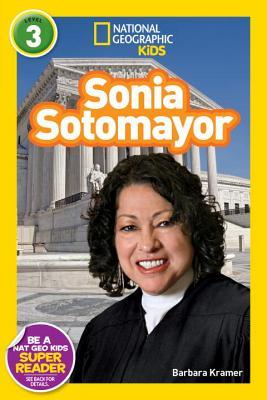
Sonia Sotomayor
Author: Barbara Kramer
Published January 12th, 2016 by National Geographic Children’s Books

Summary: Explore one of the most recognized names in modern America with this biography of Supreme Court Justice Sonya Sotomayor. Kids will learn about her rise to be the first Hispanic Supreme Court Justice and the trials she faced along the way. The level 3 text provides accessible, yet wide-ranging, information for independent readers.

Discussion Questions: What traits does Sotomayor have that helped her succeed in education to eventually become a Supreme Court justice?; Sotomayor has not forgotten where she comes from. In what ways does she give to her childhood community?; What did Sotomayor do that was so extraordinary?

We Flagged: “In August 2009, Sonia Sotomayor became a Super Court justice. It is a special job. Sotomayor is the 111th person ever to receive that honor. She is the third woman and the first Hispanic justice to serve on that court.” (p. 4)


My Review: These texts are such a wonderful way to introduce readers to some very important people in history. The books don’t back down from hard subjects like racism and poverty, but instead teach the reader about it in an easy to understand way. And to help the reader even more, throughout the books, any tough words are defined, sidebars are filled with additional information, and text features such as illustrations, graphs, and timelines elaborate on the story.

Teachers’ Tools for Navigation: These books could be used in many different ways including guided reading during a teacher-led small group or as biography lit circles.

Read These If You Love: Biographies

Recommended For: 

classroomlibrarybuttonsmall litcirclesbuttonsmall

Kellee Signature

**Thank you to Karen from Media Masters for providing copies for review!**

Not if I See You First by Eric Lindstrom

Share

not if i see you first

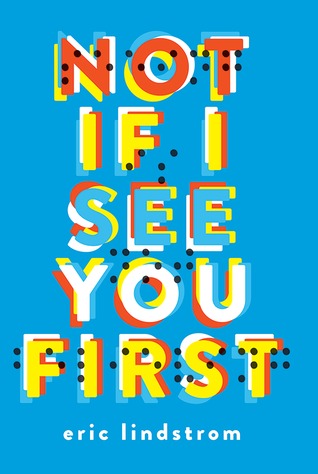
Not If I See You First
Authors: Eric Lindstrom
Published: December 1, 2015 by Poppy

GoodReads Summary: The Rules:

Don’t deceive me. Ever. Especially using my blindness. Especially in public.

Don’t help me unless I ask. Otherwise you’re just getting in my way or bothering me.

Don’t be weird. Seriously, other than having my eyes closed all the time, I’m just like you only smarter.

Parker Grant doesn’t need 20/20 vision to see right through you. That’s why she created the Rules: Don’t treat her any differently just because she’s blind, and never take advantage. There will be no second chances. Just ask Scott Kilpatrick, the boy who broke her heart.

When Scott suddenly reappears in her life after being gone for years, Parker knows there’s only one way to react—shun him so hard it hurts. She has enough on her mind already, like trying out for the track team (that’s right, her eyes don’t work but her legs still do), doling out tough-love advice to her painfully naive classmates, and giving herself gold stars for every day she hasn’t cried since her dad’s death three months ago. But avoiding her past quickly proves impossible, and the more Parker learns about what really happened—both with Scott, and her dad—the more she starts to question if things are always as they seem. Maybe, just maybe, some Rules are meant to be broken.

Combining a fiercely engaging voice with true heart, debut author Erid Lindstrom’s Not If I See You First illuminates those blind spots that we all have in life, whether visually impaired or not.

Review: The story is about a girl who is blind and a runner. I feel like I learned so much for this book from the physical and mental strength of this young girl. Frankly, I can’t quite find the words to express how much it taught me about life. The narrator is feisty, and I appreciated her candor about her disability. I came to realize how incredibly frustrating it would be to deal with the same reactions from strangers every day, particularly when she feels perfectly capable. This is a great book to teach empathy.

Teachers’ Tools for Navigation: We don’t talk about disability in literature enough. I would love to put students in literature circles, with all of the texts focusing on disability. It would be interesting to have whole-class discussions about the way disability is present in each text. It might be particularly interesting to include texts that feature mental and physical disability. This might lead to good discussions, like: What is disability? Is a disability always visible to others? What is normal?

Discussion Questions: The narrator of the text is unlikable. How does this add to the story? Why might the author have written the text in this way?; Do you think Parker’s rules are fair? Why do you think she has this list of rule?

We Flagged: I flagged this section because it shows Parker’s dry humor:

“‘So you’re blind, huh?’

I cock my head toward the unfamiliar male voice coming from the seat directly in front of me. Low-pitched a bit thick around the vowels. The voice of a jock, but I just keep that as a working hypothesis awaiting more evidence.”

Read This If You Loved: The Running Dream by Wendelin Van Draanen, Girl, Stolen by April Henry, Blind by Rachel DeWoskin, Wonder by R.J. Palacio, Out of My Mind by Sharon Draper

Recommended For:

litcirclesbuttonsmall classroomlibrarybuttonsmall

RickiSig

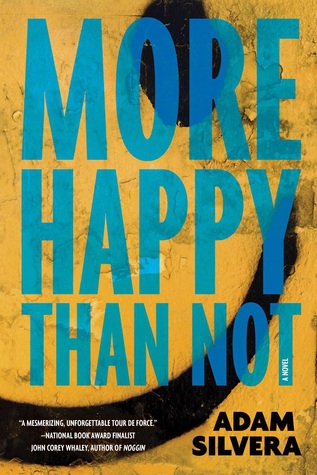
More Happy Than Not by Adam Silvera

Share

more happy than not

More Happy Than Not
Authors: Adam Silvera
Published: June 2, 2015 by Soho Teen

GoodReads Summary: In his twisty, gritty, profoundly moving debut—called “mandatory reading” by the New York Times—Adam Silvera brings to life a charged, dangerous near-future summer in the Bronx.

In the months after his father’s suicide, it’s been tough for 16-year-old Aaron Soto to find happiness again–but he’s still gunning for it. With the support of his girlfriend Genevieve and his overworked mom, he’s slowly remembering what that might feel like. But grief and the smile-shaped scar on his wrist prevent him from forgetting completely.

When Genevieve leaves for a couple of weeks, Aaron spends all his time hanging out with this new guy, Thomas. Aaron’s crew notices, and they’re not exactly thrilled. But Aaron can’t deny the happiness Thomas brings or how Thomas makes him feel safe from himself, despite the tensions their friendship is stirring with his girlfriend and friends. Since Aaron can’t stay away from Thomas or turn off his newfound feelings for him, he considers turning to the Leteo Institute’s revolutionary memory-alteration procedure to straighten himself out, even if it means forgetting who he truly is.

Why does happiness have to be so hard?

Review: After Aaron’s father commits suicide, he finds it difficult to find his place in the world, and the smile-shaped scar on his wrist is just one reminder of this struggle. Aaron considers turning to an institute that has the capability to alter his memory—because he wants to forget that he is gay. The text is heart-wrenching, emotionally profound, and deeply moving. Weeks after I read it, I found that I was still referencing it in daily conversations with teacher friends. I also designed a conference proposal based on a concept from this book. This is an important book that belongs in classrooms.

Teachers’ Tools for Navigation: Students will enjoy debating the ethics of the Leteo Institute’s procedure. My book club had a heated debate, and at the end, I still didn’t know where I stood! Teachers might bring in other examples from the media of people who have experienced trauma and ask students—would it be okay for this person to have the procedure done? When is it ethically okay (if ever)?

Discussion Questions: How does the author unfold the plot for the reader? How does this impact the telling of the story?; Which of Aaron’s friends are loyal? Why?; What does this procedure say about humanity? Do you think people would undergo the procedure? Who might be most likely to undergo the procedure?; How does the author end the novel? What does this teach us?

We Flagged: “Memories: some can be sucker punching, others carry you forward; some stay with you forever, others you forget on your own. You can’t really know which ones you’ll survive if you don’t stay on the battlefield, bad times shooting at you like bullets. But if you’re lucky, you’ll have plenty of good times to shield you.”

Read This If You Loved: Simon vs. the Homo Sapiens Agenda by Becky Albertalli, None of the Above by I. W. Gregorio, Aristotle and Dante Discover the Secrets of the Universe by Benjamin Alire Sáenz

Recommended For:

litcirclesbuttonsmall classroomlibrarybuttonsmall

RickiSig

Kid Athletes: True Tales of Childhood from Sports Legends by David Stabler

Share

NFPB2016

Nonfiction Wednesday

Nonfiction Picture Book Wednesday is hosted by Kid Lit Frenzy and was started to help promote the reading of nonfiction texts. Most Wednesdays, we will be participating and will review a nonfiction text (though it may not always be a picture book).
Be sure to visit Kid Lit Frenzy and see what other nonfiction books are shared this week!

kid athlete

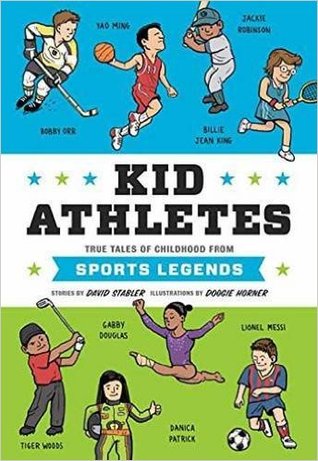
Kid Athletes: True Tales of Childhood from Sports Legends
Author: David Stabler
Illustator: Doogie Horner
Published November 17th, 2015 by Quirk Books

Goodreads Summary: Forget the gold medals, the championships, and the undefeated seasons. When all-star athletes were growing up, they had regular-kid problems just like you. Baseball legend Babe Ruth was such a troublemaker, his family sent him to reform school. Race car champion Danica Patrick fended off bullies who told her “girls can’t drive.” And football superstar Peyton Manning was forced to dance the tango in his school play. Kid Athletestells all of their stories and more with full-color cartoon illustrations on every page. Other subjects include Billie Jean King, Jackie Robinson, Yao Ming, Gabby Douglas, Tiger Woods, Julie Krone, Bruce Lee, Muhammad Ali, Bobby Orr, Lionel Messi, and more!

My Review: I really enjoyed this book of short stories about sports legends as children. I think the author did a great job sucking the reader in by starting with something about each athlete’s career then tying their childhood obstacles into their successes. I was impressed by how each story did have a lesson, but they did not feel didactical, and the author also made the stories ones that kids are going to connect with. This allow with fun illustrations will definitely keep readers entertained!

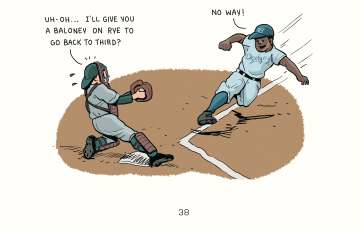
Teachers’ Tools for Navigation: I’m in a theme unit in my class right now and as I was reading each story, I automatically grasped the theme the author was trying to get across for each short story. Some are quite explicit while others are inferred which makes it a perfect book as you scaffold students determining theme independently. The author also uses primary sources throughout the text would be a good way to discuss primary vs. secondary sources. It could even lead into students writing their own biographical story of a historical person using primary and secondary sources. Finally, I would love to discuss the illustrations with students! They all are a bit quirky and funny though tie into the story in different ways. It would be interesting to see if kids grasp the subtle humor.

Discussion Questions: What obstacle did ______ overcome?; What character traits did _____ show while overcoming ____?; What is the theme of ______ ? How did the author support the theme throughout?; How are the stories within each section similar? Different?

We Flagged: “In 1962, he was elected to the Baseball Hall of Fame. Historians have praised him for refusing to fight back in the face of racial discrimination. But Jackie did fight back, in his won way, by being the best person he could be, instead of following the bad examples of his enemies. That was a lesson he had learned from his days as the tiny terror of the Pepper Street Gang.” (p. 38)

kidathletes_jackierobinson

Read This If You Loved: Picture book biographies of athletes, Sports biographies

Recommended For: 

litcirclesbuttonsmall readaloudbuttonsmall classroomlibrarybuttonsmall

Kellee Signature

**Thank you to Quirk Books for providing a copy for review!**

The House of Purple Cedar by Tim Tingle

Share

house of purple cedar

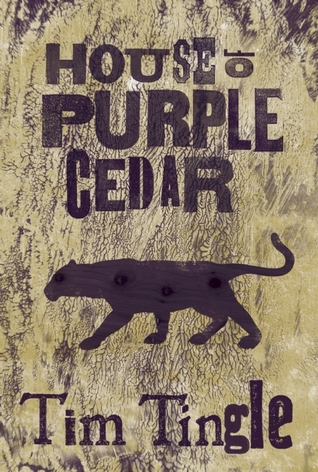
House of Purple Cedar
Author: Tim Tingle
Published: February 18, 2014 by Cinco Puntos Press

GoodReads Summary: “The hour has come to speak of troubled times. It is time we spoke of Skullyville.”

Thus begins Rose Goode’s story of her growing up in Indian Territory in pre-statehood Oklahoma. Skullyville, a once-thriving Choctaw community, was destroyed by land-grabbers, culminating in the arson on New Year’s Eve, 1896, of New Hope Academy for Girls. Twenty Choctaw girls died, but Rose escaped. She is blessed by the presence of her grandmother Pokoni and her grandfather Amafo, both respected elders who understand the old ways. Soon after the fire, the white sheriff beats Amafo in front of the town’s people, humiliating him. Instead of asking the Choctaw community to avenge the beating, her grandfather decides to follow the path of forgiveness. And so unwinds this tale of mystery, Indian-style magical realism, and deep wisdom. It’s a world where backwoods spiritualism and Bible-thumping Christianity mix with bad guys; a one-legged woman shop-keeper, her oaf of a husband, herbal potions, and shape-shifting panthers rendering justice. Tim Tingle—a scholar of his nation’s language, culture, and spirituality—tells Rose’s story of good and evil with understanding and even laugh-out-loud Choctaw humor.

My Review: It took Tingle fifteen years (and many experiences with a Choctaw storyteller) to write this story, and the thoughtfulness of the story makes this feel very true. While this book is marketed for adults, it most certainly has a young adult crossover audience. I was swept away by the lyrical beauty of the words. The book is quite magical. As I think back on the book, vivid scenes replay in my head. I had difficulty putting the book down because the characters were so real. I was wrapped in all of the subplots and did not want to leave the characters. It reminded me much of a John Steinbeck book—East of Eden, in particular. The evilness of Hardwicke in this book reminded me much of Cathy in East of Eden. When I came to the end of The House of Purple Cedar, I felt as if I’d read an epic—or something enormously important. The themes are left to the reader, they are varied, and they pour from the text. This complex story will remain with me for a long time.

Teachers’ Tools for Navigation: Most obviously, teachers could teach this book along with cultural stories from the Choctaw. They might look at reincarnation and its evolution in history and culture, too. Alternatively, teachers could ask students to examine age. What role does age play in this story, and how does it impact character? Teachers might have students read more about the Indian Boarding Schools and their impact on the Native American community.

Discussion Questions: What does Amafo teach us? Would you do the same in his position? How do his lessons impact the rest of the story?; How does Tingle vividly depict characters in ways that make this story come alive? What makes these characters feel so real?; What is Maggie’s purpose in the story? What does she teach us?; What role does family play in this text?

We Flagged: I am choosing a quote that shows just how beautiful Tingle’s language is: “His hand gripped her shoulder and strong fingers seized her upper arm. He flung her on her back and a hot river of strength surged through her. He was massive and his figure blocked the sky.”

Read This If You Loved: Books by Sherman Alexie, House Made of Dawn by M. Scott Momaday, Books by Louise Erdrich, East of Eden by John Steinbeck,

Recommended For:

 closereadinganalysisbuttonsmall litcirclesbuttonsmall classroomlibrarybuttonsmall

RickiSig

Salt to the Sea by Ruta Sepetys

Share

salt to the sea

Salt to the Sea
Author: Ruta Sepetys
Published: February 2nd, 2016 by Philomel Books

GoodReads Summary: The author of Between Shades of Gray returns to WWII in this epic novel that shines a light on one of the war’s most devastating—yet unknown—tragedies.

In 1945, World War II is drawing to a close in East Prussia, and thousands of refugees are on a desperate trek toward freedom, almost all of them with something to hide. Among them are Joana, Emilia, and Florian, whose paths converge en route to the ship that promises salvation, the Wilhelm Gustloff. Forced by circumstance to unite, the three find their strength, courage, and trust in each other tested with each step closer toward safety.

Just when it seems freedom is within their grasp, tragedy strikes. Not country, nor culture, nor status matter as all ten thousand people aboard must fight for the same thing: survival.

My Review: This is a book about humanity. Each voice serves a unique purpose to foster a complete picture of this great tragedy in history. The characters feel real, and their stories and perspectives are so different that readers are able to fully understand a diversity of experiences toward the war. Wow, wow, wow. I don’t feel that summarizing or reviewing this book will even do it justice. I felt like I couldn’t eat or sleep until I finished it. Salt to the Sea takes readers on an epic adventure and throws them for an emotional tailspin. After I closed the cover, I was reeling.  The language is powerful and the story is captivating.

Ruta Sepetys holds a special place in my heart. She is a powerful force in historical fiction, and this book is no exception. Several years ago, I was fortunate to be sharing a drink with Ruta at the ALAN cocktail party. When I asked her what she was working on, her eyes glinted as she talked about the concept of this book. She felt a connection to this tragedy, and while nothing had been written at the time, I knew it would be a remarkable novel. For the next several years, I thought about the way Ruta described the historical event, and I consistently checked her pages to see if I would see any further information about its progress. Several years later, I would (fortunately) receive this book in the mail. Boy was it worth the wait.

Teachers’ Tools for Navigation: The teaching opportunities for this book are endless. I would love to use this book to teach the theme: What does it mean to be human? or What does it mean to be a good person? Then, I might pair other texts (e.g. Kite Runner by Khaled Hosseini) and create a text set to consider these themes. The perspective and voice of these characters are strong, and I imagine rich classroom discussions about the ways these four characters show us a slice of humanity. (One of the four main characters is debatably evil, and this would offer excellent, critical conversations). Beyond these four characters, readers might consider the minor characters of this text (or tangential war figures, such as Hitler or Stalin). Are humans innately selfish? Are the innately good? Are we all flawed? Are there any universal characteristics amongst these characters, or are they too different?

Discussion Questions: How does the author balance historical information and story? What tools does she use to do this?; Why do you think the author chose to feature four points-of-view rather than one? Does it add or detract from the story? What similarities do you see across these voices? What differences?

We Flagged: “Survival had its price: guilt.”

*Quote taken from an advanced reader copy. It may change after publication.*

Read This If You Loved: Between Shades of Gray by Ruta Sepetys; The Watch that Ends the Night by Allan Wolf; The Book Thief by Markus Zusak; A Night to Remember by Walter Lord; The Guernsey Literary and Potato Peel Pie Society by Mary Ann Shaffer; Schindler’s List by Thomas Keneally; Code Name Verity by Elizabeth Wein

Recommended For:

 closereadinganalysisbuttonsmall litcirclesbuttonsmall classroomlibrarybuttonsmall

RickiSig