Review and Giveaway!: Grace Hopper: Queen of Computer Code by Laurie Wallmark

Share

nfpb2017

Nonfiction Wednesday

Nonfiction Picture Book Wednesday is hosted by Kid Lit Frenzy and was started to help promote the reading of nonfiction texts. Most Wednesdays, we will be participating and will review a nonfiction text (though it may not always be a picture book).
Be sure to visit Kid Lit Frenzy and see what other nonfiction books are shared this week!

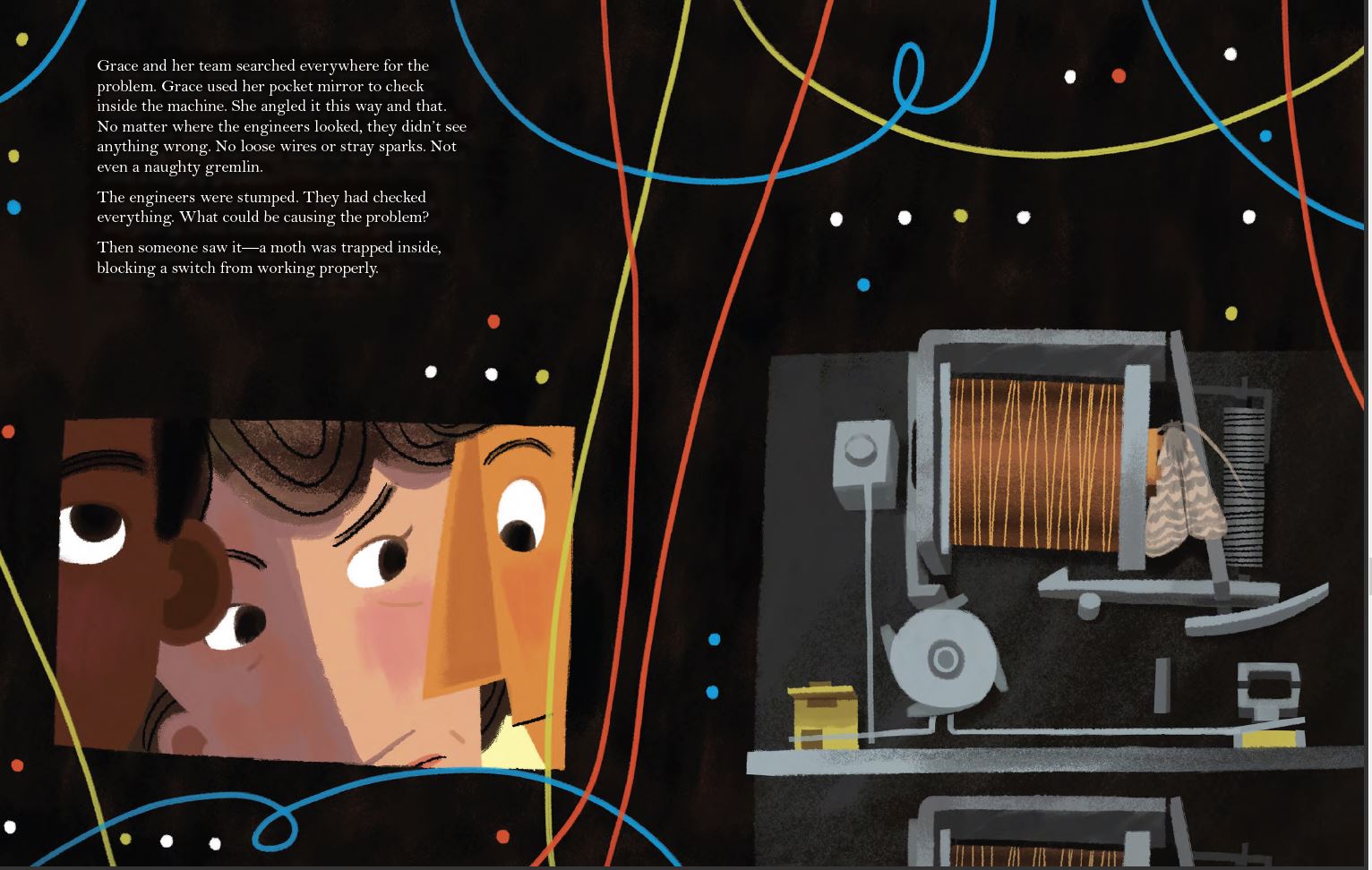
Grace Hopper: Queen of Computer Code
Author: Laurie Wallmark
Illustrator: Katy Wu
Published May 17th, 2017 by Sterling Children’s Books

Summary: Do you know who Grace Hopper was?

A software tester, workplace jester, cherished mentor, ace inventor, avid reader, and naval leader! Acclaimed picture book author Laurie Wallmark (Ada Byron Lovelace and the Thinking Machine) once again tells the riveting story of a trailblazing woman in Grace Hopper: Queen of Computer Code (Sterling Children’s Books, May 16, 2017).

Grace Hopper coined the term “computer bug” and taught computers to “speak English.” Throughout her life, Hopper succeeded in doing what no one had ever done before. Delighting in difficult ideas and in defying expectations, the insatiably curious Hopper truly was “Amazing Grace” . . . and a role model for science- and math-minded girls and boys. With a wealth of witty quotes, and richly detailed illustrations, this book brings Hopper’s incredible accomplishments to life.

“If you’ve got a good idea, and you know it’s going to work, go ahead and do it.”  The picture book biography of Grace Hopper—the boundary-breaking woman who revolutionized computer science.

Who was Grace Hopper? A software tester, workplace jester, cherished mentor, ace inventor, avid reader, naval leader—AND rule breaker, chance taker, and troublemaker. Grace Hopper coined the term “computer bug” and taught computers to “speak English,” and throughout her life succeeded in doing what no one had ever done before. Delighting in difficult ideas and in defying expectations, the insatiably curious Hopper truly is “Amazing Grace” . . . and a role model for science- and math-minded girls and boys.

About the Author: Laurie Wallmark has degrees in Biochemistry from Princeton University, Information Systems from Goddard College, and Writing for Children and Young Adults from the Vermont College of Fine Arts. Her debut book  Ada Byron Lovelace and the Thinking Machine (Creston Books) received four starred reviews, praise in The New York Times, and numerous awards. Laurie lives in New Jersey. Follow her on Twitter: @lauriewallmark.

About the Illustrator: With a BFA in Illustration and Entertainment Arts from Pasadena Art Center College of Design in 2007, Katy Wu has worked for Google, Laika, Pixar, CinderBiter, and Simon & Schuster. Grace Hopper is her first picture book. Having worked on such projects as the feature film Coraline, and various shorts (La LunaCar Toons) as well as CG, 2D, stop motion, online games, and content for social media platforms, Katy is an incredible talent. She lives and freelances in New York City. Follow her online at katycwwu.tumblr.com.

Review: Each time I learn about a new woman in history that made such a tremendous contribution yet is a name I didn’t know, I am flabbergasted by the lack HERstory in HIStory. Grace Hopper is a phenomenal individual! I love how much her story promotes imagination and STEM. Her stories of rebuilding clocks and building a doll house from blueprints with an elevator shows how building a strong mathematical and scientific mind begins from youth, and it is all about teaching kids to mess around, use their imagination, tinker, and learn through trying. Wallmark’s biography of Grace Hopper does a beautiful job of combining a message of rebellion (in the name of science), creativity, imagination, and education with Grace’s biography. In addition to the narrative, Wu’s illustrations and formatting of the novel adds humanity and color to her story.

Teachers’ Tools for Navigation: Grace Hopper is one example of a female scientist that should be a name that everyone knows yet she is not taught in schools. Luckily there are so many wonderful nonfiction picture book biographies being published showcasing woman who made a difference (some listed below). One way I picture this text being used in the classroom is by using these picture books in a lit circle or even like a jig saw type activity. Each group reads a different nonfiction picture book and shares what they learned with the class.

Grace Hopper could also be used in a computer classroom because it has such a wonderful introduction to the beginning of computers. Grace was part of very early computer programming and computer science, and her story would be perfect to share during a technology class looking at the history of computers.

Discussion Questions: How did Grace Hopper’s legacy continued to the computers and technology we use today?; How did Grace Hopper stand out from what was expected of woman at the time?; What hardships did Grace probably face because of gender prejudice?; Choose one of Grace’s quotes shared in the book and share what it meant for Grace and how it could it be taken as inspirational for your life?

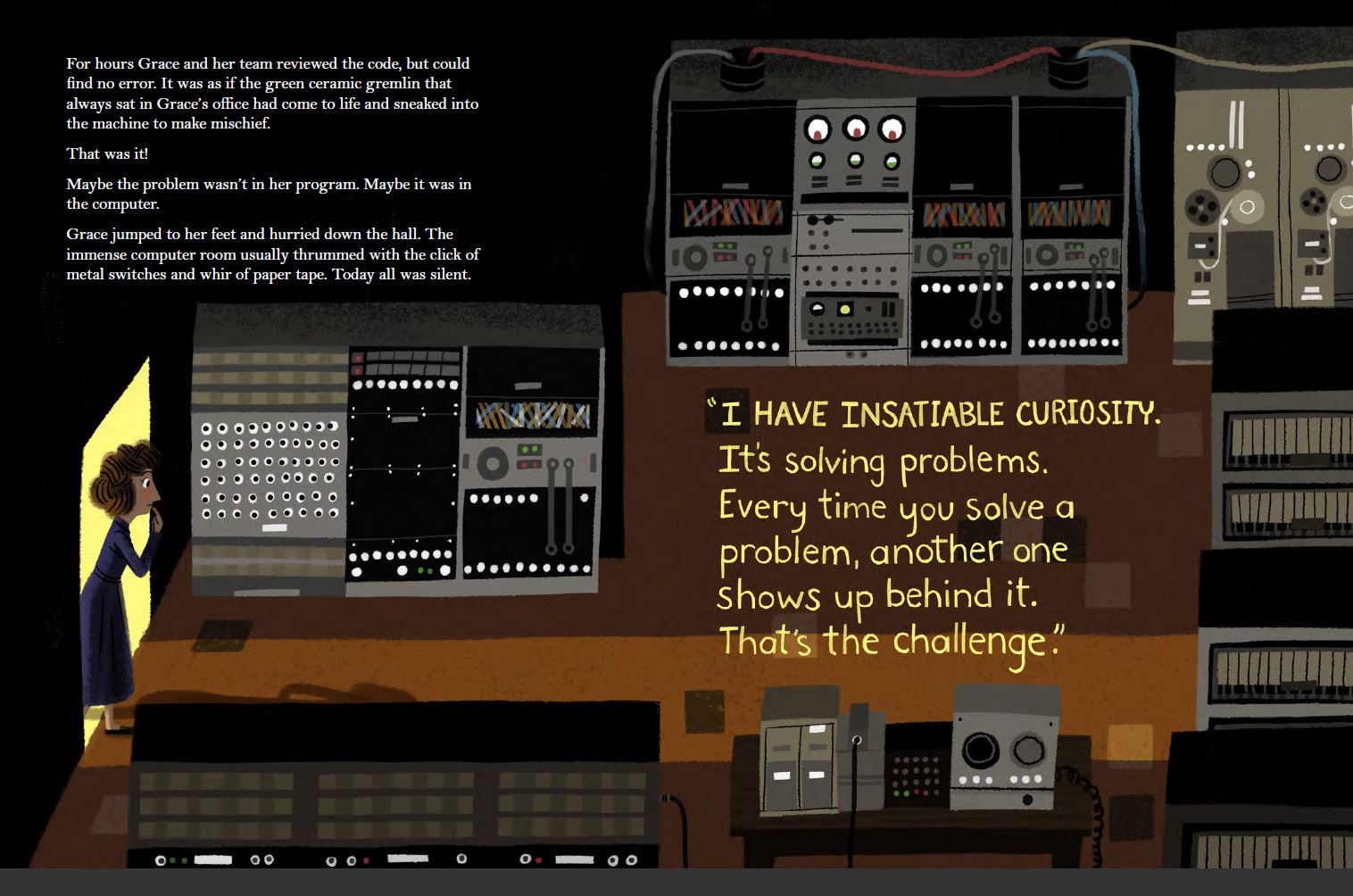
Flagged Passages: 

Read This If You Love: Ada’s Ideas by Fiona Robinson, Maya Lin by Susan Rubin, I Dissent by Debbie Levy, Fearless Flyer by Heather Lang, Dorothea’s Eyes by Barb Rosenstock, Women Who Broke the Rules series by Kathleen KrullLiberty’s Voice by Erica SilvermanJosephine by Patricia Hruby Powell, Swimming with Sharks by Heather Lang, The Book of Heroines from National Geographic Kids

Recommended For: 
classroomlibrarybuttonsmall closereadinganalysisbuttonsmall  

Giveaway: 

a Rafflecopter giveaway

Signature

**Thank you to Ardi at Sterling for providing a copy for review and giveaway!**

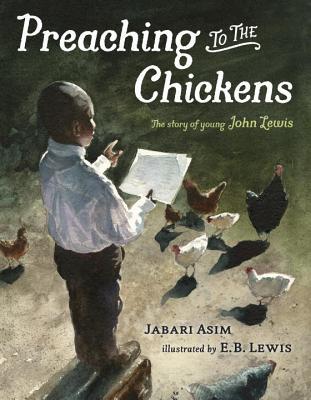
Preaching to the Chickens: The Story of Young John Lewis by Jabari Asim

Share

nfpb2017

Nonfiction Wednesday

Nonfiction Picture Book Wednesday is hosted by Kid Lit Frenzy and was started to help promote the reading of nonfiction texts. Most Wednesdays, we will be participating and will review a nonfiction text (though it may not always be a picture book).
Be sure to visit Kid Lit Frenzy and see what other nonfiction books are shared this week!

Preaching to the Chickens: The Story of Young John Lewis
Author: Jabari Asim
Illustrator: E.B. Lewis
Published October 11th, 2016 by Nancy Paulsen Books

Summary: A glimpse into the boyhood of Civil Rights leader John Lewis.

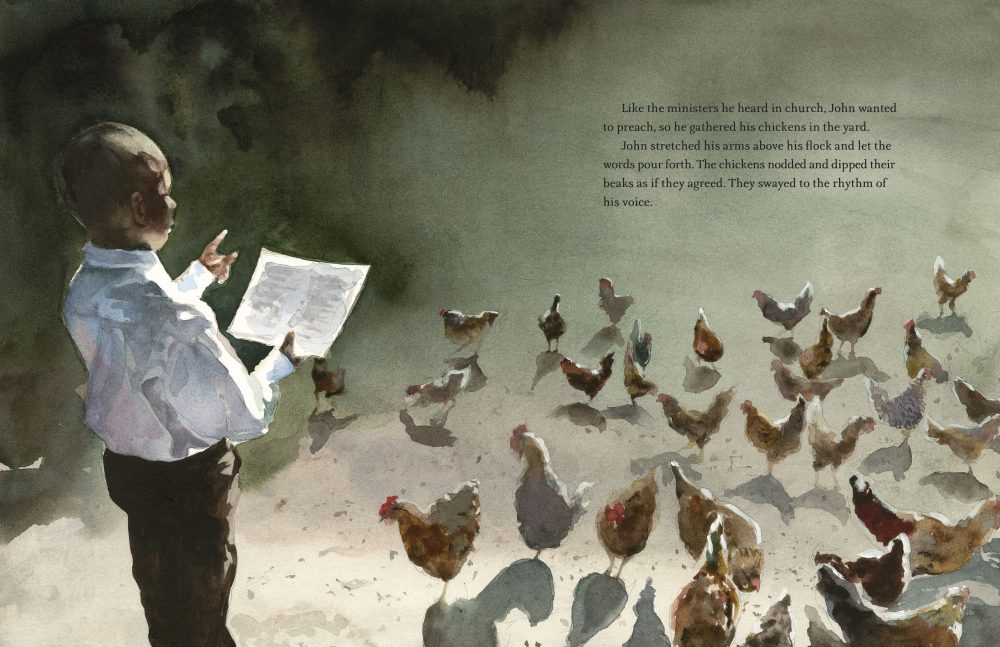
John wants to be a preacher when he grows up—a leader whose words stir hearts to change, minds to think, and bodies to take action. But why wait? When John is put in charge of the family farm’s flock of chickens, he discovers that they make a wonderful congregation! So he preaches to his flock, and they listen, content under his watchful care, riveted by the rhythm of his voice.

Review: John Lewis is an American hero and often what we hear about is his history as a Freedom Rider, Civil Rights Movement, and a politician, but Preaching to the Chickens shows us about John Lewis’s childhood and his faith and hard work as well as his passion and empathy for animals that helped build the foundation of who we see in the public eye. The truly inspiring story that Asim shares with us combined with Lewis’s illustrations really makes for a beautiful book.

Teachers’ Tools for Navigation: The Civil Rights Movement and the individuals that fought (and continue to fight) for equal rights is something that we need to make sure the current generation of kids are knowledgeable about as equality (or even equity) are not  here yet. There are so many amazing texts out there from nonfiction to fiction and picture books to novels that share this time within our history. These texts make up a text set (or reading ladder) that can be utilized in the classroom in so many ways including lit circles, book clubs, jigsaw, or inquiry projects.  Preaching to the Chickens is not itself a story of Civil Rights but it is the story of how a Civil Rights leader and Freedom Rider became. It is the story of hard work, empathy, and faith that have led to a man who is unlike any other.

Discussion Questions: How did John Lewis’s childhood impact his outlook on life?; How did John Lewis’s practice sermons help him become the public speaker and politician he is today?; What character traits did you see in young John Lewis that show you what kind of man he is today?

Flagged Passages: 

Read This If You Love: Picture books and nonfiction texts focusing on the Civil Rights Movement including Martin’s Big Words by Doreen Rappaport, The March Against Hate by Ann BausumThe First Step by Susan E. GoodmanBlood Brother by Rich Wallace and Sandra Neil Wallace, and other texts listed on my Civil Rights Text Set

Recommended For: 

classroomlibrarybuttonsmall 

Signature

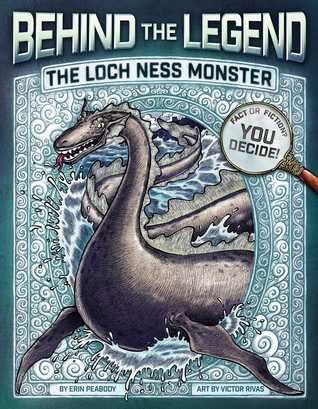
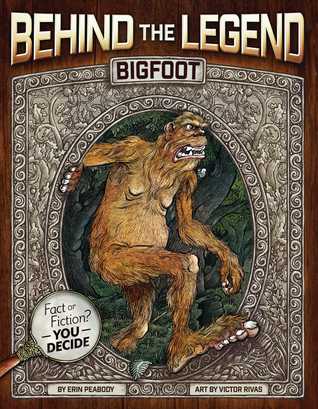
Behind the Legend: The Loch Ness Monster & Big Foot by Erin Peabody

Share

nfpb2017

Nonfiction Wednesday

Nonfiction Picture Book Wednesday is hosted by Kid Lit Frenzy and was started to help promote the reading of nonfiction texts. Most Wednesdays, we will be participating and will review a nonfiction text (though it may not always be a picture book).
Be sure to visit Kid Lit Frenzy and see what other nonfiction books are shared this week!

Behind the Legend Series
The Loch Ness Monster
Big Food
Author: Erin Peabody
Illustrator: Victor Rivas
Published May 2nd, 2017 by little bee books

Series Summary: little bee books is thrilled to announce their brand-new nonfiction middle grade series! Behind the Legend is designed for readers ages 8-10 and asks that to decide what is fact and what is fiction. Each book analyzes legendary creatures throughout history using scientific problem solving. Readers evaluate the evidence of sightings, debunk hoaxes with scientific experiments, and read from sources to decide if the monster is made of myth, legend, or fact. Packed with interesting anecdotes, photos, sidebars, and illustrations, each title is a page-turning adventure that readers won’t want to put down.

Learn all about creatures and monsters throughout history and discover if they’re real or not in this new nonfiction series! Behind the Legend looks at creatures and monsters throughout history and analyzes them through a scientific, mythbusting lens, debating whether or not the sightings and evidence provided are adequate proof of their existence.

More books coming soon! Zombies and Werewolves coming in Summer 2017 and Unicorns and Dragons in Spring 2018.

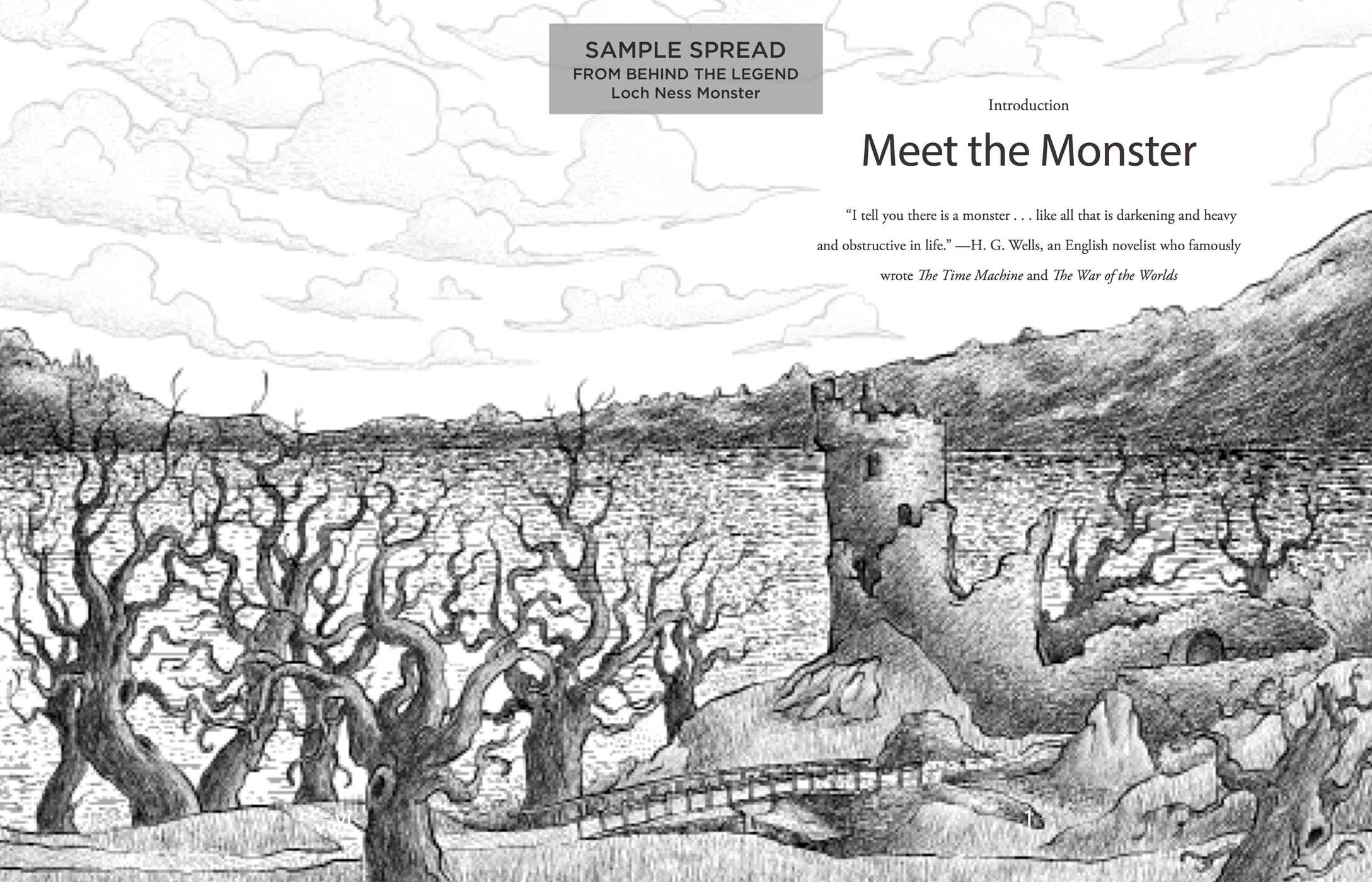
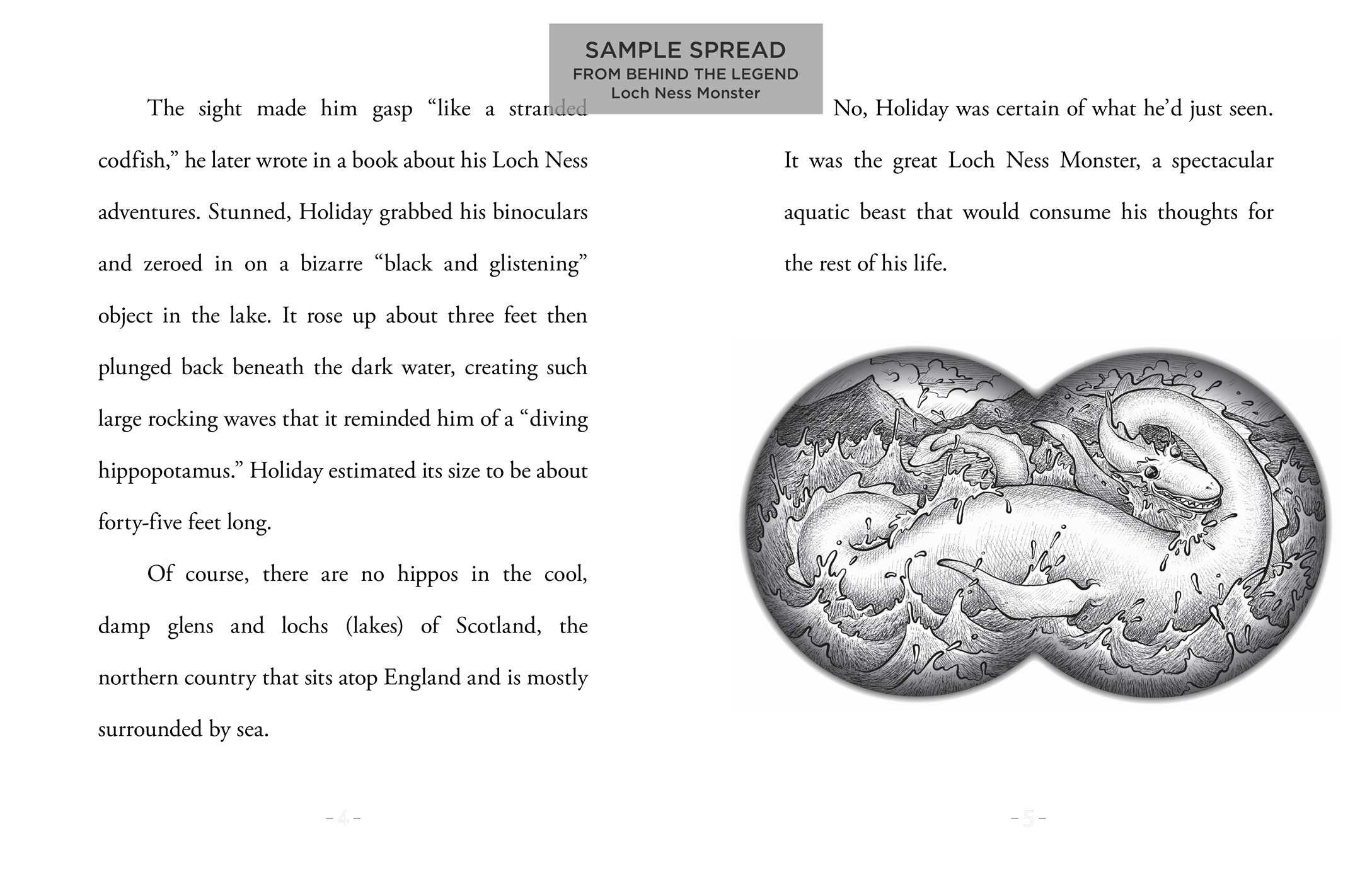
The Loch Ness Monster Summary: In The Loch Ness Monster, readers learn about all the sightings and proof of it, from the famous photograph to the huge “footprints” found by the Loch. It also discusses other history about the monster, such as how Nessie became a major figure in popular culture, and other mythical beings that came from Scotland. Complete with engaging anecdotes, interesting sidebars, and fantastic illustrations, kids won’t want to put this book down!

Big Foot Summary: In Bigfoot, readers learn about all the sightings and proof of it, from the famous photograph and video to footprints and other evidence. It also discusses additional history about the monster, such as how Bigfoot became a major figure in popular culture, and how other versions of the creature (such as the Yeti) have been seen around the world. Complete with engaging anecdotes, interesting sidebars, and fantastic illustrations, kids won’t want to put this book down!

Review: On one of our recent Top Ten Tuesday posts, I shared that I am always looking for nonfiction books to keep my middle grade students reading nonfiction because it is so hard to talk them into reading it unless it really catches their interest. I think part of the reason is because there aren’t many transitional nonfiction books from picture books and shorter informational nonfiction books to longer works like books by Jim Murphy, Deborah Heiligman, and Candance Fleming (which are phenomenal, but many readers just don’t have the nonfiction stamina). I think the Behind the Legend series fits this need perfectly! They are slightly longer than the traditional children’s nonfiction book and the words outnumber the pictures though there are still many illustrations, big font, lots of white space, and short chapters.

Teachers’ Tools for Navigation: The Behind the Legend series’ texts will be perfect for not only reading aloud and discussing the truly interesting information within the book, I think the texts would be perfect mentor texts for writing an informational nonfiction text of the students’ own. The books do a wonderful job at looking at many different aspects of the legend and remaining unbiased.

Discussion Questions: Based on the information shared in the text, do you believe the legends are fact or fiction? Support your answer with evidence form the text.; How do legends such as the Loch Ness Monster and Bigfoot become such cultural phenomenons?

Flagged Passages: 

Read This If You Love: Who Was? series, Legends

Recommended For: 

classroomlibrarybuttonsmall closereadinganalysisbuttonsmall

Signature

**Thank you little bee books for providing copies for review!**

Teaching Guide for Hazardous Tales: Alamo All-Stars by Nathan Hale

Share

nfpb2017

Nonfiction Wednesday

Nonfiction Picture Book Wednesday is hosted by Kid Lit Frenzy and was started to help promote the reading of nonfiction texts. Most Wednesdays, we will be participating and will review a nonfiction text (though it may not always be a picture book).
Be sure to visit Kid Lit Frenzy and see what other nonfiction books are shared this week!

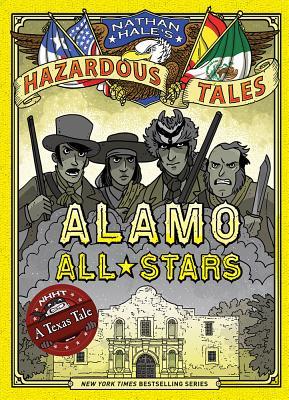
Hazardous Tales: Alamo All-Stars
Author and Illustrator: Nathan Hale
Published March 29th, 2016 by Abrams Books

Summary: “Remember the Alamo!” That rallying cry has been a part of Texas lore for generations. But who were the ragtag group of adventurers behind the famous slogan, and how did they end up barricaded in a fort against a Mexican army? Who survived, who died, and how? This sixth book in the bestselling Hazardous Tales series tracks the Lone Star State’s bloody fight for independence from the Mexican government. It features the exploits of the notorious Jim Bowie, as well as Stephen Austin, Davy Crockett, and other settlers and soldiers who made the wild frontier of Texas their home—all told with the inimitable style and humor for which Nathan Hale is known.

Teaching Guide with Discussion Questions and Activities from Abrams by ME!, Kellee Moye: 

How to use this guide

  • For Alamo All-Stars, opportunities to have discussions and complete activities across different content areas are shared. In the “Fun Across the Curriculum” section, these activities and discussion questions are split into subject areas and are written as if they are being asked of a student.
  • At the end of the guide, Common Core State Standards and Next Generation Science Standards are listed that can be met when the books are extended using the activities and discussion questions.

Fun Across the Curriculum

  • Language Arts
    • The title page and the cover show two different illustrations of the Alamo. Compare and contrast the illustrations. Using information from the text, when is the cover illustration from, and when is the title page illustration from?
    • Why would Alamo All-Star need two narrators, Nathan Hale and Vincente Guerrero, while all of the other Hazardous Tales books only needed Hale? How would the story have differed if only Hale had narrated the book? What about only Guerrero?
    • On page 10-11, Guerrero uses the metaphor of a set table to describe Texas in the 1820s. Why does he use this metaphor to describe the state of Texas at this time?
    • On page 18, Hale uses another metaphor of an explosive barrel to illustrate the situation Austin and his settlers were in. How does an explosive barrel and Austin’s situation relate to each other?
    • After researching cholera (science section), look at Hale’s personification of the disease on page 37. Why did he choose this creature to embody cholera?
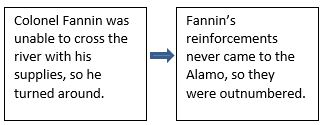
    • Many different events and problems caused Santa Anna’s army to be able to easily defeat the Texans at the Battle of the Alamo. Create a cause/effect graphic organizer showing the correlation between different events leading up to the Battle of the Alamo and the fall of the Alamo.
      • For example:
    • Much of what happened at the Alamo during the infamous battle as well as stories about Davy Crockett and Jim Bowie have become an American legend. What is a legend? Why has some parts of the story of the Alamo become a legend and not a complete factual part of history?
    • Throughout the book, Hale includes direct quotes from primary sources. How do these quotes enhance the story? How are primary sources more reliable when sharing historical events than secondary sources?
  • History/Social Studies
    • The page of Texas on the end sheets shares the different battles during the Texas revolution. Using Alamo All-Stars, convert the map into a timeline by graphing each battle on the date/year they were fought.
    • Using the text feature on pages 10-11 that shared the 1820s Texas settlers, answer the following: how did each settler threaten each other? Why was Texas such a treacherous place at this time? Who was the rightful settler of Texas?
      • Then, split the class up into 8 groups and assign a group of settlers to each group of students. They then should research the group, and determine how they ended up in Texas, why they felt they deserved to stay in Texas, etc.
    • Page 12 defines a filibuster and gives an example of one. What other famous filibusters have happened in history? Use the Wikipedia article “Filibuster (military)” and its resources to learn about other filibuster expeditions. Unlike the James Long Expedition, were any successful?
    • Throughout the book, Mexico goes through different types of governments: a monarch (inferred from p. 16), a republic (mentioned on p. 17), and a despotic (mentioned on p. 40). Compare and contrast the similarities and differences of the different types of governments.
    • Page 88 shows one of the many flags that have flown over Texas. Using the Texas State Historical Information article “Flags of Texas” and the Flags of the World website, learn about all of the different flags that Texas has flown. Why have so many flown over Texas? Where does the phrase “six flags of Texas” come from?
    • On page 104, Santa Anna compares himself to Napoleon. How are the two men similar? How do they differ?
    • On page 113, Hale jokes, “Don’t feel bad. Everyone forgets about Goliad.” Why do you think the Battle of the Alamo is remembered by so many while the massacre at Goliad is not?
    • Why are Travis, Seguin, Bowie, and Crockett pictured on the front of Alamo All-Stars? Is this who you would consider the all-stars of the Alamo? If not, why not? If so, what did they do to deserve that title? Is there anyone else you would consider an Alamo all-star?
  • Science
    • Cholera killed tens of thousands in the summer of 1833 including Bowie’s wife and her family. What is cholera? How does it spread? Why did Bowie’s family try to travel north to escape it?
    • On page 47, Noah Smithwick was quotes sharing that one member of the Gonzales army had a nose bleed; however, he used scientific terms such as nasal appendage and sanguinary fluid. What do these terms mean?
  • Math
    • On page 31, Rezin Bowie mentions that they were outnumbered 14 to 1 during the battle. Using the illustrations and clues in the “Jim Bowie and the Lost Mine” section to determine how many men were on Bowie’s side and how many men they fought and defeated.
    • Santa Anna’s army outnumbered the Texans by a large amount. Using the information shared about the number of men in each side of the battle, determine an approximate ratio of the battle.
      • After you estimate using Alamo All-Stars, research the actual number of men at the battle and determine the ratio. How close was your estimate?
  • Foreign Language (Spanish and French)
    • Throughout the text, different Spanish words are used, many of which can be defined using context clues or connecting to the English language because they are cognates with a word you already know. Look through the book, and try to define all foreign language vocabulary. Some words throughout the book:
      • El Gran Libro Enorme de la Historia Mexicana (p. 6)
      • ejercito de las tres garantias (p. 9)
      • empresario (p. 12)
      • mucho (p. 16)
      • viva la revolución (p. 21)
      • fantástico (p. 31)
      • Dios y libertad (p. 36)
      • alcalde (p. 45)
      • fandangos (p. 72-84)
      • voy a firmarlo (p. 98)
      • mes amis (p. 103 | French)
        • Which words were easier to define? Why were they easier?
  • Music
    • At the Battle of the Alamo, both Santa Anna’s army and the Texas army played music (p. 91). Research to determine what music was played at the battle. Why would they play music while preparing for a battle?

The teaching guide, along with the other books in the series, can also be viewed at: https://www.scribd.com/document/326377929/NathanHale6-TeachingGuide or http://www.abramsbooks.com/academic-resources/teaching-guides/

Recommended For: 

classroomlibrarybuttonsmall closereadinganalysisbuttonsmall 

Signature

Out of Wonder: Poems Celebrating Poets by Kwame Alexander, Chris Colderley, and Marjory Wentworth

Share

nfpb2017

Nonfiction Wednesday

Nonfiction Picture Book Wednesday is hosted by Kid Lit Frenzy and was started to help promote the reading of nonfiction texts. Most Wednesdays, we will be participating and will review a nonfiction text (though it may not always be a picture book).
Be sure to visit Kid Lit Frenzy and see what other nonfiction books are shared this week!

HAPPY NATIONAL POETRY MONTH!

Out of Wonder: Poems Celebrating Poets
Authors: Kwame Alexander, Chris Colderley, and Marjory Wentworth
Illustrator: Ekua Holmes
Published March 14th, 2017 by Candlewick Press

Summary: Out of gratitude for the poet’s art form, Newbery Award–winning author and poet Kwame Alexander, along with Chris Colderley and Marjory Wentworth, present original poems that pay homage to twenty famed poets who have made the authors’ hearts sing and their minds wonder. Stunning mixed-media images by Ekua Holmes, winner of a Caldecott Honor and a John Steptoe New Talent Illustrator Award, complete the celebration and invite the reader to listen, wonder, and perhaps even pick up a pen.

A Newbery Medalist and a Caldecott Honoree offer a glorious, lyrical ode to poets who have sparked a sense of wonder.

Review: This anthology is beautiful. Alexander, Colderley, and Wentworth beautifully pay homage to each poet. Their tribute poems are impeccably written and not only do the poems follow the style of the poet but also teach us about the lives of the poet. And Holmes’s artwork pushes the book to another level. I also adored the diversity of the poets, as well as the types of poems, chosen.

And Out of Wonder can definitely be a perfect mentor text for a poetry unit, and I can definitely see it being paired with Love That Dog to expand what Creech started.

Teaching Guide with Prereading Activities, Discussion Questions, and Classroom Extensions (by teacher Mary Lee Hahn): 

Flagged Passages: 

Read This If You Love: Love That Dog and Hate That Cat by Sharon Creech; Poetry by any of the poets honored in the book: Naomi Shihab Nye, Robert Frost, e.e. cummings, Bashō, Nikki Giovanni, Langston Hughes, Walter Dean Myers, Emily Dickinson, Terrance Hayes, Billy Collins, Pablo Neruda, Judith Wright, Mary Oliver, Cwendolyn Brooks, Sandra Cisneros, William Carlos Williams, Okot p’Bitek, Chief Dan George, Rumi, or Maya Angelou

Recommended For: 

classroomlibrarybuttonsmall closereadinganalysisbuttonsmall 

Signature

An Interactive Children’s Book App: Care For Our World by Karen Robbins from Sunbreak Games

Share

nfpb2017

Nonfiction Wednesday

Nonfiction Picture Book Wednesday is hosted by Kid Lit Frenzy and was started to help promote the reading of nonfiction texts. Most Wednesdays, we will be participating and will review a nonfiction text (though it may not always be a picture book).
Be sure to visit Kid Lit Frenzy and see what other nonfiction books are shared this week!

Happy (almost) Earth Day!

Care For Our World
Author: Karen Robbins
Illustrator: Alexandra Ball
Originally Published: July 15th, 2012 by Compendium Publishing and Communications
App Release: March 1st, 2017 by Sunbreak Games, LLC

Book Summary: Get ready to meet some truly wonderful wild animals from every continent on Earth. As children turn the pages of this book, they’ll encounter dozens of playful creatures in their natural habitats and will learn about the importance of caring for all the plants, animals, and people that call planet Earth their home. A timely reminder of the responsibility every generation shares: to nurture and respect life in all its many forms.

App Information: Take an interactive journey around the world, discovering diverse environments and the animals that call them home, in this animated adaptation of the award-winning children’s book, Care for Our World. Additional creative activities are included, like Coloring Book pages, Creating custom habitats, and even Learning facts, sounds, and photo galleries in the Animal Encyclopedia.

“Care for our world, for you and for me, for all living things from mountain to sea.”

Author Karen Robbins’ delightful words and illustrator Alexandra Ball’s captivating images combine to inspire children to care for the earth they call home: a timely reminder of the responsibility every generation shares to nurture and respect life in all its many forms.

Features: 

• Listen to the animated story, with narration, music, and sounds.

• Touch characters to see and hear them react, and practice their words.

• Color select pages from the book
• Create custom habitats with select animals and backgrounds.
• Save images of your creations to the Gallery.

• Learn more with facts, sounds, and photos in the Animal Encyclopedia.

Recommended for ages 3-8

Review and Teachers’ Tools for Navigation: I’m so impressed with so many of the book apps that are becoming available! As a 21st century mom and teacher, technology is just inevitable in our lives, so I want to make sure that whatever my son and my students interact with is the best out there and isn’t just a tech babysitter. Care For Our World fits this definition and is definitely an app that I am going to recommend to my mom friends and my elementary teacher friends.

The story by itself is a wonderful read aloud and discussion starter. It takes the two main characters around the world to visit different habitats and the animals that live there. The author’s theme is quite clear throughout: this is OUR world and we need to take care of it because we share it with some amazing animals. This theme makes it a perfect read aloud for Earth Day and many animal and Earth-centered activities and inquiry projects could stem from the story.

The app takes the book to a whole new level. Everything wonderful about the book is still there, but now the story is interactive! First, it reads to you. On each page, you can also click on the plants and animals and the narrator will tell you what they are. You can also click on each word, and it’ll read it to you. This is perfect for kids learning to read! The viewer, when finished with the book, can now go explore more about some of the animals in the story by going to the Animal Encyclopedia where you can hear the sounds the animals make, learn about their behaviors, and see photos of them. Lastly, kids will have a blast coloring different scenes from the book or creating their own habitat (all artwork can be saved in a gallery to view later). The app is fun and informative–a perfect mix for the type of app I’m always trying to find for my son.

Trailer: 

Recommended For: 


Rosie Revere, Engineer by Andrea Beaty

Share

Rosie Revere, Engineer
Author: Andrea Beaty; Illustrated by: David Roberts
Published: September 3, 2013 by Abrams

A Guest Review by Jennifer Zafetti

Summary: Rosie is an ambitious young girl who aspires to be an engineer. She creates an invention for her uncle, but becomes embarrassed when he laughs at her. She does not feel supported , until she meets her Great-Great-Aunt Rose who is both an adventurer and an explorer. Her great-great-aunt yearns to fly so Rosie builds her a contraption made out of cheese. When her great-great-aunt laughs at her failure, Rosie becomes disheartened and swears to never invent again. Rose provides her with comfort and explains that, “Your brilliant first flop was a raging success.” This provides Rosie with the encouragement she needs to try again!

Review: I really enjoyed reading this book! I think that it is so important for kids to embrace failures! If Rosie had admitted defeat after her first failure, she would have never been able to be successful. Rosie’s perserverance allowed her to create a flying contraption for her aunt. Furthermore, the rhyming sentences created an engaging tone that kept me wondering what would happen next. This is a great story to read-aloud to a classroom! Additionally, the illustrations on each page really add to the story and provide detailed visuals to accompany Rosie’s different inventions. Overall, I think that this book can be inspirational for all ages—the simple message: never give up!

Teachers’ Tools for Navigation: Rosie Revere, Engineer is an uplifting story in which failure turns into success. Teachers should use this children’s book to teach students about the importance of perseverance. When faced with challenges, students should use them as an opportunity to grow. If you believe in yourself, you can achieve anything!

Also, the teacher can pause the reading to ask for predictions.

Discussion Questions: How did Rosie’s mood change throughout the story?; When is a time that you persevered when facing a challenge?; When is a time that you have learned from a failure? How do Rosie’s family members impact her actions?

Flagged Passage: 

Read This If You Loved: Ada Twist, Scientist by Andrea Beaty, and The Most Magnificent Thing by Ashley Spires

Recommended For:
 classroomlibrarybuttonsmall

Thank you, Jennifer!

RickiSig