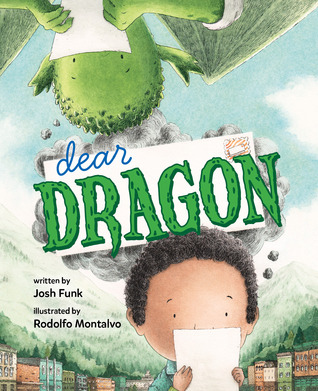
Dear Dragon by Josh Funk

Share

dear dragon

Dear Dragon
Author: Josh Funk
Illustrator: Rodolfo Montalvo
Anticipated Publication: September 6, 2016 by Viking Books for Young Readers

Goodreads Summary: A sweet and clever friendship story in rhyme, about looking past physical differences to appreciate the person (or dragon) underneath.

George and Blaise are pen pals, and they write letters to each other about everything: their pets, birthdays, favorite sports, and science fair projects. There’s just one thing that the two friends don’t know: George is a human, while Blaise is a dragon! What will happen when these pen pals finally meet face-to-face?

Ricki’s Review: I simply adored this book. It was quite clever and imaginative! I imagine it took a lot of thought to try to show how different George and Blaise’s lives might be and how they might misinterpret the descriptions of simple daily life events. I am a huge fan of Josh Funk’s writing and recommend all of his books. They all are witty and humorous, and my son and I always giggle while we read them. Each of his books teaches a life lesson that has been very useful for me as a mom, and I know they are equally useful for elementary school teachers. For Lady Pancake & Sir French Toast, I have been able to constantly refer to the variety of foods in the text in order to help my son with his picky eating habits. With this book, Dear Dragon, I have been able to talk with my son about differences and how we might work to understand how others might lead different daily lives than ours. I am really looking forward to Josh’s next book, Pirasaurs!. Based on his other books, I know it will be a good one!

Kellee’s Review: The books I find myself gravitating towards and recommending the most are the books that I not only love as a mother but can also definitely see the application of the book in all levels of classrooms. Dear Dragon fits into this category because it is such an amusing and fun book that is just a blast to read and discuss; however, it also has so many ways that I can see myself and other teachers using it in the classroom: for a mentor text, for a pen pal unit, for a read aloud. Dear Dragon also is an amazing set up to discuss first impressions and differences between people in safe place (since, you know, Blaise is a dragon). I also loved the quirky, colorful, detailed illustrations that accompany George and Blaise’s letters. The silly conversations just from these will make for a wonderful conversation.

Teachers’ Tools for Navigation: Ricki fondly remembers her elementary school experiences with pen pals. Her fourth class wrote to a class in Germany. It was so interesting to learn about all of the differences between our lives. This book would make for a great jumpstart to a pen pal project. It would be neat to connect to a class in another country or even across our own country. Students would learn a lot about how we are both similar and different from others—and how this is a good thing, indeed!

In addition to being a ton of fun, Dear Dragon will also be a perfect mentor text for a variety of reading skills and standards. The letters are a perfect opportunity to discuss point of view, voice, letter writing, and rhyming. The book also has a wonderful theme, the illustrations and letters could be compared/contrasted, and the entire text structure could be analyzed.

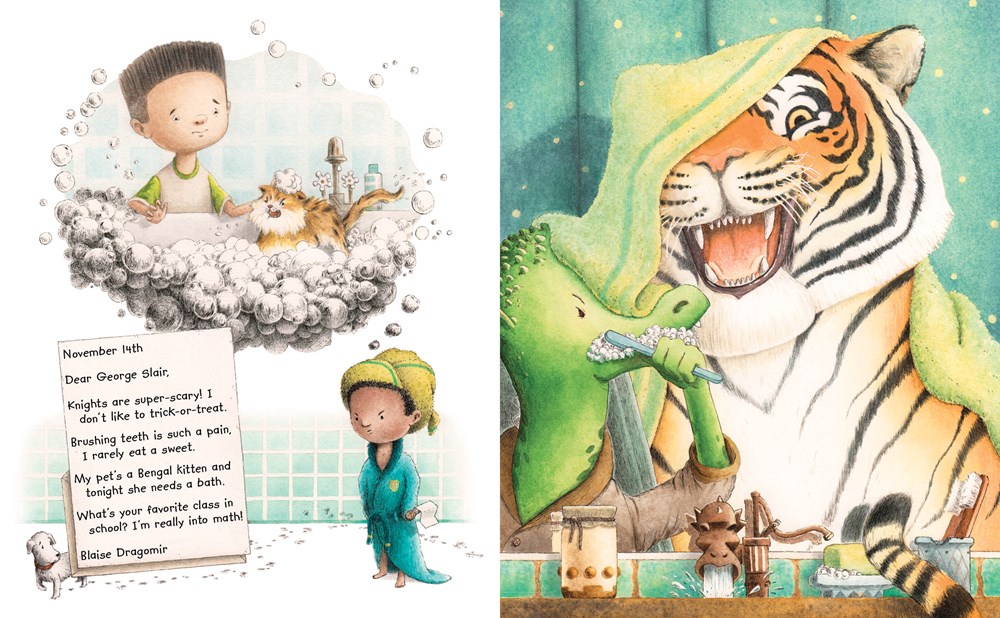
Discussion Questions: What are the similarities and differences between George and Blaise? How do they build their friendship across letters?; How do they each misinterpret the other’s letters in ways that are funny and enlightening? How do the illustrations reflect these misinterpretations?; This book is a fantasy, but how might you compare this book to real life?

Flagged Spread: 
9780451472304_IL_3_05101

Read This If You Loved: Lady Pancake & Sir French Toast by Josh Funk; Same, Same but Different by Jenny Sue Kostecki-Shaw; Whose Story is This, Anyway? by Mike Flaherty; Dragons Love Tacos by Adam Rubin; Have You Seen my Dragon? by Steve Light; Tony Baloney: Pen Pal by Pam Muñoz Ryan; Dear Mrs. Larue series by Mark Teague

Recommended For: 
readaloudbuttonsmall classroomlibrarybuttonsmall closereadinganalysisbuttonsmall

RickiSigandSignature

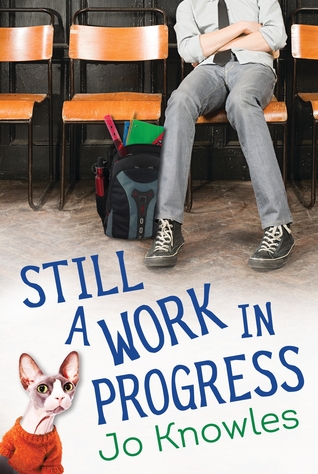
Still a Work in Progress by Jo Knowles

Share

still a work in progress

Still a Work in Progress
Author: Jo Knowles
Published August 2nd, 2016 by Candlewick Press

Summary: In a return to middle-grade fiction, master of perspectives Jo Knowles depicts a younger sibling struggling to maintain his everyday life while coping with his sister’s secret struggle.

Noah is just trying to make it through seventh grade. The girls are confusing, the homework is boring, and even his friends are starting to bug him. Not to mention that his older sister, Emma, has been acting pretty strange, even though Noah thought she’d been doing better ever since the Thing They Don’t Talk About. The only place he really feels at peace is in art class, with a block of clay in his hands. As it becomes clear through Emma’s ever-stricter food rules and regulations that she’s not really doing better at all, the normal seventh-grade year Noah was hoping for begins to seem pretty unattainable. In an affecting and realistic novel with bright spots of humor, Jo Knowles captures the complexities of navigating middle school while feeling helpless in the face of a family crisis.

Review: What I am always amazed by when I read a book by Jo Knowles is her ability to tell the truth about our world, and this book once again fits this description. Jo has a way of making her characters ones that are so real that you can imagine them walking into a school and know exactly which kids they’d hang out with. Noah and his friends could definitely be middle school students at my school. Her stories always seem to include a bit of humor (see: hairless cat on the cover) while never taking away from the seriousness of the book’s topic. The emotions, specifically pain or sadness, she portrays through her characters radiates out of the pages, so the reader can feel it. 

Teachers’ Tools for Navigation: This is an important book to have available for students to read. Although the main story is about Noah fitting into middle school, it is also about dealing with pain and anger and sadness and still having to live. This book needs to be in classroom libraries and should be booktalked so students are aware of its brilliance.

Discussion Questions: What makes the art room such a special place for Noah?; Why does Noah and his family not talk about Emma’s problems? Did not talking about it end up being hurtful or helpful?; Noah’s school is a bit different than traditional schools. How does his school differ from yours?; What does the title mean in reference to Noah? Emma? Their family? Other characters?; How did Emma’s experience with Lord of the Flies spiral out of control?

Flagged Passages: “Community meetings happen once a week. Everyone in the school has to go, including the teachers. The Community Room used to be the music room, but our town had budget cuts and they cut the music program. The wars are painted green, and old couches donated by various families line the walls so that if we’re all sitting on them, we form a circle/square. The problem is that there are more students than seats on couches, so if you get to a Community Meeting late, you’re stuck sitting on a beanbag or on the floor in front of the couch sitters. The beanbags are mysteriously sticky and smell like dirty sheets. The floor is cold and kind of gross because it doesn’t get washed very much. In either case, you have to sit in front of the people on the couch which means you are close to their feet, which means, depending on who you end up in front of, you are probably going to have a miserable hours.” (p. 9-10)

“‘Sara is new to vaganism,’ Emma explains.

‘Is your family vegan, too?’ my mom asks.

‘No, just me. My parents are all stressed-out about it. They think I’m going to become anemic or something.’

Emma sighs dramatically, as if to say, So typical.

My mom clears her throat uncomfortably. ‘We were worried about Emma, too. But she’s very aware of her dietary needs. Right, Emma?’

‘Kind of hard not to be with you and Dad obsessing about everything I eat,’ Emma says sarcastically.

My  mom doesn’t answer, just grips the steering wheel tighter. Sara shifts in her seat awkwardly, probably remember the time a few years ago that no one talks about. Even though she and Emma weren’t good friends then, everyone know about the Thing That Happened.” (p. 29-30)

Read This If You Loved: Perfect by Natasha Friend, Awkward by Svetlana Chmakova, Zack Delacruz by Jeff Anderson

Recommended For:

  classroomlibrarybuttonsmall

Kellee Signature

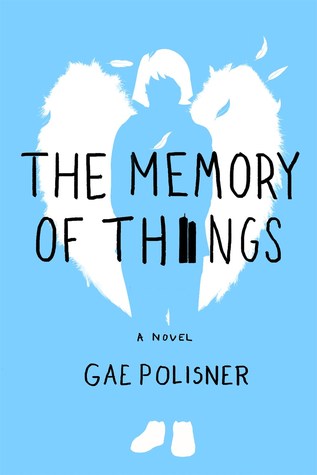
The Memory of Things by Gae Polisner

Share

the memory of things

The Memory of Things
Author: Gae Polisner
Published: September 6, 2016 by St. Martin’s Griffin

GoodReads Summary: The powerful story of two teenagers finding friendship, comfort, and first love in the days following 9/11 as their fractured city tries to put itself back together.

On the morning of September 11, 2001, sixteen-year-old Kyle Donohue watches the first twin tower come down from the window of Stuyvesant High School. Moments later, terrified and fleeing home to safety across the Brooklyn Bridge, he stumbles across a girl perched in the shadows. She is covered in ash and wearing a pair of costume wings. With his mother and sister in California and unable to reach his father, a New York City detective likely on his way to the disaster, Kyle makes the split-second decision to bring the girl home. What follows is their story, told in alternating points of view, as Kyle tries to unravel the mystery of the girl so he can return her to her family. But what if the girl has forgotten everything, even her own name? And what if the more Kyle gets to know her, the less he wants her to go home? The Memory of Things tells a stunning story of friendship and first love and of carrying on with our day-to-day living in the midst of world-changing tragedy and unforgettable pain—it tells a story of hope.

Review: I read this book several weeks ago, and I still can’t thinking about it. As a few other bloggers have said, this is a book about 9/11—but it isn’t a book about 9/11. It is more a book about friendship, about growing up, and about being human. There are so many topics in this book that are worthy of discussion, and I think teachers will really appreciate its beauty. The writing is quiet yet powerful, and the book has a sort of shattering impact on readers. I loved the connections that Kyle makes in this book, and I particularly enjoyed the ways each of the individuals he interacts with tells the reader more about him. He grows from everyone in this book, and I’d love to discuss this growth with students.

Teacher’s Tools for Navigation: Teachers might ask students to research the many themes of this book to provide background information. They might look at disability/caregivers, PTSD, suicide, and 9/11—just to name a few. They could also look at the different stages of trauma to learn more about how each of the characters reacts differently to the tragic events that occurred on 9/11.

Discussion Questions: Is Kyle helping the girl, or is she helping him?; What do we learn from Kyle’s uncle? What does he teach us about disability and humanity?; In what ways does Kyle show strength, and in what ways does he show weakness? How does he grow from each experience of the text?

We Flagged: “So now I get it. Now I fully understand. Tuesday, and those planes, they’ve broken something. Permanently. And in the process, they’ve changed everything. And everyone.”

This is a quote from an advanced reader’s copy. Some quotes may change before publication.

Read This If You Loved: Extremely Loud and Incredibly Close by Jonathan Safran Foer; The Impossible Knife of Memory by Laurie Halse Anderson; Personal Effects by E.M. Kokie, The Things a Brother Knows by Dana Reinhardt, If I Lie by Corrine Jackson, Purple Heart by Patricia McCormick

Recommended For:

 litcirclesbuttonsmall classroomlibrarybuttonsmall

RickiSig

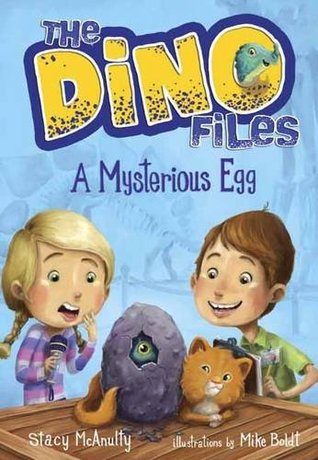
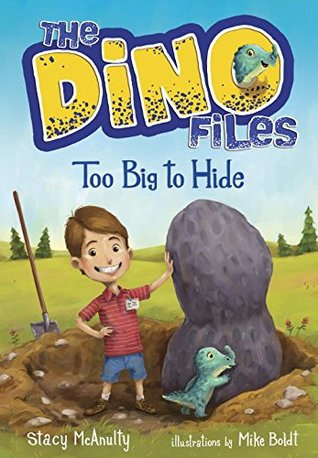
The Dino Files: A Mysterious Egg by Stacy McAnulty

Share

Dino Files 1

The Dino Files #1: A Mysterious Egg
Author: Stacy McAnulty
Illustrator: Mike Boldt
Published: January 19, 2016 by Random House Kids

Summary: What if a fossil in your backyard . . . came to life?!

Frank’s grandma is a famous paleontologist (that’s a dinosaur scientist). But she’s also an adult who makes up rules. Rules like: no digging for dinosaur bones when you have a sunburn. That means Frank is stuck playing inside with his annoying cousin, Samantha. But then Grandma finds a fossil of an egg! And when Frank and Sam sneak into the dino lab late at night, they find something even more amazing. . . .

The hilarious Dino Files chapter book series follows a nine-year-old dinosaur expert, his paleontologist grandparents, a cat named Saurus, and fossils that might not be so extinct!

About the Author: Stacy McAnulty is the author of several children’s books including Excellent Ed, illustrated by Julia Sarcone-Roach; The Dino Files series, illustrated by Mike Boldt;  and 101 Reasons Why I’m Not Taking a Bath, illustrated by Joy Ang. Stacy grew up outside of Albany, New York and received my B.S. in Mechanical Engineering from the University at Buffalo. A career opportunity brought her to central North Carolina in 1998. She currently lives in Kernersville, NC with her husband, their three children and two dogs.

Also, Stacy offers FREE Skype interviews and signed bookmarks to any class reading The Dino Files!

Ricki’s Review: This is a hilariously fun series that is sure to be a hit in classrooms. I see it working best in grades 1-4. As a child, I was disappointed when my chapter books no longer had pictures, and this book is a great transitional book because it has the best of both worlds—a great story and pictures to go along with it! Frank reminds me of many kids. He is frustrated by all of the rules set out for him, and he just wants to have fun. He manages to sneak around a bit and something awesome happens with that dinosaur egg (I’ll let you guess)! I also want to put in a plug for the fact that Frank is a cat lover. My son loves cats, and I hate how books/shows always feature males as dog lovers and females as cat lovers. I loved Saurus the cat!

Kellee’s Review: I plowed through this and the sequel because I loved the premise and the characters so much! I love that Frank and Sam represent such different types of kids within each of them and between each of them; I think so many readers will relate to their personalities. I also really liked how dinosaurs are introduced throughout the book without making the book didactical in any way. Instead it is educational and funny! This series is a wonderful introduction to early chapter books also because it is very engaging and will appeal to all kinds of readers. 

Teacher’s Tools for Navigation: This book is a great jump start to researching about dinosaurs! I know a lot of early elementary schools have a big dinosaur unit, and I think this book would appeal to readers of all ages. The book might also work well for a fossil unit, too! It would be interesting to investigate whether it would be possible to hatch a fossilized dino egg. Then, the class could have a discussion about whether this book might be considered realistic fiction or fantasy. Further activities and information is available at: www.thedinofiles.com.

Discussion Questions: What good choices does Frank make? What bad choices does he make? What are the outcomes of his choices?; What words would you use to describe Frank? How is he different or similar to you?; What rules is Frank forced to follow? Do you think these rules are fair?; How do the illustrations enhance your reading experience?

Flagged Passage: “I need to be at that dig site! Instead, I’m stuck inside the museum with PopPop. The good thing is I got my own name tag. Finally.”

Read This If You Loved: Dinosaur Cove by Rex Stone; Dinosaur Trouble by Dick King Smith; Dinosaur Pox by Jeremy Strong

Recommended For:

litcirclesbuttonsmall classroomlibrarybuttonsmall readaloudbuttonsmall

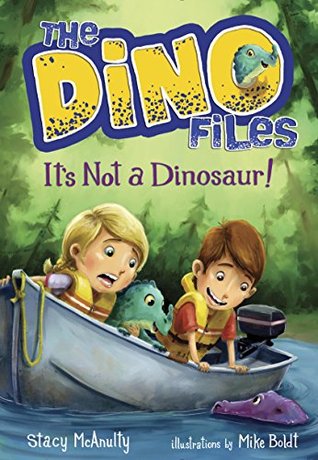
Check Out the Other Books in the Series!:
dino files 2 dino files 3

RickiSigand Kellee Signature

**Thank you to Stacy for providing copies for review!!**

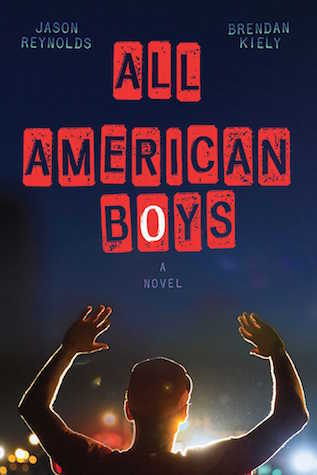
All American Boys by Jason Reynolds and Brendan Kiely

Share

All American Boys

All American Boys
Authors: Jason Reynolds and Brendan Kiely
Published: September 29, 2015 byAtheneum/Caitlyn Dlouhy Books

GoodReads Summary: Rashad is absent again today.

That’s the sidewalk graffiti that started it all…

Well, no, actually, a lady tripping over Rashad at the store, making him drop a bag of chips, was what started it all. Because it didn’t matter what Rashad said next—that it was an accident, that he wasn’t stealing—the cop just kept pounding him. Over and over, pummeling him into the pavement. So then Rashad, an ROTC kid with mad art skills, was absent again…and again…stuck in a hospital room. Why? Because it looked like he was stealing. And he was a black kid in baggy clothes. So he must have been stealing.

And that’s how it started.

And that’s what Quinn, a white kid, saw. He saw his best friend’s older brother beating the daylights out of a classmate. At first Quinn doesn’t tell a soul…He’s not even sure he understands it. And does it matter? The whole thing was caught on camera, anyway. But when the school—and nation—start to divide on what happens, blame spreads like wildfire fed by ugly words like “racism” and “police brutality.” Quinn realizes he’sgot to understand it, because, bystander or not, he’s a part of history. He just has to figure out what side of history that will be.

Rashad and Quinn—one black, one white, both American—face the unspeakable truth that racism and prejudice didn’t die after the civil rights movement. There’s a future at stake, a future where no one else will have to be absent because of police brutality. They just have to risk everything to change the world.

Cuz that’s how it can end.

Ricki’s Review: I read this book a few months ago, and frankly, I can’t stop thinking about how important this story is. We read so many books in our lifetimes, and some just take our breath away. This is one of those books. I can’t recommend this book highly enough. I believe it belongs in every classroom. The strength of the two voices in this book is remarkable, and it makes for an excellent teaching tool—about heroism; about doing what is right and true; and about being a good, decent human being. The acts within this book are all-to-common, and I believe this book promotes genuine change. The book is literary at the same time that it is engaging. It will pull (and has pulled) readers of all ages and backgrounds. I typically don’t review books long after they have been published, but this book feels too important to leave out. If you haven’t read it already, I recommend it move to the top of your TBR list. It’s and incredible story.

Kellee’s Review: I too read this book a few months ago. It was a choice for our Faculty Book Club, and it was a perfect book to discuss with a bunch of educators. All American Boys is a book that is going to be a classic because it highlights modern history in a thoughtful and truthful way. This is a book that I would recommend to everyone to read. It is a perfect jumping off point to discuss race relations, Black Lives Matter, and We Need Diverse Books. The way the book is set up, with two voices, will help readers have permission to talk about what is happening in our country, the Civil Rights movement and its tie into modern times, and the racial tension currently happening in our country.

Jason & Brendan

I’d like to also add that I recently was lucky enough to see Jason Reynolds and Brendan Kiely accept their Coretta Scott King Author Honor Award at the ALA Annual Conference here in Orlando, and they both moved me to tears. Jason actually gave two speeches since he won an honor for All American Boys and Boy in the Black Suit. His second speech was a brilliant advocacy poem titled Machetes which can be viewed here or read here. His first speech and Brendan’s speech are not available yet. Brendan says School Library Journal will be publishing his, and I am not sure about Jason’s; however, I did tweet some quotes as I sat and listened:

  • I hope The Boy in the Black Suit gives young men permission to feel and be human and sometimes need a hug. – Jason Reynolds
  • Memory in of itself is life. -Jason Reynolds
  • If you are doing this work, this award is yours too. -Jason Reynolds
  • Jason Reynolds talking about his mama made me cry. I hope my son’s love can be as true as his is.
  • There are bodies missing, and I cannot bring them back. It is time for action. -Brendan Kiely
  • Revolution begins in the heart. -Brendan Kiely
  • Love is art. Love is education. Love is accountability. And it needs repeating love is love is love is love. -Brendan Kiely
  • I want to reckon w whiteness…speak truth to myself. -Brendan Kiely

Teachers’ Tools for Navigation: This book begs to be taught in classrooms. If I was still teaching it would be the first book that I would request to be added to curriculum. I think it would be particularly fascinating to use this book as a read-aloud while simultaneously doing literature circles with by Ilyassah Shabazz and Kekla Magoon, The Rock and the River by Kekla Magoon, and How it Went Down by Kekla Magoon. These books all deal with civil rights issues, as well, and it would be interesting to look at civil rights across time and history and also within other relevant contexts.

The Simon & Schuster Reading Group Guide gives some discussion questions, journal responses, and research ideas.

Discussion Questions: How do Rashad’s and Quinn’s voices shine differently in the text?; Did Quinn do the right thing? Would you have done the same?; What would you have done if you had been in Rashad’s circumstance? Would you have done anything differently?; How is racism present both in obvious and nuanced ways in the plot events of this text?

Flagged Passage: “If you are neutral in situations of injustice, you have chosen the side of the oppressor.”

Read This If You Loved: by Ilyassah Shabazz and Kekla Magoon; The Rock and the River by Kekla Magoon; How it Went Down by Kekla Magoon; Freedom Summer by Deborah Wiles; Audacity by Melanie Crowder; The Boy in the Black Suit by Jason Reynolds

Recommended For:

readaloudbuttonsmall litcirclesbuttonsmall closereadinganalysisbuttonsmall classroomlibrarybuttonsmall

RickiSig andKellee Signature

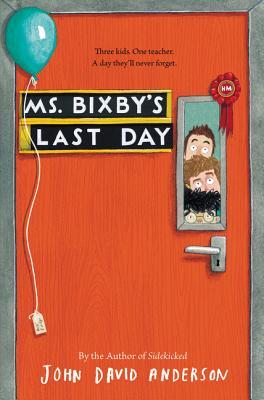
Teacher Appreciation Blog Tour with Review, Excerpt, Video, and Giveaway!: Ms. Bixby’s Last Day by John David Anderson

Share

160331_blogtour_bixby

ms bixby

Ms. Bixby’s Last Day
Author: John David Anderson
Published June 21st by Walden Pond Press

Summary: Everyone knows there are different kinds of teachers. The good ones. The not-so-good ones. The boring ones, the mean ones, the ones who try too hard. The ones you’ll never remember, and the ones you want to forget. But Ms. Bixby is none of these. She’s the sort of teacher who makes you feel like the indignity of school is worthwhile. Who makes the idea of growing up less terrifying. Who you never want to disappoint. What Ms. Bixby is, is one of a kind.

Topher, Brand, and Steve know this better than anyone. And so when Ms. Bixby unexpectedly announces that she is very sick and won’t be able to finish the school year, they come up with a plan. Through the three very different stories they tell, we begin to understand just what Ms. Bixby means to Topher, Brand, and Steve—and what they are willing to go to such great lengths to tell her.

About the Author: John David Anderson, the author of many books for young readers including SidekickedMinion, and The Dungeoneersreturns with a story of three kids, a very special teacher, and one day that none of them will ever forget. A dedicated root beer connoisseur and chocolate fiend, he lives with his wife, two kids, and perpetually whiny cat in Indianapolis, Indiana. You can visit him online at www.johndavidanderson.org.

John David Anderson

MsBixbysLastDay_Ecard_5

Click to read a 48 page excerpt!

Giveaway!

a Rafflecopter giveaway

My Review: Ms. Bixby is one of those teachers that you read about and you want to be (if you are a teacher) or you want to have (if you are a student). As you can see from all the praise it has been receiving, John David Anderson wrote a home run book with this one. Our three main characters are diverse, funny, sweet, and stubborn, and Anderson’s voices for each are unique and alternate beautifully throughout the book. Though I must warn: This is a roller coaster book. You will laugh, smile, cry, get angry, and cringe. It is all there.

But this tour is about more than just the book, it is about focusing on our Ms. Bixby. Ms. Bixby is described as a “Good One” in the book. A “Good One” is a teacher who “make[s] the torture otherwise known as school somewhat bearable. You know when you have one of the Good Ones because you find yourself actually paying attention in class, even if it’s not art class. They’re the teachers you actually want to go back and say hi to next year. The ones you don’t want to disappoint.” 

My Ms. Bixby: We all have a wide variety of teachers; however, there are those that change your life. When I was in 12th grade, I was a high school fish just floating my way through school. I was a high achiever who was okay with only doing okay in classes. I didn’t know what I was good at. I didn’t know what I wanted to be when I grew up. I just thought I was another face in the crowd; nothing special. Then I entered Miss Hazel Haley’s classroom. When I had Miss Haley in 1999-2000, he had been teaching for 63 years, 61 of them at Lakeland High where I took my academic classes and 54 in the same classroom (in a building named after herself). She was a spit fire: She showed the Romeo and Juliet film from the 60s even though it showed a breast, she would speak her mind no matter what, and she cared and remembered every single person she’d ever taught. We were her kids. She never married or had children of her own, and she would tell you it was because she didn’t have to–we were her kids.

But it wasn’t all of this that made Miss Haley my Ms. Bixby. Actually, at first I really didn’t like her. She didn’t put up with my talking or note passing. She didn’t tolerate my Cs and Bs when she knew I could do better. She saw something in me. Finally, on one of the assignments I’d halfheartedly completed, she made me stay after school to work on with her. She told me I couldn’t get away with working the way I had been with the brain I had. She told me, “You are a good writer.” And she told me, “You are smart.” And for some reason her telling me stuck. And everything changed. I now knew that I was good at something. That I could accomplish something. And I have.

Lakeland Ledger article on Miss Haley’s legacy

NPR soundbite and transcript on Miss Haley’s retirement

When I decided to become a middle school teacher, I thought right away of Miss Haley. I know she would be proud of me. I wish I could tell her. And mostly, I hope that I can be someone’s Miss Haley, or Ms. Bixby. I hope my students know I care for them as if they are my own children. I know first hand that one teacher can definitely make a difference.

Walden TV Episode 17 — “LIST IT: Ms. Bixby’s Last Day:”
Have you ever had a favorite teacher? Maybe someone as AWESOME as Ms. Bixby? Mike & Julian certainly have! Follow along their list of favorite teachers–real and fictional!

Teachers’ Tools for Navigation: In addition to a wonderful classroom library addition and a read aloud, Ms. Bixby is just one of many teachers I’ve read about that show how a teacher can change a life. Ms. Bixby’s Last Day would be a perfect addition to a “Teacher Appreciation Text Set” along with WonderFish in a Tree, Bluefish (YA), Love that Dog, Jumped In (YA), and The Summer of May. 

Publisher’s Educators Guide:

Discussion Questions: Why did the author choose to use three different points of view?; How did Ms. Bixby affect each of the boys’ lives?; What made Ms. Bixby a “Good One?”

Flagged Passages: “You can pick your friends, and you can pick your nose, but you can’t pick your friend’s nose. That’s something my dad told me. Turns out…not entirely true. I mean, the middle part is obviously true. But the last part isn’t true at all.” (p. 25)

Funny story you’ll have to read the book to read (p. 25-27)

“You can pick your friend’s nose. But there’s a difference between can and should.” (p. 27)

Read This If You Loved: Wonder by RJ Palacio, Fish in a Tree by Lynda Mullaly Hunt,  Bluefish by Pat Schmatz, Love that Dog by Sharon Creech, Jumped In by Patrick Flores-Scott, The Summer of May by Cecelia Galante, The Honest Truth by Dan Gemeinhart, Remembering Mrs. Rossi by Amy Hest

Recommended For:

  classroomlibrarybuttonsmall readaloudbuttonsmall litcirclesbuttonsmall

Kellee Signature

Don’t miss out on the other stops on the Blog Tour!

6/2/2016 Nerdy Book Club
6/3/2016 Next Best Book
6/6/2016 Walden Media Tumblr
6/7/2016 Teach Mentor Texts
6/8/2016 This Kid Reviews Books
6/9/2016 Read, Write, Reflect
6/10/2016 Flashlight Reader
6/13/2016 Julie Falatko
6/14/2016 A Foodie Bibliophile in Wanderlust
6/15/2016 About to Mock
6/16/2016 Kid Lit Frenzy
6/16/2016 The Hiding Spot
6/17/2016 Unleashing Readers
6/20/2016 Ms. Yingling Reads
Novel Novice
6/21/2016 Maria’s Melange
Novel Novice
All the Wonders
6/22/2016 Lit Coach Lou
Novel Novice
6/23/2016 Novel Novice
6/24/2016 Satisfaction for Insatiable Readers
Novel Novice
6/27/2016 Librarian’s Quest
6/28/2016 Educate.Empower.Inspire…Teach
6/29/2016 Bluestocking Thinking
6/30/2016 Mindjacked
7/1/2016 All the Wonders

What Do You Do with a Problem? by Kobi Yamada

Share

what do you do with a problem

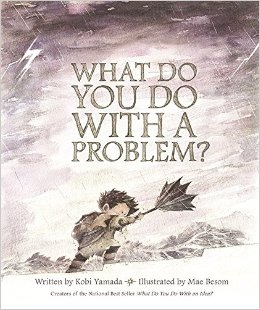
What Do You Do with a Problem?
Author: Kobi Yamada; Illustrator: Mae Besom
Published: July 1, 2016 by Compendium Inc.

GoodReads Summary: From the same author and illustrator as our #1 nationally best-selling What Do You Do With an Idea? comes a new book to encourage you to look closely at problems and discover the possibilities they can hold.

What do you do with a problem? Especially one that follows you around and doesn’t seem to be going away? Do you worry about it? Ignore it? Do you run and hide from it?

This is the story of a persistent problem and the child who isn’t so sure what to make of it. The longer the problem is avoided, the bigger it seems to get. But when the child finally musters up the courage to face it, the problem turns out to be something quite different than it appeared.

This is a story for anyone, at any age, who has ever had a problem that they wished would go away. It’s a story to inspire you to look closely at that problem and to find out why it’s here. Because you might discover something amazing about your problem… and yourself.

What are problems for? They challenge us, shape us, push us, and help us to discover just how strong and brave and capable we really are. Even though we don’t always want them, problems have a way of bringing unexpected gifts.

So, what will you do with your problem? Now that’s up to you.

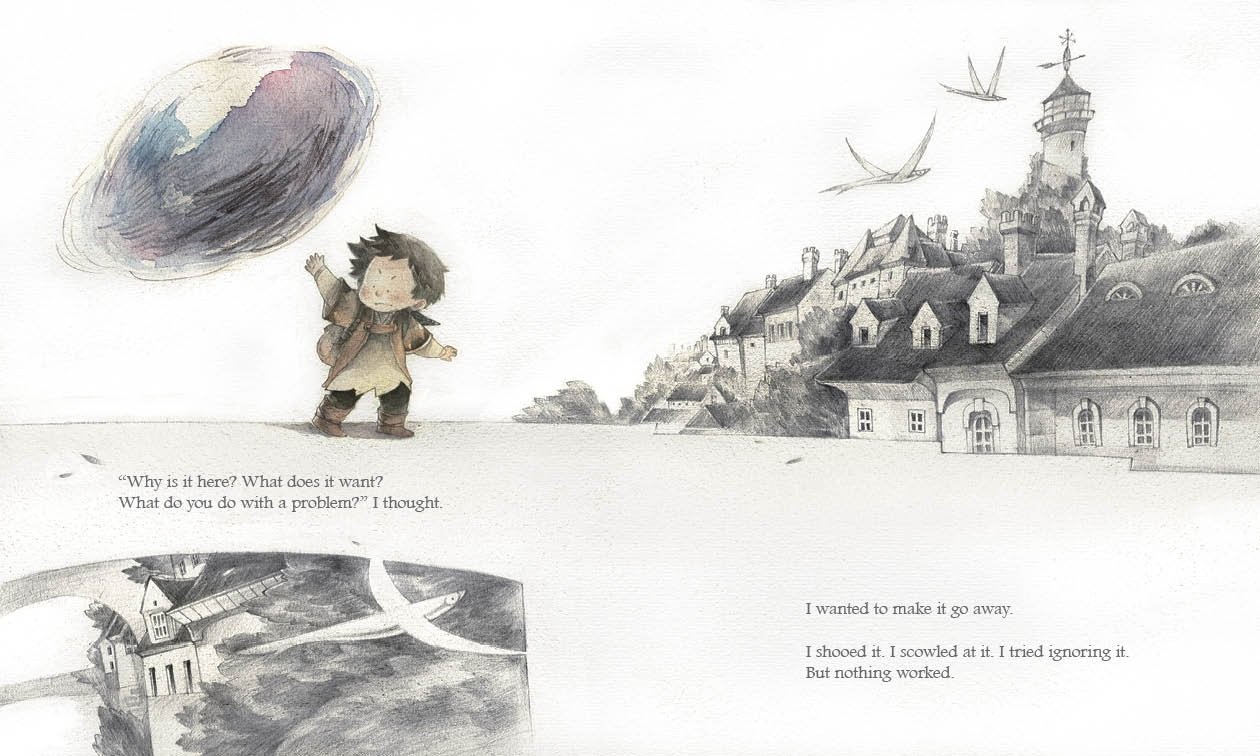
Review: There is something so magical about the combination of writer Kobi Yamada and illustrator Mae Besom. When I saw that these creators of What Do You Do with an Idea? had another book, I jumped at the chance to read it. It’s no secret that I am in love with this first book. I have gifted it to many friends and children, and I include it on many of my favorites and Top Ten Tuesday lists. I was pleased that What Do You Do with a Problem? is just as stunning. These two books are a teacher’s dream. They utilize many literary elements and are perfect for close analysis. I would use them at all grade levels. What Do You Do with a Problem? is a great text to teach readers how to reconsider a problem (or problems) that they might have. They can compare the problem with illustrations and consider how that problem may, for example, be all-encompassing. I like how the book balances both the weight of the problem and the proverbial light at the end of the tunnel. By looking at this problem in a new light, readers will be able to take more of an outside perspective of the conflict—and hopefully/potentially work toward a resolution.

Teacher’s Tools for Navigation: To start, teachers might ask students to consider the symbolism within the text. They might even grapple with the definition of an allegory and discuss ways the definition might be connected with the text and illustrations. Then, students could think of an abstract idea and try to associate an object with that idea. They might even consider writing their own picture book that connects the object and abstract idea. I also think it would be great for teachers to read both this text and What Do You Do with an Idea? to students. Then, they might compare and contrast the stories and their messages.

Discussion Questions: What do you do with a problem? How do we deal with problems in different ways? How do others in our lives deal with problems in ways that differ from us?; How do the author and illustrator work together to create a compelling story? What symbols do they use to convey their message?

Flagged Passage: 

what do you do with a problem spread

Image from: www.amazon.com

Read This If You Loved: What Do You Do with an Idea? by Kobi Yamada; The Most Magnificent Thing by Ashley Spires; The Dot by Peter H. Reynolds, The Noisy Paint Box by Barb Rosenstock, Lost and Found by Oliver Jeffers, Journey by Aaron Becker

Recommended For:

  readaloudbuttonsmall closereadinganalysisbuttonsmall classroomlibrarybuttonsmall

RickiSig