On Duck Pond by Jane Yolen

Share

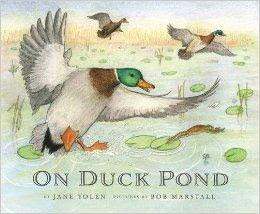
On Duck Pond
Author: Jane Yolen;  Illustrator: Bob Marstall
Published: April 11, 2017 by Cornell Lab Publishing Group

Goodreads Summary: From award-winning and NY Times bestselling children’s author of more than 350 books, Jane Yolen, and award-winning illustrator, Bob Marstall, On Duck Pond is the first sequel to the acclaimed On Bird Hill, which launched the children’s picture book series written for the esteemed Cornell Lab of Ornithology, the world authority on birds.

In On Bird Hill, Yolen and Marstall took readers on a surreal journey with a boy and his dog, as they stopped, looked, and noticed things along their path—ultimately discovering the miracle of the birth of a baby bird. On Duck Pond continues the journey of the boy and dog story, this time in a new place—a serene pond, filled with birds, frogs, turtles and other creatures going about their quiet business. Their intrusion stirs the pond into a cacophony of activity, reaching climactic chaos, before slowly settling back to it’s quiet equilibrium.

This beautiful and enchanting sequel is sure to delight On Bird Hill fans and millions of readers and fans of Jane’s popular classics.

Ricki’s Review: This is a beautiful book that is reminiscent of the classics. Kids will read this book and be reminded of the beauty of nature—its sights and its sounds, in particular. After we read this book, my kids and I took a walk and stopped to remind ourselves of how beautiful the world is around us. Too often, I think we forget to take in how wonderful our world is, and this book will make us pause. Jane Yolen is a rock star, and this book is another winner. I am in awe of how she writes so many stunning books. Her language is incredibly powerful. I recommend you get this one. It is a book that will endure.

Kellee’s Review: This book reminds me of many of Yolen’s book in that it is multi-faceted and beautifully done. At face value, it is a story of nature. There have been many reports recently about kids’ lack of time outside, and Yolen combats that by pointing out so many different species that can be found at a pond and interesting information about them. In the back matter, even more facts about each of the species are shared along with activities to do in nature. If you go a bit deeper though, it is also a book of poetry. The consistent rhyme scheme throughout gives the book some really great rhythm and a really beautiful, lyrical feel.

Teachers’ Tools for Navigation: This is a great book to read before a nature walk with kids. Ricki is planning to give it to her son’s preschool teacher because the teacher is always teaches the students about the things they are seeing outside. We’d also love to compare this book with other duck books (e.g. Dump Truck Duck, Make Way for Ducklings) to look at the ways that ducks are featured in different writing styles and genres.

Discussion Questions: How do the other animals react to the ducks? What other animals cause big reactions?; How does the simple text make the story more compelling?; How do the author and illustrator work together to make for a beautifully depicted setting?

Flagged Passage: “Old Duck Pond, once still and quiet / Now seemed battered by the riot.”

Read This If You Loved: On Bird Hill by Jane Yolen, Make Way for Ducklings by Robert McCloskey, The Very Hungry Caterpillar by Eric Carle, 5 Little Ducks by Denise Fleming

Recommended For: 

readaloudbuttonsmall classroomlibrarybuttonsmall

RickiSigand Kellee Signature

**Thank you to Tracey from Media Masters for providing copies for review!**

Review and Giveaway!: Share, Big Bear, Share by Maureen Wright

Share

Share, Big Bear, Share
Author: Maureen Wright
Illustrator: Will Hillenbrand
Published April 25, 2017 by Two Lions

Goodreads Summary: Big Bear’s forest friends eye his berries hungrily, but he doesn’t notice as he digs into his delicious snack. When the old oak tree says, “Share, Big Bear, share,” he thinks the tree has said, “Hair, Big Bear, hair!” One comical scene follows another as Big Bear keeps misunderstanding the old oak tree’s message until things finally get sorted out. Whimsical illustrations highlight the humor in this gentle story about the importance of sharing something special with friends.

Review: This book is absolutely delightful. I wish I’d filmed myself reading it because I realized halfway through my reading that I had a goofy grin on my face. Bear is so occupied with the berries that he is eating that he doesn’t realize his animal friends want him to share. Instead, he thinks they are saying “hair,” “lair,” “scare,” etc., and he acts out all of the misinterpretations he hears. So, for example, when he thinks they are saying “Hair, Big Bear, Hair!” he combs his hair into a goofy hairstyle (see the spread featured below). I can’t WAIT to read this to my son. He is going to crack up. I loved how the book teaches vocabulary words, too. Big Bear teaches us, for instance, what a “lair” is. This is going to be one of my favorite children’s books this year. I will need to buy the others in the series.

Teachers’ Tools for Navigation: It would be so much fun for readers to create their own Big Bear story as a class. Perhaps he could misinterpret another commonly rhymed word. Each student could be in charge of a different page to create a class book!

The Help Big Bear Share Game!

Discussion Questions: Why doesn’t Big Bear hear his friends?; What are some of the ways Big Bear misinterprets his friends?; What does this book teach us about sharing? About listening?

We Flagged:

Read This If You Loved: That’s (Not) Mine by Anna Kang, You Are (Not) Small by Anna Kang, Bear Snores On by Karma Wilson, Lady Pancake and Sir French Toast by Josh Funk, Your Alien by Tammi Sauer, The Pigeon Needs a Bath by Mo Willems, Elephant and Piggie books by Mo Willems

Recommended For:

readaloudbuttonsmall classroomlibrarybuttonsmall

Giveaway!

a Rafflecopter giveaway

About the Author: WILL HILLENBRAND has written and/or illustrated over 60 books for young readers including Down by the Barn, Mother Goose Picture Puzzles and the Bear and Mole series. He has lived almost all of his life in Cincinnati, Ohio, where he grew up as the youngest of four boys. He now lives in Terrace Park and was recently honored as Author/Illustrator in Residence at Kent State University.

Information about his books, selected readings, art process videos and activity ideas can be viewed at www.willhillenbrand.com. Connect with Will at www.facebook.com/willhillenbrandbooks.

  RickiSig

**Thank you to Barbara at Blue Slip Media for providing a copy for review!**

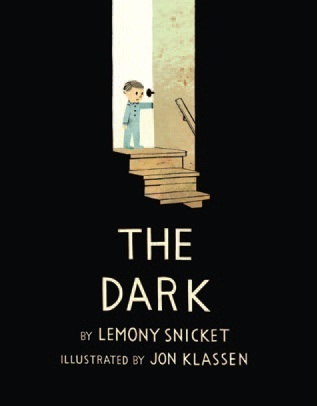
Top Ten Tuesday: Things That Make Us Instantly Want to Read a Book

Share

top ten tuesday

Top Ten Tuesday is an original feature/weekly meme created at The Broke and the Bookish. The feature was created because The Broke and Bookish are particularly fond of lists (as are we!). Each week a new Top Ten list topic is given and bloggers can participate.

 Today’s Topic: Ten Things That Make Us Instantly Want to Read a Book

Ricki

1. It is by an author of color

Most of my research is concerned with multicultural young adult literature. I try to read any and every book that I can find in that category. I read all multicultural young adult books, but I specifically seek out those that are by authors of color.

2. It is historical fiction

I honestly can’t get enough of this genre. I love to be sent to a different time and place.

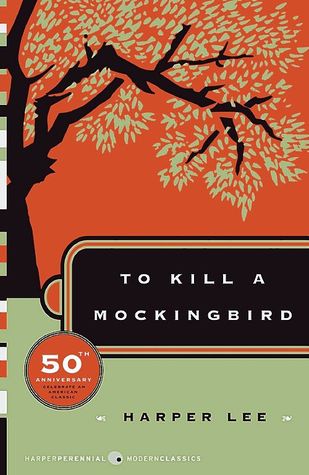
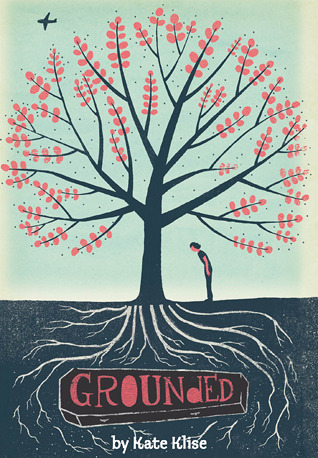
3. It is a picture book with a great cover.

I love artwork, so great illustrations are a plus.

4. It is by a favorite author of mine.

This list is not exhaustive, but I instantly read any books published by (in random order): Sherman Alexie, John Green, Kristin Cashore, Matt de la Peña, Laurie Halse Anderson, Oliver Jeffers, Aaron Becker, Coe Booth, A.S. King, Gene Luen Yang, David Arnold, Jeff Zentner, Adam Silvera, Benjamin Alire Sáenz, Nicola Yoon, Jason Reynolds, Eliot Schrefer, Margarita Engle, Meg Medina, Patricia McCormick, GOODNESS, I am going to quit while I am ahead. I am sure I am forgetting one of my favorite authors, and I will lie in bed tonight thinking, “Darn! I missed ____.”

5. It is a good fit for my older son

My older son goes through crazy obsessions: vehicles, the color yellow, Paw Patrol, superheroes. When a book matches his current obsession, I feel compelled to get it. (My younger son hasn’t shown strong preferences yet.)

Kellee

1. Favorite Authors!

Unlike Ricki, I am not even going to try to list my favorites, but if it is an author I love, I will definitely pick up the book.

2. Road Trips

I am a sucker for road trip books! They are my favorite! They usually include humor, romance, identity searching, hi-jinx, and other things I love.

3. Kids recommend it to me or are passing it around at school

I cannot tell a student no if they recommend a book to me. I also really want to read books if I see that students are recommending it to each other.

4. Graphic Novel

I love graphic novels! All kinds!

5. I think Trent will love it

This means usually vehicles or monster or firemen or animals, but if I see a book that I know Trent will love, I definitely want to read it!

What makes you instantly want to pick up a book?

RickiSig and Signature

Review and Giveaway: Cowboy Car by Jeanie Franz Ransom

Share

Cowboy Car
Author: Jeanie Franz Ransom
Illustrator: Ovi Nedelcu
Anticipated Published: April 11, 2017 by Two Lions

Goodreads Summary: A little car with a big dream…

Ever since Little Car was knee-high to his daddy’s hubcaps, he’s wanted to be a cowboy. Cowboys get to drive the range, wear big hats, and sleep under the stars. Everyone tells Little Car that cars can’t be cowboys, but he can’t stop dreaming of rounding up lil’ dogies by day and talking around the campfire at night. So Little Car packs his trunk and heads Out West. Vroom! Can he prove he has what it takes to be a true cowboy? Join Little Car as he zooms into the hearts of kids everywhere.

Ricki’s Review: A car that dreams of being a cowboy! This was a fun story to read with my boys. The illustrations are quite charming, and Little Car made me smile. He refuses to give up, despite the obstacles he faces. My three-year-old asked a lot of great questions while we were reading the book, and we were able to talk about the car’s perseverance. I particularly liked all of the puns in the book. While the puns were completely over my sons’ heads, it made the reading even more enjoyable for me. This book has a theme that we constantly try to relay to our students—not to give up despite what the world throws at you. It would be a great addition to any classroom.

Kellee’s Review: What a cute story about following your dreams even when everyone doubts you! This is a message that is so important to share with kids because throughout their life there are going to be those who doubt them; however, I want Trent to know that as long as he works hard, wants something enough, has a good plan, is realistic about speed bumps ahead, and goes for it, he can live his dream. This is a theme that is found in picture books, chapter books, middle grade novels, and young adult novels because kids need to be reminded of this. Life shouldn’t be about what others expect of you but what YOU expect for you. Little Car embodies this message by doing something that everyone doubted he could do and he did it his own way. I know this story will be one that teachers and parents will want to share with their kids (and their kids will love it because who doesn’t love cars and cowboys!).

Teachers’ Tools for Navigation: Teachers might ask students to connect the theme of this story to real-life individuals today or in history. They might consider other people who have faced struggles and who have persevered. It would be neat to have each student learn about a different person of their choosing. This would add variety and remind students that they should not give up in the face of adversity.

Discussion Questions: What challenges does Little Car face? How does he overcome them?; What do Little Car’s parents think? How does he respond?; What other people (current or historical) have faced struggles? How did they overcome these struggles?

Flagged Passage: “‘Cars can’t be cowboys,’ everyone told Little Car.”

Read This If You Love: Race Car Dreams by Sharon Chriscoe; Race Car Count by Rebecca Kai Dotlich; Busy Trucks on the Go by Eric Ode and Kent Culotta; Goodnight, Goodnight, Construction Site by by Sherri Duskey Rinker; The Racecar Alphabet by Brian Floca; Alphabeep: A Zipping, Zooming ABC by Debora Pearson; The Three Little Rigs by David Gordon; Ten Little School Cars by School Specialty Publishing

Recommended For: 

classroomlibrarybuttonsmall readaloudbuttonsmall

Giveaway!

a Rafflecopter giveaway

RickiSigandSignature

**Thank you to Al at Amazon for providing copies for review!**

Rosie Revere, Engineer by Andrea Beaty

Share

Rosie Revere, Engineer
Author: Andrea Beaty; Illustrated by: David Roberts
Published: September 3, 2013 by Abrams

A Guest Review by Jennifer Zafetti

Summary: Rosie is an ambitious young girl who aspires to be an engineer. She creates an invention for her uncle, but becomes embarrassed when he laughs at her. She does not feel supported , until she meets her Great-Great-Aunt Rose who is both an adventurer and an explorer. Her great-great-aunt yearns to fly so Rosie builds her a contraption made out of cheese. When her great-great-aunt laughs at her failure, Rosie becomes disheartened and swears to never invent again. Rose provides her with comfort and explains that, “Your brilliant first flop was a raging success.” This provides Rosie with the encouragement she needs to try again!

Review: I really enjoyed reading this book! I think that it is so important for kids to embrace failures! If Rosie had admitted defeat after her first failure, she would have never been able to be successful. Rosie’s perserverance allowed her to create a flying contraption for her aunt. Furthermore, the rhyming sentences created an engaging tone that kept me wondering what would happen next. This is a great story to read-aloud to a classroom! Additionally, the illustrations on each page really add to the story and provide detailed visuals to accompany Rosie’s different inventions. Overall, I think that this book can be inspirational for all ages—the simple message: never give up!

Teachers’ Tools for Navigation: Rosie Revere, Engineer is an uplifting story in which failure turns into success. Teachers should use this children’s book to teach students about the importance of perseverance. When faced with challenges, students should use them as an opportunity to grow. If you believe in yourself, you can achieve anything!

Also, the teacher can pause the reading to ask for predictions.

Discussion Questions: How did Rosie’s mood change throughout the story?; When is a time that you persevered when facing a challenge?; When is a time that you have learned from a failure? How do Rosie’s family members impact her actions?

Flagged Passage: 

Read This If You Loved: Ada Twist, Scientist by Andrea Beaty, and The Most Magnificent Thing by Ashley Spires

Recommended For:
 classroomlibrarybuttonsmall

Thank you, Jennifer!

RickiSig

Author Guest Post: “How Do We Know What Someone Else Is Feeling?: Body Language, the Big Horse Book, and Imaginative Leaps in Bramble and Maggie” by Jessie Haas

Share

How Do We Know What Someone Else Is Feeling?: Body Language, the Big Horse Book, and Imaginative Leaps in Bramble and Maggie

“Use your words,” kids are often told, when they’re melting down in tears or possibly hitting. Words are crucial so other people can understand what we’re feeling.

But what if the “person” you are trying to communicate with is from a species that doesn’t use words? Not space aliens—I’m talking about animals.

Most of us are familiar with how cats and dogs express themselves. Kisses and wiggles translate well, and I still remember my shock as a toddler when I was pestering the extremely gentle family dog, and he barked at me. I knew just what he meant!

Horses have feelings too, and figuring them out has been a big part of my life, as a horse-lover and an author. Usually my horse books are written from a human point of view, but the Bramble and Maggie books also incorporate the horse’s perspective. From Horse Meets Girl onward, the Bramble and Maggie books have been praised for incorporating both points of view without being anthropomorphic.

How does Maggie know what Bramble is feeling? She relies her ‘big horse book,’ which she carries everywhere. It is a source of such advice as “Don’t fall for the first horse you see.” Sometimes this is conveyed in the art, to keep the printed text clean and clear. At other times, when carrying the book isn’t practical, Maggie remembers what it says. From the beginning of the series, the ‘big horse book’ has allowed me to convey sophisticated information in bite-sized nuggets, and forms a counterpoint to Bramble’s more direct communication style (beautifully captured by illustrator Alison Friend).

InHorse Meets Girl, when left alone on her first night at Maggie’s house, Bramble kicks her stall repeatedly. Maggie consults the book. Learning that “. . . horses are herd animals. They like to be with other horses,” she tells Bramble a story, sings her a song, and when informed in no uncertain terms that that’s not good enough, she curls up in a sleeping bag outside Bramble’s stall. I have a horse, Maggie thought. And she has me.

In Give and Take Maggie saddles up for her first ride. ‘Bramble knew about rides. The rider sat in the saddle. The horse did all the work.’ Bramble does want to explore and meet the neighbors, but she has some stipulations. ‘Neither of them should be boss all the time. There should be some give and take.’ She holds her head high, refusing to be bridled. Maggie pulls out the big horse book, and gets an idea. ‘“If you put your head down, Bramble, I’ll give you a carrot.”

Bramble sniffed the air. Did Maggie really have a carrot?

Yes.

Bramble lowered her head. Maggie gave her a carrot, and Bramble took it. She let Maggie put on the bridle. This was better. Give and take.’

In Spooky Season, Bramble indulges in dramatic leaps of pretend fear to express the exuberance of an autumn day, causing Maggie to fall off (why do they call it Fall?).

‘Maggie knew what her big horse book said. If you fall off a horse, get right back on, before you have time to get scared.’

It’s too late for that. Maggie’s already scared. But Bramble communicates her concern, standing patiently, making her eyes soft and gentle. “I have to, don’t I?” Maggie said. “I hope you’re saying you’ll be good.” That’s exactly what Bramble is saying, and she makes good on that promise again on Halloween, when not even the spookiest ghost can scare her.

In the newest Bramble and Maggie book, Snow Day, a big storm is coming. “Does that horse need a blanket?” the neighbor asks. ‘“No,” Maggie said. “Her long hair will keep her warm.” That was what her big horse book said.’

But after dark, as the storm moves in, Maggie worries. Mom and the big horse book reassure her that horses lived through the Ice Age, and are adapted to cold. “Bramble is as safe and warm as we are,” Mom says.

But Bramble finds the storm exciting. She can’t stay still—and thanks to a not-quite-shut stall door, she’s soon outside. After taking a walk, she decides against going back indoors. ‘ . . . she liked it out here. The snow settled on her back, as thick as a blanket. It kept her warm. Bramble turned her tail to the wind. She put her head down.’

I’m now the author of my own ‘big horse book,’ (The Horse-Lover’s Encyclopedia, Storey, 2017). I know all about how horses are heated by the fires of their own digestion, insulated by layers of hair that create air pockets, kept dry by oils on their coats. They are northern animals. They were shaped by the Ice Age.

Still–I spend a lot of time and energy providing shelter for horses, only to see them horses standing out in the storms, backs to the wind, looking miserable. They can’t be miserable. They have the option of shelter. So why do they do that? Body language doesn’t tell me, and neither does my ‘big horse book’. All I’m left with is an imaginative leap.

‘She was stronger than the storm. It was just air and snowflakes.

She was a horse.

About the Book: Bramble the horse and her devoted girl, Maggie, face a major snowstorm in their fourth adventure.

The sky is white, the air is cold, and snowflakes are falling, tickling Bramble’s back. By bedtime, Maggie and her family are ready for the storm: they’ve shopped for supplies, covered Bramble’s hay with a tarp, and filled the bathtub with extra water. But Bramble is too excited to sleep; she wants to be out in the white, wild world. Luckily for Bramble, she has a shaggy coat to keep her warm. And luckily for Maggie and her family and friends, when morning comes, Bramble can help dig through the deep snow that has most of the neighbors stuck in their homes. Soon the snow day becomes a block party complete with marshmallows, cocoa, and lots of friends. Chapter-book readers of the horse-loving variety will relish the camaraderie and enjoy the equine exploits in this cozy wintertime tale.

Review and Author Q&A here on Unleashing Readers about the first three Bramble and Maggie books!

Kellee’s Review: There is a very specific time in a kid’s life where they are ready to begin reading longer books, but not ready to tackle chapter books yet. This is where Bramble and Maggie fits. These early chapter books will are perfect texts to help lead kids to longer chapter books. The work well for their targeted age level in that they never speak down to readers and have excellently paced stories that hold readers’ attention and will help them feel successful.  On top of all this, the Bramble and Maggie stories are just so sweet! I love all the different adventures they go on and the lessons they learn like overcoming fear, conquering loneliness, and gaining responsibility. Readers will adore these books.

Ricki’s Review: Kellee hit the nail on the head. As I was reading, I thought to myself, “Why didn’t I have these books available to me when I was transitioning to chapter books?” I remember being devastated that my books no longer had pictures in them, and I resisted the longer texts for this reason. This series is engaging, educative, and fun! The words repeat in ways that will help students learn the vocabulary, particularly the more difficult words that relate to horses. Each book delivers a strong message, and the bond between Bramble and Maggie is one which will connect with readers. When I think about these books, I will always remember Maggie dragging her sleeping bag to the stable to sleep beside Bramble. I can’t wait to share these books with my pre-service elementary school teachers. They will have a special place in classrooms.

Curriculum Guide

Interview with the Illustrator

Thank you, Jesse for this post!

RickiSigandKellee Signature

Pig the Pug by Aaron Blabey

Share

Pig the Pug
Author: Aaron Blabey
Published: July 1, 2014 by Scholastic

A Guest Review by Rebecca Welch

Summary: Pig is a greedy dog and does not want to share his toys with his housemate, Trevor. Trevor thinks it would be a great idea if him and Pig shared toys because then they would be able to play together. Pig does not give in and gathers all of his toys so Trevor can’t get to them. A mishap occurs that makes pig realize the importance of sharing and friendship.

Review: This book is great for any elementary school classroom! I absolutely loved it and thought that the message at the end was applicable to any group of young children. The rhyming makes the book great for a fun read aloud and the illustrations are fantastic. There was also a bit of humor. I highly recommend this picture book.

Teachers’ Tools for Navigation: This book would be great to teach rhyming because each page rhymes. You could talk about the moral of a story and use it as a segway to students’ writing about a time where they learned an important lesson (moral). You could have students determine the meaning of the idiom “flip a wig” by the using context clues and then study other common idioms afterwards. In addition, you could introduce character traits and determine the traits of Pig and Trevor. You can also practice making predictions by predicting what will happen to Pig. It would also be a great classroom discussion facilitator on sharing and the importance of friendship.

Discussion Questions: How do you think Trevor may be feeling when Pig won’t share his toys?; What does it mean to be greedy or selfish?; What do you predict will happen to Pig?; Can we think of any times that we have been greedy or selfish?; What does “flip a wig mean”?; What is the moral of this story?

Flagged Passage: “I know what your game is, you want me to SHARE! But I’ll never do that! I won’t and I swear!” (p. 7).

Read This If You Loved: Dog vs. Cat by Chris Gall; Mr. Fuzzbuster Knows He’s the Favorite by Stacy McAnulty

Recommended For:
 classroomlibrarybuttonsmall

Thank you, Rebecca!

RickiSig