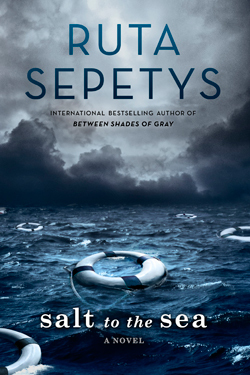
Salt to the Sea by Ruta Sepetys

Share

salt to the sea

Salt to the Sea
Author: Ruta Sepetys
Published: February 2nd, 2016 by Philomel Books

GoodReads Summary: The author of Between Shades of Gray returns to WWII in this epic novel that shines a light on one of the war’s most devastating—yet unknown—tragedies.

In 1945, World War II is drawing to a close in East Prussia, and thousands of refugees are on a desperate trek toward freedom, almost all of them with something to hide. Among them are Joana, Emilia, and Florian, whose paths converge en route to the ship that promises salvation, the Wilhelm Gustloff. Forced by circumstance to unite, the three find their strength, courage, and trust in each other tested with each step closer toward safety.

Just when it seems freedom is within their grasp, tragedy strikes. Not country, nor culture, nor status matter as all ten thousand people aboard must fight for the same thing: survival.

My Review: This is a book about humanity. Each voice serves a unique purpose to foster a complete picture of this great tragedy in history. The characters feel real, and their stories and perspectives are so different that readers are able to fully understand a diversity of experiences toward the war. Wow, wow, wow. I don’t feel that summarizing or reviewing this book will even do it justice. I felt like I couldn’t eat or sleep until I finished it. Salt to the Sea takes readers on an epic adventure and throws them for an emotional tailspin. After I closed the cover, I was reeling.  The language is powerful and the story is captivating.

Ruta Sepetys holds a special place in my heart. She is a powerful force in historical fiction, and this book is no exception. Several years ago, I was fortunate to be sharing a drink with Ruta at the ALAN cocktail party. When I asked her what she was working on, her eyes glinted as she talked about the concept of this book. She felt a connection to this tragedy, and while nothing had been written at the time, I knew it would be a remarkable novel. For the next several years, I thought about the way Ruta described the historical event, and I consistently checked her pages to see if I would see any further information about its progress. Several years later, I would (fortunately) receive this book in the mail. Boy was it worth the wait.

Teachers’ Tools for Navigation: The teaching opportunities for this book are endless. I would love to use this book to teach the theme: What does it mean to be human? or What does it mean to be a good person? Then, I might pair other texts (e.g. Kite Runner by Khaled Hosseini) and create a text set to consider these themes. The perspective and voice of these characters are strong, and I imagine rich classroom discussions about the ways these four characters show us a slice of humanity. (One of the four main characters is debatably evil, and this would offer excellent, critical conversations). Beyond these four characters, readers might consider the minor characters of this text (or tangential war figures, such as Hitler or Stalin). Are humans innately selfish? Are the innately good? Are we all flawed? Are there any universal characteristics amongst these characters, or are they too different?

Discussion Questions: How does the author balance historical information and story? What tools does she use to do this?; Why do you think the author chose to feature four points-of-view rather than one? Does it add or detract from the story? What similarities do you see across these voices? What differences?

We Flagged: “Survival had its price: guilt.”

*Quote taken from an advanced reader copy. It may change after publication.*

Read This If You Loved: Between Shades of Gray by Ruta Sepetys; The Watch that Ends the Night by Allan Wolf; The Book Thief by Markus Zusak; A Night to Remember by Walter Lord; The Guernsey Literary and Potato Peel Pie Society by Mary Ann Shaffer; Schindler’s List by Thomas Keneally; Code Name Verity by Elizabeth Wein

Recommended For:

 closereadinganalysisbuttonsmall litcirclesbuttonsmall classroomlibrarybuttonsmall

RickiSig

Text Sets for Teachers: Good vs. Evil: Exploring Morality Through the Holocaust

Share

Text Set Button

Good vs. Evil: Exploring Morality Through the Holocaust
Text Set for Night by Elie Wiesel
created by Kellie-Anne Crane

It is of the utmost importance that teachers prepare their students for their futures, whether that includes continuing their education or entering the work force. No matter what path students choose to take, there are certain concepts that all people need to recognize and consider as human beings, like the concept of morality. Everyone is confronted with moral decisions on a daily basis—whether it is a monumental decision, or even something as small as deciding to give the last cookie to your sister or to keep it for yourself. The events of the Holocaust and World War II are incredibly essential to study, not only because these events are our shared history but because of the unbelievable turmoil faced by millions. Teachers must help students to understand the gravity of this time period and work to teach it to students in a way that is both approachable and comprehensive.

By exploring the concept of morality through the Holocaust, students will be educated on what is perhaps the greatest tragedy of mankind and be forced to contemplate the morality of multiple scenarios throughout the holocaust. As upstanding citizens, we would like to think that we do not need to worry about anything like the Holocaust—but the fact remains that it happened less than a century ago. Teachers must help students examine the decisions and events that occurred during this vile period on a personal and real level so that they can gain a deeper understanding of the moral struggle faced during the era. Our youth must be educated on our past, both good and bad, to ensure that a similar situation such as this never arises.

Anchor Texts (although other texts may be used!):
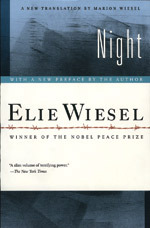
Night by Elie Wiesel
night

Novel Excerpts
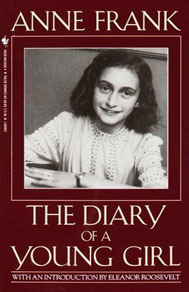
The Diary of a Young Girl by Anne Frank
anne frank
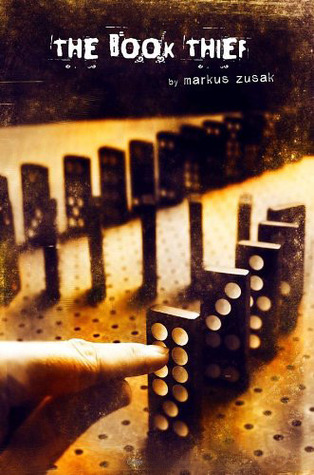
The Book Thief by Marcus Zusak
book thief
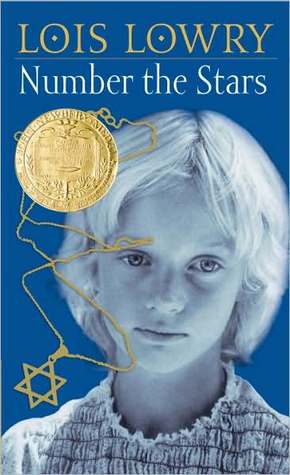
Number the Stars by Lois Lowry
number the stars

Graphic Novel
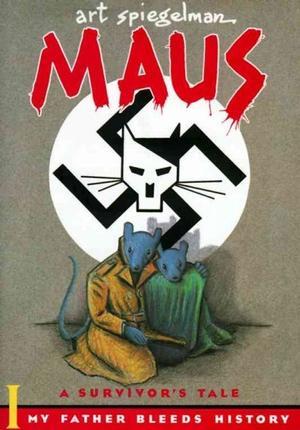
Maus I: A Survivor’s Tale by Art Spiegelman
maus

Picture Books
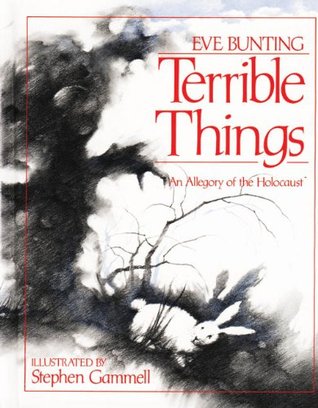
Terrible Things by Eve Bunting
terrible things
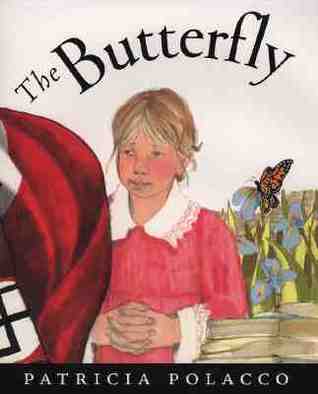
The Butterfly by Patricia Polacco
butterfly
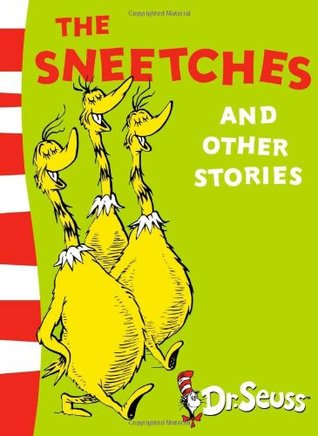
The Sneetches by Dr. Seuss
sneetches

Pledge of Allegiance”

Songs
“Empty Chairs at Empty Tables” from Les Misérables
“Hide and Seek” by Imogen Heap

Speeches
Winston Churchill’s First Speech as Prime Minister on May 13, 1940
President Roosevelt’s Speech to Congress on December 8, 1941
Adolf Hitler’s Speech Declaring War Against the United States on December 11, 1941
Pope John Paul II’s Speech at Israel’s Holocaust Museum March 23, 2000

Poems
“The Creed of a Holocaust Survivor” by Alexander Kimel
“The Action in the Ghetto of Rohatyn, March 1942” by Alexander Kimel

Charts
Lawrence Kohlberg’s Stages of Moral Development

Online Resources
Timeline from 1918-2000
Viktor Frankl: Why Believe in Others TED Talk
“‪Oprah and Elie Weisel at Auschwitz” (1:20- 6:05)
“Man that saved hundreds of children from the Holocaust surprised by them decades later”

Articles
“Ghettos Under Nazis” by Susan D. Glazer
“Baking Saved this Man during the Holocaust, and Is Still His Livelihood” by John M. Glionna
“3 Famous Moral Dilemmas That Will Really Make You Think” by Lenna Son
“German Woman, 91, is Charged with 260,000 Counts of Accessory to murder as Prosecutors Accuse Her of Being a Nazi SS Radio Operator Who Served in Auschwitz”

Guiding Questions

  • Are there tenets of morality that are universal?
  • Can a person’s sense of morality be altered by their situation or surroundings?
  • Did the conditions of the holocaust change people’s morals? How so?
  • Are there good and bad people?
  • What can we learn from the tragedy of the Holocaust?

Writing Prompts

  • Consider one of the famous moral dilemmas we have discussed. What do you believe is the right answer in this context? Why
  • What makes someone a good person? A bad person? Are there clear binaries between the two?
  • Choose a text (novel, story, video, song, etc.) from class that has helped to give you a better understanding of the holocaust. What did you learn from this text? Why is it important?
  • Choose a quote or passage from Night. What does this scene say about morality?
  • Is there any moral(s) that you find to be universal, as in followed and accepted by everyone? What is it and why is it so widely accepted? If not, explain why you think there is no universal set of morals.

A special thanks to Kellie-Anne for this inspiring text set! We think this text set would be useful for many anchor texts! What do you think?

Kellee Signatureand RickiSig

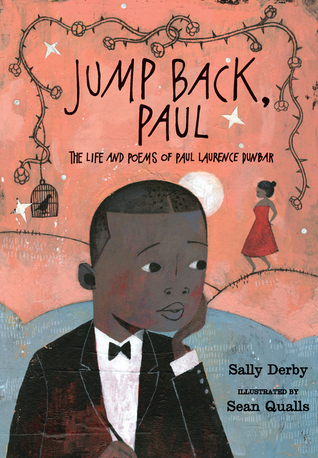
Jump Back, Paul: The Life and Poems of Paul Laurence Dunbar by Sally Derby

Share

NFPB2015

Nonfiction Picture Book Wednesday

Nonfiction Picture Book Wednesday is hosted by Kid Lit Frenzy and was started to help promote the reading of nonfiction texts. Most Wednesdays, we will be participating and will review a nonfiction text (though it may not always be a picture book).
Be sure to visit Kid Lit Frenzy and see what other nonfiction books are shared this week!

jump back paul

Jump Back, Paul: The Life and Poems of Paul Laurence Dunbar
Author: Sally Derby
Illustrator: Sean Qualls
Published September 22nd, 2015 by Candlewick Pres

Goodreads Summary: Discover the breadth and depth of Paul Laurence Dunbar’s poetry—and learn how it reflects his singular life as a late-nineteenth-century black man.

Did you know that Paul Laurence Dunbar originated such famous lines as “I know why the caged bird sings” and “We wear the mask that grins and lies”? From his childhood in poverty and his early promise as a poet to his immense fame and his untimely death, Dunbar’s story is one of triumph and tragedy. But his legacy remains in his much-beloved poetry—told in both Standard English and in dialect—which continues to delight and inspire readers today. More than two dozen of Dunbar’s poems are woven throughout this volume, illuminating the phases of his life and serving as examples of dialect, imagery, and tone. Narrating in a voice full of admiration and respect, Sally Derby introduces Paul Laurence Dunbar’s life and poetry to readers young and old, aided by Sean Qualls’s striking black-and-white illustrations.

My Review: I came into this book not knowing much about Paul Laurence Dunbar aside from knowing that the line “I know why the caged bird sings” was written by him which inspired Maya Angelou’s autobiography’s title; however, I didn’t know much else about his life or his poetry. Derby’s book does a fantastic job remedying that. Not only are you exposed to more than 20 of Dunbar’s poems, you are exposed to them in very specific ways as Derby tells Dunbar’s life story. Each poem’s inclusion is purposeful and perfectly timed. When finished, I wanted to read more of Dunbar’s poems and actually hear some of them being performed (his dialect poems are screaming to be read aloud). Qualls also does a brilliant job, as always, illustrating the tone of the text in beautiful black-and-white drawings.

Teachers’ Tools for Navigation: This book not only can be used to share information about Paul Laurence Dunbar’s life and his poetry, but it also includes fascinating information about what it was like to live after the Emancipation Proclamation then after Plessy v. Ferguson.

First, in an English classroom, this text truly puts Dunbar’s poems in a perspective which will allow more depth when analyzing. The way Derby set up the narrative of Dunbar’s life around his poems helps the reader understand the underlying meaning of his poetry even better than they would with a cold read.

Also, cross-curricularly while studying Dunbar’s poems, during history, a tie-in to this tumultuous time period would be easy and effective.  The time period that Dunbar lived in is not often discussed as it is a time after slavery but before segregation that many students may not know about.

Discussion Questions: Who do you think had the biggest influence on Dunbar becoming a poet?; Do you think Dunbar’s father’s absence affected how he was as a husband to Alice?; How do you think Frederick Douglass influence Dunbar?; How was the voice that told the story chosen by Derby? Do you think the way she structured and told the story was helpful in understanding Dunbar’s life and poetry?

We Flagged: “You never heard of the poet Paul Laurence Dunbar? Child, where’ve you been? I got to have a word with you. Why, back in the day, you’d have whole families sitting around listening while one of them performed “When Malindy Sings” or “Little Brown Baby” or “A Negro Love Song” (which folks most always call “Jump Back, Honey”).”

Read This If You Loved: Paul Laurence Dunbar’s poetry, I Know Why the Caged Bird Sings by Maya Angelou, Henry Aaron’s Dream by Matt Tavares, The Underground Abductor by Nathan Hale

Recommended For: 

classroomlibrarybuttonsmall readaloudbuttonsmall closereadinganalysisbuttonsmall

Signature

**Thank you to Candlewick for providing a copy for review!!**

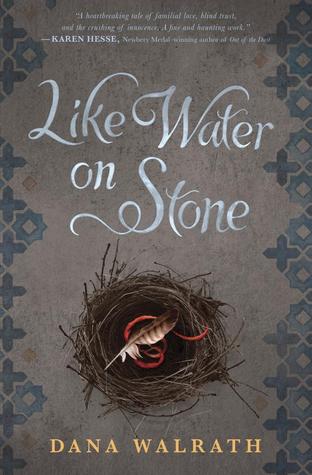
Like Water on Stone by Dana Walrath

Share

like water on stone

Like Water on Stone
Author: Dana Walrath
Published: November 11th, 2014 by Delacorte Press

Summary: Blending magical realism and lyrical free verse, this is an intense survival story of three siblings caught up in the horrific events of the Armenian genocide of 1915.

It is 1914, and the Ottoman Empire is crumbling into violence.

Beyond Anatolia, in the Armenian Highlands, Shahen Donabedian dreams of going to New York. Sosi, his twin sister, never wants to leave her home, especially now that she is in love. At first, only Papa, who counts Turks and Kurds among his closest friends, stands in Shahen’s way. But when the Ottoman pashas set their plans to eliminate all Armenians in motion, neither twin has a choice.

After a horrifying attack leaves them orphaned, Shahen and Sosi flee into the mountains, carrying their little sister, Mariam. Shahen keeps their parents’ fate a secret from his sisters. But the children are not alone. An eagle named Ardziv watches over them as they run at night and hide each day, making their way across mountain ridges and rivers red with blood.

Review: This is a beautiful book in verse that is set in the Ottoman Empire during the 1910s. It blends genres of magical realism and historical fiction. The point of view alternates with each poem, so I came to understand the differing perspectives of the family depicted in the text. The horrific genocide against Armenians is not common in literature, and this text sheds light on a time period that should be depicted more often. The strength of the children in this book will be inspirational to readers.

Teacher’s Tools for Navigation: I would recommend using this book as a literature circle text. Each group could be assigned a text that depicts a different genocide. This would provide rich opportunities to discuss parallels and differences across texts. Then, teachers might consider having students examine both historical and modern genocide. This might involve critical conversations about how we might work to promote social justice. They might even critique conceptions of social justice, such as slacktivism.

Discussion Questions: What does this story teach us about humanity?; How might a feminist read this text? What issues of gender emerge? Is this acceptable due to the historical setting of the text?

We Flagged:

“Hate makes jagged spikes of light,

and blame can crack the sky.

As pierced with wounds

from sharp white teeth,

the Ottoman air had ruptured.

Massacres would come again

as the drum-capped rulers

spread their hate” (p. 17-18).

Read This If You Loved: Tree Girl by Ben Mikaelsen; Audacity by Melanie Crowder; Requiem: Poems of the Terezin Ghetto by Paul B. Janeczko; Between Shades of Gray by Ruta Sepetys; Night by Elie Wiesel; A Long Way Gone by Ishmael Beah

Recommended For:

closereadinganalysisbuttonsmall litcirclesbuttonsmall classroomlibrarybuttonsmall

RickiSig

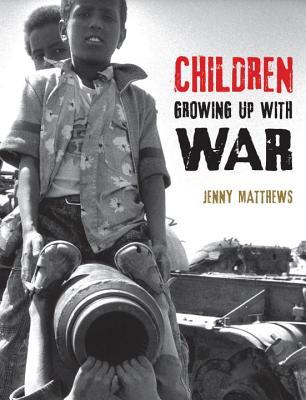
Children Growing Up with War by Jenny Matthews

Share

NFPB2015

Nonfiction Picture Book Wednesday

Nonfiction Picture Book Wednesday is hosted by Kid Lit Frenzy and was started to help promote the reading of nonfiction texts. Most Wednesdays, we will be participating and will review a nonfiction text (though it may not always be a picture book).
Be sure to visit Kid Lit Frenzy and see what other nonfiction books are shared this week!

children growing

Children Growing Up with War
Author and Photographer: Jenny Matthews
Published October 14th, 2014 by Candlewick Press

Goodreads Summary: Through personal narrative and candid photographs, a photojournalist chronicles young lives upended by violence and strife.

The right to adequate nutrition and medical care.
The right to free education.
The right to a name and nationality.
The right to affection, love, and understanding.

In conflict zones around the world, children are denied these and other basic rights. Follow photographer Jenny Matthews into refugee camps, overcrowded cities, damaged villages, clinics, and support centers where children and their families live, work, play, learn, heal, and try to survive the devastating impact of war. This moving book depicts the resilience and resourcefulness of young people who, though heavily impacted by the ravages of war, search for a better future for themselves, their families, and their cultures.

Kellee’s Review:  This was a very tough book to read. I thought I’d be able to sit and read it all in one sitting, but I couldn’t. As a mother and a teacher, I love children, and it truly saddened me to see the situations that these children are in.

Fortunately, as an American, very few wars touch our lives. Unfortunately, our news doesn’t focus on many of the tumultuous conflicts that are active throughout the world, so we have become detached from reality. Our students are even more detached. That is why this book is important. It puts it all into perspective and really makes me feel and think. We rarely look at the humans that are being affected by the wars, we always focus on getting the bad guy. This book puts faces to the people, specifically the children, being affected every day.  I found it very interesting how the author set up the book. You can tell she is a photojournalist because it is set up to give information in the most impactful way.

Ricki’s Review: When I was teaching high school, one of my main goals was to provide my students with a more global perspective. I wish I had had this incredible text available at the time because it evoked powerful emotions in me. I know it would do the same for my students. The balance of photography and words is very well done, and I will admit that I took many breaks because these images and words hit me to my core. This is an important book that belongs in classrooms. It is a good length that teachers will easily be able to use it as a pairing with other texts about war and genocide. It is important to learn about our past, but it is just as important to understand the wars that persist today—which is foundational to this book. I wish I could meet this author to thank her for writing a text that moved me so deeply.

Teachers’ Tools for Navigation: This book presents many different discussion opportunities (e.g., the affects of war on children throughout the world, different active wars,Rights of the Child, importance of journalism). It would be fascinating to read with students and hear their perspective on the very tough topics and perspectives shared in the book.

Also, the book sets up nicely for a jigsaw discussion. The author set up the book to look at the different ways lives are affected: home & displacement, family, health, work, and school & play. Within each of these sections, she also looks at different places in the world such as Tunisia, Jordan, Afghanistan, Uganda, Rwanda, Gaza, and Kurdistan. She also includes different Rights of the Child throughout the book. The teacher could jigsaw either with the topic, the places, or the Rights and have students dig deeper.

Another way to look at this book is from a journalistic/photography point of view. I [Kellee] teach journalism, and I already plan on using Photos Framed as part of my photography unit, and I think this book will add an even deeper look into the importance of photography/journalism and with a topic (children’s lives) that my students can connect with.

Discussion Questions: How does Jenny Matthews’s photos, books, and stories help children who are growing up with war?; Why would Jenny Matthews choose to go into such dangerous situations?; If you had to choose one single photo to sum up Children Growing Up with War, which of these would you choose? (p. 42); Which of the UN’s Rights of the Child are affected when war is involved?; In what different way does war affect the children growing up in the conflict area?

We Flagged: “How would you feel if you lost your home and had to flee from your own country? Imagine losing some or all of your family, either as a direct result of fighting or indirectly through illness or disease. You might have to work to support your family or fight and kill other people just to survive. And how can you go to school if it’s being used as an army command outpost and all the books have been destroyed?

This is the reality for too many children and their families in the world. Today, children are still growing up with war—the consequences of which they’ll live with for the rest of their lives” (p. 3).

Read This If You Loved: Photos Framed: A Fresh Look at the World’s Most Memorable Photographs by Ruth Thomson
This would be an excellent nonfiction companion to: Never Fall Down by Patricia McCormick, Endangered by Eliot Schrefer, Caminar by Skila Brown, The Other Side of the Wall by Simon Schwartz, The Milk of Birds by Sylvia Whitman, or Son of a Gun by Anne de Graaf.

Recommended For: 

readaloudbuttonsmall closereadinganalysisbuttonsmall

Signatureand RickiSig

Review and Author Interview!: Cold War on Maplewood Street by Gayle Rosengren

Share

cold war maplewood

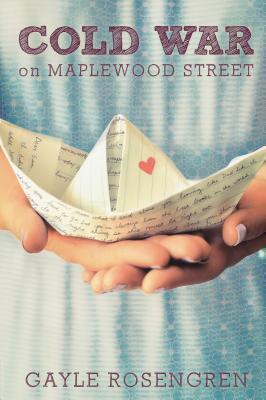
Cold War on Maplewood Street
Author: Gayle Rosengren
Published August 4, 2015 (Today!) by Putnam

Goodreads Summary: Cold War anxieties play out in a sensitively told story set during the Cuban missile crisis in the 1960s, perfect for fans of Gary Schmidt and Kristin Levine.

Joanna can’t get over how her brother broke his promise to never leave like their dad did. Sam is thousands of miles away on a navy ship, and no matter how often he sends letters, Joanna refuses to write back. When she makes a promise, she keeps it.

But then President Kennedy comes on TV with frightening news about Soviet missiles in Cuba—and that’s where Sam’s heading. Suddenly Joanna’s worries about being home alone, building up the courage to talk to a cute boy, and not being allowed to go to the first boy-girl party in her grade don’t seem so important. Maybe sometimes there are good reasons to break a promise.

The tense timeline of the Cuban missile crisis unfolds alongside a powerful, and ultimately hopeful, story about what it means to grow up in a world full of uncertainty.

Ricki’s Review: Cold War on Maplewood Street highlights a time period that isn’t common in the genre of historical fiction. I was intrigued from the very beginning because I have read few books focused on the Cuban missile crisis. The author excellently balances narrative and history in this engaging, thought-provoking text. Joanna is a strong girl who is ashamed of the way she treated her brother when he left for war. She makes a realistic mistake and tries to work through her emotions regarding her treatment of her brother and also the frightening events of war. There are many concepts for teachers to draw upon in this text—family, friendship, war, and fear, to name a few—and teachers will find this text offers rich opportunities for classroom discussion.

Kellee’s Review: What I think Ms. Rosengren does so well in this book is tell a real story with a piece of history as the backdrop. This is a Cold War/Cuban Missile Crisis story, but that isn’t what the book is all about. This book is about Joanna, her family, and her best friend. Her characters are very real and show the real emotions that must have been running through so many peoples’ veins during this tense time.  Because of how well this book is crafted as a narrative within a historical time period, I believe it would be a great introduction to this time period for middle grade readers. Many will have never heard of the Cold War or Cuban Missile Crisis, so learning about it through Joanna’s story is perfect. 

Teachers’ Tools for Navigation: Teachers might consider using this text to ask students to examine their regrets. Students could begin by closely examine characters that have regrets. Who are they? Do their regrets impact others? Then, the students could consider world leaders or pop culture to consider regrets that famous people might have and how these regrets impacted their lives. Finally, the students might journal to make connections with the text by examining mistakes they have made or regrets they hold in their personal lives.

Another interesting aspect of this book is the theme of communication. Students could compare the lack of communication of some of the characters in the book (which led to a major issue) and the lack of communication which led to the Cuban Missile Crisis. How could communication have helped either of these situations?

Discussion Questions: How would you react if your sibling went to war? Is Joanna’s reaction realistic? Is it fair?; How does war impact the lives of those who stay home? How do the characters of this text react differently from each other? Do you think the war impacted the choices Pamela’s family members make?; What is Mrs. Strenge’s role in the novel? How does she enhance our reading of the story?

Author Interview!: 

Unleashing Readers: What interested you in the Cold War, specifically?

Gayle Rosengren: When I wrote the first draft of Cold War on Maplewood Street–twenty years ago(!)–itwas to share a singular experience from my childhood, the Cuban Missile Crisis. But for several reasons, the manuscript never made it to an editor and I had to set it aside.

Years later I decided to revisit it with a different objective in mind. Now, I wanted to tell a story in which the crisis was the backdrop for a story about how poor communication can destroy relationships. The Cold War itself was an example of a break-down in communication on such a major scale that it very nearly led to destruction on a global level. In my novel, poor communication is demonstrated by main character Joanna’s failure to write to her brother and apologize for the terrible things she said to him when he left for the Navy. It’s also shown in her avoidance of a new tenant in their building, an old woman Joanna finds frightening for several reasons; and it’s demonstrated in her best friend Pamela Waterman’s family, when Mrs. Waterman runs away instead of confronting her husband about how desperate she is to see Paris.

UR: What does your research process look like?

GR: My research began with plumbing my own very vivid memories of the week of the crisis. I was twelve, and I was scared, especially since–although they tried to conceal it–I could see that adults were scared too.

But the major source of the historical details in Cold War on Maplewood Street came from the Chicago Tribune’s archives and actual headlines, photos, and articles that appeared in what was then The Chicago Daily Tribune. Remember, I wrote the first draft of the manuscript over twenty years ago. Pre-computer. And given that newspapers and television newscasts were the primary news sources of the day, I felt it was a solid source for my facts. I have a fat file full of copied newspaper pages that provided everything from the news to the weather and the television schedule. (All 4 channels!)

Today we know more about what was going on during that infamous week (in particular the note that Kennedy sent to Khrushchev agreeing to remove our nuclear weapons from Turkey) but I wanted Joanna to know only what anyone else living in the U.S, and specifically Chicago, would have known at the time.

UR: Did you decide on your time period or your protagonist/narrative first?

GR: This was an instance where the time period was clearly the inspiration for the story, and the protagonist and voice followed. I originally wrote this manuscript in the third person, rewrote it in first person, and then went back to third as I struggled to discover the character and voice that would best serve the story.

UR: Did anyone in your life inspire your characters?

GR: I modeled Joanna’s and Sam’s relationship on my close relationship with my brother Dennis. He was in the Air Force at the time of the missile crisis and based relatively safely in Okinawa, Japan, but I imagined that he was in the Navy, on a ship off the east coast of the U.S., and likely to be swept into action as part of the Cuba quarantine and blockade. I imagined how terrified I would have been for him. And then, to up the stakes, I imagined that when he’d left, Joanna in her hurt and anger accused him of deserting them just like their father had years before. The guilt she would feel knowing she might never get to apologize would be overwhelming.

Joanna’s mother was modeled after my single mother who always worked hard and scrimped to take care of us. Pamela was every good friend I ever had with a normal (which at the time meant two-parent) family.

As for Joanna, she was a lot like me at 12–childish and thoughtless one moment, grown-up and sensitive the next, taking awkward steps toward adulthood and all the while longing for the protective cocoon of childhood that was forever left behind in that unforgettable week. Like Joanna, I too loved horses and dogs and hated being alone in the house at night.

We Flagged: “[S]taying positive and hopeful—even pretending to—was much better than giving in to fear.” (p. 142)

Read This If You Loved: Countdown by Deborah Wiles; Paper Cowboy by Kristin Levine; What the Moon Said by Gayle Rosengren; Purple Heart by Patricia McCormick; Spy Catchers of Maple Hill by Megan Frazer Blakemore

Recommended For: 
  litcirclesbuttonsmall classroomlibrarybuttonsmall

 RickiSigandSignature

**Thank you to Penguin for providing copies for review and Ms. Rosengren for the author interview!**

Never Fall Down by Patricia McCormick

Share

NFPB2015

Nonfiction Picture Book Wednesday

Nonfiction Picture Book Wednesday is hosted by Kid Lit Frenzy and was started to help promote the reading of nonfiction texts. Most Wednesdays, we will be participating and will review a nonfiction text (though it may not always be a picture book).
Be sure to visit Kid Lit Frenzy and see what other nonfiction books are shared this week!
**This book is technically historical fiction, but I felt it was pretty darn close to nonfiction**

never fall down

Never Fall Down
Author: Patricia McCormick
Published May 8th, 2012 by Balzer + Bray

Goodreads Summary: This National Book Award nominee from two-time finalist Patricia McCormick is the unforgettable story of Arn Chorn-Pond, who defied the odds to survive the Cambodian genocide of 1975-1979 and the labor camps of the Khmer Rouge.

Based on the true story of Cambodian advocate Arn Chorn-Pond, and authentically told from his point of view as a young boy, this is an achingly raw and powerful historical novel about a child of war who becomes a man of peace. It includes an author’s note and acknowledgments from Arn Chorn-Pond himself.

When soldiers arrive in his hometown, Arn is just a normal little boy. But after the soldiers march the entire population into the countryside, his life is changed forever.

Arn is separated from his family and assigned to a labor camp: working in the rice paddies under a blazing sun, he sees the other children dying before his eyes. One day, the soldiers ask if any of the kids can play an instrument. Arn’s never played a note in his life, but he volunteers.

This decision will save his life, but it will pull him into the very center of what we know today as the Killing Fields. And just as the country is about to be liberated, Arn is handed a gun and forced to become a soldier.

My Review: When I started Never Fall Down, I had no idea what I was getting myself into. I began it because Ricki recommended it to me, but I didn’t read the back or have any prior knowledge about the book. So, when I began, I had no idea how tough this book was going to be.

I also have to preface with my ignorance of the Cambodian Genocide. I blame my lack of world history education because this is a time of history that should be taught. It, along with the Holocaust and Armenian Genocide, was based in racism and the attempt to purify a country. Reading Arn’s story throws you right in the middle of the genocide, and Patricia McCormick doesn’t hold anything back. Every time you think nothing can get worse for Arn and the Cambodians, something does, but you also have such hope for Arn’s survival as you seen him overcome every obstacle he faces. Even though death actually stares him in the face throughout the book, this young boy somehow continues. He continues through starvation, excessive work, lack of sleep, and murder surrounding him.  Arn stated in interviews with McCormick that music saved his life, but I think it was more about his willingness to do whatever was needed to survive and especially anything to help those he cared for to survive.

Patricia McCormick tells our story in a broken English dialect that was influenced by “Arn’s own beautiful, improvised English” that McCormick heard in her head after interviewing him and traveling with him to Cambodia over a couple of years.  The extent that Ms. McCormick went to ensure that Arn’s story was a true representation of his trials and heroism is honorable.

Teachers’ Tools For Navigation: This would be a perfect cross-curricular text! It could be read in a world history class in full or in parts. Although it is McCormick’s writing, it is definitely Arn’s story, and Arn’s story is one that needs to be shared. This book could also be used in lit circles where each group has a different book about a piece of history or an individual who/that is not usually learned about (maybe with Between Shades of Gray by Ruta Sepetys, Sold, Caminar by Skila Brown, The Glass Collector by Anna Perera, Son of a Gun by Anne de Graaf, Inside Out & Back Again by Thanhha Lai, Guantanamo Boy by Anna Perera, A Long Walk to Water by Linda Sue Park, The Queen of Water by Laura Resau, or Now is the Time for Running by Michael Williams).

One of my amazing 8th grade students read this book recently, and she was as enthralled with it as I was. Immediately after finishing, she got online and started learning more about Arn and Cambodia. She came across an amazing video with both Patricia McCormick and Arn in it. It is 27 minutes long, but it is so worth watching:

Discussion Questions: What do you think ultimately helped Arn survive?; How did Sombo save Arn’s life at the orphan camp? When the war with the Vietnamese started? At the killing fields?; Do you think music is what saved Arn?; How were the Khmer Rouge able to make their prisoners do whatever they wanted them to?; Why did the Khmer Rouge kill all the educated Cambodians?; Why was Sombo so unsure about the Coca Cola?

We Flagged: “All the time now we hear girl screaming, girl running, girl crying. At night but also sometime in the daytime. All the tie, the Khmer Rouge they chase the girl, cut the hair. Sometime with scissor, sometime with knife. Chop short, to the chin, like boy. The girl, they cry and sometime they run. They run, it’s no good. The Khmer Rouge may shoot them, maybe take them to the bushes, do whatever they want. A lot of the girl afterward, they pull on their hair, pull like maybe they can stretch it, make it long, make it beautiful again.

My number two big sister, Maly, her hair like silk. Most proud thing about her, her hair. Shiny black, like blue, like a crow has. Every night she brush her hair, every morning. Sometime even she brush her hair not thinking, just dreaming maybe about the boy she love. One morning I wake up before everyone and see her making rice. Her neck, it’s bare now, her skin there is pale, never saw the sun, her long hair gone. Last night while I was asleep, the soldier, they cut her beauty. So now when she give me a bowl of rice soup, her eyes stay on the ground.” (p. 29-30)

Read This If You Loved: Titles listed above in Teachers’ Tools for Navigation

Recommended For: 

classroomlibrarybuttonsmall litcirclesbuttonsmall closereadinganalysisbuttonsmall

Signature