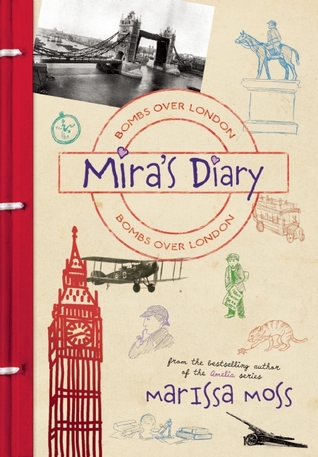
Holiday Blog Hop with Reviews!: Mira’s Diary series by Marissa Moss

Share

mira1 mira2 bombs

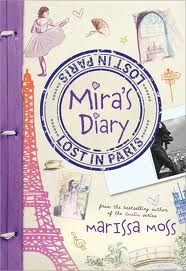
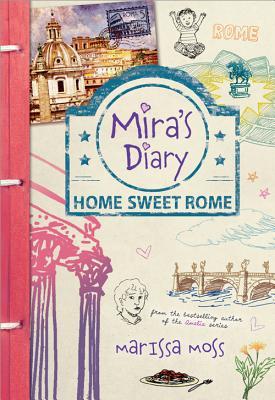
Mira’s Diary
Author: Marissa Moss
Lost in Paris Published September 4th, 2012 by Sourcebooks
Home Sweet Rome Published April 2nd, 2013 by Sourcebooks
Bombs Over London Published August 26th, 2014 by Creston Books

Lost in Paris Goodreads Summary: Mira is shocked when she receives a postcard from her missing mother from Paris. Her father decides it’s time for a trip to France to search for her. While visiting Notre Dame, Mira touches a gargoyle and is whirled into the past. There she meets the famous painter Degas and catches a brief, shocking glimpse of her mother. Mira begins to suspect that her mom didn’t run out on them but is a prisoner of the past. Can one family on an incredible worldwide adventure stop a plot in time?

Home Sweet Rome Goodreads Summary: As if traveling to a new country in search of her missing mother weren’t difficult enough, Mira has to do it dressed as a boy. In a different century.

A new postcard from her time-traveling mother points Mira to the 16th century Rome. But before she can rescue her mom, she must follow the clues left around the city to find Giordano Bruno, a famous thinker and mathematician, who discovered something so shocking that important Italian officials don’t want it revealed. All the while avoiding the Watchers–time-traveling police who want Mira back in her own time.

It’s another whirlwind adventure for Mira, and this time she is determined to bring her mother out of the past.

Bombs Over London Goodreads Summary: In the third book of the popular time-travel series, Mira navigates her way through WWI London, meeting famous suffragists and writers like Sir Arthur Conan Doyle. Instructed by her time-traveling mother to steal a German spy’s briefcase full of secrets and pass on the information to British Intelligence, Mira struggles with whether the changes she has been working for are the right thing to do after all. How much control do we really want of history? When is it best to leave our fate in destiny’s hands?

My Review of Lost in Paris:  I was enthralled by this smart, yet still accessible middle grade novel. Once I began it, I did not want to put it down.

The book was not only packed with an interesting concept (Mira and her mother travel through time to try to right wrongs that haven’t happened yet), but the book was filled with information about late 19th century Paris, French history, and art. Although some may feel like there was information overload, I found it all so fascinating. I am primarily sucked in when a book includes history that is less well known and that is exactly what this book did. Do you know about the Dreyfus Affair? After reading you will. I was also so excited to read a book so full of art history and art elements. Each page includes sketches from Mira and throughout the book you meet incredible artists such as Degas, Monet and Rodin. A cast of characters that is better than any fiction. This part of the book actually reminds me a lot of Woody Allen’s Midnight in Paris except Mira is trying to fix something instead of fixing herself.

My Review of Home Sweet Rome and Bombs Over LondonI don’t want to share too much about these titles as my thoughts are a bit spoilery, but I want to say that they did not disappoint. After reading book 1, all I wanted was to know what happened to Mira next, and I was not disappointed in her next adventures. I know book 4 is going to be in our future, and I cannot wait to read that one as well.

Teachers’ Tools for Navigation: One wish I had while reading books 1 & 2 was wanting to see the artists’ works as each artist was introduced. I was blessed enough to have an art-filled childhood so I could picture many of the pieces; however, many students do not have that background knowledge. This would be a great thing to do when reading the novel–share the artwork with students as you encounter them in the story. It would also be meaningful to find primary sources from the time period to share with students as you read Mira’s story.  This will make learning about the time period even more impactful.

Additionally, Marissa Moss’s writing is one that can definitely be used as an example of imagery and descriptive writing during writing workshop or other writing lessons. She actually sucks you in when Mira time travels, and deposits you in history that you can visualize.

Discussion Questions: Research one of the artists mentioned in book 1 or 2, write about his or her life, artwork, beliefs, etc.; Write about a time in your life when you had to trust your instincts, when you weren’t sure what to do but had to make a decision based on what felt right to you in the moment.; Was there a time when you had a feeling your parents were incorrect? What happened?; Which of the three places that Mira has visited would you have liked to go? Why?

We Flagged: “Dad was right – [Notre Dame is] truly a wonder of the world…

Usually when you go into a building, it’s lighter or darker, cooler or warmer than outdoors, but it’s still part of the same world. Stepping into Notre Dame was like changing time zones or countries, crossing some magical border. A hush filled the cavernous, echoey space of the cathedral, despite all of the voices of tourists murmuring and people praying, as if the sound was absorbed into the bones of the building itself.

Light streamed in from the windows like a physical presence, the kind of light you think you can reach out and touch…The air itself felt still and chilled by the stone all around. The walls were stretched thin between the pillars that soared into a vault overhead, like the skin of a massive beast taut between its ribs.” (Lost in Paris, p. 14-15)

“The day was gray and cold. I found myself in a busy street lined with crumbling brick buildings, shabby tenements with darkened windows. Dingy laundry hung in lines across the narrow alleyways. This may have been historical London, but there was nothing charming here. Just three-story houses of shuddering poverty with narrow doors and small pinched windows, as if sunlight cost money. The whole place was dark, muddy, broken-down, stinking of fish and rot and some indefinable yuck. The stench was so thick it had a physical presence, like a filthy hand pressed against my nose.”  (Bombs Over London, p. 26)

Read This If You Loved: Ruby Red (series) by Kerstin Gier, All Our Yesterdays by Cristin Terrill, When You Reach Me by Rebecca Stead, Blue Balliet novels

Recommended For: 

classroomlibrarybuttonsmall closereadinganalysisbuttonsmall

Signature

**Thank you to Gina and Samantha at JKSCommunications for having us as part of the blog hop!**
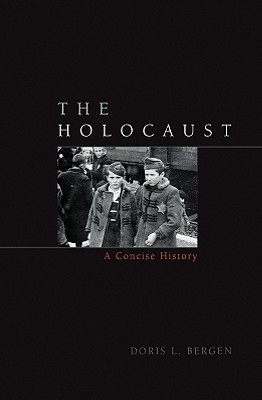
The Holocaust: A Concise History by Doris L. Bergen

Share

NF PB 2014

Nonfiction Picture Book Wednesday

Nonfiction Picture Book Wednesday is hosted by Kid Lit Frenzy and was started to help promote the reading of nonfiction texts. Most Wednesdays, we will be participating and will review a nonfiction text (though it may not always be a picture book).
Be sure to visit Kid Lit Frenzy and see what other nonfiction books are shared this week!

This week, I did not review a picture book. This text, however, is an incredibly informative nonfiction text that will help teachers and students who are learning about the Holocaust. I wanted to feature it on Nonfiction Picture Book Wednesday because this is a topic that is taught in classrooms with students of all ages.

Holocaust

The Holocaust: A Concise History
Author: Doris L. Bergen
Published September 16, 2009 by Rowman & Littlefield Publishers, Inc.

GoodReads Summary: In examining one of the defining events of the twentieth century, Doris Bergen situates the Holocaust in its historical, political, social, cultural, and military contexts. Unlike many other treatments of the Holocaust, this history traces not only the persecution of the Jews, but also other segments of society victimized by the Nazis: Gypsies, homosexuals, Poles, Soviet POWs, the disabled, and other groups deemed undesirable. With clear and eloquent prose, Bergen explores the two interconnected goals that drove the Nazi German program of conquest and genocide purification of the so-called Aryan race and expansion of its living space and discusses how these goals affected the course of World War II. Including illustrations and firsthand accounts from perpetrators, victims, and eyewitnesses, the book is immediate, human, and eminently readable.

My Review and Teachers’ Tools for Navigation: I read this in preparation for a Teaching the Holocaust Workshop I attended.

I felt a gamut of emotions while reading this important text: anger, disappointment, disgust, and utter sadness. Bergen excellently balances the timeline of the Holocaust in this concise book of fewer than 300 pages. While many books that are taught in schools focus on concentration camps during the Holocaust, Bergen provides a wealth of information of the events both pre-war and post-war. I appreciated the ways in which she dispelled many myths that exist in books, textbooks, and the media. I’ve read over a hundred books about this time period, and while I considered myself an expert, this book was humbling to me. I was unaware of many aspects of the Holocaust that Bergen described, and she situates herself as an expert (and rightfully so, as she has received accolades for her work regarding the time period). I believe all teachers of history and English/language arts (at a minimum) should read this text. Moreover, it would pair well with any fiction or narrative nonfiction about the time period because it gives context of the events. Teachers might elect to use short portions to inform students and contextualize events in history.

I Recommed This Book If You: Teach any book that is set during the Holocaust

Recommended For: 

closereadinganalysisbuttonsmall  classroomlibrarybuttonsmall


RickiSig

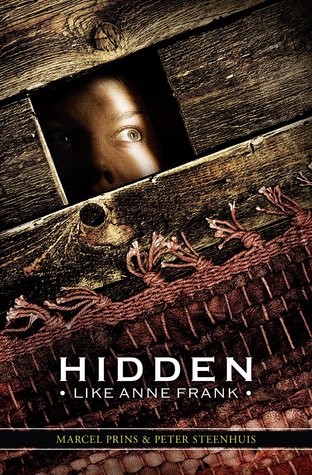
Hidden Like Anne Frank: 14 True Stories of Survival by Marcel Prins and Peter Henk Steenhuis

Share

hidden like anne frank

Hidden Like Anne Frank: 14 True Stories of Survival
Authors: Marcel Prins and Peter Henk Steenhuis
Published: March 25, 2014 by Arthur A. Levine Books

Summary: Fourteen unforgettable true stories of children hidden away during World War II

Jaap Sitters was only eight years old when his mother cut the yellow stars off his clothes and sent him, alone, on a fifteen-mile walk to hide with relatives. It was a terrifying night, one he would never forget. Before the end of the war, Jaap would hide in secret rooms and behind walls. He would suffer from hunger, sickness, and the looming threat of Nazi raids. But he would live.

This is just one of the incredible stories told in HIDDEN LIKE ANNE FRANK, a collection of eye-opening first-person accounts that share what it was like to go into hiding during World War II. Some children were only three or four years old when they were hidden; some were teenagers. Some hid with neighbors or family, while many were with complete strangers. But all know the pain of losing their homes, their families, even their own names. They describe the secret network of brave people who kept them safe. And they share the coincidences and close escapes that made all the difference.

Review: This collection showed me the misconceptions I had about those who hid during the Holocaust. These fourteen brave, young people showed me the diversity of experiences that existed among the hidden. For example, I didn’t know that it was common that they were beaten. Many people agreed to hide Jews because they were paid money by the Resistance. They didn’t always do it because they were being morally good people, so they did not have favorable feelings toward the people they hid. Also, I wasn’t aware that many of those who hid during the Holocaust moved from house to house and were frequently uprooted. These are just some of the many lessons I learned from this text, and I think readers will truly appreciate the insight it provides.

Teacher’s Tools for Navigation: I don’t know many school systems that don’t teach a book that is set during the Holocaust. If teachers are unable to use this whole text, I would highly recommend they select a few stories to show students how different the experiences were.

Discussion Questions: How did the Holocaust impact those who hid? After the war was over, how did it affect them emotionally?; What dangers did the Jews face when they hid? Would you accept the danger and work with the Resistance?

We Flagged: “My feelings from back then are very distant. I can still see myself as a boy of six, seven, roaming around Amsterdam, ringing doorbells, getting into mischief. I can think about that boy, about his relationship with his father, with his mother, and with his grandfather. But I can’t feel the emotions I had back then—it doesn’t work. I just can’t reach them anymore. Maybe I’ve automatically kept the past at a distance because I had to hide away for years and deny my background. Or maybe it’s just that impossible to relive those feelings from the past, and so I have to make do with memories.” (Chapter: “Older than my Father”)

Please Note: This quotation is from an advanced reader copy. It may be different in the published text.

Read This If You Loved: The Diary of Anne Frank by Anne Frank; The Nazi Hunters by Neal Bascomb; Hidden: A Child’s Story of the Holocaust by Loïc Dauvillier; Night by Elie Wiesel 

Recommended For:

readaloudbuttonsmall litcirclesbuttonsmall classroomlibrarybuttonsmall

RickiSig

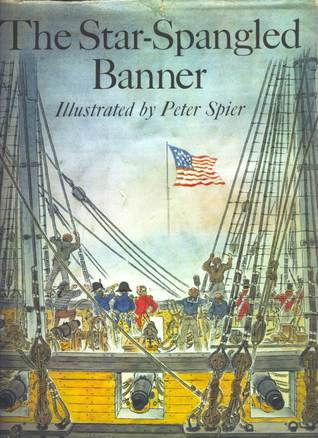
The Star-Spangled Banner illustrated by Peter Spier

Share

spangled

The Star-Spangled Banner
Author: Francis Scott Key
Illustrator: Peter Spier
Published September 19, 1973 by Doubleday Books for Young Readers

Goodreads Summary: Due to careful research, Spier’s artwork depicts “the dawn’s early light” and “the rocket’s red glare” with remarkable authenticity and detail in this celebratory book. Among the highlights: a brief history of the anthem, a reproduction of Francis Scott Key’s original manuscript, music for guitar and piano chords and many photographs.

My Review and Teachers’ Tools for Navigation: Peter Spier’s illustrations bring our national anthem to life. Spier carefully researched all lines of them poem as well as other facts about the War of 1812 when the anthem was written and used all of this knowledge to help show the meaning behind Key’s words. In the afterword, Spier shares much of the research to help tie it all together. 

In the past, as a school, we actually had students do something very similar. They each received a line from the first verse, and they had to research what it meant and then draw an illustration to share with their classmates the meaning. These were then put together as a book, so that the entire national anthem could be read with illustrations showing the meaning. Students loved the activity, and I really think it helped make history mean more to them than just dates.

Discussion Questions: What is Key trying to say in The Star-Spangled Banner?; What caused Key to write this poem?; Had you ever heard the second or third verse before? What did you think of it?; For some of the lines, Spier chose to draw a modern setting–why do you think he chose these specific places? 

We Flagged: 

Recommended For: 

readaloudbuttonsmall classroomlibrarybuttonsmall closereadinganalysisbuttonsmall

Happy Fourth of July!

Signature

The Impossible Knife of Memory by Laurie Halse Anderson

Share

impossible knife of memory

The Impossible Knife of Memory
Author: Laurie Halse Anderson
Published: January 7th, 2014 by Viking Juvenile

GoodReads Summary: For the past five years, Hayley Kincaid and her father, Andy, have been on the road, never staying long in one place as he struggles to escape the demons that have tortured him since his return from Iraq. Now they are back in the town where he grew up so Hayley can attend school. Perhaps, for the first time, Hayley can have a normal life, put aside her own painful memories, even have a relationship with Finn, the hot guy who obviously likes her but is hiding secrets of his own.

Will being back home help Andy’s PTSD, or will his terrible memories drag him to the edge of hell, and drugs push him over? The Impossible Knife of Memory is Laurie Halse Anderson at her finest: compelling, surprising, and impossible to put down.

Review: This book reminded me of something incredibly important to remember as a reader—even when I read a book’s summary and feel as if I have read dozens of books with a similar plot, an amazing author like Laurie Halse Anderson will make me feel as if I have never read a book quite like it before. Hayley’s father’s pain ripped right through me. I felt his anguish and wanted to sit beside him to try to comfort him. This book sheds light on an issue that is often kept in the dark. With the war veterans coming home, it is all the more important that we talk about PTSD and try to come together as a country to help these soldiers find peace. This book made me want to stand up and help our veterans, and I think teenagers will feel a similar sense of need for social justice.

Teacher’s Tools for Navigation: Teachers would be wise to have students research further about PTSD and learn more about other soldiers who struggle with this issue. It is also important for students to learn about what our country is doing for these men and women who served our nation.

Discussion Questions: Can Andy be helped? Does Hayley deal with her father’s condition in a beneficial way?; Why does Hayley hate Trish? Is she justified in her feelings?; How does Finn’s family situation add to the story?

We Flagged: “I needed to hear the world but didn’t want the world to know I was listening.”

“Leaning against my father, the sadness finally broke open inside me, hollowing out my heart and leaving me bleeding. My feet felt rooted in the dirt. There were more than two bodies buried here. Pieces of me that I didn’t even know were under the ground. Pieces of dad, too.”

Read This If You Loved: Personal Effects by E.M. Kokie, The Things a Brother Knows by Dana Reinhardt, If I Lie by Corrine Jackson, Purple Heart by Patricia McCormick, Sunrise over Fallujah by Walter Dean Myers

Recommended For:

 litcirclesbuttonsmall classroomlibrarybuttonsmall

RickiSig

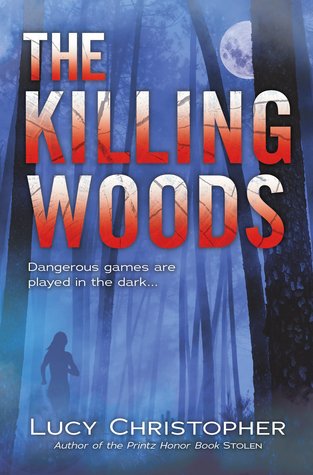
The Killing Woods by Lucy Christopher

Share

killing woods

The Killing Woods
Author: Lucy Christopher
Published: January 7th, 2014 by Chicken House (Scholastic)

GoodReads Summary: Fatal attraction, primal fear, survival in the forest: From the author of the Printz Honor Book Stolen, the highly anticipated thriller about deadly games played in the dark.

Ashlee Parker is dead, and Emily Shepherd’s dad is accused of the crime. A former soldier suffering from PTSD, he emerges from the woods carrying the girl’s broken body. “Gone,” he says, then retreats into silence.

What really happened that wild night? Emily knows in her bones that her father is innocent — isn’t he? Before he’s convicted, she’s got to find out the truth. Does Damon Hilary, Ashlee’s charismatic boyfriend, have the answers? Or is he only playing games with her — the kinds of games that can kill?

Review: I absolutely loved Stolen, so I was thrilled to read another book by Lucy Christopher. This book reads more like a thriller. I was sucked into the mystery and very curious about how the plot would unravel. I think this book is most notable for the intricate descriptive details about the setting. I felt the dark coldness of the killing woods. The setting was spooky, which set the tone for the dark story. There are richly realized themes of friendship, family, and loyalty.

Teacher’s Tools for Navigation: Emily’s father suffers from PTSD. I think Lucy Christopher is delivering a message about PTSD, and it would be important for readers to think more about this. Students might find value in learning more about PTSD before, during, and after reading this book.

Discussion Questions: Why is everyone quick to blame Emily’s father? Do you think he is guilty?; What is The Game? What are the different roles that everyone plays in The Game? What does it teach us about this group of kids? Is it realistic and does it reflect people in general?

We Flagged: “I guess whoever built and buried that IED out there in the desert will never know how far that blast traveled. But all things ripple out, cause shrapnel.”

Read This If You Loved: Stolen by Lucy Christopher, The Body of Christopher Creed by Carol Plum-Ucci, Fight Club by Chuck Palahniuk, What Happened to Cass McBride by Gail Giles, The Things a Brother Knows by Dana Reinhardt, The Lovely Bones by Alice Sebold

Recommended For:

classroomlibrarybuttonsmall

RickiSig

**Thank you to NetGalley and Scholastic Chicken House for providing the Advanced Reader Copy for review!**

Crow Call by Lois Lowry

Share

6135987

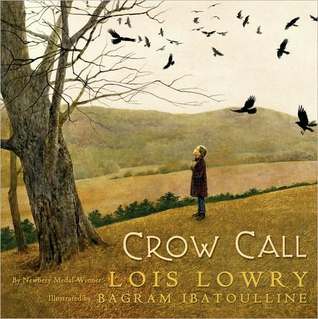
Crow Call
Author: Lois Lowry
Illustrator: Bagram Ibatoulline
Published October 1st, 2009 by Scholastic Press

Goodreads Summary: Two-time Newbery medalist Lois Lowry has crafted a beautiful picture book about the power of longing and the importance of reconnection between a girl and her father in post-WWII America.

This is the story of young Liz, her father, and their strained relationship. Dad has been away at WWII for longer than she can remember, and they begin their journey of reconnection through a hunting shirt, cherry pie, tender conversation, and the crow call. This allegorical story shows how, like the birds gathering above, the relationship between the girl and her father is graced with the chance to fly.

Review: This book felt very real, so I was not surprised to learn that it was based on a day in Lois Lowry’s life, when she went hunting with her father after he returned from World War II. As more of our children’s fathers and mothers return from Iraq and Afghanistan, I can’t think of a more appropriate book. Liz longs for a connection with her father, but she is uncomfortable saying the word, “Daddy.” The reader feels her sense of longing and reaches for the connection with her. This is a beautiful picture book that can be read to students of all ages.

Teacher’s Tools for Navigation: Often, classics and YAL grapple with the emotional effects of soldiers in wars. The pulse of the war reaches family members, create a lasting aftermath of emotions like uncertainty, loneliness, and helplessness. I would love to see this book paired with a book about war (whether the other text takes place during the war or after the war). Teachers might have students pick out lines or actions that show the emotions that subside after a family member returns from war.

Discussion Questions: How is the crow call symbolic?; Why does Liz fear the hunting side of her father? Does he recognize this? How do you know?; What does the ending show about her relationship with her father?

We Flagged: “I practice his name to myself, whispering it under my breath. Daddy. Daddy” (p. 7).

Read This If You Loved: Purple Heart by Patricia McCormick, The Silver Path by Christine Harris, Owl Moon by Jane Yolen

Recommended For: 

readaloudbuttonsmall classroomlibrarybuttonsmall

RickiSig