Winger by Andrew Smith (Kellee’s Review)

Share

winger

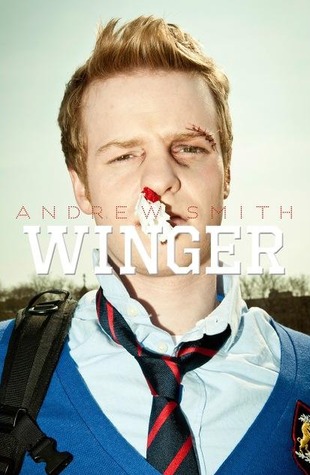
Winger
Author: Andrew Smith
Published May 14th, 2013 by Simon & Schuster

Goodreads Summary: Ryan Dean West is a fourteen-year-old junior at a boarding school for rich kids. He’s living in Opportunity Hall, the dorm for troublemakers, and rooming with the biggest bully on the rugby team. And he’s madly in love with his best friend Annie, who thinks of him as a little boy.

With the help of his sense of humor, rugby buddies, and his penchant for doodling comics, Ryan Dean manages to survive life’s complications and even find some happiness along the way. But when the unthinkable happens, he has to figure out how to hold on to what’s important, even when it feels like everything has fallen apart.

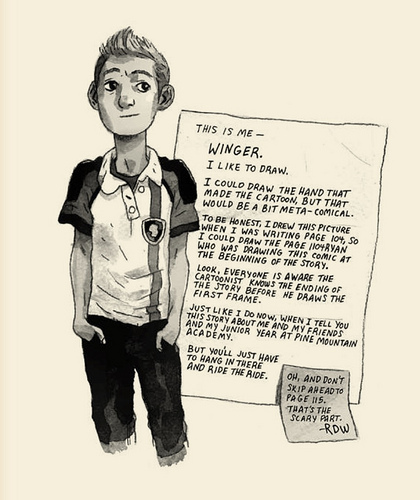
Filled with hand-drawn info-graphics and illustrations and told in a pitch-perfect voice, this realistic depiction of a teen’s experience strikes an exceptional balance of hilarious and heartbreaking.

My Review: Andrew Smith sure knows how to write a teenage boy’s voice. He gets inside of adolescent male’s mind, and puts it all on paper for us. (It probably has something to do with teaching high school.) Ryan Dean’s voice and his story are so authentic. This book will make you cringe, laugh out loud, shake your head, and cry.  I am also so impressed with all of the themes that are dealt with in this book without ever feeling over done. These themes include bullying, absent parents, peer pressure, identity, sexuality, prejudice, and friendship.  In addition, Smith builds his characters, setting, and plot seamlessly. You fall in love with all of the characters, main and secondary. Even the antagonist. The setting itself is a character. And finally the plot arc was perfectly done, and was so unpredictable all the way to the end.

Teachers’ Tools for Navigation: First and foremost, this book needs to read by teens. However that happens, it is the right thing. The easiest way would be to get it into libraries and classrooms. There are also parts of the book that could definitely be pulled out to be used in the classroom in may different ways. On that junps to mind right away is using Ryan Dean’s comics as mentor texts for writing comics to write narratives of everyday events. Ricki also has some great ideas for Winger in the classroom in her review.

Discussion Questions: What kind of social challenges does Ryan Dean have to overcome since he is 14 but a junior?; Were you able to predict the end of the book?; What are some traits about Ryan Dean that made him easy to connect to?; How does Opportunity Hall and the rest of the school become a character in Winger?

We Flagged: 

winger2(p. 21)

Read This If You Loved: Looking for Alaska by John Green, Openly Straight by Bill Konigsberg

Recommended For: 

classroomlibrarybuttonsmall closereadinganalysisbuttonsmall

Signature

brown girl dreaming by Jacqueline Woodson

Share

brown girl

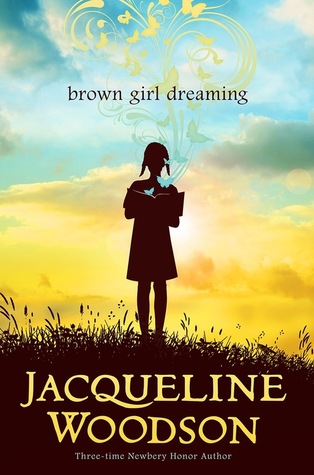
brown girl dreaming
Author: Jacqueline Woodson
Published: August 28, 2014 by Nancy Paulsen Books

Summary: Jacqueline Woodson, one of today’s finest writers, tells the moving story of her childhood in mesmerizing verse. 
 
Raised in South Carolina and New York, Woodson always felt halfway home in each place. In vivid poems, she shares what it was like to grow up as an African American in the 1960s and 1970s, living with the remnants of Jim Crow and her growing awareness of the Civil Rights movement. Touching and powerful, each poem is both accessible and emotionally charged, each line a glimpse into a child’s soul as she searches for her place in the world. Woodson’s eloquent poetry also reflects the joy of finding her voice through writing stories, despite the fact that she struggled with reading as a child. Her love of stories inspired her and stayed with her, creating the first sparks of the gifted writer she was to become.
 
Praise for Jacqueline Woodson:
Ms. Woodson writes with a sure understanding of the thoughts of young people, offering a poetic, eloquent narrative that is not simply a story . . . but a mature exploration of grown-up issues and self-discovery.”—The New York Times Book Review

Ricki’s Review: This beautifully poignant book in verse captured my heart. I was swept away in the beauty of Jacqueline Woodson’s lyrical memories. This is a book that will embrace readers, wrapping them in Woodson’s childhood in the stormy 1960s. I couldn’t help but read and reread portions of the text–for every few pages that I read, I needed to flip back and relive the beauty of the previous verses. I will cherish this book, reading it again and again, for every word feels intentional and every memory vivid. brown girl dreaming is timeless, and it is universal. Above all, this book will give readers insight–unfolding the experiences of a “brown” child living during the heat of the civil rights movement; a young girl growing up in a house that identifies as Jehovah’s Witnesses; and a young writer, struggling to find the perfect words to reveal the truth. It will touch the hearts of readers of all backgrounds and ages in its messages of family, friendship, strength, and hope.

Kellee’s Review: Wow. I often worry about reading a book that has a lot of hype around it because I fear that I will not love it as much as others do. I should not have been worried about this book. It is beautiful. As Ricki said, I found myself rereading portions of the text just because of how well the verse flowed. By the end of this book, you will wish that you were Woodson’s friend and that you you could write as well as she does. The stories she tells are so true and heartfelt that you live her life along with her through the pages. You experience with her the hardship of growing up in the 1960s and 70s during the Civil Rights movement; the challenge of religion and finding the truth in it; the loss, addition, and conflict of family and everything that comes with these changes; and trying to find an identity as a person, sister, daughter, student and a writer. It is only a truly powerful, well-written book that can make you feel all of these elements.

Teacher’s Tools for Navigation: Writers will feel inspired by Woodson’s verse, and it would make an excellent mentor text for students to learn more about themselves and their own childhoods. We would suggest pairing passages with “I Am From” poems for students to be inspired to write verse memoirs of their own experiences. The figurative language and detail of this text make it a phenomenal resource for teachers, and we would find great value in close readings of Woodson’s intentional use of words and phrasing.

Discussion Questions: How does Jacqueline Woodson come to find herself? What are the strongest influences on her identity?; In what ways does Woodson show the power of family? How do Woodson’s siblings impact her decisions?; What role does history play in this book?; In what ways does Woodson manipulate words, phrasing, and white space? How does this influence your reading?

We Flagged: 

“Then I let the stories live
inside my head, again and again
until the real world fades back
into cricket lullabies
and my own dreams.” (p. 99)

“Sometimes, she pulls a chair to the window, looks
down over the yard.

The promise of glittering sidewalks feels a long time
behind us now, no diamonds anywhere to be found.

But some days, just after snow falls,
the sun comes out, shines down on the promise
of that tree from back home joining us here.

Shines down over the bright white ground.

And on those days, so much light and warmth fills
the room
that it’s hard not to believe
in a  little bit

of everything.”  (p. 285)

Please Note: The above excerpts are from advanced reader copies. The wording and punctuation may be different in the published text. Our blog interface does not allow us to accurately capture the indentions, but we wanted you to see the beauty of Woodson’s language.

Read This If You Loved: Other books by Jacqueline Woodson, The Rock and the River by Kekla Magoon, Sold by Patricia McCormick, Make Lemonade by Virginia Euwer Wolff, Mare’s War by Tanita S. Davis, Gaither Sisters (series) by Rita Williams- Garcia, Sit-In: How Four Friends Stood Up by Sitting Down by Andrea Davis Pinkney, The Silence of our Friends by Mark Long

Recommended For:

closereadinganalysisbuttonsmall readaloudbuttonsmall litcirclesbuttonsmall classroomlibrarybuttonsmall

RickiSigand Signature

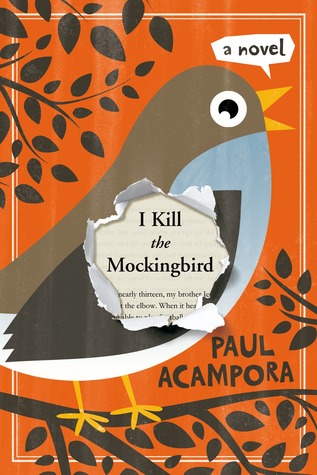
I Kill the Mockingbird by Paul Acampora

Share

I kill the

I Kill the Mockingbird
Author: Paul Acampora
Published: May 20, 2014 by Roaring Brook Press

Summary: When Lucy, Elena, and Michael receive their summer reading list, they are excited to see To Kill A Mockingbird included. But not everyone in their class shares the same enthusiasm. So they hatch a plot to get the entire town talking about the well-known Harper Lee classic. They plan controversial ways to get people to read the book, including re-shelving copies of the book in bookstores so that people think they are missing and starting a website committed to “destroying the mockingbird.” Their efforts are successful when all of the hullabaloo starts to direct more people to the book. But soon, their exploits start to spin out of control and they unwittingly start a mini revolution in the name of books.

Review: Who doesn’t love a book about kids making mischief? The very premise of this book is exciting and clever: three intelligent students are frustrated that their peers don’t do the summer reading, so they decide to concoct a censorship conspiracy. The idea is brilliant, and it shows young readers that they have the power to make big changes in the world. English teachers will love this book because it inspires students to want to be more well-read. (And there are a plethora of allusions that were simply fantastic.) I enjoyed this book because it reminded me how much I love reading.

Teacher’s Tools for Navigation: This would be a great literature circle text, or it would bridge nicely with To Kill a Mockingbird. If I taught this text in my class, I would have my students devise a conspiracy, employ it in our school, and write responses about its results. I imagine this would be great fun. Also, it would be neat for students to create a chart of all of the books that are referenced. This might inspire them to try to tackle some of the great texts that are mentioned.

Discussion Questions: How are each of the three students characterized? What do each of them add to the friendship? To the conspiracy?; What is Lucy’s relationship with her mom? How does this add to the story?; Do you think the three students broke any rules? Do you think what they did was wrong?

We Flagged:

“‘We’re going to be like terrorists,’ he says.

‘We are not terrorists,’ I tell him. ‘We’re more like literary saboteurs'” (Chapter 8).

Read This If You Loved: To Kill a Mockingbird by Harper Lee; Rachel Spinelli Punched Me in the Face by Paul Acampora; Fahrenheit 451 by Ray Bradbury

Recommended For:

  litcirclesbuttonsmall classroomlibrarybuttonsmall

RickiSig

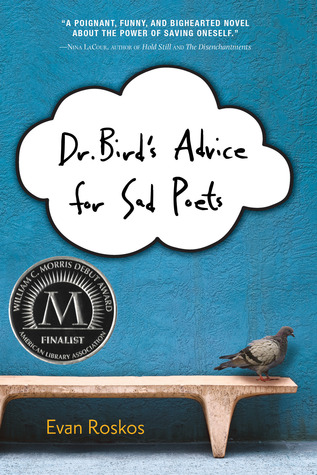
Dr. Bird’s Advice for Sad Poets by Evan Roskos

Share

dr bird's advice for sad poets

Dr. Bird’s Advice for Sad Poets
Author: Evan Roskos
Published: March 5, 2013 by Houghton Mifflin Harcourt

Summary: “I hate myself but I love Walt Whitman, the kook. Always positive. I need to be more positive, so I wake myself up every morning with a song of myself.” 

Sixteen-year-old James Whitman has been yawping (à la Whitman) at his abusive father ever since he kicked his beloved older sister, Jorie, out of the house. James’s painful struggle with anxiety and depression—along with his ongoing quest to understand what led to his self-destructive sister’s exile—make for a heart-rending read, but his wild, exuberant Whitmanization of the world and keen sense of humor keep this emotionally charged debut novel buoyant.

Ricki’s Review: Dr. Bird’s Advice for Sad Poets is such an important book. It captures depression and anxiety in a way that is both authentic and heart-wrenching at the same time. I wanted to reach into the pages of the book to give James a big hug. Similarly to It’s Kind of a Funny Story by Ned Vizzini, this book employs humor without detracting from the very realness of James’ struggles with loneliness and isolation. Teens (and adults) will find themselves in James because he is depicted in a sympathetic way that is very human. This novel is brilliant and should be in every classroom library.

Kellee’s Review: I concur with everything that Ricki said. Dr. Bird’s is a very special book. On a Top Ten Tuesday list, I wrote that I wished there were more books about kids with chemical imbalances, and Dr. Bird’s is the closest I’ve read yetEvan Roskos captures the feeling of a manic depressive state. The energy of the writing actually changes as James’s state of mind changes: anxious, manic, depressed. However, what makes it truly special is that even in the end, there is optimism. Although James is fighting his own chemical imbalance, he keeps doing just that—fighting.

Another thing I adored about this book is the idea of art and writing as therapy. James finds solace in photography and poetry, which is a positive lesson for teens because it shows the power of art, writing, and poetry.

Teacher’s Tools for Navigation: It would be interesting for teachers to do literature circles with texts that concern mental health. Students might read this book along with titles like: Forgive Me, Leonard Peacock by Matthew Quick, It’s Kind of a Funny Story by Ned Vizzini, The Perks of Being a Wallflower by Stephen Chbosky, Twisted by Laurie Halse Anderson, Everybody Sees the Ants by A.S. King, and 13 Reasons Why by Jay Asher. I imagine that reading these titles would foster incredibly rich discussions about depression, anxiety, and suicide. In my opinion, we must have these conversations with our students.

Also, Walt Whitman is a huge part of James’s life, and Whitman is mentioned throughout the book. The Whitman references (and James’s poetry emulating Whitman) would great to be examined in a classroom.

Discussion Questions: If James didn’t have abusive parents, do you think his life would be the same? Do you think depression is genetic in his family?; How does James show bravery?; What role does Walt Whitman play in James’ life?

We Flagged: “People in the world suffer from greater calamities than I do. I eat, I have clothes, I have a house. I read about people around the world who survive on less than a dollar a day. I read about how there are hundreds of millions of widows living in poverty. I see ads for kids who are born with ragged lips and jagged teeth. I don’t have anything like that. I just wake up with a deep hatred of myself. How selfish is that?” (p. 115)

“Later, as my father drives me to the pizzeria, his gassy, grumpy body reeking of judgment and anger and disappointment, I can’t help but wonder how little he knows about the depth of my sadness. The depth of my very being. Will he be upset to find me dead, or relieved?” (p. 214)

Read This If You Loved: (Many of these are listed above.) Forgive Me, Leonard Peacock by Matthew Quick, It’s Kind of a Funny Story by Ned Vizzini, The Perks of Being a Wallflower by Stephen Chbosky, Twisted by Laurie Halse Anderson, Everybody Sees the Ants by A.S. King, Reality Boy by A.S. King, Dear Life, You Suck by Scott Blagden, 13 Reasons Why by Jay Asher, Leaves of Grass by Walt Whitman

Recommended For:

 closereadinganalysisbuttonsmall litcirclesbuttonsmall classroomlibrarybuttonsmall

RickiSig andSignature

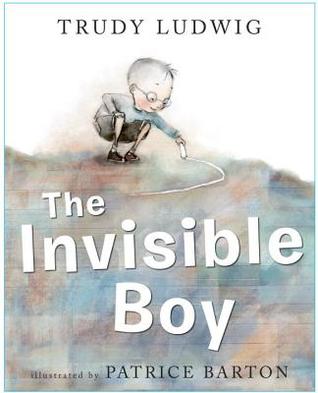
The Invisible Boy by Trudy Ludwig

Share

invisible

The Invisible Boy
Author: Trudy Ludwig
Illustrator: Patrice Barton
Published October 8th, 2013 by Alfred A. Knopf

Goodreads Summary: Meet Brian, the invisible boy. Nobody ever seems to notice him or think to include him in their group, game, or birthday party . . . until, that is, a new kid comes to class.

When Justin, the new boy, arrives, Brian is the first to make him feel welcome. And when Brian and Justin team up to work on a class project together, Brian finds a way to shine.

From esteemed author and speaker Trudy Ludwig and acclaimed illustrator Patrice Barton, this gentle story shows how small acts of kindness can help children feel included and allow them to flourish. Any parent, teacher, or counselor looking for material that sensitively addresses the needs of quieter children will find The Invisible Boy a valuable and important resource. 

Includes backmatter with discussion questions and resources for further reading. 

Review: Wow. This book affected me, so I know it would affect students. Although this is a book aimed at helping students think about how they affect others, there was one scene, early on, that shows Brian being ignored by everyone including his teacher which made me even sadder. It is so important for everyone, adults included, to think about how they treat or ignore others.

The other thing that I thought was brilliant was the way the illustrations were done. Brian comes to life actually right in front of our eyes. Such a smart way to visually show the moral of the story.

If you have not read this book yet, get it from your library or just go ahead and purchase it. You will not regret it.

Teachers’ Tools for Navigation: This book needs to be added to any kindness or empathy units out there right now. When I go back into the classroom, I will include it when I read Each Kindness, Because Amelia Smiled, and Stand Tall, Molly Lou Melon (check out my post on how I use Each Kindness in my middle school classroomInvisible Boy will fit perfectly.)

The author also includes recommended reading for adults and kids as well as wonderful Questions for Discussion in the back of the book.

Discussion Questions: (Found in the backmatter of the book) How many kids did it take in this story to help Brian begin to feel less invisible?; What specifically did Justin do to make Brian feel less invisible?; Are there kids in your class, grade, or school who you see being treated as if they are invisible? If yes, what could you do to make them feel more valued and appreciated?

We Flagged: 

Read This If You Loved: Each Kindness by Jacqueline Woodson, Stand Tall, Molly Lou Melon by Patty Lovell, Because Amelia Smiled by David Ezra Stein, Unicorn Thinks He’s Pretty Great by Bob Shea

Recommended For: 

readaloudbuttonsmall litcirclesbuttonsmall classroomlibrarybuttonsmall

Signature

The Merciless by Danielle Vega

Share

merciless

The Merciless
Author: Danielle Vega
Published: June 12th, 2014 by Razorbill (TODAY!)

Summary: Forgive us, Father, for we have sinned.

Brooklyn Stevens sits in a pool of her own blood, tied up and gagged. No one outside of these dank basement walls knows she’s here. No one can hear her scream.
 
Sofia Flores knows she shouldn’t have gotten involved. When she befriended Riley, Grace, and Alexis on her first day at school, she admired them, with their perfect hair and their good-girl ways. They said they wanted to save Brooklyn. They wanted to help her. Sofia didn’t realize they believed Brooklyn was possessed.
 
Now, Riley and the girls are performing an exorcism on Brooklyn—but their idea of an exorcism is closer to torture than salvation. All Sofia wants is to get out of this house. But there is no way out. Sofia can’t go against the other girls … unless she wants to be next…
 
In this chilling debut, Danielle Vega delivers blood-curdling suspense and terror on every page. By the shockingly twisted end, readers will be faced with the most haunting question of all: Is there evil in all of us?

Review: My skin crawls as I try to determine what I should write for this review. I started this book in my car. My son was sleeping in the car seat, and I didn’t want to wake him. Once he woke up, I didn’t want to leave the car. I read through all of his naps and kept reading after he went to bed. I couldn’t handle the suspense! The back of this book says, “For mature audiences only,” and I would be remiss if I didn’t mention that there is a lot of violence and a lot of blood. I am not an avid reader of the horror genre, but I greatly enjoyed getting sucked into this story. It isn’t just a simple horror novel, either. Readers will truly ponder evil and whether it exists within us all.

Teacher’s Tools for Navigation: Danielle Vega does an excellent job showing group think (or mob mentality). I would ask students to research this topic and consider why humans are naturally inclined to follow a group. They might consider times in history when group think was detrimental and dangerous. This is a psychological thriller, and students will likely enjoy investigating the power balance and actions between the girls in this book.

Discussion Questions: How does religion influence the girls’ decisions and actions? What role does religion play in the book?; Which characters are truly evil?; Do you agree with Sofia’s decisions at the end of the book? What might you do differently, and why?

We Flagged: “It’s a cat. A dead cat. Skin’s been peeled away from the cat’s body in strips. Flies buzz around its head and inside its mouth, crawling over its tongue and teeth. Red paint clings to the stiff grass beneath the cat’s body, and candles surround it, cemented to the ground in pools of black wax. It takes a minute for me to see that the paint is in the shape of a star, with a black candle at each point—like a ritual” (7).

Please note: The above quotes are from the Advanced Reader Copy. The quotes may change when the book is published.

Read This If You Loved: Anna Dressed in Blood by Kendare Blake, Anything by Stephen King

Recommended For:

classroomlibrarybuttonsmall

RickiSig

Review and Giveaway!: Like Bug Juice on a Burger and Like Carrot Juice on a Cupcake by Julie Sternberg

Share

bug juice

Like Bug Juice on a Burger (Eleanor #2)
Author: Julie Sternberg
Illsutrator: Matthew Cordell
Published April 2nd, 2013 by Amulet Books

Goodreads Summary: I hate camp. I just hate it. I wish I didn’t. But I do. Being here is worse than bug juice on a burger. Or homework on Thanksgiving. Or water seeping into my shoes. In this sequel to the critically acclaimed Like Pickle Juice on a Cookie, Eleanor is off to summer camp. At first she’s excited to carry on the family tradition at Camp Wallumwahpuck, but when she gets there she finds icky bugs, terrible food, and worst of all: swim class, where she just can’t seem to keep up with everyone else. But as the days go on, Eleanor realizes that even the most miserable situations can be full of special surprises and that growing up is full of belly flops. 

Review and Teachers’ Tools for Navigation: This book definitely brought back memories! I loved the idea of summer camp and many of the activities, but I hated the bugs and the food and the changing in front of other people. There are many times when I was away that I just wanted to go home; however, there were things that saved me- specifically, like Eleanor, the animals. I loved working in the barn with the horses and it is what saved me and then got me going back year after year. I remember walking into the barn and being able to be part of these horses’ lives and the scene where Eleanor meets Cornelius the goat brought me right back to that moment. 

This book would be a wonderful read aloud for right before summer because even if students are not going to summer camp, there is probably something new and scary that they will try this summer and this book will definitely cause discussion about how something new may be scary, but that doesn’t mean you won’t like it eventually. Julie Sternberg’s writing also lends itself to some amazing discussions about free verse poetry and, in this one, letter writing. Maybe use the letter writing part of the book to segue into writing a letter to next year’s class. 

Finally, I love the idea of the Wall of Feelings! The Wall of Feelings is where the campers put up how they feel about camp; however, Eleanor is given the job of writing about how she used to feel about camp and then how she feels about camp now. What a great way for students to express themselves! This would be a great formative assessment for looking at how students feel about reading or school or some other topic at the beginning of the year vs. the end. 

Discussion Questions: Think about a time in your life when you did something you were scared to do. How did you overcome your fear/nervousness? How did it turn out in the end?  

We Flagged: “The bus was bumping
down a gravel road
with bushes and trees and weeds all around. 
This isn’t beautiful
I thought. 
This is creepy
I missed sidewalks full of people
checking their phones
and walking their cute dogs. 
I missed paved roads, too, 
filled with taxis and bik riders.” (Chapter 5) 

Like Carrot Juice on a Cupcake_cover (1)

Like Carrot Juice on a Cupcake
Author: Julie Sternberg
Illustrator: Matthew Cordell
Published March 18th, 2014 by Amulet Books

Goodreads Summary: I did a mean thing.
A very mean thing.
I HATE that I did it.
But I did.
This is worse than
carrot juice on a cupcake
or a wasp on my pillow
or a dress that’s too tight at the neck.
In the third installment from the team who created Like Pickle Juice on a Cookie and Like Bug Juice on a Burger, Eleanor’s relationship with her best friend, Pearl, experiences its first growing pains. When a glamorous new student transfers to school, at first Eleanor’s excited about the possibility of a new friend. But when Pearl is assigned to be the new girl’s buddy, Eleanor fears she can’t compete. To make matters worse, Eleanor’s been chosen for the lead role in the springtime musical, which means she has to sing a solo in front of the entire school!
From overcoming stage fright to having a secret crush, young readers will relate to Eleanor as she navigates the bittersweet waters of growing up.

Review and Teachers’ Tools for Navigation: This book has multiple levels going on at the same time. There is the story of Eleanor and Pearl’s friendship and their first speed bump. Then there is Eleanor getting the lead in the play, and dealing with the fear of singing a solo. Eleanor dealing with her puppy having trouble getting house trained. And finally, the Eleanor and Nicholas story. But Sternberg balances it all because it is just all part of Eleanor’s life. Julie Sternberg is so great at writing in an elementary student’s voice. It is so authentic and well done!

What I love so much about all of the “Eleanor” books are that they are written in verse, and Eleanor is an amazing poet. I love that it is free verse and includes such beautiful language, but it never comes off as anything but authentic. Teachers could definitely take Eleanor’s writing and use it as a mentor text for students to write about their own experiences.

Discussion Questions: Have you ever hurt a friend’s feelings? What did you do to make it better?; How was Eleanor able to overcome her stage fright?; Why was Eleanor so scare and jealous of Ainsley?; Do you think Eleanor likes Nicholas?


Read These If You Loved: Like Pickle Juice on a Cookie by Julie Sternberg, Marty McGuire and Marty McGuire Digs Worms by Kate Messner, Where I Live by Eileen Spinelli, Go Out and Play! by KaBoom!, Lunch Lady and the Summer Camp Shakedown by Jarrett Kroscozka, Camp Babymouse by Jenni and Matt Holm, Bink and Gollie by Kate DiCamillo, Ramona books by Beverly Cleary

Curriculum Guide for All of the “Eleanor” Books Can be Found Here.

Both Books Recommended For: 

classroomlibrarybuttonsmall closereadinganalysisbuttonsmall readaloudbuttonsmall

GIVEAWAY

a Rafflecopter giveaway

Signature

**Thank you to Barbara at Blue Slip Media for providing copies for review**