It’s Monday! What Are You Reading? #IMWAYR 6/17/19

Share

IMWAYR 2015 logo

It’s Monday! What Are You Reading? From Picture Books to YA!

It’s Monday! What are you Reading? is a meme started by Sheila at Book Journeys and now hosted by Kathryn at The Book Date. It is a great way to recap what you read and/or reviewed the previous week and to plan out your reading and reviews for the upcoming week. It’s also a great chance to see what others are reading right now…you just might discover the next “must-read” book!

Kellee and Jen, of Teach Mentor Texts, decided to give It’s Monday! What Are You Reading? a kidlit focus. If you read and review books in children’s literature – picture books, chapter books, middle grade novels, young adult novels, anything in the world of kidlit – join us! We love this meme and think you will, too.

We encourage everyone who participates to support the blogging community by visiting at least three of the other book bloggers that link up and leave comments for them.

Bold_line

Tuesday: Kellee’s End of Year Student Survey Results, Students’ Favorite Books, and Top Checked Out Books 2018-19

Thursday: Guest Review: Feral Youth: A Novel in 10 Points of View from Shaun David Hutchinson and Nine Other Powerhouse Authors

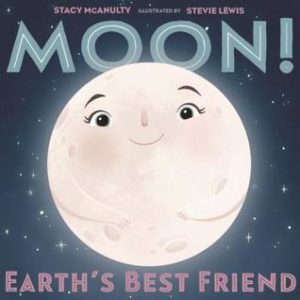
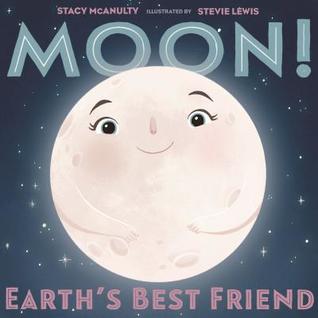
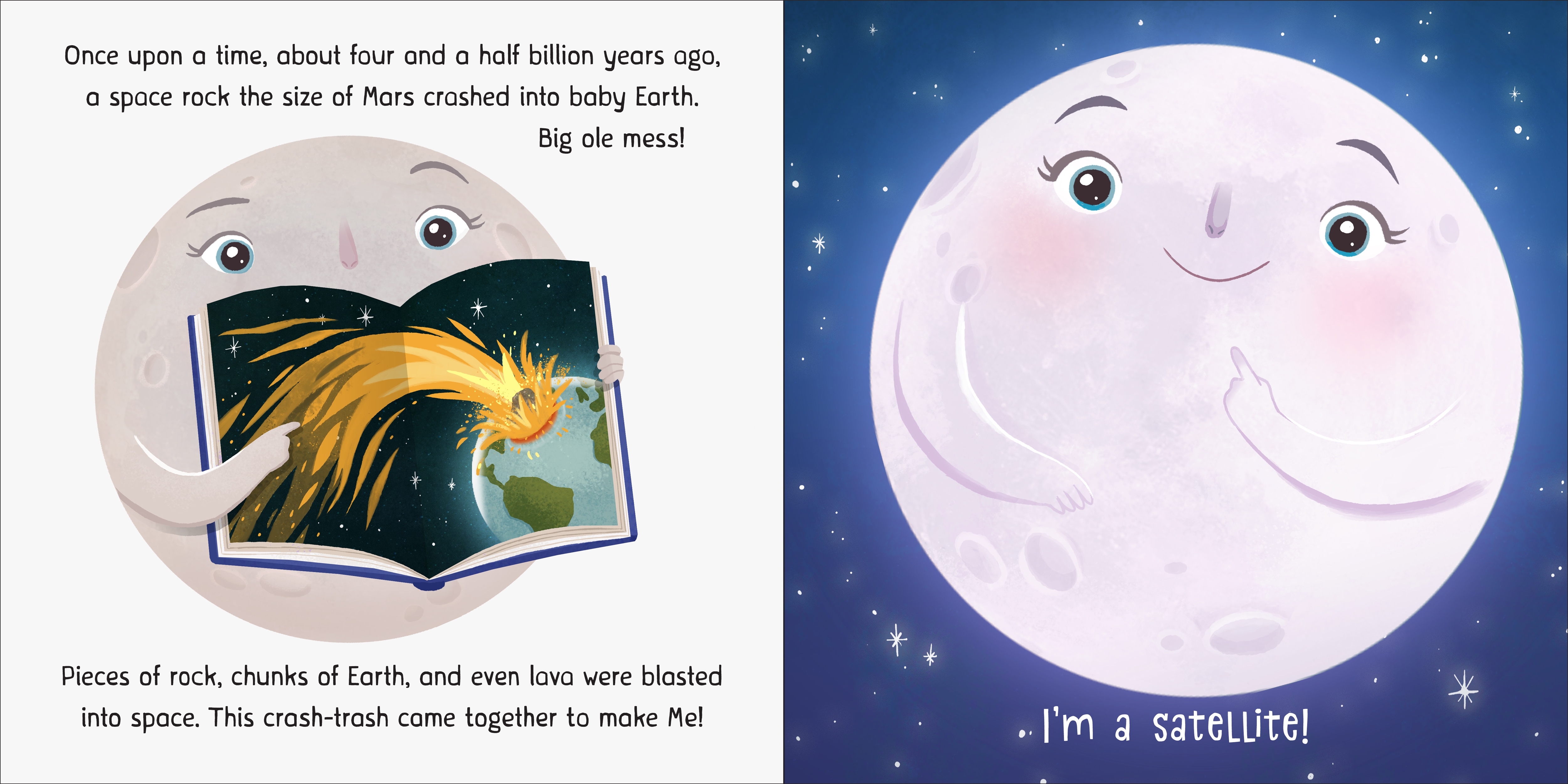
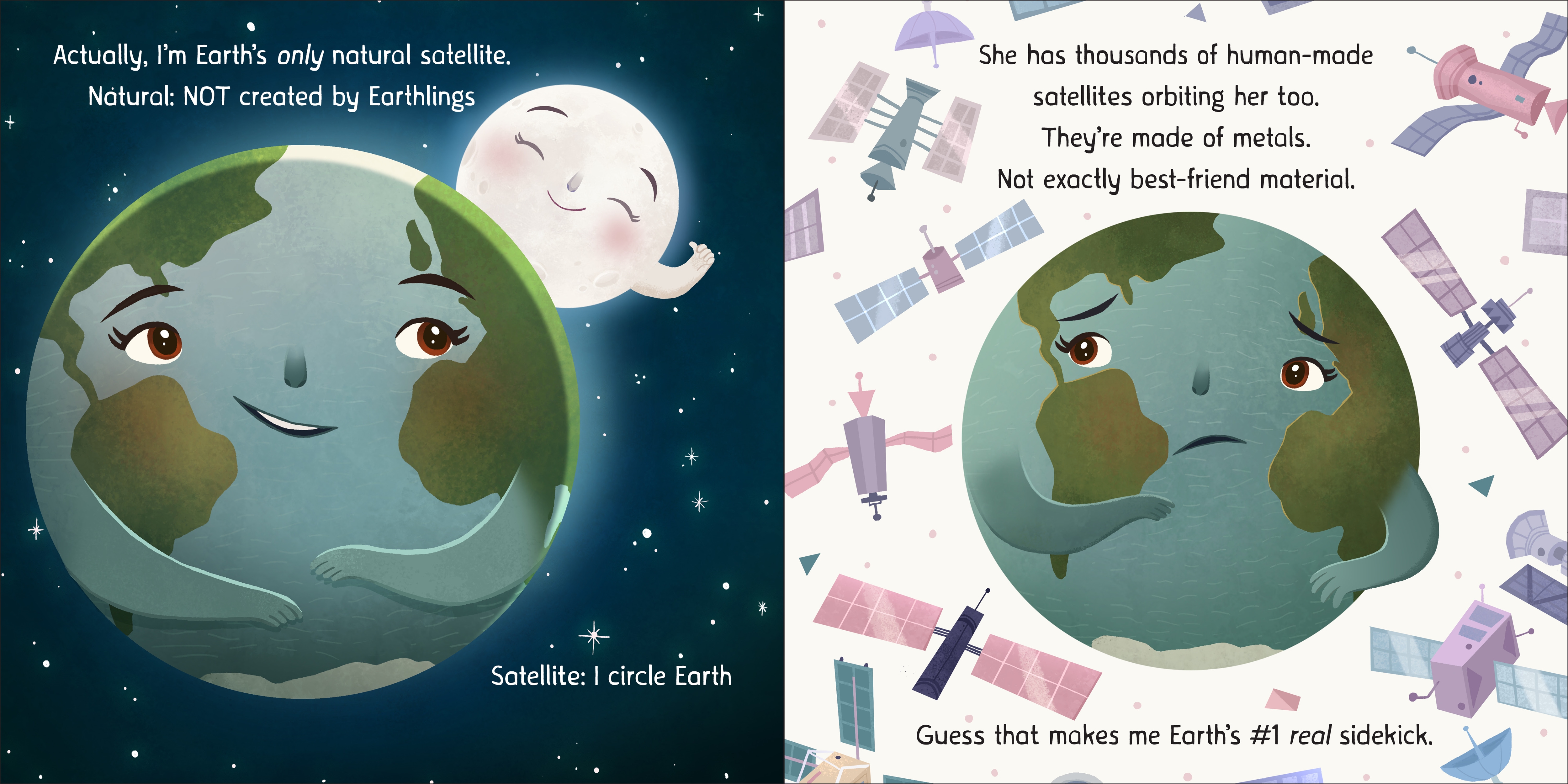
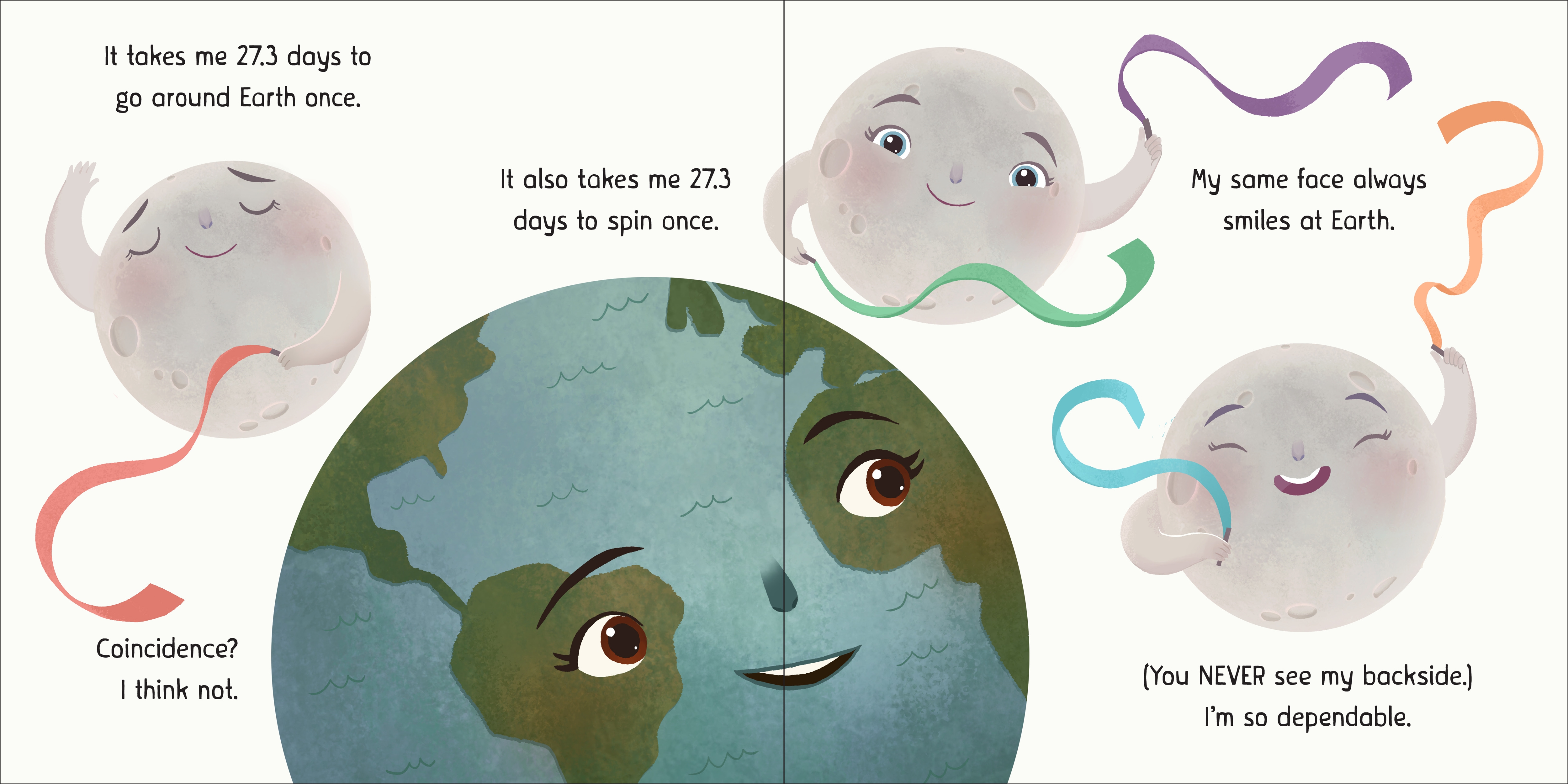
Friday: Blog Tour with Review: Moon! Earth’s Best Friend by Stacy McAnulty

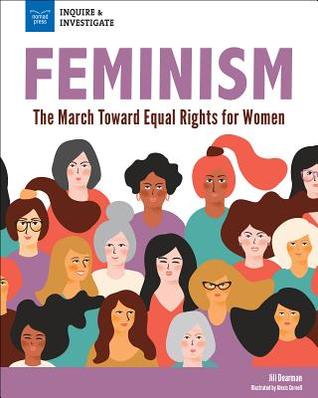
Sunday: Author Guest Post: “Feminism: Finding Our Way Forward” by Jill Dearman, Author of Feminism: The March Towards Equal Rights for Women

**Click on any picture/link to view the post**

Bold_line

Kellee

Although Trent still loves picture books, he is really loving early reader chapter books and series.

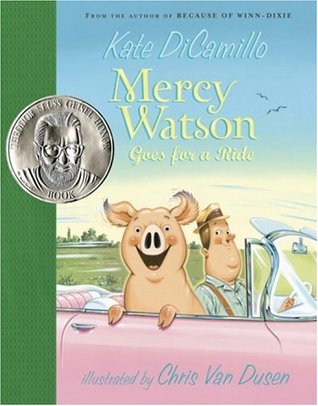
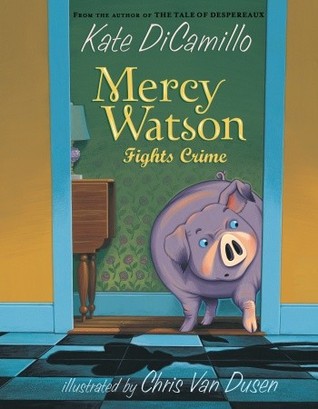
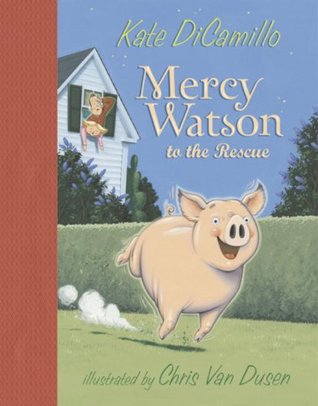
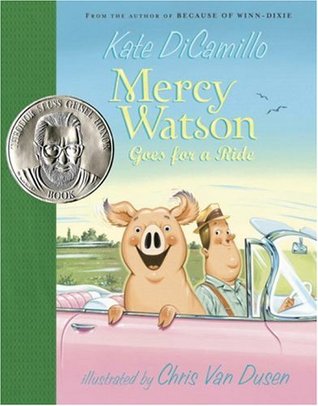
  • We finished the 2nd and 3rd Mercy Watson books, and he just loves that pig. After I read him the 3rd one, he went and retold it to his dad–it was a heart-filling moment.
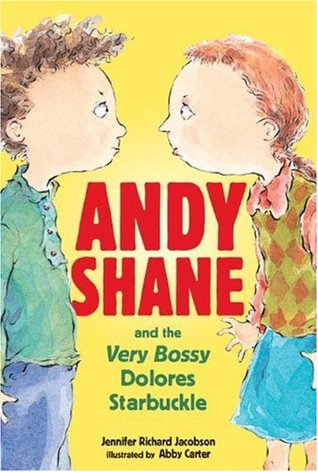
  • I was looking for an audiobook to listen to one night, and saw that the Andy Shane series is available on Overdrive with my library, so we listened to the first one. He listened to it all in one sitting and seemed to really like it; he has asked to read the 2nd one.

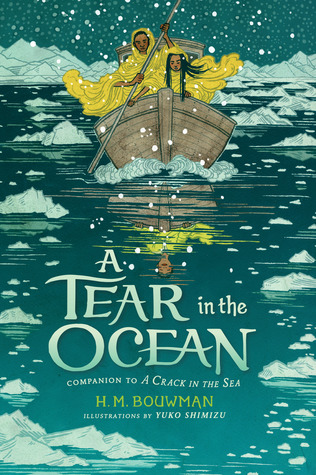
  • A Tear in the Ocean by H.M. Bouwman: Two stories combine to answer the question a young boy is searching for while also helping his friend figure out where she belongs.
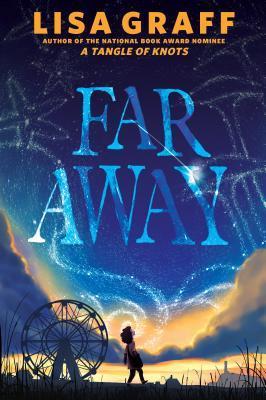
  • Far Away by Lisa Graff: CJ lives with her Aunt Nic who is a famous medium. CJ travels the nation with her and truly believes in what her Aunt does helps her audience.

Ricki

Hi! I’ve returned from maternity leave! My almost 8-week-old son is currently laying next to a toy. I might have 30 seconds to write this post, and I might have 30 minutes. It will be a surprise! Ha ha ha.

Over maternity leave, I read several dozen books from the library. My older sons and I checked out a total of 65 books.

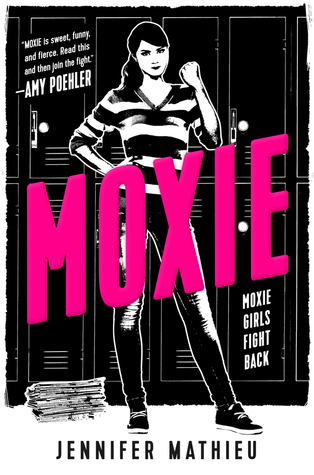
I finished Moxie by Jennifer Mathieu. It was excellent and worth the hype. It was very similar in many ways to Nowhere Girls (which I read while pregnant). Both had strong messages, and I loved reading each of them!

Bold_line

Kellee

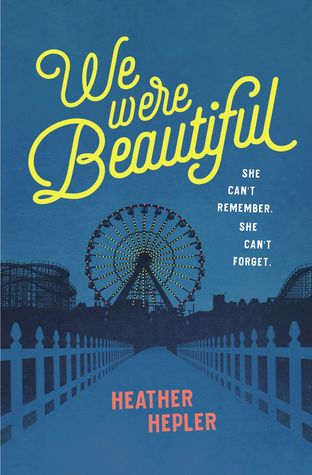
  • Currently Reading: We Were Beautiful by Heather Hepler
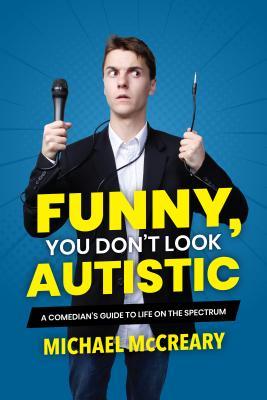
  • Currently Listening: Funny, You Don’t Look Autistic by Michael McCreary
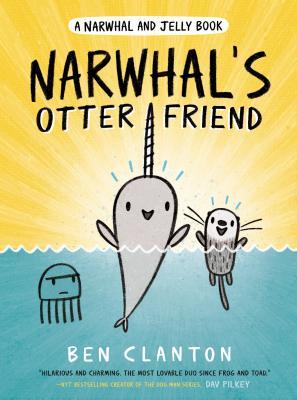
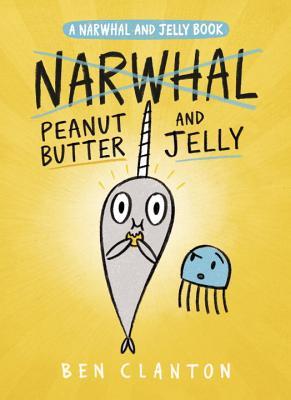
  • Reading next with Trent: Narwhal’s Otter Friend by Ben Clanton
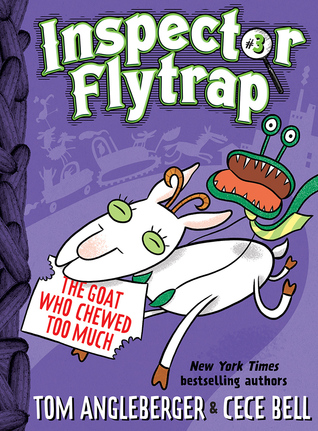
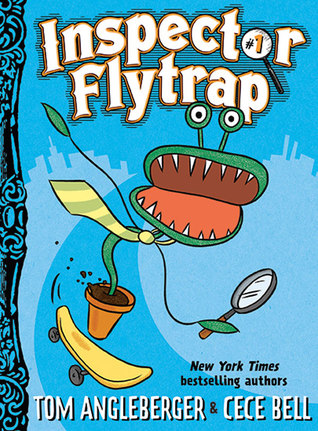
  • Currently Listening to with Trent: Inspector Flytrap and the Goal Who Chewed Too Much by Tom Angleberger

Ricki

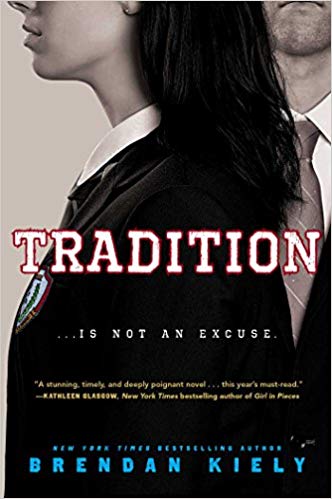
I am listening to Tradition by Brendan Kiely. I am trying to read more books related to #metoo, and this one fit into that topic. So far, it is very good.

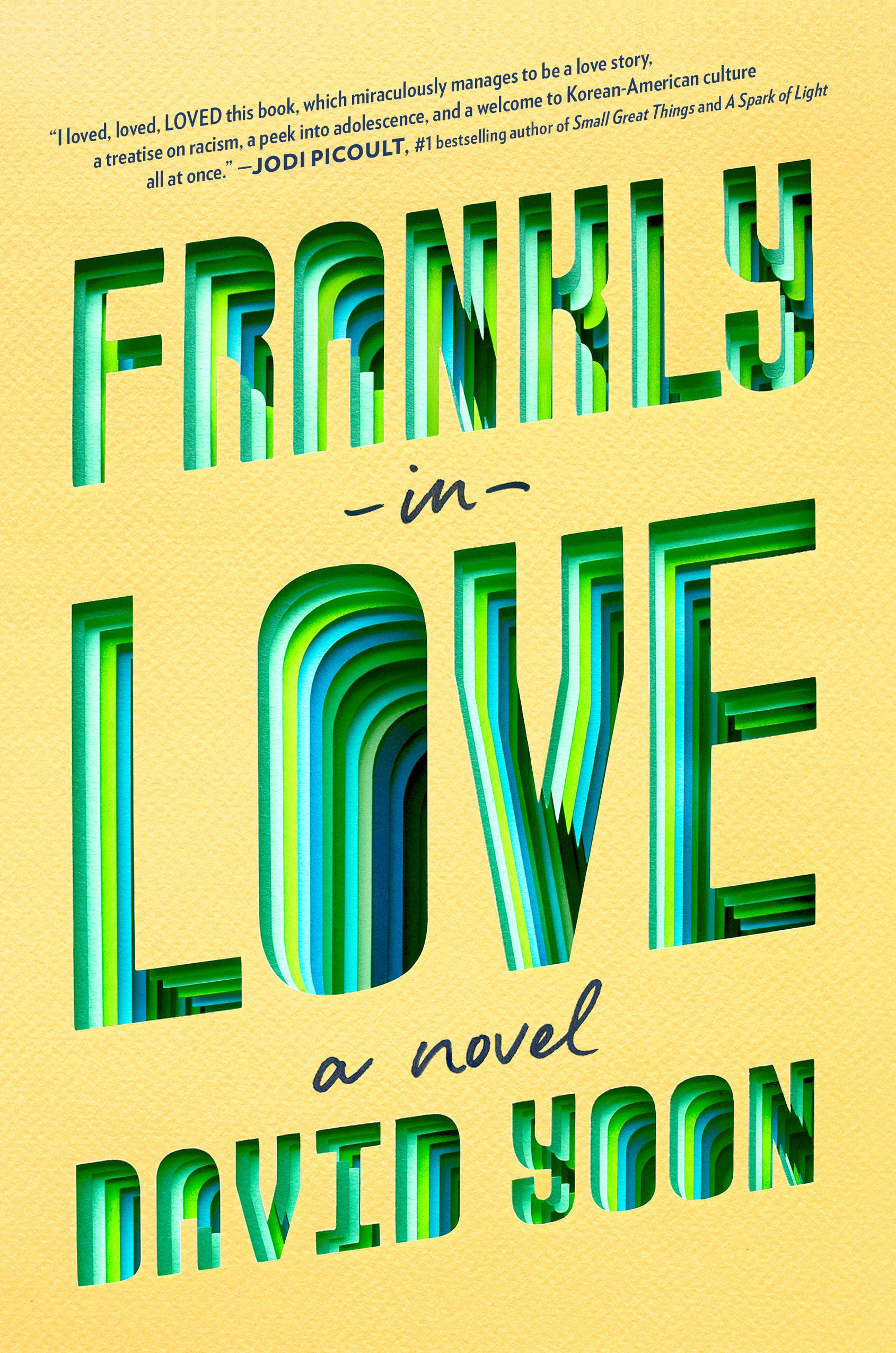
I am reading (and really enjoying) Frankly in Love by David Yoon. Because I am trying to get enough sleep, I only read a chapter per night, and it is a real treat. The narrator’s voice is very powerful. This book is going to end up on my favorites list this year.

Bold_line

Tuesday: Student Voices!: Recommended Titles by Jacque, Jacob, Cooper, Maria, Lisa, Jordan, Alexandra, Molly, Olivia, Damon, Nathan, Duda, Elsa

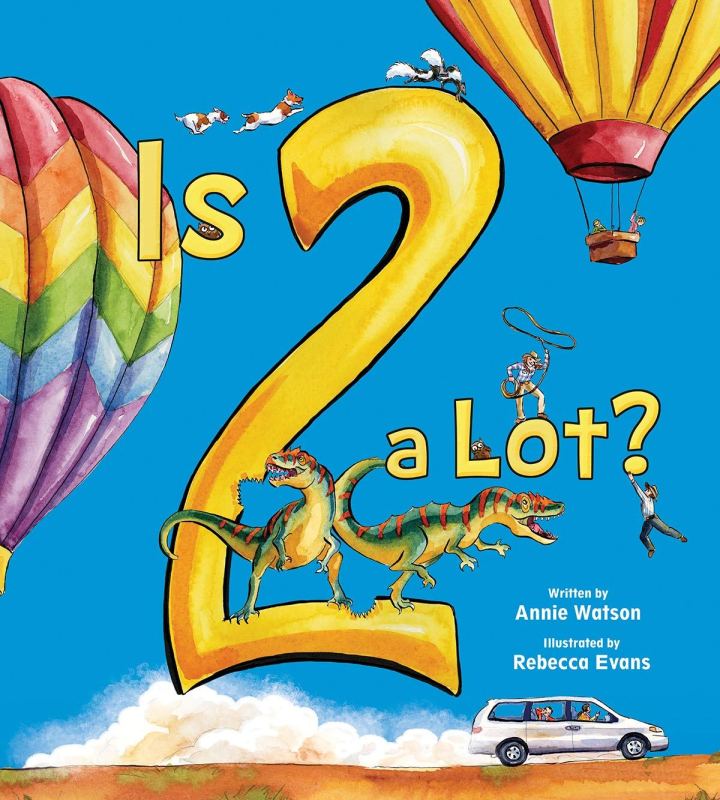
Friday: Is 2 a Lot? by Annie Watson

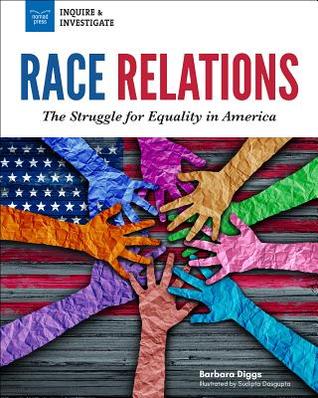
Sunday: Author Guest Post: “Understanding Race in a Country Divided” by Barbara Diggs, Author of Race Relations: The Struggle for Equality in America

Bold_line

Link up below and go check out what everyone else is reading. Please support other bloggers by viewing and commenting on at least 3 other blogs. If you tweet about your Monday post, tag the tweet with #IMWAYR!

 Signature andRickiSig

Author Guest Post: “Feminism: Finding Our Way Forward” by Jill Dearman, Author of Feminism: The March Towards Equal Rights for Women

Share

“Feminism: Finding Our Way Forward”

Do you think men and women are equal? Do you think women around the world enjoy the same rights and privileges as men? What about jobs—can men and women work the same jobs and get paid the same for their work?

Many people believe that all people should be treated equally, whether they’re male, female, or gender nonconforming. But the way our world works doesn’t always reflect this ideal of equality. Women are often treated differently from men. Even today, in the United States, women statistically earn less than men working the same jobs. You’ll find few women heading up large corporations. And women are more likely than men to live in poverty.

This can be a distressing topic to discuss in classrooms! It’s hard for people of any age to learn that their gender might be unfairly counted against them, but perhaps especially for girls in their teens, who are dealing with a slew of messages from society about how women look and behave. However, it’s an important subject to talk about. Only by recognizing what has improved and what needs work can future generations develop their own goals and plans and continue the process of addressing the inequality they see in the world.

An important part of this process is learning the history of feminism. Who was Alice Paul and what did she do for women? How did Queen Elizabeth maintain her power? Why was abolitionism such an important step for feminism in the United States? What is intersectionality and what does it have to do with all women?

As kids start to dive into questions like these and confront their own expectations, biases, and assumptions, they can begin to develop goals and pinpoint ways they can be part of making gender equality a reality for all people. It’s an exciting step!

In Feminism: The March Toward Equal Rights for Women, young people get the chance to explore the history of those who came before and imagine the future of those who continue the work. There is still a long way to go before women are considered equal around the world, but the journey is a necessary one that can be fully experienced by those paying attention.

Here are some ideas to get kids to pay attention to the ongoing work for equal rights for all genders!

Share Your Concerns

How is the world different for those of different genders? What are some of the different experiences, reactions, and ideas that different genders have?

In this activity, you’ll share your thoughts in a safe space with people who aren’t the same gender as you.

Ask a group of classmates or friends to finish this sentence according to their own gender: “Having my gender identity means . . . .” Have everyone write down one or two responses on individual sticky notes.

On a whiteboard, put the sticky notes in groups according to gender identity. In those groups, put the sticky notes in positive and negative sections. For example, someone might write, “Being female means getting to wear skirts when it’s hot” or “Being male means not letting yourself cry.”

As a group, discuss the idea on each sticky note. Consider these questions.

  • Can a male, female, or nonconforming gender do this?
  • Why or why not?
  • Do people of all genders want to do this?
  • What’s preventing them?
  • Has this action been open to other genders in the past?
  • What changed?
  • How can society support the needs and wishes of all genders?

To investigate more, do some research and find examples of times in history when a woman protested a law that kept her from doing something she wanted to do. For example, women have been barred from working certain jobs and holding office. How did they work to change those laws? How long did it take? How did changing one law change the world for many people?

Write Your Politician

Suffragists did a lot of letter writing as they fought for women’s right to vote. This was before email and social media, so their letters were written on paper and sent by mail. In today’s world, politicians receive lots of communications about different causes that people feel strongly about. Add your voice!

Choose a topic that you feel strongly about. This can be climate change, immigration, war, human rights, or something else.

At the library or on the internet, do some research on your chosen topic. Who are the major players with the power to effect change? What are their views on the topic? Do different people have different viewpoints?

Choose one person who agrees with your views and another person who has the opposite views. Write each of them a letter explaining your position. What can you write to get them to agree with you? How can you show your support for the person whose values align with yours?

Read the letters aloud to a friend or classmate. See if they can guess who it is you’re writing to. Do they think your letters were convincing?

To investigate more, imagine how one or more of the historical figures from this chapter would collaborate with a feminist, real or imagined, of today? What would feminists past and present focus on together in the twenty-first century?

More classroom resources can be found at https://nomadpress.net/wordpress/wp-content/uploads/2018/07/Feminism-Classroom-Guide.pdf.
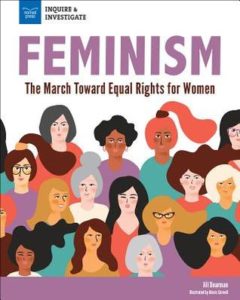
Feminism: The March Toward Equal Rights for Women
Author: Jill Dearman
Illustrator: Alexis Cornell
Published April 9th, 2019 by Nomad Press

About the Book: Why are women treated differently from men? What is feminism? Why is this movement such an important part of the history of civic rights, and why is it still important today?

Feminism: The March Toward Equal Rights for Women invites middle and high schoolers to examine the different stages of the feminist movement, from early mentions in history through the suffragettes’ fight for the vote to today’s evidence of feminism in the struggle for equal pay and equal rights around the world. As social justice movements gain more traction in the national news media, many students are evolving into activist citizens who are working towards bettering humanity and the planet. This history of feminism gives them an introduction to the ways and means of community activism, which can be applied to a multitude of causes.

Feminism: The March Toward Equal Rights for Women introduces readers to some of the icons of feminism, including Simone De Bouvier, Gloria Steinem, and Angela Davis. By examining and deconstructing writings and other arts, readers gain a deeper understanding of the struggles women and men have undertaken for the deceptively simple goal of equal rights for all. Issues such as domestic violence and the fight for equal pay for equal work, plus a discussion of the more recent #metoo movement, all encourage kids to pay close attention to the world in which we live and insist on justice at every turn.

Feminism includes critical-thinking activities and research exercises to encourage readers to dive deep into the topic and consider viewpoints from many different identities. Fun facts, links to online primary sources and other supplemental material, and essential questions take readers on an exploration of the past, present, and future of feminism.

Feminism is part of a set of four books called Inquire & Investigate Social Issues of the Twenty-First Century, which explores the social challenges that have faced our world in the past and that continue to drive us to do better in the future. Other titles in this set are Gender IdentityImmigration Nation, and Race Relations.

Nomad Press books integrate content with participation, encouraging readers to engage in student-directed learning as opposed to teacher-guided instruction. This student-centered approach provides readers with the tools they need to become inquiry-based learners. Common Core State Standards and National Curriculum Standards for Social Studies all place project-based learning as key building blocks in education. Combining content with inquiry-based projects stimulates learning and makes it active and alive. As informational texts, our books provide key ideas and details from which readers can make their own inferences. Nomad’s unique approach simultaneously grounds kids in factual knowledge while allowing them the space to be curious, creative, and critical thinkers.
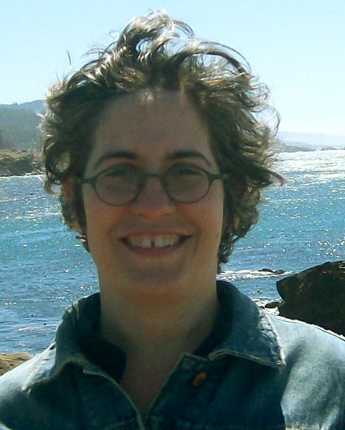
About the Author: Jill Dearman earned an MFA from the New School and is an award-winning author of several books, including The Great Bravura (She Writes Press, 2015). She teaches writing at NYU’s College of Applied Liberal Arts and at The College of New Rochelle, Rosa Parks Campus, and also serves as a private editing and writing coach. She lives in New York City.

Thank you so much for this guest post looking at how equal rights for women is still very much a timely topic!

Blog Tour with Review: Moon! Earth’s Best Friend by Stacy McAnulty

Share

Moon! Earth’s Best Friend
Author: Stacy McAnulty
Illustrator: Stevie Lewis
Published June 11th, 2019

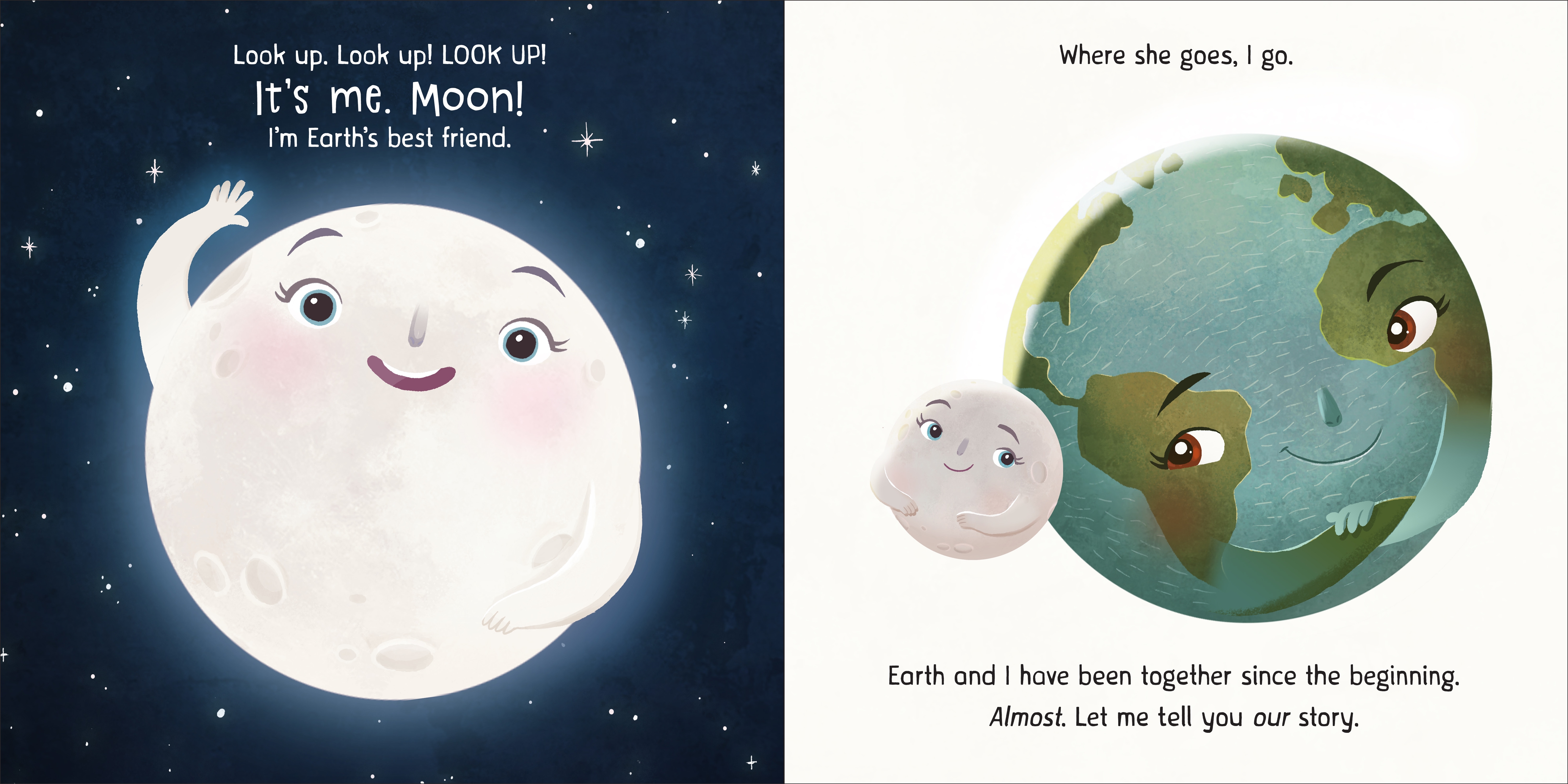
Summary: From writer Stacy McAnulty and illustrator Stevie Lewis, Moon! Earth’s Best Friend is a light-hearted nonfiction picture book about the formation and history of the moon—told from the perspective of the moon itself.

Meet Moon! She’s more than just a rock—she’s Earth’s rock, her best friend she can always count on. Moon never turns her back on her friend (literally: she’s always facing Earth with the same side!). These two will stick together forever. With characteristic humor and charm, Stacy McAnulty channels the voice of Moon in this next celestial “autobiography” in the Our Universe series. Rich with kid-friendly facts and beautifully brought to life by Stevie Lewis, this is an equally charming and irresistible companion to Earth! My First 4.54 Billion Years and Sun! One in a Billion.

About the Author: Stacy McAnulty is the author of several picture books, including Earth! My First 4.54 Billion Years, illustrated by David Litchfield; Sun! One in a Billion, illustrated by Stevie Lewis; Excellent Ed, illustrated by Julia Sarcone-Roach; and Beautiful, illustrated by Joanne Lew-Vriethoff. She lives in North Carolina with her husband, three children, and two dogs.

About the Illustrator: Stevie Lewis spent four years working in animation and now creates art and illustrates children’s books, including Sun! One in a Billion, written by Stacy McAnulty, and Lost in the Library, written by Josh Funk. Stevie lives on the road, furthering her passion for climbing, art, and the outdoors. She gathers inspiration from a variety of places, be it climbing in the high desert in central Oregon, hiking in the wilderness of Alaska, or sharing laughs with fellow travelers around a campfire.

Praise: “Perfect for children—and grown-ups—who have questions about the greater universe.” —Booklist on Moon! Earth’s Best Friend

A Junior Library Guild Selection

Review: I cannot rave enough about this book and the series it is a part of. And as a mom of a kid who adores space, I have read quite a few nonfiction space books, but there are no others like McAnulty and Lewis’s books. There are a few reasons why these books, including Moon!, stand above and beyond others:

  • Humor! You cannot help but giggle when Moon says something funny or cute.
  • Narration! It is awesome having the Moon (or Earth or Sun) narrate the book. It being in 1st person adds to the narrative.
  • Voice! It is so fascinating how McAnulty changes her voice in each of the books. If I read one aloud to Trent without saying which book it was, he would know because of how the characters talk.
  • Interesting! McAnulty does a great job sharing foundational knowledge as well as some unique facts.

View our reviews for the first two Universe books, Earth! and Sun!, also.

Teachers’ Tools for Navigation: The ideas we shared for the other Universe books would definitely book for Moon! also, so check out the other posts linked above, but now that we have three Universe books, there is now the opportunity to do activities will all three books! The options I think of are:

  • Like a jigsaw! Split your class into three groups, and each group reads and discusses one of the books. From the book, they create a handout to share the information that they learned. Then make new groups with 3 students: one from each book’s group. They will then share what they learned with their new group.
  • Split up the class into three groups (one for each group) and have the group read the book and create a readers theater of the book.
  • In-class book clubs! With them being picture books, you can split into three groups and rotate them through all three books. Have students create a one pager sharing what they learned (independently or as a group) or have them write discussion questions and discuss them or give questions to have them discuss.

Discussion Questions: 

  • How did the Moon come to be?
  • Why is Moon capitalized but moon isn’t?
  • How does the author use the narrator’s voice between the three books? How do the voices differ?
  • What reasonings does Moon give for why she’s Earth’s BFF?
  • What new information did you learn about the Moon?

Our Universe Series Book Trailer: 

Flagged Passages: 

Read This If You Love: Universe books by Stacy McAnulty, The Sun is Kind of a Big Deal by Nick Seluk, Once Upon a Star by James Carter, Space Encyclopedia by David AguilarYou Choose In Space by Pippa GoodhartA Big Mooncake for Little Star by Grace Lin, Star Stuff by Stephanie Roth Sisson

Recommended For: 

classroomlibrarybuttonsmall 

Signature

**Thank you to Macmillan for providing a copy of the book for review!!**

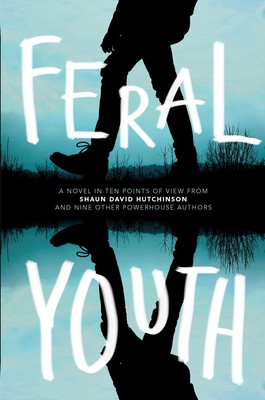
Feral Youth by Shaun David Hutchinson, Brandy Colbert, Suzanne Young, Tim Floreen, Justina Ireland, Alaya Dawn Johnson, Stephanie Kuehn, E.C. Myers, Marieke Nijkamp, Robin Talley

Share

Feral Youth
Authors: Shaun David Hutchinson, Brandy Colbert, Suzanne Young, Tim Floreen, Justina Ireland, Alaya Dawn Johnson, Stephanie Kuehn, E.C. Myers, Marieke Nijkamp, Robin Talley
Published: September 5, 2017 by Simon Pulse

Guest Review by Natalia Sperry

Summary: At Zeppelin Bend, an outdoor education program designed to teach troubled youth the value of hard work, cooperation, and compassion, ten teens are left alone in the wild. The teens are a diverse group who come from all walks of life, and they were all sent to Zeppelin Bend as a last chance to get them to turn their lives around. They’ve just spent nearly two weeks learning to survive in the wilderness, and now their instructors have dropped them off eighteen miles from camp with no food, no water, and only their packs, and they’ll have to struggle to overcome their vast differences if they hope to survive.

Inspired by The Canterbury Tales, Feral Youth features characters, each complex and damaged in their own ways, who are enticed to tell a story (or two) with the promise of a cash prize. The stories range from noir-inspired revenge tales to mythological stories of fierce heroines and angry gods. And while few of the stories are claimed to be based in truth, they ultimately reveal more about the teller than the truth ever could.

Review: This is a complex anthology of traditionally ignored teenaged voices that demand to be heard; I couldn’t put it down! Feral Youth is compelling from the front flap to the final page. The distinct voices of all 10 characters shone through in every part, from their individual stories to the transitional narration, creating an established sense of the full cast that is difficult to attain when juggling so many stories.

In this day and age, it feels more important than ever read book that remind us that all people, even those “troubled kids” traditionally written off by society, have a unique story to tell. Though I initially felt a bit overwhelmed by the number of characters (especially those with similar sounding names!) having such a diverse cast of characters share their stories was really rewarding. Those stories, both those intended to be “factual” and those grounded in fantasy, refuse to go quietly from my mind. In a story centered around teens whose voices have been all but silenced by society, I think that’s a victory.

Teacher’s Tool For Navigation: As the book was inspired by Chaucer’s Canterbury Tales, teachers could have students read the two (or passages from both) and compare and contrast. In particular, looking for thematic parallels could lend itself to discussions about the nature of storytelling and whose voices get told. In that regard, the book could also fit into a unit about “objective truth” in storytelling, perhaps in discussing other narratives or nonfiction.

Even in including the text as a free-reading option, I think it is essential to build empathy through reading diverse stories. Including this text could be not only a way to build empathy, but could provide a starting point for further future reading of a diversity voices as well.

Discussion Questions: What parallels do you find to the Canterbury Tales? Which stories surprised you? Were there any characters you related to that you wouldn’t have anticipated connecting with?  

Flagged: “’They think we’re probably nothing but a bunch of animals, but we showed them who we really are. We showed them that they can’t ignore us’” (287).

Read This If You Loved: The Canterbury Tales by Chaucer, Les Miserables by Victor Hugo, other YA anthologies

Recommended For: 

classroomlibrarybuttonsmall 

RickiSig

Kellee’s End of Year Student Survey Results, Students’ Favorite Books, and Top Checked Out Books 2018-19

Share

Another school year is in the books! Time to celebrate and reflect!
And I know this is a long post, but I hope you’ll take the time to check out my students’ points of view and their reading choices 🙂

End of Year Survey

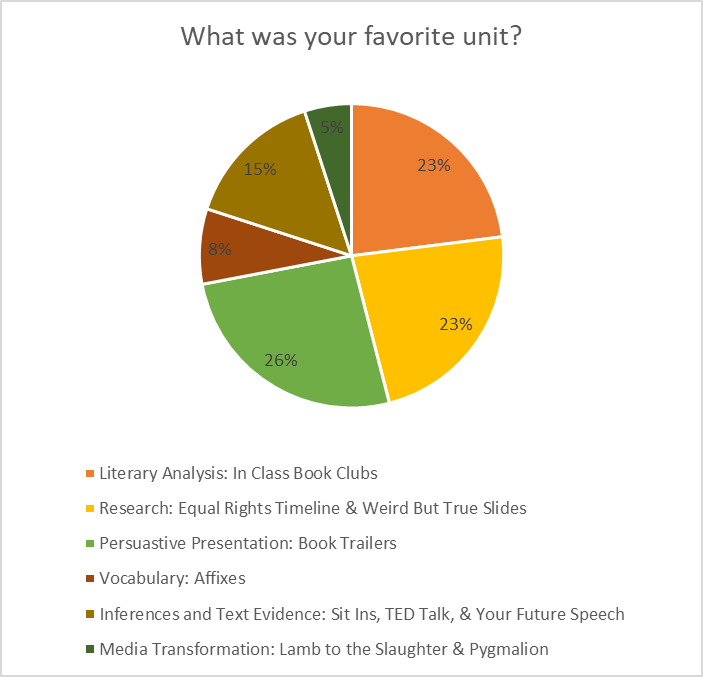
At the end of each year, I give my students a survey to help me grown and learn as a teacher but also for them to reflect on the year. Here are some answers from the survey:

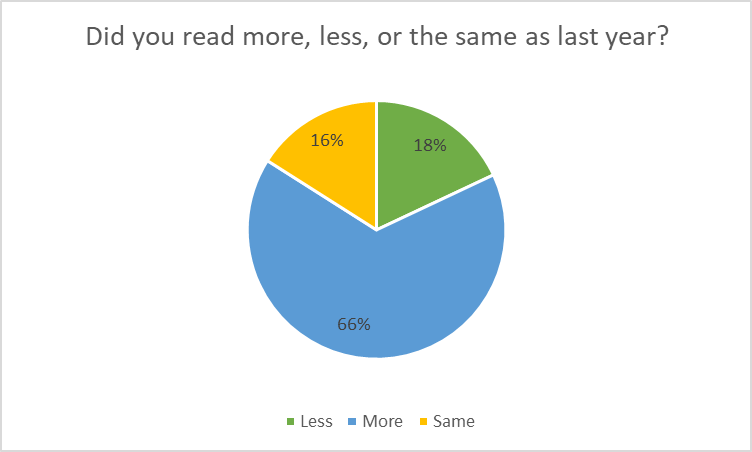
This is about the same as last year. I did change my status check to only weekly instead of daily to see how it went (some kids were saying asking every day made it seem more of a chore), but I really think by not asking daily, I didn’t keep up with my students’ progress and conference correctly. Back to daily-ish next year!

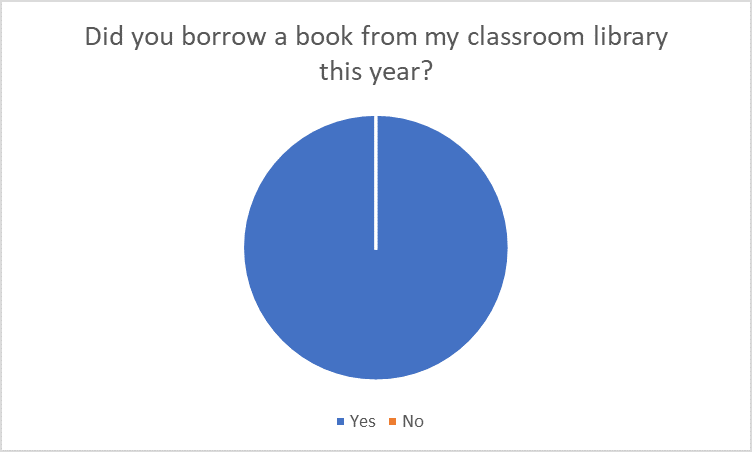
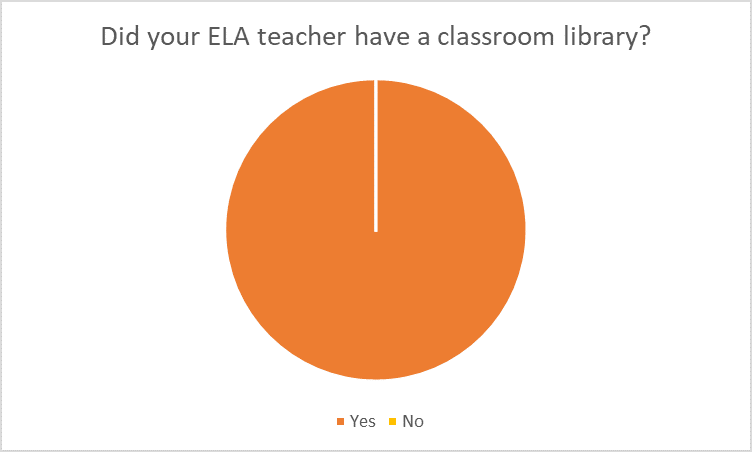
This is a big deal for me because it is the first year that 100% of the answers were yes or yes, a small one! Yay!!

Does my classroom library benefit students? How did it benefit you this year?

  • Yes. The library has a huge variety of genres of great books that even people who aren’t avid readers can enjoy. The library helped me reach my personal goal of reading 10 books this school year.
  • YASSSSSSSSSSSS. I used to love fiction and I still do but I have also expanded my likes because of all of the genres in your mini library.
  • Of course! I was able to expand my reading options knowing that I can get a book quick and easy.
  • Of course, you can find any books in Mrs Moye’s library and there are so many kinds of books that everybody would enjoy, its like a second resource for anybody who could not find the book they wanted in the Media Center can find it in Mrs Moye’s library, or even find something better.
  • It does because it gives them a way to develop their reading love and your system makes it easier. You also have many great books and you give many great recommendations based on our interests.
  • You classroom definitely benefits students. It benefited me this year by giving me a wide variety of books to choose from.
  • It does benefit students. It provides a wide arrangement of books that can satisfy the interests of students as well as providing new books and find new reading interests.
  • Yes. It started my love of reading.

What would you say to someone that says that a classroom library is a waste of money?
I started asking this question after a friend of mine, on a post of hers, had a comment that said a classroom library was a waste of money.

  • You are incorrect, goodbye. *turns and walks away*
  • I would respect their opinion but I would say “I think it is not a waste of money because just 20 minutes of reading a day makes you very smart.”
  • I would say that they have obviously not had a good one and they don’t know what there talking about.
  • I would say the person who said that is wrong because yes it is a lot of money but in my opinion the benefits outweigh the cost.
  • “Man, you are sure wrong”
  • It’s not! It’s a major benefit for students and lets them be able to explore more reading options. Also, if the library or other book source doesn’t have a specific book, that classroom library might save the day.
  • It really isn’t. A classroom library makes it much easier to check out and return books. Especially when they belong to a teacher who you see almost everyday, while the school library is sometimes closed and can’t always be reached.
  • I would say that a classroom library isn’t a waste of money because it shows how much that teacher loves to read and how much they care about our education as readers.
  • I would start a whole argument about books (as usual…).
  • that they need to take this class
  • That they are wrong because with books you can block the real world and explore different worlds and enjoy it.
  • I would say that a classroom library is actually useful because it helps students find books they want to read easily and allows a lot of options, and may motivate some students to read more.
  • I disagree because throughout the year while there was a library that is easy to have access to, I have been able to read more book than ever before (19 books)
  • I would bring up lots of evidence to show the benefits of reading and why it is more needed
  • I would tell them that they don’t really understand classroom libraries. Classroom libraries are there to provide books. Books help to broaden people’s vocabulary and imagination.

Do you like how the classroom library was organized? Explain.
I ask this question because I used to organize by genre but did not find success with it, so I switched it back to A-Z but with genre stickers. This question helps me ensure that the way it is organized meets the needs of my readers. 100% of student said they do like how it is organized–yay! Here are some examples:

  • I love how the classroom library is organized and it makes books really easy to find.
  • I think it’s nice but they really should give you a bigger room to fill with books.
  • I did like how the classroom library was organized. It was pretty easy to find books based on the last name of the author. It was also nice to have the stickers showing what genre it was and whether or not it was YA.

What would you say to a teacher who says independent reading is a waste of class time?

  • Maybe it’s just you who doesn’t like reading.
  • I would say that they need to understand that it’s a proven fact that the time spent reading is in direct correlation to higher test scores.
  • I would say to the teacher that they are wrong because independent reading have kids learn and have fun at the same time.
  • I would tell them they are wrong because there has been many studies done to prove that reading is fundamental.
  • This also is not a waste of time. It’s proven that kids who read around 20 minutes a day get in the 90% percentile on tests. Reading only benefits kids.
  • It’s actually the opposite. Independent reading, or just reading in general, can help with brain growth and increase skills that you may not even know you possess. Not reading doesn’t really effect you, but it can definitely benefit you a lot more than just reading 2 or 3 books in class with a teacher.
  • That they are really wrong, that reading is such a good thing for your body and mind, by reading you can explore and create a world of fiction, fantasy and more, and it’s better for you cause people don’t disturb you while you are reading, which is one of the worse things that happens in life. (for me)
  • “Shut your face.” (say it in my head because I don’t want to be rude)
  • Have you tried it?
  • Independent reading helps students to form ideas and inferences on their own. They can also learn more vocabulary if they have to figure it out themselves rather than being told.

What do you think the benefit of taking advanced reading is?
I want to make sure that my class is benefiting my students!

  • It’s a life altering class. So some of the benefits are well, everything.
  • You get to have fun with reading instead of reading something boring you don’t care about.
  • The benefit of taking advanced reading is that you get to know things that other kids who are not in advanced reading don’t know.
  • You read more, you get to learn about real life controversies and every side of it, and your language arts skills will improve.
  • I think the benefit of taking advanced reading is knowledge. By using the tools, resources, and skills Mrs. Moye has taught us, we are able to use this and put it into the work we do. We will forever be able to use affixes when reading, to compare/contrast a play and a text, and so much more.
  • Kids who don’t usually read can be exposed to a wormhole of books in your class and it can really become something different for them. So I think the biggest benefit of being in an advanced reading class is just, being given the chance to read.
  • I think the benefits of taking advanced reading is so you can be around books (duh ;P) and you get to have an extra class that’s related to language art (so when the teacher calls on you, you’ll be like “WOW ME!”). Also, your vocabulary will get better (which is REALLY helpful.)
  • You get to read more!
  • The benefit of taking advanced reading is that it really helps with reading and writing skills.
  • Advanced reading gives you the tools to think for yourself while reading and doing other activities.

What have you learned about yourself through the assignments in this class?

  • That I’m able to do things that I didn’t know I could do.
  • I think is that I should trust myself more with what I do and not second guess myself.
  • I use more advanced vocabulary than most my age.
  • I learned that I can do more things that I have thought if I really try.
  • I have learned that sometimes you just have to try stuff, even if it isn’t your favorite, because you’ll never know what might happen. I did some things that weren’t exactly my favorite, and I ended up loving them.
  • I learned that I should start reading more and to try harder.
  • That I sometimes need to push myself harder but that’s alright.
  • That I am a hard working and I should never give up and doubt myself.
  • That I can achieve greater things with reading and reading can make you happier and smarter.

What was your favorite assignment or activity we did in class? Why?

  • I really liked the book trailers; it let me express my feelings about the books that I love.
  • My favorite assignment that we did was the Pygmalion myth play and musical analysis one pager. This was my favorite because it was a great story and the one pager allowed me to be creative while also pushing me to dig deeper and pull out the important things.
  • My favorite activity was probably the weird but true facts. I learned a lot of weird facts and it was overall a really fun project that incorporated research.
  • I really enjoyed when we did the thought logs in class. It pushed me to read an entire book of which I wasn’t entirely that interested in. And once we finished the books and the logs, it became one of my favorites. As well as the fact that I was in a group with two other students who I had never really spoken to before then.
  • The book club because it was fun sharing yours and others people opinion of the same book that we were reading.
  • My favorite assignment or activity was the Civil Rights Timeline. It was fun to work with all the classes to create one big timeline we can all view. It was also fun to research our topics and learn about all the other topics.
  • Probably when we made the affixes to hang in the hallway to share with everyone.
  • The one where we had to guess who did that speech in a high school and it ended up being Obama.

Favorite Books My Students Read This Year

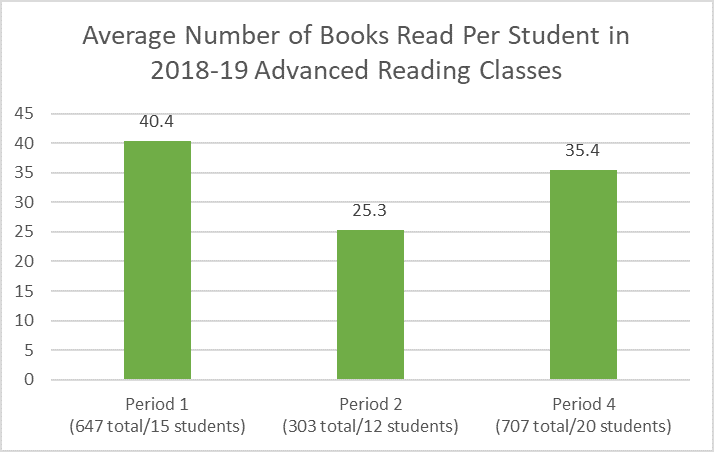
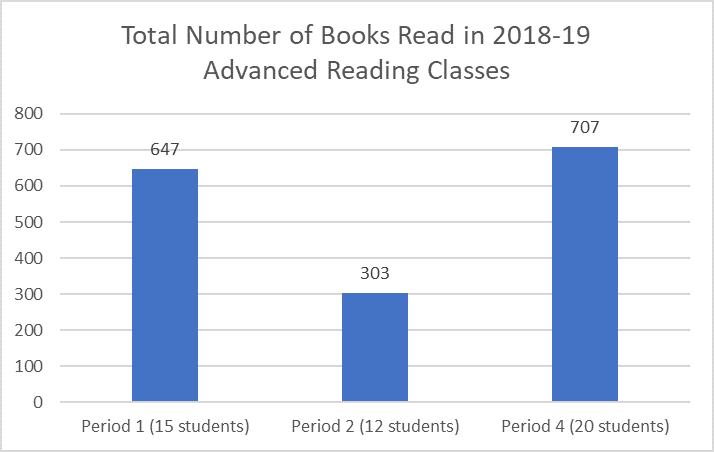
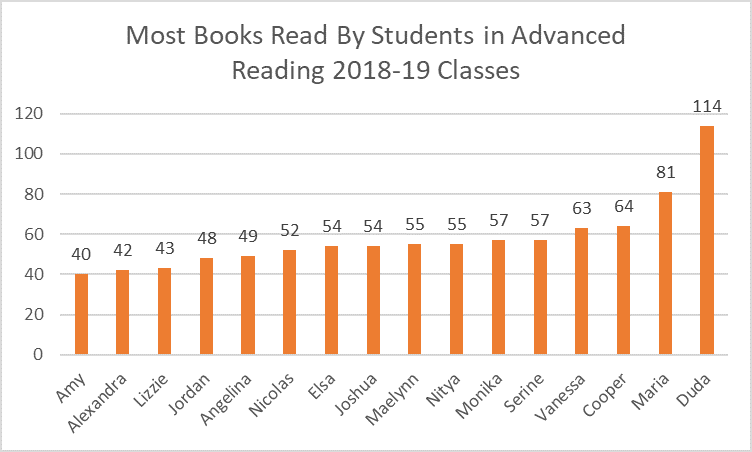
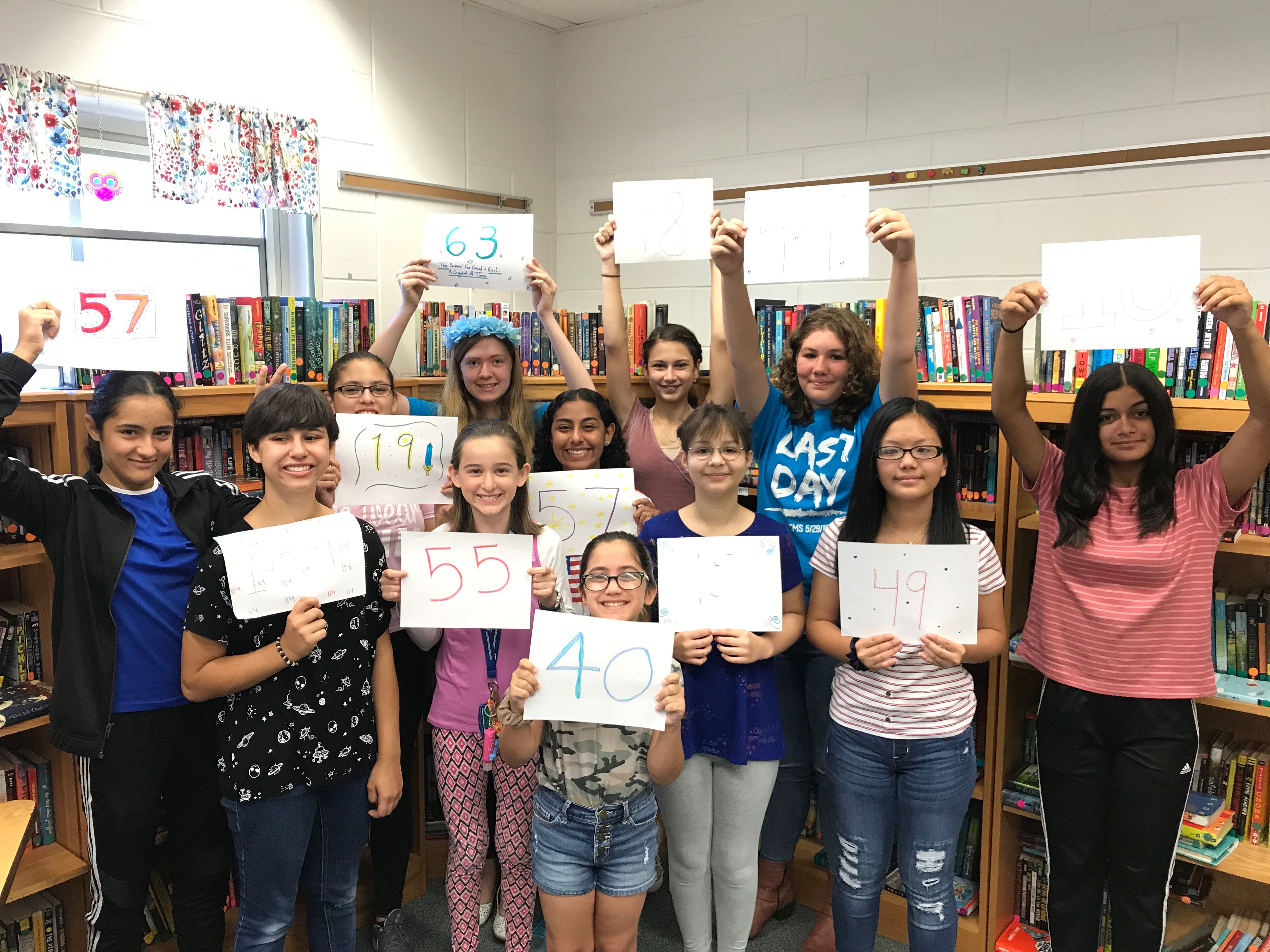
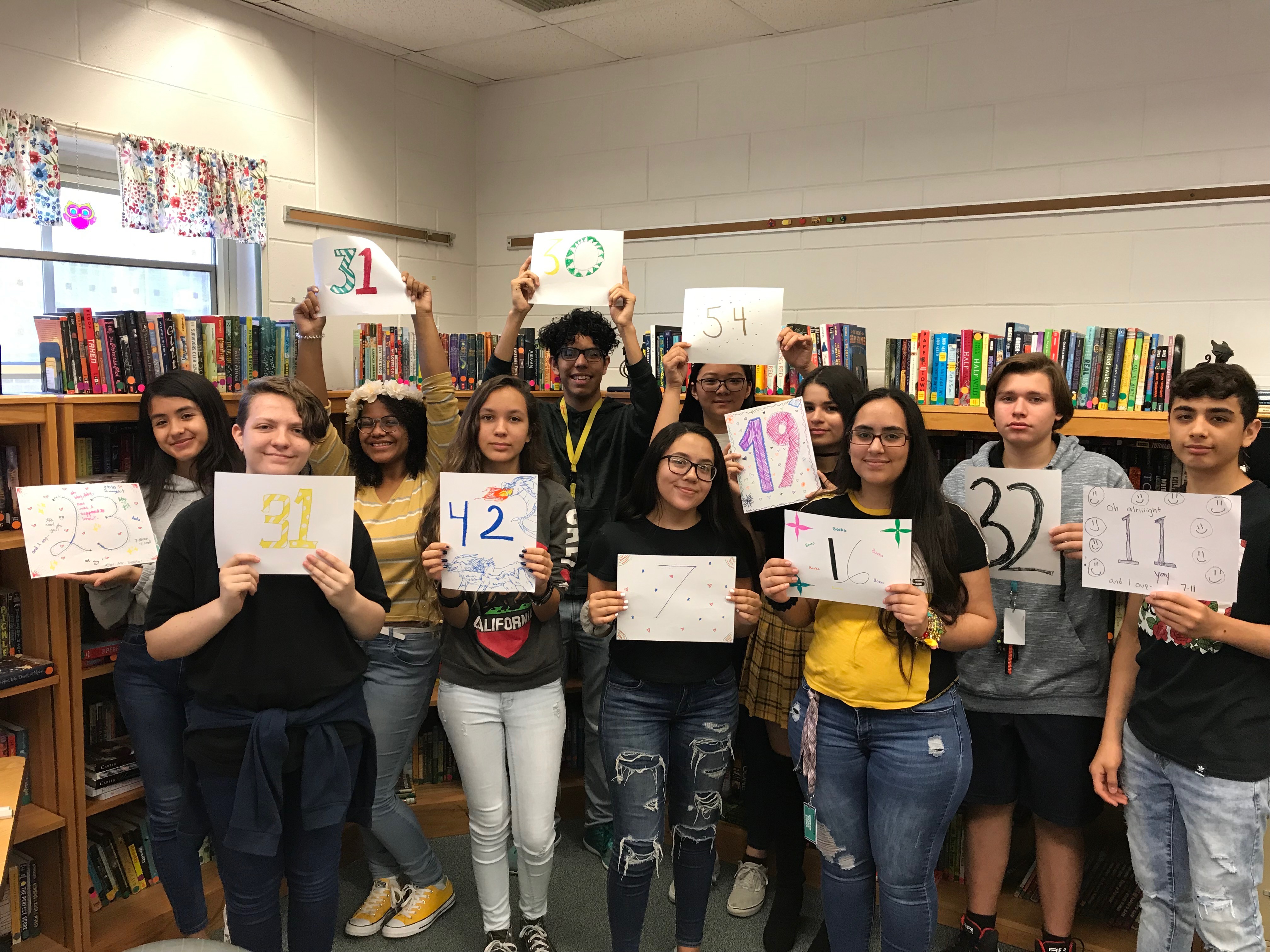
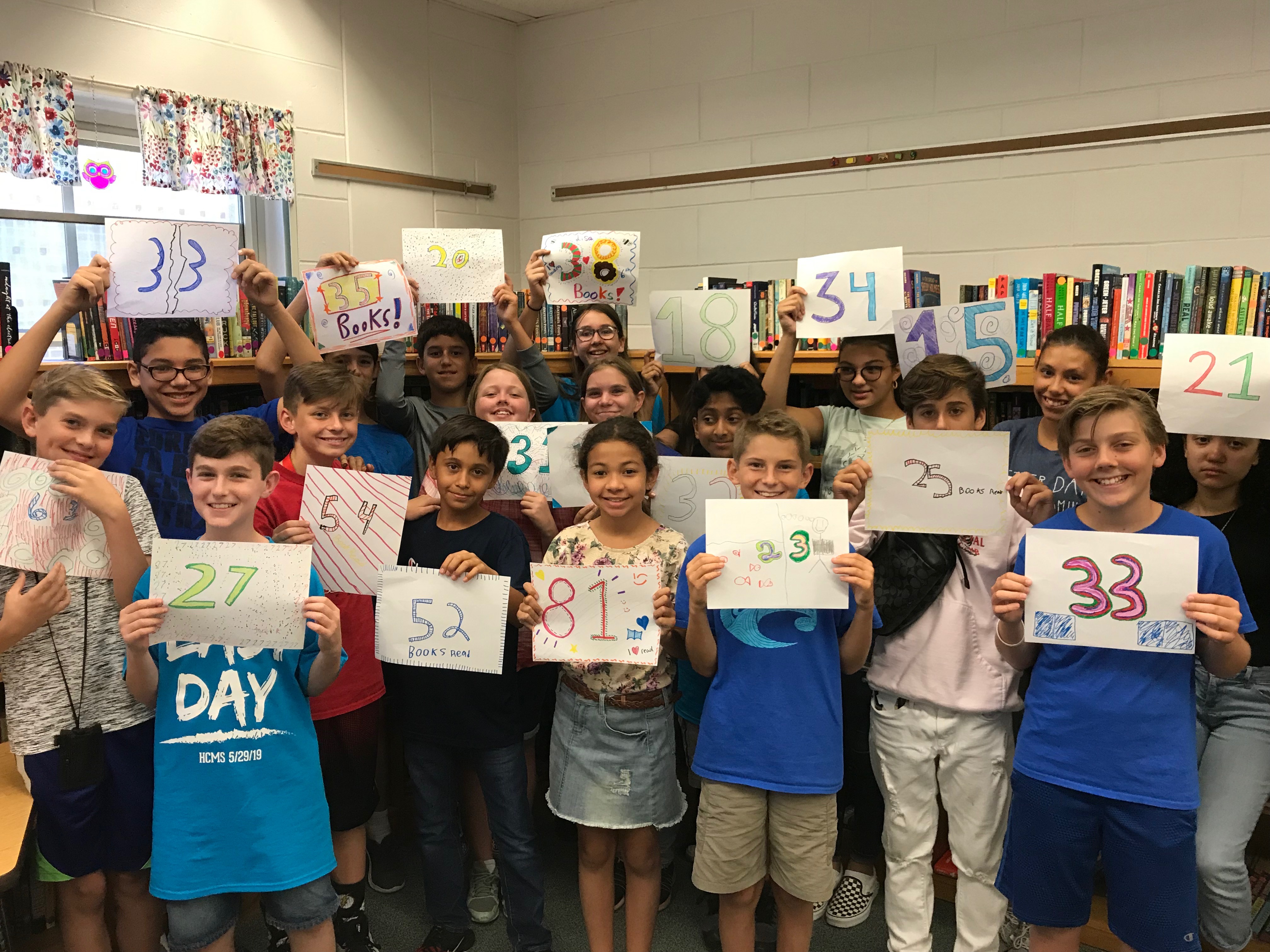
My students read A LOT again this year! My 47 Advanced Reading students read 1,657 books! That is an average of 35 books per student! I am so proud of them!


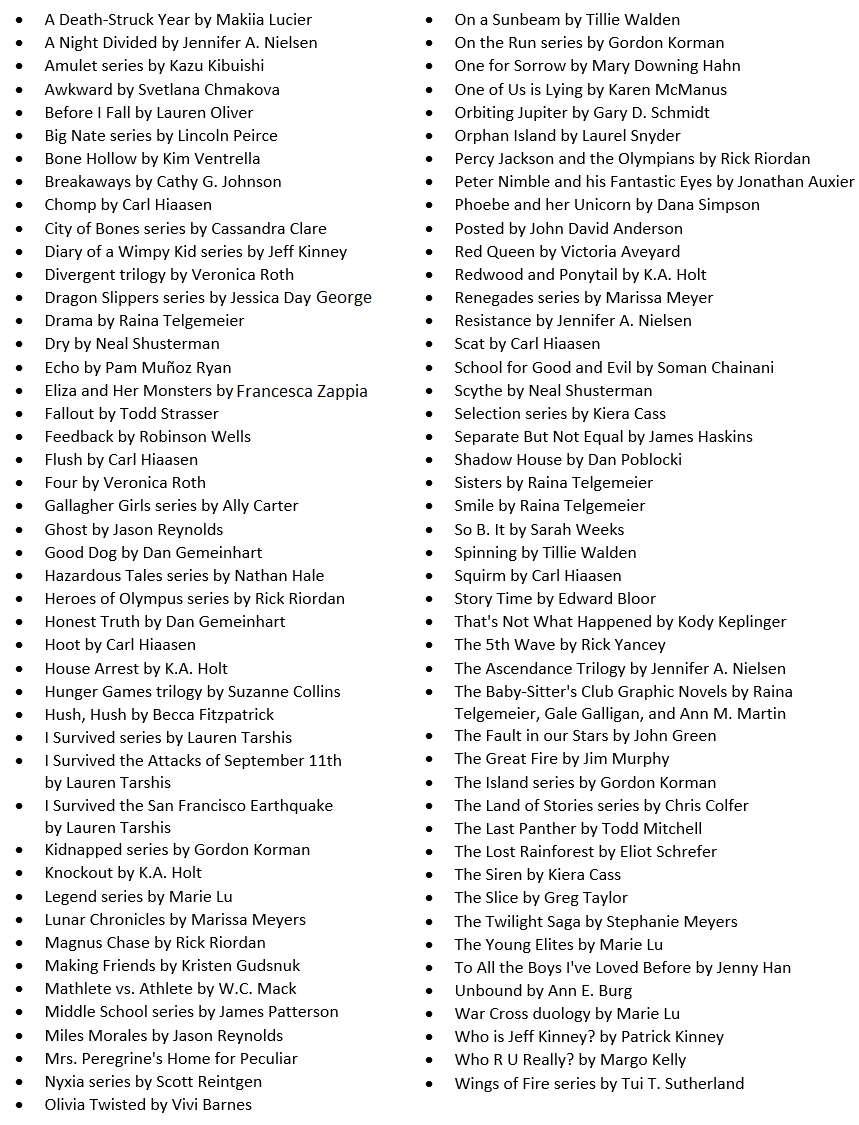
Here are the titles they listed as their favorites on our end of year survey:

Top Checked Out Books from my Classroom Library

Yearly, starting with 2012-2013 (and excluding 2013-2014), I have shared the most popular books in my classroom library:
2012-2013
2014-2015
2015-2016
2016-2017
2017-2018

From 2011-2013, I taught an intensive reading class with students who had not been successful on the state reading test. Now, since 2014, I switched to teaching advanced reading, an elective that students choose to be in (and I still get to work with my striving readers through being reading coach–a win/win!). Students from all intervention reading classes and my lunch book club as well as my classes use my classroom library.


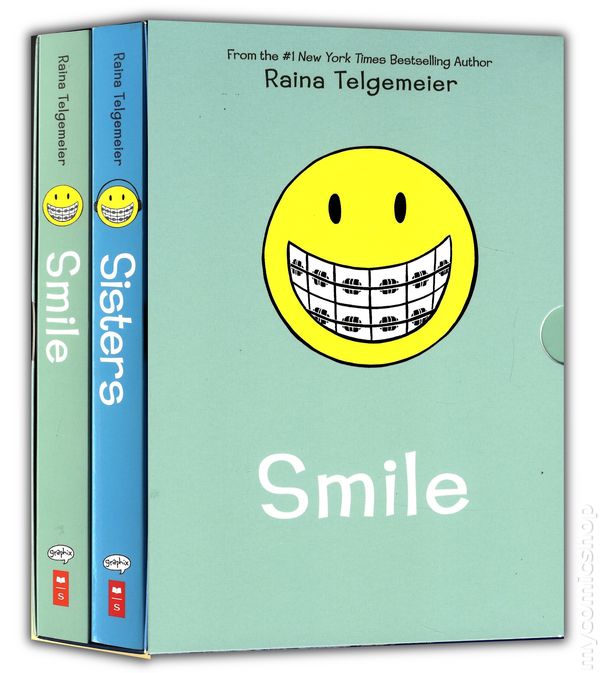
1. Smile series by Raina Telgemeier
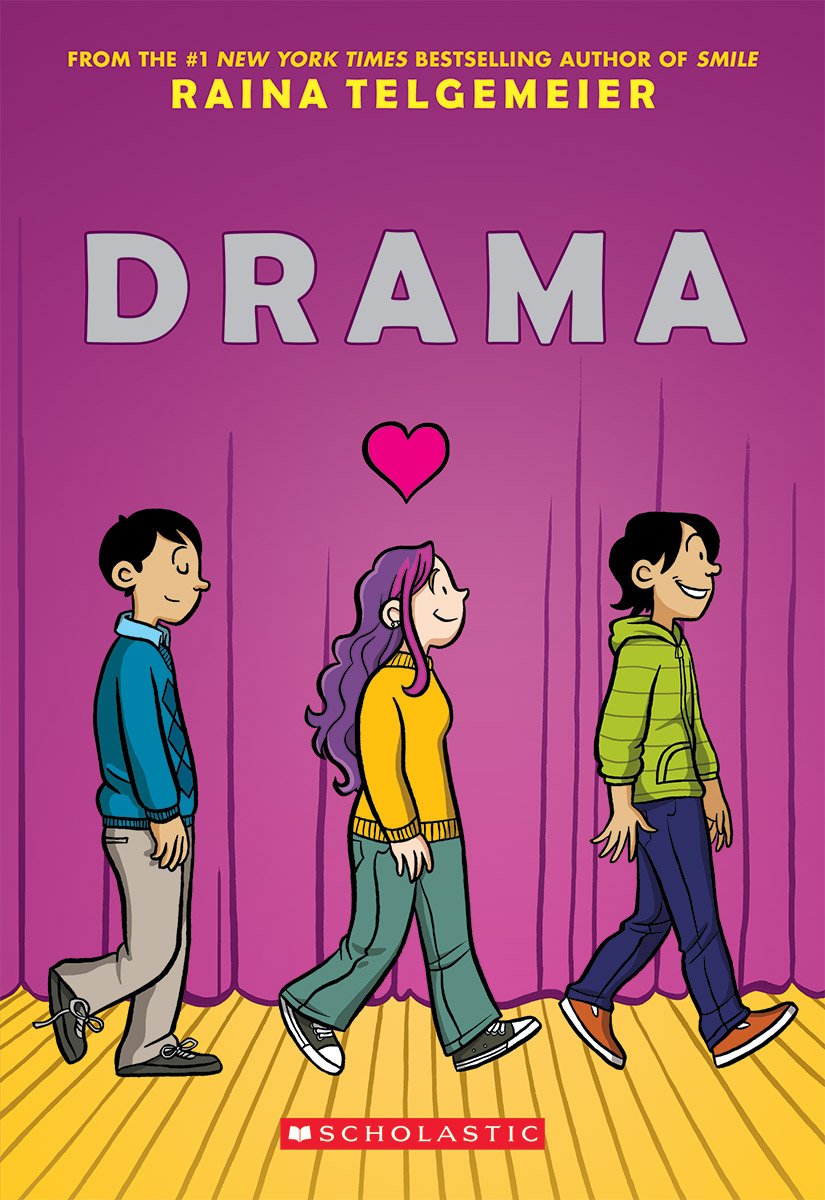
2. Drama by Raina Telgemeier
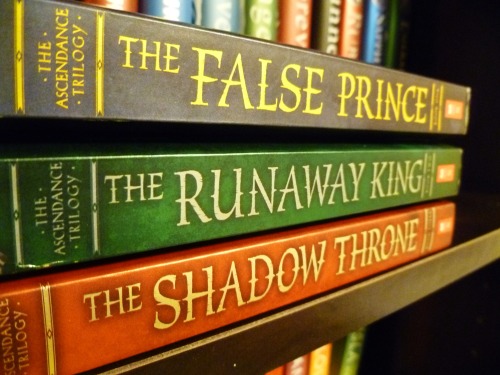
3. The Ascendance Trilogy by Jennifer A. Nielsen
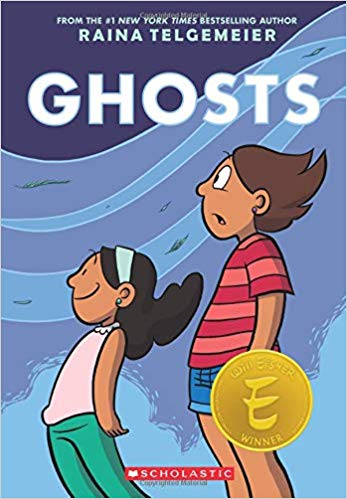
4. Ghosts by Raina Telgemeier
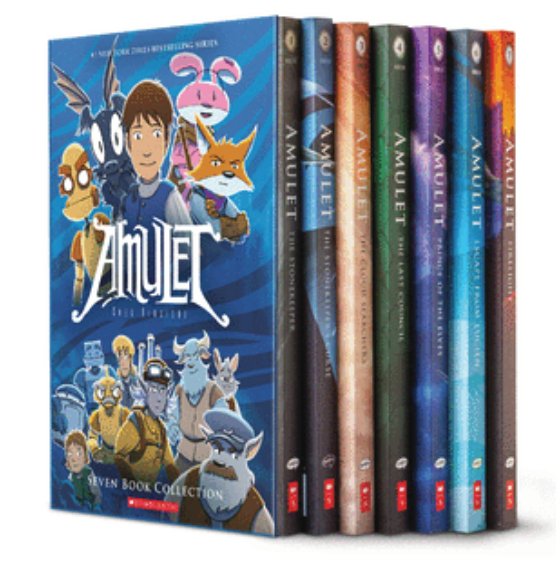
5. Amulet series by Kazu Kibuishi


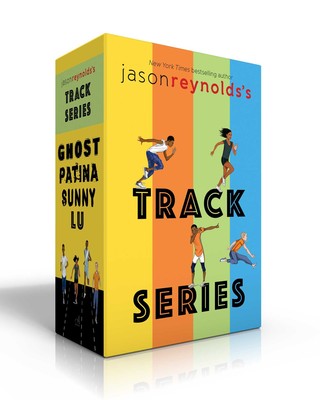
T-6. Track series by Jason Reynolds
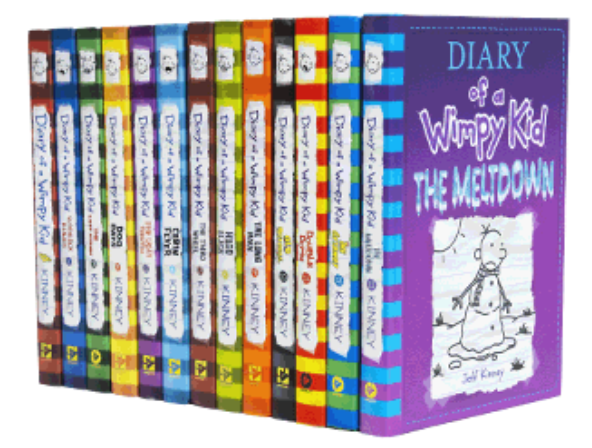
T-6. Diary of a Wimpy Kid by Jeff Kinney
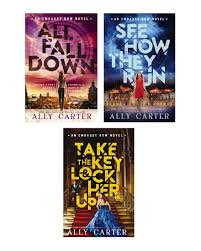
T-8. Embassy Row series by Ally Carter
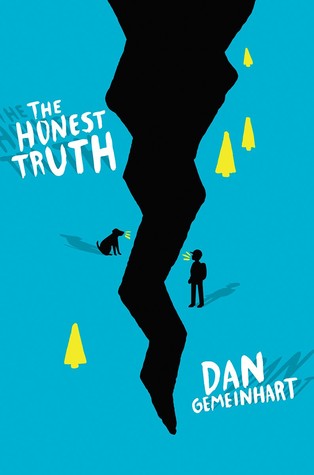
T-8. The Honest Truth by Dan Gemeinhart
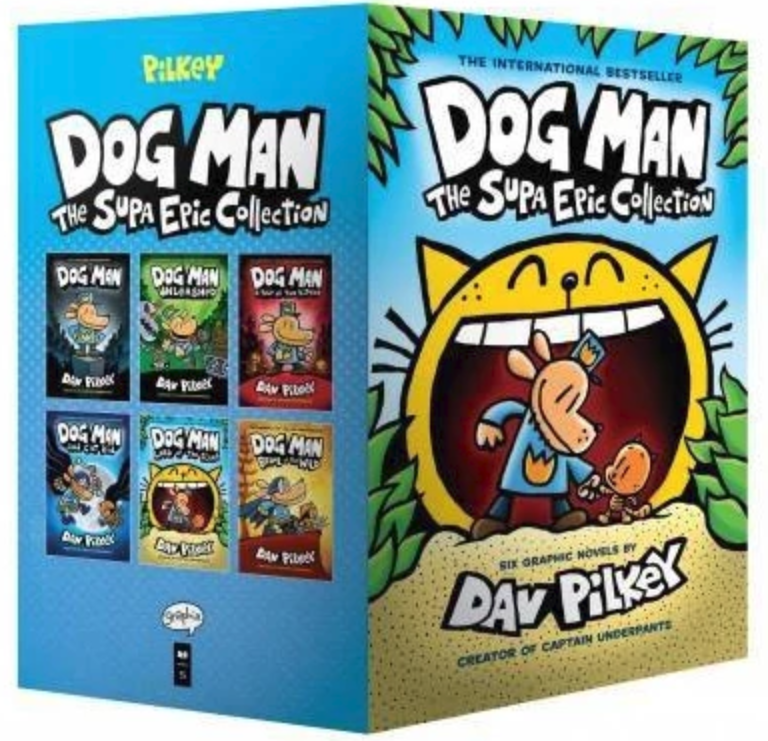
10. Dog Man series by Dav Pilkey

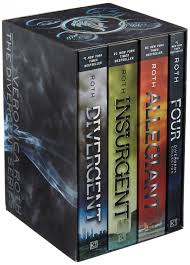
T-11. Divergent series by Veronica Roth
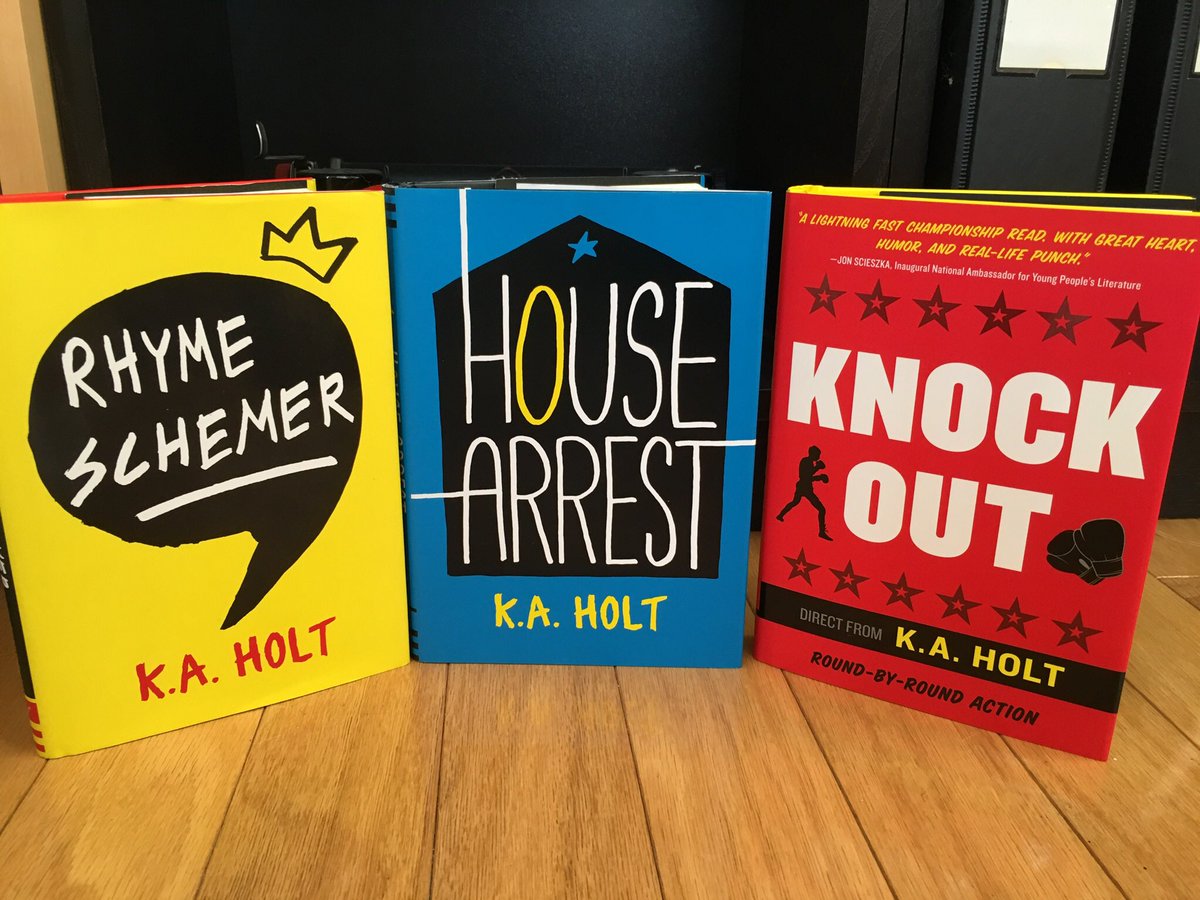
T-11. House Arrest series by K.A. Holt
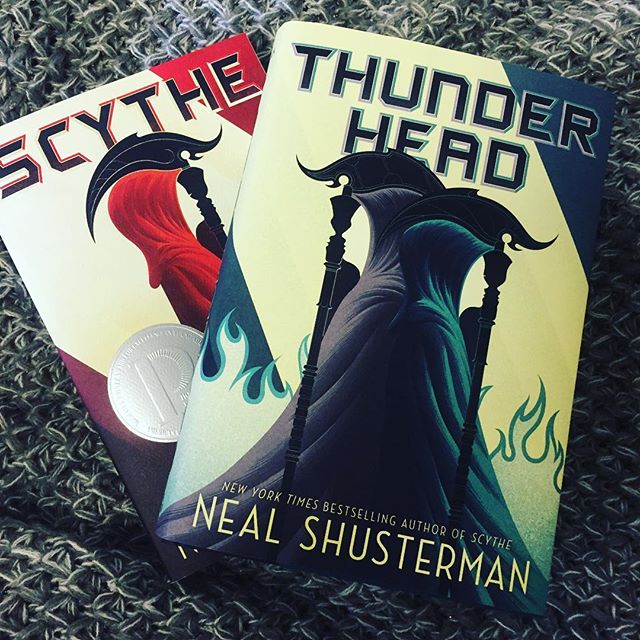
T-11. Arc of a Scythe series by Neal Shusterman
14. Rhyme Schemer by K.A. Holt


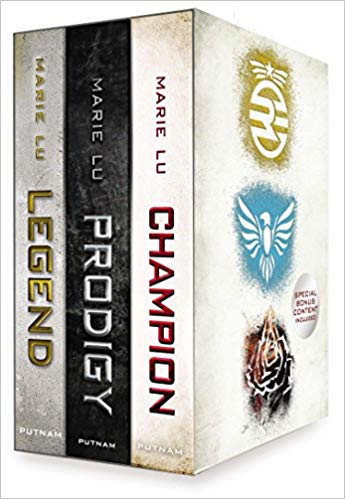
T-15. Legend series by Marie Lu
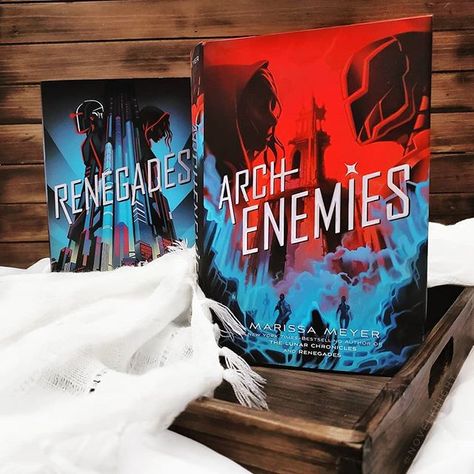
T-15. Renegades series by Marissa Meyer
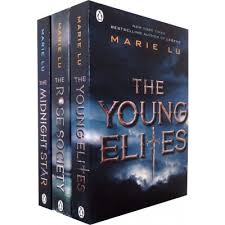
T-15. The Young Elites series by Marie Lu
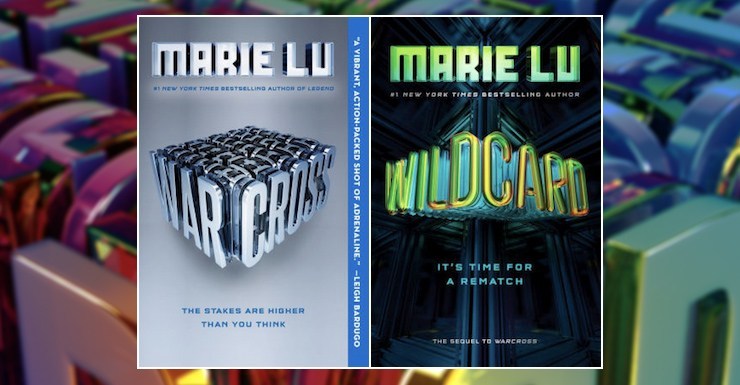
T-15. War Cross duology by Marie Lu

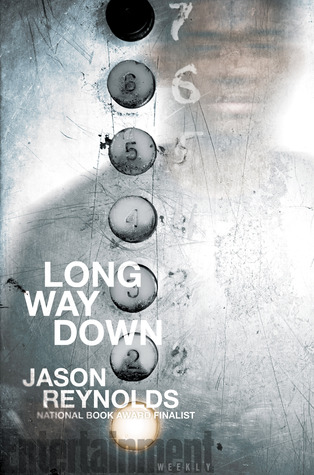
T-19. Long Way Down by Jason Reynolds
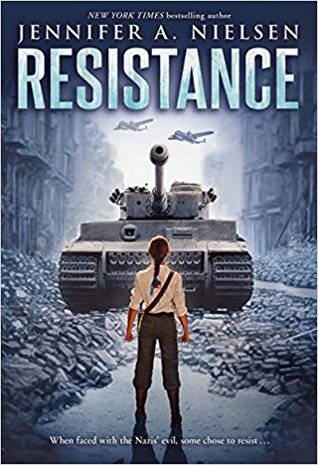
T-19. Resistance by Jennifer A. Nielsen
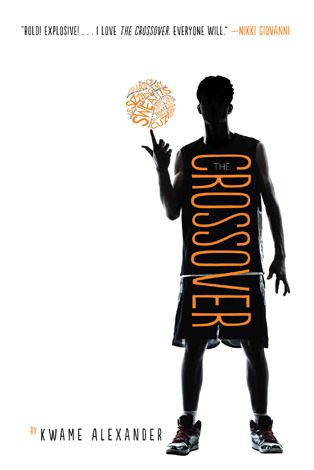
T-19. The Crossover by Kwame Alexander

Note 1: If a book is in a series, I placed the series at the spot of the highest ranked book from the series. This allows me to highlight more checked out books instead of listing all the different books from a series.

Note 2: I use Booksource’s Classroom Library to track my book checkouts, and my book checkout history does not reset yearly. Instead it counts for any student in the system. Since I have students that check out from me for up to 3 years, sometimes a book they checked out in 6th grade will still be counted when they are in 8th grade. I figure all of this will even out as 8th graders are removed each year since there is no way to change this setting.

Note 3: These series/books account for the top 40 checked out books of my classroom library!

Happy summer to all of my fellow teachers, and here’s to another awesome school year in the books!

P.S. Please continue to stop by on Tuesdays during summer as I share my STUDENT VOICES series of blog posts written by my students. 

It’s Monday! What Are You Reading? #IMWAYR 6/10/19

Share

IMWAYR 2015 logo

It’s Monday! What Are You Reading? From Picture Books to YA!

It’s Monday! What are you Reading? is a meme started by Sheila at Book Journeys and now hosted by Kathryn at The Book Date. It is a great way to recap what you read and/or reviewed the previous week and to plan out your reading and reviews for the upcoming week. It’s also a great chance to see what others are reading right now…you just might discover the next “must-read” book!

Kellee and Jen, of Teach Mentor Texts, decided to give It’s Monday! What Are You Reading? a kidlit focus. If you read and review books in children’s literature – picture books, chapter books, middle grade novels, young adult novels, anything in the world of kidlit – join us! We love this meme and think you will, too.

We encourage everyone who participates to support the blogging community by visiting at least three of the other book bloggers that link up and leave comments for them.

Bold_line

Tuesday: Call for Teachers of YA Literature Classes

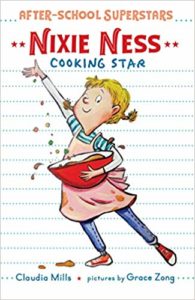
Wednesday: Blog Tour with Author Guest Post, Recipes, and Excerpt!: Nixie Ness: Cooking Star by Claudia Mills

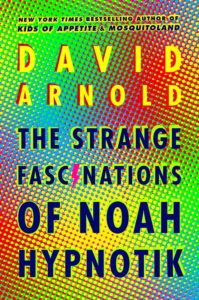
Thursday: Guest Review: The Strange Fascinations of Noah Hypnotik by David Arnold

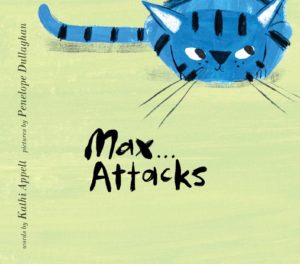
Friday: Max Attacks by Kathi Appelt
Giveaway open until Thursday!

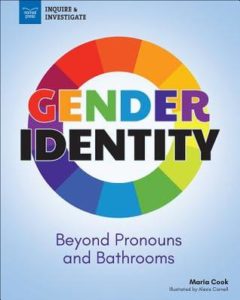
Sunday: Author Guest Post: “Transgender and Non-Binary People Have Always Been Here” by Maria Cook, Author of Gender Identity: Beyond Pronouns and Bathrooms

**Click on any picture/link to view the post**

Bold_line

Kellee

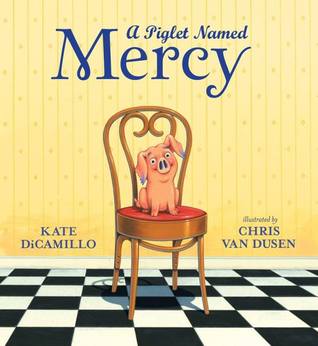
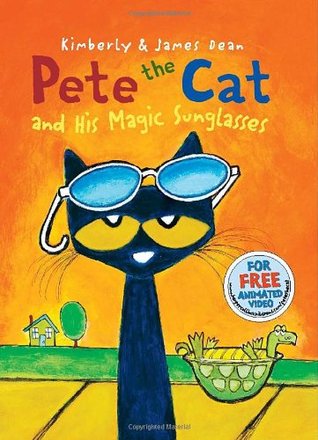
As promised, we read some Mercy and Narwhal this week! I just love both of these series so much and so happy to read the new Mercy piglet picture book, too–a origin story of our favorite porcine wonder. Also, peanut Narwhal is ADORABLE! Trent also picked out a Pete the Cat book which made me so happy because he has been not wanting to read Pete books.


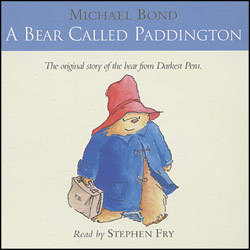
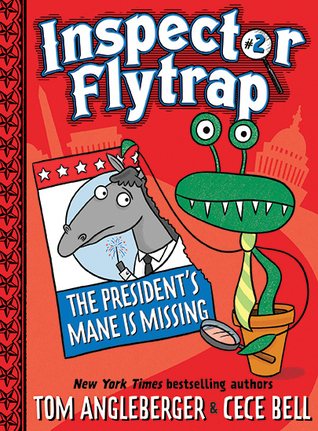
We finished A Bear Called Paddington! Yay! I think it was a little too long of an audiobook without read along text, but we enjoyed it overall. Then Trent picked out Inspector Flytrap to read next. It is a read along on Hoopla, and he LOVES them. The sloth throughout is definitely his favorite. Angleberger and Bell are hilarious together!

Three upcoming titles!

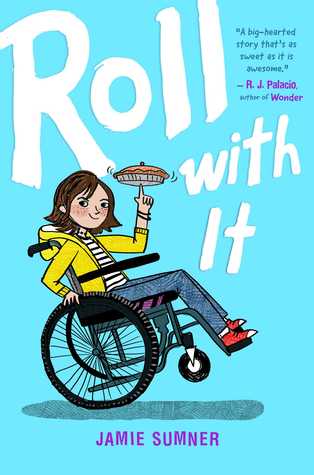
  • Roll With It by Jamie Sumner is a story of a baking-fanatic who moves to a small town that is not very equip to deal with her wheelchair but a rough start does not always indicate the future.
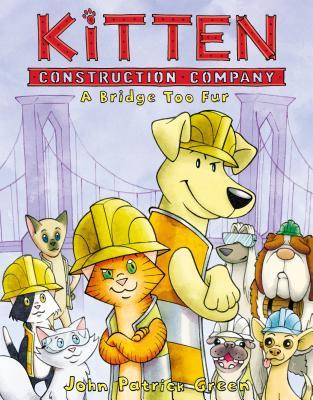
  • The second Kitten Construction Company was just as cute and funny as the first. I love this story of inclusion!
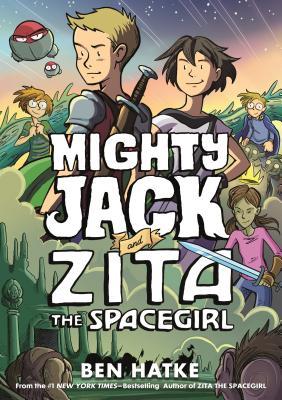
  • Oh, what a mash up!!!! Mighty Jack and Zita the Space Girl by Ben Hatke is everything readers will want and more! And it made me want to go back and read both series again!

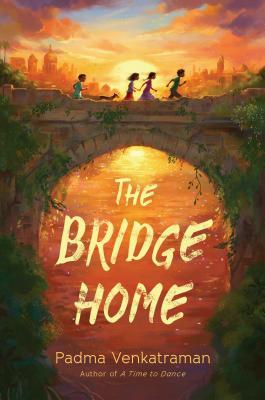
  • The Bridge Home by Padma Venkatraman follows Viji and Rukku as the flee their abusive home to live on the streets of Chennai.
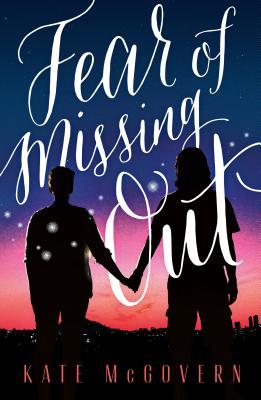
  • Fear of Missing Out by Kate McGovern is Astrid’s story of living when she finds out she is dying.

Ricki

Ricki is away on maternity leave and will return mid-June. Happy reading!

Bold_line

Kellee

Currently Reading: A Tear in the Ocean by H.M. Bouwman

Currently Listening: Funny, You Don’t Look Autistic by Michael McCreary

Reading Next with Trent: Mercy Watson Goes for a Ride by Kate DiCamillo and Narwhal’s Otter Friend by Ben Clanton

Listening to Next with Trent: Inspector Flytrap and the Goat Who Chewed Too Much by Tom Angleberger

Bold_line

Tuesday: Kellee’s End of Year Student Survey Results, Students’ Favorite Books, and Top Checked Out Books 2018-19

Thursday: Guest Review: Feral Youth: A Novel in 10 Points of View from Shaun David Hutchinson and Nine Other Powerhouse Authors

Friday: Blog Tour with Review: Moon! Earth’s Best Friend by Stacy McAnulty

Sunday: Author Guest Post: “Feminism: Finding Our Way Forward” by Jill Dearman, Author of Feminism: The March Towards Equal Rights for Women

Bold_line

Link up below and go check out what everyone else is reading. Please support other bloggers by viewing and commenting on at least 3 other blogs. If you tweet about your Monday post, tag the tweet with #IMWAYR!

 Signature andRickiSig

Author Guest Post: “Transgender and Non-Binary People Have Always Been Here” by Maria Cook, Author of Gender Identity: Beyond Pronouns and Bathrooms

Share

“Transgender and Non-Binary People Have Always Been Here”

There’s been a lot of news in the last few years about transgender and non-binary people. Yet many folks don’t know for sure what the words “transgender” or “non-binary” mean.

Adding to the confusion are headlines and articles that declare that the fight for transgender and non-binary people’s rights are “the newest frontier in civil rights!” While this may be well-meaning, it is incorrect. The fight for transgender and non-binary rights is not new. Far from it! Transgender and non-binary people are not a fad, a trend, or a new phenomenon. They have always been here, from the beginning of human history. Which means that they have made incredible contributions to the world, in the form of protests, art, important writings, and more. What a cool—and important—fact for young people to learn!

In Gender Identity: Beyond Pronouns and Bathrooms, my goal was to create a resource that would allow young people to do three things: to learn what gender identity is (and thereby learn how to refer to people with differing gender identities), to unlearn the idea that the fight for trans and non-binary rights is a new thing, and to meet the incredible transgender, non-binary, intersex, and gender non-conforming people who have shaped American history.

As a young person, I loved learning about history. But some teaching methods are more effective than others. In my opinion, the best way to teach history is by introducing readers to the people who made history happen.

Every American should know about LGBTQ rights activists like Sylvia Rivera and Marsha P. Johnson, who marched for equality even when some in the LGBTQ tried to exclude them. Every American should also know about the incredible transgender people making history right now, like superstar actress Laverne Cox, the first openly transgender woman to win a Daytime Emmy Award and the first to appear on the cover of Time Magazine. And what about politician Christine Hallquist, the first openly transgender major party nominee for governor in the United States, who also happened to write the forward for this book? I believe that the stories of these incredible people will stick with readers long after they’ve set this book down.

I hope that cisgender readers (readers whose gender identity aligns with the gender they were assigned at birth) can learn how to relate and appreciate those whose gender identity differs from their own. I hope that transgender and non-binary readers can learn that they are not alone, nor have they ever been. And I hope educators who bring this book into their classrooms can use it to help them navigate this sensitive but incredibly important topic.

Below are two activities from the book which are intended to help readers explore the issue of gender identity in an easy-to-understand way.

Explore Cultural Expectations

Cultural expectations change over time, including expectations of men and women. For example, high-heeled shoes, which are now associated with women’s fashion, were originally created for men. In this activity, you’ll explore some cultural expectations and explore how they might have changed, from past to present.

  • Find three items or behaviors that your culture associates with women. Do some research online or at the library or a museum to discover their origins. Can you find the first instance of the items or behaviors? Why do we associate them with women?
  • Then do the same for three items or behaviors expected of men. Consider the following questions:
  1. How did the items or behaviors come to be?
  2. How have they changed, over time?
  3. Was there a defining moment in history that caused the expectations to change?

Write about your findings and include sources. Present what you have learned to other people and discuss your findings with one another.

Time to Move!

Now that you know about the beginnings of the LGBTQ rights movement, research the events that sparked one of America’s other civil rights movements in the 1960s, such as the African American civil rights movement or the women’s liberation movement.

  • What’s similar between the beginnings of these two movements? What’s different?
  • Civil rights movements are an important part of the history of the United States. Can you imagine what life would be like for women if the women’s rights movement had never occurred? What about the lives of African Americans—how would they be different if the country had never heard the speeches of Martin Luther King Jr. or seen the power of the March on Washington?
  • Research the early beginnings of a few civil rights movements. Consider these questions:
  1. What did these movements have in common?
  2. What was different about them?
  3. Did every movement have certain leaders who stood out? What were they like?
  4. Are there movements just beginning today that have similarities to these movements?
  • Draw a Venn Diagram to show what these early movements had in common and how they differed. What conclusions can you draw from your research?

More classroom resources can be found at https://nomadpress.net/wordpress/wp-content/uploads/2018/07/Gender-ID-Classroom-Guide.pdf.

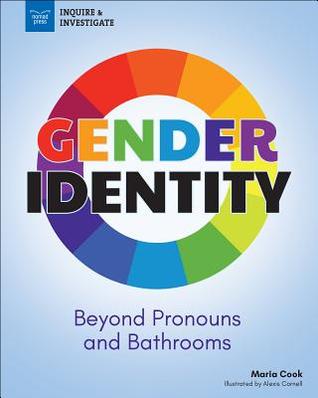
Gender Identity: Beyond Pronouns and Bathrooms
Author: Maria Cook
Illustrator: Alexis Cornell
Published April 9th, 2019 by Nomad Press

About the Book: What does it mean to think of gender as being a range instead of simply male or female?

Gender Identity: Beyond Pronouns and Bathrooms invites readers to consider the cultural significance of gender identity in the United States and beyond. Middle and high schoolers learn about the history of LGBT rights, with a particular focus on transgender rights and the rights of gender-variant people, while engaging in research activities to help put what they have learned into context. These activities encourage teens to form their own, well-informed opinions about public figures, historical events, and current news regarding gender identity.

Busting the myth that the gender identity movement is a new phenomenon, this book teaches teens about some of the first openly transgender public figures in history, such as Lili Elbe, the first recorded person to ever medically transition in the 1930s, and Christine Jorgensen, who medically transitioned and rose to fame in the 1950s. The stories of activists and other important public figures are highlighted throughout the book and offer plenty of opportunity to connect with the history of the gender identity movement on a human level. From the Stonewall riots to the institution of the Transgender Day of Remembrance, teens will gain a rich understanding of how gender identity fits into culture, past and present.

About the Author: Maria Cook is an award-winning freelance writer who holds a BS in secondary English education and an MFA in writing, both from Butler University. Her nonfiction can be found in such publications as Marie ClaireNarratively, and Green Matters. Maria lives in Indianapolis, Indiana.

Thank you so much for this guest post about this topic that is such an important topic and this book is so needed for so many!