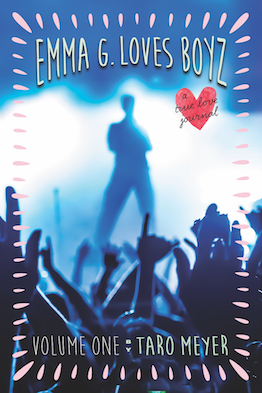
Emma G. Loves Boyz: A True Love Journal Volume 1 Author: Taro Meyer
Published November 24th, 2015 by Red Sky Presents
Summary: Emma G. Loves Boyz: A True Love Journal is the first book in the new Tween Girl Series by Taro Meyer – the exuberant journal of a star-struck fan who vows to stop at nothing – not even doing chores! – for a chance to see her favorite boy band perform live…
Emma G. is CRAZY about Aaron, lead singer of Boyz3000. Of course, she doesn’t actually know him, but so what? Feelings are feelings. That is until Josh appears… and he’s soooooo CUTE. Navigating her two crushes and her middle school life, especially with eighth-grade hater Renee around, is a challenge. And oh yeah, she’s got to earn money for an AWESOME trip to the Bahamas to see the band of her dreams. Hello???? How much can one thirteen-year-old take???
Review: Oh man! This book brought flash backs to every boy band obsessed student I have taught over the last 10 years! Emma’s love for Boyz3000 can represent any middle school fangirl/boy who is so in love with the band, their music, and one of their members so blindly that they feel that the love is the most real thing they’ve ever felt! (And this is coming from a girl who cried when she saw Hanson live for the first time, so I know this emotion!) In addition to the story about Emma’s love of Boyz, Emma also has to learn responsibility to earn money to go see them in concert as well as some mean girl issues in middle school all told in a journal format which I think middle schoolers will find true to their voice.
Teachers’ Tools for Navigation: This is a perfect book for a middle school library/classroom library! So many of my students are always looking for a romance book that is appropriate for them, and this is perfect!
Another aspect of Emma’s journal is that she writes poetry, so her story could be a perfect inspiration for students who are interested in writing poetry or need to find an outlet for emotions.
Discussion Questions: How does Emma’s want to go see Boyz make her become a bit more responsible?; How does Josh change Emma’s perception on life?; Why do you think Renee is so mean?; How does the structure of the text affect the way the story is told?
Flagged Passages: “Oh my God. I just woke up completely happy, thinking I HAD FINALLY GOTTEN A TICKET TO A BOYZ3000 CONCERT and would meet Aaron, their lead singer. I’ve entered at least five contests and haven’t won any yet. 🙁
But sadly, I’d only fallen asleep in front of my computer and it was just a dream, and I still had to write a make-up essay for Language Arts because of the stupid D I got today!
I cannot believe I got a D in Language Arts! I plan on being a writer, and really, what kind of writer gets a D on an essay?
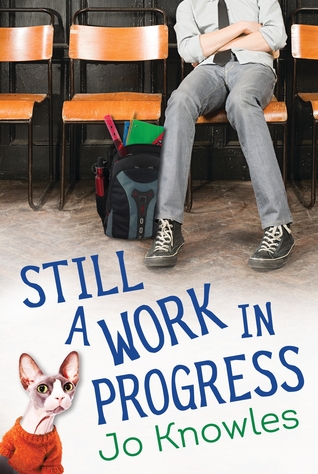
Still a Work in Progress Author: Jo Knowles
Published August 2nd, 2016 by Candlewick Press
Summary: In a return to middle-grade fiction, master of perspectives Jo Knowles depicts a younger sibling struggling to maintain his everyday life while coping with his sister’s secret struggle.
Noah is just trying to make it through seventh grade. The girls are confusing, the homework is boring, and even his friends are starting to bug him. Not to mention that his older sister, Emma, has been acting pretty strange, even though Noah thought she’d been doing better ever since the Thing They Don’t Talk About. The only place he really feels at peace is in art class, with a block of clay in his hands. As it becomes clear through Emma’s ever-stricter food rules and regulations that she’s not really doing better at all, the normal seventh-grade year Noah was hoping for begins to seem pretty unattainable. In an affecting and realistic novel with bright spots of humor, Jo Knowles captures the complexities of navigating middle school while feeling helpless in the face of a family crisis.
Review: What I am always amazed by when I read a book by Jo Knowles is her ability to tell the truth about our world, and this book once again fits this description. Jo has a way of making her characters ones that are so real that you can imagine them walking into a school and know exactly which kids they’d hang out with. Noah and his friends could definitely be middle school students at my school. Her stories always seem to include a bit of humor (see: hairless cat on the cover) while never taking away from the seriousness of the book’s topic. The emotions, specifically pain or sadness, she portrays through her characters radiates out of the pages, so the reader can feel it.
Teachers’ Tools for Navigation: This is an important book to have available for students to read. Although the main story is about Noah fitting into middle school, it is also about dealing with pain and anger and sadness and still having to live. This book needs to be in classroom libraries and should be booktalked so students are aware of its brilliance.
Discussion Questions: What makes the art room such a special place for Noah?; Why does Noah and his family not talk about Emma’s problems? Did not talking about it end up being hurtful or helpful?; Noah’s school is a bit different than traditional schools. How does his school differ from yours?; What does the title mean in reference to Noah? Emma? Their family? Other characters?; How did Emma’s experience with Lord of the Flies spiral out of control?
Flagged Passages: “Community meetings happen once a week. Everyone in the school has to go, including the teachers. The Community Room used to be the music room, but our town had budget cuts and they cut the music program. The wars are painted green, and old couches donated by various families line the walls so that if we’re all sitting on them, we form a circle/square. The problem is that there are more students than seats on couches, so if you get to a Community Meeting late, you’re stuck sitting on a beanbag or on the floor in front of the couch sitters. The beanbags are mysteriously sticky and smell like dirty sheets. The floor is cold and kind of gross because it doesn’t get washed very much. In either case, you have to sit in front of the people on the couch which means you are close to their feet, which means, depending on who you end up in front of, you are probably going to have a miserable hours.” (p. 9-10)
“‘Sara is new to vaganism,’ Emma explains.
‘Is your family vegan, too?’ my mom asks.
‘No, just me. My parents are all stressed-out about it. They think I’m going to become anemic or something.’
Emma sighs dramatically, as if to say, So typical.
My mom clears her throat uncomfortably. ‘We were worried about Emma, too. But she’s very aware of her dietary needs. Right, Emma?’
‘Kind of hard not to be with you and Dad obsessing about everything I eat,’ Emma says sarcastically.
My mom doesn’t answer, just grips the steering wheel tighter. Sara shifts in her seat awkwardly, probably remember the time a few years ago that no one talks about. Even though she and Emma weren’t good friends then, everyone know about the Thing That Happened.” (p. 29-30)
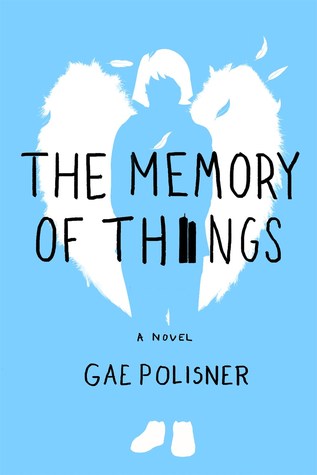
The Memory of Things
Author: Gae Polisner
Published: September 6, 2016 by St. Martin’s Griffin
GoodReads Summary: The powerful story of two teenagers finding friendship, comfort, and first love in the days following 9/11 as their fractured city tries to put itself back together.
On the morning of September 11, 2001, sixteen-year-old Kyle Donohue watches the first twin tower come down from the window of Stuyvesant High School. Moments later, terrified and fleeing home to safety across the Brooklyn Bridge, he stumbles across a girl perched in the shadows. She is covered in ash and wearing a pair of costume wings. With his mother and sister in California and unable to reach his father, a New York City detective likely on his way to the disaster, Kyle makes the split-second decision to bring the girl home. What follows is their story, told in alternating points of view, as Kyle tries to unravel the mystery of the girl so he can return her to her family. But what if the girl has forgotten everything, even her own name? And what if the more Kyle gets to know her, the less he wants her to go home? The Memory of Things tells a stunning story of friendship and first love and of carrying on with our day-to-day living in the midst of world-changing tragedy and unforgettable pain—it tells a story of hope.
Review: I read this book several weeks ago, and I still can’t thinking about it. As a few other bloggers have said, this is a book about 9/11—but it isn’t a book about 9/11. It is more a book about friendship, about growing up, and about being human. There are so many topics in this book that are worthy of discussion, and I think teachers will really appreciate its beauty. The writing is quiet yet powerful, and the book has a sort of shattering impact on readers. I loved the connections that Kyle makes in this book, and I particularly enjoyed the ways each of the individuals he interacts with tells the reader more about him. He grows from everyone in this book, and I’d love to discuss this growth with students.
Teacher’s Tools for Navigation: Teachers might ask students to research the many themes of this book to provide background information. They might look at disability/caregivers, PTSD, suicide, and 9/11—just to name a few. They could also look at the different stages of trauma to learn more about how each of the characters reacts differently to the tragic events that occurred on 9/11.
Discussion Questions: Is Kyle helping the girl, or is she helping him?; What do we learn from Kyle’s uncle? What does he teach us about disability and humanity?; In what ways does Kyle show strength, and in what ways does he show weakness? How does he grow from each experience of the text?
We Flagged: “So now I get it. Now I fully understand. Tuesday, and those planes, they’ve broken something. Permanently. And in the process, they’ve changed everything. And everyone.”
This is a quote from an advanced reader’s copy. Some quotes may change before publication.
Read This If You Loved: Extremely Loud and Incredibly Close by Jonathan Safran Foer; The Impossible Knife of Memory by Laurie Halse Anderson; Personal Effects by E.M. Kokie, The Things a Brother Knows by Dana Reinhardt, If I Lie by Corrine Jackson, Purple Heart by Patricia McCormick
What a Beautiful Morning
Author: Arthur A. Levine; Illustrator: Katie Kath
Published TODAY!: August 9, 2016 by Running Press Kids
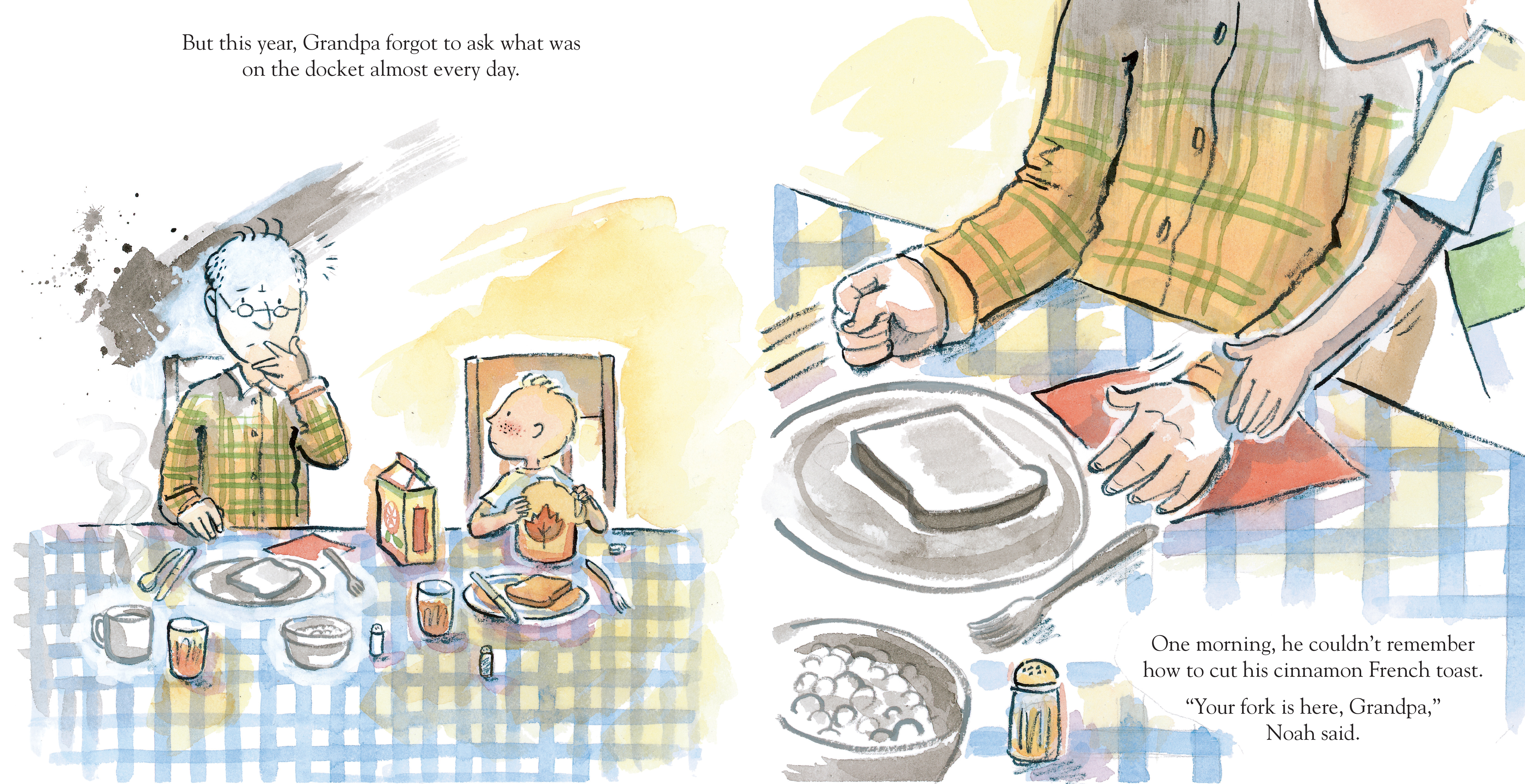
Goodreads Summary: Every morning is beautiful when Noah visits his Grandparents. When Grandpa and Noah wake up, they take off singing and hardly stop: walking the dog, splashing through puddles, and eating French toast with cinnamon. But one summer Grandpa seems to have forgotten how to do the things they love. Does he even know who Noah is? Grandma steps in energetically, filling in as best she can. But it is Noah who finds the way back to something he can share with Grandpa. Something musical. Something that makes the morning beautiful again. This is a story about how love helps us find even what we think is lost.
My Review and Teachers’ Tools for Navigation: This is a beautiful story—from cover to cover. I was enveloped by the watercolor images and words that took me inside Noah and Grandpa’s story. My toddler sat beside me and pointed to the images as I read aloud to him. While he may not have understood the story, he most certainly understood the love between Noah and his grandfather. Elementary school children will develop knowledge of the scary truths of Alzheimer’s disease. While it may feel more comfortable to shield children from these truths, the disease is very much a reality for millions of families, and this book will bring them comfort as they discuss the development of this disease in our loved ones.
Teachers might consider teaching a unit about diseases or disabilities. Texts such as these are very important for students to learn from, and this book is no exception. This might lead into a research unit where students explore and learn more about the diseases or disabilities they find within the books the teacher discusses. However, I most appreciated that this isn’t a book about Alzheimer’s Disease. This is a book is truly about the love between a child and his grandfather.
Discussion Questions: When does Noah first notice that Grandpa is having trouble remembering things? How does he react? How does Grandma react?; How does the illustrator use color to help readers better understand the story?; How does the book end? Did you like the ending? How does it connect to the beginning of the story and the overall message?
Flagged Spread:
Read This If You Loved: Forget Me Not by Nancy Van Laan; The Memory Box by Mary Bahr, Still My Grandma by Veronique Van Den Abeele, Really and Truly by Emilie Rivard, Wilfrid Gordon McDonald Partridge, written by Mem Fox, What’s Happening to Grandpa? by Maria Shriver
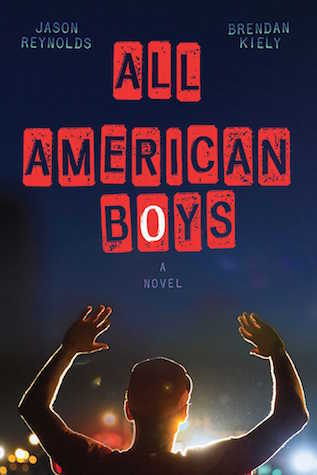
All American Boys Authors: Jason Reynolds and Brendan Kiely
Published: September 29, 2015 byAtheneum/Caitlyn Dlouhy Books
GoodReads Summary: Rashad is absent again today.
That’s the sidewalk graffiti that started it all…
Well, no, actually, a lady tripping over Rashad at the store, making him drop a bag of chips, was what started it all. Because it didn’t matter what Rashad said next—that it was an accident, that he wasn’t stealing—the cop just kept pounding him. Over and over, pummeling him into the pavement. So then Rashad, an ROTC kid with mad art skills, was absent again…and again…stuck in a hospital room. Why? Because it looked like he was stealing. And he was a black kid in baggy clothes. So he must have been stealing.
And that’s how it started.
And that’s what Quinn, a white kid, saw. He saw his best friend’s older brother beating the daylights out of a classmate. At first Quinn doesn’t tell a soul…He’s not even sure he understands it. And does it matter? The whole thing was caught on camera, anyway. But when the school—and nation—start to divide on what happens, blame spreads like wildfire fed by ugly words like “racism” and “police brutality.” Quinn realizes he’sgot to understand it, because, bystander or not, he’s a part of history. He just has to figure out what side of history that will be.
Rashad and Quinn—one black, one white, both American—face the unspeakable truth that racism and prejudice didn’t die after the civil rights movement. There’s a future at stake, a future where no one else will have to be absent because of police brutality. They just have to risk everything to change the world.
Cuz that’s how it can end.
Ricki’s Review: I read this book a few months ago, and frankly, I can’t stop thinking about how important this story is. We read so many books in our lifetimes, and some just take our breath away. This is one of those books. I can’t recommend this book highly enough. I believe it belongs in every classroom. The strength of the two voices in this book is remarkable, and it makes for an excellent teaching tool—about heroism; about doing what is right and true; and about being a good, decent human being. The acts within this book are all-to-common, and I believe this book promotes genuine change. The book is literary at the same time that it is engaging. It will pull (and has pulled) readers of all ages and backgrounds. I typically don’t review books long after they have been published, but this book feels too important to leave out. If you haven’t read it already, I recommend it move to the top of your TBR list. It’s and incredible story.
Kellee’s Review:I too read this book a few months ago. It was a choice for our Faculty Book Club, and it was a perfect book to discuss with a bunch of educators. All American Boys is a book that is going to be a classic because it highlights modern history in a thoughtful and truthful way. This is a book that I would recommend to everyone to read. It is a perfect jumping off point to discuss race relations, Black Lives Matter, and We Need Diverse Books. The way the book is set up, with two voices, will help readers have permission to talk about what is happening in our country, the Civil Rights movement and its tie into modern times, and the racial tension currently happening in our country.
I’d like to also add that I recently was lucky enough to see Jason Reynolds and Brendan Kiely accept their Coretta Scott King Author Honor Award at the ALA Annual Conference here in Orlando, and they both moved me to tears. Jason actually gave two speeches since he won an honor for All American Boys and Boy in the Black Suit. His second speech was a brilliant advocacy poem titled Machetes which can be viewed here or read here. His first speech and Brendan’s speech are not available yet. Brendan says School Library Journal will be publishing his, and I am not sure about Jason’s; however, I did tweet some quotes as I sat and listened:
I hope The Boy in the Black Suit gives young men permission to feel and be human and sometimes need a hug. – Jason Reynolds
Memory in of itself is life. -Jason Reynolds
If you are doing this work, this award is yours too. -Jason Reynolds
Jason Reynolds talking about his mama made me cry. I hope my son’s love can be as true as his is.
There are bodies missing, and I cannot bring them back. It is time for action. -Brendan Kiely
Revolution begins in the heart. -Brendan Kiely
Love is art. Love is education. Love is accountability. And it needs repeating love is love is love is love. -Brendan Kiely
I want to reckon w whiteness…speak truth to myself. -Brendan Kiely
Teachers’ Tools for Navigation: This book begs to be taught in classrooms. If I was still teaching it would be the first book that I would request to be added to curriculum. I think it would be particularly fascinating to use this book as a read-aloud while simultaneously doing literature circles with X by Ilyassah Shabazz and Kekla Magoon, The Rock and the River by Kekla Magoon, and How it Went Down by Kekla Magoon. These books all deal with civil rights issues, as well, and it would be interesting to look at civil rights across time and history and also within other relevant contexts.
Discussion Questions: How do Rashad’s and Quinn’s voices shine differently in the text?; Did Quinn do the right thing? Would you have done the same?; What would you have done if you had been in Rashad’s circumstance? Would you have done anything differently?; How is racism present both in obvious and nuanced ways in the plot events of this text?
Flagged Passage: “If you are neutral in situations of injustice, you have chosen the side of the oppressor.”
Read This If You Loved: X by Ilyassah Shabazz and Kekla Magoon; The Rock and the River by Kekla Magoon; How it Went Down by Kekla Magoon; Freedom Summer by Deborah Wiles; Audacity by Melanie Crowder; The Boy in the Black Suit by Jason Reynolds
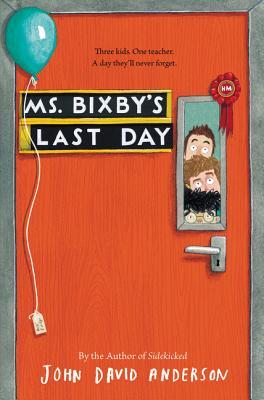
Ms. Bixby’s Last Day Author: John David Anderson
Published June 21st by Walden Pond Press
Summary: Everyone knows there are different kinds of teachers. The good ones. The not-so-good ones. The boring ones, the mean ones, the ones who try too hard. The ones you’ll never remember, and the ones you want to forget. But Ms. Bixby is none of these. She’s the sort of teacher who makes you feel like the indignity of school is worthwhile. Who makes the idea of growing up less terrifying. Who you never want to disappoint. What Ms. Bixby is, is one of a kind.
Topher, Brand, and Steve know this better than anyone. And so when Ms. Bixby unexpectedly announces that she is very sick and won’t be able to finish the school year, they come up with a plan. Through the three very different stories they tell, we begin to understand just what Ms. Bixby means to Topher, Brand, and Steve—and what they are willing to go to such great lengths to tell her.
About the Author: John David Anderson, the author of many books for young readers including Sidekicked, Minion, and The Dungeoneers, returns with a story of three kids, a very special teacher, and one day that none of them will ever forget. A dedicated root beer connoisseur and chocolate fiend, he lives with his wife, two kids, and perpetually whiny cat in Indianapolis, Indiana. You can visit him online at www.johndavidanderson.org.
My Review: Ms. Bixby is one of those teachers that you read about and you want to be (if you are a teacher) or you want to have (if you are a student). As you can see from all the praise it has been receiving, John David Anderson wrote a home run book with this one. Our three main characters are diverse, funny, sweet, and stubborn, and Anderson’s voices for each are unique and alternate beautifully throughout the book. Though I must warn: This is a roller coaster book. You will laugh, smile, cry, get angry, and cringe. It is all there.
But this tour is about more than just the book, it is about focusing on our Ms. Bixby. Ms. Bixby is described as a “Good One” in the book. A “Good One” is a teacher who “make[s] the torture otherwise known as school somewhat bearable. You know when you have one of the Good Ones because you find yourself actually paying attention in class, even if it’s not art class. They’re the teachers you actually want to go back and say hi to next year. The ones you don’t want to disappoint.”
My Ms. Bixby: We all have a wide variety of teachers; however, there are those that change your life. When I was in 12th grade, I was a high school fish just floating my way through school. I was a high achiever who was okay with only doing okay in classes. I didn’t know what I was good at. I didn’t know what I wanted to be when I grew up. I just thought I was another face in the crowd; nothing special. Then I entered Miss Hazel Haley’s classroom. When I had Miss Haley in 1999-2000, he had been teaching for 63 years, 61 of them at Lakeland High where I took my academic classes and 54 in the same classroom (in a building named after herself). She was a spit fire: She showed the Romeo and Juliet film from the 60s even though it showed a breast, she would speak her mind no matter what, and she cared and remembered every single person she’d ever taught. We were her kids. She never married or had children of her own, and she would tell you it was because she didn’t have to–we were her kids.
But it wasn’t all of this that made Miss Haley my Ms. Bixby. Actually, at first I really didn’t like her. She didn’t put up with my talking or note passing. She didn’t tolerate my Cs and Bs when she knew I could do better. She saw something in me. Finally, on one of the assignments I’d halfheartedly completed, she made me stay after school to work on with her. She told me I couldn’t get away with working the way I had been with the brain I had. She told me, “You are a good writer.” And she told me, “You are smart.” And for some reason her telling me stuck. And everything changed. I now knew that I was good at something. That I could accomplish something. And I have.
When I decided to become a middle school teacher, I thought right away of Miss Haley. I know she would be proud of me. I wish I could tell her. And mostly, I hope that I can be someone’s Miss Haley, or Ms. Bixby. I hope my students know I care for them as if they are my own children. I know first hand that one teacher can definitely make a difference.
Walden TV Episode 17 — “LIST IT: Ms. Bixby’s Last Day:” Have you ever had a favorite teacher? Maybe someone as AWESOME as Ms. Bixby? Mike & Julian certainly have! Follow along their list of favorite teachers–real and fictional!
Teachers’ Tools for Navigation: In addition to a wonderful classroom library addition and a read aloud, Ms. Bixby is just one of many teachers I’ve read about that show how a teacher can change a life. Ms. Bixby’s Last Day would be a perfect addition to a “Teacher Appreciation Text Set” along with Wonder, Fish in a Tree, Bluefish (YA), Love that Dog, Jumped In (YA), and The Summer of May.
Publisher’s Educators Guide:
Discussion Questions: Why did the author choose to use three different points of view?; How did Ms. Bixby affect each of the boys’ lives?; What made Ms. Bixby a “Good One?”
Flagged Passages: “You can pick your friends, and you can pick your nose, but you can’t pick your friend’s nose. That’s something my dad told me. Turns out…not entirely true. I mean, the middle part is obviously true. But the last part isn’t true at all.” (p. 25)
Funny story you’ll have to read the book to read (p. 25-27)
“You can pick your friend’s nose. But there’s a difference between can and should.” (p. 27)
Read This If You Loved: Wonder by RJ Palacio, Fish in aTree by Lynda Mullaly Hunt, Bluefish by Pat Schmatz, Love that Dog by Sharon Creech, Jumped In by Patrick Flores-Scott, The Summer of May by Cecelia Galante, The Honest Truth by Dan Gemeinhart, Remembering Mrs. Rossi by Amy Hest
Recommended For:
Don’t miss out on the other stops on the Blog Tour!
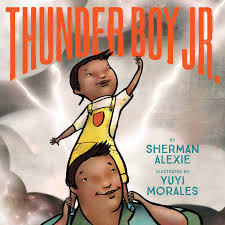
Thunder Boy Jr.
Author: Sherman Alexie; Illustrator: Yuyi Morales
Published: May 10, 2016 by Little, Brown Books for Young Readers
Goodreads Summary: Thunder Boy Jr. is named after his dad, but he wants a name that’s all his own. Just because people call his dad Big Thunder doesn’t mean he wants to be Little Thunder. He wants a name that celebrates something cool he’s done, like Touch the Clouds, Not Afraid of Ten Thousand Teeth, or Full of Wonder.
But just when Thunder Boy Jr. thinks all hope is lost, he and his dad pick the perfect name…a name that is sure to light up the sky.
National Book Award-winner Sherman Alexie’s lyrical text and Caldecott Honor-winner Yuyi Morales’s striking and beautiful illustrations celebrate the special relationship between father and son.
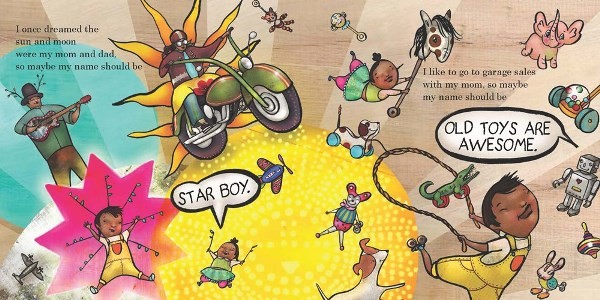
My Review and Teachers’ Tools for Navigation: I should start by admitting that I have a mildly unhealthy obsession with Sherman Alexie’s work. Ever since I discovered his greatness in college, I can’t get enough of him! So I broke one of my rules and pre-ordered this book. It surely didn’t disappoint! His writing and Yuyi Morales’ illustrations makes for a masterful text. As you can see from the flagged passage (a spread) below, the writing and illustrations pop, and readers will be captivated by the text. My two-year-old son loved reading it with me.
One of the critiques I’ve read about this book is that it should come with a teacher’s guide for Native American naming traditions. I fully understand this critique can understand where it is coming from. While I think an author’s note would have been helpful, as a fellow Native American, I wonder if this really should be a critique of the text. Why must Sherman Alexie (and other Native Americans) feel the need to always justify and explain their stories? I imagine that Alexie would cringe at a teacher’s (well-intentioned) attempt to follow up a reading of this text with their own naming ceremonies/activities. That said, I don’t believe this is necessarily his job. A little bit of background research will surely produce a wealth of materials about the sacredness of these rituals. I believe it seems to normalize Whiteness when we constantly request authors of color to provide teaching materials for texts. Like others, while I’d love for some aspect of the paratext to include this extra material, I don’t believe that this is a flaw of the text.
Discussion Questions: Why does Thunder Boy Jr. want a different name from his father? How does the author build the story in order to share more about Thunder Boy Jr.’s feelings?; What qualities do you share with other family members? How are you different from your family members? Do we all feel a yearning to be unique or different? In what ways are you unique?
Read This If You Loved: The Absolutely True Diary of a Part-Time Indian by Sherman Alexie, Crossing Bok Chitto by Tim Tingle, Jingle Dancer by Cynthia Leitich Smith, My Abuelita by Tony Jonston (Illustrated by Yuyi Morales), The Lone Ranger and Tonto Fistfight in Heaven by Sherman Alexie