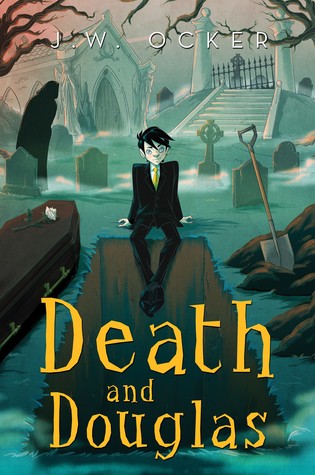
Death and Douglas by J.W. Ocker

Share

Death and Douglas
Author: J.W. Ocker
Published October 31st, 2017 by Sky Pony Press

Summary: Douglas has grown up around the business of death.

Generations of his family have run the Mortimer Family Funeral Home. The mortician and gravediggers are all his buddies. And the display room of caskets is an awesome place for hide and seek. It’s business as usual in Douglas’s small New England town.

Until one day an incredibly out of the ordinary murder victim is brought to the funeral home. And more startling: others follow. On the cusp of Halloween, a serial killer has arrived. And unsatisfied with the small-town investigation, Douglas enlists his friends to help him solve the mystery.

With sumptuous descriptions of a bucolic town and its quirky people, fascinating yet middle grade–appropriate insider information about the funeral process, and a crackling mystery with a heart-pounding conclusion—Death and Douglas has something for readers young and old.

About the Author: J. W. Ocker is the Edgar Award–winning author of Poe-Land: The Hallowed Haunts of Edgar Allan Poe. His work has appeared in Rue Morgue magazine, the Boston Globe, CNN, the Atlantic, and other places people stick writing. He’s from Maryland but has lived in New Hampshire since 2008. This is his first book for children.

Praise: 

“Ocker populates his eerie New England town with a memorable cast, and gives us a compelling hero in Douglas Mortimer. Kids and coffee-drinkers beware!” —Patrick Moody, author of The Gravedigger’s Son

“With the perfect balance of macabre and mystery, the ideal combination of horror and humor, the Ghastlies are bringing plenty of goosebumps and giggles for everyone!” —Brooks Benjamin, author of My Seventh Grade Life in Tights

Review: To be honest, I didn’t know what I was getting myself into when I started this book because it is way creepier than I thought it was going to be, but a serial killer on the loose in a town definitely will add that creep factor to any book.

Douglas is definitely well-rounded and mature when it comes to death, it has been around him his entire life, but all death he’s encountered has been natural or an accident until now. This is an interesting point of view for a character as I’ve never read a middle grade book with a character like Douglas. All of a sudden, a young boy who never feared death realizes that there is evil in some deaths and that scares him more than it may scare most because it is a new realization. This definitely adds to the suspense because Douglas is not only questioning everything around him but also on the look out for a serial killer, so all bumps in the night are a reason to jump.

I will also say that the conclusion was not what I saw coming!

Side note: Douglas and his friends did some DANGEROUS things, and I know that we have to suspend our belief when reading, but the whole time as an adult I wanted to yell at them for being so ridiculously careless in their safety by searching for a serial killer! Kids: Do not do that at home!

Teachers’ Tools for Navigation: My students are always asking me for mystery books or horror books, and they are so hard to come by in middle school; however, this one will be perfect for them! Death and Douglas belongs in libraries of any kind!

Discussion Questions: 

  • Why are Douglas’s friends jealous of how his parents treat him?
  • How did Douglas become so well rounded when it comes to death?
  • What is a mortician vs a medical examiner?
    • The different terms for mortician are discussed: What are the different connotations of the different terms (mortician, undertaker, funeral director)?
  • How did Douglas and his friends put themselves in danger? What should they have done instead?
  • Who do you think is the serial killer? Were you right?
  • How are Lowell and Douglas different? Why does their friendship work so well?

Flagged Passages: “Maybe Lowell’s crazy plan was worth going along with, for a little while at least. Despite the terrors of teh night, both old and new, Douglas found himself comfortably lost in his own thoughts.

Until the dogwoods spoke to him.

Somewhere behind the ordered row of trunks, a short hiss of words seemed to connect the space behind him and them. They sounded hollow, inhuman, almost breaths.

He ran.

Ran like he’d never run in gym class, like no game of tag he’d ever played in the cemetery. Cold terror is the best fuel for the body.

Douglas didn’t dare look back. Didn’t even dare try to use the cane, which suddenly seemed silly in his hands. His breath came out ragged, and his feed slapped the ground even harder as he raced across the street to the front lawn of the funeral home. As he ran, he thought he could hear echoes of those sounds behind him. So close behind.

He ran even faster.

The night silhouette of the funeral home loomed above him–a scary place for some, a safe harbor for him.” (Chapter 11)

Read This If You Love: Murder mysteries or any mysteries!

Recommended For: 

classroomlibrarybuttonsmall

Signature

**Thank you to Sky Horse for providing a copy for review!**
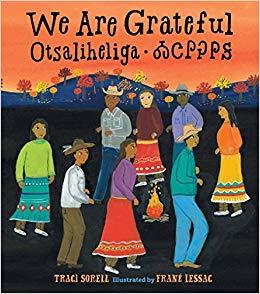
We Are Grateful: Otsaliheliga by Traci Sorell

Share

We Are Grateful: Otsaliheliga
Author: Traci Sorell
Illustrator: Frané Lessac
Published September 4, 2018 by Charlesbridge Publishing

Summary: A look at modern Native American life as told by a citizen of the Cherokee Nation

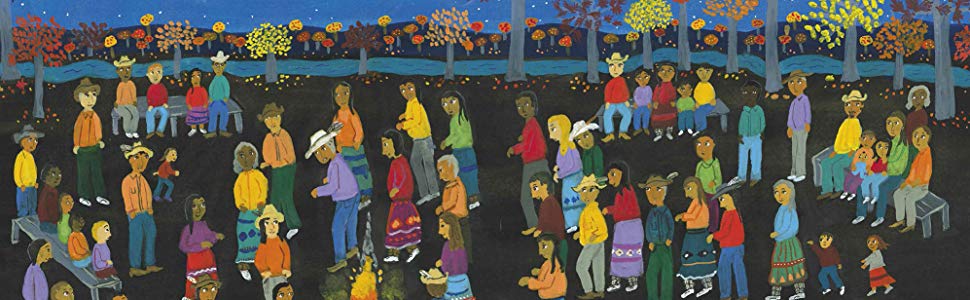
The word otsaliheliga (oh-jah-LEE-hay-lee-gah) is used by members of the Cherokee Nation to express gratitude. Beginning in the fall with the new year and ending in summer, follow a full Cherokee year of celebrations and experiences.

Appended with a glossary and the complete Cherokee syllabary, originally created by Sequoyah

Review: This beautiful book makes for a wonderful read-aloud. I loved the repetition and the different things to be grateful for. The images are captivating, and I found myself slowing down as I read and turned each page. The seasons shift through the text, which offers great opportunities for discussion. Indigenous people are often perceived to be people of the past, but this book demonstrates that they are living, breathing people. The culture is very much alive. I’ll be gifting this book to several friends with young children.

Teacher’s Tool For Navigation: Students might list the different things that they are grateful for and draw accompanying pictures. It offers great opportunities for discussing how Native people still exists and are not relics of the past, reserved for discussions on Thanksgiving day.

Discussion Questions: How do the seasons change across the pages? How does this shift the story?; Describe the people you see on the pages. What can you learn from them?; Find three words that you don’t know. Learn what they mean and share their definitions with a peer.

We Flagged: “…while we collect buckbrush and honeysuckle to weave baskets.”

Read This If You Loved: The People Shall Continue by Simon J. Ortiz; Dreamers by Yuyi Morales; The Day You Begin by Jacqueline Woodson

Recommended For: 

readaloudbuttonsmall classroomlibrarybuttonsmall 

RickiSig

**Thank you, Donna, from Charlesbridge Publishing for sending a copy for review!**

The Astonishing Color of After by Emily X. R. Pan

Share

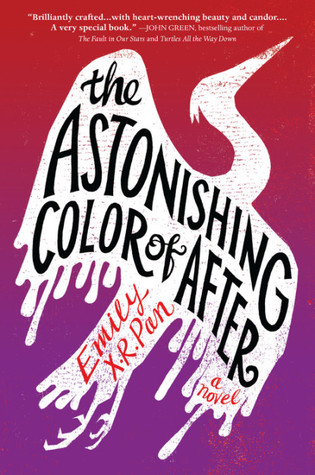
The Astonishing Color of After
Author: Emily X. R. Pan
Published: March 20, 2018 by Little, Brown

Goodreads Summary: Leigh Chen Sanders is absolutely certain about one thing: When her mother died by suicide, she turned into a bird.

Leigh, who is half Asian and half white, travels to Taiwan to meet her maternal grandparents for the first time. There, she is determined to find her mother, the bird. In her search, she winds up chasing after ghosts, uncovering family secrets, and forging a new relationship with her grandparents. And as she grieves, she must try to reconcile the fact that on the same day she kissed her best friend and longtime secret crush, Axel, her mother was taking her own life.

Alternating between real and magic, past and present, friendship and romance, hope and despair, The Astonishing Color of After is a novel about finding oneself through family history, art, grief, and love.

My Review: I just finished discussing this book with my class, and they loved it. It is a bit of a longer book and moves somewhat slowly, but even my students who didn’t finish it in time insisted that I should use it again next year. The writing is absolutely stunning. Pan depicts humanity in ways that are very powerful. She integrates color and emotion to connect readers to the characters. We had two one-hour class periods to discuss this book, and there were so many things to talk about. Discussion was easy, and students made meaningful connections with the book. This book is simply unforgettable. I recommend it highly and hope it wins some awards in January!

Teachers’ Tools for Navigation: My students said that they Googled the colors within the text as they read. We spent a lot of time talking about the colors as an effective writing tool. I asked students to think of a moment in their lives that they’d be willing to share. Then, I asked them to attach a color with the moment. They shared beautiful stories of working at drive-ins, meeting their SOs, visiting places with friends, etc. The colors they attached with the images were fascinating and made the stories come alive.

Discussion Questions: 

  • How does the author incorporate magical realism in the text? Is it effective?
  • Did Leigh and Axel’s relationship feel realistic to you? Why or why not?
  • Which scenes are beautifully written, and how do they demonstrate excellent writing?
  • Should we forgive Leigh’s father? Why might he make the decisions he makes?

We Flagged: “Once you figure out what matters, you’ll figure out how to be brave.”

Read This If You Loved: Goodbye Days by Jeff Zentner, When the Moon Was Ours by Anna-Marie McLemore, Miles Away From You by A. B. Rutledge, All the Bright Places by Jennifer Niven, Looking for Alaska by John Green, Forgive Me, Leonard Peacock by Matthew Quick

Recommended For:classroomlibrarybuttonsmall

  RickiSig

Complexity in The Impossible Knife of Memory by Laurie Halse Anderson

Share

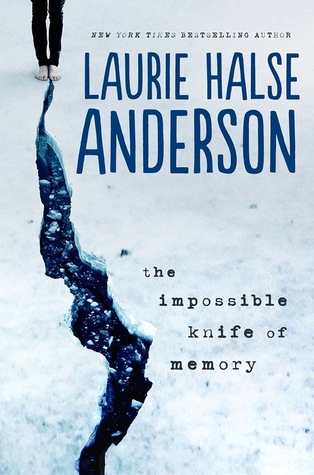
The Impossible Knife of Memory
Author: Laurie Halse Anderson
Published January 7th, 2014

ALAN Walden Award Finalist 2015
National Book Award Longlist 2014
School Library Journal Best Young Adult Book of 2014

Summary: For the past five years, Hayley Kincain and her father, Andy, have been on the road, never staying long in one place as he struggles to escape the demons that have tortured him since his return from Iraq. Now they are back in the town where he grew up so Hayley can attend school. Perhaps, for the first time, Hayley can have a normal life, put aside her own painful memories, even have a relationship with Finn, the hot guy who obviously likes her but is hiding secrets of his own.

Will being back home help Andy’s PTSD, or will his terrible memories drag him to the edge of hell, and drugs push him over? The Impossible Knife of Memory is Laurie Halse Anderson at her finest: compelling, surprising, and impossible to put down.


Complexity in Young Adult Literature

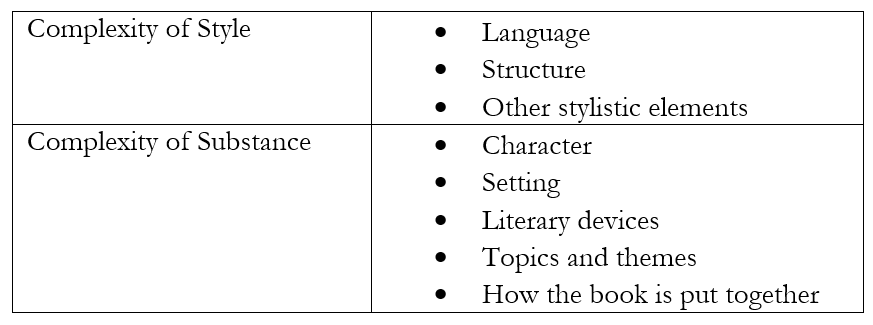
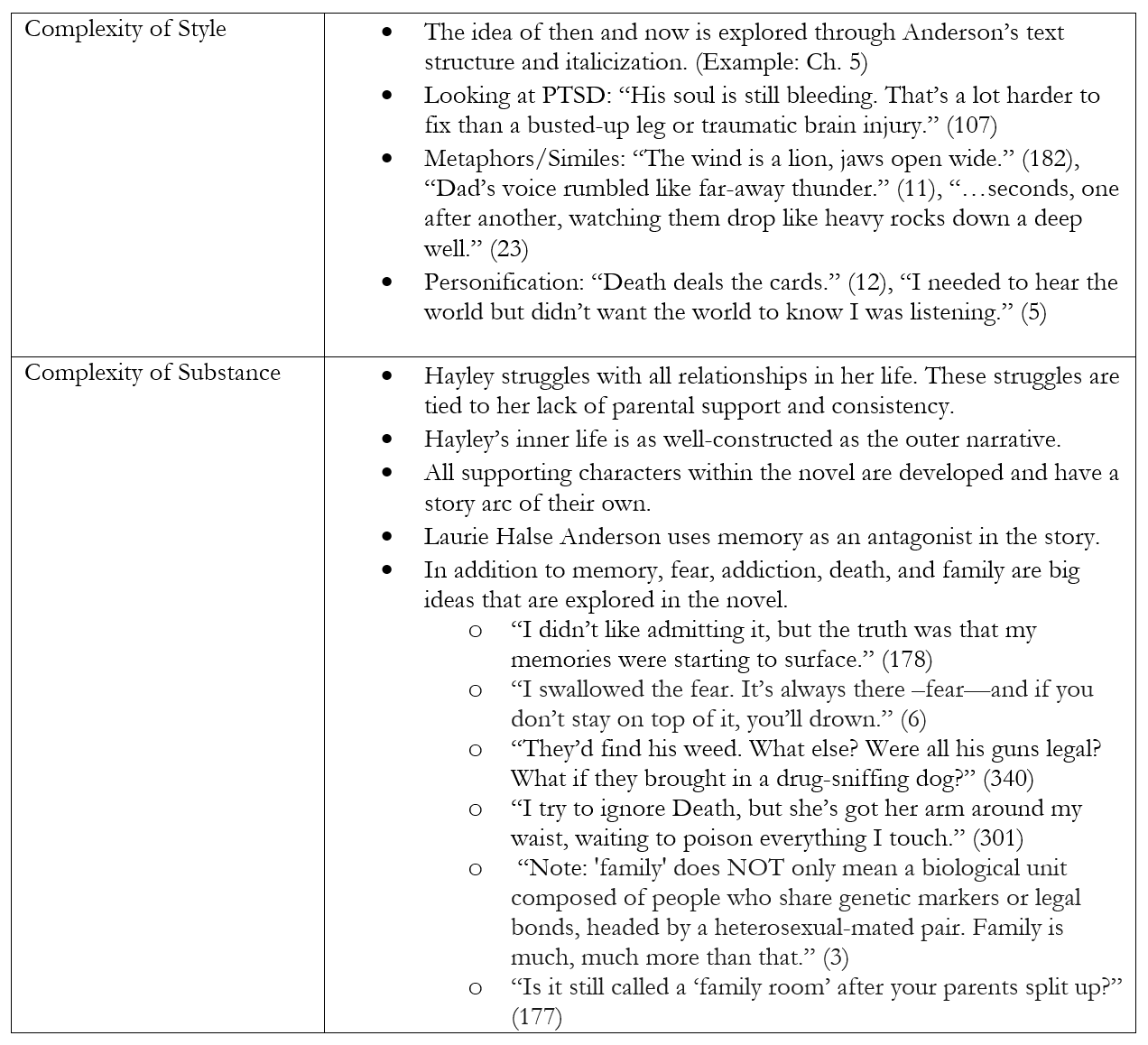
In Teaching Reading with YA Literature: Complex Text, Complex Lives by Jennifer Buehler, Chapter 2 looks at Young Adult Literature and Text Complexity and gives 8 different elements to think about to help analyze the complexity of a text:

Examples of complexity in The Impossible Knife of Memory by Laurie Halse Anderson

Other questions that could be asked while reading to find complexity in YAL
(Examples from Teacher Reading with YA Literature, Buehler 36-37)

  • Language: Are the sentences artfully constructed? Are the words carefully chosen? Does the author incorporate figurative language or poetic expression? Can we hear voice in the writing?
  • Structure: How is it built in terms of form and structure? How do other elements such as titles and subtitles, vignettes and interludes, shifts between past and present, or multiple points of view work together to service the whole?
  • Other Stylistic Elements: Are there other distinct elements in the text?
  • Character: What is there to explore in terms of the character’s thoughts and feelings; conflicts and contradictions; struggles, growth, and change?
  • Setting: How does the author bring us into the world of the story? What details help us to see, hear, and imagine this place?
  • Literary Devices: How does the author use literary or cultural allusions, intertextual references, dialogue, internal monologue, metaphor and symbolism, magical realism, or repetition to build meaning?
  • Topics and themes: What questions does the book ask? What ideas does it explore? What is at stake for teen readers in this book?
  • How the book is put together: How effective is the interplay between plot layers and thematic layers?

Discussion Questions/Writing Prompts for The Impossible Knife of Memory

Complexity can also be increased by the characteristics of the reader (such as motivation, knowledge, and experiences) and task variables (such as purpose and the complexity generated by the task assigned and the questions posed). Here are some examples of discussion questions or writing prompts that could be used in classrooms or with independent readers who are reading The Impossible Knife of Memory.

  • Hayley classifies all people into two categories: freaks & zombies. What does Hayley’s idea of the world show us about her outlook on life?
  • How does Laurie Halse Anderson use the idea of THEN and NOW throughout the novel to build on the theme that memories are a very complex part of life?
  • Drowning is a motif throughout the novel.
  • How does Laurie Halse Anderson show the reader that Hayley’s father is suffering and found addiction without using those words?
  • How did the inclusion of Hayley’s romantic relationship with Finn help move along the story and Hayley’s transformation? Do you feel that Hayley’s story arc would have been the same without Finn in the story?
  • How was the setting an integral part of the story? How did Hayley returning to her deceased grandmother’s home propel the story?
  • .Trish is one of the most complex characters in the book because there are many different Trishes shared with us throughout the story: Trish then, Trish now in reality, and Trish now in Hayley’s mind. How did Laurie Halse Anderson develop each of these different characters to show the reader a full picture of Trish?

This complexity information and activities can be found as a PDF on Laurie Halse Anderson’s website or my SlideShare.

To learn more about complexity in young adult literature, please read Teaching Reading with YA Literature: Complex Text, Complex Lives by Jennifer Buehler!

Teaching Guide and Review!: Water in May by Ismée Amiel Williams

Share

Water in May
Author: Ismée Amiel Williams
Published September 12th, 2017 by Abrams Books

Summary: Fifteen-year-old Mari Pujols believes that the baby she’s carrying will finally mean she’ll have a family member who will love her deeply and won’t ever leave her—not like her mama, who took off when she was eight; or her papi, who’s in jail; or her abuela, who wants as little to do with her as possible. But when doctors discover a potentially fatal heart defect in the fetus, Mari faces choices she never could have imagined.

Surrounded by her loyal girl crew, her off-and-on boyfriend, and a dedicated doctor, Mari navigates a decision that could emotionally cripple the bravest of women. But both Mari and the broken-hearted baby inside her are fighters; and it doesn’t take long to discover that this sick baby has the strength to heal an entire family.

Inspired by true events, this gorgeous debut has been called “heartfelt, heartbreaking and—yes!—even a little heart-healing, too” by bestselling YA novelist Carolyn Mackler.

About the Author: Ismée Williams is a pediatric cardiologist who practiced at the Columbia University Medical Center in the Washington Heights neighborhood of New York City for fifteen years. She currently sees patients at Montefiore Hospital in the Bronx. As the daughter of a Cuban immigrant, partially raised by her abuelos, her background helped her understand the many Maris she met along the way. Water in May is her first novel.

Praise: 

“Full of spot-on cultural texture and packing an emotional punch, this is an unusual take on the teen-pregnancy problem novel… Williams presents her experience in a way that demands not pity but respect while also reminding readers of Mari’s heartbreaking youth and innocence at unexpected times…Fierce and tender—and absolutely worth reading.” — Kirkus, STARRED REVIEW

“Mari is a deeply credible character, a girl who’s always spoiling for a fight, usually a physical one, but who’s turning that impulse into fighting for her baby. Williams, formerly a pediatric cardiologist at Columbia, brings vivid authenticity to the medical side of things, including the details of life with a baby in the NICU and the varying personalities of health care personnel.” — Bulletin of the Center for Children’s Books

“This novel is realistic and compelling, heartfelt and heartbreaking all at the same time. The author’s experience as a pediatric cardiologist brings authenticity to her writing as much as does her experience of navigating cultural barriers. Young adult readers will connect with Mari’s feisty personality, strength, and vulnerability.” — VOYA Magazine

Review: Mari’s story is one that isn’t often told. Mari is someone most people would see on the streets and would try to ignore because getting to know her would be getting to know how hard life in America can be. But Mari is also someone who is stronger than many of us will ever be. Her story is one that will make readers think about assumptions OR will help readers see a mirror into struggles they may be having in life. Although I hope teens don’t see Mari’s story as an invitation for a teenage pregnancy, I believe the truth of her hardships show the tremendous change a baby brings to life and will show that Mari’s decisions are made out of desperation when there are other paths she could have taken. Some who read the book have said they don’t like Mari as a character, but I found that when Mari was frustrating, it was because she was acting like what she is: a fifteen-year-old girl trying to find her place in this crazy world.

Teachers Guide with Activities and Discussion Questions written by me: 

Guide can also be accessed through Abrams Books’s Resource Page.

Recommended For: 

classroomlibrarybuttonsmall 

Signature

**Thank you to Ismée Williams for finding me and allowing me to complete this guide!**

Blog Tour with Reviews and Teaching Tools: Adrian Simcox Does NOT Have a Horse by Marcy Campbell & Corinna Luyken

Share

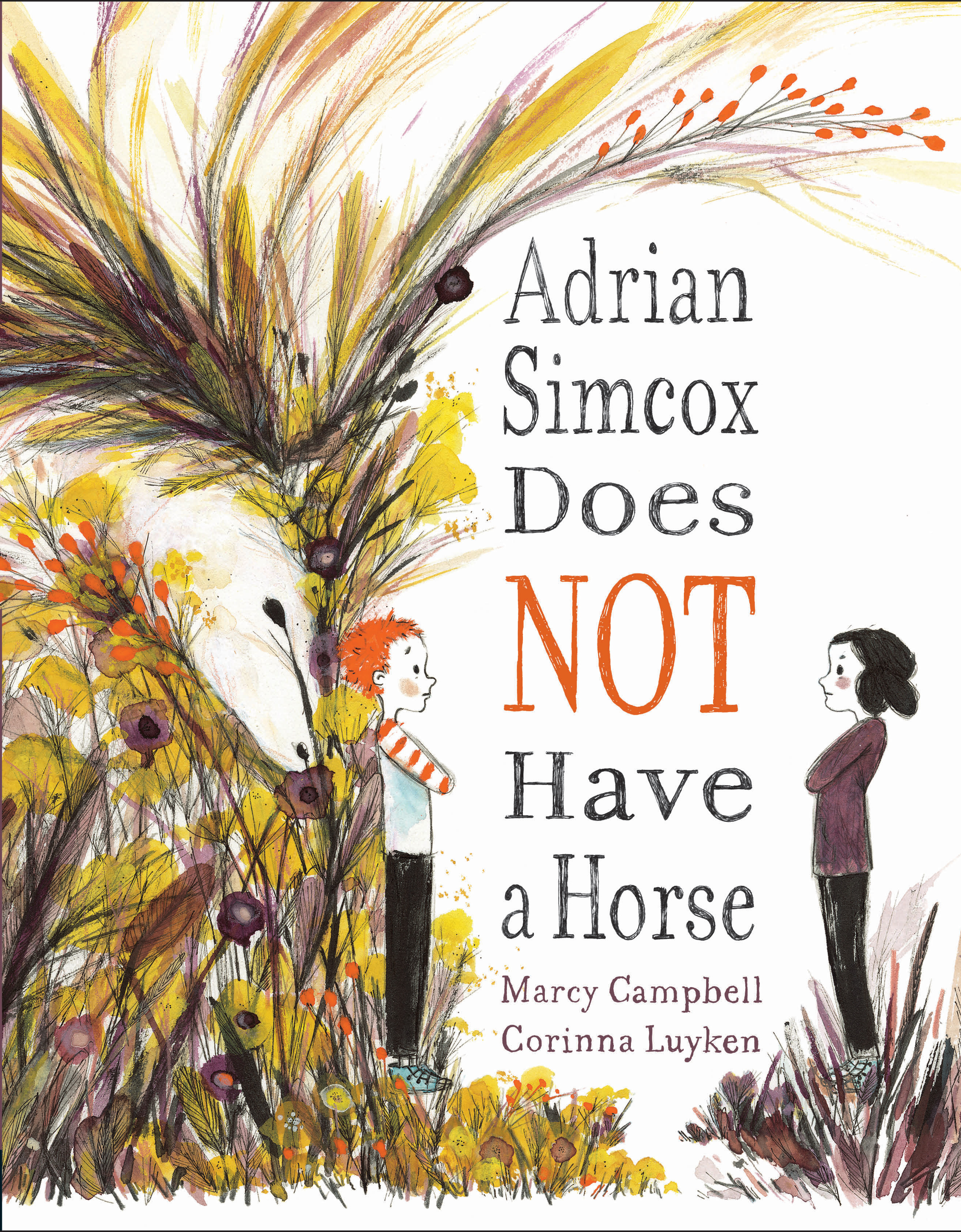
Adrian Simcox Does NOT Have a Horse
Author: Marcy Campbell
Illustrator: Corinna Luyken
Published August 14th, 2018 by Dial Books

Summary: A classic in the making, this heartwarming story about empathy and imagination is one that families will treasure for years to come.

Adrian Simcox tells anyone who will listen that he has a horse–the best and most beautiful horse anywhere.

But Chloe does NOT believe him. Adrian Simcox lives in a tiny house. Where would he keep a horse? He has holes in his shoes. How would he pay for a horse?

The more Adrian talks about his horse, the angrier Chloe gets. But when she calls him out at school and even complains about him to her mom, Chloe doesn’t get the vindication she craves. She gets something far more important.

Written with tenderness and poignancy and gorgeously illustrated, this book will show readers that kindness is always rewarding, understanding is sweeter than judgment, and friendship is the best gift one can give.

About the Creators:


Marcy Campbell lives in Ohio with her family and menagerie of rescued pets. Her writing for adults has been published widely in journals and magazines, including Salon. She grew up on a farm filled with cows, chickens, cats, and dogs, but she never had a horse. Adrian Simcox Does NOT Have a Horse is her debut picture book. You can visit her at www.marcycampbell.com.

Corinna Luyken grew up in different cities along the West Coast, and after studying at Middlebury College, she settled in Washington State, where she draws inspiration from nature, her family, and the human form. Her debut picture book, The Book of Mistakes, received four starred reviews and has been praised by Entertainment WeeklyThe Wall Street Journal, Nerdy Book Club, and more.

Kellee’s Review: 43.1 million Americans (as of 2016) live below the poverty line. Adrian Simcox represents one of those kids while Chloe represents too many peers. But what made this book for me was Chloe’s transformation. It wasn’t Adrian who needed to change! Adrian is a wonderful kid that too many people judge based on his circumstances when really it is all about who he is, and I am so thankful for Chloe finding the truth out in the end. This book will make kids rethink how they judge others and really does emote empathy and kindness. And I couldn’t review this book without giving a shout out to the beautiful illustrations. They are ART.

Ricki’s Review: I loved this book so much that I bought a copy for my son’s preschool teacher. I love that it can be read from a multitude of angles, and it provides so much fodder for classroom conversations. The illustrations are magical, the story is magical—everything about this book is magical. My son’s preschool teacher told me that the kids asked her to read it four times in a row. Although I am not sure if they spent time discussing poverty, I do know that those children (at the very least) received implicit messages about the truth of poverty and the power of imagination. I suspect this book will receive some major awards. It is one of my favorites of the year.

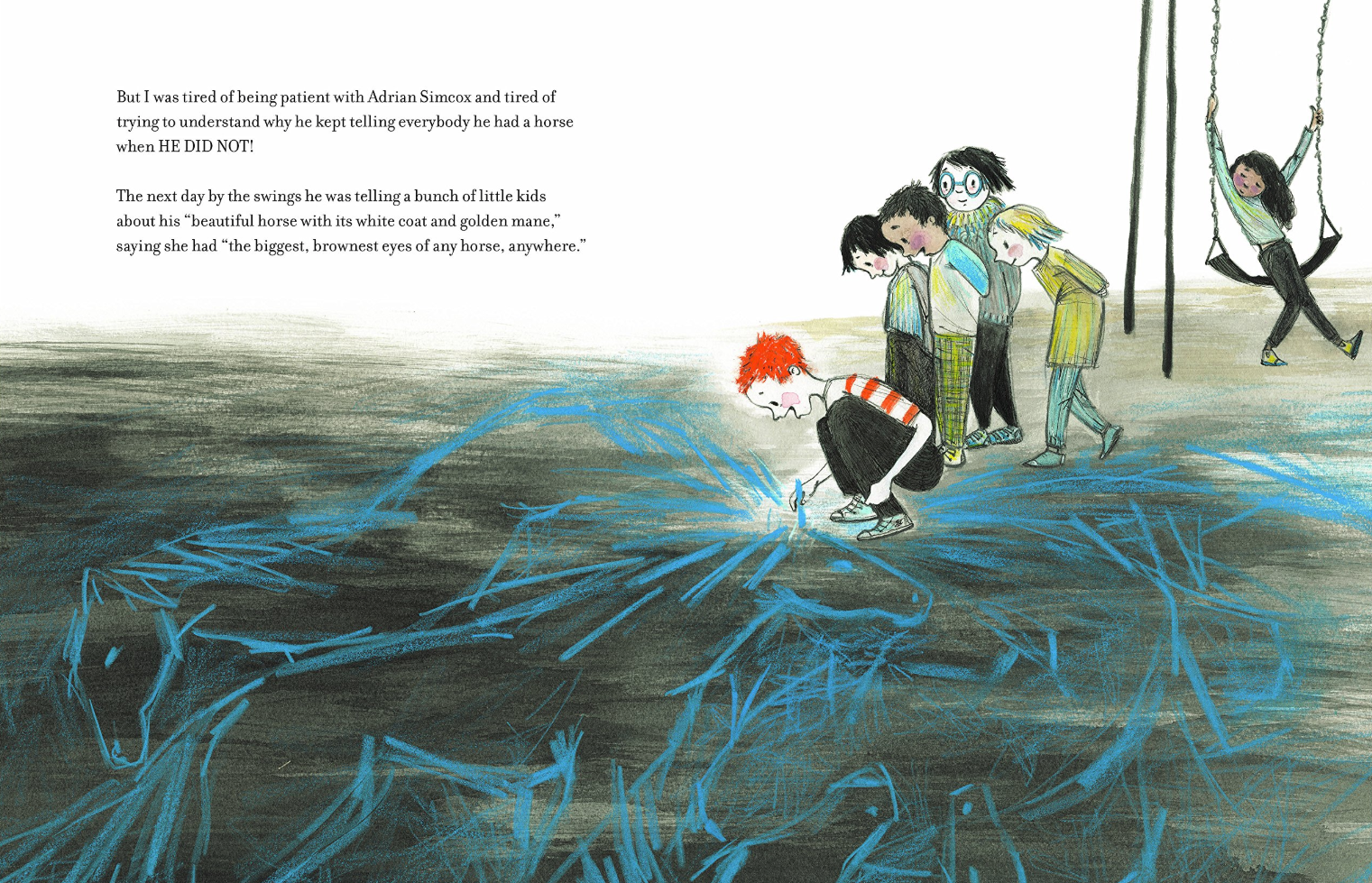
Teachers’ Tools for Navigation: Read this book aloud and talk about it with kids. Period. The illustrations can also definitely be visually analyzed. First, if you didn’t notice, there is a horse hiding in many of the illustrations. Second, so much of the story is told in the illustrations–don’t forget to analyze them!

Discussion Questions: 

  • Why did Chloe judge Adrian without knowing him?
  • Why do you think Chloe cares so much about Adrian’s horse?
  • How did Chloe’s mom help her realize that she is not being compassionate?
  • How did the illustrator tell more of a story in the artwork?
  • Why do you believe the author wrote Adrian’s story?

Flagged Passages: 

Read This If You Love: Each Kindness by Jacqueline Woodson, I Walk with Vanessa by Kerascoët

Recommended For: 

classroomlibrarybuttonsmall 

Don’t miss other stops on the blog tour: 

August 6 – Lost in Storyland
August 7 – The Readathon
August 8 – Happily Ever Elephants
August 9 – Read. Learn. Repeat
August 10 – Kid Lit Frenzy
August 13 – Here Wee Read
August 14 – DoodleMom
August 15 – Eastern Sunset Reads
August 16 – Critter Lit
August 17 – Unleashing Readers

Signatureand 

**Thank you to Friya at Penguin Young Readers for setting up the blog tour!**

Daring Dreamers Club: Milla Takes Charge by Erin Soderberg

Share

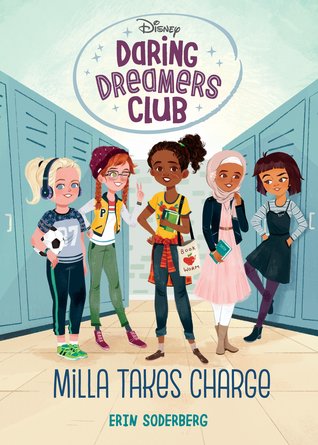
Daring Dreamers Club #1: Milla Takes Charge
Author: Erin Soderberg
Illustrator: Anoosha Syed
Published June 5th, 2018 by Random House

Summary: When you follow your dreams, the possibilities are endless!

Milla loves nothing more than imagining grand adventures in the great wide somewhere, just like Belle. She dreams of traveling the world and writing about her incredible discoveries. Unfortunately, there is nothing pretend about the fifth-grade overnight and Milla’s fear that her moms won’t let her go.

Enter Piper, Mariana, Zahra, and Ruby. Together with Milla, they form the Daring Dreamers Club and become best friends. But can they help Milla believe she’s ready for this real grand adventure?

Diverse, talented, and smart–these five girls found each other because they all had one thing in common: big dreams. Touching on everyday dramas and the ups and downs of friendship, this series will enchant all readers who are princesses at heart.

About the Creators: 

ERIN SODERBERG lives in Minneapolis, MN, with her husband, three adventure-loving kids, and a mischievous Goldendoodle named Wally. Before becoming an author, she was a children’s book editor and a cookie inventor and worked for Nickelodeon. She has written many books for young readers, including the Quirks and Puppy Pirates series. Visit her online at erinsoderberg.com.

ANOOSHA SYED is a Pakistani illustrator & character designer for animation. She received her BFA in illustration at Ceruleum: Ecole d’arts Visuels in Switzerland, and now lives in Canada. Visit her online at anooshasyed.com.

Praise: 

“Though core issues of identity, independence, and teamwork ground the novel, Disney Princess devotees will likely be the most charmed. —Publishers Weekly

“I cannot wait to “hear” the stories of all the other girls! Brava Erin SD for kicking off a new series for the younger MG set! Positive messages for kids! —Goodreads Praise

“Young readers will be able to relate to the story, there is a positive message, and the characters provide a model of friendship, showing how friends work together and support on another. Loved meeting these girls!” —Goodreads Praise

ReviewI know that at first this book may seem like a book that only Disney or Princess lovers would like, but it is so much more than that! So please do not judge this book by that idea! Instead you will find a story about girls who find a deep friendship within each other after being placed in a group at school together. With the guidance of an amazing educator, they look deep within themselves and join as a group while still celebrating their individuality.

Now, as someone who DOES love Disney and Disney princesses, I loved the angle that this book took! After the first assignment by their group teacher, the girls are asked to write about a princess who they connect with. Milla and her friends are using the strengths of the princesses as inspiration to build their own strengths. For example, Milla feels like her life is very sheltered, and she loves to write, so she finds inspiration in Belle. Ruby, who is athletic and prides herself in her strength, first struggles to connect with a princess but then she realizes that Mulan is a person that is very much who she would like to be. And each girl does her own reflection (written in her own words in a journal format).

This first book focuses on Milla, but we get to know all the girls through the inclusion of the journals and from Milla’s point of view. I assume that future books will also be in different points of view to allow readers to get to know more in depth each of the characters. I look forward to future books to see where Piper, Milla, Mariana, Ruby, Zahra and Ms. Bancroft go next!

Teachers’ Tools for Navigation: I love Ms. Bancroft! And I think that how she had the girls introduce themselves and her first assignment that she gave the Daring Dreamers Club would be wonderful activities in a classroom:

  • “I’d love for each of you to introduce yourself and share one of your big dreams.”
  • “I want each of you to think of a princess you connect with or feel inspired by and explain why. Dig deep and really think about your answer.”

Since each of the girls’ answers are shared in the book, they would be a great thing to share as well.

In addition, this book is going to be LOVED by realistic fiction fans! I cannot wait to share it with my students.

Discussion Questions: 

  • Which of the five main characters do you connect with the most?
  • If you had to choose a princess you connect with, who would you choose?
  • Do you think Milla went about getting her moms to trust her correctly?
  • How does Ms. Bancroft inspire the girls? How is she different than the last music teacher?
  • What is one of your big dreams?

Flagged Passages: “Milla loved reading and writing just about anything, but there was nothing she enjoyed more than creating adventures for herself. In Milla’s stories, she was always a brave hero without fears or worries of any kind. One of the things Milla most loved about writing was that she was totally in charge and got to make all the decisions about what would happen on her adventures. The only limitation was her imagination, and her imagination was vast.” (p. 6)

Read This If You Love: Baby-Sitters Club by Ann M. Martin, Harbor Me by Jacqueline Woodson, Be Prepared by Vera Brosgol, Whatever After by Sarah Mlynowski

Recommended For: 

classroomlibrarybuttonsmall 

Disney’s Dream Big, Princess–Be a Champion Campaign: 

Signature

**Thank you to Sydney at Penguin Random House for providing a copy for review!**