Review and Author’s Guest Post!: “Josh, Harrison & Dad’s Excellent Adventure” by Henry L. Herz, Author of Monster Goose Nursery Rhymes

Share

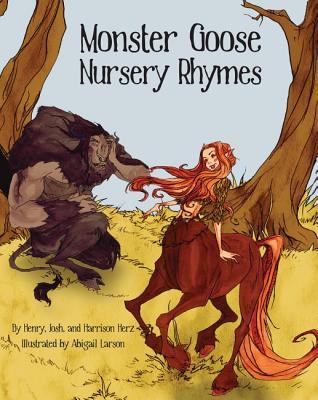
monster goose

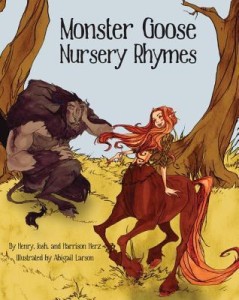
Monster Goose Nursery Rhymes
Authors: Henry, Josh, and Harrison Herz
Illustrator: Abigail Larson
Published February 7th, 2015 by Pelican Publishing Company

Goodreads Summary: Enter an enchanted land of mythical creatures where manticores reign and ogres roar-a land of mystery and fright. A unique twist on traditional rhymes of everyone’s youth, “Monster Goose Nursery Rhymes” presents a more sinister approach to these childhood classics, and yet the sing-song nature of the poems renders them playful and jovial at the same time. Little Witch Muffet is not frightened by a silly, little spider; she simply adds him to her stew!

Rotten zombies, giants, dwarves, and goblins mingle with werewolves, centaurs, and fauns. Follow along the skeleton stepping stones, scale up a palisade, claw at the window of a tasty child and bake him into a pumpkin shell. Monsters cook up delicious elvish pie, too! Every kid who has an eensy weensy bit of sense wants a pet with feathers white as snow, who flies like an eagle and bleats like a goat-a hippogriff, of course!

Six forest sprites with four times as many pixies escape from a loaf of bread atop the elaborate table of the fey queen; her feast has flown away! If you enjoy mischief and have a penchant for the morbidly hilarious, the Herzs’ rhymes will satisfy your mythological curiosities.

Larson’s illustrations give new life to these ancient figures, and her artistic style employs the bold lines and colorful movement of an action-packed comic book. The author also includes a “bestiary” with information about the book’s legendary creatures, which hail from Scotland, Germany, Italy, Persia, Haiti, and Scandinavia.

Kellee’s Review and Teachers’ Tools for Navigation: Really like the creativity of mashing monster/mythology and nursery rhymes. A great intro to all things traditional lit and fantasy in a rhyming, fun way. I especially liked that the creatures hail from a variety of places and that the author included an appendix that includes information about each of them. I think this book would be a great way to introduce mythology as well as give students an opportunity to make their own parody of a nursery rhyme using a creature.

One thing that makes this book special is that Henry Herz wrote this book with his two sons. I am happy to share with you a post about their collaboration:

Josh, Harrison, and Dad’s Excellent Adventure

Henry, Josh & Harrison Herz

The astute observer will notice that there are three author credits for Monster Goose Nursery Rhymes. That’s because my young sons were involved in its creation. This is the tale of how two boys became traditionally published authors.

A few years ago (in a galaxy far away), I wanted to share my love of fantasy with my young sons.  They were too little for watching most of the fantasy and sci-fi movie classics, and there are only so many good fantasy books available for that age range.  Struck by inspiration one day, I came up with a way to share the joy of entering the magical realms of fantasy. I would write a fantasy book for them.

What I did not anticipate was that my boys would give me feedback on the story.  They devised some of the character (Nimpentoad) and creature (Neebel) names and made plot line suggestions.  And who better to help make the story appealing to kids than other kids?  So, the goal of interesting my sons in fantasy transformed into also encouraging them to write.

Originally, I only shared the story of Nimpentoad with family, for their own enjoyment.  I had no thoughts of having the book published.  But one day, my sister-in-law suggested that I consider publication because she felt the story was much better than many of the books she was seeing for her similarly-aged kids.  I thought about it for a while, and decided to give it a try.

The first step was to find the right artist. Once again, my sons were involved, this time in providing art direction.  We would explain in words what each illustration should contain.  Collaborating remotely via email and DropBox, our artist would give us a rough sketch, and we would provide feedback on details and color palette.  Nimpentoad came to life, while my boys added another dimension to their experience.

Given the amount of time that had passed, as well as the anticipated challenges with finding an agent or publisher willing to take a chance on an unproven writer, we decided to indie-publish.  The response to Nimpentoad was encouraging, and we subsequently indie-published Twignibble (an easy reader about a mechanically-inclined sloth, who travels the world helping his endangered animal friends), and How the Rhino Got His Skin (an updated picture book version of Rudyard Kipling’s classic).

We’ve done book readings and signings at schools, libraries, museums, farmer’s markets, book fairs, and bookstores. My boys are now experienced sales professionals! They know how to handle themselves with new people, and easily sell more books than I do.

Like any good author, I am committed to honing my craft. I belong to critique groups, participate in Tara Lazar’s annual Picture Book Idea Month (PiBoIdMo) event, and took a picture book writing class at UCSD. Part of the class curriculum was to draft some picture book manuscripts. Kids love monsters and I love monsters (being a big kid myself), and so the idea for Monster Goose Nursery Rhymes was born.

As with our other collaborations, I drafted the book, and then had my sons review it. Then it went through my critique group and more revisions. I subsequently attended the Orange County Editor’s Day event hosted by the Society of Children’s Book Writers and Illustrators (SCBWI). Monster Goose Nursery Rhymes won best picture book. After that, it was time to query agents and editors. Happily, several editors expressed interest. We chose Pelican Publishing, and the rest is history.

Writing rhyming picture books is very challenging (see why at http://wp.me/p31Xf4-K0). I jokingly encourage newbie writers to visit www.DontDoRhyme.com (not a real website). The irony is not lost on me that my debut traditionally published picture book is in rhyme. My only excuse is that I didn’t have to invent the meter, I just had to twist the words to fit the existing meter.

If you want to interest your kids in mythological creatures, or fantasy literature in general, give Monster Goose Nursery Rhymes a look. Just take care – Monster Goose Nursery Rhymes is a gateway book to The Lightning Thief and, eventually, to The Lord of the Rings.

Learn more about Monster Goose Nursery Rhymes at http://www.birchtreepub.com/mgnr.htm.

Recommended For: 

readaloudbuttonsmall closereadinganalysisbuttonsmall classroomlibrarybuttonsmall

Signature

**Thank you to Henry L. Herz for providing a copy for review and for the guest post!**

Counting Crows by Kathi Appelt

Share

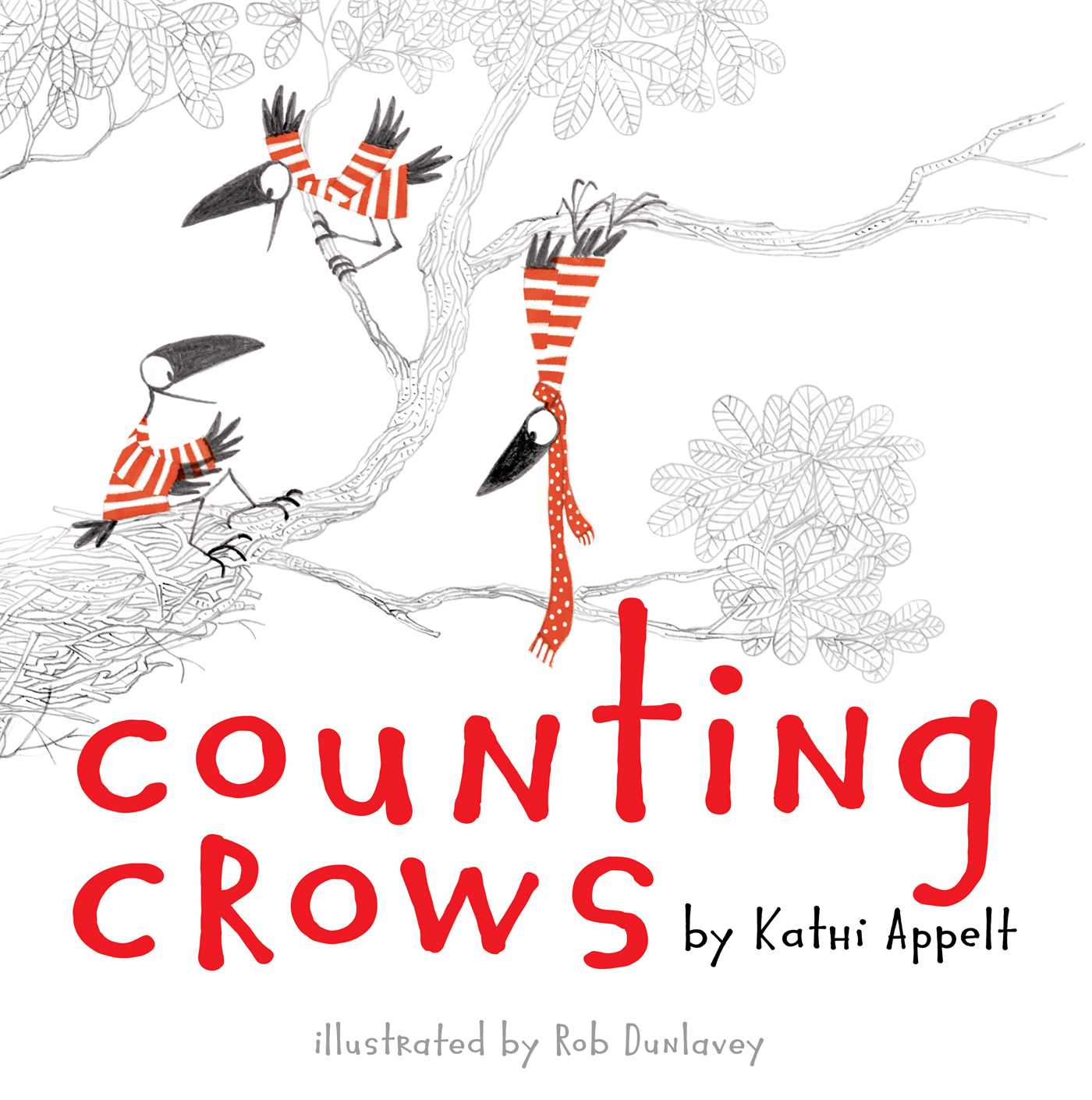
counting-crows-9781442423275_hr

Counting Crows
Author: Kathi Appelt
Illustrator: Rob Dunlavey
Published: March 3, 2015 by Atheneum

Goodreads Summary: Help hungry crows avoid a feline foe in this clever concept book from the author of The True Blue Scouts of Sugar Man Swamp and The Underneath.

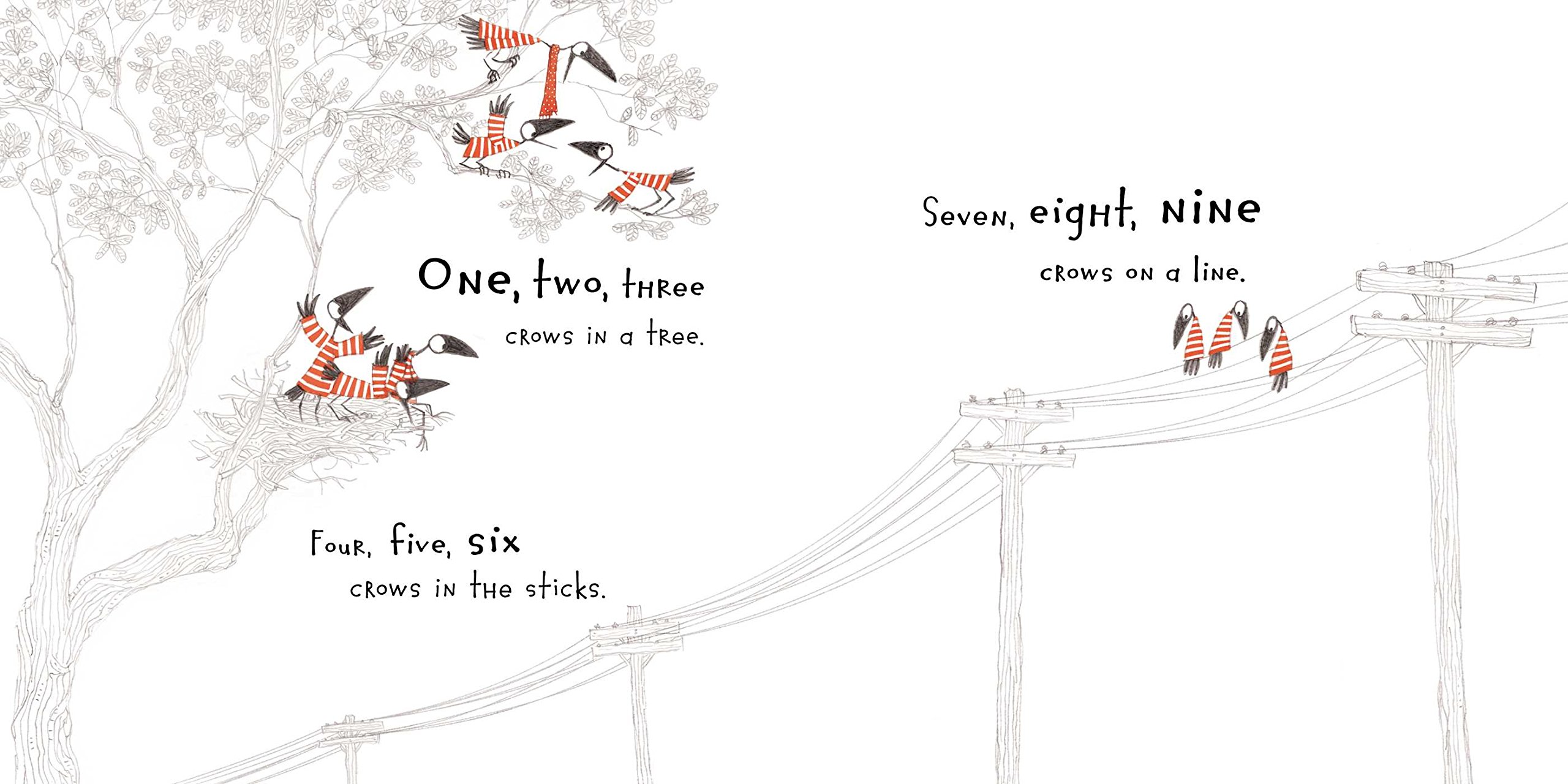
One, two, three, crows in a tree, bedecked in red scarves and hungry as can be. So they fly out of their nest with snacking in mind, and snack they do. Snack one, snack two, snack three—all the way to a dozen! But before they have time to complain about bellyaches, they have a bigger problem: a cat has been eyeing them…as potential snacks! Can these well-fed crows become well-FLED crows? Read and find out in this counting book from Newbery Finalist and two-time National Book Award Nominee Kathi Appelt, with spot-on illustrations from Rob Dunlavey. It’s the cat’s meow!

Ricki’s Review and Teachers’ Tools for Navigation: The pairing of Appelt’s strong, lyrical language, and the simplicity of the Dunlavey’s artwork make this picture book a whimsical, memorable counting book. As a mom, I have grown tired of counting books. They are important, so I keep reading them to my son (just as elementary school teachers will continue to read them to children). This book is different. The language is poetic and fresh, and it rolled off my tongue. The contrast between the pencil drawings of the setting and the black beaks and bright red coloring of the crows’ clothing shows off both the beauty of Appelt’s language and the cleverness of Dunlavey’s artwork. I was impressed by this book and am not surprised it has received three starred reviews thus far. I would ask creative writing students to analyze the structure, language, and artwork of this text. I think they would find its cleverness and innovation to be inspirational for their own work.

Kellee’s Review and Teachers’ Tools for Navigation: I agree with everything that Ricki said above. This unique counting book’s rhythmic, rhyming language mixed with good vocabulary, a chance to look at multiplication, and a story that is more than it seems really makes this book a good read for kids and adults. The poetic writing almost makes the book sing-song-y which I love in a rhyming book. But I think my favorite thing about the books is the crows. They remind me of the whimsical crows in Dumbo. I can just see those crows playing around and singing the book as they fly around.

Discussion Questions: How is this book structured to make the writing effective?; In what ways does Kathi Appelt use language creatively?; Why isn’t this book more colorful? Do you think this is intentional?

We Flagged:

counting crows spread

Image from: http://www.amazon.com/Counting-Crows-Kathi-Appelt/dp/1442423277/

Book Trailer:

Book trailer created by Kathi’s son, Cooper Appelt, and his wife, Laurel Kathleen.

Read This if You Loved: Zero by Kathryn Otoshi (or her other counting books); Richard Scarry’s Best Counting Book Ever by Richard Scarry; Counting Kisses: A Kiss & Read Book by Karen Katz; Ten Black Dots by Donald Crews

See our Guest Post by Kathi Appelt Here!

Recommended For: 

readaloudbuttonsmall  classroomlibrarybuttonsmall

RickiSigandSignature

**Thank you to Barbara at Blue Slip Media for providing copies for review!**

The Crossover by Kwame Alexander

Share

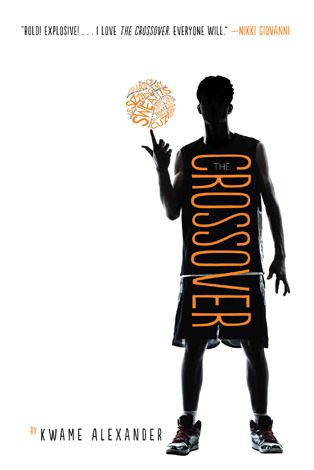
the crossover

The Crossover
Author: Kwame Alexander
Published March 18th, 2014 by Harcourt Brace and Company

Goodreads Summary: “With a bolt of lightning on my kicks . . .The court is SIZZLING. My sweat is DRIZZLING. Stop all that quivering. Cuz tonight I’m delivering,” announces dread-locked, 12-year old Josh Bell. He and his twin brother Jordan are awesome on the court. But Josh has more than basketball in his blood, he’s got mad beats, too, that tell his family’s story in verse, in this fast and furious middle grade novel of family and brotherhood.

Josh and Jordan must come to grips with growing up on and off the court to realize breaking the rules comes at a terrible price, as their story’s heart-stopping climax proves a game-changer for the entire family.

My Review: Wow. What a powerful piece of narrative and poetry. Any poem from Josh’s story could easily be taken out of context and used as a piece of exemplar poetry writing. In addition to the amazing writing, Josh is a kid that is so easy to connect with. He is so real. You love him (even if he is a little cocky). By the end of the book, you feel like you are part of Josh’s family, and you don’t want to leave.

And to top it all off: one of my reluctant readers grabbed this book and zoomed right through it. It quickly became one of his favorite books! I love when the Newbery Medal winner is accessible to students. Now to just get more students to read it and experience the awesomeness.

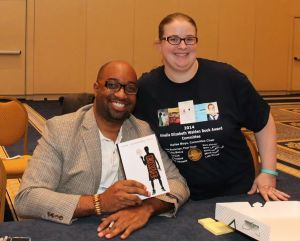
(Also, Kwame was one of my favorite presenters at ALAN, and he was such a pleasure to meet!)

kwame

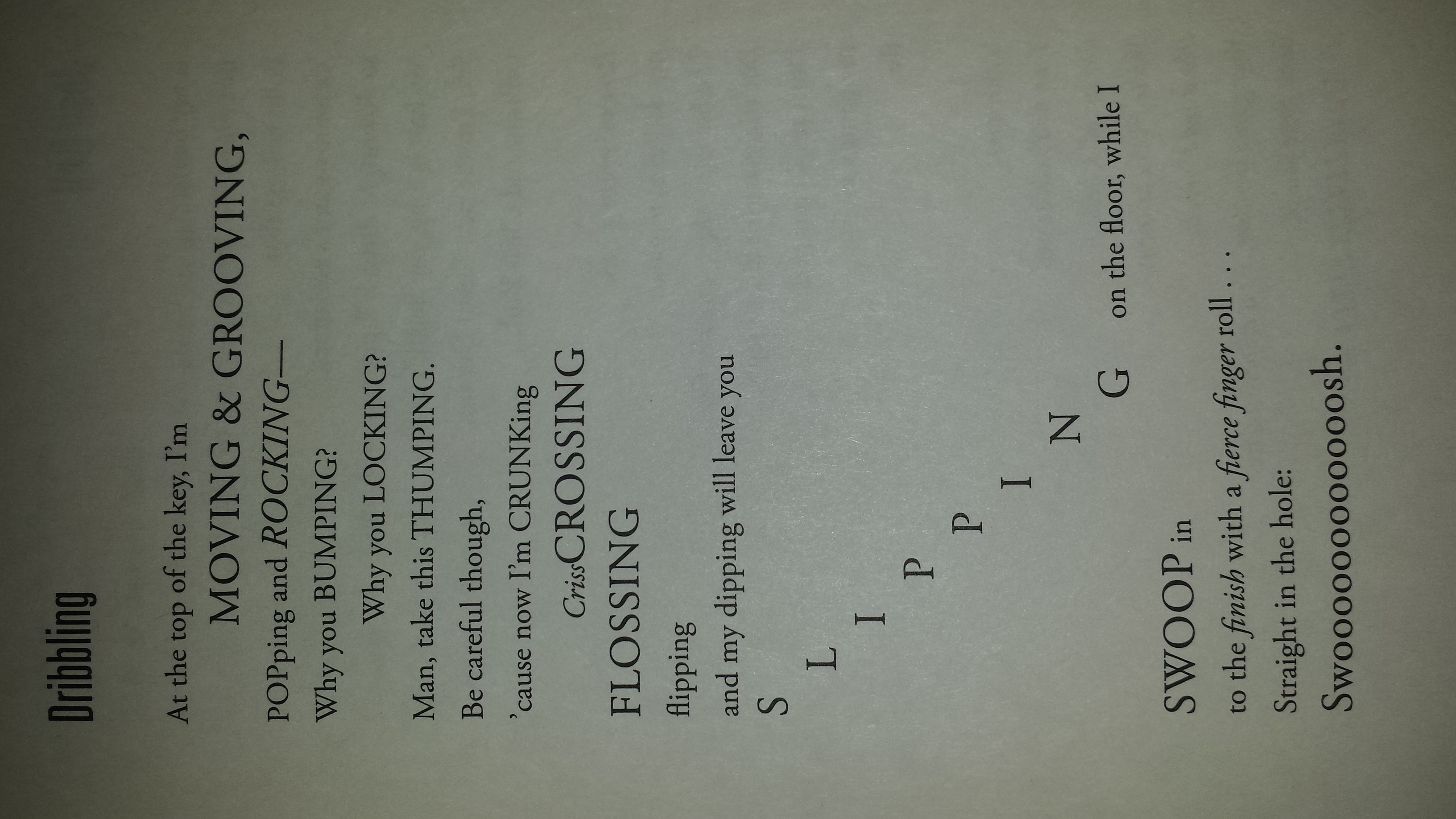
Teachers’ Tools for Navigation: I cannot wait to have my students make vocabulary poems like Josh does. Such a fun way to play with words. Additionally, like I stated above, any poem in this novel could be used in a poetry unit. I’d also love to have students come up with rules like Josh’s dad did for basketball and have them write them in verse.

Discussion Questions: Why is Josh so impacted by Jordan getting a girlfriend?; Who do you think influences Josh more: his dad or his mom? Explain.; Within his poems, Josh uses formatting, bolding, and different fonts to put emphasis on certain words. Why does he do this?; Josh uses figurative language throughout his poems. Find an example and share why you think Josh used it.; How are Josh and Jordan similar? Different?

We Flagged: 

20150216_141647

Read This If You Loved: Jumped In by Patrick Flores-Scott (YA), The Sports Pages edited by Jon Sciezska, The Moves Make the Man by Bruce Brooks, Summer Ball by Mike Lupica

Recommended For: 

classroomlibrarybuttonsmall readaloudbuttonsmall closereadinganalysisbuttonsmall

Signature

Never Fall Down by Patricia McCormick

Share

NFPB2015

Nonfiction Picture Book Wednesday

Nonfiction Picture Book Wednesday is hosted by Kid Lit Frenzy and was started to help promote the reading of nonfiction texts. Most Wednesdays, we will be participating and will review a nonfiction text (though it may not always be a picture book).
Be sure to visit Kid Lit Frenzy and see what other nonfiction books are shared this week!
**This book is technically historical fiction, but I felt it was pretty darn close to nonfiction**

never fall down

Never Fall Down
Author: Patricia McCormick
Published May 8th, 2012 by Balzer + Bray

Goodreads Summary: This National Book Award nominee from two-time finalist Patricia McCormick is the unforgettable story of Arn Chorn-Pond, who defied the odds to survive the Cambodian genocide of 1975-1979 and the labor camps of the Khmer Rouge.

Based on the true story of Cambodian advocate Arn Chorn-Pond, and authentically told from his point of view as a young boy, this is an achingly raw and powerful historical novel about a child of war who becomes a man of peace. It includes an author’s note and acknowledgments from Arn Chorn-Pond himself.

When soldiers arrive in his hometown, Arn is just a normal little boy. But after the soldiers march the entire population into the countryside, his life is changed forever.

Arn is separated from his family and assigned to a labor camp: working in the rice paddies under a blazing sun, he sees the other children dying before his eyes. One day, the soldiers ask if any of the kids can play an instrument. Arn’s never played a note in his life, but he volunteers.

This decision will save his life, but it will pull him into the very center of what we know today as the Killing Fields. And just as the country is about to be liberated, Arn is handed a gun and forced to become a soldier.

My Review: When I started Never Fall Down, I had no idea what I was getting myself into. I began it because Ricki recommended it to me, but I didn’t read the back or have any prior knowledge about the book. So, when I began, I had no idea how tough this book was going to be.

I also have to preface with my ignorance of the Cambodian Genocide. I blame my lack of world history education because this is a time of history that should be taught. It, along with the Holocaust and Armenian Genocide, was based in racism and the attempt to purify a country. Reading Arn’s story throws you right in the middle of the genocide, and Patricia McCormick doesn’t hold anything back. Every time you think nothing can get worse for Arn and the Cambodians, something does, but you also have such hope for Arn’s survival as you seen him overcome every obstacle he faces. Even though death actually stares him in the face throughout the book, this young boy somehow continues. He continues through starvation, excessive work, lack of sleep, and murder surrounding him.  Arn stated in interviews with McCormick that music saved his life, but I think it was more about his willingness to do whatever was needed to survive and especially anything to help those he cared for to survive.

Patricia McCormick tells our story in a broken English dialect that was influenced by “Arn’s own beautiful, improvised English” that McCormick heard in her head after interviewing him and traveling with him to Cambodia over a couple of years.  The extent that Ms. McCormick went to ensure that Arn’s story was a true representation of his trials and heroism is honorable.

Teachers’ Tools For Navigation: This would be a perfect cross-curricular text! It could be read in a world history class in full or in parts. Although it is McCormick’s writing, it is definitely Arn’s story, and Arn’s story is one that needs to be shared. This book could also be used in lit circles where each group has a different book about a piece of history or an individual who/that is not usually learned about (maybe with Between Shades of Gray by Ruta Sepetys, Sold, Caminar by Skila Brown, The Glass Collector by Anna Perera, Son of a Gun by Anne de Graaf, Inside Out & Back Again by Thanhha Lai, Guantanamo Boy by Anna Perera, A Long Walk to Water by Linda Sue Park, The Queen of Water by Laura Resau, or Now is the Time for Running by Michael Williams).

One of my amazing 8th grade students read this book recently, and she was as enthralled with it as I was. Immediately after finishing, she got online and started learning more about Arn and Cambodia. She came across an amazing video with both Patricia McCormick and Arn in it. It is 27 minutes long, but it is so worth watching:

Discussion Questions: What do you think ultimately helped Arn survive?; How did Sombo save Arn’s life at the orphan camp? When the war with the Vietnamese started? At the killing fields?; Do you think music is what saved Arn?; How were the Khmer Rouge able to make their prisoners do whatever they wanted them to?; Why did the Khmer Rouge kill all the educated Cambodians?; Why was Sombo so unsure about the Coca Cola?

We Flagged: “All the time now we hear girl screaming, girl running, girl crying. At night but also sometime in the daytime. All the tie, the Khmer Rouge they chase the girl, cut the hair. Sometime with scissor, sometime with knife. Chop short, to the chin, like boy. The girl, they cry and sometime they run. They run, it’s no good. The Khmer Rouge may shoot them, maybe take them to the bushes, do whatever they want. A lot of the girl afterward, they pull on their hair, pull like maybe they can stretch it, make it long, make it beautiful again.

My number two big sister, Maly, her hair like silk. Most proud thing about her, her hair. Shiny black, like blue, like a crow has. Every night she brush her hair, every morning. Sometime even she brush her hair not thinking, just dreaming maybe about the boy she love. One morning I wake up before everyone and see her making rice. Her neck, it’s bare now, her skin there is pale, never saw the sun, her long hair gone. Last night while I was asleep, the soldier, they cut her beauty. So now when she give me a bowl of rice soup, her eyes stay on the ground.” (p. 29-30)

Read This If You Loved: Titles listed above in Teachers’ Tools for Navigation

Recommended For: 

classroomlibrarybuttonsmall litcirclesbuttonsmall closereadinganalysisbuttonsmall

Signature

Dreaming in Indian Edited by Lisa Charleyboy and Mary Leatherdale

Share

dreaming in indian

Dreaming in Indian: Contemporary Native American Voices
Editors: Lisa Charleyboy and Mary Leatherdale
Published: July 24, 2014 by Annick Press

Summary: A powerful and visually stunning anthology from some of the most groundbreaking Native artists working in North America today.

Truly universal in its themes, “Dreaming In Indian” will shatter commonly held stereotypes and challenge readers to rethink their own place in the world. Divided into four sections, ‘Roots, ‘ ‘Battles, ‘ ‘Medicines, ‘ and ‘Dreamcatchers, ‘ this book offers readers a unique insight into a community often misunderstood and misrepresented by the mainstream media.

Emerging and established Native artists, including acclaimed author Joseph Boyden, renowned visual artist Bunky Echo Hawk, and stand-up comedian Ryan McMahon, contribute thoughtful and heartfelt pieces on their experiences growing up Indigenous, expressing them through such mediums as art, food, the written word, sport, dance, and fashion. Renowned chef Aaron Bear Robe, for example, explains how he introduces restaurant customers to his culture by reinventing traditional dishes. And in a dramatic photo spread, model Ashley Callingbull and photographer Thosh Collins reappropriate the trend of wearing ‘Native’ clothing.

Whether addressing the effects of residential schools, calling out bullies through personal manifestos, or simply citing hopes for the future, “Dreaming In Indian” refuses to shy away from difficult topics. Insightful, thought-provoking, and beautifully honest, this book will to appeal to young adult readers. An innovative and captivating design enhances each contribution and makes for a truly unique reading experience.

Review: I fell in love with the stunning illustrations and beautiful language of this book. I read two to three pages per night because I wanted to leave time to absorb the authors’ words and artists’ work. The eclectic mix of forms makes for a very powerful anthology that will prove enduring for readers. It features a variety of tribes, and the differing formats and content give readers a sense of both a unity across tribes and a distinctness of individuals from the different tribes. I found it to be truly inspiring and wish I could donate this book to every middle and high school classroom.

Teacher’s Tools for Navigation: This text is obviously a great resource for teachers. It need not be used in its entirety because this text would be excellent for close readings. Whatever the format, it would be preferable to avoid using this book solely during the month of November—“Native American Heritage Month.” I align with scholars who believe that diverse cultures should be highlighted year-round and integrated within curricula, rather than solely within designated months.

Discussion Questions: In what ways are the themes of this book universal? In what way are they distinct?; What themes can you find across the works?; How does this book shed light on Indian culture?; How is the text structured? Do you find the style to be effective?

Book Trailer: 

From the Authors:

Recommended For:

closereadinganalysisbuttonsmall classroomlibrarybuttonsmall

RickiSig

Once Upon an Alphabet by Oliver Jeffers

Share

Once Upon an Alphabet

Once Upon an Alphabet: Short Stories for all the Letters
Author: Oliver Jeffers
Published October 14th, 2014 by Philomel

Goodreads Summary: If words make up the stories and letters make up the words, then stories are made up of letters. In this menagerie we have stories made of words, made FOR all the letters.

The most inventive and irresistible book of the year spans a mere 26 letters (don’t they all!) and 112 pages. From an Astronaut who’s afraid of heights, to a Bridge that ends up burned between friends, to a Cup stuck in a cupboard and longing for freedom, Once Upon an Alphabet is a creative tour de force from A through Z. Slyly funny in a way kids can’t resist, and gorgeously illustrated in a way readers of all ages will pour over, this series of interconnected stories and characters explores the alphabet in a way that will forever raise the bar.

In Once Upon an Alphabet, #1 New York Times bestseller Oliver Jeffers has created a stunning collection of words and artwork that is a story book, alphabet book, and gorgeously designed art book all in one.

Kellee’s Review and Teachers’ Tools for Navigation: Oliver Jeffers is just brilliant. Everything he does is unique, and he actually keeps surprising me with each new book. And he makes me laugh out loud, which is always such a treat. This book has 26 quirky short stories, each corresponding with a letter. Each story has characters, plot, theme, and conflict, and each is quite clever and funny. It is just so well done!

I’d love to see this book used as a read aloud for 26 days. Each day as a different letter. With every letter, teachers could focus on different things: the letter, illustrations, voice, characterization, plot arc, conflict, theme, mood, figurative language, etc. It would be a great opener to the day and would also be a lot of fun to ask students to write their own stories for the letters. This pushes an alphabet book to a whole different level!

Ricki’s Review and Teachers’ Tools for Navigation: I agree with Kellee. Decades from now, children will still be enjoying Jeffers’ books. For me, he is comparable to the greats in children’s literature. My favorite part about this book was the way he connected the letters. It made me excited when he returned to some of the previous short stories.

This book begs for students to write. The short stories teach literary skills in an engaging way. Kellee’s idea was similar to my own. I would love to see a classroom book of these letters. Each student could be assigned a letter or two. With some funding, perhaps the students could bring a bound version home. It would be much more fun for students to practice letters when they can read their classmate’s stories! The way Jeffers flexes his creative muscles would also be inspiring to high school students.

Discussion Questions: Which letter’s story was your favorite? Why?; In what ways was Oliver Jeffers creative in his storytelling?; Can you think of other stories for each letter?

We Flagged: 

jeffers-e
http://www.oliverjeffers.com/media/5-e-2-web.jpg

Read This If You Loved: Any books by Oliver Jeffers, Eric Carle, or Dr. Seuss

Recommended For: 

classroomlibrarybuttonsmall readaloudbuttonsmall closereadinganalysisbuttonsmall

Signature andRickiSig

**Thank you to Penguin Young Readers Group for providing copies for review!**

Blog Tour and Review!: Catch that Cookie! by Hallie Durand

Share

cookie

Catch That Cookie!
Author: Hallie Durand
Illustrator: David Small
Published August 14th, 2014 by Dial

Publisher Summary: Gingerbread men can play a mean game of sneaky tag!  Don’t believe it? Marshall didn’t either no matter how much his teacher, Ms. Gray, told him. But when the cookies go missing from the oven and the students find clues all around the classroom, Marshall can deny it no longer: Gingerbread men are real and they’re on the run!

From the author of the Dessert First Trilogy and Mitchell books, Hallie Durand, and Caldecott winner and two time honoree illustrator David Small, comes a tantalizing new tale that will have readers racing through the pages, eager to see where the gingerbread men have gone.

My Review and Teachers’ Tools for Navigation: This book has the potential to not only be a fun, interactive read for kids, but one that could definitely be used in a classroom. Since the reader, along with Mitchell, are given clues throughout the book, the reader can work with Mitchell to try to figure out where the gingerbread men went. It would be so much fun to read this with kids. The clues are rhyming with words left out, so they must use the context clues and rhyming skills to figure out the missing word. Also, to complete track the men down in the end, Mitchell has to make some inferences which would be a great discussion on how he figured it out. So, either in the classroom or at home, this book is definitely going to get some laughs and start good conversations.

Discussion Questions: If your gingerbread man could run, where do you think he would go?; Marshall gave his cookie six raisin eyes! Tell us how you would design your own gingerbread man.

I would make my gingerbread man look like a ninja so that he would be the hardest gingerbread man to find and he would always be where ever you weren’t looking!

Comment below OR share through Twitter using #catchthatcookie!

We Flagged: 

Cookie_10-11

Read This If You Loved: Mitchell books by Hallie Durand, Help! We Need a Title by Herve Tullet 

Recommended For: 

classroomlibrarybuttonsmall readaloudbuttonsmall

Signature

**Thank you to Rachel at Penguin for having us as a stop on the blog tour!**